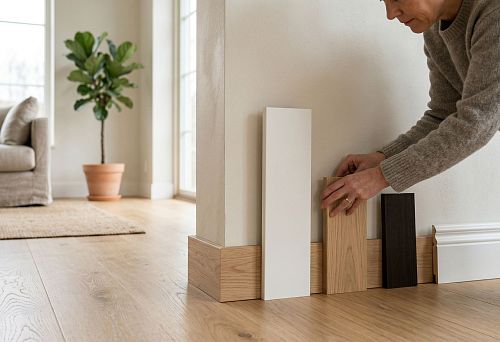
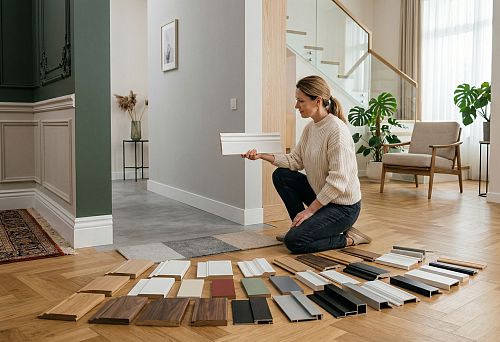
Article Contents:
- Select a baseboard for your home
- Which baseboard to choose for home: what the decision depends on
- What's better for home: MDF or wood
- When MDF is better
- When wood is better
- What's more practical for home
- What looks better in the interior
- Popular solutions for home
- Baseboard for private house, cottage and country house: is there a difference
- For private house
- For a Cottage
- For Country Houses
- For a wooden house
- For timber frame or frame house
- How to choose baseboards for different rooms in the house
- living room
- for the bedroom
- For Kitchen
- For the hallway
- For the corridor
- For the staircase area
- How to choose baseboards to match the style of the house
- For a modern house
- For a classic house
- For light interior
- For a dark interior
- For a house with panels, moldings, and decorative elements
- White, paintable, wood-look: which option is better for the house
- White baseboard
- For painting
- Wood-look
- When it's better to match the floor
- When it's better to support the walls or doors
- How to choose the height and width of baseboards for the house
- Standard profile
- Wide skirting board
- High skirting board
- When a wide skirting board is better
- When a high profile is really needed
- How to match skirting boards with floors, doors, stairs, and panels
- Mistakes when choosing skirting boards for the home
- 4 ready-made scenarios: what to choose
- For a modern cottage
- For a classic house with wood
- For a light house with white doors
- For a house with stairs and panels
- What to look for in baseboards for the home
- FAQ: Answers to Popular Questions
- About the Company STAVROS

In a private house, cottage, or country space, this issue is more acute than in a city apartment. More rooms. More different coverings. Stairs. Different styles in different zones. Therefore, the topic of 'baseboards for the home' is not about one profile, but about a thoughtful selection system that takes into account scale, materials, and the character of the space.
This article will help you figure out: whichbaseboard for the hometo choose based on the type of building, room, interior style, and floor material. MDF or wood. White or paintable. Wide or standard. Everything — to the point, without unnecessary words.


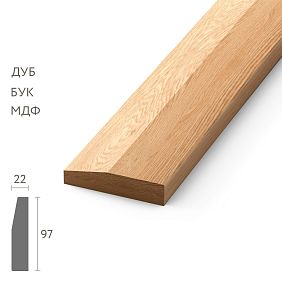


Select a baseboard for the home
MDF Skirting Board— white, paintable, for modern interiors
Wooden baseboard— solid oak and beech for warm and classic homes
All STAVROS skirting boards— wide, tall, standard, in different profiles
moldings, cornices, and baseboards— complete decorative molding system for the home
staircase components— balusters, steps, and staircase finishing




Which baseboard to choose for your home: what determines the decision
Before going to the catalog, ask yourself four questions. The answers will determine the right choice.
What kind of house? A wooden log house, a modern cottage with concrete floors and a light interior, a brick house in a classic style — these are three different answers to the question 'which baseboard is best for the home'. In a wooden house, solid wood works organically because it continues the overall material theme. In a modern cottage, white MDF looks appropriate and clean.
What kind of floor? Parquet, laminate, quartz vinyl, tile, engineered board — each covering has its own expansion gaps, its own texture, its own color temperature. The baseboard should either support the floor's theme or go neutral white and not compete with it.
What is the wall height? This is especially important in a house. Country houses often have high ceilings — 3 meters or more. A narrow 50 mm profile under a 3.5 m wall looks accidental. The scale of the baseboard should match the scale of the room.
Is there a staircase, panels, open areas between floors? In such spaces, the baseboard is not just a floor trim, but an architectural element visible from the second floor, from the hall, from the living room. This imposes additional requirements on appearance and a systematic approach.
Once these questions are clarified — the choiceof floor baseboard for the homebecomes a task, not a lottery.
Our factory also produces:


What is better for the home: MDF or wood
Perhaps the most frequent question. And the most ambiguous, because the correct answer depends on the context, not on an abstract rating.
Get Consultation
When MDF is better
MDF skirting board for the home— is a choice of precision and versatility. MDF is made from compressed wood fibers under high pressure, without adhesive impurities on open surfaces. As a result — absolutely even geometry, absence of natural defects, perfect surface for painting.
MDF is the optimal solution when:
-
The home is modern or Scandinavian, with white walls and a minimalist interior
-
Doors and slopes are white, and a unified color theme is needed
-
The skirting board will be painted in an exact shade according to RAL or NCS
-
The house has several rooms with different finishes, and a unified neutral profile is needed
-
Repair with subsequent replacement is planned — MDF forgives mistakes and is easy to remove
The main advantage of MDF in the home is predictability. Each plank is identical to the next. No delamination, no surprises during installation. And white MDF for painting is also an opportunity to get a color to match any doors you can find in your home.
Details on choosing and sizing MDF profiles — in the guideMDF skirting board: types, sizes, installation and care.
When wood is better
Wooden skirting board for the home— this is a story about the material, not just the shape. The living texture of oak or beech, the warm shade, the natural surface that can be sanded and repainted — this is what MDF does not reproduce.
Wooden skirting board is the right choice when:
-
The floor is parquet, solid wood, or engineered wood — a unified material logic is needed
-
The home is classic, rustic, or in Provence style — natural wood looks organic everywhere
-
There is a solid wood staircase in the home — a skirting board made of the same wood species creates a unified system
-
There are slatted panels on the walls — the wooden skirting board continues their texture at the base
-
The interior is warm, amber, with a lot of wood — additional MDF disrupts this theme.
Wooden skirting is a long-term solution. Unlike MDF, it can be restored: sanded, repainted, refreshed. With proper use, wooden molding in a home lasts for decades.
On choosing wooden skirting for different types of floors — in the article with a classic profile creates a sense of solidity, reliability..
What is more practical for the home
Practicality is not only about 'what is stronger'. It is also about 'what is more convenient to use'. MDF is easier to install, it cuts better and does not chip when sawing. Wood requires more careful work with tools, but holds fasteners better and does not deform from point impacts.
In a home with children and pets, wooden skirting often lasts longer without visible damage. MDF can delaminate at the end area from a strong impact. Wood in the same situation will get a dent but will not delaminate.
What looks better in the interior
There is no winner here — it all depends on the style. White MDF in a modern interior looks perfect: clean, precise, neat. Wooden skirting in a classic home with parquet and solid wood doors is a level that MDF does not reach. The best option is to choose based on interior logic, not on price tag.
Popular solutions for the home
MDF skirting — for modern interiors
Wooden skirting board — for warm and classic homes
White profile — for light rooms
Wide skirting board — for large spaces
Skirting board for a private house, cottage, and country house: is there a difference
When people say 'skirting board for a house' — they mean very different things. A townhouse on the outskirts of the city, a 200 sq.m. cottage, a log house in the village, a country dacha — these are different architectural and interior environments. And the skirting board for each of them is different.
For a private house
Private house is a broad concept. But in most cases, it is a space with several floors, various functional zones, and, as a rule, higher ceilings than in a standard apartment. The skirting board for a private house should be large-scale: 80–120 mm — the standard for rooms with a ceiling height of 2.8–3.2 m.
If the house has a mixed style — different rooms in different themes — it is acceptable to use different profiles in different zones. The main thing: within one room or one visual corridor (for example, hallway + staircase + living room) the skirting board should be uniform.
For a cottage
A cottage is most often a modern building with correct geometry, good wall alignment, and a deliberate interior solution. Hereskirting board for a cottage— is part of the design project. White MDF or wooden from light oak, profile 80–100 mm, in a unified system with doors and architraves.
Modern cottages often feature finishing panels, moldings, and cornices. The baseboard here is the lower element of this system. It should be chosen in conjunction with other linear solutions.
For a country house
A country house often involves a more free approach to interior design. Here, a modern kitchen and a classic living room, minimalist bedrooms and a rustic veranda can be combined. The baseboard for a country house should be flexible enough to work in different contexts — or be selected zone by zone.
A good principle: main formal areas (living room, hall, study) — wooden baseboard or wide MDF for painting. Functional areas (kitchen, hallway, corridor) — MDF in a practical format.
For a wooden house
Baseboard for a wooden house is a separate story. Wood is everywhere here: walls, floors, stairs, finishes. In this environment, a natural wooden baseboard made of oak or beech looks like an organic extension of the space. MDF in a classic wooden house is acceptable, but solid wood is more often chosen.
An important nuance: a wooden house 'breathes' — walls move with seasonal humidity changes. Therefore, the baseboard here is installed with a small compensation gap, not rigidly. Liquid nails provide sufficient fixation without rigid clamping.
For a timber or frame house
A timber house is closer to a wooden one: natural materials look more appropriate here. A wooden baseboard supports the overall aesthetic. For a glued laminated timber house with modern finishes — a combination is possible: wood in main areas, MDF in technical ones.
A frame house is technologically close to a modern cottage. MDF is more often used here: the precise geometry of frame walls allows for baseboard installation with a perfect fit.
How to choose baseboard by rooms in the house
A house is not one room. And the 'one baseboard for the entire house' approach works only if the interior is truly unified and consistent. Most often, different zones require different approaches.
For the living room
The living room is a formal space. Here, the baseboard should be expressive. A high profile (80–120 mm), interesting milling, solid wood or white MDF with a clean line — all of this creates a sense of a finished interior. If the living room hasRafter panelson the walls, a baseboard made of the same wood species at the bottom creates a unified vertical system.
For the bedroom
The bedroom is an intimate space. Here, the baseboard works quietly, without attracting attention. A medium profile (60–80 mm), a calm color, a smooth surface. If the floor is warm wood or wood-look laminate — the baseboard should match the floor tone or the door color.
For Kitchen
The baseboard for the kitchen in a house is a pragmatic story. Here, resistance to moisture and mechanical stress during cleaning is important. MDF with a good lacquer coating or wood with an oil-wax treatment are the right choices. Height — medium (60–80 mm). Color — in line with the furniture or doors, but not matching the floor: the kitchen is a functional zone, here the baseboard should not be distracting.
For the hallway
The hallway is the first point of contact with the house. There can be moisture (from shoes), dust, and heavy traffic here. The baseboard for the hallway in a house should be practical and neat. MDF with a dense coating is a good choice. If the hallway transitions into the living room without a threshold — the baseboard should be uniform in both zones.
For the corridor
The corridor is a transit zone. Often long, narrow, well-lit from above. The baseboard here creates a horizontal line that visually 'stretches' the space. A medium or wide profile (70–90 mm) emphasizes this horizontality. A white baseboard in a white corridor is a classic.
For the staircase area
This is a special case. The baseboard for a staircase in a house is not just a profile at the base of the wall. It is an element that works alongside steps, balusters, posts, and railings. All of this should be in a unified material system.
If the staircase is made of oak — the baseboard in adjacent areas should also be oak. If the staircase is made of pine or ash — the baseboard should be of the same species. Mismatched wood species in the staircase area is always noticeable and always lowers the class of the interior. The full range of solutions for the staircase space is in the sectionstaircase components.
How to choose a baseboard to match the style of the house
Style is not a fashionable category. It is the internal logic of a space: how materials, proportions, and colors relate. A baseboard that does not support this logic destroys it.
For a modern home
A modern home is minimalism, clean lines, white walls, and concise furniture. The baseboard in a modern home interior is as neutral as possible.MDF Skirting BoardWhite, 80–100 mm, without decorative reliefs, smooth surface. It is present, creates order, but does not attract unnecessary attention.
In modern homes, a hidden or 'shadow' baseboard also works well—when the profile creates a dark shadow strip at the base of the wall. But this is a separate technical solution.
For a classic home
A classic home is richness of profiles, architectural divisions, wood, cornices, and moldings. Here, the baseboard should be noticeable and expressive. A wooden oak baseboard with a relief profile, height 100–150 mm, as part of a unified system withmoldings, cornices, and baseboards.
For a classic interior, consistency of all decorative lines is important: the cornice at the top, the molding at mid-height, and the baseboard at the floor—all three elements should speak the same architectural language.
For a light interior
A light home with white or beige walls, light floors, and white doors is the perfect environment for a white baseboard. It literally dissolves into the space, creating a boundary without a boundary. WhiteMDF Skirting Board—is the de facto standard for most light homes of the last decade.
For a dark interior
A dark interior is a bold and expressive solution. Dark walls, dark parquet, deep furniture tones. Here, the baseboard can either match the walls (blending in) or be a contrasting light color (accent). An intermediate baseboard—neither dark nor light—is the least successful option in such an environment.
A wooden baseboard made of dark oak or stained wood is an organic choice for a dark classic interior.
For a home with panels, moldings, and decorative elements
If walls are finished withplank panelsor MDF panels, the baseboard is the final lower element of this system. Here, material unity is important: wooden slats require a wooden baseboard, MDF panels require an MDF profile. Mixing materials within one decorative system is always noticeable and always diminishes the impression.Wooden planksand a wooden baseboard made from the same wood species is a professional standard for home finishing.
White, paintable, wood-look: which option is better for a home
Three options—three different strategies. Let's examine each.
White baseboard
A white baseboard for the home is the most common choice, and not without reason. White is neutral. It doesn't dominate, doesn't compete with the floor or furniture, and easily fits into any color scheme. In a light home, it's practically invisible. In a dark one, it creates a clear boundary between the floor and the wall.
A white baseboard is the first choice when:
-
Doors and trims are white
-
Light or neutral walls
-
Modern, Scandinavian, minimalist interior
-
No desire to select a shade
Nuance: white comes in different types. Cool optical white (RAL 9003) is for interiors with cool neutral tones. Warm white (RAL 9010, ivory) is for spaces with wood, warm wallpapers, amber accents. Mixing temperatures in one room is a color mistake noticeable even to non-professionals.
For painting
Paintable skirting for the home is a designer tool. Primed MDF can be painted in any shade from the chosen palette. This allows for an exact match with door frames, slopes, and furniture.
Especially relevant when the home has non-standard door colors—gray, graphite, sea wave. Skirting that matches the doors turns different interior elements into a unified whole. More details in the guide.Baseboard MDF.
Wood-look
Wood-look skirting is either solid wood or MDF with a decorative film. The fundamental difference: natural wood under direct light appears as a natural surface with a unique texture. Wood-look film is an imitation that, upon close inspection, is usually recognizable as such.
For parquet floors and natural wooden doors—only solid wood. For laminate floors with a 'wood-look' finish—film is acceptable if the tone is matched. But the best option is white skirting, which doesn't try to copy but creates a neutral transition.
When it's better to match the floor
If the floor is dark and expressive—wenge parquet, dark oak, burnt wood—skirting that matches the floor visually expands it, creating a unified dark plane at the base. The space appears taller and slimmer.
When is it better to support walls or doors
Classic design rule: the baseboard is part of the door system. If the door frames and doors are white — the baseboard is white. If the doors are painted gray or dark — the baseboard is in the same palette. This creates a visual frame that is perceived as intentional, not accidental.
How to choose the height and width of baseboards for a home
The size of the baseboard is not a matter of taste, but a matter of proportions. A violation of scale is immediately noticeable.
Standard profile
Height 50–70 mm — standard for small rooms with ceilings up to 2.5–2.6 m. In this format, the baseboard solves a functional task (closes the gap) and does not attract unnecessary attention. For bedrooms, small offices, auxiliary rooms — sufficient.
Wide skirting board
Wide baseboard for the home — from 80 mm and above. This is a solution for large spaces: living room, hall, corridor with a ceiling height of 2.7 m or more. A wide profile creates a noticeable horizontal line that structures the space. In large rooms with panels or slats — essential.
Wide Wooden Skirting Board— a separate topic. With a height of 100–150 mm and a wooden texture, it is no longer just a profile, but an architectural element.
High baseboard
High baseboard for the home — from 100 mm and above. For rooms with ceilings of 3 m or more. In country houses and cottages with spacious living rooms, a high profile creates a sense of solidity and completeness. More about wide and high baseboards — in the guide wooden floor baseboard.
When a wide baseboard is better
-
High ceilings (2.7 m and above)
-
Large wall planes without decorative divisions
-
Next to decorative panels or moldings
-
When a pronounced architectural lower contour is needed
When a high profile is truly needed
-
Country house with ceilings 3 m+
-
Formal areas: hall, living room, main room
-
Next to tall door frames and large casings — scale matching is needed
Practical rule: baseboard height is approximately 1/30 of the ceiling height. With a 3 m ceiling — 100 mm baseboard. With a 2.7 m ceiling — 80–90 mm. With a 2.4 m ceiling — 60–70 mm.
How to match skirting boards with floors, doors, stairs, and panels
This is the most interior-focused section — and the most useful for those who want not just to 'install skirting boards,' but to make the house cohesive.
The staircase is the main visual accent of the house. If there is a staircase in the house, it is visible from most key points of the space: from the hallway, from the living room, from the upper floor. The skirting board in the staircase area should match the material of the steps, balusters, and railings. Mismatch here is always noticeable.balusters for staircasesmade of oak — and a wooden oak skirting board nearby — this is a unified wooden environment that makes a house a home.
Doors and architraves are the second most important reference point. Professional rule: the skirting board and architrave should be from the same product line. White architrave — white skirting board. Wood-look door — skirting board matching the same wood. Breaking this connection is immediately noticeable and perceived as an accident.
Wall panels are the third reference point. If the walls in the living room are finished with slatted panels or MDF panels, the skirting board at their base should be made of the same material. Wooden slats and MDF skirting board — only acceptable with a unified white finish. Wooden slats and a wooden skirting board made from the same wood species — the correct solution. For more on how skirting boards work with panels, see the articlebaseboards for panels.
The floor sets the theme, the doors provide the color. If the floor is warm oak and the doors are white — the skirting board is white: it supports the doors and creates a neutral transition. If the floor is dark oak and the doors are also dark — the skirting board is oak, matching the system. The main thing: not a 'third option' — where the skirting board matches neither the floor nor the doors.
Mistakes when choosing skirting boards for a house
Knowing the mistakes is half of making the right choice. Here are the most common ones:
Too narrow a profile for a large house. A 40–50 mm skirting board in a country house with 3 m ceilings looks like a temporary solution. The scale of the space requires the scale of the profile.
The same baseboard without considering the rooms. A living room with parquet and a bathroom with tiles are different environments with different requirements. Using the same profile everywhere without thoughtful selection means missing the mark in both places.
Baseboard not coordinated with doors. Doors bought separately, door frames separately, baseboard separately—and all three don't match in color. This is the most common mistake, visible immediately upon inspecting the room.
Random color. 'Bought whatever was available' is not an approach. The color of the baseboard is part of the interior design solution. Cold white next to warm parquet creates tension that many feel without understanding why.
Not considering the style of the house itself. A rustic log house and a white MDF profile with clear geometry—a conflict of materials. A wooden profile made of unfinished solid wood in such a space is an organic continuation.
Ignoring the staircase area. The baseboard for the stairs is chosen at the last moment, after the steps are already installed. Result: mismatch in wood species, shade, and profile. All this in one of the most visible places in the house.
4 ready-made scenarios: what to choose
For a modern cottage
Space: 180 sq.m. cottage, light walls, quartz vinyl flooring in light oak, white doors, 2.9 m ceilings.
Solution:MDF Skirting Board100 mm high, white matte. In a unified system with door frames and reveals. Smooth surface, no relief. Result—clean horizontal lines around the entire perimeter, neat transitions.
For a classic house with wood
Space: country house, natural oak parquet, solid wood doors, oak staircase, 3.2 m ceilings.
Solution:Wooden baseboardMade of oak, 120–150 mm, relief profile. In a unified system with the staircase and doors. Color — matching the parquet or one shade darker for accent. Stair balusters and skirting — same wood species, same finish.
For a light house with white doors
Space: modern house, laminate flooring in light maple, white doors and trims, light gray walls, 2.7 m ceilings.
Solution: white MDF skirting 80–90 mm, matte, paintable in RAL 9010. Unified system: skirting, trims, slopes, window sills — one shade.MDF floor skirting— the optimal solution for such an interior.
For a house with a staircase and panels
Space: two-story house, living room with slatted panels on walls, oak staircase, wooden slats, mixed floor coverings.
Solution: wooden oak skirting everywhere in visible areas — living room, hall, staircase zone. In technical rooms — MDF in a neutral format.Rafter panelsand skirting made of the same wood species create a unified wooden environment from floor to mid-wall.
What to view together with skirting board for home
moldings, cornices, and baseboards— decorative system for home
Rafter panels— for wall finishing in unified system with skirting board
Wooden planks — vertical decorative solution
staircase components— unified wooden system for staircase area
balusters for staircases— in same wood species as skirting board and steps
FAQ: Answers to popular questions
Which skirting board is better to choose for home?
Depends on house type and interior. For modern light houses — white MDF. For classic and wooden houses — solid wood from oak or beech. Both options available in catalogall STAVROS skirting boards is convenient..
What's better for home: MDF or wood?
MDF — more precise in installation, cheaper, ideal for painting. Wood — more durable, looks more prestigious, suitable for restoration. In home both options are often appropriate — in different zones. MDF —here, wood —here.
What type of baseboard is suitable for a private house?
For a private house with high ceilings — a wide profile from 80 mm. Material — according to style: MDF for modern interiors, wood for classic and natural ones.
What baseboard to choose for a country house?
In a country house, scale is especially important. High profile 100–120 mm for formal areas. Wooden baseboard — for areas with natural floors and stairs. MDF — for functional rooms.
Is white baseboard suitable for a house?
Yes, and it's the most universal choice. White baseboard works in most interiors, especially with light walls and white doors. Read more — A white MDF baseboard creates visual continuity with white door casings, white ceiling cornices, and white window frames. When all architectural details are executed in the same color, they form a unified system, a spatial framework that connects disparate elements — floor, walls, ceiling, furniture — into an integral composition. This technique is fundamental to Scandinavian design, where white architectural decor creates a light shell within which the most diverse colors and textures can coexist..
When is it better to choose a wide baseboard?
With ceiling heights of 2.7 m and above, in large rooms and next to decorative panels. A wide baseboard creates an expressive horizontal base. Read more — Wide Wooden Skirting Board.
How to match baseboard to floors and doors in a house?
Reference point — doors. White doors — white baseboard. Dark wood doors — baseboard in the same species or shade. Floors and doors together set the material logic.
Which skirting board to choose for the kitchen in a house?
MDF with a dense coating is a practical choice for the kitchen. Average height (60–80 mm), color — to match the furniture or doors.
Which skirting board to choose for the staircase in a house?
The skirting board in the staircase area should match the wood species of the staircase elements. If the staircase is oak — the skirting board should be oak. Full selection of staircase decor —staircase components.
Is MDF skirting board suitable for a wooden house?
In a modern wooden house with white interiors — acceptable. In a classic log or timber house — solid wood is more organic. MDF next to a natural log wall looks alien.
What color of skirting board is best for a house?
White — if the doors are white. Wood-like — if the house has natural floors and wooden doors. For painting in a non-standard shade — if there is an exact color scheme. Neutral beige — in warm interiors without a clear wooden theme.
Where to buy skirting board for a house?
In the STAVROS catalog — MDF and solid wood, white and paintable, wide and standard. SeeMDF Skirting Board, Wooden baseboardandAll STAVROS skirting boards.
About the company STAVROS
STAVROS is a Russian manufacturer of architectural wood moldings made from solid oak and beech. The range includes skirting boards, moldings, cornices, battens, slatted panels, corner pieces, balusters, and stair components. Each product is made from kiln-dried wood, with precise milling and a finished surface treatment.
All items in the STAVROS catalog are designed as a system: skirting boards, battens, panels, and moldings are unified lines that coordinate with each other in material, profile, and proportions. This allows you to design any home—from the entryway to the stair hall—as a cohesive architectural space.
Choosebaseboard for the homein the STAVROS catalog—and start with the element that sets the tone for the entire interior.