








































































Article Contents:
- Select a solution for wall panel
- Why skirting is needed for wall panel
- Where exactly skirting or profile is needed for wall panel
- Along the bottom edge of the panel
- Along the side edge of the panel
- Along the top edge of the panel
- In corners and junctions
- At the joint with floor, ceiling and adjacent finish
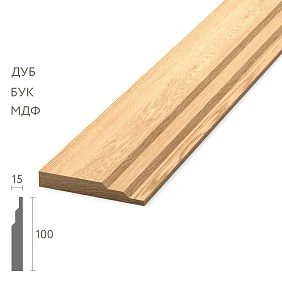
- Which skirting board to choose for wall paneling: MDF or wood
- When MDF is better
- When wood is better
- What suits modern interiors
- What is better for a warm, wood-grain texture
- Skirting board for MDF wall panel
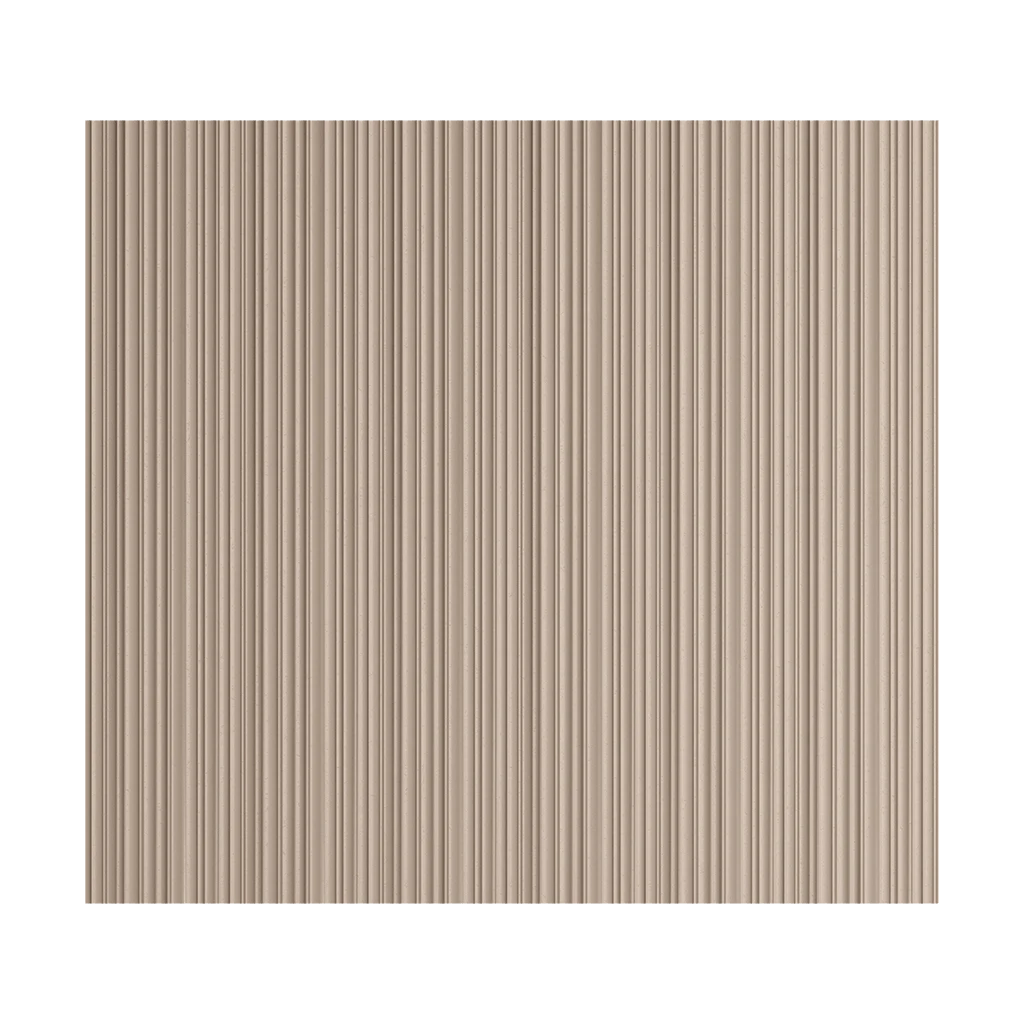
- Skirting board for slatted wall panel
- What is special about slatted panel
- Which profile works for slatted panel
- Finishing side edges of slatted panel
- Slatted panel rhythm and profile: coordination rule
- How to choose skirting board for specific junction
- Panel and floor
- Panel and wall
- Panel and ceiling
- Panel and corner
- Panel and other finishes
- How to choose color, height, and profile
- White profile
- Wood-look
- For painting
- Wide skirting board
- Narrow neat profile
- How to match skirting with wall panel in interior
- Mistakes when choosing skirting for wall panel
- Installation of skirting and profile for wall panel: what to consider
- 4 ready-made scenarios: what to choose
- For white MDF panel
- For wood wall panel
- For slat panel in modern interior
- For accent panel with floor and ceiling abutment
- Where to buy wall and slat panel and how to complement the design
- FAQ: Answers to Popular Questions
- About the Company STAVROS

There is a moment in any renovation when the wall panel is already installed, looks impressive — and then it turns out: the edge is open, the joint with the floor is not covered, the corner sticks out, and the top line of the panel 'hangs' in the air. No beautiful surface looks finished if its perimeter is not worked out. That is whyskirting board for wall panelis not an addition to the main solution. It is its mandatory final detail.
Choosing the right profile means understanding exactly where the wall panel comes into contact with other surfaces, what exactly needs to be finished, and what material to use. This article provides a complete breakdown: from the logic of selection to practical scenarios and ready-made solutions for MDF panels, decorative panels, and slat systems.


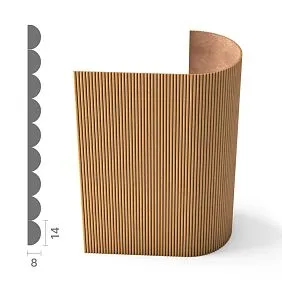
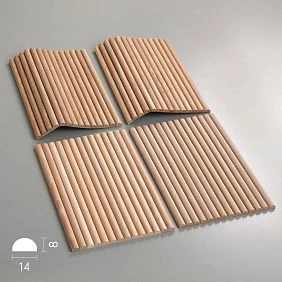
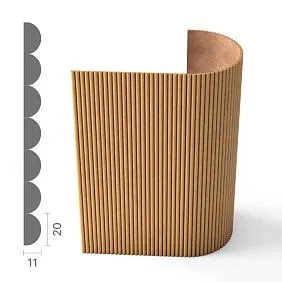
Select a solution for wall panel
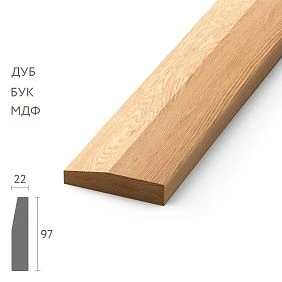
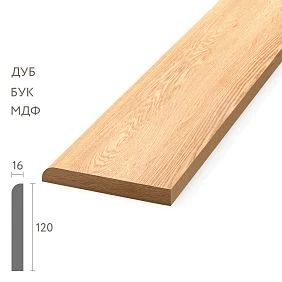
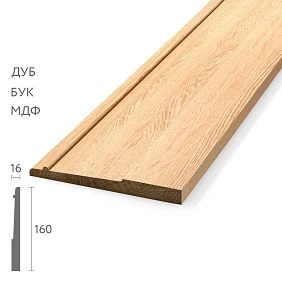
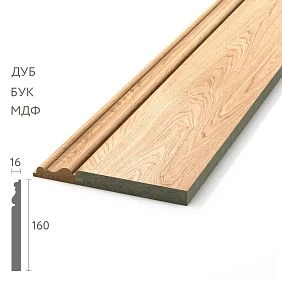
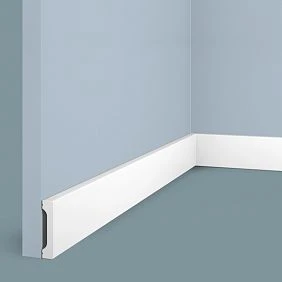
MDF Skirting Board— precise geometry, white or paintable
Wooden baseboard— natural array for slatted and wooden panels
buy slatted panels— wooden slats and MDF panels for walls
Wooden planks— vertical and horizontal accents
Wooden corner bracket— finishing external and internal panel corners
Pogonazh iz massiva— profiles for all junction points




Why a skirting board is needed for wall panels
A wall panel is essentially a closed object in the room's space. It has a top edge, a bottom edge, side edges, and often also corners, junctions with other surfaces, and transitions to adjacent finishes. Each of these points is a potential 'weak spot' where, without the correct profile, a gap, open end, unfinished joint, or visual break occurs.
A skirting board for wall panels solves several tasks at once. The first is technical: to close the gap between the panel and the floor, hide thermal gaps, and compensate for base unevenness. The second is aesthetic: to create a neat, clean outline that makes the panel composition complete. The third is systemic: to connect the wall panel with other interior elements—the floor, doors, ceiling, floor skirting, and moldings.
A profile for a wall panel is not something chosen at the last moment. It is an element planned before panel installation: the choice of profile determines how neat the bottom line, side edge, and corner transition will look. Skipping this step means redoing it later.
Our factory also produces:


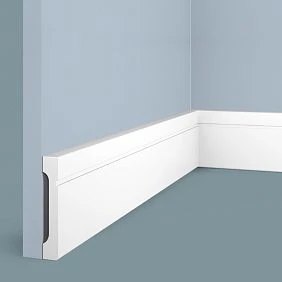
Where exactly is a skirting board or profile needed for a wall panel?
A wall panel has several points of abutment, each requiring its own solution. Let's examine in detail.
Get Consultation
Along the bottom edge of the panel
This is the most noticeable and frequently discussed joint. The bottom end of the wall panel faces the floor—and if there is no neat profile between them, you'll see either a gap, an exposed MDF or wood end, or an uneven abutment line.
A skirting board for the joint between the wall panel and the floor is typically either a standard floor skirting board installed along the lower perimeter of the panel, or a narrower 'wall' profile if the panel does not reach the floor. In most cases, the correct choice is a floor skirting board, matched to the color of the panel or doors: it covers the gap, maintains the floor line, and does not create unnecessary visual segmentation.
The height of the skirting board at the base of the wall panel is selected proportionally to the height of the panel itself. If the panel occupies 2/3 of the wall and the ceiling height is 2.7 m, an 80–100 mm skirting board looks appropriate. If the panel is low (1/3 of the wall), a 60–70 mm skirting board will not draw attention to itself.
Along the side edge of the panel
The side end is often an underestimated spot. When a wall panel ends in the middle of a wall, not reaching a corner or a door, its side edge is left exposed. This end on an MDF panel is often unpainted and looks like an unfinished detail.
Several options are used to finish the side edge: a decorative flat molding nailed vertically; a corner profile creating a finished transition; orWooden planksacting as a vertical frame that borders the panel and turns it into an architectural element. The latter option works especially well in a system with slatted panels—a vertical slat along the edge visually 'closes' the end and supports the rhythm of the main surface.
Along the top edge of the panel
The top line of the wall panel is the horizontal break between the panel and the finished wall. If this line is not finished, it will look random: an uncovered MDF edge, a step on the surface, an uneven transition.
For the top edge, a horizontal molding is most often used—a small profile that creates a neat shelf-cornice along the top line of the panel. This gives the panel composition completeness and architectural character. In the system withmoldings and cornices from STAVROSyou can select a profile that precisely matches the style and scale of the interior.
At corners and junctions
Internal and external corners are a separate story. An internal corner, where two panels meet, can be covered with a bead or an internal corner profile. An external corner—an open 90° edge—is finished withwooden corner piece: it protects the edge from mechanical damage and creates a clean vertical line. This is especially important for slatted panels, where an open corner means visible edges of all the battens—which looks sloppy.
At junctions with the floor, ceiling, and adjacent finishes
When there is another finish next to the wall panel—tile, wallpaper, plaster, another paneled area—the joint between them requires a transition profile. This can be a thin decorative strip, a flat molding, or a special joining profile. The main condition: this profile must be coordinated in color, material, and thickness with the main interior elements.
Which skirting board to choose for a wall panel: MDF or wood
The choice of material is key and directly related to the type of panel itself, its texture, and the overall interior context.
When MDF is better
MDF skirting board for wall panels— is about precision and cleanliness. MDF profile has a perfectly smooth surface without natural defects, accepts any paint, and creates a geometrically flawless line.
MDF skirting board is the right choice in the following cases:
-
Wall panel is made of MDF, painted or primed — a skirting board of the same material creates a unified system
-
Interior is white or monochrome — white MDF skirting board supports the theme and does not create unnecessary accents
-
A uniform color from floor to top of the panel is planned — a paintable skirting board in an exact RAL allows for a perfect match
-
A neat and inexpensive system without visible material differences is needed
Skirting board for an MDF wall panel is both a functional and decorative element. Function — to close the gap. Decoration — to create a clear outline of the panel's bottom line, which emphasizes its geometry.
When wood is better
Wooden skirting board for wall panel— it's about naturalness and character. The living texture of oak or beech profile brings warmth and material authenticity to the interior, which MDF imitates but does not reproduce.
Wooden skirting board is appropriate when:
-
Wall panel is wooden — slatted oak or solid natural veneer
-
The interior has other wooden elements: parquet, solid wood doors, wooden slats on the wall
-
The interior style requires naturalness — classic, Scandinavian, Japandi, warm minimalism
-
You need to create a unified organic environment from natural materials
Wooden skirting board in a system withplank panelsmade of oak — this is a solution where all elements are 'of the same blood'. An oak skirting board at the base of a slatted wall creates a horizontal foundation that is perceived as a continuation of the same wooden theme — not as an extraneous element.
What suits modern interiors
In modern interiors with clean planes and neutral colors — MDF. It doesn't distract attention, creates a smooth geometric line, and allows building a unified painted system.— is a horizontal element that frames the room at the bottom of the walls where the wall meets the floor. Skirting boards perform several functions: they hide the technological gap between the wall and floor covering (necessary for thermal expansion), protect the lower part of the wall from mechanical damage, create visual completion, and may conceal wiring.+ slatted MDF panel painted in the same shade = impeccable monochrome wall with precise horizontal and vertical lines.
What's better for a warm, wood-like texture
Wood, and only wood. When the wall is covered withslatted oak panels, oak parquet stands nearby, and doors are made of solid wood — a white MDF baseboard at the base of such a wall creates a break in the natural theme. A wooden profile from the same species continues the material language of the interior.
Baseboard for MDF wall panel
MDF wall panels are one of the most popular formats today. They come as flat monolithic panels, with milled patterns, with geometric grooves, in the form of facade panels. They share one thing: the surface is primed or painted, and high demands are placed on the neatness of the finish.
The main task when choosing a baseboard for an MDF panel is not to overload the composition. An MDF panel is a calm, geometrically precise surface. The profile at its base should support this precision, not create competition.
Selection principles:
-
Baseboard height — proportionate to the panel. For a full wall panel from floor to mid-wall — 80–100 mm. For a decorative panel in the lower third of the wall — 60–70 mm. A too high baseboard with a low panel will visually 'eat up' the accent.
-
Profile — without excessive milling. For MDF panels, a smooth profile or one with minimal relief works better. Complex classical molding next to a modern geometric MDF panel is a stylistic conflict.
-
Color — in harmony with the panel. A white baseboard with a white MDF panel is neutral, precise, correct. A paintable baseboard allows for an exact match if the panel is painted in a non-standard shade.
-
Corner transitions — a solid wood corner or an end molding, matched to the same material.
Detailed logic for selecting a profile for MDF panels — in the article.baseboards for panels.
Baseboard for a slatted wall panel.
A slatted wall panel is a special object. Unlike a monolithic MDF slab, a slatted panel is a rhythmic system of vertical battens with specific gaps between them. It has noticeable ends, an active texture, and a pronounced graphic pattern. And a baseboard that doesn't account for this specificity ruins the entire impression.
What's special about a slatted panel.
The edges of the slatted system are the open ends of the battens along the entire height. The bottom row consists of battens cut at a right angle that meet the floor. The side edge is the same picture vertically. Without a profile, this looks like a construction blank, not a finished interior element.
The profile for a slatted panel should:
-
Cover the bottom row of batten ends without disrupting the rhythm.
-
Maintain panel proportions — avoid being visually heavier than the slat pattern
-
Match the material or color of the slats themselves
-
Create a horizontal base that 'grounds' the vertical slats
Which profile works for a slat panel
For oak slat panels — a wooden baseboard made from the same species. This is an axiom.buy slatted panelsand complement them with an oak wooden baseboard — means building a unified natural system where each element is recognized as part of the whole.
ForMDF slat panel, primed for painting— an MDF baseboard in the same RAL. This creates a monochrome system where the baseboard, slats, and possibly the wall are perceived as a single painted surface with varying relief.
Finishing the side edges of a slat panel
The side edge of a slat system is a row of exposed slat cuts along the vertical. They are closed in several ways:
-
Vertical slat made from the same wood — the 'frame' along the panel edge
-
Wooden corner — if the panel meets an adjacent wall at a right angle
-
Flat vertical molding — creates a finished transition and supports the material theme
Installation details for slatted panels and junctions — in articlesHow to install slatted panelsandHow to join slatted panels.
Rhythm of slatted panels and profile: the coordination rule
This is an important nuance that is rarely discussed. If the slats have a 30 mm spacing, and the baseboard is wide at 120 mm with massive relief — they compete. The eye doesn't know what to focus on. The rule: the profile of the slatted panel should be proportionate to the width of the slat. A wide slat allows for a wider baseboard. A thin slat — a neat baseboard that doesn't draw excessive attention.
View options for slatted panels and their rhythm — in the catalogbuy wall slatted panels.
How to choose a baseboard for a specific junction
Every point where a wall panel meets another surface is a separate task. And each has its own logic.
Panel and floor
This is the most common junction. The skirting board for the joint between the wall panel and the floor is a floor skirting installed along the entire lower perimeter of the panel. Important points here:
-
A single profile throughout the room or the entire paneled area
-
Color matching with doors or the panel itself
-
A 3–5 mm gap between the panel and the floor is covered by the skirting board
-
If laminate is next to the panel and tile is under the panel, the skirting board should be common, creating a continuous line
Panel and wall
Where the panel ends and a plain wall begins — a vertical transition line. This can be a molding, strip, flat edge board, or decorative frame. The choice depends on the style: in modern interiors, a clean joint without an additional profile is often left if the walls are neatly painted. In classic styles — a vertical molding from the collectionSTAVROS moldings and cornicesarchitecturally frames the transition.
Panel and ceiling
A skirting board for the junction between a wall panel and the ceiling is either a horizontal molding-shelf along the top line of the panel, a thin cornice, or simply a clean setback. If the panel does not reach the ceiling (which is most often the case), the top line should be emphasized with a profile. Without it, the boundary between the panel and the wall looks blurred.
Panel and corner
An internal corner is finished with a cove or a thin corner profile made of MDF or wood. An external corner —wooden corner piece— is made of solid wood: it protects the ends from chipping and creates a clean vertical line. It is especially relevant for slatted panels on external corners — where the slats extend onto the adjacent wall.
Panel and other finishes
Junctions of a wall panel with tiles, wallpaper, or plaster are a task for decorative profiles. A flat molding, attached along the panel's boundary, creates a neat transition and hides irregularities in the dividing line. In a slatted panel system —Wooden planks— made of the same wood acts as a dividing element.
How to choose color, height, and profile
White profile
A white skirting board for a wall panel is the most universal choice for light, modern interiors. A white profile works when:
-
The panel itself is painted white or a close neutral shade
-
Doors and trim are white — the baseboard is part of a unified white system
-
A neutral element is needed that does not compete with the decorative surface of the panel
A white MDF baseboard under a white slatted panel creates the impression that the entire lower part of the wall is a single architectural plane with the relief of the slats above the smooth strip of the baseboard.
Wood-look
Wooden profile matching the panel tone — a solution for natural interiors. Oak to oak, beech to beech — this is not just aesthetics, it's a principle of material consistency. When the baseboard and slats are made from the same wood, the interior is perceived as designed, not assembled from random elements.
For painting
Paintable baseboard for wall paneling — a tool for precise design. Primed MDF profile allows painting the baseboard in an exact shade from the palette — the same as the panel itself, or the same as the doors.MDF slatted panels for painting+ MDF baseboard painted in the same RAL = a monochrome, complete system without a single color break.
Wide skirting board
Wide baseboard for wall paneling — suitable in large rooms with high ceilings (2.7 m+), next to large architectural panels, or in a classic interior with a rich decorative program. A wide profile creates an expressive horizontal base and visually 'weighs down' the lower part of the interior in a good sense — adds weight and status.
Narrow, neat profile
Narrow baseboard 40–60 mm — the right choice for small rooms, for minimalist interiors, and for slatted panels with thin slats. It does not distract attention from the panel and creates a neat, almost invisible bottom line.
How to match baseboard with wall paneling in the interior
A wall panel is an active decorative element. It already 'speaks' through texture, pattern, slats, geometry. The skirting board next to it should support this monologue, not steal the attention.
Accent rule: if the panel is the main hero of the wall, the profile should be neutral. It creates a frame but does not compete. A neat, smooth skirting board in the color of the panel or doors is the perfect role.
System rule: if the interior features slatted panels, moldings, wooden doors, slats — the skirting board should be part of this system, not an extraneous element.Buy slatted wall paneland complement it with a wooden skirting board, corner piece, and slats of the same material — means creating a system, not a collection of separate items.
Rule for light interiors: in a light space with white walls and neutral floors, white profiles at the wall panel create an architecturally clean solution. The skirting board 'dissolves' into the wall, the panel comes to the foreground, and the junction lines look neat and precise.
Rule for dark interiors: in a dark interior, a skirting board matching the panel's tone creates monochromatic depth. A contrasting white skirting board next to dark slats is a bold, yet intentional design move that requires support from other white elements.
Ideas for using decorative wall panels in interior design — in the articleslatted wall panels: photos, guide.
Mistakes when choosing a skirting board for a wall panel
There aren't many mistakes here, but each one stands out.
They choose a profile without considering the panel thickness. A slatted panel protrudes 20–30 mm from the wall. The skirting board must cover this protrusion and fit snugly against both the base of the panel and the wall behind it. A profile that butts against the panel end instead of overlapping it will leave a gap.
They don't plan the edges in advance. They mount the panel—and only then think about how to finish the side edges. As a result, they have to buy additional profile that doesn't match the shade because it's from a different batch. Choose the profile before mounting the panel.
They pick a random color. A skirting board in a slightly different shade of white—and the entire white system falls apart. Always compare shades side by side, in daylight.
They overload a slatted panel with a massive skirting board. Thin slats with a 20 mm pitch and a wide 120 mm skirting board with relief—a mismatch of scale. The skirting board should be proportionate to the rhythm and height of the panel.
They finish a slatted panel with an unsuitable profile. A skirting board with a 'classic-style' decoration next to modern slats—a stylistic conflict. A slatted panel requires a laconic, geometrically clean profile.
They don't think about corners. External corners of a slatted panel without corner profile are exposed ends that chip at the first contact.Wooden corner bracket— a mandatory element for any external corner of a slatted or wooden panel.
Installing skirting board and profile for a wall panel: what's important to consider
Proper installation doesn't start with a hammer and glue, but with planning the layout. We'll tell you about the main principles.
First — panel layout, then — profile. Before installing the panel, you need to understand where the edges will be, where the side ends will go, and what the height of the bottom line is. Only knowing these parameters can you correctly select and order the necessary profiles.
Gaps — for the profile. A 5–10 mm gap is left between the bottom end of the panel and the floor — for thermal expansion of the material and for the skirting board. If the gap is not planned in advance, the skirting board will fit under tension or create a bulge.
Corners — precise cutting. Skirting board joints in corners are cut at 45° using a miter saw or miter box. Inaccurate cutting results in a visible gap in the corner joint — and this cannot be fixed without a complete redo.
For MDF and wood — different installation approaches. MDF skirting is attached with glue and liquid nails or headless finish nails. Wooden skirting — similarly, but taking into account wood's higher expansion coefficient: in areas with humidity fluctuations, a small gap is left in the end joints.
Visible areas require jeweler-like precision. On an accent slatted wall in the living room, a sloppy skirting joint in the corner is immediately noticeable. In these areas, do not skimp on the quality of cutting and fitting.
Work sequence. Panels are installed before the final wall painting. Skirting — after the final laying of the floor covering and before the final painting. This allows painting over gaps and joints in one operation.
Detailed installation guide —How to install slatted panels.
4 ready-made scenarios: what to choose
For white MDF panel
Context: living room, MDF panel with geometric milling on the lower half of the wall, painted RAL 9010, walls also white, doors matte white.
Solution:MDF Skirting Board80 mm for painting in RAL 9010 — along the lower perimeter of the panel. Along the top edge — a thin horizontal molding from the same series. Along the side edges — a flat vertical trim 20–30 mm in the same color. Result: the panel looks like a single architectural plane with a frame-like surround — neat, clean, expensive.
For a wood wall panel
Context: bedroom, wooden accent wall made of solid engineered oak board, floor - oak parquet, doors - solid oak.
Solution:Wooden baseboard100 mm oak - at the bottom of the wall. At the ends of the panel -Wooden anglemade of oak. Along the top edge - a horizontal oak strip serving as a shelf-cornice. Unified wooden environment: floor, wall, baseboard, corner - all from the same wood.
For a slatted panel in a modern interior
Context: living room, accent wall withoak slatted panel, walls light gray, laminate under light oak, doors white.
Solution: 80 mm oak wooden baseboard at the base of the slatted wall - matching the slats. At the ends of the slatted panel -vertical wooden slatsas a side frame. On the remaining walls — white MDF skirting board matching the doors. The transition between wooden and white skirting — in the corner, concealed by a batten.
For an accent panel with floor and ceiling abutment
Context: corridor, slatted MDF panel from floor to ceiling, primed for painting, color — dark green RAL 6028, the entire room in the same theme.
Solution: MDF skirting board for painting in RAL 6028 — along the entire lower perimeter. MDF cornice of the same palette — along the top edge. Corner pieces on external corners — MDF, painted in the same shade. Result: a monochrome dark tunnel with precise horizontal lines — architectural and expressive. DecorativePogonazh iz massivafor framing details — if a natural touch is needed in a monochrome system.
Where to buy wall and slatted paneling and how to complement the design
If you are choosing skirting for a wall panel, you almost certainly need the panels themselves as well. Or you are planning panel finishing and immediately thinking about a complete solution. This is precisely why it's worth considering the choice of profile in a system with panels — as a single project, not as separate purchases.
buy slatted panels— a wide assortment of oak and MDF. Flexible panels on a fabric base for curved walls and rigid modules for flat surfaces.
buy wall slatted panels— panels with different slat spacing, for painting and with a natural oak surface.
Buy a slatted panel for the wall— primed MDF panel for painting: a foundation for monochrome interior solutions.
Buy decorative slatted panels— ready-made systems for modern interiors with oak wood slats.
What else is needed next to the panel:
-
MDF Skirting Board— lower contour of the panel system
-
Wooden baseboard— for panels made of natural wood
-
Wooden planks— for side frames and dividing elements
-
Wooden corner bracket— for finishing external corners
-
Moldings and cornices— for top and side trims
FAQ: Answers to popular questions
Which baseboard to choose for a wall panel?
Depends on the panel material and interior style. For MDF panels — MDF baseboard, white or paintable. For wood or slat panels — wooden baseboard from the same species. Catalog —All STAVROS skirting boards.
How to finish the edge of a wall panel?
Bottom edge – with a floor skirting board. Side edge – with a vertical molding or batten. Top edge – with a horizontal shelf molding. External corners – with a wooden corner piece.
What profile is needed for an MDF wall panel?
Smooth MDF profile without excessive relief, white or paintable. Height – 60–100 mm depending on the scale of the panel and the room.
What skirting board is suitable for a batten panel?
Wooden from the same species (for oak battens) or paintable MDF in the same RAL (for MDF battens). Important: the profile is proportionate to the width of the batten, without excessive decorative load.
How to cover the joint between a wall panel and the floor?
With a floor skirting board, chosen to match the tone of the panel or doors. Height – 60–100 mm. The gap between the panel and the floor – 5–10 mm – is completely covered by the skirting board.
How to finish the joint between a wall panel and the ceiling?
With a horizontal molding along the top line of the panel. It creates a clear boundary and an architectural accent along the top edge. Full range –moldings, cornices, and baseboards.
What is better for a wall panel: MDF skirting board or wooden?
MDF — for modern, white, and monochrome solutions. Wood — for natural, warm, and classic interiors. Details — baseboards for panels.
Is a white baseboard needed for a light-colored wall panel?
Yes, if the doors are white or the walls are white — a white baseboard creates a unified neutral system. Important: match the shades of white. Cool and warm white next to each other — noticeable dissonance.
How to finish the edge of a slatted panel?
Side edges — with a vertical slat or wooden corner. Bottom edge — with a baseboard matching the slats. Top edge — with a horizontal slat or molding.
Where to buy a slatted panel and baseboard for it?
In the STAVROS catalog:buy wall slat panelsandMDF Skirting BoardorWooden baseboard.
How to attach a baseboard to a wall panel?
With mounting adhesive and finish nails without heads. Corner joints — cut at 45°. Gaps at the ends — for material expansion. Full guide — How to install slatted panels.
How to choose a baseboard to match the panel color?
Reference — doors and trims (they set the color system). If the panel and doors are the same shade — the baseboard matches both. A paintable baseboard allows for an exact color match.
About the company STAVROS
STAVROS is a Russian manufacturer of architectural wood moldings and decorative panels. The company specializes in solid oak and beech products: baseboards, moldings, cornices, battens, slatted panels, corner pieces, and decorative profiles for interiors.
All STAVROS products are made from kiln-dried wood with precise milling and finished surface preparation. The molding lines are developed as systems: baseboard, batten, corner piece, molding, and panel are coordinated in material, proportions, and style. This means thatbuy slatted panelsand you can find all the necessary profiles—baseboards, battens, corner pieces—in a single catalog, without searching for matches from different suppliers.
Chooseprofile for wall panelin the STAVROS catalog—and make every junction point part of a deliberate, finished interior.Pogonazh iz massivafor any finishing scenario—in stock and made to order.