Article Contents:
- What Does Custom Polyurethane Molding Actually Mean?
- Custom Designs Using Standard Polyurethane Elements
- Modified Dimensions and Special Production Requirements
- Fully Bespoke Architectural Ornament
- Detailed Ornament Without Traditional Plasterwork
- Lightweight Architectural Decoration
- Paintable Surfaces and Design Flexibility
- Moisture Resistance and Material Selection
- Polyurethane Wall Moldings and Panel Trim
- Decorative Polyurethane Onlays and Appliques
- Polyurethane Ceiling Medallions
- Architectural Rosettes and Decorative Accents
- Polyurethane Corbels and Decorative Brackets
- Coordinated Wall and Ceiling Decoration Kits
- Dining Rooms: Picture-Frame Molding and Classical Proportions
- Living Rooms: Elegant Feature Walls Without Major Remodeling
- Bedrooms: Decorative Molding Behind the Headboard
- Kitchens and Built-In Cabinetry: Decorative Details Without Replacing the Entire Cabinet
- Foyers and Entryways: Creating a Strong First Impression
- Commercial Interiors: Consistency Across Multiple Spaces
- Start With the Finished Surface
- Consider Profile Width and Projection
- Check Straight Lengths and Corner Connections
- Use Full-Size Layouts Before Ordering
- Traditional and Neoclassical Interiors
- Transitional Interiors
- Contemporary Interiors
- What to Include in Your Project Brief
- Drawings and Digital Models
- Step 1: Identify the Architectural Application
- Step 2: Select Potential Products
- Step 3: Develop the Layout
- Step 4: Request Design Assistance When Needed
- Step 5: Confirm Custom Manufacturing Requirements
- Step 6: Confirm Production, Pricing, and Delivery
- Cost of Standard Decorative Components
- Cost of Modified or Bespoke Products
- Budgeting for Installation and Finishing
- Prepare the Receiving Surface
- Dry-Fit Before Permanent Installation
- Use Compatible Adhesives and Coatings
- Account for Electrical and Building Requirements
- Choosing Decoration Before Measuring
- Overdecorating a Small Room
- Mixing Incompatible Profiles
- Ignoring the Actual Material
- Assuming All Polyurethane Products Are Exterior-Rated
- Ordering Without a Complete Component List
- Can polyurethane molding be customized without creating a new mold?
- Can I order polyurethane moldings in a different size?
- What is the difference between polyurethane molding and polyurethane trim?
- Can polyurethane onlays be installed on existing cabinets?
- Are polyurethane ceiling medallions suitable for chandeliers?
- Can polyurethane molding be used in bathrooms?
- Is polyurethane molding better than wood or plaster?
- Can decorative polyurethane elements be used outdoors?
- How do I order custom polyurethane molding for a project in the United States?
A well-designed interior is rarely defined by furniture alone. The proportions of a wall, the transition between the ceiling and the room, the detailing of a cabinet door, and the architectural treatment of an entryway all influence how a space feels. These are the details that distinguish a thoughtfully designed home from an ordinary finished room.
For homeowners, interior designers, architects, and millwork professionals, custom polyurethane molding offers a versatile way to introduce architectural character without relying exclusively on traditional plasterwork or intricately carved wood.
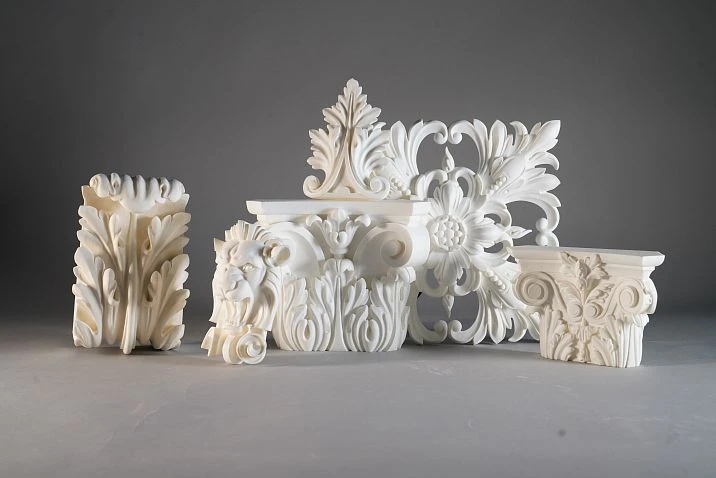
Polyurethane decorative elements can be incorporated into wall molding layouts, ceiling compositions, cabinet fronts, decorative door surrounds, and architectural features. Their ability to reproduce fine relief patterns makes them particularly attractive for traditional, transitional, neoclassical, and richly detailed interiors.
Yet finding the right decorative element is not simply a matter of choosing an attractive ornament.
A molding may have the right appearance but the wrong projection. A decorative onlay may be beautiful but too large for a cabinet panel. A ceiling medallion may complement a chandelier stylistically while remaining out of proportion with the room.
The most successful projects begin with a clear understanding of dimensions, architectural relationships, material characteristics, and installation requirements.
STAVROS offers a collection of polyurethane moldings and architectural decorative elements that can be used individually or combined into coordinated interior designs. For projects requiring more specialized solutions, the company can also review custom manufacturing inquiries, subject to production requirements and minimum order quantities.
This guide explains how to choose polyurethane decorative trim, develop custom arrangements, prepare specifications, and select architectural elements that work naturally in American residential and commercial interiors.
What Does Custom Polyurethane Molding Actually Mean?
The term custom polyurethane molding can describe several different approaches to architectural decoration. Understanding those distinctions is essential before requesting a quotation or planning an installation.




Custom Designs Using Standard Polyurethane Elements
A custom interior does not necessarily require a newly manufactured molding profile.
Many architectural compositions are created by combining existing products in a unique arrangement. A designer may select a particular polyurethane molding, pair it with ornamental corner details, add a central decorative onlay, and adjust the spacing to suit the room.
The result is a project-specific design made from established components.
This approach is often the most practical choice for:
-
Decorative picture-frame molding on walls
-
Accent walls in living rooms and bedrooms
-
Dining room wall panel designs
-
Cabinet and built-in furniture decoration
-
Door and mirror surrounds
-
Ceiling ornament arrangements
For example, a homeowner updating a traditional dining room might select a restrained profile from the STAVROS polyurethane wall molding collection and arrange it into symmetrical rectangular frames.
The frames can be sized individually to accommodate windows, doorways, and furniture. Additional ornamental pieces may be introduced where the room needs a more formal architectural character.
Although the molding itself comes from an existing collection, the complete composition is designed specifically for that space.
Наша фабрика также производит:

Смотреть весь Каталог продукции
Modified Dimensions and Special Production Requirements
Some projects require changes that cannot be accomplished simply by cutting standard lengths.
An architect may need a different cross-section, a coordinated ornamental element in an unusual size, or an existing decorative motif adapted to another application.
Such requests should be evaluated individually.
Changing the width or relief depth of a cast polyurethane component may require changes to the production tooling. Enlarging an ornament is not always a simple proportional operation: its details, minimum thicknesses, and mounting surfaces must remain suitable for the intended application.
STAVROS considers nonstandard manufacturing requests based on drawings, samples, and project requirements. Custom dimensions and individual production are generally associated with minimum quantities.
For a single room, a carefully selected combination of catalog elements may therefore be more economical than commissioning an entirely new mold.
Получить консультацию
Fully Bespoke Architectural Ornament
A completely original design requires a more extensive development process.
This might involve recreating an ornament from a historical photograph, developing a new decorative motif for a commercial property, or producing a coordinated set of architectural components from an approved design.
Depending on the project, the process may include technical drawings, digital modeling, prototype evaluation, tooling, sample approval, and production.
Feasibility, tooling requirements, minimum quantities, and production schedules need to be established before such a project is accepted.
For architects and professional designers, the important distinction is between a custom decorative arrangement and a completely new manufactured product.
Both can create distinctive interiors, but they have very different technical and financial requirements.
Why Choose Polyurethane for Architectural Molding and Decorative Trim?
Polyurethane is widely used in decorative architectural products because it combines detailed surface reproduction with practical installation characteristics.
It can reproduce fine floral patterns, acanthus leaves, scrollwork, geometric ornament, and classical decorative forms.
The material is especially useful where the design calls for a sculptural appearance but traditional carved wood or cast plaster would introduce additional weight, cost, or installation complexity.
Detailed Ornament Without Traditional Plasterwork
Classical interiors often depend on subtle variations in relief.
The difference between a convincing decorative element and a poorly executed one becomes apparent in the edges of an acanthus leaf, the depth of a scroll, or the clarity of a bead pattern.
Rigid cast polyurethane can reproduce these details with consistent geometry when manufactured using suitable tooling.
This makes the material particularly useful for repeating ornaments across cabinets, walls, doors, and decorative ceiling compositions.
STAVROS offers ornamental polyurethane trim in styles that include beaded detailing, classical ornament, and other raised decorative patterns.
Such elements can create a repeating visual language throughout a room without requiring individually carved components.
Lightweight Architectural Decoration
Compared with many traditional plaster details, polyurethane ornaments can be relatively lightweight.
This can make handling and positioning easier, particularly when installing decorative elements above eye level or on vertical surfaces.
However, low weight does not eliminate the need for appropriate attachment.
Installation requirements depend on the dimensions of the product, its projection, the receiving surface, and the manufacturer's fixing instructions.
Large ceiling compositions and decorative architectural elements may require a different installation approach from a small cabinet onlay.
Paintable Surfaces and Design Flexibility
Color can completely change the visual character of the same molding.
A decorative wall frame painted to match the wall produces a subtle architectural effect. Its presence is revealed mainly by shadows.
The same profile painted in a contrasting color creates a stronger graphic outline.
For traditional interiors, designers may choose warm white finishes, muted neutrals, or carefully controlled decorative highlights.
For more contemporary spaces, a monochromatic finish often allows architectural geometry to remain visible without dominating the interior.
Many STAVROS polyurethane products are offered with surfaces intended for subsequent painting. Always verify the preparation requirements of the specific item and use compatible primers and coatings.
A small finish sample is particularly valuable when a room contains different materials, such as polyurethane ornaments, primed MDF moldings, painted wood, and drywall.
Moisture Resistance and Material Selection
Polyurethane decorative elements can offer advantages in environments where ordinary wood products would require more careful moisture management.
However, moisture resistance does not mean that every decorative product is waterproof or approved for every location.
For bathrooms, powder rooms, kitchens, and other potentially humid spaces, evaluate the complete installation system, including the substrate, adhesive, joints, finish, and any additional materials used in the composition.
This is especially important with decorative kits that combine polyurethane ornaments and MDF profiles.
Exterior applications also require product-specific confirmation. A decorative component intended for interior use should not automatically be specified for outdoor exposure.
Types of Polyurethane Decorative Elements for Custom Interior Projects
A coordinated architectural design may require several types of decorative components. Each serves a different visual and practical function.
Polyurethane Wall Moldings and Panel Trim
Wall molding is one of the most versatile applications of decorative polyurethane.
In American interior design, the terms wall molding, panel molding, and picture-frame molding are frequently used to describe decorative profiles installed directly onto a wall to form rectangular or geometric patterns.
These profiles can be used in dining rooms, living rooms, bedrooms, hallways, home offices, and entryways.
The key to an effective composition is proportion.
A molding should relate to the height of the ceiling, the width of the wall, nearby door casing, and the scale of the furniture.
For example, a narrow molding may suit a modest wall panel near a doorway, while a broader profile may create a stronger visual presence on a large feature wall.
A useful example is STAVROS polyurethane molding MLDPU-002, a linear profile that can be incorporated into wall paneling, decorative furniture frames, and other architectural arrangements.
When selecting a profile, compare its face width, projection, supplied length, and cross-sectional shape. Two moldings with similar front views can create very different shadows once installed.
Decorative Polyurethane Onlays and Appliques
A molding establishes a line. An onlay introduces an ornamental focal point.
Decorative polyurethane onlays are applied to suitable surfaces to create raised details without carving directly into the underlying material.
Common applications include cabinet doors, dressers, wardrobes, built-in storage, decorative doors, furniture panels, and architectural wall features.
STAVROS offers polyurethane onlays and appliques for furniture and interiors in a variety of ornamental styles and shapes.
Designs include symmetrical centerpieces, vertical ornaments, horizontal motifs, decorative corners, and floral compositions.
The correct choice depends on the available mounting area and the role of the decoration.
A broad central onlay may look balanced on a large cabinet door but overwhelm a narrow drawer. A small floral accent may work beautifully on a bedside table while appearing insignificant on a full-height wall panel.
The solution is to work from actual dimensions rather than catalog photographs alone.
Before ordering, measure the available flat surface and consider:
-
Hardware clearance around knobs and pulls
-
Door and drawer movement
-
Ornament orientation
-
Relief depth
-
Distance from surrounding moldings
-
Symmetry across adjacent cabinet fronts
For traditional furniture, a central ornament can establish a focal point. Smaller related details can then repeat the motif across additional pieces.
This creates a consistent design without making every surface equally elaborate.
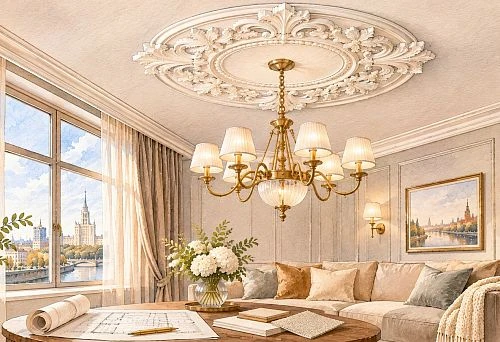
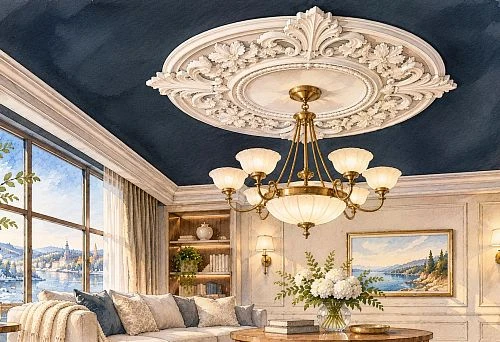
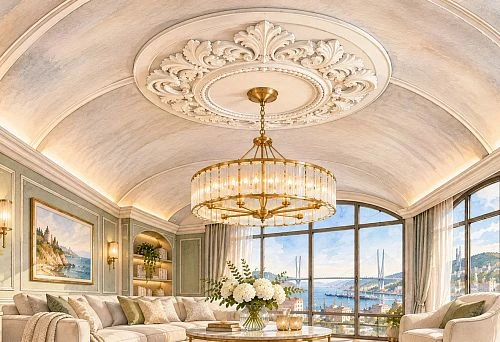
Polyurethane Ceiling Medallions
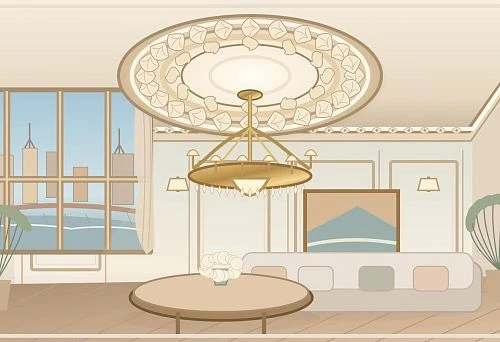
A ceiling medallion gives a chandelier or pendant light an architectural setting.
In traditional American homes, a ceiling medallion can be used in dining rooms, formal living rooms, foyers, bedrooms, and other spaces where the light fixture is an important part of the composition.
STAVROS offers decorative polyurethane ceiling medallions with sculptural ornamental designs.
The most important considerations are the overall size of the medallion, its relationship to the fixture, the ceiling height, and the surrounding architecture.
A large chandelier in a formal dining room may benefit from a substantial decorative composition. A smaller pendant in a compact room may require a simpler treatment.
The medallion should complement the lighting fixture rather than compete with it.
The center opening, fixture canopy, wiring access, and installation sequence must also be checked.
A ceiling medallion is a decorative element, not a structural support for the light fixture. The fixture must be independently supported by an appropriate electrical box or mounting system.
Architectural Rosettes and Decorative Accents
In American architectural terminology, a rosette often refers to a smaller ornamental element rather than a large ceiling centerpiece.
Rosettes can be used at the intersections of decorative trim, inside wall panels, at door casing corners, or on furniture fronts.
The STAVROS polyurethane rosette collection includes decorative elements suitable for a variety of architectural compositions.
Square rosettes can work particularly well where horizontal and vertical moldings meet.
Round and floral designs are useful as central accents or repeated ornamental details.
For projects requiring coordinated corners and centerpiece ornaments, browse the polyurethane molding decor collection.
When combining elements, verify that their relief depth, profile width, ornament scale, and orientation work together.
A decorative corner is not necessarily interchangeable with another piece simply because it has a similar floral pattern.
Polyurethane Corbels and Decorative Brackets
Corbels and brackets introduce a stronger sculptural element into a room.
They can be incorporated into decorative architectural surrounds, classical wall compositions, and suitable furniture designs.
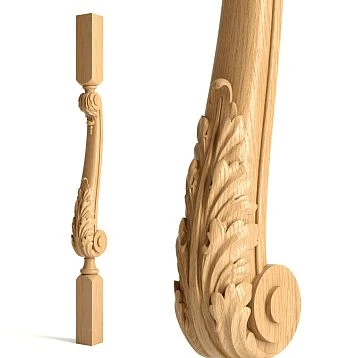
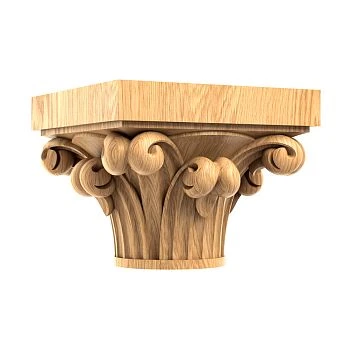
The STAVROS decorative brackets and capitals collection includes polyurethane elements in several ornamental styles.
A corbel should be selected by its height, width, depth, and relationship to the surrounding architectural details.
Projection is particularly important because the element is often seen from the side.
Decorative polyurethane brackets should not be assumed to support shelves, countertops, mantels, or other structural loads. Any load-bearing role requires appropriate documented specifications and an engineered mounting solution.
Near fireplaces or other heat sources, applicable clearances and material limitations must also be verified.
Coordinated Wall and Ceiling Decoration Kits
Creating a balanced composition from individual elements requires time and careful measurement.
Coordinated kits offer another approach.
The STAVROS wall molding kits and decorative collections include arrangements designed around related profiles and ornaments.
These can provide a starting point for custom room layouts, particularly where several matching panels will be repeated across a wall.
Some decorative kits combine polyurethane ornaments with primed MDF moldings. The complete product specification should therefore be reviewed before ordering.
For more elaborate architectural ceiling treatments, explore the decorative ceiling molding kits.
These compositions can help establish a coordinated relationship between a central ceiling detail and the surrounding ornamental frame.
Custom Polyurethane Molding Ideas for American Homes
The versatility of architectural trim becomes especially clear when it is considered in the context of specific rooms.
A detail that works beautifully in a formal dining room may need a different scale, finish, or level of ornament in a contemporary living room.
Dining Rooms: Picture-Frame Molding and Classical Proportions
A dining room is often one of the most effective places to introduce architectural wall details.
Picture-frame molding creates rhythm along the walls and can give an otherwise plain room a more finished appearance.
For traditional interiors, rectangular frames may be combined with a chair rail, baseboard, and existing ceiling trim.
In a room with approximately 9-foot ceilings, the molding layout should respond to the position of the dining table, windows, doorways, and any buffet or sideboard.
The strongest composition is not necessarily the one with the greatest number of frames.
A few well-proportioned panels often feel more deliberate than a crowded arrangement of smaller rectangles.
For a restrained design, use simple profiles painted in the wall color.
For a more formal setting, introduce selected ornamental accents from the STAVROS polyurethane decorative molding collection.
The result can resemble traditional architectural millwork while allowing the actual layout to be adapted to the dimensions of the room.
Living Rooms: Elegant Feature Walls Without Major Remodeling
A living room feature wall does not have to depend on expensive panel systems or extensive remodeling.
Decorative wall molding can create depth and visual organization on an existing suitable surface.
A popular approach is to place large rectangular molding frames behind a sofa or around a central architectural feature.
For contemporary and transitional interiors, the design can remain relatively simple.
A subtle frame painted in the same color as the wall produces an architectural effect without competing with artwork or furniture.
In a more classical living room, decorative corner elements or central onlays can introduce additional detail.
The size and positioning of the frames should respond to the room's actual furniture arrangement rather than an arbitrary geometric grid.
Bedrooms: Decorative Molding Behind the Headboard
The wall behind a bed is a natural focal point.
A decorative molding composition can reinforce that focal point while creating a sense of architectural balance.
For a king-size bed, the design may use one broad framed area or several related panels.
The arrangement should be coordinated with the width of the headboard, the nightstands, wall sconces, and any artwork.
In smaller bedrooms, narrow molding profiles and generous spacing help prevent the wall from appearing crowded.
For traditional bedrooms, a restrained decorative onlay may be introduced above the headboard within a larger molding frame.
The resulting feature can be elegant without requiring a completely new wall construction.
Kitchens and Built-In Cabinetry: Decorative Details Without Replacing the Entire Cabinet
Many American kitchens rely on flat-panel or Shaker-style cabinet doors.
While these designs are practical and adaptable, homeowners sometimes want a more traditional appearance without replacing every cabinet box.
Applied decorative elements can offer a way to modify the visual character of suitable painted cabinet fronts.
For example, polyurethane onlays can introduce ornamental detail on selected cabinet doors, range-hood surrounds, or decorative side panels.
The most successful designs usually focus on a limited number of surfaces.
A prominent cabinet above a range hood, a built-in hutch, or a central island panel may provide a more convincing location for ornament than every door in the kitchen.
Before installation, check the door material, finish compatibility, hardware clearance, cleaning requirements, and proximity to heat and moisture.
A polyurethane ornament can change the appearance of a cabinet front, but it does not alter the cabinet's underlying structural properties.
Foyers and Entryways: Creating a Strong First Impression
An entryway is where visitors first encounter the architectural character of a home.
Decorative molding around suitable wall areas, mirrors, and architectural openings can create a more deliberate transition between the entry and the rest of the interior.
In a two-story foyer, larger decorative elements may be appropriate because the viewing distance is greater.
In a narrow entry hall, shallow moldings and controlled ornament help preserve the sense of space.
A coordinated design might repeat a simple profile from the entryway into the adjacent living or dining room.
This continuity can make separate rooms feel architecturally connected.
Commercial Interiors: Consistency Across Multiple Spaces
Polyurethane architectural decoration is also relevant to professional interior design projects.
Hotels, restaurants, reception areas, boutiques, and other commercial spaces often require repeated decorative elements that maintain a consistent appearance.
For a multiroom project, the challenge is not only selecting an attractive profile. Designers must also coordinate dimensions, quantities, installation details, maintenance requirements, and replacement components.
A repeating molding system can establish a recognizable architectural identity across several spaces.
Custom production inquiries may be especially relevant where an original motif will be repeated in sufficient quantities to justify development and tooling.
Any commercial specification should also account for applicable building, fire, accessibility, and maintenance requirements.
How to Choose the Right Dimensions for Custom Polyurethane Molding
Architectural decoration depends on proportion.
Even a beautifully manufactured molding can feel out of place when its dimensions do not suit the surrounding architecture.
Start With the Finished Surface
Before choosing decorative trim, measure the actual area where it will be installed.
For walls, record the available width and height after accounting for existing trim, doors, windows, switches, electrical outlets, vents, and furniture.
For cabinet fronts, record the usable flat area rather than the total door size.
For ceilings, identify the light fixture, canopy dimensions, ceiling height, and any nearby architectural interruptions.
These measurements establish the practical limits of the design.
Consider Profile Width and Projection
The visible width of a molding influences how substantial it appears.
The projection determines the depth of the shadow it casts.
Two profiles of the same width can look very different when one is relatively flat and the other has pronounced relief.
A narrow profile may look refined on a cabinet door but disappear on a tall wall.
A deeply modeled profile may look impressive in a large formal room but overwhelm a small space.
Examine the product's cross-section whenever possible, not just the front photograph.
Check Straight Lengths and Corner Connections
Straight moldings are typically cut to fit the intended layout.
Before ordering, establish the supplied stock length and calculate the cutting requirements.
For a rectangular molding frame, the cutting plan must account for the outside dimensions of the frame, molding width, saw kerf, and any repeating pattern.
At a 90-degree corner, conventional mitered connections typically involve corresponding 45-degree cuts.
However, patterned moldings may require additional planning to preserve the continuity of an ornament at the joint.
Not all polyurethane profiles are flexible. A rigid molding should not be forced into an architectural curve without confirmation that the selected product and installation method are appropriate.
For arches and radius walls, consider whether a suitable curved component, special fabrication, or an alternative detail is necessary.
Use Full-Size Layouts Before Ordering
One of the simplest ways to evaluate a proposed decorative arrangement is to reproduce its outline with painter's tape.
Mark the planned frame dimensions directly on the wall.
Then view the design from the doorway, the primary seating position, and the center of the room.
This makes it easier to identify frames that are too narrow, uneven spacing, or decorative elements that compete with nearby furniture.
For cabinet onlays, a paper template cut to the listed dimensions can help establish whether the selected ornament is appropriately scaled.
A digital rendering is useful, but a full-size layout often reveals practical issues that are easy to miss on a screen.
How to Combine Moldings, Onlays, and Architectural Details
The best decorative interiors generally follow a consistent hierarchy.
One element establishes the main architectural structure. Smaller components then reinforce that structure without overwhelming it.
For example, a classical wall composition may use a linear molding to establish the frame, decorative corner elements to articulate the joints, and a single central ornament to provide emphasis.
The elements do not need identical patterns.
They do need compatible proportions, relief depth, and ornamental character.
Traditional and Neoclassical Interiors
Traditional interiors can accommodate more elaborate ornament, particularly where ceiling height and room dimensions provide sufficient visual space.
Acanthus leaves, scrolling foliage, symmetrical medallions, and classical bead patterns can work together when their scale is carefully controlled.
For a coordinated starting point, consider the STAVROS Versailles wall decor collection.
Its decorative language can help inform a formal wall composition, although the materials and dimensions of each individual set must be checked.
Transitional Interiors
Transitional design combines traditional architectural references with cleaner contemporary forms.
The goal is often to introduce character without creating a heavily ornamented room.
A simple wall molding frame may be paired with a restrained decorative accent.
The finish can remain monochromatic, allowing the relief to become visible through shadows.
This approach works particularly well in living rooms, bedrooms, dining rooms, and entryways where furniture and lighting already provide strong visual interest.
Contemporary Interiors
Contemporary architecture often emphasizes proportion, repetition, and clean geometry.
Decorative molding can reinforce these principles through carefully spaced rectangular frames or subtle linear details.
Even when the design is minimalist, the molding's projection and the shadows it creates remain important.
In such spaces, elaborate floral decoration is usually less relevant than consistency, alignment, and the quality of the final finish.
How to Prepare a Custom Polyurethane Molding Specification
A clear specification reduces the likelihood of ordering incompatible components or discovering dimensional problems during installation.
This is particularly important for projects involving repeated ornaments, large decorative compositions, or custom manufacturing inquiries.
What to Include in Your Project Brief
| Project information | What to provide |
|---|---|
| Application | Wall, ceiling, cabinet, door, mirror surround, or another location |
| Overall dimensions | Finished width and height in inches or millimeters |
| Material requirements | Polyurethane and any approved accompanying materials |
| Decorative style | Traditional, neoclassical, transitional, contemporary, or a reference design |
| Product references | STAVROS model numbers and links |
| Quantity | Individual pieces, molding lengths, or complete sets |
| Finish | Intended paint color, sheen, and surface treatment |
| Mounting surface | Drywall, painted MDF, wood, plaster, or another substrate |
| Drawings | Dimensioned elevations, sections, photographs, or 3D models |
| Delivery | Project destination and required schedule |
For architectural projects in the United States, inches and feet are often the most convenient units for the design team.
However, many manufactured decorative products are specified in millimeters.
Always confirm the original dimensions instead of relying on rounded conversions.
A small dimensional difference can become important when several molding pieces must meet precisely.
Drawings and Digital Models
Technical drawings are especially valuable when a decorative composition involves multiple coordinated pieces.
STAVROS provides access to product catalogs, DWG drawings, and 3D models that can assist with product selection and architectural coordination.
These resources can help designers check proportions, identify relevant product codes, and incorporate decorative elements into project documentation.
They are particularly useful for projects involving cabinetry, complex wall elevations, or repeated installations.
How to Order Custom Polyurethane Decorative Elements from STAVROS
Ordering decorative polyurethane products begins with the design and ends with a verified specification.
The following process helps homeowners, designers, and professional buyers avoid common selection mistakes.
Step 1: Identify the Architectural Application
Decide whether the project requires a molding profile, a decorative onlay, a ceiling medallion, a rosette, or a coordinated composition.
Start by browsing the appropriate section of the STAVROS polyurethane decoration catalog.
A clearly defined application makes product selection more efficient.
Step 2: Select Potential Products
Compare designs based on their dimensions, material, relief depth, and ornamental style.
Record the product codes for the elements that appear suitable.
If a project requires matching left- and right-hand ornaments, identify both versions explicitly.
Do not assume that one asymmetrical component can simply be rotated to create the opposite orientation.
Step 3: Develop the Layout
Prepare a sketch, dimensioned elevation, or digital model showing where the selected elements will be installed.
Include critical clearances and the finished dimensions of the complete arrangement.
For a large project, this drawing can also establish the relationship between the selected moldings and the surrounding architectural details.
Step 4: Request Design Assistance When Needed
Some projects involve enough components that professional product selection becomes valuable.
STAVROS offers a design project development and decorative element selection service intended to help coordinate products with furniture and interior dimensions.
The service requests photographs or drawings with measurements, visual references, and information about the preferred products.
The resulting selection can help establish a more organized basis for ordering.
Step 5: Confirm Custom Manufacturing Requirements
If the project requires a nonstandard component, prepare detailed information about the requested modification.
This may include a technical drawing, sample, reference image, proposed material, dimensions, and anticipated quantity.
Custom manufacturing inquiries are evaluated according to technical feasibility and production requirements.
STAVROS indicates that nonstandard products and size modifications are subject to minimum quantity conditions.
Before proceeding, confirm whether the project can use an existing product, requires a modification, or needs entirely new tooling.
Step 6: Confirm Production, Pricing, and Delivery
Once the product list and any manufacturing requirements have been reviewed, obtain confirmation of quantities, availability, price, production schedule, and delivery arrangements.
For buyers specifying a project in the United States, international shipping availability should be established directly with STAVROS before placing a time-sensitive order.
The published STAVROS payment and delivery information describes ordering procedures and delivery arrangements primarily for Russia and the CIS.
A U.S. customer should therefore request confirmation of the destination, shipping method, packaging, freight charges, applicable import requirements, and estimated delivery schedule rather than assuming that international delivery is available under the domestic terms.
How Much Does Custom Polyurethane Molding Cost?
The cost of a decorative molding project depends on more than the price of an individual component.
A standard product-based design and a completely bespoke architectural ornament can have very different cost structures.
Cost of Standard Decorative Components
For a project using existing products, the main cost factors include molding lengths, decorative onlays, corner elements, ceiling medallions, finishing supplies, and installation labor.
A simple arrangement with fewer joints may require less installation work than a more elaborate composition covering the same surface area.
Stock lengths and cutting waste also affect the total quantity required.
Instead of comparing only the price of individual moldings, compare the cost of the complete installed design.
Cost of Modified or Bespoke Products
Custom manufacturing may involve technical development, adjustments to existing tooling, new molds, prototypes, additional finishing operations, and minimum production quantities.
Those requirements can make a one-off decorative element disproportionately expensive compared with a similar design assembled from existing components.
For projects requiring numerous identical pieces, however, specialized production may be easier to justify.
The decision should be based on the actual project specification and a formal quotation rather than a general estimate.
Budgeting for Installation and Finishing
The material purchase is only part of the overall budget.
Additional considerations may include surface preparation, adhesive, joint treatment, primer, paint, installation equipment, labor, packaging, transportation, and replacement allowances.
For multiroom projects, organizing quantities by room can simplify purchasing and installation.
A professional specification should identify each product and its location so the installation team can work without uncertainty.
Installation and Finishing Considerations
Even a well-designed decorative composition can be compromised by poor surface preparation or unsuitable installation materials.
Prepare the Receiving Surface
The substrate should be sound, properly prepared, and appropriate for the selected attachment method.
Existing paint, loose coatings, dust, moisture, and uneven surfaces can affect adhesion and alignment.
Decorative elements intended for a smooth wall or cabinet surface should not be installed over an unsuitable substrate without additional preparation.
Dry-Fit Before Permanent Installation
Position the pieces temporarily to verify the arrangement.
Check frame dimensions, corner connections, ornament orientation, and clearances.
For repeated decorative details, confirm that each piece follows the intended alignment.
A dry fit is the opportunity to identify an incorrect component or adjust spacing before adhesive is applied.
Use Compatible Adhesives and Coatings
Select installation products according to the decorative component, receiving surface, environmental conditions, and manufacturer's instructions.
Avoid assuming that one adhesive is appropriate for every polyurethane product or every substrate.
Joint treatment, priming, and painting should also follow the requirements of the selected materials.
Where possible, test the proposed finish on a small sample.
This is particularly useful for ornate moldings, where excessive paint buildup can soften delicate relief details.
Account for Electrical and Building Requirements
Decorative elements around electrical fixtures require additional care.
Ceiling medallions should not obstruct necessary electrical access, interfere with approved mounting arrangements, or be used as structural supports.
For commercial and residential projects, verify applicable building and fire-safety requirements where relevant.
Products installed near fireplaces, heating equipment, or other heat sources must also meet the necessary material and clearance requirements.
Common Mistakes When Ordering Custom Polyurethane Molding
Choosing Decoration Before Measuring
A beautiful product does not automatically fit the intended surface.
Always establish dimensions and clearances before finalizing a decorative selection.
Overdecorating a Small Room
More ornament does not necessarily create a more sophisticated interior.
In compact spaces, carefully controlled detailing often produces a stronger result than densely repeated decoration.
Mixing Incompatible Profiles
Decorative components may share a general style while having different widths, projection depths, or connection details.
Verify compatibility rather than relying on visual similarity.
Ignoring the Actual Material
Not every molding or coordinated decorative kit is made entirely of polyurethane.
Some products may include primed MDF, polystyrene, or other materials.
Read the product specification carefully, particularly when the project involves moisture, painting, or specialized installation conditions.
Assuming All Polyurethane Products Are Exterior-Rated
Material type alone is not sufficient to establish suitability for an exposed exterior location.
Outdoor use requires confirmation of the selected component, finish, installation system, and environmental limitations.
Ordering Without a Complete Component List
A project can be delayed by missing corner pieces, incorrect left- or right-hand details, insufficient molding lengths, or overlooked finish requirements.
A complete bill of materials reduces these risks.
Why Consider STAVROS for Polyurethane Architectural Decor?
Choosing a decorative supplier involves more than reviewing attractive photographs.
For designers and professional buyers, product variety, dimensional information, technical documentation, and the ability to coordinate related elements are particularly important.
STAVROS offers polyurethane decorative products across several architectural categories, including moldings, furniture appliques, ornamental trim, rosettes, ceiling medallions, and decorative brackets.
The catalog allows buyers to compare individual designs and their listed dimensions before developing a complete decorative arrangement.
The availability of product drawings and models can also support more detailed planning.
For projects requiring specialized selection, STAVROS provides design assistance. Nonstandard manufacturing requests can be discussed where the necessary quantities and production conditions are met.
This makes the collection relevant to several types of customers.
Homeowners can explore decorative elements for renovating a room or updating suitable furniture surfaces.
Interior designers can coordinate moldings and ornament across wall, ceiling, and furniture details.
Architects can incorporate selected decorative components into project documentation and interior elevations.
Cabinetmakers and millwork professionals can use decorative polyurethane onlays and trim to develop more elaborate finished pieces.
Commercial project teams can investigate coordinated decorative systems for spaces where consistency and repeatable details matter.
The most important step is matching the selected product and ordering process to the actual requirements of the project.
Frequently Asked Questions About Custom Polyurethane Molding
Can polyurethane molding be customized without creating a new mold?
Yes. Many custom-looking architectural arrangements are created with standard moldings and ornamental elements.
The profiles can be cut and positioned according to a project-specific layout, provided the design respects their material and installation limitations.
This approach can be practical for wall frames, furniture decoration, and coordinated interior details.
Can I order polyurethane moldings in a different size?
Nonstandard dimensions may be considered through a custom manufacturing inquiry.
However, changing the dimensions of an existing cast ornament may require modified tooling or other manufacturing work.
STAVROS states that size changes and nonstandard production are subject to minimum quantity requirements. Contact the company with a drawing and proposed quantity to establish feasibility.
What is the difference between polyurethane molding and polyurethane trim?
The terms overlap in American architectural terminology.
Molding generally describes a shaped decorative profile used to define an edge, transition, or frame.
Trim is a broader term that can include molding and other finishing details.
For purchasing, the exact cross-section, dimensions, material, and intended application are more useful than the label alone.
Can polyurethane onlays be installed on existing cabinets?
They can be considered for suitable cabinet surfaces when the substrate, existing finish, attachment method, and operating clearances are compatible.
Measure the available mounting area and verify that the ornament will not interfere with cabinet hardware or door movement.
A test installation or finish sample may be appropriate before repeating the detail across an entire kitchen or furniture collection.
Are polyurethane ceiling medallions suitable for chandeliers?
Ceiling medallions can create a decorative setting around chandeliers and other ceiling fixtures.
However, the medallion must be compatible with the fixture canopy, electrical arrangement, and installation method.
The lighting fixture requires independent structural support.
Can polyurethane molding be used in bathrooms?
Some polyurethane decorative components may be suitable for humid interior environments.
The selected product, adhesive, coating, and substrate must all be appropriate for the location.
A mixed-material kit containing MDF requires particular attention because its components may have different moisture limitations.
Is polyurethane molding better than wood or plaster?
Each material has different advantages.
Wood offers natural grain and traditional millwork characteristics. Plaster provides a classic mineral-based decorative finish. Polyurethane offers detailed molded ornament and relatively lightweight installation characteristics.
The right choice depends on the appearance, performance requirements, location, budget, and design intent.
Can decorative polyurethane elements be used outdoors?
Some polyurethane products may be suitable for exterior applications, but this should not be assumed for every decorative item.
Confirm exterior suitability, environmental exposure limits, appropriate coatings, and installation requirements for the exact product.
How do I order custom polyurethane molding for a project in the United States?
Begin by selecting products or preparing a drawing that identifies the required decorative elements.
Record the dimensions, product codes, quantities, installation location, and preferred finish.
Contact STAVROS to confirm availability, any custom manufacturing requirements, and whether shipping to the intended U.S. destination can be arranged.
Production and international logistics should be agreed upon before scheduling installation.
Create a Distinctive Interior With STAVROS Polyurethane Decor
The difference between an ordinary room and a well-designed interior is often found in the architectural details.
A carefully proportioned wall frame, an ornamental cabinet onlay, an elegant ceiling medallion, or a coordinated decorative composition can give a space character without requiring a complete reconstruction.
With the right selection of polyurethane decorative elements, traditional craftsmanship-inspired details can be incorporated into modern residential and commercial design projects.
The process begins with accurate measurements, a clear visual concept, and a realistic understanding of what the selected products can accomplish.
Explore the STAVROS collection of polyurethane moldings and decorative architectural elements to find profiles, onlays, rosettes, ceiling medallions, and coordinated decorative details for your next project.
Whether you are designing a traditional dining room, updating custom cabinetry, developing a refined feature wall, or specifying architectural ornament for a larger interior, carefully selected decorative components can help turn your design concept into a cohesive finished space.
Discover STAVROS polyurethane decor, compare available designs, and prepare a specification that brings every architectural detail together.