



























Article Contents:
- What is skirting for a cabinet
- How skirting for a cabinet differs from molding, cornice, and floor skirting
- Skirting for a cabinet and furniture molding
- Skirting for a cabinet and cabinet cornice
- Skirting for a cabinet and cabinet plinth
- Skirting for a cabinet and floor skirting
- Where skirting for a cabinet is used
- For a hinged cabinet
- For a classic style wardrobe
- For a built-in wardrobe
- For a bedroom wardrobe
- For a living room wardrobe
- For an entryway wardrobe
- For a wardrobe with solid fronts
- For a wardrobe with slatted fronts
- What materials are suitable for wardrobe skirting
- Solid wood
- MDF
- Smooth or carved profile
- Profile for painting and enamel
- Profile matching the front color
- How to choose a skirting board for a wardrobe by style
- Classic wardrobe
- Neoclassical wardrobe
- Modern wardrobe
- Wardrobe with carved decor
- Wardrobe with straight fronts
- Wardrobe with slatted inserts
- How to choose size and proportions
- For a low wardrobe
- For a tall wardrobe
- For a narrow wardrobe
- For a massive wardrobe
- For a wardrobe with a cornice
- For a wardrobe with legs
- For a wardrobe with a plinth base
- How to match skirting boards for a wardrobe: a complete guide to harmony of details
- With furniture handles
- With Mouldings
- With applied decor
- With cornices
- With supports and legs
- With front decor
- With slatted panels
- Wardrobe with slatted fronts: how to connect the plinth and slatted decor
- Plinth for wardrobe in different interiors
- Wardrobe in bedroom
- Wardrobe in hallway
- Wardrobe in living room
- Wardrobe in classic interior
- Wardrobe in modern classic
- Wardrobe with slatted decor
- How to buy plinth for wardrobe and not make a mistake
- Which material to choose
- Which profile is suitable
- What size is needed
- What to order together with cabinet skirting
- How to match profile with facade and handles
- When to choose molding and when cornice
- Common mistakes when choosing decorative profile for cabinet
- Furniture decor: when one detail is not enough
- Frequently asked questions about cabinet skirting
- Buy cabinet skirting and full set of furniture decor
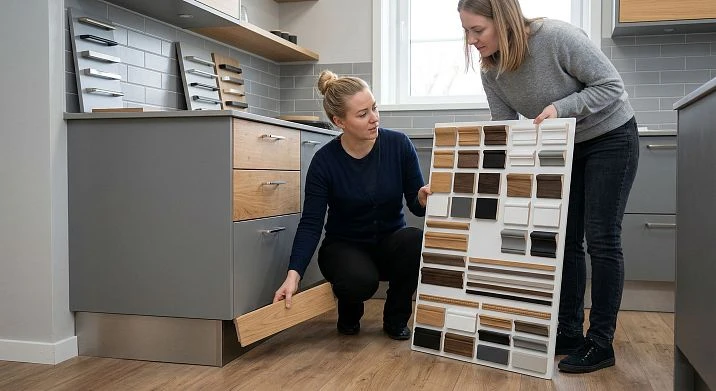
When the search bar shows a query for 'skirting board for a cabinet,' a whole range of needs lies behind it. One person wants to cover an unsightly gap under the bottom tier. Another is looking for a decorative bottom profile for a classic cabinet with shaped fronts. A third is selecting a plinth for a hallway unit, not knowing the correct name for what they need. And someone might even be searching for molding or cornice but calls it a skirting board—simply because it's clearer that way.
That's normal. And in this article, we'll break down all these meanings—calmly, in detail, and in order. What a decorative skirting board for a cabinet is, how it differs from molding and cornice, how to choose it by style and size, what to pair it with, and how to avoid mistakes when buying. No fluff, no vague phrases—just practical specifics from someone who has been working with wooden furniture decor for several decades.
Select elements to style the STAVROS cabinet in a unified look:
-
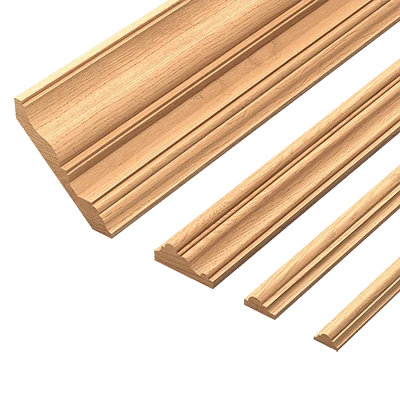
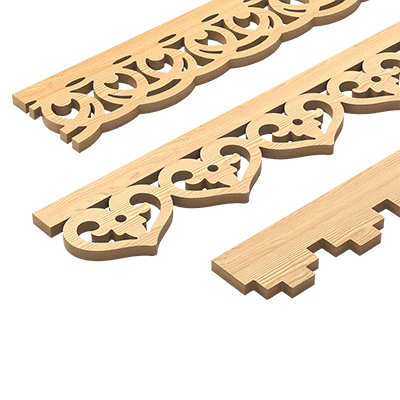
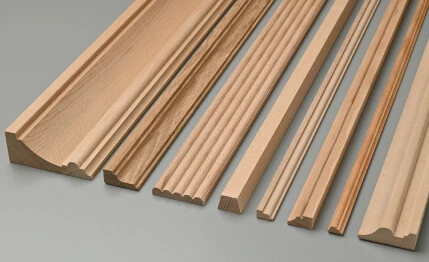
Moldings for furniture— profiled slats for fronts and trims
-
Cabinet cornice— top finishing of the body
-
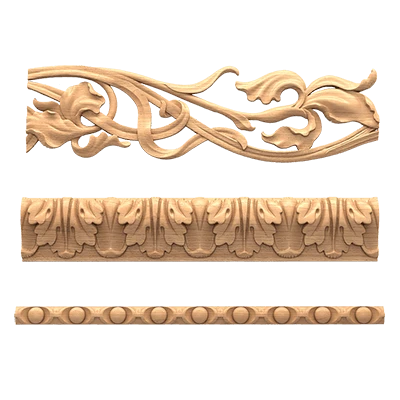
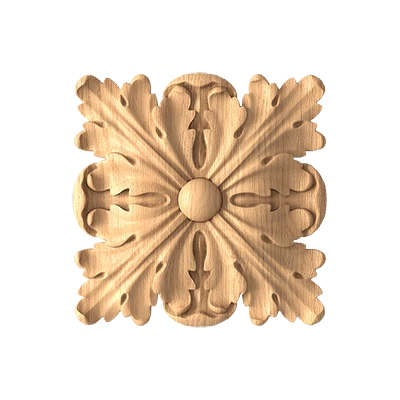
decor for furniture— carved overlays, ornaments, rosettes
-
Furniture Handles— wooden in classic, neoclassic, and contemporary styles
-
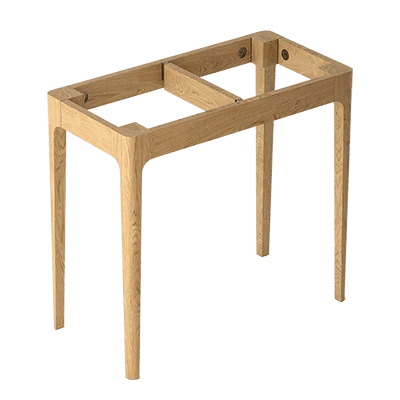
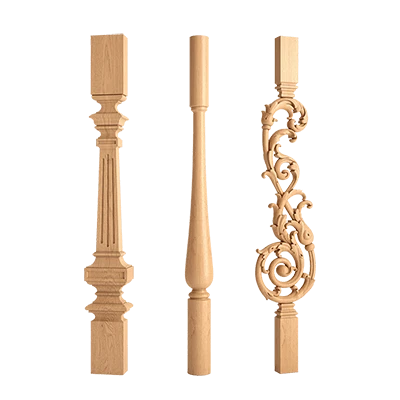
furniture legs— legs and supports for any type of cabinet
-
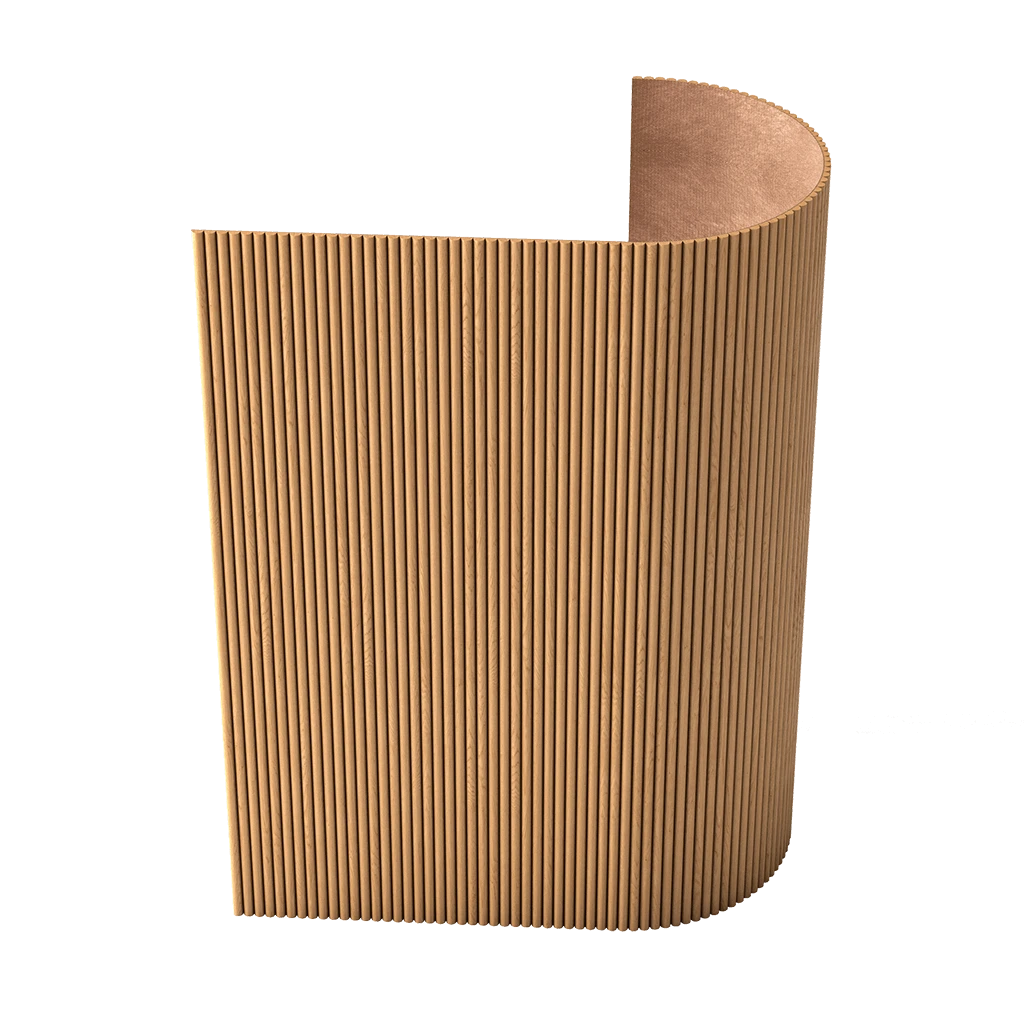
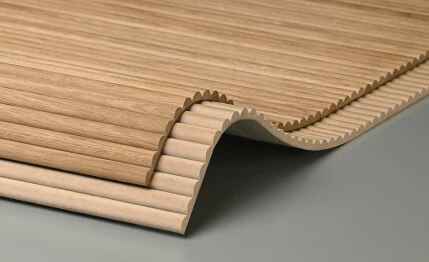
Slatted panels for cabinet— facade inserts with vertical rhythm
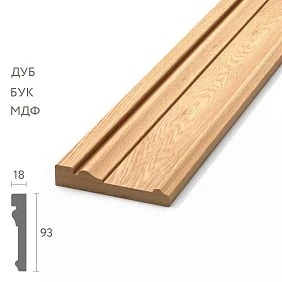
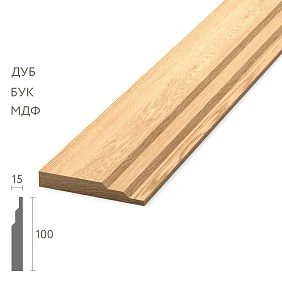
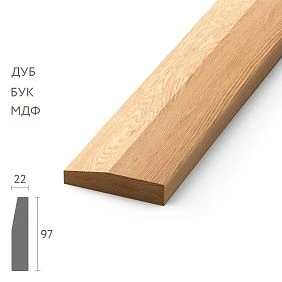
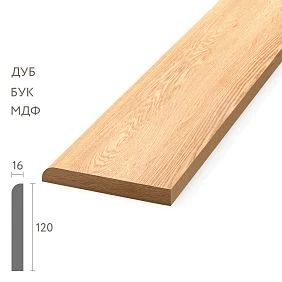
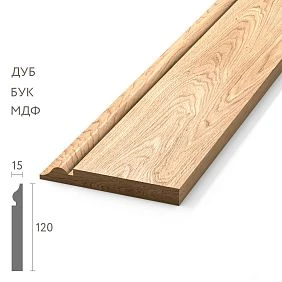
What is a cabinet skirting board
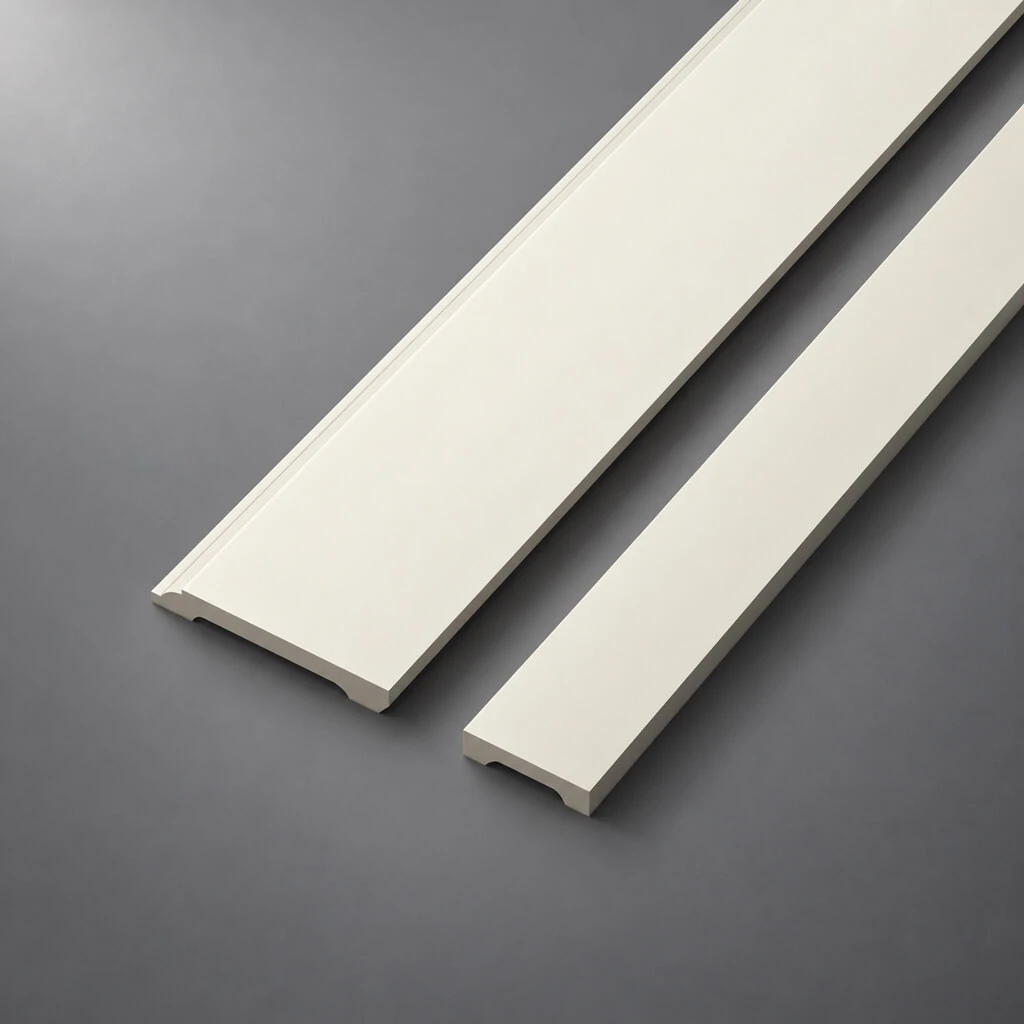
A straightforward answer to a simple question: a cabinet skirting board is a decorative lower profile that is mounted along the base of the furniture body. Its purpose is to cover the gap between the bottom of the cabinet and the floor, give the lower zone a finished look, and create a visual "plinth" on which the entire structure stands.
But in furniture-making practice, this term hides different things:
-
cabinet bottom strip — a simple covering strip without a pronounced profile
-
decorative cabinet skirting board — a profiled rail with relief that emphasizes the bottom line
-
cabinet plinth — a solid plinth panel that covers the entire base, including the legs
-
furniture skirting board — a term that combines all the above forms
-
lower decorative profile — a professional designation in furniture production
What unites all these options? One mounting point — the base of the cabinet. And one task — to make the transition from the body to the floor meaningful, beautiful, and stylistically cohesive.
A cabinet without a bottom profile is a cabinet that lacks finishing at the bottom. It sort of 'hangs' above the floor or stands on it without explanation. Even the most expensive fronts, the most elegant handles, and the most complex cornice on top won't save the impression if the bottom zone is not finished. This is one of those details that is noticed not by the eye, but by a feeling—something is wrong, something is unfinished.
It is the decorative skirting board for the cabinet that closes this gap. It creates a lower belt, builds the logic of the silhouette, and puts the cabinet in its place—both literally and figuratively.
A wide selection of wooden components for furniture finishing is available in the section Wood and MDF Products— there you can choose everything, from the bottom profile to the top cornice, in a single line.
How a skirting board for a cabinet differs from molding, cornice, and floor skirting board
This is the most important theoretical block in the article. This is where people get confused most often—and this leads to the wrong choice of parts.
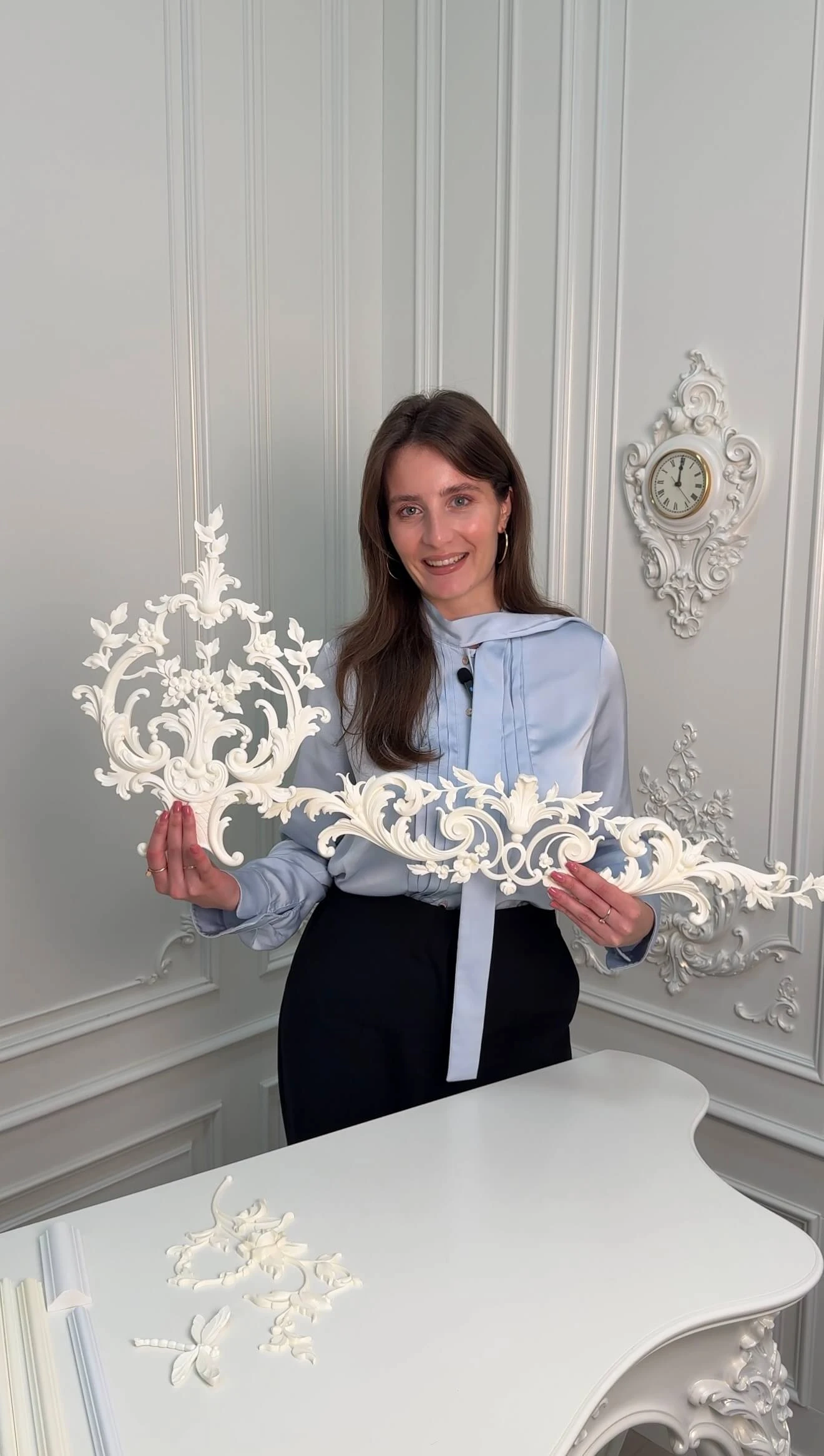
Our factory also produces:

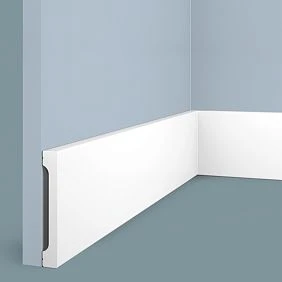
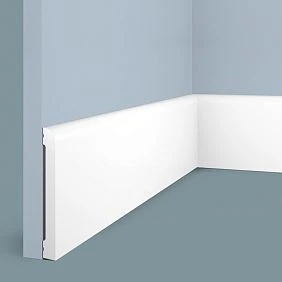
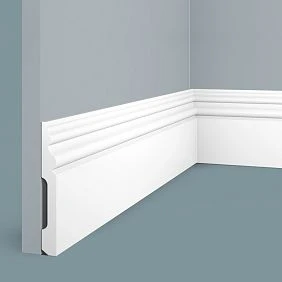
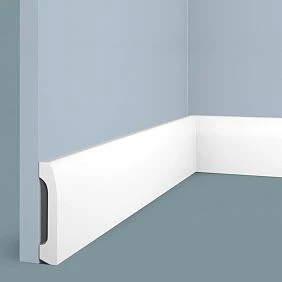

Skirting board for a cabinet and furniture molding
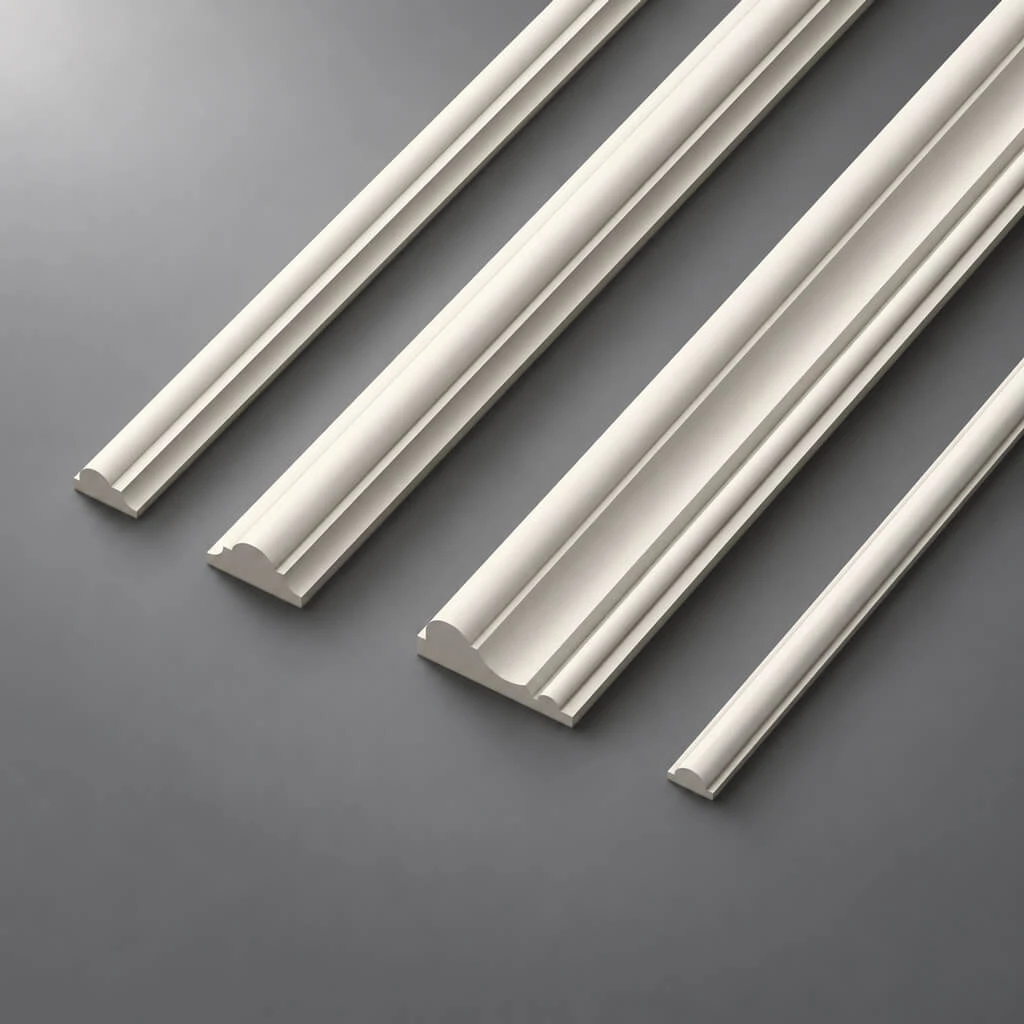
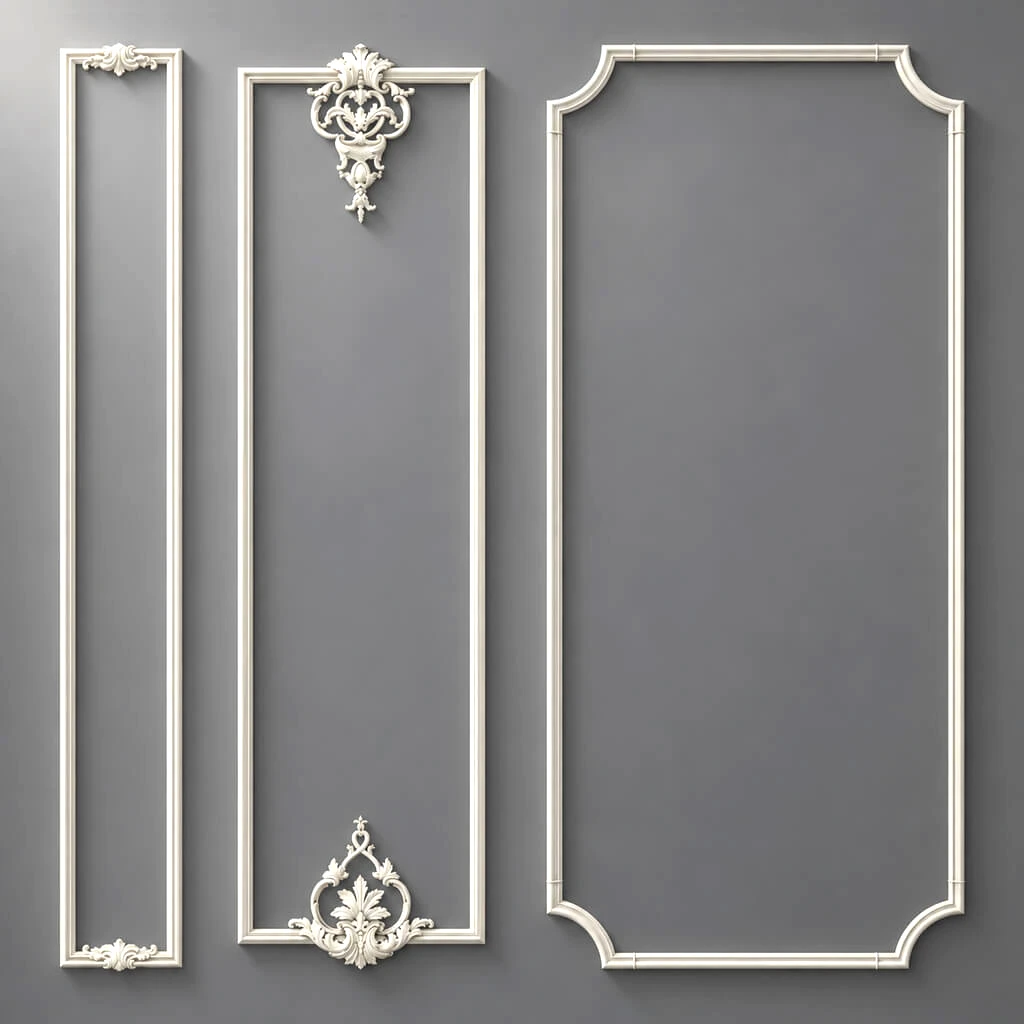
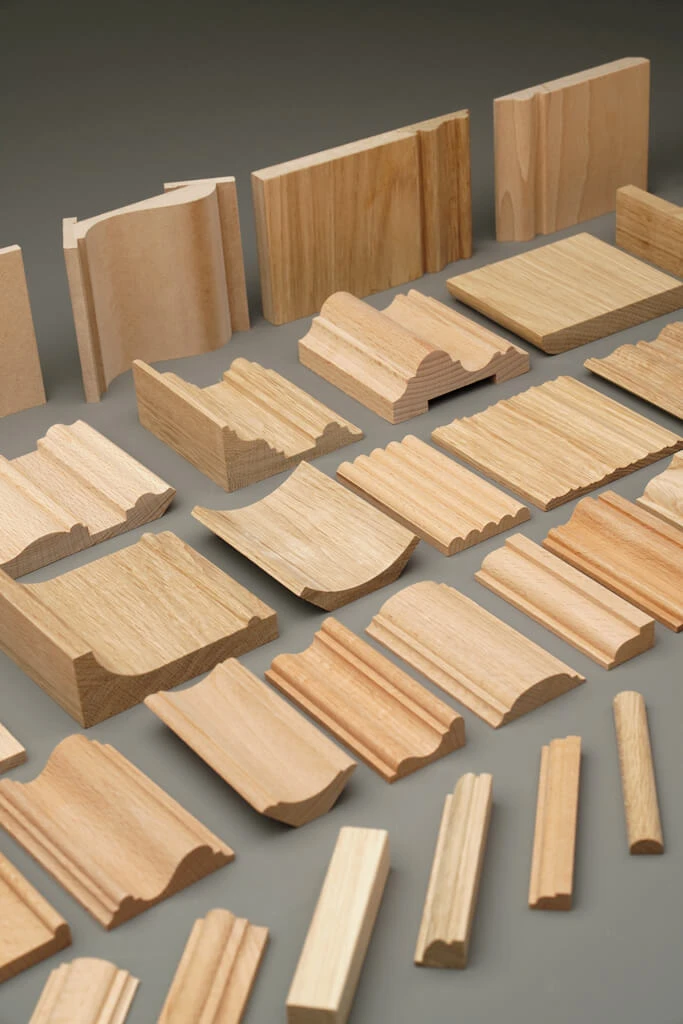
furniture molding— is a profiled strip that works on the plane of the front. Moldings create horizontal and vertical divisions, form frames around inserts, emphasize the panel, and add depth to flat panels. Molding is a decoration of the front.
A skirting board is the finishing of the bottom line of the body. It does not divide the front or create frames. Its zone is the base of the cabinet. In shape, the bottom profile of the cabinet and molding can be similar in cross-section, and that is why they are often called by the same word. But the logic of their application is fundamentally different: molding lives on the front, skirting board—at its base.
In a properly assembled cabinet in a classic style, moldings decorate the front, the cornice finishes the top, and the skirting board—the bottom. These are three different elements, each in its own position.
Get Consultation
Baseboard for wardrobe and cornice for wardrobe
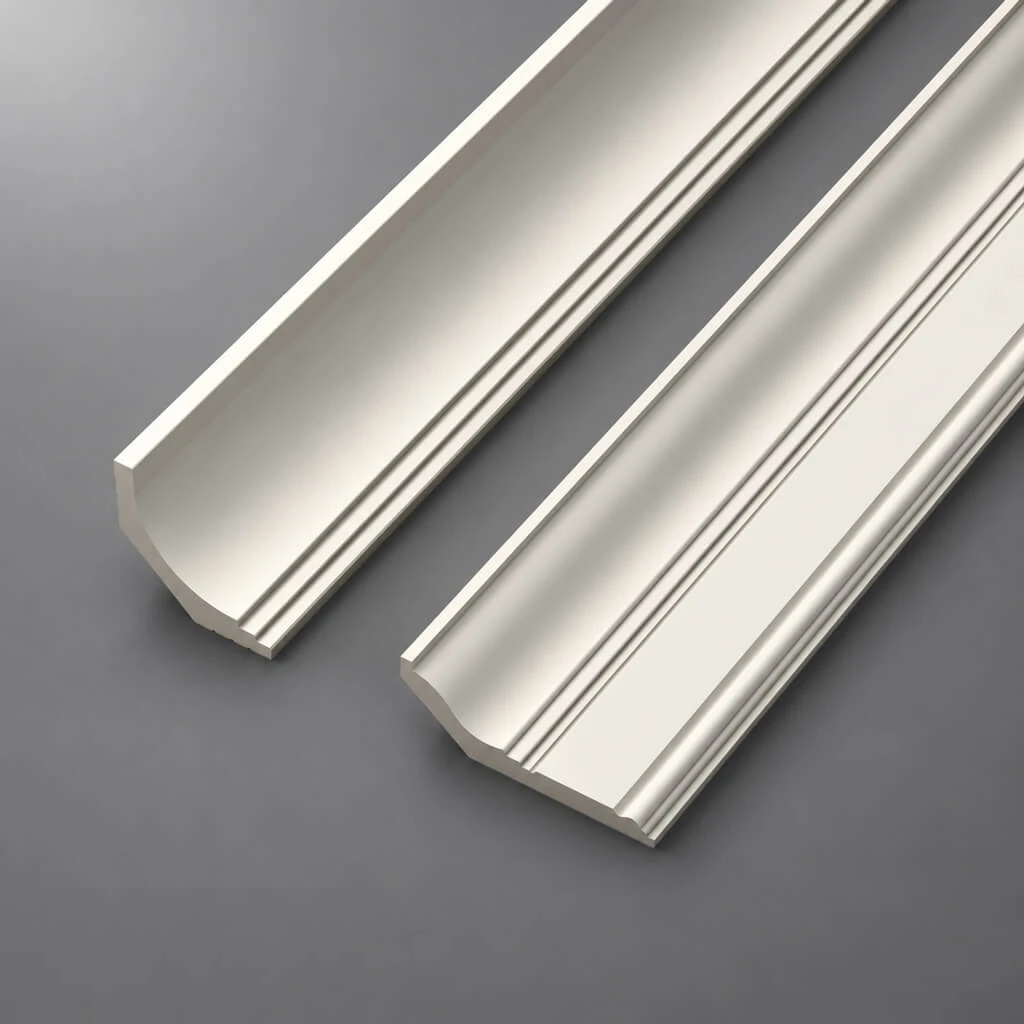
Cabinet cornice— is the mirror pair of the lower baseboard. If the baseboard finishes the base, the cornice finishes the top. In a classic wardrobe, they work in tandem: the cornice on top creates a 'crown', the baseboard below creates a 'plinth'. Removing one of them means destroying the vertical balance of the silhouette.
The cornice is typically more complex in profile and more massive in size — because the top line is perceived from a distance and requires more pronounced relief. The lower baseboard is traditionally more modest, but without it, the top of the wardrobe 'hangs in the air', losing its support.
MDF cabinet cornice— is one of the most popular options for wardrobes to be painted. It provides a clean profile without chips, takes enamel well, and is easy to install. You can read more about the logic of assembling cornices and moldings in the article Moldings and cornices for furniture.
Baseboard for wardrobe and plinth for wardrobe
The plinth of a wardrobe is a broader concept. The plinth refers to the entire base of the wardrobe as a whole, including its structural part. The decorative baseboard is the front panel of the plinth, what is visible from the front. Sometimes the plinth and the baseboard are the same product. Sometimes the plinth is a box made of chipboard, and the baseboard is a decorative overlay on it.
When people say 'buy a plinth for a wardrobe' or 'buy a bottom strip for a wardrobe' — they mean precisely the front decorative panel of the base. Essentially, this is the furniture baseboard.
Baseboard for wardrobe and floor skirting board
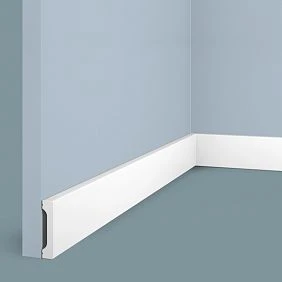
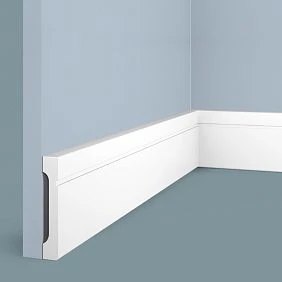
These are completely different products. A floor skirting board covers the joint between the floor and the wall. A baseboard for a wardrobe is the lower decorative belt of the furniture body. They should not be confused, they should not be substituted for each other — each has its own task, its own dimensions, and its own mounting point.
If you are interested specifically in the floor variant — there are separate categories for that: solid wood floor skirting board and MDF floor skirting board. But this has nothing to do with the wardrobe.
Where is skirting board used for a wardrobe?
For a hinged wardrobe
A hinged wardrobe is the most common type of cabinet furniture. This is where the lower decorative profile is most often found. On a hinged wardrobe, the lower belt is always fully visible—neither sliding doors nor pull-out parts cover it. Therefore, the profile must be well-designed: neat, proportionate, and in the correct style.
For a small hinged wardrobe, a simple smooth profile with a height of 40–60 mm is sufficient. For a massive wardrobe with carved fronts, a profile with relief proportionate to the upper cornice is needed.
For a wardrobe in a classic style
Classic Furniturerequires a systematic approach: every element is subordinate to the order logic. The lower profile of a classic wardrobe is a mandatory architectural element, not an optional detail. It must be made of solid wood, have a pronounced profile, and coordinate with the cornice, moldings, and handles.
For a wardrobe in a classic style, it is unacceptable to use a smooth rectangular strip without relief—this will impoverish the image and destroy the stylistic integrity.
For a built-in wardrobe
A built-in wardrobe in a niche or along a wall is a special case. Here, the lower profile is often replaced by a transition to the floor skirting board or is removed altogether if the wardrobe stands flush with the floor without a gap. But if the built-in wardrobe has decorative fronts in a classic style, a lower trim is necessary. It creates a boundary between the wardrobe plane and the floor, making the built-in structure a full-fledged furniture object, not just a built-in niche with doors.
For a wardrobe in the bedroom
A wardrobe in the bedroom serves both functional and decorative purposes. It occupies a significant portion of the wall and is perceived as part of the interior composition. The plinth for a bedroom wardrobe is chosen to match or contrast with the room's floor skirting—depending on whether the wardrobe is built into the overall finish or stands as a separate piece.
In a classically styled bedroom, the lower profile of the wardrobe often coordinates with the bed, dresser, and nightstands. If all pieces are from the same collection, this is resolved automatically. If the furniture is assembled piece by piece, the profile system needs to be planned in advance.
For a wardrobe in the living room
A wardrobe in the living room is most often placed in a high-visibility area: near the TV zone, against an accent wall, or framed by decor. Here, the plinth for a living room wardrobe is part of the overall decorative concept of the space.decorative slatted panelson the wall next to the wardrobe is a popular solution where the lower profile of the furniture repeats the horizontal line of the lower edge of the panels.
For a wardrobe in the hallway
The hallway is a high-traffic area. The wardrobe here primarily serves a practical function, so its lower profile should be not only attractive but also practical. MDF for painting or enamel is a good choice for the hallway: it is easy to clean, resistant to moisture, and does not deform under mechanical stress.
The plinth for a hallway wardrobe is chosen slightly more modestly than for a classic living room: functionality is key here, not demonstrative decorativeness.
For a wardrobe with solid fronts
A wardrobe with solid, smooth fronts embodies minimalism or modern classic style. The lower profile here should be restrained: a rectangular plinth with a slight bevel, no relief, matching the color of the front. The goal is to define the bottom line without drawing unnecessary attention.
For a wardrobe with slatted fronts
Slatted panels for the wardrobecreate strong vertical dynamics on the front. The lower profile beneath them is a horizontal pause. It should be concise, clean, without ornament. It is precisely the contrast of the horizontal plinth and the vertical rhythm of the slats that creates architectural clarity of the silhouette.
What materials are suitable for a wardrobe plinth
Solid wood
A wooden wardrobe plinth made of solid oak, beech, or ash is the choice for quality furniture with a long lifespan. Natural wood holds its profile, does not lose shape, takes lacquer, oil, or paint well. A solid wood wardrobe plinth can be restored, repainted, sanded—it is a product that ages gracefully.
Pogonazh iz massivais a wide range of profile products made from natural wood: from simple slats to complex shaped profiles. This is exactly where you should look for the lower decorative profile for a classic or neoclassical wardrobe.
An important nuance: solid untreated wood is sensitive to moisture. In the hallway or kitchen—coat it with lacquer or use an enamel-coated version.
MDF
An MDF wardrobe plinth is the optimal choice for wardrobes to be painted, built-in structures, modern sets. MDF is stable, does not crack, provides a perfectly smooth surface for enamel. A white MDF wardrobe plinth for painting is one of the most popular requests: it is easy to install, affordable, and easily matches any shade of the front.
MDF is also used to makeMDF cornices for furniturewhich perfectly combine with lower profiles made of the same material—this ensures unity of the upper and lower lines of the wardrobe.
Smooth or carved profile
The choice between a smooth and carved profile dictates the style. Smooth rectangular or with a small bevel — for minimalism, Scandinavian style, modern classic. Carved cabinet skirting with ornament — for classic, baroque, empire. Semi-profile with a roundover — a universal option that works in a wide range of styles.
Profile for painting and for enamel
Cabinet skirting for painting is a product made of MDF or primed solid wood that does not have a finish coating. You paint it yourself in the desired color. This gives complete freedom in selecting the shade. Cabinet skirting for enamel is white or colored, with a glossy or matte surface. Looks good on kitchen units, cabinets in the hallway, and built-in structures.
Profile in the color of the facade
The neatest option is when the lower profile is painted in the exact color of the facade. Then the boundary between the skirting and the doors is minimal, and the eye perceives the cabinet as a single monolithic volume. This is especially effective for built-in structures in neutral interiors.
How to choose cabinet skirting by style
Classic cabinet
Classic is the most demanding style. Here the lower profile is a full-fledged architectural element. It must have a pronounced relief: a bead, a roundover, a shelf, or their combination. Profile height — from 60 to 120 mm. Material — solid wood.
Classic Furnituresets strict rules: cornice, moldings, skirting, handles — all from the same profile system. Mixing series is not allowed: inconsistency of details instantly destroys the feeling of quality.
A detailed breakdown of the stylistics and details of classic furniture — incomplete guide to classic furniture.
Neoclassical wardrobe
Neoclassicism allows for greater freedom. The profile can be thinner, the relief softer. An S-shaped section with clean ends works well. It is important to maintain a sense of completeness and symmetry, but without overloading with decor.
For a neoclassical wardrobe — solid wood with a neutral varnish or tinted enamel.applied decoration for furnitureHere, it is appropriate in minimal quantity: one rosette or a horizontal overlay on the facade — no more.
Modern wardrobe
For a wardrobe in a modern style, the bottom profile is strictly functional. A rectangular plinth with a small bevel or none at all. Height 20–40 mm. Smooth MDF under enamel or painted solid wood. Minimum relief, maximum purity of lines.
Wardrobe with carved decor
If the wardrobe facades are adornedcarved decorative appliqués for furniture— with rosettes, ornaments, acanthus leaves — the bottom profile must support this level of detailing. A smooth, flat plinth under carved decor looks like an unfinished phrase. A profile with a pronounced section is needed — a bead, a fillet, a cavetto.
The ideal solution is to take the bottom profile from the same series as the moldings on the facade. This guarantees unity of plasticity along the entire height of the wardrobe.
Cabinet with straight fronts
A cabinet with straight, smooth fronts without frames or carving is about minimalism and restraint. The bottom profile should follow this logic: a straight line, a thin edge, no relief. Everything works towards the purity of the silhouette.
Cabinet with slatted inserts
For a cabinet withwith wooden slatted panelsthe bottom profile is a horizontal "landing strip" on which the vertical slats rest. Contrast is important here: the active vertical texture of the slats + the calm horizontal base. This creates architectural clarity that doesn't need additional decoration.
How to choose the size and proportions
Mistakes in the size of the plinth are immediately visible — even if a person can't explain exactly what's wrong. It's intuitively felt: a heavy bottom, or conversely — an empty, unfinished base.
For a low cabinet
Cabinets, low-height wardrobes, bedside tables — for them, the bottom profile should be delicate. Plinth height 20–40 mm, section light. A massive profile will "eat up" the height of the item and make it visually even lower.
For a tall cabinet
Cabinets 220 cm and taller require a pronounced baseboard—it visually 'holds' the volume. A too-thin baseboard under a tall cabinet looks like a gap. The optimum is 60–90 mm in height with a shaped cross-section.
For a narrow cabinet
A narrow cabinet requires a vertical orientation of all elements. The baseboard should not weigh down the base: a thin horizontal strip is enough, which emphasizes the verticality of the piece without interrupting it.
For a massive cabinet
A massive cabinet—a sideboard, bookcase, or wardrobe unit—requires a proportional baseboard. Here, a multi-tiered baseboard 80–120 mm high is possible. This creates a sense of solidity that matches the scale of the piece.
For a cabinet with a cornice
If a cabinet has a cornice, the baseboard is chosen in proportion to it. The rule is simple: the more complex and massive the cornice, the more pronounced the baseboard should be. Otherwise, the top will be 'heavy' and the bottom empty, and the silhouette will lose balance.
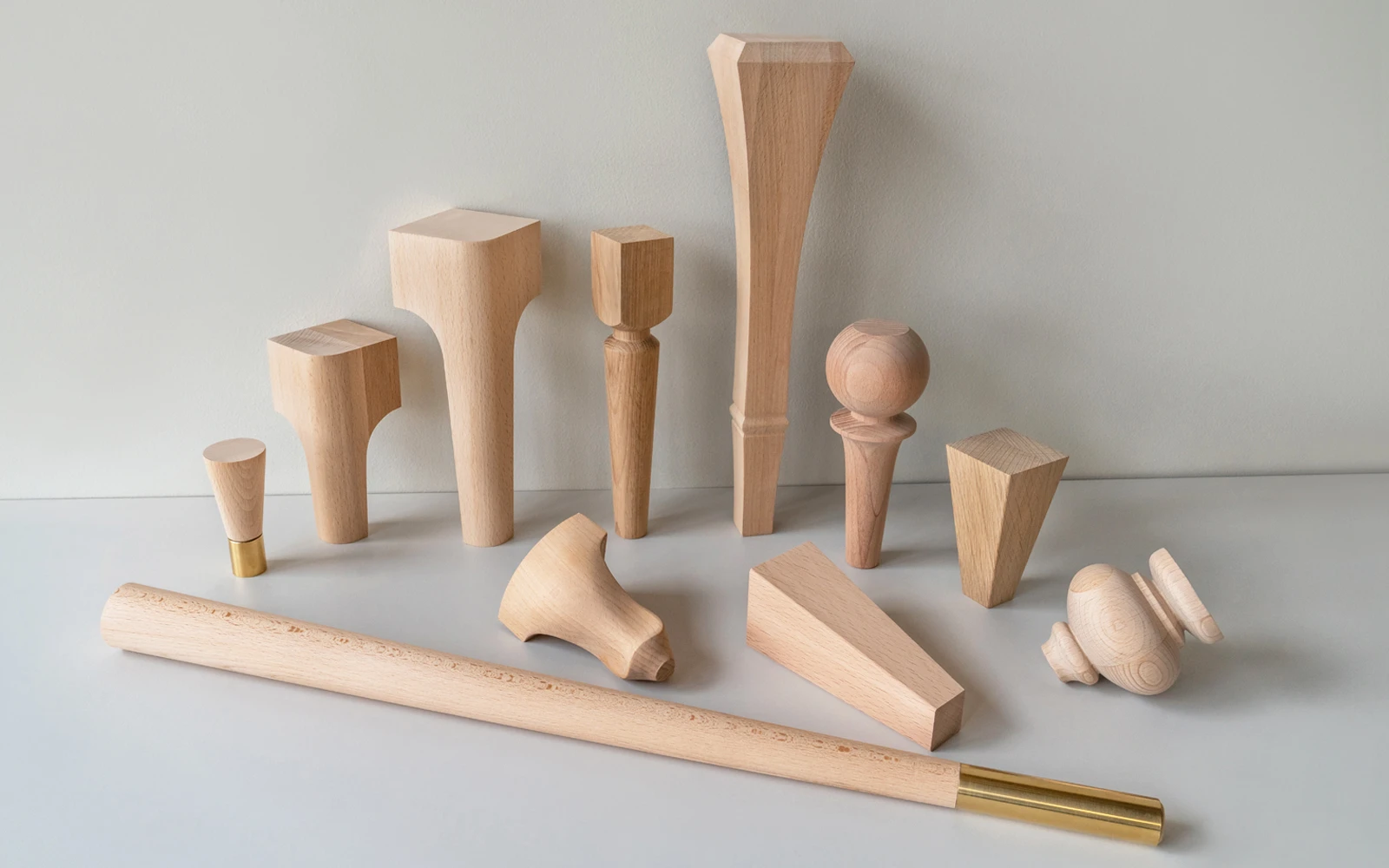
For a cabinet with legs
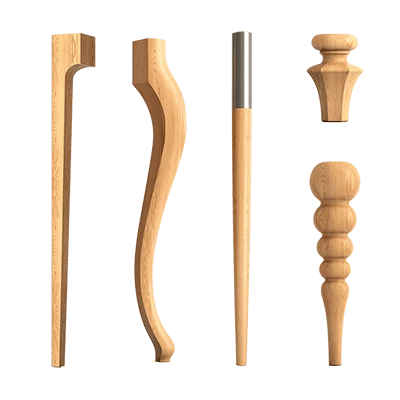
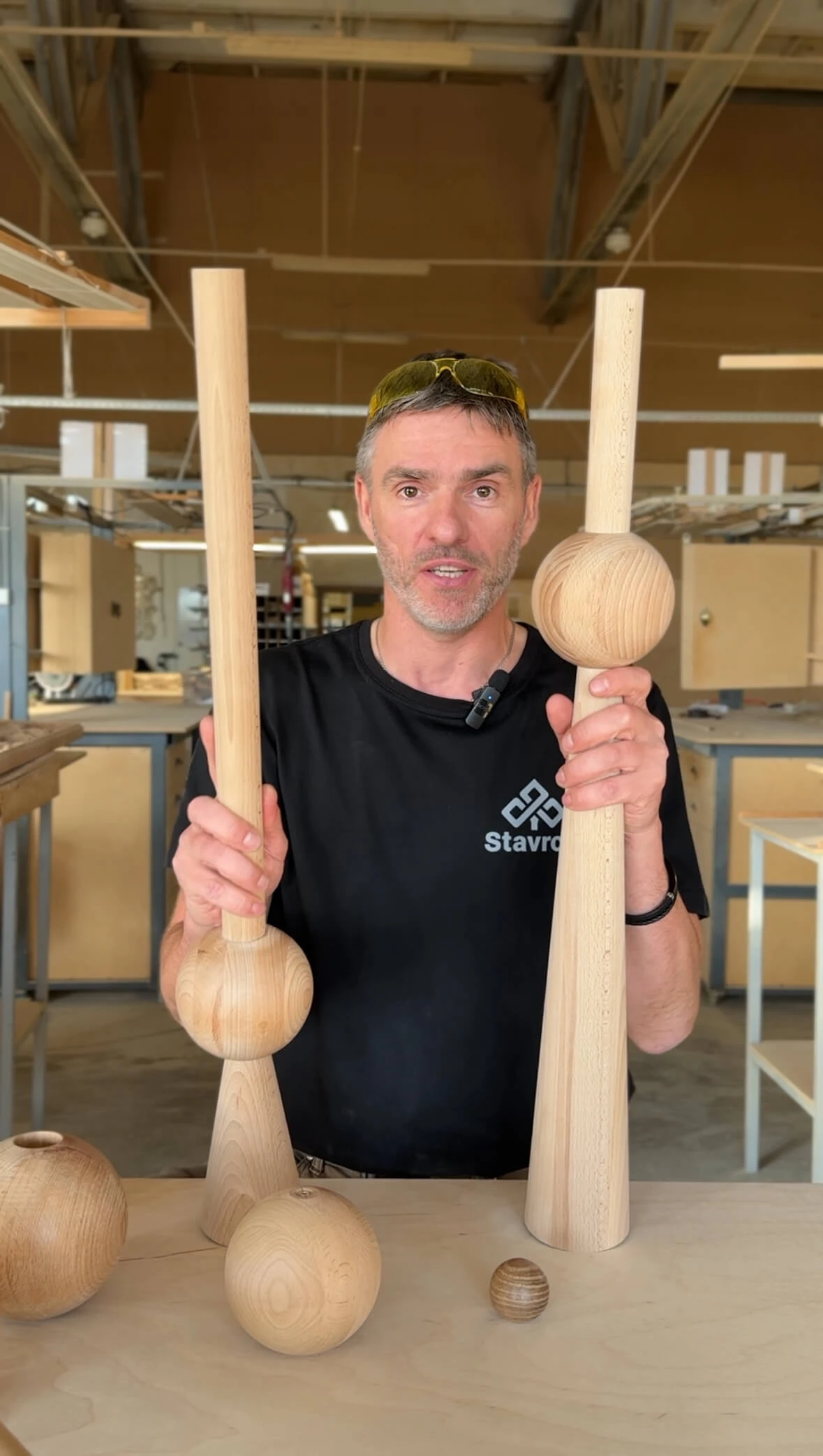
If a cabinet stands onlegs for furniturelegs, a lower strip or baseboard is usually not needed—the legs themselves create the lower decorative accent. In this case, only a small trim on the lower part of the facade can be used: a thin horizontal rail that marks the base of the body without covering the space between the legs.
For cabinets with a plinth base
When a cabinet stands on a solid plinth—especially relevant for built-in structures, kitchen sets, large bedroom cabinets—the decorative skirting board serves as the front panel of this plinth. The height is selected according to the plinth space height (usually 100–160 mm).furniture legsInside the plinth and the lower decorative profile outside are two parts of one structural system.
What to match cabinet skirting with: a complete guide to detail harmony
This is a key commercial section. This is where mistakes are born and where the best solutions are found. A cabinet is never evaluated by a single element. It is perceived as a whole.
With furniture handles
Furniture Handles—the first thing the eye notices. And they should be in dialogue with the lower profile. If the handles are turned, wooden, of classic shape—the skirting should also be made of solid wood with a shaped profile. IfWooden handles with coatingunder white enamel—the skirting is made of MDF under the same enamel. IfWooden handle without coatingis used—a natural version with varnish or oil.
Inconsistency between handles and the lower profile is the most common mistake when assembling a cabinet. The handle is the accent, the skirting is the background. But the background must also be correct.
Complete breakdown of how to chooseWooden wardrobe handles— in a separate article with detailed recommendations.
With moldings
Moldings for furniture— the middle zone of the facade. The profile section of the molding and plinth should be from the same system. If the molding has an S-shaped profile — the plinth should support it, not contradict it. Three different 'voices' in the profile system — that's noise, not music.
With applied decor
applied decoration for furniture— point accents on the facade: rosettes, cartouches, ornaments. The lower plinth in this case plays the role of a 'shore' — it completes the decorated plane from below, without competing with the details above. Therefore, in a richly decorated cabinet, the plinth is slightly more modest than the moldings, but still with relief.
With cornices
Cornice and lower plinth — this is the vertical balance of the cabinet. Their dimensions should be proportional. From the same series — perfect. From different ones — acceptable if the profile sections are close in plasticity.
MDF furniture cornicein combination with MDF plinth for painting — a proven system for cabinets in neutral interiors. This is an economical, clean and technological solution.
With supports and legs
If the cabinet is onfurniture supports— the lower profile is either not needed, or is used as a horizontal strapping above the supports. If the cabinet is on a plinth — the plinth covers the entire lower zone. Supports and plinth — alternative solutions for the lower part, not competing, but complementary.
With facade decor
Facade decor includes handles, moldings, overlays, and carved inserts. The lower profile ties their logic together from below. It shouldn't be the brightest element but must be part of a unified language. The principle is simple: if the facade is rich, the plinth is expressive. If the facade is restrained, the plinth is minimalist.
With slatted panels
Cabinet with slatted facades: how to connect the plinth and slatted decor
A modern trend is furniture with slatted panels for cabinets as facade inserts. This is one of the strongest design moves in recent years: slats provide vertical dynamics, texture, and depth. But it's precisely their activity that requires clear horizontal finishing from below.
The lower profile under a slatted facade isn't just a strip. It's an architectural freeze-frame. The vertical slats meet the clean horizontal of the plinth—and it works flawlessly. The best choice here: a rectangular or small-beveled profile made of MDF or solid wood, in the color of the slats or a neutral shade.
Slatted furniture panels pair well with a smooth lower profile and minimalist furniture handles. If the wall behind the cabinet is also finished with slatted panel on the wallcreates the effect of a unified environment where the furniture and wall speak the same language.
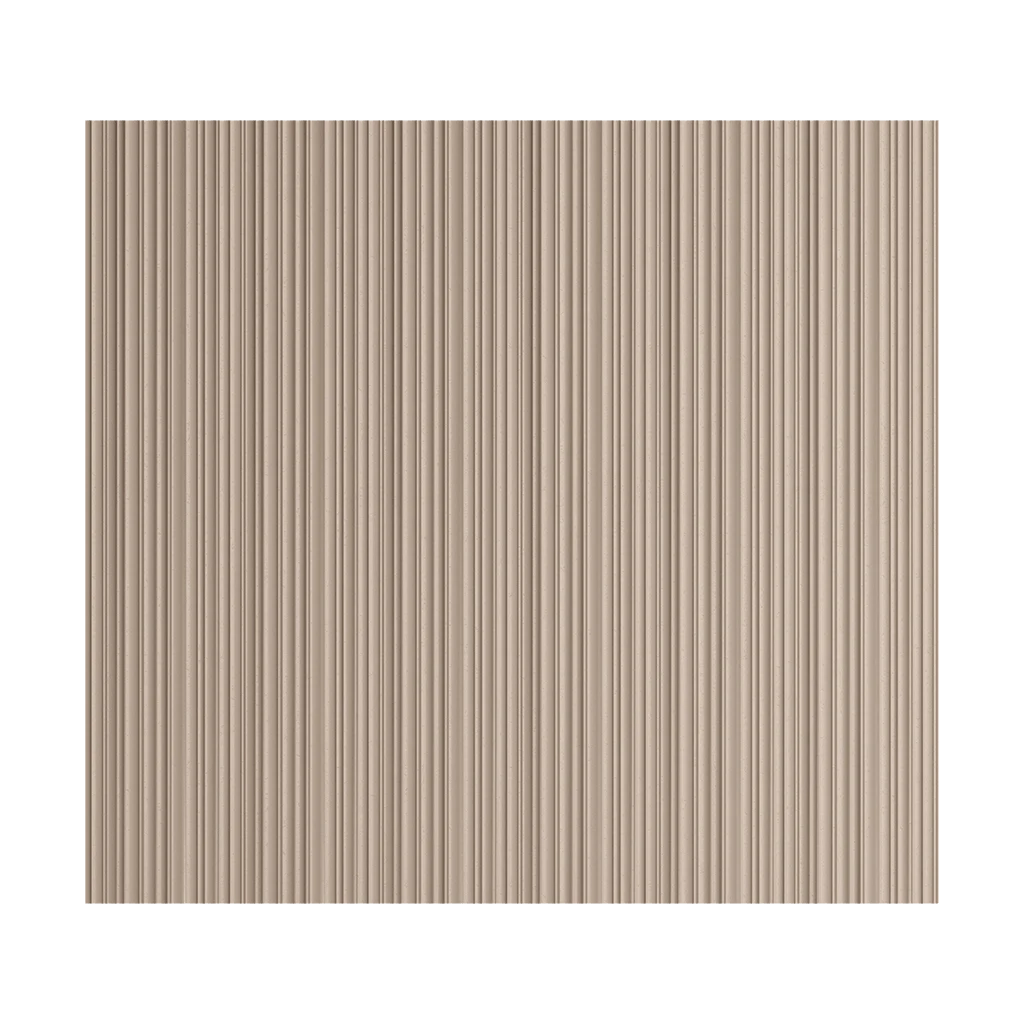
slatted furniture panelsolid wood — natural texture with a live wood grain pattern.slatted MDF panel— a smoother surface, ideal for painting. Both versions work well on cabinet fronts.
For a modern cabinet with a slatted texture, select in a unified style:
-
Rafter panelsfor fronts and walls
-
decorative profilefor horizontal division
-
Furniture Handlesin a laconic style
-
supports and legsto match the overall character of the furniture
Cabinet skirting for different interiors
Wardrobe in the bedroom
The bedroom is an intimate space. Everything here should work towards a feeling of coziness and integrity. The wardrobe in the bedroom is often the dominant piece of furniture, and its lower trim affects the overall look of the room. The baseboard for a bedroom wardrobe is chosen in the context of the overall color scheme: it should either blend with the facade or softly contrast with the floor—depending on the design intent.
If the bedroom has a classic interior—a lower profile made of solid wood with relief, coordinated with the cornice and handles. If modern—a smooth enamel profile matching the color of the doors.
Wardrobe in the hallway
Here, practicality is more important than decorativeness. The lower profile for a hallway wardrobe should be resistant to moisture from shoes, not deform from accidental impacts, and be easy to clean. MDF with enamel is optimal. A height of 50–80 mm is sufficient to cover the adjustable legs and create a neat lower band.
Wardrobe in the living room
The wardrobe in the living room is on display. Especially if it's a wall unit, display cabinet, library bookcase, or TV stand with a top unit. Here, the lower profile is a full-fledged decorative detail that is noticed and evaluated. The correct baseboard for a living room wardrobe creates a sense of completeness, while an incorrect one gives a feeling of incompleteness.
Wardrobe in a classic interior
In a classic interior, the wardrobe should be organic to the entire space. The baseboard for a classic wardrobe is part of the overall profile system, which can be traced from the floor baseboard through the furniture baseboard to the moldings, cornices, and top decorative plasterwork. Everything is in one rhythm, with the same depth of relief, with the same character of the profile.
How to build competentlythe art of furniture decoration— a topic for a separate discussion, which covers methods of transforming furniture through details and decorative systems.
Wardrobe in modern classic style
Modern classic is the most popular request today. A wardrobe with classic fronts, but without heavy baroque decor. The plinth here is shaped but restrained: one profile belt, soft relief, solid wood or high-quality MDF. This allows preserving the character of classic style without its pomp.
Wardrobe with slatted decor
Already discussed above — a horizontal, laconic plinth, maximum cleanliness, minimum ornament.decorative slatted panelsas elements of the front themselves carry all the decorative load, not requiring support from the lower profile.
How to buy a plinth for a wardrobe and not make a mistake
Which material to choose
If the wardrobe is made of natural wood — choose solid wood. If for painting — MDF. If in a humid area — primed MDF or painted solid wood under varnish.
Which profile is suitable
Focus on the furniture style. Classic — shaped relief profile. Modern style — smooth rectangular. Transitional — with a soft curve without ornament.
What size is needed
Measure the height of the gap under the cabinet. Add 5–10 mm for overlap. Consider the height of the legs, if any. Calculate the linear footage with a 10–15% allowance for cuts and joints.
What to order together with the cabinet skirting board
Professionals always order as a set: bottom profile + moldings + cornice + handles + if necessary, legs and overlays. This is the only way to guarantee the consistency of all elements.
How to combine the profile with the facade and handles
Rule of three: the skirting board profile, the molding cross-section, and the handle shape should be from the same stylistic 'family'. This doesn't mean identical. It means compatible. The vertical shape of a turned handle and the horizontal skirting board profile with similar plasticity — harmony. A round handle and an aggressive angular skirting board — dissonance.
About how to choosewooden furniture handles in the right style — a detailed article with examples and recommendations.
When is it better to take molding, and when a cornice
Molding — when facade segmentation is needed. Cornice — when finishing the top line is needed. Baseboard — when finishing the bottom is needed. If the cabinet is low and without top decor — a cornice may not be used. If it's tall — a cornice is mandatory: without it, the top line looks like an unfinished edge.
For a classic cabinet, select a set:
-
Lower decorative baseboard —moldings and profile products
-
Cabinet cornice for top finishing
-
Carved furniture decor for facade accents
-
Wooden handles in the same style
Common mistakes when choosing decorative profiles for cabinets
This isn't theory — these are real mistakes made by both craftsmen and clients. Let's examine each.
Choosing floor baseboard instead of furniture baseboard. Floor baseboard is a finishing element, not a furniture one. Its cross-section, height, and mounting logic are not designed for case furniture. As a temporary plug — acceptable. As a permanent solution — no.
Installing too heavy a profile on a light cabinet. A massive lower profile under a small, narrow cabinet is like putting platform shoes on a ballerina. The proportion is broken, and it's immediately visible.
They don't consider the height of the facade. The taller the cabinet, the larger the profile height you can allow. For a low cabinet — 20–30 mm. For a tall wardrobe — 60–90 mm. This isn't a matter of taste; it's the mathematics of the silhouette.
They don't connect the lower profile with the upper cornice. A cabinet with a cornice on top and no plinth at the bottom is unfinished. A cabinet with a plinth and no cornice is also unfinished. The top and bottom always work as a pair.
They choose the profile separately from the handles. Handles and the lower profile are the first things the eye evaluates. Their mismatch ruins the impression of the entire cabinet, even if the facades are made perfectly.
They forget about color and finish. A plinth in a different shade than the facade is not a design move; it's a mistake (unless a contrast is intended). Always specify the finish when ordering: for painting, for varnish, for enamel, with or without primer.
They don't consider the overall style of the room. A classic carved cabinet plinth in a minimalist bedroom is a dissonance. A smooth rectangular profile in a Baroque interior is the same. Furniture doesn't exist in a vacuum; it's always part of the space.
They don't calculate the linear footage. They buy exactly as much as needed for the perimeter and end up with no leftover for cuts. Always take a 10–15% reserve.
Furniture decor: when one detail is not enough
A well-designed cabinet is not just one plinth or one handle. It's a system. Furniture decor begins with understanding that every detail — from the lower strip to the upper cornice, from the handle to the carved rosette — is part of an architectural statement.
That's why experienced designers don't choose details separately. They start with a concept: what style, what silhouette, what scale. And from that, they build a system: profiles that harmonize with each other, materials that create a unified feel, colors that don't clash.
Practical ideas for independently decorating cabinets and other furniture — in the article DIY furniture decorationAnd if you need to go deeper — analysis of principles and methods in the materialthe art of furniture decoration.
Frequently asked questions about cabinet skirting
How does cabinet skirting differ from molding?
Skirting is the lower finishing element of the cabinet body. Molding is a decorative strip on the facade that creates division and volume. Different positions, different tasks.
How does cabinet skirting differ from a cornice?
The cornice finishes the upper line of the cabinet. Skirting — the lower line. In classic furniture, they are always used as a pair from the same series.
Is skirting needed if the cabinet stands on legs?
Not necessarily. The legs themselves create a lower decorative accent. But a horizontal band above the legs can refine the lower line of the facade.
Which material is better: solid wood or MDF?
For a classic wooden cabinet — solid wood. For a cabinet body for painting — MDF. In areas with high humidity — primed MDF or varnished solid wood.
How to choose skirting for a cabinet in a classic style?
From the same profile series as the cornice and moldings. Relief — pronounced, material — solid wood. Height is proportional to the height of the cabinet and the scale of the cornice.
Can the cabinet skirting board be purchased separately from the other elements?
Technically — yes. Practically — it's better to buy as a set: skirting board + moldings + cornice + handles. This guarantees consistency of style and the profile system.
How much does a cabinet skirting board cost?
The price depends on the material, profile, and manufacturer. MDF for painting — more affordable. Solid oak with a shaped profile — more expensive. The final cost is calculated from the price per linear meter and the measured footage.
Where can I buy a cabinet skirting board and the rest of the components in one place?
Where the entire assortment is from a unified profile system. This helps avoid mismatches and achieve a harmonious result.
What's better: a smooth profile or a carved one?
Depends on the style of the cabinet. Smooth — for modern forms and minimalism. Carved — for classic and baroque. Semi-shaped with a roundover — a universal option for transitional styles.
How to design the lower part of a built-in cabinet?
If the cabinet is built flush to the floor, a thin profile matching the facade color is sufficient. If there is a gap, a plinth or a lower decorative strip is needed, the height of which corresponds to the gap plus a small overlap.
Buy a cabinet skirting board and a full set of furniture decor
A good cabinet is not a random set of parts. It is a well-thought-out system in which every element is coordinated with the others. The lower decorative profile of the cabinet,furniture moldings, MDF cabinet cornice, wooden furniture handles, furniture legs— all of these are chosen together, from a unified logic of style and profile rhythm.
When you choose pra