










































































Article Contents:
- What does 'skirting board for cornice' mean: analyzing the query
- How skirting board, cornice, molding and decorative profile differ
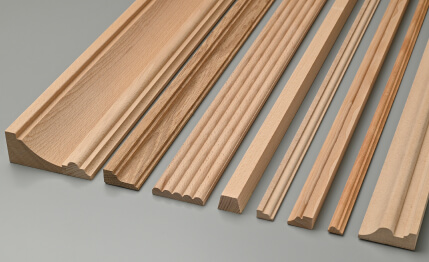
- Baseboard
- Ceiling Cornice
- Molding
- Ceiling skirting board / coving
- Decorative profile
- How to match skirting board to cornice according to interior style
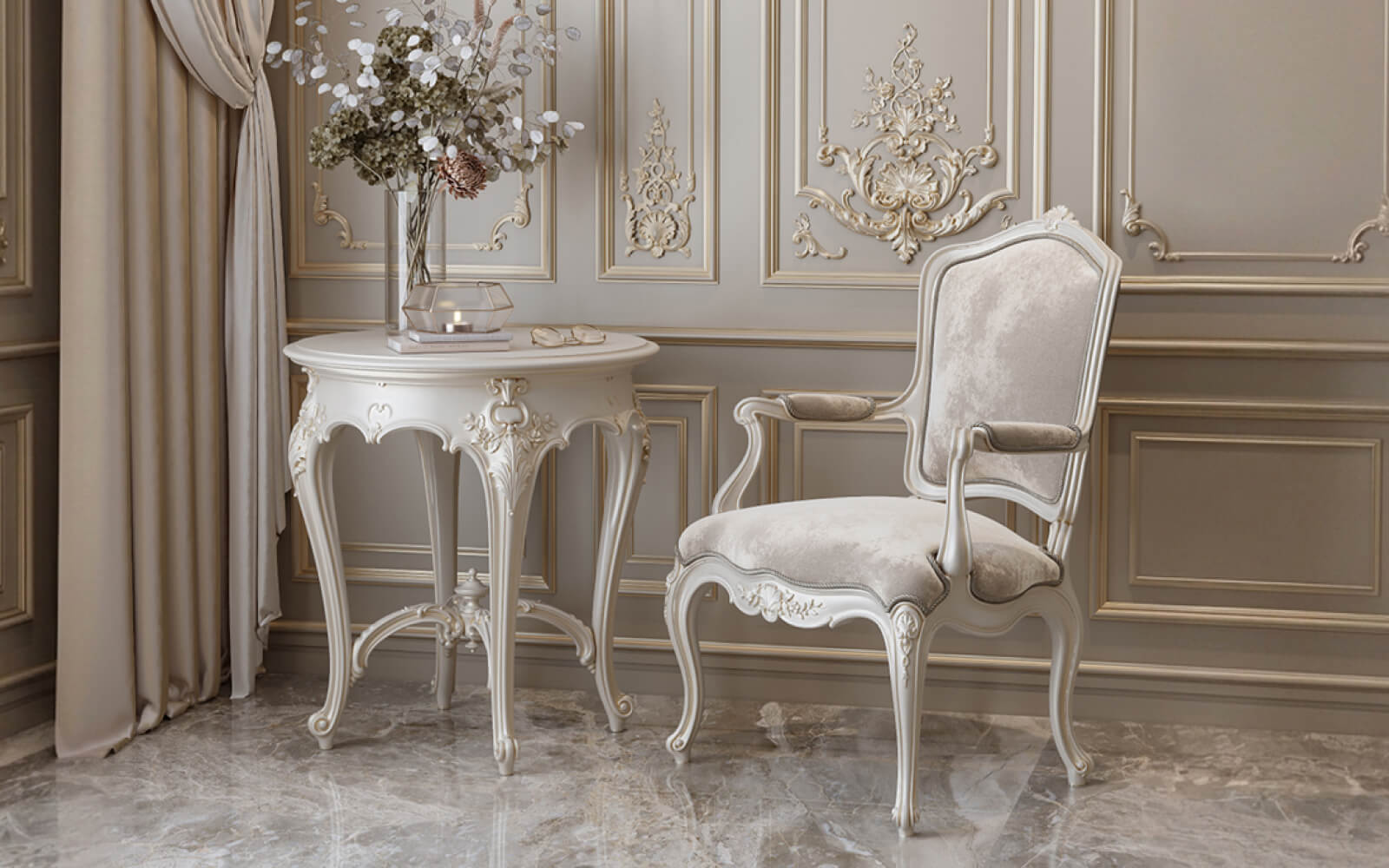
- Classic
- Neoclassicism
- Modern classicism
- Minimalism
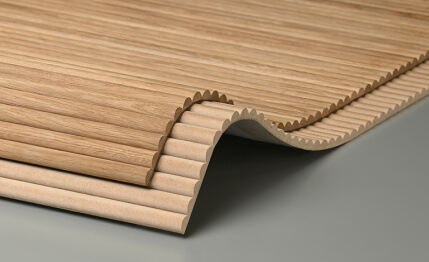
- Interior with slatted panels
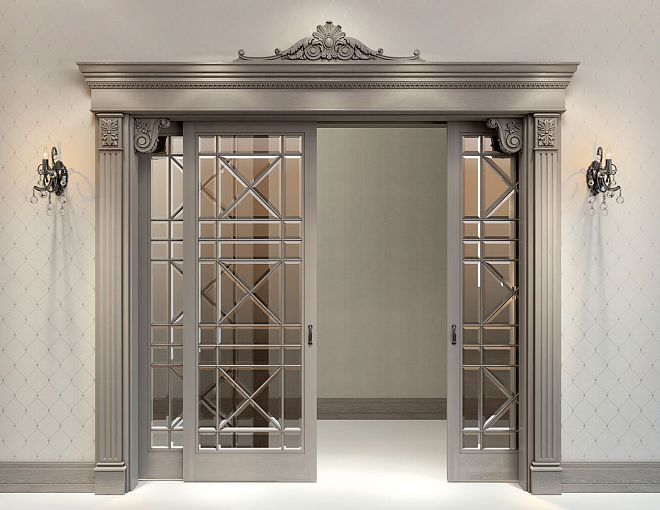
- Interior with stucco decoration
- How to choose skirting board and cornice by material
- Wood
- MDF
- Polyurethane
- Material Comparison Table
- How to combine floor skirting board and ceiling cornice by profile shape
- Straight skirting board and laconic cornice
- Shaped skirting board and classic cornice
- High skirting board and large cornice
- Narrow skirting board and compact cornice
- Molding as an intermediate connecting element
- How to choose the color of skirting board and cornice
- Matching the wall color
- Matching the floor color
- White skirting board and white cornice
- Matching the door color
- Contrasting solutions
- Natural Wood
- Skirting board and cornice in different rooms
- Living Room
- Bedroom
- Entry Hall
- Kitchen
- Office
- Apartment
- House
- What to choose: wood, MDF, or polyurethane — a detailed comparison
- Price and visual effect
- Geometric Stability
- Painting possibilities
- Complex installation
- Where each material is best used
- What else to combine baseboard and cornice with in the system
- Wall moldings
- Slatted panels
- Baseboards
- Decorative elements
- Moldings
- Wall Panels
- How to buy baseboard and cornice in the same style and not make a mistake
- Step 1. Determine the interior style
- Step 2. Choose material
- Step 3. Choose baseboard height
- Step 4. Choose cornice scale
- Step 5. Check profile combination
- Step 6. Select complementary decor
- Common mistakes when selecting skirting boards and cornices
- Frequently asked questions about skirting boards for cornices (FAQ)
- Conclusion: why it's important to buy a set, not individual elements

Imagine a room as a finished painting in a frame. The bottom line is the floor and the floor skirting board. The top line is the ceiling and the cornice. Everything in between: walls, moldings, doors, furniture — fills the space, but it is these two horizontals that hold the visual structure of the interior. When they are coordinated, the room looks assembled, architecturally precise, and whole. When one of the lines is chosen at random or doesn't fit into the overall logic — even the most expensive renovation looks unfinished.
The query 'skirting board for cornice' is one of those that sounds simple but hides a whole layer of design and technical solutions. Some are looking for how to correctly match a floor skirting board to a ceiling cornice in terms of style and profile. Others want to understand how skirting boards, cornices, and moldings differ in general. Still others simply want to buy everything at once from one product line, so as not to assemble from different sources and end up with a decorative hodgepodge.
This article is a complete practical guide to selecting skirting boards and cornices in a unified style. With selection logic, analysis of materials, and specific solutions for different interiors. Read, understand, make decisions — and buy not one element, but a ready-made set.
Select in one style:
-
Wooden baseboard— floor profile made of solid oak and beech
-
MDF Skirting Board— stable profile for painting and white
-
Wooden cornice— ceiling profile made of natural wood
-
moldings, cornices, skirting boards— all millwork in one product line
-
Wooden molding— connecting wall profile
-
Polyurethane Items— lightweight decor for ceiling lines



What does 'cornice skirting' mean: analyzing the query
Before making a choice, it's worth understanding what we're talking about. The query 'cornice skirting' is borderline. It combines several real user tasks, and each requires its own answer.
One group of users under this query is looking for skirting that stylistically matches an already chosen ceiling cornice. They care about the combination: profile, width, style, material. The second group simply wants to understand the difference between skirting, cornice, and molding—and not make terminology mistakes when purchasing. The third seeks a comprehensive solution: skirting and cornice in one order, from one product line, in a unified material.
All three tasks are solvable. And that's precisely why this page is structured as a comprehensive guide, not as a page about one specific product.
In short: cornice skirting is not a separate type of product; it's the task of selecting two architectural elements into a unified decorative system. The lower band—Wooden baseboardorMDF Skirting Board. The upper band—Wooden corniceor an MDF cornice. The intermediate bonding layer isWooden moldings. All together — this is interior architecture.




How baseboard, cornice, molding, and decorative profile differ
Confusion in terms leads to purchasing mistakes. Let's clearly break down each element.
Our factory also produces:




Floor skirting board
Floor baseboard — a profiled strip that is attached at the base of the wall around the perimeter of the room. Its tasks: to cover the expansion gap of the flooring, protect the lower part of the wall, and create the lower horizontal line of the interior.Wooden baseboardmade of solid oak or beech — is the lower architectural belt that sets the scale for all other decor.
The height of the floor baseboard — from 40 to 150 mm, depending on ceiling height and interior style. The profile — from a minimalist rectangle to a classic shaped strip with a roundover and shelf. More about selection, installation, and operation — in the articleWooden baseboard.
Get Consultation
Ceiling cornice
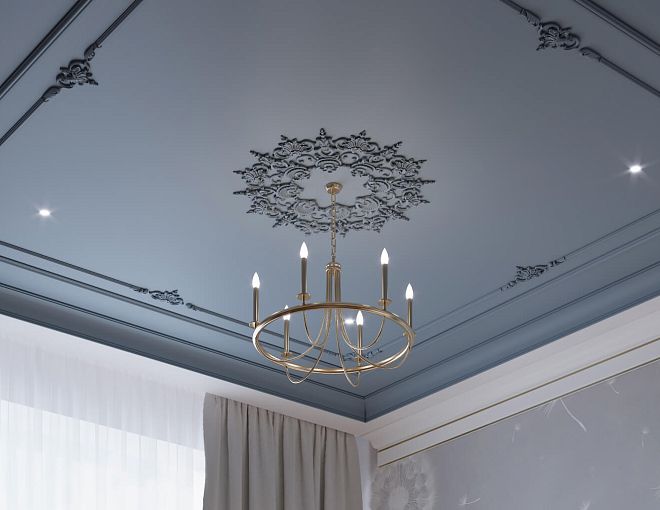
Ceiling cornice — an analogue of the baseboard, but for the upper line: it is attached at the junction of the wall and ceiling. Its decorative function is symmetrical to the baseboard: to cover the transition, create an upper belt, set a stylistic accent.Wooden cornicemade of solid wood — is an expressive architectural element that in classical interiors often becomes more noticeable than the baseboard itself.
It is important not to confuse the decorative ceiling cornice with a curtain rod — these are fundamentally different products. Here we are talking specifically about the decorative ceiling profile.
Molding
Wooden molding— is a decorative profiled molding strip used for a variety of tasks: framing wall panels, creating frame compositions, designing transitions between zones, decorating furniture facades. In the 'baseboard + cornice' system, molding often acts as a connecting intermediate element: it picks up the stylistic logic of the lower and upper lines and continues it on the wall.
Ceiling baseboard / coving
Ceiling baseboard (coving) is a reduced version of a cornice, a light profile for small spaces or minimalist interiors. It is often confused with both cornice and molding. More about this — in the article Wooden ceiling baseboard.
Decorative Profile
Decorative profile is a broad concept that includes all the categories listed above. In a commercial sense, it is any linear product with a shaped cross-section intended for interior decoration.Pogonazh iz massiva covers this entire range: from thin molding to wide cornice profile.
How to match baseboard to cornice according to interior style
This is where the true mastery of selection begins. Style is not just an aesthetic preference, it is an architectural logic that all interior elements, including profiles, must follow. Let's consider the main style scenarios.
Classic
In a classical interior, the baseboard and cornice are architectural elements, not just finishing details. The principle of order works here: the lower band (baseboard) must be proportionate to the upper one (cornice), both with a clear relief profile, made from the same material.
For classic style, optimal is Wooden baseboard made of oak or beech with a shaped cross-section — ovolo, cavetto, fillet. Cornice — large, with a multi-band profile, also made of solid wood or MDF for painting. The connecting element — Wooden moldingson walls as framed panels.
A separate topic — classicalMoldingsfor ceiling rosettes, corner cartouches, and intermediate friezes. In a classical space, it complements the cornice–molding–baseboard system and creates a three-dimensional decorative environment. More about stucco in interiors — in the articlemolding in interior.
Neoclassicism
Neoclassicism is a lighter interpretation of classicism. Here, the profile of the baseboard and cornice is less heavy, without Baroque pomp. A soft curve without ornamentation, a neutral color (often white enamel), moderate height.— is a horizontal element that frames the room at the bottom of the walls where the wall meets the floor. Skirting boards perform several functions: they hide the technological gap between the wall and floor covering (necessary for thermal expansion), protect the lower part of the wall from mechanical damage, create visual completion, and may conceal wiring.in white finish +wooden cornicewith a delicate profile — this is the default neoclassical pair.
Moldings on walls in neoclassicism are simple, without overload. They create rhythm, not an accent.
Modern classic
The most in-demand request today. Classical forms, but without archaism and heaviness. Baseboard — shaped, 60–80 mm, made of wood or MDF. Cornice — moderate, with one or two bands. Everything in white or a light neutral color. This combination works in most modern apartments with a claim to classicism.
moldings, cornices, skirting boardsin one line — an ideal way to assemble a set for modern classicism without the risk of profile mismatch.
Minimalism
Here, both profiles — baseboard and cornice — are maximally restrained. A straight rectangular baseboard, a thin cornice profile, or its complete absence. In minimalism, the cornice is often abandoned in favor of hidden lighting or simply a clean, straight ceiling-wall transition. If there is a cornice — it is a thin MDF profile painted to match the ceiling color.
buy MDF skirting boardMatching the wall color is the perfect strategy for a minimalist interior: the baseboard "disappears" without disrupting the clean lines.
Interior with slatted panels
Slatted panels create a strong vertical rhythm on the walls. The baseboard in such an interior should be neutral, not competing with the slats: a thin profile, matching the slat color or neutral white. The cornice follows the same logic: either matching the color or minimal.
WhenRafter panelsRunning from floor to ceiling, the cornice and baseboard become a frame for this vertical system. They should support, not overwhelm.
Interior with stucco decoration
If the interior featuresMoldings— ceiling rosettes, friezes, brackets — the cornice should be part of this system.Polyurethane ItemsAllow for creating a rich stucco program with a relatively moderate budget: polyurethane reproduces classical profiles well and is easily painted any color.
How to choose baseboard and cornice by material
This is a key commercial question. Let's consider three main materials and the logic of their application.
Wood
Wooden baseboard + Wooden corniceFrom the same solid wood — this is the highest level of natural finishing. Living texture, tactile depth, years of service. Wood accepts any coating: clear varnish, tinting, oil, enamel. It is the transparent coating that allows the wood grain to show — oak with its expressive fibers or beech with its fine, uniform texture.
A pair of 'wooden baseboard and wooden cornice' made from the same material is an architectural statement. They create a unified lower and upper frame for the interior, connected by the same wood species and finish. Everything between them—walls, furniture, textiles—unfolds as the content of this frame.
When solid wood is needed: parquet and engineered wood flooring, classic or neoclassical interiors, high-end segment of private houses or prestigious apartments, desire to show the naturalness of the material through a transparent finish.
MDF
MDF Skirting Board + MDF Cornices— the most popular combination for modern apartments. MDF is geometrically stable: it does not warp or crack with temperature and humidity fluctuations. This is especially valuable for ceiling cornices, which, unlike floor baseboards, experience different thermal loads.
MDF Cornicesfor painting — the perfect solution for white interiors when you want a perfectly smooth surface without texture. Paint in any RAL or NCS color, coordinate with the ceiling or wall — maximum freedom.
A detailed breakdown of MDF baseboards by types, sizes, and installation — in the article MDF baseboard types sizes installation.
When MDF is more convenient: kitchen, hallway, rooms with unstable microclimate, white interiors for painting, projects with a limited budget, apartments with uneven walls and ceilings.
Polyurethane
Polyurethane Items— a separate world. Polyurethane allows reproduction of the most complex classical profiles with ornaments, garlands, molded bands — with a weight several times less than plaster. Installation is easy, cutting is simple, painting is similar to MDF.
The 'wood below — polyurethane above' strategy is found in interiors where they want to achieve a rich ceiling line at reasonable costs: Wooden baseboardat the bottom, polyurethane cornice with molded relief at the top. Painting in a single color hides the difference in materials and creates visual integrity.
When polyurethane is better for ceiling parts: classic and baroque interiors with rich relief, when the budget for solid wood is limited, when you needMoldingswith ornamentation that is difficult to reproduce in wood.
Detailed comparison of materials — in the articlepolystyrene, duropolymer or MDF.
Compare solutions by materials:
-
Wooden baseboard + Wooden cornice— natural set made of solid wood
-
MDF Skirting Board + MDF Cornices— stable system for painting
-
Polyurethane Items— molded decor for the ceiling line
Material comparison table
| Parameter | Wood (solid wood) | MDF | Polyurethane |
|---|---|---|---|
| Appearance | Live texture, naturalness | For painting, without texture | Molded relief |
| Stability | High during acclimatization | Very High | High |
| Finish | Varnish, oil, enamel, tinting | Opaque paint only | Any paint |
| Installation difficulty | Medium | Low | Low |
| Profile richness | High | Average | Maximum |
| Durability | Decades | 15–20 years | 20+ years |
| Price | High | Medium | Medium |
| Better to use | Classic, parquet, house | Apartment, white interior | Baroque, stucco |
How to match floor skirting and ceiling cornice by profile shape
Profile shape is the language spoken by the interior. And this language should be unified for the bottom and top lines.
Straight skirting and minimalist cornice
Rectangular skirting without relief + thin ceiling cornice with a bevel — this is a modern minimalist duo. Both profiles do their job discreetly: they cover transitions without drawing attention. In such an interior, the focus is on furniture, lighting, textiles. The profiles are the background.
Ornate skirting and classic cornice
Wooden baseboardwith a roundover and ogee + cornice with a multi-banded profile — this is a classic pairing that creates an architectural frame for the interior. Proportion is important here: the width of the skirting and the width of the cornice should be proportional to the height of the room. A narrow cornice with wide skirting and a high ceiling looks insufficient. And vice versa.
Tall skirting and large cornice
If the skirting is 100–120 mm high — it is already an architectural element forming the lower band. It requires a proportionate upper band: a cornice with a large, expressive profile. Otherwise, the interior will be 'heavy at the bottom' and 'light at the top' — proportionally unbalanced.
Proportion rule: the height of the cornice should be at least 60–70% of the height of the skirting, all other things being equal.
Narrow skirting and compact cornice
In small rooms with low ceilings — both profiles are compact, with minimal projection. This isn't about modesty of taste, it's about maintaining proportions. A large cornice with a 2.5 m ceiling visually 'weighs down' the space.
Molding as an intermediate connecting element
Wooden moldingon walls between the baseboard and cornice — this is what turns a simple 'baseboard and cornice' into a true decorative system. Molding panels on walls pick up the stylistic logic of the lower and upper bands and continue it on the vertical plane. This is a classic technique used in all historical interior styles.
How to choose the color of the baseboard and cornice
Color is the final point of selection. When the material and profile are chosen, color either unifies everything into a system or destroys it.
Matching the wall color
Baseboard and cornice in the color of the walls — the wall visually 'continues' from floor to ceiling, without horizontal accents. The room is perceived as a single volume. A popular technique in modern interiors: baseboard, wall, cornice — in the same shade.
Matching the floor color
Baseboard in the color of the floor lowers the bottom horizontal line down, makes the floor 'larger'. The cornice can be in the color of the ceiling or walls. This creates a sense of height: the ceiling goes up, the floor goes down.
White baseboard and white cornice
WhiteMDF Skirting Boardand white cornice — a universal classic pair for most interiors. It works with any wall color: the neutral white perimeter unites the top and bottom lines. A detailed analysis of the white baseboard — in the articleMDF floor baseboard.
In the color of the doors
If the interior features wooden doors with architraves, it's better to choose the skirting board and cornice in the same tint or color. This creates a unified wooden system: doors, architraves, skirting board, cornice — all made from the same material and in the same color.
Contrasting solutions
A dark skirting board against light walls is a strong graphic accent. It fixes the bottom line and makes it noticeable. Works in interiors with dark doors and furniture. A contrasting cornice against a light ceiling is a bold solution that requires precise design calculation.
Natural wood
Wooden baseboardin natural lacquer +wooden cornicewith the same tint — this is a warm, rich natural look. Especially organic in a country house, in interiors with parquet, with natural textures on the walls. Wood creates warmth that cannot be imitated by any other material.
Skirting board and cornice in different rooms
Living Room
Living room — the main space where the skirting board–cornice pairing works at full strength. It is here that all the lines of the interior are visible, here the architectural elaboration of the space is assessed. For a classic living room —Wooden baseboardheight of 80–100 mm +Wooden cornicewith a rich profile +Moldings for wallsin the form of frame panels. For a modern living room — a laconic pair of MDF in white or a neutral color.
Bedroom
In the bedroom, atmosphere is more important than display. Here, the baseboard and cornice should create a feeling of coziness, not architectural significance. Warm wood with natural varnish, a delicate cornice without pompousness — this is the image of a bedroom where you want to be.
Entryway
The hallway is a transit zone with maximum mechanical load. The baseboard here must be durable.buy MDF skirting boardwith a dense coating is the optimal choice. The cornice in the hallway is often simplified or absent — the ceiling here is functional, not decorative.
Kitchen
In the kitchen — strict practical requirements. The baseboard must be resistant to moisture and cleaning agents.— is a horizontal element that frames the room at the bottom of the walls where the wall meets the floor. Skirting boards perform several functions: they hide the technological gap between the wall and floor covering (necessary for thermal expansion), protect the lower part of the wall from mechanical damage, create visual completion, and may conceal wiring.with a high-quality paint coating is the right choice. The cornice for the kitchen is simple, without relief, easy to wipe.
Office
The study is a space of concentration and status. HereFloor wooden skirtingmade of dark oak or walnut + a cornice with a restrained classic profile create the image of a serious, solid space. Molding panels on the walls enhance this effect.
Apartment
In a multi-room apartment, the unity of the system is fundamentally important: the same baseboard throughout the apartment, the same cornice or ceiling profile. This does not mean identical — it means from the same line, the same material, in a unified stylistic logic.moldings, cornices, skirting boardsin a single catalog allow you to assemble the entire set in one order.
House
In a country house — maximum freedom of choice and maximum potential for natural materials.Wooden baseboard + wooden cornice + Wooden moldingsOn the walls — a full-fledged wooden architectural system that organically fits into the concept of country house construction.
What to choose: wood, MDF, or polyurethane — a detailed comparison
This question is asked most often, and the answer depends on the context. Let's break it down in detail.
Price and visual effect
Wood provides the maximum natural effect at the highest price. MDF under white paint — practically identical to wood in painted form at a price one and a half to two times lower. Polyurethane — the richest relief in the mid-price range. Choose based on the task, not just the price.
Geometric Stability
MDF — the most stable. Wood requires acclimatization. Polyurethane does not react to moisture at all. If installation is planned in a room with an unstable microclimate — MDF or polyurethane is preferable.
Painting possibilities
All three materials can be painted. Wood accepts transparent coatings — this is its unique advantage. MDF and polyurethane — only opaque, but in any color according to RAL or NCS.— is a horizontal element that frames the room at the bottom of the walls where the wall meets the floor. Skirting boards perform several functions: they hide the technological gap between the wall and floor covering (necessary for thermal expansion), protect the lower part of the wall from mechanical damage, create visual completion, and may conceal wiring.— is a baseboard matching your specific wall or ceiling shade.
Installation complexity
MDF and polyurethane are easier to install—they cut easily and adhere well to curved walls. Wooden baseboards require more careful fitting on non-standard surfaces.
Where each material is best used
-
Wood: parquet flooring, classic interior, private house, when natural texture is needed
-
MDF: modern apartment, kitchen, hallway, white interior, for painting
-
Polyurethane: ceiling part in classic and baroque styles, rich molded relief, when the budget for a massive wooden cornice is limited
What else to combine baseboard and cornice with in the system
Cornice and baseboard are only two lines. A full decorative environment is formed from several layers.
Wall moldings
Wooden moldings—is the vertical and horizontal extension of the logic of baseboard and cornice onto the wall plane. Framed molding panels, horizontal profiles, borders—all of this creates a decorative environment where the baseboard and cornice are part of the system, not separate elements.
Rack panels
Rafter panelson walls work perfectly in combination with wooden baseboard: the same material creates a continuous wooden environment from the floor to the middle of the wall. The upper part of the wall and ceiling are neutral, light. The cornice can either match the color of the slats or be white as a transition to the ceiling.
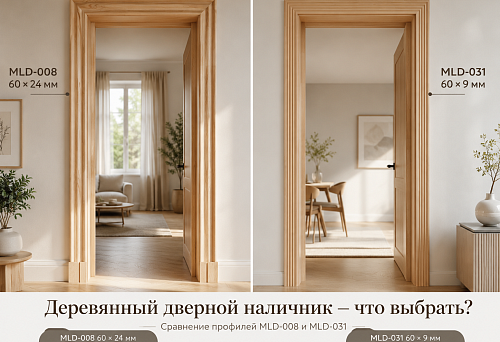
Door Casings
Door casings are vertical profiles that are part of the same system as the baseboard and cornice. The rule: casings, baseboards, and cornices should be from the same line or at least made of the same material. When all these elements are made of natural wood with the same finish, the interior acquires a unified 'voice'.
Decorative elements
decorative elements— corner rosettes, cartouches, applied ornaments — these are accent details that enhance the architectural program. Corner rosettes at the intersection of the baseboard and door casings are a classic technique. Carved ornaments on cornice corner sections are the next level.
Moldings
Moldings— on the ceiling — ceiling rosettes, garlands, friezes — this is a decorative layer that works specifically in conjunction with the cornice. The cornice sets the horizontal frame, the molding fills the ceiling field. Without a cornice, the molding 'hangs in the air'. Without molding, a rich cornice looks lonely.
Wall panels
Wall panels made of wood or MDF are an intermediate layer between the baseboard and cornice. In classical interiors, wall panels create the lower register of the wall (from the baseboard to the horizontal molding), the middle register (from the molding to the cornice), and the ceiling zone. This is a full-fledged architectural program for the wall.
Assemble the interior in a unified line:
-
Wooden baseboard— lower horizontal
-
Wooden cornice— upper horizontal
-
Wooden moldings— wall connection
-
Rafter panels— wall decorative layer
-
decorative elements— corner accents
-
Moldings— ceiling program
How to buy skirting and cornice in the same style and not make a mistake
Step-by-step decision-making algorithm.
Step 1. Determine the interior style
Classic, neoclassical, modern classic, minimalism — everything depends on the answer to this question: profile, material, height, color. If the style is not yet defined — start by analyzing the floor and doors: they are already present in the interior and set the context.
Step 2. Choose the material
Wood for natural interiors, classic style, private house. MDF for apartments, white interiors, kitchen. Polyurethane — if you need rich ceiling molding on a moderate budget.
Step 3. Choose the skirting height
Ceiling up to 2.7 m — baseboard 60–75 mm. Ceiling 3 m and above — 80–120 mm. The scale of the cornice is then determined based on the baseboard height.
Step 4. Choose the cornice scale
The cornice should be proportional to the baseboard and room height. General rule: the cornice projection from the wall should not exceed 10% of the wall height. With a 3 m ceiling — maximum cornice projection about 25–30 mm.
Step 5. Check the combination of profiles
Both profiles should speak the same stylistic language. Straight skirting + classic cornice — conflict. Molded skirting + molded cornice — harmony.moldings, cornices, skirting boards in a single catalog — precisely for this: you see how elements combine within one system.
Step 6. Select adjacent decor
Moldings, trims, decorative elements — the final step that turns a set of parts into a system. Buy everything at once from one source, from one material.
Common mistakes when selecting skirting and cornice
An honest breakdown of typical failures — so you don't repeat them.
They take skirting and cornice from different styles. Classic molded skirting and straight modern cornice — this is a stylistic conflict that cannot be 'smoothed over' by color or material. Always check that both elements are from the same stylistic system.
They choose too heavy a cornice for low ceilings. With a 2.5 m ceiling, a large cornice with a big overhang visually 'presses down' the space. Here you need a compact cornice with minimal projection.
They install a massive skirting without supporting the top line. Wide Wooden baseboard100 mm with a thin, unexpressive ceiling cornice creates proportional imbalance. The bottom line dominates, the top line gets lost.
They mix wood, MDF, and polyurethane without logic. Each material has its own logic of application. They can be mixed—but only under the condition of a unified finish and coordinated profile. Without this—it's a jumble.
They forget about moldings and architraves as a connecting layer. A skirting board and cornice without an intermediate wall layer is like a frame without a mat.Wooden moldingson walls create a visual transition between the bottom and top lines.
They buy separately, not seeing the set. They order the baseboard in one place, the cornice—in another. As a result—mismatch in profile, width, finish. Always buy the system from a single source.
Frequently Asked Questions about Skirting Board for Cornice (FAQ)
What is baseboard for a cornice?
It is not a separate type of product, but the task of selecting a floor baseboard and ceiling cornice within a unified stylistic and decorative logic. The bottom and top horizontals of the interior must be coordinated in profile, material, and color.
What skirting board suits a wooden cornice?
Best of all —Wooden baseboardfrom the same wood species or the same tint. A unified material creates architectural integrity.
Can MDF baseboards be installed with a wooden cornice?
Yes, provided they have the same finish: both in white enamel or both in the same RAL color. The difference in material is visually neutralized.
How to choose a cornice for a tall baseboard?
The scale of the cornice should be proportional to the baseboard. With a baseboard of 100–120 mm, a cornice with a projection of 25–40 mm creates balance. A thin cornice with a wide baseboard looks disproportionate.
Can a polyurethane cornice be used with a wooden baseboard?
Yes. Painting both in a uniform color hides the difference in materials. This is a common solution: wood at the bottom (warmth, naturalness), polyurethane at the top (rich relief at a moderate price).
Is molding needed between the baseboard and cornice?
In classic interiors — definitely. Moldings on the walls create an intermediate decorative layer that visually connects the lower and upper lines. In modern interiors — optional.
What height should the baseboard be for a 3 m ceiling?
80–100 mm. For ceilings above 3.5 m, a baseboard of 120 mm is acceptable. The cornice in this case should have a projection of 25–35 mm.
How to buy baseboard and cornice in the same style?
Choose from one catalog, one manufacturer, one profile line.moldings, cornices, skirting boards in a unified section — this is exactly that opportunity.
What distinguishes a ceiling molding from a ceiling baseboard?
Cornice — a larger, more expressive profile with several bands. Ceiling baseboard (cove) — a light, thin profile for small spaces or minimalist interiors. Read more in the article Wooden ceiling baseboard.
Conclusion: why it's important to buy a set, not individual elements
Baseboard for cornice is not one element. It's a system. The lower horizontal, the upper horizontal, intermediate connections with moldings, corner accents with decorative elements — all together create an architectural environment that is comfortable to be in and interesting to look at.
When only baseboard is purchased — the interior looks unfinished at the top. When only cornice is purchased — unfinished at the bottom. When both are purchased from different sources — there's a risk of mismatch. And only when everything is chosen as a set — from one material, one line, one manufacturer — does the interior acquire that quality which distinguishes professional results from random ones.
STAVROS company produces a complete set of wooden moldings and decor from solid oak and beech: Wooden baseboardandMDF Skirting Board for floor design, Wooden corniceandMDF Cornices for ceiling line, Wooden moldingsfor walls,decorative elementsfor corner accents andPolyurethane Itemsfor molded ceiling decor. AllPogonazh iz massiva— in a unified line of natural wood profiles. Two quality levels: Standard and Prestige. Shipping from one unit. Choose a set in the sectionmoldings, cornices, skirting boards— everything in one place, from one material.