


























Article Contents:
- What Are Moldings for Panels and Why Are They Needed
- Which Panels Are Moldings Suitable For
- Moldings for MDF Panels
- Moldings for Slat Panels
- Moldings for Decorative Wall Panels
- Moldings for Wooden Panels
- Moldings for Interior Panels
- Moldings for Panels for Painting
- Where to use panel moldings: breakdown by rooms
- In the living room
- In the bedroom
- In the entryway
- In the Hallway
- In the TV area
- In the headboard area
- In the study
- In classic and modern interiors
- Which panel moldings to choose: breakdown by tasks
- For strict geometry
- For decorative framing
- For classic panel compositions
- For combining with slat panels
- For wooden wall elements
- Panel molding materials: wood vs. polyurethane
- Wooden panel moldings
- Polyurethane panel moldings
- Material Comparison
- How to choose molding for panels by design type
- For framing a panel
- For creating a decorative frame
- For panel joints
- For combining panel and wall
- For panels with lighting
- For panels in classic style
- For panels in modern classic style
- Moldings for panels and slat panels: when and how to combine them
- When panels alone are sufficient
- When molding is needed for finishing
- How to combine reiki and moldings on one wall
- How to design a TV zone
- How to design an entryway
- How to design an accent wall without visual overload
- How to choose the size and profile of molding for panels
- Narrow molding for panels
- Medium molding
- Wide molding for large compositions
- How to select molding according to panel width
- Smooth profile
- Decorative relief profile
- How to consider the scale of the room
- What to look for when buying panel moldings in St. Petersburg
- Material — specifically
- Dimensions — calculate in advance
- Compatibility with panels
- Painting possibility
- Decorative elements in the same line
- Delivery in St. Petersburg
- Why STAVROS: panel moldings in Saint Petersburg
- Moldings for panels and slat structures: final principles
- Frequently asked questions about panel moldings
- Which moldings are suitable for wall panels?
- Where to buy panel moldings in St. Petersburg?
- What is better for panels: wood or polyurethane?
- Are moldings suitable for MDF panels?
- Can You Combine Moldings and Slatted Panels?
- Which moldings to choose for a TV zone?
- Which moldings are suitable for panels for painting?
- How to calculate the amount of molding for panels?
- Conclusion: molding for panels — from detail to system
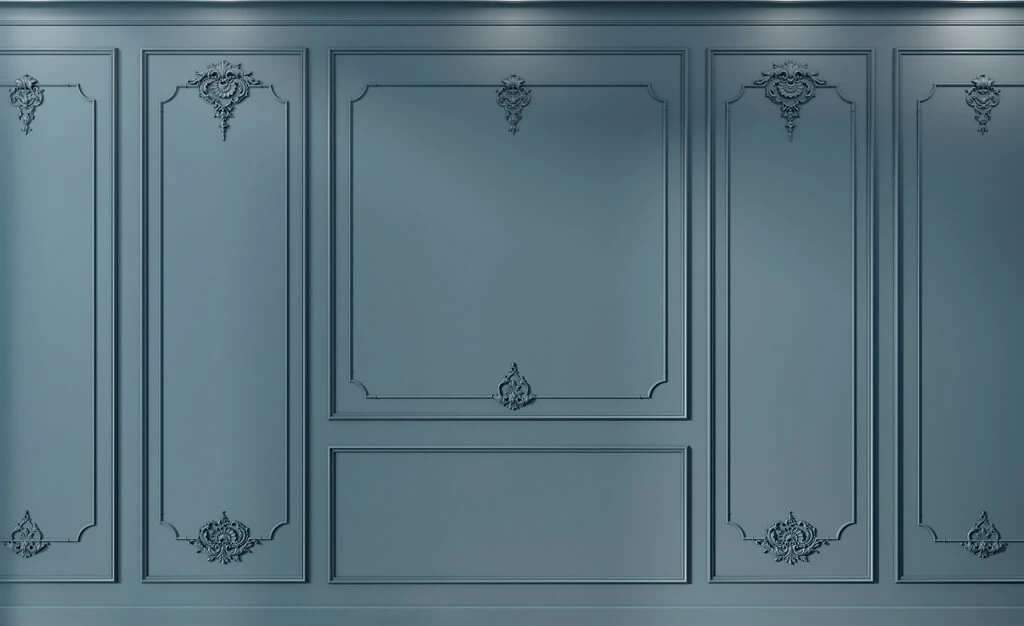
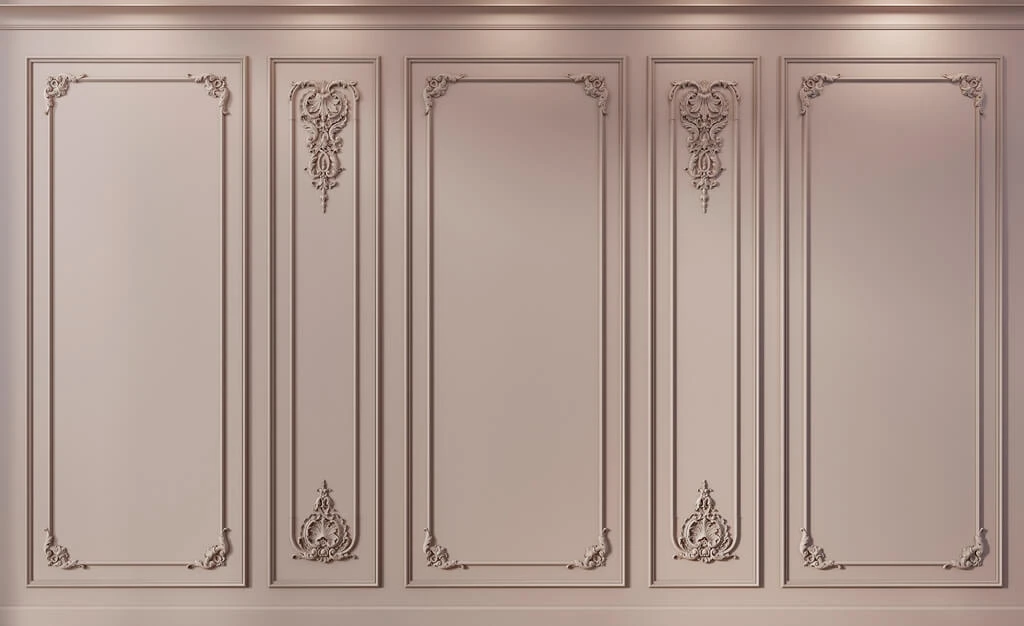
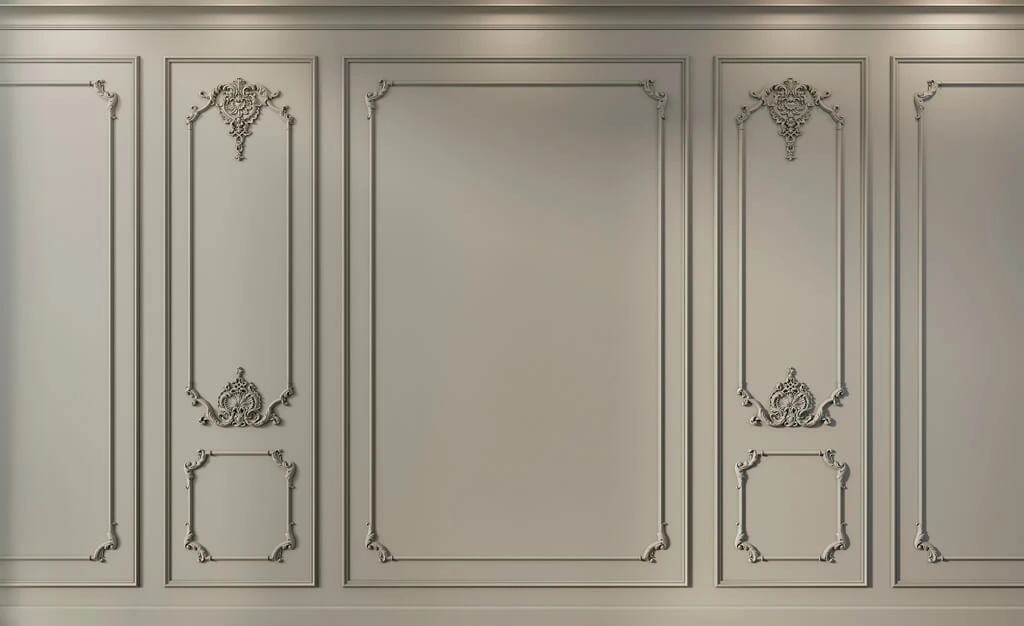
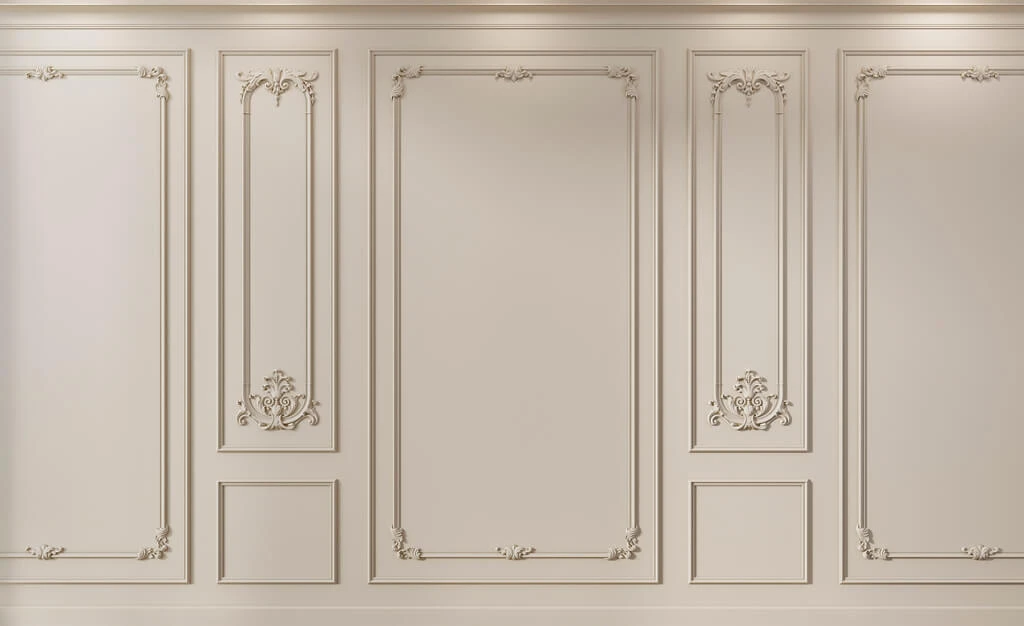
A wall panel without molding is an unfinished thought. Beautiful material, correct color, good texture — and still something is missing. A professional designer will say exactly: framing is missing. Molding for panels is that final word that turns a finishing solution into interior architecture.
Moldings for panels in St. Petersburg — a stable commercial query, behind which are specific tasks: to decorate an MDF panel, complete a slatted structure, create a decorative frame around a wall insert, demarcate zones, or assemble an integral panel composition in a living room, hallway, or TV zone.
This page is for those who want to understand: which moldings are suitable for wall and decorative panels, what they are made of, how to choose by size and style, what to combine them with — and where to buy moldings for panels in St. Petersburg with delivery.
Go to the catalog:
-
Moldings and decorative profiles— full catalog of profiles
-
Wooden moldings— solid wood profiles
-
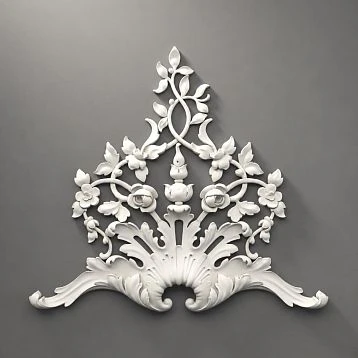
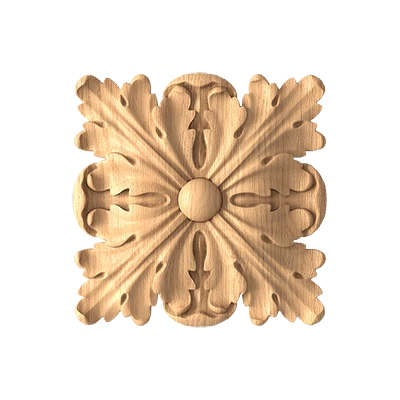
Decor for Molding— corner elements and overlays
-
Rafter panels— for combined wall solutions
-
Polyurethane moldings— for classic decorative accents
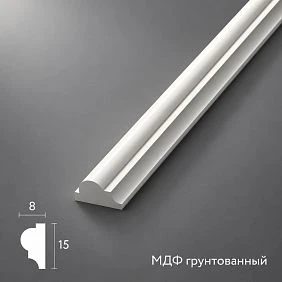
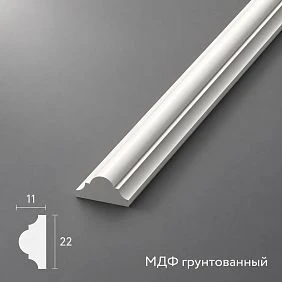
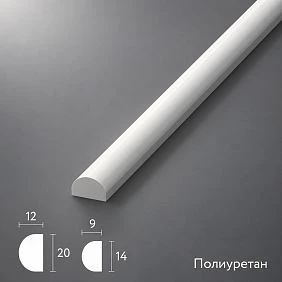
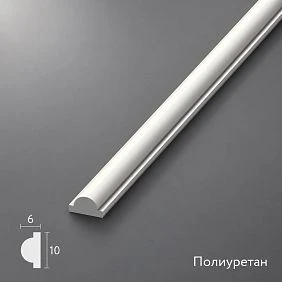
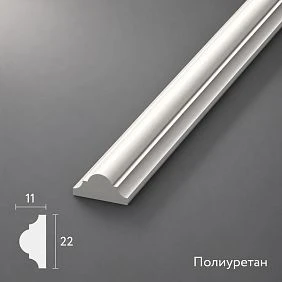
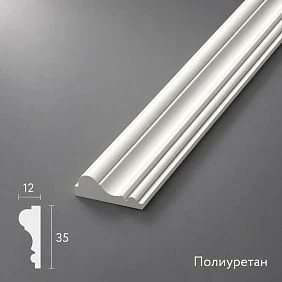
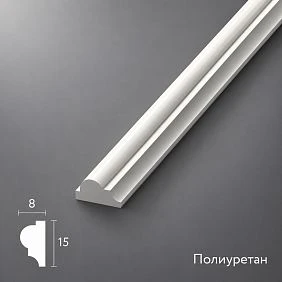
What are panel moldings and why are they needed
Ask yourself a simple question: what happens to the panel around the perimeter? Where does the MDF end, where does the wall begin, where is the top edge of the slatted structure? It is at these points that molding is needed.
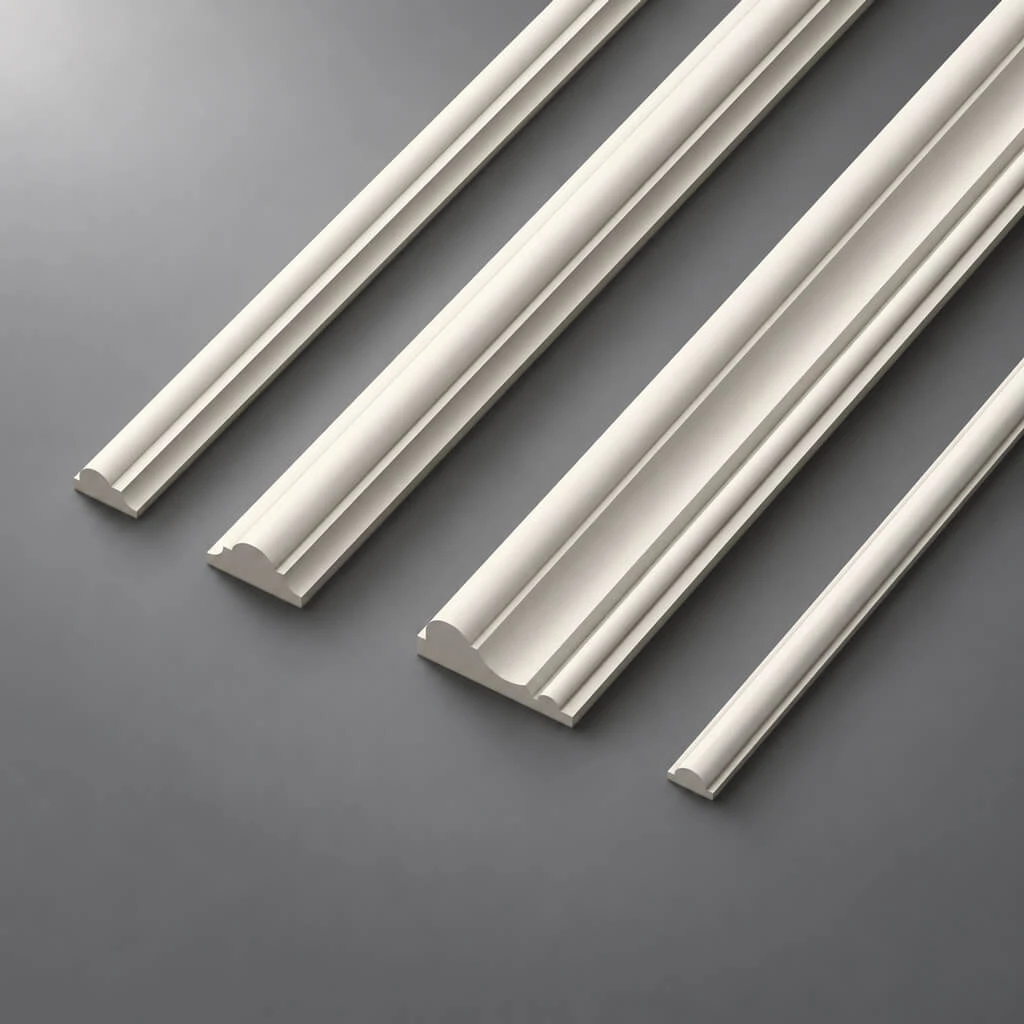
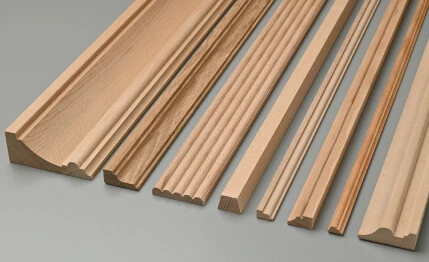
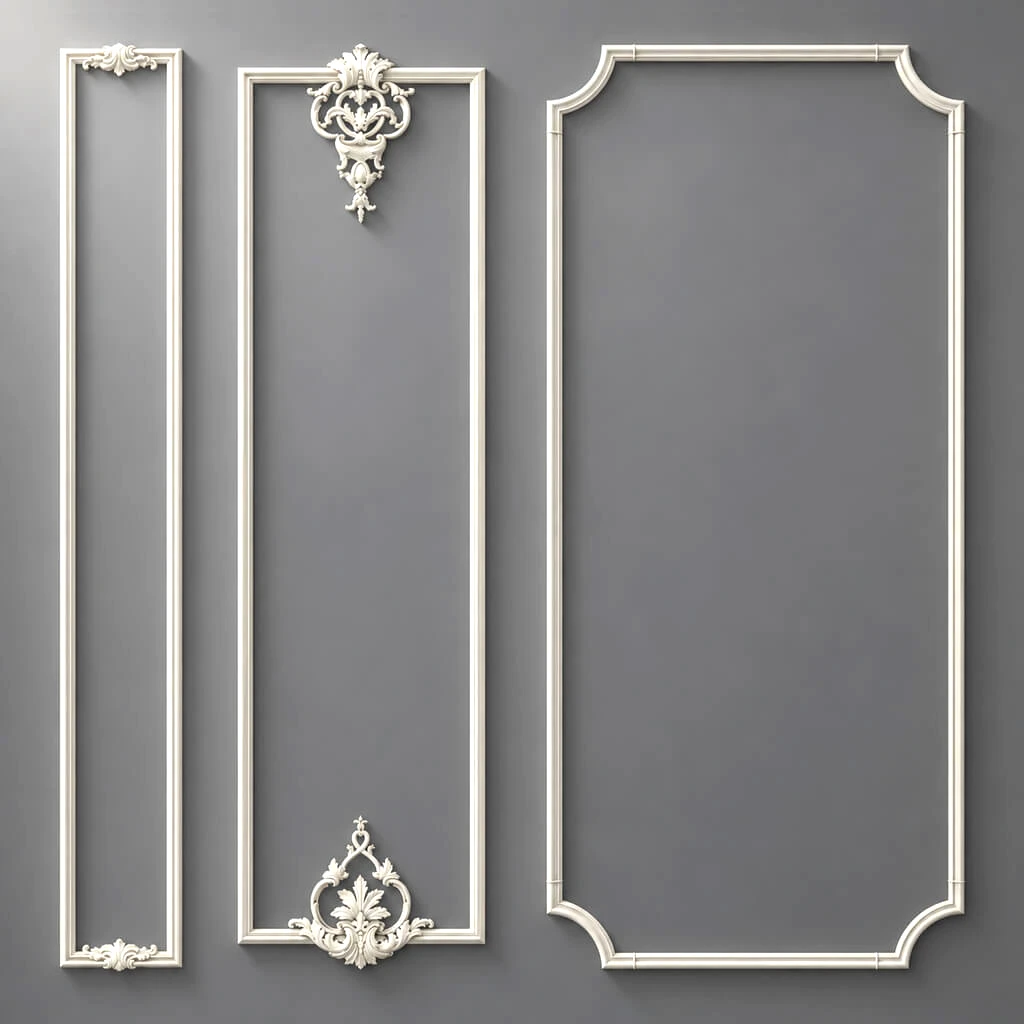
Panel molding is a decorative profile whose function is broader than simply 'covering a joint'. It:
-
finishes the top, bottom, or side edge of the panel, removing the open cut;
-
creates a decorative frame around a wall insert or niche;
-
marks the boundary between the panel finishing area and the plaster or paint area;
-
assembles the panel composition into a single visual block;
-
adds architectural relief where it is lacking;
-
can serve as a horizontal or vertical divider in complex multi-level wall solutions.
Wall panel moldings are used with MDF, wood, slatted, decorative, and interior panels — in apartments and country houses, in classic and modern interiors, in all residential and public spaces.
This is not an auxiliary element — it's the final touch, without which the finish looks incomplete.
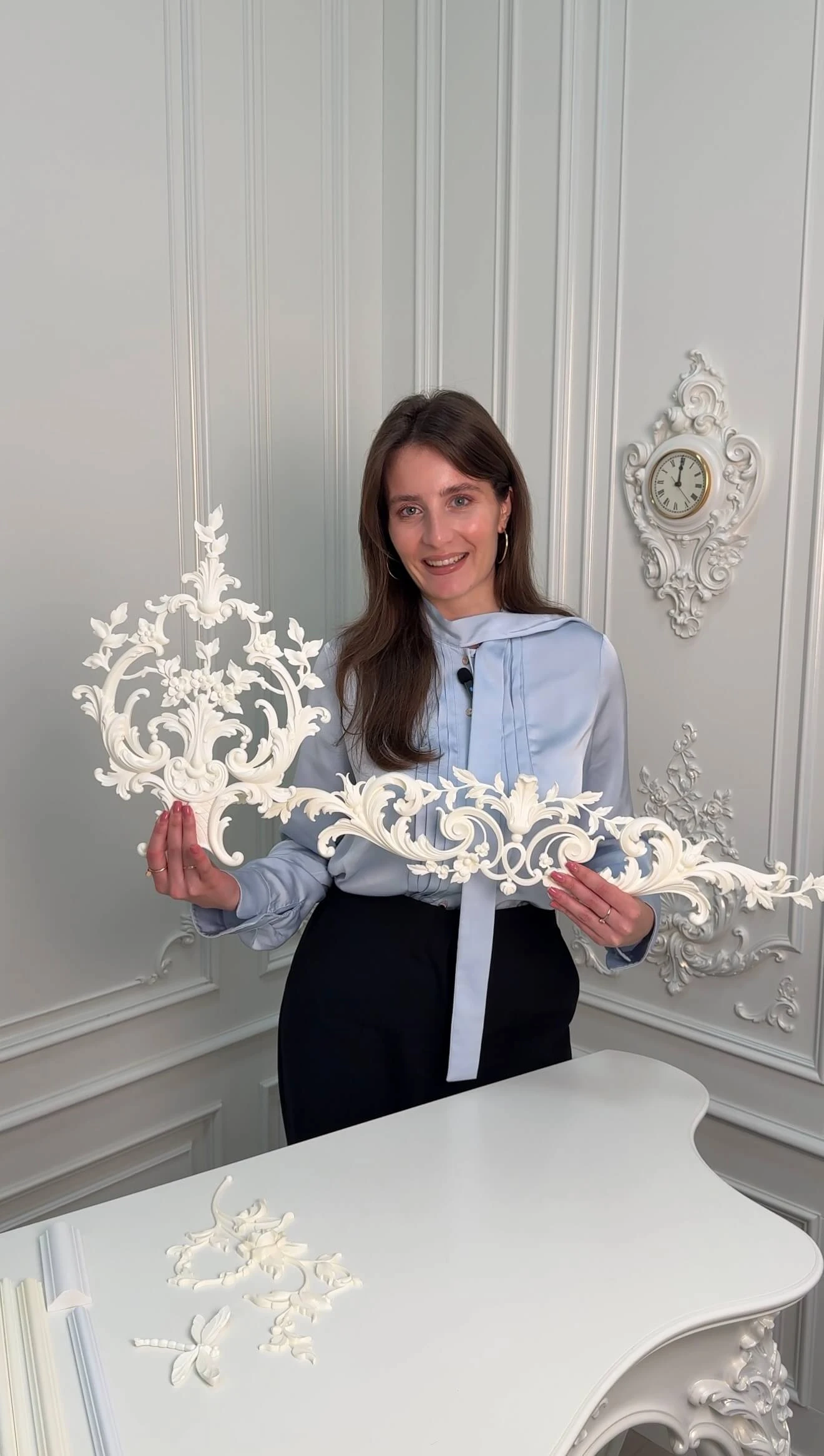
For which panels are moldings suitable
Before choosing a profile, it's important to understand which panel you'll be working with. Each type has its own installation features and its own requirements for the molding.
Our factory also produces:


Moldings for MDF panels
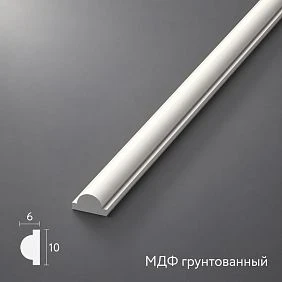
MDF is one of the most popular materials for wall panels. Smooth surface, good workability, excellent paint adhesion. Molding for MDF panels solves several tasks simultaneously: it covers the open cut of the material, creates an architectural frame, and ensures a neat joint with other surfaces.
For MDF panels intended for painting, wooden profiles from fine-grained wood species are ideal: they are painted in the same tone as the panel, creating a monolithic surface with a relief boundary.Wooden moldingsmade from linden or ash with preliminary priming — a classic choice for MDF under paint.
Get Consultation
Moldings for slatted panels
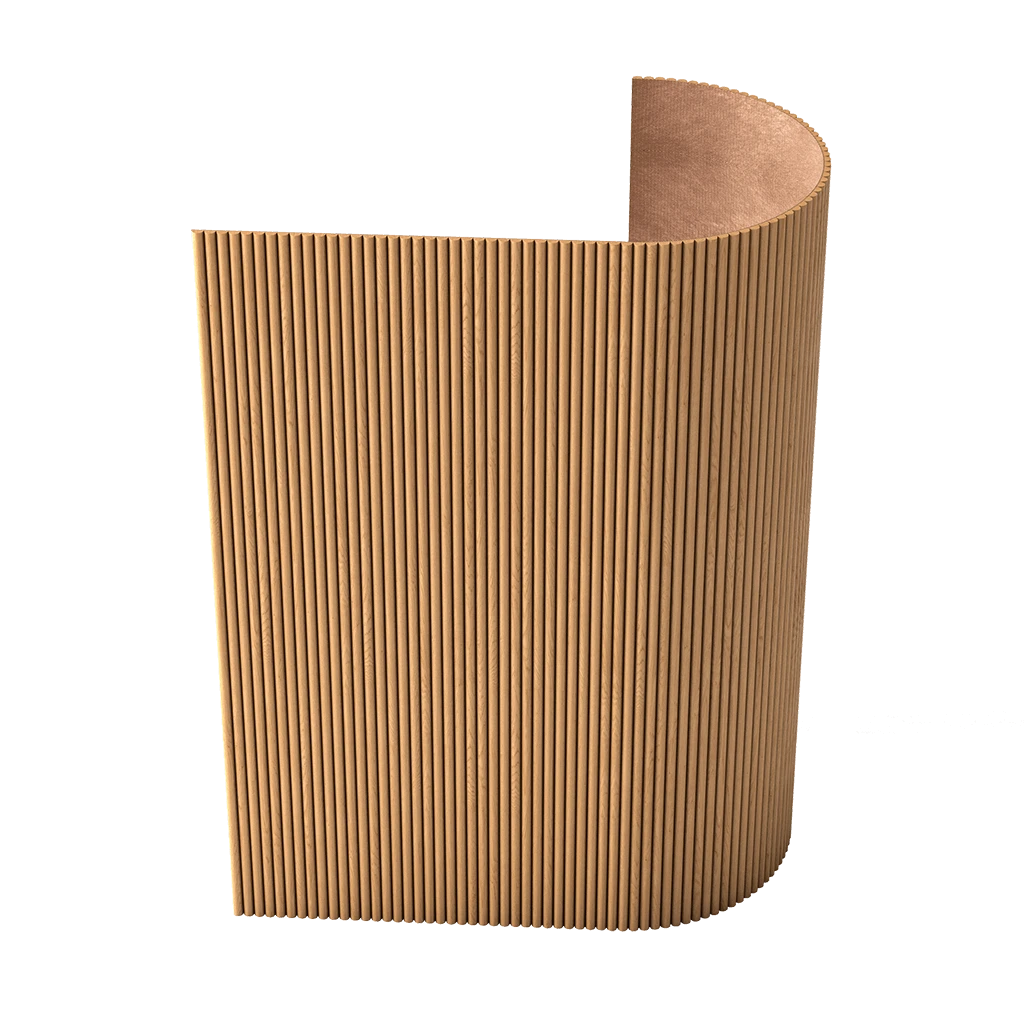
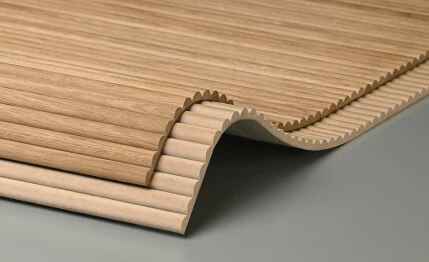
Rafter panelsare vertical wooden slats on a backing that create an expressive rhythmic pattern on the wall. The slats themselves are a strong decorative element. But where the slatted structure ends — at the top, bottom, or sides — a clear boundary is needed. Molding for slatted panels is a horizontal profile that completes the structure from the top and secures the lower transition.
For details on how to properly use moldings with slat structures, see the article.Slatted panels in interior design.
Moldings for decorative wall panels
Decorative wall panels are a broad class of solutions: wooden, veneered, three-dimensional, with stone or fabric textures. Moldings for decorative panels here act as an architectural frame: they create a visible boundary for the insert, separate it from the neutral wall surface, and form a decorative block with visual completeness.
Learn more about these solutions in the article.decorative wall panels.
Moldings for wooden panels
Wooden wall panels — solid wood or veneer in the lower third of the wall — are a traditional classic technique. Moldings for such panels are chosen from the same wood species: oak with oak, ash with ash. This ensures unity of texture, tone, and material behavior under humidity changes.Solid Wood ItemsSTAVROS offers a full range, including moldings, decor, cornices, and baseboards.
Moldings for interior panels
Interior panels is a broad concept: these include accent wall blocks, decorative inserts behind the bed, and framed wall niches. For all these scenarios, molding is a necessary element. It creates a physical and visual boundary for the panel, emphasizes its shape, and adds architectural volume.
Moldings for paintable panels
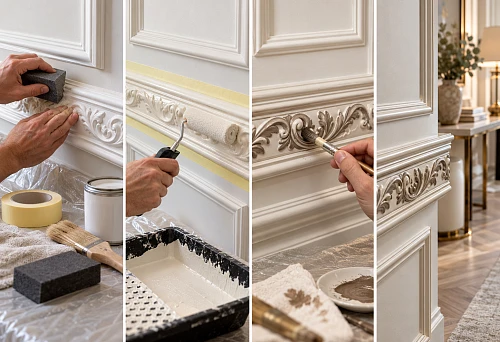
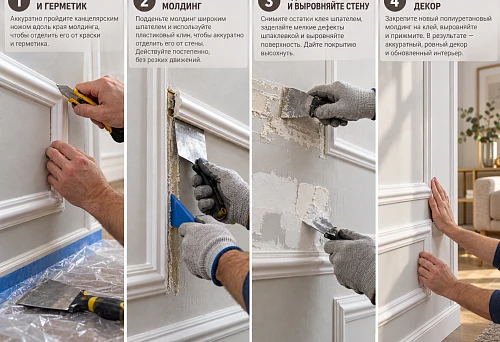
Panels for painting are a separate scenario. Here, the molding is installed before applying the final coat of paint. After installation, the joints are filled, the surface is sanded, and the panel and molding are painted in a single color. The result: a monolithic wall surface with a relief border that is visible in oblique lighting—and disappears under direct light. This is one of the most sophisticated modern decorative techniques.
Where panel moldings are used: breakdown by rooms
Molding works in any room with panel finishing. But the tasks in each room are different.
In the living room
Living room — a formal space. An accent wall with slatted panels or wooden wall inserts requires clear framing. Here, molding serves as both the horizontal boundary of the panel zone and the vertical framing of the side edges, as well as a frame for a decorative niche. In a classic living room, moldings for decorative panels can be arranged in multiple levels, creating a full-fledged wall system.
In the bedroom
In the bedroom, panel molding most often works in the headboard area. A decorative wall panel behind the bed is an accent element that molding turns into a finished architectural insert. The profile frames the panel around the perimeter: top, bottom, and sides. The cross-section is delicate, matching the panel color or with a slight contrast.
In the hallway
Entryway — a functional space that nonetheless sets the tone for the entire apartment. Slatted panels or MDF in the lower part of the wall with a molding border at a height of 90–120 cm is a classic technique. Here, the molding does double duty: it finishes the panel zone and creates a horizontal architectural accent.
In the corridor
A long corridor with slatted panels on the lower part of the walls and molding along the upper border — a solution that transforms the space beyond recognition. A narrow or medium profile, monochrome painting — and the corridor turns from a 'functional passage' into an architectural transition.
In the TV area
TV zone — one of the most popular scenarios for panel finishing. Slatted panels from floor to ceiling or within a molding frame — an expressive backdrop for the TV. Here, the molding works as a frame for the entire zone: it creates a rectangular contour within which the panel structure resides.buy slatted panelsfor the TV zone and select a framing molding for them in the STAVROS catalog.
In the headboard area
This is not just a bedroom. The headboard area is an independent decorative scenario. Inserting a wooden or MDF panel with molding framing behind the bed creates an architectural accent that anchors the space, 'anchors' the bed in the room, and adds a sense of status.
In the study
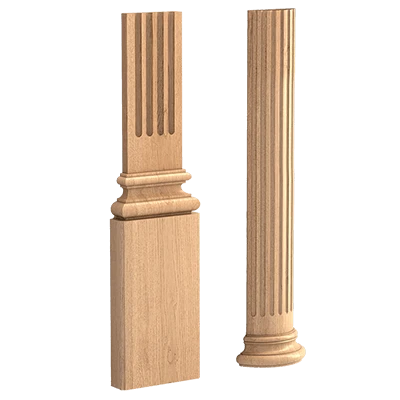
The study is a space of architectural rigor. Wooden panels on the lower part of the walls, a wooden molding border at the level of the desk,pilasters and columnsin the wall sections — this is an image backed by the traditions of St. Petersburg business interiors.
In classic and contemporary interiors
Moldings for panels are appropriate in both stylistic registers — with fundamentally different approaches:
-
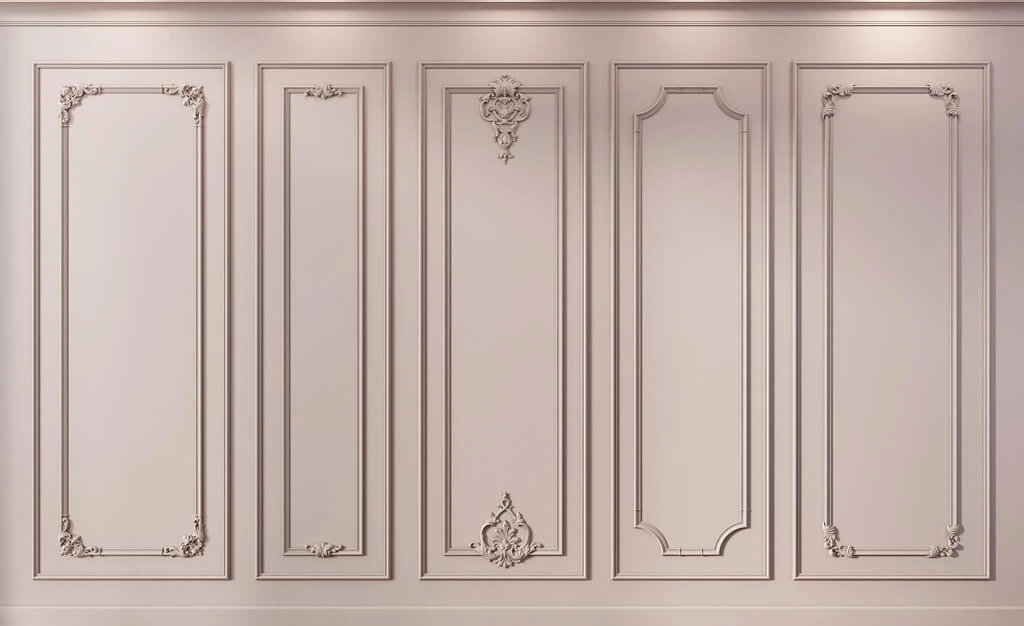
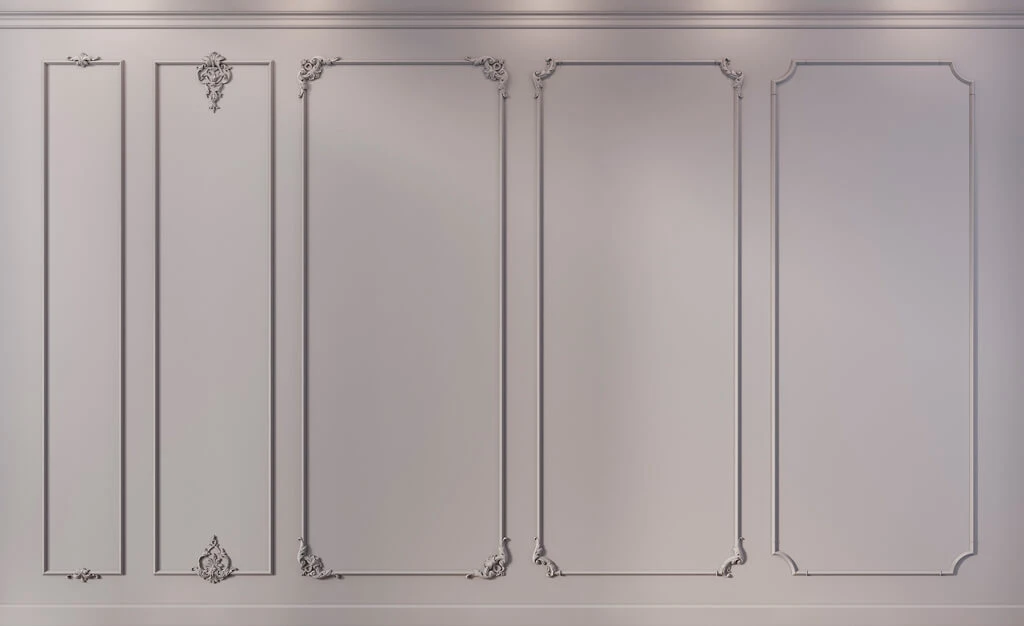
in a classic interior: a relief profile, rich cross-section, ornamental corner elements, combination withwith polyurethane moldings;
-
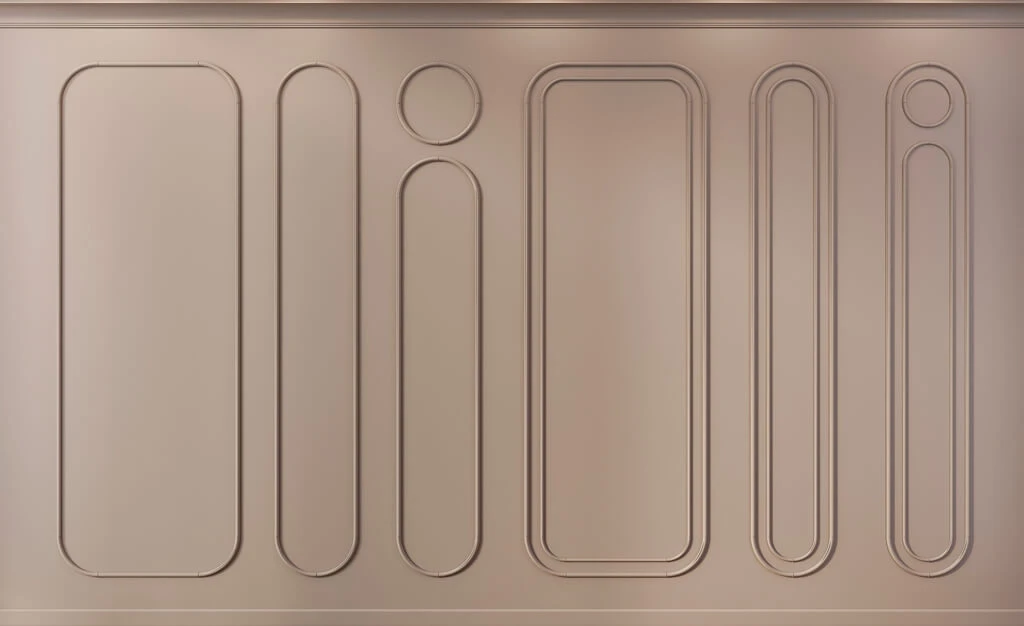
in a modern interior: a smooth narrow profile, monochrome painting, geometric precision without unnecessary details.
Which moldings for panels are better to choose: a breakdown by tasks
The choice of molding is determined not only by style — primarily by the task it must solve.
For strict geometry
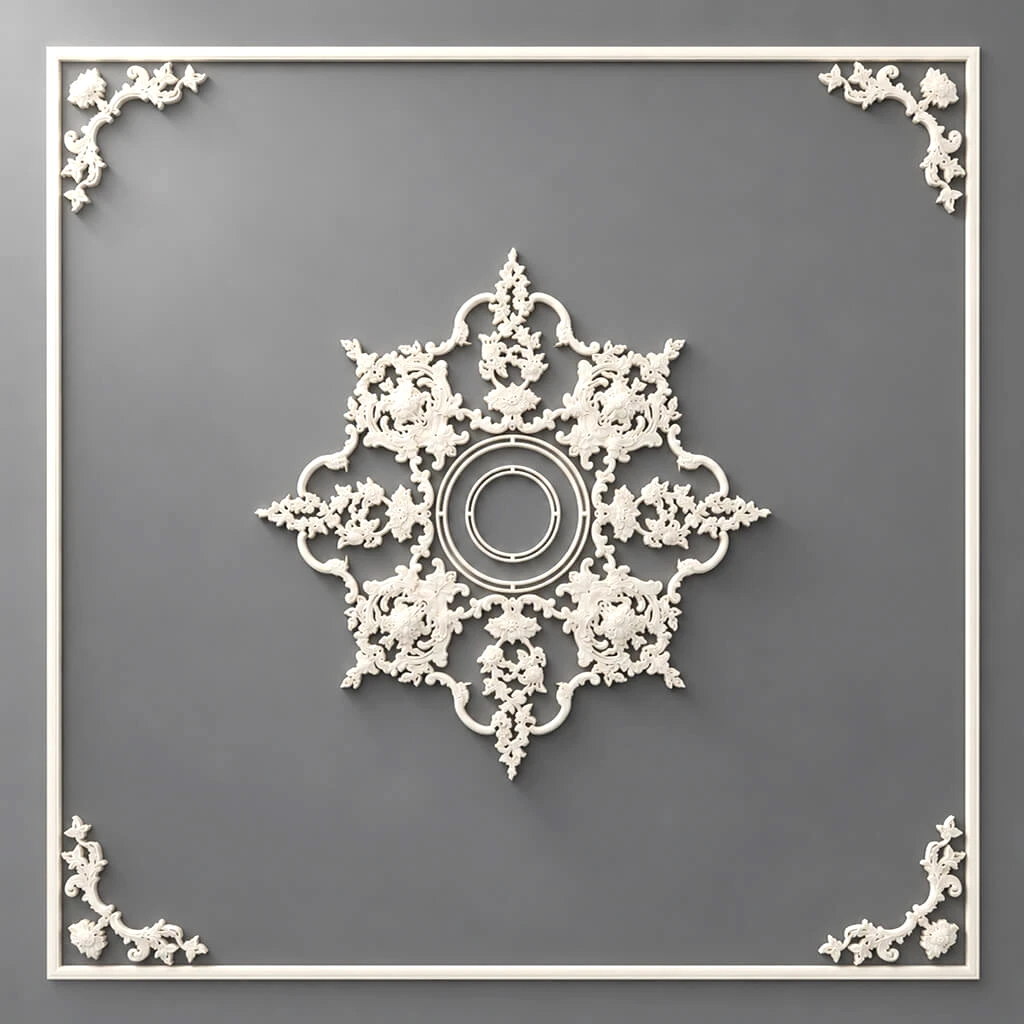
If the task is to create clear rectangular frames around the panels with perfectly even corners, a profile with the correct cross-section and minimal relief is needed. Straight parallel lines, symmetry, a single tone with the panel — geometric precision as a decorative principle.Decor for Molding— corner elements for clean joints without manual cutting.
For decorative framing
If the molding is to become an independent decorative accent — a profile with pronounced relief, contrasting in color or texture relative to the panel. A wooden profile with clear varnish on an MDF panel for painting — this is a dialogue of two textures in one architectural gesture.
For classic panel compositions
Classical wall systems — lower field, horizontal molding, upper field — require a hierarchy of profiles. The lower baseboard is one type. The horizontal border at mid-wall level is another, more expressive one. The ceiling transition is the third, most decorative.Solid Wood Itemsallow assembling a complete system from a single source.
For combination with slat panels
Slats and moldings are a tandem with rules. The molding must be proportionate to the width of the panel. For narrow slats — a narrow profile. For a wide slat rhythm — a medium or wide molding. Color — either matching the slats or contrasting as an architectural accent. For the principles of connecting slat constructions with molding profiles — read the article aboutSlatted panels in interior design.
For wooden wall elements
When the panel is made of solid wood or veneer, a molding from the same species is not just an aesthetically correct, but also a technically justified solution. A unified material reacts equally to humidity changes, ages the same way, and accepts coating the same way. This is durability without compromise.
Molding materials for panels: wood versus polyurethane
Let's break it down honestly and specifically — because the choice of material determines the result.
Wooden moldings for panels
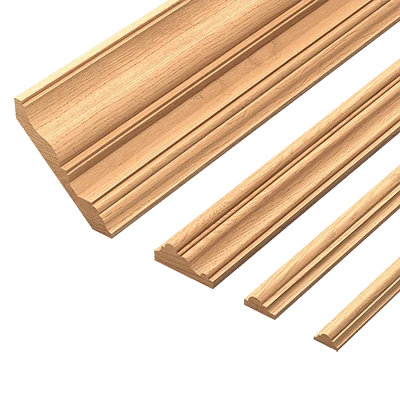
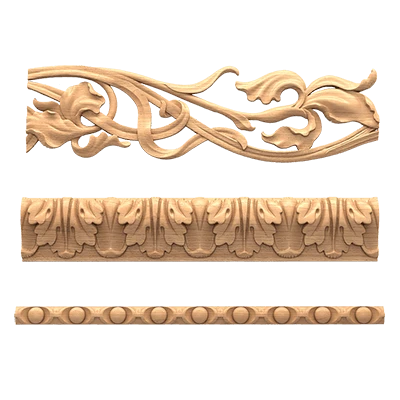
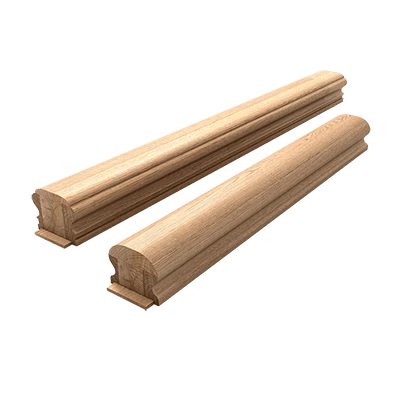
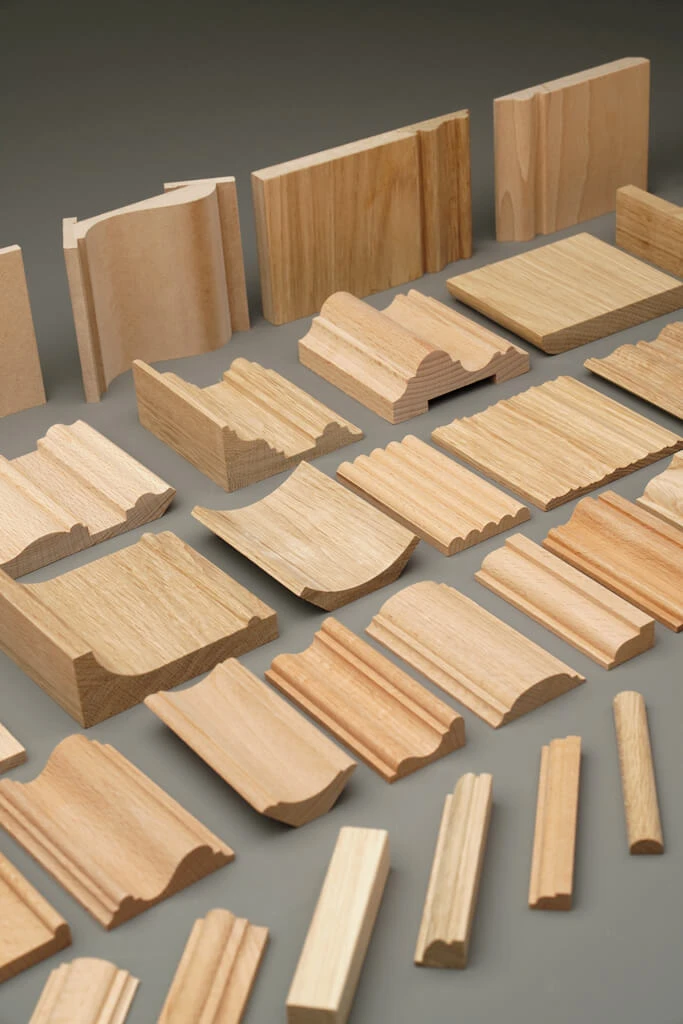
Wooden moldings— profiles made of solid oak, beech, ash, linden. For finishing panels made of natural wood or MDF — this is the first choice.
Why wood for panel moldings:
-
the natural fiber texture complements and supports the wooden panel, creating material unity;
-
accepts any finish: varnish, wax, enamel, stain, oil — for any color and texture scenario;
-
mechanically dense — does not deform from accidental impact, does not crumble at the edge;
-
when applying a transparent finish, it creates a living surface with a unique fiber pattern;
-
environmentally friendly material — critical for bedrooms and children's rooms.
Wooden molding for panels is especially appropriate in classic, neoclassical, Scandinavian interiors, in warm spaces with natural materials — wooden floors, solid wood doors, veneered furniture.
Polyurethane moldings for panels
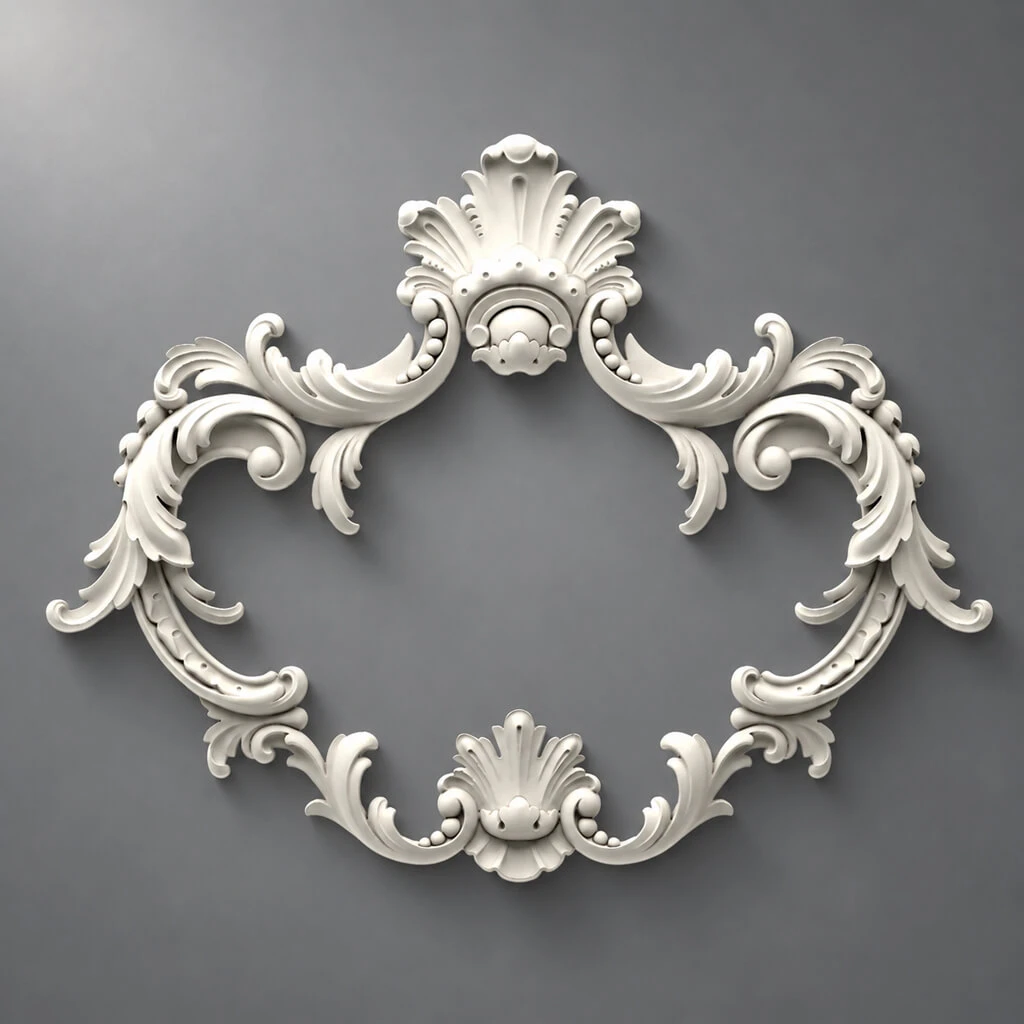
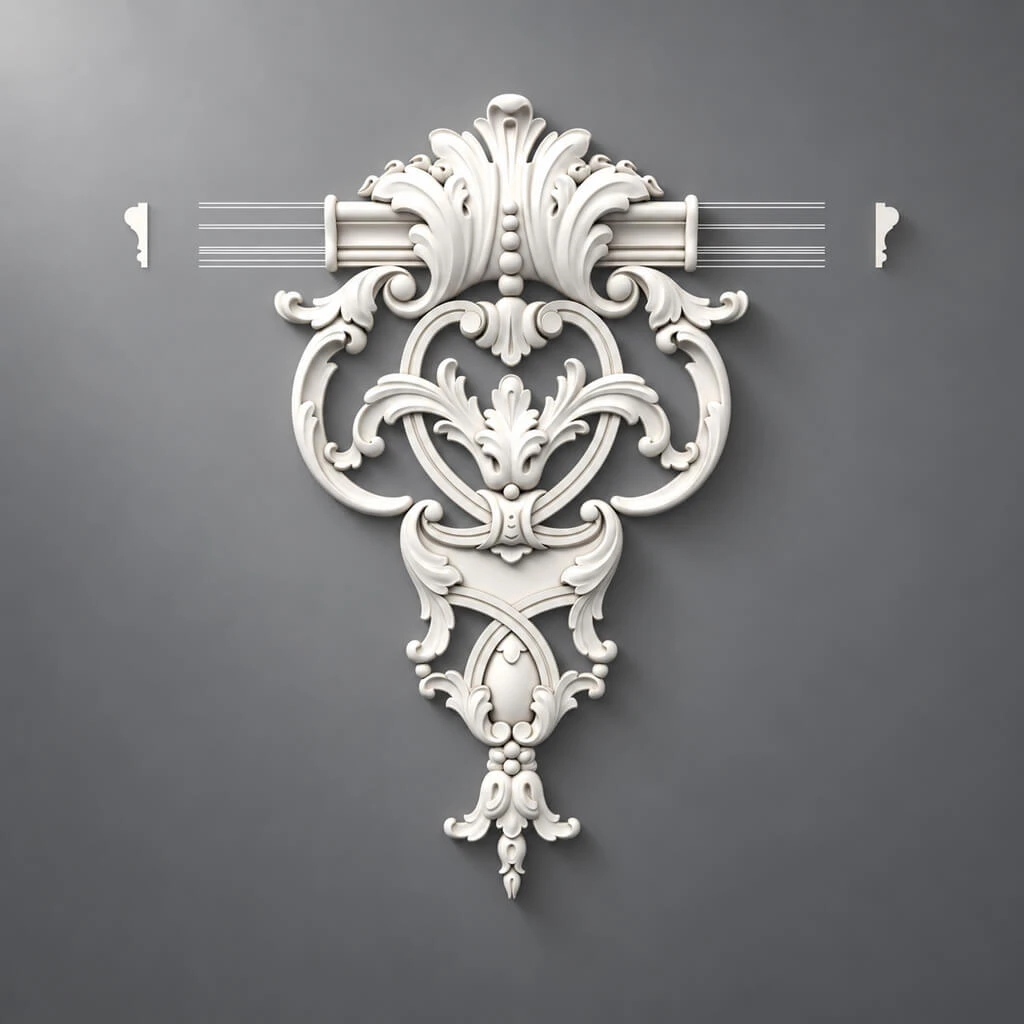
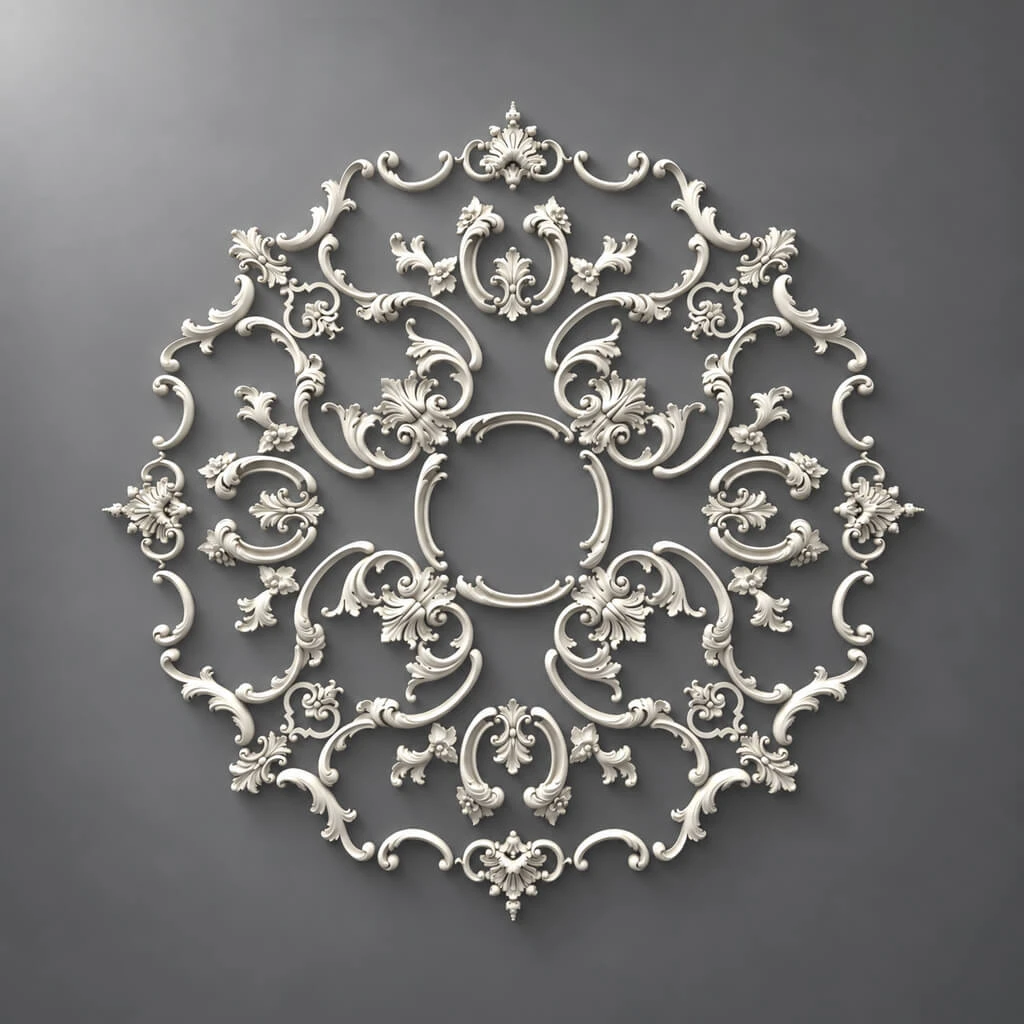
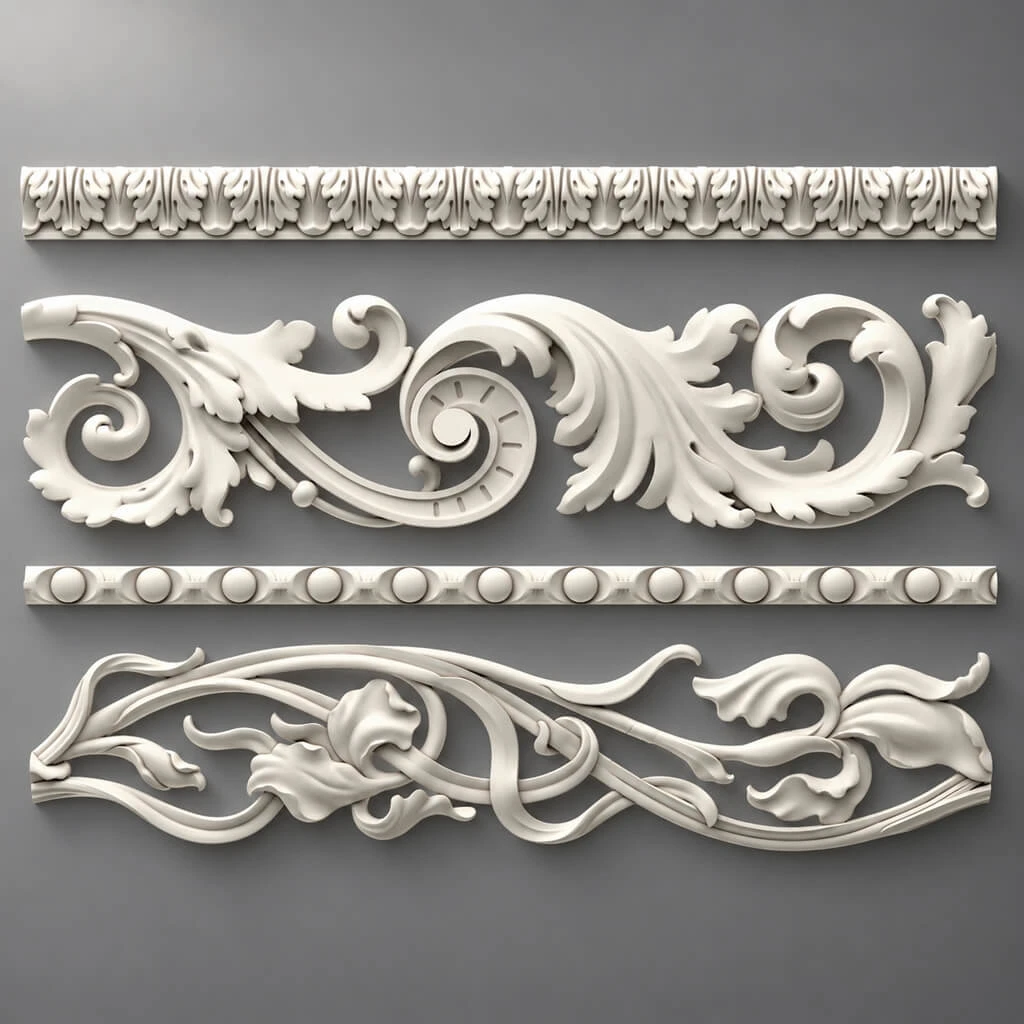
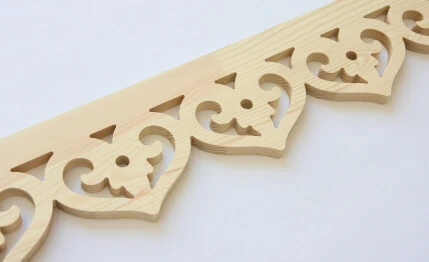
Relief Decorationand polyurethane profiles — for those who want expressive relief at an affordable price. Lightweight, moisture-resistant, with a perfectly smooth surface for enamel.
Advantages of polyurethane moldings for panels:
-
lighter than wood — easier to install on vertical surfaces;
-
moisture-resistant — suitable for kitchen areas and high-traffic hallways;
-
perfectly smooth factory surface — paint applies without pores or defects;
-
complex ornamental relief at half the price of wooden counterparts;
-
wide range of profiles from minimalist to classic ornamental.
Polyurethane molding is organic for panel solutions in classic interiors, where expressive relief is needed on the framing of decorative inserts.
Material Comparison
| Parameter | Wooden Molding | Polyurethane Molding |
|---|---|---|
| Natural texture | Yes | No |
| Complex relief ornament | Expensive | Affordable |
| For painting to match the panel tone | Excellent | Excellent |
| Combination with wooden panels | Ideally | Satisfactory |
| Moisture resistance | Limited | Yes |
| Weight during installation | Medium | Lightweight |
| Ecological | High | Medium |
| Service life | Decades | Long |
How to choose molding for panels by design type
Different decorative tasks require different profiles. Here are specific scenarios.
For framing a panel
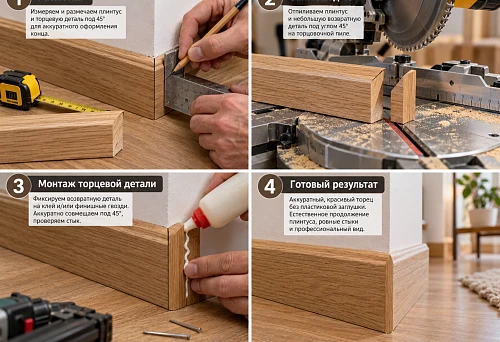
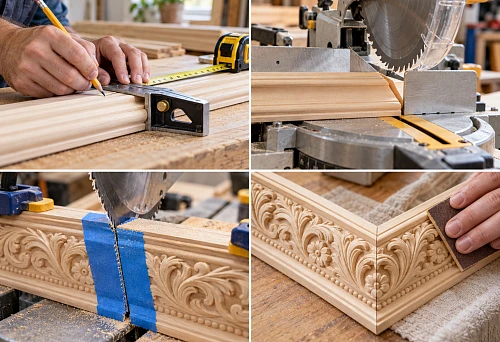
The molding runs along the entire perimeter of the panel: top, bottom, sides. Creates a visual frame, separates the panel from the neutral wall. Important: the profile must be strictly the same width on all sides. Cross-section — symmetrical or with a slight bevel. Corner joints — either at 45° with precise cutting, or viaDecor for Molding— ready-made corner overlays.
For creating a decorative frame
A decorative frame is molding mounted not at the edge of the panel, but at some distance from it, creating a 'frame within a frame'. This technique is characteristic of classic wall compositions, where a visible field remains between the edge of the panel and the molding. A complex but very expressive solution.
For panel joints
When two panels meet end-to-end — a vertical molding in the joint conceals the technical line and adds architectural rhythm. Especially relevant for slat constructions, where the joint between two sections may be noticeable without decorative covering.
For combining panel and wall
Horizontal molding at the boundary between the panel zone and the plaster/paint zone is not just about 'covering the end.' It is an architectural line that fixes the proportions of the room, marks the horizon, and creates a decorative transition. The height of the boundary molding (90, 100, 120 cm) determines the visual proportions of the entire space.
For panels with lighting
Lighting inside or along the perimeter of the panel is a separate scenario. The molding here creates a frame within which the luminous element resides. A profile for lighting requires preliminary design: a gap for the light strip and a coating that does not absorb light are needed.
For panels in a classic style
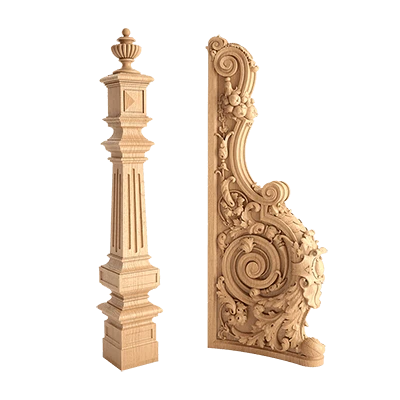
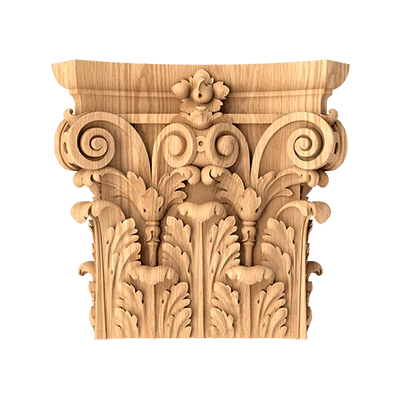
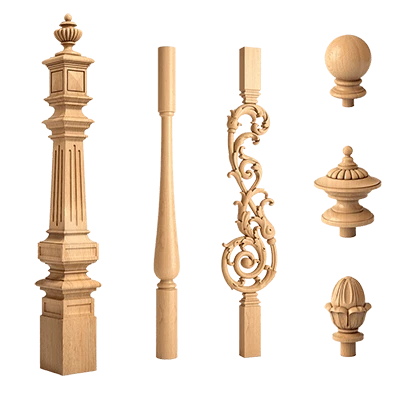
A relief profile with a traditional cross-section, corner elements with ornamentation, combination with with polyurethane moldings on the ceiling transition — all these are elements of a classic panel system. Capitalsandpilasters and columns enhance the vertical rhythm.
For panels in modern classic style
A laconic profile with a smooth, even cross-section. Molding in a unified tone with the panel. Geometrically precise proportions of the frame. Minimal decorative details — maximum architectural result.
Moldings for panels and slatted panels: when and how to combine them
This block is for practitioners. Because the question 'when are panels enough, and when is molding needed' is one of the most common.
When panels alone are sufficient
A slatted construction from floor to ceiling on a separate wall is a self-sufficient solution. The slats create rhythm, texture, and visual richness. If the top end goes under the ceiling plinth, and the bottom under the floor, additional molding is not needed.
When molding is needed for completion
Slatted panels end at a height of 100 or 120 cm, and above is a neutral painted wall? This is where horizontal molding is necessary. It covers the open end of the slatted construction and creates a clear architectural boundary. Without it, the top edge of the slats looks abandoned—an unfinished solution.
How to combine slats and moldings on one wall
The principle is simple: slats create vertical rhythm, molding creates horizontal order. Molding goes above and below the slatted construction. On the sides—if the construction does not reach the corners—vertical moldings. All profiles are from one source, in one tone or with a thoughtful color contrast.
How to design a TV zone
A TV zone with slatted panels is one of the most popular modern design solutions in St. Petersburg apartments. Moldings here work as an external frame for the entire zone: a rectangular contour made of decorative profile, inside which the slats are located. The television is in the center of the slatted field or on a protruding element. The result is a complete architectural composition, not just 'slats on the wall'.
How to decorate an entryway
An entryway with slatted panels in the lower zone (up to 90–120 cm) and a molding border above works both aesthetically and practically. The molding protects the upper edge of the slatted structure from mechanical damage and creates a distinct horizontal line.
How to design an accent wall without visual overload
The rule is one: one main material — one supporting material. Slats are the main. Molding is the supporting. Do not try to add stucco, cornices, decorative overlays, and molding frames into one project. Choose one decorative technique — and execute it flawlessly.
How to choose the size and profile of molding for panels
The size of the profile is not a matter of taste. It is a matter of proportions.
Narrow molding for panels
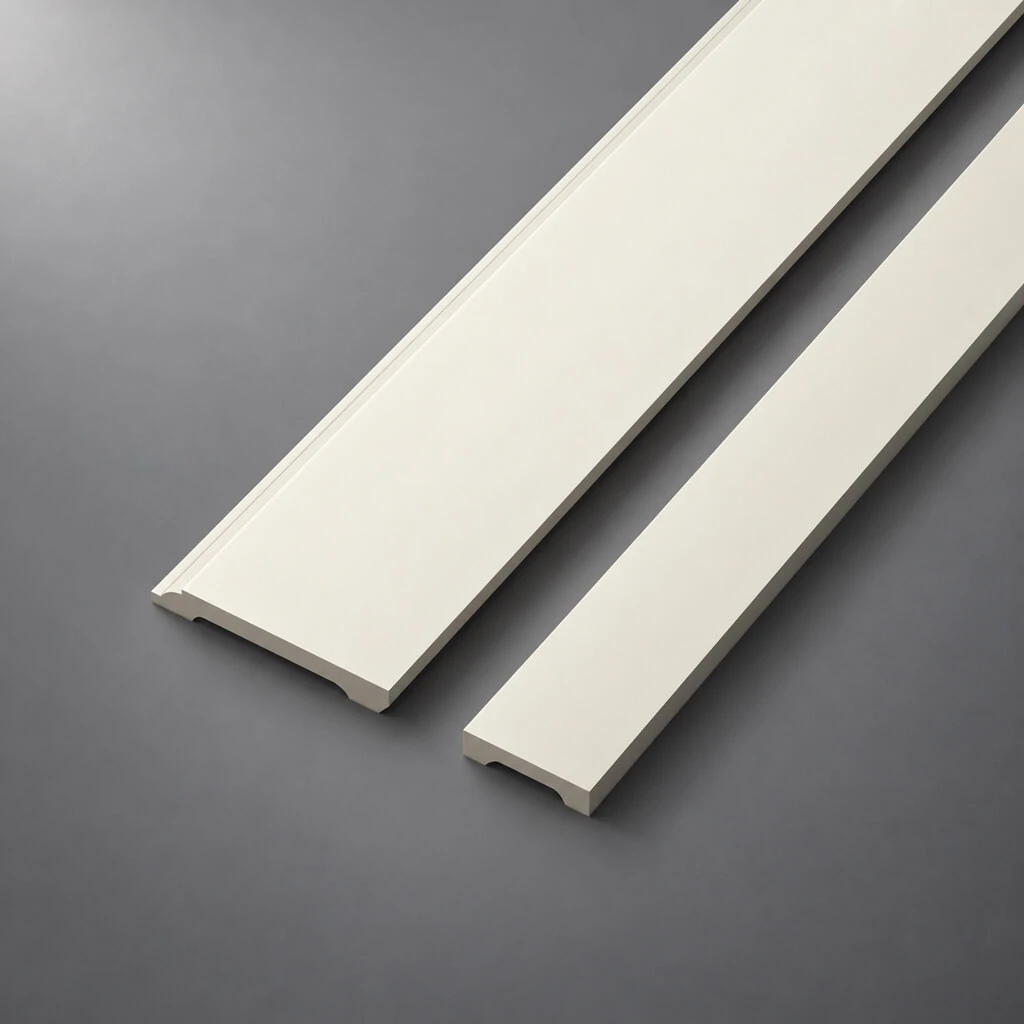
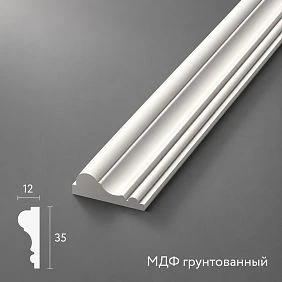
Profiles 10–25 mm — for minimalist solutions, modern interiors, monochrome panel frames. Such molding is almost invisible in direct lighting — it works as an architectural line, readable in oblique light. Ideal for slatted panels in modern Scandinavian or Japandi interiors.
Medium molding
25–50 mm — a universal working range. Confidently readable from a distance, creates a pronounced relief. Suitable for classical and modern contexts when selecting the correct cross-section.
Wide molding for large compositions
50 mm and above — for high ceilings, formal spaces, country houses. In a standard apartment, a wide profile can visually 'overpower' the panel — use with caution.
How to select molding to match panel width
Simple rule: frame molding width — no more than 10–15% of panel width. For a 60 cm wide panel — molding 6–9 cm maximum. For a narrow panel 20–30 cm — molding 15–25 mm. Breaking this rule creates the feeling that 'the frame is bigger than the picture'.
Smooth profile
Plain section without ornament — universal. Reads as an architectural line. Suitable from minimalism to neoclassicism.
Decorative relief profile
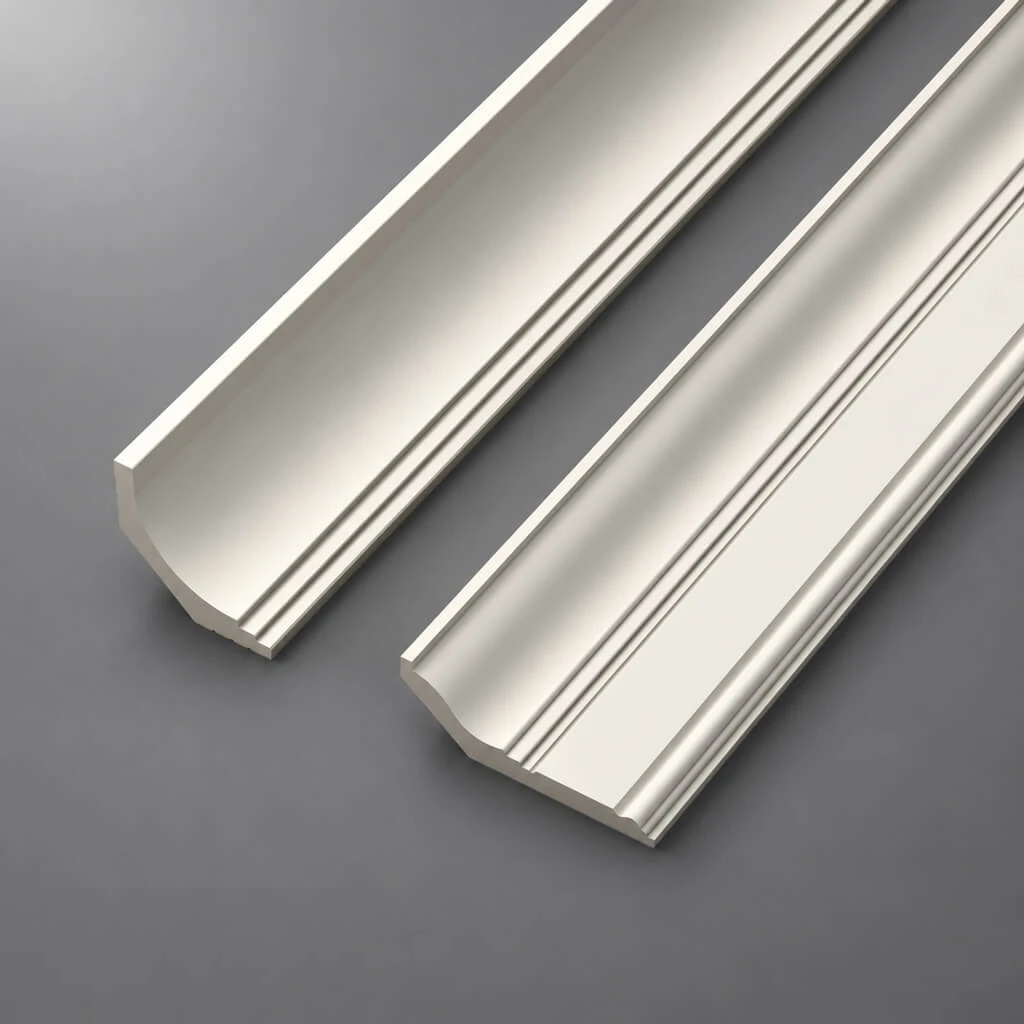
Cyma reversa, ogee, quarter round — for classical and neoclassical interiors. Creates a rich light pattern but requires appropriate context. In minimalist space — conflict.
How to consider room scale
Small room (up to 20 sq. m) — narrow and medium profiles, monochrome painting, minimal decorative details. Spacious living rooms and studies with high ceilings — allow wide profiles, relief sections, corner elements, combination with moldings.
What to look for when buying panel moldings in St. Petersburg
Practical checklist before ordering.
Material — specifically
Specify the wood species or polyurethane brand. For panels to be painted — fine-grained species (linden, ash) without knots. For natural texture — oak or beech with expressive grain pattern.
Dimensions — calculate in advance
Perimeter of each panel element, length of each horizontal border, number of corner joints. Add 10–15% margin for cutting and possible defects when working with corners.
Compatibility with panels
Molding thickness must match panel thickness. A profile too thin on a thick panel will create a step. One too thick — will protrude unjustifiably.
Paintability
Wooden molding for painting — preliminary priming is needed. Polyurethane — factory primer is already applied. For a monochrome 'molding to match panel' solution — coating compatibility is important.
Decorative elements in the same line
Specify: are thereDecor for Molding— corner trims for clean joints in frame corners. Without them, corners will have to be cut at 45° with high precision — even a 1–2 degree error will be visible.
Delivery in St. Petersburg
Long-length profiles are fragile cargo. Clarify packaging conditions and transportation rules. Order with a surplus — a reorder in a week may differ in shade.
Why STAVROS: panel moldings in Saint Petersburg
When it comes to decorative profiles for wall and interior panels — it's important to work with a manufacturer that has not only molding, but the entire system: panels, decor, assembly elements.
STAVROS offers:
-
Moldings and decorative profiles— complete line for panel finishing;
-
Wooden moldings— from solid oak, beech, ash and other species;
-
Decor for Molding— corner elements, trims, connectors;
-
Rafter panels— for comprehensive wall solutions;
-
Polyurethane moldings— for classic ceiling-wall decor;
-
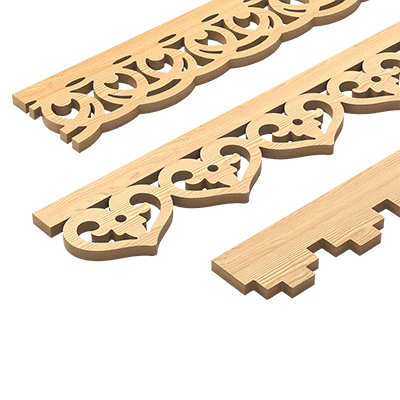
Relief Decoration— trims and ornamental inserts;
-
pilasters and columnsandCapitals— for complete classic systems;
-
Solid Wood Items— the entire line of wooden interior decor.
You can assemble a complete solution: panels + moldings + corner elements + decorative molding — from a single supplier, in a unified stylistic and material logic.
Moldings for panels and slatted structures: final principles
Before proceeding to purchase — several key principles that separate 'just a profile' from an 'architectural solution'.
Material unity. If the panels are wooden — the molding is wooden. Not PVC, not MDF without veneer, not 'wood-like'. Natural material always loses when surrounded by substitutes.Solid Wood ItemsSTAVROS — a guarantee of unity.
Cutting precision. The corner joints of the molding are the most vulnerable point. An error in cutting creates a gap or overlap that cannot be hidden. Use ready-made cornerdecorative elements— they solve this task without risk.
Proportionality. The molding must be proportionate to the panel and the room. Too thin in a large space — it gets lost. Too wide in a small hallway — it feels oppressive.
Coating before or after installation? For a monochrome 'molding to match the panel' effect — installation, then joint painting. For natural wood with a transparent coating — coating before installation with subsequent joint treatment.
A system, not just a set of parts. Molding for panels becomes a truly strong element only within a system: panel + profile + corner decor + coordinated ceiling transition. About howRafter panelsmoldings interact in real interior projects — in the article aboutSlatted panels in interior design.
Frequently Asked Questions about moldings for panels
Which moldings are suitable for wall panels?
Solid wood profiles — for wooden and MDF panels in classic and modern interiors. Polyurethane — for decorative and classic ornamental solutions. The choice is determined by the panel material and interior style.
Where to buy moldings for panels in St. Petersburg?
In the STAVROS catalog:Moldings and decorative profiles— a full range of solid wood profiles for panel finishing. Delivery across St. Petersburg.
What is better for panels: wood or polyurethane?
For wooden and MDF panels in living spaces — wood. For classic ornamental decor and panels in high-humidity areas — polyurethane. The best combination: wooden profiles for framing + polyurethane cornerappliquefor corner accents.
Are moldings suitable for MDF panels?
Yes.Wooden moldingsMoldings made from fine-grained woods like linden or ash are perfectly compatible with paintable MDF. They are installed before the final painting, joints are puttied and sanded, then the entire surface is painted in a uniform color.
Can molding and slatted panels be combined?
Yes — and it's one of the most expressive modern wall solutions. The molding finishes the slat construction at the top and bottom, creating a horizontal architectural boundary. Details are in the articleSlatted panels in interior design.
Which moldings to choose for a TV zone?
Medium profile (30–50 mm) — for the outer frame of the slat construction. Monochrome painting to match the panels or a slight contrast. Corner elements fromdecoration for moldings— for clean corner joints.
Which moldings are suitable for paintable panels?
Wooden profiles from fine-grained woods without knots, with a smooth surface. Installation before final painting, puttying of joints, uniform painting. For polyurethane — factory primer already provides an ideal surface for enamel.
How to calculate the amount of molding for panels?
Measure the perimeter of each panel element. Add up all the values. Add 10–15% reserve for cutting and possible errors when working with corners. Check the standard length of the stick from the supplier — it affects the number of joints.
Conclusion: Panel Molding — From Detail to System
Panel molding is not just a final touch 'for beauty.' It is an element that determines whether the finish will look like a complete professional solution or an unfinished experiment with good materials.
Properly selected wall panel molding completes the form, fixes proportions, creates a dialogue between surfaces, and turns individual materials into an architectural system. This is precisely the difference between an apartment with 'panels on the wall' and a home with a thoughtful interior.
Buy panel moldings in St. Petersburg, select profiles for MDF, slatted and decorative wall solutions, assemble a complete 'panels + moldings + decor' system — all this is available in the STAVROS catalog.
STAVROS is a manufacturer and supplier of wooden interior decor in St. Petersburg. Solid wood moldings, decorative elements, slatted panels, stucco — everything for creating a cohesive, architecturally expressive interior in an apartment or house.
Go to the catalog:
-
Moldings and decorative profiles— full assortment
-
Wooden moldings— made of solid oak, ash, beech
-
Decor for Molding— corner elements
-
Rafter panels— for wall solutions
-
Polyurethane moldings— classic ceiling and wall decor
-
Solid Wood Items— the entire line of wooden decor
STAVROS — panel moldings in St. Petersburg: material, system, result