Article Contents:
- What is Ceiling Molding
- How Ceiling Molding Differs from Ceiling Skirting and Cornice
- Ceiling Skirting
- Decorative Cornice
- Ceiling Molding
- Where Ceiling Moldings Are Used: Application by Room
- In the living room
- In the bedroom
- In the entryway
- In the hallway
- In the dining room
- In the study
- In classic interior
- In neoclassicism
- In Modern Interior with Decorative Accent
- Wooden or Polyurethane Ceiling Molding: An Honest Breakdown
- Wooden ceiling molding
- Polyurethane ceiling molding
- What to choose: comparison
- How to choose ceiling molding based on interior style
- Classic
- Neoclassicism
- Modern classicism
- Light interior
- Interior for painting
- Calm modern interior
- How to choose the size and profile of ceiling molding
- Ceiling height rule
- Narrow ceiling molding
- Medium ceiling molding
- Wide ceiling molding
- Smooth profile
- Relief profile
- How to avoid overloading a room
- Ceiling molding for apartments and houses
- Ceiling molding for apartments
- Ceiling molding for houses
- Molding for low ceilings
- Molding for high ceilings
- Molding for decorative ceiling perimeter
- What to combine ceiling molding with: a comprehensive decor system
- With ceiling stucco
- With cornices
- With wall moldings
- With pilasters and capitals
- With wall panels
- With classic furniture
- What to look for when buying ceiling molding in St. Petersburg
- Material: specific and precise
- Dimensions: calculate in advance
- Paintability
- Compatibility with style and other elements
- Availability of decorative elements in the same line
- Delivery in St. Petersburg
- Ability to assemble a complete ceiling composition
- Why STAVROS — for buying ceiling molding in St. Petersburg
- Frequently asked questions about ceiling molding in St. Petersburg
- Where to buy ceiling molding in St. Petersburg?
- How does ceiling molding differ from ceiling skirting?
- What is better for the ceiling: wood or polyurethane?
- Which moldings to choose for an apartment?
- Can ceiling moldings be painted?
- How to choose molding according to ceiling height?
- Which moldings are suitable for a classic interior?
- How much does ceiling molding cost in St. Petersburg?
- Conclusion: ceiling molding is the final point in the architecture of space
Buying ceiling molding in St. Petersburg today means choosing not just a profile, but a decorative solution that sets the character of the entire room. Solid wood molding, lightweight polyurethane profile, classic cornice with relief — each option has its own role, its own scope of application, and its own aesthetics.
This guide is created specifically for those who want to understand: what is ceiling molding, how it differs from baseboard and cornice, which material to choose, how to select according to ceiling height and interior style — and where to ultimately buy ceiling molding in Saint Petersburg.
Go to the catalog now:
-
Moldings and ceiling profiles— full assortment
-
Wooden moldings— solid wood profiles
-
Polyurethane moldings— ceiling molding decor
-
wooden cornice— solid wood cornices for ceilings



What is ceiling molding
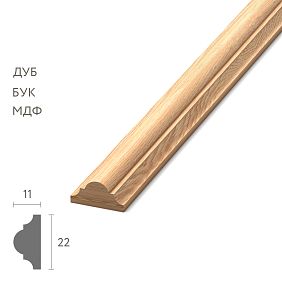
Ceiling molding is a decorative profile with a specific cross-section that is installed along the perimeter of the ceiling, in ceiling niches, along the edges of decorative beams, or as part of a comprehensive ceiling system. Its function is both aesthetic and architectural: it completes the space from above, creates a transition between the wall and ceiling, and adds relief and depth.
Why is this important? A bare joint between the wall and ceiling is always a visually unfinished line. Even the highest quality painting does not 'seal' this transition as effectively as molding does. A profile along the perimeter of the ceiling creates a clear architectural frame that optically structures the room.
Depending on the task, ceiling molding:
-
runs along the entire perimeter of the ceiling as a finishing element;
-
marks the boundary of a decorative niche or coffer;
-
creates a visual transition between a two-level ceiling and the wall;
-
forms a decorative frame within the ceiling plane;
-
serves as part of a classical system together with moldings and cornices.




How ceiling molding differs from ceiling skirting board and cornice
This is an important question — and this is exactly where many buyers get confused. Let's break it down honestly, without confusion.
Our factory also produces:
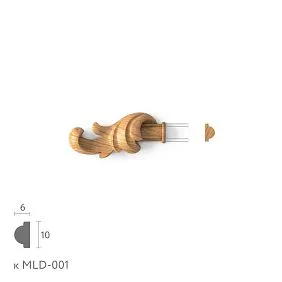
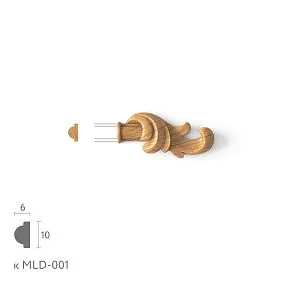
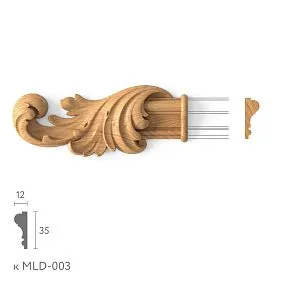
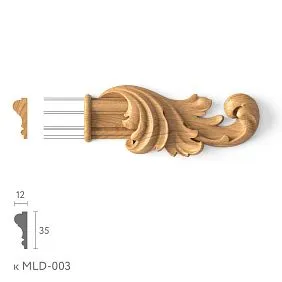
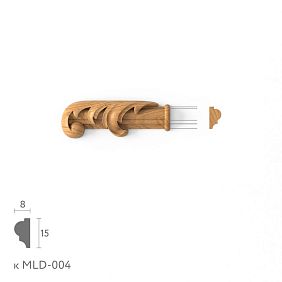
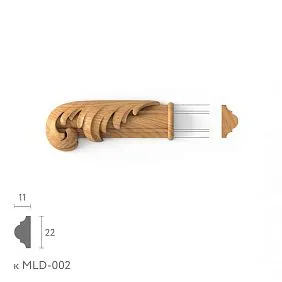
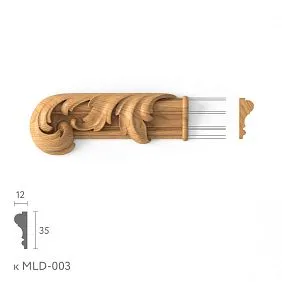
Ceiling skirting board
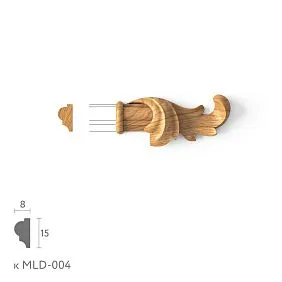
wooden ceiling molding— is a profile that is mounted in the corner between the wall and the ceiling. Its profile is designed specifically for installation in a 90-degree joint: one side adjoins the ceiling, the other — to the wall. The cross-sectional shape is usually a triangle or a segment with a smooth transition. The task of the skirting board is to close the technical gap in the corner and provide a neat transition.
More about selection and installation — in the article Wooden ceiling baseboard.
Get Consultation
Decorative cornice
wooden cornice— is a larger profile that also runs along the perimeter of the ceiling, but as an independent decorative element. The cornice is wider and richer in relief than the skirting board, and often protrudes from the plane of the wall. In classical interiors, the cornice forms the 'crowning' element of the wall — an analogue of an architectural entablature.
wooden cornice— a choice for classical and neoclassical interiors where an expressive ceiling transition with a rich cross-section is needed.
Ceiling molding
Molding is a broader concept. It is a decorative profile used not only at the corner of the wall and ceiling but also directly on the ceiling plane: for creating frames, coffers, decorative patterns. Molding can run along the perimeter like a baseboard, but it can also create geometric shapes within the ceiling plane—rectangles, squares, ornamental borders.
| Profile type | Where it is installed | Main task | Width |
|---|---|---|---|
| Ceiling skirting board | Wall/ceiling corner | Close the joint | Narrow–medium |
| Wooden cornice | Ceiling perimeter | Decorative finishing | Medium–wide |
| Ceiling molding | Ceiling perimeter and surface | Decor, frames, coffers | Any |
If you need to neatly cover a corner — choose a baseboard. If you want an expressive ceiling transition with relief — a cornice. If you aim to create decorative frames on the ceiling or give it an architectural finish — molding.
Where ceiling moldings are used: application by room type
Ceiling molding works in any room — but differently in each.
In the living room
Living room — the formal space of an apartment or house. Here, ceiling molding operates at full capacity: along the perimeter, it creates a complete architectural outline; in the center of the ceiling — a frame forceiling moldingsor a rosette. For a living room with a ceiling height of 2.9 m or more — this is space for a full-fledged classical ceiling system. For standard apartments — a narrow or medium profile along the perimeter, delicate and unobtrusive, creating completeness without 'overloading' the space.
In the bedroom
In the bedroom, decorative ceiling molding is most often installed along the perimeter — as a quiet architectural chord. No overload: a narrow profile matching the ceiling color, without ornament, creates a sense of completeness and coziness. In spacious bedrooms, a decorative frame in the center of the ceiling with a rosette or medallion is possible.
In the hallway
The hallway is small, ceilings are standard — but molding works here too. A thin profile along the perimeter creates a neat transition, making the space 'polished'. In a classic hallway with a high ceiling — a cornice with a relief section.
In the corridor
A long corridor with crown molding along the ceiling perimeter ceases to be a tunnel—it gains rhythm and architectural sequence. The profile here should be narrow to avoid weighing down the low space.
In the dining room
The dining room is a zone of feasting, warmth, and solemnity. A decorative frame made of moldings on the ceiling above the dining table creates a focal point, visually separating the dining area. In a classic interior—a frame withwith molded decorationat the corners.
In the study
A study demands architectural rigor. Crown molding along the ceiling perimeter, a relief cornice, and with a ceiling height of 3 m or more—a full-fledged classic ceiling system with a cornice,pilasterson walls andcapitalsat the highest point.
In a classical interior
It is here that ceiling molding works as part of a system: perimeter profile, decorative frames,Ceiling moldingrosettes, corner elements. All of this creates an image that cannot be achieved by any other means.
In neoclassicism
Neoclassicism is classicism with a modern editor. The molding is restrained, without overloaded relief. A frame along the ceiling perimeter or a single decorative frame in the center. Material—wooden profile for matte enamel or polyurethane.
In a modern interior with a decorative accent
In a modern minimalist interior, ceiling molding is an architectural gesture. A single narrow profile along the perimeter, matching the ceiling color. Visible only with oblique lighting. Geometrically precise. Without ornament. This is precisely what is called 'invisible decor'—it works not for a direct glance, but for the feeling.
Wooden or polyurethane ceiling molding: an honest breakdown
The question of material is key. And there is no absolutely correct answer here: everything depends on the task, style, and specific space.
Wooden ceiling molding
wooden moldingfor the ceiling is the choice of those who value naturalness, tactile quality, and a 'living' surface. Profiles made of solid oak, beech, ash, or linden carry something that cannot be imitated: a unique grain pattern, the warmth of organic material, and a visual density that you can feel even with a glance.
Advantages of wooden ceiling molding:
-
natural texture that 'comes to life' and creates a rich visual effect when clear varnish or wax is applied;
-
accepts any finish: varnish, enamel, tint, stain, wax — to match any interior color scheme;
-
excellently complements wooden floors, wooden doors, solid wood furniture, and veneer;
-
mechanically durable: profiles made of oak or ash do not deform and maintain their shape for decades;
-
ecologically impeccable — important for children's rooms and bedrooms.
Wooden ceiling molding is the choice for warm, prestigious interiors: classic, neoclassical, modern classic, Scandinavian style, interiors with natural materials. It is especially organic in St. Petersburg apartments with historical wooden doors and parquet flooring.
There is one limitation: wood is sensitive to sharp fluctuations in humidity. In bathrooms and above kitchen work surfaces, polyurethane is preferable.
Polyurethane ceiling molding
Ceiling moldingPolyurethane is a modern answer to a classic demand. Lightweight, moisture-resistant, stable, with the ability to reproduce the most complex ornamental relief at an affordable price.
Why choose polyurethane ceiling molding:
-
significantly lighter than a wooden counterpart of the same dimensions — installation on the ceiling is technically simpler;
-
does not react to humidity and temperature fluctuations — suitable even for kitchens and bathrooms;
-
perfectly smooth factory surface — enamel applies evenly, without pores or wood grain texture;
-
allows for the realization of complex classical relief (cavetto, ogee, ornamental band) at an affordable price;
-
wide range of profiles — from minimalist to baroque.
Relief DecorationPolyurethane includes not only moldings but also rosettes, corner elements, medallions, and ornamental overlays. Together with woodenwall moldingsthey create a complete interior system.
More about ceiling molding — in the article Ceiling molding.
What to choose: comparison
| Parameter | Wooden Molding | Polyurethane Molding |
|---|---|---|
| Natural texture | Yes, unique | No |
| Complex ornament | Expensive | Affordable |
| Weight during installation | Medium | Lightweight |
| Moisture resistance | Limited | Yes |
| For painting to match the ceiling color | Excellent | Excellent |
| Combination with wooden floor | Ideally | Worse |
| Classical relief interior | Good | Ideally |
| Modern minimalism | Ideally | Good |
| Durability | Decades | Long-lasting with proper care |
Conclusion: for a natural warm interior and areas without aggressive humidity — wood. For rich classical stucco decoration, ceilings with complex relief, and wet areas — polyurethane. The best combination for a classical St. Petersburg interior: wooden molding on walls + polyurethane ceiling cornice and stucco on the ceiling.
How to choose ceiling molding according to interior style
Style is not an aesthetic whim, but an architectural system. Molding must fit into it precisely — otherwise it either gets lost or conflicts.
Classic
Ceiling molding in a classic interior is a mandatory element, not an option. Rich relief profile around the perimeter, decorative frames within the ceiling plane, rosettes in the center, corner ornaments. PolyurethaneRelief Decorationwith traditional forms: ovolo, cyma reversa, dentils. Woodenwooden corniceas a pronounced wall finish. Combination withpilasters and columnson the walls creates a complete architectural system.
Neoclassicism
Restraint and precision. One profile around the perimeter of the ceiling — a clean section without overloaded ornament. One decorative frame in the center of the ceiling is possible. Wooden molding for matte white enamel or polyurethane profile with a concise relief.Capitalson pilasters — if pilasters are present in the interior.
Modern classic
Classical archetypes, applied selectively. One frame molding on the ceiling — or simply a profile around the perimeter without additional decorative schemes. Medium profile without ornament. Neutral white coating.
Light interior
White ceiling molding matching the color of the ceiling surface — monochrome relief. With proper top or side lighting, the profile reads as an architectural shadow. In the absence of direct light on the profile — complete integration with the ceiling. This is 'invisible decor' of the highest class.
Interior for painting
Molding is installed before applying the final layer of paint to the ceiling. After installation, all joints are puttied and sanded, then the ceiling and molding are painted in a single color. The boundary between the profile and the ceiling disappears — only a clean geometric relief remains. This technology requires a smooth profile surface without pores: wooden moldings from fine-grained species or polyurethane.
Calm modern interior
Scandinavian style, Japandi, warm minimalism — molding here is delicate. Narrow wooden profile under clear varnish or matte oil. Only around the perimeter. Without ornament. The natural texture of the wood itself becomes the decor.
How to choose the size and profile of ceiling molding
An error in profile size is not a minor issue. A molding that is too wide in a standard apartment visually 'lowers' the ceiling. One that is too narrow in a high-ceilinged room gets lost and looks random.
Ceiling height rule
Basic guideline:
-
ceilings up to 2.65 m — profiles 20–35 mm wide;
-
ceilings 2.65–2.9 m — 30–55 mm;
-
ceilings 2.9–3.3 m — 45–70 mm;
-
ceilings from 3.3 m — 65 mm and above.
This is a starting point. The specific choice depends on the density of decor in the interior, style, and saturation with other details.
Narrow ceiling molding
Profiles 15–30 mm — for standard apartments, modern interiors, monochrome solutions. Creates a delicate relief, does not overwhelm the space. Only visible with oblique lighting. Ideal for neutral, light spaces.
Medium ceiling molding
30–60 mm — the working range for most St. Petersburg apartments. Visible from a distance, creates a confident ceiling transition. Works in classical, neoclassical, and contemporary contexts with the correct cross-section selection.
Wide ceiling molding
60 mm and above — for country houses with high ceilings, formal spaces, rich classical decor. In a standard city apartment, such a profile 'eats up' height; in a spacious house — creates a sense of grandeur.
Smooth profile
Straight or with minimal bevel — for modern interiors. No style restrictions: such molding is appropriate from Scandinavian style to neoclassicism. Painted to match the ceiling color — the best choice.
Relief profile
Cyma reversa, cyma recta, quarter round, fillet — profiles with traditional classical cross-sections. Create a rich play of light, are perceived as an architectural element. For classic, neoclassical, art deco. Require an appropriate stylistic context — look out of place in minimalism or Scandinavian interiors.
How to avoid overloading the space
One rule: the overall 'decorative saturation' of the ceiling should correspond to the height. For a low ceiling — one narrow profile around the perimeter. For a high ceiling — you can add frames, cornice, rosette. But even in a high room, you don't need to use everything at once: choose one main decorative element — and support it with restrained adjacent ones.
Ceiling molding for apartments and houses
Ceiling molding for apartments
A standard St. Petersburg apartment features ceilings 2.65–2.9 m high, smooth concrete surfaces for painting, and often a neutral or classic style. For such an apartment:
-
solid wood molding 25–45 mm for painting to match the ceiling color;
-
or a polyurethane profile with a soft relief;
-
installation before final painting with joint puttying.
Result: a finished ceiling transition that is subtle at first glance but fundamental to the feeling of a 'luxury' interior.
For an apartment in a historical building with ceilings 3 m and higher — there is space for a more expressive solution:wooden cornicewith a relief profile,Ceiling moldingin the center of the ceiling. This is organic for St. Petersburg with its classical architectural tradition.
Ceiling molding for the house
A country house is a different scale. Ceilings from 2.9 to 4 m, large areas, the possibility of creating full-fledged classic ceiling systems. Here:
-
wide moldings made of wood or polyurethane around the perimeter;
-
decorative frames on the ceiling plane — rectangular coffers;
-
stucco, rosettes, corner elements at the intersections of frames;
-
Combination withwall moldingsand pilasters for a unified architectural system.
In a wooden house, wooden ceiling moldings made from the same species as the beams, parquet, or wall paneling are an organic solution that unites all surfaces into a single material image.
Molding for a low ceiling
A low ceiling is not a sentence. The right molding makes it not lower, but more complete. Choose:
-
profile width no more than 25–30 mm;
-
to match the ceiling color — to avoid creating a visual break between the wall and ceiling;
-
without a relief ornament — it only emphasizes the proximity of the ceiling.
Additional technique: the wall is slightly darker than the ceiling. Molding matches the ceiling color. The boundary 'recedes' upward — the ceiling is perceived as higher.
Molding for a high ceiling
High ceiling — space for architectural solutions. Wide profiles (50–80 mm and more), frame schemes, decorative coffers,Relief Decorationat key points. A full-fledged classical ceiling system, characteristic of St. Petersburg formal interiors, is appropriate here.
Molding for a decorative ceiling perimeter
A decorative perimeter is an architectural frame on the ceiling. The molding runs along the entire perimeter with an offset of 10–20 cm from the wall. Inside the frame is the ceiling plane, which can be painted a different shade, equipped with hidden lighting, or left neutral. Effect: a ceiling with architectural character without complex construction solutions.
What to combine ceiling molding with: a comprehensive decorative system
Molding as a separate element — good. Molding in a system with other decorative elements — a completely different scale of effect.
With ceiling molding
Ceiling molding— a logical partner for ceiling molding. Perimeter molding creates a frame; the center rosette is an accent; corner elements at frame intersections are the finishing touch. For living and dining rooms with a chandelier — a rosette under the mounting point. For bedrooms — a delicate medallion. For studies — a strict geometric pattern.
With cornices
wooden corniceand molding can work together: the cornice is a pronounced perimeter element, molding is an additional frame within the ceiling plane. This is a technique characteristic of classic St. Petersburg interiors with high ceilings.
With wall moldings
wall moldingsand ceiling molding form a vertical decorative system. The ceiling profile completes the wall layout from above. The profile cross-sections should echo each other: not necessarily identical, but within the same stylistic range — textured with textured, minimalist with minimalist.
With pilasters and capitals
pilasters and columnson walls plusCapitalsat the top point plus ceiling molding — this is a complete classic 'wall–transition–ceiling' system. The pilaster bears the capital, the capital 'supports' the ceiling profile, the profile completes the wall. This is architectural grammar, tested over centuries.
With wall panels
If the walls have wooden panels orRafter panels, the ceiling molding should be made from the same wood species or a similar tone. Unity of material from wall to ceiling creates a sense of cohesive space.
With classic furniture
Classic Furniturein a space with ceiling molding — this is a dialogue between two architectural systems. The framed cabinet fronts echo the framed schemes on the ceiling; the wooden ceiling profiles support the wooden furniture. Everything speaks the same language.
What to look for when buying ceiling molding in St. Petersburg
Practical checklist before ordering — to avoid overpaying for mistakes.
Material: specific and precise
Clarify: is it solid wood, MDF, polyurethane, or veneered profile? For painting to match the ceiling — a smooth surface is needed. For natural texture under varnish — solid wood from fine-grained species without knots and cracks.
Dimensions: calculate in advance
Measure the perimeter of each room, multiply by 1.1–1.15 for cutting allowance. For decorative ceiling frames — calculate each frame separately. Clarify the standard length of the piece: for long walls, joints may be needed, and they must be incorporated into the design in advance.
Paintability
Wooden moldings can be painted with any coating with proper preparation. Polyurethane — for enamel, factory primer is already applied. For a monochrome effect — install before the final ceiling painting, putty the joints, uniform tone.
Compatibility with style and other elements
The cross-sectional shape of the molding must match the interior style. Do not try to install a baroque relief profile in a modern apartment — even in an expensive execution, it will be a visual conflict.
Availability of decorative elements in the same line
Clarify: are there for the selected moldingdecorative elements— corner covers, connectors, corner inserts for frames. This is critical for clean execution of decorative schemes on the ceiling.
Delivery in St. Petersburg
Long-length ceiling profiles are fragile cargo. Clarify packaging conditions, possibility of delivery to the address, and availability of the item for reorder. When calculating quantity, always take a 10–15% reserve.
Possibility to assemble a complete ceiling composition
Ideally — take moldings, corner elements, stucco, and cornices from one supplier. This guarantees compatibility in material, tone, and stylistic character.
Why STAVROS — for buying ceiling molding in St. Petersburg
Choosing a supplier of decorative profile is not a formality. The quality of the molding determines how the ceiling will look in a month, in a year, and in ten years.
STAVROS offers in its assortment:
-
Wooden moldings— from solid oak, beech, ash, linden — in various widths and cross-sections;
-
Moldings and ceiling profiles— a full catalog including cornices and baseboards;
-
wooden cornicefrom the array — for an expressive ceiling transition;
-
wooden cornice— a full range of wooden cornices;
-
Polyurethane moldings— ceiling molded decor;
-
Relief Decoration— overlays, medallions, corner elements;
-
decorative elements— corner inserts and connecting overlays for frame schemes;
-
pilasters and columnsandCapitals— for complete classic systems;
-
wall moldings— for a unified wall-ceiling system.
You can assemble a full-fledged ceiling-wall decorative system: profiles, cornices, molding, corner elements — from one supplier, in a unified stylistic logic.
Frequently asked questions about ceiling molding in St. Petersburg
Where to buy ceiling molding in St. Petersburg?
In the STAVROS catalog:Buy ceiling molding— solid wood moldings and cornices. Full selection of sizes, wood species, and profile sections. Delivery in St. Petersburg.
How does ceiling molding differ from ceiling skirting?
Ceiling skirting — a profile specifically for the wall/ceiling corner, covering the joint.Wooden ceiling baseboard— more details in our guide. Ceiling molding is broader in application: it can run along the perimeter, create frames, coffers, decorative patterns on the ceiling plane.
What is better for the ceiling: wood or polyurethane?
For natural texture and a warm interior — solid wood molding. For complex classical relief and wet areas — polyurethane. The best combination: wooden profile along the perimeter +Ceiling moldingpolyurethane in the center and on the cornice.
Which moldings to choose for an apartment?
For standard apartments (ceilings 2.65–2.9 m) — profiles 25–45 mm wide for painting to match the ceiling color. Wooden or polyurethane — depending on style and material preference.
Can ceiling moldings be painted?
Yes. Wooden ones — with any coating after priming and sanding. Polyurethane ones — for enamel, factory primer is already applied. For a monochrome effect, install before the final ceiling painting.
How to choose molding for ceiling height?
Up to 2.65 m — 20–35 mm. 2.65–2.9 m — 30–55 mm. 2.9–3.3 m — 45–70 mm. Above 3.3 m — from 65 mm. The higher the ceiling, the greater the possibilities for a larger and more expressive profile.
Which moldings are suitable for a classic interior?
Relief profiles with traditional sections (cavetto, ogee, fillet, half-round) combined withwith polyurethane moldingson the ceiling,pilastersandcapitalson walls.Classic Furniturecompletes the look.
How much does ceiling molding cost in St. Petersburg?
Price depends on material, width, and profile complexity. Current prices — in the catalogof moldings and ceiling profiles.
Conclusion: ceiling molding is the final touch in the architecture of a space.
A ceiling without molding is an unfinished sentence. Perimeter molding is a period placed in the right spot. It is this detail that turns finishing into architecture and an apartment into a space with character.
Ceiling molding in St. Petersburg is not a luxury, but a justified choice for those who understand: details define class. And in a city where classical tradition lives in every historic building and every grand entrance, this choice is especially organic.
STAVROS is a manufacturer and supplier of wooden interior decor in Saint Petersburg. Full range of ceiling moldings: solid wood profiles, cornices, polyurethane ceiling stucco, decorative elements, pilasters, and capitals. Selection for your project, consultation on sizes and materials, delivery in St. Petersburg.
Go to the catalog:
-
Moldings and ceiling profiles— full selection
-
Wooden moldings— solid wood
-
wooden cornice— for ceiling transition
-
Polyurethane moldings— ceiling stucco
-
decorative elements— corner overlays and inserts
-
wall moldings— for a unified wall-ceiling system
STAVROS — ceiling moldings in St. Petersburg: quality, selection, architectural result.