












































































Article Contents:
- What is Wall Molding in Interior Design and Why is it Needed
- Wall Zoning
- Creating Frames and Panel Compositions
- Visual upscaling of the interior
- Correcting Room Proportions
- Style: From Classic to Contemporary
- Where Molding is Used in Interior Design: From Living Room to Study
- In the living room
- In the bedroom
- In the entryway
- In the Hallway
- On an accent wall
- In the TV area
- In the Dining Room and Kitchen-Living Room
- In the study
- In combination with pilasters, capitals, and slat panels
- Wood or polyurethane: how to choose material for wall moldings
- Wooden Wall Molding
- Polyurethane wall moldings
- When to combine both materials
- Comparison table
- How to match moldings to interior style
- Classic Interior
- Neoclassicism
- Modern classicism
- Minimalism with accent decor
- Art Deco
- Light and dark interior
- Interior for painting
- How to choose moldings by wall size and proportions
- Principle of scale correspondence
- Narrow moldings
- Medium universal (35–65 mm)
- Wide decorative (from 70 mm)
- Frame Layout Symmetry
- Scale Errors
- Wall Molding in an Apartment: Practical Scenarios
- Scenario 1: Molding in the Living Room
- Scenario 2: Molding Behind the Headboard in the Bedroom
- Scenario 3: Molding in the Hallway
- Scenario 4: Molding in the Study
- Scenario 5: Molding in a St. Petersburg Apartment Interior in a Unified Style
- Molding and Slat Panels: How to Combine on a Wall
- When to Make a Wall with Molding Only
- When it's better to combine moldings and slat panels
- Moldings and rails in the TV area
- Moldings and panels in the bedroom
- Moldings and panels in the hallway
- How not to overload the wall
- What to look for when buying moldings in St. Petersburg
- Material and its suitability for the task
- Coating and painting possibility
- Dimensions and cross-section geometry
- Availability of decorative corners and overlays
- Compatibility with overall wall decor
- Delivery in St. Petersburg and order conditions
- Possibility to select a set
- Mistakes when choosing wall moldings: what not to do
- Mistake 1: too small a profile for a large wall
- Mistake 2: ignoring the interior style
- Mistake 3: choosing decor separately from the overall finish
- Mistake 4: not thinking through the combination with wall panels
- Mistake 5: too many frames on one wall
- Mistake 6: forgetting about room proportions
- Mistake 7: buying without a sample
- Why STAVROS for moldings and wall decor in St. Petersburg
- Frequently asked questions about wall moldings in interior design
- Which wall moldings are best to choose for an apartment?
- What is better for walls: wood or polyurethane?
- Are moldings suitable for modern interiors?
- Can You Combine Moldings and Slatted Panels?
- Where to Buy Wall Mouldings in St. Petersburg?
- Which moldings are best for painting?
- Which moldings to choose for the living room?
- Which moldings to choose for the bedroom?
- Which moldings to choose for the hallway?
- Conclusion: buy wall moldings in St. Petersburg with a focus on results

A wall is not just a partition. It's the first thing a person sees upon entering a room and the last thing that remains in memory when they leave. That's why skillful wall decoration with decorative moldings is not a designer's whim, but a conscious architectural choice. Wall moldings in interiors in St. Petersburg are in demand today in apartments, country houses, offices, and commercial spaces: they structure the wall, create frames and panels, visually adjust proportions, and give the room that very finished, 'put-together' look that is so often missing in most renovations without decor.
Buying wall moldings in St. Petersburg with selection for interior, material, and size is about a specific result, not abstract beauty. Below is everything you need to know before purchasing.
Go to the catalog right now:
-
Solid wood wall moldings— wooden profiles, cornices, and baseboards
-
Wooden moldings— full range
-
Polyurethane moldings— relief decor for walls and ceilings
-
slatted panels for walls— to combine with moldings


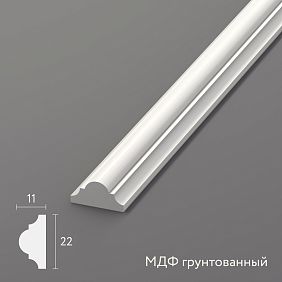


What are wall moldings in interior design and why are they needed
If we remove professional terminology, a molding is a decorative profile with a specific cross-sectional shape that is mounted on a wall and performs several functions at once: architectural, decorative, and visual. It is this multifunctionality that makes wall moldings such a versatile tool in the hands of a designer and a homeowner.




Wall zoning
Any wall without decoration is a homogeneous plane. One molding, installed horizontally at a height of 90–110 cm from the floor, already divides it into two visual zones: the lower, denser one, and the upper, lighter one. This technique, known since the times of classical European architecture, is actively used today in modern St. Petersburg apartments: it works in any style and any layout.
Our factory also produces:
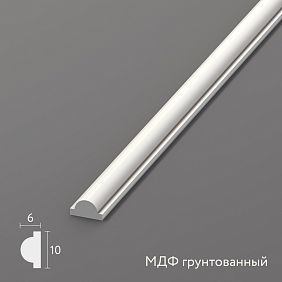


Creating frames and panel compositions
Moldings assemble rectangular or square frames on the wall — and an ordinary painted surface transforms into a structured architectural plane. Inside the frame, you can apply a different shade, paste wallpaper, or install a decorative insert. The combination of the frame with the background creates a play of volume and shadow that cannot be reproduced by any wallpaper print.
Get Consultation
Visual upscaling of the interior
The perception of a space's value is not a matter of renovation cost, but of its architectural refinement. Professional designers have long known: moldings on walls visually elevate the class of an interior. A space with framed panels is perceived as more expensive than an identical apartment without decor — even with the same finishing budget.
Correcting room proportions
Low ceiling — vertical moldings that break the wall into narrow elongated panels visually pull the gaze upward. Narrow corridor — a horizontal strip of profile along the long wall expands it. Square room — diagonal or asymmetrical frames add dynamism. This is not magic — it's optics skillfully appliedMoldings for wallsof different shapes and sizes.
Style: from classic to contemporary
The most important point: moldings work not only in classic interiors. Today they are organic in neoclassicism, modern classic, art deco, Scandinavian style, and even in minimalism — with the right choice of profile. Decorative wall moldings in St. Petersburg are purchased both for formal living rooms in the historical center and for bright modern apartments in new buildings on Petrogradka or Vasilievsky Island.
Where moldings are used in interiors: from living room to study
Moldings don't know spaces where they would be inappropriate. The question is only in the correct choice of scale, form, and combination with other decor.
In the living room
The living room is the main stage of the apartment, and it is here that wall moldings reveal their full potential. Floor-to-ceiling frame panels, a wide horizontal molding at mid-wall height, framing for a fireplace or an accent wall with a TV — all of this gives the living room a sense of architectural history. It looks especially impressiveWooden moldingsin combination with natural parquet flooring and wooden doors.
In the bedroom
The bedroom is about tranquility and intimacy. Moldings here work subtly: a wall frame above the bed headboard creates an accent and replaces a hanging panel or patterned wallpaper. A concise horizontal profile at windowsill level divides the wall into rest and activity zones. In the bedroom, narrow profiles painted to match the wall color are appropriate: they create volume without visual noise.
In the hallway
The hallway forms the first impression of the apartment. Moldings here solve several tasks at once: they structure the walls in a narrow space, give the corridor a vertical rhythm, and connect the hallway with the other rooms into a unified style. A combination works excellently: a lower zone withslatted wall panelsand an upper zone with molding frames — elegant, practical, and professional.
In the corridor
The corridor is a passage area often neglected. Meanwhile, vertical moldings along the long walls transform the corridor from a 'tube' into an enfilade. A horizontal molding strip divides the wall and adds a sense of architectural articulation. This is an inexpensive but very effective technique.
On an accent wall
One accent wall is a powerful design move. On it, you can place large frame panels with contrasting infill, use decorative moldings with relief, addRelief Decorationat key points. The other three walls remain neutral — and the accent works without overload.
In the TV area
A TV by itself is a black rectangle on the wall. Moldings around it create a frame, turning the viewing area into an architectural element, not a technical one. A frame around the TV zone made of wooden profiles or polyurethane decor looks significantly more noble than just a flat wall.
In the dining room and kitchen-living room
In open-plan spaces, moldings help zone the dining area from the living area without partitions. A molding strip at 130–140 cm (chair back height plus a small gap) visually separates the lower, more active zone from the upper one.
In the study
The study — a place of concentration and professional status.Wooden moldingsSolid oak or ash create precisely that aura of solidity and intellectual seriousness needed for a workspace. Frame panels behind the desk, profiles around bookshelves, wooden door casings — all work toward the same theme.
In combination with pilasters, capitals, and slatted panels
Molding as a standalone element is good. Molding as part of a system — significantly better.pilasters and columnsin the wall spaces between windows,Capitalsat the top of the pilaster, a molding frame between them — that's a complete classical wall system. In a modern context — more restrained, but the same logic: decorative elements should engage in dialogue, not exist in isolation.
Wood or polyurethane: how to choose material for wall moldings
This is the most common question when purchasing, and it's absolutely justified. The material determines not only the appearance but also the application possibilities, durability, and final cost.
Wooden wall moldings
Wood is a living material with no digital equivalent. The grain pattern, tactile warmth of the surface, and scent all create a unique atmosphere in a room, unattainable with any other material. Wooden wall moldings in interior design are the choice of those who value naturalness and durability.
Where wooden wall molding works best:
-
in interiors with parquet, solid wood flooring, or wooden wall panels;
-
next to wooden doors and solid wood furniture;
-
in classic, neoclassical, and 'warm' Scandinavian spaces;
-
in country houses with a pronounced natural aesthetic;
-
anywhere where natural texture is important, not just the profile shape.
Important nuance: solid wood moldings, with proper care, last for decades and do not lose their shape. However, they require stable humidity in the room and are not recommended for kitchen areas with aggressive moisture.
Polyurethane wall moldings
Polyurethane moldingsand polyurethane profiles offer decorative relief with minimal weight and maximum stability. Polyurethane does not react to changes in humidity and temperature, does not deform, and accepts any finish excellently.
Where polyurethane wall molding is indispensable:
-
in kitchens and bathrooms where decor is needed but wood is inappropriate;
-
for creating complex relief profiles that would cost significantly more in wood;
-
in classic interiors where rich stucco decor is needed on a moderate budget;
-
for ceiling moldings and cornices with ornamentation;
-
everywhere where visual relief is important, not the tactile naturalness of the material.
When to combine both materials
An experienced designer often uses wood and polyurethane in the same interior: wooden moldings in living areas, polyurethane ones on the ceiling and in high-humidity zones. This combination is reasonable from an economic standpoint: where wood texture is needed, solid wood is used; where decorative form is needed, polyurethane is used.
Comparison table
| Criterion | Wooden moldings | Polyurethane moldings |
|---|---|---|
| Naturalness | High, living texture | Imitation, smooth surface |
| Weight | Medium and above | Lightweight |
| Moisture resistance | Limited | High |
| For painting | Good, requires primer | Excellent, factory-ready |
| Relief/Texture | Medium (depends on milling) | High, complex ornaments |
| Durability | Very high (with maintenance) | High |
| Cost | Higher | Lower with complex relief |
| Best use | Living areas, wood interiors | Ceilings, classic style, wet areas |
How to choose moldings to match the interior style
Style is not just a word. It is a system of rules by which all elements of a space operate. To disrupt this system with one incorrectly chosen profile is to ruin a thoughtful renovation.
Classic interior
Classicism requires symmetry, relief, and a hierarchy of elements. Moldings here should be wide, with a multi-level profile—cavetto, fillet, ogee, half-round. Wall frames run full height or are divided into two tiers. Decorative molding in interior on the walls organically complements molding frames: corner appliqués, ornamental inserts, decorative elements at the central point of each panel.
In a classic St. Petersburg interior, wooden wall moldings are combined with pilasters and columnsandcapitals—creating a full-fledged architectural system inspired by the historical mansions of the Northern Capital.
Neoclassicism
Neoclassicism is classicism filtered through a modern lens. Profiles become more restrained, frames—sparser and larger, ornamentation—minimal or absent. Color palette: white, light gray, pearl, dusty rose. MDF moldings for painting or wooden ones with matte enamel are the perfect choice for this style.
Modern classic
Modern classic maintains a balance between classical archetypes and contemporary aesthetics. Moldings here are most often of a straight profile without relief or with a minimal bevel. Framed panels—on one accent wall, not on all four. Decor for Molding—concise corner inserts without ornament.
Minimalism with accent decor
Minimalism does not mean emptiness. One molding of the right size on the right wall is more powerful than five moldings in the wrong place. In a minimalist interior, a narrow wooden or MDF profile matching the wall color creates an architectural shadow: it is visible in oblique lighting but does not shout. This technique is from the arsenal of high interior class.
Art Deco
Art Deco loves geometry, symmetry, and contrast. Moldings here are straight, with clear angles, often in a contrasting color to the wall: a dark profile on a light surface or a golden one on a graphite background. Metallic shades in the finish—copper, brass, matte gold—are organic to this style.
Light and dark interior
In a light interior, white wall moldings work on the principle of 'architectural shadow': they are slightly darker than the wall due to the relief and create volume without contrast. In a dark interior, contrast becomes a conscious decision: a light or metallic profile on a dark wall is one of the main techniques in club, restaurant, and office spaces.
Interior for painting
Paintable moldings are one of the most popular requests in St. Petersburg. An MDF profile with a primed surface is painted to match the wall color or a related shade. When the boundary between the wall and the molding disappears, only the form remains—a pure architectural relief. This is one of the techniques that seem simple but require precise selection of the profile's size and shape.
How to choose moldings based on wall size and proportions
Profile size is one of the most underestimated parameters when purchasing. Buying a beautiful molding and placing it in an inappropriate scale means ruining both the molding and the wall.
The principle of proportional correspondence
First rule: the size of the molding should correspond to the size of the wall and the height of the ceiling. A narrow profile 15 mm wide on a wall 3.5 m high will look like a scratch. A wide profile 80 mm in a small apartment with standard 2.65 m ceilings will create a feeling of tightness.
Approximate logic:
-
Ceilings up to 2.7 m — moldings 20–45 mm wide;
-
Ceilings 2.7–3.2 m — moldings 35–65 mm;
-
Ceilings from 3.2 m — moldings from 60 mm and above.
Narrow moldings
Narrow profiles (15–30 mm) — for minimalist interiors, small rooms, modern classics with delicate accents. They create rhythm, define boundaries, outline frames — without decorative overload. An excellent choice for monochrome painting in the same tone as the wall.
Medium universal (35–65 mm)
The most in-demand range. Works in most St. Petersburg apartments with typical ceilings. Suitable for both classic frame panels and horizontal wall dividers, and for framing doorways. This is the size most often chosen for decorative moldings in living rooms and bedrooms.
Wide decorative (from 70 mm)
Wide profiles — for high ceilings, formal spaces, classic interiors. In an apartment with a ceiling of 3.5 m and above, a wide wooden or polyurethane cornice looks organic and completes the architectural image. In a standard apartment, such a profile will feel oppressive.
Symmetry of frame layout
If you are creating a frame composition from several panels, it is important to follow several rules:
-
distance from the floor to the bottom frame — at least 10–12 cm;
-
distance from the ceiling to the top frame — preferably symmetrical to the bottom one;
-
distance between frames — at least the width of the molding itself;
-
number of frames on the wall — odd (3, 5) or even with a clear center.
Scale Mistakes
The most common mistake is choosing molding 'by eye' in the store without precise wall measurements. Molding that seemed normal in your hands turns out to be either unnoticeable or too bulky on the wall. Come with measurements or make a full-size paper template — this will save time and money.
Wall moldings in an apartment: practical scenarios
Theory is good, but practice is more convincing. Let's look at specific scenarios for using decorative moldings in different types of rooms.
Scenario 1: moldings in the living room
Living room area 20–25 sq. m, ceiling 2.8 m, one accent wall behind the sofa. Solution: three vertical frames made of of wooden moldings40 mm wide, frame height from 30 cm above the floor to 30 cm below the ceiling. Inside the frames — a more saturated shade of the same paint. Above the frames — a thin horizontal profile linking all three sections into a single composition. Result: an accent wall with architectural character without expensive materials.
Scenario 2: Molding behind the headboard in the bedroom
Bedroom 15 sq. m, neutral walls, wooden bed. Solution: one wide frame made of wooden molding matching the width of the bed plus 20 cm on each side, height from the headboard to the ceiling. Inside the frame — a warmer or deeper shade. The molding is painted to match the wall or left in natural wood. Effect: the headboard gains architectural context, the bedroom acquires a focal point.
Scenario 3: Molding in the hallway
Hallway-corridor, width 1.2 m, length 5 m, ceiling 2.65 m. Solution: a horizontal molding at a height of 95 cm along both long walls divides them into a lower zone (darker, more practical) and an upper zone (lighter). Below the line —Slatted panels in the hallwaymade of wood. Above — neutral coloring with narrow vertical molding inserts. Result: the corridor transforms from a functional passage into a well-thought-out interior zone.
Scenario 4: moldings in the study
Study 12 sq. m, wooden doors, parquet. Solution: three walls with frame panels made of wooden molding up to 2/3 of the wall height — the lower panel zone. The upper third of the walls and the ceiling — without decoration. The wall behind the desk — accent: pilasters andCapitalson the sides, with a frame panel and a shelf between them. Result: a study with a library feel.
Scenario 5: Molding in the interior of an apartment in St. Petersburg in a unified style
Three-room apartment, style — modern classic. Solution: one type of wooden molding is used in all rooms, but with different applications: in the living room — frames, in the bedroom — an accent behind the bed, in the hallway — a horizontal dividing line. One profile, different scenarios — and the apartment is perceived as a cohesive, well-thought-out space.
Moldings and slatted panels: how to combine on a wall
This is one of the most relevant and commercially significant blocks: moldings andRafter panelstoday — are the two most in-demand tools for wall decor, and they work excellently in tandem.
When to make a wall with only moldings
Only moldings — the right choice for:
-
classical and neoclassical interiors, where a textured slat would be alien;
-
rooms with high ceilings, where slats visually consume height;
-
spaces with a lot of details — a slat would add noise;
-
small rooms, where rhythm is needed without voluminous texture.
When it's better to combine moldings and slatted panels
The combination works when you need to create a multi-level wall: molding sets the horizontal rhythm and frame, while slats provide vertical texture. This creates depth that cannot be achieved with a single element.
Moldings and slats in the TV area
The TV area is an excellent testing ground for combinations. A classic solution:Slatted panels in the living roomSlats occupy the lower 2/3 of the wall behind the TV, molding marks the upper boundary of the slatted section, with a painted surface above it. The TV against the backdrop of slats reads as an object in an architectural frame, not as a black rectangle in emptiness.
Moldings and panels in the bedroom
slatted panels in the bedroomSlats occupy the wall behind the bed, and molding frames the slatted section from the top and sides, turning it into an architectural niche. Such a headboard is one of the strongest interior images in contemporary St. Petersburg design.
Moldings and panels in the hallway
In the hallway: the lower zone isSlatted panels in the hallwaySlats with a practical wooden surface, the upper boundary is marked by molding, above is paint. Such an interior solves both a practical task (the lower zone is protected from mechanical damage) and an aesthetic one (the hallway looks like a cohesive design solution).
How not to overload a wall
The main rule: one accent per wall. If slats occupy 2/3 of the surface, molding works as a frame—it does not compete with the slats but frames them. There's no need to add stucco decoration where slats and molding are already present.wall molding in interior— is a separate story, suitable for classical or ceiling surfaces, but not in combination with slatted texture.
What to look for when buying moldings in St. Petersburg
Buying moldings is not just a transaction. It's a choice that affects the renovation result for years to come. Here's a clear checklist.
Material and its suitability for the task
Wood — for living areas with neutral humidity. Polyurethane — for ceilings, kitchens, bathrooms, and areas with temperature fluctuations. MDF — for any areas to be painted with normal humidity.
Coating and paintability
Clarify: is the profile supplied with coating (varnish, enamel) or without? If without — is additional priming and putty needed? A profile for painting must have a smooth, pore-free surface — especially important for MDF.
Dimensions and cross-section geometry
Request a profile drawing or a scaled end photo. Width, height, shape of protrusions — all this is important to check before ordering, not after delivery.
Availability of decorative corners and overlays
Corner joints of moldings are the highest risk area during installation. Ready-madeDecor for Molding— corner and connecting elements — make joints perfect without complex 45° cutting.
Compatibility with the overall wall decor
Molding should match the baseboard, cornice, door trims, and other profiles in the room. If they are different materials, it is important to coordinate them in tone and surface character.
Delivery in St. Petersburg and order conditions
Long-length profiles require special packaging and transportation. Clarify: whether there is delivery to the address, what is the minimum linear meter length per order, and whether it's possible to reorder the same item later.
Ability to select a set
It's ideal when wall moldings, baseboards, cornices, and decorative elements are sourced from one supplier — this guarantees compatibility in dimensions, materials, and finishes.
Mistakes when choosing wall moldings: what not to do
A good specialist learns from others' mistakes. Here are the most common ones.
Error 1: profile too small for a large wall
A 12–15 mm wide molding on a 3 m high wall simply doesn't read. It creates the feeling that something is glued to the wall, not architecturally drawn. Remember the scale.
Error 2: ignoring the interior style
A relief classic profile with ornament in a minimalist apartment is a conflict, not a contrast. Choosing a profile always starts with the style of the room.
Error 3: choosing decor separately from the overall finish
Molding purchased without considering the color of the walls, floor, and doors almost always 'doesn't fit'. Select the profile with samples of finishing materials in hand.
Error 4: combination with wall panels not thought through
Molding and slatted panels can conflict if the hierarchy is not thought out: what frames, what fills, where the transition is. A clear wall concept is needed, not a set of liked elements.
Error 5: too many frames on one wall
A wall of 8 frames of different sizes is chaos, even if each frame is made well. Less is more. Three large frames are more convincing than seven small ones.
Mistake 6: Forgetting about room proportions
A square room with identical frames on all four walls loses depth and direction. The molding scheme should work with the geometry of the space, not against it.
Mistake 7: Buying without a sample
Always request a profile sample before ordering a large batch. What looks like matte wood in a photo may turn out to be glossy laminate upon in-person inspection.
Why choose STAVROS for moldings and wall decor in St. Petersburg
Choosing a supplier of decorative profiles is not a secondary issue. Here, assortment, material quality, the possibility of kit assembly, and professional support are important.
STAVROS has assembled one of the most comprehensive assortments of wooden wall decor in St. Petersburg:
-
Wooden moldings — from solid oak, beech, ash, linden — for varnish, for painting, for wax;
-
Solid wood moldings, cornices, and baseboards — a complete system of wall and ceiling decor;
-
Decor for Molding — corner elements, connectors, decorative overlays;
-
Polyurethane moldingsandRelief Decoration— for classic interiors with relief decoration;
-
slatted panels for walls— for creating combined wall solutions;
-
pilasters and columns, Capitals— for a complete classic system;
-
Classic Furniture— for creating a unified ensemble in a room.
All products are made from verified raw materials, have passed geometry and coating control. Delivery in St. Petersburg, selection of a kit for the project, consultation on sizes and materials.
Frequently asked questions about wall moldings in interior design
Which wall moldings are best to choose for an apartment?
Depends on the style and task. For classic and neoclassical apartments — wooden profiles made of solid wood with a relief section or polyurethane with ornament. For modern interiors — MDF for painting with a straight or minimal profile. For mixed style — wooden moldings of medium width, which are appropriate in most contexts.
What is better for walls: wood or polyurethane?
Wood — if natural texture, tactile warmth, and durability in living areas are important. Polyurethane — if rich relief is needed on a moderate budget, or if the room has high humidity. Ideally — use both materials according to their purpose within one project.
Are moldings suitable for modern interiors?
Yes, if you choose the right profile. Modern interiors require laconic, straight profiles without ornamentation, preferably paintable to match the wall color. Such molding creates architectural relief without decorative overload.
Can molding and slatted panels be combined?
Not only possible — necessary. Molding frames the slatted section, defines its boundary, and ties it to the overall wall finish. The combination is especially effective in the TV area, behind the bed in the bedroom, and in the hallway.
Where to buy wall moldings in St. Petersburg?
In the STAVROS catalog:Solid wood wall moldingsandWooden moldingswith delivery in St. Petersburg.
Which moldings are best for painting?
MDF profiles with a smooth, primed surface are the optimal choice for painting with enamel. They accept paint evenly, without pores or drips. Wooden profiles also paint well but require preliminary priming and sanding.
Which moldings to choose for the living room?
For the living room — medium and wide width profiles (40–70 mm) that are legible from a distance. Solid wood — for classic and modern classic living rooms. Polyurethane — for living rooms with ceiling cornices and stucco decor.
Which moldings to choose for the bedroom?
For the bedroom — narrow and medium profiles (20–45 mm) with a delicate cross-section. Paintable to match the wall color or in natural wood with a matte varnish. The main task is to create an accent behind the headboard without visual noise.
Which moldings to choose for the hallway?
For the hallway — a horizontal divider molding at a height of 90–110 cm and vertical rhythm inserts to visually elongate the corridor. A combination with slatted panels in the lower zone works well. Material — wood or MDF for painting.
Conclusion: buy wall moldings in St. Petersburg with a focus on results
A wall with properly selected moldings is not just beautiful. It is an architectural solution that changes the perception of the entire room: its proportions, scale, mood, and class. Decorative wall moldings in St. Petersburg are now available in a wide range of materials, sizes, and styles — from solid oak wooden profiles to lightweight polyurethane stucco with relief ornamentation.
STAVROS is a professional manufacturer and supplier of wooden interior decor in St. Petersburg. Full range: wooden moldings, polyurethane stucco decor, slatted panels, decor for moldings, pilasters, capitals — everything to assemble the interior into a unified architectural system.
Go to the catalog and choose your solution:
STAVROS — wall moldings for interiors that deliver results.


