










































































Article Contents:
- What is Furniture Molding and Why is it Needed
- Where Furniture Moldings are Used
- Where Furniture Moldings are Applied: Breakdown by Furniture Types
- Moldings for Furniture Fronts
- Moldings for Cabinets
- Moldings for Kitchen Sets
- Moldings for Dressers
- Moldings for Classic Furniture
- Moldings for furniture in neoclassical style
- Moldings for furniture doors and panels
- Wooden moldings for furniture: advantages of natural material
- Natural texture that cannot be faked
- Compatibility with solid wood facades
- Possibility of painting and tinting
- Durability and mechanical resistance
- Premium appearance
- How to choose molding for furniture type: practical analysis
- For kitchen: practicality + aesthetics
- For wardrobe: scale and hierarchy
- For the chest of drawers: delicacy and proportion
- For the sideboard and display case
- For classic furniture
- For furniture in neoclassical style
- For fronts under enamel
- For Solid Wood Furniture
- How to choose the size and pattern of molding for a furniture front
- Narrow molding: a neat frame for small fronts
- Medium molding: a universal choice for most fronts
- Wide molding: an expressive front for large furniture
- Smooth profile versus carved
- How to coordinate molding with other furniture details
- How to Pair Furniture Molding: A Systematic Approach to Decor
- Decorative appliqués
- Furniture handles
- Legs and Supports
- Furniture Cornices
- Frame Elements and Glass Inserts
- Classic Furniture as a System
- What to Consider When Buying Furniture Molding in St. Petersburg
- Material: What Exactly You Are Buying
- Dimensions: Exact Numbers, Not 'Approximately'
- Ability to Select Matching Decor
- Compatibility with Fronts in Tone and Finish
- Furniture Style: Strict Conformity
- Availability and delivery in St. Petersburg
- Mistakes when choosing furniture moldings: how not to ruin a good idea
- Too massive profile for a small facade
- Mismatch with Furniture Style
- Lack of coordination with handles and overlays
- Overloaded with decoration
- Choosing molding without considering color and finish
- Ignoring joints and corners
- Why STAVROS — for furniture molding in St. Petersburg
- Frequently asked questions about furniture moldings
- Which furniture molding is better to choose?
- Where to buy furniture molding in St. Petersburg?
- Is molding suitable for kitchen fronts?
- Which moldings are better for classic furniture?
- Can wooden molding be painted?
- How does molding differ from overlay?
- How to Calculate the Amount of Molding?
- Which handles suit wooden molding?
- Conclusion: buying furniture molding in St. Petersburg — a choice in favor of quality decor

Furniture without decor is just function. Furniture with properly selected molding is already style, character, and value. It is the decorative profile that turns a standard MDF front into a product with history, and an ordinary cabinet into part of a well-thought-out interior ensemble. Furniture molding in St. Petersburg is now bought both by those ordering furniture from scratch for a classic interior, and by those wanting to update existing fronts without completely redoing the set.
On this page — everything about choosing molding for furniture: what types exist, what materials, for which fronts and styles, how to select size, what to combine with, and where to buy in Saint Petersburg.
Go to the catalog:
-
Moldings for furniture— wooden profiles made of solid wood
-
Moldings and decorative profiles — full catalog
-
decor for furniture— overlays and carved decor
-
Furniture Handlesandfurniture legs— for a complete solution



What is furniture molding and why is it needed
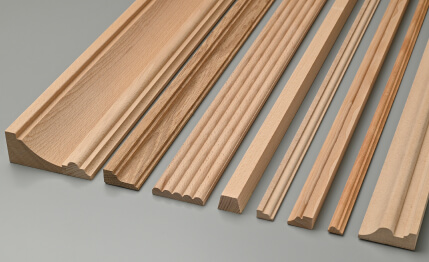
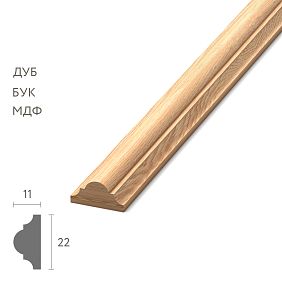
There are things that don't catch the eye, but without which furniture looks unfinished. Furniture molding is one of them. It is a decorative profile with a specific cross-section that is mounted on facades, cases, panels, and furniture doors. Its task is to enrich the plane, create visual relief, add depth and architectural character to the product.
Why does it work? Because the human eye reacts to shadow. Where there is a protrusion, there is a shadow, and the surface ceases to be flat. One molding around the perimeter of the facade already creates a sense of a frame, volume, and completeness. Several moldings in the right system—and an ordinary MDF wardrobe begins to be perceived as a handmade product.
Exactly thereforeMoldings for furniture— a mandatory element of classic furniture, neoclassicism, kitchens in Provence and Art Deco styles, as well as any interior where detailing and a 'luxurious' look are important without an exorbitant budget.




Where furniture moldings are used
The application is wide, and this is one of the main advantages:
-
kitchen set facades—upper and lower modules;
-
sliding and hinged wardrobe doors;
-
facades of dressers and cabinets;
-
doors of buffets and display cases;
-
decorative panels at the headboard of a bed;
-
built-in wardrobes with a classic facade;
-
library cabinets and shelving;
-
furniture frames and inserts under glass.
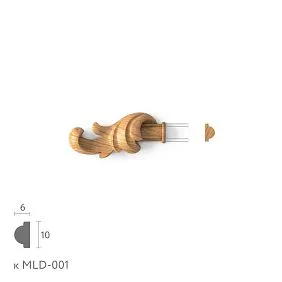
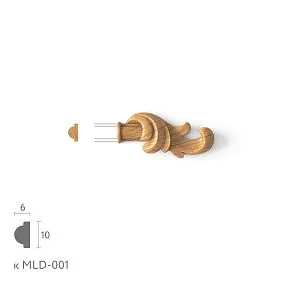
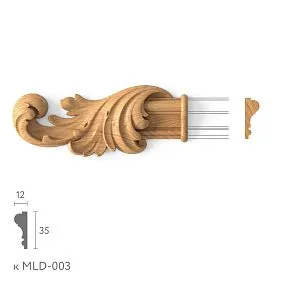
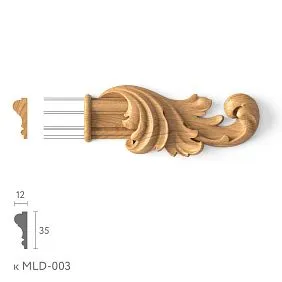
Our factory also produces:
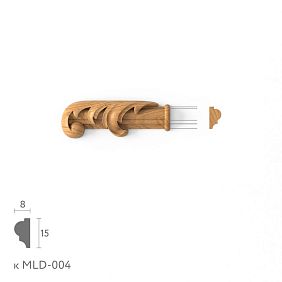
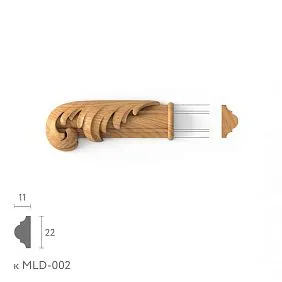
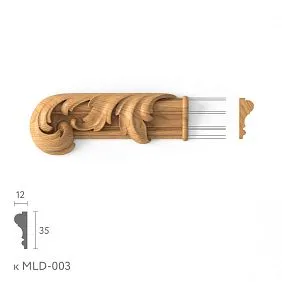
Where furniture moldings are used: breakdown by furniture types
Let's be honest: furniture molding is not a universal part that is slapped on anywhere. Each type of furniture requires its own approach to the profile, its width, relief, and placement.
Get Consultation
Moldings for furniture facades
The facade is the main surface that is seen first. It is here that the molding works to its full potential. On the facade, the profile creates a frame structure: either it runs along the perimeter as a border, or it divides the surface into several zones. The more complex the profile, the richer the facade looks.
For MDF fronts under enamel — molding is taken for painting with a smooth primed surface. For solid wood fronts — a wooden profile with a natural texture that harmonizes with the main material.Moldings and decorative profilesfrom solid wood — in the STAVROS catalog.
Moldings for cabinets
A cabinet is a large volume. Without decoration, it looks like a wall. With properly selected molding around the perimeter of each door and along horizontal dividers — it becomes furniture with character. In classic interiors, wider and more relief profiles are placed on cabinets; in modern ones — narrow and concise.
For a built-in cabinet in a niche, it is especially important that the molding matches the trims and other finishing profiles of the room — only then does the cabinet not "stand out" from the interior but fit in organically.
Moldings for kitchen sets
Kitchen moldings are one of the most in-demand requests. The fronts of upper and lower modules with frame profiles look significantly richer than smooth planes. Molding around the perimeter of the kitchen front creates a "framed" structure — a classic technique that has been replicated for several centuries.
For the kitchen, the profile's resistance to moisture and temperature fluctuations is important. Wooden molding under varnish or enamel handles kitchen conditions well with normal ventilation. For kitchens with aggressive moisture, it is better to consider a profile with a moisture-resistant coating.
Moldings for a chest of drawers
A chest of drawers is intimate furniture with small drawer fronts. Molding works subtly here: a narrow profile around the perimeter of each drawer adds detailing without overloading the small surface. On a chest of drawers, it is important to maintain proportion: too wide a profile "eats up" the drawer front, too narrow gets lost.
Moldings for classic furniture
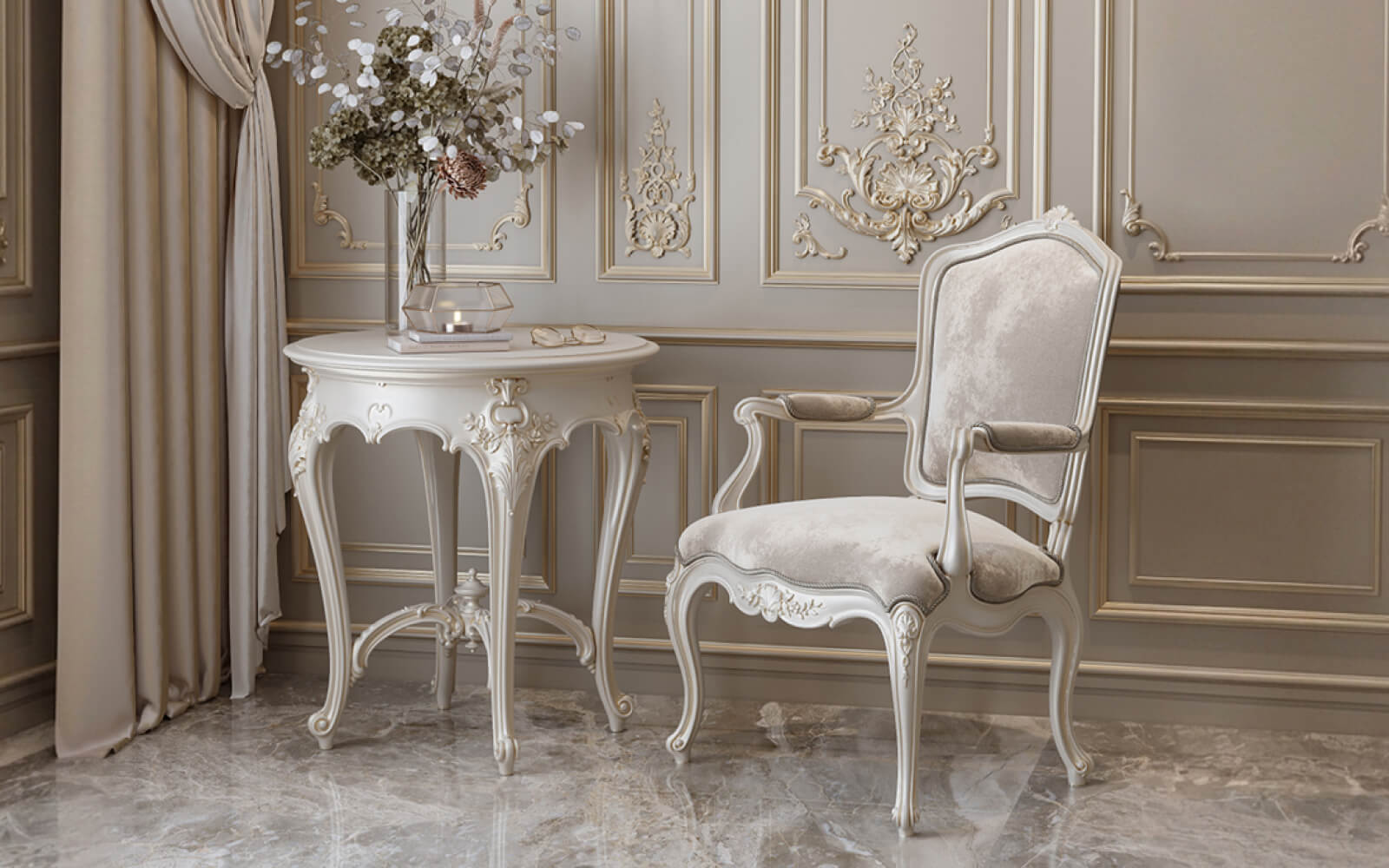
Classic Furnitureis impossible without moldings. It is one of its system-forming elements: relief profiles, frame inserts, decorative overlays, carved decor - all this together creates that image of 'expensive old furniture' that is so highly valued in St. Petersburg interiors. For classic styles, moldings with more complex cross-sections are used - with ogee, cyma, quarter-round - and they are often combined with carved elements.furniture overlays.
Moldings for furniture in neoclassicism
Neoclassicism is classicism that has passed through a modern filter. Moldings here are more appropriate when restrained: without overloaded ornamentation, with clear geometry, under matte enamel or with a neutral lacquered surface. Medium-width profiles are chosen, and frame panels are large and few in number.
Moldings for furniture doors and panels
Doors of buffets, display cases, library sections are areas where molding is combined with glass or a decorative insert. The profile here performs a dual role: it holds the insert and simultaneously decorates the surface. For such tasks, profiles with a groove or rabbet are needed - for glass, for rattan, for a mirror.
Wooden moldings for furniture: the advantage of natural material
A discussion about furniture moldings inevitably comes down to the question of material. And here wood stands apart - not as one of the options, but as the gold standard.
Natural texture that cannot be faked
Wood is a living material. Each plank has a unique grain pattern that is not repeated. When varnish or wax is applied, this pattern 'opens up': depth emerges, warm notes appear that no laminate or polyurethane can reproduce authentically. A wooden molding for furniture next to a facade made of natural veneer or solid wood looks like part of a single whole, not like an applied detail.
Compatibility with solid wood facades
If the furniture is made of solid wood or veneer, a woodenDecorative Molding for Furniturebecomes not just appropriate, but the only correct choice. The same wood species creates a flawless combination; a similar-toned species creates an interesting authorial contrast.
Possibility of painting and tinting
Wooden profile accepts any finish: clear varnish, tint, stain, enamel, wax. This is important for those who order custom furniture with a non-standard color solution. The molding can be precisely matched to the color of the facade — or made into an intentionally contrasting accent.
Durability and mechanical resistance
Solid oak, beech, or ash wood moldings are stronger than they seem: they are resistant to mechanical impacts, do not lose shape with proper care, and last as long as the furniture itself. A quality profile applied to a well-prepared facade holds without delamination or cracks for decades.
Premium appearance
There are things that are hard to explain but easy to feel. Furniture with wooden moldings is perceived as more expensive — even if its body is made of MDF. This is because natural wood carries a cultural code of quality, craftsmanship, and tradition. This is precisely the value carried by wooden decorative moldings in Saint Petersburg, a city with a deep tradition of joinery and carpentry.
How to choose molding for the type of furniture: a practical analysis
Now to specifics. The right molding is not the one that looks prettier in the picture, but the one that suits your furniture in terms of style, size, and material.
For the kitchen: practicality + aesthetics
The kitchen is a high-traffic area. Molding for kitchen fronts must not only be beautiful but also resistant to everyday wear. The profile width for a standard kitchen front is 20–45 mm. The cross-section — with a clear outer edge or a smooth transition — depends on the kitchen style.
For a kitchen in a classic style — a relief profile with a cap or shelf. For a kitchen in a neoclassical style — a straight profile with a slight bevel. For a modern kitchen with an emphasis on form — a minimalist profile for painting to match the front.
For the wardrobe: scale and hierarchy
A wardrobe is larger than a kitchen, and its profile should be slightly wider: 30–60 mm is the working range for most standard-sized wardrobes. It's important to maintain hierarchy: the molding along the outer perimeter of the door + the molding along the inner frame inserts (if any) should differ in width or profile to create visual depth.
For the dresser: delicacy and proportion
A dresser with small drawers requires narrow profiles — 12–25 mm. Too wide a molding on a drawer 12–15 cm high will cover the entire front. The cross-section — calm, without excessive relief. For a dresser in a classic interior — a profile with a soft rounding; for a modern dresser for painting — straight without a bevel.
For the sideboard and display cabinet
A sideboard is furniture where moldings work on multiple levels: along the top cornice, along the door frames, along the middle horizontal detail, along the bottom panel. Each level has its own profile in the correct hierarchy. For the sideboard, read the section Moldings for furniture — how to choose— there, stylistic combinations are analyzed in detail.
For classic furniture
Classic Furniture— is a system of profiles, overlays, legs, and handles in a unified architectural language. Moldings here should be relief, with traditional cross-sectional shapes: ovolo, quarter round, cyma recta, scotia. Width — from 30 mm and above. Combination withcarved decorative appliqués for furnitureat key points — corner rosettes, central medallions — completes the look.
For furniture in neoclassicism
Restraint is the main criterion. Molding of medium width (25–45 mm) with a laconic profile: a slight bevel, a soft edge, without ornament. Under matte white or milky enamel. Frame structure — large and symmetrical.
For fronts under enamel
MDF fronts under enamel are a special case. The molding must have a perfectly smooth surface without pores or knots — so that the paint applies without irregularities. Wooden profile from fine-grained species (beech, linden) or MDF profile with factory primer — the best choice. After installation, joints are puttied, sanded, and painted in a single color with the front.
For solid wood furniture
If the furniture is made of oak, ash, or walnut — the molding should be from the same or a similar species. This creates unity of texture and tone. Under open oil or wax, the fiber pattern of the profile merges with the pattern of the front — and the furniture looks like a monolithic handmade product.
How to select the size and pattern of molding for a furniture front
One rule: the profile size must match the facade size. It sounds trivial, but this is where mistakes are most often made.
Narrow molding: a neat frame for small facades
Narrow profile (10–25 mm) — for dresser drawers, small doors, small facades. It creates a neat frame without weighing down the piece. In minimalist and modern interiors, narrow molding for painting works as an architectural line: it is visible in oblique lighting but does not dominate.
Medium molding: a universal choice for most facades
25–55 mm — the working range for most door and facade panels. It is legible from a distance, creates confident relief, and pairs well with most styles. For kitchen facades of standard 720 mm height — molding of 35–45 mm looks proportional.
Wide molding: an expressive facade for large furniture
55 mm and above — for cabinets, buffets, large door facades. Such a profile creates a powerful visual frame that is legible even in a spacious room. It is appropriate in a classic study, a living room with high ceilings, or a formal hallway.
Smooth profile versus carved
A smooth profile — straight, with a soft bevel or smooth transition — is universal. It is equally organic in classic, neoclassical, and modern furniture. A carved profile with ornamentation, floral patterns, or geometric decoration — only for classic, baroque, rococo. Putting carved molding on a modern kitchen facade means creating a stylistic conflict that will catch the eye immediately.
How to relate molding to other furniture details
Molding does not exist in a vacuum. Its width, relief, and material must be coordinated with:
-
furniture handles— the shape and material of the handle must match the character of the profile;
-
legs for furniture— curved classic legs and relief molding; straight legs and a concise profile;
-
decorative elements— corner overlays, connecting inserts;
-
with wooden cornicesAbove the cabinet or furniture unit—it should echo the profile of the molding in terms of cross-sectional character.
What to combine furniture molding with: a systematic approach to decor
Furniture decor is not a set of beautiful details. It is a system in which each element speaks the same language as the others. It is precisely the systematic approach to decor that distinguishes high-class custom furniture from mass-produced furniture.
Decorative appliqués
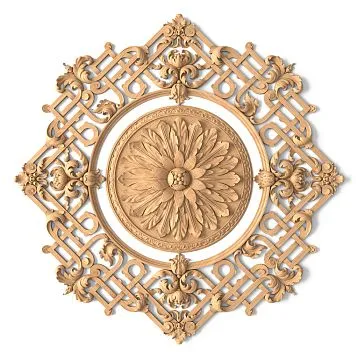
decor for furniture— overlays, rosettes, medallions, corner elements — enhance moldings and create focal points on the facade. In classical furniture, a decorative overlay in the center of a large frame or at the corners of molding is a standard technique. In modern furniture, overlays are used cautiously: one detail on the facade is the maximum.
As a rule, an overlay is placed in the center of a frame formed by molding, or at the corner points where profiles intersect. The wood species and finish of the overlay must match the molding.
Furniture handles
The handle is what is taken in hand first. Its material, shape, and character set the tone for the entire piece of furniture.Wooden handlesNext to wooden molding — an organic combination. Metal handles next to wooden profiles work as a contrast: cold metal on warm wood is one of the most convincing techniques in modern classic style.
For classic furniture, choose handles with a shaped base and relief decoration that harmonizes with the molding. For neoclassical — concise brackets or teardrop handles. For modern furniture — straight brackets without ornament.
Legs and supports
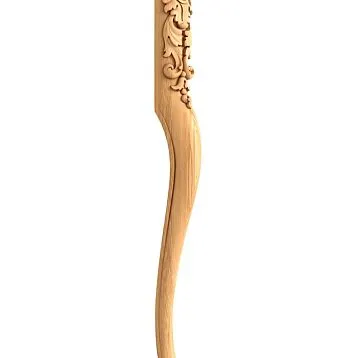
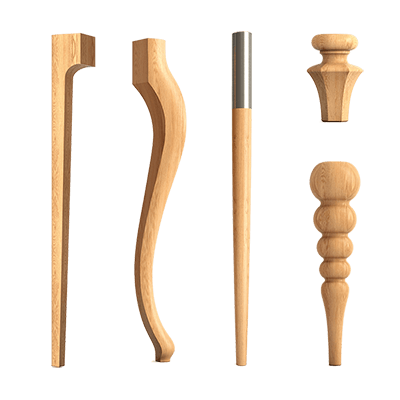
furniture legsandfurniture legs— the lowest point of the entire furniture system. Curved, turned legs with relief molding on the facade — this is classic. Straight, strict supports with a concise profile — neoclassical or modern furniture. Mismatch between legs and molding is one of the most common decorative mistakes: a cabinet 'in classic style' on straight metal legs or, conversely, a modern facade on curved Baroque supports.
Cornices for furniture
wooden cornice— the top finishing of a cabinet or set. It should be wider and richer in profile than the molding on the doors — this creates a hierarchy from top to bottom. The cornice is perceived as an architectural crown, and it is what determines the 'high' or 'low' style of the entire furniture.
Frame elements and glass inserts
Moldings with a groove or rabbet hold glass inserts in doors. Glass in a frame of wooden profile — a classic solution for buffets, bookcases, and display cabinets. Frosted glass, ribbed, tinted, or with sandblasted patterns — the choice of glass is as important as the choice of molding.
Classic furniture as a system
It is here, in classic furniture, that all the listed elements come together into a single ensemble: moldings, overlays, handles, legs, cornices — everything speaks the same language.Classic Furniture— as a ready-made systemic solution — is a good reference for those unsure about independently selecting decor: look at how these elements combine in finished products, and replicate the principle in your project.
What to look for when buying furniture molding in St. Petersburg
A smart purchase of decorative profile is not just about beauty, but also about precision. Here is a checklist to help you avoid mistakes.
Material: what exactly are you buying
Make sure: is it solid wood, veneer on MDF, pure MDF, or polyurethane? For furniture in living areas with normal humidity, the best choice is solid wood. For furniture to be painted — high-quality MDF with primer. For kitchens with an aggressive environment — profile with moisture-resistant coating.
Dimensions: exact numbers, not 'approximately'
Write down the exact dimensions of the fronts: width, height. Calculate what offset of the molding from the edge of the front will create the correct proportion (usually 5–15% of the smallest dimension). Request a profile drawing indicating width, height, and cross-sectional shape.
Ability to select matching decor
Ideally — take molding, overlays, handles, and legs from one supplier. This guarantees compatibility in material, tone, and surface character. STAVROS offers a complete set of furniture decor: from profiles to handles and supports.
Compatibility with fronts in tone and finish
Molding under varnish next to a front under enamel is a mismatch in finishes that immediately catches the eye. Check: either take a profile under the same finish as the front, or consciously create a contrast.
Furniture style: strict compliance
Once again and especially: the molding style must match the furniture style. For classic — relief. For neoclassical — a restrained profile. For modern furniture — minimalism. Violating this rule makes furniture eclectic in the worst sense of the word.
Availability and delivery in St. Petersburg
Ensure the item is in the permanent assortment and available for reorder: in a large project, you often need to take a little extra beyond the calculation. Long-length profiles require careful transportation — clarify the packaging and delivery conditions in St. Petersburg.
Mistakes when choosing moldings for furniture: how not to ruin a good idea
Let's be direct. Buyers make the same mistakes — and they are predictable. Knowing them in advance means guaranteed avoidance.
Too massive a profile for a small facade
A wide relief molding on a 10 cm high dresser drawer facade is not decor, but overload. A 50 mm wide molding would occupy almost the entire drawer facade, leaving no 'breathing room'. Scale is the first thing to check.
Mismatched furniture style
A carved molding with a floral ornament on a modern kitchen set is an uncorrectable mistake. Decor is not about 'beautiful', it's about 'appropriate'. Always start by defining the furniture style, and only then choose the profile.
Lack of connection with handles and overlays
Beautiful molding plus mismatched handles—and the whole job is ruined. Furniture decor should create a system: each element enhances the other, not competes with it.
Over-decorated
Perimeter molding plus a center overlay plus a carved handle plus decorative hinges—that's already too much. Choose the main decorative element and let it be the star. The others play a supporting role.
Choosing molding without considering color and finish
The molding was ordered, delivered—and it turned out its shade didn't match the cabinet's tone. Always request a sample. If buying online—ask for a real photo in your lighting conditions.
Ignoring joints and corners
Molding joints at cabinet corners are a risk point. If you lack experience with 45° miter cutting, use ready-made corner piecesdecorative elements—they'll cover the corner perfectly without complex cutting.
Why STAVROS—for furniture molding in St. Petersburg
The choice of supplier is not secondary. The quality of the profile affects not only the furniture's appearance on day one, but also after a year or two, when the finish has stood the test of time.
STAVROS offers one of the most comprehensive ranges of wooden furniture decor in St. Petersburg:
-
Moldings for furniturefrom solid oak, beech, ash, linden — smooth and textured, narrow and wide;
-
Moldings and decorative profiles— full catalog with cornices and baseboards;
-
decor for furniture— overlays, corner elements, carved decor from solid wood;
-
Furniture Handles— wooden, includinguncoated for tinting;
-
furniture legs— turned, straight, curved, classic and modern;
-
decorative cornice— for the top finishing of cabinets and suites;
-
Classic Furniture— as a guide for selecting decor.
All products are made from verified raw materials, undergo geometry and coating control. Delivery in St. Petersburg, selection of a kit for the project, consultation on dimensions and materials.
Frequently asked questions about furniture moldings
Which furniture molding is better to choose?
Depends on the style and size of the furniture. For classic — solid wood profile with relief cross-section, 35–60 mm. For modern furniture — smooth profile for painting, 20–40 mm. For neoclassical — restrained wooden profile with a soft bevel, 25–45 mm.
Where to buy furniture molding in St. Petersburg?
In the STAVROS catalog:solid wood furniture moldingswith delivery in St. Petersburg. Full range of profiles of different widths, materials, and cross-sections.
Is molding suitable for kitchen fronts?
Yes, with the right choice of material and finish. Wooden molding under varnish or enamel works well in the kitchen with normal ventilation. For areas with aggressive moisture — profile with moisture-resistant coating or MDF with waterproof primer.
Which moldings are better for classic furniture?
Solid wood with relief profile — ogee, cyma, fillet, half-round. Combined with carved overlays, turned legs, and shaped handles. Read the detailed breakdown in the article Moldings for furniture — how to choose.
Can wooden molding be painted?
Yes. Wooden molding takes enamel, stain, tint, and wax well. For painting with enamel, primer and sanding are required first. For tinting or wax, a clean, dry surface is sufficient.
What is the difference between molding and overlay?
Molding is a profiled strip that is mounted along the perimeter of a facade or along its surface, creating a frame or line. An overlay is a three-dimensional decorative element that is glued onto the surface at a specific point: a corner, center, or intersection. Both elements work in tandem and enhance each other.
How to calculate the amount of molding needed?
Measure the perimeter of each facade, multiply by the number of facades, add 10–15% for cutting. For a frame insert inside the facade—calculate separately based on the inner perimeter of the frame. Always take a small surplus.
Which handles are suitable for wooden molding?
Wooden handles—an organic combination with wooden molding. Metal handles (brass, bronze, matte gold) next to wooden profiles create an elegant contrast in the spirit of modern classic.Furniture HandlesIn the STAVROS catalog—a wide selection of shapes and materials.
Conclusion: buying furniture molding in St. Petersburg—a choice in favor of quality decor
Furniture molding—a small detail with great significance. It is what turns a faceless facade into a piece with character, gives furniture stylistic precision, and elevates the overall perception of the interior to a higher level. Whether you're making a classic-style kitchen, updating a bedroom wardrobe, or ordering a sideboard for the living room—the right decorative furniture molding will do its job.
In St. Petersburg, a city with a rich culture of woodworking and interior design, choosing wooden moldings for furniture is also a choice in favor of tradition, material, and durability.
STAVROS Company is a manufacturer and supplier of wooden furniture decor in St. Petersburg. Solid wood moldings, decorative overlays, handles, legs, cornices — everything to assemble a furniture ensemble into a unified whole. Full range, selection by project, delivery across St. Petersburg.
Go to the catalog:
-
Moldings for furniture— wooden profiles made of solid wood
-
Moldings and decorative profiles — full catalog
-
decor for furniture— overlays and carved decor
-
Furniture Handles— wooden, for tinting, for painting
-
furniture legs— classic and modern supports
-
Classic Furniture— ready-made interior solutions
STAVROS — furniture molding in St. Petersburg: from profile to full decorative kit.