Article Contents:
- First screen: quick answer for those who already know the task
- When ready-made stucco decor fully covers the task
- Apartment renovation with classic or neoclassical interior
- Decorative frames from moldings on the wall
- Ceiling rosette for chandelier
- Furniture and built-in wardrobe decor
- TV area and media wall
- Commercial interior of standard sizes
- When custom stucco decor is really needed
- Restoration of a historical site
- Non-standard radius or bend
- Large facade project with non-standard elements
- Recreating an existing element
- Non-standard size in specific proportions
- Ready catalog vs. custom manufacturing: comparison table
- What is included in a full set of stucco decor: buyer's checklist
- Main Elements
- Connecting elements
- Installation materials
- How to choose ready-made decor from the catalog: seven steps
- Step one: define the area
- Step two: measure everything
- Step three: choose a style
- Step four: choose the main element
- Step five: add connecting elements
- Step six: check the installation
- Step seven: calculate the quantity with a margin
- What affects the price of polyurethane stucco decor
- Price of a ready-made element from the catalog
- Price of custom manufacturing
- Hidden costs that are often forgotten
- How to create an expensive interior from ready-made stucco decor
- The principle of "system, not a set"
- Rule of ornamental unity
- The role of painting
- Five ready-made kits from the catalog: scenarios and compositions
- Scenario one: classic living room, ceiling 2.8 m
- Scenario two: bedroom, ceiling 2.6 m
- Scenario three: hallway, ceiling 2.5 m
- Scenario four: grand hall, ceiling 3.2 m
- Scenario five: commercial interior — restaurant
- Polyurethane stucco: advantages of the material in the context of selection
- Eight mistakes when choosing stucco decoration
- Additional key scenarios: facade and special objects
- Facade decor: sometimes from catalog, sometimes custom
- When a mold is needed
- A practical algorithm for those who haven't decided yet
- Frequently Asked Questions
- About the Company STAVROS
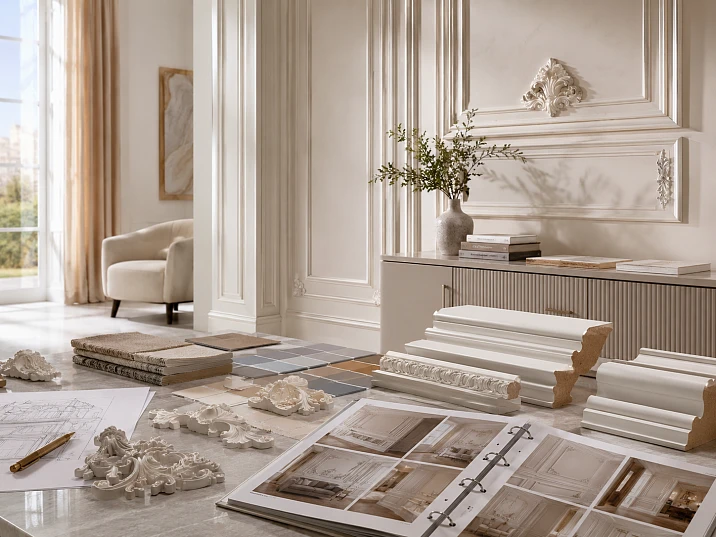
Here's a question that starts many renovations with decorative stucco: take ready-made or order custom? Sounds simple, but behind it lies a chain of decisions — about budget, deadlines, sizes, style, and scale of the task. Some think that "custom" is always better — individual, precise, "just as I want." Others grab the first thing from the catalog and then get disappointed: wrong size, ornament doesn't fit, style feels alien.
The truth is in the middle. And this article is exactly about where that middle is.
molded decoration made of polyurethane is now produced in such a variety that in 80–85% of cases, a ready-made catalog solves the task. The remaining 15–20% are real situations where custom manufacturing is unavoidable. Figuring out which case your task falls into is the goal of this breakdown.
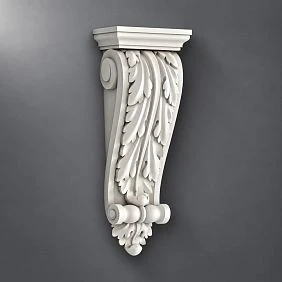
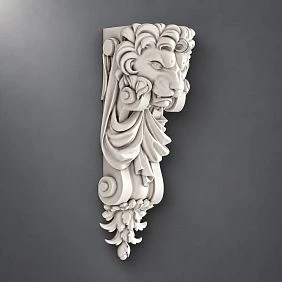
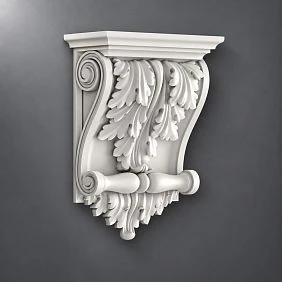
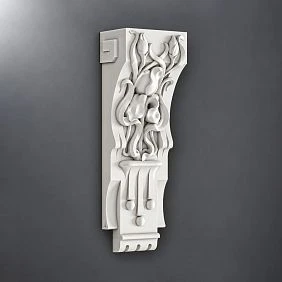
First screen: quick answer for those who already know the task
If time is short, here's a straightforward commercial answer:
Ready-made catalog works for:
-
Repair of apartments or houses in standard sizes.
-
Wall decoration with moldings and frames.
-
Ceiling rosettes for chandeliers.
-
Cornices around the perimeter of the room.
-
Decor of furniture and built-in wardrobes.
-
TV zones, niches, decorative portals.
-
Commercial interiors with standard architecture.
Custom decor is needed when:
-
Non-standard radius, curve, size.
-
Restoration of a historical object with exact repetition of the ornament.
-
Facade project with large elements of non-standard sizes.
-
Need to reproduce an existing element that is not in the catalog.
-
Non-standard height or width of the part.
Buy Polyurethane Molded Decoration from the ready catalog — faster, cheaper, and in most cases no less effective than a custom order.




When ready-made stucco decoration fully covers the task
Let's break down specific scenarios. This is important: too many people start searching with the query "custom stucco manufacturing" — even though their task is solved by the standard catalog.
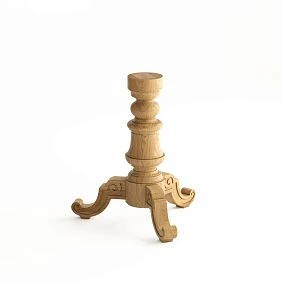
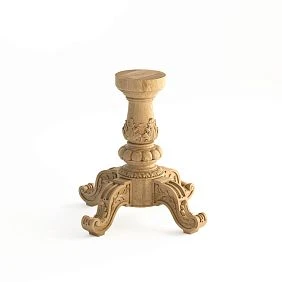
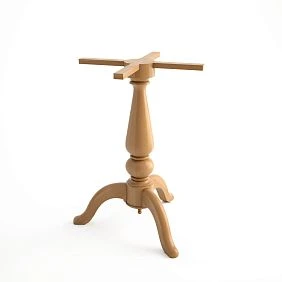
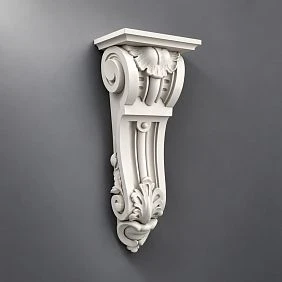
Our factory also produces:
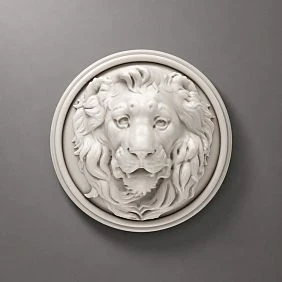
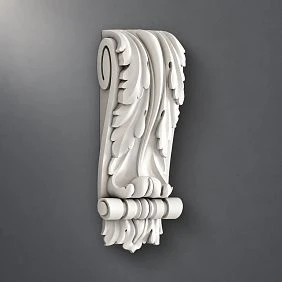
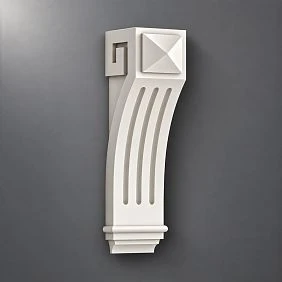
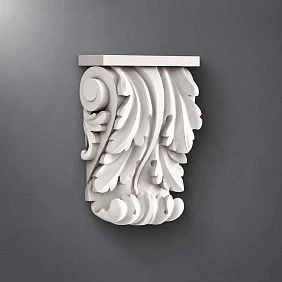
Renovation of an apartment with a classic or neoclassical interior
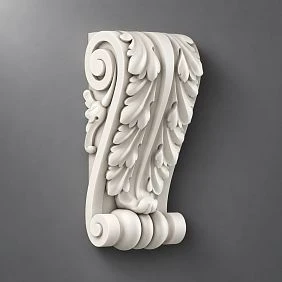
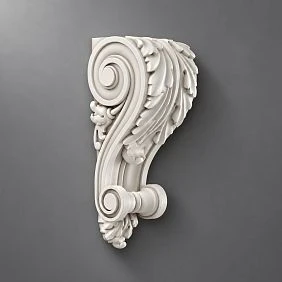
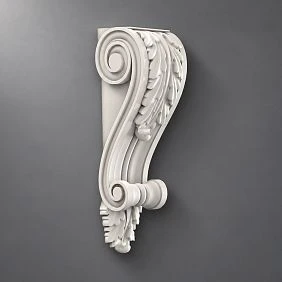
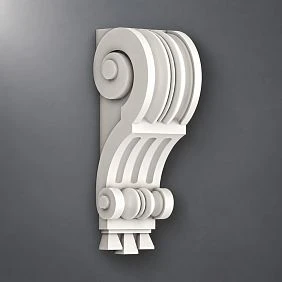
This is the most common scenario. Ceiling height 2.5–3.2 m, standard straight walls, classic or neoclassical style. For such an interior ready-made stucco decoration from the catalog offers everything: moldings for frames, cornices for the ceiling, baseboards, rosettes for the chandelier, decorative overlays, brackets, pilasters with capitals.
No custom manufacturing is needed here. The task is solved by purchasing a kit.
Get Consultation
Decorative frames made of moldings on the wall
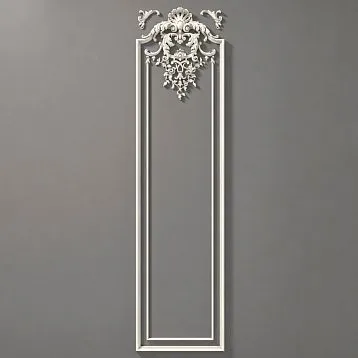
Molding frames are the main trend of classic renovation in recent years. Rectangular "paintings" made of of polyurethane moldings are mounted on the wall according to markings, creating an architectural panel system.
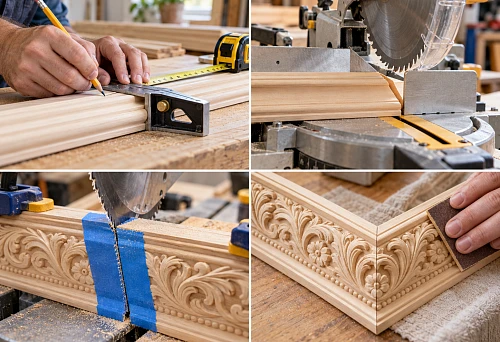
Ready-made moldings are linear products: the length is cut to the required frame size. No custom manufacturing — just buy the profile of the desired cross-section and cut to size.
Ceiling rosette for a chandelier
Polyurethane ceiling rosettes are produced in a range from 150 mm to 1200 mm in diameter. For the vast majority of residential spaces — from a small bedroom to a spacious living room — the diameter of the ceiling rosette from the catalog is selected precisely.
When is a non-standard rosette needed? When the ceiling is 4.5 m, the chandelier is monumental, and the diameter for it is 1500 mm, or a complex multi-level shape is required. This is a special project, not a standard renovation.
Decor of furniture and built-in cabinets
Narrow moldings, thin profiles, decorative overlays for furniture facades — all of this is available in ready-made catalogs. Furniture Decor for polyurethane moldings are narrow profile strips from 15 mm, overlays with ornaments, corner elements. For standard built-in furniture, the catalog covers the task.
TV zone and media wall
Pilasters on the sides, horizontal molding on top, decorative elements inside — all from a ready-made catalog. The task comes down to selecting elements by style and size, not custom manufacturing.
Commercial interior of standard sizes
A restaurant with a ceiling height of 3.2 m, a showroom, an office, a beauty salon — in these spaces, the architecture is standard. Cornices, moldings, pilasters, decorative overlays — from the catalog. The main task is the right scale and style, not non-standard shapes.
When custom stucco decoration is really needed
This section is for those who truly have a non-standard task. We'll honestly break down situations where the catalog won't help.
Restoration of a historical site
If you need to restore a specific ornament — an acanthus leaf from a pre-revolutionary estate, a rosette with a certain pattern from a Soviet mansion — the catalog will only offer something 'similar.' Exact matching requires making a mold from the sample. This is a real case for a custom order.
Non-standard radius or curve
Arched openings, round niches, oval ceiling medallions — where lines are curved, standard straight linear elements don't work. Curved molding needs to be bent (polyurethane allows moderate bending) or a mold needs to be made for a specific radius.
Large facade project with non-standard elements
If the facade requires a cornice profile with a height of 400 mm of non-standard ornament, or pilasters 5 m high with a specific historical relief, this goes beyond the standard catalog.
Reproduction of an existing element
If there is already stucco in the space — gypsum or made of another material — and you need to supplement it with new elements in exact accordance, the catalog will provide an approximation, but not precision. Here, a custom form based on the sample is needed.
Non-standard size in specific proportions
It happens that in a specific space you need a rosette with a diameter of 870 mm — but the catalog has 800 and 950. Or a molding with a height of 47 mm — but there are 40 and 55. In such situations, the choice is: either adjust the project to the available size (often quite possible), or order custom.
Ready catalog vs. custom manufacturing: comparison table
| Criterion | Ready-made catalog | Custom |
|---|---|---|
| Speed of delivery | 1–5 days | 2–8 weeks |
| Price | Fixed | Higher, depends on complexity |
| Standard sizes | Full selection | Not relevant |
| Non-standard shapes | Limited | Possible |
| Complex ornament | Within catalog | Any |
| Trial item | Possible | Only after production |
| Risk of error | Low | Higher (shape, prototype) |
The conclusion is obvious: for most tasks, a ready-made catalog is faster, more predictable, and cheaper. Custom-made — only when the catalog objectively cannot handle it.
What is included in a full set of stucco decor: a buyer's checklist
Regardless of the choice — ready-made catalog or custom manufacturing — the result is determined not by a single element, but by the system. Let's break down what you need to buy for a complete set.
Main Elements
-
Moldings — linear profiles for frames, belts, trims. Moldings made of polyurethane — a basic element of any decorative wall system.
-
Cornices — ceiling profiles around the perimeter of the room.
-
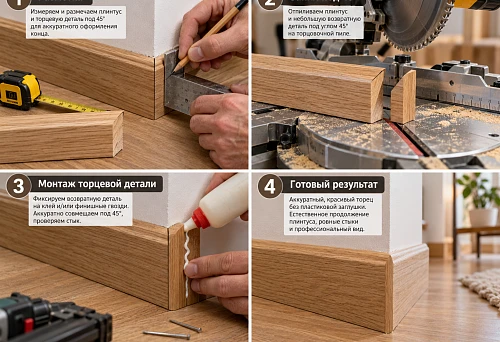
Baseboards — the bottom line of the wall.
-
Ceiling rosettes — for a chandelier or as a standalone accent.
-
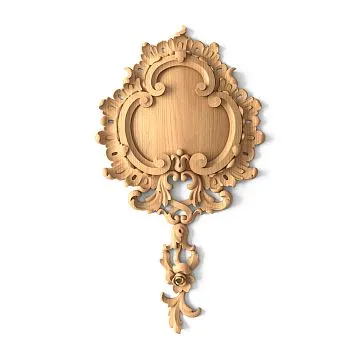
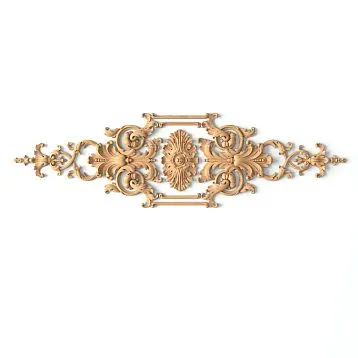
Decorative overlays — Polyurethane appliqués for corner accents, frame centers, medallions.
-
Brackets — decorative supports for cornice lines and canopies.
Connecting elements
-
Corner inserts — for inner and outer corners of frames and moldings.
-
Decor for Molding — inserts into profiles, accent elements along the length of the molding.
-
Wall Decor — three-dimensional wall accents.
-
Ceiling Decor — rosettes, medallions, coffered elements.
Installation materials
-
Glue for polyurethane — specialized. How to choose it correctly — in the article what to glue polyurethane molding with.
-
Acrylic sealant — for joints.
-
Acrylic primer — before painting.
-
Paint — matching the wall, ceiling, or contrasting.
-
Allowance 10–15%.
How to choose ready-made decor from the catalog: seven steps
A practical algorithm. Follow it — and there will be a minimum of mistakes.
Step one: define the zone
Wall? Ceiling? Furniture? Facade? Each zone requires its own category of decor. Don't try to solve 'everything at once' — start with a specific place.
Step two: measure everything
Ceiling height, room perimeter, door opening dimensions, wall height for molding frames. Without measurements, choosing decor is a game of roulette.
Step three: choose a style
Neoclassical, classical, art deco, modern classic — the style determines the ornament and proportions of all elements. A unified style for all decorative details is mandatory.
Step four: choose the main element
This is the central, most noticeable decorative object: a ceiling rosette, cornice, or molding for frames. Everything else is selected to match it in style and scale.
Step five: add connecting elements
For the cornice — molding for the second tier or for belt wall division. For frame moldings — corner inserts and decorative overlays. For the rosette — frame molding around it.
Step six: check installation
Can everything be mounted with standard glue? Are there any non-standard surfaces (arches, curves)? Full installation of polyurethane molding — in the practical guide STAVROS.
Step seven: calculate the quantity with a margin
Perimeters, linear meters, individual elements — calculate everything. Add 10–15% margin. Order in one batch.
What affects the price of polyurethane stucco molding
Let's break down the pricing — it helps make the right decision 'ready-made vs. custom'.
Price of a ready-made element from the catalog
Consists of:
-
Size of the element (area, length).
-
Complexity of the relief (smooth profile is cheaper than rich ornament).
-
Base material.
-
Quantities (bulk orders are more profitable).
Ready-made items have a fixed, predictable price. You know exactly how much you'll spend before purchasing.
Price of custom manufacturing
Consists of:
-
Creation or adaptation of a mold (press mold or silicone mold).
-
Cost of a prototype or test casting.
-
Production time.
-
Minimum order quantity (custom manufacturing is rarely cost-effective for 1–2 items).
-
Lead times (2–8 weeks instead of a few days).
Conclusion: for standard interior tasks, custom manufacturing is not just more expensive — it is multiple times more expensive. And it does not surpass the ready-made catalog in either quality or result.
Hidden costs that are often overlooked
Regardless of the choice — ready-made or custom — the final price includes:
-
Glue (from 300–500 rubles per tube, consumption — 1–2 tubes per room).
-
Sealant.
-
Primer.
-
Paint (especially if tinted to a specific shade).
-
Trimming tool.
-
Delivery.
-
Installation work (if not done by yourself).
-
Material reserve.
You need to calculate everything at once, not just the cost of the decor itself.
How to create an expensive interior from ready-made stucco decor
A common misconception: if I want an expensive result — I need to order custom. This is not true. Polyurethane architectural decoration from a good catalog, with proper selection and installation, it creates a result indistinguishable from a custom-made one.
The principle of "a system, not a set"
An expensive result is always a system: a cornice at the top, moldings on the walls, a baseboard at the bottom, a ceiling rosette, decorative accents in the right places. Everything from the same style line. Everything in the correct proportions to the ceiling height. Everything painted in a single color.
Any of these elements individually — from a ready-made catalog. Together — an expensive classic interior.
Rule of ornamental unity
A cornice with acanthus, moldings with a meander, a smooth baseboard — three different ornamental languages on one wall. This is not expensive, this is chaotic.
A cornice with acanthus, moldings with acanthus, a baseboard with a moderate band in the same tradition — a unified ornamental language. This looks expensive, even if everything is bought from a standard catalog.
The role of painting
Painting is what turns individual elements into a unified interior. White molding on a white wall — "built-in" architecture. White molding on a gray wall — expressive contrast. Gray molding on a gray wall of a different shade — a delicate tonal accent.
The color of the paint determines the character of the result more than the complexity of the decor itself.
Five ready-made sets from the catalog: scenarios and compositions
First scenario: classic living room, ceiling 2.8 m
Task: cornice around the perimeter, molding frames on the walls, ceiling rosette.
Contents:
-
Cornice 130 mm with moderate ornament — around the perimeter + 12% allowance.
-
Frame molding 35 mm — calculation based on number of frames.
-
Decor for Molding — corner inserts for frames.
-
Ceiling rosette diameter 350–450 mm.
-
Baseboard 100 mm.
-
Full installation set.
Second scenario: bedroom, ceiling 2.6 m
Task: cornice, decorative frame behind the headboard.
Contents:
-
Cornice 90–100 mm, smooth with a single profile.
-
Frame molding 25–30 mm for the frame behind the bed.
-
Polyurethane appliqués — accent at the center of the top part of the frame.
-
Baseboard 80 mm.
Scenario three: hallway, ceiling 2.5 m
Task: neat bottom and top line, mirror framing.
Contents:
-
Cornice 70–80 mm, thin profile.
-
Molding for mirror frame 30 mm.
-
Baseboard 70 mm.
-
Glue, sealant, paint.
Scenario four: grand hall, ceiling 3.2 m
Task: full architectural system.
Contents:
-
Cornice 160 mm with ornament.
-
Moldings for frames 45 mm.
-
Wall Decor — overlays inside frames.
-
Ceiling rosette with a diameter of 600–700 mm.
-
Baseboard 140 mm.
-
Belt molding at the level of 90 cm.
Scenario five: commercial interior — restaurant
Task: noticeable architecture, ceremonial character.
Contents:
-
Cornice 160–180 mm.
-
Moldings for large frames on walls 50 mm.
-
Decor for Molding — linear inserts in profiles.
-
Polyurethane appliqués — medallions on accent walls.
-
Baseboard 130 mm.
Polyurethane stucco molding: advantages of the material in the context of selection
Why polyurethane specifically — both for a ready-made catalog and for custom manufacturing?
Precision of shape. Polyurethane reproduces the finest relief — finer than plaster. This is critical for decorative elements with rich ornamentation.
Lightness. Weight is 3–5 times less than plaster. Installation with glue — without anchors, without complex fasteners.
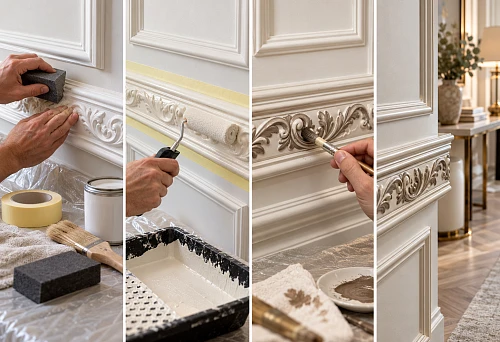
Ready for painting. After priming — any paint in any color. Uniform painting of all decor in the room — possible and predictable.
Moisture resistance. Does not swell, does not crack with humidity changes. Suitable for hallways, kitchens, and even facades.
Ease of processing. Cuts with a sharp knife or hacksaw, bends when heated — within limits sufficient for most tasks.
Perfect reproducibility. The same element from the catalog — always identical. This is important when you need to purchase additional elements for already installed ones.
Eight mistakes when choosing stucco decor
Mistake one: immediately look for "custom-made" without checking the catalog.
In 8 out of 10 cases, the catalog solves the problem. Searching for custom manufacturing for a standard apartment is a waste of time and money.
Mistake two: choose only by photo without dimensions.
The element looks "right" in the photo, but its actual size is 180 mm, while you need 80. Always check the dimensions in the description.
Mistake three: not counting the entire set.
Bought a cornice — forgot the moldings. Bought moldings — forgot the corner inserts. You need to buy the entire system at once, in one batch.
Mistake four: not considering the ceiling height.
A 200 mm cornice in an apartment with a 2.5 m ceiling creates a "ceiling overhang" effect. Proportion is the first selection parameter.
Mistake five: mixing elements from different styles.
Corinthian rosette + geometric cornice + smooth baseboard — three different styles in one room. Stylistic unity is a must.
Mistake six: choosing too small decor for the facade.
Interior elements get lost on the facade. Facade scale is always larger.
Error seven: not getting a spare.
Trimming, installation errors, damage during transport — all of this consumes material. A 10–15% reserve is mandatory.
Mistake eight: forgetting mounting materials.
Without the right adhesive and sealant, the decor holds unreliably. Details on choosing adhesive are in the material. what to glue polyurethane molding with.
Additional key scenarios: facade and special objects
Facade decor: when from catalog, when custom-made
Buy polyurethane decor for the facade From the standard catalog is suitable for most private houses and commercial objects: cornice profiles, architraves, brackets, portal moldings. These are standard elements with predictable sizes.
Custom-made — when the object is historical, when an existing facade ornament needs to be precisely reproduced, when the size exceeds standard limits, when the batch is large and requires accurate replication of a non-standard profile.
When a mold is needed
Making a mold (or silicone mold) for a specific element is a serious investment. It is justified when:
-
Mass production is required: many identical non-standard elements.
-
Accurate reproduction of a rare ornament is needed.
-
The object is a historical building with restoration obligations.
For a single element or a small project, the mold does not pay off. It is better to choose the closest possible analog from the catalog.
Practical algorithm for those who haven't decided yet
Three questions to help make the right choice:
First question: is there an element of the required size in the ready catalog?
If the difference between the needed and available one is less than 15% in size, and adjusting the project is not difficult, take the ready one.
Question two: is an exact replica of an existing ornament needed?
If yes — only custom manufacturing. If a "similar ornament" is sufficient — a ready catalog.
Question three: how urgently is the result needed?
Custom manufacturing — from 2 weeks. Ready catalog — a few days. If the renovation is on schedule — the choice is obvious.
Answered "choose ready-made" to all three questions? Then You can buy ready-made stucco matching the Baroque style. Calculate the quantity: linear meters of cornices and moldings, number of rosettes, pilasters, consoles, corner elements. Add a ten to fifteen percent allowance for trimming. from the catalog — is the right decision.
Frequently asked questions
What is more profitable: custom-made stucco decor or ready-made from a catalog?
For typical interior tasks — a ready catalog. It is faster, cheaper, and predictable in quality. Custom-made is only beneficial for objectively non-standard tasks: a historical object, non-standard size, exact reproduction of a rare ornament.
When is custom-made polyurethane stucco needed?
When you need to replicate a rare historical element, cover a non-standard radius, execute a large facade project with non-standard sizes, or achieve an exact match with existing stucco.
Is it possible to create an expensive interior using ready-made stucco decor?
Yes — if you select elements systematically: cornice, moldings, baseboard, rosette, and decorative overlays in the same style and in correct proportions to the room height. Painting in a single color completes the system.
What affects the price of polyurethane stucco?
Size, relief complexity, number of elements, installation materials, painting, and delivery. For custom manufacturing, the cost of the mold, prototyping, and production time are added.
What to buy together with stucco decor?
Polyurethane glue, acrylic sealant, primer, paint in the desired color, a 10–15% spare of elements, and compatible profiles from the same style line.
How much does custom-made polyurethane stucco cost?
It depends on the complexity, batch size, and type of mold. For single items, it is noticeably more expensive than ready-made catalog options. For large batches with custom ornamentation, the price-to-result ratio may be justified.
How to choose elements from a ready-made catalog if unsure about the size?
Measure the ceiling height, room perimeter, and dimensions of the required areas. Use the proportion rule: cornice — 4–6% of ceiling height. Frame molding — 3–5% of frame height. If in doubt, consult a specialist before ordering.
About the company STAVROS
STAVROS — manufacturer and supplier polyurethane molding decoration with a wide ready-made catalog for interiors of any complexity. The STAVROS assortment includes Moldings and cornices, ceiling rosettes, Wall Decor, Ceiling Decor, Decor for Molding and a full set of installation materials.
STAVROS works with private clients, designers, and architects across Russia. Professional consultations on selecting a set from the ready-made catalog, assistance in calculating quantities, recommendations for installation and painting. When you need a beautiful, finished interior — STAVROS helps you choose the right solution: quickly, accurately, and with results.