






























Article Contents:
- Why Bathroom Molding Requires Different Material Selection
- Humidity in the Air
- Condensation
- Intermittent Splashing
- Direct and Continuous Water Exposure
- The Importance of Bathroom Ventilation
- Understanding Hygroscopic Movement
- Wood Movement Is Not the Same as Wood Rot
- Why End Grain Is Important
- Reduced Sensitivity to Ordinary Humidity Changes
- Detailed Architectural Profiles
- Relative Ease of Handling
- Painted Finish Options
- The Complete Assembly Matters
- Can Mold Grow on Polyurethane?
- White Oak and Red Oak
- Teak
- Cedar and Cypress
- Pine
- Beech and Other Moisture-Sensitive Hardwoods
- What About MDF?
- Condition the Wood Before Installation
- Finish the Visible and Hidden Surfaces
- Choose a Suitable Bathroom Finish
- Seal Cut Ends and Vulnerable Joints
- Inspect the Finish Over Time
- PVC Trim
- Polyurethane Trim
- Comparison Table
- Painted Picture-Frame Wainscoting
- PVC Wainscoting
- Wood Wainscoting
- Polyurethane Molding on Painted Drywall
- Choosing the Chair Rail Height
- Avoiding Water-Trapping Horizontal Surfaces
- Using Polyurethane for a Chair Rail
- Crown Molding Outside the Shower
- Crown Molding Above a Shower
- Polyurethane vs. Wood Crown Molding
- Material Selection in the STAVROS Catalog
- Why Baseboards Are Different From Wall Molding
- PVC Baseboards
- Tile Baseboards
- Wood Baseboards
- STAVROS Baseboard Products
- Thin Wall Molding for Small Bathrooms
- Medium Decorative Molding for Neoclassical Bathrooms
- Wide Molding for Larger Bathrooms
- Comparison of STAVROS Polyurethane Wall Moldings
- Beaded Molding
- Rope Molding
- Floral Molding
- Acanthus Leaf Molding
- Decorative Polyurethane Onlays
- 1. Modern Bathroom With Clean Geometric Lines
- 2. Neoclassical Bathroom With Painted Wall Panels
- 3. Spa-Inspired Bathroom With Natural Wood Accents
- Step 1: Evaluate the Bathroom Environment
- Step 2: Identify the Exact Installation Zone
- Step 3: Select the Profile
- Step 4: Measure the Wall
- Step 5: Prepare the Cut List
- Step 6: Prepare the Surface
- Step 7: Dry-Fit the Molding
- Step 8: Select the Adhesive
- Step 9: Install and Support the Profiles
- Step 10: Finish the Joints
- Step 11: Prime and Paint
- Step 12: Inspect the Completed Installation
- Check Moisture Content and Conditioning
- Prepare the Finish System
- Choose Appropriate Fastening
- Allow for Material Movement
- Inspect and Maintain
- Calculate the Perimeter of One Frame
- Calculate All Three Frames
- Calculate Stock Lengths
- Prepare the Cut List
- Additional Materials
- Polyurethane Material Cost
- Wood Material Cost
- Installation Cost
- Maintenance Cost
- Long-Term Value
- Why Aggressive Cleaners Can Be a Problem
- Cleaning Wood Trim
- Peeling Paint
- Opening Joints
- Dark Marks Around the Molding
- Decorative Trim Pulling Away From the Wall
- Swollen Wood Trim
- Kitchens
- Laundry Rooms
- Powder Rooms
- Polyurethane Wall Moldings
- Decorative Trim Molding
- Polyurethane Decorative Onlays
- Coordinated Molding Accessories
- Decorative Wall Kits
- Ordering for the United States
- Is Polyurethane Molding Good for Bathrooms?
- Is Polyurethane Molding Waterproof?
- Is Polyurethane Better Than Wood for Bathroom Trim?
- Can Wood Trim Be Used in a Bathroom?
- What Is the Best Wood for Bathroom Trim?
- Is PVC Better Than Polyurethane for Bathroom Baseboards?
- What Is the Best Bathroom Crown Molding Material?
- Can You Install Crown Molding Above a Shower?
- Can Polyurethane Trim Be Installed on Bathroom Drywall?
- Is Bathroom Wainscoting a Good Idea?
- Can Polyurethane Molding Be Used for Bathroom Wainscoting?
- Can I Paint Polyurethane Molding With Bathroom Paint?
- Can Mold Grow Behind Polyurethane Trim?
- Is MDF Trim Suitable for a Bathroom?
- Can I Use Polyurethane Molding in a Sauna?
- What Is the Best Trim for a Bathroom With No Window?
- How Do I Prevent Bathroom Trim From Peeling?
- Is Waterproof Baseboard Necessary in Every Bathroom?
- Where Can I Buy Polyurethane Molding for Bathroom Wall Decoration?
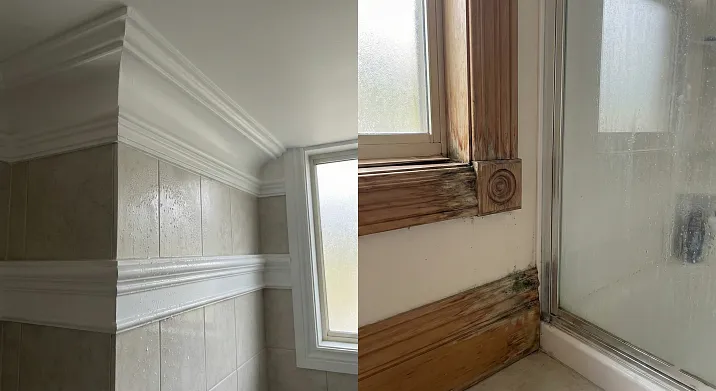
A beautiful bathroom is more than a collection of expensive fixtures, porcelain tile, and polished hardware. Architectural details give the room its character. A carefully proportioned crown molding can make a ceiling feel finished. Decorative wall frames can turn an ordinary painted surface into an elegant architectural composition. A chair rail can establish a visual boundary between tile and painted walls, while ornamental accents introduce the refinement associated with traditional interiors.
But bathrooms present a challenge that living rooms and bedrooms rarely face.
Moisture changes how decorative materials behave.
After a hot shower, humidity rises. Water collects on cold surfaces. Small splashes reach the vanity, baseboards, and lower wall. Over time, moisture can find its way into unsealed joints, deteriorated paint, porous substrates, and poorly prepared mounting surfaces.
The consequences may include swelling wood trim, peeling paint, visible gaps, damaged adhesive joints, and hidden mold growth.
That creates an important question for homeowners and remodeling contractors: is polyurethane molding or wood trim the better choice for a bathroom?
The answer depends on the location, exposure to water, type of molding, installation method, and desired appearance.
Polyurethane is often a practical material for decorative applications in humid rooms. It can reproduce detailed architectural profiles, offers relatively low weight, and does not behave like untreated solid wood when exposed to ordinary changes in indoor humidity.
Wood, however, remains a desirable choice for bathrooms where natural grain, tactile warmth, and traditional millwork are important. Properly selected, finished, and maintained wood can perform well in many bathroom locations.
And neither material should automatically be treated as suitable for the inside of a shower.
This guide explains how to choose bathroom molding, compare polyurethane and wood, evaluate moisture exposure, plan bathroom wainscoting, select crown molding and baseboards, and install decorative trim correctly.
It also explores real architectural products from the STAVROS polyurethane molding collection and shows how to incorporate decorative profiles into elegant American bathrooms without confusing moisture resistance with waterproof construction.
Why Bathroom Molding Requires Different Material Selection
A bathroom is not uniformly wet.
The ceiling above the vanity, the wall beside a towel cabinet, the area behind a sink, and the interior of a walk-in shower experience very different conditions.
Treating all these locations as equivalent leads to poor material decisions.
The first step is understanding four separate forms of moisture exposure.
Humidity in the Air
Relative humidity describes the amount of water vapor in the air compared with the maximum amount the air can hold at a given temperature.
Bathroom humidity can rise sharply during showering.
As humidity increases, moisture-sensitive materials may absorb water from the surrounding air.
Solid wood responds to these changes by moving toward an equilibrium moisture content.
When the moisture content changes, the wood can expand or contract, particularly across the grain.
For trim, that movement can affect miter joints, painted seams, and adjacent finishes.
Polyurethane architectural molding generally behaves differently because its polymer structure is not the same as wood's cellular structure.
However, polyurethane products vary by formulation, so their exact moisture performance should be verified individually.
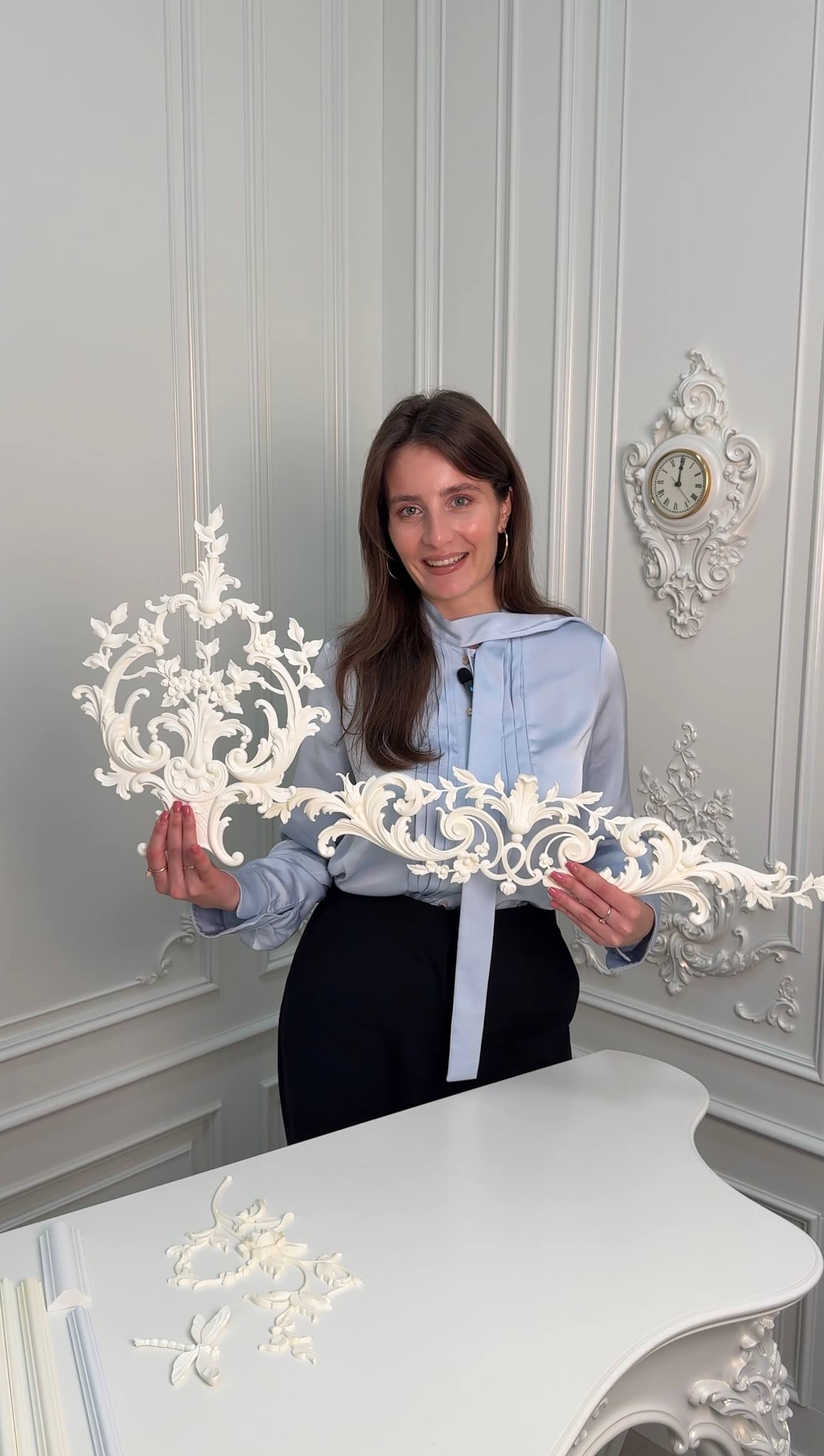
Наша фабрика также производит:
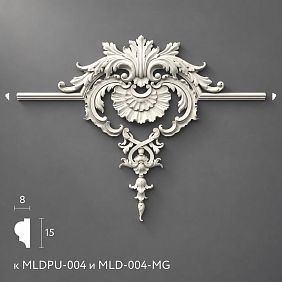
Смотреть весь Каталог продукции
Condensation
Condensation develops when humid air contacts a surface cold enough for water vapor to become liquid.
In bathrooms, this may occur on windows, mirrors, cold plumbing, exterior walls, and occasionally decorative trim.
A material may resist ordinary atmospheric humidity yet still experience problems when liquid water repeatedly collects around its edges.
The mounting surface, adhesive, and paint film are just as important as the molding itself.
Получить консультацию
Intermittent Splashing
The wall behind a sink or alongside a bathtub may receive occasional water splashes.
This is different from normal humidity.
Repeated splashing can damage poorly sealed wood end grain, penetrate joints, and weaken unsuitable finishes.
The appropriate solution depends on the intensity and frequency of exposure.
Some protected decorative assemblies may be suitable for occasional splashes, while more exposed locations are better finished with tile or another specifically water-resistant system.
Direct and Continuous Water Exposure
Shower enclosures and other wet areas require special treatment.
These locations may experience direct water flow, repeated saturation, water pressure at joints, and prolonged wetting.
A decorative profile that performs well in a ventilated bathroom is not automatically suitable for these conditions.
A shower requires a properly specified water-management and waterproofing assembly.
Decorative molding is not a replacement for shower waterproofing.
Bathroom Moisture Zones: Where Can Polyurethane or Wood Be Used?
Rather than choosing a single material for the entire bathroom, divide the room into exposure zones.
This approach allows decorative details to be placed where they will perform appropriately.
| Bathroom location | Typical exposure | Material strategy |
|---|---|---|
| Powder room without a shower | Usually moderate humidity and occasional sink splashes | Properly finished wood, compatible polyurethane, or other suitable trim |
| Upper wall away from shower | Short humidity spikes, limited direct water | Suitable polyurethane or appropriately sealed wood |
| Ceiling outside the shower | Humidity and possible condensation | Product-approved molding with suitable adhesive and finish |
| Wall behind a vanity | Occasional splashes and cleaning | Protected trim outside the direct splash zone; suitable backsplash where needed |
| Bathroom wainscoting | Humidity, cleaning and possible lower-wall splashes | Select the complete assembly for the exposure level |
| Baseboard near a bathtub | Repeated splashes and possible standing water | Purpose-made moisture-tolerant baseboard system, often PVC or tile |
| Inside a shower | Frequent direct water exposure | Approved wet-area wall assembly and finish |
| Sauna or steam shower | Elevated temperature and/or sustained humidity | Specialized materials expressly rated for those conditions |
This table provides a selection framework, not a product approval.
The intended-use rating of the specific material, coating, adhesive, and substrate must be checked.
The Importance of Bathroom Ventilation
Material choice cannot compensate for an unresolved moisture problem.
The U.S. Environmental Protection Agency recommends controlling indoor moisture and, where practical, keeping relative humidity below 60%, ideally around 30–50%.
Bathroom exhaust fans and other appropriate ventilation methods help remove moisture generated by showers and baths.
If condensation persists on walls, ceilings, or windows for long periods, the underlying humidity problem should be addressed before installing decorative trim.
A beautiful molding system installed over damp drywall is unlikely to remain beautiful for long.
Polyurethane Molding vs. Wood Trim: The Essential Comparison
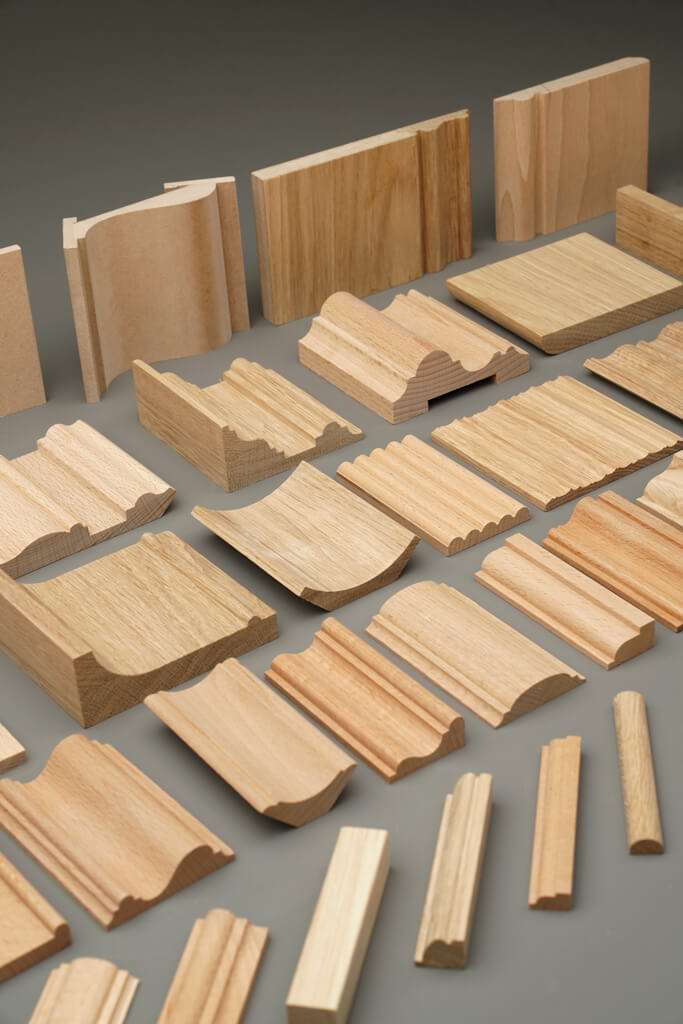
Polyurethane and solid wood can both be used to create decorative architectural profiles.
However, they offer different advantages.
Polyurethane is generally selected for molded detail, ease of reproducing ornamental designs, and reduced sensitivity to ordinary humidity changes.
Solid wood is selected for its authentic grain, traditional craftsmanship, and ability to be stained or clear-finished.
For bathrooms, the differences become especially important.
| Selection factor | Polyurethane architectural molding | Solid wood trim |
|---|---|---|
| Appearance | Smooth or sculpted molded profiles; commonly painted | Natural grain, stainable and paintable |
| Response to humidity | Depends on formulation; generally less moisture-driven swelling than wood | Absorbs and releases moisture; dimensional movement must be managed |
| Detailed ornament | Repeated intricate relief can be molded efficiently | Detailed profiles can be carved or machined |
| Weight | Often relatively lightweight | Depends on species and cross-section |
| Installation | Frequently uses a specified adhesive system | May use nails, mechanical fastening, adhesive, or combinations |
| Finishing | Compatible coating system required | Finish and moisture protection are particularly important |
| Maintenance | Coating and joints still need inspection | Finish, joints and exposed end grain may need additional attention |
| Natural texture | Usually simulated through decorative finishing | Genuine wood grain |
| Direct shower exposure | Not assumed suitable without explicit system approval | Generally avoided unless part of a specially engineered wet-area assembly |
| Cost | Varies by profile, dimensions and ornament | Varies greatly by species, grade and fabrication |
Neither material has an unconditional advantage in every category.
For a painted decorative wall frame in a properly ventilated bathroom, polyurethane may be the more practical choice.
For a carefully maintained vanity area where visible oak grain is the main design feature, solid wood may be preferable.
For a surface exposed directly to shower water, neither should be specified without suitable product and assembly approval.
How Moisture Affects Wood Trim
Wood is a natural material whose moisture content changes in response to its environment.
This is not inherently a defect.
It is a normal characteristic of solid wood and an important consideration in millwork design.
Understanding Hygroscopic Movement
Wood contains cellular structures that respond to surrounding moisture.
As the wood absorbs moisture, it can expand.
As it dries, it can contract.
Movement is generally much greater across the grain than along it.
That distinction matters for moldings, particularly those with wide cross-sections or complicated joints.
A long wooden profile may remain relatively stable in length while its width changes enough to affect a painted seam.
Mitered corners may open slightly.
Paint bridging two different materials may develop hairline cracks.
A poorly sealed end may absorb moisture more readily than the finished face.
Proper conditioning, finishing, and installation help manage these effects.
Wood Movement Is Not the Same as Wood Rot
Dimensional movement can occur under normal indoor conditions without fungal decay.
Wood rot requires conditions that support fungal activity, including sustained moisture.
A bathroom with good ventilation and properly finished trim is different from wood that remains wet around a leaking bathtub.
A single humid shower does not automatically cause wooden molding to rot.
The greater risk comes from repeated wetting, trapped moisture, and defects that allow water to accumulate.
Why End Grain Is Important
The exposed ends of wooden trim deserve particular attention.
End grain can absorb liquid water much more readily than a properly coated face.
This makes cut ends around vanities, baseboards, door casing, and wall intersections vulnerable when they are not sealed.
For bathroom millwork, the cut ends should receive appropriate protective treatment according to the selected finishing system.
The goal is to avoid creating an easy path for water into the wood.
Why Polyurethane Trim Can Be Practical in Humid Rooms
Architectural polyurethane can be molded into decorative shapes that resemble traditional plaster ornament or carved wood.
For bathrooms, its appeal lies partly in its response to moisture and its suitability for painted designs.
Reduced Sensitivity to Ordinary Humidity Changes
Unlike wood, polyurethane architectural molding does not have a grain structure that swells and shrinks in the same manner.
This can make it useful for decorative wall frames exposed to normal fluctuations in indoor humidity.
However, polyurethane is a broad material category.
Some formulations are rigid.
Others are flexible.
Some are foamed or cellular, while others have different internal structures.
Their moisture absorption, dimensional stability, and temperature behavior may differ.
For that reason, claims such as "zero water absorption" or "completely waterproof" should not be applied to all polyurethane products.
Detailed Architectural Profiles
Polyurethane can reproduce fine ornamental designs through molding processes.
This is useful when a bathroom design incorporates classical wall frames, sculpted decorative accents, or repeated geometric trim.
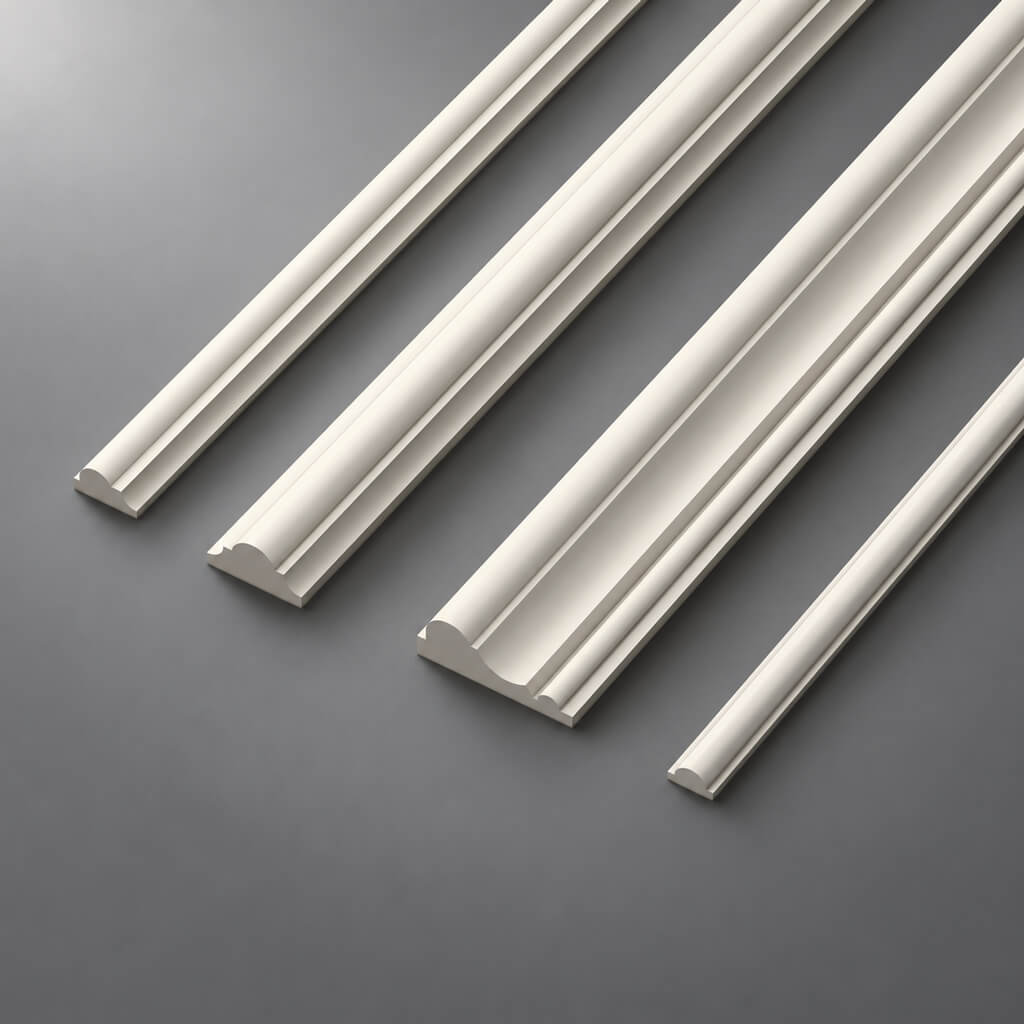
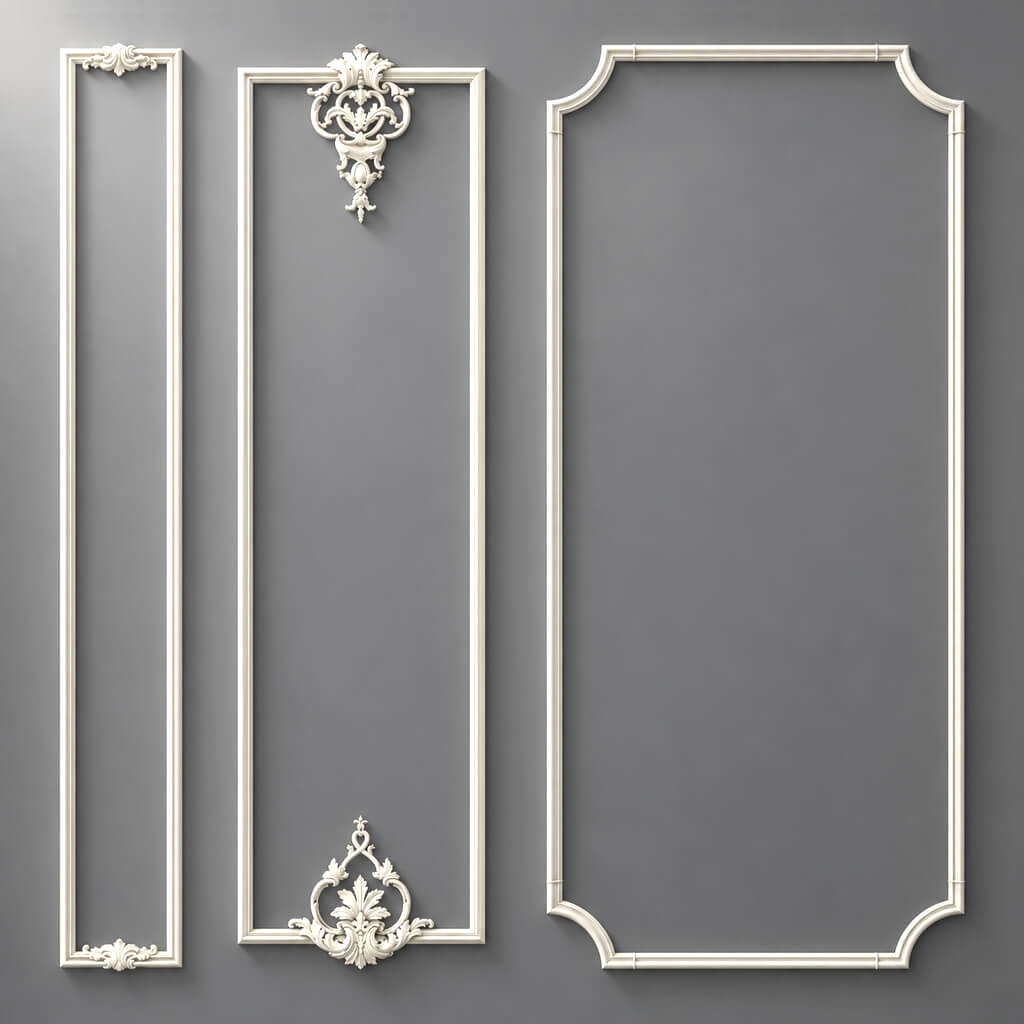
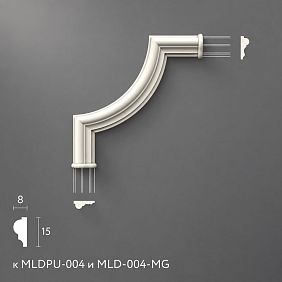
The STAVROS polyurethane molding collection includes profiles ranging from narrow decorative beads to more substantial stepped designs.
Such products can provide architectural character on appropriate painted bathroom walls.
Relative Ease of Handling
Many decorative polyurethane profiles are relatively lightweight compared with traditional cast plaster components of similar dimensions.
That can simplify layout and positioning.
However, weight alone does not establish an approved attachment method.
Large or overhead components still require an appropriate installation system.
Painted Finish Options
Polyurethane decorative trim can often be painted to coordinate with the bathroom walls.
White creates a traditional appearance.
A tone-on-tone finish emphasizes relief through light and shadow.
Darker painted molding can establish a stronger graphic outline.
The selected primer and finish must be compatible with the exact molding formulation.
Do not assume that every solvent-based or oil-based coating can be applied without testing.
Moisture-Resistant Trim Is Not the Same as Waterproof Molding
The terms water-resistant, moisture-resistant, and waterproof are often used interchangeably in marketing.
For a bathroom renovation, they should be treated differently.
A moisture-resistant material may tolerate ordinary humidity and intermittent moisture exposure under specified conditions.
A waterproof assembly is designed to prevent water from reaching vulnerable construction materials under its intended exposure conditions.
A decorative molding may resist moisture while its adhesive, paint, joints, or underlying wall remain vulnerable.
The Complete Assembly Matters
Consider a polyurethane profile attached to painted drywall.
The profile itself may tolerate humidity.
But the wall behind it may not tolerate repeated wetting.
The adhesive may have limitations.
Water can also enter at gaps or poorly finished ends.
If the wall remains wet, the presence of polyurethane does not eliminate the risk of hidden damage.
A moisture-tolerant decorative material does not automatically create a moisture-tolerant wall assembly.
Can Mold Grow on Polyurethane?
It is inaccurate to say that mold can never grow on polyurethane.
Even materials that do not provide a readily degradable substrate can accumulate surface dust, soap residue, and other organic contamination.
Under persistently damp conditions, microbial growth may develop on those deposits or on adjacent surfaces.
Mold may also develop behind decorative trim if the substrate remains wet.
The most effective prevention strategy is controlling moisture, maintaining ventilation, cleaning surfaces, and correcting leaks.
Replacing wood with polyurethane does not remove the need for moisture management.
Is Wood Trim a Good Choice for a Bathroom?
Yes, wood trim can be appropriate in many bathrooms.
The key is distinguishing areas with occasional atmospheric humidity from locations exposed to repeated water contact.
In a powder room, wood may be an excellent material.
In a well-ventilated primary bathroom, properly finished wood can also perform successfully in selected locations away from direct splashing.
In a shower enclosure, conventional decorative wood molding is generally not the preferred solution.
White Oak and Red Oak
Oak is a familiar choice for American architectural millwork.
White oak is often selected for projects where moisture-related durability is important.
Its anatomical structure can provide advantages in certain moisture applications compared with red oak.
However, neither species should be treated as waterproof.
For bathroom molding, appropriate conditioning, installation, and finishing are necessary.
Oak is particularly attractive when the design calls for visible natural grain.
It can support traditional, transitional, and contemporary bathroom interiors.
Teak
Teak is associated with marine and outdoor wood applications.
Its natural characteristics can make it useful in environments where moisture exposure is a consideration.
However, the performance of a particular teak product depends on the wood, design, finish, and installation.
Teak is not automatically appropriate for every shower-wall application.
It can be expensive and may be unnecessary when the bathroom design uses painted architectural trim.
Cedar and Cypress
Certain cedars and cypress products are valued for their natural durability characteristics.
They can be useful in selected wood applications, depending on the species and grade.
However, natural durability against biological decay does not eliminate movement, finishing, or installation considerations.
For fine decorative molding, availability of the desired cross-section and surface quality may also influence the choice.
Pine
Pine is widely used for painted interior trim.
It is not universally unsuitable for bathrooms.
Properly prepared and finished pine can work in locations with controlled humidity and limited direct water exposure.
However, its performance depends on moisture management and protective finishing.
For frequently splashed areas, another material may be more practical.
Beech and Other Moisture-Sensitive Hardwoods
Beech can show substantial dimensional response to humidity changes.
This makes it more demanding in environments with fluctuating moisture.
A beech molding may still be usable in selected protected interior locations, but careful design and finishing are important.
The choice should be made according to the actual conditions rather than the assumption that all hardwoods behave alike.
What About MDF?
Medium-density fiberboard is widely used in painted trim and decorative wall panels.
However, ordinary MDF is sensitive to moisture.
Swelling at exposed edges or damaged paint can compromise the finished appearance.
Moisture-resistant MDF products also exist, but they are not automatically waterproof.
When selecting bathroom wall kits, verify the material composition.
Some STAVROS decorative wall molding kits combine polyurethane ornaments with primed MDF linear profiles.
Those compositions should not automatically be specified for humid bathrooms without evaluating the MDF and the complete installation conditions.
Protecting Wood Trim in Bathrooms
If wood is selected, its finishing system becomes a major part of the project.
The objective is not to pretend that wood will stop responding to moisture.
It is to limit unnecessary water exposure and manage the natural behavior of the material.
Condition the Wood Before Installation
Wood should be appropriately dried and conditioned for the intended interior environment.
The correct moisture content and conditioning period depend on the product and installation conditions.
Storing trim in a damp construction area is not an acceptable substitute for proper conditioning.
Bathroom ventilation and environmental conditions should be stable before final installation and finishing.
Finish the Visible and Hidden Surfaces
Where the selected finishing system requires it, protect the face, back, edges, and end grain.
This is particularly important around cuts and joints.
Finishing only the visible front surface may leave vulnerable areas exposed.
The manufacturer's finishing instructions should determine the actual coating system and number of coats.
Choose a Suitable Bathroom Finish
Wood can be protected with selected film-forming coatings or appropriate penetrating finishes.
A film-forming coating creates a protective finish on the wood's surface.
A penetrating oil-based system has different appearance and maintenance characteristics.
Neither type should be considered universally waterproof.
For a bathroom, the product must be appropriate for the expected humidity, cleaning, and occasional splashing.
A product marketed as marine varnish is not automatically ideal for interior bathroom trim.
Check its application requirements, appearance, ventilation considerations, and maintenance instructions.
Seal Cut Ends and Vulnerable Joints
The most vulnerable areas are often the least visible.
Pay attention to end grain, joints, and locations near wet surfaces.
A carefully finished board can still develop problems if water enters through an untreated cut end.
Where a joint is intended to be sealed, use materials compatible with the wood finish and the adjacent surface.
Inspect the Finish Over Time
Wood trim requires periodic inspection.
Look for peeling paint, discoloration, open seams, damaged caulk, or evidence of persistent moisture.
Address the moisture source rather than simply applying another coat of paint over a damaged area.
PVC Bathroom Trim vs. Polyurethane Molding
For American buyers researching PVC bathroom trim, the comparison with polyurethane is important.
PVC is commonly used in moisture-tolerant trim products.
It is particularly relevant for baseboards and other applications where the material may be exposed to occasional floor-level moisture.
Polyurethane is especially useful for molded decorative relief.
However, performance varies among individual products.
PVC Trim
PVC trim products can provide useful resistance to moisture-related deterioration.
They may be specified for baseboards, door casing, or other bathroom applications when the manufacturer approves the exposure conditions.
PVC profiles often emphasize practical linear shapes rather than highly elaborate classical ornament.
Some products are designed to be painted.
Others are intended to retain their factory finish.
Polyurethane Trim
Polyurethane offers a broad range of architectural shapes, including sculpted ornaments and decorative frame profiles.
For a traditional bathroom with picture-frame molding, polyurethane may provide more ornamental options than a basic PVC trim range.
However, the specific product must be suitable for the intended location.
Comparison Table
| Material | Decorative capability | Bathroom suitability | Typical concern |
|---|---|---|---|
| Polyurethane molding | Strong for molded architectural detail | Suitable in certain humid interior applications when approved | Adhesive, finish, joints, and substrate |
| PVC trim | Commonly available in practical linear profiles | Often useful in moisture-exposed trim locations when rated accordingly | Thermal movement, fastening, and finish compatibility |
| Sealed solid wood | Excellent natural appearance | Suitable in protected bathroom zones | Moisture movement, end grain, and maintenance |
| Moisture-resistant MDF | Smooth painted trim and panels | Only where product rating and assembly permit | Edge swelling under excessive wetting |
| High-density polystyrene | Linear decorative profiles | Depends on specific product and finish | Compatibility with adhesives, coatings, and exposure |
| Traditional plaster | Fine sculptural ornament | Generally requires careful moisture protection | Weight, porosity, and installation conditions |
There is no universally best material.
The right choice depends on the specific bathroom location and desired finish.
Bathroom Wainscoting: How to Choose the Right Material
Bathroom wainscoting is an architectural wall treatment applied to the lower portion of the wall.
It may consist of raised panels, flat panels with applied trim, beadboard, or another coordinated decorative system.
Wainscoting can make a simple bathroom feel more structured and expensive.
However, it introduces horizontal joints and additional surfaces where moisture can collect.
Painted Picture-Frame Wainscoting
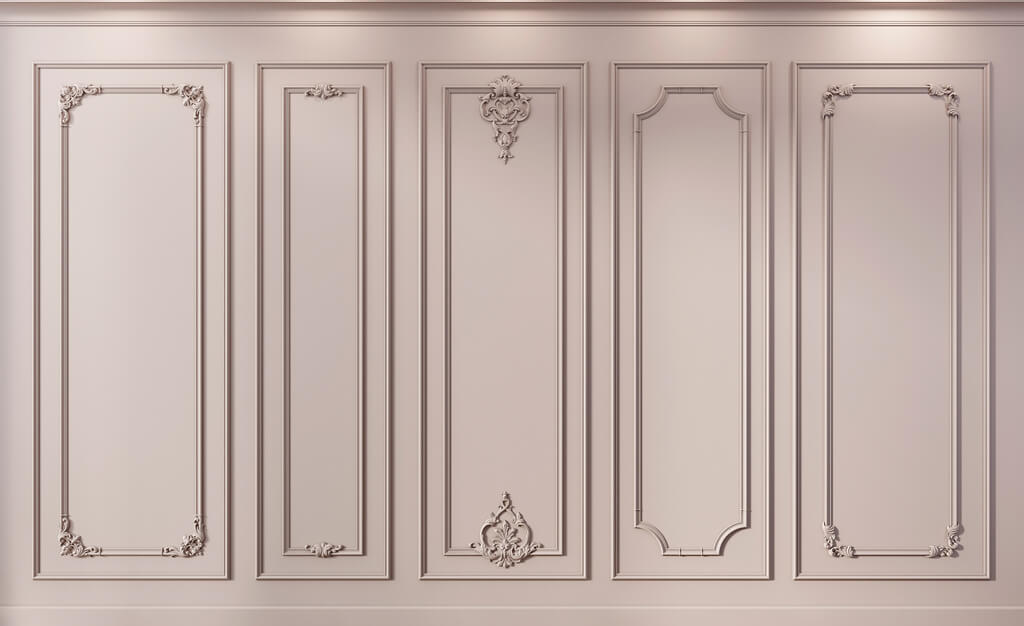
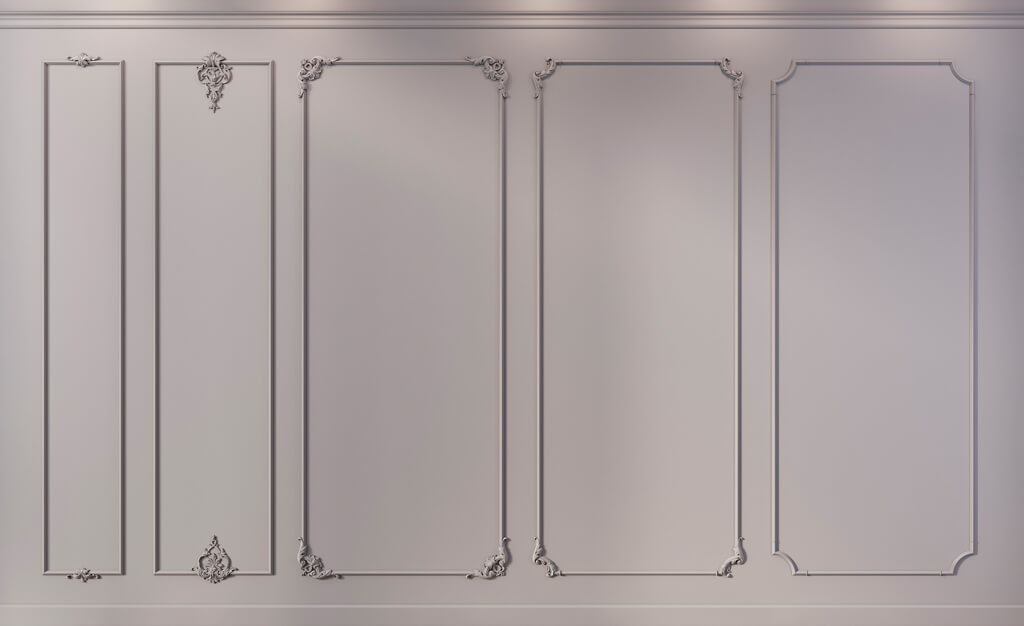
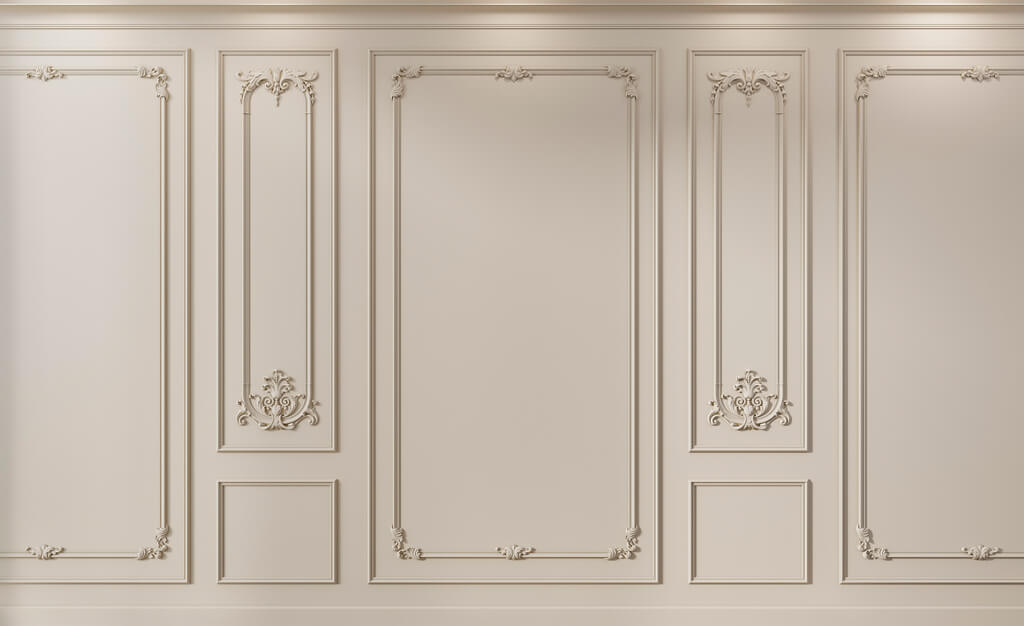
One common design uses narrow applied molding to create rectangular outlines on a painted wall.
A horizontal chair rail separates the lower decorative section from the upper wall.
This can be an effective treatment for a powder room or the dry portion of a bathroom.
Polyurethane molding may be useful for the applied frame profiles.
The underlying wall, paint, adhesive, and exposed joints must still be appropriate for the environment.
PVC Wainscoting
PVC wainscoting systems may be useful where moisture exposure is greater.
However, the entire system should be specified for the intended location.
The panels, fasteners, trims, and joint treatment all contribute to performance.
Do not assume that a PVC panel can simply be glued over a damp wall to solve an existing moisture problem.
Wood Wainscoting
Wood wainscoting can create a warm traditional appearance.
It is especially attractive when paired with natural wood cabinetry or a wood vanity.
For painted wood wainscoting, the finish can unify the lower wall.
However, wood panels and trim require appropriate movement allowances and moisture protection.
Wide solid wood panels may demand greater attention to dimensional change than narrow profiles.
Polyurethane Molding on Painted Drywall
For a decorative frame system using polyurethane wall molding, the wall itself remains part of the decorative composition.
That is a visual advantage: a relatively narrow profile can establish the appearance of paneling without installing a full solid panel.
But the drywall remains the substrate.
This means the assembly is best considered for appropriate protected bathroom areas, not as a substitute for a wet-area wall finish.
Bathroom Chair Rail: A Decorative and Practical Transition
A bathroom chair rail introduces a horizontal line across the wall.
It may visually separate tile from painted surfaces, divide two paint colors, or establish the upper boundary of wainscoting.
In traditional interiors, chair rails often create a sense of architectural proportion.
Choosing the Chair Rail Height
There is no single correct height for every bathroom.
The appropriate position depends on the room dimensions, vanity height, tile layout, mirror placement, and overall design.
For some wainscoting projects, a height around 32–42 inches above the finished floor may provide a useful starting range.
This is a design reference, not a fixed construction standard.
A vanity backsplash or wall tile may determine a different transition.
Avoiding Water-Trapping Horizontal Surfaces
A chair rail with a broad upward-facing ledge may collect moisture or cleaning residue.
That matters when it is installed close to a sink or bathtub.
Choose a profile and placement that suit the exposure.
Ensure that the transition is properly detailed.
Decorative molding should not create a path for water to enter the wall.
Using Polyurethane for a Chair Rail
A suitably approved polyurethane profile may work as a decorative horizontal band in protected bathroom areas.
However, many polyurethane molding profiles are designed for general wall decoration rather than a specific moisture-rated chair rail application.
Check their dimensions, mounting orientation, and product instructions before specifying them.
Bathroom Crown Molding: What Material Should You Choose?
Bathroom crown molding finishes the transition between walls and ceiling.
It can make a small bathroom appear more carefully detailed and can reinforce traditional architectural styling.
However, bathroom crown molding should be selected according to its actual environmental conditions.
Crown Molding Outside the Shower
The ceiling perimeter outside direct water exposure may be suitable for certain decorative crown products.
The main considerations are humidity, condensation, substrate stability, and finish compatibility.
A moisture-tolerant profile may be useful.
But the mounting adhesive and finish also need to perform under the expected conditions.
Crown Molding Above a Shower
A ceiling or wall transition directly above a shower experiences a more demanding environment.
Condensation and repeated wetting may occur.
Do not automatically install an ordinary decorative crown profile in this location.
Confirm approval for the exposure conditions and ensure that the underlying wet-area construction remains properly waterproofed where required.
Polyurethane vs. Wood Crown Molding
For a painted bathroom crown outside direct wet zones, polyurethane may be a convenient option.
For a bathroom that emphasizes natural oak or another wood finish, solid wood can offer a distinctive architectural appearance.
However, wood crown molding still needs appropriate finishing and moisture management.
The complexity of the crown profile also affects cutting and installation.
Material Selection in the STAVROS Catalog
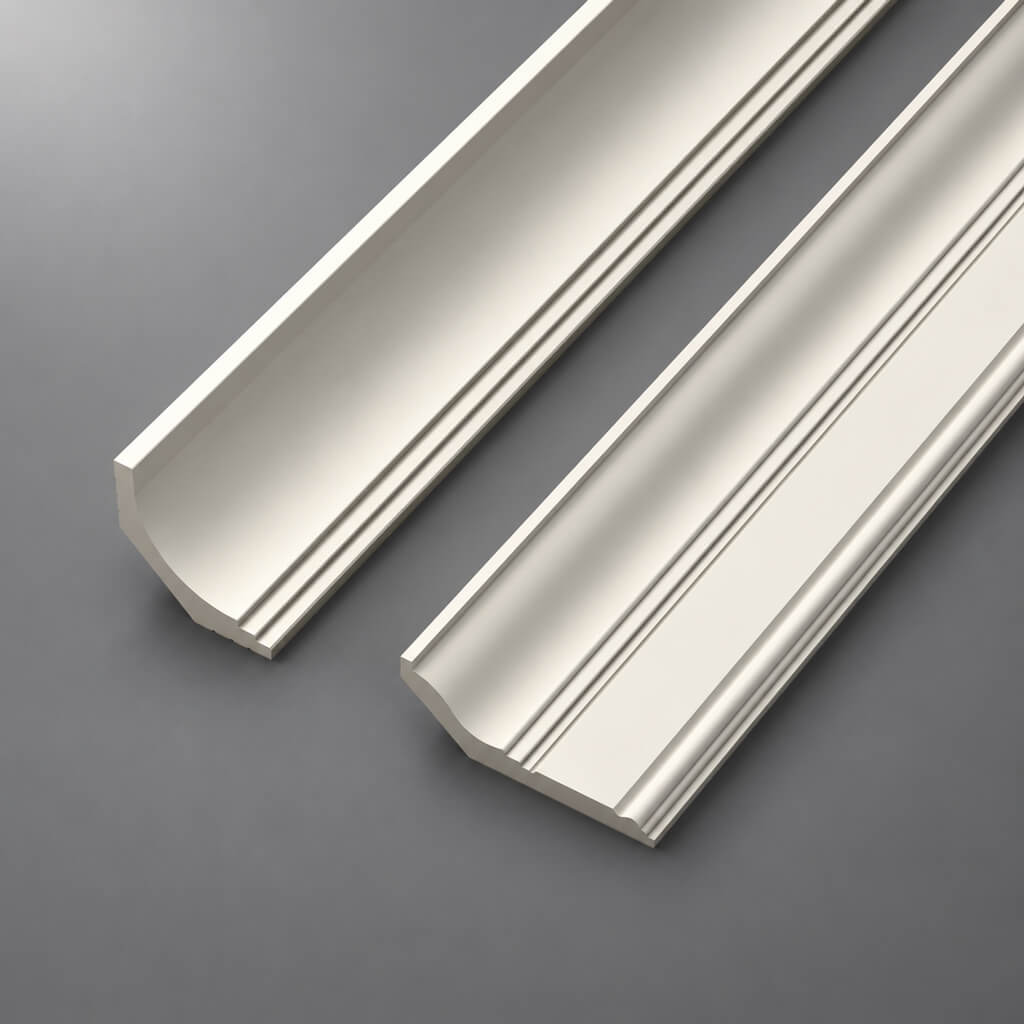
The STAVROS crown molding and cornice category includes polystyrene HIWOOD products.
These should not be confused with the company's polyurethane MLDPU wall moldings.
If polyurethane crown molding is a project requirement, verify the exact material of the selected cornice before ordering.
Waterproof Baseboard: What Works at Bathroom Floor Level?
A waterproof baseboard is a common purchasing objective for bathroom renovations.
The reason is straightforward.
The lowest portion of the wall is often exposed to the most persistent moisture.
Water may collect after bathing, cleaning, or plumbing incidents.
Floor cleaning equipment can also create repeated contact.
Why Baseboards Are Different From Wall Molding
A decorative wall frame positioned five feet above the floor does not experience the same conditions as a baseboard.
Baseboards may be exposed to water reaching the floor, abrasion, impacts, and cleaning solutions.
Therefore, a suitable baseboard needs more than an attractive decorative profile.
The material and complete installation assembly must match the exposure.
PVC Baseboards
Purpose-made PVC baseboards are a practical option to consider for certain moisture-prone bathroom locations.
The exact product should be specified according to the manufacturer's permitted applications.
Correct fastening, expansion provisions, and joint detailing remain important.
Tile Baseboards
A tile baseboard can provide a consistent visual relationship with the bathroom floor.
Where the design involves a wet-area assembly, tile and its underlying waterproofing system should be selected and installed correctly.
Tile alone does not automatically make the underlying wall waterproof.
Wood Baseboards
Properly finished wood may be appropriate in protected areas.
However, it requires careful treatment of cut ends and joints.
Wood baseboards near routinely wet floors can be more maintenance-sensitive than suitable synthetic alternatives.
STAVROS Baseboard Products
The STAVROS baseboard collection includes polystyrene products.
Check the individual profile's material and moisture-related specifications.
Do not assume that every baseboard in a relief-decoration catalog is polyurethane or that it is rated for standing water.
Decorative Polyurethane Molding for Bathroom Walls
The best decorative applications are often those that add architectural character without placing ornament in the most heavily exposed areas.
A carefully planned wall frame above a vanity, a symmetrical treatment beside a mirror, or a decorative border in a dry bathroom zone can create substantial visual impact.
Thin Wall Molding for Small Bathrooms
A narrow profile provides a restrained architectural line.
For compact bathrooms, it may be preferable to a large deeply sculpted molding.
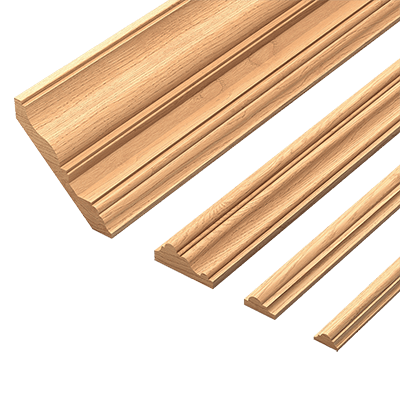
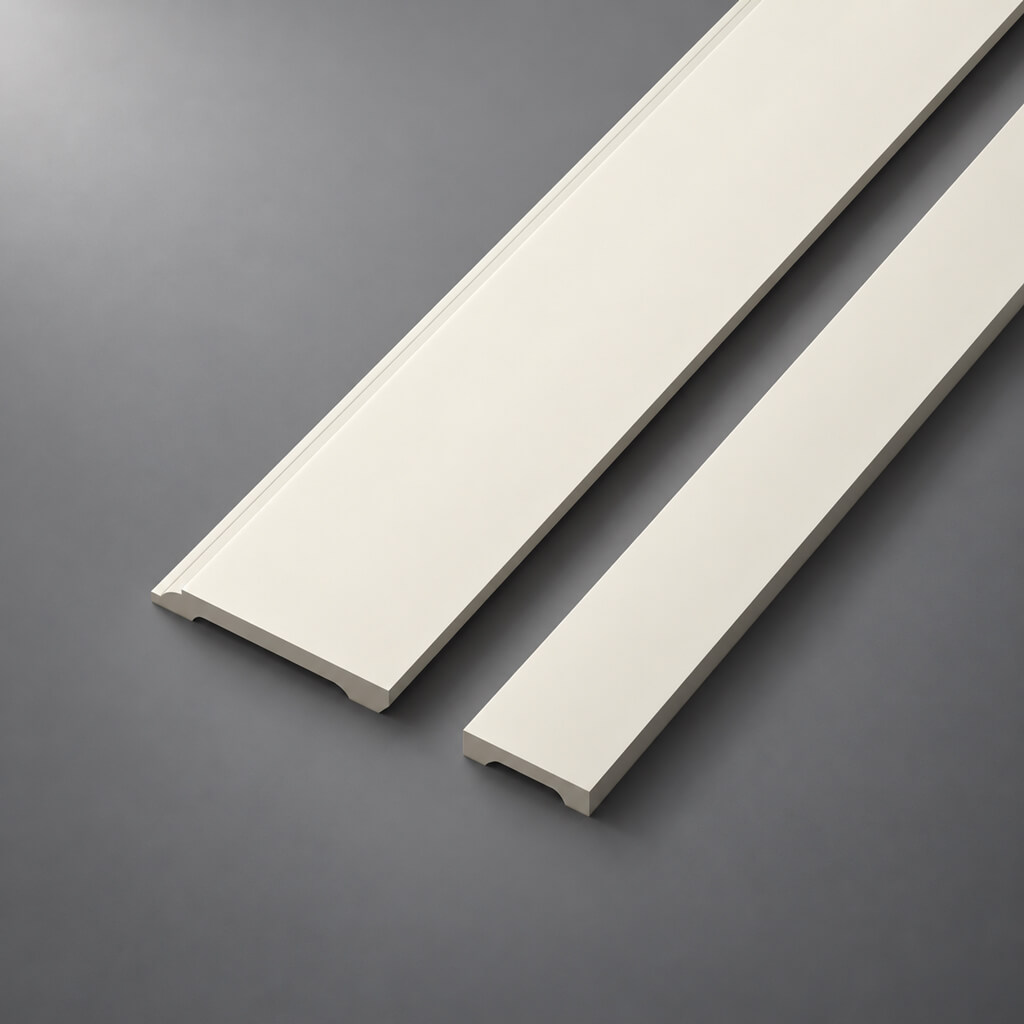
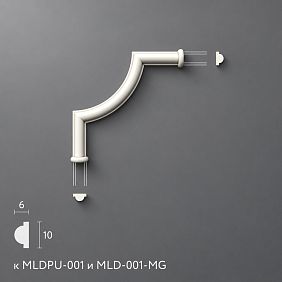
The STAVROS MLDPU-001 polyurethane molding has a semicircular cross-section.
Its listed dimensions are approximately:
Face width: 0.39 inches
Projection: 0.24 inches
Stock length: 102.36 inches
Material: polyurethane
This fine profile can be considered for painted decorative wall frames in suitably protected areas.
The narrow scale is useful when the design should remain delicate rather than imposing.
Before using it in a bathroom, confirm the complete installation and finishing requirements for the intended exposure.
Medium Decorative Molding for Neoclassical Bathrooms
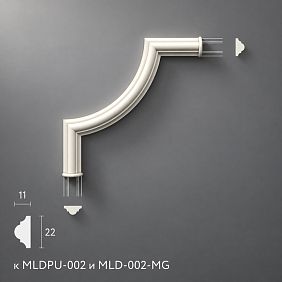
The STAVROS MLDPU-002 polyurethane molding provides a more pronounced architectural line.
Its listed dimensions are approximately:
Face width: 0.87 inches
Projection: 0.43 inches
Stock length: 102.36 inches
Material: polyurethane
The stepped cross-section creates stronger shadow lines.
This may suit a neoclassical bathroom with painted decorative panels, traditional cabinetry, or a substantial vanity mirror.
The profile is designed for architectural decoration.
Its material listing alone does not establish that it is approved for direct shower exposure.
Wide Molding for Larger Bathrooms
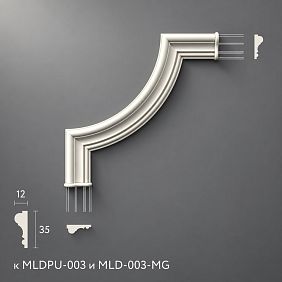
The STAVROS MLDPU-003 polyurethane molding has a wider cross-section.
Its dimensions are approximately:
Face width: 1.38 inches
Projection: 0.47 inches
Stock length: 102.36 inches
This profile creates a more prominent architectural frame.
It can work well in larger bathrooms where the wall treatment is intended to become a major visual feature.
However, its scale should be evaluated carefully.
A broad profile can overwhelm a narrow wall between a doorway and a vanity.
For smaller bathrooms, a finer molding may produce better proportions.
Comparison of STAVROS Polyurethane Wall Moldings
| Product | Face width | Projection | Stock length | Suggested design use |
|---|---|---|---|---|
| MLDPU-001 | 0.39 in | 0.24 in | 102.36 in | Fine wall frames and small decorative borders |
| MLDPU-002 | 0.87 in | 0.43 in | 102.36 in | Neoclassical wall panels and stronger trim lines |
| MLDPU-003 | 1.38 in | 0.47 in | 102.36 in | Larger decorative frames and formal compositions |
These are design examples based on the listed profile dimensions.
Final bathroom suitability depends on product-specific technical confirmation and the intended installation conditions.
Ornamental Molding in Bathrooms: When Decoration Makes Sense
Not every bathroom needs elaborate ornament.
However, classical and Art Deco-inspired bathrooms can benefit from selected decorative details.
The most effective designs usually concentrate ornament in a few controlled locations.
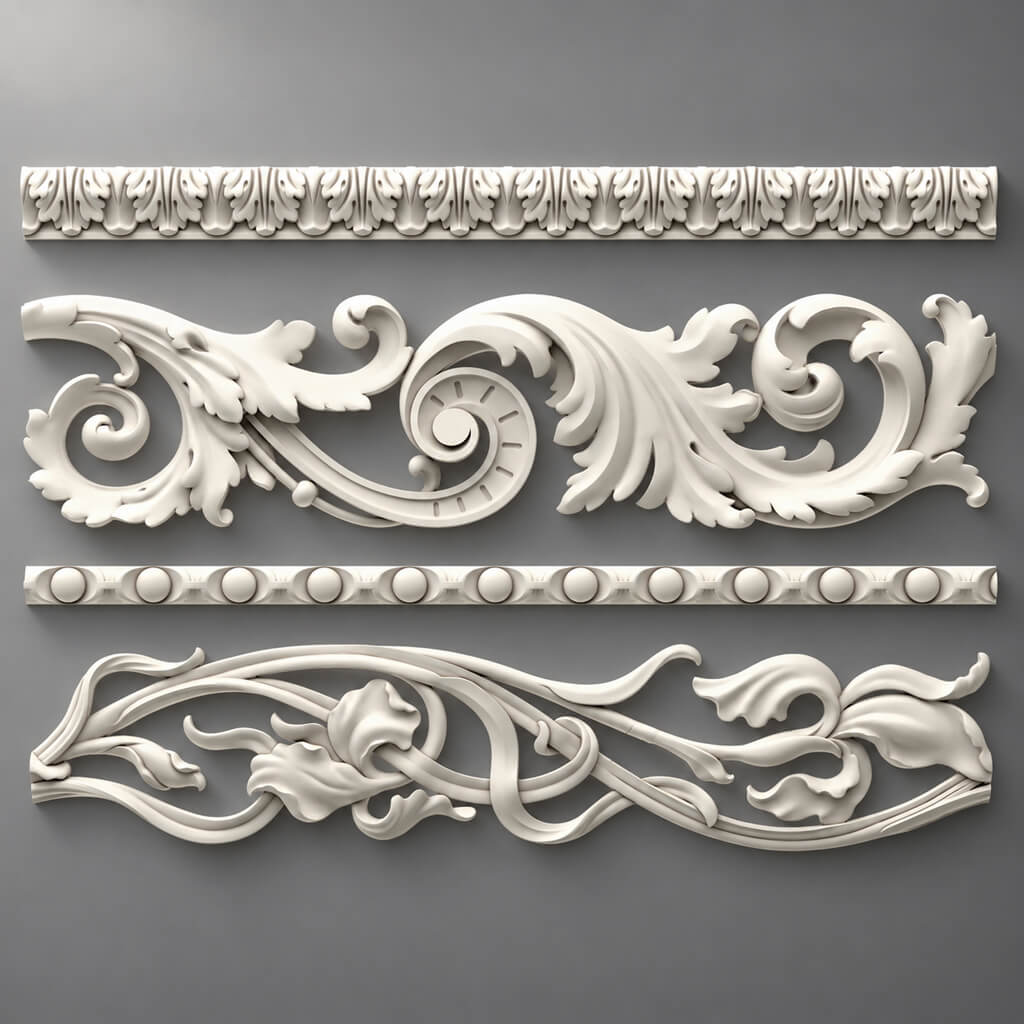
Beaded Molding
Beaded molding has a repeating series of rounded decorative forms.
It is a traditional architectural motif that can introduce fine texture.
The STAVROS KPU-105 beaded molding is a polyurethane decorative strip.
Its dimensions are approximately 0.43 × 0.24 × 39.37 inches.
The shorter stock length makes it different from the longer MLDPU architectural profiles.
For a bathroom design, it may be considered as an ornamental accent in a suitably protected location, subject to confirmation of the intended conditions.
A narrow beaded border can complement a traditional mirror composition or painted decorative wall panel.
Rope Molding
Rope molding features a twisted or braided decorative pattern.
This detail can introduce a more elaborate classical appearance.
The STAVROS KPU-125 rope molding has approximate dimensions of 0.35 × 0.20 × 39.37 inches.
The profile is compact and ornamental.
It may be useful for selected decorative borders in a protected bathroom area.
However, its intricate relief can be more demanding to clean than a smooth profile.
Avoid installing detailed rope ornament where soap residue and direct water exposure are likely to accumulate.
Floral Molding
Floral molding introduces botanical relief.
It may support traditional, French provincial, or classical bathroom interiors.
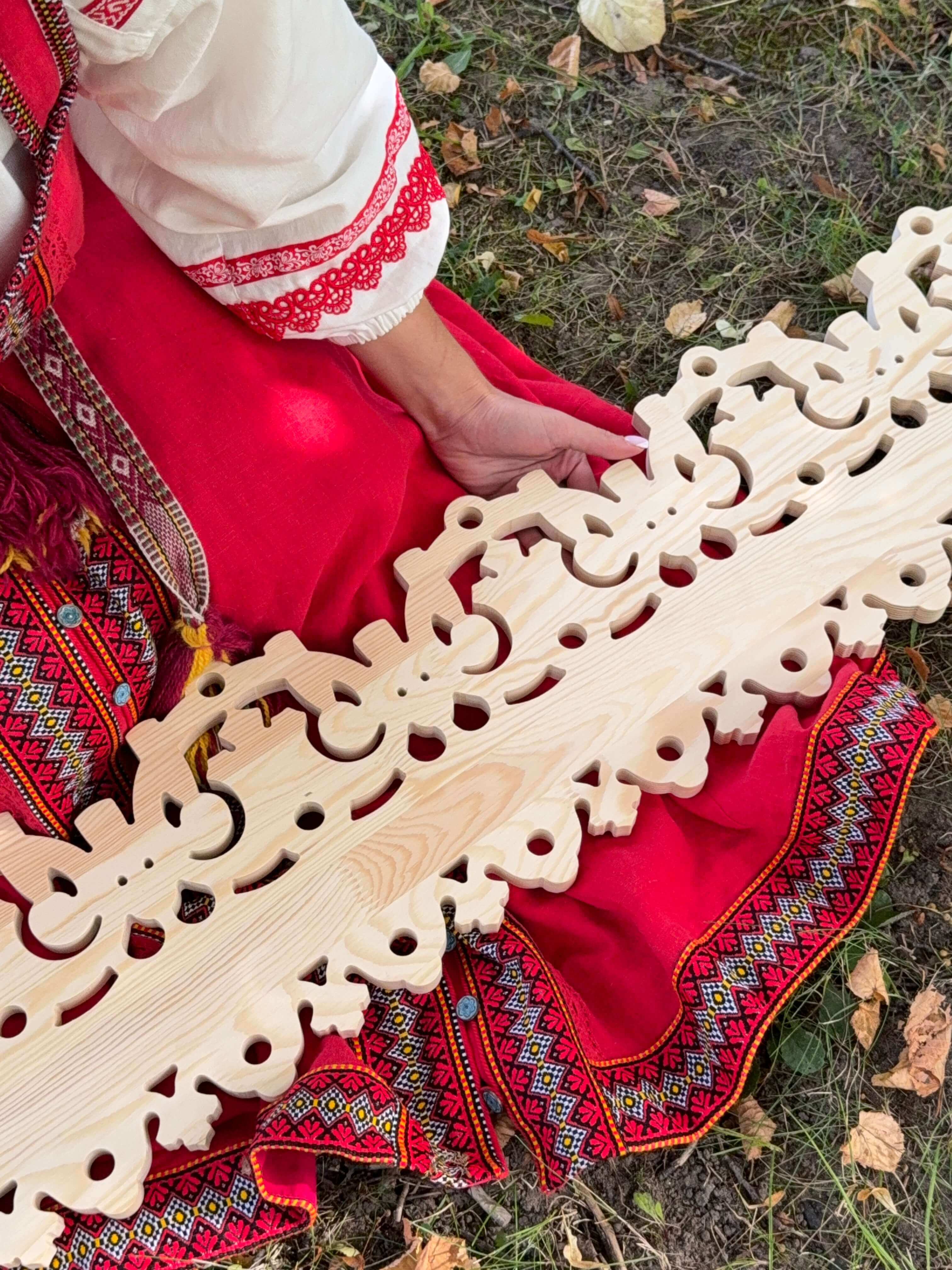
The STAVROS polyurethane decorative trim collection includes ornamental profiles featuring floral and other traditional patterns.
A floral accent can be effective above a vanity or on a protected decorative wall.
The key is to match the scale and cleaning requirements to the location.
Deep relief in a frequently splashed area may demand unnecessary maintenance.
Acanthus Leaf Molding
Acanthus leaf molding is associated with classical architectural ornament.
Its sculpted leaves can introduce rich shadow detail.
However, elaborate acanthus decoration is generally better reserved for selected architectural accents rather than every available bathroom surface.
A small amount of ornamental molding often creates a stronger result than covering a compact bathroom with dense decoration.
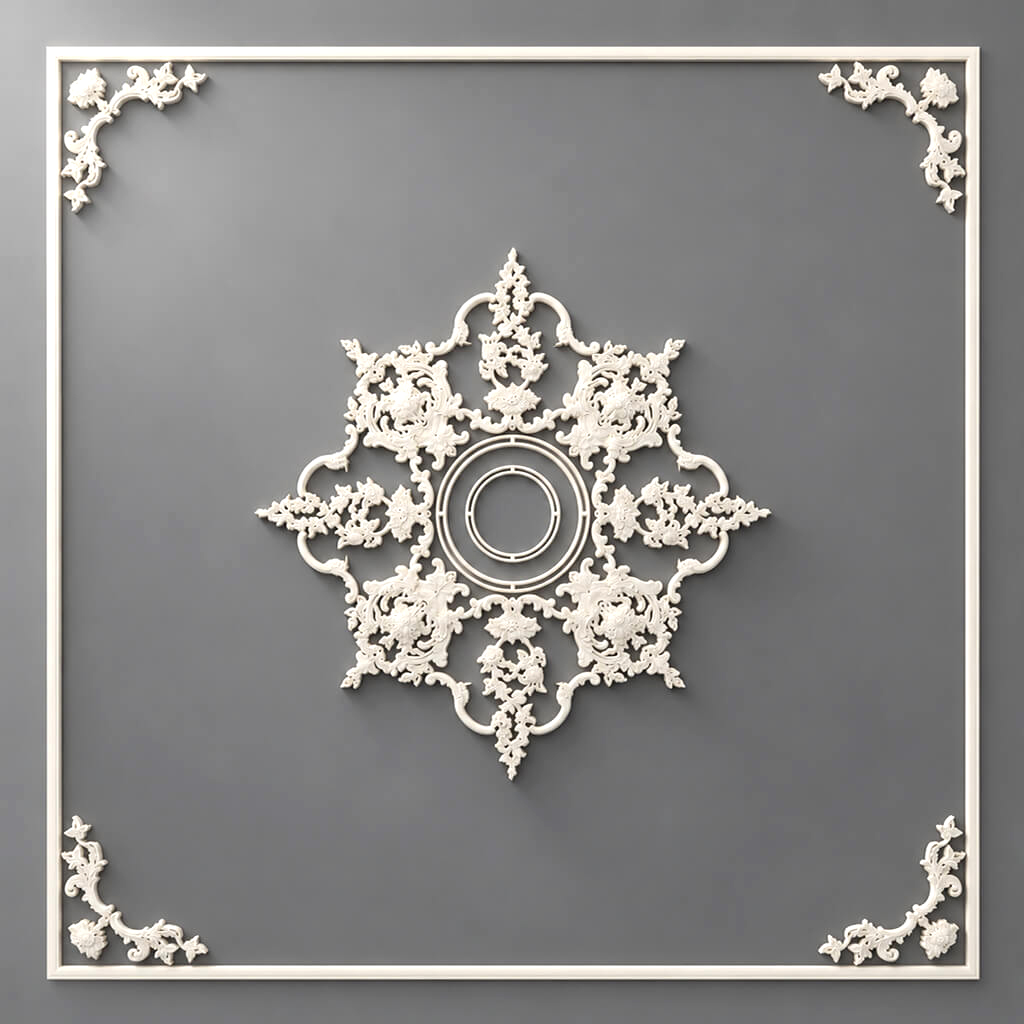
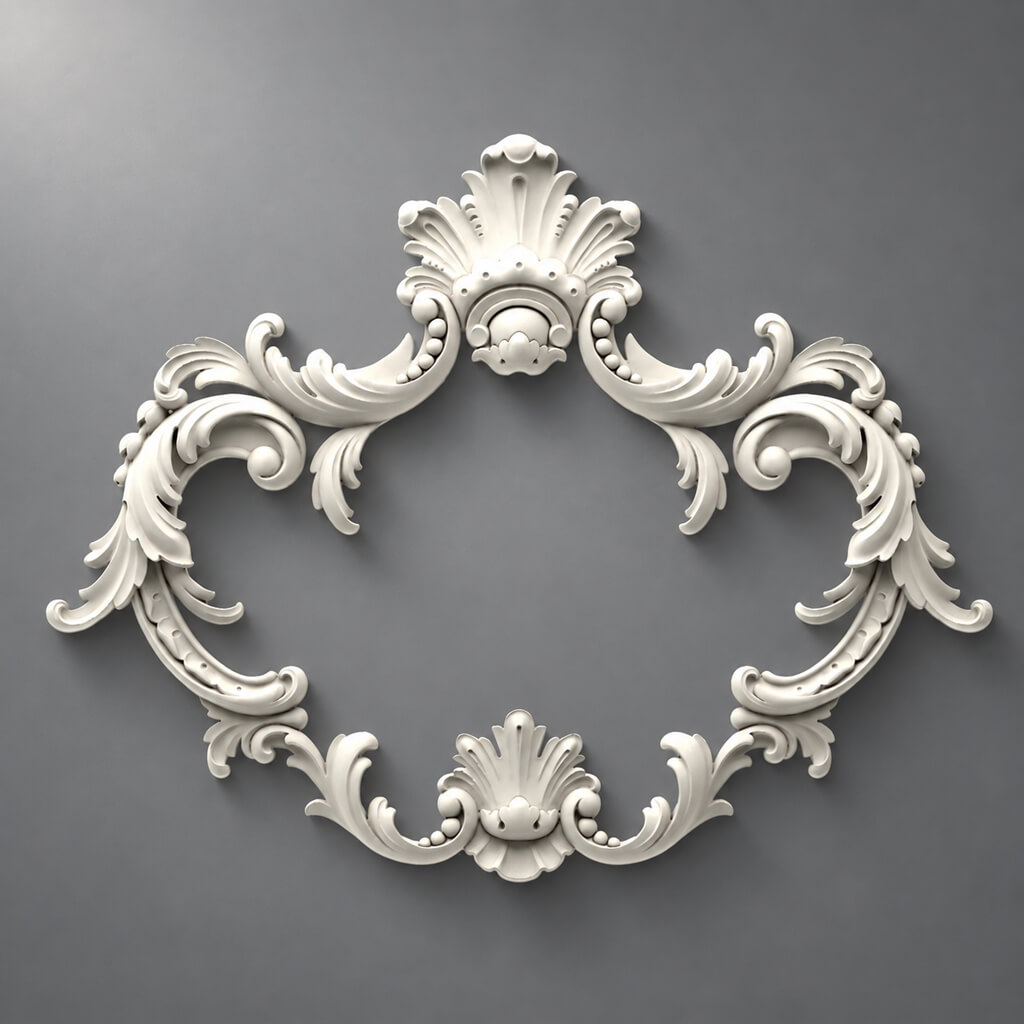
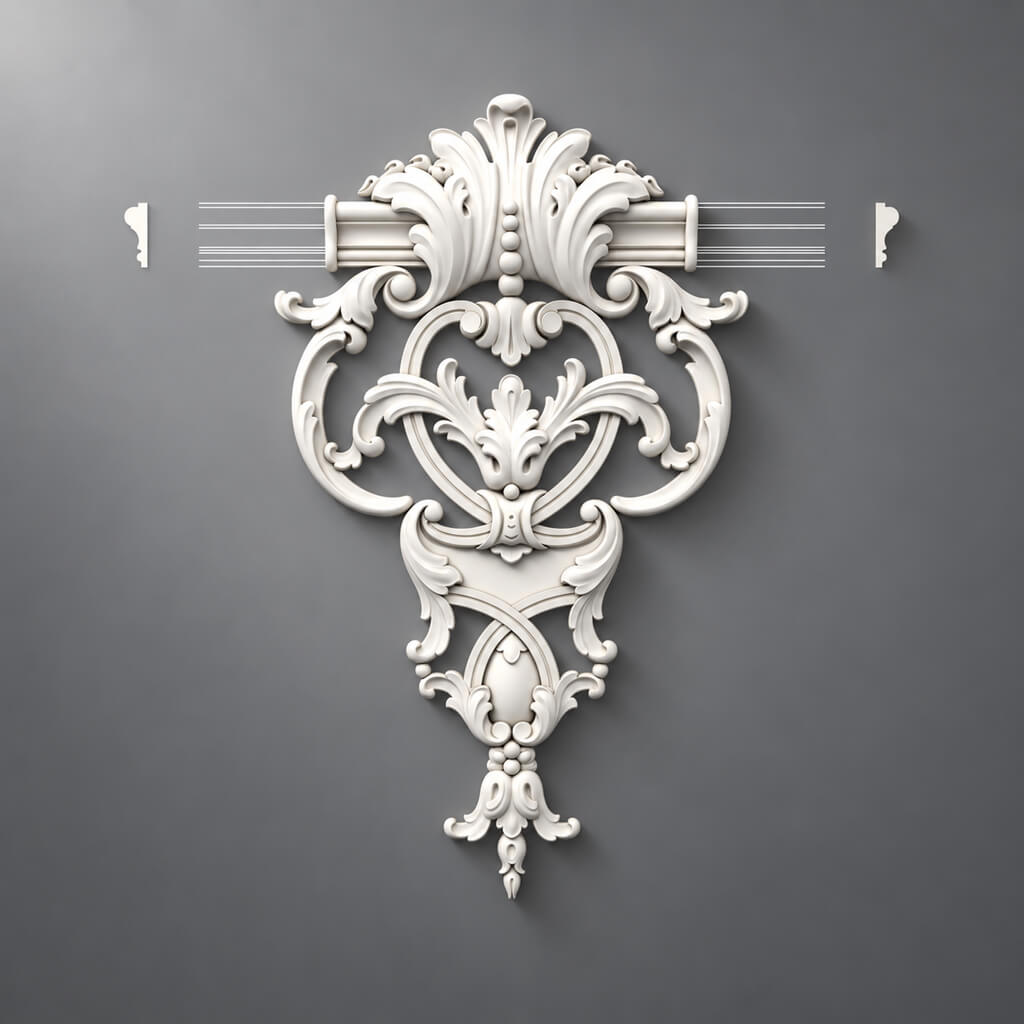
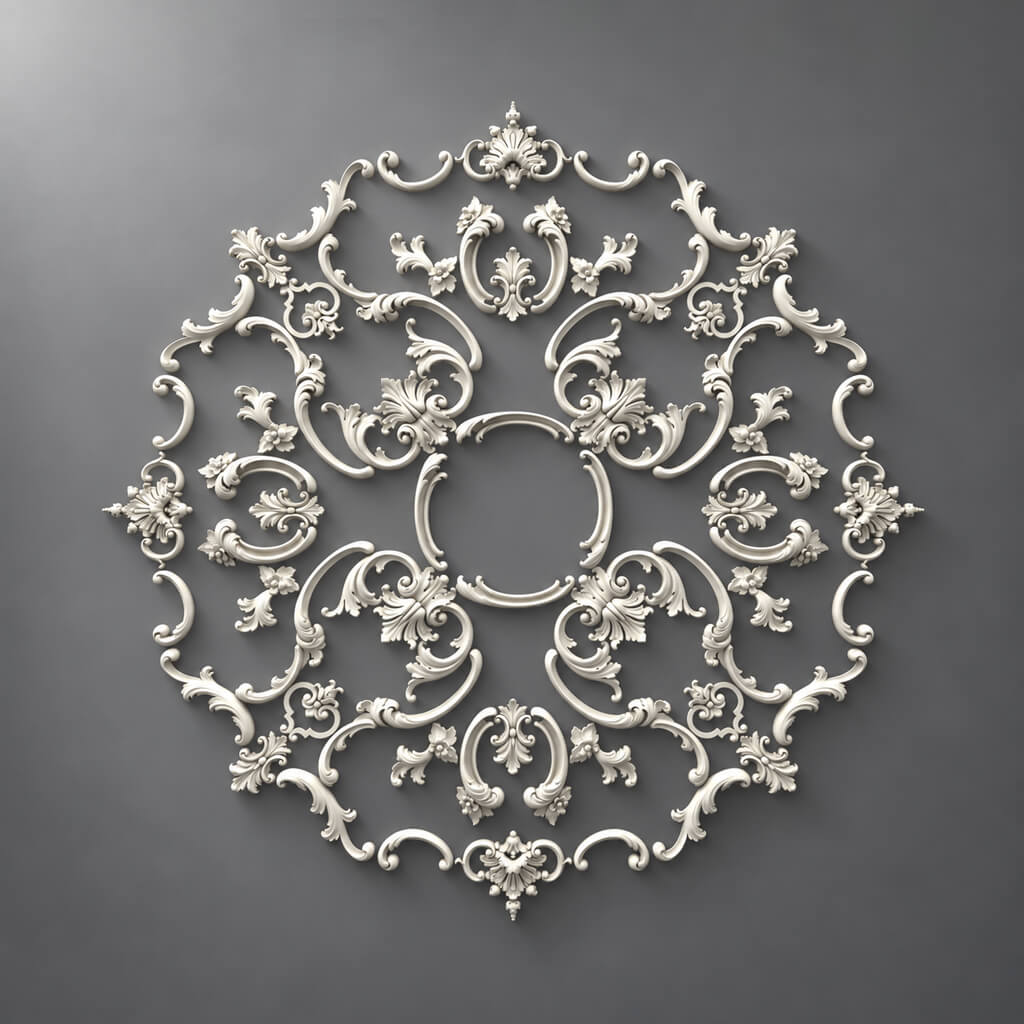
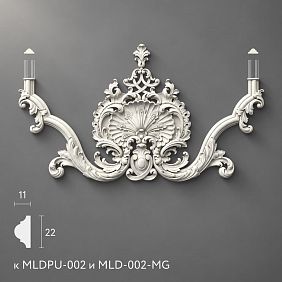
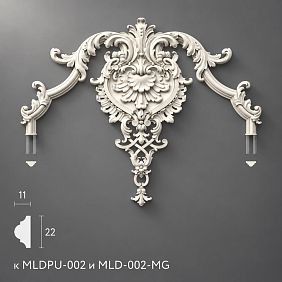
Decorative Polyurethane Onlays
An onlay is a separate sculpted decorative component.
It can be installed on an appropriate wall or furniture surface.
For example, the STAVROS NPU-501 polyurethane floral onlay measures approximately 2.28 × 11.81 × 0.43 inches.
Its elongated form can support a vertical decorative composition.
In a bathroom, such an accent may be considered for a protected wall area or suitable cabinetry, provided the substrate and finish are appropriate.
Browse polyurethane onlays and ornamental appliques to coordinate them with wall molding profiles.
Three Bathroom Design Strategies Using Decorative Trim
The most effective bathroom interiors balance architectural detail with practical material selection.
Rather than covering every surface with molding, plan the treatment according to the room's proportions and exposure conditions.
1. Modern Bathroom With Clean Geometric Lines
A contemporary bathroom may feature a floating vanity, large-format porcelain tile, and a restrained wall color.
In this setting, decorative molding should provide subtle architectural definition.
A narrow profile may be used to create one or two large rectangular wall frames away from direct splashing.
Paint the molding in the same color as the wall.
The relief becomes visible through shadow rather than contrast.
For a suitable protected wall, a compact polyurethane profile such as MLDPU-001 may provide the necessary visual detail.
Avoid unnecessary decorative complexity.
2. Neoclassical Bathroom With Painted Wall Panels
A neoclassical bathroom can combine painted walls, a substantial vanity, framed mirrors, and symmetrical architectural detailing.
Medium-width polyurethane molding can establish rectangular frames around selected wall areas.
A molding such as MLDPU-002 offers more prominent relief than a fine bead.
Decorative ornaments may be added sparingly.
For example, a symmetrical wall composition beside a vanity might feature one central decorative accent.
The design should keep appropriate clearance from water-exposed surfaces.
Paint the molding and adjacent wall in a coordinated color.
This creates the appearance of an integrated architectural treatment.
3. Spa-Inspired Bathroom With Natural Wood Accents
A spa-inspired bathroom often emphasizes warmth, natural surfaces, and a restrained palette.
Rather than choosing only polyurethane or only wood, the design can combine materials according to exposure.
A wood vanity can provide visible natural grain.
Painted polyurethane decorative trim may be used on protected wall sections if approved for the setting.
Tile or another suitable wet-area material should handle direct shower exposure.
This approach allows the warmth of wood to coexist with practical decorative finishes.
The important design principle is to assign each material a task suited to its actual properties.
Installing Polyurethane Molding in a Bathroom: Step-by-Step
Bathroom molding installation requires more than accurately cutting the decorative profile.
The substrate, adhesive, finishing products, and environmental conditions all influence the result.
The following process applies to selected decorative trim installations outside direct wet zones.
Always follow product-specific manufacturer instructions.
Step 1: Evaluate the Bathroom Environment
Inspect the room before installing anything.
Look for condensation, water stains, musty odors, peeling paint, damp drywall, and damaged sealant.
Correct moisture problems first.
If the substrate is wet or deteriorated, decorative molding should not be used to conceal it.
Confirm that bathroom ventilation operates effectively.
Step 2: Identify the Exact Installation Zone
Determine whether the molding will be installed above a vanity, on an upper wall, near the ceiling, or in another protected location.
Mark the boundaries of splash-prone areas.
Do not extend ordinary decorative molding into a shower or wet zone unless the entire assembly is specifically approved.
Step 3: Select the Profile
Choose a molding based on the wall's proportions and the intended design.
Record the manufacturer's product code.
Verify the stock length and cross-section.
For a repeated wall-frame design, check whether matching corner elements are needed.
Step 4: Measure the Wall
Measure the actual installation area.
Record obstacles such as outlets, light switches, mirrors, shelves, and cabinets.
For a rectangular decorative frame:
Frame perimeter = 2 × width + 2 × height
Use inches for the calculation.
Then convert to linear feet if necessary.
Step 5: Prepare the Cut List
Determine the finished length of each molding piece.
For mitered frames, establish whether dimensions are measured to the outside long points or another defined reference.
Count the number of individual pieces.
Calculate how they fit within the manufacturer's stock lengths.
Do not rely solely on a fixed waste percentage.
Step 6: Prepare the Surface
The wall should be clean, dry, stable, and suitable for the specified adhesive.
Remove loose paint and contamination.
Repair defects in the substrate.
If the wall has been recently painted, verify that the coating has cured sufficiently for the intended installation.
Follow the adhesive manufacturer's surface-preparation requirements.
Step 7: Dry-Fit the Molding
Before applying adhesive, position the pieces against the layout marks.
Check alignment and spacing.
Confirm that the corners fit accurately.
For a decorative profile with a repeating pattern, evaluate the visual continuity at joints.
This is the best opportunity to correct errors.
Step 8: Select the Adhesive
Choose a mounting adhesive compatible with the polyurethane profile and the bathroom substrate.
The manufacturer should approve the anticipated environmental conditions.
A product suitable for dry interior walls may not be appropriate for a persistently humid or frequently wet location.
Do not assume that every construction adhesive provides the same performance.
Step 9: Install and Support the Profiles
Apply the adhesive using the specified bead pattern and coverage.
Position the molding accurately.
Use approved temporary support where necessary.
Do not rely on an arbitrary 30-second holding time.
Curing depends on the adhesive, substrate, temperature, and humidity.
Overhead or large decorative components may require additional fastening according to the installation system.
Step 10: Finish the Joints
After the attachment system has cured, inspect the joints and adjacent surfaces.
Use compatible joint adhesive, filler, or sealant as specified.
Avoid creating large bridges of caulk over poorly cut joints.
A properly fitted profile requires less finishing material.
Any sealant used in a bathroom must be suitable for the specific location and paint system.
Step 11: Prime and Paint
Check the molding's factory finish.
Use a compatible primer where required.
Apply a suitable interior coating according to its preparation and curing instructions.
For bathroom applications, the paint system should be appropriate for the expected humidity and cleaning conditions.
Allow the coating to cure before exposing it to normal bathroom conditions.
Step 12: Inspect the Completed Installation
Check the entire perimeter for visible gaps, damaged paint, or areas that do not sit properly against the wall.
Make sure the molding does not interfere with ventilation grilles, fixtures, access panels, or other functional elements.
The finished decoration should be visually cohesive without compromising the bathroom's operation.
Installing Wood Trim in a Bathroom: What Changes?
Wood installation follows some of the same general steps, but additional consideration must be given to movement and finishing.
Check Moisture Content and Conditioning
The wood should be suitable for the interior environment before installation.
Improperly conditioned wood may shrink or expand after it is installed.
Follow the manufacturer's recommendations for storage and conditioning.
Prepare the Finish System
Depending on the project, it may be preferable to apply protective finishing to certain surfaces before installation.
Cut ends and hidden faces should not be overlooked.
However, finishing sequence depends on whether the trim will be stained, painted, or supplied with a factory coating.
Choose Appropriate Fastening
Wood trim may be installed using mechanical fasteners, adhesive, or a specified combination.
The method depends on the substrate and profile.
Where fasteners penetrate surfaces near plumbing or waterproofing, placement must be carefully planned.
Do not compromise a wet-area waterproofing system through unnecessary fastening.
Allow for Material Movement
Solid wood can respond to changes in moisture content.
Joints and installation details should accommodate the product's expected behavior.
Overly rigid joints can contribute to cracking or visible movement.
Inspect and Maintain
Wood trim should be inspected periodically for coating deterioration, open joints, and signs of moisture damage.
Maintenance needs depend on the location and finish.
There is no single universal recoating interval for all bathroom wood trim.
How Much Bathroom Molding Do You Need? A Real Calculation
Let's consider a bathroom with three decorative wall frames installed in a protected area away from the shower.
The project uses STAVROS MLDPU-002 polyurethane molding.
Each frame measures 30 inches wide and 48 inches high, measured to the specified outside cutting reference.
Calculate the Perimeter of One Frame
The formula is:
Perimeter = 2 × (width + height)
For one frame:
2 × (30 + 48) = 156 inches.
156 ÷ 12 = 13 linear feet.
Calculate All Three Frames
Three identical frames require:
156 × 3 = 468 inches.
468 ÷ 12 = 39 linear feet.
This is the net installed molding length.
Calculate Stock Lengths
MLDPU-002 has a stock length of approximately 102.36 inches.
The theoretical minimum number of strips is:
468 ÷ 102.36 = 4.57 strips.
Rounded up:
5 full strips.
But the cut list must also confirm that the individual pieces fit.
Prepare the Cut List
Three frames require:
| Piece | Quantity | Total |
|---|---|---|
| 48-inch vertical sections | 6 | 288 inches |
| 30-inch horizontal sections | 6 | 180 inches |
| Total | 12 | 468 inches |
Three stock strips can provide two 48-inch pieces each.
Two additional stock strips can provide three 30-inch pieces each.
That produces all the required pieces from five factory-length strips, with allowance for ordinary saw kerf.
The exact end cuts must still be planned according to the frame's corner geometry.
This is a more accurate purchasing method than simply adding a percentage and ordering by total linear feet.
Additional Materials
The project also needs the approved mounting adhesive, appropriate joint-finishing products, surface preparation materials, and finish paint.
Their quantities should be calculated from the manufacturer's coverage information and the actual profile dimensions.
Do not assume that one adhesive cartridge or one quart of paint is correct for every molding project.
Bathroom Molding Cost: Polyurethane vs. Wood
Material price is only part of the purchasing decision.
A more useful comparison considers the total installed cost.
For both materials, calculate:
Total project cost = molding + accessories + preparation + installation materials + labor + finishing + delivery
If maintenance is significant, include expected future refinishing and repair costs.
Polyurethane Material Cost
The cost depends on the selected profile, width, projection, stock length, and ornamental detail.
A simple polyurethane wall molding and a large decorative frieze may have very different prices.
Compare the cost per usable linear foot rather than only the price per strip.
Wood Material Cost
Wood pricing varies by species, grade, dimension, and manufacturing method.
Basic painted softwood trim may be economical.
Specialty hardwood profiles and detailed carved ornaments can be substantially more expensive.
Therefore, it is inaccurate to claim that polyurethane is always a fixed multiple cheaper than wood.
Installation Cost
A simple polyurethane wall frame may be relatively straightforward to install.
However, an elaborate composition with numerous corners and sculpted accents can require considerable layout and finishing time.
A basic wooden molding may be easy for an experienced carpenter to install.
A specialized hardwood cornice may require more extensive work.
Compare actual installation complexity.
Maintenance Cost
Properly finished polyurethane decorative trim may require periodic cleaning and occasional repainting or joint maintenance.
Wood can require additional attention to its protective finish, especially in moisture-prone locations.
The difference depends on exposure and installation quality.
Neither material should be assigned an arbitrary maintenance-free lifespan.
Long-Term Value
A well-selected material can provide better value even when its initial price is higher.
For a protected painted decorative wall, polyurethane may offer useful practical advantages.
For a project where natural wood grain is essential, replacing wood with a painted polymer may not meet the design objective.
The right choice minimizes maintenance problems while delivering the desired appearance.
Cleaning Bathroom Polyurethane Molding
Bathroom trim should be cleaned in a way that protects its decorative finish.
The appropriate method depends on the coating and product specifications.
For many painted architectural surfaces, gentle cleaning with a soft cloth and a suitable mild cleaner is a reasonable starting point.
Avoid abrasive scrubbing.
Detailed ornaments may require a soft brush to remove dust from recesses.
Do not assume that polyurethane can tolerate every household cleaning chemical.
Why Aggressive Cleaners Can Be a Problem
Bleach-based cleaners, strong acids, alkaline degreasers, and solvents can affect paints, sealants, adhesives, and certain polymer formulations.
Even when the underlying molding remains intact, the finish may be damaged.
Follow the cleaner's and coating manufacturer's compatibility instructions.
Never mix household cleaning chemicals.
Cleaning Wood Trim
Wood trim should generally be cleaned with products suitable for its protective coating.
Avoid prolonged wetting and standing water.
Wipe away moisture rather than allowing it to collect along seams.
If the finish is damaged, repair it before moisture reaches the unprotected wood.
Bathroom Molding Problems: Warning Signs and Solutions
Most decorative trim problems reveal something about the underlying installation conditions.
A visible defect should be investigated rather than immediately concealed.
Peeling Paint
Possible causes include inadequate surface preparation, incompatible coatings, excessive moisture, or insufficient curing.
The damaged finish should be assessed before repainting.
If the substrate is damp, correct the moisture problem first.
Opening Joints
Wood movement, incorrect cutting, unsuitable adhesive, or substrate movement can contribute to visible joint gaps.
Polyurethane joints can also develop problems if the attachment system or installation conditions are inappropriate.
Do not assume that filling the gap alone solves the underlying problem.
Dark Marks Around the Molding
Discoloration may be caused by contamination, staining, coating deterioration, or microbial growth.
Persistent dark marks in damp locations deserve investigation.
Look for condensation, leaks, and hidden moisture.
Decorative Trim Pulling Away From the Wall
Possible causes include adhesive failure, an unstable painted substrate, poor surface preparation, or environmental incompatibility.
Removing the loose piece and inspecting the wall may be necessary.
Simply adding adhesive at the visible edge may not provide a lasting repair.
Swollen Wood Trim
Swelling can indicate excessive moisture exposure.
Investigate the source.
If the trim is severely damaged, replacement may be necessary.
The new material and finish should be selected for the actual conditions.
Choosing the Right Material for Kitchens, Laundry Rooms and Powder Rooms
The same principles apply beyond bathrooms.
Different rooms have different moisture exposure patterns.
Kitchens
Kitchens may experience humidity, grease, cleaning chemicals, and localized splashing.
A decorative molding above cabinetry or on a dining-area wall faces different conditions from trim directly behind a sink or range.
The installation location should determine the material.
Polyurethane decorative profiles may be suitable for selected protected kitchen areas.
Wood remains an attractive option for cabinetry and architectural trim.
Direct splash zones require appropriately designed finishes.
Laundry Rooms
Laundry rooms can experience occasional humidity and water incidents.
Baseboards and lower-wall trim may benefit from materials and assemblies selected for greater moisture exposure.
Decorative wall molding above the working area may have different requirements.
Good ventilation and proper leak management remain important.
Powder Rooms
A powder room typically has no shower or bathtub.
It may therefore be suitable for a wider range of decorative finishes.
Painted wood, polyurethane architectural trim, and more elaborate wall-panel compositions can all be considered.
The sink backsplash and other splash-prone surfaces still require appropriate treatment.
Polyurethane Bathroom Molding: Buying the Right Products at STAVROS
When purchasing architectural trim, the objective should be to assemble a compatible system rather than choosing products based solely on appearance.
For a bathroom design, start with the material and intended exposure.
Then consider the profile dimensions, decorative style, and finishing requirements.
Polyurethane Wall Moldings
Explore the STAVROS polyurethane molding profiles for narrow, stepped, and more substantial decorative wall trim.
Products such as MLDPU-001, MLDPU-002, and MLDPU-003 provide different proportions for painted wall frames.
Confirm the selected product's environmental suitability before installing it in a bathroom.
Decorative Trim Molding
The STAVROS decorative polyurethane trim collection includes beaded, braided, floral, and classical ornamental profiles.
These products can add detail to selected protected bathroom wall areas.
The more intricate the ornament, the more attention should be given to cleaning and finishing.
Polyurethane Decorative Onlays
For classical wall treatments, browse polyurethane decorative onlays.
These may be used as focal points on suitable painted surfaces.
Check each product's size and projection before incorporating it into a compact bathroom.
Coordinated Molding Accessories
The polyurethane molding corner and accent collection includes decorative components associated with particular molding families.
For a rectangular wall-panel design, matching corner accents may help create a more refined composition.
Confirm compatibility and the required left-hand or right-hand orientation.
Decorative Wall Kits
STAVROS also offers decorative wall molding kits.
Some kits combine polyurethane ornaments with primed MDF straight molding.
Because MDF may be more sensitive to moisture, these mixed-material sets should not automatically be selected for humid bathrooms.
Review the complete material specification before ordering.
Ordering for the United States
The STAVROS English-language catalog presents product dimensions in inches and displays U.S.-dollar prices.
However, the company's published delivery information primarily describes transportation within Russia and certain neighboring markets.
Customers ordering for U.S. projects should confirm current international shipping availability, freight costs, customs considerations, and delivery arrangements before purchasing.
This is especially important for long molding profiles and large quantities of architectural decoration.
Frequently Asked Questions About Bathroom Molding
Is Polyurethane Molding Good for Bathrooms?
Polyurethane molding can be a practical choice for certain bathroom applications, particularly decorative wall frames and trim installed outside direct wet zones. Its suitability depends on the specific formulation, finish, adhesive, substrate, and expected exposure.
Is Polyurethane Molding Waterproof?
Not all polyurethane molding should be described as waterproof. Polyurethane formulations vary, and the finished installation includes adhesives, coatings, joints, and the wall behind the molding. Confirm product-specific ratings rather than relying on a general material claim.
Is Polyurethane Better Than Wood for Bathroom Trim?
For some painted decorative applications, polyurethane may offer advantages related to humidity-related dimensional behavior and ornamental detail. Wood may be preferable where authentic grain and traditional millwork are important. Neither is universally best for every bathroom location.
Can Wood Trim Be Used in a Bathroom?
Yes. Properly selected and finished wood can be used in protected bathroom locations. Good ventilation, suitable conditioning, careful installation, and maintenance of the protective finish are important.
What Is the Best Wood for Bathroom Trim?
The choice depends on exposure and the desired appearance. White oak, teak, and selected other species may be considered. However, species alone does not establish suitability. Appropriate finishing and installation are essential.
Is PVC Better Than Polyurethane for Bathroom Baseboards?
Purpose-made PVC trim can be advantageous in certain floor-level moisture-exposed locations. Polyurethane may offer more ornate molded profiles. The best choice depends on the product's actual rating and the installation conditions.
What Is the Best Bathroom Crown Molding Material?
The best material is one explicitly suitable for the expected humidity and installation conditions. Appropriate polyurethane, PVC, wood, or other engineered crown profiles may be considered depending on the application. Check the selected product's material and technical information.
Can You Install Crown Molding Above a Shower?
Only if the specific product and complete assembly are approved for the exposure conditions. A decorative crown molding suitable for a normal interior ceiling should not automatically be used in a shower wet zone.
Can Polyurethane Trim Be Installed on Bathroom Drywall?
It may be installed on suitable, dry, stable drywall using an approved adhesive system in an appropriate location. However, ordinary drywall and decorative trim do not create a waterproof shower wall.
Is Bathroom Wainscoting a Good Idea?
Yes, bathroom wainscoting can provide an attractive architectural treatment. The material and assembly must be appropriate for the location. A powder room may allow more options than the wall adjacent to a bathtub or shower.
Can Polyurethane Molding Be Used for Bathroom Wainscoting?
Polyurethane molding can form decorative wall frames in appropriate protected bathroom areas. The wall behind the profiles still needs a suitable finish and moisture-management strategy. Applied molding is not a waterproof wall-panel system.
Can I Paint Polyurethane Molding With Bathroom Paint?
Often yes, provided the paint is compatible with the molding and its factory finish. Follow the molding and paint manufacturer's preparation and application instructions.
Can Mold Grow Behind Polyurethane Trim?
Yes. If moisture is trapped behind the molding or within the substrate, microbial growth may develop. Polyurethane does not eliminate the need to control humidity, leaks, and condensation.
Is MDF Trim Suitable for a Bathroom?
Ordinary MDF can be vulnerable to moisture-related swelling. Certain moisture-resistant MDF products may be suitable for specified applications. Always evaluate the product and the entire installation assembly.
Can I Use Polyurethane Molding in a Sauna?
Do not assume that ordinary polyurethane architectural molding is suitable for a sauna. High temperatures and humidity require products expressly rated for those conditions, including the adhesive and finishing system.
What Is the Best Trim for a Bathroom With No Window?
Windowless bathrooms can still perform well when they have effective mechanical ventilation. Select trim based on actual humidity, condensation, and splash exposure. The absence of a window does not automatically make every decorative product unsuitable.
How Do I Prevent Bathroom Trim From Peeling?
Use properly prepared, dry, stable substrates and compatible adhesives, primers, and finishes. Ensure adequate ventilation and correct moisture problems before installing or repainting trim.
Is Waterproof Baseboard Necessary in Every Bathroom?
Not every bathroom location experiences the same amount of water exposure. A moisture-tolerant baseboard may be a sensible choice where splashes or floor moisture are common. The appropriate material depends on the actual conditions.
Where Can I Buy Polyurethane Molding for Bathroom Wall Decoration?
The STAVROS polyurethane molding catalog includes decorative profiles for architectural wall treatments.
For more elaborate designs, the catalog also offers ornamental polyurethane trim and decorative onlays.
Before ordering for a bathroom, verify environmental suitability, installation requirements, and destination-specific shipping arrangements.
Final Verdict: Polyurethane or Wood Trim for Your Bathroom?
The best bathroom molding is not necessarily the product described as the most waterproof, the most durable, or the least expensive.
It is the material that fits the location, supports the desired design, and can be installed as part of a suitable wall or ceiling assembly.
Choose polyurethane decorative molding when the project emphasizes painted architectural profiles, consistent ornamental detail, and selected applications in a humid but appropriately protected interior location.
Choose properly finished wood when natural grain, authentic millwork, and tactile warmth are central to the design—and when the installation location allows the wood to be protected and maintained.
Consider a purpose-made PVC or other wet-area system when the location experiences repeated splashing, floor-level moisture, or other conditions that make conventional decorative trim inappropriate.
For direct shower exposure, prioritize the complete waterproofing assembly rather than the appearance of the trim material alone.
A well-designed bathroom can use more than one material.
Natural wood cabinetry may provide warmth.
Polyurethane wall molding may establish elegant decorative frames in protected areas.
Suitable wet-area finishes can handle the surfaces exposed to frequent water.
The result is an interior in which the materials complement one another without being forced into unsuitable applications.
STAVROS offers polyurethane architectural molding, decorative trim molding, ornamental onlays, and molding accessories that can be coordinated into painted architectural wall treatments.
When selecting these products for a bathroom, assess the actual exposure conditions and confirm the required installation specifications before ordering.
A refined bathroom does not require sacrificing practicality for architectural beauty.
The most successful design uses the right decorative material in the right place, protects the underlying construction, and creates an interior that remains attractive, functional, and easy to maintain.