


























Article Contents:
- Why it's convenient to buy polyurethane stucco from a catalog
- What a well-designed catalog should include
- Which stucco elements are most often chosen for an apartment
- Moldings
- Cornices
- PU overlays
- Ceiling Rosettes
- Pilasters, consoles, and coffered ceilings
- Stucco for walls in Saint Petersburg
- Molding frames: a classic of St. Petersburg interior
- Accent wall behind the sofa or bed
- TV area with stucco
- Entryway in St. Petersburg: first impression
- Decorative stucco for walls: practical formats
- Ceiling moldings: cornices, rosettes, and wall-to-ceiling transitions
- Ceiling cornice: selection rules
- Ceiling rosette: how to choose the size
- Polyurethane coffered ceiling
- Wall-to-ceiling transition
- How to choose stucco for your interior style
- Classic and neoclassic
- Modern classicism
- Scandinavian style with classic elements
- Art Deco
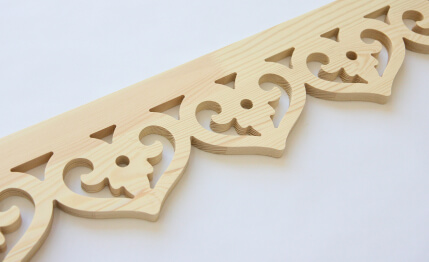
- Interior with wooden decor
- What determines the price of moldings
- First factor: size and profile height
- Second factor: relief complexity
- Factor three: product type
- Factor four: material quality
- Factor five: order volume
- Approximate price ranges
- How to avoid mistakes with the number of elements
- Calculation of moldings and cornices
- Calculation of frame moldings
- Calculating Corner Elements
- Calculation of overlays and rosettes
- Online calculator or manager assistance
- Stucco for painting: why it's convenient
- Matching molding to the wall color
- Contrasting stucco
- Stucco in an accent color
- Painting Practice
- How to Combine Stucco with Wooden Decor
- Principle of Role Separation
- Color Connection
- Wooden Decor as an Extension of Stucco
- Stucco in St. Petersburg: Features of the Local Market
- What Matters to a St. Petersburg Resident When Choosing
- Buy Polyurethane Stucco in St. Petersburg
- Where to Buy Polyurethane Stucco in St. Petersburg
- STAVROS: Complete Catalog of Polyurethane Decor
- STAVROS stucco store: online purchase without intermediaries
- Frequently Asked Questions
- Where to buy polyurethane stucco in Saint Petersburg?
- Why Is Polyurethane Moldings Better Than Gypsum?
- Can polyurethane molding be painted?
- How to calculate the amount of molding needed for a room?
- Which stucco to choose for a 2.7 meter ceiling?
- Can polyurethane stucco be combined with wooden elements?
- How long does polyurethane stucco last?

Saint Petersburg is a city that knows how to speak with architecture. Here, stucco is not exotic or a whim. It is part of the cultural code. The facades of houses on Nevsky Prospekt, the grand halls of mansions on the Petrograd Side, the coffered ceilings in Stalin-era buildings—all of this cultivates a taste for decor in Petersburgers from childhood. It is no wonder that in St. Petersburg, requests for stucco for apartments and private homes are among the highest in the country.
But between 'I want stucco' and 'bought, installed, admired' lies a considerable distance. How to choose elements? Where to start—with a catalog or with measurements? Why does the same rosette cost differently from different suppliers? How to correctly calculate the number of moldings? All these questions are the subject of this article.
Polyurethane stucco in Saint Petersburg — a topic we will cover in a St. Petersburg style: thoroughly, with respect for details, and without unnecessary fluff.


Why it is convenient to buy polyurethane stucco from a catalog
Stucco molding is not a product you choose "by touch" at a building supply store. It is a project-based product: first you need to understand which elements are needed, in what quantity, with what dimensions, and only then go to the store or place an order.
That is why moldings catalog — this is the first tool for working with decor. A good catalog provides not just beautiful photos. It provides dimensions: the height and width of the profile, the length of the linear element, the diameter of the rosette, the depth of the relief. It shows the purpose of each product: for a wall, for a ceiling, for a transition between planes, for a furniture facade.




What a well-designed catalog should include
First — a size chart. A cornice without specifying the profile height is a pig in a poke. On a 2.5-meter ceiling, a 50 mm cornice will look delicate. The same 50 mm cornice on a 4.5-meter ceiling will get lost and fail to fulfill its architectural function.
Second — photos in an interior setting. A product on a white background and the same product in a real room are completely different pictures. The catalog should show elements in context: on a wall, on a ceiling, in combination with other details.
Third — compatibility of elements. Cornice, molding, corner element, inner and outer corner — all of this should be described so that the buyer understands which details are compatible with each other within the same line.
Fourth — clear categories. Moldings — separately. Cornices — separately. Rosettes — separately. Overlays and decorative panels — separately. The more structured the catalog, the faster the buyer finds what they need.
It is precisely this structure that distinguishes the catalog moldings from polyurethane STAVROS: complete dimensional information, photos in interior settings, clear division by category and purpose.
Our factory also produces:


Which stucco molding elements are most often chosen for an apartment
Before opening a catalog, it's helpful to understand: what types of moldings exist and which one solves your problem. A detailed breakdown of all types is in a separate article Types of polyurethane molding, here is a brief practical overview.
Get Consultation
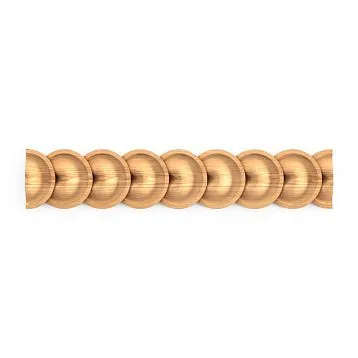
Moldings are linear profiles used to create framed compositions, zone walls, and frame openings. They come in various widths (from 20 to 150 mm) and relief complexity — from smooth to richly decorated.
Molding is a profile strip used to create frame panels on walls, divide surfaces into zones, and design door and window openings. Molding is the workhorse of stucco: it is used in all styles, on all surfaces, in any interiors.
For an apartment in St. Petersburg, moldings are the first thing to start with. Classic frame panels made of moldings on the walls of a living room or bedroom turn an ordinary room into a space with architectural character.
Crown mouldings
A cornice is an element for the transition between the ceiling and wall. It covers the gap at the joint, hides unevenness, and creates an expressive volumetric transition. Cornices range from delicate 40–50 mm to large 150–200 mm for high ceilings.
In St. Petersburg apartments — especially in pre-revolutionary and Stalin-era buildings with high ceilings — cornices of 80–120 mm create a sense of architectural authenticity.
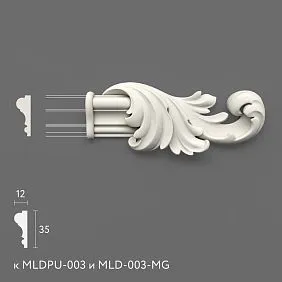
PU overlays
— everything must correspond to the chosen era. in the form of overlays — these are flat and three-dimensional decorative elements that are attached directly to the wall or ceiling. Rosettes, medallions, cartouches, ornamental strips, corner motifs — all of these are overlays.
Overlays are used to create accent zones: the center of the ceiling, the TV panel on the wall, the headboard of the bed, the area behind the sofa. One well-placed overlay can change the perception of an entire wall.
Ceiling Rosettes
A rosette is a decorative medallion under a chandelier. It is installed in the center of the ceiling and creates a visual accent. Diameters range from 200 mm (delicate) to 800 mm and more (for spacious formal rooms).
Pilasters, consoles, and coffers
Pilasters are vertical architectural elements on walls that imitate columns. Consoles are decorative brackets. Caissons are frame panels on the ceiling. This is the "heavy artillery" of stucco for serious classical interiors.
Stucco for walls in Saint Petersburg
If you ask a Petersburg resident who has renovated with stucco what exactly changed the space, in most cases the answer will be about the walls. It is the wall stucco that Wall molding transforms the apartment radically.
Molding frames: a classic of Petersburg interior
The most common technique is frame panels made of moldings. Markings for rectangular or square fields are applied to a smooth wall. A molding is glued along the contour of each field. The result is a wall with an architectural structure that is perceived as expensive finishing.
For a Petersburg interior, where high ceilings and wide openings have been preserved, frame walls are an organic choice. The sizes of the frames are selected proportionally to the width and height of the wall. The classic rule: the height of the frame should be approximately 1.5–2 times greater than its width.
Accent wall behind the sofa or bed
A popular modern technique: highlight one wall in the room — behind the sofa in the living room, behind the headboard in the bedroom — with a decorative composition of moldings and overlays. Along the perimeter of the wall — a cornice or molding frame. In the center — a large overlay or medallion. This creates the effect of a "backdrop" — an architectural background for furniture.
TV area with stucco
A TV on the wall is a modern reality. But the empty wall around it is an aesthetic problem. A frame panel made of moldings around the TV area turns the screen into a "picture" against an architectural background. This doesn't require much decor: just molding along the perimeter of the area and two decorative overlays on the sides.
Hallway in St. Petersburg: first impression
Hallways in St. Petersburg apartments are often elongated and narrow. Moldings on the hallway walls make it visually wider: vertical frames stretch the space upward, horizontal ones expand it. This is one of the few decorative tools that simultaneously improves both aesthetics and proportions.
decorative wall molding: practical formats
-
Single overlay — a quick accent without remodeling the entire wall
-
Horizontal molding belt — divides the wall into lower and upper zones
-
Full frame system — several rectangular fields across the entire wall
-
Corner overlays — decorating wall corners and doorways
-
Vertical pilaster moldings — create a "column" rhythm on the wall
Ceiling stucco: cornices, rosettes, and wall-to-ceiling transitions
ceiling molding — this is a category that is especially relevant in St. Petersburg. High ceilings in old buildings, Soviet "Stalinist" buildings with coffered ceilings, modern new buildings with ceilings of 2.7–3.2 meters — in all these cases, ceiling decor changes the perception of space.
Ceiling cornice: selection rules
A cornice for the ceiling is chosen primarily based on the ceiling height:
| Ceiling Height | Recommended cornice height |
|---|---|
| 2.4–2.6 m | 40–60 mm |
| 2.6–3.0 m | 60–90 mm |
| 3.0–3.5 m | 90–130 mm |
| over 3.5 m | 130–200 mm or more |
The second parameter is the profile. Classic cornices have an S-shaped or stepped profile with rollers, shelves, and heels. Modern ones are more rectilinear, with clean planes and minimal details.
Ceiling rosette: how to choose the size
A rosette is a decorative medallion under a chandelier. Its size should be proportional to the ceiling area and the size of the chandelier. A rough rule: the diameter of the rosette (in centimeters) ≈ the sum of the length and width of the room (in meters) × 3.
For a room 4×5 m = 9 m → rosette about 27–30 cm. For a spacious living room 6×8 m = 14 m → rosette 42–50 cm.
More details about choosing and designing ceiling decor — in the article Ceiling Molding for Chandeliers.
Polyurethane coffered ceiling
A caisson is a recessed rectangular panel on the ceiling. A classic of St. Petersburg grand halls. Today, a caisson ceiling made of polyurethane moldings and overlays can be created in any apartment. This is a labor-intensive but exceptionally expressive technique: the ceiling turns into a three-dimensional architectural surface.
Transition of ceiling and wall
A thin molding or cornice at the junction of the ceiling and wall is not decoration for decoration's sake. It is a functional solution: it hides unevenness at the joint (and in St. Petersburg houses built during the Soviet era, such unevenness is the norm), creates a clear line, and visually "raises" the ceiling.
How to choose stucco molding for interior style
St. Petersburg is a multi-layered city. People live here in restored pre-revolutionary apartments with stucco ceilings, in strict Soviet "Stalinist" buildings, and in modern new developments with panoramic glazing. Each type of space has its own stucco molding.
Classicism and neoclassicism
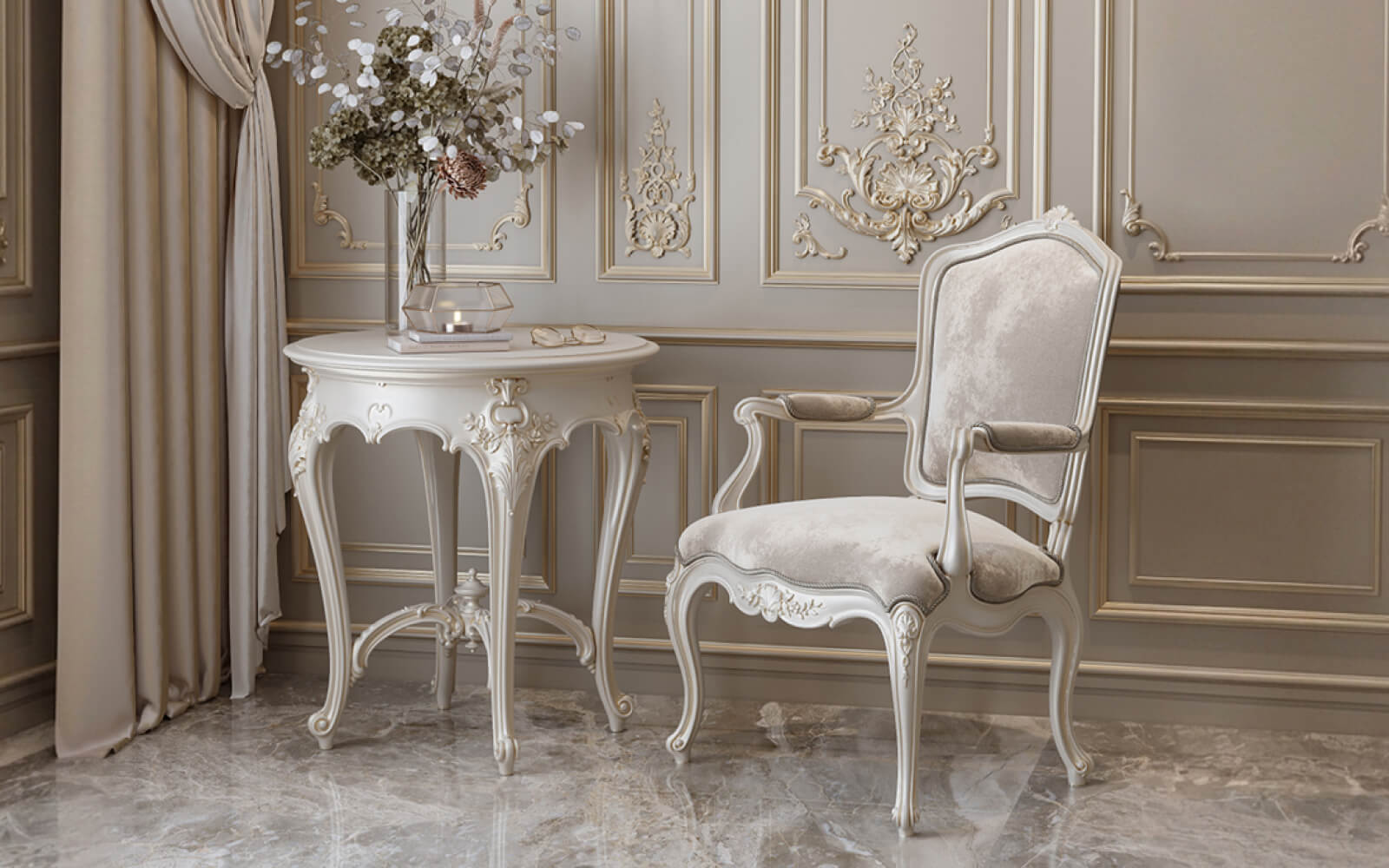
This is the main habitat decorative molding. For a classic interior, you need: cornices with a rich profile, ceiling rosettes with floral ornamentation, pilasters, and frame moldings with rounded profiles. Here, stucco molding is not an accent but a system: the entire perimeter of the room is designed in a unified architectural logic.
Modern classic
A more restrained approach. Moldings with a minimal profile, clean frames without ornamental details, a delicate cornice. Here, stucco molding is a subtle hint at historical tradition, not its literal reproduction. This approach is typical for St. Petersburg apartments after renovation—when a historical space is reinterpreted in a modern key.
Scandinavian style with elements of classic
An unexpected but organic combination. A delicate frame molding on the white wall of a Scandinavian apartment adds depth without heaviness. A thin cornice around the ceiling perimeter is an architectural detail that does not "weigh down" but structures.
Art Deco
Geometric moldings, strict rectangular frames, laconic rosettes without unnecessary detailing, contrasting color solutions. Art Deco is a style in which polyurethane decor reveals itself in a special way: through geometry and rhythm, rather than through plant ornament.
Interior with wooden decor
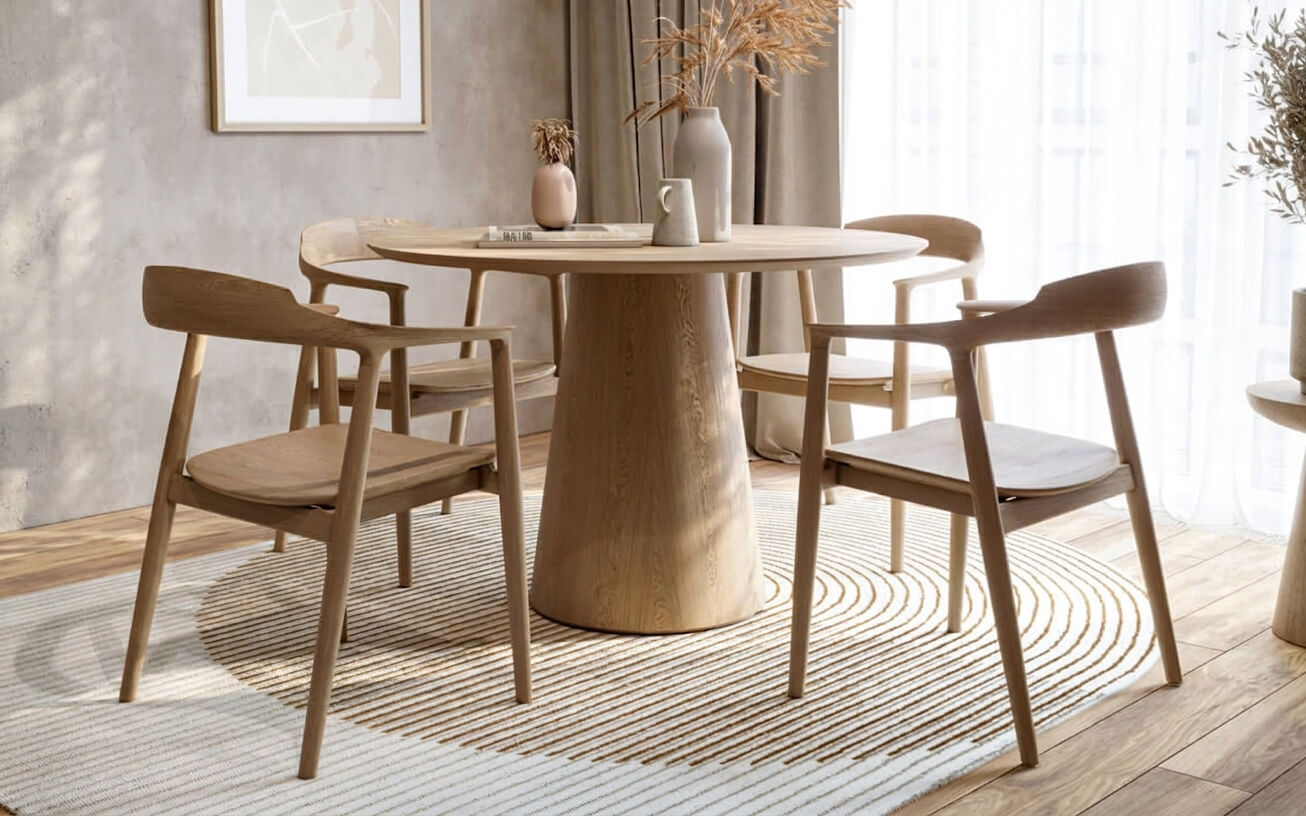
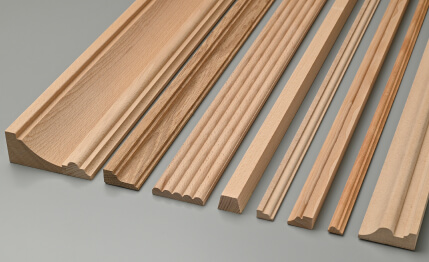
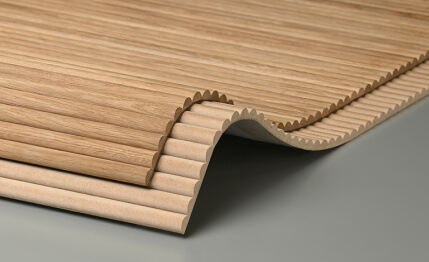
St. Petersburg apartments with wooden floors, wooden slats on the walls, and classic solid wood furniture — an ideal environment for combining stucco and wood. This is described in detail in the article stucco and wooden decor in the interior: how to combine polyurethane moldings, wooden slats, baseboards, and furniture.
What determines the price of stucco
The question of the price of stucco is one of the most common. And the answer is not as simple as it seems: the price range for polyurethane stucco is very wide, and this is due to several objective factors.
Factor one: size and profile height
The larger the product, the more material, the more expensive it is. A cornice 40 mm high and a cornice 150 mm high are different cost categories. A ceiling rosette with a diameter of 200 mm and a rosette of 600 mm — the price difference can be 5–7 times.
Factor two: terrain complexity
A simple molding with a smooth profile is one price category. A molding with an ornament of acanthus leaves, pearls, or ionics is another. Complex relief requires more precise molds, more labor-intensive production, and thorough quality control.
Factor three: product type
Linear products (moldings, cornices, slats) are sold by linear meter. Piece products (rosettes, overlays, medallions) are sold individually. When calculating the budget, it is important to distinguish: a linear meter of cornice and one rosette are completely different units of measurement.
Factor four: material quality
Not all polyurethane is the same. Material density, casting precision, surface quality — these parameters affect durability and appearance. Cheap stucco made of soft, unstable PU deforms, cracks, and loses relief clarity over time. High-quality dense polyurethane holds its shape for decades.
Factor five: order volume
When purchasing a large quantity of one item, the price per unit is usually lower. If you are furnishing several rooms, calculate the full order volume at once.
Approximate price ranges
Simple moldings and cornices — from 200–400 rubles per linear meter. Medium profiles with moderate relief — 400–900 rubles per linear meter. Large architectural cornices — 900 rubles and above. Overlays and rosettes — from several hundred to several thousand rubles per piece, depending on diameter and complexity.
How to avoid mistakes with the number of elements
Correct calculation of the amount of molding is a task that cannot be done "by eye". An error on the lower side means a re-order (and waiting for delivery). An error on the higher side means extra expenses.
Calculation of moldings and cornices
Moldings and cornices are linear products. Measure the perimeter of the room or the length of the walls you will be decorating. Add 10–15% for cutting corners, joints, and possible installation errors. This is your minimum reserve.
Example: a room 4×5 m, you want to decorate all four walls with a cornice. Perimeter = (4+5)×2 = 18 m. With a 15% reserve = 18 × 1.15 = 20.7 m → order 21 linear meters of cornice.
Calculation of frame moldings
For frame panels, you need to calculate the perimeter of each frame, multiply by the number of frames, and add 15% for reserve.
Example: a wall 3.5 m wide, three frames 1 m wide and 2.2 m high. Perimeter of one frame = (1+2.2)×2 = 6.4 m. Three frames = 19.2 m. With reserve = 22 m.
Calculating corner elements
When using moldings with a complex profile, corners often require special corner elements (internal and external). Count all corners in the room: each corner = one internal corner element.
Calculation of overlays and rosettes
Overlays and rosettes are piece items. Their quantity is determined by the design: how many accent points you plan to create. Rosette — one under the chandelier. Overlays — according to the number of planned decorative elements.
Online calculator or manager assistance
If the calculation seems complicated, don't guess. A good supplier will provide help in calculating the number of elements based on your measurements. STAVROS There is an opportunity for consultation on selection and calculation: specialists will help determine the required items and their quantity.
Stucco for painting: why it's convenient
One of the main arguments in favor of polyurethane stucco is that it is perfectly paintable. This opens up great freedom in working with color.
Molding in the color of the wall
Classic solution: moldings painted in the same color as the wall. The decor is 'integrated' into the surface, working like a bas-relief — only volume, no color contrast. This works well for light St. Petersburg interiors with white or cream walls.
Contrasting moldings
White stucco on a dark blue or green wall is a powerful design technique. Characteristic of Art Deco, modern classic, and English style. Contrast makes the decor 'alive' and readable from any distance.
Stucco in the color of an accent shade
The stucco is painted in one of the accent colors of the interior — for example, the same shade used in upholstery or pillows. This is a refined design technique that creates a sense of planned color unity.
Painting practice
Polyurethane stucco is painted with regular acrylic paint using a brush or roller. Before painting, it is recommended to prime the surface with an acrylic primer. You can paint before installation (more convenient in hard-to-reach places) or after (for a clear line of contact with the wall).
How to combine stucco with wooden decor
St. Petersburg apartments with historic wooden floors, oak parquet, classic solid wood cabinets are an excellent environment for combining stucco and natural wood.
The principle of role separation
Polyurethane stucco takes on the architecture: ceiling cornice, wall frames, rosettes. Wooden decor takes on texture and warmth: with a classic profile creates a sense of solidity, reliability., wooden slats in the lower zone of the walls, furniture overlays.
Color connection
White stucco and dark oak is a classic St. Petersburg combination. White moldings on the walls, white cornice on the ceiling — and a wooden floor with a high oak baseboard. This same combination is found in the historic interiors of St. Petersburg Empire style.
Wooden decoration as a continuation of the stucco
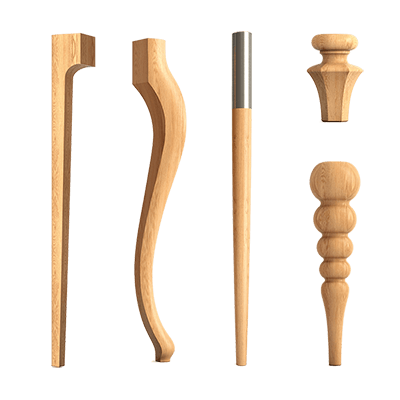
Decorative wooden overlays on furniture facades, wooden moldings on doors, wooden legs and handles — all of this works as an organic continuation of the wall stucco. Together, they create an interior where the natural warmth of wood and the architectural clarity of stucco complement each other.
Stucco in St. Petersburg: features of the St. Petersburg market
The St. Petersburg stucco buyer is demanding. They have seen historical stucco in its natural form, know how it should look, and are not willing to tolerate careless castings and unstable dimensions.
What is important for a St. Petersburg resident when choosing
First — profile accuracy. The molding must be even along its entire length, without dips or thickenings. Corner elements must exactly match straight elements without adjustment.
Second — batch consistency. If you order additional quantity a month later, the new batch must exactly match the previous one. Different shades of white in the same molding on the same wall are unacceptable.
Third — delivery in St. Petersburg. Stucco is a long and fragile cargo. Proper packaging and careful delivery are not a luxury, but a necessity.
Buy polyurethane stucco in Saint Petersburg
STAVROS delivers throughout Russia, including St. Petersburg. All products are packed in protective packaging to prevent damage during transportation. Delivery time depends on the chosen transport service.
Where to buy polyurethane stucco in St. Petersburg
The question 'where to buy' is the final and most practical one. And here, consistency is important: it is better to have one reliable supplier with a full range than to collect stucco piece by piece from different sources.
STAVROS: full catalog of polyurethane decor
STAVROS is a Russian manufacturer and distributor of decorative polyurethane and solid wood products. Buy moldings Browsing the STAVROS catalog means gaining access to thousands of items: moldings, cornices, ceiling rosettes, PU overlays, pilasters, corner elements, decorative panels, and linear profiles.
Each product is made from high-quality European high-density polyurethane. The surface is smooth, ready for priming and painting. The profile is stable across the entire length of the batch.
In the molding SPB From STAVROS — complete dimensional information, interior photos, and category breakdowns. Orders are conveniently placed online with delivery across Saint Petersburg and all of Russia.
Moldings shop STAVROS: online purchase without intermediaries
Buying directly from the manufacturer eliminates intermediary markups and guarantees product authenticity. All STAVROS products meet a single quality standard. The warehouse program ensures constant availability, enabling fast order fulfillment without waiting for production.
For professional designers, construction companies, and renovation teams — individual partnership terms and technical support for projects.
Frequently asked questions
Where to buy polyurethane stucco in Saint Petersburg?
STAVROS delivers polyurethane stucco across Saint Petersburg and all of Russia. Orders are placed online in the catalog on the website. The full range of moldings, cornices, rosettes, and PU overlays is always in stock at the warehouse.
Why is polyurethane molding better than gypsum?
Polyurethane is 3–5 times lighter than plaster, is not afraid of moisture, does not crack during building settlement, is easily cut with a regular knife, and can be glued without special tools. For residential apartments in Saint Petersburg — especially considering the humidity of the Saint Petersburg climate — polyurethane is preferable.
Can polyurethane molding be painted?
Yes, this is one of the main advantages of PU molding. It can be painted with acrylic paint of any color — before or after installation. Before painting, it is recommended to apply an acrylic primer.
How to calculate the amount of molding needed for a room?
Measure the total length of the areas you want to decorate. Add 15% for corner joints and trimming. For frame panels, calculate the perimeter of each frame and multiply by the number of frames plus a 15% margin.
Which molding should I choose for a 2.7 meter ceiling?
For a 2.7 meter ceiling, cornices with a height of 60–80 mm and a moderate profile are optimal. Ceiling rosette — diameter 25–35 cm. Molding for frame panels — 25–40 mm.
Can polyurethane molding be combined with wooden elements?
Yes, and this is one of the most organic combinations. Polyurethane moldings and cornices — for the ceiling and wall frames. Wooden baseboard, slats, and furniture elements — for the lower zone of the space. White molding and natural oak — a classic of St. Petersburg interior.
How long does polyurethane molding last?
With proper installation using high-quality adhesive, polyurethane molding lasts for decades. PU does not deform from temperature changes, does not react to humidity, does not yellow, and does not crack. Its durability is one of the main arguments when choosing the material.
STAVROS is a company that understands what it means to create an interior in a city with architectural memory. For a St. Petersburg resident who wants to bring the spirit of classical architecture into their apartment, polyurethane moldings buy at STAVROS — this is not just a purchase. It is a choice of quality, a systematic approach, and respect for tradition. Full moldings catalog, Decorative stucco for walls and ceilings, polyurethane decor for any style — all in one place, with delivery across Saint Petersburg and Russia. Trust STAVROS — and your interior will speak the language of architecture.