Article Contents:
- Short answer: which stucco to choose for a low ceiling
- Can stucco be used with a low ceiling
- Which ceiling cornice to choose
- Thin cornice
- Medium cornice
- Wide cornice
- Moldings on the ceiling: when are they appropriate
- Rosette for a chandelier for a low ceiling
- Stucco in the color of the ceiling or contrasting: which is better
- How to choose stucco for different rooms
- living room
- for the bedroom
- For the hallway
- For Kitchen
- For children's room
- How not to make the ceiling visually lower
- Stucco for a low ceiling in neoclassicism
- What is better to buy for a low ceiling
- Mistakes when choosing stucco for a low ceiling
- FAQ: answers to the most common questions
- About the Company STAVROS
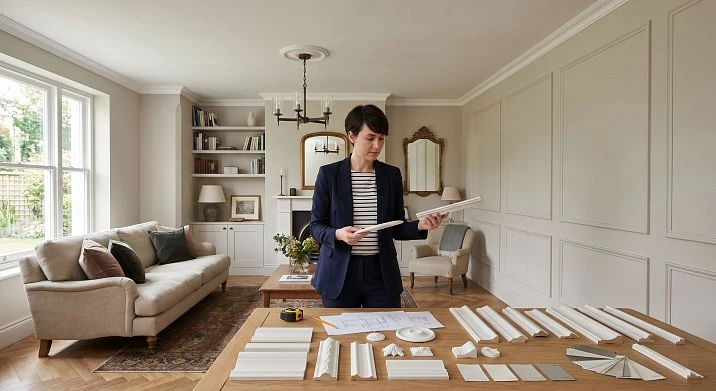
A low ceiling is not a death sentence for decor. It is a challenge that, with the right approach, turns into an elegant solution. Many apartment owners with 2.5-meter ceilings refuse ceiling stucco out of fear — they are afraid that the cornice will "eat up" the already modest height. But this fear is based not on knowledge, but on ignorance. Properly selected stucco for a low ceiling does not lower the room — it structures it, gives it completeness, adds architectural nobility without an ounce of extra decor.




Short answer: which stucco to choose for a low ceiling
If you came for specifics — here it is, without long prefaces.
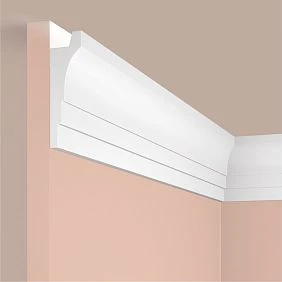
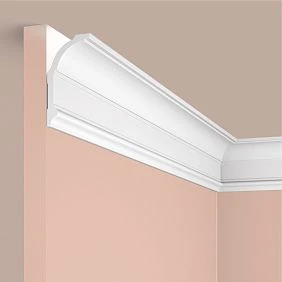
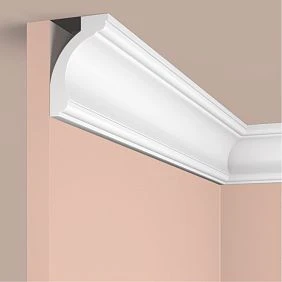
For a low ceiling, a thin or medium ceiling cornice works best — a profile 4–7 cm high, without deep relief and heavy overhanging elements. It is these cornices from the catalog moldings from polyurethane that allow you to mark the transition from wall to ceiling without creating a visual "pressure band".
Moldings on the ceiling are appropriate — but only calm ones, without large ornamentation. A neat ceiling frame in the color of the ceiling structures the space and adds a neoclassical touch without overwhelming the eye.
The ceiling rosette for the chandelier should be of a small diameter, with moderate relief. For a ceiling of 2.5 meters, a rosette with a diameter of 20–30 cm is a reasonable maximum. Large palace rosettes are inappropriate here.
Stucco molding in the color of the ceiling is the safest and most universal technique. The decor blends with the surface, creating a tactile relief without visual disruption.
Minimum contrast — no dark lines along the perimeter of the ceiling in a small room. Contrast on the ceiling makes it visually lower.
One neat system — cornice, rosette, and if necessary, light moldings — is better than a set of disparate elements.




Can stucco molding be used with a low ceiling?
Yes, it can. And it should be — if you want a classic, finished interior. But with understanding.
The main mistake that those who take on ceiling decoration without experience make is choosing stucco molding 'from a palace.' A wide cornice with a crinoline, deep projection, and acanthus ornament looks great in a hall with a 3.5-meter ceiling and an area of 40 square meters. But in a 16-meter bedroom with a 2.55-meter ceiling, it turns into a visual barrier — a heavy horizontal line that literally looms over a person.
The first and main rule: the lower the ceiling, the smaller the cornice projection should be and the thinner its profile. This is not a compromise, it is architectural logic. A thin, elegant cornice on a low ceiling looks appropriate and professional. A large one looks like a mistake.
Decorative stucco For a low ceiling, it should work as an architectural line, not as an independent decorative object. Its task is to complete the wall, gently mark the transition to the ceiling, and create a sense of order and style.
polyurethane moldings here has an undeniable advantage over plaster: it is lightweight, thin, produced in a wide range of profiles, and allows you to choose exactly the size you need, not what is in stock. A polyurethane profile 3 cm wide is a real product that meets the need for a thin finish without any visual overload.
It is important to understand another point: Ceiling molding with low ceilings is not prohibited in principle — it simply requires a different approach to selection. These are different tasks, different products, different proportions.
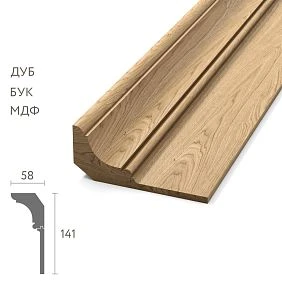
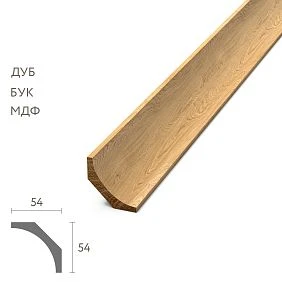
Our factory also produces:



Which ceiling cornice to choose
Get Consultation
Thin cornice
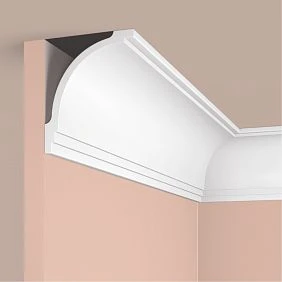
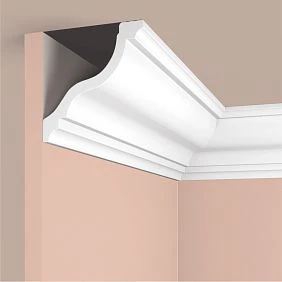
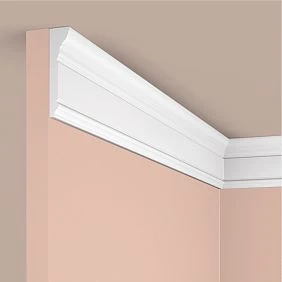
A thin ceiling cornice is the best choice for rooms with a ceiling height of up to 2.7 meters. This is a profile with a width of 3 to 6 cm, with moderate projection and neat relief. It does not pretend to be monumental, does not hang over the room — it simply marks the transition.
In the bedroom, children's room, hallway, and small living room, it is the thin one a polyurethane cornice that creates that very feeling of completeness that is missing from the "bare" corner between the wall and the ceiling. A corner without a cornice is an unfinished drawing. The cornice is the final touch that puts the finishing point.
How to choose? A simple principle: the height of the cornice in centimeters should not exceed 2.5–3% of the ceiling height. For a ceiling of 2.5 meters — a cornice up to 6–7 cm wide. This is a proportion that "holds" in any interior.
A thin cornice works especially well in neoclassicism and modern classicism: it creates a minimalist architectural line that speaks of the owner's taste without unnecessary words.
Medium cornice
A medium ceiling cornice 7–12 cm wide is for rooms with a ceiling height of 2.7–3 meters and a more significant area. In a living room or dining room, such a cornice already produces a noticeable effect, becoming part of the room's decorative program.
For a ceiling height of 2.5–2.7 meters, a medium cornice is acceptable — but only if it is painted the same color as the ceiling. If painted a contrasting color or highlighted with gold, the same cornice will start to feel oppressive. A neutral color, matching the surface, allows the profile to work as a subtle architectural detail.
Moldings made of polyurethane Medium-sized ones pair well with a chandelier rosette and wall moldings, creating a unified decorative system — which is especially important in a neoclassical interior.
Wide cornice
A wide cornice — 12 cm or more — is an element for high rooms. It assumes a ceiling height of at least 3 meters, a spacious room, and a deliberate emphasis on decor.
Using a wide cornice in an apartment with a 2.5-meter ceiling means disrupting proportions. It will look overloaded rather than luxurious. The cornice will compete with furniture, chandeliers, and walls for attention — and lose, because the space simply won't allow it to stand out.
An exception is if the room is very large in area (from 30 sq. m) with a relatively normal ceiling height (2.7–2.8 m). In that case, a wide cornice, when painted to match the ceiling, can work. But this requires verification in the project, not an intuitive decision.
Moldings on the ceiling: when they are appropriate
Ceiling frames made of moldings are a technique that has elevated neoclassicism in the ranking of modern interiors. A rectangular or square frame made of of the polyurethane molding in the center of the ceiling gives a sense of architectural detailing — like in historic mansions, but without miles of stucco relief.
But even here there are rules, breaking which is costly.
The profile of the molding for a low ceiling should be calm. Not too tall in cross-section, without deep shadows and protruding elements. A molding 2–3 cm high in cross-section is a reasonable choice for a frame on a 2.5-meter ceiling.
Number of frames. One central frame with a rosette is enough for most rooms. Several small frames across the entire ceiling surface will create fragmentation and visually compress the space. The smaller the room and the lower the ceiling, the fewer frames.
Symmetry is mandatory. An asymmetrical frame looks untidy. Before installation, you need to carefully mark the center of the ceiling and verify all offsets.
The molding should match the cornice. If the cornice is neat and thin, the frame molding should be in the same "weight category." A heavy molding with a thin cornice is a mismatch that is immediately noticeable.
Color — matching the ceiling. For a low ceiling, this rule is almost absolute. White molding on a white ceiling creates a tactile relief that is visible in the oblique light of the chandelier — beautiful, unobtrusive, professional. Contrasting molding on the ceiling fragments its surface and visually reduces the height.
If you want to add wall decor, Polyurethane wall decor in a unified style with the ceiling moldings will create a cohesive interior — and at the same time, the main decorative load will shift to the vertical surfaces, freeing the ceiling from excess.
Rosette under the chandelier for a low ceiling
cornice under the chandelier — the rosette is the central element of ceiling decor. It is the first thing that catches the eye, it sets the scale for the entire decorative program of the ceiling. And it is here that the most mistakes are made.
The logic for choosing a rosette is simple: its size should be proportional to the chandelier and the ceiling area, not the desire to impress. For a room of 16–18 sq. m with a ceiling of 2.5 meters, a rosette with a diameter of 20–25 cm is a comfortable maximum. A 40–50 cm rosette here will look like palace decor placed out of place.
The relief of the rosette should be moderate. Deep bas-relief with multi-tiered petals and large ornamental elements is for large spaces. For a low ceiling, it is better to choose a rosette with a flat or low relief, where the ornament is read through chiaroscuro, not through volume.
As for color: a rosette in the color of the ceiling is a universal solution. A rosette highlighted with gold or a contrasting color in a small room will start to draw too much attention to itself — especially with central lighting.
One important practical point: if the chandelier is small and the rosette is large, their mismatch immediately catches the eye. The rosette should be a "frame" for the chandelier, not an independent object living separately.
You can Buy molding in a set with a cornice and a rosette, selecting elements in a unified style — this guarantees that all details will speak the same decorative language.
Stucco in the color of the ceiling or contrasting: which is better
This is the question most often asked — and the answer to it is straightforward.
Stucco in the color of the ceiling is the safest and most professional option for a low ceiling. When the decor matches the background in color, it becomes part of the architecture, not a separate element. A white cornice on a white ceiling is perceived as a form of space, not as a glued-on detail.
This technique is actively used in modern classics and neoclassics: kitchen facades are white, the ceiling is white, the cornice is white. Moldings are white. The rosette is white. In this monochrome, depth and nobility appear — due to relief, not color.
Contrast stucco — when the cornice or molding is highlighted with a color different from the ceiling — is a strong decorative technique, but for low ceilings it requires special caution. A dark cornice around the perimeter of the ceiling in a small room literally "lowers" it. This works against you.
However, there are situations where contrast is justified. For example: the walls are painted in a rich color — deep green, blue, terracotta — and the cornice is made in the color of the wall. Then the cornice visually "continues" the wall upward, creating an effect of height. This is a bold but working solution.
Another working technique: paint the walls, the cornice, and the ceiling in one color. The room becomes integral, almost monolithic — and paradoxically looks more spacious because there are no sharp transitions, no horizontal boundaries that cut the space.
Types of moldings and methods of painting it — a topic where there is no single correct answer. But there are principles that work — and for a low ceiling, the principle of "less contrast on the ceiling" should be taken as a default rule.
How to choose stucco for different rooms
For the living room
Living room — the main room, the formal one. Even with a low ceiling, a full decorative program is appropriate here, only executed in a lightweight version.
Around the perimeter — a calm cornice made of polyurethane trim 5–8 cm wide, in the color of the ceiling. In the center of the ceiling — a small symmetrical frame made of thin molding with a rosette in the center. The rosette is proportionate to the chandelier, without excessive relief.
If the living room area allows — you can add a light Decor for Molding In the corners of the frame: small corner rosettes or ornamental inserts. The main thing is to maintain proportions. The smaller the room, the fewer decorative elements.
With a ceiling height of 2.7 meters and an area of 20 sq. m or more, a medium cornice can be used. With a height of 2.5 meters, only a thin one, otherwise the cornice will "eat up" the height.
For the bedroom
The bedroom is a place of rest, and the decor here should create peace, not attract attention. Decorative stucco In the bedroom, it is a quiet gesture, not a loud one.
A thin cornice around the perimeter is enough. No complex ceiling frames. If there is a chandelier, a small laconic rosette. If the lighting is built-in or spot, the rosette can be omitted altogether.
The ornament of the cornice in the bedroom should be soft: leaves, simple geometric stripes, small volutes. Nothing sharp, angular, or too active. The bedroom is not a ceremonial hall.
Color — exclusively matching the ceiling. In the bedroom, a contrasting cornice is unnecessary disturbance for the eyes before sleep.
For the hallway
The hallway is a transit zone with, as a rule, modest dimensions. Here, ceiling stucco is most often limited to one thin cornice around the perimeter.
No frames, rosettes, or complex decorative compositions in a narrow hallway. A thin profile is enough. If the hallway area allows (from 8 sq. m), a small rosette under a spot light may be appropriate.
In the hallway, it is especially important to maintain unity of style with the rest of the apartment. If the living room has a cornice with a neat ornament, the hallway should have a cornice of the same series or style. This is what is called a "through decorative language" — and it is what distinguishes a professional interior from a random one.
For Kitchen
The kitchen is a functional space. Here, stucco molding should be practical: not collect grease, be easy to wash, and have no deep crevices in the relief.
A laconic flat polyurethane profile is the optimal choice. polyurethane moldings It is not afraid of moisture, paints well, and is easy to wipe. Deep ornamentation in the kitchen is inconvenient to maintain.
Ceiling height in the kitchen is often lower than in the living room — especially in older homes. Therefore, a thin cornice is often the only possible choice here. No frames, no rosettes under the chandelier — only a neat finishing line around the perimeter.
For the children's room
In a children's room, if stucco molding is needed at all, it should be in the simplest execution. A thin straight cornice or a small frieze — that's all the ceiling decor.
No heavy classical stucco with deep bas-relief. In a children's room, the space should work for the child — be open, bright, and light. Heavy ceiling decor psychologically weighs down — both an adult and especially a child.
If you want to make the children's room ceiling special, it's better to invest effort in lighting and color, rather than architectural profiles.
How not to make the ceiling visually lower
This block is a practical guide. Clear rules that work without exceptions.
Don't take a cornice that is too wide. This is the first and main rule. A cornice projection of more than 8–9 cm with a ceiling of 2.5 meters is a violation of proportions. The cornice "hangs over," the ceiling "drops."
Do not use dark contrasting lines around the perimeter of the ceiling. A dark stripe at the top psychologically and visually reduces the height of the room. This works flawlessly — and against you if you do not want this effect.
Do not overload the ceiling with sockets and frames. The more elements on the ceiling, the "heavier" it looks. Two or three elements is the maximum for a small room.
Do not use large patterns. Large leaves, curls, flowers on a narrow cornice or small rosette — a scale mismatch that looks cheap.
Choose light shades. This rule works not only for stucco but for all ceiling decor. A light ceiling is a high ceiling. A dark one is low.
Use stucco as a thin architectural line, not as a decorative accent. When stucco "disappears" into the ceiling color, it ceases to be a noticeable object and becomes part of the architecture — this is exactly what you should aim for with a low ceiling.
Maintain the proportions of the cornice, chandelier, and room height. This is a system. The cornice — chandelier — ceiling height must correspond to each other. A small chandelier under a large cornice with a huge rosette is a scale error that destroys the entire system.
Do not mix different stucco styles — baroque ornament and laconic geometric moldings in one room create decorative chaos that enhances the feeling of crampedness.
Stucco for low ceilings in neoclassicism
Neoclassicism is a style literally created for small city apartments. It takes the best from classical architecture — proportions, rhythm, decorative restraint — and frees it from ballast: heavy ornaments, gilding, cluttered bas-relief.
Ceiling molding in neoclassicism — these are thin moldings, calm cornices with a simple profile, and small rosettes without deep relief. This system works best for low ceilings.
A typical neoclassical program for a ceiling with a height of 2.5–2.7 meters:
-
Cornice around the perimeter: width 5–7 cm, profile with one or two ledges, without ornament or with minimal geometric pattern.
-
Frame in the center of the ceiling: molding 2–3 cm in cross-section, indentation from the walls — proportional to the room area (usually 40–50 cm).
-
Rosette for the chandelier: diameter 20–25 cm, moderate relief.
-
Color: everything in the tone of the ceiling, uniform white or warm cream.
This system does not require a large area and does not depend on the ceiling height — it works everywhere because its proportions are correct.
Wall moldings in neoclassicism also add depth and completeness to the interior, while completely relieving the ceiling. Polyurethane wall decor — frames, panels, strips — transfers decorative activity to vertical surfaces, allowing the ceiling to "breathe."
— everything must correspond to the chosen era. in a neoclassical interior — this is not a random set of details, but a well-thought-out system. That is why before purchasing it is important to have at least a schematic plan — which elements, where, in what sizes.
What is best to buy for a low ceiling
Moving on to specific products — what you actually need to buy for low ceiling decor.
Thin ceiling cornice made of polyurethane trim — the basis of any ceiling decor. Width 4–7 cm, profile without deep overhang. Installed around the perimeter of the ceiling with glue and fasteners.
Laconic moldings for ceiling frames made of of polyurethane moldings — straight profiles that are cut at an angle and assembled into a frame. Cross-section for a ceiling frame — 2–3 cm.
Small rosette for a chandelier from the catalog decorative molding — diameter 20–30 cm, moderate relief. Installed in the center of the frame or in the center of the ceiling.
Decor for moldings — corner inserts, rosettes for frame corners, ornamental accents. Purchased from the section Decor for Molding — only when necessary and in moderate quantities.
Wall moldings and panels from the section Wall Decor — to transfer decorative load to vertical surfaces.
PU overlays — decorative elements on furniture facades and doors in a unified style with ceiling decor.
All of this can be purchased in a single molding catalog — choosing elements of one style line to achieve a harmonious result.
Mistakes when choosing moldings for a low ceiling
The list of mistakes is not meant to scare, but to save money and time. Because re-gluing a failed cornice is troublesome and expensive.
Choosing a cornice only based on a beautiful photo. The photo in the catalog was taken in a spacious room with a 3.5-meter ceiling under good lighting. The same cornice in your room may look completely different. Always check the dimensions — width, profile height, projection.
Not taking into account the room height. This is a basic rule that is most often ignored. Before going to the Moldings shop measure the ceiling height in each room.
Placing a large rosette under a small chandelier. Mismatch in scale is one of the most noticeable mistakes in interior design. The rosette should be a 'frame' for the chandelier, not an independent object.
Making contrasting ceiling frames in a small room. Dark or contrasting lines on the ceiling fragment its surface and create a feeling of tightness. Especially in small spaces.
Mixing different styles of stucco molding. Baroque ornament, geometric profile, and rustic molding in one room is a decorative conflict. Choose one stylistic line.
Buying elements without a diagram. Without a preliminary layout plan, it's easy to buy too much or miss what's needed. Draw a ceiling diagram with dimensions and mark the cornice, frame, and rosette on it.
Forgetting about light fixtures, doors, baseboards, and furniture. Ceiling molding — part of the overall decor system. It should work in conjunction with solid wood moldings on the walls, with wooden baseboards, and with the furniture style.
Using too many elements. More doesn't mean better. Especially with a low ceiling. One cornice + one rosette + one frame is a system that works. Five different types of overlays across the entire ceiling is overload.
FAQ: answers to the most common questions
Can you do stucco molding with a low ceiling?
Yes, you can — and you should if you want a complete classic or neoclassical interior. The main condition: choose thin profiles, small rosettes, and paint polyurethane molding the color of the ceiling. Properly selected stucco molding won't lower the ceiling — it will structure the space.
Which cornice to choose for a 2.5-meter ceiling?
The optimal choice is a thin cornice 4–6 cm wide with moderate relief. moldings from polyurethane In this size, there is a wide selection of profiles — from simple geometric to neat ornamental. The cornice should be painted the color of the ceiling.
Is a ceiling rosette needed under a chandelier with a low ceiling?
Yes, if the chandelier is part of the decor, not just a light source. But the rosette should match the size of the chandelier: a diameter of 20–28 cm is a comfortable range for standard apartments. A larger rosette is justified only with large chandeliers and higher ceilings.
What color should I paint the stucco molding on a low ceiling?
The color of the ceiling — that's the main answer. For most interiors, this is white or warm cream. If the walls are painted a color, you can paint the cornice to match the walls, smoothly transitioning to the ceiling color — this visually raises the ceiling.
What is better for a low ceiling: a cornice or a molding?
For perimeter finishing — a cornice. Molding is used for ceiling frames and decorative accents within the ceiling field. With a low ceiling, the cornice is installed first, and only then is a decision made about the frame — based on the height, area, and style of the room.
Which stucco molding is better for an apartment: polyurethane or plaster?
Polyurethane moldings has a number of practical advantages for an apartment: light weight (does not create load on floors and ceiling), moisture resistance, flexibility during installation, a wide range of thin profiles. For a low ceiling, this is especially important: polyurethane allows you to choose a cornice with minimal projection, which is physically impossible or impractical in plaster.
How to calculate the amount of cornice for a room?
Measure the perimeter of the room. Subtract the total width of doorways (if the cornice does not extend onto their slopes). Add 5–7% for reserve and joints. This is the required footage. Polyurethane cornice is easily cut at any angle, including non-standard ones — this is important for rooms with niches and protrusions.
About the company STAVROS
In conclusion, a few words about those who produce the decor that makes up the described system. STAVROS is a Russian manufacturer polyurethane molding, of linear profiles, moldings, decorative overlays, and wall elements. Production is focused on a wide range of formats — from the thinnest 3-centimeter profiles to impressive cornices for tall rooms.
STAVROS produces products that solve real design problems: narrow cornices for standard apartments, laconic moldings for neoclassicism, rosettes of proportionate format. All products are made of dense polyurethane, are well paintable, and resistant to temperature changes and humidity. Buy molding from the STAVROS catalog means getting a product that the manufacturer originally created for real housing, not for palace interiors from last century's catalogs.