Article Contents:
- Why you can't buy stucco online based only on a beautiful photo
- First choose the task, not the product
- Task 1. Decorate a wall
- Task 2. Decorate a ceiling
- Task 3. Create a decorative accent
- How to read stucco dimensions in the product card
- Element width
- Element height
- Thickness and projection from the wall
- Molding length
- Compatibility with installation area
- How the size looks in rooms of different scales
- How to buy polyurethane moldings without shortage
- What to check before ordering moldings
- How to calculate moldings for wall frames: example
- How to buy ceiling stucco and not make a mistake with scale
- Checklist before ordering ceiling decor
- Ceiling rosette without a chandelier: how it works
- How to choose stucco decor from a catalog photo
- Will the element be single or do you need a pair?
- Does the size fit the space?
- Will the relief be lost at a distance?
- Is a molding needed around it?
- Can it be painted the color of the wall?
- Decorative stucco: what to check before buying
- What to add to the order to avoid waiting for a second delivery
- Purchase in Moscow, St. Petersburg, and with Contact us to confirm shipping to your destination.
- What to consider when ordering with delivery
- Polyurethane stucco price: how it is formed
- Table: what to check before ordering each type of molding
- Additional items often forgotten
- Cornices and baseboards in the same style as moldings
- Furniture decor
- Brackets and Consoles
- Facade decoration
- Installation practice: what to pay attention to after receiving the order
- FAQ: popular questions and honest answers
- How to buy molding online without mistakes?
- What is important to check before purchasing polyurethane moldings?
- How to choose ceiling molding in an online store?
- What should I buy together with stucco decor?
- Can I buy polyurethane molding with delivery in St. Petersburg and Moscow?
- Is special glue needed for polyurethane molding?
- How to avoid mistakes with ceiling rosette size?
- What is a cutting allowance and why is it needed?
- Can polyurethane moldings be painted together with the wall?
- STAVROS: catalog of polyurethane moldings for professional results

Online purchase moldings — this is not the same as choosing curtains or a light fixture. There are too many parameters that are not visible in the photo: size, thickness, projection from the wall, scale in real space, compatibility with adjacent elements, quantity for the entire scope of work. A beautiful photo in the catalog is the beginning of a conversation, not the final answer. And this is where most mistakes are made: to buy molding it seems simple, but without proper preparation, the order turns into repeated delivery, missing elements, and mismatches on the wall.
This article is a practical guide for those who want to Buy molding order online once and get exactly what is needed: without shortage, without size mismatches, without forgotten glue, and without a second order next week.
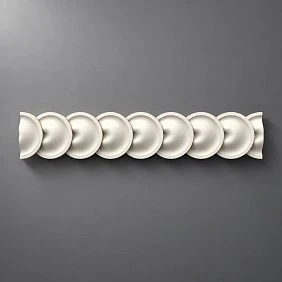
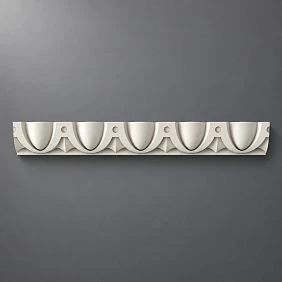
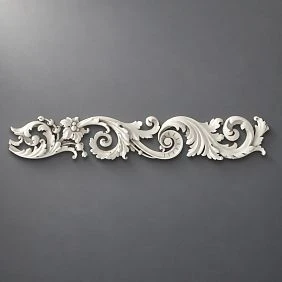
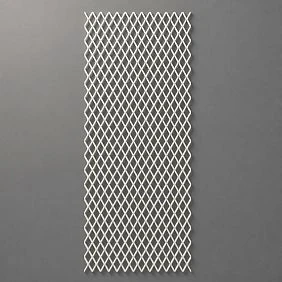
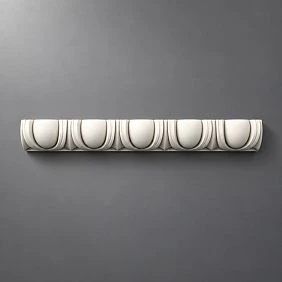
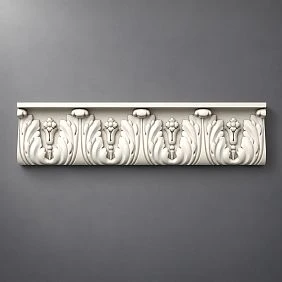

Why you can't buy moldings online based only on a beautiful photo
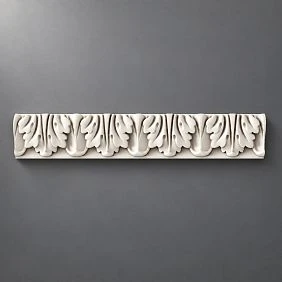
Let's start with an honest conversation. The catalog of polyurethane moldings contains hundreds of items. Rosettes, moldings, cornices, baseboards, overlays, high reliefs, medallions, corner elements, facade decor. In each photo, there is a clean white element on a neutral background, with proper lighting, from a favorable angle. It looks beautiful. Almost always.
The problem starts when the element arrives at the site. The molding turns out to be too narrow for a high ceiling — the frame gets lost. The socket is too large for a small room — it takes up almost the entire ceiling square. The decorative cover was bought in a single copy, but two are needed for a symmetrical composition. The glue was not added to the order, and installation is scheduled for the weekend.
These are not made-up situations — these are typical scenarios that repeat over and over. And they are all solved in one way: before buy molding in an online store, you need to go through a short but mandatory checklist. Not for one item, but for the entire order as a system.
The good news: this checklist is not complicated. You just need to know what to check. And that is exactly what is covered here — in detail, for each type of element.




First, choose a task, not a product
This is rule number one. A person who enters the catalog and starts browsing "what's pretty" almost always buys the wrong thing or not everything. The right approach is to first formulate the task, and then select elements for it.
Tasks vary, and each requires its own set.
Our factory also produces:

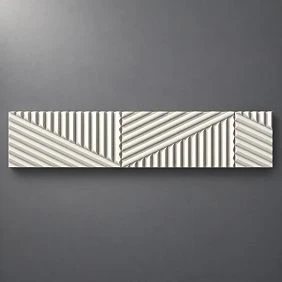
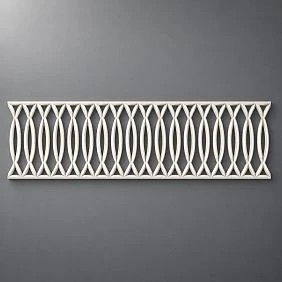
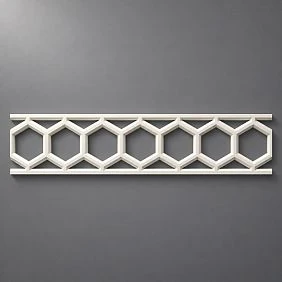
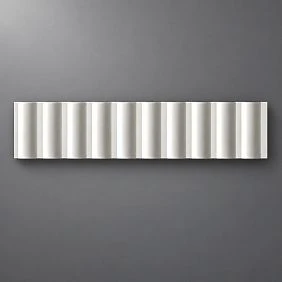
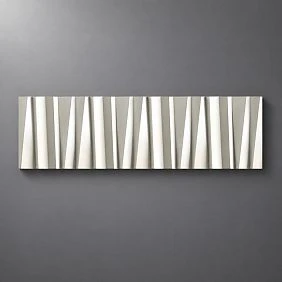
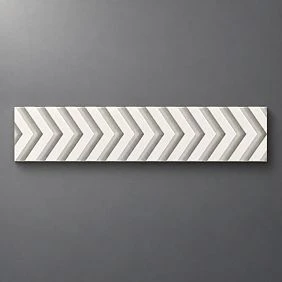
Task 1. Decorate a wall
A wall is the most layered scenario. Here you need not one item, but a connected system of elements.
Basic set:
-
Moldings made of polyurethane — for frames, verticals, horizontal belts
-
Decorative stucco — corner elements, central accents within frames
-
Relief Decoration — key accents at semantic points
-
Decor for moldings — small overlays along the profile
-
Glue for polyurethane elements
-
Paint matching the wall color or with a tonal accent
A wall order requires the most careful calculation. Moldings are cut on site, so a reserve is needed. Decorative elements are often installed in pairs — you need to count correctly. Buying only moldings without corner elements or without central decor means getting an unfinished frame that will "ask" to be completed.
Buy polyurethane moldings needs to be done with precise understanding of lengths: the perimeter of each frame plus a 15% reserve for trimming, plus extra consumption for complex joints.
Get Consultation
Task 2. Design the ceiling
The ceiling is a separate story. Here, scale and proportions matter even more than on walls, because the ceiling is visible entirely from any point in the room.
Basic set for the ceiling:
-
Ceiling molding — cornice around the perimeter
-
ceiling rosettes — central element for a chandelier or without it
-
Ceiling moldings — for an inner square or frame decor
-
Corner elements for joining cornices
-
Glue, primer, paint
Buy ceiling stucco molding needed after measuring the perimeter with allowance and with a correctly selected rosette diameter — otherwise the center of the ceiling will look either overloaded or random.
Task 3. Create a decorative accent
This is the most compact scenario, but there are typical mistakes here too. An accent is not a single random overlay. It is a well-thought-out point in the interior: above the headboard, above the mirror, near the console, in a niche, on a portal.
Basic set for an accent:
-
Relief Decoration — central element
-
Molding frame around the accent
-
Paired side elements, if symmetry is needed
-
Adhesive
Buy Moldings — it means not just choosing one bas-relief you like, but making sure it fits the size of the place where it will stand, that there is space for framing nearby, and that it won't get lost at a normal viewing distance.
How to read molding dimensions in the product card
This is the most important technical section. This is where most mistakes are made when ordering online. Let's break down each parameter.
Element width
Width is the horizontal size of the decorative element or the width of the molding profile. This is the parameter where mistakes are most often made: in a photo, a 30 mm wide molding looks impressive, but in a real room with a 3-meter ceiling, it will be a thin line that you don't notice.
Guideline: the width of the molding for wall frames should be proportional to the height of the room. For ceilings up to 2.7 m — 20–35 mm. From 2.7 to 3.2 m — 35–60 mm. From 3.2 m and above — 60 mm and more. This is not a strict rule, but a good guideline that prevents the feeling of "nothing is visible."
Element height
For overlays and decorative elements, height is the vertical size of the product. For medallions and rosettes, the diameter is specified instead of height. It's important to understand: a decorative overlay 8 cm high looks completely different on a wall 2.5 m high and on a wall 3.5 m high. In the first case, it reads as an accent, in the second, it gets lost.
Thickness and projection from the wall
This parameter affects how "voluminous" the molding will be in the space. The projection from the wall for thin moldings is 8–15 mm. For large profile cornices — up to 80–100 mm and higher. A large projection creates a pronounced shadow, which gives the feeling of relief under side lighting.
For decorative overlays and stucco decor, the depth of relief is a key parameter. An element with a small relief depth, when painted to match the wall, practically "dissolves" into the surface — this can be beautiful in a modern interior, but disappoints those who expected a pronounced volume.
Molding length
Moldings, cornices, and baseboards are sold in specific lengths — usually 1, 2, or 2.4 meters. Before ordering, it's important to understand: do you need a molding exactly 2 meters long, or do you need to cover a 3.6-meter wall — then you'll need 2 strips with trimming and a joint in the middle. The length of a standard strip affects the number of joints and the final consumption.
Compatibility with installation area
The product card usually indicates which area the element is intended for: wall, ceiling, furniture, facade. This is important: a ceiling cornice is designed for horizontal installation and has a corresponding profile angle. If placed on a wall, it will look wrong. A decorative furniture overlay may be too thin for a wall in a large hall.
How the size looks in rooms of different scales
This is a parameter that cannot be read from the card — it needs to be calculated. There's a simple method: cut a rectangle of the required size from paper and hold it against the wall. Look at it from a distance of 3–4 meters. This is exactly how the element will look in reality. It takes 2 minutes and prevents serious mistakes.
For ceiling rosettes, the guideline is: the diameter of the rosette should be approximately 1/8 to 1/10 of the smaller room dimension. In a room 3 meters wide — a rosette with a diameter of 30–37 cm. In a room 5 meters wide — a rosette up to 50–60 cm, and if a striking focal point is needed — even larger.
How to buy polyurethane moldings without shortage
Moldings are the only category of stucco decoration that almost always requires preliminary calculation. You cannot buy exactly as much as you need. The actual consumption is always higher than the theoretical one.
Why? Because moldings are cut at an angle at the joints. Because when marking frames on the wall, dimensions are adjusted. Because one bad cut — and the piece goes to waste. Because it's better to make all the frames the first time than to wait two weeks for a single strip to be shipped.
Moldings made of polyurethane You need to order with a minimum margin of 15%, and for complex frame layouts — 20%.
What to check before ordering moldings
Wall length and frame perimeter. Measure each wall you plan to decorate. Calculate the perimeter of each frame: 2 × (width + height). Add up all perimeters — this is the theoretical linear footage. Add 15–20%.
Profile width. A 20 mm wide molding gives a thin, laconic frame. A 60–80 mm wide molding gives a heavy, representative profile. The first is suitable for modern interiors, the second for classic and neoclassical styles. Do not confuse when ordering: these are fundamentally different visual results.
Number of vertical and horizontal elements. If the wall is divided into several frames, count each separately. Note that there is no molding between frames — just empty space. Therefore, plan ahead: what distance between frames, whether their height is the same.
Corner elements. Each frame corner requires either cutting the molding at 45 degrees or using a ready-made corner block from the catalog. Corner blocks are more convenient and faster. In the catalog of polyurethane moldings they are available in most lines.
Symmetry. This is not a mathematical but a visual question. Frames on the wall should look symmetrical — in height, distance from the floor, and offset from corners. Before marking, ensure all parameters are verified with a level and tape measure.
Joints in long runs. If the molding runs along a long wall without frames — for example, a ceiling cornice in a long corridor — the joint of two strips should be invisible. The best method: join moldings on a straight section, away from the corner, with good putty and careful painting.
buy polyurethane moldings — this means arriving at the site with a full set: main molding, corner elements, spare material, glue, and cutting tools. Everything else means a second trip to the warehouse or store, which disrupts deadlines.
How to calculate moldings for wall frames: example
Suppose a wall is 4 meters wide and 2.8 meters high. It is planned to have 3 rectangular frames: each 1.1 m wide and 1.8 m high.
Perimeter of one frame: (1.1 + 1.8) × 2 = 5.8 m
Three frames: 5.8 × 3 = 17.4 m
15% margin: 17.4 × 1.15 = 20 m
Total: 20 linear meters of molding. Plus 12 corner blocks (4 for each frame).
This is a simple calculation that takes 5 minutes. But without it, you buy "approximately" — and either there's not enough, or there's an extra piece left.
How to buy ceiling moldings and not make a mistake with the scale
The ceiling is a surface that is visible immediately and entirely. A mistake in scale here is critical: a too small rosette gets lost in the center of a large ceiling, while a too large one makes the room visually lower.
Before Buy ceiling molding, you need to answer several mandatory questions.
Checklist before ordering ceiling decor
Ceiling height. This is the first and most important parameter. For heights up to 2.5 m, the ceiling cornice should be small to avoid visually lowering the ceiling further. Optimal: cornice with a projection of 40–60 mm. For heights of 3 m and above, the cornice can be larger, with a projection from 80 mm and a pronounced profile.
Room area. A large area requires larger elements. In a room of 20–25 sq. m, a rosette with a diameter of 40–50 cm is appropriate. In a hall of 50 sq. m, a rosette from 60 cm and above, or a combination of a rosette with a ceiling square made of moldings.
Chandelier diameter. If a chandelier will hang above the rosette, the rosette's diameter should be slightly larger than the chandelier's diameter, but not strictly. If there is no chandelier and the rosette serves as an independent decorative element, the diameter is chosen solely based on the room's proportions.
Is a ceiling contour needed. In large rooms, a single rosette is insufficient to create a 'designer ceiling'. A ceiling square or rectangle made of moldings around the rosette is needed, so the entire center of the ceiling reads as a unified decorative system.
Is connection with wall moldings needed. If the walls are decorated with molding frames, the ceiling cornice should be from the same line or at least a similar profile. Otherwise, the walls and ceiling will look like two separate projects done by different people.
Color. Ceiling decor painted in the color of the ceiling works as an architectural detail. A contrasting ceiling cornice on a white ceiling is a different, more active technique. Both options are correct, but they should be chosen deliberately, not by default.
Ceiling molding should be ordered considering the room perimeter for the cornice plus 15% reserve, plus corner elements, plus a rosette of the required diameter. ceiling rosettes are selected separately by diameter.
Ceiling rosette without a chandelier: how it works
One of the most elegant techniques is a ceiling rosette without a light fixture. It is used as an independent decorative accent: in a bedroom where the main light is sconces; in a living room with ambient lighting; in a hallway where there is no need for a heavy chandelier.
Such a rosette, painted to match the ceiling, creates a subtle visual focal point — a center that draws the eye. It looks thoughtful and architectural. And it is fully realized through the ready-made catalog — without any custom orders.
Buy ceiling molding in this scenario means: choose a rosette of the required diameter, add a ceiling cornice around the perimeter, and, if necessary, an inner square of moldings to form a ceiling "coffer."
How to choose stucco decor from a photo in the catalog
Relief Decoration — this is a category that is bought intuitively: liked it — bought it. And that is exactly why surprises most often occur after installation.
The beauty of the element is a necessary but insufficient condition. Before Buy Molded Decoration, you need to ask yourself a few specific questions.
Will the element be single or is a pair needed?
Many decorative accents in the interior work in pairs: on either side of a mirror, at the head of a bed, on the sides of a portal, on both sides of a doorway. If the element will stand alone — that is also possible, but then it must occupy a clearly central position.
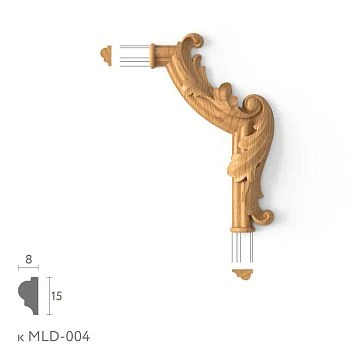
Buying one overlay and then not finding the same item in stock is a common situation. If you need a pair — order it right away. If you need a left and right element (for example, an asymmetrical branch) — make sure the catalog has a mirrored version.
Does the size fit the space?
The size of the decorative accent should be proportional to the installation area. A small 8×6 cm overlay above a wide 120 cm mirror will get lost — it simply won't be visible. A 30×25 cm overlay above a narrow sconce looks heavy.
Rule: the accent above a mirror or furniture should occupy approximately 1/4 to 1/3 of the width of the object it is placed above.
Will the relief be lost at a distance?
Stucco decor with shallow relief — up to 15–20 mm — when painted in the wall color practically dissolves into the surface. This can be beautiful if you want a delicate, barely noticeable accent. But if you want a pronounced volumetric decor, choose elements with a relief depth of 25 mm or more.
Is a molding frame needed around it?
Many stucco accents work much stronger when framed by a molding border. A single medallion on the wall is decor. A medallion in a molding frame is already an architectural element. If you plan to create a frame, take this into account when ordering and add Moldings made of polyurethane to the same order.
Can it be painted in the wall color?
Polyurethane elements are easily painted in any color. But before ordering, it's worth understanding: will the element be a white accent on a colored wall, or will it be painted together with the wall? In the first case, the relief should be expressive on its own. In the second, the depth of the relief is important, as it creates a shadow even with monochrome painting.
Buy Molded Decoration — it's not just about choosing a beautiful element. It's about deciding how it will work in a specific space.
Decorative stucco: what to check before buying
Decorative stucco — is a broad category: overlays, ornamental elements, corner decors, friezes, rocailles, leaves, floral rosettes, geometric inserts. Here, it's important not only what is beautiful, but also what works in your specific interior.
Before buy decorative moldings, check several positions.
Ornament and style. Floral ornament suits classic, neoclassical, Provence. Geometric ornament suits Art Deco, modern neoclassical, minimalism with decor. A strict profile without ornament suits modern interiors. Before buying, make sure the ornament works with the overall style.
Relief depth. As already discussed, this is a parameter that determines the visual 'weight' of the element in the space and during painting.
Pairing. If the overlays are used as corner elements for frames, you need an even number (4 per frame). If as side accents, 2 per each symmetrical pair. Count in advance.
Installation location. The same overlay can work well on a wall and be inappropriate on a ceiling. Or look great on furniture and too small on a wall. Check the scale for the specific location.
Compatibility with moldings. If the decorative stucco is part of a system with moldings, the profiles must be compatible in height and style. A thin flat molding and a heavy relief overlay in the Baroque style will look like a random combination.
Color after painting. With monochrome painting, the decorative ornament is 'read' through the shadow created by the relief. A fine surface ornament completely disappears when painted in the wall color. Make sure the relief is deep enough for the chosen finishing method.
buy decorative moldings — means selecting a system of elements that work together. Not a collection of beautiful details, but a set with logic.
What to add to the order to avoid waiting for a second delivery
This is one of the most practical sections. A second delivery is not just about money. It means disrupted renovation deadlines, idle workers, and changes to the work plan. That's why the order should be formed as a set, not as a collection of individual items.
Here is the full list of what should be in the cart for a standard order.
Main molding according to the task. Moldings, ceiling decor, decorative overlays — depending on the scenario.
15–20% spare. Mandatory. No exceptions. Trimming, chips during installation, marking errors — all of this is real. The remainder can be kept for future purchases in case of damage.
Corner elements. For molding frames — 4 per frame. For ceiling cornices — 4 per room. Corner elements eliminate the need for precise 45-degree cuts and make joints perfect.
Glue for polyurethane. Polyurethane products are glued with special glue labeled 'for polyurethane elements' or 'for polyurethane foam'. Regular construction glue or PVA will not provide the necessary adhesion on smooth surfaces.
Primer. Before painting, the surface of the molding needs to be primed — especially smooth polyurethane surfaces. Primer improves paint adhesion and prevents it from rolling off.
Paint. Acrylic or water-based paint is suitable for polyurethane products. If you plan to paint to match the wall color, use the same brand and shade as for the walls, otherwise there will be a difference in tone.
Paired elements. If the decor comes in pairs, make sure the order has an even number. Or add one spare element.
Additional decor for moldings. Small overlays along the molding add rhythm to long runs and make the line more interesting.
All of these are Buy decorative molding correctly means approaching the order as a system, not just clicking 'add to cart' on one beautiful item.
Purchase in Moscow, St. Petersburg, and with Contact us to confirm shipping to your destination.
The delivery issue when ordering polyurethane stucco is not technical, but strategic. Moldings are long-length products measuring 1–2.4 meters. Decorative overlays are fragile elements with fine relief. Large-diameter ceiling rosettes require careful packaging.
What to consider when ordering with delivery
Length of moldings. Moldings 2 and 2.4 meters long are transported in a special mode — as long-length cargo. Check with the seller the delivery conditions specifically for such items. Some transport companies charge a surcharge for long lengths.
Packaging of decorative elements. Stucco decor with fine relief can be damaged by impacts. A good seller packs elements in bubble wrap and a rigid cardboard box. Upon receipt, check immediately, in the presence of the courier or at the warehouse.
Availability in stock. Before ordering, make sure the needed items are in stock, not made to order. 'Made to order' items can add 2–4 weeks or more to the wait time.
Ability to buy more from the same series. A good advantage of an online store is a stable catalog. If in six months you need to add another length of molding or a pair of overlays, they should be from the same line. Check this in advance.
Pickup. If you can pick it up yourself, it's more reliable for long items and large fragile elements. You check the goods yourself and pack them into the car.
Buy stucco molding in St. Petersburg or buy molding in Moscow — both options are available through online ordering with delivery. But in any case, it's important to place the order correctly: with a full set of elements, spare parts, and consumables.
Polyurethane stucco molding price: how it is formed
Polyurethane molding price depends on several factors: the complexity of the ornament, the size of the product, the projection and depth of the relief, and the length of the molding. Simple flat profiles are cheaper. Complex profiled cornices with pronounced relief are more expensive.
When planning your budget, it's worth considering not only the cost of the elements themselves but also consumables: glue, primer, paint. Ultimately, consumables add about 10–15% to the order cost — and they need to be included in the budget in advance.
Important: to buy polyurethane molding in an online store means getting a finished product without a markup for custom production, with a fixed price in the catalog and a clear delivery time. This is fundamentally different from ordering from scratch, where the price is set individually each time.
Table: what to check before ordering each type of stucco molding
| What you are buying | What to Check | What to add to the order |
|---|---|---|
| Polyurethane moldings | Length, profile width, number of frames, 15% margin | Corner elements, glue, paint |
| Ceiling molding | Ceiling height, room area, perimeter | Socket, corner blocks, margin |
| ceiling rosette | Diameter, room scale, chandelier diameter | Ceiling cornice, glue |
| Stucco decor | Size, pairing, location, relief depth | Molding frame, glue |
| Decorative molding | Ornament, style, scale, compatibility | Glue, paint, spare part |
| full set | All zones: wall, ceiling, accents | Stock, consumables |
The table is not a formality. It's a working tool. Run through it before placing your order — and the likelihood of a "second delivery" will be minimized.
Additional items often forgotten
There are several categories that are rarely remembered during the main order, but which turn out to be needed during installation.
Cornices and baseboards in the same style as moldings
If the moldings are already selected — make sure the baseboard and ceiling cornice are from the same line or at least a compatible style. Mismatched profiles in height and thickness are noticeable even to an inexperienced eye.
In the of polyurethane moldings There are also cornices and baseboards in the same lines. This allows you to buy everything in one set with guaranteed compatibility.
Furniture decor
If the interior plans to update furniture fronts, decorative furniture overlays are taken separately. They are thinner than wall elements and are designed for installation on flat, even fronts. This is one of the fastest ways to update a kitchen set or cabinet without replacing the fronts.
Brackets and Consoles
Decorative brackets are used under shelves, near fireplace portals, and at window slopes. They provide visual support for horizontal elements and add architectural logic to an area where it was previously absent.
Facade Decoration
If the object has a facade with decorative elements, facade stucco decor made of polyurethane is specifically designed for outdoor conditions: moisture resistance, heat resistance, and UV resistance. This is a separate category from interior products — do not confuse them when ordering.
Installation practice: what to pay attention to after receiving the order
When the order arrives, the first thing to do is check the completeness and integrity. Open each item, compare with the order, check for chips and damage. If defects are found, document them upon delivery, not after.
Before installation:
-
Try the moldings against the wall without glue — check the joints and lengths
-
Set aside the corner elements in their places — ensure the selection is correct
-
Mark the wall with a pencil using a level
-
Apply primer to the wall and to the back side of the moldings
-
Allow the primer to dry before applying glue
During installation:
-
The glue is applied in a zigzag pattern along the entire length of the back side.
-
The element is applied to the wall, leveled, and fixed with painter's tape for 20–30 minutes until the glue sets.
-
The joints are immediately puttied with white acrylic putty.
-
After the glue has completely dried (12–24 hours), the tape is removed and the surface is painted.
Proper installation is 50% of the result. The other half is proper ordering. If both conditions are met, the result will be exactly as you imagined.
FAQ: popular questions and honest answers
How to buy stucco online without mistakes?
Start not with the catalog, but with the task. Determine: what exactly is needed — wall, ceiling, furniture, or accent. Then choose the required set of elements, check the dimensions for the specific location, calculate the quantity with a 15–20% margin, add glue, primer, paint, and corner elements. Only after that, fill your cart.
What is important to check before buying polyurethane moldings?
Measure the length and height of the frames, calculate the perimeter of all frames, add 15% margin. Make sure the profile width suits the scale of the room. Check if corner blocks are needed — and add them to the order. Ensure the moldings are from the same line as the cornices and baseboards.
How to choose ceiling molding in an online store?
Consider the ceiling height, room area, and chandelier diameter. For large rooms, one rosette is not enough — you need a ceiling contour made of moldings. Choose the cornice proportionally to the height: the higher the ceiling, the larger the cornice. Buy ceiling stucco molding you need to buy with a margin and with corner elements.
What to buy together with stucco decor?
Add a molding frame for framing to your order, a paired element if symmetry is needed, glue for polyurethane products, primer, and paint. If the element is small and placed in a large space, add a molding frame to visually "anchor" the accent.
Can I buy polyurethane molding with delivery to St. Petersburg and Moscow?
Yes. It is important to consider the specifics of transporting long moldings, proper packaging of decorative elements, and the availability of items in stock. Buy stucco molding in St. Petersburg or in Moscow you can do it via online order — with courier delivery, transport company, or pickup.
Do I need special glue for polyurethane molding?
Yes. Polyurethane products are installed using glue compatible with polyurethane. Regular PVA or general-purpose mounting glue does not provide the necessary adhesion on smooth surfaces. The packaging must have a note "for polyurethane foam" or "for polyurethane decorative elements."
How to avoid mistakes with the size of a ceiling rosette?
Rule of thumb: the diameter of the rosette is 1/8–1/10 of the smaller side of the room. In a room 3×4 m, the optimal rosette diameter is 30–40 cm. In a hall 5×6 m, it is 50–60 cm. If the chandelier is large, the rosette should be slightly larger than the chandelier's diameter. If the rosette is without a light fixture, the diameter is chosen solely based on proportions.
What is the trimming allowance and why is it needed?
During the installation of moldings, trimmings are inevitable: at corners, joints, and non-standard areas. Each trimming reduces the effective linear footage of the strip. Additionally, if there is an error in marking, a piece of molding goes to waste. A 15–20% allowance compensates for these losses and allows installation to be completed without stopping or reordering.
Can polyurethane stucco be painted together with the wall?
Yes, and this is one of the most effective ways to work with decor. When moldings and overlays are painted the same color as the wall, they become part of the architecture, rather than a separate 'glued-on' element. For the best result, apply a primer first, then two coats of paint with drying between coats.
STAVROS: catalog of polyurethane stucco for professional results
All Moldings, which was discussed in this article — moldings, decorative overlays, ceiling decor, rosettes, cornices, baseboards, stucco decor — is presented in the STAVROS company catalog. This is one of the most comprehensive assortments of polyurethane decorative elements: from thin modern profiles to classic cornices with pronounced relief.
STAVROS produces and sells products made from high-density European polyurethane. Precision casting preserves the detail of the relief. Stable dimensions allow for calculating an order with a minimal margin of error. The entire assortment is available for purchase in the online store with Contact us to confirm shipping to your destination.
STAVROS works with both private customers and designers and construction companies. The catalog covers a complete set of elements for decorating walls, ceilings, furniture, and facades — without the need to search for compatible products from different manufacturers.
to buy molding At STAVROS, getting a product means receiving an item with verified quality, clear dimensions in the product card, consistent stock availability, and the ability to purchase additional elements from the same line if needed. This is exactly what makes an order reliable — from the first selection in the catalog to the final result on the wall.