Article Contents:
- What are PVC slat panels
- Where are PVC slat panels used
- Bathroom and toilet
- Balcony and Loggia
- Corridor and utility rooms
- Ceiling
- Temporary or budget finishing
- Where PVC panels don't work as expected
- Pros and cons of PVC slat panels: an objective look
- How PVC differs from MDF and wooden slat panels
- What affects the price of PVC slat panels
- When not to buy PVC slat panels
- Need a premium TV zone
- The interior is made of natural materials
- Panels should match moldings and high baseboards
- Deep texture and play of shadows are important
- Need a finish for painting in an exact color
- Requires a durable decorative accent
- The project involves wall decor
- What alternatives to PVC slat panels to choose for the interior
- Slatted MDF panels for painting
- Wood-look slatted panels
- Wooden Slatted Panels from Solid Wood
- Flexible slatted panels on fabric backing
- Slat panels for TV zone
- Decorative system: panels + moldings + overlays
- Slat panels for hallway: PVC or something better
- PVC slat panels and ecology: what you need to know
- How to choose slat panels before buying: a detailed checklist
- How to properly install slat panels: universal principles
- Where to buy slat panels: commercial conclusion
- FAQ: Answers to Popular Questions
- About the Company STAVROS
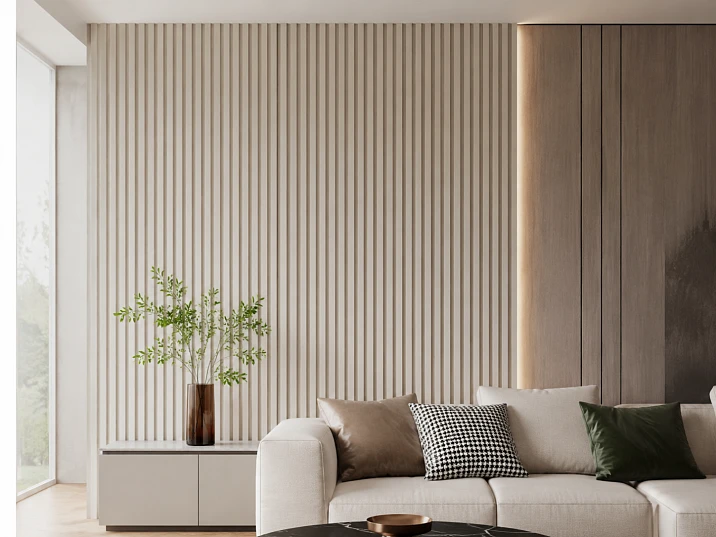
The request is clear. You are looking for PVC slat panels — and probably already imagine what they are: plastic panels with a slatted visual rhythm, found in bathrooms, hallways, on balconies, and in toilets. They are bought for their price and moisture resistance. But before placing an order, it's worth understanding a few things — honestly, without marketing clichés.
This article is structured as a practical guide before purchase. It covers: what PVC panels are and where they actually work, their limitations, how they differ from MDF and wooden solutions, what affects the price, and — most importantly — when PVC slat panels are the right choice and when it's better to consider another solution. Because buying the wrong thing means wasted money and redoing the renovation.
What are PVC slat panels
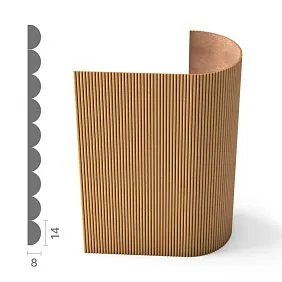
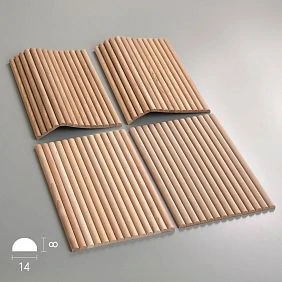
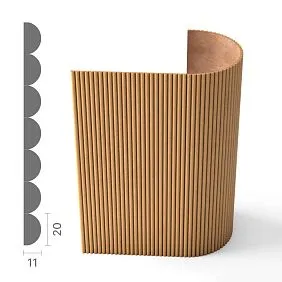
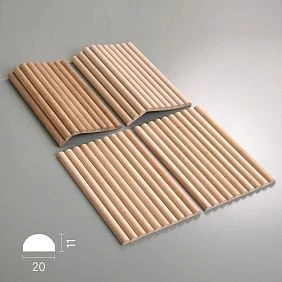
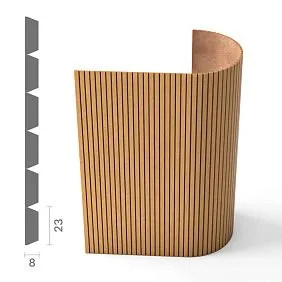
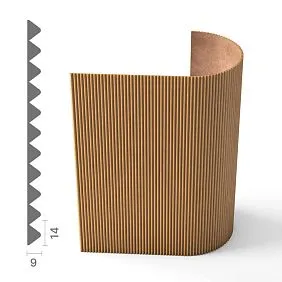
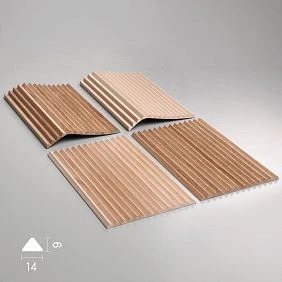
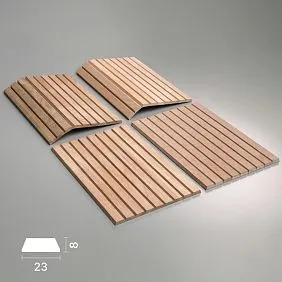
PVC slat panels are finishing products made of polyvinyl chloride with a profile that imitates a slatted rhythm: parallel strips of the same cross-section with equal spacing, visually creating a textured surface. The material is a synthetic polymer with additives that provide rigidity, moisture resistance, and a certain resistance to ultraviolet light.
The key word here is 'imitates'. PVC panels reproduce the visual rhythm of a slatted surface, but not its material properties: the tactility of wood, the depth of MDF texture, the natural character of solid wood. This is a fundamental difference that determines everything: where such panels are appropriate and where they will yield results below expectations.
If you want to buy PVC slatted panels, it means you need a moisture-resistant, practical, affordable finish for a specific room. That's a legitimate task. The only question is whether your task aligns with what PVC can actually do well.
In parallel, there is another market: those looking for PVC slatted panels for walls often mean a decorative accent wall in a living room or bedroom — and here PVC almost always loses to MDF and wood. More on this in the following sections.




Where PVC slatted panels are used
An honest answer to the question "where PVC works" is not a marketing list, but a pragmatic application map.
Our factory also produces:



Bathroom and toilet
The main domain of PVC panels. High humidity, temperature fluctuations, direct contact with water — PVC withstands all this without deformation and without mold development, provided ventilation conditions are met. For a bathroom of 3–5 sq. m, where there are no claims to a designer result, it's a working solution.
But even here it's important to understand the limitation: PVC panels in the bathroom look like PVC panels in the bathroom. No treatment or lighting can change that. If the task is to create a spa interior atmosphere with natural materials, textured surfaces, and natural stone details — PVC is not an ally here.
Get Consultation
Balcony and loggia
A glazed balcony is an area with temperature fluctuations from -10°C in winter to +35°C in summer (when heated under glass). PVC withstands this range better than unprotected MDF. For an insulated loggia with a normal microclimate, it's better to consider MDF or wood.
Corridor and utility rooms
In high-traffic corridors and utility rooms, PVC is justified precisely as a practical, easy-to-maintain solution. Wiped with a damp cloth — clean. No varnished surface that needs to be protected.
Ceiling
PVC slatted panels for the ceiling are a common choice for kitchens, corridors, bathrooms. The lightweight material is mounted on a metal frame and does not require painting. A ceiling structure with cornice lighting is quick and inexpensive.
Temporary or budget finish
Rental housing, temporary renovation, a room that will be redone in a year — here PVC is logical: cheap, fast, functional.
Where PVC panels don't work as expected
And here begins an honest conversation.
Most people looking to buy slatted PVC panels fall into two categories. The first know what they need: bathroom, balcony, utility rooms. For them, PVC is the right choice. The second see beautiful photos of slatted walls in living rooms, bedrooms, TV zones and look for PVC as 'something similar but cheaper'.
For the second category — an important caveat: what you saw in the beautiful photos is most likely made of MDF, solid wood, or veneer. Not PVC. And here's why the difference is fundamental.
Decorativeness. PVC panels are produced using extrusion technology — the profile is extruded from a molten mass. This imposes physical limitations on the depth and clarity of the relief. The texture is smoothed, the edges of the slats are rounded, the shadow play is weak. Up close, the synthetic origin of the material is unmistakably apparent.
MDF is milled: slats are cut from a homogeneous board with precision down to tenths of a millimeter. The edges are sharp, the relief is deep, the shadow in the gaps is expressive. Visually, this is a fundamentally different surface.
Tactility. Touch a PVC panel and an MDF panel with a lacquer coating — the difference is immediately noticeable. Plastic 'rings' when tapped, feels light and hollow. MDF is dense, 'dull', heavy. This creates a different sense of space quality.
Combination with moldings and decor. Moldings made of polyurethanecornices, baseboards, Wall Decor — all these elements of the interior finishing system are designed for MDF and wood. Plastic panels with such elements look inconsistent: the scale does not match, the profiles do not align, the material contrast is too obvious.
Painting. PVC panels cannot be painted in the desired RAL shade — the surface does not hold most paint and varnish compounds without a special primer, and the result is unpredictable. Paintable lath panels MDF panels can be painted in any shade — this is the basis for design projects with a precise color system.
Pros and cons of slatted PVC panels: an objective look
Without idealization and without blanket denial. PVC panels are a tool with their own strengths and weaknesses.
| Parameter | PVC panels | Comment |
|---|---|---|
| Moisture resistance | High | Main advantage — for bathrooms, balconies, toilets |
| Weight | Lightweight | Easy installation on the ceiling |
| Price | Below average | Affordability — an important factor for budget projects |
| Care | Simple | A damp cloth, no special treatment required |
| Decorativeness | Limited | Smoothed relief, synthetic appearance up close |
| Tactile | Low | Rattles when tapped, plastic feel |
| Painting | Problematic | Most paints don't adhere without a special primer |
| Combination with moldings | Weak | Material contrast with wood and polyurethane is obvious |
| Impact resistance | Medium | Deforms under point impacts |
| Repairability | Limited | Damaged area is difficult to replace invisibly |
| Perceived eco-friendliness | Lower than wood | Important for living spaces with children |
| Aesthetic durability | Medium | Yellows and loses appearance after a few years |
The table speaks for itself. PVC is strong where functionality is needed with minimal appearance requirements. It is weak where decorative results matter.
How PVC differs from MDF and wooden slat panels
This comparison is the heart of the article. Because the choice between PVC, MDF, and wood determines not just the cost of renovation, but the final look of the space for the next 10–15 years.
| Criterion | PVC | MDF | Solid wood |
|---|---|---|---|
| Visual effect | Practical, functional | Interior, clear relief | Premium, living texture |
| Tactile | Plastic, "rings" | Dense, "muffled" | Warm, natural |
| Moisture resistance | High | Medium (requires coating) | Depends on the species and treatment |
| Painting | Limited | Any RAL/NCS color | Natural texture / under varnish |
| Combination with moldings | Problematic | Excellent | Ideally |
| Interior level | Base | Medium — high | High — premium |
| Relief depth | Smooth | Deep, clear | Maximum |
| Durability | 5–10 years | 15–25 years | 30+ years with maintenance |
| Repair | Complex | Local touch-up | Sanding + oil / varnish |
| Price | Below | Medium | Higher |
Look at this table from the perspective of a specific task:
-
Bathroom, balcony, utility rooms — PVC wins in moisture resistance and price.
-
Living room, TV area, bedroom, hallway — MDF wins in all decorative parameters with comparable affordability.
-
Premium interiors, houses with natural materials — solid wood is unrivaled.
That's why the question 'where to buy slatted PVC panels' requires clarification: for what purpose exactly? If the answer is a bathroom or balcony, read on about PVC selection criteria. If the answer is a living room or bedroom, go straight to the section on alternatives.
What affects the price of slatted PVC panels
The price of slatted PVC panels varies significantly — from the cheapest options to products with wood texture imitation and increased thickness. Let's break down what it consists of.
Material and composition. Basic PVC panels are made from primary or secondary polyvinyl chloride with a minimum of additives. Panels made from primary PVC with UV stabilizers are more durable, do not yellow, and do not become brittle after 3–5 years. This is reflected in the price.
Thickness. Standard is 5–8 mm for wall panels. Panels of 10 mm and above are stiffer, less prone to deformation during installation and use. Thin panels (3–4 mm) are an economical option with a limited service life.
Slat width and pitch. A more complex milled or extruded profile with a pronounced relief is more expensive than a flat minimalist one. But even an 'expensive' PVC profile loses to basic MDF in depth and clarity of relief.
Coating. Plain white or gray PVC is the base price. Panels with a textured wood-like coating (lamination or thermal transfer) are more expensive. However, the wood texture on PVC under bright or side lighting still reads as artificial.
Length. Standard length is 2.7–3 m. Non-standard lengths are made to order, with a corresponding markup.
Manufacturer and region of production. Domestic manufacturers are in the mid-price range. Imported (mainly China) — depends on the quality of the batch, which can vary significantly.
Installation method. On clips into grooves — standard for PVC, does not add to material cost. Frame mounting — adds cost of profiles and labor.
Delivery and purchase region. When ordering online with delivery from another city — logistics adds to the final cost. Purchase at a local hardware store — no delivery, but limited assortment.
Important observation: the price difference between quality PVC panels and basic MDF panels is often small. If your choice of PVC is driven solely by price — it's worth comparing specific items. Perhaps, MDF Plank Panels they will cost similarly, but provide a fundamentally different decorative result.
When you should not buy slatted PVC panels
A separate section for those at a crossroads. There are specific situations where buying PVC panels would be a mistake — not from the perspective of "bad material," but from the perspective of not meeting the task.
Need a premium TV area
The TV area is the visual center of the living room. Everything on this wall is seen under direct lighting, side light, and in the evening with backlighting. PVC in such an area will give a flat, smoothed surface with an obvious synthetic character. wood-look slatted panels or For painting MDF will provide deep relief, expressive shadow in the gaps, and a surface that looks expensive — because it is wood and dense MDF, not plastic.
The interior is made of natural materials
Wooden floors, solid wood furniture, leather elements — and PVC panels on the wall. This is not eclecticism, it's a material conflict. Synthetics surrounded by natural materials are immediately perceived and destroy the unity of the space.
Panels should match moldings and high baseboards
Moldings made of polyurethane — these are precise geometric profiles with a given mass and clarity of relief. Next to them, PVC seems frivolous: a different scale, a different material weight, a different feel. The molding system works with MDF and wood — not with plastic.
Deep texture and play of shadows are important
The architectural effect of a slatted surface is the shadow in the gaps. The deeper the slat protrudes above the base and the sharper its edges, the more intense the play of shadow. PVC physically cannot provide the same depth and clarity as milled MDF. If you need a relief that 'works' under side lighting — it's MDF or solid wood.
A finish for painting in an exact color is needed
A unified color system — moldings, panels, doors, baseboards in the same shade — is only possible with MDF for painting. PVC cannot be reliably painted, and the ready-made colors of PVC panels will not match the tone of painted moldings.
A durable decorative accent is required
A wall that doesn't need to be redone for 15–20 years — that's MDF or wood. PVC starts to yellow after 5–8 years, loses its original color, and becomes brittle in fastening areas. A long-term investment in the interior is not about PVC.
Involved in the project Wall Decor
Pilasters, panel frames, corner elements made of polyurethane — this is a system designed to work with MDF and wood. They do not interface with PVC either geometrically or materially.
Which alternatives to PVC slat panels to choose for the interior
If you've realized that PVC is not your option, or you simply want to consider more decorative solutions, here is a map of alternatives.
MDF slatted panels for painting
Paintable lath panels — a basic choice for living rooms, bedrooms, hallways, studies. The MDF surface is uniform, accepts any water-based acrylic enamel. Paint it in the desired RAL shade — you get an exact color coordinated with moldings, doors, and furniture.
The depth of the relief is several times greater than that of PVC. The edges of the slats are sharp, clear, or slightly rounded depending on the profile. Under side lighting, the surface comes alive: shadows fall into the gaps, the slats gain volume.
For a TV zone in a white interior — panels for painting in RAL 9001 or 9010 with backlighting behind the top molding. One of the strongest interior techniques for reasonable money.
Slatted panels with a wood finish
wood-look slatted panels — a natural warm effect without the whims of solid wood. An MDF base with a textured coating provides a visual close to natural wood, with stable geometry and predictable results during installation.
This is the best option for a TV zone in an interior with wooden furniture or in a Scandinavian style: a warm tone of oak or walnut organically fits into any context where natural or imitation wood is present.
Wooden slatted panels made of solid wood
Oak, beech — a natural base with maximum tactile and visual quality. Under white enamel — a living surface with a light fiber texture. Under clear varnish — an open grain pattern of the species. Service life — several decades with care. Recommended for projects where natural materials are not an option, but a concept.
Flexible Slat Panels on Fabric Backing
A separate category — for curved surfaces: columns, arches, radius niches. Panels on a flexible fabric base wrap around any geometry without deformation of the slats and without joints. This is a tool for non-standard architectural tasks that PVC does not solve at all.
Slatted panels for the TV zone
Specifically for a TV screen — panels with an even rhythm, neutral or warm tone, without a pronounced pattern that would compete with the image. Rafter panels STAVROS for the TV area — ready-made solutions with profiles that create the desired effect: the screen is integrated into the interior context, rather than hanging on a bare wall.
Decorative system: panels + moldings + overlays
The most convincing decorative result is not just panels, but a system. Rafter panels as a surface base, Moldings like a frame around the perimeter, PU overlays as decorative accents on the surface. Plus Moldings as a flexible ornamental element — for those who want modern neoclassicism.
This system is unavailable for PVC panels by definition — a material and geometric conflict makes it impossible. But it is precisely this that gives the result you saw in photos of designer interiors and which prompted you to look for slatted panels.
Slatted panels for the hallway: PVC or something better
The hallway is one of the most popular requests for slatted panels. And here PVC has certain arguments: moisture resistance when snow and rainwater are brought in with outerwear, resistance to mechanical contact. But the arguments in favor of MDF are more compelling.
MDF with a hard lacquer coating withstands contact with clothing, bags, and suitcases no worse than PVC. At the same time, it delivers a much more expressive interior result. A hallway with slatted MDF panels and a molding belt in the middle is an architecturally complete space. A hallway with PVC panels is functional but uninspiring.
The vertical rhythm of MDF slats stretches the corridor upward more expressively than PVC — due to the depth of shadow in the gaps. Complement polyurethane wall decor with corner pilasters or panel frames — and the hallway acquires an architectural character that PVC will never provide.
Slatted PVC panels and ecology: what you need to know
A topic often overlooked in commercial articles. PVC is a polymer that uses plasticizers (phthalates) and stabilizers in its production. In rooms with poor ventilation, new PVC panels may emit volatile compounds for several weeks after installation.
For utility rooms, well-ventilated bathrooms, and balconies, this is acceptable. For children's rooms, bedrooms, and living rooms, it's worth weighing. MDF with acrylic lacquer or oil without solvents, solid wood — are significantly more preferable from an ecological standpoint.
This doesn't mean PVC panels are dangerous. It means that for living spaces, especially with constant presence of children, natural and near-natural materials are a more balanced choice.
How to choose slatted panels before purchase: a detailed checklist
Regardless of whether you choose PVC or consider alternatives, answer these questions before ordering.
Where will the panels be installed?
-
Bathroom, toilet, balcony → need moisture resistance → PVC or moisture-resistant MDF with special coating
-
Living room, bedroom, study, hallway → need decorative result → MDF or solid wood
Is the appearance important at close range?
-
Yes → MDF or wood
-
No / utility rooms → PVC is acceptable
Is painting to an exact shade needed?
-
Yes → only Paintable lath panels from MDF
-
No → ready-made coating of any material
Will there be moldings, cornices, baseboards nearby?
-
Yes → MDF or wood, agreed system
-
No → any material
Is backlighting needed behind the molding?
-
Yes → MDF with polyurethane moldings — the only correct option
What is the budget?
-
Limited, technical rooms → PVC
-
Medium and above, living rooms → MDF gives incomparably better results at comparable availability
Is durability important?
-
For 15–25 years → MDF or wood
-
Temporary finishing → PVC
Are there moldings, overlays, pilasters in the project?
-
Yes → only MDF or wood: system moldings и PU overlays Incompatible with PVC
How to properly install slatted panels: universal principles
Installation is the final stage that determines the result. For PVC and MDF, the principles are similar, the difference is in the details.
Base. For PVC — a wall or a metal frame. For MDF with adhesive installation — a deviation of no more than 3–5 mm per two meters. Larger deviation — only a frame.
Adhesive. For MDF — MS polymer without solvents. For PVC — special adhesive or installation on clips into the profile system. Check the adhesive's compatibility with PVC: some solvents destroy plastic.
First panel — level. A laser or bubble level is mandatory. Deviation of the first panel accumulates across the entire wall.
Horizontal joints of MDF are closed molding — this is an architectural technique, not a defect mask. For PVC panels, joints are closed with a special profile or a molding overlay made of the same PVC.
Corners. For MDF — ends at 45° or polyurethane corner overlays. The technique for working with corners is discussed in the article about installing polyurethane moldings — the principles are applicable to slatted systems in general.
MDF painting. Double primer with intermediate sanding with 180–220 grit. Painting with a spray gun before installation gives the best result. Touch-up of ends after installation with a soft brush.
Where to buy slatted panels: commercial summary
If you need PVC slatted panels for a bathroom, toilet, balcony, or utility room — look for products made from virgin PVC, with UV stabilizers, and a thickness of at least 8 mm. Don't buy the cheapest options: saving 200–300 rubles per linear meter will result in a yellowed and brittle surface in 3–4 years.
If you need a decorative wall in the living room, a TV area, an entryway with moldings, or a bedroom with an accent on the headboard — consider Rafter panels STAVROS made of MDF and solid wood. This is a different level of decorativeness, a different tactile experience, a different feeling of space. And often — a comparable cost.
Panels for painting — if you need an exact color matched to your interior system. Wood-look panels — if you need natural warmth without the whims of natural wood. Solid wood — if naturalness is essential.
The entire system — Rafter panels, Moldings and cornices, Wall Decor, PU overlays, Moldings — is available in the STAVROS catalog. Order from one piece, Contact us to confirm shipping to your destination.
FAQ: Answers to popular questions
Is it worth buying PVC slatted panels for walls?
It depends on the room. For bathrooms, toilets, balconies, and utility areas — yes, PVC is justified by high moisture resistance and affordable price. For a living room, bedroom, entryway, and TV area — MDF or wooden slatted panels will provide a fundamentally better decorative result at a comparable cost.
How do PVC panels differ from MDF panels?
Material, tactile feel, depth of relief, paintability, compatibility with moldings — MDF surpasses PVC in all decorative parameters. PVC only wins in moisture resistance and, in some cases, price. For residential interiors, the choice is clearly in favor of MDF.
Which slat panels look more expensive: PVC or wooden?
Wooden and MDF panels look more expensive due to the depth of texture, clarity of relief, tactile density, and the ability to harmonize with polyurethane moldings, baseboards, and stucco. PVC, under side lighting, reads as plastic — and that's an honest answer.
What affects the price of PVC slat panels?
Composition (virgin or recycled PVC), thickness, length, slat width, type of coating, manufacturer, and delivery. A higher price in the PVC segment usually means better durability and a more expressive coating. But even expensive PVC is inferior to basic MDF in decorative quality.
Can PVC panels be used in a living room?
Technically — yes. Practically — it's not advisable. The smoothed relief, synthetic appearance, inability to paint, and poor compatibility with moldings and baseboards make PVC a poor choice for living spaces. For living rooms, bedrooms, and hallways — MDF or solid wood.
Can PVC panels be replaced with STAVROS decorative slat panels?
Yes, and it's a direct replacement with a dramatic improvement in the result. Rafter panels STAVROS — MDF for painting, wood-look, solid oak — provide deep relief, precise geometry, and compatibility with the full decor system. This is not just a replacement — it's a different level of interior.
What is the alternative to PVC for wet rooms?
Moisture-resistant MDF with hard lacquer or polyurethane coating — for hallways and areas with moderate humidity. For bathrooms with direct water contact — tiles or specialized moisture-resistant materials. PVC is acceptable in such areas, but decoratively inferior to quality alternatives.
How long do PVC slat panels last?
With proper installation and normal use — 5–10 years before signs of aging appear (yellowing, brittleness at fastening points). Quality lacquered MDF — 15–25 years, solid wood with care — 30 years or more.
About the company STAVROS
STAVROS is a Russian manufacturer of decorative interior and facade products with a history since 2002. The company was founded in St. Petersburg by two artists, and from its early years participated in the restoration of the Konstantinovsky Palace in Strelna, work in the Hermitage and the Alexander Palace. This background defines the approach: every product — with attention to geometry, proportion, and surface quality.
Today STAVROS produces: Rafter panels from MDF and solid wood in several series, Moldings and cornices from polyurethane, PU overlays, Wall Decor, molding — everything needed to create a complete interior system. Production in St. Petersburg with controlled microclimate, "Prestige" class sanding, geometry control at every stage.
If you came for PVC slat panels, but left understanding that MDF or wood is what you really need: the STAVROS catalog awaits. Order from one piece, samples before large orders, consultations on selection and installation, Contact us to confirm shipping to your destination.