Article Contents:
- Why you need a wooden ceiling cornice
- What is a wooden ceiling cornice: explained once
- Wooden ceiling cornice or curtain rod: what's the fundamental difference
- How to choose the size of a ceiling cornice
- Which material to choose: solid wood or MDF
- Solid wood: living texture and premium look
- MDF: stability and convenience for painting
- How to choose the style of a ceiling cornice
- Classic wooden ceiling cornice
- Modern minimalist cornice
- Art Deco style cornice
- Cornice for painting
- How to combine a ceiling cornice with baseboards, moldings, and architraves
- What to check before buying: a complete checklist
- Installation of a wooden ceiling cornice: basic principles
- Wooden ceiling cornice in different types of rooms
- Additional keys and an extended view on selection
- Where to buy a wooden ceiling cornice
- FAQ: Answers to Popular Questions
- About the company

One element can change the perception of an entire room — that's how a wooden ceiling cornice works. If you want buy a wooden ceiling cornice and don't know where to start, this article will provide a comprehensive answer: from choosing the profile and material to installation and combining with other decor elements.
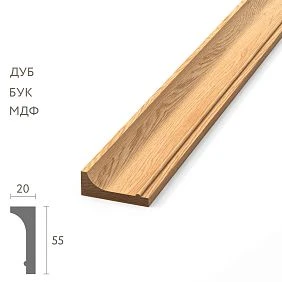
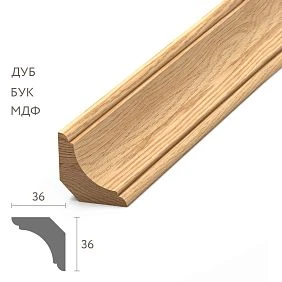
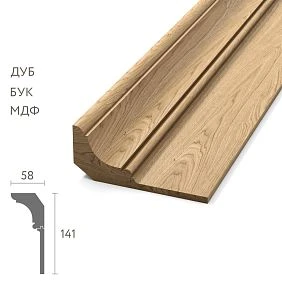
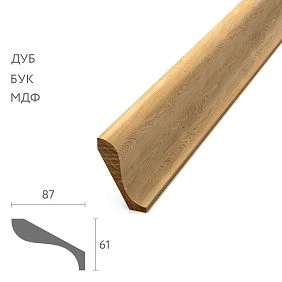
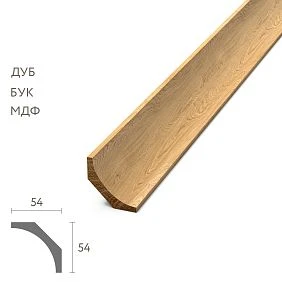
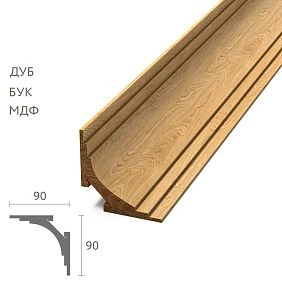
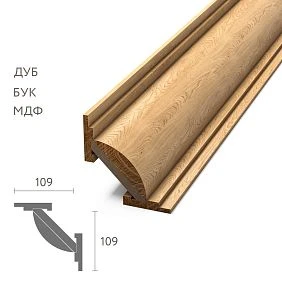
Why you need a wooden ceiling cornice
There are places in a room that no one looks at intentionally — but everyone notices subconsciously. The line where the wall meets the ceiling is one of them. When it's just painted, smooth, and unadorned, the interior looks unfinished, like a rough renovation, even with expensive wallpaper and parquet. When a properly selected wooden ceiling corniceis installed there, the space instantly gains visual completeness.
A wooden ceiling cornice solves several tasks at once. The first and main one is to cover the joint: it hides unevenness, level differences, and traces of painting work. The second is to tie the interior into a single system: the cornice at the top, the baseboard at the bottom, moldings on the walls, architraves around the doors — all of this is one language, one theme, one collection. The third task is visual work with space: a correctly chosen profile can visually raise the ceiling or, conversely, give the room intimacy and coziness.
Buy wooden ceiling cornice means betting on a natural material that lives in the interior differently than polyurethane or plaster: it is warm to the touch, it breathes, it accepts any coating and remains relevant in any style — from classic to modern minimalism. This is an investment not in fashion, but in quality.
That is why buy a wooden ceiling cornice it is most reasonable in the section of professional molding products, which offers a full range of profiles from compact 45 mm to monumental 200 mm with collections for various stylistic tasks.




What is a wooden ceiling cornice: let's break it down once
The term "cornice" in interior design is used in two completely different contexts, and this constantly causes confusion. An architectural ceiling cornice and a curtain rod are different products with different functions, different materials, and different areas of application. Let's start with the main point.
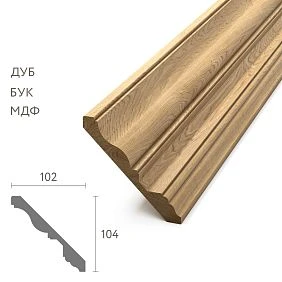
An architectural wooden ceiling cornice is a profiled molding product made of wood or MDF, which is installed along the top line of the wall at the junction with the wall or directly under the ceiling. Its function is decorative and architectural: to form a visual transition, complete the wall, and set a "frame" for the ceiling. No curtains, no textiles — only the architecture of the space.
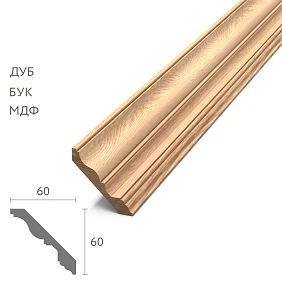
The profile of the cornice can be laconic (a flat plane with one or two bevels) or complex — with concave and convex elements, steps, carved details. The more complex the profile, the more classic and majestic the space becomes. The simpler it is, the more modern and restrained.
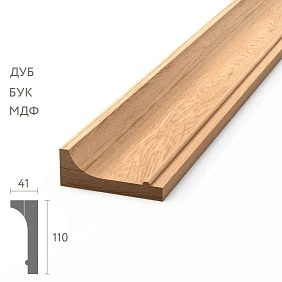
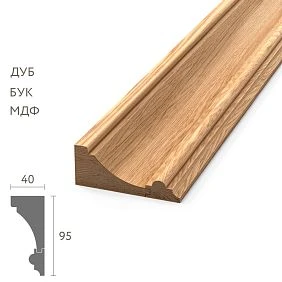
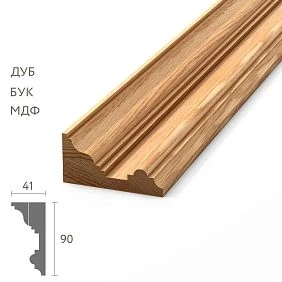
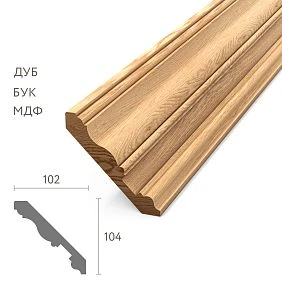
Such products are sold in the sections of molding products, and that is exactly where you need to go if you are looking for solid wood cornice for interior decoration. In the STAVROS catalog, this is the "Moldings, cornices, baseboards" section, which features products in the Nature, Art Deco, Versailles, Classic, and Modern collections — and the filters clearly highlight the "Cornice" category.
Important nuance: Wooden moldings and cornices from the same collection are designed to form a system. The same profile language around the entire perimeter is what professional designers call a "finished interior."
Our factory also produces:
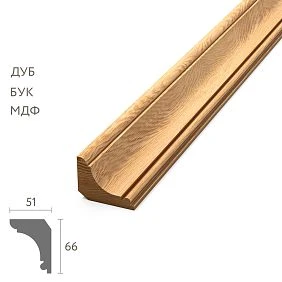
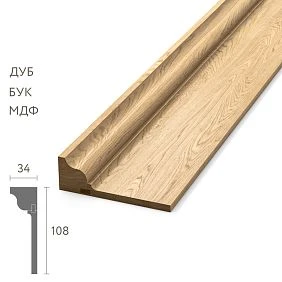
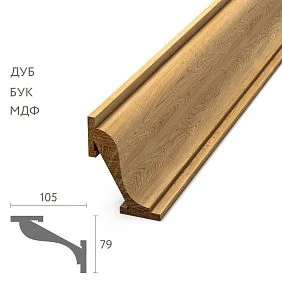
Wooden ceiling cornice or curtain rod: what is the fundamental difference
This question arises for almost everyone who first encounters the topic. And the confusion here is understandable: both products are called "cornices," both are installed in the upper zone of the wall. But that is where the similarity ends.
A curtain rod is a load-bearing engineering system: a pipe, rail, or track on which the textile is hung. Its purpose is purely functional: to hold the curtains and ensure their movement along the window. The material here is secondary — what matters is strength, smooth movement of the ring or slider, and the pipe diameter to support the fabric weight.
Architectural Wooden ceiling cornice holds nothing but the gaze. It is fixed rigidly to the wall or ceiling, immobile, and functions solely as a decorative element. It forms a line, creates a shadow, sets proportions. This is not engineering — it is pure architecture.
If you are looking for buy wooden ceiling curtain rod — it is important to understand exactly what is being discussed. If a load-bearing system for drapes is needed, that is one type of product. If a decorative profile product made of solid wood is needed, which beautifully covers the upper border of the wall and can be visually coordinated with wooden interior elements (including wooden curtain systems) — then the choice is in favor of an architectural cornice made from linear molding products.
Wooden ceiling curtain rod in a decorative sense — this is when a wooden profile is installed above the window as a design element, while the actual curtain rod system is hidden behind it or integrated into it. Such solutions are found in classic and neoclassical interiors: the profile creates a "portal" above the window, while separate mechanics for the textile operate behind it.
The conclusion is simple: buy wooden ceiling curtain rod as a decorative element — it is a linear molding product. A curtain rod as a mechanical system is a completely different story, unrelated to solid wood.
Get Consultation
How to choose the size of a ceiling curtain rod
Size is the first thing to determine before all other parameters. And here, most people make the same mistake: they choose "by eye," based on a picture, without considering the proportions of the actual space. The result is either the cornice gets lost on the ceiling or feels overwhelming with its mass.
The logic of choosing a size is built around several factors.
Ceiling height is the main criterion. For rooms with a ceiling of 2.5–2.7 m (standard for Soviet and modern mass construction), the optimal cornice height is 45–70 mm. This is a compact profile that does not overload the space but is still well-defined and creates a clear line. For ceiling heights of 2.8–3.2 m, the range expands to 80–120 mm. For spacious rooms with ceilings from 3.5 m — 130–160 mm. For representative spaces, grand halls, and lobbies with ceilings from 4 m — 160–200 mm.
The area of the room amplifies or weakens the effect. In a small room, even with a standard ceiling height, a massive 150 mm cornice will visually "eat up" the space. In a spacious hall, a small 45 mm profile simply won't be noticeable — the eye won't catch it.
The interior style directly dictates the complexity of the profile. Minimalism — narrow, strict, without extra elements. Neoclassicism — a medium profile with one or two relief elements. Baroque and classic in the full sense — a complex profile, stepped, with a cornice projection, with shadows and layers.
How noticeable the cornice should be is a question often overlooked. If the ceiling is unattractive, an accent is needed — a massive cornice draws the eye downward and distracts from the ceiling. If the ceiling is good, the cornice can be delicate — a barely noticeable finish.
In the wood trim STAVROS offers profiles in a range from 45 to 200 mm in height, allowing you to select the exact size for any type of room.
Which material to choose: solid wood or MDF
Before buy wooden ceiling cornice, you need to decide on the material. The STAVROS catalog offers two options: solid wood and MDF. Both are correct, both are professional — but for different tasks.
Array: living texture and premium look
A solid wood cornice is a product with a lively fiber pattern, unique in texture, weighty in feel. Solid wood accepts transparent coatings well — oil, wax, tinting — which preserve the natural texture and make the wood visually "breathing." In classic and neoclassical interiors, it is this effect that creates a sense of true quality.
Oak as a material for a cornice means density, expressive pattern, good resistance to deformation. An oak cornice holds its shape even with humidity fluctuations, which is important for residential spaces and rooms with central heating. Beech is slightly softer, the pattern is calmer, but it accepts opaque paint better and is suitable for cases where the cornice must perfectly match the color of the wall or ceiling.
solid wood cornices — this is the choice when the interior is built around natural materials: parquet, solid wood door, wooden architraves, wooden furniture. In this system, a solid wood cornice becomes a natural continuation of the theme.
MDF: stability and convenience for painting
MDF is not a compromise, but a different tool. Medium-density fiberboard has no natural pattern, but it has perfectly even geometry: sharp edges, precise profile, uniform surface. Under opaque paint — especially white or light gray — MDF gives a result that is difficult to distinguish from plaster or polyurethane. But the product itself is a wooden base, eco-friendly and easy to process.
MDF is chosen when the cornice is planned to be painted in the color of the wall or ceiling, when impeccable geometry without natural anomalies is needed, and when the project budget requires optimization. This is a working, professional solution that, with proper installation and painting, looks expensive.
В on products made of wood and MDF STAVROS both options are available in the same collections — meaning you can choose the material based on the task without sacrificing style.
How to choose the style of a ceiling cornice
Style is not just about 'like or dislike'. It is a systemic solution that must align with the overall direction of the interior, other wooden elements, wall coverings, and the character of the furniture. Let's look at the main directions.
Classic wooden ceiling cornice
Classic style features a complex profile, rich plasticity, and several levels of cornice projection. This is where motifs with shelves, reverse curves, steps, and overlay elements come into play. Such a buy wooden ceiling cornice makes sense in interiors with carved door trims, decorative pilasters, Empire or Baroque style furniture, and stucco on the ceiling.
The 'Versailles' collection in the STAVROS catalog is designed specifically for these tasks: the products feature rich plasticity and are suitable for combining with ceiling decor и ceiling rosettes made of polyurethane — which allows creating a complete classic system without mixing materials and styles.
An important nuance of a classic cornice: it must be part of a system, not a standalone element. A rich cornice against simple white walls without moldings looks not 'luxurious', but strange. Either everything — or nothing. Either you do a full classic finish, or you choose a more modest profile.
Modern minimalist cornice
Modern style does not tolerate overload. Here, the cornice is a straight, geometrically precise profile with a minimum of relief elements. One plane, one angle, at most one bevel. Nothing extra. The 'Modern' collection in the STAVROS catalog features exactly such profiles: they work in Scandinavian style, minimalism, and contemporary interiors where wood serves as an accent, not a decoration.
For such a cornice, oak with a matte oil finish is especially suitable: honest texture, restrained color, no gloss. Or beech in white paint — like a clean geometric line that makes the ceiling precise and complete.
Art Deco cornice
Art Deco is geometry, contrasts, expression. Cornices of this theme are distinguished by clear horizontals, repeating rhythms, sometimes with metal or gilded inserts. The wood used in Art Deco is dark: walnut, wenge, dark oak with rich tinting. The profile is strict, stepped, with sharp edges. The STAVROS "Art Deco" collection is designed specifically for such tasks and fits organically into interiors with character.
Cornice for painting
This is not a separate style — it is a technical solution. When the cornice should "dissolve" into the ceiling or wall, it is painted the same color as the surface. As a result, the joint line exists, but it is invisible — the eye glides across the ceiling without stopping. This is relevant for rooms where the emphasis is on something else: on furniture, on art, on wall texture.
For painting, MDF or beech is chosen — both accept primer and finish paint well, providing an even coating without the texture showing through.
How to combine a ceiling cornice with baseboards, moldings, and architraves
This is perhaps the most important section for those who are doing renovations "from scratch" or working on a design project. A ceiling cornice on its own is good. A ceiling cornice as part of a complete system of wooden decor is a whole different level.
The classic scheme looks like this: a cornice along the top line of the wall, Wooden Skirting Boards along the bottom, moldings in the middle belt of the wall (or as panel frames). Doors are framed with architraves from the same collection. The entire system is made from one material, one manufacturer, one collection. The result is an interior that looks like a single architectural statement, not a set of individual purchases from different stores.
Moldings from solid wood There are two ways to work on walls. The first is horizontal moldings that divide the wall into zones: the upper zone (matching the ceiling color or wallpaper), the lower zone (darker or paneled). The second is decorative frames that imitate paneling and create the visual impression of a rich classic interior.
Why is it better to choose everything as a set? First, guaranteed style consistency — profiles from the same collection are designed to work together. Second, a single wood species and a single finish: when everything is purchased from one manufacturer, you get exactly the same shade and texture. Third, savings on selection: instead of trial and error to find "something similar" in different places, you choose one catalog and work within it.
In parallel, it is worth considering ceiling decor: ceiling medallions, ceiling rosettes for a chandelier, Crown Molding и Moldings made of polyurethane. They are compatible with wooden products and allow you to expand the system without going beyond a single style solution. Polyurethane is lighter in weight and cheaper, which is convenient for ceiling surfaces where the weight of the product is critical.
What to check before purchasing: a complete checklist
Before buy wooden ceiling cornices, go through this list — it will save time, money, and nerves.
Ceiling height. Measure from the finished floor to the ceiling slab. This number determines the allowable range for the cornice height. The standard is no more than 1/20 of the ceiling height, meaning with a ceiling of 260 cm, the cornice should not exceed 130 mm.
Total wall length. Add up the lengths of all walls around the room's perimeter. Add 10–15% for trimming at corners and possible defects. This is your order footage.
Corner condition. In most apartments and houses, corners are not exactly 90°. This means that when joining the cornice at a corner, you will have to cut the ends at a non-standard angle. Check this in advance with a protractor — or be prepared for on-site adjustment.
Wall and ceiling material. Concrete, aerated block, drywall — the fastening of the cornice differs in each case. Drywall requires special dowels. Aerated block requires chemical anchors. Concrete requires standard nail dowels. This does not affect the choice of cornice, but does affect installation preparation.
Will there be painting or tinting. If the cornice is to be painted, choose MDF or beech. If you want a transparent finish preserving the texture, choose oak or solid wood with a pronounced grain.
Are corner elements needed. Some manufacturers offer ready-made corner joining elements — this is convenient, but not always available for a specific collection. Check availability with the manager in advance.
What else is nearby. Doors, moldings, baseboards, furniture, textiles — all of this must be considered when choosing the style and color of the cornice. The richer the context, the more careful you need to be with the profile choice. It's better to be subtle than excessive.
Are there niches, beams, or protrusions in the room. If the architecture is complex — with ceiling height differences, hidden beams, niches — you need to plan in advance how the cornice will navigate these areas. This may require additional end elements or special cutting.
Profile style. The final question — but no less important. A simple profile forgives installation errors. A complex classic profile requires straight walls and precise corners — otherwise every imperfection will be visible.
Installation of a wooden ceiling cornice: basic principles
Installation is a topic for a separate detailed article, but several key principles need to be known already at the selection stage.
The ceiling cornice is installed using one of two methods: with adhesive (liquid nails or mounting foam) or with mechanical fastening (dowels, screws). For lightweight profiles up to 70 mm wide, adhesive is usually sufficient, provided the surface is clean and dust-free. For heavy solid wood products from 100 mm wide, a combined method is recommended: adhesive + dowels.
Corners are the most challenging part. An internal corner is cut at 45° or butted together with subsequent puttying. An external corner is similar but requires greater precision. A professional carpenter completes this work in 15–20 minutes per corner; an inexperienced craftsman may take several hours with several ruined blanks.
The finishing coating is applied after installation — this is important. Puttying joints, sanding, priming, final paint or oil — all of this is done on the wall, not before installation.
Wooden ceiling cornice in different types of rooms
The ceiling cornice is not only for living rooms and formal spaces. Let's consider how it works in different contexts.
Living room. Here, the cornice performs a primary representative role. The larger the area, the larger the profile. In a living room with a ceiling height of 3 m and an area of 30 sq.m or more, a 120–150 mm cornice from the "Classic" or "Versailles" STAVROS collection creates the feeling of an architectural space, not just a living room.
Bedroom. Intimacy is important here. The cornice is chosen to be delicate, 50–80 mm, often for painting in the wall color. Sometimes it is combined with wooden skirting boards from the "Modern" collection — a laconic set that does not distract but completes.
Kitchen. A controversial area for a wooden cornice: humidity, steam, temperature fluctuations. Here, it is better to choose an MDF product for painting with moisture-resistant paint — it is less sensitive to the microclimate than solid wood. Or use polyurethane molding — it is completely neutral to humidity.
Study, library. This is where the wooden cornice truly shines. Dark oak, complex profile, floor-to-ceiling bookcases — and the cornice that creates a monolithic image of the space. This is what gets photographed for architectural magazines.
Hallway and entryway. Small spaces with often low ceilings. Here, the cornice is typically compact — 45–60 mm — and serves not as an accent, but as a quiet finish. The main task is to continue the style from the living room or other rooms, maintaining the unity of the interior.
Commercial spaces. Restaurant, hotel, meeting room — anywhere the interior needs to impress guests. Here, a large-format cornice (150–200 mm) made of solid oak with dark tinting or patina is a status signal that is read instantly.
Additional keys and an expanded perspective on selection
When a project involves complete wall finishing with wooden profile products, the cornice is just the first in a chain of decisions. It is followed by moldings for paneling, horizontal belt rails, decorative frames, and at the bottom — the baseboard. Together, they form what architects of the classicism era called "room paneling" — a complete wooden architectural system.
Wooden moldings — these are mid-level profiles. They can frame wallpaper panels, create horizontal belts on walls, and form decorative niches. If the cornice is the "hat," then moldings are the "belt." Their combined use gives walls volume and architectural complexity that cannot be achieved with wallpaper or paint.
Baseboards — the bottom point of the system. For a classic interior, the baseboard should be high — from 80 mm and above — and consistent in profile with the cornice. When the cornice and baseboard from the same collection "mirror" each other at the top and bottom, the wall gets a beautiful frame that works as a complete architectural composition.
Special mention should be made of combining wooden linear products with with polyurethane moldings: ceiling medallions, rosettes, corner elements. Wood on the walls — polyurethane on the ceiling — this is a professional combination that avoids the excessive weight of wooden elements on the ceiling while creating a rich classic interior.
Where to buy a wooden ceiling cornice
If you are ready to make a purchase and understand exactly what you need, — buy wooden ceiling cornices it is most convenient in the catalog, where you can immediately see the entire range of sizes, compare collections, and select moldings and baseboards in the same system.
In the STAVROS molding products section — cornices, moldings, baseboards made of solid oak, beech, and MDF, in collections from the strict "Modern" to the rich "Versailles". Filters by material, product type, and collection allow you to quickly find what you need. Products are supplied unpainted.
buy wooden ceiling cornices in STAVROS — this is:
-
a wide selection of profiles from 45 to 200 mm;
-
collections for different styles: Nature, Art Deco, Versailles, Classic, Modern;
-
materials: solid oak, solid beech, MDF;
-
unpainted products for any finish;
-
the ability to order custom sizes;
-
Contact us to confirm shipping to your destination., pickup from Moscow and St. Petersburg.
In parallel — a full range of related of wood and MDF products: moldings, architraves, wooden handles, frames, legs and much more. Everything from one source, in one style.
FAQ: Answers to popular questions
How is a wooden ceiling cornice different from a curtain rod?
An architectural ceiling cornice is a decorative profile made of wood or MDF that is mounted fixedly and covers the joint between the wall and the ceiling. A curtain rod is a load-bearing mechanical system for hanging textiles. These are fundamentally different products with different functions. Buy wooden ceiling cornice as an architectural element, it should be in the molding products section.
Which ceiling cornice should I choose for a low ceiling?
For ceilings 2.5 m and lower — a profile no higher than 60 mm. It is better to choose a laconic profile without complex relief elements: it will not 'lower' the ceiling. Light shades of the coating also help maintain the feeling of height. buy a wooden ceiling cornice of the right size — the first step to a visually comfortable space.
Can a wooden ceiling cornice be painted?
Yes, this is standard practice. Solid wood accepts varnish, oil, stain, and opaque paint well. MDF is especially convenient for painting: the surface is uniform, edges are sharp, and the finish paint applies evenly. Sanding and priming are recommended before painting.
Which is better: solid wood or MDF cornice?
It depends on the task. For a transparent coating preserving texture — solid oak or beech. For opaque paint or when perfect geometry is needed — MDF. Both options are available in the STAVROS catalog in the same collections and profiles.
How to calculate the quantity of ceiling cornice?
Add up the lengths of all walls around the room. Add 10–15% extra for cutting at corners and possible installation errors. Standard profile length is 2.5 m or 3 m — check the catalog. Divide the total length by the length of one strip to get the number of pieces.
Is a wooden cornice suitable for a modern interior?
Absolutely. A wooden cornice with a minimalist profile and matte oil finish is an organic element of Scandinavian, Japanese minimalism, and contemporary style. The key is to choose the right collection and size. The STAVROS 'Modern' collection is designed specifically for such interiors.
What to pair a wooden ceiling cornice with in an interior?
Ideal system: cornice at the top + wall moldings + baseboard at the bottom + door casings. All items from the same collection of the same manufacturer. Additionally — ceiling decor: rosettes, medallions, ceiling Polyurethane Crown MoldingThe entire system creates an architectural integrity that cannot be achieved with individual elements.
About the Company
STAVROS is a Russian manufacturer of wooden molding products and furniture components with its own full-cycle production. The assortment includes cornices, moldings, baseboards, architraves, legs, frames, handles, and decorative elements made from solid oak, beech, and MDF. Products are available in five collections: Nature, Art Deco, Versailles, Classic, Modern — suitable for any interior style. They are supplied unpainted for self-finishing. Custom orders are available. Contact us to confirm shipping to your destination., self-pickup from Moscow and St. Petersburg. Special cooperation terms for designers, decorators, and furniture manufacturers.