Article Contents:
- Why the discontinuation of a single profile becomes a problem for the entire project
- Why phased projects are especially vulnerable to assortment changes
- Item fully discontinued
- Profile changed
- Size changed
- Wood species changed
- Finish changed
- Position temporarily unavailable
- Limited quantity remaining
- A similar profile from the catalog cannot be treated as a direct replacement
- The new sample must be checked next to the existing interior
- Matching geometry does not guarantee matching color and finish
- What constitutes a sufficient reserve
- When a reserve has increased value
- Large building material suppliers should see the list of critical items for the project
- What to record in the list
- When phased procurement is safer than procuring for the entire project at once
- What compensates for the risk of phasing
- Why you can't "finish it however it turns out"
- The installation crew must not choose substitutions on its own
- What the supplier cannot decide in place of the project team
- Wholesale building materials supplies require managing the lifecycle of the item
- Incorrect solution
- Correct Sequence
- A limited old reserve should be allocated according to architectural value
- The repair reserve should not be spent in full
- A wooden skirting board is especially sensitive to the joint with architraves and furniture
- When a new skirting board can be used
- A wooden cornice is best replaced only along the architectural boundary
- Building material suppliers must report changes to critical items before the next purchase
- Building material suppliers wholesale: a serial item and an individual repeat are different scenarios
- Serial order
- Repeat custom manufacturing
- A building materials supplier must receive the most accurate possible original reference
- Wholesale building materials suppliers: an equivalent should first be tested with a small batch or sample
- Wholesale building materials from the manufacturer: sometimes it is safer to buy the critical volume in advance
- Building materials from the manufacturer: a saved sample reduces dependence on the product name
- Wholesale materials: continuity must be built into the procurement strategy for the first phase
- The supply of building materials for the next phase should already follow the updated specification
- Wholesale building materials supplier: assortment change is not the same as a delivery error
- Wholesale building materials: do not mix old and new profile in one continuous assembly without verification
- If the geometry is unchanged but the wood species has changed
- If the profile is the same but the commercial length has changed
- Old warehouse stock must be checked before use How to work with a network of sites when one profile is no longer available
- How to work with a network of sites when one profile is no longer available
- When replacing a profile can become an opportunity to improve the new phase
- How to record the transition date from the old standard to the new one
- Early warning of risk is better than an urgent search for an equivalent
- If an item is temporarily unavailable, compare the cost of waiting with the cost of replacement
- What not to do
- If a new phase is already partially assembled with the old profile, the replacement boundary should be chosen with particular care
- How to assess the sufficiency of the old remaining stock by zones, not just by linear meters
- How to verify that the analogue does not cause problems during cutting
- How to work with a profile that appears in both architecture and furniture
- How to keep a record of the decision after the transition to the new profile is complete
- The ultimate goal is not to preserve the old SKU at any cost, but to preserve the integrity of the project
- For critical items, it is useful to set a decision deadline
- The list of assortment risks should be updated after each phase
- If the new profile is approved, it should also be considered critical for subsequent phases
- A control fragment of the new phase should be approved before mass installation
- What to lock in after approval
- How to make a decision when the project team has no consensus
- 1. Buying each production run as a separate independent project
- 2. Not keeping a physical sample
- 3. Storing only the product name
- 4. Checking availability on the day the order is placed
- 5. Assuming the serial SKU will always exist
- 6. Choosing a replacement based only on a photo
- 7. Comparing only the width
- 8. Do not compare finishes
- 9. Treat an archived color sample as the absolute reference
- 10. Buy up the entire limited remaining stock without allocation
- 11. Spend the entire repair reserve on a new phase
- 12. Switch to an alternative immediately without verifying a re-production
- 13. Promise an individual match before a technical assessment
- 14. Mix old and new profiles within the same room
- 15. Purchase the entire volume of the alternative before the sample is approved
- 16. Do not update the specification after approval
- 17. Allow the installer to choose a replacement on site
- 18. Do not separate zones of acceptable and unacceptable substitution
- 19. Do not pass on operational information
- 20. Do not revise the criticality of items after each phase
- Should you change the profile immediately if it is not in the current catalog?
- Can a similar profile be used in a different cabinet?
- Should you buy out the entire remaining stock of the old item?
- Which sample is best to keep after the first phase?
- Can an analogue be selected based on molding width alone?
- When does individual repetition make sense?
- Should a critical profile be purchased for all phases at once?
- What should be done if the new profile has already begun to be installed without approval?
- Why can't the entire old reserve be used for the next phase?
- What should be handed over to operations after the project is completed?
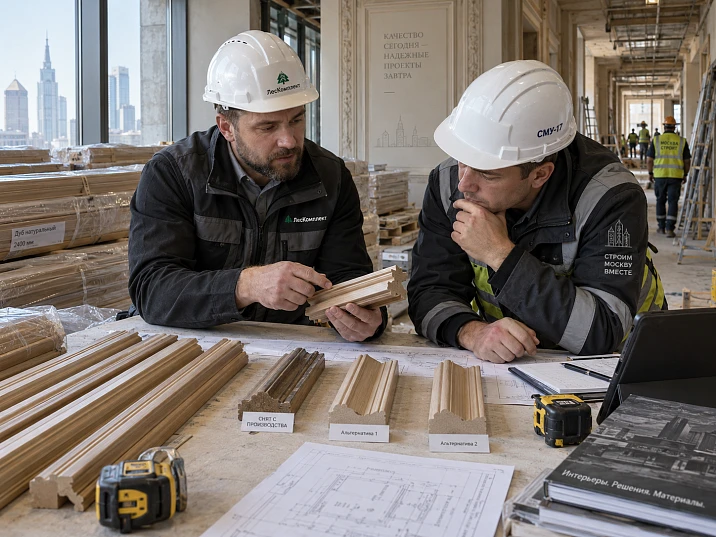
The first phase of a hotel, business center, or residential complex has already been completed. The same wooden skirting board is installed in the corridors, identical molding frames are repeated in the rooms, and an approved cornice has been mounted in the common areas. Eight months later, the second phase begins. The purchaser opens the old specification and tries to repeat the order, but it turns out that the required profile is no longer available in its previous version.
The problem is not limited to finding "something similar." It is necessary to preserve architectural continuity between the already built and the new part of the project. Sometimes this means finding a remaining stock of the old item. Sometimes it means reproducing the product. Sometimes it means choosing an analogue, but using it only in a visually separated area. Sometimes it is more appropriate to revise the design of the new phase entirely.
That is why large supplier of building materials in a long-term project, it should be considered not only as a source of the next batch, but also as a participant in planning the continuity of the product range.
Work sequence:
INITIAL POSITION → ACTUAL EXECUTION OF THE FIRST PHASE → ARCHIVAL SAMPLE → AVAILABILITY CHECK → REMAINING STOCK OF THE OLD ITEM → POSSIBILITY OF REPRODUCTION → ANALOGUES → COMPARISON OF GEOMETRY AND FINISH → AREAS OF ACCEPTABLE REPLACEMENT → APPROVAL → UPDATED SPECIFICATION → PURCHASE FOR THE NEXT PHASE.
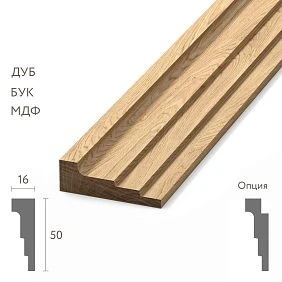
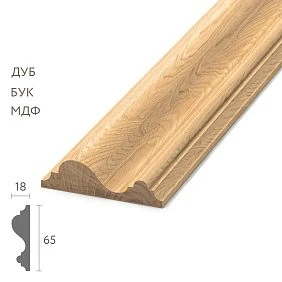
Why the discontinuation of one profile becomes a problem for the entire project
In a phased project, the decorative profile is part of a repeating architectural system. If the first building is finished with a single molding, the second is no longer a standalone interior: it must continue the visual language of the property.
Especially sensitive:
- long shared corridors;
- adjacent public areas;
- standard hotel rooms;
- symmetrical walls;
- series of identical door portals;
- lobbies of several buildings;
- areas that the visitor perceives as a single space.
If the first phase uses a profile of a specific cross-section, and the second phase gets a “very similar” one without verification, the difference may be unnoticeable on the product card and obvious on the wall.
Therefore, the task is not to replicate the category name, but to replicate the specific geometry, scale, and visual behavior of the profile.




Why phased projects are especially vulnerable to assortment changes
The risk is higher where months or years pass between the first and last purchase. Such projects include hotels, residential complexes, cottage communities, business centers, restaurants with multiple phases, retail chains, medical facilities, sanatoriums, and projects with multiple buildings.
While the project is under construction, the following may change:
- the manufacturer's product line;
- available wood species;
- commercial lengths;
- finishes;
- production technology;
- availability of specific raw materials;
- conditions for manufacturing a non-standard item.
Therefore, purchasing each phase as a separate independent project creates a risk that, midway through the property, the architectural system will cease to be reproducible.
Our factory also produces:





Unavailability of an item can take different forms — and the solutions differ as well
The phrase "discontinued" can conceal several different situations.
Item fully discontinued
Series production has ceased, and there is no warehouse stock.
The profile has changed
The series name looks similar, but the cross-section or individual radii have been updated.
The size has changed
The width, height, or commercial length now differ.
The wood species has changed
The profile is available, but not in the material from the first phase.
The finish has changed
The old tint, primer, or topcoat is no longer reproduced as a standard production finish.
Item temporarily unavailable
You need to decide whether to wait for supply to be restored or switch to an alternative.
Limited quantity remaining
The most dangerous situation: there is little material, and it needs to be allocated among critical areas rather than buying up the entire remaining stock without analysis.
Get Consultation
A similar profile from the catalog cannot be treated as a direct replacement
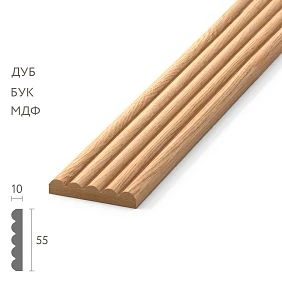
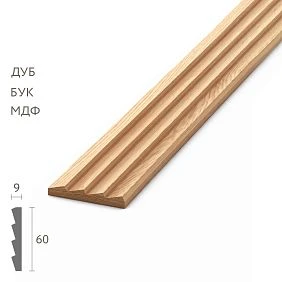
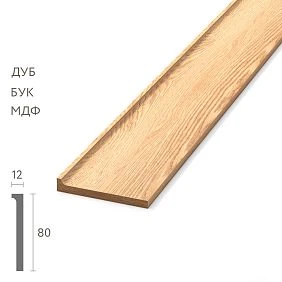
Two moldings may look almost identical in a photo, but differ in relief depth, height of the protruding part, radius of the cove, width of the flat fields, and the character of the shadow.
During actual installation, the difference is amplified:
- side lighting;
- long continuous line;
- joint between old and new product;
- repeating frames;
- adjacency to skirting board or cornice;
- identical paint finish that emphasizes the difference in geometry.
Therefore, replacement is selected by dimensions, cross-section, and a real sample, not by visual similarity of product cards.
After the first batch, full product identity must be maintained
A single SKU is an insufficient archive for a project that continues for years.
For critical profiles, after the first batch it is useful to keep:
- manufacturer's SKU;
- exact dimensions;
- cross-section;
- the material;
- finish option;
- commercial length;
- photographs;
- physical sample;
- places of actual application;
- delivery number and date;
- information about the painting performed on the site;
- amount of remaining reserve.
So a year later, the team compares the new item not with memory, but with a specific reference.
A physical sample is the most reliable archive of the form
For wooden moulding, it is especially useful to keep a small signed fragment with the full cross-section and actual finish.
An archival sample allows you to:
- place the new profile directly against the old one;
- compare depth and radii;
- evaluate the wood texture;
- match the finish;
- check the joint;
- provide a physical reference for production in case of possible repetition.
Such a sample should not lie among construction offcuts. It records the object, carcass, zone, SKU, material, finish, date, and purpose.
Availability must be checked before forming the final order for a new batch
A few weeks or months before purchasing critical items, check:
- whether the SKU exists in the current assortment;
- whether the required material is available;
- whether the required volume can be produced;
- whether the current dimensions match;
- is the previous finish still available;
- what is the actual production lead time;
- whether there is stock on hand;
- can the original custom variant be reproduced.
If the problem is identified in advance, there is still time for samples, comparison, and approval. Before installation, the choice usually comes down to an urgent compromise.
We first allocate the limited remaining stock of the old item according to criticality
If, for example, 80 planks of the old profile remain, while the project requires 120, there is no need to automatically buy up all 80 and then decide where to place them.
First, determine:
- which zones are visually connected to the first phase;
- where the new profile will stand next to the old one;
- where the replacement is especially noticeable;
- which rooms can be separated by an architectural boundary;
- how much old material should be kept for future repairs.
The original profile is directed to areas where replacement is unacceptable or most noticeable.
The object should be divided into compatibility zones
| Zone | The old profile is already installed | Visual connection | Replacement |
|---|---|---|---|
| First floor corridor | Yes | Straight | Undesirable |
| Second-floor corridor | No | Strong | only after approval |
| Separate building | No | No direct connection | Possible |
| Technical room | No | Minimal | Possible |
This avoids setting the task of “finding one perfect match for the entire object” if the architecture allows a reasonable separation of solutions.
Compare the old profile and its equivalent by parameters, not by name
Checked:
- overall width;
- height;
- depth;
- cross-section;
- relief;
- height of protruding parts;
- radii;
- the material;
- wood texture;
- product length;
- finishing method;
- installation conditions;
- behavior of joints.
Two moldings 60 mm wide can have a completely different visual scale if one is almost flat and the other is deeply embossed.
The new sample should be checked next to the existing interior
The catalog and drawing provide the geometry. The final visual decision is best made on site.
The new sample is placed against:
- next to the already installed old profile;
- to the same wall type;
- under actual lighting;
- after a trial finish;
- from the distance at which the visitor sees the profile.
If replacement is planned in a separate cabinet, additionally assess how much the two rows are perceived simultaneously at all.
Matching geometry does not guarantee matching color and finish
Even if the new profile repeats the cross-section, visual compatibility may be disrupted for another reason.
Separately compare:
- type of wood;
- natural shade;
- texture;
- tinting;
- degree of opacity;
- gloss;
- age of the existing finish.
An archival sample is useful but not absolute: wood and finishes can change appearance over time in use. Therefore, the final comparison is also made with the elements actually installed.
If there is no exact match, we start not with replacement, but with checking whether it can be reproduced
Work sequence:
- check whether the original geometry can be re-manufactured;
- check warehouse stock for the old item;
- check the reserve on site;
- select the closest possible analogues;
- consider changing the solution for a specific area;
- redistribute the available original material between critical sections.
The order matters: switching to a new profile is not the first reaction, but one of the options after verifying continuity.
Individual re-manufacturing must be assessed technically and economically
If the profile shapes the architectural style of the object and is needed in a substantial volume, it makes sense to check the possibility of re-manufacturing.
But it cannot be promised that any removed profile can be restored without limitations.
The following are assessed:
- availability of the original cross-section;
- the material;
- technological feasibility;
- required volume;
- preparatory operations;
- production time;
- finishing;
- economic feasibility.
A small volume of a non-standard profile can turn out to be disproportionately expensive, because the preparatory operations are distributed over a small number of items.
Critical items need to be identified even before the first purchase
Not all items on a project are equally dangerous to lose from the assortment.
Critical items include those that:
- are used in many rooms;
- are clearly visible;
- form a recognizable architecture;
- have a non-standard cross-section;
- are difficult to replace with an analogue;
- are used in a row between the first and subsequent phases;
- have a special finish.
They require a separate plan for procurement, sample storage, and future confirmation of availability.
Whether to purchase the entire volume at once or in stages is a decision that depends on risk
Purchasing for several phases at once offers advantages:
- uniform finish;
- lower risk of the item being discontinued;
- a single coordinated batch;
- easier visual continuity.
But there are also downsides:
- storage is needed;
- budget is frozen;
- the project may change;
- the material may be damaged during long-term storage;
- the future volume may not yet be confirmed.
Therefore, there is no universal rule that 'critical items are always purchased immediately.' The decision is made based on the specific profile and project.
The safety stock for a critical profile cannot be calculated as a single percentage for all items
For a long project, it is especially tempting to establish a simple rule: 'we keep 10% for each critical item.' But the same percentage for all SKUs rarely reflects the real risk.
The stock volume depends on:
- the complexity of the profile;
- scale of the object;
- number of repeating rooms;
- interval between batches;
- probability of local repair;
- difficulty of re-production;
- uniqueness of the material;
- cutting specifics;
- risk of damage during storage;
- ability to replace the profile without visual conflict.
For a simple standard slat, the replacement risk may be low. For a complex decorative cornice that defines the entire character of the lobby, a single missing section a year later can become a serious problem.
Therefore, the reserve is calculated for specific items, not as a single figure for the entire run.
What is a sufficient reserve
A sufficient reserve is not a maximum stock. It is a volume that covers a reasonable repair scenario and reduces the risk of losing architectural continuity without turning the customer's warehouse into a storage of excess material.
When the reserve has increased value
If the profile has been discontinued or is difficult to reproduce, the remaining intact items from the first phase become much more valuable than ordinary warehouse stock. They must not be used for a random local rework without a separate decision.
large building material suppliers must see the list of critical project items
For a long project, it is useful to keep not only a standard specification but also a short list of items for which loss of availability is especially dangerous.
| Article | Where it is used | Phases | Replacement risk | Reserve | Next check |
|---|---|---|---|---|---|
| MLD-A | Halls and corridors | 3 | High | Provided | Until the second phase |
| PLT-B | Room number inventory | 3 | Medium | Provided | Until the second phase |
| KZ-C | Technical areas | 2 | Low | Minimal | As needed |
This table helps procurement avoid waiting until the last moment. If the MLD-A is deemed critical, its availability is checked in advance, even if the final volume of the second phase is still being finalized.
What to record in the list
- actual SKU of the first phase;
- the material;
- finish;
- number of future phases;
- current reserve;
- replacement risk;
- date of the next availability check;
- availability of an archived sample.
This is how the list becomes a procurement strategy tool, not just a list of “important” items.
When phased procurement is safer than procuring for the entire project at once
Sometimes the desire to lock in a single profile for all phases creates another risk. If the project is still changing, early procurement of the entire volume can lead to a large surplus.
A phased approach makes more sense if:
- the dimensions of the next cabinets have not yet been confirmed;
- the design continues to change;
- the finishes of the next phases may differ;
- there is no reliable place for long-term storage;
- there is a long time gap between phases;
- the future volume cannot yet be calculated without significant error;
- the material is sensitive to storage conditions.
In this case, the task is not to "buy everything at once," but to create a system for early monitoring of the availability of critical SKUs.
What compensates for the risk of phasing
Phased purchasing is made safer by:
- archival samples;
- full recording of execution;
- regular assortment review;
- reasonable reserve;
- early approval of alternatives;
- communication with supply and production before the start of the next stage.
If the problem was discovered after the start of the second phase, we first stop the uncontrolled replacement
The worst-case scenario is when one crew has already started installing a new "similar" profile, while another continues using up the remainder of the old one. A week later, the site ends up with two different systems in the same space.
If it turns out that the old SKU is no longer available, the procedure is:
- stop independent selection of a replacement on site;
- calculate the physical remaining stock of the old material;
- identify the zones already completed;
- identify the zones not yet started;
- identify visually connected areas;
- check the possibility of re-manufacturing;
- obtain possible alternatives;
- create samples;
- define the boundaries of acceptable substitution;
- approve a single scenario;
- update the working specification;
- only after that, proceed with bulk purchasing and installation.
Why you can't "finish it however it turns out"
Local time savings in the moment can create a permanent visual defect for years of use. This is especially noticeable in repeating corridors and adjacent rooms.
The installation crew must not choose a substitution on their own
An installer can technically determine that the new profile fits on the wall and can be glued in the same way. But this does not mean that the substitution is architecturally acceptable.
The decision affects:
- visual perception;
- repeatability of the object;
- future phases;
- repair reserve;
- cost;
- the specification;
- maintenance archive.
Therefore, the installation crew may participate in the inspection of the assembly, but must not single-handedly select a new profile.
Approval of the replacement should be simple but unambiguous
For most projects, there is no need to create a separate bureaucratic treatise. It is sufficient to record:
| Field | What we specify |
|---|---|
| Original profile | Item code of the first phase |
| Reason for change | Unavailability / removal / change of version |
| New profile | Confirmed SKU |
| Dimensions | Actual cross-section |
| Material | Species / finish |
| Finishing | Approved option |
| Areas of application | Specific buildings / floors / rooms |
| Sample | Approved / not approved |
After approval, the old position should no longer automatically appear as active in the new queue.
After replacement, the specification should show the profile actually applied
If the first queue had MLD-A and the second officially approved MLD-B, the final documentation should clearly separate the zones.
For example:
- Building 1 — MLD-A;
- Building 2 — MLD-B;
- transition zone between buildings — solution ___;
- MLD-A repair reserve — storage location ___;
- MLD-B repair reserve — storage location ___.
Otherwise, a few years later, the operations team will again try to order MLD-A for a zone where MLD-B is actually installed.
building materials supplier in a long project, it is needed not only at the moment of ordering
For a phased project, it is useful to clarify in advance:
- whether the item code is still current;
- ability to reorder;
- size changes;
- material changes;
- production time;
- the possibility of a custom repeat;
- stock availability;
- alternatives if the item becomes risky.
This way, communication shifts from the mode of “we have installation tomorrow, find something similar” to the mode of managed planning.
What the supplier cannot decide in place of the project team
The supplier can show options and technical parameters, but must not unilaterally decide whether a new profile can be installed next to the old one in a visible area. This is an architectural decision for the project.
wholesale supplies of building materials require lifecycle management of the item
A retail buyer usually purchases linear trim once. A large project may order it by building sections, floors, phases, and functional zones.
Therefore, the lifecycle of the SKU becomes part of the procurement strategy:
SELECTED → APPROVED → PURCHASED FIRST PHASE → SAVED SAMPLE → CHECKED AVAILABILITY → PURCHASED NEXT PHASE → UPDATED ARCHIVE.
This is especially important for architecturally significant profiles that must be repeated for years.
Practical example: second phase of a hotel eight months later
The first phase of the hotel used oak molding MLD-A. It was used to frame wall panels in corridors and standard rooms. After completion of the work, 32 intact strips were left as a repair reserve and one signed sample with the actual tint.
Eight months later, the second building section begins. The bill of quantities requires another 420 strips. Upon checking, it turns out that MLD-A in its previous finish is no longer supplied as a regular serial item.
Incorrect decision
The manager finds an MLD-B of approximately the same width, sends a photo to the designer, gets a quick "looks similar," and places an order for all 420 slats.
After the first frames, it becomes clear:
- the new profile is deeper;
- the shadow is more pronounced;
- the frames look more massive;
- when transitioning from body 1 to body 2, the difference is noticeable;
- the old and new molding cannot be joined neatly in the transition zone.
The correct sequence
- pull up the actual MLD-A card from the first batch;
- obtain an archival sample;
- recount 32 whole planks from the old reserve;
- check the possibility of remanufacturing MLD-A;
- obtain several possible analogues;
- compare cross-sections and finishes;
- make test samples;
- attach them to the existing interior;
- divide case 2 into compatibility zones;
- use the old 32 planks where visual continuity is most critical;
- approve the new profile in a standalone zone;
- only after that, order the main volume.
As a result, the object receives not a chaotic mixture, but a controlled transition between phases.
The limited old reserve must be allocated according to architectural value
If there is less old material than needed, it cannot be used on a first-come, first-served basis.
Priority is usually higher for zones:
- directly adjacent to the first phase;
- architecturally symmetrical;
- where the new and old profiles will be visible simultaneously;
- with high visual significance;
- where local replacement will require a noticeable joint;
- where future repairs will be more difficult.
For a separate technical room or a remote building, replacement may be more acceptable.
The repair reserve should not be spent entirely
Even if there are few old planks, it is not always reasonable to use the entire repair fund for the new batch first. After that, any damage in an already operating building will require a complex search for an equivalent.
The decision depends on how much old material is critical to keep for operation.
Wooden skirting is especially sensitive to the joint with architraves and furniture
If in the second batch it changes Wooden baseboard, you need to compare not only the height.
Checked:
- thickness;
- protrusion relative to the architrave;
- top profile;
- method of finishing at doors;
- adjacency to furniture;
- position relative to outlets;
- the junction of the old and new solution in the transition zone.
Two baseboards of the same height can have different top profiles and look completely different near the door casing.
When a new baseboard can be used
If the second section is visually separated, the door units there are self-contained, and the transition between the old and new profile does not fall into one continuous line, a coordinated replacement may be more sensible than trying to replicate the old position at any cost.
Wooden molding requires comparing the entire geometry of the frame
for wooden molding the repetition effect matters. The same profile forms dozens of frames, and a small difference is multiplied across the entire floor.
When comparing MLD-A and MLD-B, evaluate:
- the actual width of the visible part;
- the depth;
- the light-and-shadow profile;
- behavior at the corner joint;
- the scale of the frame;
- compatibility with decorative elements, if used;
- combination with furniture and casings.
If the new geometry makes the frame visually heavier, sometimes you have to change not only the SKU, but also the dimensions of the frames themselves in the new batch.
It is better to change a wooden cornice only at an architectural boundary
wooden cornice creates a long horizontal line and reads well from a distance. Therefore, a transition from one profile to another in the middle of a shared corridor is especially noticeable.
If there is no exact match, it is better to look for a natural boundary:
- another cabinet;
- the door portal;
- a change in ceiling height;
- a separate hall;
- change of finishing material;
- architectural partition.
The boundary turns a replacement from an “error” into a separate agreed-upon decision.
construction materials suppliers must report changes to critical items before the next purchase
For a long project, it is useful to maintain contact on key SKUs between phases, not only at the time of a price request.
If a critical item:
- is discontinued from the standard assortment;
- changes material;
- changes size;
- becomes inconsistently available;
- has limited stock;
this information allows the project to make a decision before the installation crew waits for the item.
At the same time, no supplier can guarantee the eternal existence of every item. Therefore, the project still needs its own samples, archive, and reserve.
Wholesale building material suppliers: a serial item and an individual repeat are different scenarios
If an old product code has disappeared from the catalog, this still does not answer the question of whether it is possible to manufacture a similar or the same geometry separately.
One must distinguish:
Serial order
The item exists in the current line and is ordered under the standard product code.
Repeat individual manufacturing
A separate technical assessment, scope, timeline, and approval are required.
One cannot automatically assume that the absence of an item from serial sales means it is absolutely impossible to repeat. But it is also wrong to promise a repeat before a technical assessment.
construction materials supplier must obtain the most accurate original reference
The phrase "make the same molding as eight months ago" is weak.
To verify the possibility of replication, it is useful to provide:
- original SKU;
- a drawing or cross-section;
- physical sample;
- the material;
- the actual finish;
- required length;
- the expected volume;
- photos of the installed solution.
The better the source data, the lower the risk that the manufactured "analog" will only look similar in overall scale.
wholesale building material suppliers: an analog must first be tested with a small batch or a sample
If there is no exact match and a new profile has been selected, you should not immediately purchase the entire volume for the second phase.
First:
- get a sample;
- verify dimensions;
- perform a trial finish;
- check next to the old interior;
- assemble a small standard unit;
- approve the architectural solution;
- after that, launch the main batch.
For standard rooms, one control fragment or a reference room in the new phase is sufficient.
building materials wholesale from the manufacturer: sometimes it is safer to buy out the critical volume in advance
If the profile is unique, the project is confirmed, the next phase will definitely use the same SKU, and storage is properly organized, pre-purchasing part of the future volume can reduce the risk of the item being discontinued.
But the decision must be made based on a balance:
- risk of discontinuation;
- risk of project changes;
- storage cost;
- possibility of damage;
- frozen budget;
- accuracy of future quantity.
This is not a universal recommendation, but a tool for truly critical profiles.
building materials from the manufacturer: a saved sample reduces dependence on the product name
In a long project, the product card may change, and the name may be updated. A physical sample preserves what matters most: the actual shape, material, and finish of the batch that has already been built.
It is especially useful to keep samples of:
- non-standard profiles;
- tinted solid wood;
- rare cornices;
- items that are repeated across multiple buildings;
- items for which it is difficult to find a visually similar equivalent.
materials in bulk: continuity must be built into the procurement strategy for the first phase
The best time to think about discontinuing a profile is before it happens.
When selecting critical trim for a multi-phase project, it is useful to decide in advance:
- how many phases there will be;
- what the time gap between them is;
- which SKUs cannot be visually changed;
- which samples are retained;
- what reserve is needed;
- when availability is checked before the next queue;
- who is responsible for keeping the list of critical items up to date.
This way, assortment risk becomes a manageable part of the project rather than a surprise before installation.
The decision matrix helps choose between remaining stock, reordering, and an equivalent
| Situation | Old remaining stock | Re-manufacturing | Alternative | Recommended logic |
|---|---|---|---|---|
| The new area adjoins the old one | Present | Possible | Present | Priority to the old profile or an exact repeat |
| Separate building | Low | Expensive | There is a good equivalent | Approve the case's independent decision |
| Unique profile, large volume | No | Technically feasible | Weak alternatives | Evaluate individual repetition |
| Technical area | No | Not advisable | Present | Use the approved alternative |
| Limited old stock | Present | Unclear | Present | Send the old material to the most critical areas |
Such a matrix does not replace a design decision, but it helps avoid reducing the whole issue to a binary “old SKU available / old SKU not available.”
Before each new batch, a short verification checklist is needed
Before releasing the final order, check:
- whether all critical SKUs are up to date;
- whether the previous material is available;
- whether the dimensions have changed;
- whether the previous finish is available;
- whether saved samples are available;
- how much of the old reserve remains;
- which areas require absolute continuity;
- where replacement is acceptable;
- can the profile be replicated individually;
- does the critical volume need to be produced in advance;
- have the design rooms themselves changed;
- is there enough time for samples and approval.
This is a small check, but it is cheaper than stopping installation after discovering an incompatibility.
supply of construction materials the next phase should proceed according to the updated specification
If the replacement is approved, supply must not continue using the old first-phase table.
The new version records:
- old SKU — archived;
- new SKU — active;
- areas of new application;
- areas where the old profile remained;
- finishing;
- sample;
- repair reserve for both options.
This way, each subsequent participant receives one current picture, not a set of contradictory letters.
building materials supplier wholesale: a change in assortment does not equal a supply error
If the first batch was manufactured and delivered correctly, and after eight months the profile disappeared from the serial assortment, this does not mean that the original delivery was defective.
One must distinguish:
- an order fulfillment error — what was delivered does not match what was agreed;
- a subsequent change in assortment — a new risk for the next batch;
- a project change — the site itself chose a different solution;
- temporary unavailability — the item may return later.
The further process depends on correct classification: a claim, waiting, re-manufacturing, or approval of an equivalent.
building materials wholesale: you cannot mix the old and new profile in one continuous joint without verification
The most risky area is where the old and new product end up next to each other.
Particularly checked are:
- the joint in one corridor;
- the corner of one room;
- a symmetrical pair of frames;
- one cornice line;
- the joint of the skirting board at one door portal;
- the transition between building sections without a clear architectural boundary.
If the profile cannot be replaced discreetly, it is better to move the boundary of the change to where it reads as a deliberate design decision.
If the geometry has been preserved but the wood species has changed
Sometimes the required cross-section is still available, but not in the original species. For example, the first phase was made in oak, while the new item is only available as a standard option in beech.
This is not an automatic substitution. It is necessary to check:
- how the finish will be applied;
- how opaque the coating is;
- whether the natural texture is visible;
- whether the old and new materials will be adjacent;
- whether the project has requirements for the species;
- how hardness and texture differ in the specific application.
With a fully opaque paint finish, the difference may be less noticeable visually, but technical and project approval is still required. With a clear or semi-transparent finish, the difference in species becomes much more significant.
If the profile is the same, but the product length has changed
At first glance, this is the simplest case: the geometry matches, the material matches, the finish is repeated. But the length of the original product has changed.
This affects:
- Cutting;
- number of joints;
- number of whole products;
- waste;
- packaging;
- logistics;
- long visible sections.
For example, the first phase used 2400 mm planks, while the new version is available in a length of 2200 mm. A wall 2350 mm long, which used to be covered by a single plank, now requires a joint or another solution.
Therefore, even the “same profile” needs to be run again through the segment and cutting map.
The old warehouse stock must be checked before excl<
How to work with a network of sites if one profile is no longer available
In a chain of stores, restaurants, or hotels, one profile may be used not only in the phases of one building, but also at different addresses.
Then you need to decide what is more important:
- preserve the old standard for existing sites;
- migrate all new objects to the new profile;
- keep the old SKU as a reserve for repairs only;
- create a new standard specification for future openings.
It is better to fix the transition point once than to decide anew at every new object which of the two profiles is the “network standard.”
When replacing the profile can become an opportunity to improve the new queue
The disappearance of an old item is not always just a problem. If the new queue is visually self-contained, sometimes the project deliberately chooses a more suitable profile.
But this must be a decision:
- architectural;
- documented;
- verified on a sample;
- with a clear transition boundary;
- with an updated reserve and specification.
Then replacement stops being a forced attempt to "find something similar" and becomes controlled development of the project.
How to record the transition date from the old standard to the new one
For a long object, it is useful to indicate the specific version or date from which the new item becomes effective.
For example:
Up to version 12 — MLD-A.
From version 13 — MLD-B in case 2 and subsequent batches.
Such a record helps:
- process old orders;
- build a repair reserve;
- verify as-built documentation;
- do not mix two project eras;
- explain the differences to future operations.
Early warning of risk is better than an urgent search for an alternative
If a critical profile becomes unstable in availability, the project is better off knowing before the last batch disappears.
Then there is still time to:
- confirm the future volume;
- increase the reserve;
- order the next queue earlier;
- check for re-manufacturing;
- approve an alternative standard;
- plan the architectural transition boundary.
This is especially important if there is a short window between batches, and sample production and approval take up a significant part of the schedule.
If an item is temporarily unavailable, you need to compare the cost of waiting with the cost of substitution
Sometimes a profile has not been discontinued but is simply temporarily unavailable. Then it becomes a management question: wait for supply to resume or switch to a new option.
The decision is influenced by:
- the actual possible production date;
- the criticality of the current area;
- the impact of waiting on the installation schedule;
- the cost of redesigning the project for an alternative;
- risk that the new date will be postponed again;
- availability of old stock;
- possibility to temporarily switch to other zones.
If the delay does not affect the critical path, waiting for the original profile may be more advantageous than an architectural substitution. If the object comes to a complete halt, an approved equivalent may be more rational.
What must not be done
The promised date must not be treated as a guarantee if production has not yet been confirmed. The working plan must have a specific point after which the project switches to the alternative scenario.
If the new queue has already been partially installed with the old profile, the replacement boundary is chosen especially carefully
Let us imagine that on the second floor of the new queue, 60% of the corridor has already been completed with the old MLD-A. The remaining stock is not enough for the last rooms.
Options:
- find additional old material and finish the floor completely;
- move the new profile to the next floor;
- create an architectural boundary at a natural transition;
- as a last resort, dismantle part of the completed section and redo it with a single new profile.
The weakest option is to start MLD-B from an arbitrary point in the middle of a single visual corridor.
How to assess the sufficiency of the old remainder by zones, not just by meters
The warehouse has 72 meters of old molding. The new phase requires 95 meters. Formally, the deficit is 23 meters.
But the question is not how much total footage is lacking, but which zones can be fully covered with the old profile.
For example:
| Zone | Requirement | Visual connection with the old phase | Solution |
|---|---|---|---|
| Transitional hall | 18 м | Straight | Old profile |
| 2nd floor corridor | 32 м | High | Old profile |
| Separate hall | 21 м | Low | A new one is possible |
| Technical area | 24 м | Minimal | A new one is possible |
72 meters is enough to fully cover the two most critical areas and still keep part of the repair reserve. This approach is better than mixing old and new material little by little everywhere.
How to check that the analogue does not cause problems during cutting
A new profile may match in external geometry but have a different commercial length. This affects not only the quantity but also the placement of joints.
Before placing a bulk order, check again:
- lengths of continuous walls;
- standard frames;
- door portals;
- corner pieces;
- minimum usable offcuts;
- Number of whole items.
If previously one section was covered by one strip, but now it requires two, the visually “same” profile already changes the result.
How to work with a profile that repeats in both architecture and furniture
On complex projects, a single molding may be used in wall frames and repeated in furniture portals. In that case, replacing only the architectural part can break the visual rhyme.
Both systems are checked at once:
- wall finish;
- Furniture facades;
- portals;
- door elements;
- corner overlays or related parts.
If the furniture has already been made with the old profile, a new equivalent on the walls may look especially out of place. In that case, individual repetition or keeping the old reserve becomes more valuable.
How to store the history of the decision after completing the transition to a new profile
After approving MLD-B instead of MLD-A, it is useful to keep a short record:
- why MLD-A stopped being used;
- from which project version does MLD-B apply;
- where MLD-A remains;
- where MLD-B is installed;
- which samples are preserved;
- what repair reserve exists for each option.
This is especially important for future reconstruction and repair. In a few years, no one should have to investigate again why different profiles are installed in two buildings.
The ultimate goal is not to preserve the old article at any cost, but to preserve the integrity of the object
Sometimes the best result comes from exactly repeating the old position. Sometimes from using a limited remaining stock in critical areas and a new profile in a self-contained building. Sometimes from deliberately changing the new phase.
The correctness of the decision is determined not by whether it was possible to "find the same article", but by whether the following have been preserved:
- architectural logic;
- visual compatibility;
- installation quality;
- clear documentation;
- maintainability;
- procurement risk control.
That is why a long project requires not a one-time purchase, but management of continuity of the selected products between phases.
For critical items, it is useful to set a decision deadline
If a profile is temporarily unavailable or a repeat production is being considered, the project needs a date after which it cannot wait indefinitely. Otherwise, procurement and installation get stuck between the old and new scenario.
For each critical item, you can record:
- the date of the next availability check;
- the deadline for deciding on an alternative;
- sample production lead time;
- approval lead time;
- the date when the material must be on site;
- time buffer for adjustments.
For example, if installation begins on December 1, and producing a confirmed alternative takes several weeks, the decision cannot be postponed until the end of November. A milestone date helps link the architectural choice to the actual schedule.
It is better to update the assortment risk list after each phase
After the completion of building 1, the project already knows more than it did before construction began. It is clear which profiles turned out to be the most critical, where consumption is higher than expected, what buffer is actually needed, and which items are the hardest to replace.
Therefore, after each phase it is worth updating:
- list of critical SKUs;
- actual buffer;
- archival samples;
- availability of serial items;
- lead times for repeat production;
- risk of finish change;
- zones where replacement is not allowed.
This way the next queue starts with the current picture rather than a specification from a year ago.
If the new profile is approved, it must also be considered critical for subsequent queues
After the transition from MLD-A to MLD-B, the risk does not disappear. If two more cabinets remain ahead, MLD-B becomes the new standard for them and must be included in the same control list.
Need to preserve:
- MLD-B sample;
- its actual finish;
- new zone map;
- remaining stock and reserve;
- the date of the next availability check.
Otherwise, in a year the project may repeat the same problem, already with the new profile.
It is better to approve a control mock-up of the new batch before mass installation
If the profile changes, a full-size sample on the table shows only part of the picture. On a real project, joints, lighting, viewing distance, and neighboring elements also matter. Therefore, for a critical transition, it is useful to assemble a small full-scale mock-up.
It may include:
- a section of wall with the new molding;
- a typical frame corner;
- baseboard and casing;
- part of a cornice;
- actual finish;
- neighboring furniture or a door, if they affect perception.
This checks not an individual product, but a new assembly in the context of the room.
If a new batch consists of dozens of identical numbers, one approved reference fragment becomes the standard for the entire series. This reduces the risk that different crews will start interpreting the new profile differently.
What to record after approval
- which SKU is approved;
- which material was used;
- which finish was approved;
- dimensions of the standard frame;
- joint with the baseboard and trim;
- approval date;
- photos of the reference sample.
After that, mass ordering and installation rely not on a verbal "roughly like in the first building" but on a specific approved sample of the new batch.
How to make a decision when the project team has no consensus
For a disputed replacement, it is useful not to discuss "like / don't like" but to break the decision down into verifiable criteria: matching cross-section, visual connection of zones, possibility of re-manufacturing, remaining stock of the old material, timeline, cost of rework, and maintainability. Then architects, procurement, and the contractor discuss the same set of factors.
If uncertainty remains on a particular criterion, it can be resolved with a reference sample or a test fragment. Mass ordering should not become a way to "check whether the profile will work."
For a large project, it is especially useful to document in writing not only the chosen option but also the rejected alternatives with a brief reason. A few months later, this prevents re-discussion of an already closed issue.
Before placing a large order, it is useful to double-check that the approved sample actually matches the working specification and that this is exactly what will be produced in the main batch. This is a simple checkpoint that separates architectural approval from the commercial order and reduces the risk of ordering a profile that is correct by name but has already been changed in execution.
20 typical mistakes when taking a profile from production between batches
1. Treating each batch as a separate independent project
Why it happens: budgets and schedules are managed separately. Consequence: no one controls assortment continuity. How to prevent it: maintain a single list of critical SKUs for the entire facility.
2. Not keeping a physical sample
Reason: the item code is recorded in the specification. Consequence: a year later, the profile is compared only by photograph. Prevention: a signed reference sample after the first batch.
3. Storing only the product name
Reason: the name seems unambiguous. Consequence: material, length, finish, and actual execution are lost. Prevention: a complete item card.
4. Checking availability on the day the order is placed
Cause: previously the item was always in the catalog. Consequence: no time for samples and approval. Prevention: early verification of critical SKUs.
5. Assume that a serial SKU will always exist
Cause: the project is used to a stable assortment. Consequence: the next queue depends on an item that has already changed. Prevention: include availability risk in the strategy.
6. Choose a replacement based only on a photo
Cause: two profiles look similar in the catalog. Consequence: different depth and shadow are noticeable on the wall. Prevention: cross-section, dimensions, and a physical sample.
7. Compare only the width
Cause: this is the most obvious dimension. Consequence: the relief and protrusion differ. Prevention: check the full cross-section.
8. Do not compare the finish
Cause: the geometry matched. Consequence: the new profile differs in color, gloss, or texture. Prevention: test the finish next to the existing material.
9. Treat an archived color sample as an absolute reference
Cause: the sample is well preserved. Consequence: aging of the actually installed finish is not taken into account. Prevention: compare with the object as well.
10. Buy up the entire limited remaining stock without allocation
Cause: fear of losing the last items. Consequence: the old profile is used up in less important areas. Prevention: first a compatibility and priority map.
11. Spend the entire repair reserve on a new phase
Cause: the old profile is needed urgently. Consequence: the first phase is left with no possibility of repair. Prevention: separately define the minimum operational stock.
12. Switch to an analogue immediately without checking re-manufacturing
Cause: there is no serial item. Consequence: the object abandons continuity prematurely. Prevention: technical assessment of reproduction.
13. Promise custom reproduction before technical assessment
Cause: it seems that any wooden profile can be made. Consequence: the project builds a schedule on an unconfirmed possibility. Prevention: first assess the technology, volume, and timeline.
14. Mix old and new profile within the same room
Cause: the old material was not enough for the last meters. Consequence: a visible break in the architectural system. Prevention: move the replacement boundary to a separate zone.
15. Purchase the entire volume of the alternative before approving the sample
Cause: deadlines are tight. Consequence: a large batch may turn out to be visually unsuitable. Prevention: first a sample or a small test volume.
16. Do not update the specification after approval
Cause: all participants already know the decision. Consequence: later the old SKU appears again in a reorder or repair. Prevention: one active version.
17. Allow the installer to choose a replacement on site
Cause: the new profile is technically suitable. Consequence: a local decision breaks the overall architecture. Prevention: project approval.
18. Do not separate zones of acceptable and unacceptable replacement
Cause: they are trying to find one solution for the entire project. Consequence: either too expensive a repeat or too noticeable a replacement. Prevention: a visual compatibility map.
19. Do not pass information to operations
Cause: the task is considered closed after installation. Consequence: a few years later, no one knows which profile is old and which is new. Prevention: an as-built map and a reserve for each option.
20. Do not revise the criticality of items after every batch
Cause: the list was compiled once. Consequence: new risks remain unnoticed. Prevention: update the list before each next purchase.
Final algorithm if the required wooden profile is no longer available
UNAVAILABILITY DETECTED → STOP UNCONTROLLED SUBSTITUTION → CONFIRM ACTUAL EXECUTION OF THE FIRST BATCH → FIND AN ARCHIVED SAMPLE → RECALCULATE THE OLD RESERVE → VERIFY REMAINING STOCK WITH THE SUPPLIER → CHECK FOR REPRODUCTION → OBTAIN ANALOGUES → COMPARE CROSS-SECTION, MATERIAL AND FINISH → CHECK ON SITE → DIVIDE ZONES BY SUBSTITUTION ACCEPTABILITY → APPROVE → UPDATE THE SPECIFICATION → ORDER THE MAIN BATCH → KEEP A SAMPLE OF THE NEW OPTION → UPDATE THE OPERATIONAL ARCHIVE.
- Verify whether the item has actually been discontinued rather than temporarily unavailable.
- Confirm the actual SKU of the first batch.
- Confirm the material and finish.
- Find a physical sample.
- Check the remaining stock on site.
- Check the remaining stock of the old item with the supplier.
- Determine the requirement for the next batch.
- Identify critical areas.
- Keep part of the old reserve for repairs.
- Check individual repetition.
- Obtain samples of alternatives.
- Compare full sections.
- Compare materials.
- Do a trial finish.
- Check next to the existing interior.
- Define the architectural boundaries of permissible substitution.
- Approve the new option.
- Update the specification.
- Order only after approval.
- Save the new sample and the decision history.
Bottom line: assortment continuity is part of the procurement strategy for a large project
With phased furnishing, it is not enough to control the quantity and timing of the next delivery. You need to control the project's ability to reproduce the chosen architectural solution months and years later.
If the profile has disappeared or changed, the correct sequence is as follows:
IDENTIFY THE ORIGINAL ITEM → CHECK OLD STOCK → ASSESS REMANUFACTURING → FIND ANALOGUES → COMPARE SAMPLES → DETERMINE ZONES OF PERMISSIBLE SUBSTITUTION → APPROVE → PURCHASE.
It is this approach that allows large supplier of building materials integrate into a long project without depending on the random availability of a single item on a specific day.
If a new batch requires construction materials wholesale, the continuity of critical profiles is checked first, and only then is the final procurement version released.
Frequently asked questions
Should the profile be replaced immediately if it is not in the current catalog?
No. First, the status of the item, stock availability, and the possibility of re-manufacturing need to be clarified. Absence from the catalog does not yet describe all possible scenarios.
Can a similar profile be used in another cabinet?
Yes, if the cabinets are visually separated and the replacement is approved. But first, the geometry, material, finish, and overall architectural logic need to be checked.
Should the entire remaining stock of the old item be bought out?
Not automatically. First, the critical areas, future repair reserve, and actual demand are determined. The remaining stock must be allocated deliberately.
Which sample is best to keep after the first batch?
A fragment with the full cross-section and actual finish, labeled with the item code, material, project, and area of application.
Can a match be found based on molding width alone?
No. You need to compare height, depth, relief, radii, material, finish, and joint behavior.
When does custom replication make sense?
When the profile is architecturally critical, the volume is significant enough, the technology allows replication, and the match creates a noticeable difference. Economics are assessed separately.
Should a critical profile be purchased for all phases at once?
Not always. This reduces the risk of the item becoming unavailable, but creates risks of storage, project changes, and surplus. The decision depends on the specific SKU and the project stage.
What should be done if the new profile has already begun to be installed without approval?
Stop further spread of the decision, determine the completed scope, compare the old and new options, and approve the boundaries where the new item is acceptable.
Why can't the entire old reserve be used for the next phase?
The first phase is already in operation and may require repairs. A reasonable amount of the original material must be kept for future replacement.
What to hand over to operations after the project is completed?
A map of as-built profiles by zone, materials and finishes, replacement records, remaining repair stock, and archived samples of the old and new options.