




























Article Contents:
- What a plaster molding collection is and how it differs from a random set of elements
- When a designer should choose a collection rather than individual elements
- When a collection, on the contrary, is not needed
- How to read the STAVROS collection catalog
- First, determine the stylistic objective of the project
- The “Modern” collection: when Art Nouveau plasticity is needed
- The “Gothic” collection: for pronounced architectural stylization
- “Versailles”: how to work with a palace decor system
- “Botanical Garden”: Plant Decor as a System
- “Versailles Lite”: When a More Restrained Scenario Is Needed
- How to Compare Two Collections Correctly
- Why You Shouldn’t Choose a Collection Based on Just One Striking Panel
- One Ornament — Multiple Sizes
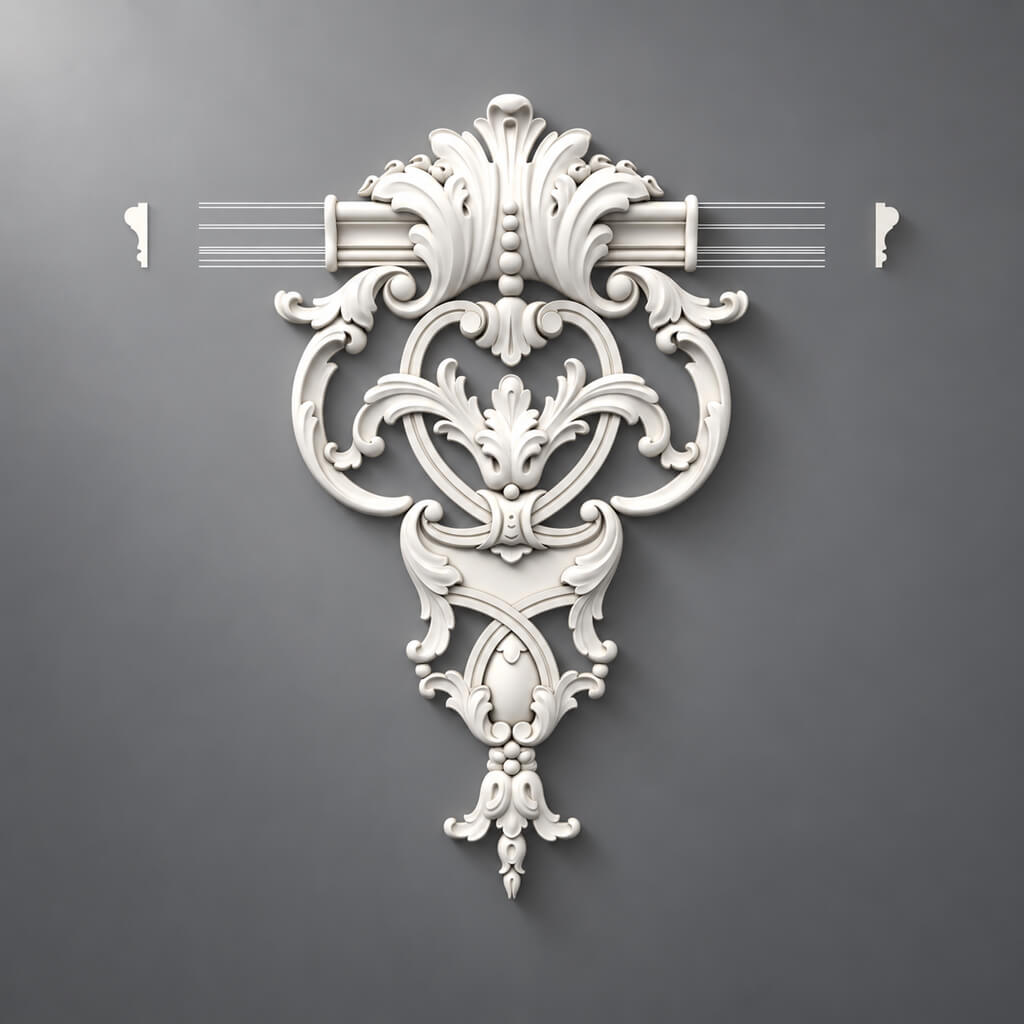
- Central Elements of the Collection
- Corner Elements of the Collection
- How to Assemble a Single Wall from the Collection
- 1. Define the Boundaries of the Decorative Zone
- 2. Find the Architectural Axes
- 3. Build the frame grid
- 4. Choose the main molding
- 5. Add collection accents
- 6. Check for empty fields
- 7. Lock the SKU
One successful molding does not yet create a system. You can separately choose a beautiful overlay, then find a suitable rosette, add a corner element, and a week later discover that each of them speaks its own decorative language: one is built on strict geometry, the second on flowing plant ornament, the third is too large for the others, the fourth gives a completely different relief depth.
In a visualization, such a difference can sometimes be hidden with color and light. In a real interior, it becomes more noticeable. The decor begins to look not like an architectural composition, but like a set of successful but randomly assembled details.
This is exactly where stucco collections for designers are useful. Their point is not that all elements must necessarily be bought as one set. A collection provides an initial coordinate system: ornament, character of lines, scale, plasticity, repeating motifs, and a set of compatible products. The designer only has to decide which part of this system is needed for a specific project.
The working sequence is as follows:
project idea → stylistic filter → collection → collection composition → real dimensions → compatible elements → composition → SKU → sample / 3D / DWG → specification → quantity → order.
This approach is especially useful in projects where the decorative theme is repeated on several walls or in several rooms. Instead of starting the selection anew each time, the designer works with an already agreed-upon visual vocabulary.
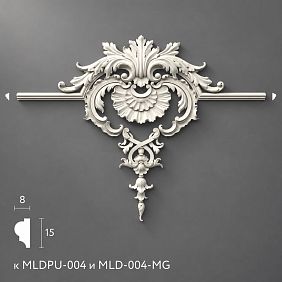
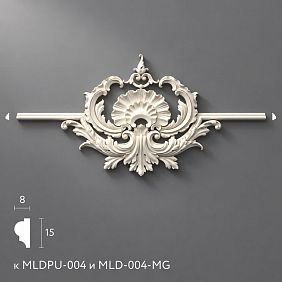
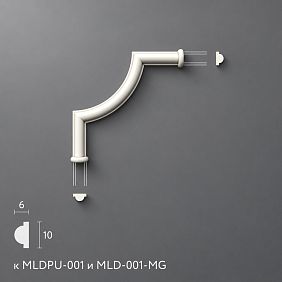
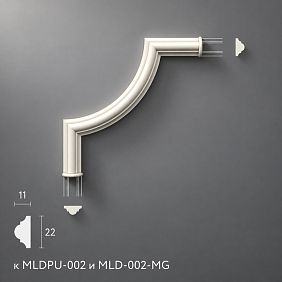
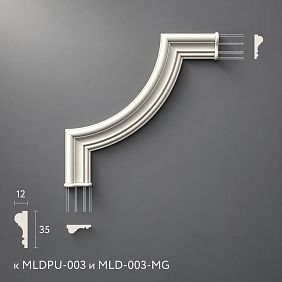
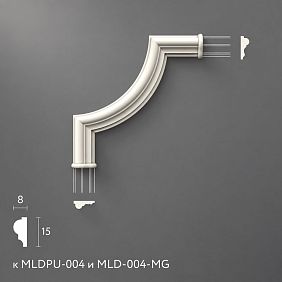
What a stucco collection is and how it differs from a random set of elements
A collection is not just a folder of products with the same name.
Its value appears when the products can truly be perceived as parts of one system. The connection can be built on several levels:
- character of the ornament;
- geometry of the lines;
- plasticity;
- depth of the relief;
- scale of the motifs;
- recurring decorative techniques;
- overall style.
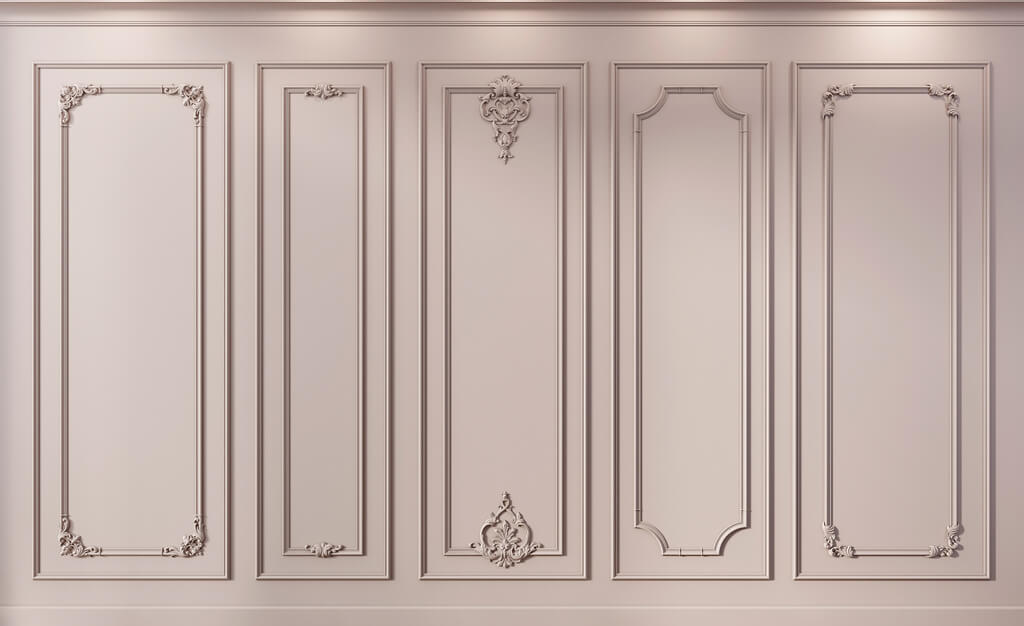
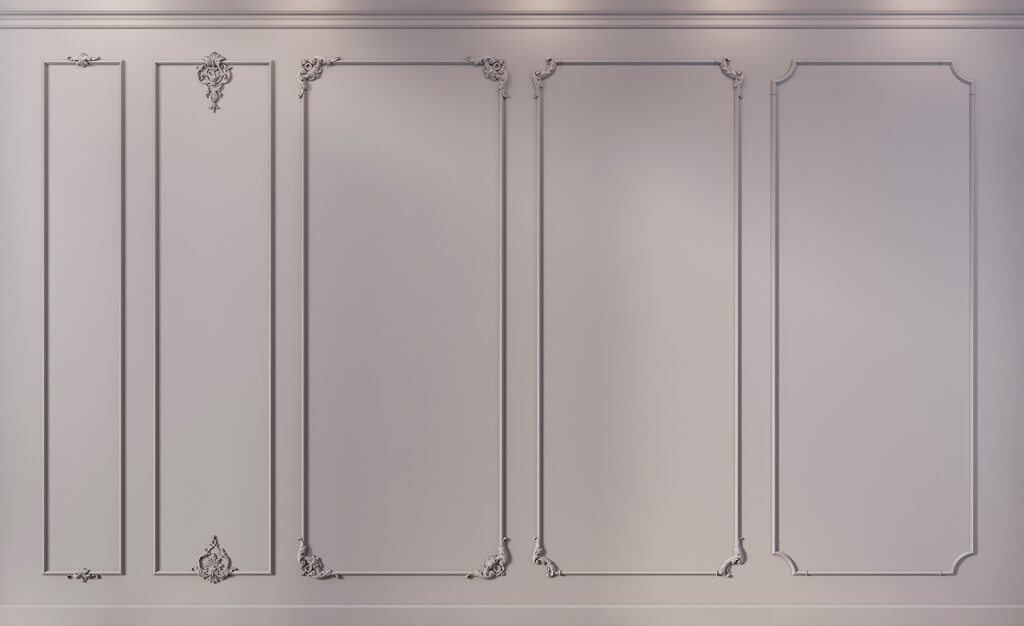
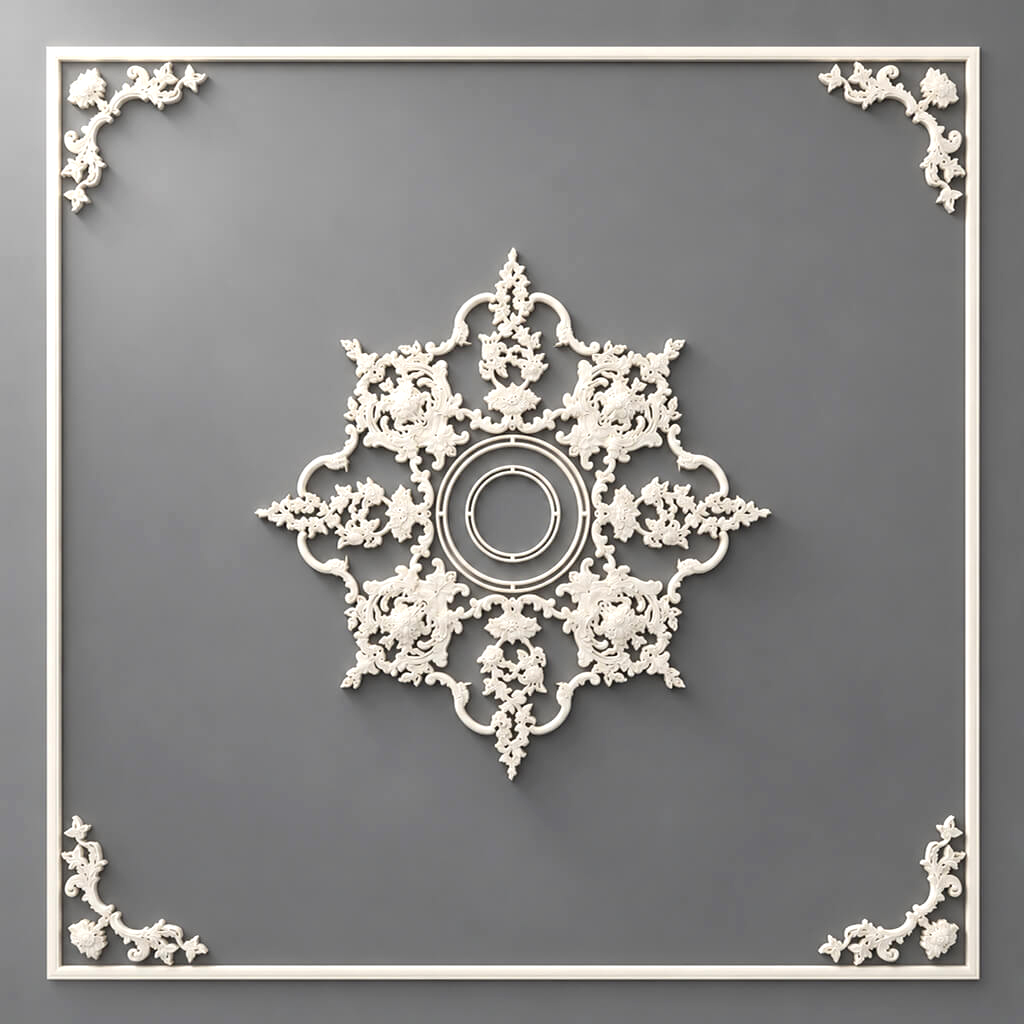
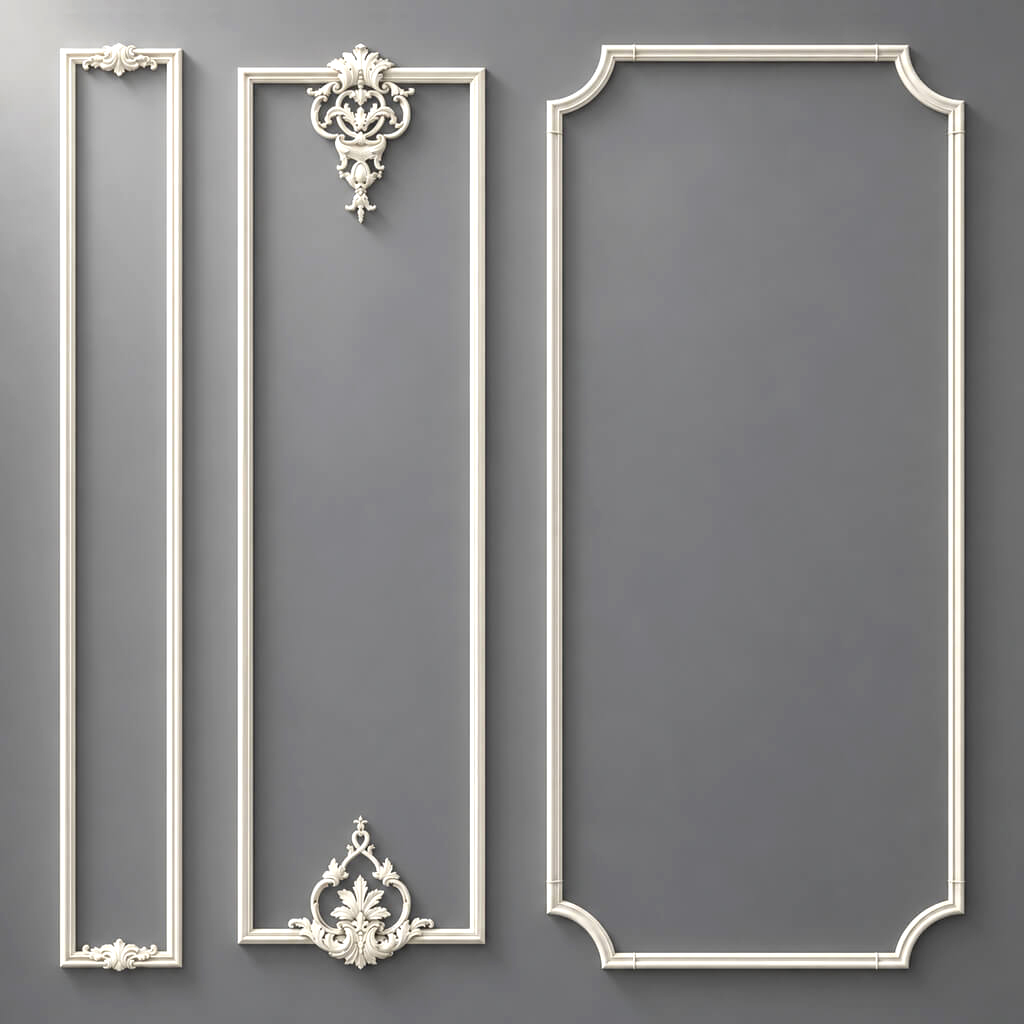
Let's imagine a wall frame. The molding itself creates a geometric boundary. Inside there is a medallion, decorative elements in the corners, and elongated overlays along the vertical. If all the parts are selected from independent series, the designer has to independently check whether they conflict in scale and pattern.
In the collection, this task is partially solved at the level of the assortment itself: the elements are initially united by a single decorative language.
But the word "collection" does not exempt one from design verification.
Even within a single collection, two elements can have different scale and different roles. A central medallion does not become suitable for any wall section just because it belongs to the same collection as a molding.
The collection defines compatibility of language. The project defines compatibility of dimensions.

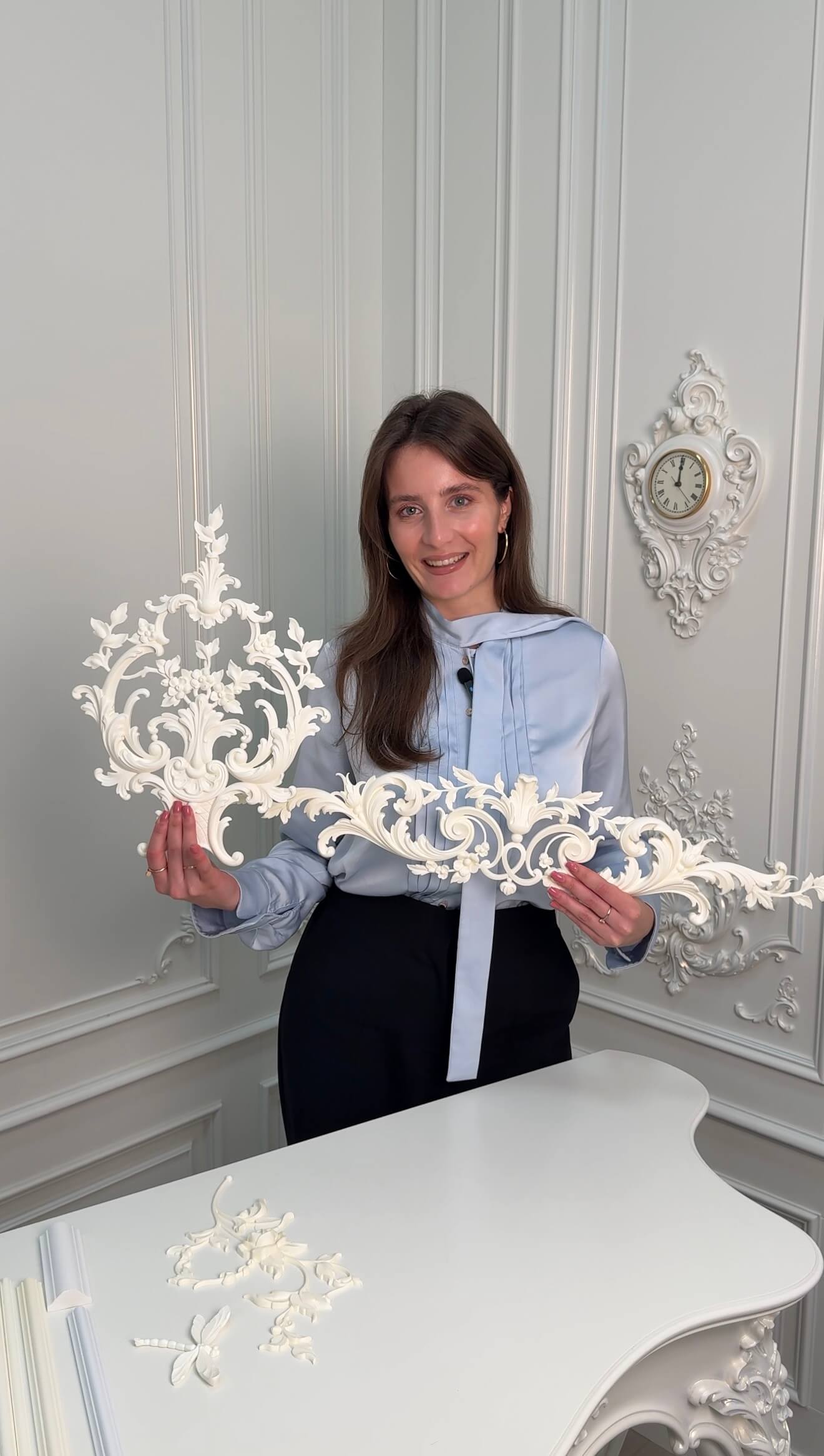
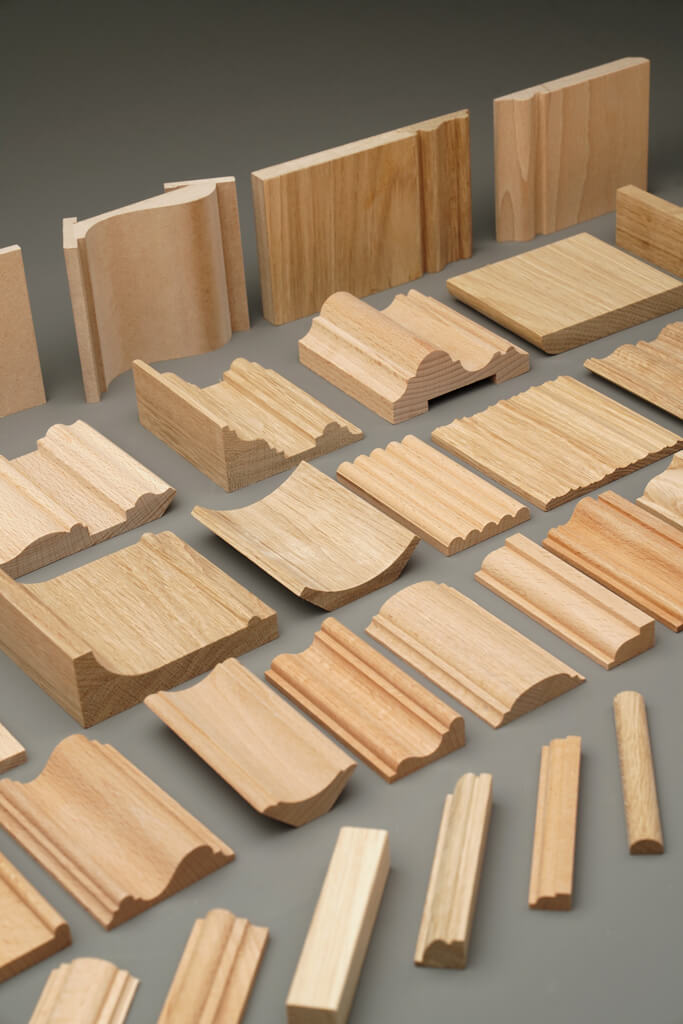

When a designer should choose a collection rather than individual elements
The collection-based approach is especially useful when a decorative composition consists of several related types of products.
For example:
- frames made of moldings;
- central overlays;
- corner elements;
- vertical inserts;
- decorative finials;
- medallions;
- repeating compositions in several rooms.
If a project requires a unified stylistic language, working with a collection reduces the number of random decisions.
Instead of ten independent questions — "which corner will suit this molding?", "which overlay should go in the center?", "is the neighboring element too active?" — one larger question emerges:
does this collection system suit the project in character and scale?
If the answer is yes, selection becomes faster.
The collection approach works especially well in repetitive interiors: hotels, restaurants, large private houses, several formal rooms within a single apartment. The designer can vary the density of decor while preserving a recognizable language.
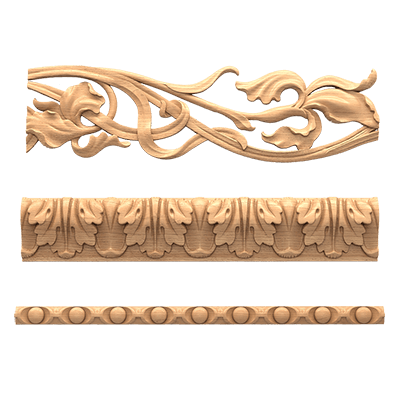
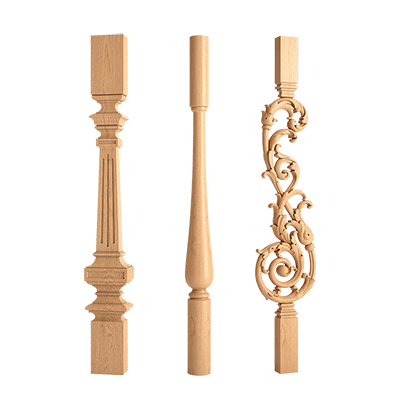
Our factory also produces:


When a collection, on the contrary, is not needed
A collection is a tool, not a mandatory way of designing.
Sometimes a single neutral profile solves the task better than a full system of ornaments.
It is not worth building a project around a collection just because it exists, if:
- a single calm molding is needed;
- the interior is minimalist;
- decor is used selectively;
- expressive furniture is already the main accent;
- the walls are occupied by art;
- active stone or wallpaper requires a neutral surrounding;
- the project deliberately combines elements from different eras and origins.
There is another scenario: the designer likes the collection, but its pattern is too large for the space.
In the catalog, a detail may look elegant because it is shown in isolation. On a 900 mm wide wall, the same motif takes up almost the entire field and begins to overpower the composition.
Therefore, a good question is not “do I like the collection?”, but:
can its language be scaled to the actual walls of this project?
Get Consultation
How to read the STAVROS collection catalog
It is convenient to start with the general section STAVROS decor collections.
But a collection card is needed not only for inspiration.
It is useful for a designer to look at it as a design system and consistently check:
- what types of products are included in the collection;
- which items have their own SKUs;
- whether there are ready-made sets;
- what elements the sets consist of;
- what the actual dimensions of each element are;
- whether the material is the same across the entire collection;
- whether there are L/R versions;
- whether the elements can be purchased separately;
- are DWG and 3D available;
- how much the compositions can be adapted to the project dimensions.
This immediately eliminates one common mistake: a designer sees a beautiful photo of a finished wall and perceives it as the "collection as a whole."
In practice, you need to break the photo back down into the actual products.
Which of them are moldings? Which are overlays? Where is the separate left and right element? What is included in the set, and what is purchased separately?
Only after such a breakdown does the collection become a working tool.
First, determine the stylistic objective of the project
Style here is needed not as the topic of a separate lecture on art history, but as a filter for the product range.
Conditionally, a designer may search for:
- Art Nouveau stucco;
- gothic decor;
- floral motifs;
- classical system;
- palatial composition;
- a more restrained modern geometry.
This helps narrow down the choice, but does not replace checking specific elements.
For example, two projects can formally be called classical, but one needs delicate frame decor with small accents, while the other needs large medallions, rich corners, and a multi-level wall composition.
The style name is the same.
The project scale is not.
Therefore, the filter works in two stages:
styling → collection → actual dimensions and composition.
The “Modern” collection: when Art Nouveau plasticity is needed
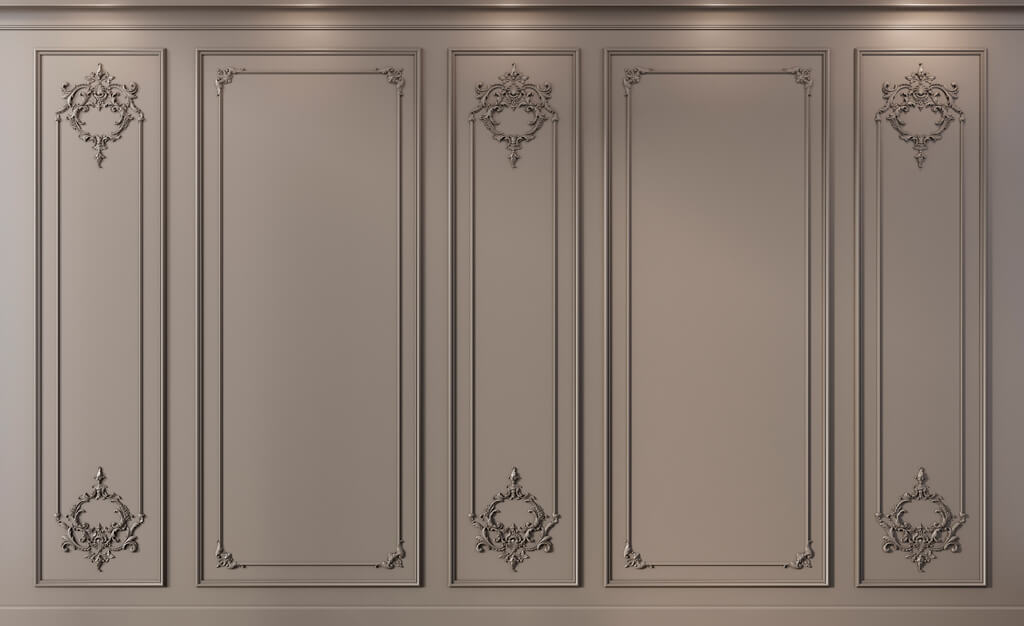
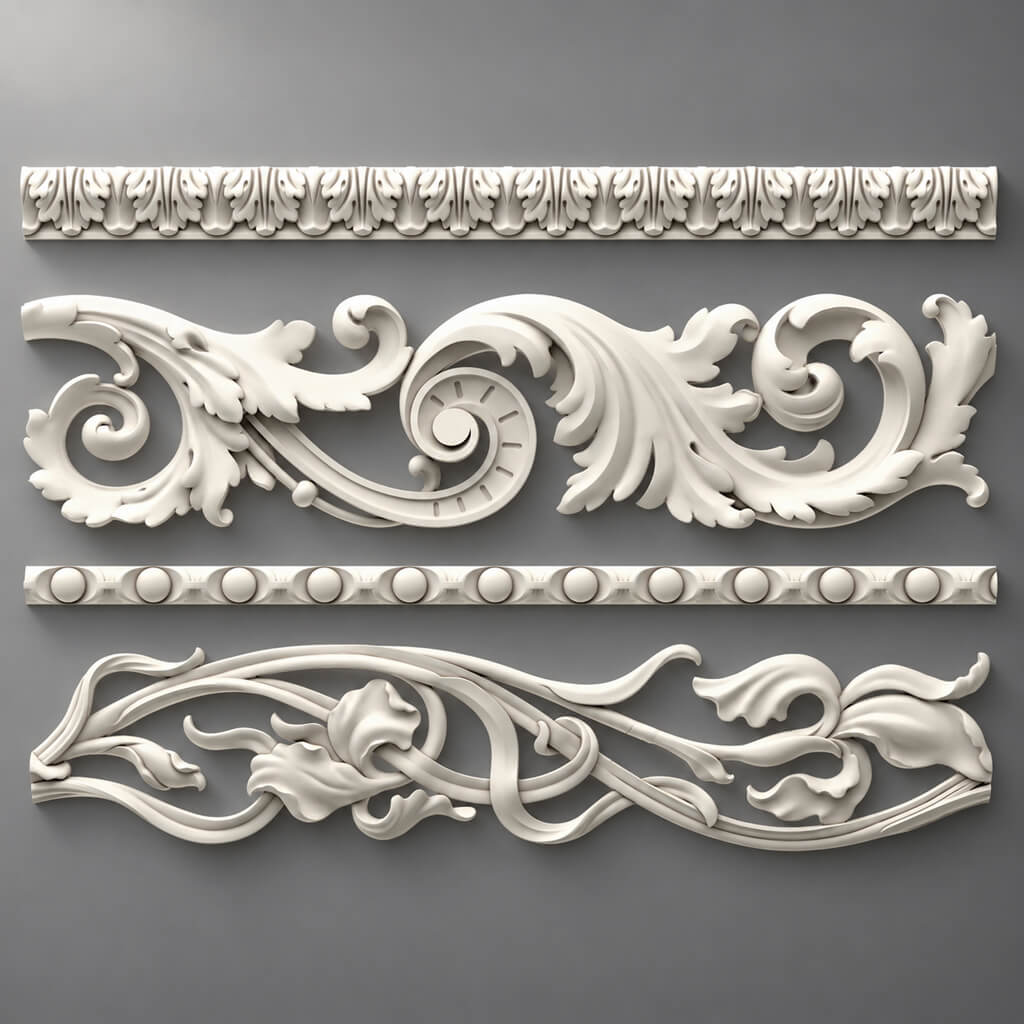
The “Modern” collection suits projects where the decorative language is built not on rigid rectangular symmetry, but on more fluid lines, plant-based and asymmetrical motifs.
For a designer, one thing is especially important here: such an ornament is harder to combine with random details from other systems.
A strict geometric overlay next to a fluid motif can look alien even with the same material and color.
That is why the collection principle is especially logical for Art Nouveau: the repetition of characteristic lines helps maintain integrity.
At the same time, it is not necessary to fill the room with a large amount of decor.
Sometimes it is enough:
- one expressive accent;
- pairs of symmetrical elements;
- a repeating motif in several zones;
- a calm molding that supports a more active appliqué.
Moderation here matters more than quantity.
If every wall section is filled with an active ornament, Art Nouveau plasticity ceases to be an accent and turns into a background.
The “Gothic” collection: for pronounced architectural stylization
The “Gothic” collection clearly shows why, when working with collections, one cannot automatically consider all elements “stucco made from the same material.”
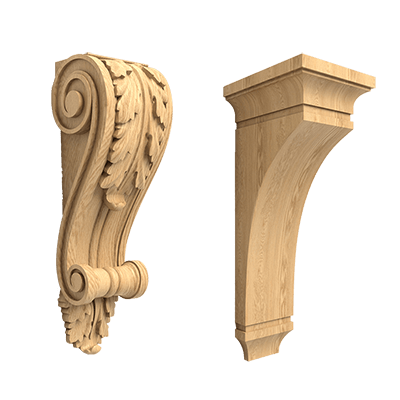
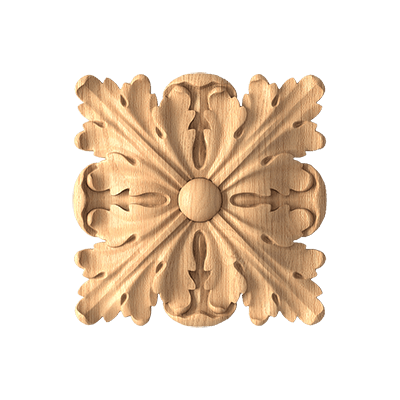
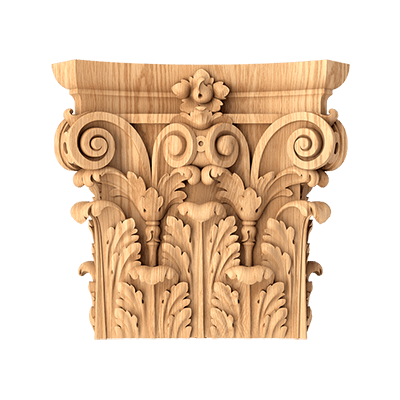
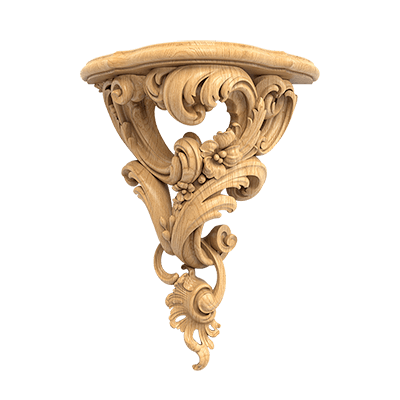
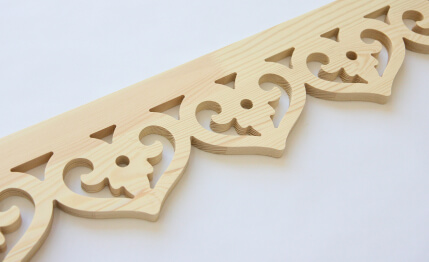
This series features wooden decorative products: rosettes, brackets, carved appliqués, and other elements.
For the designer, this is a useful reminder:
a collection is a stylistic entity, not necessarily a single production technology.
When choosing Gothic decor, you need to pay especially close attention to the scale of the room. Pronounced ornament, intricate carving, and historical motifs require air.
In a small wall section, a large carved detail reads not as an architectural accent, but as a standalone object that feels cramped.
In a high hall, restaurant, library, or another space with sufficient viewing distance, the same detail can work organically.
In other words, the designer's task is not to "make Gothic," but to determine how much of the Gothic language a specific interior can sustain.
"Versailles": how to work with a palace decor system
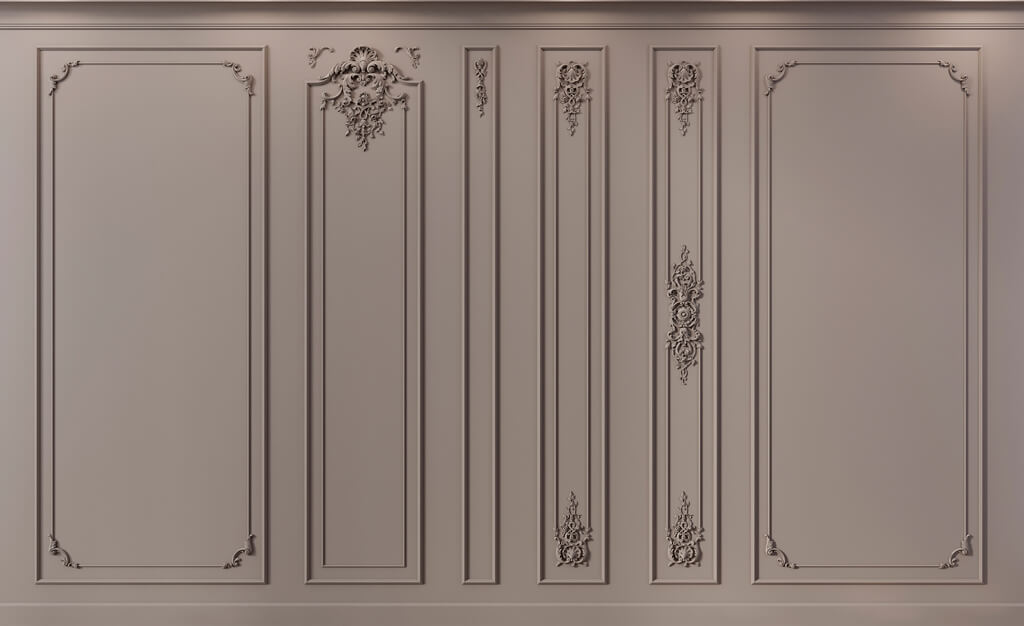
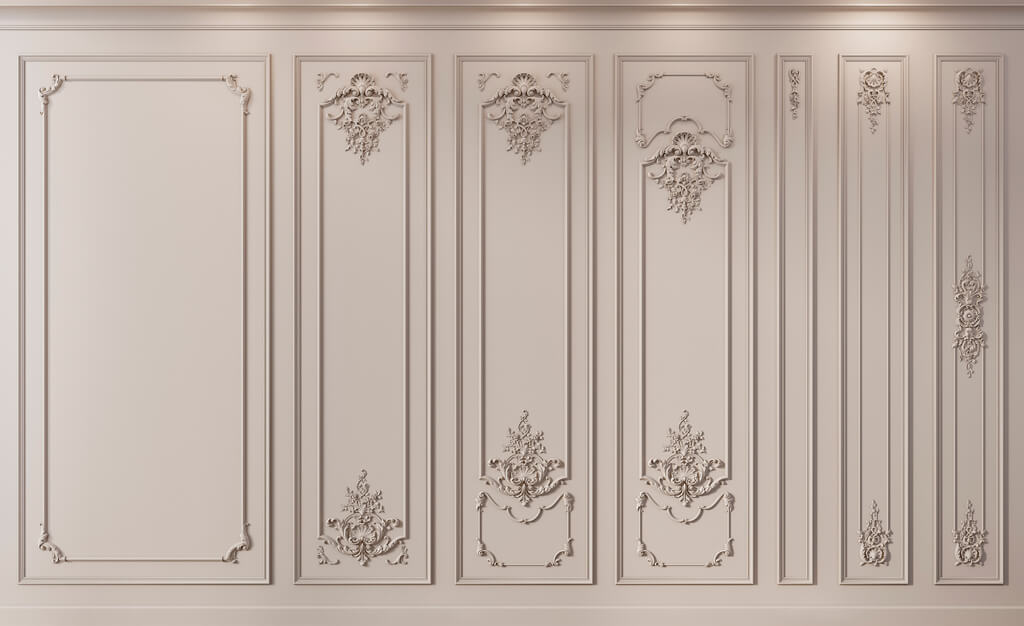
«Versailles» collection — a good example of a system where the designer can work not with a single product, but with ready-made wall compositions and their components.
Here it is especially important not to perceive a ready-made set as an unchangeable picture.
First, check:
- the overall dimensions of the finished composition;
- wall height;
- width of the wall section;
- furniture placement;
- Doors;
- lighting fixtures;
- switches;
- the actual axis of the composition.
A ready-made system is useful because many decorative relationships are already defined: the molding, corner, and center elements are coordinated with one another.
But the architecture of the room remains more important.
If a ready-made composition is designed for a wider wall section, it cannot be stretched in 3D. You must either choose another set or break the system down into individual SKUs and reassemble it to fit the wall.
This is exactly how a collection becomes a design tool rather than a template.
“Botanical Garden”: plant-inspired decor as a system
The "Botanical Garden" collection is built around botanical motifs and demonstrates a systematic approach especially clearly.
Within such a language, the following can work:
- corner L/R pieces;
- central medallions;
- vertical inserts;
- horizontal accents;
- standalone overlays;
- ready-made wall sets.
For a designer, what matters is not the floral theme itself, but the ability to repeat the motif at different levels of the composition.
For example, the central element can be the most active, while the corners merely support its pattern. Or the opposite: the frame stays calm, while the floral details build a more complex structure around it.
The collection makes it possible to create a cohesive composition without the feeling that each leaf and scroll was found separately.
But a floral motif is easy to overload.
If the room already has active textiles, patterned wallpaper, or complex stone, the collection is best used fragmentarily.
“Versailles Light”: when a more restrained scenario is needed
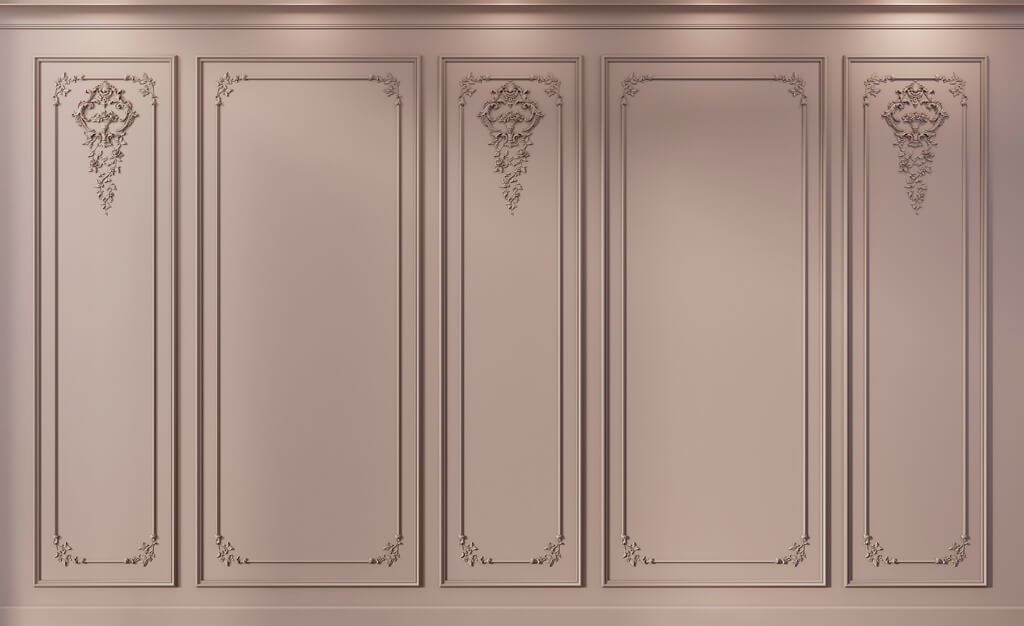
In projects where the palatial language is appealing but full decorative richness is too heavy, it is useful to look at Versailles Light.
The very principle of a “light” version is interesting from a professional standpoint: the designer gets a closely related stylistic code but can work with a calmer density.
This is especially convenient for:
- apartments with standard ceiling heights;
- bedrooms;
- small living rooms;
- corridors;
- projects where moulding should support the interior rather than become the main event.
There is no need to try to use the entire collection in the same way in every room.
In one room, frames and small corner details are enough. In another, a central accent can appear. In a third — only moulding.
The unified language remains; the density changes.
How to compare two collections correctly
The question “which one is more beautiful?” is almost useless for a working project.
Compare by parameters:
| Criterion | What to check |
|---|---|
| Scale | Whether the size of the elements matches the wall and the room |
| Ornament | How active it is and how easily it repeats |
| Relief | What depth and shadow do the elements create |
| Composition | What SKU types are available |
| Walls | Can frames of the desired proportions be built |
| Ceiling | Are related elements needed and available |
| Repetition | Can the language be used in multiple rooms |
| 3D/DWG | Is there data for design |
| Procurement | Can elements be purchased separately |
| Material | Is it compatible with the design task |
Such a table quickly shows why a visually appealing collection can lose to a more subdued one.
For example, the first one has a striking central element, but lacks the necessary corners and small accents. The second has a less striking hero, but enough elements to assemble five different walls without repeating a single layout.
For a large project, the second option may prove more useful.
Why you shouldn't choose a collection based on just one striking panel
A catalog photo usually shows the system at its best: the right wall size, suitable furniture, favorable lighting, and a well-thought-out composition.
The project tests the collection under less ideal conditions.
What happens:
- in a narrow wall section;
- near the door;
- by the wardrobe;
- next to the sconce;
- around the TV;
- in the corner;
- on a wall of a different height?
If a collection works only on one wide feature wall, that is not always a problem. But the designer must understand this in advance.
A repeatable project requires scalability.
A good system allows you to change the number of elements while preserving a recognizable language.
One ornament — multiple sizes
Similar motifs of different sizes cannot be considered interchangeable.
Even if the pattern is almost identical, each product has:
- its own SKU;
- actual dimensions;
- depth;
- mounting surface;
- a role in the composition.
Scaling up a small applique in 3D by one and a half times means creating a product that does not exist.
If you need a larger element, look for a different SKU.
This is especially important in a project where one collection is used in several rooms. A large central accent may work for the living room, while in the bedroom the same motif needs to be supported by a smaller detail.
The meaning stays the same. The scale is changed by the actual product, not by Scale.
Central elements of the collection
A central overlay or medallion does not work on its own.
It has a context:
frame → free field → central axis → decorative element.
Before approval, check:
- frame dimensions;
- size of the free field;
- distance to the molding;
- axis;
- position relative to the furniture;
- wall lamp;
- paintings;
- switches;
- other elements.
An overlay that is perfectly centered geometrically may appear visually offset due to furniture.
For example, a console table is not placed at the center of the wall, but at the center of the visible area between the door and the cabinet. It is wiser to subordinate the decor to the perceived composition rather than to the mathematical center of the entire plane.
Corner elements of the collection
A corner seems like a minor detail until the working layout begins.
Need to check:
- whether the geometry of the corner matches the profile of the frame;
- how much distance it occupies;
- whether a mirrored version is available;
- are the L/R the same size;
- does the element change the inner size of the frame;
- how it joins with a straight molding.
In some systems, the corner is a standalone decorative accent. In others, it almost dissolves into the line.
It should not be considered simply "four pieces per frame" until the specific composition is confirmed.
How to assemble one wall from the collection
It is convenient to go from large geometry to small.
1. Define the boundaries of the decorative zone
Not the entire wall necessarily has to be filled with stucco molding.
2. Find the architectural axes
Doors, furniture, TV, fireplace, bed, console.
3. Build the frame grid
Real dimensions matter more than a beautiful sketch.
4. Choose the main molding
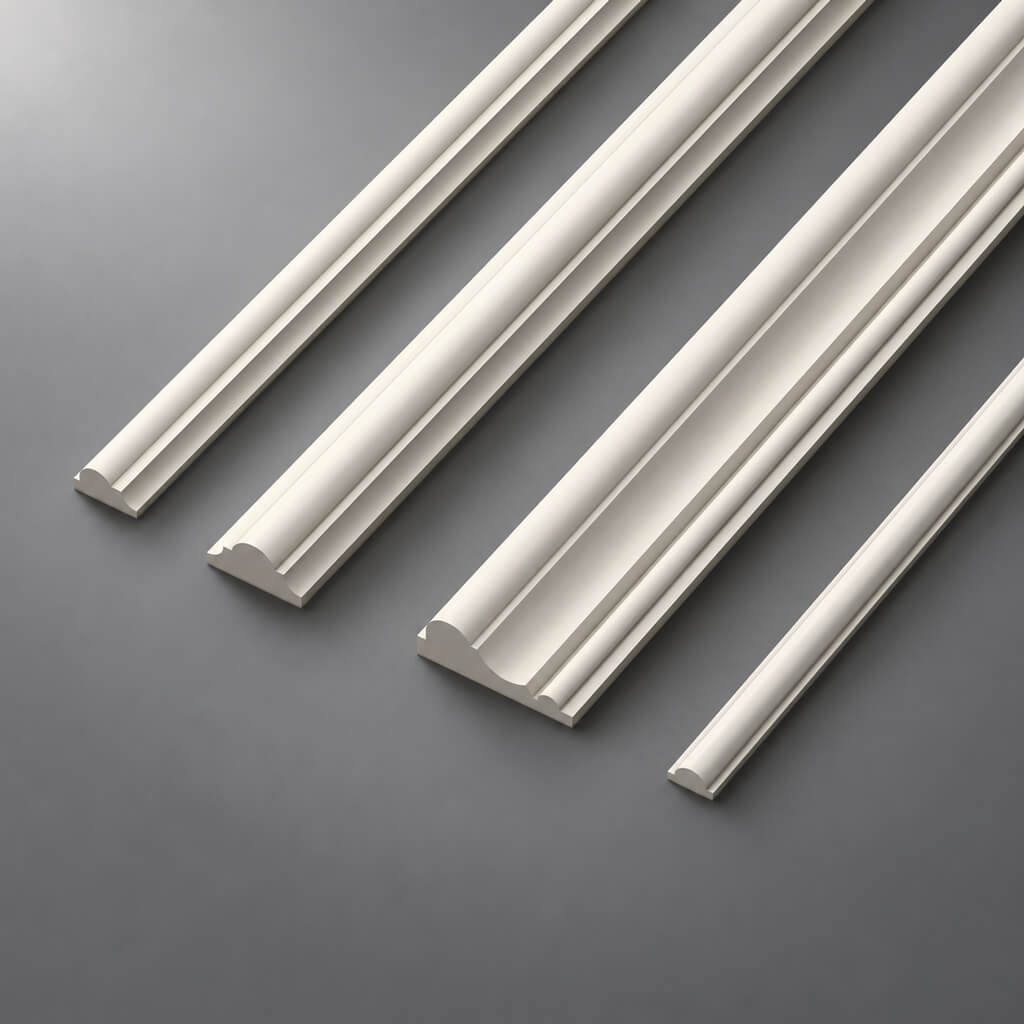
If polyurethane trim is needed, you can check Moldings made of polyurethane.
5. Add collection accents
Corners, medallions, overlays, vertical elements.
6. Check for empty fields
An overly tight composition often looks heavier than a simpler option.
7. Lock in the SKU
At this stage, the wall composition turns from a sketch into an actual set of products.
How to use one collection in multiple rooms
The most obvious approach is to copy one wall composition everywhere.
Usually this is the most boring approach.
A unified language with varying density works much better.
For example:
living room — a full composition with central elements and corners;
bedroom — frames and one calm motif;
hallway — only molding and a small overlay;
study — a denser vertical rhythm;
dining room — an accent wall with a repetition of the main ornament.
This is how rooms feel related, yet not identical.
This is especially useful in large properties: the interior gains identity without feeling like serial replication.
How not to overload an interior with a collection of moldings
A collection itself encourages using more details: the elements are already curated and look good together.
That is exactly why a conscious limit is needed.
If the room contains:
- active wallpaper;
- contrasting stone;
- complex furniture;
- carved doors;
- a lot of art;
- expressive textiles;
- decorative ceiling,
wall decor should be reduced.
The test is simple: remove half of the details from the visualization.
If the interior has lost almost nothing, then the original version was overloaded.
Architectural decor works better where a plane of wall remains between the elements.
An empty field is also part of the composition.
Collection and color
The same system can be perceived differently depending on the finish.
The decor can be:
- painted in the color of the wall;
- white;
- contrasting;
- patinated;
- partially metallized;
- tinted for a specific interior task.
But the color should not hide the geometry of the choice.
First, the following are decided:
- dimensions;
- profile;
- relief;
- composition;
- SKU.
The finish is the next layer.
If a collection seems too active only because of the catalog's contrasting finish, try a visualization in the color of the wall. The relief will remain, but the composition will become calmer.
And conversely, a very neutral set can be enhanced with a contrasting finish.
Why a designer needs a real sample
A screen shows the outline well.
It is far worse at conveying physical depth and how the relief catches the light.
For the final choice, it helps to consider Product samples.
The sample is checked for:
- the actual size;
- the depth;
- the quality of the ornament;
- surface;
- shadow;
- the scale next to other materials.
This is especially important for bold, collectible mouldings.
A small element on a screen can be zoomed in and out endlessly. In a room, it exists at a fixed size.
Place the sample against the wall and look at it from two or three meters away, next to a door, furniture, or a finish texture.
That way, the scale reads much more honestly.
Collection in 3D visualization
3D is not meant to “roughly show a similar ornament.”
In a professional project, it is better to place real SKUs in the scene.
For this, the section is useful 3D models and DWG of stucco moldings.
The main rule:
A 3D model of a real product cannot be arbitrarily scaled and still be considered the same SKU.
You can change:
- position;
- turn;
- number of repeats;
- composition.
You cannot turn a 300 mm part into 450 mm just because it looks better in the render.
If the size does not fit, you need to:
- choose another element;
- change the composition;
- switch to custom manufacturing.
This maintains the link between visualization and procurement.
Collection in DWG
DWG is needed for a different check.
3D shows perception.
DWG — geometry.
On the unfolded view, you can check:
- actual frame dimensions;
- the axes;
- distances;
- depth and cross-section at the joint;
- position of corners;
- size of the central element;
- conflict with the door;
- Furniture;
- Outlets;
- the light fixtures.
This is especially important for a collection composition: the more elements there are, the higher the risk that a beautiful system won't fit on a real wall.
Therefore, a good workflow looks like this:
real SKU → 3D → visualization → DWG → verification → specification.
How to create a collection specification
Don't write it as a single line:
Versailles Collection — 1 set
if the project actually purchases several separate SKUs.
It is much more reliable:
| Code | SKU | Collection | Type | Quantity |
|---|---|---|---|---|
| ML-01 | specific | Versailles | Molding | Calculation |
| DEC-01 | specific | Versailles | Overlay | 4 |
| CR-01 | specific | Versailles | Angle | 16 |
If a manufacturer's ready-made set is used as a single product item, it can also be recorded. But it's still useful to understand its composition.
Why?
Because when the wall width changes, the designer may decide to keep the central element and replace the frame part. Then the "set" already turns into separate products.
The specification must reflect the actual procurement model.
When to use a ready-made stucco decor set
A ready-made set is especially convenient when:
- its dimensions fit the wall;
- the proportions match the project;
- all elements are needed;
- furniture does not conflict;
- there is no need to change the number of frames;
- the composition is coordinated without scaling.
This is a fast path from selection to purchase.
Ready-made sets are especially useful where the designer needs a predictable result and does not need to redesign every joint.
But "ready-made" doesn't mean "universal".
Before ordering, you still need to check the actual dimensions.
When it's better to split a set into separate SKUs
It makes sense to split the system if:
- the wall is narrower or wider;
- the height is different;
- a different number of frames is needed;
- the central element isn't needed;
- the corner conflicts with furniture;
- part of the composition is blocked by a wall light;
- a calmer density is required.
For example, a ready-made wall composition is designed for a symmetrical wall section. In the actual project, there is a door on the right and a cabinet on the left.
Blindly applying the set creates strained symmetry.
It is far more effective to preserve the language of the collection but reassemble the composition to suit the actual architecture.
A collection is a vocabulary.
Not a ready-made proposal that cannot be edited.
How to calculate the number of elements in a collection
Different units apply here.
Molding and other linear trim:
net linear meters → product lengths → cutting → number of strips.
overlays:
pieces according to the composition map.
Angles:
pieces, taking into account L/R if they differ.
Medallions and central elements:
individually by walls or zones.
Ready-made sets:
the number of sets plus verification of their composition.
There is no need to add a single percentage of reserve to all elements.
Linear trim requires cutting. Overlay does not, unless a reserve is provided. L/R must be counted separately.
After the collection is approved, the quantity must become a full-fledged specification, not remain "approximately three walls."
How to handle replacing an element within a collection
Even within a single system, replacement is possible.
For example, the central overlay turned out to be too large.
You shouldn't simply take the neighboring 'smaller' option and consider the task solved.
Check:
- its actual size;
- the depth;
- ornament;
- axis;
- free fields;
- connection with corner elements;
- a new 3D composition;
- specification.
Replacing a single SKU can change the balance of the entire wall.
Within a collection, elements are more closely connected than the catalog suggests.
How to combine a collection with neutral moldings
It's not necessary for every profile and every cornice to belong to the same decorative series.
Sometimes a collection ornament works better against a neutral trim.
For example:
- a calm molding creates a frame;
- the collection applique becomes an accent;
- the ceiling cornice remains neutral;
- the decorative motif is repeated only in key places.
This reduces visual noise.
For such solutions, it is convenient to look separately at the general polyurethane molding catalog и Relief Decoration, and use the collection as a source of characteristic elements.
Can two collections be mixed
Yes, but the reason must be clear.
Mixing works if the collections:
- are close in scale;
- have compatible forms;
- are used in different hierarchical roles;
- do not compete for attention.
For example, one system can set the main framing language, while the other provides a single accent.
The case where two active collections compete equally on the same wall works much worse.
If a designer has to spend a long time explaining why they "seem to fit," the composition probably lacks a common principle.
Before mixing, it is useful to make a test wall in 3D and remove color. In a monochrome material, form conflicts are more visible.
Collection for private and commercial interiors
In a private project, a designer can more often afford a unique composition for each room.
In a commercial one, repeatability is more important.
A restaurant, hotel, salon, or showroom requires answers to additional questions:
- can the system be repeated in several zones;
- how many different SKUs will be required;
- how complex the configuration is;
- what will happen if an element is damaged;
- whether a repeat order can be placed;
- whether there are standard compositions.
Therefore, a commercial interior often benefits from fewer collection elements but more systematic repetition.
Not fifty unique pieces.
Five to ten well-chosen SKUs that form a recognizable language.
Final checklist for choosing a collection
Before finalizing the collection in the project, check:
- the stylistic language matches the interior;
- the scale suits the room;
- the collection works not only on one beautiful wall;
- the composition is known;
- specific SKUs are selected;
- dimensions are checked;
- L/R defined;
- the material of each item is clear;
- 3D matches real dimensions;
- DWG checked;
- sample ordered if needed;
- furniture doesn't conflict with the composition;
- doors and engineering points accounted for;
- quantity is calculated;
- specification assembled;
- the set can actually be ordered.
If half the answers sound like "we'll clarify later," the collection remains a reference rather than a design solution for now.
How to buy stucco after choosing a collection
Purchase should be the last step, not the first.
First, the designer defines the decorative system.
Then — the actual items.
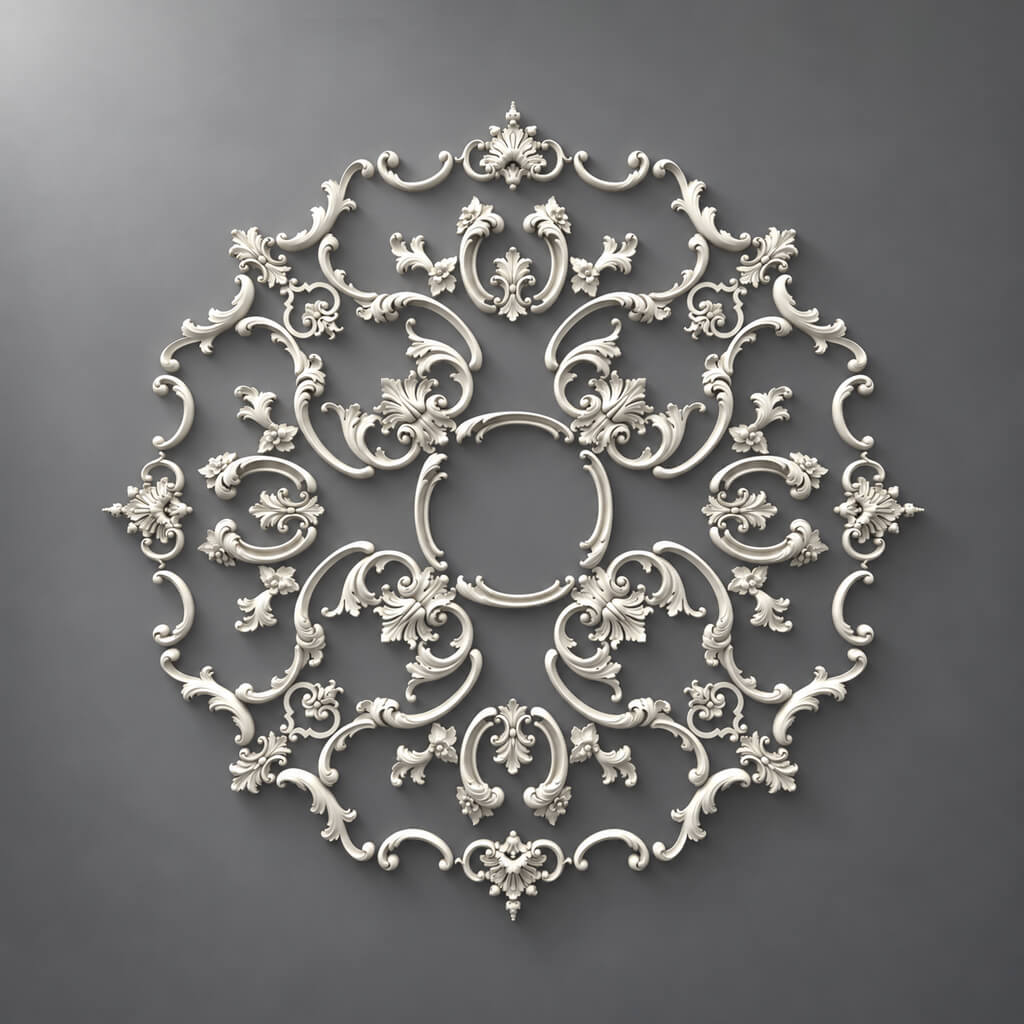
After that, it makes sense to move on to commercial categories: Polyurethane moldings, Moldings made of polyurethane, Polyurethane wall decor, Decor for Molding и ceiling rosettes.
If you specifically need a collection-based search, the starting point remains STAVROS decor collections.
For project work with files, samples, and professional materials, you can use the section for designers and architects.
The final principle is simple:
don't buy several individual pieces you like, but first assemble the project system.
A collection must go the whole way: from a stylistic idea to actual dimensions, SKUs, 3D/DWG, specifications, and quantities. Only after that does the word “collection” stop meaning a beautiful catalog page and start meaning a real designer’s tool.