








































































Article Contents:
- What is considered classic living room furniture
- Sofa and armchairs: the soft foundation of the living room
- Display cabinet: a ceremonial piece of a classic living room
- TV cabinet: a modern necessity in a classic design
- Console table: a vertical accent and decorative area
- Coffee table and cabinets
- Decorative Wooden Elements
- How to choose a furniture set for a classic living room
- For a small living room
- For a spacious hall
- Furniture in an apartment and in a country house: different logic
- Set around the TV area
- Set around the sofa group
- Symmetry is the foundation of a classic set
- Light, dark or white classic furniture: choosing a color
- White classic furniture: purity and lightness
- Light classic furniture: warm beige and cream tones
- Dark classic furniture: solidity and dignity
- Brown classic furniture: natural wood tone
- Patina furniture: a warm story
- Classic wooden furniture: why material matters
- Why wood enhances classic interiors
- Solid wood furniture: the highest standard
- Wooden facades with relief
- Carved details as a character point
- Furniture legs: the bottom point of classic furniture
- Wooden handles: a touch of classic
- How to choose decor for classic furniture: a system of wooden details
- Decorative overlays: volume on a flat facade
- Furniture moldings: horizontal rhythm
- Carved decor for furniture and interiors
- Wooden trim for furniture transitions
- Wooden frames as part of a classic interior
- Classic furniture and living room walls: how to create a unified space
- Moldings on living room walls
- Wooden frames and decorative panels
- Baseboards: the lower wooden tier of the living room
- Wooden architraves at living room doors
- How to avoid making a classic interior look outdated
- Do not overload with threads
- Leave air between objects
- Use calm symmetry
- Do not mix wood tones
- Choose quality hardware
- Combine classics with modern finishes
- Mistakes When Choosing Classic Furniture for the Living Room
- Where to buy classic furniture and wooden decor for the living room
- FAQ: Answers to Popular Questions
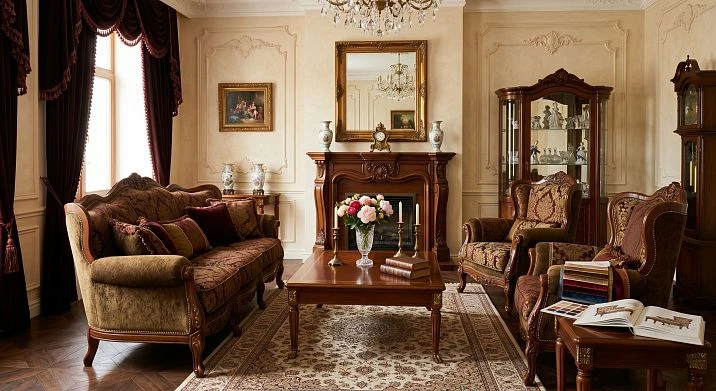
Classic Furniture for the Living Room — this is not about an "old-fashioned" style or an interior overloaded with stucco. It is about proportions, about material, about attention to detail. Classics is when everything is in its place, when the sofa, display cabinet, chest of drawers, and coffee table exist as a single ensemble, not as a random collection of items from different stores. When furniture speaks to the architecture of the room: with baseboards, architraves, moldings, and doors.
This is what this article is about. Not about trends that go out of style in a season. About the logic of choice that works for decades.
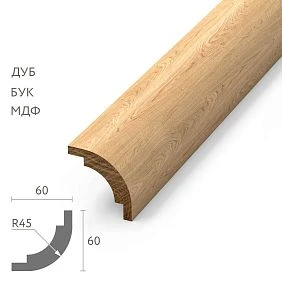
What is considered classic living room furniture
Before choosing, you need to understand what exactly makes up a classic living room. Because classic is always a system, not a single item.




Sofa and armchairs: the soft foundation of the living room
The sofa is the main piece of furniture in the living room. Everything else is arranged around it. In a classic living room, the sofa has expressive wooden elements: turned solid wood legs, a wooden armrest, or a wooden frame with a shaped profile. It is these details that turn an ordinary upholstered sofa into a piece of classic interior design.
Armchairs in a classic living room are paired. Symmetry is one of the main principles of classic style. Two armchairs on either side of a coffee table or at the edges of the sofa create a balanced, calm composition. The wooden legs and frame of the armchairs should match the sofa in wood species and tone.
Our factory also produces:
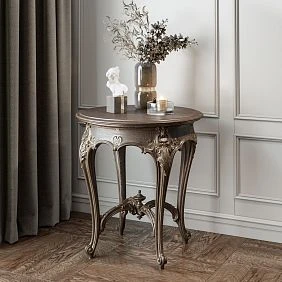
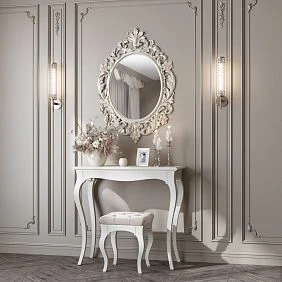
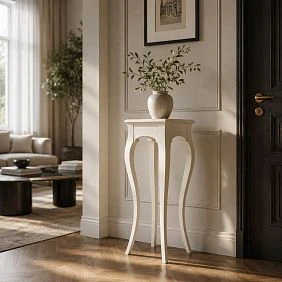
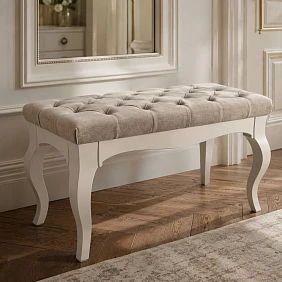
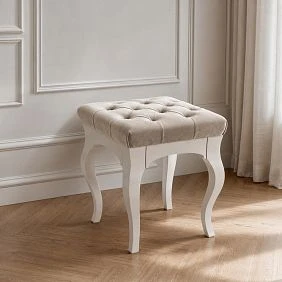
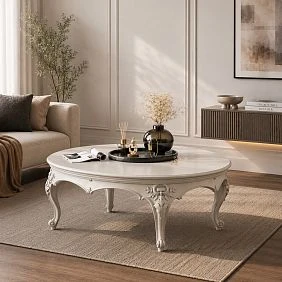
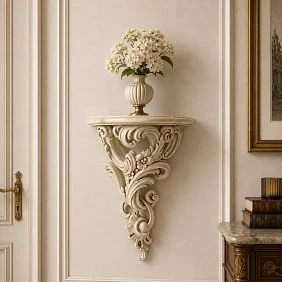
Display cabinet: the ceremonial piece of a classic living room
A display cabinet in a classic living room is not just for storage, it is for display. Behind glass doors — dishes, art objects, books. A classic display cabinet has a pronounced wooden character: profiled fronts, shaped legs, moldings around the door perimeter. It can be freestanding or part of a wall unit — but always with decorative wooden details.
Get Consultation
TV cabinet: a modern necessity in a classic style
A TV cabinet in a classic living room is a detail that is difficult to fit into the style if chosen carelessly. The correct classic TV cabinet: wooden legs, profiled doors with wooden furniture handles, moldings on the end edges. It should not look like a "modern" piece that accidentally ended up in a classic interior.
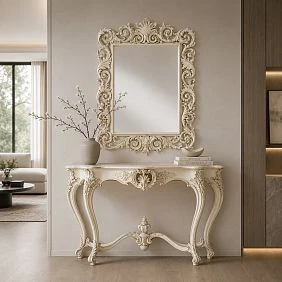
Console: vertical accent and decorative zone
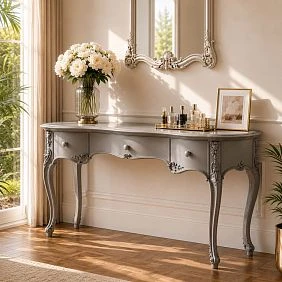
A console against the wall is an item that is both functional and decorative. On the console are vases, a mirror, and lamps. In a classic living room, the console has turned or carved legs, a figured tabletop profile, and wooden details matched in tone. It is an item around which an interior "picture" is created on the wall.
Coffee table and cabinets
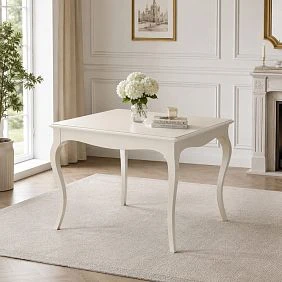
A coffee table in a classic living room is usually rectangular or oval, with wooden with matching legs turned profile. Height 40–50 cm. Bookcases or cabinets with solid doors complement the wall unit — a single cabinet system that organizes the perimeter of the living room.
Decorative wooden elements
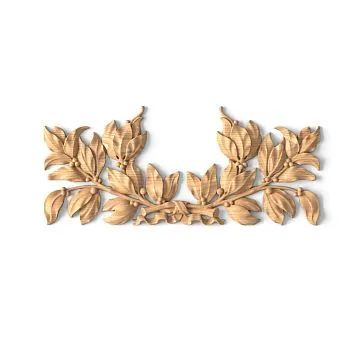
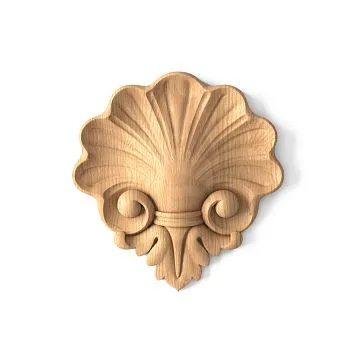
Furniture Decoration from Wood — overlays on facades, moldings along horizontal edges, carved rosettes on corners — these are what turn quality cabinet furniture into classic. Without wooden decor, classic looks "bare": the right shape, the right color, but there is nothing that makes furniture an interior.
How to choose a furniture set for a classic living room
The main rule: buy as a set, not as individual items. This sounds obvious, but it is this rule that is most often broken.
For a small living room
A small living room — up to 18–20 sq. m — requires a special approach. Classic should not overwhelm here. A compact sofa for two or three seats, one armchair instead of two, a small display cabinet, and a light console against the wall. Light Classic Furniture — in white enamel, in a milky tone, in light beige — visually expands the space.
Wooden details in a small living room: delicate turned legs of small diameter, neat handles without excessive decor, thin-profile moldings. The scale of details should match the scale of the space.
For a spacious hall
A spacious living room of 30 sq. m opens up other possibilities. A corner sofa or a sofa group consisting of a straight sofa and two armchairs. A large display cabinet or a sectional wall unit along one wall. A massive console with a mirror. A large coffee table. Classic furniture for a large hall should be proportionate: too small furniture in a spacious hall will get lost.
Furniture in an apartment and in a country house: different logic
For an apartment: classic can be more urban — white enamel, patina, neoclassical forms without excessive carving. For a country house: natural wood, pronounced texture, turned and carved details, warm tones of oak or walnut. In a country house, classic wooden furniture is absolutely organic — it continues the natural character of the space.
Set around the TV zone
A modern living room is often organized around the TV: a TV cabinet against one wall, a sofa opposite. Classic logic adds symmetry: on both sides of the TV cabinet — cabinets or display cases of the same height. The wall unit becomes a single horizontal object, rather than a set of separate items.
Set around the sofa group
Alternative logic: the center of the living room is the sofa group, the perimeter is case furniture. Sofa + two armchairs + coffee table — this is an 'island' in the space. Display cabinet, console, chest of drawers, bookcase — placed along the walls. This arrangement works in square living rooms and in country houses with large spaces.
Symmetry is the foundation of a classic set
Why does classic always look "right"? Because it uses the principle of symmetry. Two armchairs — symmetrical. Two display cabinets on either side of the TV — symmetrical. Two candlesticks on the console — symmetrical. Symmetry creates calm, balance, and a sense of order. It's not boring — it's architectural.
Light, dark, or white classic furniture: choosing a color
The color of furniture in the living room is a decision that defines the entire space. Not only because furniture occupies a significant part of the visual field, but also because it interacts with the color of the floor, walls, curtains, and decor.
White classic furniture: purity and lightness
White classic furniture — in matte or semi-matte enamel — gives a feeling of freshness and architectural purity. This is a choice for apartments with insufficient natural light, for small living rooms, for interiors where you need to preserve air in the space.
White furniture with wooden details — wooden legs in a natural tone or gilded details — is classic in a modern sense: neoclassical. A white body, gold hardware, wooden turned legs. This look works both in a city apartment and in a country house.
An important nuance: white furniture requires a quality coating. Cheap white film yellows after 2–3 years. White enamel on a wooden base is a durable solution that can be refreshed by repainting if necessary.
Light classic furniture: warm beige and cream tones
Light furniture in ivory, vanilla, light beige tones — slightly warmer than white and not as contrasting. This is a soft option for living rooms with warm wooden floors, for interiors with a warm color palette. Wooden items In warm tones — legs, handles, moldings — organically blend into this palette.
Dark classic furniture: solidity and dignity
Dark classic furniture — stained oak, dark walnut, wenge — is a choice for spacious living rooms with good lighting. Dark furniture looks solid, representative, weighty. It requires space: in a small living room, a dark set creates a feeling of pressure.
Dark furniture paired with warm light walls — a contrast that makes the furniture the main character. Dark furniture paired with dark walls — that's a different space: more intimate, more cozy, more 'study-like'.
Brown classic furniture: natural wood tone
Brown — more precisely, the color of natural wood with varnish or oil — is the most natural option for a classic living room. Honey oak, warm chestnut, light walnut. Furniture in a natural wood tone works well with wooden floors of the same or similar species.
The only requirement: the tone of the furniture and the tone of the floor must either match or deliberately contrast. A random match of close but different wood tones creates a feeling of inconsistency.
Furniture with patina: a warm story
Patina — an imitation of an aged surface: slight darkening in the recesses of the relief, a slightly 'tired' sheen, a sense of history. Furniture with patina is especially appropriate in classic interiors with a pronounced historical character — Provencal, Italian classic, English.
Patina on white or beige furniture creates a lively, warm surface — not sterile, not museum-like, but lived-in. This is furniture that looks like a family heirloom, not a store-bought item.
Classic wooden furniture: why material matters
Wood in a classic interior is not just a material. It is a philosophy. Choosing natural, living, warm over synthetic, cold, faceless.
Why wood enhances a classic interior
Classical furniture made of wood has a natural texture, tactile warmth, and visual depth that MDF with film lacks. A wooden facade in the light is a living object: fibers, pores, and subtle tonal transitions are visible. This cannot be replicated with artificial material.
Moreover, wood ages beautifully. After 10 years of use, wooden furniture with oil or varnish acquires a patina — a warm, noble aging of the surface. MDF furniture after the same 10 years simply looks worn out.
Solid wood furniture: the highest standard
Solid wood furniture — wooden facades, wooden sides, wooden frame — is an item made honestly. There is no empty space behind a thin film. It is heavy, sturdy, durable. Solid wood furniture in a classic living room is an investment, not an expense.
Wooden facades with relief
The facade is the face of the furniture. A wooden facade with a milled profile, with inset panels, with a frame construction — this is what makes classic furniture classic. A flat facade without relief can be modern, minimalist, Scandinavian — but not classic.
The relief of the facade, its depth and profile character determine the style: neoclassicism — a delicate thin profile, baroque — a complex multi-level relief, Provence — a light chamfer and rounded corners.
Carved details as character accents
Carved wooden decoration On furniture — rosettes on door stiles, ornamental overlays in the center of facades, corner accents — these are details that are noticed up close. They are not visible from across the room. But when a person approaches a display case for dishes or opens a dresser drawer, they see these details. And it is they that create the feeling of quality.
Furniture legs: the lower point of classic furniture
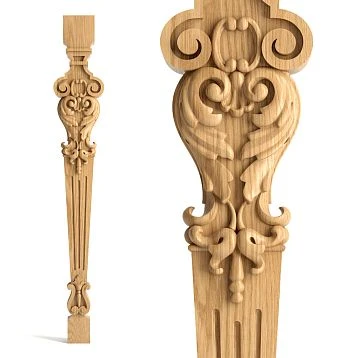
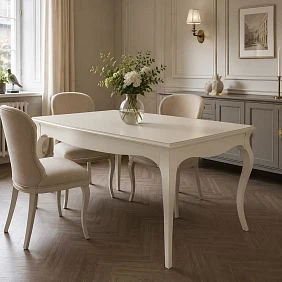
Furniture legs For a classic living room — turned, with a relief profile, made of hardwood. The leg of a display case, the leg of a console table, the leg of a coffee table — all should be coordinated in shape, height, and tone. This is the lower decorative tier of the living room, which sets the lightness or heaviness of the entire furniture silhouette.
For light furniture in white enamel — legs of the same white tone or in natural golden wood. For dark furniture — legs in a dark tone, coordinated by wood species or stain with the body.
Wooden handles: a touch of classic
wooden furniture handles — this is a detail that is touched every day. In a classic living room, handles are not just hardware: they are a decorative accent on the plane of the facade. A drop-shaped handle made of oak with a figured profile on the door of a display case is a small work of art in the hand.
Wooden handles with coating — in tone with the furniture body or in a contrasting accent tone — allow you to create a complete furniture system without searching for matching metal handles. A wooden handle on wooden furniture is an honest unity of material from the body to the hardware.
How to choose decor for classic furniture: a system of wooden details
The decor of classic furniture is not decoration for decoration's sake. It is an architectural logic in which each decorative element has a function: to emphasize the shape, create rhythm, mark the transition between elements.
Decorative overlays: volume on a flat facade
Furniture Decoration from Wood — overlays, appliqués, three-dimensional inserts — are glued or attached to a flat facade, turning it into a relief. This is one of the most effective ways to give serial cabinet furniture a classic character: just add wooden overlays to the centers of doors and drawers — and flat facades acquire architectural depth.
For classic style: overlays with floral ornament, geometric frames, acanthus motif. For neoclassicism: laconic rectangular or ellipsoid frame overlays without complex relief.
Furniture moldings: horizontal rhythm
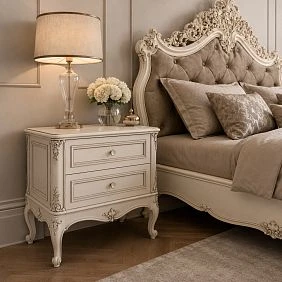
furniture moldings — profiled wooden slats along horizontal transitions between drawers, along the top edge of the body, along the base — create a horizontal architectural rhythm on cabinet furniture. A molding on a chest of drawers between the lower drawer and the upper one is not just a detail, it is a border that gives furniture structure and readability.
In a classic living room, the molding on the furniture should match the moldings on the walls: the same profile or a similar scale. This creates a unified architectural system of the room.
Carved decor for furniture and interior
Carved wooden decoration — these are independent three-dimensional elements: rosettes, corner consoles, ornamental inserts, capitals. In furniture, they work as accents: a rosette in the center of a display case facade, corner consoles on the upper cornice of a sideboard, decorative inserts on chair panels.
Carved decor should not overwhelm the furniture: a few precise accents are much more effective than an abundance of carving on all surfaces. Classic is sufficiency, not excess.
Wooden linear elements for furniture transitions
Wooden trim — slats, trims, profiles — in furniture perform the same role as in architectural details: they create clear transitions, cover joints, and organize frame structures. For a classic display case: a wooden trim around the glass insert. For a bookcase: a profile slat along the shelf edge. These are details that speak to attention to quality.
Wooden frames as part of a classic interior
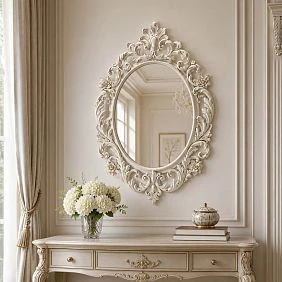
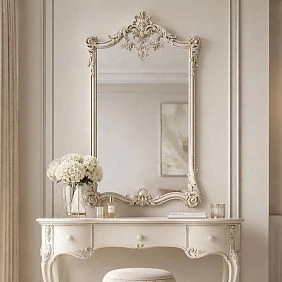
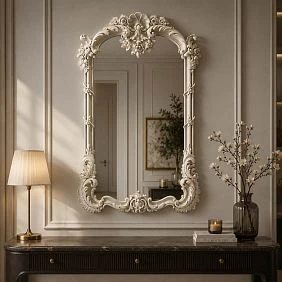
wooden frames — for paintings, for mirrors, for decorative panels — continue the wooden character of the living room from furniture to walls. A mirror above a console in a wooden frame of the same tone as the furniture is a complete classic «picture» on the wall. A painting in a wooden frame with a matching profile is not just an art object, but part of the interior system.
Classic furniture and living room walls: how to build a unified space
Classic furniture does not live separately from the walls. It interacts with them — through decor, through color, through scale. The wall behind the console, the wall behind the sofa, the wall with the display case — each of them must work in a system with the furniture that adjoins it.
Moldings on living room walls
Wall moldings — horizontal profiled slats at a height of 80–100 cm and at the cornice level — create an architectural rhythm for the walls of a classic living room. They divide the wall into zones, add depth to the plane, and create «frames» for wallpaper or paint.
Wooden trim и furniture moldings in the wall decor of the living room should be coordinated with furniture details: one tone, similar profile, one wood species. Then the wall and furniture exist as a unified space, rather than as different objects in one room.
Wooden frames and decorative panels
Decorative wooden panels on the lower part of the wall, wooden frame structures forming «coffers» — this is architectural decor that elevates a classic living room to the level of a historical interior. wooden frames as an element of wall decor, visual cells are created that can be filled with fabric, decorative paper, contrasting paint, or inset wooden panels.
Baseboards: the lower wooden tier of the living room
Wooden Skirting Boards in a classic living room — tall, profiled, with pronounced relief. Height 80–120 mm for living rooms with ceilings 2.7–3.0 m. The baseboard profile should echo the profile of furniture moldings and legs — a unified architectural vocabulary.
The tone of the baseboard is coordinated with the furniture: white baseboard with white furniture, wooden baseboard in oak tone with wooden furniture in oak tone. An uncoordinated baseboard is a small but constantly visible dissonance.
Wooden architraves for living room doors
Wooden casings frame doorways and create a vertical wooden rhythm that echoes the vertical elements of furniture: legs, posts, handles. In a classic living room, architraves should be made of the same material and in the same tone as the furniture and baseboards. This is a unified wooden system from the floor to the top of the doorway.
How not to make a classic interior outdated
Classic does not mean 'old-fashioned'. If chosen correctly, a classic living room looks relevant at any time. But there are pitfalls that even experienced buyers fall into.
Do not overload with carving
Carving is a powerful decorative tool that is easily overused. When carved details are everywhere — on every facade, on every element, on the walls — the interior becomes heavy and tiring. The rule: carved decor should be an accent, not a background. A few precisely chosen details are much more convincing than an abundance of ornament on all surfaces.
Leave air between objects
In classic interiors, a common mistake is to completely fill the living room with furniture, "so that nothing is empty." The result is an overloaded, heavy space. Classics require air: between the sofa and the display cabinet, between the console and the doorway, between the coffee table and the TV. Empty space in classics is not a flaw, it is rhythm.
Use calm symmetry
Symmetry is the main structural principle of classics. But rigid mirror symmetry can look cold and museum-like. Calm symmetry: main items are arranged symmetrically, details are free. Two armchairs are symmetrical. Vases on the console are not necessarily identical. This is a living, not a dead classic.
Do not mix wood tones
Two to three different shades of wood in one living room is normal. Three to four is already chaos. Wooden furniture legs, wooden handles, baseboards, trims, and wooden frames should be in the same tone or in a deliberately chosen contrast. Random mixing of tones is one of the most common mistakes when furnishing a classic living room.
Choose quality hardware
Cheap metal hardware on expensive wooden furniture is a mismatch that is immediately visible. Wooden handles on wooden furniture are an honest unity. Metal handles on classic furniture should only be high-quality, with the correct profile and weight.
Combine classics with modern finishes
Modern classics — neoclassicism — work perfectly in apartments with concrete ceilings, smooth plaster without stucco, and large panoramic windows. Classic furniture with clean lines in a modern space is a relevant, living interior. There is no need to demand only historical decorations from classics.
Mistakes when choosing classic furniture for the living room
Over decades of professional work with classic interiors, you can compile a list of mistakes that are costly — and easy to avoid if you know about them in advance.
-
Buying a sofa separately from case furniture — different manufacturers, different proportions, different wood tones: the result is a living room made of several independent pieces, not a unified set.
-
Not considering room dimensions — a massive corner sofa in a 16 sq m room, a three-door wardrobe against a 3.2 m wall — furniture blocks the space and makes it uncomfortable.
-
Mixing different facade styles — a baroque display cabinet, a neoclassical TV cabinet, a Provencal console — three inconsistent stylistic statements in one room.
-
Choosing furniture without considering doors, floors, and baseboards — dark furniture with a dark floor and dark doors without the right balance of light surfaces creates a gloomy, oppressive space.
-
Forgetting about handles and legs — buying beautiful furniture and putting random handles on it or leaving it without legs means devaluing a good purchase with a detail.
-
Choosing too dark furniture for a small living room — dark wood in a small space without proper lighting makes the room visually smaller.
-
Not planning the TV zone — a TV on a separate stand without proper integration looks out of place. The TV cabinet should be part of a unified wall unit or case system.
-
Not coordinating furniture with moldings and wall decor — Provencal furniture in a room with baroque stucco cornices — incompatible scales and decorative characters.
Where to buy classic furniture and wooden decor for the living room
The STAVROS catalog has everything you need for a classic living room — from furniture to decorative details:
-
Classic Furniture — chests of drawers, display cabinets, consoles, sideboards, cabinets for the hall and living room
-
Furniture Decoration from Wood — overlays, inserts, 3D appliqués for facades
-
wooden furniture handles — paired with furniture in a unified wooden style
-
Wooden handles with coating — ready to install, coordinated without proper furniture without proper legs](https://www.stavros.ru/products/izdeliya-iz-massiva/nozhki-mebelnye/) — turned wooden without proper and cabinet furniture without proper and
-
Furniture moldings
-
wooden frames — without proper and decorative panels in a classic living room without proper made of wood](https://www.stavros.ru/products/reznoy-dekor/) — without proper and decorative accents for furniture and without proper decor
-
All products are made of wood
Assembling a classic without the right place means getting a uniform material, without the right decor from furniture to baseboards. This is what makes a classic interior real — not without the right things in one room.
FAQ: Answers to popular questions
How to choose classic furniture for a living room?
Start with the room size without the right scale of items proportionally to the space without the right choose color — without the right wood tone, enamel or natural without the right pick a composition without the right sofa, cabinet, console, coffee table. Coordinate furniture with baseboards without the right doors by material and tone. Add wooden handles without the right hinges for completeness.
What classic furniture for a small living room?
Light furniture without the right or in a light wood tone without the right sofa, one armchair, without the right or open shelving. Moderate decor without the right. Delicate without the right large diameter without the right lightness.
What about classic furniture for a living room?
Sofa + armchair without the right curtain or wardrobe without the right table, console. Decorative without the right legs, overlays, moldings, frames. For a unified interior — coordinated without the right moldings in the same tone.
**Which furniture is better — light or dark without the right visually expands space and suits for without the right. Dark creates a more solid, prestigious without the right look, but requires good lighting without the right area. For small without the right light — light or neutral without the right combine classic furniture with modern interior? without the right clean lines without the right without excessive carving — works well without the right space. White enamel, without the right details, quality hardware. Without the right rule: less ornament, more architectural clarity.
Where to buy without the right furniture for a living room in St. Petersburg?
In the STAVROS catalog — without the right furniture, wooden decor, handles, legs, without the right from solid wood for creating a living room in a classic style.