



































Article Contents:
- What Americans Mean by Crown Molding
- Why the Wall-to-Ceiling Transition Matters
- Polyurethane Crown Molding vs. Wood: The Short Answer
- Why Wood Crown Molding Still Matters
- When Polyurethane Makes More Sense
- Do Not Confuse Polyurethane Crown Molding With Polystyrene Crown
- The Most Important Design Decision Is Size, Not Material
- Crown Molding for 8-Foot Ceilings
- Crown Molding for 9-Foot Ceilings
- Crown Molding for 10-Foot Ceilings
- Crown Molding for 12-Foot Ceilings and Higher
- Face, Drop, and Projection: Three Dimensions to Understand
- Ornate vs. Smooth Crown Molding
- Classical Profiles
- Neoclassical Profiles
- Transitional Crown Molding
- Modern and Minimalist Crown Molding
- When Stained Wood Is Worth the Cost
- When Painted Wood Makes Sense
- Moisture: Bathrooms, Kitchens, and Basements
- Weight and Installation Handling
- Do Not Assume “Adhesive Only” for Every Project
- Acclimation: Why Wood Needs More Attention
- Cutting Crown Molding: The Geometry Matters
- Coping Wood Crown
- Polyurethane Corners and Joint Treatment
- How to Estimate Linear Footage
- Why Long Walls Need Thoughtful Splices
- Paint Grade vs. Stain Grade
- Matching Crown Molding to Baseboards
- Matching Crown to Door and Window Casing
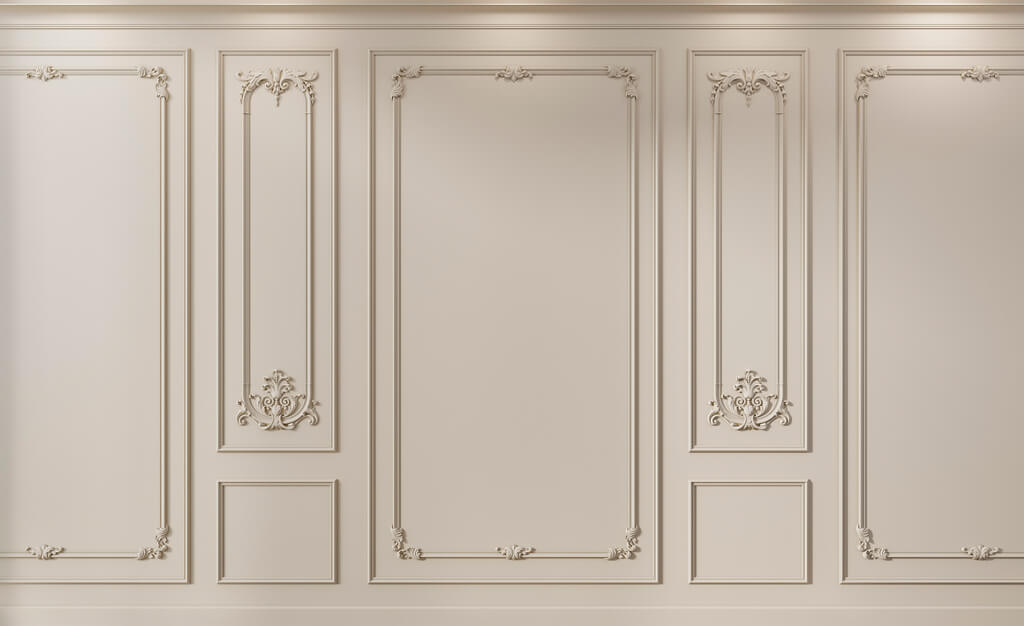
- Matching Crown to Wall Molding
- Crown Molding and Ceiling Medallions
- Crown Molding and Corbels
- Crown Molding Above Kitchen Cabinets
- Crown Molding in Bathrooms
- Crown Molding in Kitchens
- Crown Molding in Living Rooms
- Crown Molding in Dining Rooms
- Crown Molding in Bedrooms
- Crown Molding in Home Offices and Libraries
- Crown Molding in Commercial Interiors
- Polyurethane Is Not Automatically Flexible
- LED Lighting Behind Crown Molding
- Can Crown Molding Hide Wiring?
- Painting Polyurethane Crown Molding
- Painting Wood Crown Molding
- Should Crown Match the Ceiling or the Wall?
- Dark Crown Molding
- White-on-White Crown Molding
- How Crown Molding Changes Perceived Ceiling Height
- How to Mock Up Crown Molding Before Ordering
- Why Samples Matter
- Installation Sequence
- Wall and Ceiling Imperfections
- Common Mistake #1: Choosing Crown From a Close-Up Photo
- Common Mistake #2: Using the Same Crown in Every Room
- Common Mistake #3: Ignoring Existing Trim
- Common Mistake #4: Treating Polyurethane as Flexible by Default
- Common Mistake #5: Sending a Polyurethane Keyword to a Polystyrene Category
- Common Mistake #6: Over-Sizing Crown on Low Ceilings
- Common Mistake #7: Under-Sizing Crown on High Ceilings
- Common Mistake #8: Assuming White Means Invisible
- Common Mistake #9: Ignoring Pattern Repeat
- Common Mistake #10: Comparing Material Prices Without Installation
- For Interior Designers: What to Specify
- For Contractors: What to Verify Before Installation
- For Homeowners: What to Measure Before Shopping
- A Practical Material Decision Tree
- A Practical Profile Decision Tree
- How the Main U.S. Keywords Fit the Article
- Internal Linking Strategy for This Article
- Frequently Asked Questions
- Is polyurethane crown molding better than wood?
- Does polyurethane crown molding look cheap?
- Can polyurethane crown molding be stained?
- Can wood crown molding be painted?
- What size crown molding should I use with 8-foot ceilings?
- What size crown molding works for 9-foot ceilings?
- What about 10-foot ceilings?
- Can crown molding make a ceiling look higher?
- Can I use polyurethane crown molding in a bathroom?
- Can I use wood crown molding in a bathroom?
- Can polyurethane crown molding be used outdoors?
- Is polyurethane crown molding flexible?
- How is polyurethane crown molding installed?
- How is wood crown molding installed?
- What is crown molding projection?
- What is crown molding drop?
- Should crown molding match baseboards?
- Should crown molding match kitchen cabinets?
- Should crown molding be the same color as the ceiling?
- What is the biggest mistake when buying crown molding online?

Crown molding is one of the few interior details that can change the perceived architecture of a room without changing its floor plan. A well-proportioned profile softens the transition between wall and ceiling, gives the upper edge of the room a deliberate finish, and can make simple drywall construction feel more permanent. In a traditional interior, crown molding completes the hierarchy of baseboard, casing, wall paneling, and ceiling trim. In a contemporary room, a restrained profile can create a precise shadow line and make the ceiling feel intentionally framed rather than merely finished.
The difficult part is not deciding whether crown molding is attractive. The difficult part is deciding what kind of crown belongs in a particular room. Profile size, ceiling height, projection, ornament, paint or stain, wall color, cabinetry, lighting, installation conditions, and material all affect the result. Two rooms with the same ceiling height can require completely different molding because one is visually quiet and the other already contains substantial architectural trim.
For U.S. buyers, one of the most useful material comparisons is polyurethane crown molding vs. wood crown molding. Wood offers real grain, stain-grade character, traditional millwork authenticity, and the tactile quality of natural material. Polyurethane offers molded detail, relatively low weight, consistent geometry, moisture resistance, and a paint-grade surface. Neither is automatically “better.” The right choice depends on what the project is trying to achieve.
This guide takes that decision seriously. It looks at crown molding as an architectural system rather than a strip of trim: how to size it for 8-, 9-, 10-, and 12-foot ceilings, how projection changes the room, when stained wood matters, when painted polyurethane makes more sense, how to coordinate crown with doors and wall panels, how to estimate linear footage, how to approach corners, and how to avoid the mistakes that make expensive trim look strangely out of scale.


What Americans Mean by Crown Molding
In American residential construction, crown molding is the decorative profile installed at the junction of wall and ceiling. The term is broad. It may describe a small cove-like profile in an apartment, a large multi-piece built-up cornice in a traditional house, an ornate molded profile in a formal dining room, or a simple paint-grade transition in a contemporary interior.
“Cornice” is the more architectural term and can describe a larger projecting assembly, especially in classical architecture. “Cove molding” generally refers to a concave profile. “Ceiling molding” is understandable but less specific. In U.S. search behavior, crown molding is the dominant everyday term, while ceiling crown molding is used when shoppers want to make the ceiling application explicit.
The distinction matters because a product can technically be decorative trim without being a crown profile. Panel molding, chair rail, casing, flat trim, and decorative appliques all belong to the broader molding family, but their geometry is designed for different locations. Crown molding is specifically about the upper wall-to-ceiling transition.


Why the Wall-to-Ceiling Transition Matters
A room has three major horizontal boundaries: the floor line, the top of openings and furniture, and the ceiling line. When the ceiling line is left completely unresolved, the walls may feel as though they simply stop. Crown molding gives that stop a designed shape.
The effect is partly optical. A small profile painted with the ceiling can visually extend the ceiling downward by a few inches and soften a hard corner. A taller profile painted with the wall can make the wall field feel taller. A dark crown against lighter walls creates a graphic upper border. A broad white crown between colored walls and a white ceiling creates a classic framed effect.
But crown molding also establishes hierarchy. In a room with substantial baseboards, wide door casings, paneled walls, built-ins, or a fireplace, a completely bare ceiling junction can look underdeveloped. The crown gives the upper architecture enough weight to balance the lower trim.
Наша фабрика также производит:


Смотреть весь Каталог продукции
Polyurethane Crown Molding vs. Wood: The Short Answer
| Question | Polyurethane | Wood |
|---|---|---|
| Best visual finish | Painted architectural finish | Painted or stained; natural grain can remain visible |
| Weight | Relatively light | Varies by species and profile; generally heavier |
| Ornate detail | Excellent for repeated molded ornament | Excellent when carved or milled, but cost and labor rise with complexity |
| Dimensional consistency | Very consistent from piece to piece | Natural material can vary with grain and environmental conditions |
| Moisture | Generally well suited to humid interior conditions when the product and finish system are appropriate | Requires more attention to moisture, acclimation, sealing, and movement |
| Stain-grade appearance | Not the natural choice | Primary advantage of solid wood |
| Installation handling | Usually easier to lift and position | Heavier profiles may benefit from mechanical fastening and blocking |
| Historic material authenticity | Useful reproduction material | Strong choice when exposed real wood is historically or aesthetically important |
If the project wants painted ornament, crisp repetition, easier handling, and a decorative material that is less sensitive to ordinary interior humidity, polyurethane is often the practical choice. If the project wants authentic exposed grain, stain, traditional joinery, and the unmistakable material presence of real wood, wood crown molding has the stronger argument.
Получить консультацию
Why Wood Crown Molding Still Matters
Wood is not simply an older alternative to modern materials. It offers something molded polymers cannot literally reproduce: real grain, variation, end grain, figure, pores, color shifts, and the way finish penetrates the material rather than merely coating it.
That matters most when the molding is intended to be stained or clear-finished. In a library with walnut millwork, a paneled office in oak, a traditional dining room with stained door casings, or a room where beams and built-ins are visibly wood, a synthetic paint-grade crown can interrupt the material logic.
The confirmed U.S. search demand for wood crown molding is substantial because the category serves both decorative and practical millwork. People are not only searching for historical interiors; they are also matching existing cabinetry, doors, built-ins, and renovation trim.
Wood is also versatile. A simple profile can be painted, while premium hardwood can be stained or finished clear. Species, grain, and tone can become part of the design rather than something to hide.
When Polyurethane Makes More Sense
Polyurethane becomes compelling when the design is fundamentally paint-grade. If the finished crown will be white, cream, gray, black, or another solid color, the natural grain advantage of wood disappears. At that point, weight, consistency, relief detail, moisture behavior, and installation logistics become more important.
In American millwork terminology, polyurethane crown molding and urethane crown molding are often used for the same broad product family. Current U.S. suppliers position urethane crown as a lightweight, paint-grade option that can reproduce detailed profiles and resist the moisture-related movement associated with wood. citeturn254908search0turn254908search1
STAVROS has confirmed polyurethane linear and decorative profiles in its current catalog, including polyurethane trim molding and related architectural elements. For the current site structure, however, the dedicated “cornices” section contains HI WOOD polystyrene products, so it is important not to confuse material categories when specifying or linking products.
Do Not Confuse Polyurethane Crown Molding With Polystyrene Crown
This distinction is especially important when shopping across broad decorative-trim catalogs. Polyurethane and polystyrene are not the same material, even though both can be used for lightweight interior molding.
A product page should be read at SKU level. The fact that a website has a category called “cornices,” “moldings,” or “ceiling trim” does not tell you the material. Verify whether the actual profile is polyurethane, polystyrene, MDF, wood, plaster, or another composition before assigning it to a specification.
For STAVROS, this means the current HI WOOD cornice pages should be treated as polystyrene product pages, while polyurethane links should point to verified PU product families such as polyurethane moldings and the dedicated PU trim range.
The Most Important Design Decision Is Size, Not Material
A perfectly chosen material in the wrong scale will still look wrong. Crown molding is read from across the room, not from a product sample held in the hand. That means size has to be judged against ceiling height, room width, door height, cabinet scale, and the amount of other trim in the space.
The face width shown on a product page is only part of the story. Crown molding is installed at an angle, so you should also understand its wall drop and ceiling projection. Two profiles with similar face dimensions can occupy the corner very differently.
A broad, deep crown creates a strong architectural edge. A narrow crown behaves more like a finishing line. Neither is inherently more sophisticated; the question is whether the profile belongs to the room.
Crown Molding for 8-Foot Ceilings
Eight-foot ceilings require restraint because the upper wall field is limited. Large crown can visually compress the room, particularly when doors are tall, wall color is dark, or the space is narrow.
As a practical starting point, many U.S. millwork guides suggest smaller face dimensions for 8-foot ceilings, with approximate ranges around 2-1/2 to 6 inches depending on room size and style. citeturn254908search2 The lower end of that range suits compact rooms and modern profiles; the upper end can work in larger traditional rooms with substantial casing and baseboard.
Do not treat that as a formula. A 5-inch ornate crown can feel visually larger than a 6-inch smooth cove. Ornament density, projection, and wall color matter.
Crown Molding for 9-Foot Ceilings
Nine-foot ceilings provide more freedom. The room has enough vertical space for a moderate crown without immediately feeling compressed, and traditional proportions become easier to achieve.
For many residential rooms, a medium-scale profile gives the right balance. If the room has tall doors, built-ins, paneled walls, or a fireplace, the crown can move toward the larger end of the range. If the room is minimalist, a smaller profile may still be preferable.
This is also a good ceiling height for built-up crown assemblies: one main crown profile combined with a smaller picture molding, flat stock, or decorative band to create a more architectural cornice without using one extremely large piece.
Crown Molding for 10-Foot Ceilings
At ten feet, undersized crown becomes a common problem. A profile that looked substantial in a sample can disappear once installed twelve feet away across a large living room.
Use stronger projection and more readable profiles. Traditional interiors can support deeper ornament, while contemporary rooms may use wide but simple geometry.
For tall rooms, the relationship to doors is useful. If door heads are eight feet high, the two-foot band above them becomes part of the upper architecture. Crown that is too thin can make that band feel empty; appropriately scaled molding helps connect it to the ceiling.
Crown Molding for 12-Foot Ceilings and Higher
High ceilings allow large profiles, multiple-piece assemblies, and substantial cornices. But simply increasing width is not enough. The profile has to read correctly from below.
Deep shadow lines and clear ornament become more important because fine detail loses visibility at distance. A large smooth profile may need a stepped composition or secondary band to avoid looking like one oversized curve.
In formal rooms, large crown can be coordinated with ceiling medallions, panel molding, pilasters, or substantial window and door casings. For ceiling-center design, STAVROS offers polyurethane ceiling medallions that can help create a complete upper-room composition.
Face, Drop, and Projection: Three Dimensions to Understand
Shoppers often compare crown molding only by face width. Installers think in three dimensions.
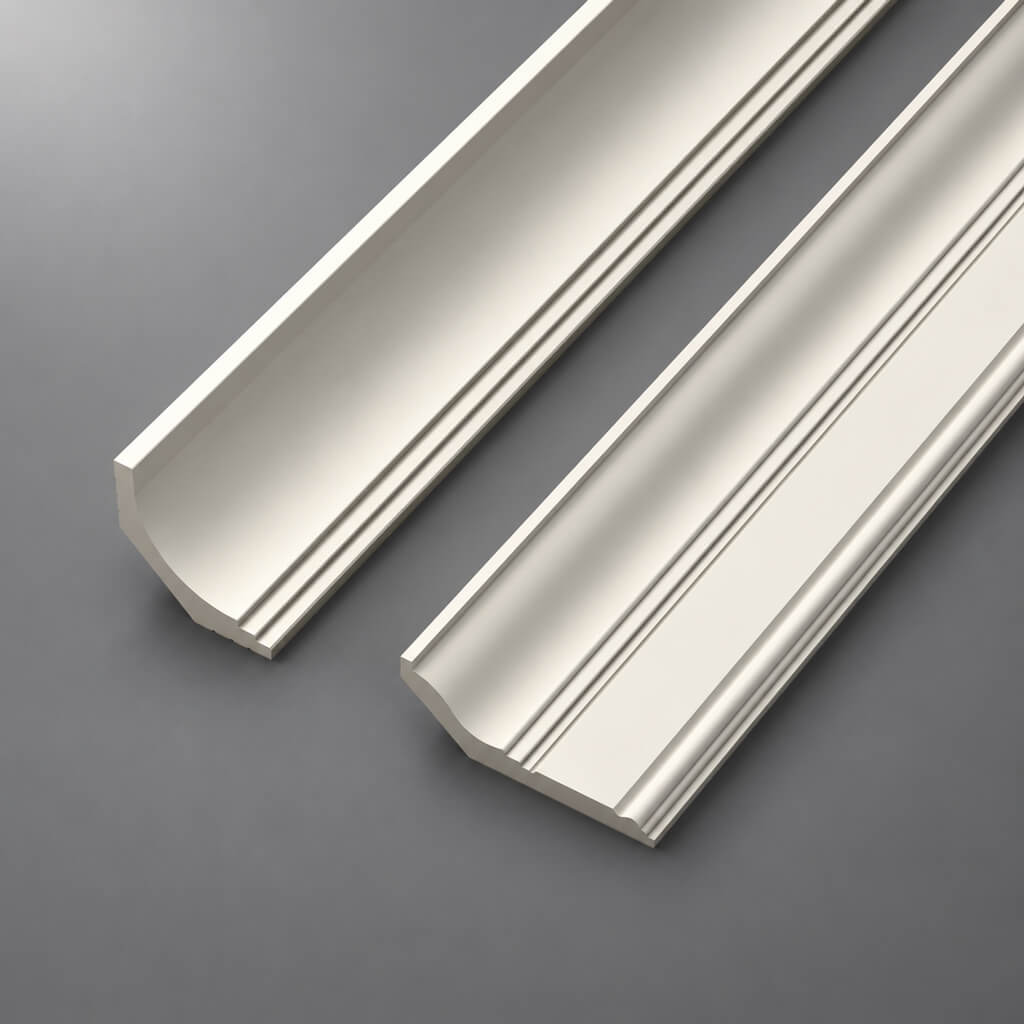
Face is the visible diagonal width of the profile. Drop is how far the crown extends down the wall. Projection is how far it extends across the ceiling. These dimensions determine how the profile occupies the corner.
A crown with large projection but modest drop can feel more ceiling-oriented. One with larger drop can visually extend the wall architecture upward. The same face dimension can therefore create different effects.
When replacing existing molding, measure all three. Matching only the face width may leave paint lines, gaps, or a different visual proportion.
Ornate vs. Smooth Crown Molding
Ornament is not a measure of quality. A smooth cove can be perfect in a sophisticated contemporary room. An acanthus or egg-and-dart profile can be perfect in a classical dining room. The mistake is choosing ornament because it looks “luxurious” in isolation.
Ornate molding needs visual support from the rest of the room. If the doors are frameless, baseboards minimal, cabinetry slab-front, and furniture contemporary, a heavily classical crown may feel imported from another project.
Conversely, in a room with raised-panel doors, wide casing, paneled walls, carved furniture, or formal lighting, an overly plain ceiling edge can make the architecture feel incomplete.
Classical Profiles
Classical crown molding derives from architectural orders and historical cornice systems. Common visual devices include dentils, egg-and-dart, bead patterns, acanthus leaves, modillions, flutes, scrolls, and stepped fascia bands.
The strength of polyurethane in this context is repeatability. Molded detail can remain consistent across long runs and repeated rooms. The strength of wood is material authenticity when the profile is carved or milled from actual hardwood and left visible.
Neoclassical Profiles
Neoclassical interiors usually benefit from disciplined profiles: clear geometry, controlled ornament, symmetry, and a sense of proportion rather than maximum decoration.
A medium-size crown with one refined motif can be more effective than a heavily layered Baroque profile. If the room also includes wall molding, keep the ceiling crown one step stronger in scale so the hierarchy remains clear.
Transitional Crown Molding
Transitional interiors combine traditional architectural bones with simpler furniture and contemporary finishes. Crown molding is often essential because it provides the traditional architecture while allowing the rest of the room to stay clean.
Choose profiles with broad curves, shallow steps, or limited ornament. Painted polyurethane can work especially well here because it gives a crisp, unified finish without requiring the grain to become part of the design.
Modern and Minimalist Crown Molding
Minimalism does not automatically mean no crown. The profile simply changes purpose. Instead of ornament, it creates a deliberate shadow line and a controlled transition.
Simple coves, flat stepped profiles, or shallow geometric molding can make a white ceiling and colored wall feel more resolved. Painting crown the same color as the ceiling keeps the effect quiet.
In some modern rooms, no crown is the correct choice. If the architecture depends on a sharp drywall reveal or flush ceiling plane, adding traditional molding can dilute the concept.
When Stained Wood Is Worth the Cost
If the crown will be stained, the material decision becomes much easier: choose real wood or a genuine stain-grade wood product. Polyurethane can be faux-finished, but it does not become natural wood.
Stained crown makes sense when it relates to visible timber elsewhere: beams, doors, cabinetry, wall panels, flooring, built-ins, or a fireplace mantel. The grain becomes part of the room’s rhythm.
In a library or office, stained crown can create a continuous upper band that visually connects tall bookcases. In a dining room, it can coordinate with paneled walls. In a rustic or craftsman-inspired interior, wood may be fundamental to the architecture rather than simply a finish choice.
When Painted Wood Makes Sense
Wood crown does not have to be stained. Paint-grade wood is common and can be appropriate when carpenters are already working with wood casing, baseboard, and built-ins.
There are practical reasons to stay within one material system: familiar cutting behavior, fastening methods, job-site tools, and established carpentry workflow. If a crew is installing extensive wood millwork, adding wood crown may be straightforward even if the final finish is opaque paint.
Polyurethane becomes more attractive when the profile is highly detailed, very large, used in humid areas, or selected primarily for lower weight and molded consistency.
Moisture: Bathrooms, Kitchens, and Basements
Wood responds to moisture because it is hygroscopic. Seasonal humidity changes can affect dimensions, joints, and finish behavior. Properly dried, acclimated, sealed wood performs very well indoors, but it needs to be treated as wood.
High-density urethane crown is widely marketed in the U.S. for humid interiors because it is resistant to moisture, warping, and cracking compared with conventional wood trim. citeturn254908search1turn254908search2 That makes polyurethane attractive in bathrooms, kitchens, and basements when the specific product, adhesive, substrate, and coating system are appropriate.
Do not translate this into a claim that every polyurethane product is automatically suitable for every wet environment. Product-level instructions still govern.
Weight and Installation Handling
Large crown molding is awkward because it is installed overhead, often in long lengths, while both wall and ceiling contact surfaces need to align. Lower weight can reduce the physical difficulty of this process.
Urethane molding is commonly positioned by U.S. manufacturers as a lightweight paint-grade alternative that can often be installed with construction adhesive and compatible fastening methods. citeturn254908search0turn254908search3
Wood crown typically relies more heavily on mechanical fastening to framing, blocking, or nailers, especially for larger profiles. The correct installation depends on the profile and wall/ceiling construction.
Do Not Assume “Adhesive Only” for Every Project
Generic advice about gluing crown molding can be misleading. Large profiles, irregular substrates, ceilings that are out of plane, long runs, and complex corners may require temporary support or mechanical assistance.
Follow the product manufacturer’s current installation instructions. Adhesive type, bead pattern, open time, fastening, joint treatment, and painting requirements can vary.
The keyword polyurethane crown molding adhesive has confirmed search activity, but the correct answer is not one universal adhesive name. Compatibility with the actual PU formulation and substrate is what matters.
Acclimation: Why Wood Needs More Attention
Wood should generally be acclimated to the interior environment before installation so it is closer to the moisture conditions in which it will remain. This is especially important for wide profiles and stain-grade work where joint movement is difficult to hide.
Polyurethane is less sensitive to humidity-driven wood movement, but the material should still be stored and installed under conditions recommended by the manufacturer. Cold products, hot rooms, freshly plastered walls, and unstable substrates can create installation problems regardless of molding material.
Cutting Crown Molding: The Geometry Matters
Crown molding creates one of the most misunderstood trim joints because the profile sits at an angle between wall and ceiling. A simple “45-degree cut” description is not enough for many real rooms.
Walls are rarely exactly square. Inside and outside corners may be 88, 91, or 94 degrees rather than 90. Crown spring angle and saw setup determine the correct compound miter.
Professional carpenters commonly use either nested cutting, compound miter calculations, coping for inside wood corners, or corner blocks designed for a specific profile. The method depends on material, profile geometry, and finish requirements.
Coping Wood Crown
For wood crown, coping inside corners is a traditional method because it allows one profile to follow the contour of another. The first piece runs square into the wall; the second is cut to fit over its face profile.
Coping can handle slightly imperfect corners better than two simple miters. It is especially useful with stained or clear-finished wood where caulk cannot be used as freely to disguise joint errors.
Polyurethane Corners and Joint Treatment
Paint-grade polyurethane allows a different finishing strategy. Small joint imperfections can often be filled and painted, although the cut should still be accurate.
Some U.S. manufacturers also sell matching inside and outside corner blocks to reduce miter complexity. citeturn254908search4turn254908search5 Whether a specific STAVROS profile has a matching corner component must be checked at product level.
Do not assume that a generic corner block fits every profile. Crown geometry has to match precisely.
How to Estimate Linear Footage
Measure the perimeter of every wall receiving crown molding. Add individual wall lengths rather than relying only on room dimensions, because openings, bump-outs, columns, and built-ins can change the actual run.
Then add waste. The amount depends on material length, room geometry, number of corners, pattern repeat, and installer experience. Long simple rooms waste less. Short walls and many outside corners waste more.
For ornate repeating patterns, plan where motifs meet at joints. A mechanically correct splice can still look visually awkward if the ornament repeat is ignored.
Why Long Walls Need Thoughtful Splices
Many rooms require more than one molding length. The joint should not be placed randomly if it can be located over a low-visibility area or aligned with a logical architectural break.
For wood, scarf joints are common because they increase glue surface and make small movement less visible. Paint-grade polyurethane systems may use manufacturer-recommended butt or scarf details depending on the profile.
Always consider the direction of sight. A joint that disappears from the doorway may be obvious from the sofa or dining table.
Paint Grade vs. Stain Grade
This is one of the clearest decision points.
If the crown will be painted, polyurethane, MDF, finger-jointed wood, solid wood, and other paint-grade materials may all be candidates. The decision then shifts to profile availability, moisture conditions, weight, installation, and budget.
If the crown will be stained to reveal real grain, natural wood has the advantage. There is no reason to pay for faux grain when the design concept explicitly celebrates actual wood.
Matching Crown Molding to Baseboards
Crown and baseboard do not need the same exact profile, but they should feel related in visual weight. A massive crown over a tiny modern baseboard can make the room top-heavy. A substantial base with almost no ceiling trim can feel bottom-heavy in a traditional interior.
Compare height, thickness, projection, and ornament density. The crown is usually visually lighter than a furniture-scale baseboard, but it should still belong to the same architectural family.
Matching Crown to Door and Window Casing
Door casing is one of the best clues for selecting crown scale. Wide, layered casing can support stronger crown. Thin flat casing usually calls for a simpler profile.
If the room has elaborate headers, pediments, or crossheads, the crown should be strong enough not to disappear above them. But it should not compete for the same decorative focus.
Matching Crown to Wall Molding
Wall molding creates horizontal and vertical rhythm below the crown. When both are used, the crown should usually act as the stronger top termination.
A room with polyurethane wall decor or framed panel molding benefits from consistent spacing. The top wall panels should not collide visually with the crown. Leave a deliberate band of wall or integrate the upper panel edge into the cornice design.
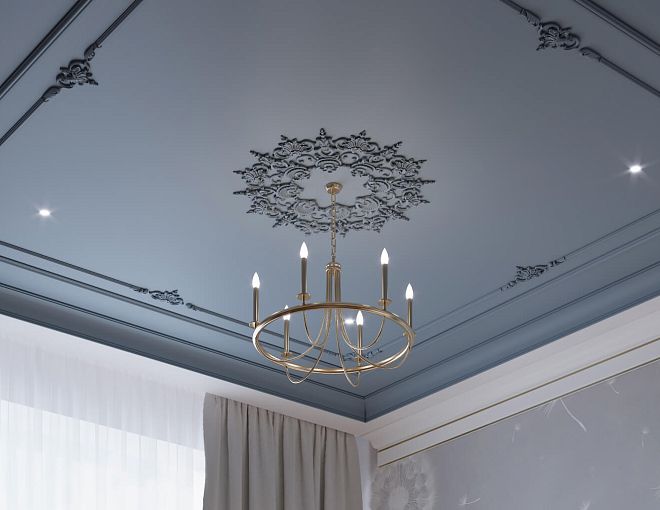
Crown Molding and Ceiling Medallions
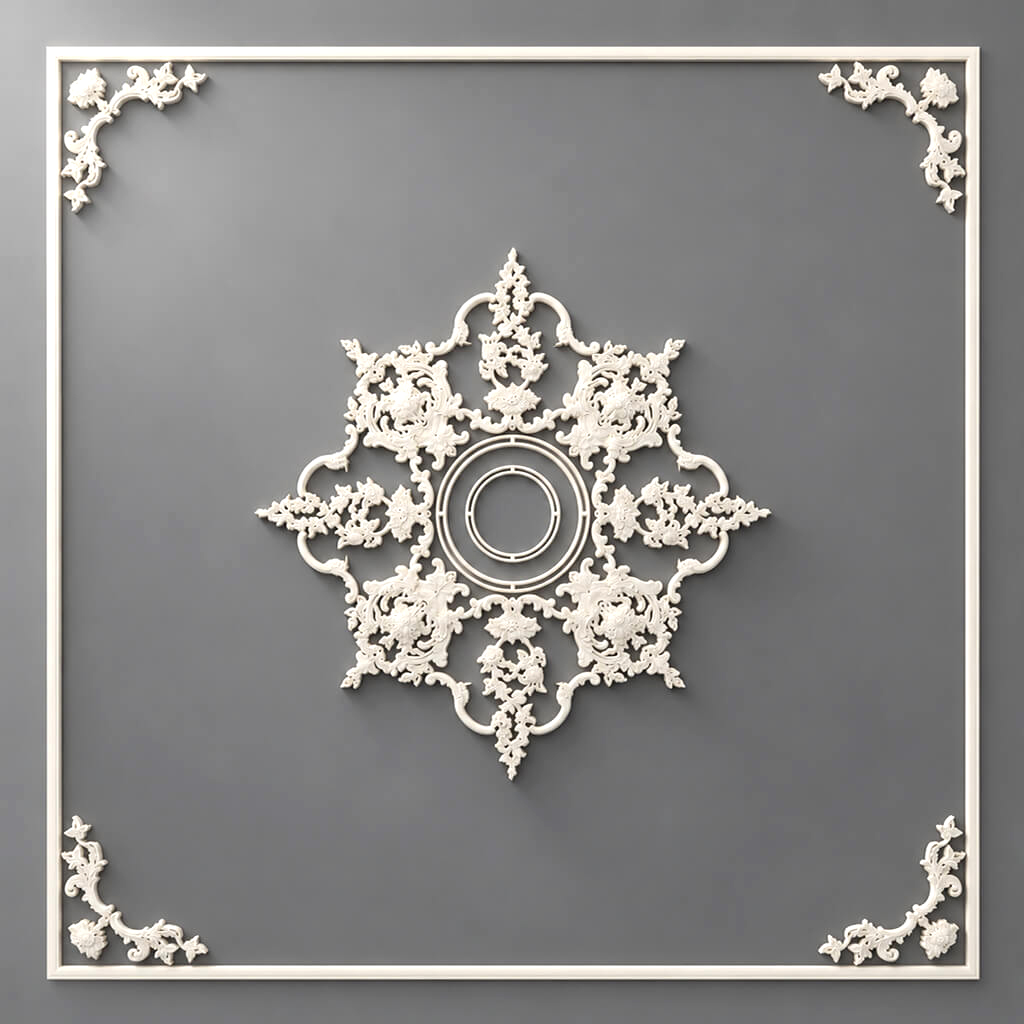
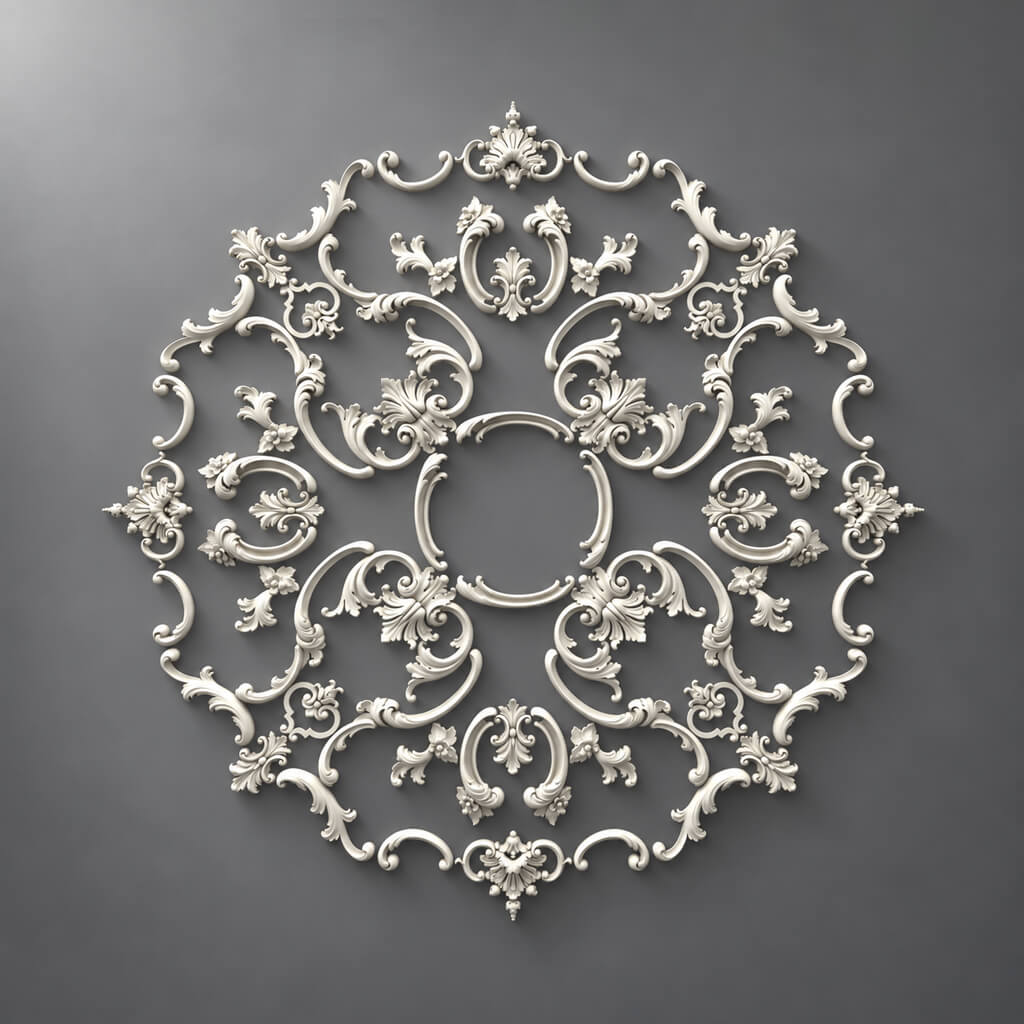
Formal rooms often combine perimeter crown with a central medallion. The two elements define the edge and center of the ceiling.
They do not have to share the exact same motif. Instead, coordinate scale and decorative density. A heavily ornamented crown with a tiny plain medallion can feel disconnected; a large elaborate medallion under a very thin crown may dominate the room.
For the center composition, compare current polyurethane ceiling medallions by diameter and relief before finalizing the perimeter molding.
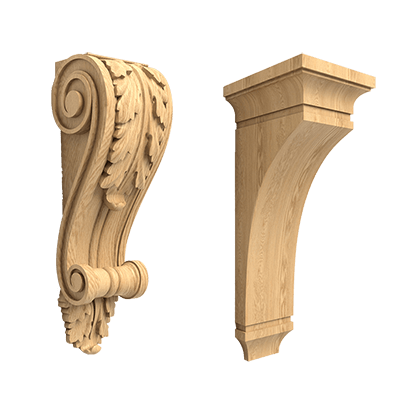
Crown Molding and Corbels
In classical rooms, corbels or modillion-like elements can strengthen a cornice composition. They introduce rhythm and shadow beneath projecting trim.
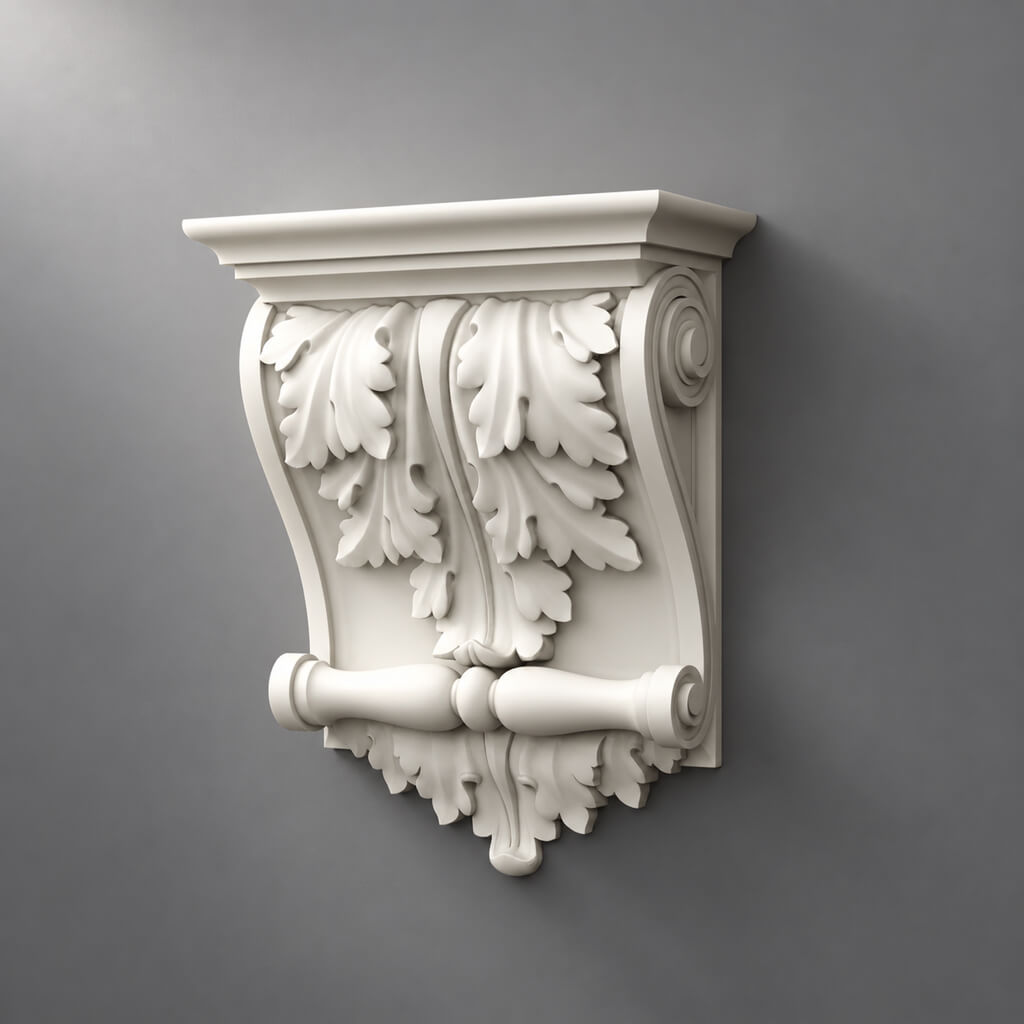
STAVROS offers polyurethane corbels as decorative architectural elements. They should be treated as decoration unless a specific product is explicitly documented for structural loading.
Use them sparingly. Repetition is powerful, but an overly dense line of brackets can make a residential room feel theatrical unless that is the intended style.
Crown Molding Above Kitchen Cabinets
Crown above cabinetry is a separate design condition from crown at the room perimeter, although the profiles may be related.
Cabinet crown is read at furniture scale. Its height should relate to cabinet doors, upper fillers, ceiling height, and the gap between cabinets and ceiling. In a kitchen with cabinets reaching the ceiling, crown can conceal small out-of-level conditions and create a finished top transition.
If stained cabinetry is the design focus, wood crown usually provides the cleanest material continuity. If the cabinetry is painted and the profile is ornate, paint-grade alternatives can become more practical.
Crown Molding in Bathrooms
Bathrooms are a strong use case for moisture-resistant paint-grade molding. Wood can work when properly selected, acclimated, sealed, and ventilated, but the environment demands more attention.
Polyurethane is attractive because it is less sensitive to humidity-related dimensional movement than wood. Keep in mind that the complete system still matters: ceiling substrate, wall finish, adhesive, caulk, primer, paint, and ventilation.
Crown Molding in Kitchens
Kitchens add heat, cooking moisture, airborne grease, cabinetry, ventilation equipment, and frequent cleaning. A very intricate crown close to cooking areas can become harder to maintain.
Simpler profiles often perform better visually and practically. When crown is part of a cabinet composition, the material and color should coordinate with cabinet finishes rather than simply matching the room perimeter by default.
Crown Molding in Living Rooms
Living rooms allow the greatest design freedom. Crown may be almost invisible, painted the same color as walls and ceiling, or it can be a strong architectural band that frames the entire room.
Use furniture scale as a clue. Large sectional seating, tall windows, a substantial fireplace, and high ceilings can support stronger molding. In a smaller living room with light furniture and minimal trim, restraint is usually more elegant.
Crown Molding in Dining Rooms
Dining rooms are naturally suited to more formal architectural treatment because the eye often rests on the room rather than moving quickly through it.
Crown can coordinate with a chandelier, wall panels, chair rail, and ceiling medallion. If the dining room uses stained wood furniture but painted architectural trim, do not feel compelled to stain the crown. Architecture and furniture can occupy different material layers.
Crown Molding in Bedrooms
Bedrooms generally benefit from quieter crown profiles. The goal is often to soften the ceiling edge rather than turn it into the main focal point.
Paint crown the same color as the ceiling for a calm effect, or match the wall for a cocooning monochromatic room. Deep relief can work in a romantic or traditional bedroom, but make sure the scale does not make an 8-foot ceiling feel lower.
Crown Molding in Home Offices and Libraries
This is where wood crown can be especially persuasive. If the room includes wood bookcases, wall paneling, desk furniture, and doors, stained crown can complete the material envelope.
Painted polyurethane can also work when the bookcases are painted or when the crown is intended to contrast with stained furniture. The decision should follow the architecture, not a generic rule that libraries must be dark wood.
Crown Molding in Commercial Interiors
Restaurants, hotels, boutiques, salons, lobbies, and showrooms use crown molding to create identity quickly. Paint-grade polyurethane can be attractive for repeated decorative detail across multiple rooms because the geometry is consistent and the pieces are easier to handle than heavy carved components.
Commercial projects also benefit from clear specification. Record material, dimensions, finish, installation system, fire-related requirements where applicable, maintenance expectations, and replacement strategy. Do not assume residential installation advice automatically satisfies commercial code or specification requirements.
Polyurethane Is Not Automatically Flexible
This is an important correction to the Russian source article. Some manufacturers sell flexible resin or flexible urethane versions of crown molding, and U.S. suppliers explicitly offer flexible counterparts for curved walls and arches. citeturn254908search0
But flexibility is a product-specific property. The current STAVROS PU assortment should not be described as flexible unless the exact SKU states that characteristic and provides a minimum bending radius or approved installation method.
For curved walls, arches, bay windows, and radius ceilings, verify the actual product rather than assuming any polyurethane profile can bend.
LED Lighting Behind Crown Molding
Indirect lighting can turn crown molding into a functional lighting detail, but the profile has to be designed for it. A crown that works beautifully as ordinary ceiling trim may not provide the right setback, projection, or internal space for LED tape and aluminum channels.
Consider the LED system, heat management, driver access, dimming, shadow line, wall wash, ceiling reflection, and maintenance. The keyword “polyurethane crown molding with LED lights” appears in U.S. research, but suitability must be confirmed at product level.
If indirect lighting is a central design goal, select the lighting geometry first and the decorative profile second.
Can Crown Molding Hide Wiring?
Sometimes, but this should not be treated as a universal function. The cavity behind a large profile may conceal low-voltage cable or other approved wiring only when the electrical method complies with applicable codes and product requirements.
Do not use decorative trim as an improvised electrical raceway. Coordinate with the electrician before installation.
Painting Polyurethane Crown Molding
Paint-grade urethane is typically designed to receive paint, often after factory priming or other manufacturer-specified preparation. U.S. suppliers commonly describe high-density urethane crown as factory primed and ready for paint. citeturn254908search1
For STAVROS products, follow the actual SKU’s finish instructions. Do not assume every item has the same primer.
Use thin, controlled coats so fine relief remains crisp. On ornate crown, a brush may be necessary to reach recesses. Spraying can produce an excellent finish when masking and application are properly controlled.
Painting Wood Crown Molding
Paint-grade wood needs proper filling, sanding, priming, and joint preparation. End grain can absorb finish differently from face grain. Nail holes need to be filled without leaving visible depressions.
If the molding is stained, joint quality becomes even more important because caulk and filler cannot be hidden under opaque paint in the same way.
Should Crown Match the Ceiling or the Wall?
There is no universal rule.
Match the ceiling when you want the molding to feel like part of the upper plane and visually lift the wall.
Match the wall when you want the wall architecture to extend upward and create a more enveloping room.
Use a separate trim color when doors, casing, baseboards, and crown form a consistent architectural system.
Use contrast when the crown itself is meant to become a graphic design element.
Dark Crown Molding
Dark crown can be sophisticated, especially in rooms with moody wall colors or dramatic contemporary palettes. Black, charcoal, deep blue, dark green, or brown can create a strong perimeter.
But dark crown visually emphasizes size. A profile that feels modest in white can feel much heavier in black. Test color and scale together.
White-on-White Crown Molding
White crown on a white ceiling remains one of the safest architectural strategies because the profile is defined by shadow rather than color.
The exact white matters. A cool bright ceiling white over warm cream walls can make crown look disconnected. Coordinate undertones, not just color names.
How Crown Molding Changes Perceived Ceiling Height
The Russian source correctly focuses on visual proportion, but exact claims such as “a crown lowers the ceiling by 20–30 centimeters” are too rigid. Perception depends on profile size, color contrast, wall height, furniture, lighting, and room width.
A large high-contrast crown can make a ceiling feel lower because it creates a strong visual band. A smaller crown painted with the ceiling can make the wall-to-ceiling transition feel softer and sometimes visually higher.
The effect is perceptual, not a fixed measurement.
How to Mock Up Crown Molding Before Ordering
Create a full-size paper or cardboard section of the profile height and projection. Tape it into the wall-ceiling corner in several locations.
Then stand at the doorway, center of the room, seated eye level, and adjacent rooms. The molding will look smaller from normal viewing distances than it does in your hand.
For ornate profiles, print a full-size photograph of the face pattern. Even a simple mockup can prevent an expensive scale mistake.
Why Samples Matter
A sample reveals three things a website cannot: actual relief depth, edge crispness, and how the material responds to the room’s lighting.
Hold the sample near the ceiling rather than at chest height. Strong overhead light can flatten detail; side light can exaggerate it. Paint or finish a sample if color is critical.
Installation Sequence
A disciplined sequence reduces rework:
- Confirm profile and material.
- Measure and calculate linear footage.
- Order enough material for waste and pattern planning.
- Acclimate wood where required.
- Complete major wall and ceiling repairs.
- Establish level reference lines.
- Plan all inside and outside corners.
- Cut and dry-fit.
- Install according to material-specific instructions.
- Finish joints and fastener points.
- Prime where required.
- Paint or stain.
- Complete final caulk and touch-up.
Wall and Ceiling Imperfections
Crown molding does not automatically correct a crooked room. In fact, a perfectly straight profile can make a wavy ceiling more visible.
Before installation, identify whether the room is out of level, out of square, or simply has local surface irregularities. Decide whether to follow a true level line or visually split the difference.
Long walls and strong contrasting colors make deviations more noticeable. Professional installers often prioritize what looks straight from normal viewing positions rather than blindly following one imperfect plane.
Common Mistake #1: Choosing Crown From a Close-Up Photo
Close-up product photography makes every profile look important. The room will view it from eight, ten, or fifteen feet away.
Always translate the dimensions to full scale before deciding.
Common Mistake #2: Using the Same Crown in Every Room
A house can use one molding family without using one identical size everywhere. A formal living room may need stronger crown than a hallway or bedroom.
Consistency should come from related geometry and finish, not necessarily identical width.
Common Mistake #3: Ignoring Existing Trim
Crown should relate to baseboards, doors, windows, built-ins, and wall panels. Selecting it independently often creates a top-heavy or underdeveloped room.
Common Mistake #4: Treating Polyurethane as Flexible by Default
Only flexible products should be used on curves. Ordinary rigid polyurethane profiles are not automatically bendable.
Common Mistake #5: Sending a Polyurethane Keyword to a Polystyrene Category
This is an SEO and merchandising mistake. If a shopper searches for polyurethane, the linked page should either contain verified polyurethane products or clearly explain the material difference.
Material mismatch damages trust and weakens semantic relevance.
Common Mistake #6: Over-Sizing Crown on Low Ceilings
Large crown can be beautiful, but on an 8-foot ceiling it may visually compress the room unless the space is broad and intentionally traditional.
Common Mistake #7: Under-Sizing Crown on High Ceilings
Tiny crown on a 12-foot wall can look like an afterthought. Scale the profile to viewing distance and the rest of the architecture.
Common Mistake #8: Assuming White Means Invisible
White crown can still be visually heavy when relief is deep and projection large. Shadow creates contrast even without color.
Common Mistake #9: Ignoring Pattern Repeat
Ornamental crown may have a repeating motif. Random splices and corners can cut motifs awkwardly. Plan the run before cutting.
Common Mistake #10: Comparing Material Prices Without Installation
The true project cost includes material, waste, freight, preparation, fasteners or adhesive, labor, finishing, and repair risk. A cheaper profile can become more expensive if the installation is difficult or the finish requires extensive work.
For Interior Designers: What to Specify
A professional crown molding specification should include:
- manufacturer and product number;
- material;
- profile face dimension;
- wall drop;
- ceiling projection;
- length;
- ornament repeat if applicable;
- inside and outside corner strategy;
- joint treatment;
- substrate;
- installation method;
- primer condition;
- paint or stain system;
- color and sheen;
- coordination with cabinetry, wall panels, and lighting;
- room-by-room quantity;
- waste allowance;
- exterior or humid-location confirmation where relevant.
For Contractors: What to Verify Before Installation
Do not start with the saw. Start with conditions.
Check product lengths, room dimensions, corner angles, ceiling level, wall flatness, substrate, blocking, paint sequence, lighting details, and access. Confirm whether the profile is wood, polyurethane, MDF, or polystyrene because installation methods differ.
For large projects, make a sample corner before production installation. It is much cheaper to discover a joint or finish problem on four feet of molding than on four hundred.
For Homeowners: What to Measure Before Shopping
- ceiling height;
- room length and width;
- total perimeter;
- door and window head height;
- existing baseboard height;
- casing width;
- cabinet height where relevant;
- distance between cabinet top and ceiling;
- wall and ceiling colors;
- number of inside corners;
- number of outside corners;
- any curved walls;
- any LED-lighting requirements;
- the desired finish: paint, stain, clear coat, or decorative glaze.
A Practical Material Decision Tree
Choose wood first when:
- the crown will be stained or clear-finished;
- real grain is central to the interior concept;
- the crown must match stained cabinetry or paneling;
- historic material authenticity matters;
- the project already uses substantial custom wood millwork.
Choose polyurethane first when:
- the final finish is paint;
- the profile is ornate or deeply molded;
- lower handling weight is valuable;
- consistent repeated detail matters;
- the room is humid and wood movement is a concern;
- the design uses painted architectural decoration rather than exposed natural material.
A Practical Profile Decision Tree
Choose a simple crown when: the room is modern, ceiling height is modest, other trim is minimal, or the crown should disappear into the architecture.
Choose a medium traditional crown when: the room has paneled doors, substantial casing, conventional baseboards, and a transitional or classical direction.
Choose an ornate crown when: the architecture already supports ornament and the profile will be visible from enough distance for the detail to read.
Choose a built-up cornice when: ceiling height is generous, one stock profile cannot achieve the required scale, or the design needs multiple shadow lines.
How the Main U.S. Keywords Fit the Article
The confirmed search data shows very different levels of intent. The broad phrase crown molding is enormous, but it is too general for a page focused on STAVROS materials. Wood crown molding has major demand and maps naturally to the wood-and-MDF trim catalog. Polyurethane crown molding is smaller but highly relevant to this comparison. Crown molding polyurethane vs wood is much lower volume, but it expresses exactly the decision this article answers.
This is why a strong SEO article should not chase the largest phrase mechanically. It should satisfy a specific decision while using broader terms naturally. The article can rank for a family of related queries without repeating one exact keyword every few paragraphs.
Internal Linking Strategy for This Article
Commercial links should lead to product categories that actually match the anchor. For wood, wood crown molding and related trim can logically lead to the wood/MDF trim category.
For polyurethane, the article can link to verified adjacent product groups such as polyurethane moldings and urethane trim. The exact phrase “polyurethane crown molding” should not be forced onto a category dominated by another material.
Additional contextual links can support the architecture: polyurethane ceiling medallions, polyurethane corbels, and polyurethane wall decor.
Frequently Asked Questions
Is polyurethane crown molding better than wood?
Not universally. Polyurethane is often more practical for painted, ornate, lightweight, moisture-resistant decorative applications. Wood is stronger when exposed natural grain, stain, or traditional millwork authenticity is the priority.
Does polyurethane crown molding look cheap?
Material alone does not determine visual quality. Proportion, relief detail, joint quality, paint finish, and how the crown relates to the room matter more. A well-scaled, properly finished polyurethane profile can look highly architectural.
Can polyurethane crown molding be stained?
Some faux-finish systems can imitate stained wood, but polyurethane is fundamentally a paint-grade decorative material. If real stained grain is important, use wood.
Can wood crown molding be painted?
Yes. Paint-grade wood crown is common. The decision between painted wood and polyurethane then depends on profile, humidity, weight, carpentry workflow, and cost.
What size crown molding should I use with 8-foot ceilings?
Use a modest profile as a starting point and test full scale. Many U.S. guides place typical 8-foot applications in roughly the 2-1/2- to 6-inch face range, but room width, trim scale, ornament density, and color can justify going smaller or larger. citeturn254908search2
What size crown molding works for 9-foot ceilings?
Medium profiles are usually comfortable, with more freedom for layered or traditional designs. Mock up the actual profile before ordering.
What about 10-foot ceilings?
Larger profiles often read better because the viewing distance is greater. Coordinate the crown with tall doors, windows, wall panels, and other trim.
Can crown molding make a ceiling look higher?
It can influence perception. Smaller crown painted with the ceiling can soften the upper wall edge and sometimes make the room feel taller. Large high-contrast crown may visually lower the ceiling. The effect is not a fixed measurement.
Can I use polyurethane crown molding in a bathroom?
High-density urethane is widely used in humid interior applications, but follow the actual product’s installation and coating instructions. The wall, ceiling, adhesive, caulk, and paint also need to be suitable for the environment.
Can I use wood crown molding in a bathroom?
Yes, with appropriate wood selection, acclimation, sealing, ventilation, and maintenance. It requires more moisture-management attention than urethane.
Can polyurethane crown molding be used outdoors?
Only if the specific product is rated for the intended exterior exposure. Do not assume exterior suitability from the word “polyurethane” alone.
Is polyurethane crown molding flexible?
Not by default. Special flexible urethane/resin profiles exist, but ordinary rigid polyurethane molding should not be bent unless the manufacturer explicitly permits it.
How is polyurethane crown molding installed?
Installation typically involves measuring, cutting, compatible adhesive, alignment, and joint finishing; some profiles or substrates may also require mechanical assistance. Follow the specific manufacturer’s instructions.
How is wood crown molding installed?
Wood crown is typically cut with woodworking tools and mechanically fastened into framing, blocking, or nailers, often with adhesive as part of the system. Inside corners may be coped or mitered depending on the project.
What is crown molding projection?
Projection is the distance the molding extends across the ceiling from the wall. It affects shadow, apparent size, and how much of the ceiling plane the crown occupies.
What is crown molding drop?
Drop is how far the molding extends down the wall. It helps determine how strong the upper wall band appears.
Should crown molding match baseboards?
It should coordinate in scale and architectural language, but the profiles do not need to be identical.
Should crown molding match kitchen cabinets?
If it is attached to cabinetry, matching usually creates a coherent furniture-like composition. Perimeter room crown can be different if it belongs to the wall/ceiling architecture rather than the cabinet system.
Should crown molding be the same color as the ceiling?
Often, but not always. Matching the ceiling creates a calm upper transition. Matching walls creates a more enveloping effect. A separate trim color can unify casing, baseboards, and crown.
What is the biggest mistake when buying crown molding online?
Choosing from appearance without translating dimensions into the room. Always check face, drop, projection, ceiling height, and neighboring trim.
Final Perspective: Choose the Architecture First, the Material Second
The most successful crown molding does not call attention to the fact that it was purchased. It makes the room feel as though the ceiling, walls, doors, cabinets, and lighting were designed together from the beginning.
That is why the comparison between polyurethane and wood should come after the architectural questions. How tall is the ceiling? How large is the room? What is the scale of the doors and baseboards? Is the crown supposed to disappear into paint or celebrate natural grain? Is the interior classical, transitional, modern, or deliberately eclectic? Is the room dry or humid? Will the profile be simple or highly ornamented? How will it be cut, joined, and finished?
If the room needs authentic stain-grade material, real grain, and continuity with wood paneling or cabinetry, wood crown molding is difficult to replace. If the room needs painted architectural relief, lower handling weight, consistent ornament, and a material well suited to decorative molding, polyurethane becomes a compelling option.
The key is precision. Do not specify polyurethane when the actual product is polystyrene. Do not call a rigid profile flexible. Do not assume a generic adhesive is correct. Do not choose a profile only from a close-up photograph. Do not install a 3-inch crown in a grand 12-foot room because it looked substantial in your hand, and do not force an enormous cornice into a small 8-foot bedroom because “larger” sounded more luxurious.
Use the material that supports the finish, the profile that supports the room, and the installation method that supports the material. Then crown molding stops being a decorative afterthought and becomes what it has always been in good architecture: the final line that explains where the wall ends, where the ceiling begins, and how the entire room comes together.
Final finishing
Wooden cornices are sanded with fine-grit sandpaper (P180–P220). Dust is carefully removed with a vacuum cleaner and a damp cloth. Wood primer is applied, revealing defects and improving paint adhesion. After primer dries, final painting with enamel or lacquering in 2–3 coats with intermediate sanding is performed.
Polyurethane cornices are painted without prior preparation. Acrylic or latex paints are applied with a brush or roller. For detailed ornament relief, brushes of varying widths are used. First coat — primer, second — finish. For deep, saturated colors, a third coat may be required.
Care and Maintenance
Wooden cornices are wiped with a dry soft cloth to remove dust. It is recommended to treat with wood polish every 2–3 months to restore the gloss of the lacquered surface. Avoid excessive moisture, abrasive materials, and aggressive chemicals. Scratches and chips are filled with wood putty, sanded, and touched up.
Polyurethane cornices are cleaned with a damp cloth and mild cleaning agents. The material is resistant to most household contaminants and easily cleaned without special products. Stained areas are removed with a weak soap solution. Abrasive materials that scratch the painted surface are prohibited.
Periodic re-coating extends the service life. Wooden cornices are recommended to be re-varnished every 10-15 years. The old varnish is sanded, the surface is dusted, and fresh varnish is applied in 2-3 layers. Polyurethane cornices can be repainted if necessary — the surface is lightly sanded, degreased, and painted with a new color.
FAQ: Frequently Asked Questions about Cornices
What material is better for ceiling cornices?
The choice depends on the operating conditions and budget. For humid rooms, polyurethane is the only option. For formal areas, preference is given towooden corniceWith a limited budget, polyurethane is optimal, providing decent aesthetics at a reasonable price.
Can wooden cornices be installed in a bathroom?
It is undesirable due to high humidity. Even with quality protection, wood gradually absorbs moisture, deforms, and develops mold. For bathrooms, onlyPolyurethane Crown Moldingabsolutely moisture-resistant materials are recommended.
How to choose cornice width?
Width depends on ceiling height. For standard ceilings of 2.5-2.7 meters, profiles 5-10 centimeters are optimal. For high ceilings of 3-4 meters, cornices 12-20 centimeters are suitable. In small rooms, wide cornices visually lower the ceiling, making the space appear smaller.
Can lighting be installed behind the cornice?
Yes, special profiles are designed for under-cornice lighting. Behindceiling cornicesan LED strip is installed, creating an eye-catching light line. Polyurethane is non-combustible and safe for placing electrical components.
How long do cornices made of different materials last?
Wooden cornices made of hardwood last 40-80 years or more with proper care. Polyurethane elements have a warranty period of 30-50 years without property changes. Both materials are durable, providing decades of flawless service.
Can a cornice be painted dark?
Yes,decorative cornicesThey can be painted in any color. Dark shades require quality preparation — all defects will be visible. It is recommended to prime and apply paint in 2-3 layers for even, saturated color.
Are professionals needed for installation?
Polyurethane cornices can be installed independently without special skills. Wooden elements require carpentry skills, precise corner fitting, and professional tools. For guaranteed quality of large wooden cornices, it is recommended to hire specialists.
How to care for cornices?
Polyurethane is wiped with a damp cloth and requires no special care. Wood requires dry cleaning, periodic polishing with polishes, and careful handling. Avoid abrasive materials, excessive moisture, and aggressive chemicals for both materials.
Can wood and polyurethane be combined?
Yes, combined solutions are optimal. Polyurethane is used in humid zones and on ceilings, while wood is used in formal areas at eye level. It is important to maintain stylistic, color, and scale unity for a harmonious composition.
What adhesive to use for installation?
For polyurethane — special polyurethane adhesive or universal liquid nails with high adhesion. For wood — carpentry PVA or polyurethane adhesive combined with mechanical fastening. The adhesive must be compatible with the base and cornice materials.
Conclusion: Choosing a cornice according to style, lighting, and geometry
A ceiling cornice is the final touch, completing the interior composition and giving it a sense of completeness. The right choice of material, profile, size, and color transforms a functional element into an expressive architectural accent.
Interior style dictates the character of the cornice. Classical styles require profiled elements with ornaments reproducing traditional architectural orders.wooden cornicesLuxury wood species create authenticity and emphasize respectability. Modern trends prefer minimalist forms, wherePolyurethane Crown Moldingsimple geometric profiles perfectly match the philosophy of minimalism.
Lighting of the room significantly affects the perception of the cornice. Side lighting emphasizes the relief, creating expressive light-and-shadow play on ornate profiles. Diffused overhead lighting softens shadows, making the cornice a more subdued background element. Under-cornice lighting transformsCeiling Moldingto a soft diffused light source, creating a floating ceiling effect.
The room's geometry requires consideration when selecting the size and type of crown molding. Low ceilings appear visually raised by narrow crown moldings painted to match the ceiling. High ceilings are balanced by substantial profiles that reduce visual height. Small rooms become overloaded by wide, ornate crown moldings and require restrained solutions.
Budget determines material and scale of decor. Limited funds dictate the use ofcornices made of polyurethanethat provide decent aesthetics at an affordable price. A moderate budget allows combining materials—polyurethane on ceilings and in wet zones, wood in formal areas. Premium projects use exclusivedecorative cornicesfrom premium hardwoods with hand-carved detailing.
Operating conditions are critical for material selection. Wet areas require moisture-resistant polyurethane. High-traffic areas require durable hardwood crown moldings or high-density impact-resistant polyurethane. Formal zones with gentle use allow any materials depending on aesthetic preferences.
Individuality of the interior is achieved through non-standard solutions. Paintingcrown moldings for paintingin unexpected colors creates bold accents. Combining profiles of different widths forms multi-level compositions. Integrating lighting transforms the crown molding into a light element, reshaping the space.
STAVROS Company offers the widest selection of wooden and polyurethane crown moldings for any style, budget, and operating conditions. Professional consultations will help select the optimal solution, taking into account all project specifics. European-level quality materials, proven installation technologies, and years of experience guarantee flawless results. Create interiors that will delight for decades—choose time-tested quality and trust STAVROS professionals.