










































































Article Contents:
- Buy polyurethane capital
- What is a capital and why it is important
- Which polyurethane capital to buy: selection criteria
- Where are capitals used in interiors
- For columns
- For pilasters
- For doors and portals
- Polyurethane capital: six reasons to choose this material
- Wood or polyurethane capital: honest comparison
- Types of capitals by style
- Corinthian capital
- Ionic capital
- Classic decorative capital
- What affects the price of a capital: breaking down the factors
- How to choose a capital before buying: a checklist
- Mistakes when buying a capital
- Capital in the interior decor system
- Where to buy a polyurethane capital and a wooden capital
- FAQ: Answers to Popular Questions


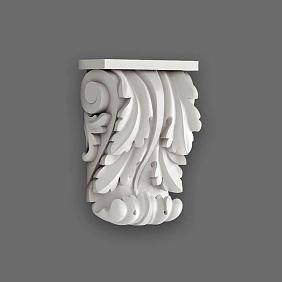


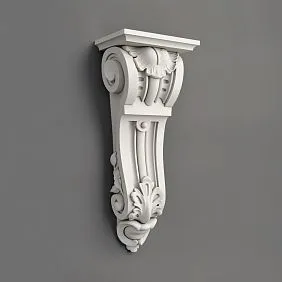
Buy a polyurethane capital
Architecture can speak. It speaks through proportions, through material, through details — small but decisive. The capital is one such detail. This crowning part of a column or pilaster was invented thousands of years ago and has not lost a single gram of its expressiveness since then. On the contrary: in modern interiors, the capital has become one of the most sought-after decorative elements — precisely because with its appearance, the space ceases to look "made" and begins to look thoughtful.
Buying a polyurethane capital today means getting that very decorative accent that puts the finishing touch on a classic interior, gives columns completeness, doorways monumentality, and pilasters architectural meaning. And to do it with comfort: lightweight material, easy installation, impeccable relief, and the possibility of painting in any color.
Buying a polyurethane capital means making a choice in favor of practicality without compromising beauty. This is precisely the main idea of this article: to help you understand how to do it correctly.




What is a capital and why is it important
Before going to the catalog, it is worth understanding the nature of this element. The word "capital" comes from the Latin capitellum — "little head." This is the crowning part of a column, half-column, or pilaster, which performs a dual function: constructive — provides a visual transition from the vertical shaft to the horizontal ceiling, and decorative — carries ornament, style, and the character of the architectural order.
In classical architecture, there are three main orders, and the capital is their face. Doric is strict, almost without decoration, only the echinus and abacus. Ionic has characteristic scroll-like volutes on both sides. Corinthian is lush, with acanthus leaves, the most decorative of all. Each of these types is still alive today — in classical and neoclassical interiors, in Baroque spaces, in restoration projects, and in new buildings where the architect consciously works with the historical language of forms.
In interior design, capitals are used not only for decorating load-bearing columns. They crown wooden pilasters, decorate doorways, complete decorative portals above entrances, adorn fireplaces, arches, and built-in niches. This is an element that has no "one right place": it works wherever an architectural accent is needed.
Our factory also produces:


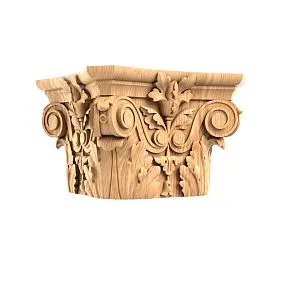


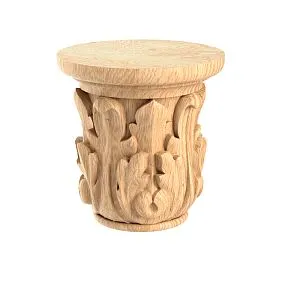
Which polyurethane capital to buy: selection criteria
To buy a polyurethane capital consciously means to go through several filters. Not "what is beautiful," but "what is correct." Let's break down the system.
Installation location. A column is one scenario. A pilaster is another. A doorway is a third. Each location has its own requirements for the capital's geometry: depth of relief, shape in plan (round — for a column, rectangular or semi-oval — for a pilaster, flat with a figured top — for door framing).
Size of the column, pilaster, or opening. The width of the column shaft is the key parameter. The capital should protrude beyond the shaft — this is its constructive and decorative nature. Typically, the capital's overhang is 15–30% beyond the shaft width on each side. For a pilaster, the capital's width should match the pilaster's width at the lower edge.
Interior style. To buy a polyurethane capital correctly means to choose a style that matches the overall space. Classic, neoclassical, Baroque, Empire — each style has its own proportions and character of the capital's ornament. Mixing an Ionic capital with Gothic wall decor is either deliberate postmodernism or an accidental mistake. The difference is clearly visible.
Material. A polyurethane capital or a wooden one — this choice depends on the context and task. More details in a separate section.
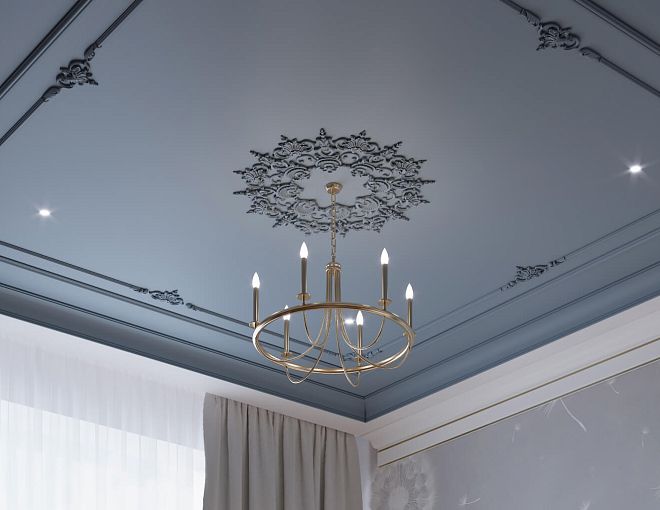
Compatibility with the rest of the decor. The capital is not a soloist, but part of an ensemble. It should be coordinated with with molded decoration walls and ceiling, with moldings, cornices, and overlay elements. If decorative polyurethane elements in the interior belong to the same style family — the space looks designed. If each element is from its own 'era' — it's decorative chaos.
Get Consultation
Where are capitals used in the interior
For columns
Buying a column capital is a classic scenario, used both in the construction of new spaces and in the restoration of historical ones. A column without a capital is a trunk. A column with a capital is an architectural element that has a beginning, middle, and end.
It is necessary to buy a column capital with an exact match to the diameter of the upper part of the trunk. In the STAVROS catalog, wooden capitals are presented in shapes for round, square, and half-columns: from model KL-007 at 1,770 rubles to KL-012 at 14,900 rubles — depending on the complexity of the ornament and size group.
A polyurethane column capital is a solution that is especially relevant where a lightweight decorative element is needed without load on the trunk. Polyurethane weighs several times less than wood and even less than plaster molding. For decorative columns made of drywall, MDF, or polystyrene foam — only polyurethane or a lightweight wooden element. A heavy plaster or cement capital on a decorative column is a direct path to structural deformation.
Columns with capitals in a classic interior include entrance groups, grand halls, arched passages, living room zoning, fireplace areas, and library niches. In each of these scenarios, the capital puts a point, completes the form, and gives the space architectural meaning.
For pilasters
wooden pilaster without a capital is a flat decorative strip on the wall. With a capital — an element of the order system, referencing the tradition of Greek and Roman architectural solutions. The difference is in one detail, and that detail changes everything.
The pilaster capital has a rectangular or semicircular shape in plan, unlike the round column capital. This is important when choosing: models KL-004.02 and KL-001.02 from the STAVROS catalog are specially designed for PLM series pilasters — they match exactly in dimensional logic and form a complete ensemble of shaft + capital.
It is worth buying a pilaster capital primarily for decorating wall niches, door portals, fireplace piers, zoning partitions, and facade decorative elements. Pilasters with capitals turn a boring wall into an architectural facade — even in a small apartment.
For doors and portals
This is one of the most popular and yet underestimated scenarios for using capitals. Buying a capital for interior doors means adding to a standard doorway that portal character that distinguishes historical interiors from modern chipboard boxes.
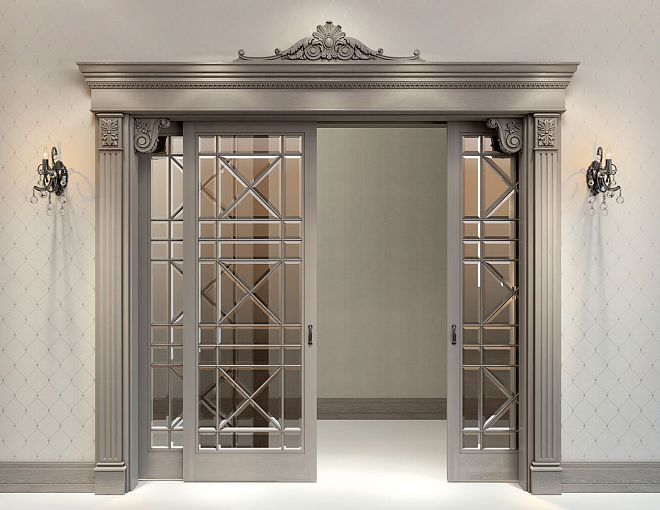
You need to buy a capital for interior doors taking into account the width of the trim or pilaster on which it is installed. The standard scheme: two vertical pilasters on the sides of the opening + capitals above them + a horizontal cornice or frieze on top = a portal. These are three or four details that completely change the character of the doorway.
Buying a polyurethane door capital is a practical solution. It is mounted with glue, weighs grams, and accepts any coating. Buying a capital above the door in the format of a portal top is a separate story: here the capital acts not as the completion of a post, but as a decorative accent of the very top edge of the opening. This is a solution for grand entrances, for doors to a study, living room, or library.
For entrance doors in city apartments with door decor in a classic style, portal design with capitals is one of the few ways to create a "grand" character even in a modest-sized hall. Two small pilasters with capitals on the sides of the front door — and the hall ceases to be just a corridor.
Polyurethane capital: six reasons to choose this material
Polyurethane moldings — this is a relatively young material in the history of decorative architecture, but it has already replaced plaster and competes with wood in a huge number of scenarios. Why?
First: light weight. A polyurethane capital for a decorative column weighs 5–8 times less than a plaster one of the same size. This is fundamental for decorative structures made of drywall and MDF: they simply cannot support heavy elements.
Second: moisture resistance. Polyurethane is not afraid of moisture — neither in the bathroom, nor in the pool, nor on the facade. This opens up the possibility of using capitals in rooms where wood requires special treatment: bathrooms, toilets, laundry rooms, open loggias.
Third: ease of installation. Polyurethane Items They are mounted on a special acrylic adhesive — quickly, without dowels, without drilling, without vibration. No specialist is needed to install a polyurethane capital: the instructions are simple, the result is precise.
Fourth: an ideal surface for painting. Polyurethane is a homogeneous dense mass without pores or voids. The surface does not require puttying before painting. Primer + paint — and the capital looks like plaster or wooden stucco that painters have been painting for ten years of renovation.
Fifth: decorative expressiveness. The relief of polyurethane capitals reproduces the forms of the Corinthian or Ionic order with the same precision as plaster casting. Acanthus leaves, volutes, ornamental friezes — all this polyurethane conveys clearly and without loss of detail.
Sixth: durability. Polyurethane does not dry out, does not crack with temperature changes, and does not deform from humidity. The service life of properly installed polyurethane decor is decades without restoration.
In the STAVROS catalog, the section "Brackets, Capitals" in the stucco decor section presents polyurethane capitals in several style solutions, compatible with moldings, pilasters, and cornices from the same series.
Capital made of wood or polyurethane: an honest comparison
This question arises for most clients of classic interiors. The answer depends on the task.
| Parameter | Polyurethane | Wood |
|---|---|---|
| Weight | Very light | Medium–heavy |
| Installation | With glue, no drilling | With glue or fasteners |
| Moisture resistance | Good | Requires coating |
| Surface for painting | Ideal | Good (beech), requires primer |
| Carved ornament | Precision cast | Milled, hand finishing |
| Natural texture | No | Yes |
| Use with solid wood furniture | Limited | Ideally |
| Entry-level price | Below | From 1,770 rubles (KL-007) |
| Durability | Very High | High (with proper care) |
It makes sense to buy a wooden capital primarily when the naturalness of the material is important, when the capital is part of a single ensemble with wooden doors, pilasters, furniture, and carved solid wood decor. If the interior features Carved wooden decoration and wooden pilasters from the STAVROS catalog — wooden capital made from the same wood species, in the same tone, belonging to the same style series, creates a flawless ensemble.
It makes sense to buy a polyurethane capital when lightness, moisture resistance, quick installation, painting to match the wall or molding color are needed, and also when the capital is used on structures not designed to bear weight.
Types of capitals by style
Corinthian capital
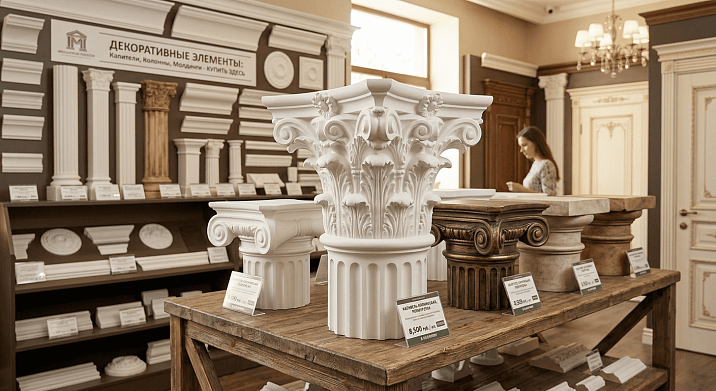
Buying a Corinthian capital means choosing the most ornate and decoratively rich of all classical forms. Its main motif is acanthus leaves arranged in several rows around the perimeter of the basket. Above them are volutes that support the abacus with curved sides. This ornament is rich in details, requiring high-quality relief and good lighting — side light reveals the Corinthian capital in all its depth.
It is appropriate to buy a Corinthian capital for Baroque and classical living rooms, grand halls, studies with high ceilings, and representative spaces. It pairs well with with molded decoration ceilings with acanthus friezes and wall moldings with ornamental fill.
Model KL-043 from the STAVROS catalog, starting from 5,600 rubles, is one example of a complex wooden capital with floral ornamentation close to the Corinthian tradition. For polyurethane versions, Corinthian capitals are available in the section "Brackets, Capitals" in the molded decor section.
Ionic capital
Buying an Ionic capital is the choice of those who prefer elegant restraint over Baroque opulence. The main detail of the Ionic capital is the volutes: two symmetrical scrolls on the sides of the abacus. Between them is a cushion (pulvinus) connecting the volutes. An egg-shaped ornament (ovolo) often decorates the echinus.
Buying an Ionic capital is the right solution for neoclassical interiors, for bedrooms and studies in a classic style, for pilaster wall decoration with moderate decor. The Ionic order is read as "learned" and "intellectual" — it is associated with libraries, scientific studies, archives, and cabinets of classical learning.
Buying an Ionic capital made of polyurethane works perfectly on pilasters in wall panels of a living room or hall. In combination with molded overlays and Ionic profile moldings, this is a complete architectural scheme that requires no additions.
Classic decorative capital
In addition to strict historical types, there is a broad category of decorative classic capitals — without strict adherence to a specific order. These can be capitals with geometric ornamentation (meander, dentils, palmettes), with plant motifs (grapevine, laurel leaves, stylized flowers), with clear horizontal grooves characteristic of Art Deco.
In the STAVROS catalog, among wooden capitals, models in different styles are presented: from the simple geometric KL-067 (from 1,880 rubles) to the complex carved KL-053 (from 7,010 rubles) and KL-058 (from 10,170 rubles). Each ornament is a stylistic statement, and when choosing, it is important that it aligns with the language of the rest of the decor.
For neoclassical interiors with decorative elements made of polyurethane on the walls — a capital with moderate ornamentation that echoes the molding pattern. For Baroque spaces — the richest possible relief. For modern classic — a clear geometric profile without plant motifs.
What affects the price of a capital: breaking down the factors
Capital purchase price is a question asked immediately. The range is wide: wooden STAVROS capitals — from 1,770 rubles (KL-007) to 14,900 rubles (KL-012). What accounts for this difference?
Material. Polyurethane is generally cheaper than wood of a similar size with a similar relief. Wood carries added value of naturalness, texture, and the ability to combine with massive interior elements.
Size. A capital for a column with a diameter of 80 mm and a capital for a column of 200 mm are fundamentally different volumes of material. The purchase price of a capital directly depends on the size group.
Relief complexity. KL-007 is a concise geometric profile. KL-012 is a complex multi-level capital with deep floral ornamentation. Behind the price difference of 1,770 and 14,900 rubles lies a fundamentally different number of milling operations and manual finishing.
Style. Buying a Corinthian capital is always more expensive than a Doric one. The complexity of the ornament is directly proportional to the labor intensity of production.
Purpose. A capital for an interior door and a capital for a load-bearing column in a grand hall are different formats, different sizes, and different loads on the decor.
Coating. A capital without coating is the base price. With a finish varnish, tinting, patina, or gilding — it is more expensive by the cost of finishing.
Completeness. If you need a set of "base + shaft + capital" for several columns, that is one task. One capital for framing a doorway is another.
Number of items. When ordering several capitals for a series of doors or for double-sided colonnades, the calculation is individual.
How to choose a capital before purchase: a checklist
Seven steps after which the choice becomes obvious.
-
Determine the installation location. Column, pilaster, door portal, arch, niche, fireplace. Each location has its own requirements for the shape and size of the capital.
-
Measure the width of the base. The diameter of the column or the width of the pilaster at the top is a key parameter for selecting the capital.
-
Choose the material. Polyurethane for lightness, moisture resistance, and quick installation. Wood for naturalness, carved decor, and coordination with wooden interior elements.
-
Determine the style. Corinthian, Ionic, classical, geometric, Art Deco — the style of the capital should belong to the same family as the rest of the decor in the space.
-
Check the height and depth of the element. The height of the capital should be proportional to the height of the shaft: classic proportions are a capital height of 1/8 to 1/10 of the total column height.
-
Consider the painting. If the capital is for painting, polyurethane or a wooden capital made of beech is needed. If you want a natural wood texture, use oil or clear varnish coating.
-
Coordinate with the rest of the decor. Check whether the ornament of the capital matches the decor of moldings, cornices, stucco overlays и decorative elements in the interior?
-
Consider symmetry. For a door portal, two capitals are needed — left and right. Make sure the catalog has mirror pairs.
-
Order a set. The column base + shaft + capital must belong to the same series or be matched in size. A gap in proportions between colonnade elements is immediately noticeable.
Mistakes when buying a capital
These mistakes are made by both professionals and first-time renovators. Knowing them is insurance.
They buy without measuring. "It'll roughly fit" doesn't work. The capital must exactly match the top diameter or width of the shaft. Even a 5 mm error is visible to the naked eye.
They don't account for relief depth. A capital with a 40 mm relief protrudes from the wall by the same 40 mm. In a narrow corridor or near a doorway with limited clearance, this is a problem.
They mix styles. A Corinthian capital on a pilaster + Ionic moldings on walls + Gothic elements on furniture is not a "rich interior," it's decorative chaos. The style should be unified or consciously mixed (which requires high professionalism).
They don't check compatibility with the pilaster. Capital KL-004.02 is specifically designed for PLM pilasters from the STAVROS catalog. If you take a capital from one series and a pilaster from another, the joint may be incorrect.
They don't plan the painting in advance. A polyurethane capital for painting uses one application technology. A wooden capital for clear oil uses another. The decision must be made before ordering, not after receiving.
They choose an element that is too large for a narrow opening. A capital wider than the door casing is a decorative conflict. Proportion comes first.
They don't calculate the entire set. They ordered a capital and forgot about the base and shaft. Or they ordered one capital for a double door where three are needed (for the jambs and the central mullion). Count all items before placing the order.
Capital in the interior decor system
A capital never works alone. It is part of a system — and only within the system does it reveal its value.
The classic interior scheme with capitals looks like this. Lower zone: a baseboard with a profiled top edge. Middle zone: wall moldings or pilasters with smooth or ornamental fields. Transition zone: a cornice separating the wall from the ceiling. Accent zones: door portals with pilasters and capitals, columns in arched openings and fireplace niches.
For this system, STAVROS offers everything you need: wooden pilasters and columns, Wooden capitals, molded decoration made of polyurethane for walls and ceilings, Decorative Inserts and moldings. When all elements of the space belong to one manufacturer and one stylistic line — the interior looks like an architectural project, not a set of individual purchases.
Where to buy a polyurethane capital and a wooden capital
The STAVROS catalog features over 30 models of wooden capitals made from solid beech — from KL-007 (from 1,770 rubles) to KL-010 and KL-012 (from 10,000–14,900 rubles). These are capitals for columns, half-columns, square posts, and pilasters, in styles ranging from minimalist classic to intricate ornamental decor.
In addition to wooden capitals, STAVROS produces a full range polyurethane products: capitals, brackets, moldings, cornices, rosettes, overlays, and stucco decor for walls, ceilings, and facades. This is a unified decor system where each element is coordinated with the other — in proportion, style, and installation logic.
STAVROS works with orders from a single unit, delivers throughout Russia and CIS countries. Showrooms in Moscow and St. Petersburg allow you to evaluate the relief, scale, and material of products in person before making a decision — which is especially important for those working with capitals for the first time.
FAQ: Answers to popular questions
Where to buy a polyurethane capital and a wooden one?
In the STAVROS catalog. Wooden capitals — over 30 models from 1,770 rubles. Polyurethane ones — in the stucco decor section. Order from one piece, delivery across Russia, showrooms in Moscow and St. Petersburg.
Which polyurethane capital should I buy for an interior?
Based on installation location (column, pilaster, door), base size, interior style, and compatibility with moldings and pilasters. For wet rooms and decorative structures made of drywall — only polyurethane.
How does a polyurethane capital differ from a wooden one?
Polyurethane is lighter, moisture-resistant, mounted with glue, ideal for painting. Wooden — natural texture, suitable for ensembles with wooden furniture and solid wood carved decor.
What affects the price of a capital?
Material, size, complexity of the ornament, depth of relief, style, coating, and the need for a complete purchase with pilasters, bases, and shafts.
How to choose a capital for an interior door?
Measure the width of the pilaster or casing, choose a style compatible with the overall decor. For a door portal, two symmetrical capitals are needed — right and left.
Can a wooden capital be mounted on a decorative drywall column?
Use with caution — only lightweight models. For drywall structures, a polyurethane capital is preferable: it weighs several times less and does not put stress on the lightweight base.
Corinthian or Ionic capital: which to choose?
Corinthian — for lavish classical and Baroque spaces, grand halls, living rooms with high ceilings. Ionic — for neoclassical, restrained, "scholarly" interiors: studies, libraries, bedrooms.