
























Article Contents:
- What Is a Capital: Explanation Without an Architectural Dictionary
- Where Capitals Are Used: From Portals to Kitchen Cabinets
- Doorways
- Pilasters on Walls
- Columns and half-columns
- Fireplace areas
- Built-in Wardrobes and Libraries
- Classic Style Kitchen Sets
- Hallways and Entry Groups
- Capital for Pilaster: Why It's Not an Optional Detail
- Capital for Door Portal: A System, Not a Detail
- How the capital works in the portal
- Size of the capital for the portal
- Capital and wooden moldings for the portal
- Capital for column and half-column: a volumetric task
- Features of the capital for a round column
- Half-column: the shape determines the capital
- Styles of capitals: five orders and their interior application
- Doric Order
- Ionic Order
- Corinthian Order
- Tuscan order
- Composite (compound) order
- Which order to choose for a specific interior
- How to choose the size of a capital: four parameters
- Parameter 1: Width of the capital relative to the pilaster or column body
- Parameter 2: Height of the capital relative to the shaft height
- Parameter 3: Projection of the capital relative to the wall
- Parameter 4: Coordination with the cornice
- Capital material: wood, polyurethane, and what lies between
- Wooden capital
- Polyurethane capitals
- Carved capital: handcrafted or machine-made?
- Capital for furniture: when a cabinet becomes architecture
- Capital size for furniture
- Capital in a classic kitchen set
- Classic, neoclassical, art deco: how to choose a capital by style
- Classic Interior
- Neoclassical interior
- Art Deco
- Capital and cornice: how to create the upper horizontal of the portal
- Mistakes when choosing capitals: eight warnings
- How to assemble a set: pilaster + capital + base + cornice
- FAQ: answers to main questions about capitals
- What is a capital?
- What is the top part of a column called?
- What is the top part of a pilaster called?
- Is a capital needed for a pilaster?
- How is a capital different from a base?
- Can a capital be used on furniture?
- How to choose the size of a capital for a pilaster?
- Which order to choose for a residential interior?
- Carved or smooth capital — which is better?
- About the Company STAVROS
There is one paradox in architectural decor that everyone notices but cannot always articulate. A column or pilaster stands in its place — and something is off. The vertical is there, the proportions seem correct, the wood is good. But the interior does not "close." The gaze rises upward — and there is emptiness. A break. Incompleteness.
The reason is almost always one: there is no Capitals.
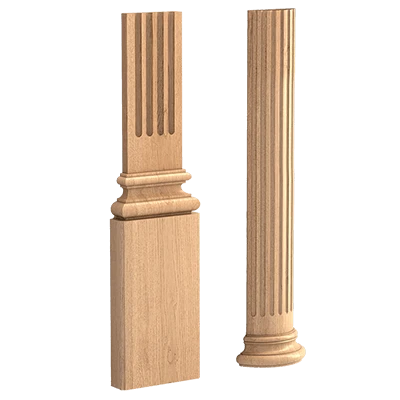
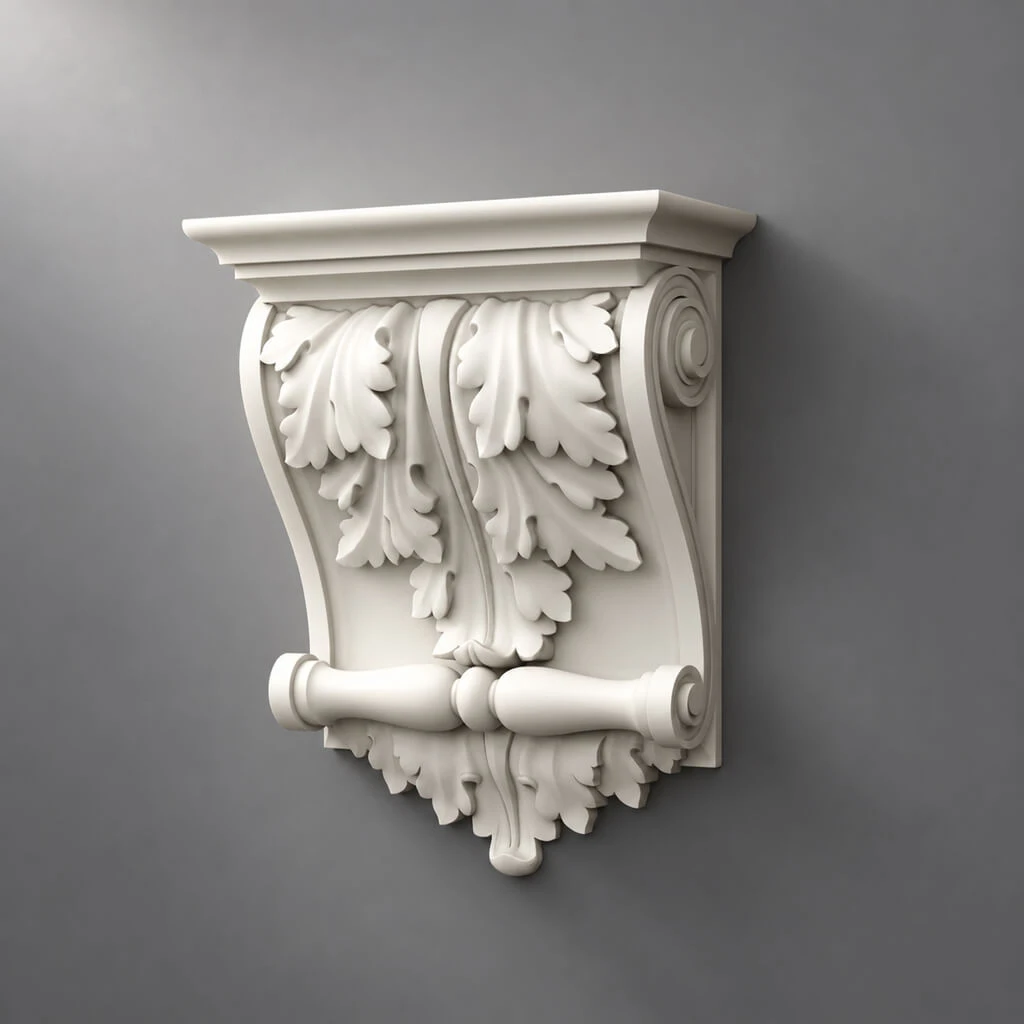
A capital is the upper finishing part of a column, pilaster, or any architectural vertical element. It is not just decor. It is the point of transition from vertical to horizontal, from the column shaft to the cornice, from the side post of a portal to the top beam. Without it, the vertical hangs in the air. With it, architecture gains completeness.
In this article — a complete commercial guide: what a capital is, where it is used, how to choose the style, size, and material, how to combine it with the base, pilaster, cornice, and furniture.
View wooden capitals, pilasters, and portal elements STAVROS →
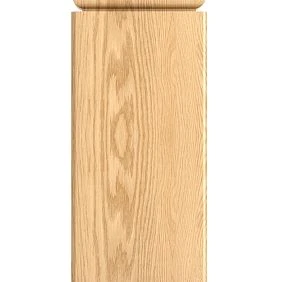
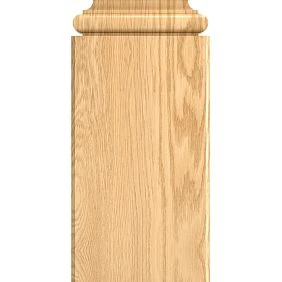
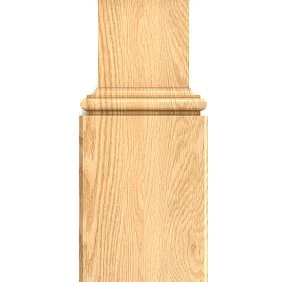
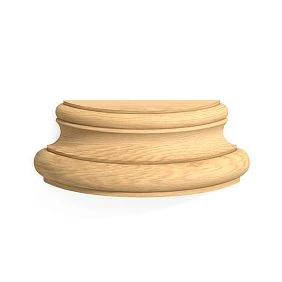
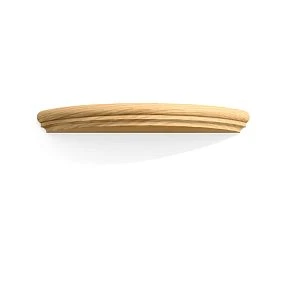
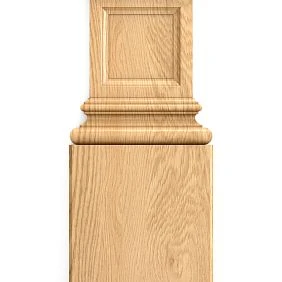
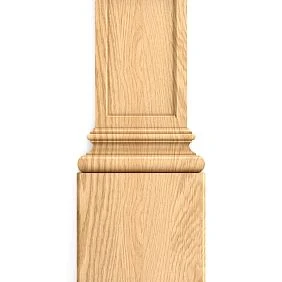
What is a capital: an explanation without an architectural dictionary
To put it simply, a capital is the 'head' of a column. The word actually comes from the Latin caput — head. It is the upper part that crowns the vertical and visually completes the structure.
In classical architecture, the capital served not only a decorative but also a structural role: it distributed the load from the beam (architrave) onto the column shaft. In modern interior applications, there is no structural function — only architectural logic and decoration. But this logic is still important because it makes the capital a necessary, not optional, detail.
Look at any classical column or pilaster. The body goes up — and meets the capital. It expands, forms a 'dish' — the abacus — and transfers the load or visual weight to the horizontal element above. This principle works the same in the Parthenon and in a modern classical living room with a wooden portal.
Three parts of a classical column:
-
Base — the lower element that 'places' the column on the floor or on a plinth
-
Shaft (body, fust) — the main vertical part
-
Capital — the upper finishing detail that connects the shaft to the cornice
Without a base, the column looks as if screwed into the floor. Without a capital, it looks as if cut off from the top. That is why in professional projects Capital for a pilaster or columns are ordered as a set with a base and body — as a single system.
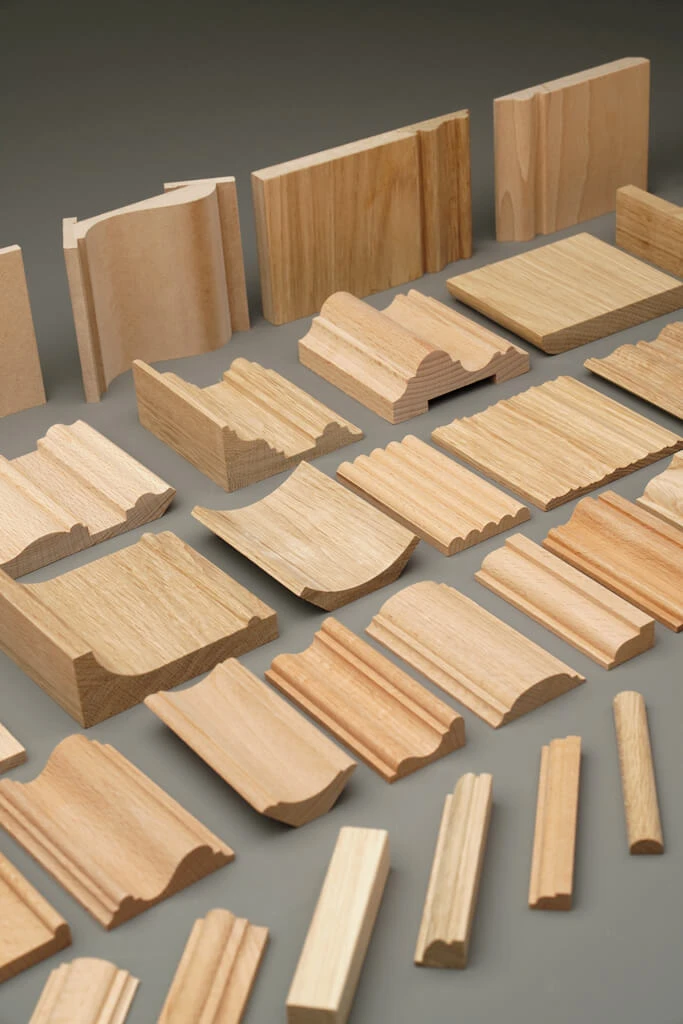
Where capitals are used: from a portal to a kitchen cabinet
List of applications wooden capitals in a modern interior is much broader than it seems at first glance. These are not only grand halls and expensive mansions — it is any space where there is a vertical decorative element and a desire to make it architecturally coherent.
Our factory also produces:
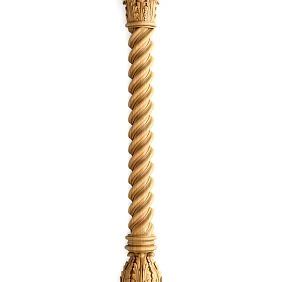
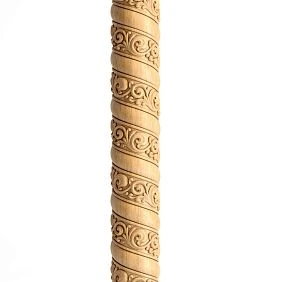
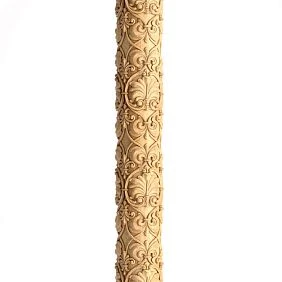
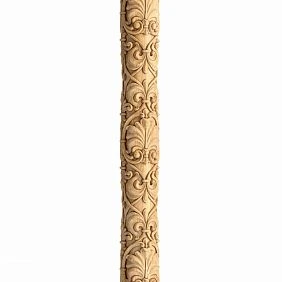
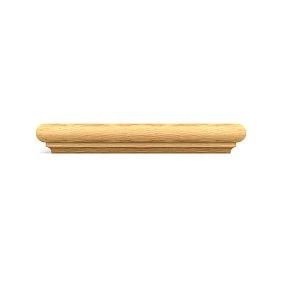
Door Portals
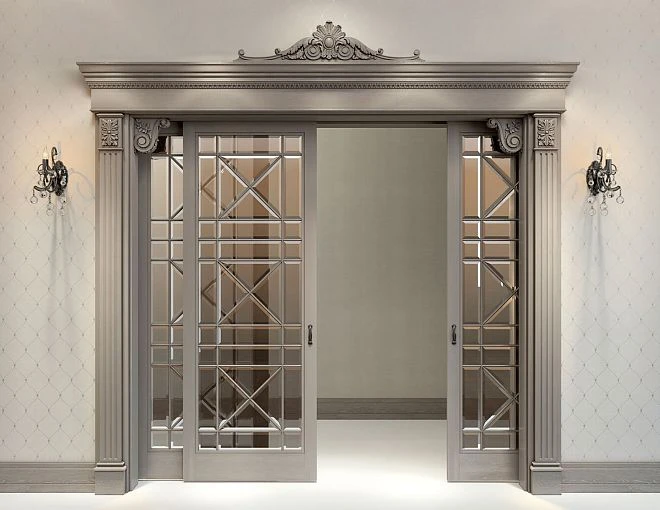
The most widespread application. In classical a door portal pilasters on the sides of the opening carry capitals, on which the upper cornice or architrave rests. Without capitals, the portal posts look like cut boards. With capitals — like architecture.
Get Consultation
Pilasters on walls
Pilaster on the wall are used to structure space, create rhythm and decorative accents. The capital in this case completes the vertical of the pilaster and visually connects it to the ceiling molding or cornice. This is especially important where pilasters go up to the ceiling.
Columns and half-columns
For full decorative wooden columns a capital is a mandatory element. The same applies to semi-columns: they protrude from the wall, and their top requires a voluminous capital that matches the shape.
Fireplace areas
A fireplace is the architectural focus of a room. Capitals on the sides of the fireplace portal complete the side posts and connect them to the horizontal fireplace shelf. This is a classic solution for English, French, and Italian interior styles.
Built-in cabinets and libraries
In a classic library system, cabinets are designed as architectural units: pilasters on the sides of sections support small Capitals, which support the upper cornice. This transforms a built-in cabinet from furniture into architecture.
Classic-style kitchen sets
On tall cabinets and side ends of kitchen cabinets, a capital above the decorative pilaster of the facade gives the kitchen a representative, non-standard character. decorative inlays for furniture in combination with capitals create a full-fledged architectural system on kitchen facades.
Hallways and entryways
The capitals on the sides of the front door from the inside immediately set the tone for the entire interior. As part of the decorative entrance group, they work as a grand architectural accent — the first thing a guest sees.
Capital for a pilaster: why it is not an optional detail
Let's talk straight. Many people buy a pilaster — and don't think about the capital. They mount the vertical element on a wall or a doorway, and the top remains cut straight off. Sometimes this looks acceptable in modern minimalist interiors. But in a classical context — it's an incompleteness that everyone feels.
Why Capital for a pilaster so important?
First — it completes the vertical. The gaze, sliding from bottom to top along the pilaster, needs a "stopping point." The capital creates this point — decorative, expressive, architecturally justified.
Second — it creates a transition to the horizontal. In the architectural order, the vertical (column, pilaster) always transitions into the horizontal (architrave, cornice). The capital is the transition zone. Without it, the transition is either absent or looks like a random joint.
Third — it defines the style. By the shape of the capital, you can unmistakably determine which order the entire composition belongs to. Doric capital — strictness and conciseness. Ionic — elegance and lightness. Corinthian — opulence and decorativeness. These are not just details — they are the language of architecture.
Fourth — it scales the entire system. The capital is usually wider than the body of the pilaster. This expansion creates an "opening" of the vertical at the top, making the entire structure visually stable and complete.
For the correct result capital for pilaster It needs to be selected together with the base, not separately. A pilaster with a capital but without a base is only half the solution. The symmetry of 'base — shaft — capital' creates a complete three-part structure that functions as an independent architectural element.
Capital for a door portal: a system, not a detail
door portal — this is not a set of separate elements. It is a system: pilasters on the sides, a cornice or architrave on top, capitals at the transition from verticals to horizontals. Each element only works in conjunction with the others.
That is why designing a portal should start not with choosing a pilaster or a cornice, but with understanding the overall system. And the capital for a door portal occupies a key place in this system — both literally and visually.
How the capital works in a portal
The lower part of the pilaster rests on the base — it stands on the floor. The shaft of the pilaster goes upward along the door opening. At the height of the door leaf (usually 2000–2100 mm), the pilaster ends with a capital. And it is on the capital that the upper cornice or horizontal architrave sits — the element that covers the portal from above and connects both side posts into a single structure.
This is a three-part system: posts → capitals → horizontal. Remove any of the three — the system collapses.
Size of the capital for a portal
For a standard door portal with a pilaster width of 80–120 mm, the capital should be 20–40 mm wider than the pilaster body on each side. That is, with a pilaster of 100 mm, the capital is taken with a width of 140–180 mm.
The height of the capital is another important parameter. A capital that is too low looks like just a transitional ledge. One that is too high overloads the portal with decor and visually "eats up" the height. The optimal height of a capital for a classic portal is 80–150 mm, depending on the height and scale of the entire structure.
In small openings (800–900 mm), it is important not to overload the transition with an overly large capital. Here, laconic capitals with minimal decor are more suitable — of the Doric or simplified Ionic type.
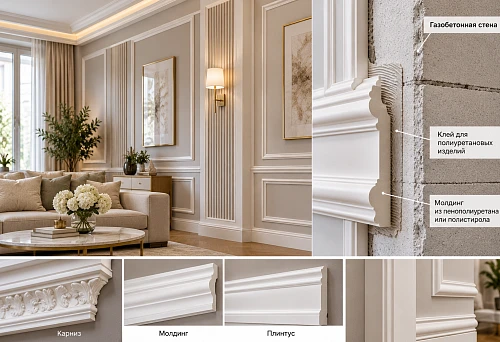
Capital and wooden moldings for the portal
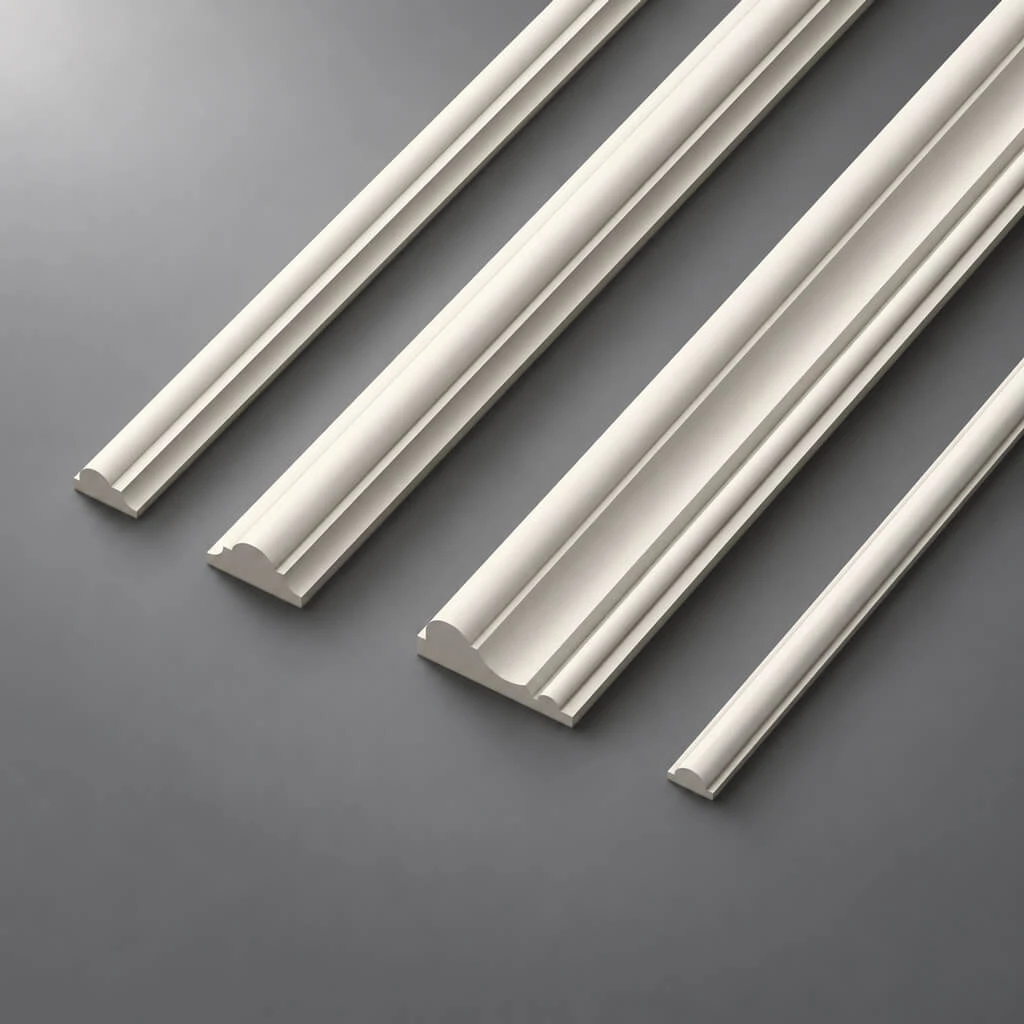
The capital does not work in isolation — it must be coordinated with the profile of the cornice and moldings. If the cornice has a heavy semicircular profile and the capital has a flat Doric shape, the transition will be visually inconsistent. All profiles must belong to the same stylistic family.
Capital for a column and half-column: a volumetric task
Working with full-fledged columns is a somewhat different task than with pilasters. A pilaster is flat, it adjoins the wall, and its capital, as a rule, also has a flat back side. A column is volumetric, round or multifaceted, and its a capital for a column must encompass this volume from all sides.
Features of a capital for a round column
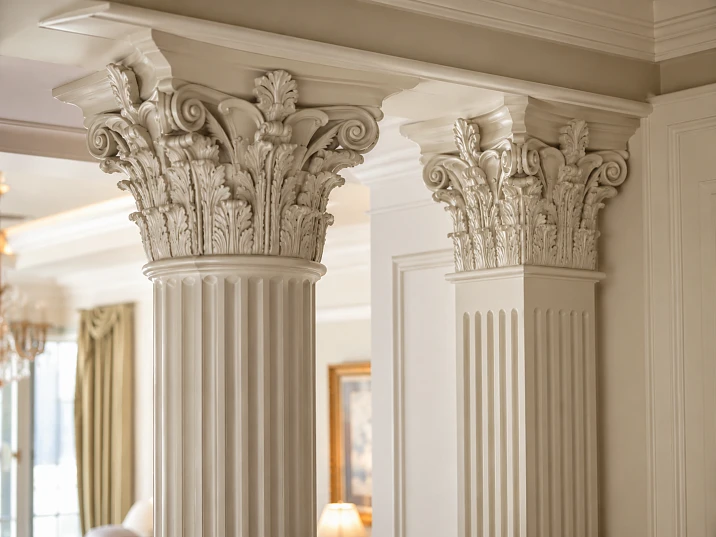
The classic capital of a round column has an echinus (rounded transitional part) and an abacus (upper plate of square cross-section). It is precisely the transition from the round cross-section of the shaft to the square cross-section of the abacus that is the main architectural task of the capital. This transition can be solved differently in different orders.
For decorative interior columns — and in living spaces these are always decorative, not load-bearing structures — the volume of the capital must correspond to the diameter of the shaft. A capital that is too small on a large column looks absurd. One that is too massive overwhelms the entire volume.
Half-column: the form determines the capital
A half-column is literally half a column protruding from a wall. Its capital is also "half": the flat back side adjoins the wall, while the front and side faces form a three-dimensional shape. It is important that the capital of a half-column is designed specifically for this application — otherwise, the transition from the three-dimensional body to the flat wall will not look organic.
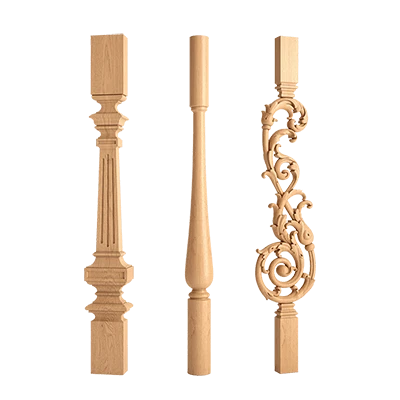
wooden pilasters and columns in the STAVROS catalog are presented with various applications in mind — from flat pilasters to three-dimensional columns, and corresponding capitals are selected for each type.
Capital styles: five orders and their interior application
This is one of the key questions of choice — and one of the most interesting for those who want to understand architecture through details.
In classical architecture, five main orders are distinguished. Each has a characteristic capital. In interior application, knowledge of these differences helps to choose accurately — and avoid stylistic inconsistencies.
Doric order
The most austere and laconic. The Doric capital consists of an echinus — a slightly widening round element — and an abacus — a flat square slab. No plant decoration, no scrolls. A pure, clear form.
Where it is appropriate in an interior: in studies and work areas, in strict classical interiors, in spaces where clarity without ornament is important. The Doric character is architectural restraint, which works well in modern interpretations of classicism.
Ionic order
It is unmistakably recognized by its volutes. Volutes are the characteristic scrolls on the sides of the capital, creating an elegant horizontal transition. The Ionic capital is softer and more decorative than the Doric, but not as lush as the Corinthian.
Ionic Capitals — one of the most popular options for residential interiors. They work well in classic living rooms, dining rooms, studies, and formal hallways. Volutes give a sense of movement and elegance without overloading the ornament.
Corinthian order
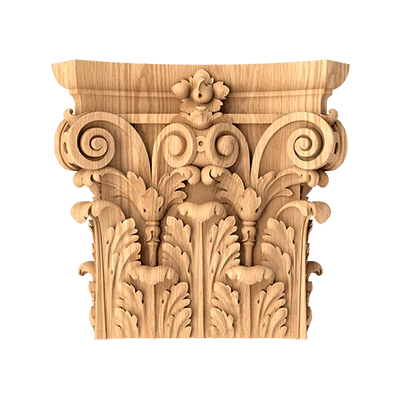
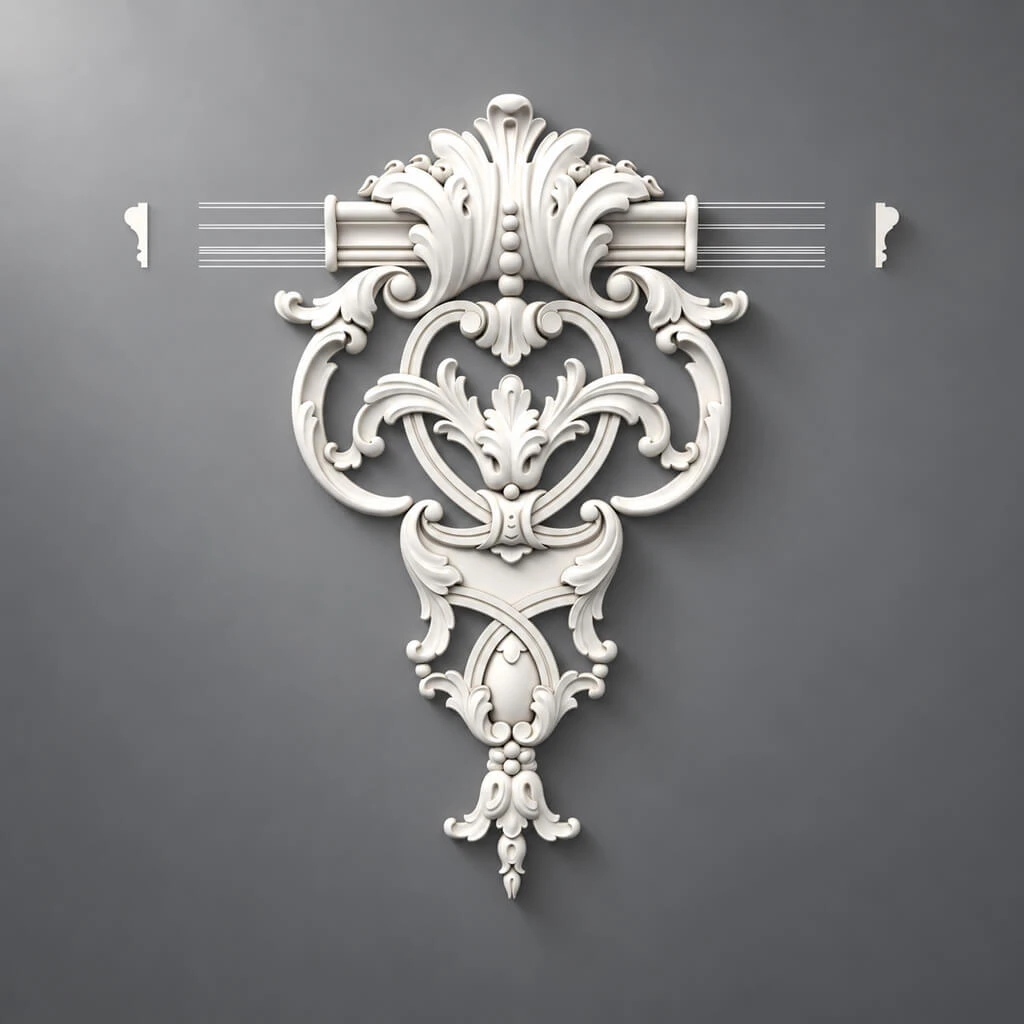
The richest and most decorative. The Corinthian capital is a "basket" of acanthus leaves with volute scrolls at the corners. Acanthus leaves are a stylized plant motif that has become one of the most recognizable symbols of classical architecture.
In interiors, Corinthian Wooden capitals are appropriate in formal spaces: living rooms with high ceilings, dining rooms, halls, and studies with rich decor. This is a high level of decoration that requires a spacious setting and a coordinated environment.
Tuscan order
A simplified version of the Doric, without flutes on the shaft and with an even more laconic capital. The Tuscan capital is almost pure geometry: echinus and abacus without additional decoration. It is well suited for strict interiors in the spirit of Italian classicism and for modern neoclassicism.
Composite order
Combines elements of the Ionic and Corinthian orders: volutes plus acanthus leaves. This is the most decorative of the five orders. It was used in late Roman architecture and Baroque. In interiors, it is suitable for the most ceremonial spaces.
Which order to choose for a specific interior
| Interior style | Suitable order | Character |
|---|---|---|
| Strict classic, office | Doric, Tuscan | Laconic, without ornament |
| Classic living room | Ionic | Elegant, with volutes |
| Grand hall, dining room | Corinthian | Rich, with acanthus |
| Neoclassical | Ionic, simplified Corinthian | Restrained, modern |
| Art Deco | Stylized composite | Geometrically, expressive |
How to choose the size of a capital: four parameters
The size of a capital is not determined "by eye." It is a calculation based on the proportions of the entire architectural system. And this is where most people make mistakes.
Parameter 1: Width of the capital relative to the body of the pilaster or column
The capital should be wider than the body of the vertical element. This creates an expansion at the top — visually "opens up" the top and provides a support point for the horizontal element.
Standard ratio: the capital is 20–40% wider than the body on each side. For a pilaster 100 mm wide, the capital is taken with a width of 140–180 mm. For a column with a diameter of 120 mm, the abacus of the capital is 170–200 mm.
Parameter 2: Height of the capital relative to the height of the shaft
In the classical order, the height of the capital is approximately 1/8–1/10 of the total height of the column. For decorative interior applications, this rule is followed approximately: it is important that the capital is neither too small nor too large relative to the body.
For door portals, the guideline is as follows: the height of the pilaster from the floor to the capital is 2000–2100 mm, the height of the capital is 100–150 mm. For furniture applications: the height of the pilaster is 600–900 mm, the capital is 60–100 mm.
Parameter 3: Projection of the capital relative to the wall
The capital projects forward relative to the plane of the pilaster or wall. This projection creates relief and provides a transition point to the cornice. Too small a projection — the capital "sinks" into the plane. Too large — it protrudes into the room space.
For residential interiors, the typical projection of the capital relative to the pilaster body is 15–40 mm. For furniture — 10–20 mm.
Parameter 4: Coordination with the cornice
The capital and cornice must "meet" in size. If the cornice has a total width of 80 mm, the capital at its top plate (abacus) must be no narrower than this size. Otherwise, the cornice will overhang the capital rather than rest on it.
When designing a portal or wall system with pilasters, first choose the capital, then the cornice based on its dimensions. Not the other way around.
Capital material: wood, polyurethane, and what lies between
Capitals are made from different materials — each with its own strengths and limitations.
Wooden capital
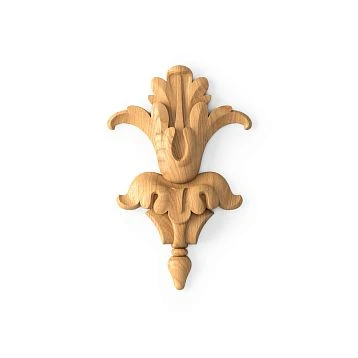
wooden capital made from solid wood — this is the best choice for natural, lively interiors where material honesty matters. Wood is warm, tactilely rich, and looks truly good both under varnish and paint.
Oak — dense, expressive, holds carved ornamentation well, does not "fray" on thin details of acanthus or volutes. Under varnish or oil, it looks expensive and representative. Carved capital made of solid oak is an object that itself is a work of applied art.
Beech is a more uniform wood with less pronounced texture. Ideal For painting: provides a smooth surface without knots, takes primer and paint well in white or any other color. A wooden capital under white enamel is a classic of modern classical interiors.
Pine is an economical option, well suited for painting, but less stable with humidity changes. For interiors with normal climate, it is an acceptable choice.
Polyurethane capitals
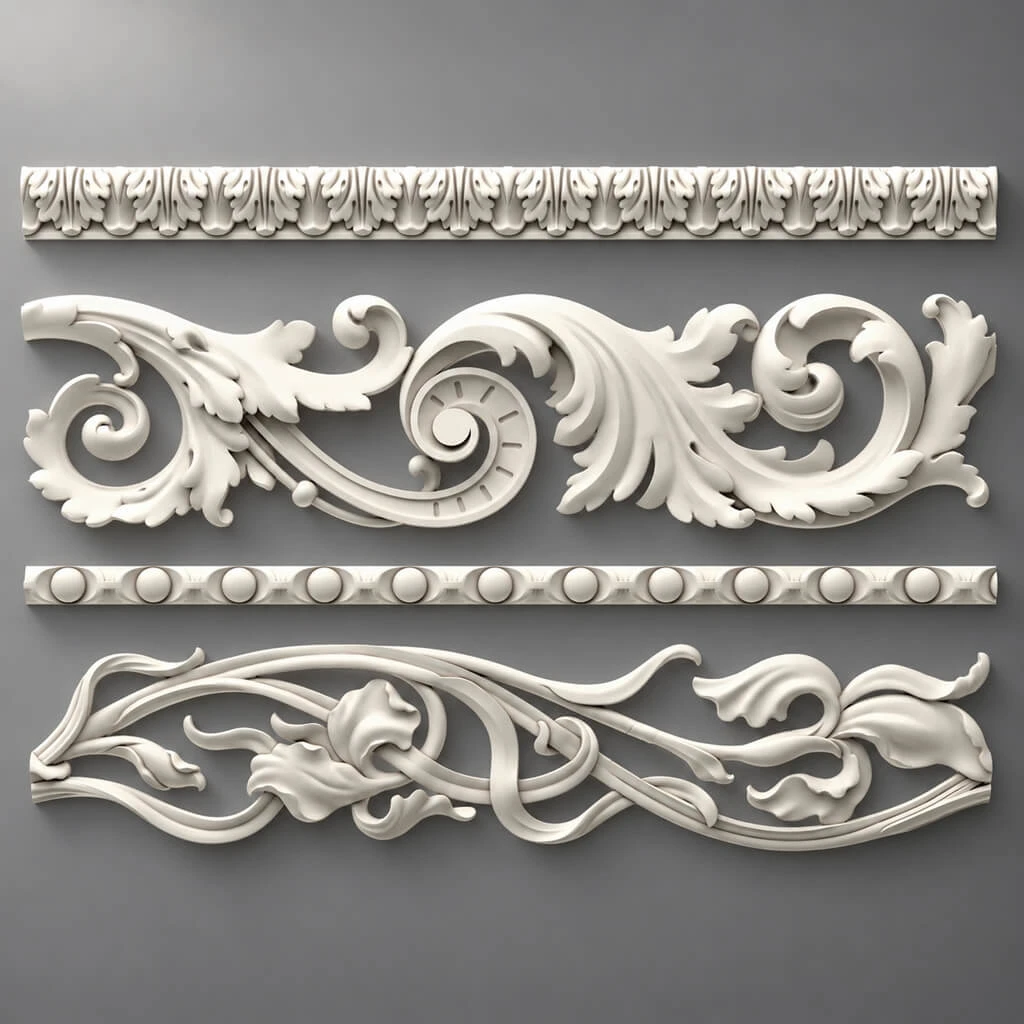
Polyurethane is a lightweight, precisely molded, easily paintable material. Polyurethane decorative appliques and capitals made from it are good where low weight and ease of installation are important — for example, on ceiling elements or on walls where load matters.
The weak point of polyurethane is that it is less dense and less tactilely 'substantial' than wood. In interiors with natural materials — wooden floors, wooden furniture, wooden doors — a polyurethane capital looks like a compromise.
For furniture applications, solid wood portals, and classic wall systems with wood, a wooden capital is preferable. For large-scale wall and ceiling decorative systems where weight matters, polyurethane can be a rational choice.
Carved capital: handcrafted or machine-made?
In modern production, most carved capitals are made on CNC machines with additional hand finishing. This provides good repeatability and an affordable price with high detail quality.
Fully hand-carved pieces are custom items that cost significantly more. They are appropriate for historical restorations or when creating unique designer interiors where the uniqueness of each detail is important.
For most classical and neoclassical interiors, machine carving with hand finishing delivers excellent results at a reasonable price.
Capital for furniture: when a cabinet becomes architecture
This is a direction that is discussed less often but deserves a separate analysis. Because it is the capital on a furniture facade that turns a good cabinet into an architectural library.
In classic built-in furniture, vertical pilasters on the sides of sections and on dividers are topped with capitals. They support the upper cornice of the cabinet, creating a complete three-part structure: plinth — body — cornice with preparation through the capital. This visually transforms the cabinet from a piece of furniture into an architectural object.
Size of the capital for furniture
For furniture applications, capitals are taken smaller than for portals and wall systems. Typical sizes for cabinets and bookcases: height 60–100 mm, width corresponds to the width of the furniture pilaster plus 15–25 mm on each side.
Here the proportion is fundamentally important: the capital on furniture should be more delicate and thinner than on a portal. A massive architectural capital on a furniture facade looks disproportionate and creates a feeling of an "overloaded" object.
Capital in a classic kitchen set
In a classic or neoclassical kitchen, capitals are used on tall cabinets and corner sections — where a vertical furniture pilaster meets the bottom line of upper cabinets or the ceiling cornice. This is an infrequent but very expressive solution that instantly elevates the perception of the kitchen.
decorative inlays for furniture work in this context in pairs with capitals: overlays provide horizontal and diagonal accents on facades, capitals complete vertical elements. Together they create a full-fledged architectural system on furniture surfaces.
Classic, neoclassical, art deco: how to choose a capital by style
The question of style is always a question of context. A capital does not exist by itself: it is part of a system, and this system has a stylistic affiliation.
Classic interior
In full-fledged classic (especially high — baroque, empire, Italian classic) Corinthian or composite capitals with rich plant decor are appropriate. Acanthus leaves, volutes, ornamental belts — all this is organic where there is stucco on the ceiling, parquet with a border, heavy curtains and massive furniture with carving.
Here Carved Capital made of oak or beech under tinting or white enamel — an ideal choice. It creates the necessary level of decorativeness and organically fits into the rich ornamental system of the interior.
Neoclassical interior
Neoclassicism is a modern interpretation of classicism, where the structure and logic of the order system are preserved, but excessive ornamentation is removed. Here, Ionic capitals or simplified Corinthian ones are preferred — with a hint of ornament, but without baroque splendor.
For neoclassicism, it is important that Capital it is pure and precise in geometry: without unnecessary details, but with correct proportions. White enamel on wood is a classic finish for neoclassical capitals.
Art Deco
Art Deco reinterprets classics through geometry and rhythm. Art Deco capitals are stylized forms: geometric "teeth," stepped profiles, stylized palmettes, fan motifs. This is beautiful but requires confident stylistic knowledge — Art Deco does not forgive half-measures.
decorative overlays made of solid wood in the Art Deco style combined with stylized capitals create very expressive interiors — especially in offices, bar areas, and meeting rooms.
Capital and cornice: how to create the upper horizontal of a portal
The capital is not the end. After the vertical element is completed with a capital, it needs to be connected to the upper horizontal element. This element is the cornice or architrave.
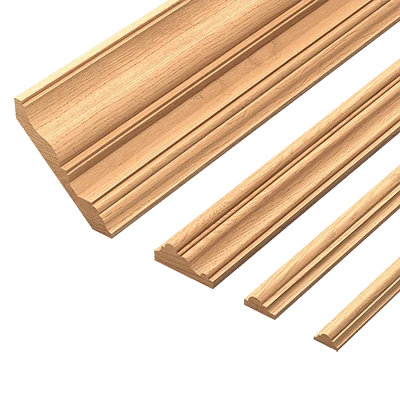
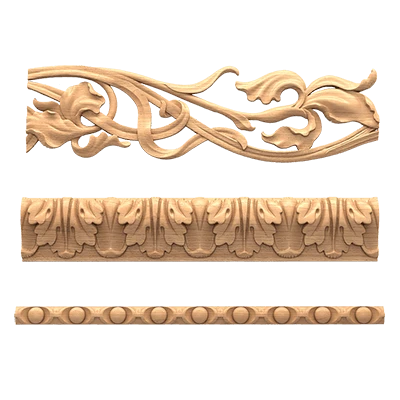
Wooden moldings and cornices in a portal or wall paneling system serve as the horizontal "covering" of the entire structure. The cornice rests on the capitals, uniting the side verticals into a single frame system.
Important: the profile of the cornice and the profile of the capital must be coordinated. This does not necessarily mean "from the same collection" — but it does mean "from the same style family." A Corinthian capital with a thin smooth cornice creates stylistic dissonance. An Ionic capital with a profiled cornice with a molding — works.
For those assembling door portal for the first time, the best approach is to choose all elements from one manufacturer's catalog. This ensures that capitals, cornices, moldings, and pilasters are coordinated in size and profile.
Mistakes when choosing capitals: eight warnings
Buying a capital without considering the width of the pilaster. This results in the capital being either narrower than the pilaster body (which looks odd) or disproportionately wider. Always start with the body width.
Mixing orders. An Ionic capital on one pilaster and a Corinthian capital on the next is an architectural mistake. All capitals in one portal or wall system must belong to the same order.
Placing an overly ornate capital in a small opening. A Corinthian capital with lush acanthus in a standard 800 mm opening with a ceiling height of 2.7 m is a 'close-up' where a general view is needed. The scale of decoration must match the scale of the space.
Forgetting about the base. A capital without a base is half a system. The symmetry of 'base — body — capital' is essential for an architecturally sound result.
Not coordinating the capital with the cornice. The upper cornice should 'rest' on the capital — in width, profile, and style. An uncoordinated connection looks like a random joint.
Choosing a furniture capital as an architectural one (or vice versa). For a portal, a large-scale, expressive Capitalcapital is needed. For furniture, a delicate one proportional to the furniture facade. These are different sizes and different levels of decoration.
Not considering the finish coating. Oak under white enamel and oak under oil are two fundamentally different results. The decision about the coating must be made before ordering, as it affects the choice of wood species and the level of carving detail.
Buying elements from different stylistic series. A capital from one catalog, a cornice from another, moldings from a third — and everything slightly diverges in profile character. This is visible in the finished product. A systematic approach is the only way to achieve a cohesive result.
How to assemble a set: pilaster + capital + base + cornice
For those who want a specific algorithm of actions — here is the sequence.
Step 1: Determine the application. Portal, wall pilaster, furniture system — each application has its own proportions.
Step 2: Choose the width of the pilaster. It determines the width of the capital and base.
Step 3: Choose the style. Doric, Ionic, Corinthian, Tuscan — be guided by the interior style.
Step 4: Select Capital and base. They must be from the same style family. The width of the capital is the body plus 20–40% on each side.
Step 5: Choose the cornice. Its profile should match the capital. Use Wooden moldings and cornices in the same style.
Step 6: Check the proportions on a sketch. Draw or model the overall scheme: base → pilaster body → capital → cornice. Make sure all elements are proportional to the room height and opening width.
Step 7: Order the set from one place. All elements — pilasters, Capitalscornices, moldings — from a single manufacturer's catalog. This ensures compatibility.
FAQ: answers to the main questions about capitals
What is a capital?
A capital is the upper finishing part of a column, half-column, or pilaster. It visually completes the vertical element and creates a transition point to the horizontal cornice or architrave. In interiors, it serves a decorative function, being a key detail of the architectural system.
What is the upper part of a column called?
The upper part of a column is called the capital. The lower part is the base. The middle part is the shaft, trunk, or body. Together, these three parts form a complete column.
What is the upper part of a pilaster called?
Also the capital. A pilaster has the same three-part structure as a column: base, shaft, Capital. The difference is in shape: a pilaster is flat, a column is three-dimensional.
Is a capital necessary for a pilaster?
If a pilaster is used as an architectural element — in a portal, on a wall, on furniture — the capital makes it complete. A pilaster without a capital looks like an unfinished detail. Without a capital, it loses its architectural meaning and turns into just a vertical board.
How is a capital different from a base?
The capital is at the top, the base is at the bottom. The capital expands upward and creates a transition point to the cornice. The base expands downward and creates a support point on the plinth or floor. Both details form a complete architectural structure.
Can a capital be used on furniture?
Yes. Capital for furniture used in classic built-in wardrobes, libraries, kitchen sets, sideboards. Furniture capitals are smaller and more delicate than architectural ones — proportional to the facades and height of the furniture.
How to choose the size of a capital for a pilaster?
The width of the capital is the body of the pilaster plus 20–40% on each side. The height is approximately 1/8–1/10 of the total height of the pilaster. For a standard door portal (pilaster height 2000–2100 mm), the capital is taken with a height of 100–150 mm.
Which order should be chosen for a residential interior?
For most residential interiors, Ionic orders are optimal Capitals — they provide the right level of decorativeness without overload. For strict office interiors — Doric. For formal living rooms — Corinthian.
Carved or smooth capital — which is better?
It depends on the style. A smooth capital is for strict and modern interiors. Carved Capital with ornamentation — for classic and formal spaces. In neoclassicism, capitals with moderate decor work well — not smooth, but not overloaded.
About the company STAVROS
STAVROS is a Russian manufacturer of wooden architectural elements for interiors: capitals, bases, pilasters, columns, moldings, cornices, overlays, and a full range of wooden architectural decor. The production uses selected solid oak, beech, and other hardwoods.
All Capitals in the STAVROS catalog are designed with compatibility with pilasters and columns, moldings and cornices и decorative inlays. This allows you to assemble a complete architectural set — from base to cornice — in a single stylistic key without searching for matching elements from different sources.
Buy a wooden capital from STAVROS means getting a product with precise geometry, stable material, and guaranteed stylistic compatibility with the rest of the architectural decor made of solid wood.