































































Article Contents:
- Why people make mistakes when choosing molding without a designer
- Mistake one: starting with the "most beautiful detail"
- Mistake two: mixing incompatible styles
- Mistake three: buying elements but forgetting the installation kit
- Step one: choose a task, not a product
- Task list — check yourself
- How the task determines the type of element
- Wall moldings: how to choose correctly and not miss the size
- Main parameter: profile width
- Profile relief: smooth, stepped, or ornamental
- How to use moldings: three working schemes
- How much molding to buy
- Ceiling rosette: how to choose so the chandelier looks right
- How to choose the size of a rosette
- Rosette relief and room style
- Rosette and chandelier: how to coordinate them
- Decorative stucco: where to place an accent and how not to overdo it
- Where to place decorative stucco
- How to choose the size of a decorative element
- Style coordination of decorative stucco with moldings
- Stucco decor: character in details
- Where is stucco decoration used?
- Ceiling stucco: how to finish the top of a room
- Ceiling cornice or baseboard: what's the difference
- How to choose the width of a ceiling baseboard
- Ceiling rosette + cornice = ceiling decor system
- How not to make a mistake with style: simple rules for independent selection
- Rule one: look at the furniture
- Rule two: look at the doors and architraves
- Rule three: look at the floor
- Rule four: one style for the entire room
- How not to make a mistake with size: five specific rules
- Rule 1: Molding width = 1/60 of ceiling height in mm
- Rule 2: Rosette diameter = 1/5 of the smaller side of the room
- Rule 3: Decorative element occupies 1/3–1/2 of the zone
- Rule 4: Molding frame height = 2/3 of wall height
- Rule 5: Molding frame width depends on the zone
- Purchase kit: what not to forget
- Minimum kit
- Extended kit (for serious decoration)
- What to buy first if the budget is limited
- Room-by-room breakdown: what to buy specifically
- Living Room
- Bedroom
- Entry Hall
- Children's room
- Office
- Table: what to buy for each task
- Frequently asked questions: what people ask before their first purchase
- About the Company STAVROS
There is one conversation that many people have at the start of a renovation. A mental one — with themselves. It goes something like: "I want molding. But I don't have a designer. I'm afraid to buy something wrong — the wrong size, the wrong style, the wrong quantity. Then it will look ridiculous."
This fear is understandable. Molding is not the kind of purchase you can easily return and redo. The moldings are already glued on. The rosette is on the ceiling. And if the choice turns out to be unsuccessful — redoing it will require both time and money.
But here's what's important to understand: the fear of molding without a designer is greatly exaggerated. A professional designer is needed for complex architectural solutions, for working with non-standard spaces, for an expensive project interior. But choosing to buy molding for an ordinary apartment — for the wall behind the sofa, for the ceiling with a chandelier, for the hallway or bedroom — you can do it yourself. You just need the right algorithm.
This article is exactly that algorithm. Step by step, without professional jargon, without abstractions. You read it — and immediately understand what to buy, where to place it, and how not to make a mistake.



Why people make mistakes when choosing molding without a designer
Before giving the recipe, it's useful to understand the diagnosis. What exactly are the mistakes people make when choosing molding on their own?
Sales experience and hundreds of customer questions show three persistent scenarios of unsuccessful choices.




Mistake one: starting with the 'most beautiful detail'
A person enters the catalog, sees a luxurious medallion with a floral pattern 90 cm in diameter — and falls in love. Buys it. Comes home, holds it up to the ceiling of a room of 14 sq. m with a height of 2.5 m — and realizes the medallion takes up a third of the ceiling and presses down with overwhelming force.
The mistake is in the reverse order of selection. First the detail, then the room. The correct way is the opposite.
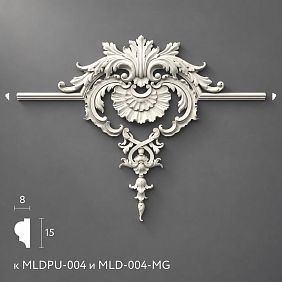
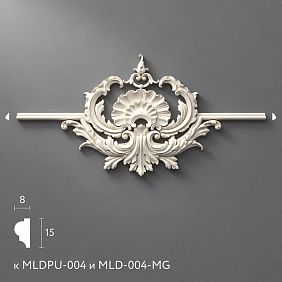
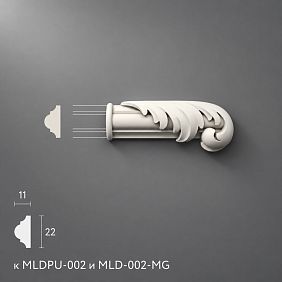
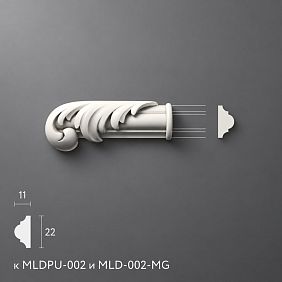
Our factory also produces:


Mistake two: mixing incompatible styles
Ionic ornament molding on the walls, a modern flat rosette on the ceiling, Baroque-style stucco decor on the accent wall — all in one room. Each detail is beautiful on its own. Together — chaos.
Stucco works as a system. If all elements belong to the same style family — the result is cohesive. If each element is from a different set — the space looks random.
Get Consultation
Mistake three: buying elements but forgetting the installation kit
Moldings are bought. Beautiful, the right size. But glue wasn't bought — or the wrong kind was bought. Or glue was bought, but sealant for joints wasn't. Or no spare for cutting was bought, and in the end half a meter was missing to complete the frame.
The correct order is always a set: the main decor plus everything needed for installation and painting.
These three mistakes explain most disappointments. Eliminating them is simple — if you understand the correct order of selection.
Step one: choose a task, not a product
Opening the catalog and starting to choose is the second step. The first is to understand what exactly you want to change in the room.
Molding solves specific visual tasks. Each type of element is for its own task. And the right choice begins with the question: what doesn't suit me about this space?
Task list — check yourself
Go through this list and mark what is relevant for your room:
-
The wall looks empty, boring, flat
-
The chandelier hangs from the ceiling, but the ceiling around it is bare
-
There is a sofa, but the wall behind it is not decorated at all
-
The bedside area in the bedroom looks unfinished
-
A mirror or painting in the hallway is just an object on the wall, without context
-
The top of the room (where the wall meets the ceiling) looks unfinished
-
The console, cabinet, or furniture front doesn't fit the interior
-
The entire interior looks 'bare' — you want to add character
Each of these tasks has its own solution. And Buy molding doing it right means buying exactly what solves your specific task.
How the task determines the type of element
| Task | Element type |
|---|---|
| Decorate the wall | Moldings for frames |
| Decorate the ceiling near the chandelier | Ceiling rosette |
| Make an accent on the wall | Decorative stucco |
| Finish the top of the room | Ceiling cornice or baseboard |
| Add expressiveness to details | Stucco decor |
| Frame the headboard or mirror | Decorative overlays and moldings |
Task defined — now you can move on to choosing a specific element.
Wall moldings: how to choose correctly and not miss with the size
Moldings made of polyurethane — this is the first thing to consider when choosing stucco on your own. Why? Because they are versatile, easy to install, give a clear predictable result, and work well in any style — from modern minimalism to classic.
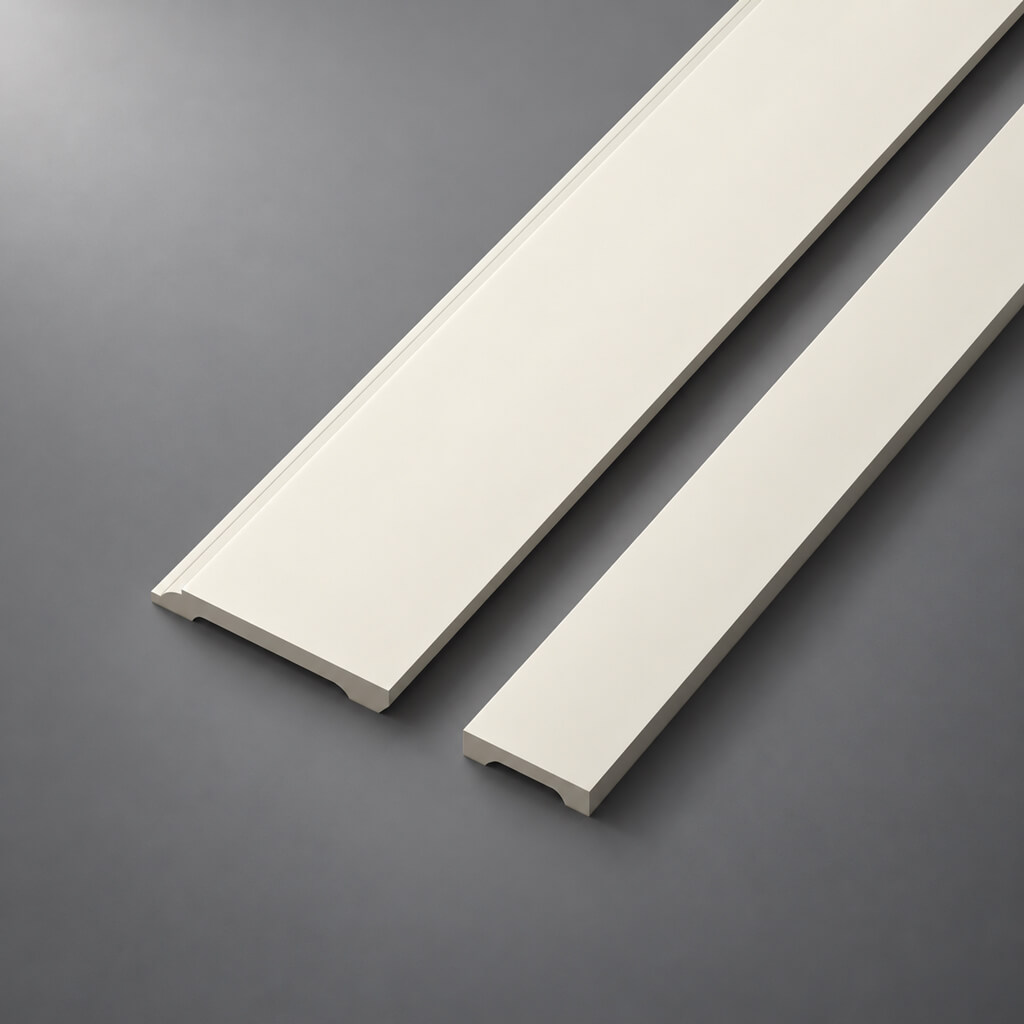
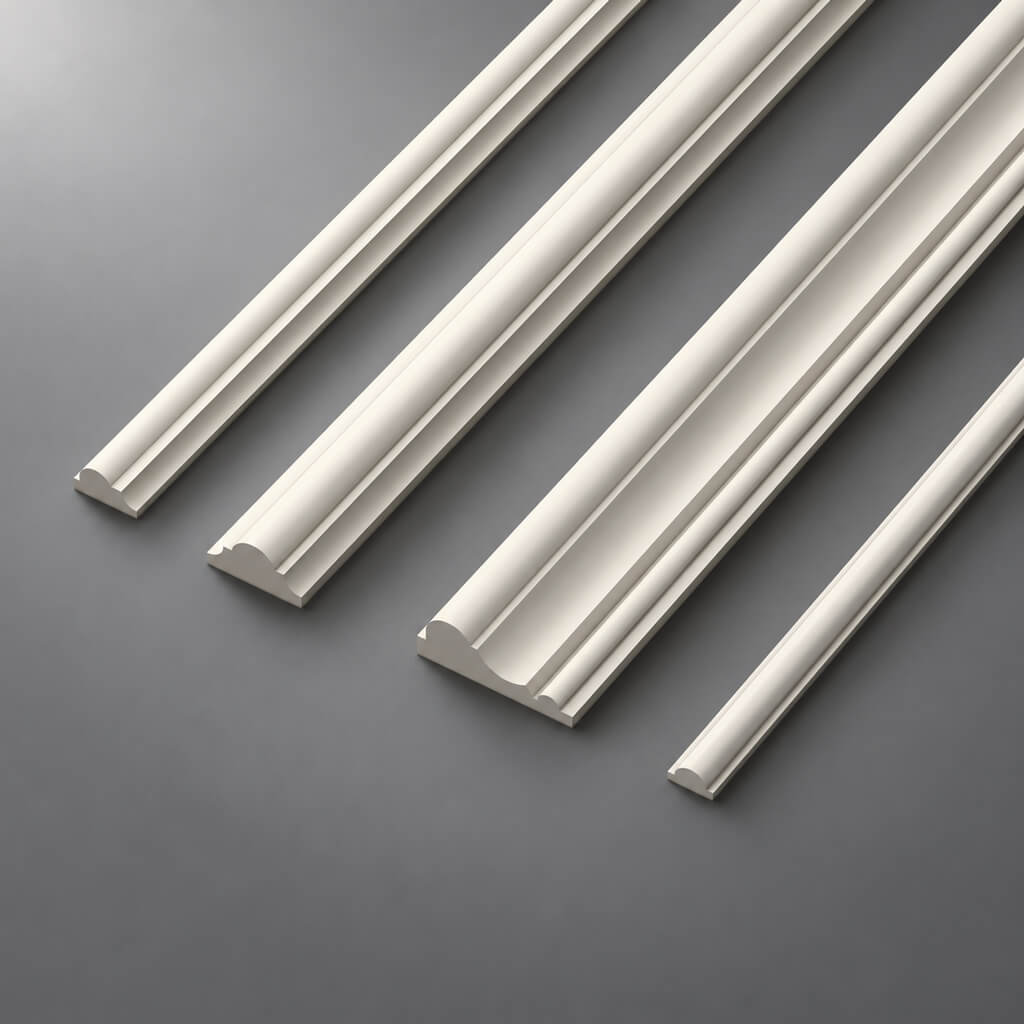
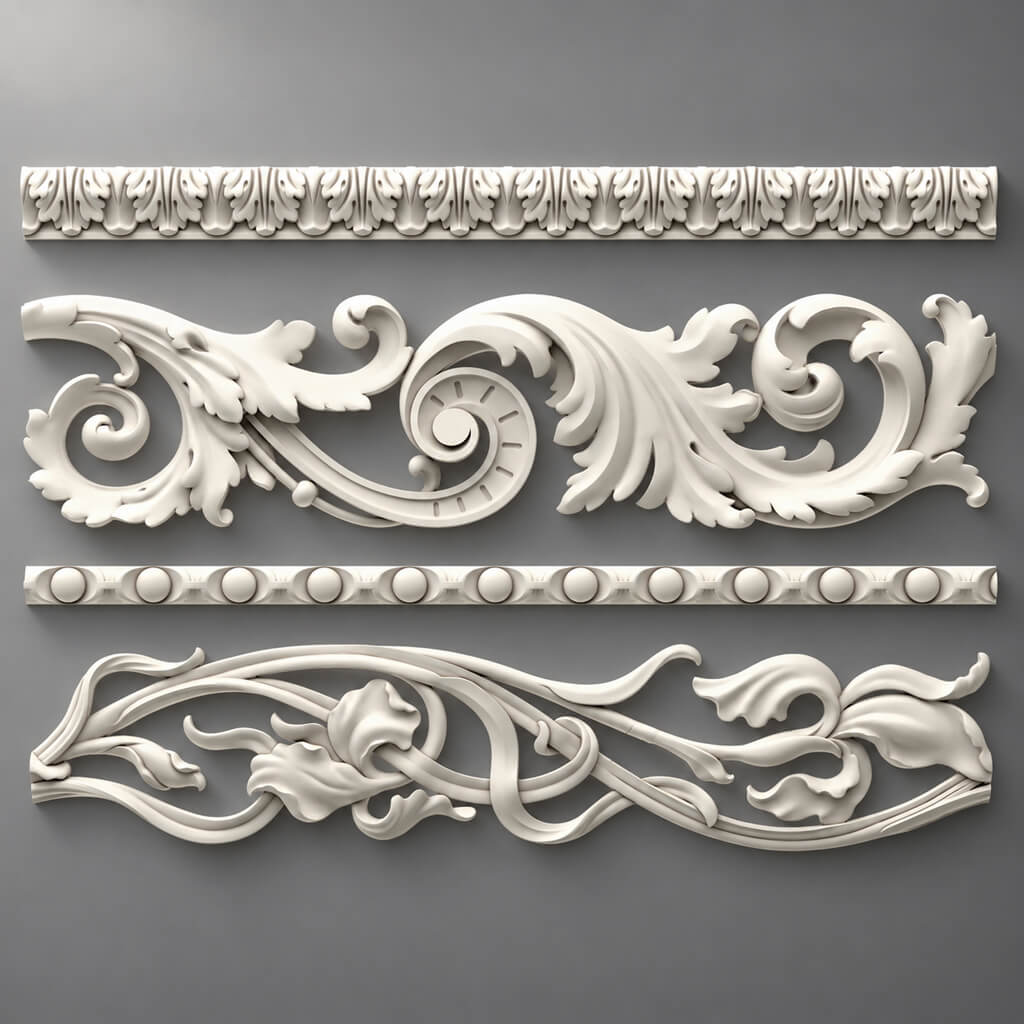
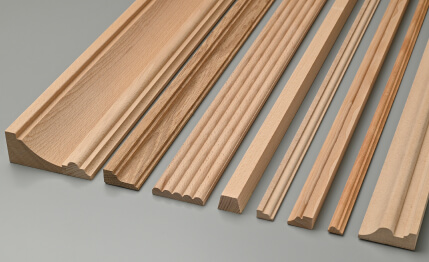
A molding is a linear profile with a specific cross-section (transverse pattern). Moldings are used to assemble frames on walls, horizontal and vertical bands, and accent panels.
Main parameter: profile width
Molding width is the distance from one edge of the profile to the other. This is the most important parameter when choosing independently.
One rule: the width of the molding should match the ceiling height.
Practical guidelines:
-
Ceiling 2.4–2.5 m → molding 20–35 mm
-
Ceiling 2.5–2.7 m → molding 30–45 mm
-
Ceiling 2.7–3.0 m → molding 40–55 mm
-
Ceiling 3.0–3.5 m → molding 50–65 mm
-
Ceiling above 3.5 m → molding from 65 mm
A narrow molding in a high room will get lost — it simply won't be visible. A wide molding with a low ceiling will create a feeling of pressure, especially if the frames are placed close together.
Profile relief: smooth, stepped, or ornamental
Moldings come in three types based on surface character:
Smooth — profile without ornament, only geometric cross-section (steps, bevels, semicircles). Works in modern, minimalist, Scandinavian interiors. Painted in the wall color — creates a delicate architectural effect.
Stepped — a profile with several horizontal "floors". Clear, geometric. Suitable for neoclassicism, art deco, modern classic.
Ornamental — a profile with a floral or geometric pattern along the entire length. For classic interiors, baroque, renaissance.
For independent selection without a designer — the safest option: a smooth or stepped medium-sized molding. It works in most modern interiors and does not require precise coordination with other elements.
buy polyurethane moldings of a smooth or stepped profile — and you get a universal tool that is hard to mess up.
How to use moldings: three working schemes
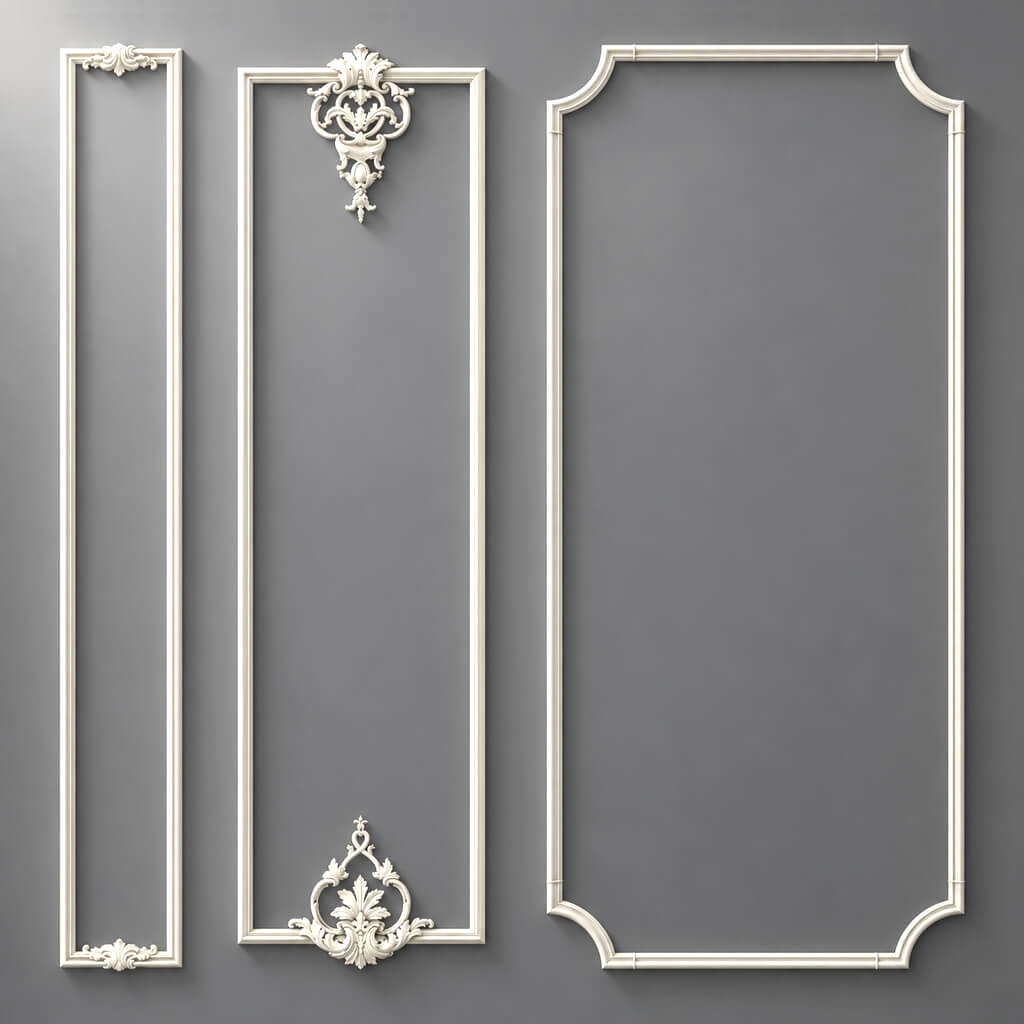
Scheme 1: Frames on an accent wall. One wall is chosen — most often the one behind the sofa, or the one that catches the eye first upon entry. Rectangular frames are assembled from moldings on it. Frame size — approximately 60–70% of the wall height in height and 40–50 cm in width (depends on the wall width).
This is the most expressive and at the same time the safest technique. One accent wall with molding frames — and the room gains architecturality.
Scheme 2: Horizontal belt on walls. One horizontal molding runs along the perimeter of the entire room at a height of 80–100 cm from the floor (height of a chair or sofa) or at a height of 2/3 from floor to ceiling. This divides the wall into two fields — lower and upper. A simple, modern, unobtrusive technique.
Scheme 3: Moldings under the ceiling as a replacement for a cornice. One molding runs along the perimeter of the room 10–15 cm below the ceiling. Works as a decorative cornice line. Good with a neutral ceiling.
How much molding to buy
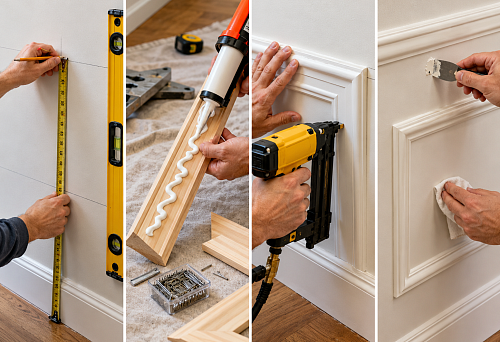
For an accent wall: measure the perimeter of all frames you want to make. Add 15% for corner trimming and waste. This is the required footage.
For a perimeter line: the perimeter of the room plus 10% for joints and reserve.
Buy polyurethane moldings Always order with a reserve — reordering one piece from another batch is inconvenient, and there may be tone differences.
Ceiling rosette: how to choose so the chandelier looks right
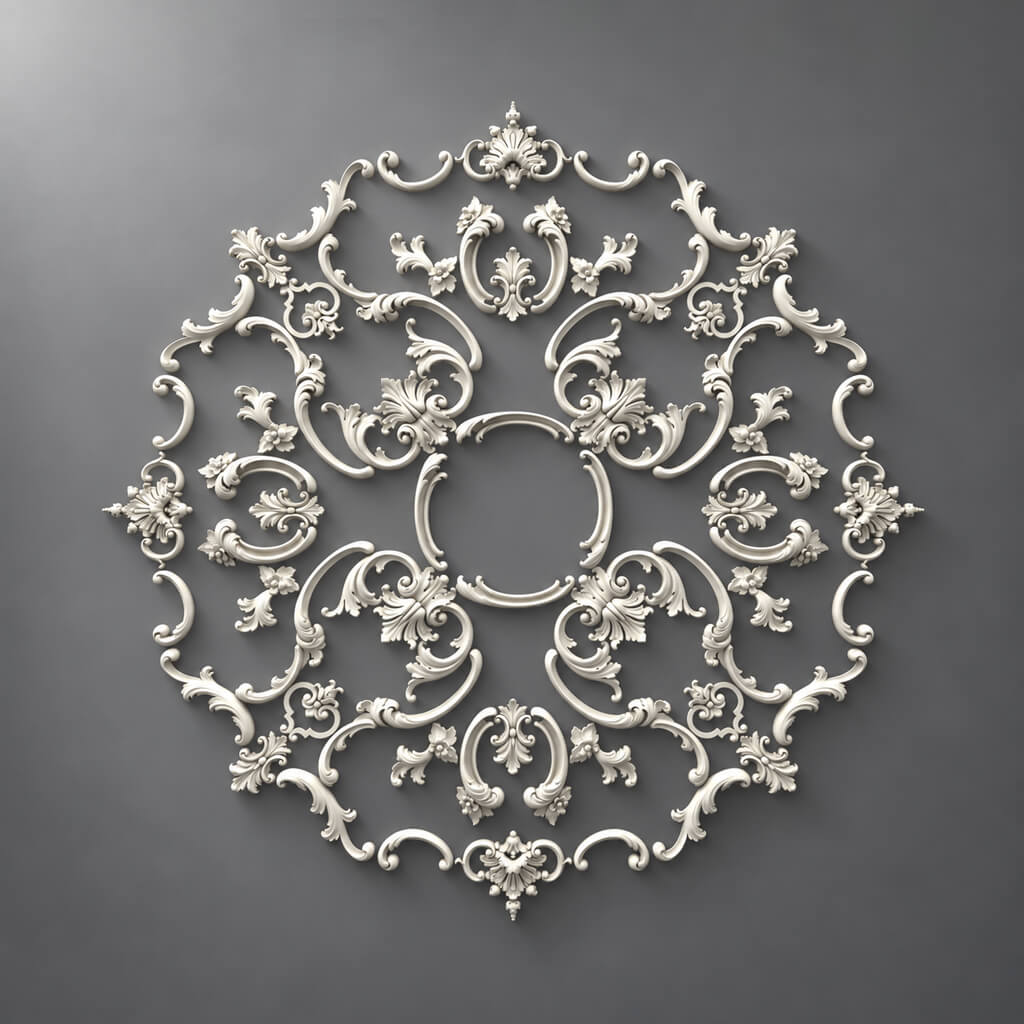
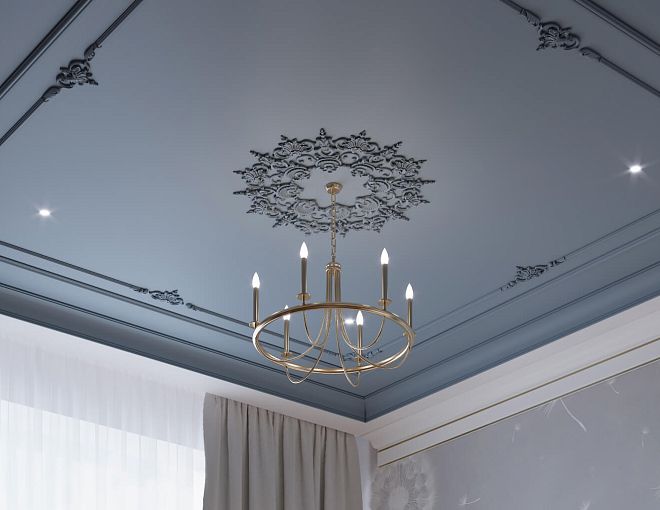
A ceiling rosette is one of the most underestimated elements in apartment decor. Yet its effect is immediate and very noticeable. A chandelier simply hanging from a ceiling hook is perceived as a "fixture." The same chandelier with a decorative rosette is already part of the interior.
Why does this happen? The rosette creates a visual "frame" for the chandelier. It forms the center of the ceiling — a point from which the space is measured. And this feeling appears regardless of whether the rosette is simple or complex.
How to choose the size of a rosette
The size of the ceiling rosette is the most critical parameter when choosing on your own. A rosette that is too small will get lost. One that is too large will overwhelm the ceiling.
Correspondence table:
| Room area | Ceiling Height | Rosette |
|---|---|---|
| Up to 12 sq. m | 2.4–2.6 m | 25–35 cm |
| 12–18 sq m | 2.5–2.7 m | 35–50 cm |
| 18–25 sq. m | 2.6–2.8 m | 50–65 cm |
| 25–35 sq. m | 2.7–3.0 m | 65–80 cm |
| Over 35 sq. m | 3.0 m and above | from 80 cm |
Additional guideline: the diameter of the rosette should not exceed 1/5 of the shorter side of the room. A room 3.5 m wide — rosette no more than 70 cm.
Socket relief and room style
ceiling rosettes are produced with different ornament patterns:
Geometric sockets — stepped profile without ornament. Suitable for modern, minimalist, Scandinavian, art deco interiors.
Floral and plant-based — sockets with petals, leaves, flower garlands. Classic, Provence, French style, neoclassical.
Complex baroque — multi-tiered sockets with rich ornament. Only for interiors in classical or baroque style.
For independent choice — geometric or moderately decorative socket. It fits most modern interiors and does not require coordination with other elements.
Socket and chandelier: how to coordinate them
The diameter of the socket and the size of the chandelier should be proportionate. A small socket under a large chandelier looks awkward — like a small frame around a large painting.
Guideline: the diameter of the socket should be no less than the diameter of the upper part of the chandelier (shade or frame). Better if slightly larger.
The shape of the socket should match the shape of the chandelier: for round chandeliers — a round socket. For chandeliers with a distinct horizontal silhouette — a socket with a horizontal ornamental band.
Ceiling Molding Purchase together with the socket — you can simultaneously close several tasks: both decorate the chandelier and add a cornice line.
Decorative stucco: where an accent is needed and how not to overdo it
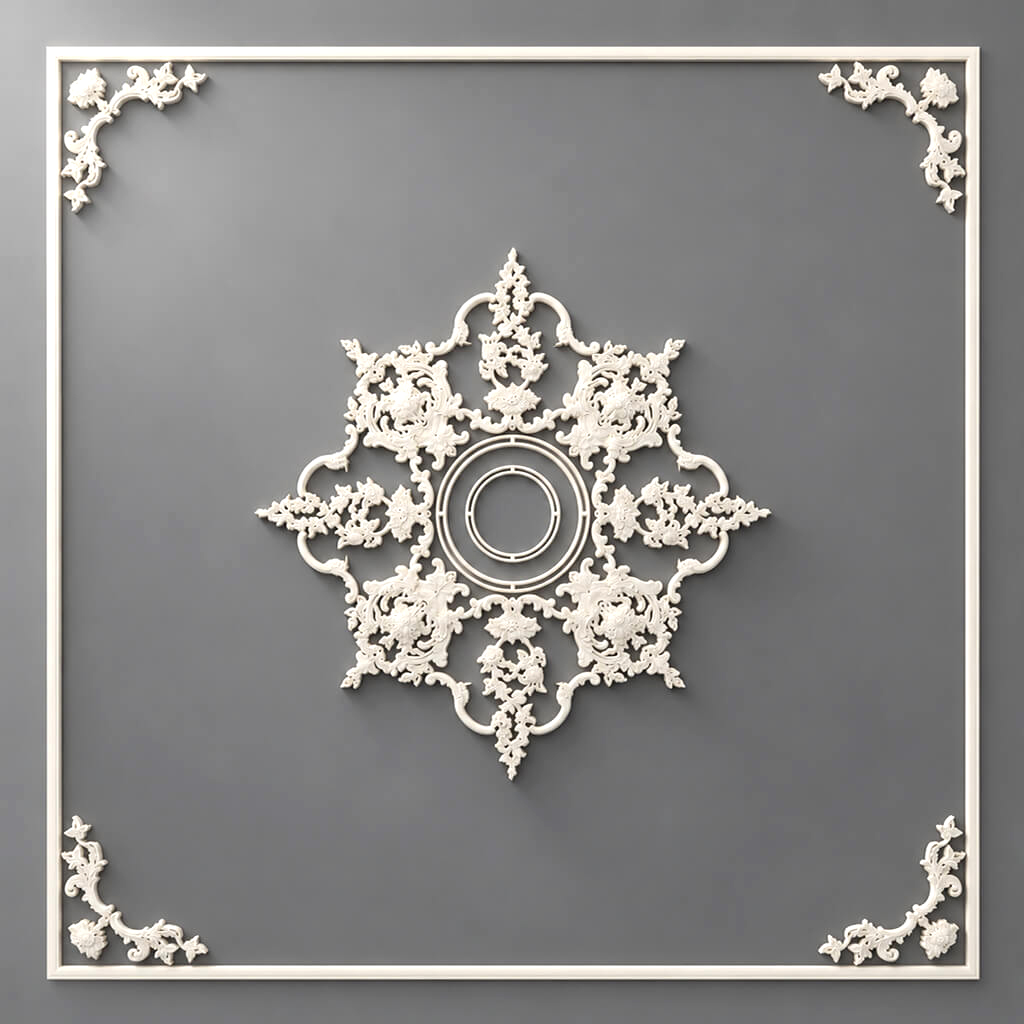
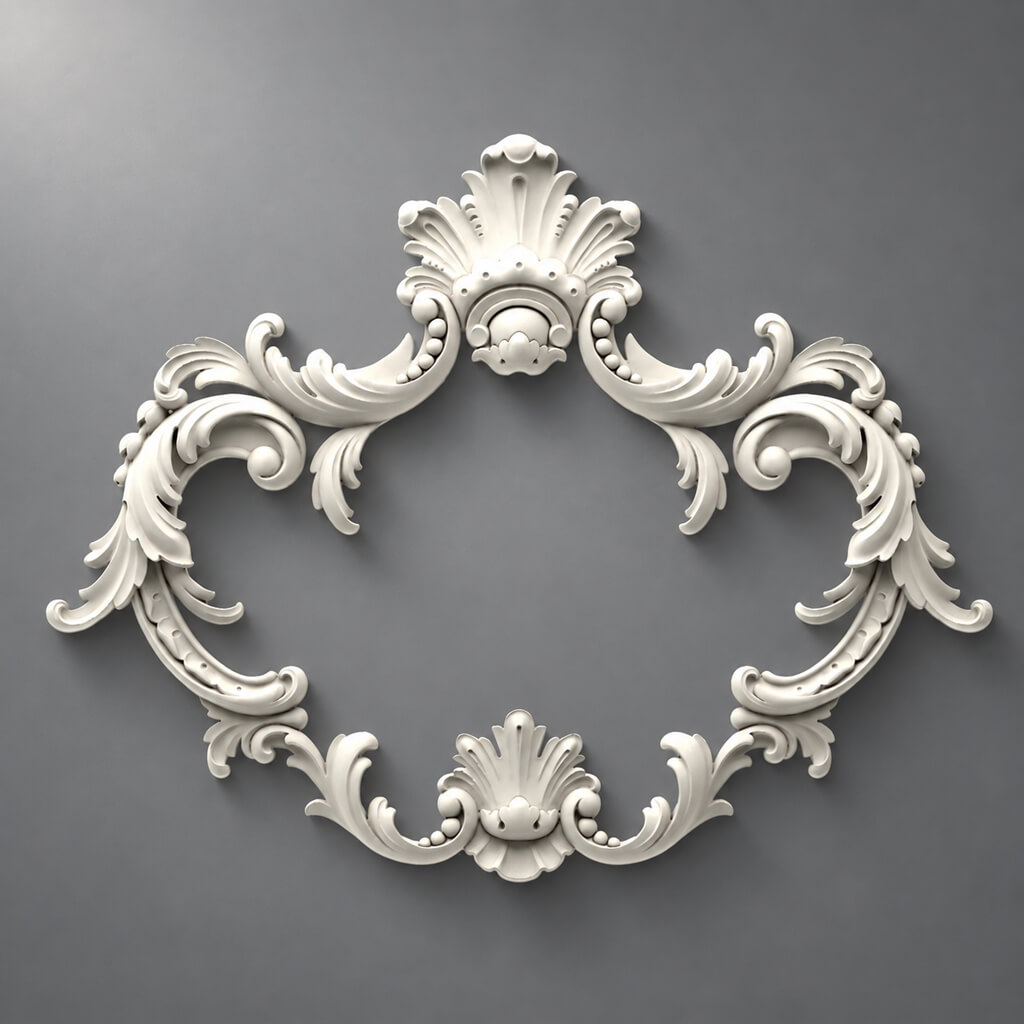
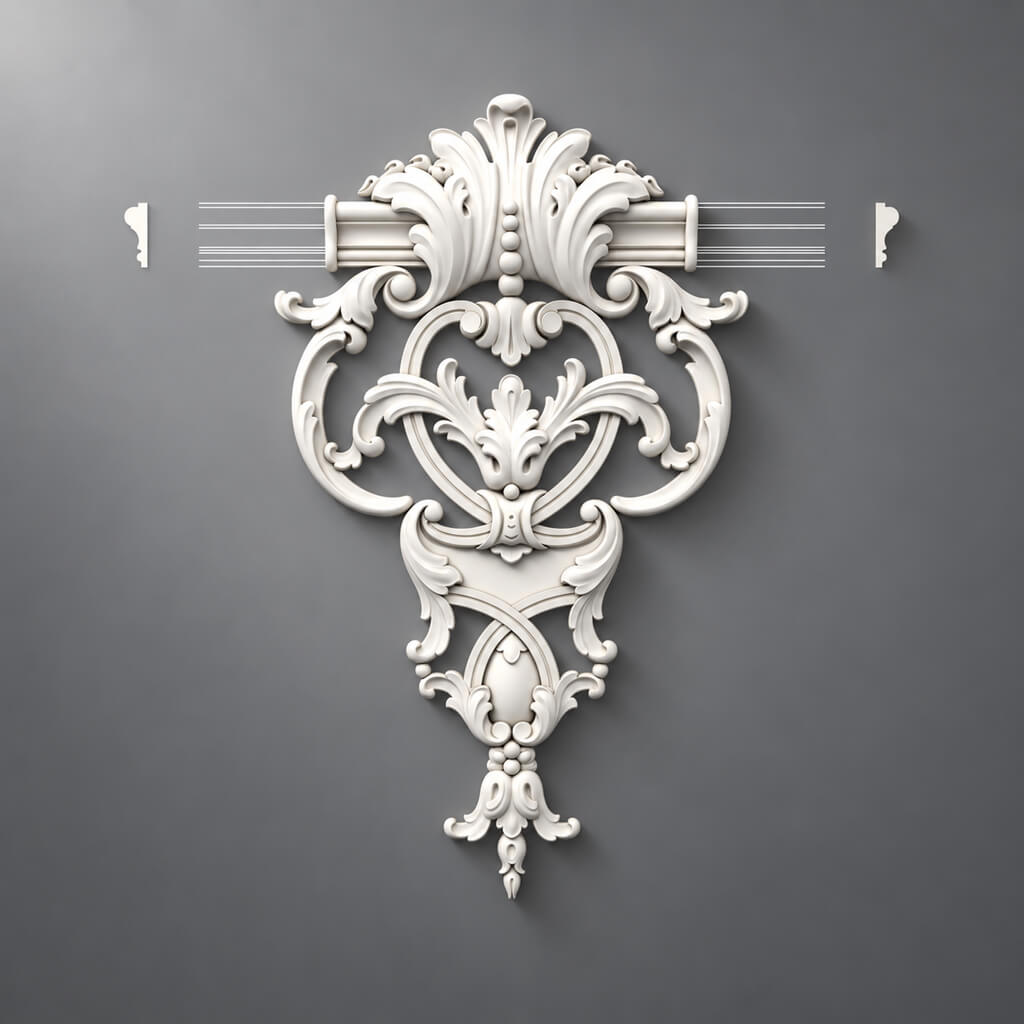
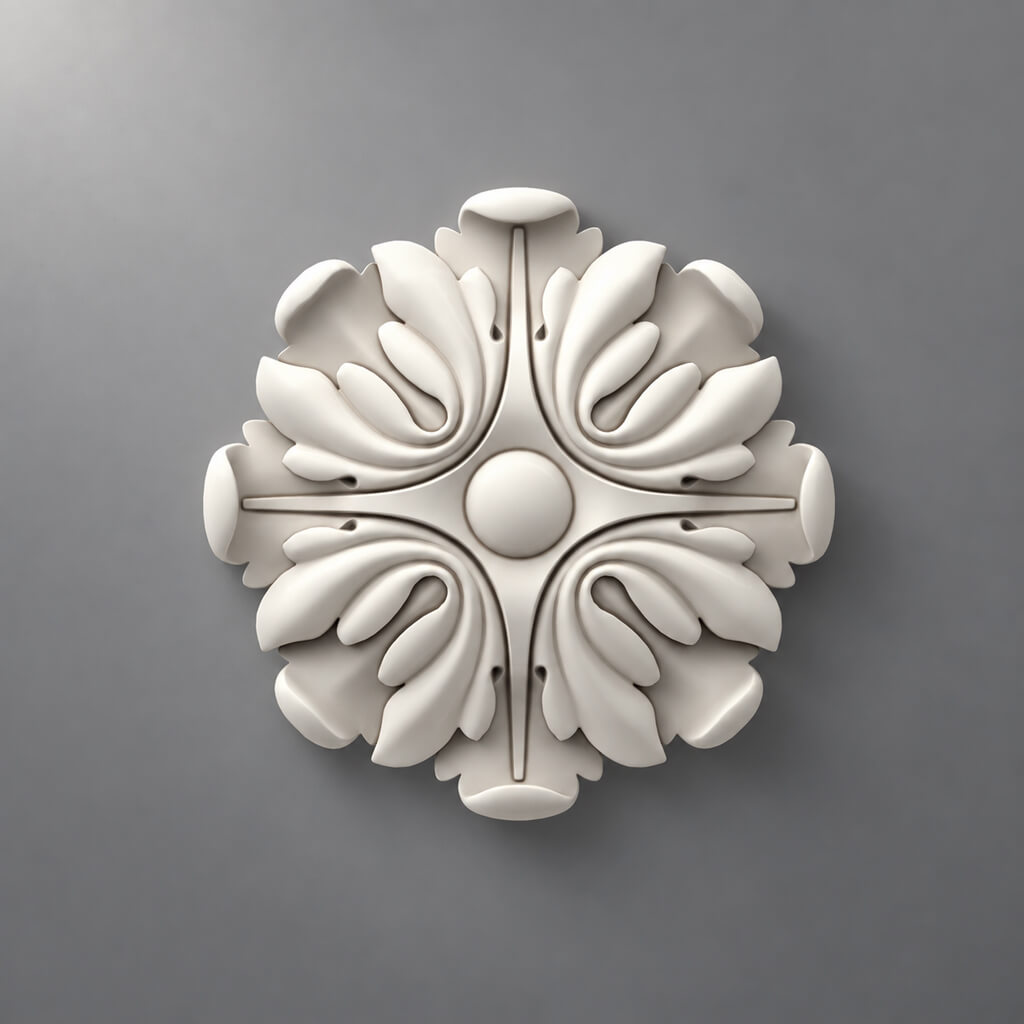
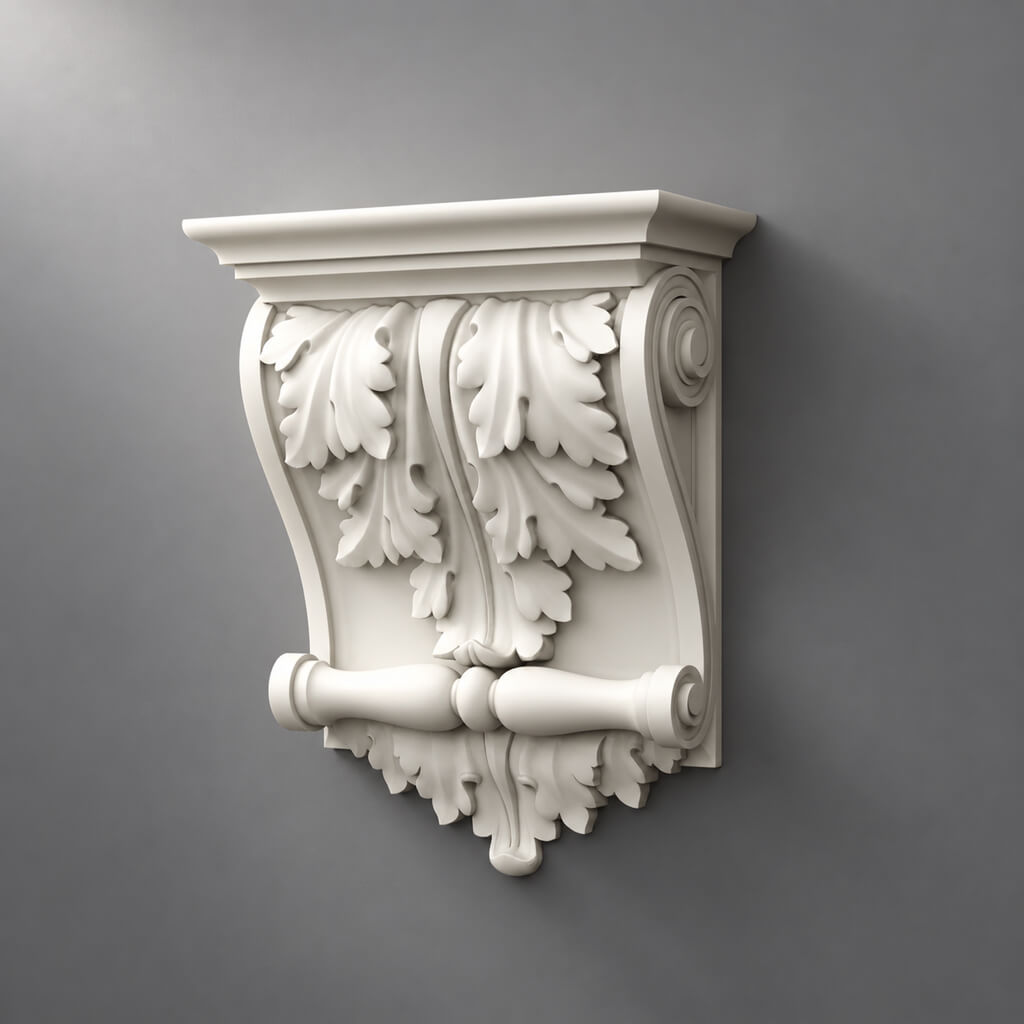
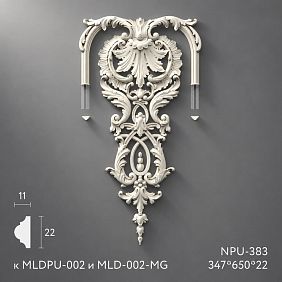
Decorative stucco for an apartment — these are separate three-dimensional elements: medallions, cartouches, ornamental overlays, decorative panels. They are installed on the wall or ceiling as independent accent elements.
Unlike moldings, which create a linear system on the wall, decorative stucco is a point tool. One correctly placed medallion changes the entire perception of the zone. Several medallions placed chaotically turn the wall into a collection of random objects.
The main rule when choosing independently: one decorative accent per zone.
Where to place decorative stucco molding
Behind the sofa. The wall behind the sofa is the main place for a decorative accent in the living room. One medallion in the center of the wall above the sofa, framed by moldings, is a strong and complete solution. Size: medallion diameter 35–50 cm, depending on the width of the sofa.
Above the headboard. In the bedroom, decorative stucco above the headboard is a classic and very effective technique. A cartouche or medallion in the center of the wall above the pillows forms the "architectural" axis of the bedroom.
Above the mirror in the hallway. A mirror plus a decorative element on top creates a visually complete vertical axis. Without the element on top, the mirror "hangs" in the air. With the element, it is integrated into the decorative system.
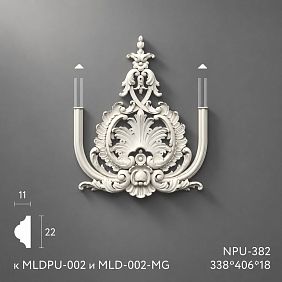
Next to the sconce. A wall lamp — sconce — becomes part of the decorative composition if overlays are installed nearby. Symmetrical overlays on the sides of the sconce or an accent element above it. The lamp ceases to be just a "device" on the wall.
Inside a molding frame. If a system of molding frames is made on the wall, one of the rectangles can be used as a "picture": place a decorative element in the center. Frame + decor = a finished decorative panel.
buy decorative moldings For an accent zone — it doesn't mean buying a lot. One or two elements, correctly placed — that's the right choice.
How to choose the size of a decorative element
General principle: the element should occupy 1/3–1/2 of the width of the zone for which it is chosen.
-
Wall width 3 m → medallion 60–90 cm
-
Wall width 2 m → medallion 40–60 cm
-
Mirror width 80 cm → element above it 30–50 cm
-
Molding frame width 60 cm → element inside 20–30 cm
An element smaller than 1/3 of the zone width — will be lost. An element larger than 2/3 of the width — will feel oppressive.
Stylistic coordination of decorative stucco with moldings
If there are already moldings on the wall, the decorative stucco should belong to the same style family.
Smooth moldings → geometric or moderately decorative medallion.
Moldings with Ionic ornament → classic cartouche with acanthus leaves or volutes.
Moldings with floral ornament → medallion with floral motif.
Not allowed: smooth modern moldings + baroque medallion with lush ornament. This immediately creates a sense of stylistic disconnect.
Stucco decor: character in details
Buy Moldings — means buying small decorative elements that add character to specific interior details: furniture, mirrors, wall niches, consoles.
Unlike medallions and cartouches, which work as independent compositional centers, stucco decor works in conjunction with other objects.
Where stucco decor is used
On furniture facades. Small overlays on flat facades of cabinets or dressers transform ordinary furniture. Three or four overlays on the facades of a built-in wardrobe — and the furniture visually integrates into the interior, ceasing to be a "box."
In niches. Decorative niches in walls are decorated with stucco decor along the perimeter or with an accent element in the center of the back wall.
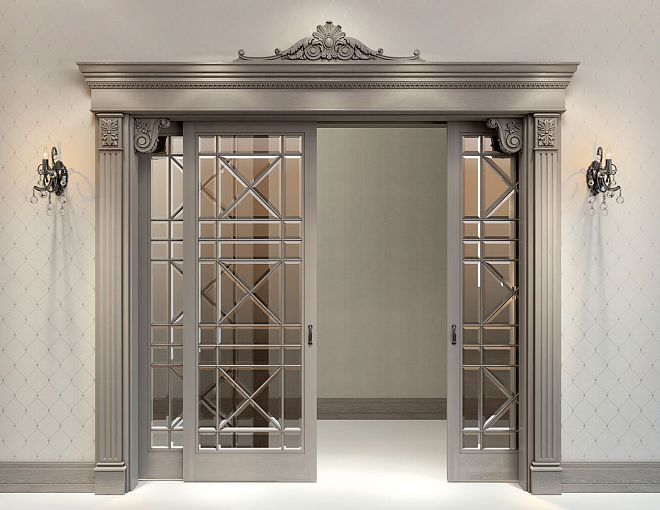
On door trims. Corner overlays on the upper corners of a doorway add architectural character to an ordinary opening.
On fireplace portals. Corner elements, overlays, frieze strips — everything that enriches the portal with decor and integrates it into the interior.
In molding frames. Corner overlays in the corners of frames are a mandatory element in classical style. They cover molding joints and add expressiveness.
Ceiling stucco: how to complete the top of a room
Ceiling molding — these are elements for the ceiling and the wall-ceiling joint: cornices, baseboards, ceiling rosettes, ceiling friezes.
Without ceiling stucco, a room may look unfinished: the walls are decorated, the floor too, but the top is just a joint of two planes without any decor.
Ceiling cornice or baseboard: what's the difference
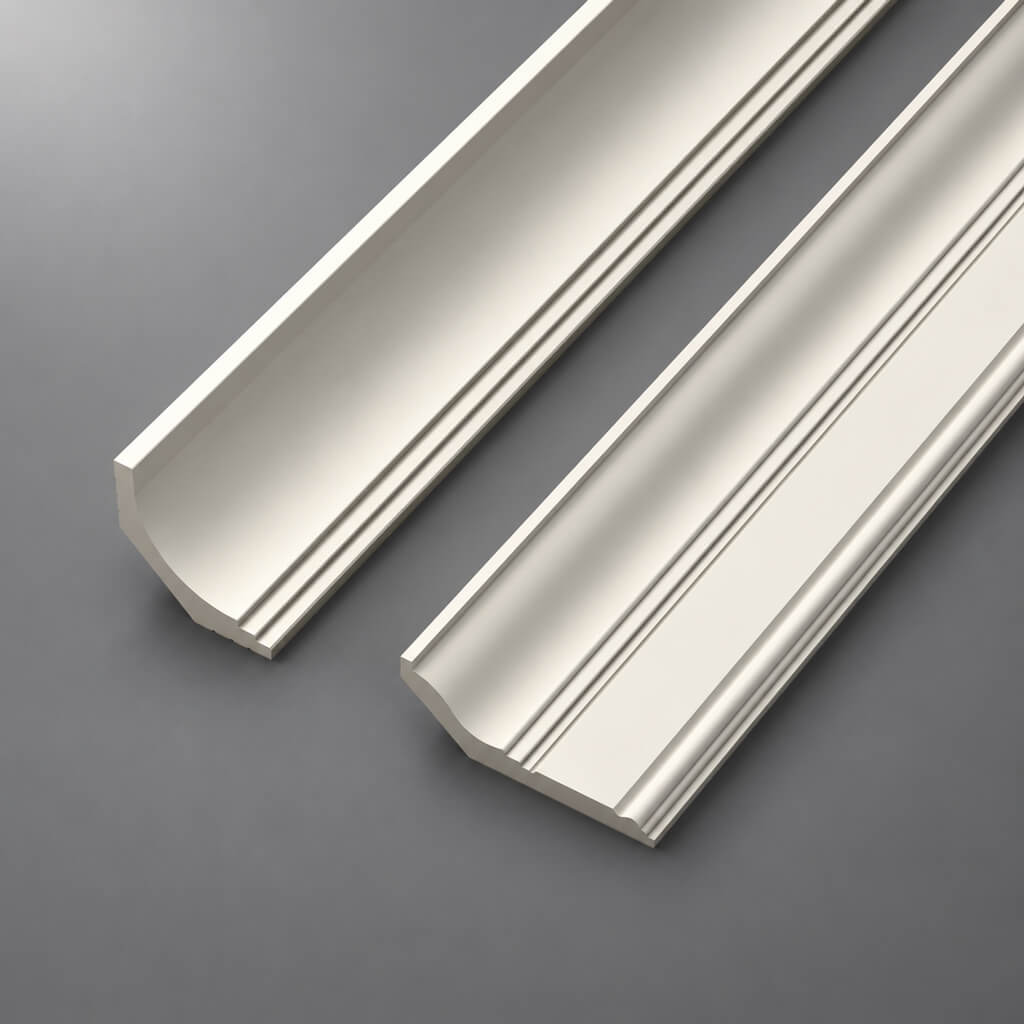
Ceiling baseboard — a profile installed in the wall/ceiling corner. Hides the corner joint, creates a finish for the upper part of the wall. Width: from 35 mm (for small rooms) to 100–120 mm (for high spaces).
Ceiling cornice — a larger, more complex profile. Installed in the corner or on the wall near the ceiling. Creates an architectural finish — as in classical interiors.
For independent selection: ceiling baseboard is a universal solution. Buy ceiling molding in the form of a simple baseboard — and the top of the room will be finished. A simple ceiling baseboard 50–70 mm wide with a ceiling height of 2.6–2.7 m is an ideally proportional solution.
How to choose the width of a ceiling baseboard
-
Ceiling 2.4–2.5 m → baseboard 35–55 mm
-
Ceiling 2.5–2.7 m → baseboard 50–70 mm
-
Ceiling 2.7–3.0 m → baseboard 65–90 mm
-
Ceiling above 3.0 m → baseboard from 90 mm
A baseboard that is too narrow for a high room is not visible. A baseboard that is too wide for a low room creates a feeling of pressure.
Ceiling rosette + cornice = ceiling decor system
If a room has both a rosette and a cornice, they should be coordinated in style. A simple way: choose both elements from the same collection or the same manufacturer.
Ceiling Molding Purchase as a set — cornice plus rosette — this is the simplest way to ensure stylistic unity of ceiling decor.
How not to make a mistake with style: simple rules for choosing on your own
Style is what scares the most when choosing on your own. The fear of 'not fitting the style' makes you postpone a purchase or abandon decor altogether.
But the style of stucco is not determined randomly — it depends on several specific parameters.
Rule one: look at the furniture
If the furniture in the room is modern, with smooth fronts, without carving or ornament — choose smooth or stepped moldings. The rosette — with a geometric profile. Decorative stucco — moderate, without lush ornament.
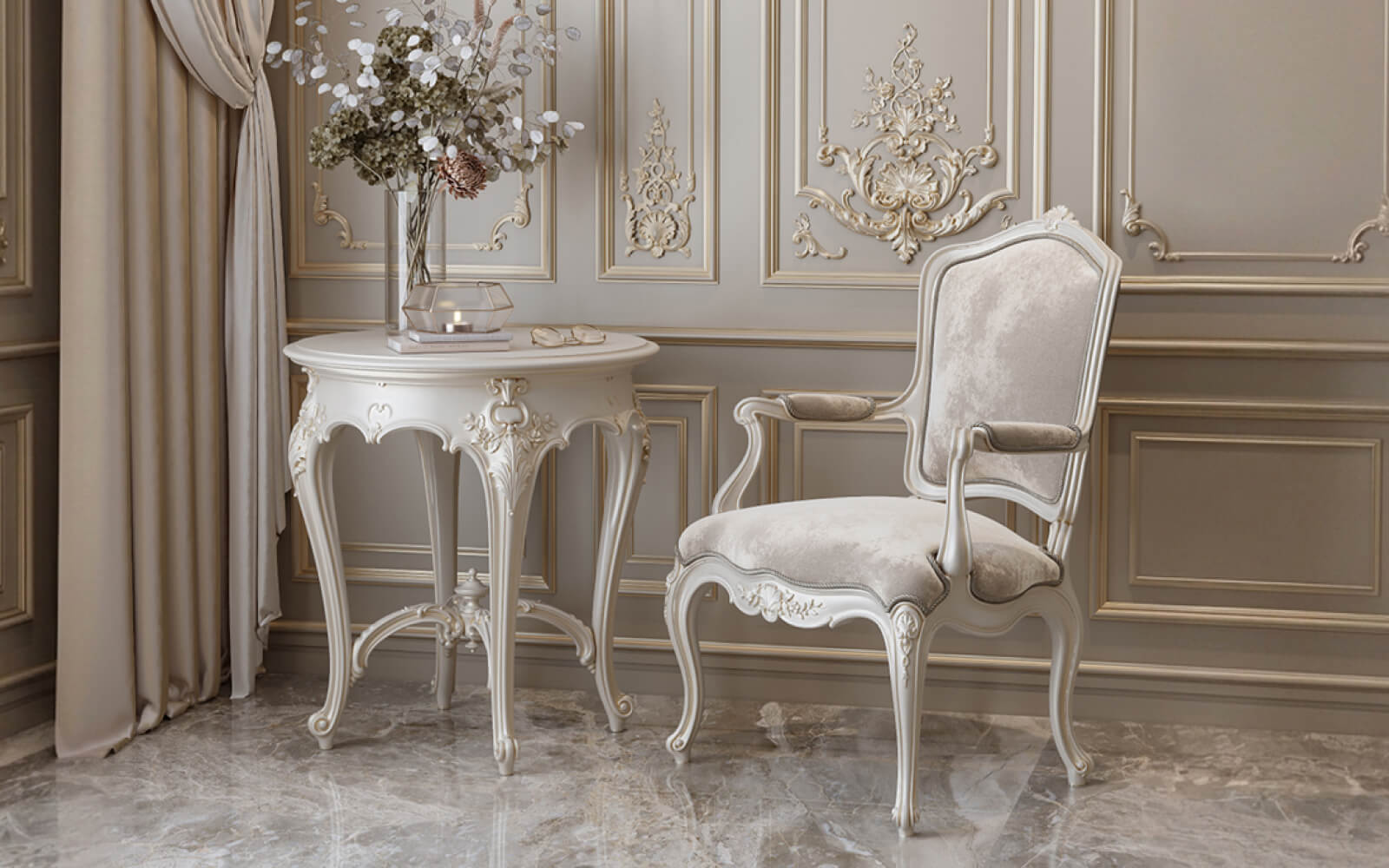
If the furniture has carving, curved legs, stucco inserts on the fronts — choose moldings with ornament. The rosette — with a classic relief.
Rule two: look at the doors and architraves
Smooth framed doors → smooth stucco.
Doors with milled panels → moldings with a stepped profile.
Doors with carving and overlays → stucco with ornament.
Rule three: look at the floor
Herringbone or basketweave parquet → geometric moldings and rosettes.
Laminate without pattern → neutral stucco molding.
Mosaic tile with ornament → ornamental stucco molding is acceptable.
Rule four: one style for the entire room
Buying moldings in one style, a rosette in another, and decorative stucco in a third means turning the room into a sample warehouse. Choose one style family and stick to it.
How to check: if all selected elements look like parts of one collection, the choice is correct.
How to avoid mistakes with size: five specific rules
Size is the second most common cause of mistakes. Here are five specific rules that work.
Rule 1: Molding width = 1/60 of ceiling height in mm
Ceiling 2700 mm → 2700 / 60 = 45 mm. A molding 45 mm wide for this height is proportionally correct.
This is not a rigid formula — it's a guideline. A deviation of 10–15% in either direction is acceptable.
Rule 2: Rosette diameter = 1/5 of the shorter side of the room
Room 4×5 m → shorter side 4 m = 4000 mm → 4000 / 5 = 800 mm. Maximum rosette diameter is 80 cm.
Rule 3: Decorative element occupies 1/3–1/2 of the zone
Medallion behind a sofa 2.5 m wide → 2500 / 3 = 83 cm. Minimum diameter is 80–85 cm. Maximum is 2500 / 2 = 125 cm.
Rule 4: Molding frame height = 2/3 of wall height
Wall height 2.6 m → 2600 × 2/3 = 1730 mm. A frame 170–180 cm high is proportionally correct.
Rule 5: Molding frame width depends on the zone
Frame behind the sofa — frame width equals sofa width plus 15–20 cm on each side.
Frames along the perimeter of the wall — equal spacing between them and between frames and corners.
Purchase kit: what not to forget
One of the most practical parts of this article. Molding is not just the decorative elements themselves. For a full renovation, you need the right installation kit.
Minimum kit
-
Moldings made of polyurethane or Decorative stucco — main decor
-
Acrylic mounting adhesive — 1 tube per 4–6 linear meters of molding
-
Acrylic sealant — for filling joints and micro-gaps
-
Paint — in the desired shade, at least 1 can of finish paint
-
Painter's tape — to protect adjacent surfaces during painting
-
Spare main element — 12–15% of the calculated length
Extended set (for serious decoration)
-
Moldings for walls — main profile
-
Ceiling rosette — for chandelier
-
Ceiling molding — cornice around the perimeter
-
Decorative stucco — for accent zones
-
Relief Decoration — corner overlays for frames
-
Glue, sealant, primer, paint
-
15% reserve
What to buy first if the budget is limited
Priority: moldings on the accent wall + chandelier rosette. These are two changes that give the greatest visual effect per unit cost.
You can buy ready-made stucco matching the Baroque style. Calculate the quantity: linear meters of cornices and moldings, number of rosettes, pilasters, consoles, corner elements. Add a ten to fifteen percent allowance for trimming. for the first purchase — means starting with moldings and a rosette. The rest can be added gradually.
Room-by-room breakdown: what to buy specifically
Living Room
Goal: make the space more architectural, expensive, and finished.
What to buy:
-
Moldings — for frames on the wall behind the sofa
-
Ceiling rosette — for the central chandelier
-
Decorative molding — one medallion in the center of the main frame
-
Ceiling cornice — along the perimeter of the room
Bedroom
Task: create a feeling of coziness and intimacy, complete the headboard.
What to buy:
-
Moldings — for frames on the wall behind the headboard
-
Decorative molding — cartouche or medallion above the headboard
-
Ceiling rosette — if there is a chandelier, not just spotlights
-
Corner overlays — in frames made of moldings
Entryway
Task: create a first impression, structure a small space.
What to buy:
-
Moldings — horizontal belt or one frame behind the console
-
Decorative stucco molding — an element above the mirror
-
Ceiling cornice — along the perimeter (in the hallway, the cornice works even in a small space)
Children's room
Goal: add character without overloading.
What to buy:
-
Moldings — frames behind the workspace or bed
-
Decorative stucco molding — one striking element in the accent area
-
Ceiling rosette — geometric, moderate size
Office
Goal: create a sense of seriousness, status, focus.
What to buy:
-
Moldings — a system of frames on all walls or on the wall behind the desk
-
Ceiling rosette — classic, with good relief
-
Decorative stucco molding — above the bookshelf or console
-
Cornice around the perimeter
Table: what to buy for each task
| Task | What to buy | Link |
|---|---|---|
| Decorate the wall | Polyurethane moldings | Moldings |
| Decorate the chandelier | Ceiling rosette | Outlets |
| Finish the ceiling | Ceiling cornice | Ceiling molding |
| Accent on the wall | Decorative stucco | overlays |
| Add details | Stucco decor | Relief Decoration |
| First purchase | Moldings + rosette + glue + spare | — |
Frequently asked questions: what is asked before the first purchase
Can I choose stucco without a designer?
Yes. For a standard apartment, this is not only possible but also quite logical. The main thing is to define the task and choose elements according to the size and style rules described in this article.
What is the easiest thing to buy for your first renovation with stucco molding?
Buy polyurethane moldings for an accent wall and a ceiling rosette for a chandelier. These are two elements that give maximum results with minimal installation complexity.
How to avoid mistakes with size?
Measure the ceiling height and room area. Use the proportional tables from this article. Do not take molding wider than the ceiling height recommends.
What to buy together with moldings?
Acrylic mounting glue, acrylic sealant, paint, painter's tape, and a 12–15% spare molding.
What stucco molding is suitable for a modern apartment?
Smooth or stepped moldings in the color of the wall, a ceiling rosette with a geometric profile, one moderate decorative accent. Without lush ornamentation, without mixing styles.
Can stucco molding be added after renovation?
Yes. Moldings and decorative stucco are mounted with acrylic glue at any time — even a year after renovation. The main thing is proper surface preparation.
How many elements are enough for a room?
Minimum: one type of molding + one rosette. Full set: moldings + rosette + cornice + one decorative accent. Don't overload the space — each added element should enhance the whole, not compete with others.
About the company STAVROS
Choosing stucco without a designer means acting by the rules, not at random. Task, zone, size, style, set — follow these five steps sequentially, and the result will be predictable and beautiful.
STAVROS is a Russian manufacturer of decorative polyurethane products. The STAVROS catalog offers a full range for DIY renovation: Moldings made of polyurethane of all formats, ceiling rosettes for any room size, Ceiling molding for cornices and baseboards, Decorative stucco и Relief Decoration for accent zones.
All STAVROS products are made of dense polyurethane with a clear relief, lightweight, ready for painting, and mounted with acrylic glue. STAVROS specialists will help you choose a set for the size and style of your room — without a designer, without extra costs, with a guaranteed result. Buy molding available on the website with Contact us to confirm shipping to your destination.