




























Article Contents:
- What is a garland for a furniture facade
- Where to use a garland on furniture
- On the wardrobe facade
- On the chest of drawers
- On the sideboard and display cabinet
- On Kitchen Facades
- On the cabinet or console
- Wooden garland or polyurethane garland — which to choose for the facade
- Material selection table for furniture garland
- How to choose the size of a garland for a facade
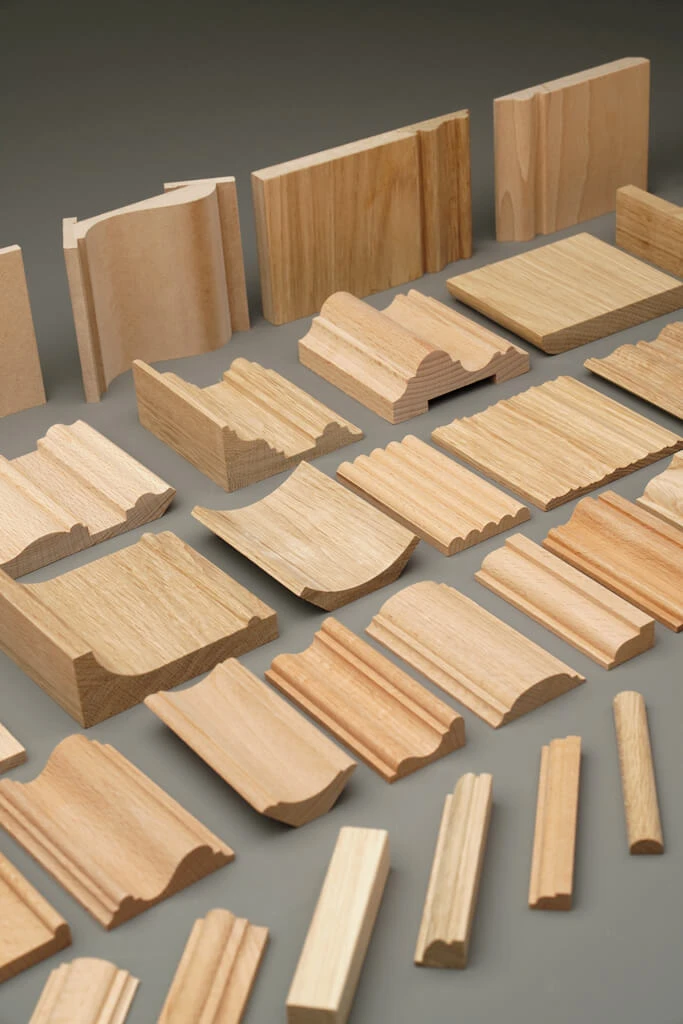
- How to choose the material: beech, oak or polyurethane
- Oak
- Oak
- Polyurethane
- How to combine a garland with moldings on a facade
- Specifics of different furniture styles
- Mistakes when choosing a garland for furniture
- What to buy together with a garland for a facade
- Installation of a decorative garland on a furniture facade
- Why it is convenient to choose furniture garlands at STAVROS
- FAQ: answers to popular questions about garlands for furniture facades
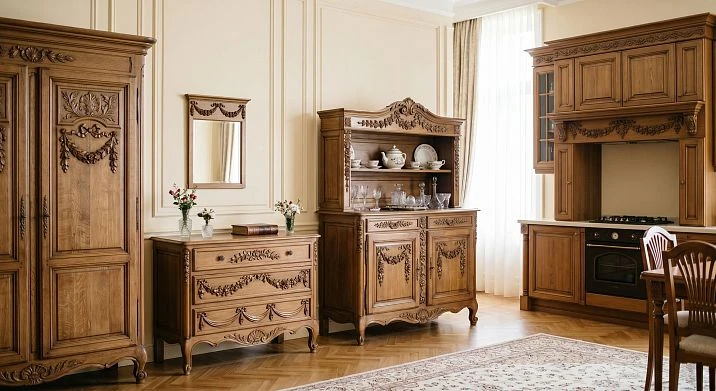
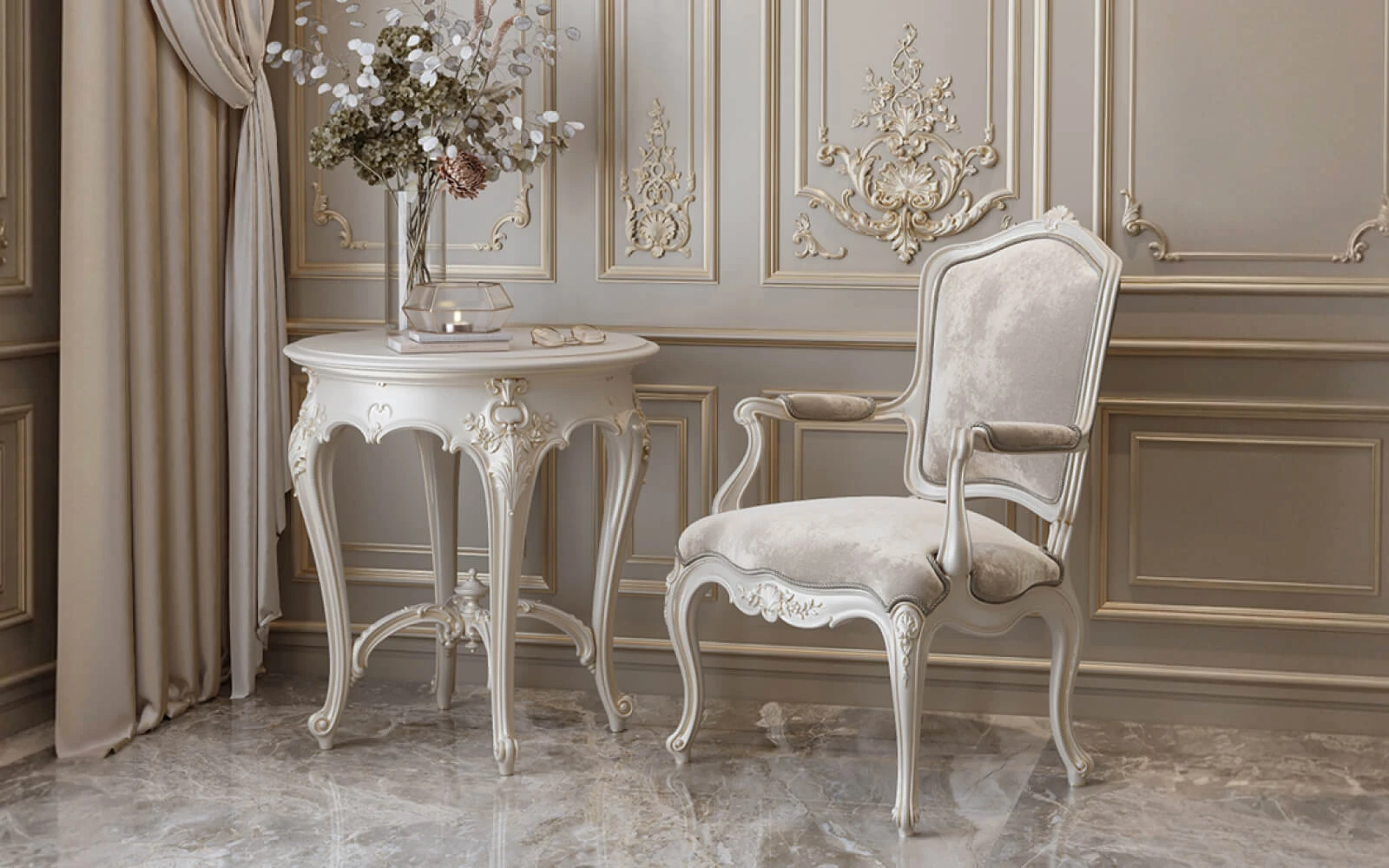
Furniture without decor is just storage. A dresser that 'just stands there'. A wardrobe that 'just closes'. A sideboard that 'just exists in the room'. And at some point you realize: one detail is missing that will make it all come alive. That detail that was once hand-carved by master joiners, and now you can choose, order, and have it delivered. We are talking about a garland for a furniture facade — a decorative overlay with a floral, botanical, or classic ornament that turns an ordinary facade into an object with history and character.
This is not a metaphor. A furniture garland overlay works literally: it adds relief, creates shadows, breaks the monotony of a flat surface, and signals that this piece was made thoughtfully. Such a signal is read instantly, even without conscious awareness. That is why furniture with decor always looks more expensive than its price tag suggests.
This article is not about general interior musings, but a specific working tool: how to correctly choose a garland for a furniture facade, which material to pick for a wardrobe, chest of drawers, sideboard, or kitchen, how to avoid mistakes with size and finish — and why a properly chosen detail changes the perception of the entire piece of furniture.
What is a garland for a furniture facade
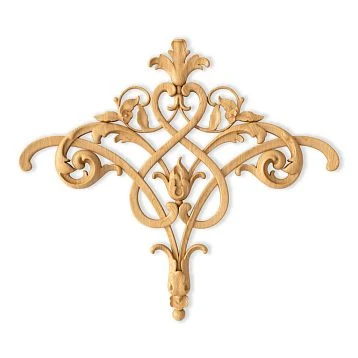
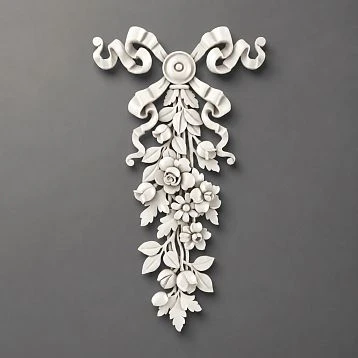
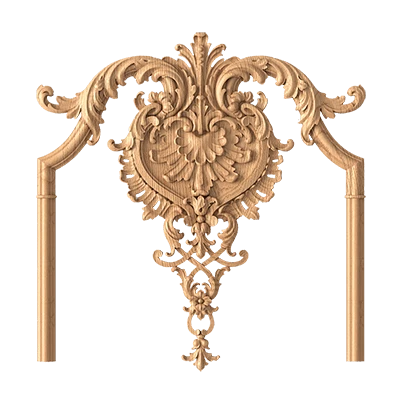
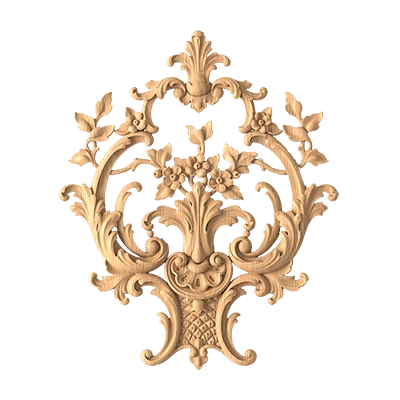
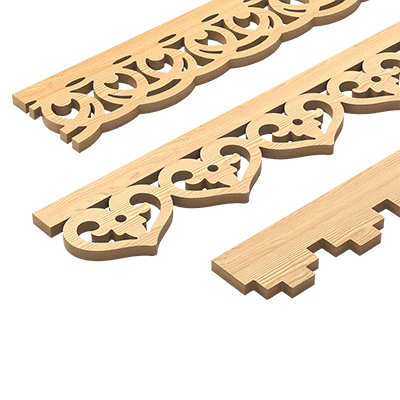
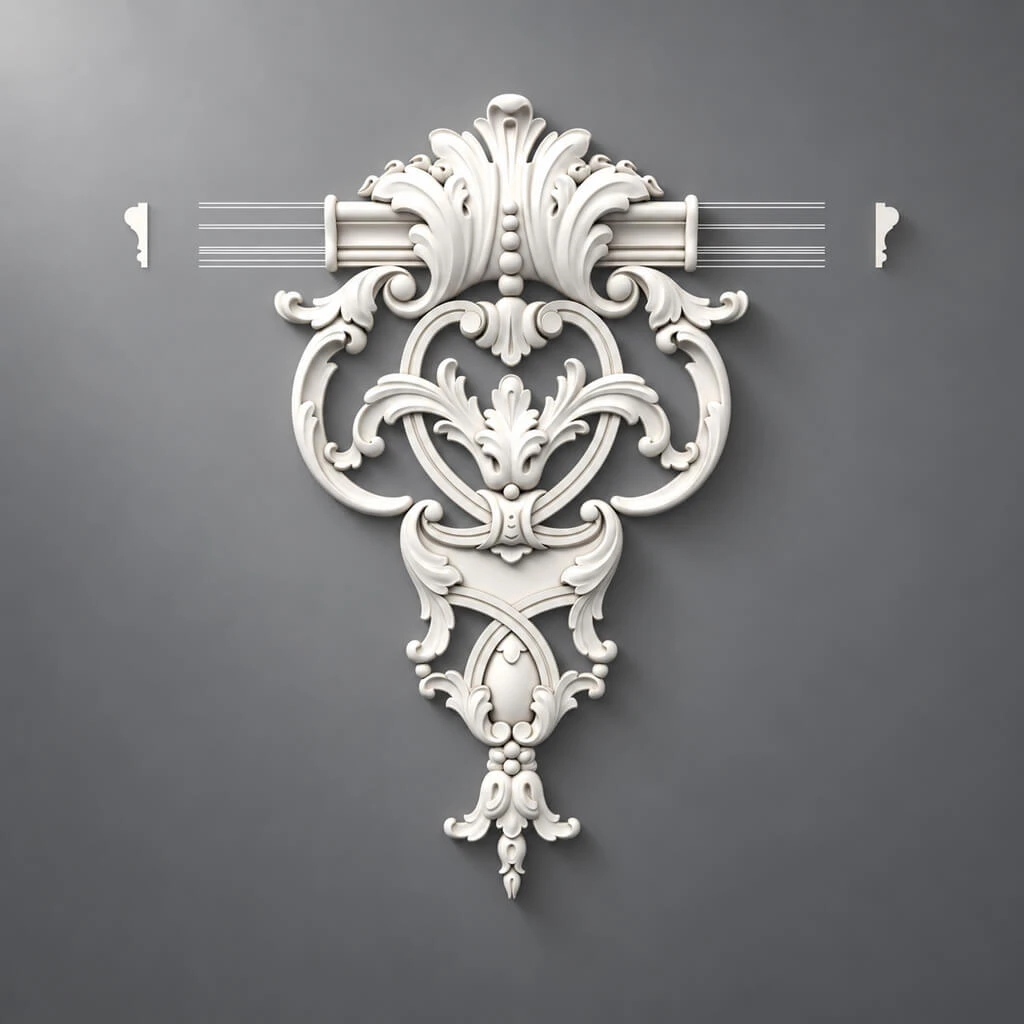
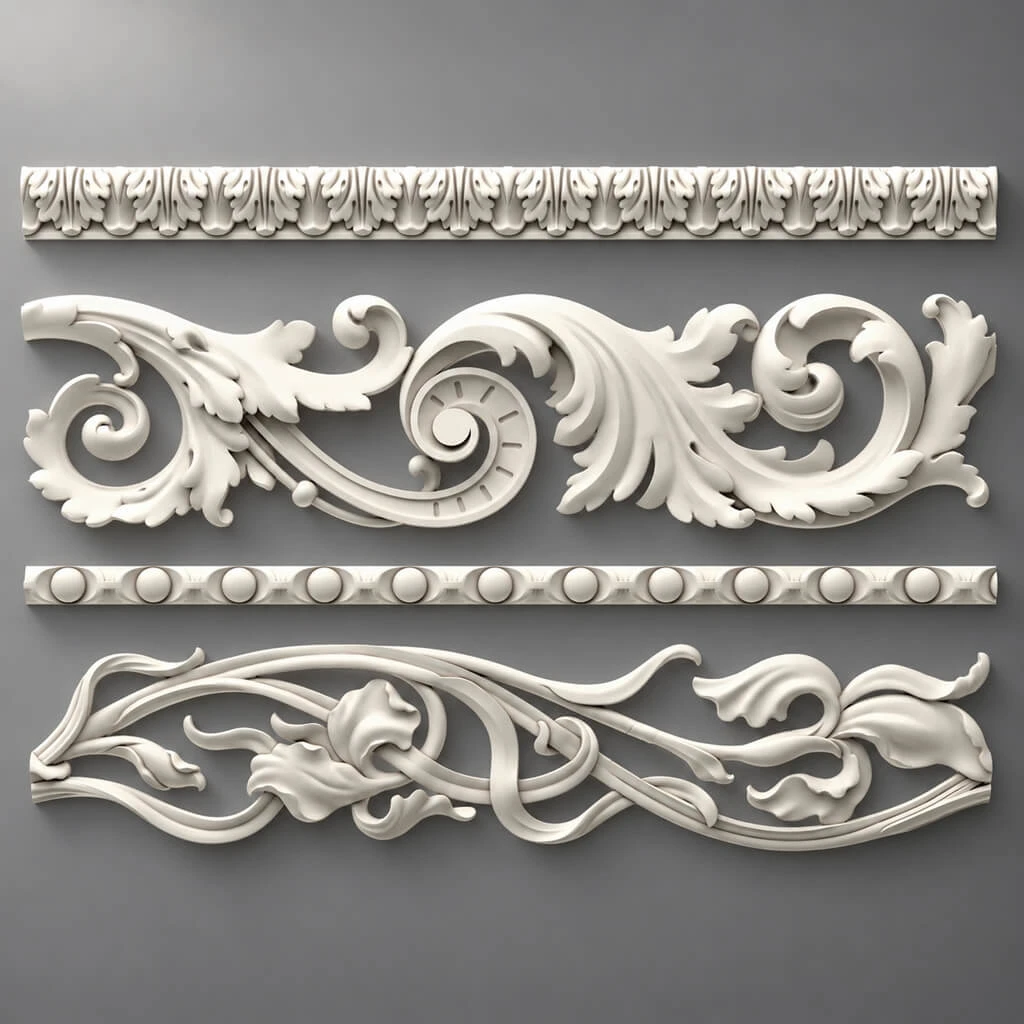
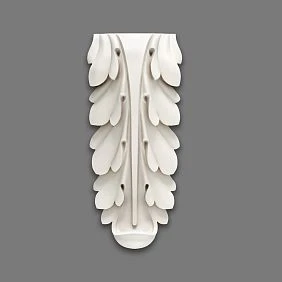
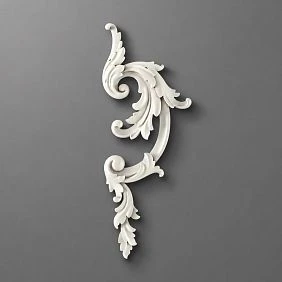
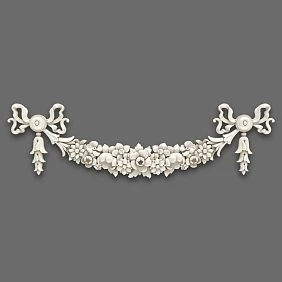
In interior decor, a garland is not a festive ribbon or a string of lights. It is a historical ornamental motif: a relief overlay with an elongated composition of leaves, flowers, fruits, buds, or ribbons, used as a decorative accent on flat surfaces. For furniture, such an overlay is installed on the facade — a cabinet door, the front panel of a chest of drawers, the front area of a sideboard, or a decorative insert in a kitchen set.
A garland as furniture decor can work in three ways. First, as a central accent: the overlay is placed in the middle of the facade, fixing the gaze and creating a semantic center of the plane. Second, as a side or paired element: two garlands on the edges of the facade form a framing effect, bordering the door field. Third, as a horizontal divider: the garland runs along the upper third of the facade, visually 'lifting' it, or along the lower third, adding solidity.
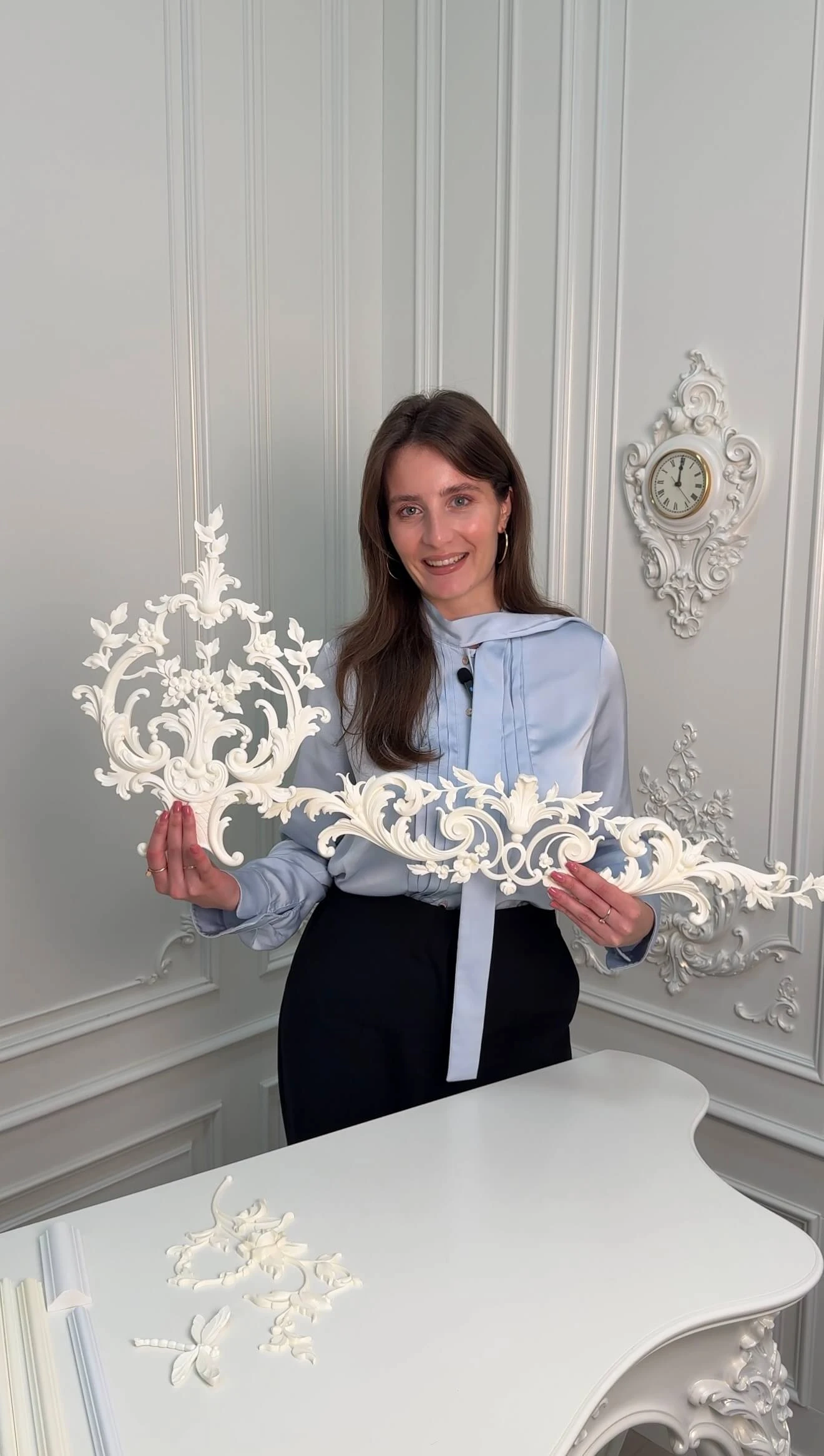
This is a universal tool. The same detail suits both custom-made turnkey furniture and a mass-produced cabinet that one wants to make unique. That is why Carved furniture decor it is bought not only by furniture manufacturers, but also by designers, decorators, restorers, and private clients who want to get more from what they already have.


Where to use a garland on furniture
The installation location is the first and main question. Before thinking about material and size, you need to answer: which specific facade is the overlay going on, what is its scale, and what will be next to it?
Our factory also produces:
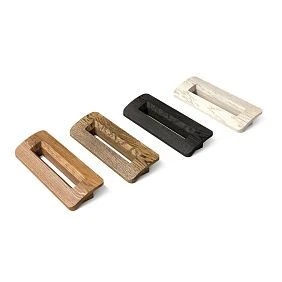
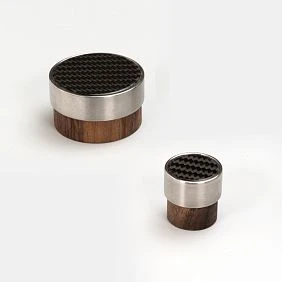
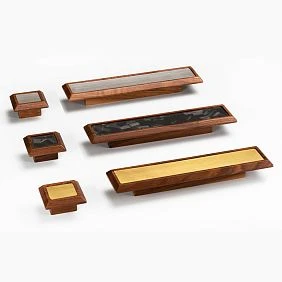
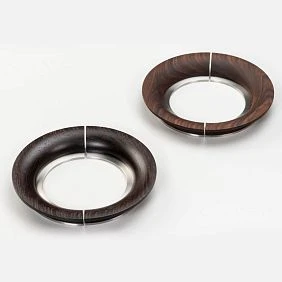
On a cabinet facade
A wardrobe is the largest object for furniture decor. The flat doors of a standard sliding or hinged wardrobe are almost a blank canvas, where a garland works particularly convincingly.
For the central part of the door, a horizontal overlay garland is suitable: it is placed at eye level — approximately in the upper third of the facade — and creates a visual accent that catches the eye first. For the side zones of the wardrobe, especially if the doors are narrow, a vertically oriented detail works better, elongating the facade and emphasizing its height.
On a multi-section wardrobe, the garlands on each door should be identical in size and placed at the same height. Rhythm is the main principle of classic decor. Three identical details on three doors create rhythm. Three different ones create chaos.
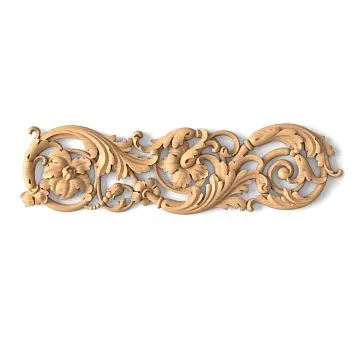
Wooden decorative inlays are optimal for MDF and solid wood wardrobes: they are proportionate to the facade, thin, and do not cause problems when opening doors. Overlay N-079-1 in size 166 × 73 × 9 mm is a good option for a standard door width of 350–500 mm. Overlay 211 × 93 × 11 mm is for wide facades from 600 mm.
Get Consultation
On a chest of drawers
A chest of drawers is an item of intimate scale, which often becomes the visual center of a bedroom or living room. It is on a chest of drawers that a decorative garland works most 'jewel-like': the facade is small, the detail is large relative to the surface — and this creates the impression of handcrafted work.
On a chest of drawers, the garland is traditionally placed in the upper part of the facade, above the row of drawers. If the facade has a central axis (e.g., one wide panel), the overlay goes in the middle. If the facade is divided into several drawers of different heights, the garland is placed on the most noticeable or the widest one.
For a chest of drawers, a wooden carved garland is particularly suitable: the natural material resonates with furniture made of wood or imitating it, creating a sense of a unified object. It is important to consider the opening of drawers: the overlay should not cover the gaps between drawers and should not interfere with the guides. Usually, it is enough to indent 20–30 mm from the bottom edge of the door or drawer.
On a sideboard and display cabinet
A sideboard is an item with a historical character. A classic sideboard features a cornice on top, paneled doors, glazed upper sections, and profiled legs. A garland in this system is a natural element: it is placed on the central panel, on the solid doors of the lower part, as an accent ornament above the glass sections.
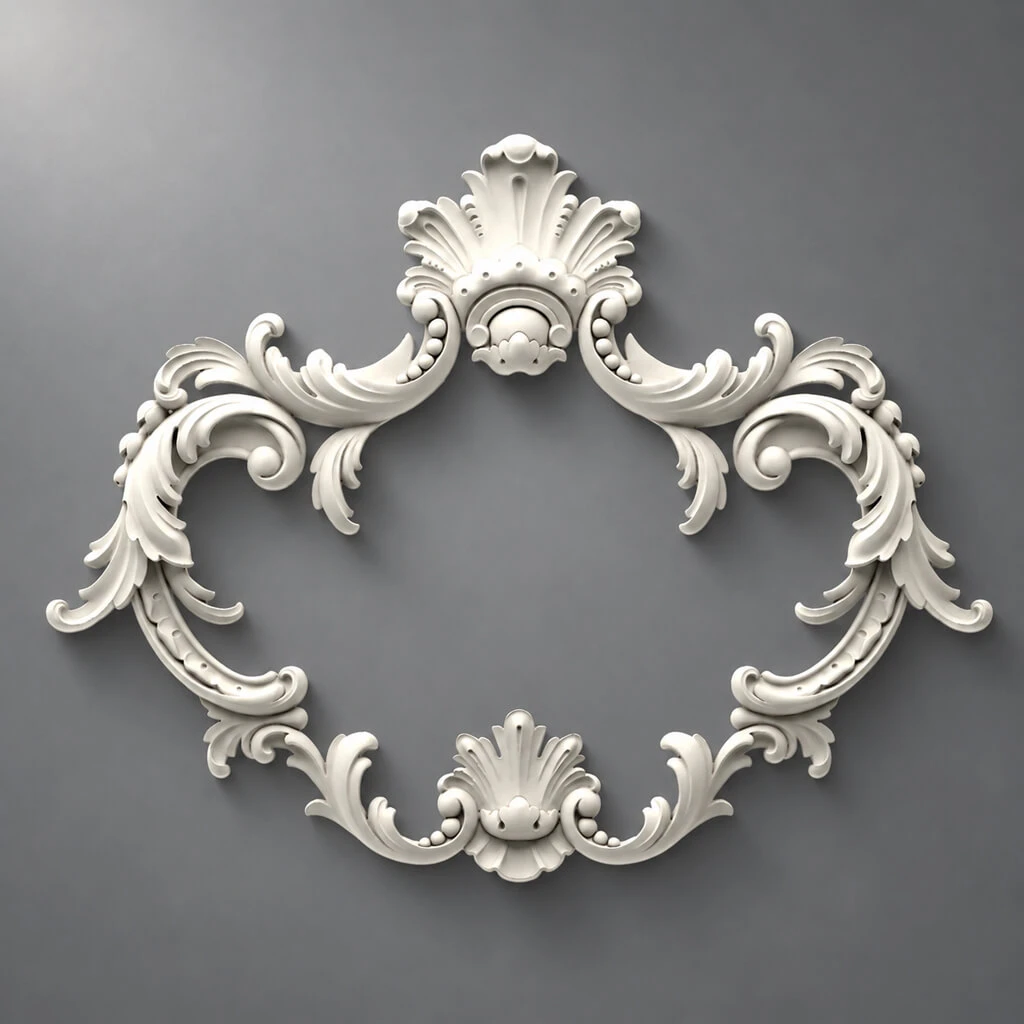
For a large sideboard, both a wooden carved overlay and — with a large scale of the decorative task — a polyurethane stucco garland NPU-043 with dimensions of 424 × 130 × 20 mm or 500 × 139 × 20 mm. A polyurethane overlay with a deep 20-millimeter relief on a formal sideboard is no longer just a detail, but an architectural statement.
On a display cabinet, a decorative garland works well on horizontal panels between sections: it breaks the verticality of the glass doors and creates a horizontal rhythm in the overall composition of the object.
On kitchen facades
This requires delicacy. A kitchen is a functional area with high demands for practicality, and a decorative overlay must be appropriate, not create problems. The correct use of a garland in the kitchen is not on the entire set, but in accent zones.
The best candidates for decoration: the sideboard part of the kitchen — a floor cabinet or upper cabinet designed as the "furniture center" of the kitchen space. A decorative island, if present. A display cabinet with open shelves or glass doors. A separate tall cabinet in a classic style.
For kitchen fronts, moisture-resistant coatings are mandatory. Therefore, a wooden overlay here must be reliably coated — several layers of enamel or varnish, well covering the ends and relief parts. A polyurethane overlay is neutral to moisture by the nature of the material — this is an additional argument in its favor for the kitchen area.
Use Polyurethane appliqués on kitchen fronts — a reasonable choice for the "sideboard" or decorative zone of the kitchen, where the garland will not be a random element, but part of a classic furniture program.
On a cabinet or console
A bedside table, a decorative console in the hallway, a dressing table — small objects with compact facades. Here, a special proportionality is important: the overlay should be noticeable but not overwhelming.
For a cabinet with a facade 300–400 mm wide and 400–500 mm high, a wooden garland 111 × 49 × 6 mm or 166 × 73 × 9 mm is optimal. Small, neat, with a fine relief — it adds character without overloading the surface. For a console with a long horizontal facade, a larger accent is possible — even a polyurethane overlay with the right size selection.
Wooden garland or polyurethane — which to choose for the facade
Both materials are good — each in its own scenario. Let's make the choice specific and clear.
Material selection table for furniture garland
| Task | What to choose |
|---|---|
| Small cabinet or dresser facade | Wooden carved overlay |
| Facade for dense enamel | Beech (enamel-ready option) or polyurethane |
| Facade for tinting with visible texture | Oak (tinted variant) |
| Large decorative furniture panel | Polyurethane garland |
| Restoration of antique furniture | Wood — organic in material |
| Furniture is painted in the wall color | Polyurethane or beech under enamel |
| Visible natural wood texture | Oak under oil, varnish, or stain |
| Accent classic or palace composition | More relief garland made of polyurethane |
| Solid wood furniture under clear lacquer | Oak in the same species |
| Kitchen sideboard or decorative kitchen area | Polyurethane or beech under several layers of enamel |
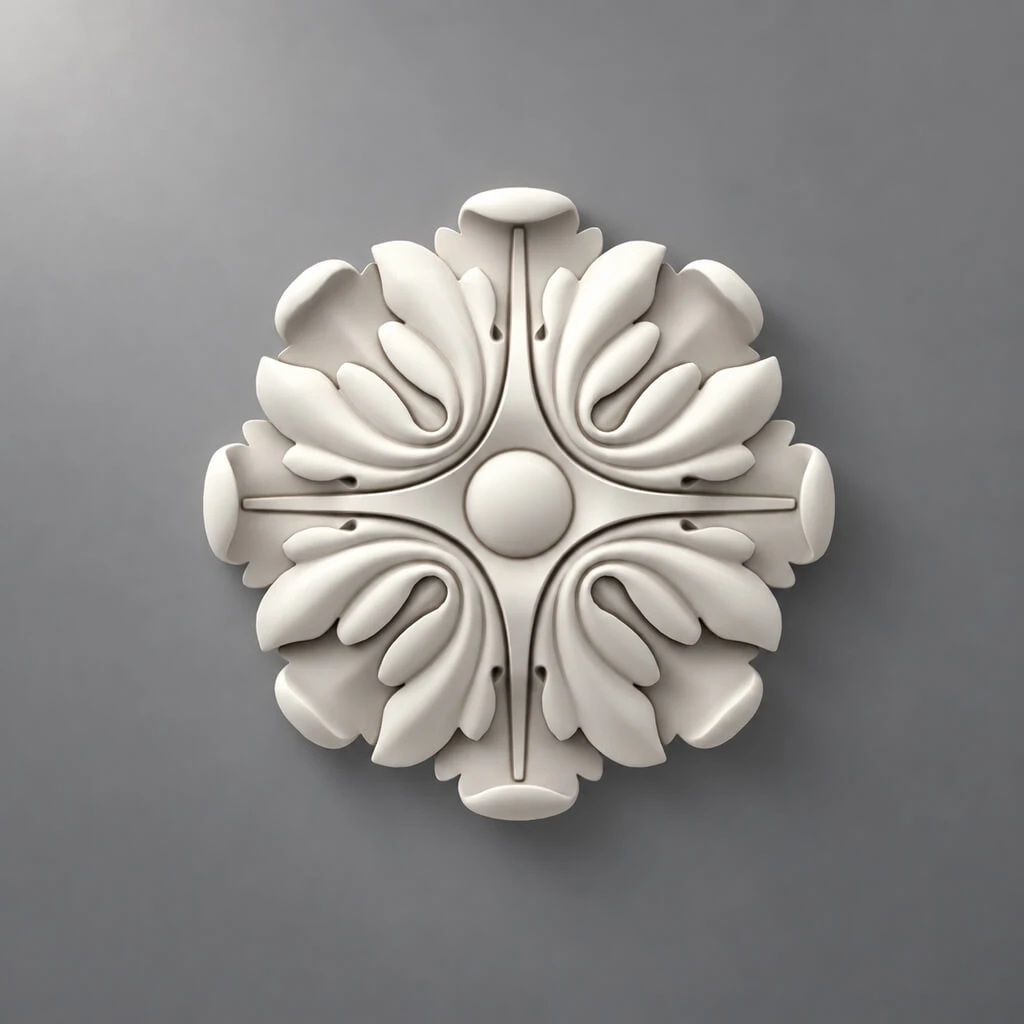
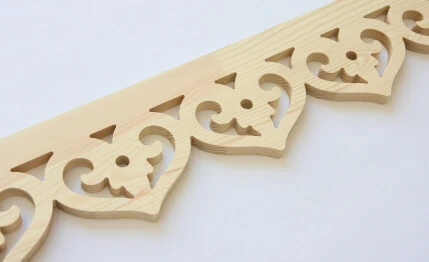
Wooden Wooden carved appliqués — is first and foremost a furniture scale. A thin detail (6–11 mm), compact dimensions (111–211 mm in length), natural material — all this makes the wooden garland organic on a furniture facade. It fits in, rather than "sticking" to the surface.
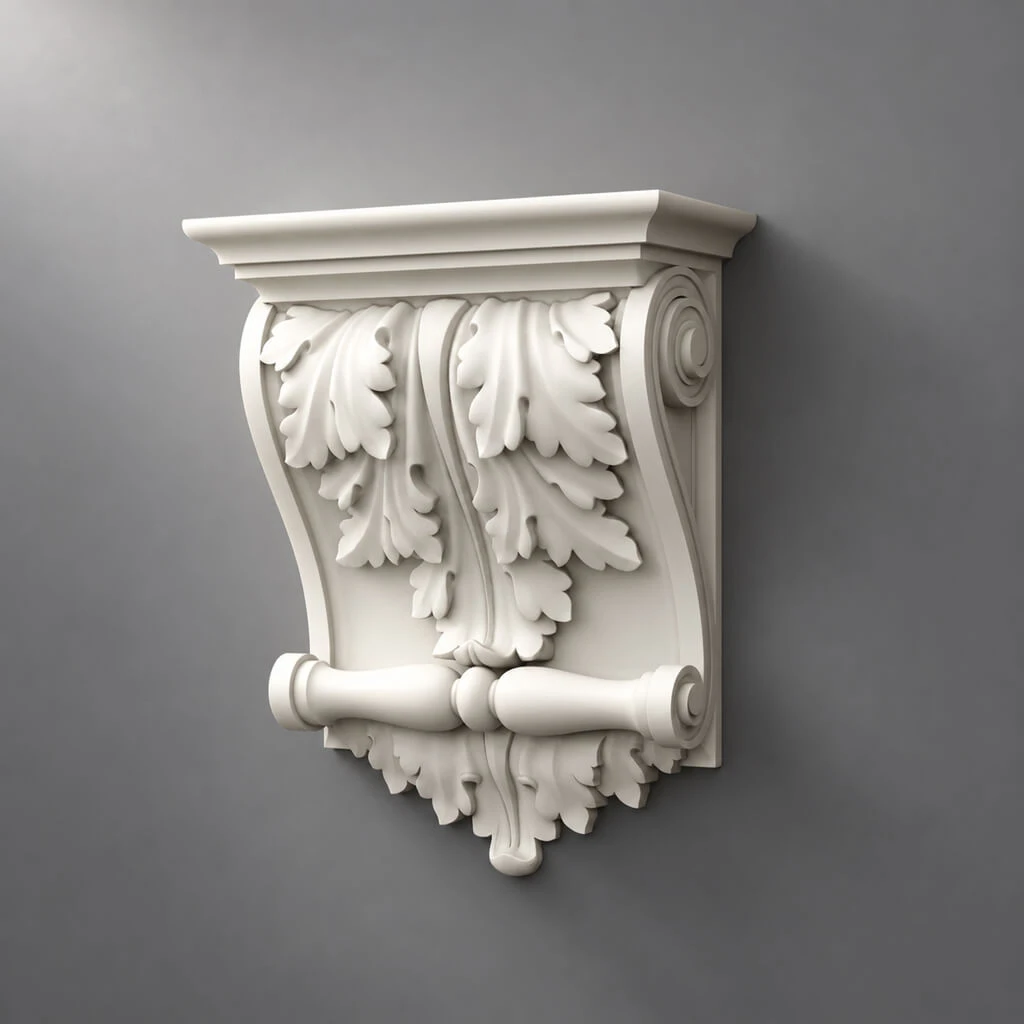
a polyurethane stucco garland NPU-043 — is larger (424–500 mm in length, 130–139 mm in height, 20 mm in thickness) and more expressive. This is already an interior scale: the overlay is intended for objects that occupy a significant part of the wall, or for very large format furniture — formal sideboards, decorative consoles in halls, display cabinets in living rooms.
Price: wooden garland N-079-1 — from 1,420 ₽, production time 5–10 days. Polyurethane NPU-043 — from 4,980 ₽, time 3–7 days. Both products are manufactured in Saint Petersburg and delivered throughout Russia.
How to choose the size of a garland for a facade
If there is one piece of advice that changes everything — it is about size. Buying an overlay "by eye" means taking a risk. Buying with measurements and a paper template means knowing the result in advance.
Facade width is the starting point. The length of the garland should be 30–50% of the facade width. For a door 400 mm wide — an overlay 120–200 mm long. For a facade 600 mm wide — an overlay 180–300 mm. A polyurethane overlay of 424 mm on a 600 mm facade is already 70% of the width, very much. It is suitable for facades 800 mm wide or more.
The height of the overlay in relation to the height of the facade. A garland 73 mm high on a door 700 mm high is about 10%, delicate and appropriate. A garland 130 mm high on the same door is 18%, already more noticeable. A garland 139 mm high on a door 400 mm high is 35%, very much for such a door.
Free space around the decor. This is perhaps the most underestimated parameter. The overlay should "breathe": from the edge of the part to the nearest molding, handle, hinge, or door edge — at least 25–40 mm. If the field around the garland is too small, the part looks cramped. If too large — lost. The optimum is when there is about 1.5–2 times more space around the overlay than the part itself occupies.
Distance to handles. A critical parameter that is forgotten in 80% of cases. The handle is at a certain height, and the overlay should not intersect with its position. If the handle is in the middle of the facade, the garland is placed above or below, not next to it. If the handle is at the top, the garland is in the lower third. Check this before ordering.
Distance to moldings. If the furniture facade already has a molding frame, the garland is placed inside this frame, on its field. The distance from the edge of the overlay to the molding: at least 20–30 mm.
The rule of free opening. The overlay on drawer fronts should not catch on the drawer or shelf below when pulled out. Check the distance between the lower edge of the overlay and the gap between drawers: at least 5–10 mm of clearance.
Practical tool: draw the garland at full size on thick paper. Cut out the template. Apply it to the facade. Assess the proportions, distance to the handle and moldings. This takes 7 minutes and eliminates an error that cannot be fixed without reordering.
How to choose material: beech, oak, or polyurethane
Three materials — three different application scenarios. Let's examine each in detail.
Beech
Beech is a dense, homogeneous, non-porous wood with a fine structure. Its main advantage for furniture decor is an ideal base for dense opaque enamel. Paint lays on beech evenly, without emphasizing pores and texture irregularities, without "raising the grain" when applying the first coat. The finished part in enamel looks monolithic — a uniform smooth surface without signs of a "composite" product.
Overlay N-079-1 from beech in the "for enamel" option — this is exactly that scenario: lamellas are glued without tone matching (it will still be hidden under opaque paint), the surface is ready for priming and applying the finish. "Standard" sanding — for workshops that will still sand it before painting. "Prestige" sanding — manual finishing, the part is ready for priming immediately.
When beech is the clear choice: the furniture is planned to be painted in a dense opaque color (white, gray, beige, blue, green — any enamel shade). If you want the overlay to visually "blend" with the facade surface, leaving only the relief — beech for enamel.
Oak
Oak is a wood with a pronounced character. Wide pores, a relief natural pattern, the individuality of each detail. That is why oak is chosen when it is important not to hide, but to emphasize the naturalness of the wood. Semi-transparent coatings — tinting, oil, varnish, stain — on oak give a lively, warm, incomparable result compared to painted surfaces.
The N-079-1 overlay made of oak in the "for tinting" option is selected by the tone and pattern of the lamellas — so that the semi-transparent coating does not "reveal" the joints. This option is recommended when the final finish will be semi-transparent: varnish, oil, water stain, stain, patina with texture revelation.
For restoring antique furniture made of solid oak, oak is the only correct choice: the new overlay must match the base material and accept the same coating identically. Adding a carved oak garland, covered with tinting of the same tone, to an oak chest of drawers is restoration with respect for the original material.
An additional argument: oak is one of the hardest and most durable deciduous trees used in furniture production. An oak overlay will last for decades and will not lose its relief.
Polyurethane
Polyurethane moldings — this is not a "cheap substitute." It is a separate material with its own advantages. For furniture tasks, polyurethane is relevant in several situations.
First: a large expressive relief is needed. The NPU-043 overlay with a thickness of 20 mm on a large furniture object creates the effect of real stucco — with deep shadows, a plastic ornament, and a monumental character. A wooden overlay of similar dimensions would be significantly heavier.
Second: painting in the color of the facade is needed. The polyurethane surface is neutral and accepts any paint without priming the structure. Enamel, patina, stone imitation, gilding — everything lays evenly, without surprises.
Third: the furniture will be placed in a damp area — kitchen, bathroom, hallway. Polyurethane does not delaminate or deform under short-term exposure to moisture. A wooden overlay in similar conditions requires more reliable sealing of the ends.
How to combine a garland with moldings on the facade
A garland in a system is always more convincing than a garland by itself. Let's look at specific combinations that work.
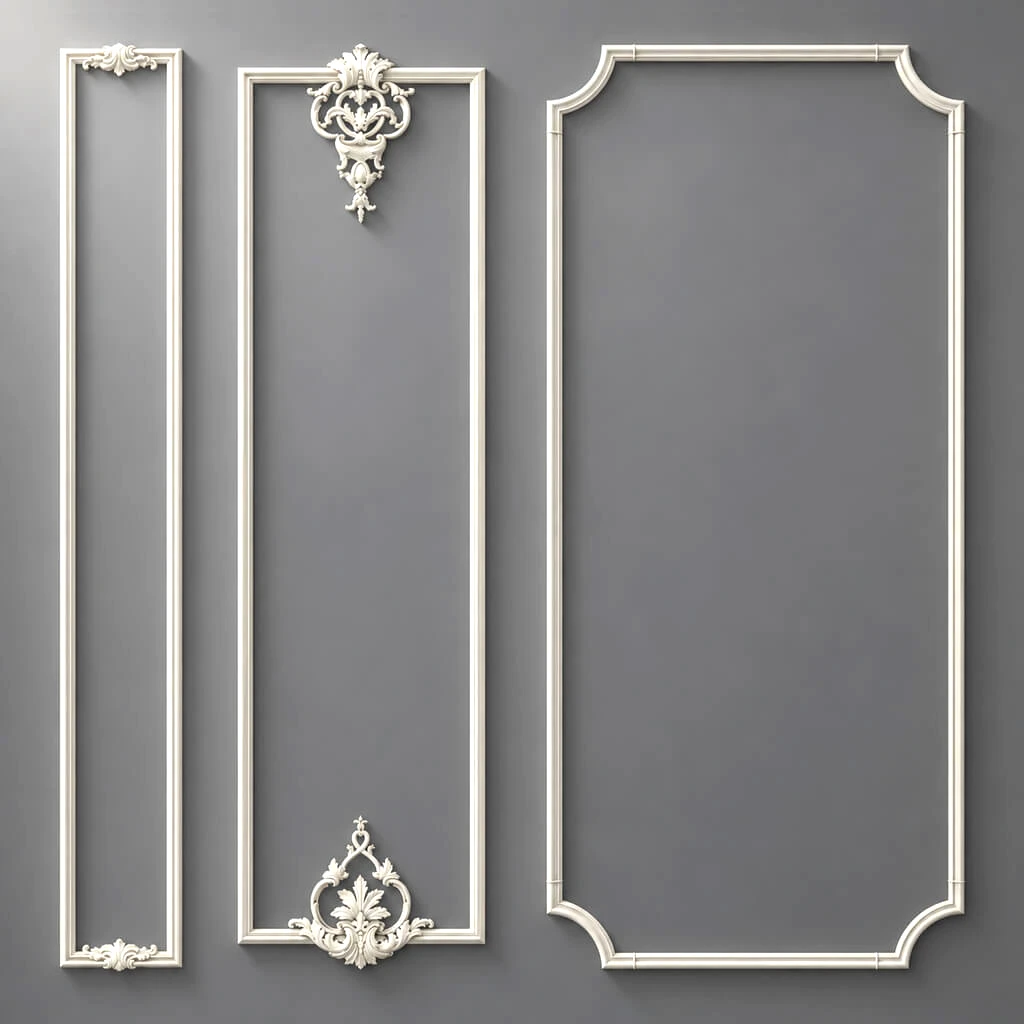
Garland inside a molding frame. The molding creates a rectangular field on the facade — and the garland occupies the center of this field. This is the most classic and most "correct" scheme: the frame sets the context, the garland — the meaning. Moldings made of polyurethane can be matched to wooden overlays in style and painted all in one color.
Garland above a panel. If the door has a recessed panel, the garland is placed above it — in the "above-panel" field, in a horizontal strip between the top molding of the frame and the end of the door.
Paired garlands on the left and right. Two identical or mirrored overlays on the sides of the central panel create a symmetrical framing. For sideboards, cabinets with wide doors, decorative panels — a very expressive technique.
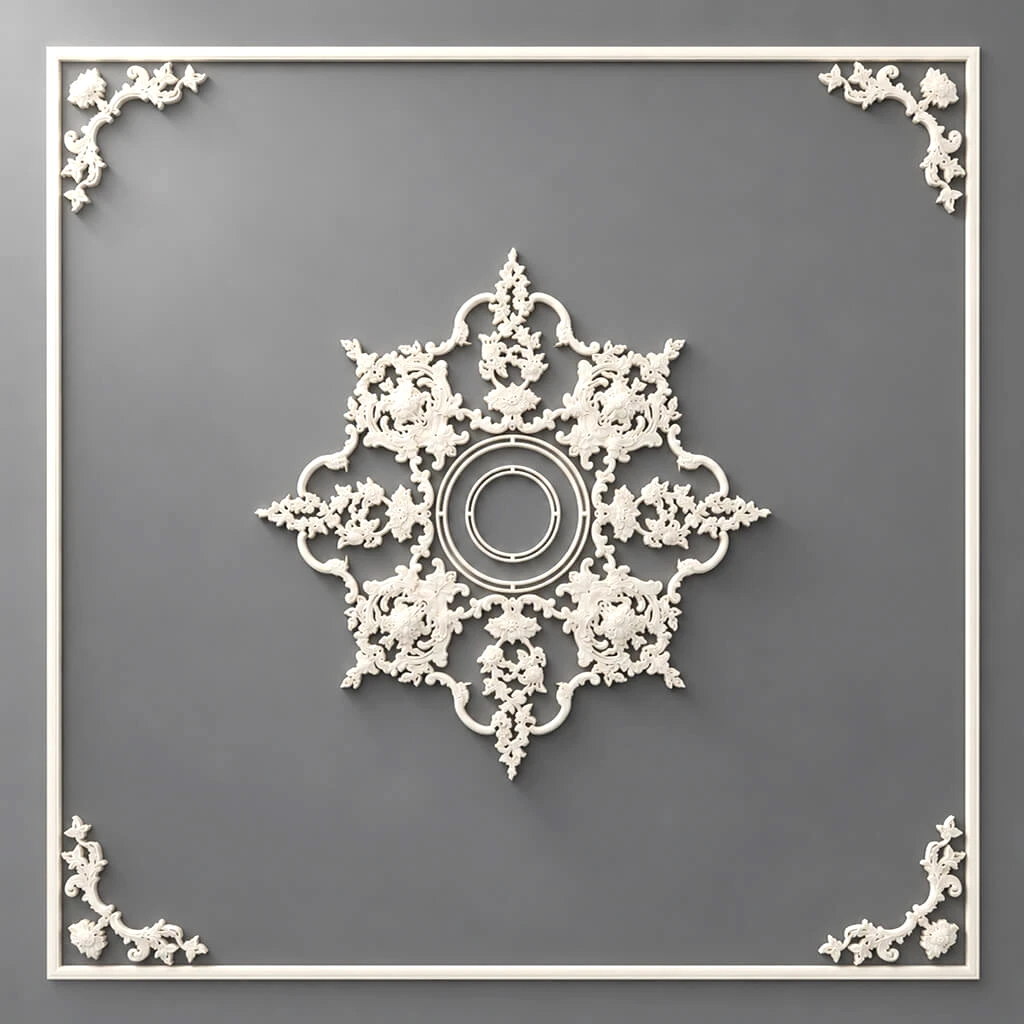
Central overlay + corner elements. A garland in the center + small corner overlays in the four corners of the molding frame — this is already a full-fledged classic decorative program for one facade. Decor for Molding on STAVROS allows you to select corner elements that are compatible in style with the main overlays.
Garland + cornice. For sideboards and cabinets with a cornice part: a garland on the door + a decorative cornice on top — this is the vertical "axis" of the object, which emphasizes its height.
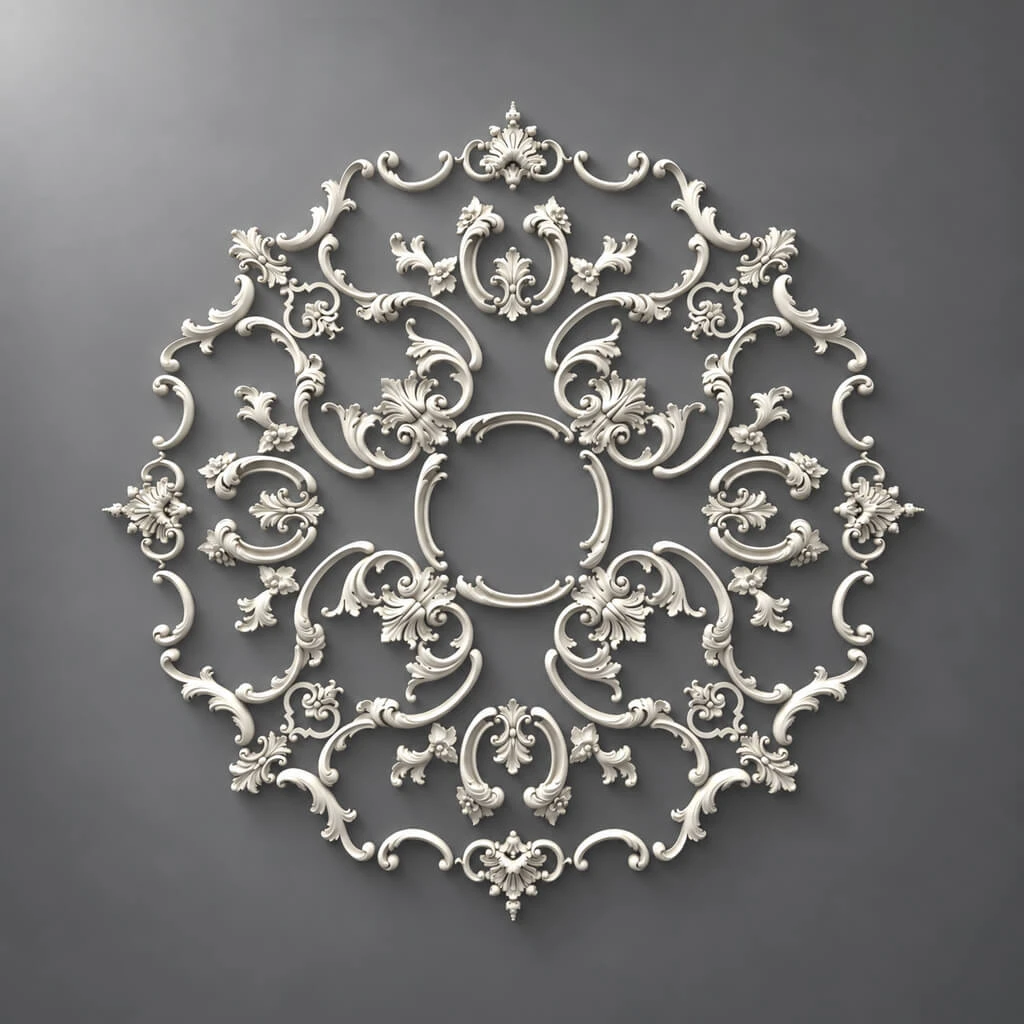
Garland + rosette. If the facade is wide — a rosette (symmetrical round ornamental element) in the center, paired garlands on the sides. Three elements on one facade create balance without overload.
Specifics of different furniture styles
Choosing a garland is also a choice of style. Different ornamental motifs speak different interior languages.
Classic. Dense, rich ornament: flower heads, curling stems, acanthus leaves, clusters of fruit. The relief is deep, details are well-defined. Classic furniture carries decor as a sign of belonging to a certain cultural tradition. For classic style, a more "tight" ornament is acceptable — when elements are closely adjacent to each other.
Neoclassical. A more restrained form: the same botanical language, but without overload. The garland as a single accent within a frame, with "air" around it. The cleaner the surroundings, the more expressive the detail. For neoclassical style, a wooden overlay painted in the color of the facade works well: only volume, without contrast.
Empire. Strictness, symmetry, military and natural symbols. Laurel wreaths, palm branches, strict horizontal motifs. Empire decor must be geometrically precise: no "fluidity" of Baroque curls.
Provence. Delicate floral motifs, lavender, roses, vines. A wooden carved overlay with a floral ornament is a suitable choice for furniture in the Provence or French country style. Shade: ivory or "old white", the detail is slightly "aged" with patina in the recesses.
Baroque. Maximum expressiveness: complex, multi-level ornaments, many details, deep relief, a sense of richness. For Baroque, overlays with the most saturated pattern are needed — and, as a rule, polyurethane ones, because a wooden detail of the required size would be too heavy.
Mistakes when choosing a garland for furniture
Let's list real mistakes that occur in projects — from budget to luxury.
-
Buying an overlay without measuring the facade. This is the first and most common mistake. A beautiful detail in the catalog is not a guarantee that it will fit into a specific facade.
-
Not considering the door thickness. A 20 mm overlay on a thin 16 mm MDF door looks disproportionate. The thickness of the relief should be correlated with the thickness of the base.
-
Choosing too large decor for a small facade. A garland of 424 mm on a door of 500 mm is 85% of the width, which is clearly overloaded.
-
Taking a small overlay for a large sideboard. A detail of 111 mm on a double-door sideboard 1200 mm wide will be lost.
-
Not considering handles, hinges, and drawer opening. An overlay that interferes with hardware operation is a problem that will have to be fixed by dismantling.
-
Not deciding in advance what will be done with the finish. Beech under tinting will give an ugly result. Oak under dense enamel too. The decision about finishing is made before purchase.
-
Choosing oak under dense white enamel. The porous texture of oak under dense enamel 'rises' — the paint will not lay evenly without multi-layer preparation. For white enamel, take beech.
-
Not considering the symmetry of the pattern. An asymmetrical overlay placed alone is half an idea. A mirrored pair is needed.
-
Mixing different ornaments without a unified concept. Three different garlands with different motifs on three doors of one cabinet is chaos, not decor.
-
Gluing without trial fitting and marking. The glue sets quickly. An overlay glued crookedly means dismantling with the risk of damaging the surface.
What to buy together with a garland for the facade
A system is always more convincing than a single detail. What makes sense to consider in parallel?
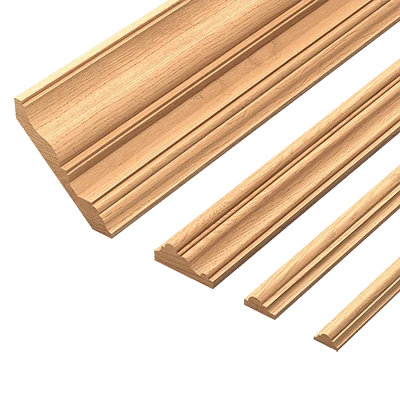
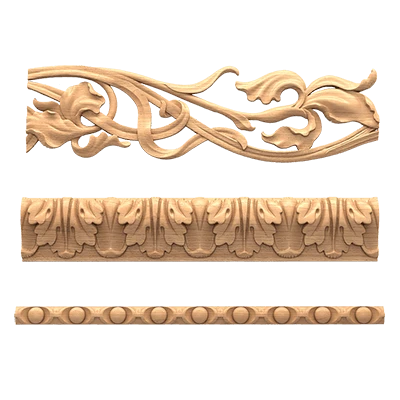
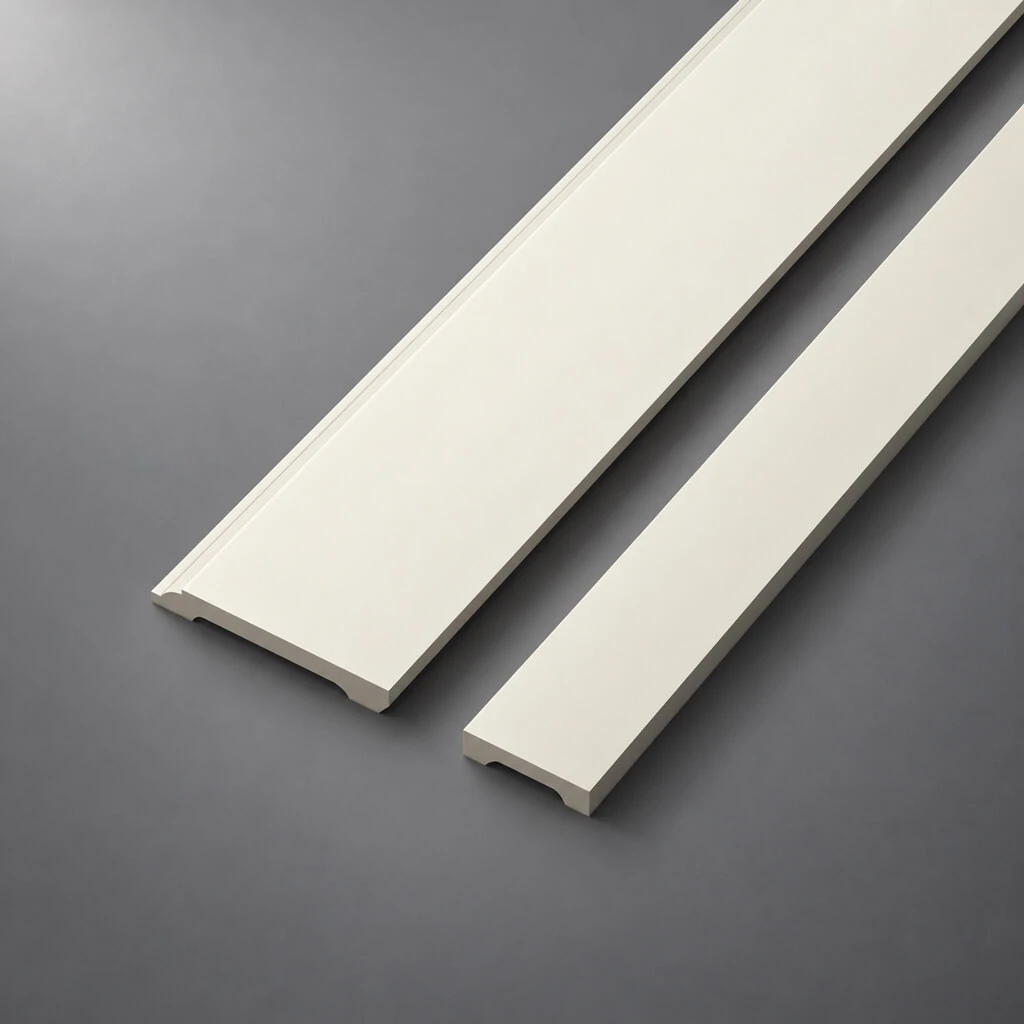
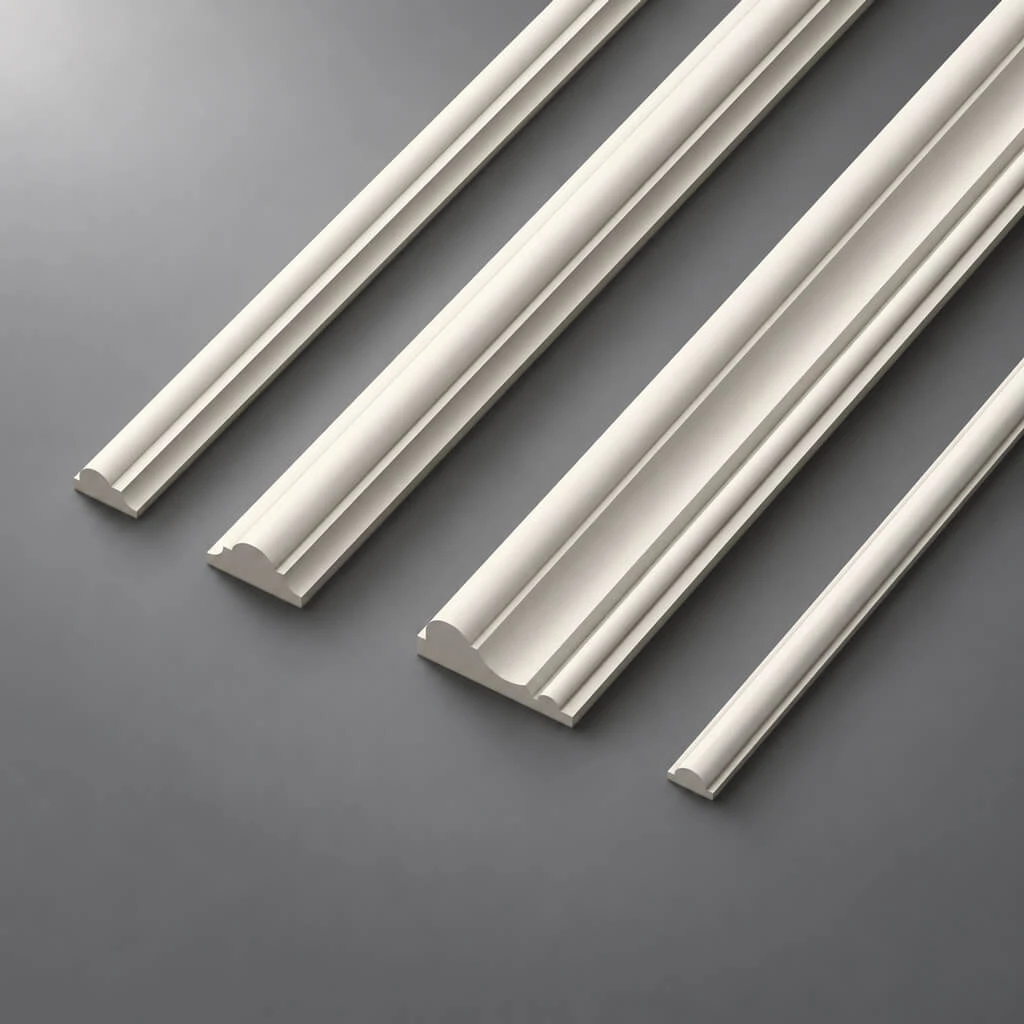
Furniture moldings. They create a frame around the garland, setting a decorative field on the facade. From the same program as the overlay — in one material and under one finish. Furniture moldings can be thin profiled strips made of wood or polyurethane.
Corner elements. Small decorative inserts at the corner points of the frame. Together with moldings and the garland, they create a complete classic decorative program for one facade.
Center rosettes. A symmetrical round element in the center + a pair of vertical garlands on the sides — these are three elements that create a complete decorative scheme on a wide facade of a sideboard or cabinet.
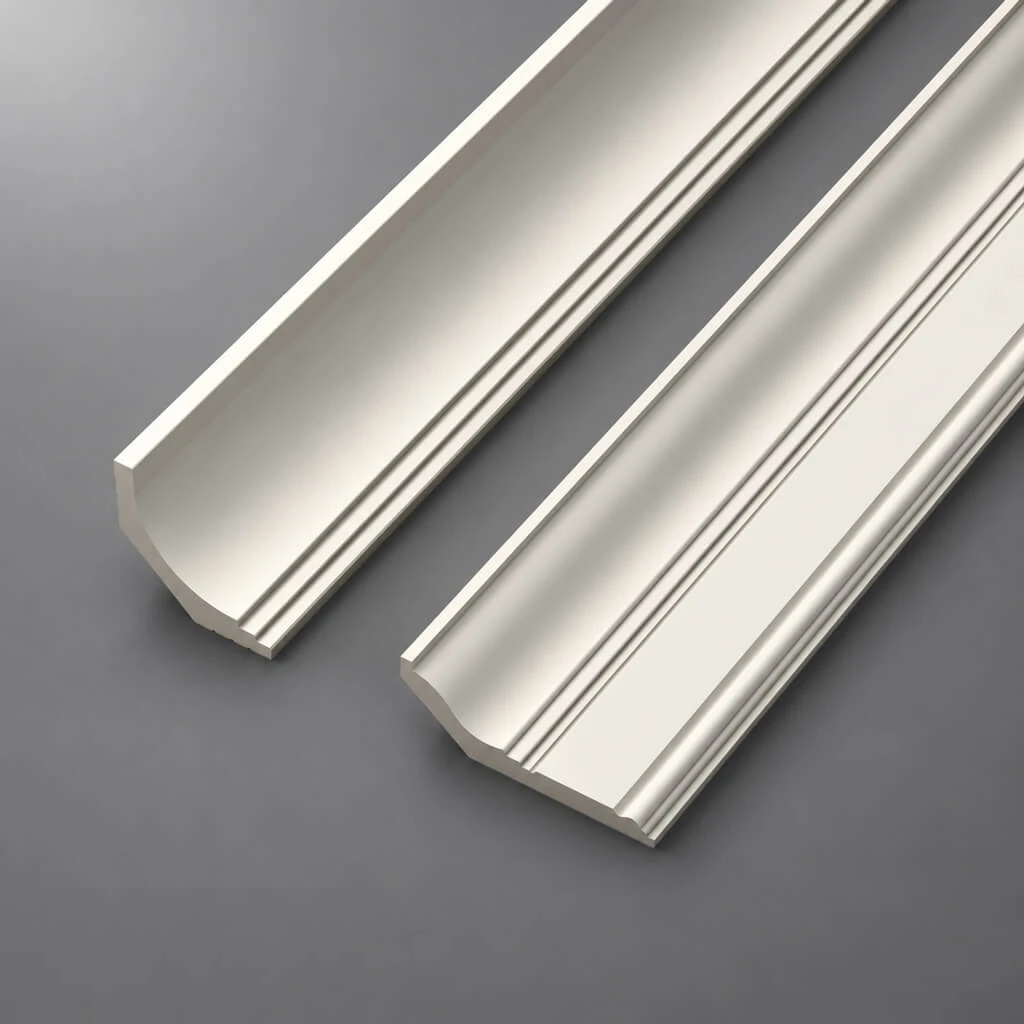
Cornices and baseboards. For furniture with a cornice part: a decorative cornice from the same program as the overlays completes the object from above and creates the feeling of an architectural piece.
Wooden overlays of different scales. In the category wooden decorative overlays on STAVROS — more than 400 models: central, corner, straight, curved, symmetrical and asymmetrical. This allows building a cohesive system where the garland is the main accent, and the other overlays are the supporting ensemble.
Glue. For wooden overlays on furniture — carpenter's PVA or assembly glue with good adhesion to MDF and solid wood. For polyurethane overlays — assembly glue on a hybrid polymer base (Tytan, KUDO, Soudal).
Installation of a decorative garland on a furniture facade
The technology for installing an overlay on furniture is simple but requires accuracy. Here is a working sequence.
Step 1 — measurement and marking. Find the central axis of the facade (horizontal and vertical). Mark the position of the overlay with a pencil — mark the four corners. Check the distance to the handle, moldings, edges of the door.
Step 2 — dry fit. Attach the overlay to the facade without glue. Make sure the position is correct, the ornament pattern is oriented properly, and the part does not interfere with opening. Only then proceed to glue.
Step 3 — surface preparation. The facade must be clean, dry, free of grease and dust. Lightly sand MDF with a paint coating at the attachment point — this will improve adhesion.
Step 4 — applying glue. Apply glue to the overlay — in a zigzag pattern for wooden parts, in dots or along the contour for polyurethane ones. For small wooden overlays, PVA is convenient: apply to the part, let it sit for 1–2 minutes until slightly dry, then attach to the facade.
Step 5 — fixation. Press the part firmly for 10–15 seconds. For wooden overlays 6–8 mm thick, press evenly without point pressure: a thin part may crack under strong pressure at one point. Use a wide pad made of dense fabric or cork.
Step 6 — final drying. The glue reaches full strength in 12–24 hours. During this time, it is better not to disturb the overlay. If necessary, secure with masking tape.
Step 7 — finishing. Install the overlay before final painting: the paint "integrates" it into the surface. If the overlay is mounted on an already painted facade, putty the joints with a thin layer of finishing putty, let it dry, and carefully paint to match.
Why it is convenient to choose furniture garlands at STAVROS
When it comes to garlands for furniture facades, the supplier's key issue is the breadth of choice and quality guarantee. STAVROS interior decor offers both parameters.
There are over 545 models of wooden decorative overlays in the STAVROS catalog. This impressive range covers almost any furniture task: central and corner overlays, horizontal and vertical, symmetrical and asymmetrical, with mirror L and R options for paired compositions. Filtering by shapes and ornaments — including a separate "Garlands" section — allows you to quickly find the desired type of part.
In the polyurethane program — PU overlays for larger furniture and interior tasks, moldings, cornices, decor for moldings — everything to create a system where the garland works as part of a unified classical program.
Production is in Saint Petersburg. Wooden products are made from certified beech and oak with hand finishing. Polyurethane ones are made from high-density material with a clear relief. Order from 1 piece, Contact us to confirm shipping to your destination. via CDEK, production time is 3–10 days depending on the item.
For serial furniture manufacturers, STAVROS offers the possibility of volume purchases. For designers and decorators — selection of elements in a unified system according to the project's task. For private customers — a simple ordering process and reliable delivery.
FAQ: answers to popular questions about garlands for furniture facades
What is a garland for a furniture facade?
This is a decorative overlay with a floral, botanical, or classical ornament that is installed on the surface of a furniture facade — a cabinet, chest of drawers, sideboard, nightstand, or kitchen set. It adds relief, character, and visual value to the furniture.
Where is it best to use a decorative garland on furniture?
On the central part of the door as the main accent, on the sides of the facade as a paired element, above the drawers of a chest of drawers as a horizontal divider. It is also appropriate on sideboards, consoles, display cabinets, and decorative areas of the kitchen.
Which garland to choose for a wardrobe?
For a standard sliding or hinged wardrobe with facades 350–600 mm wide — wooden overlay N-079-1 in size 166 × 73 × 9 mm or 211 × 93 × 11 mm. Garland length — 30–50% of the facade width.
Which overlay is better for a chest of drawers — wooden or polyurethane?
For most chests of drawers — wooden. It is proportionate to the furniture scale. Polyurethane NPU-043 is suitable for large decorative chests of drawers or consoles in formal areas.
Can a garland be used on a kitchen facade?
Yes, in accent areas: buffet section, decorative island, display cabinet, tall cabinet. Important: the overlay must be reliably coated with a moisture-resistant finish.
What to choose under enamel — beech, oak, or polyurethane?
Under dense opaque enamel — beech in the "under enamel" version or polyurethane. Beech is not porous, the paint will lay evenly. Polyurethane behaves similarly under paint.
What to choose under tinting?
Only oak in the "under tinting" version. Its pronounced natural texture beautifully shows through a translucent coating: varnish, oil, stain, aquacolor.
How to choose the size of a garland for a facade?
The overlay length is 30–50% of the facade width. The height is no more than 25–30% of the facade height. The distance from the edge of the overlay to the handle, molding, or door edge is at least 25–40 mm. Make a paper template and attach it to the facade before ordering.
Can a garland be combined with furniture moldings?
Not only can it — it should be. The molding frame creates a field for the garland, and the garland inside the frame gives meaning to that field. This is a classic decorative scheme that has been used for several centuries.
How to glue a decorative garland onto a furniture facade?
Mark the position, try it without glue, apply woodworking PVA or construction adhesive to the part, press evenly and hold for 10–15 seconds. Allow full drying for 12–24 hours before applying the final coating.
Decorative garland for furniture facade — this is a detail that changes the perception of the entire object. Properly chosen in size, material, and finish, it turns a mass-produced cabinet into an authorial piece, and an ordinary chest of drawers into an object with character and history. For small facades and delicate furniture tasks — a wooden carved overlay made of beech or oak. For large formal objects — a stucco garland made of polyurethane. In the STAVROS catalog, you can choose both — with the right size, proper finish, in a unified stylistic program.
STAVROS company produces stucco и Carved Decor in St. Petersburg since 2002. During this time, STAVROS has participated in the restoration of the Konstantinovsky Palace, the Hermitage, the Alexander Palace, and other cultural heritage sites. Today, STAVROS products are available from 1 piece with Contact us to confirm shipping to your destination. — for designers, furniture makers, decorators, and anyone who wants to make furniture and interiors truly expressive.