Article Contents:
- What counts as a shaped wooden leg
- Shaped, turned, carved and geometric: how these names relate
- How to read the silhouette: from the top to the base
- First the volume of the body, then the character of the support
- Why the same height does not mean the same visual weight
- When to choose a turned shaped profile
- When a carved shaped leg is needed
- A geometric shaped leg can do without ornament
- How to choose a leg from a photo and what you can't see in it
- Dimensions A/B/C are read from the drawing of a specific model
- Support height and visible profile length are different parameters
- The top plate must fit the cabinet body
- How the choice changes for different types of furniture
- Dresser: the profile should be visible under the lower front
- Nightstand: a small detail noticeably changes the proportion
- Console: elongation and side view matter
- Table: check the silhouette together with the apron
- Sofa and armchair: the visible profile is tied to the seating position
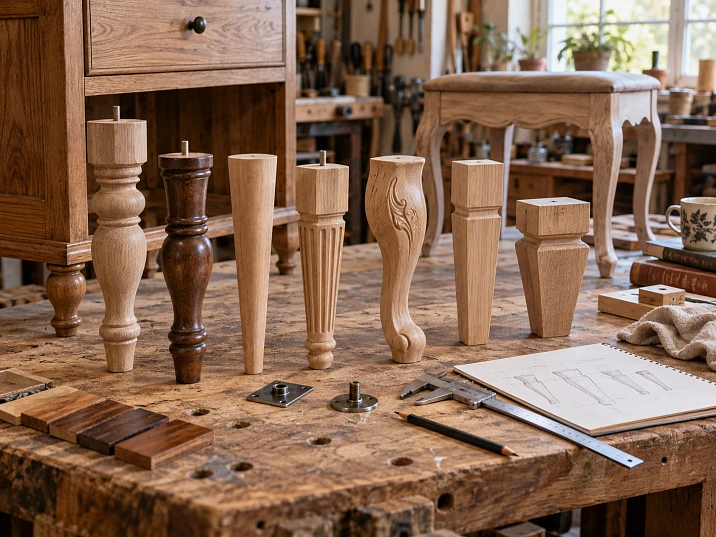
Two wooden legs can be the same height yet have a completely different effect on the silhouette of a piece of furniture. A support with a narrow neck and a small base can make the lower part look visually lighter. A wide faceted shape adds volume. A curved carved leg takes the contour beyond the vertical axis and changes how the corner of the cabinet is perceived. It is difficult to choose between them from a single photo without dimensions.
Shaped wooden legs are selected for a specific cabinet. First, the desired character of the silhouette is determined, then the height, cross-sectional dimensions, direction of the shape and mounting part are checked. The material and finish are agreed before ordering the set: after painting, the relief, facets and transitions may look different from the unpainted sample.
What counts as a shaped wooden leg
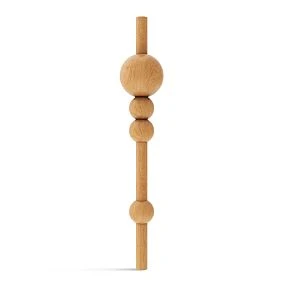
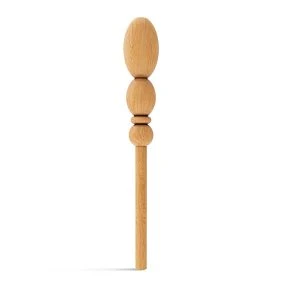
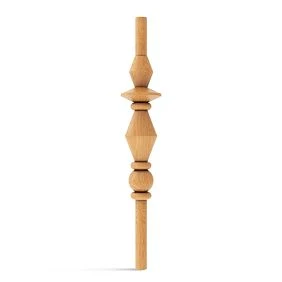
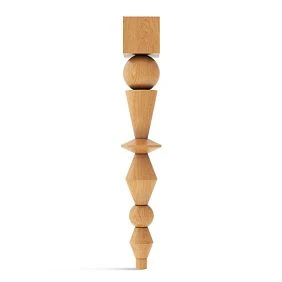
For practical selection, a shaped leg can be defined as a support whose form is created by narrowings, widenings, curves, radii, facets or decorative relief. This is a characteristic of appearance, not the name of a single manufacturing technology.
A turned leg with several diameter transitions can be shaped. A faceted support without ornament is also shaped. Carving adds surface pattern, but does not always significantly change the overall contour. Therefore, looking for a shaped leg only among carved models means narrowing the choice in advance.
The first useful question is what exactly the furniture requires: a smooth taper, a noticeable curve, a stepped profile, a wide lower volume, or a pronounced ornament? Such an answer helps choose the type of shape and move on to the appropriate group of models.




Shaped, turned, carved and geometric: how these names are related
When buying, it is important to distinguish the overall silhouette, the surface pattern and the method of forming the part. These features can be combined in one model.
| Name | What determines the character of the shape | What to look at when selecting |
|---|---|---|
| Turned leg | Profile of revolution: tapers, widenings, rolls, necks | Diameters by height and smoothness of transitions |
| Carved leg | Ornament and relief on the surface | The depth of the carving, its direction, and its connection to the overall contour |
| Geometric leg | Planes, facets, taper, and the combination of simple volumes | Front and side view, the slope of the facets, and the position of the base |
| Combined leg | Several techniques in a single part | How decorative and smooth areas transition into one another |
| Shaped leg | General description of an expressive, changing form | The silhouette as a whole and its correspondence to the cabinet |
The groups should not be considered entirely mutually exclusive. For example, a round cone can be produced by turning and at the same time have a simple geometric shape. A square upper part also does not prevent the main part of the leg from being turned. The category name helps to begin the search, while the final choice is made based on the geometry of the specific product.
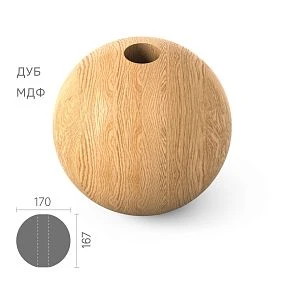
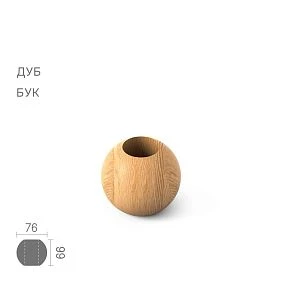
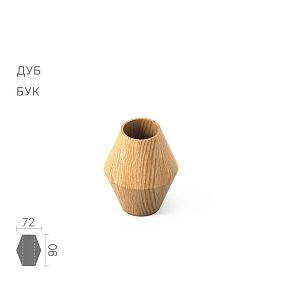
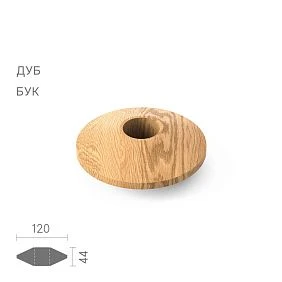
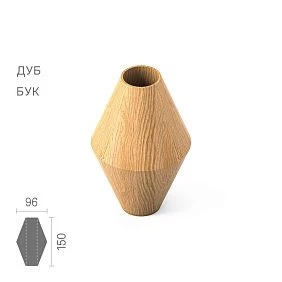
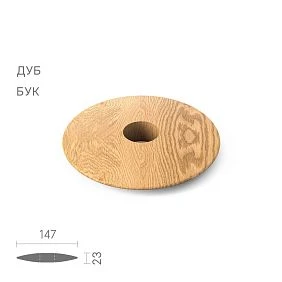
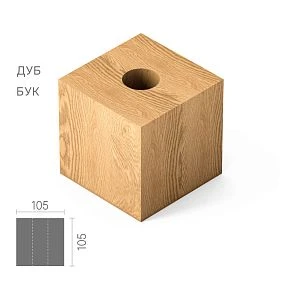
Our factory also produces:
How to read the silhouette: from the upper part to the base
Examine the leg sequentially from top to bottom. The upper part shows how the support emerges from the cabinet. The taper beneath it determines how abrupt the transition will be from the wide furniture to the thinner vertical. The middle part sets the main character, and the lower part completes the profile at the floor.
It is useful to note three zones: the widest point, the narrowest section, and the position of the base relative to the upper part. On a straight symmetrical support, they are arranged around a single axis. On a curved or slanted shape, the lower part may be offset, and this already needs to be shown in the side view and on the plan.
Then mentally remove the small ornament. If the silhouette remains suitable for the furniture, you can evaluate the carving and texture. If, without the ornament, the shape seems too heavy or elongated, beautiful leaves and flutes are unlikely to fix the proportion.
This order helps avoid confusing interest in an individual detail with its suitability for the project. In the product card, the leg is shown close up; in the finished furniture, part of the profile may be hidden under the cabinet or end up in shadow.
Get Consultation
First the volume of the cabinet, then the character of the support
To choose, you need at least a front view and a side view of the furniture with the main dimensions. On them, mark the bottom line of the cabinet, the apron, if there is one, the position of the fronts, and the intended attachment points. Then you can see which part of the leg will actually remain exposed.
A tall cabinet with a large cornice and a heavy lower band requires a different comparison than a compact sideboard with smooth fronts. At the same time, you cannot designate a single correct leg based on one feature. The width of the furniture, the depth, the height of the cabinet, the exposed length of the supports, and the distance between them all matter at once.
On a small sideboard, a wide shaped leg may take up too large a share of the visible volume. On a large buffet, a thin support sometimes looks accidental, especially if its tapering almost disappears under the protruding base of the cabinet. These are questions of composition. The structural acceptability of the chosen shape is checked separately.
For a first comparison, two or three different silhouettes are enough. Place them under the same cabinet at the same scale and with the same position of the upper mounting part. This makes it easier to see the effect of the profile without being distracted by differences between photos and angles.
Why the same height does not mean the same visual weight
Visual weight is the impression of the support's volume. It is influenced not only by the maximum width, but also by where that width is located, how long the wide section is maintained, and how strongly the profile tapers.
| Silhouette feature | What changes in perception | What to check on the body |
|---|---|---|
| Wide upper part and noticeable tapering toward the bottom | Volume is concentrated at the body | Whether the entire expressive transition is hidden under the lower band |
| Thickening closer to the floor | The lower part becomes more prominent | Whether the scale of the base matches the overall look of the furniture |
| Long narrow neck | A pronounced pause appears between the volumes | Does the support look excessively thin in the open area |
| Wide face at the front and shallow depth | The front view may appear more massive than the side view | Are both views of the furniture consistent |
| Protruding carving | The contour and shadows become more active | Does the relief interfere with adjacent parts and use |
For a conditional comparison, you can take several supports of the same design height and color their silhouettes identically on the drawing. This allows you to see the difference in the distribution of volume. The black contour does not replace checking the material and finish, but it helps separate the form from the attractive texture in the photograph.
You should not derive a universal proportion like "the leg width is a certain percentage of the dresser width." Two cabinets of the same width may differ in height, depth, fronts, and lower band. A rule that ignores these parameters produces too rough a result.
When to choose a turned shaped profile
Turned furniture legs they are considered when a silhouette with round sections and gradual diameter transitions is needed. A smooth taper, a bead, and a narrow neck distribute volume differently even at similar dimensions.
Compare more than just the maximum diameter. What matters is which part of the profile will be visible after installation, where the thinnest section is located, and how the lower end meets the glide. A pronounced thickening hidden behind the cabinet no longer works as the intended accent.
A turned profile does not mean universal suitability for any load. For example, for the turned leg MN-145 the manufacturer separately specifies use under light loads. Therefore, external slenderness or a familiar turned shape does not replace information about the specific product and verification of the furniture joint.
When a carved shaped leg is needed
У carved furniture legs the contour and ornament are assessed separately. The curve may define the entire character of the support, while the carving only emphasizes it. In another model, the overall volume remains relatively simple, but an active surface makes the leg noticeable.
Before choosing, determine where the front side is and how the side surfaces are finished. For an open console or furniture standing in the middle of a room, this is especially important. A leg with an expressive front may look different when viewed from the end of the cabinet.
Directional ornament and asymmetrical curvature must be laid out according to the corners of the furniture. If a model is produced in left and right versions, they are accounted for as separate item codes. A single rotation of the part does not always create the required mirrored arrangement: the direction of the carving, the overall dimensions, and the mounting orientation all change at once.
The depth of the relief is also taken into account when choosing a finish. Enamel, tinting, and patina reveal recesses and protrusions differently. This is a reason to check a sample on the actual form before approving the set.
A geometric shaped leg can do without ornament
geometric furniture legs they make it possible to build an expressive support on facets, beveled planes, taper, and section transitions. Such a silhouette does not require a carved floral pattern.
The main check is the front view together with the side view. A wide frontal plane can be combined with a small depth; an asymmetrical facet changes the impression when rotated. If you look at only one angle, it is easy to mistake a three-dimensional form for a flat one or to misjudge the projection of the base.
When selecting, it is important to distinguish the slope of the leg's surface itself from the slope of the entire support during installation. A beveled facet does not yet mean that the part should be installed at an angle. The orientation relative to the body and the floor is determined by the design of the specific model and the fastening unit.
The faceted form is also not limited to a single interior style. It is more useful to compare how it continues the lines of the body: supports a strict vertical, reinforces a corner, or creates a deliberate contrast with a rounded facade.
How to choose a leg from a photograph and what is not visible in it
A photograph helps evaluate the character of the profile, the ornament, and the surface. But the scale of the image is usually not related to the scale of the furniture. A short support shown large can look like a tall leg, and a wide model can appear slender because of the angle.
For a meaningful comparison, three views are needed: the front, the side view, and the upper mounting part. From the front, the connection with the facade is assessed; from the side, the curvature and protrusions; from the top, the possibility of placing the part under the body. Dimensions are taken from the product page and the drawing, not calculated from the proportions of the photograph.
They carefully examine what lies outside the frame: the back side, the top surface, and the underside for the glide. If these views are missing, they are requested before the model is approved. A similar outer contour does not confirm an identical fit.
Photographs of different finishes are also compared with caution. Dark tinting, light enamel, and directional lighting change the visibility of boundaries and relief. It is useful first to compare the pure geometry at a single scale, then return to color and texture.
Dimensions A/B/C are read from the drawing of the specific model
Letter designations help link the size table to the image, but they are not a universal key for the entire catalog. One cannot assume in advance that the letter B in any product card denotes the top platform, and C necessarily denotes depth.
The difference is visible on real STAVROS items:
| Model | How the parameters are recorded in the product card | Example of the specified version, mm |
|---|---|---|
| Turned leg MN-145 | A × B | 150 × 44 |
| Carved leg MN-044 | A × B × D | 160 × 65 × 41 |
| Geometric leg MN-186 | A × B × C × F | 160 × 70 × 70 × 60 |
These are examples of how dimensions are recorded, not a ready-made list of interchangeable supports. They show why any set of parameters cannot be reduced to a single number "height" or mechanically transferred from a neighboring product card.
For the project, the full height, maximum cross-sectional dimensions, dimensions of the upper mounting section, and the position of the lower base are specified separately. If necessary, the minimum cross-section and the offset of the support area are clarified. Each dimension must correspond to a specific location on the drawing.
Even a single item code can be offered in several sizes. For example, MN-145 has a range of versions in its product card. Therefore, recording a model without a selected size is insufficient for purchasing or reordering.
Do not scale the product photo arbitrarily. In the MN-044 card, the 160 × 65 × 41 and 200 × 81 × 51 mm versions have different cross-sectional dimensions. For MN-145, the 150 × 44 and 200 × 44 mm variants keep the second parameter unchanged. Therefore, use the dimensions of the specific version for the layout: increasing one dimension does not mean the others increase equally. A silhouette stretched on screen may simply not exist among the available versions.
Support height and visible profile length are different parameters
The full height of the leg does not always coincide with the part visible under the furniture. The upper section may extend behind the apron or the lower rail of the cabinet. The mounting plate, glide, and insertion depth also affect the position of the parts relative to the floor.
Two results matter for proportion: the final height of the furniture and the exposed part of the shaped profile. Suppose that in a hypothetical project a vertical leg is 180 mm high, and the lower rail of the cabinet covers 30 mm of its length at the top. In side view, 150 mm of visible profile remains. This is an example of visual overlap, not a universal formula for clearance or installation.
If a beautiful bead or transition falls within the hidden zone, the leg may look completely different after installation than it does in the product card. Sometimes it is better to choose a different profile of the same design height than to increase the entire piece of furniture just to show off a separate element.
For angled installation, the height and position of the base are checked against the assembly drawing. The catalog length of the part does not automatically become the vertical distance from the floor to the cabinet.
The top platform must fit the cabinet
After the preliminary selection of the silhouette, check the upper part of the support. The actual flat contact area, the mounting location, and the position relative to the cabinet edge are important. The maximum width of the decorative section below does not show whether there is enough room for the selected mounting plate.
In the bottom view, the leg contour, lower panel, rail or frame, and fasteners are aligned. Then it is checked whether the fastener falls on an unsuitable area of the body and whether the relief interferes with a tight fit. The offset of the support from the corner changes both the joint and the appearance of the furniture at the same time, so it is fixed on the drawing.
furniture leg hardware are selected for this specific joint. The stud, threaded insert, mounting plate and base glide serve different purposes and do not replace one another. The presence of a similar thread does not yet confirm the compatibility of the entire assembly.
If the model does not fit the designated mounting area, they return to selecting a support or revise the joint. Cutting off the upper part of a complex profile without verifying that such processing is permissible is a bad way to make a part fit.
How the choice changes for different types of furniture
The application category helps to compile an initial list of models. It does not confirm compatibility with any body within this category: the final decision depends on the dimensions, construction and conditions of use of the specific furniture.
Chest of drawers: the profile should read clearly under the lower facade
Choosing legs for a dresser, wardrobe, and nightstand, they look at the entire facade with drawers. A large thickening of the support can support a wide lower band or, conversely, make the bottom excessively heavy. A narrow profile is sometimes lost under a massive lower panel.
The position of the outer supports is checked together with the opening of the lower drawer or door. The protruding relief and the offset base must remain within the agreed geometry. The final height of the chest of drawers is determined by the assembly, not by an individual leg.
Cabinet: a small part noticeably changes the proportion
On a compact body, the leg occupies a large share of the overall silhouette. Therefore, the difference between a wide faceted support and a thin turned one is especially noticeable. It is useful to compare two options under the same body and with the same open clearance.
For a bedside table, the required height of the top surface is additionally checked. If a striking profile makes the furniture inconvenient in height, another version or model is sought. The decorative shape should not be approved before the main overall dimensions of the product.
Console: elongation and side view are important
console legs often remain open over a large part of the height. Here the length of the neck, the transitions of the profile and the change in cross-section toward the floor are clearly visible. A shape that works well for a low cabinet may give a completely different impression in an elongated version.
For a shallow body, the side view is especially important: a strong bend of the support can extend far beyond its outline. The console structure, the connections between the supports and the intended wall mounting, if required by the project, are checked separately from the artistic selection.
Table: the silhouette is checked together with the apron
When selecting Legs for tables, the final height of the tabletop, the apron and the legroom for a seated person are taken into account. The upper thickening or protruding carving should not be assessed only from the outside: they also take up space on the seating side.
For a symmetrical project, a coordinated set of supports is selected. The possibility of using a specific model with the required tabletop is determined by the table structure, not by a single match in height.
Sofa and armchair: the visible profile is linked to seating
When choosing sofa legs и chair legs first the existing frame and mounting points are examined. Upholstery can hide the top of the leg and change the visible boundary of the body.
The height of the supports affects the clearance and the position of the seat. Therefore, replacing them with a taller shaped option is checked on the finished product with its cushions and seating structure. A beautiful silhouette does not make a model universal for any upholstered furniture.
Beech or oak is chosen together with the future finish
If the shaped legs are to be painted in a single opaque color together with the cabinet, the available beech version and a suitable preparation system are considered. For oak, a finish with visible texture is often chosen: tinting, oil or clear lacquer. These are common scenarios, not a rule prohibiting painting oak or leaving beech under a clear finish.
On a shaped surface, the texture is perceived together with the direction of the profile. The wood grain can emphasize elongation, and on a curved section it may look different than on a straight block. For a project with a natural finish, this is checked on the actual part.
When choosing solid wood legs for furniture, the material is fixed for each item in the set. The same article number with a different wood species is a different version, which may require re-checking the finish. The catalog section name also does not replace the "Material" line in the product card.
In the section "Quality of solid wood products" you can clarify the preparation principles and manufacturing options. The available sanding quality and preparation for the chosen finish are verified against the specific model. Neither the wood species nor the external massiveness alone constitutes a calculation of permissible load.
Unpainted shaped leg: a ready-made form for your own finish
from STAVROS open boundless possibilities for designers, furniture makers, and anyone striving to create unique high-quality furniture. are suitable for a workshop that wants to include the supports in its own finishing system. The complex geometry is already formed, and the color and surface are coordinated with the cabinet, handles and other wooden parts.
Before painting, the actual surface is checked: edge borders, profile transitions, carving recesses and end faces. The necessary additional preparation is determined by the condition of the part and the requirements of the chosen coating. The absence of a finish does not automatically mean a primer is present or readiness for applying any enamel.
The test paint should show the real shape. A flat sample does not convey shadows under the roller, highlights on an edge or the perception of recessed ornament. After finishing, not only the shade is assessed, but also the preservation of pattern details, gloss and the quality of transitions.
Mounting and finishing materials are chosen as a compatible system. Mounting areas are protected or finished according to the adopted technology; the coating must not interfere with the standard seating of the fasteners and the tight fit of the support.
When a ready-made finish is more convenient
furniture legs with finish it is worth considering if the available version matches in color, gloss and texture. Then a separate painting operation for the supports may not be required.
The ready-made option is still compared with the cabinet. The same shade name does not guarantee a visual match with the coating of another part. The difference is especially noticeable between a flat facade and a textured leg, where light and shadows change.
It is useful to compare cost based on a complete set. For unpainted supports, preparation, material consumption, labor and coating curing are taken into account. For the ready-made version — the ability to obtain the required color and reproduce it on the next order. The choice depends on the workshop's production process.
One trial leg before ordering the full set
A trial piece is needed when the shape, assembly or finish is being used for the first time. First, the part is measured and checked against the drawing. Then it is fitted to the cabinet or a full-size corner mock-up, the exposed profile is assessed and installation is checked. After that, a trial finish is applied, if provided for.
During such fitting, the furniture is supported separately: one sample does not turn an unfinished structure into a finished product. It allows a specific corner and joint to be assessed. For the overall silhouette, the remaining supports are shown on the drawing or mock-up, and functionality is checked on a fully assembled structure according to the project requirements.
In the section "Product samples" available samples are clarified, but to check the geometry, the selected leg itself is needed. A small wood sample helps with material and color, not with the scale of the profile.
After fitting, record what has been approved: model, size, material, position under the cabinet, fastening and finish. If the control part is kept in the workshop, it is accounted for separately from the supports required for furniture assembly.
How to assemble four legs into a single production set
For a symmetrical project with four identical supports, specify a single SKU in one size, material and finish. Buying four visually similar parts does not guarantee identical geometry. Even within one model, the selected version must be verified.
If the design includes left and right legs or different front and rear supports, record them as separate lines. In this case, the set is a coordinated kit rather than four identical SKUs. Mark the installation direction on the plan so you do not rely on a verbal description during assembly.
The number of supports is determined by the furniture design. Four decorative legs do not eliminate the need for additional supports or a different carcass support scheme. This decision is based on the construction and loads, not on the appearance of the set.
Example entry for a hypothetical project with four identical shaped legs:
| Field | What to fix |
|---|---|
| Project item | H-01 — main carcass support |
| Model | Exact SKU and link to the product page |
| Dimensions | Selected version with letter designations per the drawing |
| Shape and orientation | Profile type, front side, installation direction |
| Material | Approved species and preparation option |
| Installation | Position under the cabinet, fastening and base glide |
| Finishing | Coating system and control sample |
| Quantity for furniture | 4 pieces |
| Sample piece and reserve | Separate from installation quantity |
On a repeat order, this record allows the entire selection to be restored. The wording "curved legs, like last time" does not state which size was used, how far the supports are recessed under the cabinet, or which finish was agreed.
What to do if a suitable shape does not pass the check
The mismatch must be linked to a specific parameter. If the leg looks good from the front but protrudes too much from the side, compare the profile and depth of another model. If most of the pattern is hidden, look for a different arrangement of the height transitions. If the top platform does not fit the fastening, return to the mounting part and the design of the assembly.
This approach helps preserve the design intent without random changes to the entire piece of furniture. For example, increasing the leg height for an open ornament also changes the height of the cabinet above the floor. Changing the offset from the edge affects the position of the fastening. Each adjustment is checked against the assembly, not just one attractive angle.
When replacing a model after approval, it is especially important to compare all views and the full set of dimensions. Matching height and color does not make two supports interchangeable. The new item code must pass the checks whose results are affected by its different geometry.
Where to buy shaped wooden legs
In the STAVROS catalog shaped wooden legs you can search among turned, carved and geometric models, choosing the version to suit your cabinet. Start with the desired silhouette, then narrow the selection by size, material and finish.
To buy wooden furniture legs without uncertainty in your order, prepare the item code, full dimensions, wood species, finish option and quantity. For directional models, specify the individual versions and their placement. Agree on the mounting hardware together with the support, not after receiving the batch.
Workshops and small-batch manufacturers will find it useful to review conditions for manufacturers. Current availability, price and lead time are confirmed for the selected version. Ordering a sample and the subsequent purchase of a set are tied to the assembly and finishing schedule.
It is worth ordering shaped wooden furniture legs after checking the entire silhouette: how the support emerges from the cabinet, where it widens, what is visible from the side and how it ends at the floor. Once this shape suits the project, confirm the mounting, material and finish. Then the expressive geometry becomes part of the furniture rather than a separate beautiful detail.