










































































Article Contents:
- What is an entrance group and why it requires a special approach
- How the entrance differs from "just a facade"
- Why polyurethane, not plaster or concrete
- Which elements are used for entrance design: full composition
- Cornice above the entrance door
- Brackets under the cornice
- Pilasters on the sides of an opening
- Keystone over an opening
- Moldings and framing
- Decorative overlays and sockets
- Polyurethane brackets for the entrance group: architectural role and practical choice
- Where are the brackets installed
- How to choose the size of a bracket
- Bracket styles
- Why brackets cannot be chosen without a cornice
- Cornice above the front door: width, overhang, profile, style
- How to choose the width of the cornice above the door
- How to choose the cornice overhang
- Cornice profile: from simple to complex
- Cornice installation height
- Front door framing: moldings, trims, symmetry
- Front door trim
- Horizontal lintel above the door
- Side elements: pilasters or simple moldings
- Keystone and central accent: when it is needed and how to use it
- What is a keystone
- When a keystone is appropriate
- When a keystone is inappropriate
- Keystone dimensions
- How to choose decor for the facade style: six architectural solutions
- Classic and historical stylization
- Neoclassicism
- Modern classicism
- Country house in traditional style
- Brick cottage or 'English style'
- Mediterranean-style plaster facade
- Why polyurethane is the optimal material for entrance facade decor
- Weight: why it matters
- Resistance to outdoor conditions
- Painting and tinting
- Processing and installation
- Durability with Proper Care
- How to create an entrance group decor scheme: step-by-step algorithm
- Step 1. Measure the opening and entrance area
- Step 2. Determine the vertical axis of symmetry
- Step 3. Determine the composition of elements from bottom to top
- Step 4. Select sizes
- Step 5. Check consistency
- Errors when choosing entrance group decor: eight mistakes that stand out
- Mistake 1. Buying brackets without a cornice
- Mistake 2. Making the cornice too narrow
- Mistake 3. Not considering door width when choosing the number of brackets
- Mistake 4. Mixing styles
- Mistake 5. Not considering roof and facade color
- Mistake 6. Overloading a small entrance with large stucco
- Mistake 7. Not counting the number of elements
- Mistake 8. Not planning joints and trimming
- Examples of complete decor sets for three types of entrance groups
- Example 1. Compact entrance, modern classic
- Example 2. Medium entrance, neoclassical
- Example 3. Grand entrance, classic
- Caring for polyurethane facade decor: simple and effortless
- FAQ: answers to key questions about entrance group decor
- STAVROS: the entrance group as an architectural statement
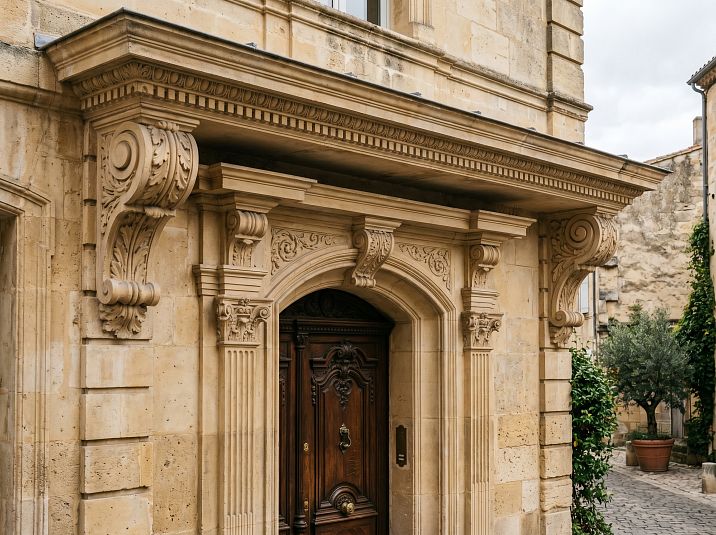
The entrance to a house is the first sentence in a long architectural text. And like any first sentence, it either captures attention or leaves you indifferent. A bare door in a bare opening is not a poorly built house. It is an unfinished thought. A thought without intonation, without rhythm, without a period at the end.
Facade decorative elements for the entrance group are precisely that intonation. A cornice above the door that creates a horizontal accent. Brackets that support this cornice not only physically but also visually. Pilasters that frame the opening on both sides and give it weight. A keystone above the arch that says: here is the center.
This article is a practical guide for those who want to select and buy Facade decoration made of polyurethane for the entrance area of the house. No abstract advice about a "beautiful facade" — only specifics: which elements, where, in what order to choose, and how to avoid mistakes that require redoing twice.


What is an entrance group and why it requires a special approach
An entrance group is not just a door. It is an architectural zone that includes:
-
the door opening itself with the door leaf
-
the framing of the opening (casing, slopes, side elements)
-
the space above the door: cornice, canopy, upper framing
-
side planes: pilasters, columns, decorative inserts
-
upper accent: keystone, decorative arch key, pediment
-
the porch and steps as a continuation of the entrance area vertically downward
All these elements exist in one field of view of the observer standing in front of the entrance. That is why they cannot be chosen one by one, randomly, and from different styles. The entrance group is a system, and facade decorative elements must be part of a unified architectural logic.




How does an entrance differ from "just a facade"
A facade is the entire building. The entrance group is the point of maximum attention. This is where the gaze of everyone approaching the house is directed. This is where the first architectural impression is formed. Therefore, the decor here must work more precisely, densely, and expressively than on the side planes of the facade.
Mistakes in the decor of a second-floor window are less noticeable. Mistakes in the decor of the entrance are immediately visible.
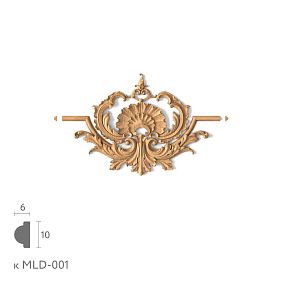
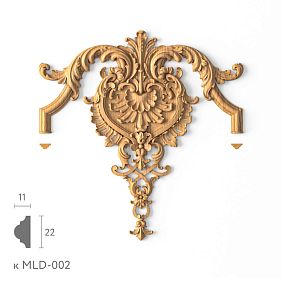
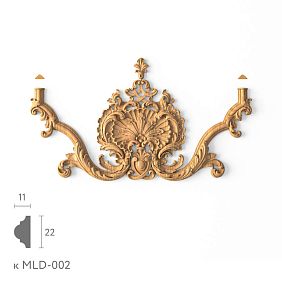
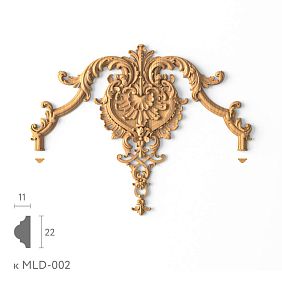
Our factory also produces:

Why polyurethane instead of plaster or concrete
Polyurethane Items for the facade — this is the optimal choice for three reasons: low weight (5–10 times lighter than plaster analogs), resistance to moisture and temperature fluctuations, and the ability to be painted in any color to match the facade paint. Polyurethane decor does not absorb water, does not crack from frost, and does not require special equipment for installation — only glue and a few dowels.
Get Consultation
What elements are used to design the entrance: the full composition
Before choosing specific products, you need to understand the architectural set that forms a complete entrance group.
Cornice above the entrance door
A horizontal profile that completes the space above the door. The cornice creates a "ceiling" for the entrance group: it visually limits the area and gives it completeness. Without a cornice, the entrance is "open from above" — and looks unfinished.
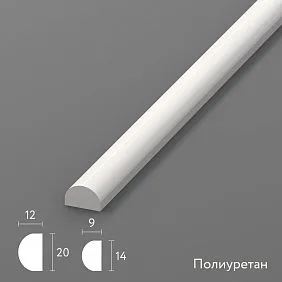
Polyurethane trim — base material for the facade cornice above the entrance. Cornice profile: from a simple rectangular one with a shelf to a composite multi-element one.
Brackets under the cornice
Polyurethane brackets — decorative support elements installed under the cornice that visually support it. They create rhythm under the cornice shelf and give the structure volume and sculptural quality.
Without brackets, the cornice above the door looks like a nailed board. With brackets, it looks like an architectural element with logic.
Pilasters on the sides of the opening
Vertical flat 'columns' framing the doorway on both sides. Pilasters create the side boundaries of the entrance group and give the opening architectural weight. They consist of: a base (lower element), a shaft (vertical plane), and a capital (upper element on which the cornice rests).
Keystone above the opening
The central wedge-shaped element above an arch or straight lintel of the doorway. In classical architecture, the keystone is a functional element of the arch that distributes the load. In decorative use, it is an accent, a 'point' above the opening that focuses the eye.
Moldings and framing
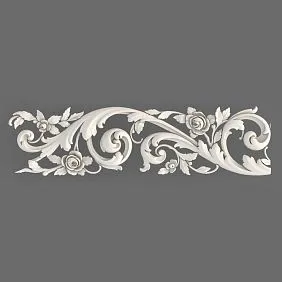
Relief Decoration Elements and moldings form a frame around the door leaf: architraves, corner blocks, horizontal lintels. This is the 'thinnest' layer of decoration — detailing noticed up close.
Decorative overlays and rosettes
Individual volumetric elements: rosettes on the pilaster plane, decorative inserts in corners, ornamental medallions above the transom window. Point accents that enrich the surface without overloading it.
Polyurethane brackets for the entrance group: architectural role and practical choice
Polyurethane bracket — one of the most visually active elements of the entrance group. It creates volume and sculptural quality in the area above the door.
Where brackets are installed
Under the cornice above the door. Main application: brackets are installed on both sides of the center under the cornice shelf — in 2, 4, or 6 pieces depending on the width of the entrance and the scale of the cornice.
On the side pilasters. Small brackets can be installed as a decorative element on the body of the pilaster — creating an additional horizontal accent.
Under the porch canopy. If there is a physical canopy above the entrance, brackets support it structurally and decoratively.
How to choose the size of the bracket
The proportion of the bracket to the cornice is a key parameter.
| Door width | Cornice overhang | Bracket height | Quantity |
|---|---|---|---|
| up to 900 mm | 80–100 mm | 150–200 mm | 2 pcs. |
| 900–1,200 mm | 100–130 mm | 200–280 mm | 2–4 pcs. |
| 1,200–1,800 mm | 130–180 mm | 250–350 mm | 4 pcs. |
| Over 1,800 mm | 180–250 mm | 300–450 mm | 4–6 pcs. |
Bracket height is its vertical dimension (from bottom to top). Bracket width (projection) is the horizontal extension from the wall.
Bracket Styles
Classic figured bracket — S-shaped profile, rich relief with acanthus leaves, volute, or coffered decor. For classic, neoclassical, baroque styles.
Simplified console bracket — straight profile with minimal ornament. For modern classic and neoclassical without overload.
Bracket with geometric decor — stepped edges, straight lines. For Art Deco and modern facades with classic details.
Bracket with rustication — imitation of stone masonry in the profile. For "heavy", solid facades with a rusticated base.
Why brackets cannot be chosen without a cornice
Polyurethane brackets and the cornice are an inseparable pair. A bracket looks logical only when there is a horizontal element above it that it visually "holds." A bracket without a cornice is a decorative detail going nowhere. A cornice without brackets is a nailed shelf.
Choose them simultaneously, aligning the cornice overhang with the bracket width and its height with the scale of the cornice profile.
Cornice above the front door: width, overhang, profile, style
The cornice above the entrance is a horizontal accent that 'closes' the entrance group area from above. It should be: wide enough to cover the door width with a slight extension beyond the edges; deep enough to create a shadow; tall enough in profile to match the scale of the entire facade.
How to choose the width of the cornice above the door
Cornice width = door opening width + 2 × 100–200 mm on each side (if pilasters are present, up to the outer edge of the pilaster + 50–80 mm).
Example: door 1,000 mm, pilasters 120 mm on each side → outer dimension with pilasters 1,000 + 120 × 2 = 1,240 mm. Cornice: 1,240 + 80 × 2 = 1,400 mm.
How to choose the cornice overhang
The cornice overhang (horizontal projection from the wall) depends on:
-
the height of the cornice profile: the higher the profile, the larger the overhang looks proportional
-
the size of the brackets: cornice overhang = bracket width ± 10 mm
-
facade scale: on a two-story house, the overhang is 150–200 mm, on a one-story house — 100–150 mm
Cornice profile: from simple to complex
Polyurethane trim for the facade cornice, it is produced in different profiles:
Simple cornice — shelf + straight wall + minimal lower profile. Height 80–120 mm. For a modern cottage with classical elements.
Medium complexity cornice — shelf + ogee + roll or band. Height 120–200 mm. For neoclassicism, country houses in classical style.
Composite cornice — several molding elements installed in tiers: shelf + frieze + cornice + band. Total height 200–400 mm. For classical and historical styles, main entrances.
Cornice installation height
The cornice above the entrance door is installed above the top edge of the door leaf. Distance:
-
Minimum: 100 mm above the top edge of the door (for compact entrances)
-
Optimum: 150–300 mm above the top edge of the door — this can accommodate a keystone or decorative lintel
-
If there is a transom: the cornice goes above the transom with an indent of 80–120 mm
Front door framing: moldings, architraves, symmetry
Doorway framing is a layer of detail that works at a distance of 2–5 meters. When a guest approaches the door, they no longer see the overall composition, but details: how neatly the slope is finished, how the corners of the architrave are joined, whether there is a vertical rhythm in the side framing.
Front door architrave
An architrave is a molding around the perimeter of a doorway. It is installed directly along the edge of the opening and hides the joint between the frame and the facade.
Width of the architrave for the front door:
-
Compact entrance, facade without pilasters: 50–80 mm
-
Entrance with pilasters, neoclassical: 60–100 mm
-
Grand portal, classical: 80–120 mm + corner blocks
Relief Decoration Elements include corner blocks for the architrave — ready-made corner elements that create a clean joint without complex 45° miter cuts.
Horizontal lintel above the door
Between the top edge of the door and the bottom edge of the cornice — an area that can be decorated:
-
with a horizontal molding strip
-
with a decorative panel (insert in a frame)
-
with a keystone in the center
-
with a flat decorative rosette or cartouche
This zone determines the 'density' of the design: the richer the filling, the more ceremonial the entrance.
Side elements: pilasters or simple moldings
Pilasters — full vertical elements 100–180 mm wide with a base, shaft, and capital. They provide architectural weight and a classic look.
Side moldings — a simplified version: vertical strips made of trim on the sides of the opening. Less massive, but create a vertical rhythm and frame the opening.
The choice depends on the scale of the entrance and the stylistic code of the facade.
Keystone and central accent: when it is needed and how to use it
The keystone is one of the most architecturally expressive elements. And one of the most often inappropriately used.
What is a Keystone
In classical architecture, the keystone is the central wedge-shaped element at the top of an arch, which locks the vault and distributes the load to the sides. A decorative keystone reproduces this shape in polyurethane carved decoration: a protruding element in the center above the opening, usually trapezoidal or shaped.
When a keystone is appropriate
-
If there is an arched opening or an arched completion of a doorway, it is mandatory as a finishing element
-
With a straight lintel and a horizontal molding, the keystone accents the center and creates the "face" of the entrance
-
In a classical and neoclassical portal, as an element completing the vertical axis of symmetry
When the keystone is inappropriate
-
On a minimalist modern facade without other classical details — it looks like a randomly glued object
-
If the entrance is asymmetrical — the keystone emphasizes the lack of symmetry
-
If there is no cornice — the stone "hangs" in the air without horizontal support
Keystone dimensions
Keystone height: 150–350 mm depending on the opening size and facade scale. Width at the base: 80–180 mm. Projection from the wall plane: 30–80 mm.
Proportion rule: the keystone height should not exceed 1/4 of the door opening height.
How to choose decor for the facade style: six architectural solutions
Facade style is the first criterion for choosing all facade decorative elements. Decor that works well in classic style may look ridiculous on a modern minimalist cottage.
Classic and historical stylization
Full set: pilasters with base and capital, composite cornice from several molding elements, Brackets with ornamental relief (acanthus leaves, volutes), keystone above the opening, wide architraves with corner blocks. Tinting: white or ivory, contrasting with the wall color.
Neoclassicism
Moderate set: lightweight pilasters (body without pronounced fluting), medium-complexity cornice (ogee + shelf), brackets with simplified profile, architrave with corner blocks. Keystone — optional. White color or tinting to match the facade color.
Modern classic
Minimal set: side moldings instead of pilasters, simple cornice (shelf + minimal lower profile), 2 brackets under the cornice without ornament, architrave without corner blocks (straight joints). No keystone. Color: white or matching the facade.
Country house in traditional style
Emphasis on massiveness: wide brackets with rusticated profile, cornice with pronounced overhang (150–200 mm), side rusticated pilasters, architrave from several moldings. Tinting: dark, ochre, or terracotta — for a "heavy" stone look.
Cottage in brick or "English style"
Restrained decor: simple profile architrave, small cornice with two brackets, no pilasters. Keystone — with rusticated texture. Color: white or light gray, contrasting with red brick.
Facade under plaster in Mediterranean style
Maximally simplified decor: a molding-trim of a simple rectangular profile, a horizontal belt above the door, no brackets — only a flat cornice. Color: matching the plaster or white. The decor works through conciseness, not through saturation.
Why polyurethane is the optimal material for facade entrance decor
Choice of material for house facade decor is not a matter of aesthetics. It is a matter of durability, ease of installation, and maintenance practicality.
Weight: why it is fundamental
A plaster bracket 300 mm high weighs 2.5–4 kg. A polyurethane equivalent weighs 0.3–0.6 kg. This means:
-
No reinforced wall mounting required
-
Installation is possible without scaffolding and special equipment for low heights
-
Load on the facade base is minimal
Resistance to outdoor conditions
Polyurethane facade decoration for the house Designed for a temperature range from -40 to +80 °C. Does not absorb water. Does not crack when freezing. Does not deteriorate from wetting unlike plaster. Resistant to UV radiation when properly painted.
Painting and tinting
Polyurethane products are supplied in a white base color. After applying primer, they are painted with any facade paint: acrylic, silicone, mineral. This means:
-
You can achieve the exact RAL color using the facade paint tinting system
-
The decor will always match the tone of the facade, not 'almost match'
-
When partially updating the facade, repainting the decor is not a problem
Processing and installation
Polyurethane trim Cuts with a regular hacksaw or jigsaw. Corner joints — cutting at 45° in a miter box. Glue: special polyurethane glue or liquid nails for facade work. Additionally — fastening with dowels.
Longevity with proper care
With two-layer painting using facade paint with UV protection, polyurethane decor retains its geometry and color for 7–12 years without renewal. Renewal — simple repainting without dismantling elements.
How to create a decor scheme for an entrance group: step-by-step algorithm
Before opening the catalog and selecting specific products, draw a diagram. This takes 30–60 minutes but saves money and eliminates errors.
Step 1. Measure the opening and entry area
-
Door opening width (clear): _ mm
-
Door leaf height: _ mm
-
Height from the top edge of the door to the top point of the facade entry area: _ mm
-
Width of side planes on both sides of the opening: _ mm
-
Ceiling height of the porch or canopy (if any): _ mm
Step 2. Determine the vertical axis of symmetry
The entry group is always symmetrical about the vertical axis passing through the center of the door. All elements — cornice, brackets, pilasters, keystone — are placed relative to this axis.
Step 3. Determine the composition of elements from bottom to top
-
Trim around the perimeter of the opening (molding + corner blocks)
-
Horizontal lintel above the door (molding / keystone / panel)
-
Cornice at the selected height
-
Brackets under the cornice
-
Pilasters or side moldings
Step 4. Choose dimensions
Specify the size of each element before ordering. For the cornice — width and profile. For brackets — height, width, quantity. For pilasters — width, height, presence of carved decor.
Step 5. Check consistency
-
All elements from one catalog — one style series
-
Cornice overhang = bracket width ± 10 mm
-
Pilaster width is proportional to the casing width
-
Keystone height is proportional to the cornice and opening
Mistakes when choosing entrance group decor: eight blunders that stand out
Mistake 1. Buying brackets without a cornice
A bracket without a cornice is a support element without what it holds. Visually, it looks like an unfinished structure. Always: first the cornice, then the brackets under it.
Mistake 2. Making the cornice too narrow
A cornice above a door 1,000 mm wide cannot be 800 mm — it visually does not 'hold' the opening. The cornice should be wider than the door, considering side pilasters or moldings.
Mistake 3. Not considering the door width when choosing the number of brackets
Two brackets for a cornice 1,800 mm wide is an insufficient rhythm. For a wide cornice, 4 brackets are needed: one closer to each edge and one at 1/3 from the center.
Error 4. Mixing styles
A classic bracket with acanthus + a minimalist straight casing without ornament + a rusticated keystone = three different languages in one statement. The style must be uniform for all elements.
Error 5. Not considering the color of the roof and facade
The entrance group decor is painted to match the facade or in contrasting white. If the facade is beige and the roof is dark brown, white decor is harmonious. If the facade is gray and the roof is black, decor in the facade color creates a stricter look. Think about the chromatic harmony of the whole picture.
Error 6. Overloading a small entrance with large stucco
An entrance 900 mm wide with brackets 400 mm high and pilasters 180 mm wide is a disproportion. A small entrance requires restrained, intimate decor: a casing, a small cornice, two compact brackets.
Error 7. Not counting the number of elements
"I'll buy a couple of brackets and see" — and in the end, they buy more from another batch with a different shade of white and a different surface texture. Count precisely: scheme + dimensions + quantity + 10% reserve.
Error 8. Not planning joints and trimming
Corner joints of trim require cutting at 45°. This must be done carefully using a miter box. A poorly executed joint is immediately visible, especially in the entry area where people approach it closely.
Examples of complete decor compositions for three types of entrance groups
Example 1. Compact entrance, modern classic
-
Door 900 × 2,100 mm
-
Casing 60 mm simple profile with corner blocks
-
Horizontal molding belt above the door at a height of 200 mm above the door
-
Cornice 100 mm with simple profile, width 1,100 mm
-
2 brackets 180 mm high under the cornice
-
Without pilasters
-
Total elements: casing — 6 linear meters, 2 corner blocks, belt — 1 linear meter, cornice — 1.1 linear meters, 2 brackets
Example 2. Medium entrance, neoclassical
-
Door 1 100 × 2 200 mm + transom 1 100 × 400 mm
-
Casing 80 mm with corner blocks
-
Keystone above transom 250 mm high
-
Cornice 150 mm, profile "gooseneck + shelf", width 1 500 mm
-
4 brackets 250 mm high under cornice
-
Pilasters 130 mm with base, shaft, and capital
-
Total: casing — 7.5 linear m, 4 corner blocks, 1 keystone, cornice — 1.5 linear m, 4 brackets, 2 sets of pilasters
Example 3. Grand entrance, classical
-
Door 1 400 × 2 400 mm + arched transom
-
Wide architrave 100 mm with corner blocks and ornament belt
-
Keystone at the top of the arch 350 mm high
-
Composite cornice of three molding elements, total height 280 mm, width 1,900 mm
-
6 brackets 350 mm high with ornamental relief
-
Pilasters with fluted body, 160 mm wide
-
Rosettes on the pilaster body
-
Total: composite cornice — 3 × 1.9 linear m, 6 brackets, architrave — 8.5 linear m, 2 sets of pilasters, 1 keystone, 2 rosettes
Caring for polyurethane facade decor: simple and effortless
Properly painted Polyurethane facade decor requires almost no maintenance:
Annually: visual inspection of the surface. Check for cracks in the paint layer (especially at joints). Wash with water and mild detergent.
Every 7–10 years: repainting. Light sanding of the surface → priming → 2 coats of facade paint. The geometry and relief of the elements are fully preserved.
If damaged: local repair — acrylic sealant for filling cracks + local painting. Polyurethane bonds well and is easy to restore.
Main rule: avoid prolonged contact with water at joints (between decor and wall) — silicone or acrylic seams must be in good condition.
FAQ: answers to the main questions about entrance group decor
Which decorative elements are suitable for the entrance group?
Cornice above the door, Polyurethane brackets, pilasters, architrave, keystone, horizontal molding belts, decorative overlays, and rosettes. All made of STAVROS catalog.
How to decorate the entrance door on the house facade?
Minimum set: architrave around the opening + cornice above the door + 2 brackets. Extended set adds pilasters, keystone, and a horizontal lintel above the door.
Are brackets needed above the entrance?
Yes, if there is a cornice with an overhang of more than 60–80 mm. Brackets visually support the cornice and create volume. Without brackets, the cornice looks like a "shelf on the wall."
How to choose a facade cornice above the door?
Width = door width + side elements + 80–160 mm. Overhang = bracket width ± 10 mm. Profile — coordinated with the facade style. Polyurethane trim — in the STAVROS catalog.
What is a keystone above the entrance?
A decorative protruding element above the center of the doorway. Suitable for classical and neoclassical decor. Installed in the center — on the vertical axis of symmetry of the entrance. sculpted appliqués — in the STAVROS catalog.
Are polyurethane decor elements suitable for outdoor use?
Yes. Polyurethane Items Resistant to temperature fluctuations (−40 to +80 °C), do not absorb moisture, do not crack when freezing.
Can facade elements made of polyurethane be painted?
Yes. After priming — with any facade paint in any color. Precise tinting according to RAL to match the facade is possible.
How not to overload the entrance group with decor?
The principle of scale: the size of each element is proportional to the size of the opening and facade. For an entrance up to 1,000 mm — brackets no higher than 200 mm, cornice profile no more than 120 mm, without massive pilasters. Fewer elements — more air.
What elements are needed for a classic portal?
Pilasters (base + shaft + capital), composite cornice, brackets with ornamental relief, architrave with corner blocks, keystone above the opening. All facade decorative elements from the same series.
Where to buy facade decorative elements?
In the STAVROS catalog: Polyurethane Items — Brackets, Trim, overlays and stucco elements. Full catalog of decor with delivery across Russia.
STAVROS: entrance group as an architectural statement
The entrance to a house is built once. And it must be right: proportional, stylistically consistent, complete in every detail. The bracket that holds the cornice. The cornice that closes the area above the door. Pilasters that give the opening architectural weight. The keystone that says: here is the center.
It is this systematic approach that STAVROS offers. Polyurethane Items cover all elements of facade and entrance group design: Brackets, Trim, applique, decorative accents — all in coordinated style series, with delivery across Russia.
STAVROS — because the first impression of a house is formed at the entrance, and it must be flawless.