

























Article Contents:
- Wooden molding MLD-038 16×16 mm: which profile are we buying
- Quarter-round MLD-038: why 16×16 mm reads well at the transition between planes
- Furniture molding on the facade ends at the edge: why the side panel immediately looks empty
- Buy wooden molding for furniture: first draw the full route
- The same MLD-038 does not have to fully repeat the facade frame on the side panel
- Where exactly to continue the line around the cabinet corner
- One test corner is more useful than buying the entire batch
- Why door opening needs to be checked before installing the side line
- MLD-038 made of MDF, beech, or oak: the material must continue the existing finish
- MLD-038 under enamel: the same color name does not guarantee the same result
- Beech and oak MLD-038: when the texture must continue around the corner
- 2400 and 2600 mm: the length is chosen after the route, not the other way around
- Example: short continuation along the side panel
- Example: full side frame on a cabinet
- Why you can't just order "MLD-038 on a cabinet"
- Packaging frame 390 ₽: include in the invoice, but don't build the solution around it
- Where to correctly stop the decorative line on the side panel
- Only the front zone
- Full side frame
- Horizontal line around the body
- Separate side composition
- What is the cross-section of MLD-038?
- What is the standard length of MDF?
- What is the length of beech?
- What is the length of oak?
- How much does MLD-038 made of MDF cost?
- How much does beech cost?
- How much does oak cost?
- What sanding is specified in the product card?
- Is there a version for enamel?
- Can MLD-038 be used on furniture?
- Can MLD-038 be continued from the facade to the side panel?
- Should the frame be the same on the facade and the side panel?
- Why is a test corner needed first?
- What matters more: material or route?
- When is it better to leave the side panel without molding?
- Should the packaging frame be taken into account?
- What should be the last thing to check before payment?
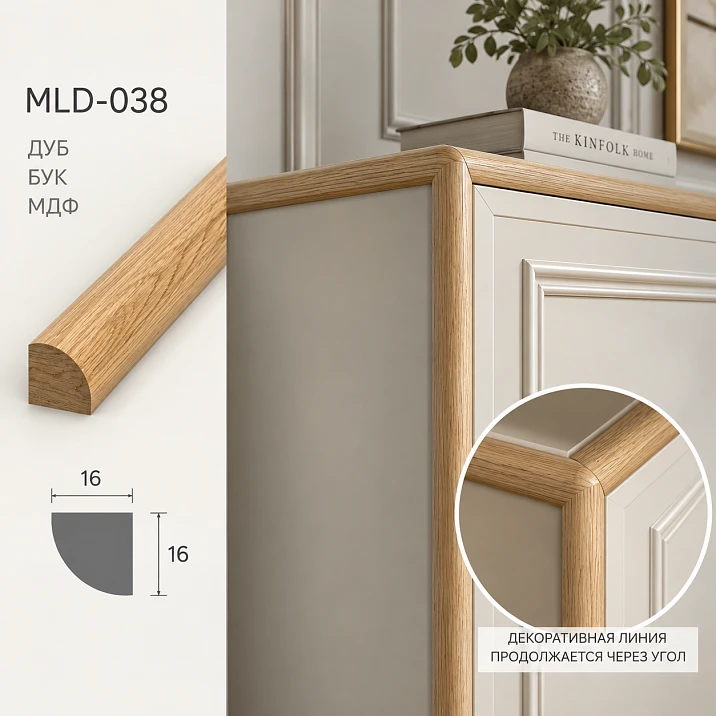
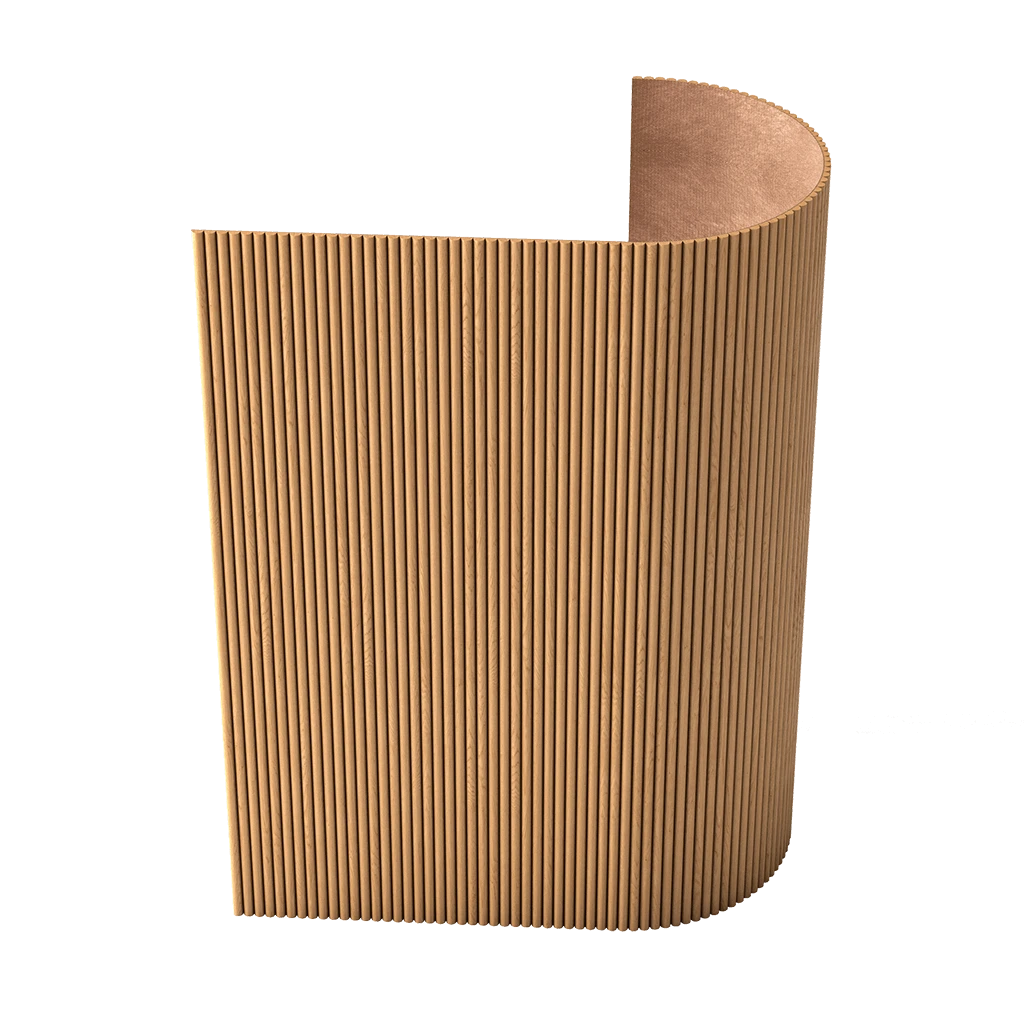
The cabinet already looks finished from the front: the facade has a neat decorative frame, the profile echoes the lines of the doors, and the color and finish are coordinated. But the furniture is not placed in a niche or from wall to wall. The right or left side panel is constantly visible from the room. At an angle, an unpleasant effect appears: the decorative line approaches the edge of the facade and suddenly breaks off, and the side plane looks like a technical wall of the body.
In such a situation, it is not necessary to add decor to the side panel. Sometimes a smooth plane works better. But if the task is to make the cabinet, sideboard, dresser, or kitchen tall unit a complete standalone piece, you can continue the MLD-038 line around the corner.
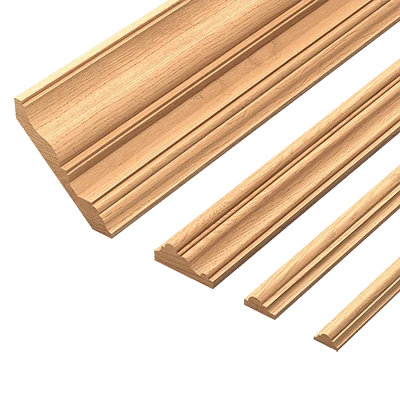
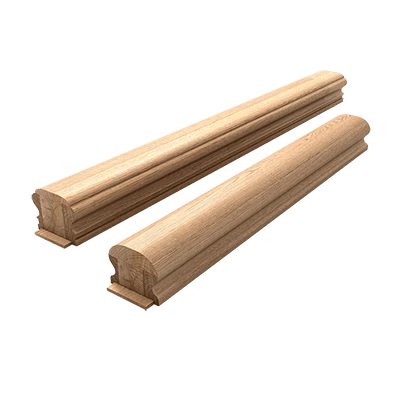
The MLD-038 has a compact quarter-round cross-section of 16×16 mm. As of September 9, 2026, the product card shows three standard versions: MDF 16×16×2600 mm — 830 ₽, beech 16×16×2400 mm — 1,460 ₽, oak 16×16×2400 mm — 1,940 ₽. But before purchasing, what matters more is not the material or even the length. First, you need to determine the route of the decorative line: where it approaches the end, how it transitions to the side panel, how far it goes along the side plane, and where it ends.
The correct order: mark the route with painter's tape → make one full-size test corner → look at the cabinet from the front, at 45°, and from the side → check door opening → approve the material and finish → only then calculate the length and order MLD-038.
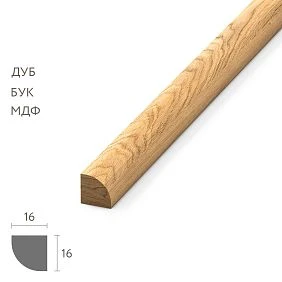
Wooden molding MLD-038 16×16 mm: which profile are we buying
MLD-038 has the same cross-section in all three versions:
A = 16 mm; C = 16 mm.
Standard length and price depend on the material.
| Material | Size A × C × L | Sanding | Price as of 09.09.2026 |
|---|---|---|---|
| MDF | 16 × 16 × 2600 mm | Prestige | 830 ₽ |
| Beech | 16 × 16 × 2400 mm | Prestige | 1 460 ₽ |
| Oak | 16 × 16 × 2400 mm | Prestige | 1 940 ₽ |
For the selected MDF, the card indicates the preparation "Under enamel." If in stock, the item is shipped after warehouse preparation; if not, the average production time is stated as 5–10 days.
If the profile has already been approved, Wooden Molding MLD-038 It must be ordered as a full line: material, 16×16, length, "Prestige," finish, and quantity. A single article number is not enough because MDF and solid wood have different standard lengths.

Quarter-round MLD-038: why 16×16 mm reads well at the transition between planes
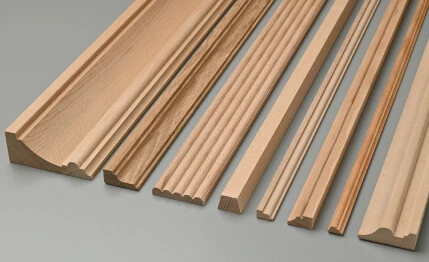
The card describes MLD-038 as a compact quarter-round profile.
It has equal A and C — 16×16 mm. This does not mean that any external corner of a cabinet will automatically look good. But the equal profile scale in two directions makes the transition visually clear: the decorative line has a compact volume and does not turn into an overly large protrusion on the side panel.
For verification, it is useful to look not only at the width of the strip.
A 16 mm paper strip shows only the projection on the plane. The real MLD-038 has volume. Therefore, for a test corner, it is better to use:
- a short physical sample;
- a piece of similar quarter-round profile 16×16;
- or a volumetric mock-up made of dense material.
It is side lighting that will show how noticeably the profile protrudes on the facade and side panel.
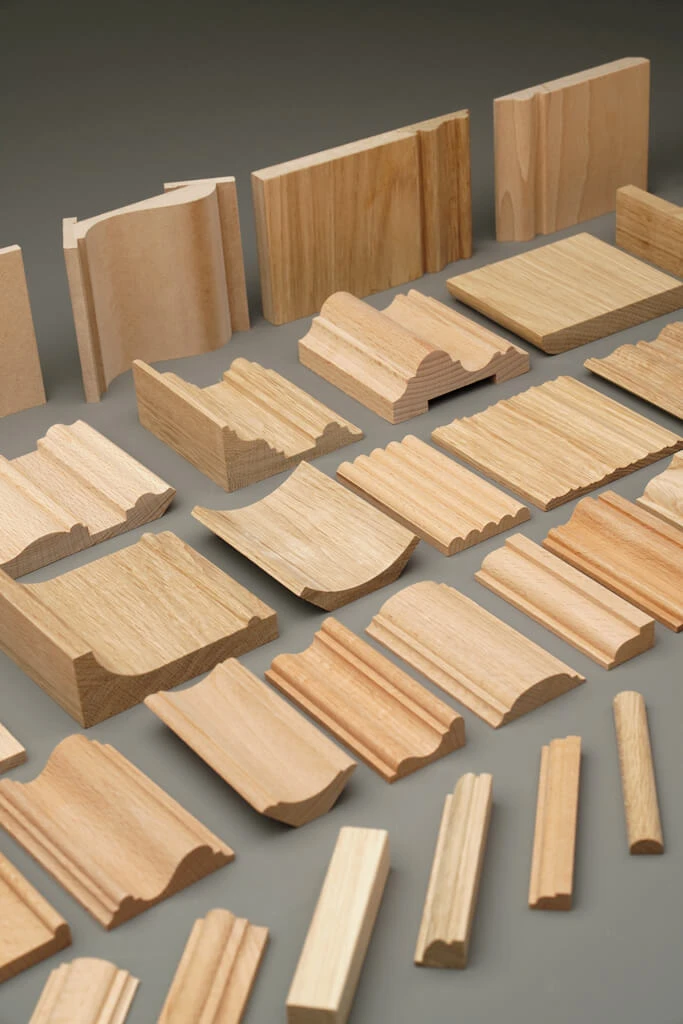
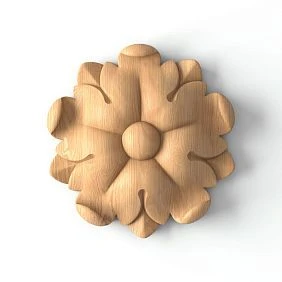
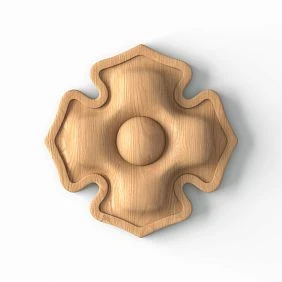
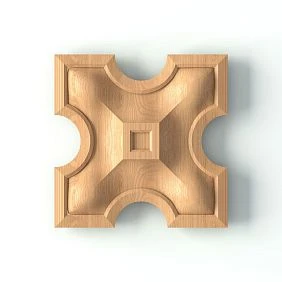
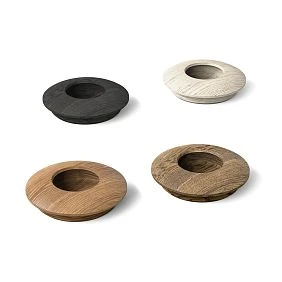
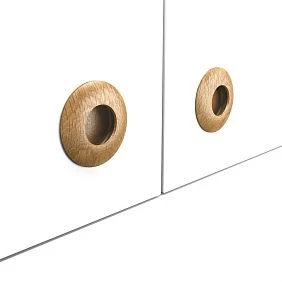
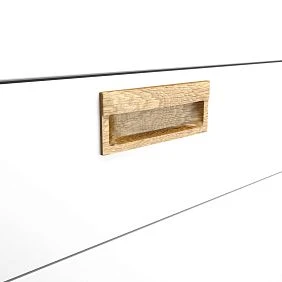
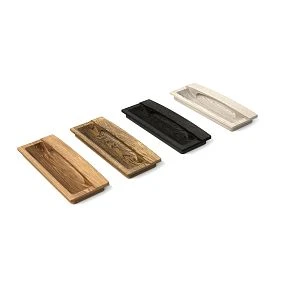
Our factory also produces:
Furniture molding on the facade ends at the end: why the side immediately looks empty
The facade frame has its own rhythm: verticals, horizontals, intervals, indents from the edge. When this system suddenly ends on the front plane, the visible side can be perceived separately from the facade.
This is especially noticeable in furniture that:
- stands in the center of the wall;
- has a free side;
- is visible from the entrance to the room at an angle;
- stands next to a passage;
- has active classical or transitional decor on the facade.
But a smooth side panel is not an error in itself.
If the furniture is modern, the front decor is intentionally separated from the body, or the side is almost hidden, adding MLD-038 may only weigh the piece down.
Therefore, the article's question is not "must the side be decorated necessarily," but how to check the line's continuation before purchase.
Get Consultation
Buy wooden molding for furniture: first draw the full route
Before calculating meters, take masking tape about 16 mm wide and show the entire intended path of MLD-038.
The marking should answer four questions:
- where the existing face frame ends;
- at what point the line passes through the corner;
- which section of the sidewall it occupies;
- where it finally terminates.
Different solutions are possible on the sidewall.
Option 1 — a short extension of the front zone.
The line extends onto the sidewall only to a small depth and creates the impression of a wrapped decorative edge.
Option 2 — a full side frame.
MLD-038 forms an independent rectangle on the side wall.
Option 3 — a horizontal band around the body.
The front line transitions to the side and continues along the furniture as a single band.
Option 4 — a side composition with a different route.
The front and side are connected by one profile, but the frames are not copied one-to-one.
If required Buy wooden furniture molding, first you should choose one of these scenarios, and only then calculate the length.
The same MLD-038 does not have to fully repeat the facade frame on the side panel.
This is an important boundary.
Continuing the decorative line does not automatically mean drawing the same rectangle on the side wall as on the doors.
The facade has:
- doors;
- gaps between the doors;
- handles;
- plinth;
- its own symmetry.
The side panel is one large fixed plane.
If you mechanically transfer the facade pattern to the side, you may end up with too many lines. Therefore, it is better to preserve the language of the decor rather than a literal copy.
For example, on the facade there are two frames around two doors, while on the side panel there is one large frame that maintains the same MLD-038 profile and the height of the top/bottom horizontal lines.
Where exactly to continue the line through the cabinet corner
The most important joint in the article is the transition from facade to side panel.
It must be checked on the actual cabinet body, because the furniture may have:
- facade flush with the side panel;
- protruding facade;
- edge banding on the end;
- additional frame;
- decorative post;
- gap between the door and the body.
Therefore, it is impossible to write a universal formula "cut at 45° and that's it."
For one body, connecting profiles at one visual corner will look more beautiful. For another, stopping the face MLD-038 at the edge and starting the side line independently.
It is necessary to find a variant where:
- the seam is not noticeable from the main viewpoint;
- the line maintains a single height;
- the transition does not interfere with the door;
- the profile does not protrude beyond the body with a random "nose";
- The finish can be done neatly.
One trial corner is more useful than buying the whole batch.
Before ordering the full length, make one test piece.
Minimum model:
facade → corner → 200–300 mm of the side.
Look at it:
- strictly from the front;
- at 45°;
- strictly from the side;
- from above, if the cabinet is low;
- with the door open;
- with the door closed;
- in daylight;
- in side evening light.
The test should answer not the question "is MLD-038 beautiful in general," but the question:
does this particular transition create the feeling of one decorative system?
If not, the route needs to be changed, not buying a more expensive material.
Why door opening needs to be checked before installing the side line
On a closed cabinet, MLD-038 may look perfect, but the door changes position when opened.
Check:
- whether the door end approaches the side profile;
- whether the handle touches the extended line;
- whether the decorative frame on the facade conflicts with the new element;
- whether the gap remains at the full opening angle;
- whether a visually strange "double" line appears.
This test is especially important for frameless cabinets where the door is close to the side panel.
You cannot compensate for a conflict after painting by filing the profile "in place." It is better to change the route in advance.
MLD-038 made of MDF, beech, or oak: the material must continue the existing finish
If the face frame is already made, the new side line should continue not only the geometry but also the material/finish.
Check:
- what the front molding is made of;
- what preparation was used;
- soil;
- enamel or tinting;
- gloss level;
- color;
- direction of visible texture, if the wood is exposed.
Do not turn this block into a general comparison of MDF, beech, and oak.
The logic is simpler:
the front already exists → the side part must visually match it.
If the front is made of MDF under white enamel, adding an oak profile under the same opaque paint doesn't automatically create visible value.
If the front is oak with a transparent finish, MDF on the side can already break material continuity.
MLD-038 under enamel: the same color name doesn't guarantee the same result
Imagine the fronts were painted white a month ago. Another workshop paints the side MLD-038.
Even with the same color code, shades may differ:
- soil;
- number of layers;
- gloss level;
- application method;
- material batch;
- coating thickness;
- lighting of the facade and side.
The front and side are positioned at a 90° angle, so the same color is perceived differently even when the paint fully matches.
Before the entire batch, it is useful to paint a short MLD-038 sample and apply it to the finished furniture.
Only after this confirm the finish.
Beech and oak MLD-038: when the texture should continue across the corner
With a transparent or semi-transparent finish, the task becomes more complex.
The material is visible, so the side line must continue not only the profile but also the character of the wood.
It is impossible to promise an absolute match of the grain pattern of two different slats: natural wood is variable.
But it can be fixed:
- one wood species;
- one tinting system;
- one gloss level;
- one finishing technology;
- consistent grain direction of parts.
If the facade is already made of oak MLD-038, it is logical to first consider oak for the side panel and compare real samples.
2400 and 2600 mm: the length is chosen after the routing, not the other way around
MLD-038 standard lengths differ:
MDF — 2600 mm;
beech/oak — 2400 mm.
This affects cutting, but should not dictate the design.
Bad order:
«We have a 2400 whip, let's draw a line so it hits.»
Correct:
approved the routing → listed finished parts → checked lengths → built the cutting layout → got the number of sticks.
For an article, this is sufficient. It doesn't turn into another guide on "how many planks to buy."
Example: a short continuation along the side panel
Suppose a vertical molding on the facade meets the top line, and on the side panel only the horizontal needs to be continued by 600 mm.
If MDF 2600 mm is used, one such side part takes up 600 mm of nominal length.
But the remaining 2000 mm cannot automatically be considered useful offcut: first, you need to know the other elements of the project.
With a 2400 mm sheet, the remainder after such a part is 1800 mm.
The point of the example is not to choose "which material is more profitable," but that even one short transition should be included in the overall cutting map after the composition is approved.
Example: a full side frame on a cabinet
Let the side plane require a conditional frame:
- two verticals of 1800 mm each;
- two horizontals of 500 mm each.
Total length:
2×1800 + 2×500 = 4600 mm.
Formally, this is less than two MDF strips of 2600 mm:
2×2600 = 5200 mm.
But the actual cutting needs to be checked against the parts.
For example, one 2600 strip can yield 1800 + 500 = 2300 mm.
The second one is another 1800 + 500.
Then the frame indeed fits into two strips before accounting for the technological cut.
For the 2400 array, the scheme can also give 1800 + 500 = 2300 mm per stick.
In this particular example, two are also sufficient.
But if the horizontals become 650 mm, the combination 1800+650 equals 2450 mm and does not fit into the massive 2400 stick. Then the quantity changes.
This shows why the total footage is secondary to the route.
Why you cannot just order "MLD-038 for the cabinet"
Such a line does not contain the data that procurement needs.
Working specification:
MLD-038 / 16×16 mm / MDF 2600 or beech/oak 2400 / Prestige / finish ___ / zone: facade + right/left side / quantity ___ pcs.
If only a side part is added to an existing facade frame, it is useful to write:
purpose: continuation of the existing facade MLD-038 on the visible side; material and finish to be coordinated with the existing sample.
This way the manager understands the real task, rather than seeing an abstract article number.
Packaging frame 390 ₽: include in the invoice, but do not build the solution around it
MLD-038 card indicates a rigid packaging frame costing 390 ₽ for safe transportation and standards for small batches.
This may appear as a separate line in the order.
But the packaging does not answer the question of whether a profile is needed on the side and how to run it around the corner.
Therefore, the design and quantity are decided first, and then the final estimate with packaging and delivery is checked.
Where to correctly stop the decorative line on the side
There is no universal point.
Only the front area
MLD-038 extends onto the side for a short distance and completes the front frame.
Suitable when you only need to remove the feeling of an abrupt end.
Full side frame
The profile forms a complete rectangle on the side wall.
Suitable if the furniture is viewed from the side as a standalone item.
Horizontal line around the body
The facade band continues along the side surface.
Works with some sideboards, dressers, and classic wardrobes.
Separate side composition
The side decor does not copy the facade but uses the same MLD-038 as a common language.
This is often the most flexible option for complex furniture.
Right and left side panels: do not mirror the decision without checking the viewpoint
If both sides of the cabinet are open, it seems logical to make them identical.
But furniture is rarely viewed strictly from the center. One side may face the room entrance and be constantly in view, while the other may stand next to a wall, curtain, or another object.
Therefore, it is useful to evaluate each side separately:
- from where it is viewed;
- how close a person passes;
- whether the transition from front to side is visible;
- whether there is a doorway nearby;
- how side light falls;
- whether part of the decor is blocked by neighboring furniture.
As a result, the right side may get a full frame, while the left remains smooth. This is not a symmetry error if the piece works better in the real room that way.
The main thing is to make the decision before cutting, not after buying the same amount of profile for both sides.
If the facade MLD-038 is already installed: measure its actual offset from the edge
The new side line should align not with an abstract facade drawing, but with the existing furniture.
Measure:
- distance from the facade edge to the axis or edge of the MLD-038;
- height of the upper horizontal;
- height of the lower horizontal line;
- distance to the plinth;
- distance to the upper cornice or cover.
It is useful to transfer these dimensions to the side panel with masking tape.
For example, if the upper horizontal of the face frame runs 120 mm below the top edge of the door, it is not necessary to copy exactly 120 mm from the cabinet top: the facade and side panel may have different geometric boundaries. You need to look at which line is perceived as continuous from the main viewing point.
That is, the measurement provides an initial coordinate, not an automatic command to "repeat the same number".
Transition around the corner and the end edge of the cabinet body: first understand what will remain visible
The finished cabinet's side panel end may already have:
- painted edge;
- solid overlay;
- edge band;
- decorative post;
- protruding front panel.
MLD-038 should not accidentally cover half of an existing part and leave the other half visible.
Before the test corner, tape off the future profile outline with masking tape and see what happens to the end of the cabinet body.
If after adding 16×16 a narrow strip of old finish remains a few millimeters wide, it may look like a mistake. Then it's better to either change the line position or not run the profile onto that section at all.
This is a case where one real cabinet corner matters more than any render.
A full-size mockup of the side frame helps you see the overload before purchasing.
If you plan not a short extension but a full frame, make it entirely with masking tape.
Not just two sides — the entire rectangle.
Step back 2–3 meters from the furniture and compare:
- facade;
- the side panel;
- the overall silhouette;
- the ratio of the frame to the height of the body;
- free fields around it.
It's useful to take two photos: without the side decor and with the mockup. In photos, it's often quicker to see whether the furniture has become more cohesive or heavier.
If the side frame visually "conflicts" with the facade, reducing the problem with more expensive oak is pointless. The composition needs to be changed.
What to do if the front molding looks like MLD-038, but the article number is unknown
The old cabinet may have been manufactured earlier, and the specification was lost.
You cannot order MLD-038 just because the existing profile is "approximately 16 mm."
You need to measure the actual cross-section of the front element:
- width;
- protrusion;
- quarter-circle shape;
- the length of the visible section;
- material and finish.
If the profile differs even by a few millimeters, the transition through the corner can show this more strongly than the usual adjacency of two separate parts.
In such a situation, it is reasonable to first order or obtain a physical sample of MLD-038 and apply it directly to the front frame.
If the match is not confirmed, it is better to look for another profile rather than try to mask the difference at the corner.
When MLD-038 does not need to be purchased for the side panel
Do not add the profile just because "the side panel is empty."
It's reasonable to leave it smooth if:
- the side is almost completely hidden by a wall;
- the furniture is designed with a contrast between the decorative facade and the calm body;
- the new profile interferes with opening;
- another item is placed right next to it;
- the side frame visually weighs down the body;
- the line has no natural ending point;
- the test corner looks artificial;
- It is impossible to properly replicate the finishing of the old facade.
A good product article should allow the buyer not to purchase it if the project becomes worse as a result.
Buy MLD-038 16×16 mm: final check before payment
Before ordering, complete a short check.
| What to Check | Status |
|---|---|
| MLD-038 is correctly selected | Yes / no |
| Cross-section 16×16 mm confirmed | Yes / no |
| Material matches the facade | Yes / no |
| Length 2400/2600 taken into account | Yes / no |
| Visible side of the frame determined | Yes / no |
| Route drawn | Yes / no |
| Test corner assembled | Yes / no |
| Door opening checked | Yes / no |
| Finishing tested | Yes / no |
| Parts added to cutting plan | Yes / no |
| Price and availability re-checked | Yes / no |
If all lines are closed, you can buy MLD-038 16×16 mm in a specific configuration.
Where to buy wooden furniture molding
If you need exactly MLD-038, go to the product page.
If the test corner showed that 16×16 is too large or too small for the specific furniture, it's better to return to the general section and Buy wooden molding of a different cross-section.
The main conclusion of the article:
continuing MLD-038 through the corner is first a compositional task and only then purchasing the linear material.
First, the cabinet is viewed from three angles, one test transition from facade to side is built, the line ending point is determined, and the finishing is agreed upon. After that, the standard length of 2400/2600 mm turns from an abstract characteristic into a normal parts map and order.
Questions before ordering MLD-038
What is the cross-section of MLD-038?
16 × 16 mm.
What is the standard length of MDF?
2600 mm.
What is the length of the beech?
2400 mm.
What is the length of the oak?
2400 mm.
How much does MLD-038 made of MDF cost?
830 ₽ as of the check on September 9, 2026.
How much does beech cost?
1 460 ₽.
How much does oak cost?
1 940 ₽.
What sanding is specified in the card?
Prestige.
Is there an enamel option?
For the selected MDF configuration, the card shows "Under enamel."
Can MLD-038 be used on furniture?
The card directly positions the profile for furniture and interior applications.
Can MLD-038 be continued from the facade to the side?
But as a design solution, if the real corner unit, opening, and composition have been tried on. The 16×16 size itself does not automatically guarantee a beautiful transition.
Do we need to make the same frame on the facade and the side panel?
No. You can keep one profile and line heights, but build a separate side composition.
Why is a trial corner needed first?
Because only a volumetric test shows the seam, the 16 mm protrusion, the shadow, and the real transition between planes.
What is more important: material or route?
First the route and the need for decor. The material is chosen after the solution is generally deemed successful.
When is it better to leave the side without a molding?
When it is hidden, the new profile interferes with opening, weighs down the furniture, or the decorative line has no natural ending.
Do we need to take the packaging frame into account?
Yes, in the final estimate. The card indicates 390 ₽ under its own packaging conditions, but this does not affect the decision about the side design.
What should be checked last before payment?
MLD-038, 16×16, material, length, route, trial angle, opening, finish, cutting, current price, and availability.