
























Article Contents:
- Decorative beam and structural beam: same word, different meaning
- What is a false beam and why is it needed
- What does a false beam do in an interior
- STAVROS assortment: where to find decorative beams
- Decorative ceiling beams: logic of placement
- Longitudinal or transverse beams
- Spacing between beams
- How not to visually lower the ceiling
- Where to use wooden false beams: five scenarios
- Living Room
- Kitchen-living room: zoning without walls
- Country house, chalet and rustic
- Attic: supporting the architecture
- Commercial interior: restaurant, hotel, showroom
- Material of decorative beams: oak, beech, MDF
- Decorative beams made of solid oak
- Solid beech beams
- Decorative MDF beams
- Size and cross-section of false beams: how to calculate correctly
- Profile Width and Height
- Length and trimming
- Calculating the number of beams
- Finishing decorative beams: five solutions for different interiors
- Wood Toning
- Clear or matte varnish
- White or Colored Enamel
- Patina
- Imitation of aged wood
- Decorative beams in different interior styles
- Classic style
- Chalet and alpine style
- Scandinavian and Modern
- Neoclassicism
- How to Combine Beams with Other STAVROS Elements
- Beams + Ceiling Cornices
- Beams + Moldings
- Beams + Slat Panels
- Beams + Decorative Elements at Joints
- Installing Decorative Beams: What to Know in Advance
- Preparing the ceiling
- Coordination with Lighting Fixtures
- Weight and Fastening
- Finishing Before or After Installation
- Joint with the wall
- Price of decorative wooden beams: what influences it
- Mistakes when choosing decorative beams
- Where to buy STAVROS decorative wooden beams
- Frequently asked questions about decorative wooden beams
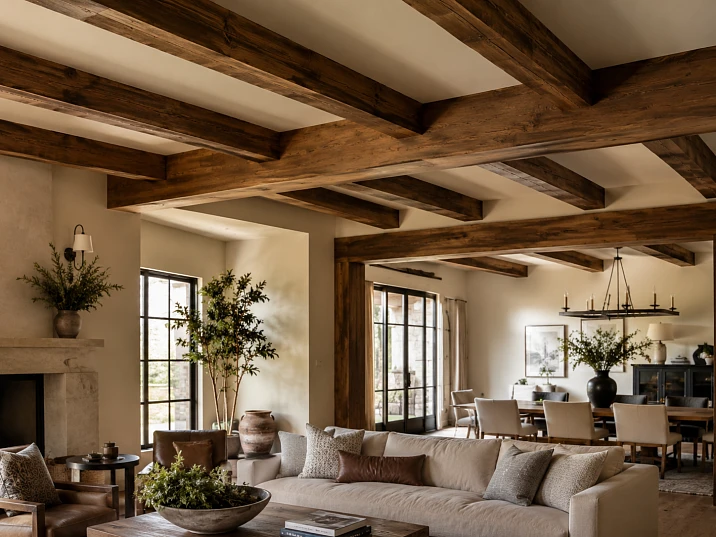
The ceiling is the most underestimated plane in an interior. Walls are decorated, floors are covered with parquet, furniture is carefully selected — but the ceiling often remains just white. Yet it is the ceiling that sets the scale, rhythm, and depth of the space. And one of the most powerful tools for its transformation is decorative wooden beams.
A beam on the ceiling is not a structural necessity. It is a deliberate design choice. A wooden false beam makes the ceiling come alive: it creates a horizontal rhythm, adds tectonics, 'lowers' or 'raises' the space depending on scale and color, zones open-plan layouts, and fits the interior style — whether it's classic, chalet, country, neoclassical, or modern architecture.
If you are looking for where to buy decorative wooden beams — decorative beams and false beams STAVROS are presented in the section of molded products: with a filter by product type 'False beam', made of solid wood and MDF, in several profiles and for any finish.
This article covers everything you need to know before choosing: how a decorative beam differs from a structural beam, what a false beam is, how to select cross-section and spacing, which styles to use, how to combine with ceiling cornices and moldings, what the price is and what influences it.
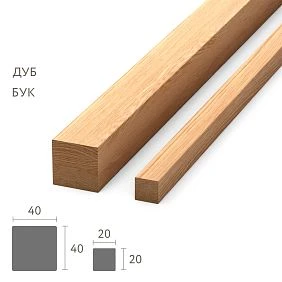
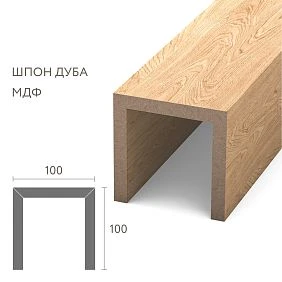
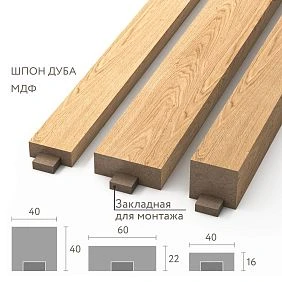
Decorative beam and structural beam: same word, different meaning
Let's start with the main distinction — because confusion here is costly.
A structural beam is a load-bearing construction element. A floor beam supports the load of the floor between stories. It is built into the house structure, calculated by an engineer, and regulated for deflection and load. It is not chosen by color or style — it is calculated.
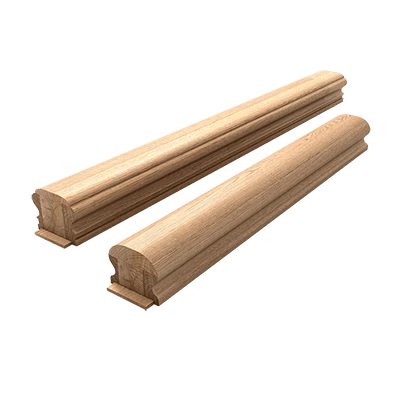
A decorative wooden beam is an interior element. It does not bear load. It is attached to the ceiling externally — as an overlay molding — and serves exclusively a decorative function: sets rhythm, creates relief, hides joints or utilities, integrates the ceiling into the interior style.
A false beam is a specific type of decorative beam: a hollow or solid profile that imitates a load-bearing beam. The term "false beam" directly indicates the decorative nature of the element — a "fake", "imitation" beam.
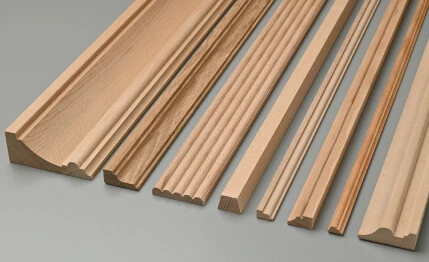
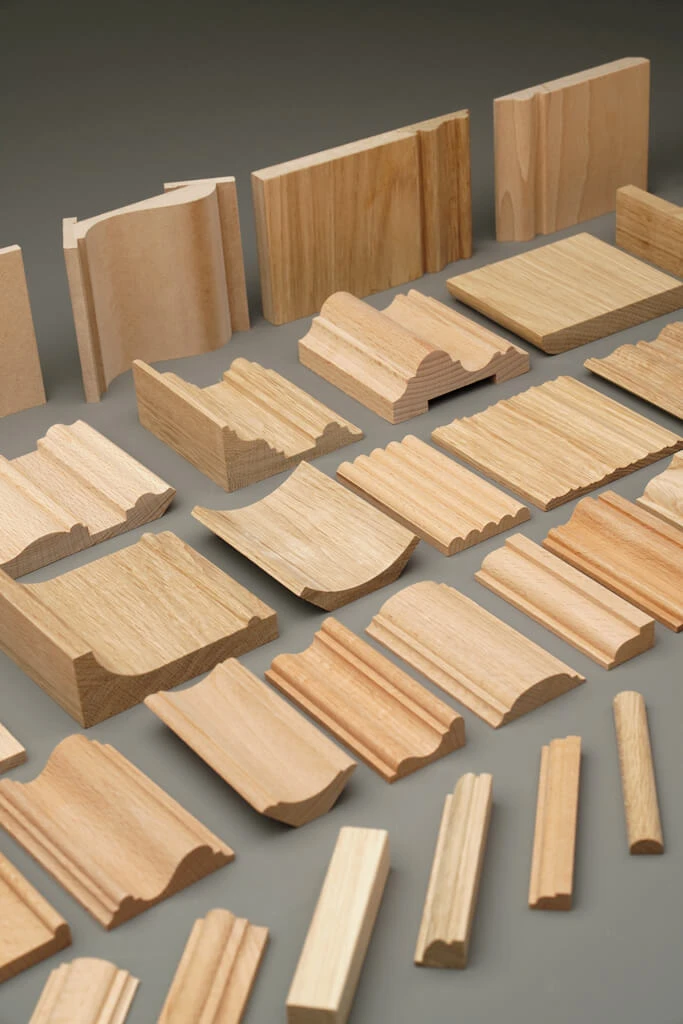
In the STAVROS catalog, the false beam belongs to wooden trim — linear profile products made of solid wood and MDF, which are installed as overlay elements. This also includes moldings, cornices, baseboards, architraves, slats.
What is a false beam and why is it needed
A false beam is not a compromise or a "budget replacement for a real beam." It is an independent architectural tool with its own logic of application.
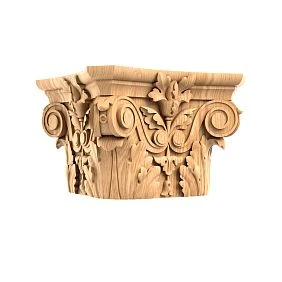
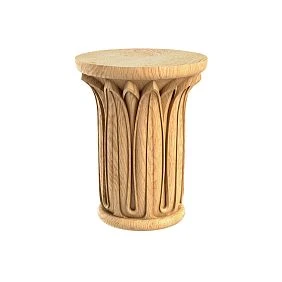
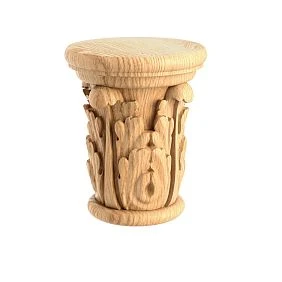
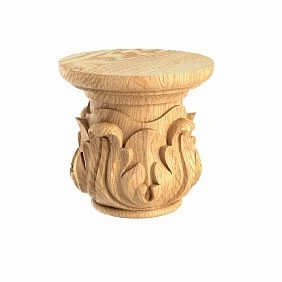
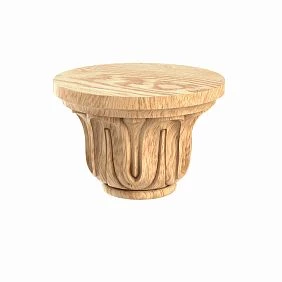
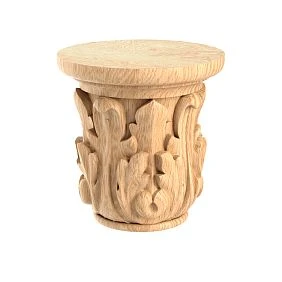
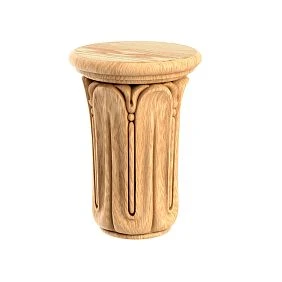
Our factory also produces:
What does a false beam do in an interior
Creates ceiling tectonics. Horizontal lines on the ceiling are "load" lines. They add a sense of stability and solidity to the space. A ceiling with beams looks like part of a well-thought-out architecture, not just a "closed top of the room."
Zones the space. Beams on the ceiling of a kitchen-living room are a way to visually separate areas without walls or partitions. A transverse beam above the dining group is the boundary between the kitchen and living room. Parallel beams along the sofa emphasize the relaxation area.
Hides utilities. A ventilation duct, wiring, piping — all of this can be concealed with a false beam, turning a technical necessity into a decorative element.
Supports the style. Wooden beams on the ceiling are a mandatory element in chalet, country, and Russian style interiors. Without them, the ceiling in these concepts looks unfinished.
Integrates lighting. An LED profile can be mounted inside a hollow false beam, or a cable for spotlights can be laid.
Get Consultation
STAVROS assortment: where to find decorative beams
For correct navigation through the STAVROS catalog:
-
Main section: Solid wood moldings, cornices, and baseboards — here in the filters there is a product type "False Beam"
-
Mouldings: wooden moldings STAVROS — profile products made of solid wood for ceilings, walls, doorways
-
All wood products: Solid Wood Items — parent section
-
Ceiling solutions: STAVROS ceiling solutions — interior application scenarios
-
Carved decor: STAVROS carved decor — for classic and decorative solutions
-
Slat panels: STAVROS slatted panels — for complementary ceiling solutions
-
Decorative elements: wooden decorative elements — for decorating beam junction nodes
Decorative beams on the ceiling: placement logic
Once you've decided that beams are needed, a second, more complex question arises: where to place them and how to position them.
Longitudinal or transverse beams
Longitudinal beams run along the long axis of the room. They visually stretch the space forward, creating perspective. For elongated corridors or long living rooms, longitudinal beams enhance the sense of depth.
Transverse beams run across the room. They shorten the space, making it more proportionate. For square rooms, transverse beams add rhythm without distorting proportions.
Beam grid — longitudinal and transverse beams that form a coffered pattern. This is the most architectural solution: coffered ceilings are a classic for formal spaces.
Spacing between beams
Spacing — the distance between the axes of adjacent beams. This is a key proportional parameter.
| Ceiling Height | Beam width | Recommended spacing |
|---|---|---|
| up to 2.7 m | 80–100 mm | 80–120 cm |
| 2.7–3.2 m | 100–120 mm | 100–160 cm |
| 3.2–4.0 m | 120–160 mm | 140–200 cm |
| over 4.0 m | 160–200 mm | 180–260 cm |
Proportion rule: beam width should be approximately 1/10–1/15 of the step. Beam 100 mm — step 100–150 cm. Beam 150 mm — step 150–200 cm.
Too frequent step — the ceiling feels oppressive, the space becomes fragmented. Too sparse — beams look random.
How to avoid visually lowering the ceiling
Dark beams on a light ceiling — visually reduce height. If the ceiling is already low (less than 2.8 m) — it's better to choose light tinting or enamel in the ceiling color. Contrast beams — only at a height of 3.0 m or more.
A small beam cross-section (profile height 60–80 mm) makes the ceiling lighter. A large cross-section (160–200 mm and more) — makes it heavier.
Where to use wooden false beams: five scenarios
Living Room
The living room is a space for life and impressions. Wooden beams on the living room ceiling create a feeling of "lived-in" coziness — the kind of comfort that is hard to achieve with other means.
For a living room with a fireplace — massive beams of tinted oak, a dark palette, emphasis on the relaxation area. For a light living room in a neoclassical style — white beams under enamel or light tinting, frequent rhythm, coordination with moldings and cornices.
Beam placement in the living room: along the long axis, above the sofa area, or across — for visual "compression" of a large space.
Kitchen-living room: zoning without walls
An open-plan kitchen-living room is one of the most popular modern formats. And one of the most challenging for zoning.
Decorative beams on the ceiling of a kitchen-living room are a zoning tool without losing the unity of the space. A transverse beam above the transition from the kitchen to the living room marks the boundary of the zones — visually, not physically.
Longitudinal beams above the dining area "cover" it, creating a sense of security. This is psychological comfort: the dining area under the beams is perceived as "one's own," separate.
For a modern-style kitchen-living room — beams of light oak or beech under matte varnish. For a country-style kitchen — dark tinting, large spacing.
Country house, chalet, and country style
Decorative wooden beams are an essential element of a country house interior in styles such as chalet, country, rustic, and Russian style.
In a chalet, beams take center stage: they imitate the load-bearing structures of a mountain house — heavy, dark, massive. Spacing is large. Profile is wide. Finish is dark tinting in walnut or wenge, or "aged wood" with patina.
In country style, beams are lighter and more delicate. Whitewashed wood or light stain. Together with wooden floors and kitchen facades, they create that "farmhouse" atmosphere people seek when moving out of the city.
For Russian style, beams with solid wood texture, combined with wooden decorative elements and carved decor at the junction points.
Attic: support the architecture
In an attic with a sloped ceiling, decorative wooden false beams follow the roof geometry. They replicate the lines of rafters — real or decorative — and create a sense of authentic wooden architecture.
For the attic, it is important:
-
Place beams along the slope lines, not horizontally
-
Use light or neutral stains — dark beams on a low sloped ceiling create pressure
-
Coordinate with plank panels the attic wall finish
Commercial interior: restaurant, hotel, showroom
Wooden beams on a restaurant ceiling are all about atmosphere. Especially in establishments with a "natural," "homey," "rustic" concept. Beams create a cozy division of space and add acoustic "softening" (wood absorbs sound better than concrete).
For commercial interiors, the following are important:
-
Durable finish: matte varnish or polyurethane with multiple layers
-
Possibility of integrating lighting
-
Ease of maintenance and cleaning
STAVROS furniture solutions и ceiling solutions provide a systematic view of wooden decor in an interior project, including the commercial scenario.
Material of decorative beams: oak, beech, MDF
The choice of material determines three parameters at once: weight, finish, and price.
Decorative beams made of solid oak
Oak is heavy, dense, with an expressive texture. Beams made of oak with clear varnish or dark tinting are the most "prestigious" option. The oak pattern on the ceiling works as natural decor: each beam is slightly different from another — no two are alike.
Application:
-
Formal living room in a classic house
-
Country house with oak parquet
-
Commercial interior (restaurant, hotel)
-
Room with oak furniture
Weight: an oak beam with a section of 100×80 mm and a length of 3 m weighs about 8–10 kg. The fastening must be designed for this load.
Solid beech beams
Beech is denser than pine, but slightly softer than oak. The pattern is fine, neutral — without sharp contrasts. For beams that need to be painted a specific color or given a light tint, beech is preferable to oak.
Carving on beech turns out neat: if the beam has decorative chamfers or profiled edges — they will be clear.
Decorative MDF beams
MDF is a board material with uniform density. MDF beams are lighter than solid ones, have no wood texture, but accept any coating: white enamel, any RAL color, patina imitation.
When an MDF beam is the right choice:
-
Ceiling for white or colored enamel
-
Interior of neoclassicism or modern style, where wood texture is not needed
-
Bathroom or kitchen with high humidity (MDF with water-resistant impregnation)
It is important to understand: MDF beams are not a "cheap fake." They are a different material for a different scenario. Under enamel, MDF looks flawless — smooth, even, without pores.
| Material | Weight | Texture | Finish | Best scenario |
|---|---|---|---|---|
| Oak | Heavy | Expressive | Varnish, tinting, oil | Classic, chalet, study |
| Beech | Medium | Neutral | Tinting, enamel, varnish | Neoclassical, country |
| MDF | Lightweight | No | Enamel, any color | White interior, modern |
Size and cross-section of a false beam: how to calculate correctly
Width and height of the profile
The cross-section of a beam is its width (horizontal) and height (vertical, how much the beam "protrudes" down from the ceiling).
For low ceilings (up to 2.7 m): profile height 50–80 mm. The beam should not occupy more than 1/20 of the room height. With a ceiling of 2.7 m — maximum profile height 130–135 mm (this is already a lot). Comfortable: 60–80 mm.
For standard ceilings (2.7–3.2 m): profile height 80–120 mm. Width 80–140 mm.
For high ceilings (3.2–4.5 m): profile height 120–180 mm. Width 120–180 mm.
For very high ceilings (over 4.5 m): profile height 180–250 mm. This is already a real 'architectural' beam.
Length and trimming
Decorative wooden beams are supplied in standard lengths: 2.4 m, 3.0 m, 4.0 m, sometimes 6.0 m. For a room of non-standard length, cutting is required.
It is better to trim before installation: after the beam is installed, trimming is much more difficult. The ends of trimmed beams are finished to match the trim color.
Calculating the number of beams
Calculation:
-
Determine the length of the wall along which the beams will run
-
Select the spacing (distance from center to center)
-
Number of beams = wall length ÷ spacing + 1
For a room 5 × 7 m with transverse beams spaced at 140 cm:
5 ÷ 1.4 + 1 = approximately 4–5 beams
For a reliable calculation, it is better to draw a diagram on paper with actual dimensions.
Finishing decorative beams: five solutions for different interiors
Wood toning
The most popular choice for chalets, country houses, cottages, and classic styles. Tinting changes color while preserving texture. Range — from light honey to dark wenge.
Important: beam tinting must be coordinated with the tinting of floors, doors, and furniture. Different batches of the same color may produce different shades. It is best to tint all wooden elements in one session.
Clear or matte varnish
Preserves the natural color of the wood. For oak under clear varnish — an amber-golden shade with an expressive pattern. Matte varnish is more modern and hides minor damage.
For ceiling beams, matte varnish is more practical than glossy: gloss on the ceiling collects glare from artificial lighting.
White or colored enamel
For a neoclassical interior with a white ceiling — beams under enamel of the same shade as the ceiling. This is a "quiet" solution: beams are visible due to relief and shadow, not color contrast.
For Provence or country style in a light palette, use cream or gray-white enamel.
Enamel on MDF beams yields flawless results. On solid wood, thorough priming is required.
Patina
Aged wood effect: dark pigment in recesses and lighter surface on protruding parts. For classic interiors, an "antique" beam look.
Patina is applied over a base tint or enamel. It requires a skilled craftsman — applying patina evenly on your own without experience is difficult.
Imitation of old wood
Special surface treatment — brushing, staining, wire-brushing — creates a sense of "lived-in" wood with open texture. For rustic, chalet, hunting, or Russian style interiors. STAVROS wooden baguette Includes profile products that can be combined with brushed beams in a unified color scheme.
Decorative beams in different interior styles
Classic style
Symmetrical grid of beams, white enamel or light tint. The beams should "echo" the moldings and cornices — unified horizontal ceiling decor system.
Beam profile — with decorative chamfers or rounded edges. Straight rectangular profile — more strict, classic. Profile with stepped edges — closer to neoclassicism.
Chalet and alpine style
Dark beams, expressive oak texture, wide spacing. Combination with stone, wrought metal, wooden floors. Beams in a chalet are the central architectural element: everything else is built around them.
For a chalet interior — STAVROS carved decor At the junctions of beams with walls: overlay decorative elements imitate the structural details of a wooden house.
Scandinavian and modern
Light beech or birch beams, clear matte varnish. Minimal cross-section. Smooth, laconic profile. Beams do not dominate — they create a calm linear rhythm.
Combination with light plank panels on the walls — a strict Scandinavian interior with wooden warmth.
Neoclassicism
Beams with white enamel to match the ceiling color. Moderate spacing. Coordination with stucco cornices and moldings. Beams are perceived as part of the architectural "skeleton" of the ceiling, not as a wooden element.
How to combine beams with other STAVROS elements
Decorative beams are not an isolated product. They work in a system with other ceiling and interior decor elements.
Beams + ceiling cornices
This is a basic pair. The cornice runs along the perimeter of the ceiling, the beams along the main plane. They should be:
-
In the same material or finish
-
Proportional to each other: a high cornice requires larger beams
-
Coordinated in profile: if the cornice has decorative ribs, the beams should preferably also have ribs
STAVROS solid wood moldings, cornices, and baseboards — a full range for creating a systematic ceiling solution.
Beams + moldings
Moldings on the walls continue the horizontal rhythm set by the beams. If the beams run across the room, the moldings on the end walls create a "frame" for this rhythm.
Beams + slatted panels
Slatted panels on walls or part of the ceiling — a natural neighbor to beams. Slats create a vertical or horizontal rhythm on vertical surfaces, beams — on the horizontal one. All together — a wooden interior with rich texture.
Beams + decorative elements at joints
Where beams meet a wall or intersect each other, decorative overlay elements can be installed: overlay brackets, keystones, rosettes. decorative wooden elements STAVROS allow these joints to be designed architecturally, rather than simply "hiding" the junction.
Installation of decorative beams: what you need to know in advance
Installing false beams is a task that requires preparation. Mistakes here are costly: removing an installed and finished beam means damaging the ceiling and the beam itself.
Ceiling preparation
The ceiling must be level — or deviations must be accounted for in advance. If the ceiling varies in height by 5–10 mm, the beams will highlight this unevenness.
Before installation:
-
Check the ceiling for levelness with a laser level
-
Mark the beam axes
-
Ensure there is a solid base at the attachment points (concrete, wooden lathing, reinforced drywall)
Coordinate with lighting fixtures
One of the typical mistakes is not coordinating the beam layout with the lighting plan. A beam installed in front of a light fixture blocks part of the light output. A beam through which a cable is routed requires planning at the marking stage.
If recessed lighting is planned in the beams, this must be provided before installation: a channel for the wire and places for mounting the fixtures.
Weight and mounting
For massive oak beams with a cross-section of 120×100 mm and a length of 3–4 m — the weight can reach 15–20 kg per beam. Mounting:
-
On dowels into a concrete ceiling: at least 3–4 points per beam
-
On a wooden lathing: self-tapping screws 80–100 mm, spacing 60–80 cm
-
On a plasterboard ceiling: only through reinforcement at the mounting points — plasterboard itself cannot support such a load
MDF beams are lighter — 5–8 kg per beam. Fastening requirements are lower.
Finishing before or after installation
Recommended: do finishing (tinting, varnish, enamel) before installation. Painting after installation is much more difficult: the brush cannot reach the side edges adjacent to the ceiling.
After installation — only final touch-up of ends and cut areas.
Joint with the wall
At the junction of the beam to the wall, the gap is closed:
-
With a decorative element (overlay bracket, keystone)
-
Or with sealant matching the beam color, followed by painting
An open gap of 3–5 mm is visually acceptable. A gap of 10–15 mm needs to be closed.
Price of decorative wooden beams: what influences it
The issue of price is one of the key ones for those who are choosing. It is impossible to name the exact cost without specific parameters, but it is possible to explain what factors shape the price.
Material: oak is more expensive than MDF and more expensive than beech. This is the natural value of the species and the complexity of processing.
Cross-section: the larger the cross-section, the more material and the higher the price per linear meter.
Profile complexity: a rectangular profile with straight edges is basic. A profile with chamfers, decorative edges, and roundings is more labor-intensive and more expensive.
Finish: raw beam ("white") is cheaper. A beam with tinting, varnish or enamel is more expensive by the cost of finishing work.
Length: standard lengths are cheaper than non-standard ones. Beams for non-standard sizes require custom manufacturing.
Quantity: a large order generally means a more favorable price. The price per linear meter differs for one beam and for twenty beams.
Delivery: long-length molding (3–6 m) requires special transport. This is a separate expense item that must be considered when calculating the estimate.
For an accurate price calculation of decorative wooden beams, contact STAVROS with specific parameters: material, cross-section, length, quantity, finish.
Mistakes when choosing decorative beams
1. Choosing a structural beam instead of a decorative one. Structural timber is a material for load-bearing structures. A decorative false beam is a linear product with a finished surface.
2. Installing a profile that is too heavy on a low ceiling. A beam 200 mm high with a ceiling of 2.6 m is a critical reduction of space.
3. Not calculating the spacing. "I'll install the beams and see" is the wrong approach. The spacing determines the visual rhythm and is calculated in advance.
4. Not coordinating with lighting. A beam above a light fixture or across the light flow means ruined lighting.
5. Paint after installation. The horizontal surface near the ceiling is the most hard-to-reach place. Finishing before installation is the right decision.
6. Mix materials without logic. Massive oak beams and MDF cornices in different finishes — an inconsistent result.
7. Not considering the weight when choosing fasteners. A butterfly anchor in drywall for a heavy oak beam is an accident.
8. Ignore interface with cornices. Beams without connection to the ceiling cornice — "fallen out" elements. The beam + cornice + molding system is a unified architectural solution.
Where to buy decorative wooden beams STAVROS
-
decorative beams and false beams STAVROS — section with the "False beam" filter
-
wooden moldings STAVROS — profile products for ceilings
-
Solid wood moldings, cornices, and baseboards — for coordination with cornices
-
STAVROS slatted panels — for ceiling panel solutions
-
wooden decorative elements — for designing junction nodes
-
STAVROS wooden baguette — for related specialized solutions
-
STAVROS carved decor — for classic interiors
-
ceiling solutions — a systematic view of the ceiling solution
-
Solid Wood Items — the entire wooden catalog
Frequently asked questions about decorative wooden beams
What is a decorative wooden beam?
This is a non-load-bearing interior element for ceiling design. It creates rhythm, zones the space, and hides utilities. Unlike a structural beam, it does not bear weight.
What is a false beam?
A false beam is a type of decorative beam that imitates a load-bearing one. It can be hollow or solid, made of solid wood or MDF. At STAVROS, the false beam is part of the molding product range.
What spacing between beams should I choose?
Depends on ceiling height and beam width. Guideline: spacing of 10–15 times the beam width. For a 100 mm beam, spacing of 100–150 cm.
Oak or MDF for beams?
Oak is for natural texture, tinting, classic and chalet styles. MDF is for white enamel, modern interiors, and wet rooms.
Do I need to paint the beams before installation?
It is strongly recommended. The side edges near the ceiling are hard to reach after installation. Final touch-up of the ends is done after installation.
Can I install lighting in the beams?
Yes, if planned at the design stage: a channel for wiring and mounting points for fixtures.
Where to buy decorative wooden beams at STAVROS?
In the section Solid wood moldings, cornices, and baseboards — with a filter by product type "False beam".
What affects the price of decorative beams?
Material, cross-section, profile complexity, finish, length, quantity, and delivery. For an accurate calculation, specific project parameters are needed.