





























Article Contents:
- Why a wooden curtain rod: honest reasoning
- When a wooden curtain rod is the right choice
- Wooden, metal, or plastic: comparison table
- Single or double curtain rod: the main question
- Single-row wooden curtain rod
- Double-row wooden curtain rod
- Do you need a double curtain rod: three questions
- How to choose the length of the curtain rod: precise calculation
- Why the cornice should be wider than the window opening
- Practical rules for calculating length
- What to do if the wall is narrow
- Wooden cornice for heavy curtains: strength considerations
- Curtain weight: guidelines
- Brackets: how many and at what spacing
- Cornice sagging: central support
- How to match the color of a wooden cornice to the interior
- Under floor
- For doors
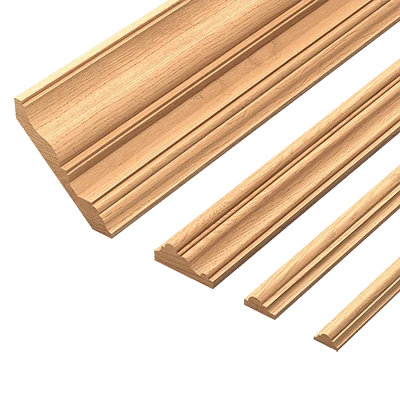
- For baseboards and moldings
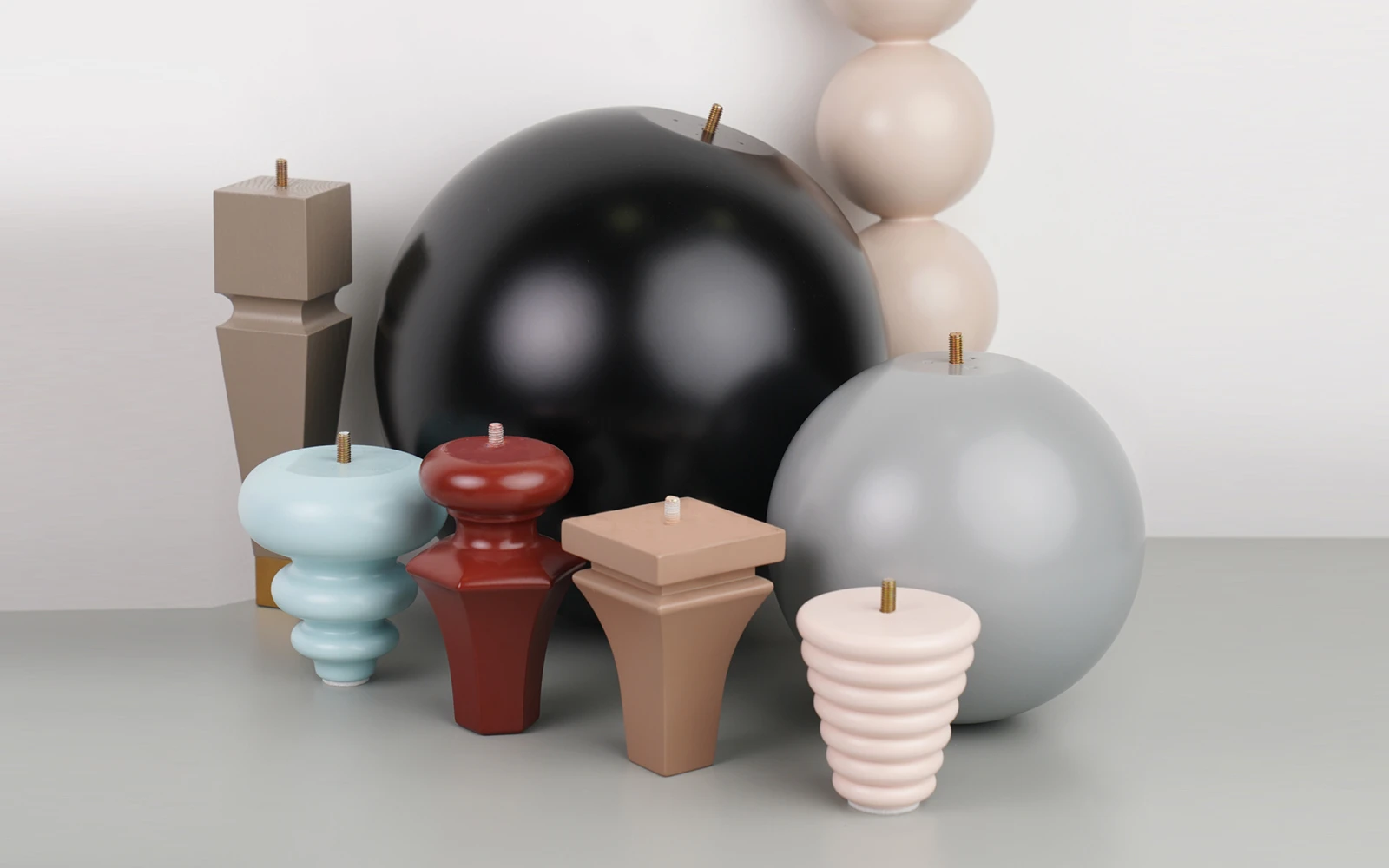
- Under furniture
- Contrasting cornice: when it works
- Decorative finials and brackets: details that make all the difference
- Finials: shape and style
- Brackets: function plus decor
- Wooden cornice in different rooms: specifics of each space
- Curtain rod for the living room
- Curtain rod for the bedroom
- Curtain rod for the study
- Curtain rod for the children's room
- Curtain rod for the kitchen
- Combining a wooden cornice with other decorative elements
- Cornice and baseboard
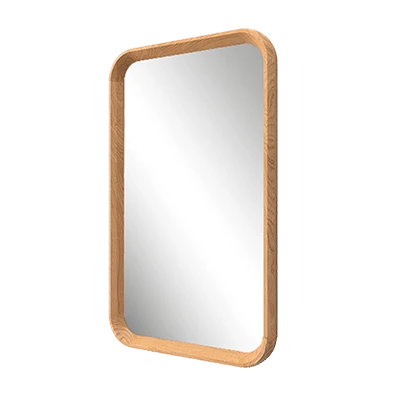
- Cornice and frames of paintings or mirrors
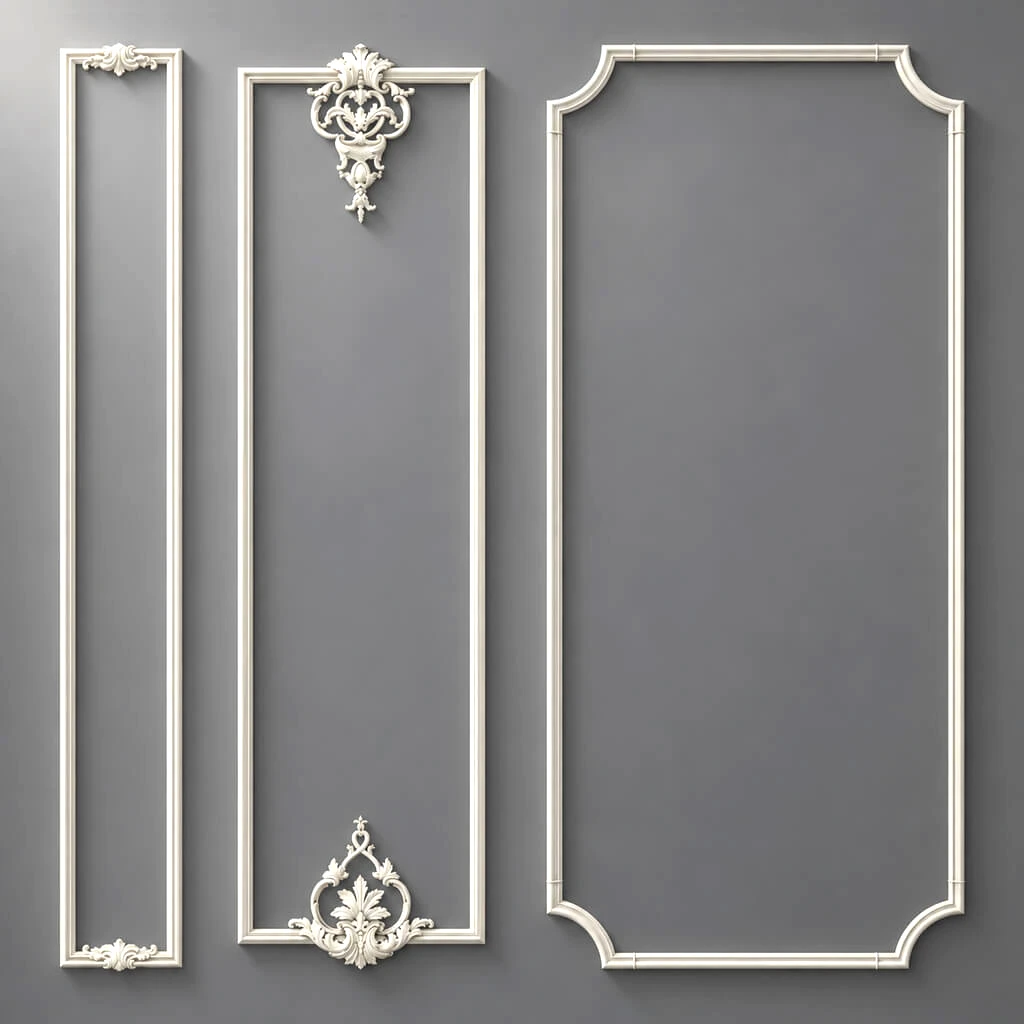
- Cornice and wall moldings
- Cornice and wooden trim
- Mistakes when choosing a wooden cornice
- What to check before buying: a checklist for confident selection
- FAQ: answers to the most frequently asked questions
- Which wooden cornice to choose for curtains?
- Can a wooden cornice be used for heavy drapes?
- Which is better: wooden or metal cornice?
- How to choose the color of a wooden cornice?
- Is a double-row cornice necessary?
- How much wider should the cornice be than the window?
- How to attach a wooden cornice to the wall?
- About the Company STAVROS
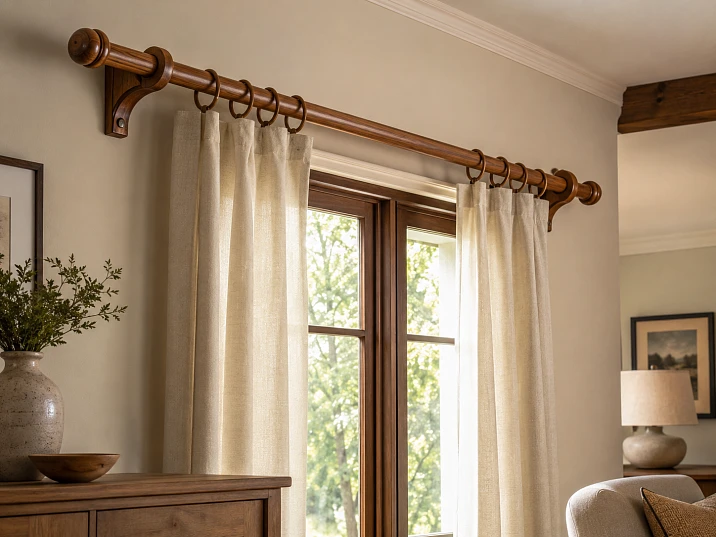
A window is not just an opening in the wall. It is a source of light, air, and mood in the room. And curtains are how you control that light. But between the window and the curtains, there is another element that determines whether the result will look expensive or accidental. This is the cornice. And if everything else in the room is made of natural wood — parquet, doors, solid wood baseboards, picture frames — then a plastic cornice above the window will become the only item that destroys this harmony.
Wooden cornice for curtains — this is not archaism or a tribute to tradition. It is a conscious choice in favor of warmth, proportions, and material unity. It is this kind of cornice that makes the window part of the interior, not just a technical point for hanging fabric.
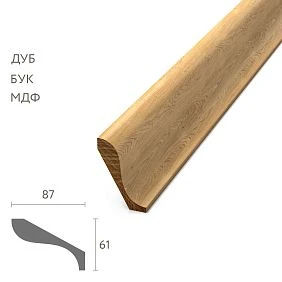
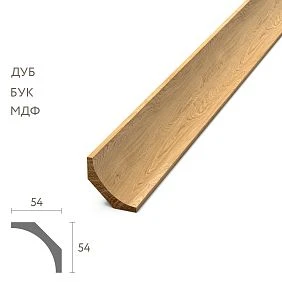
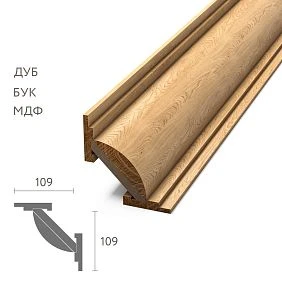
View wooden cornices STAVROS — wall-mounted, single-row and double-row, made of solid natural wood, for classic, neoclassical, and country interiors.
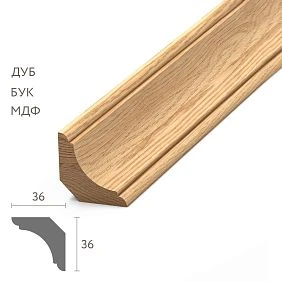
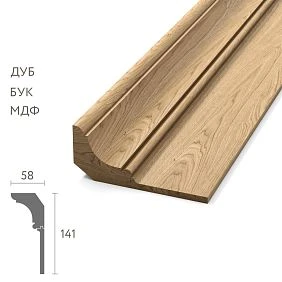
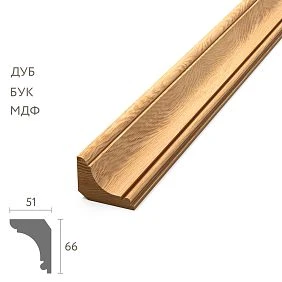
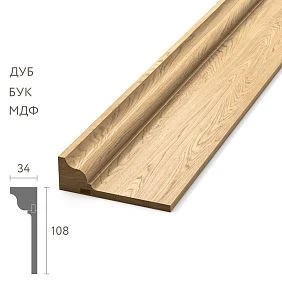
Why a wooden cornice: honest argumentation
Before diving into technical details, it is worth answering the question that every second person asks: why pay more for a wooden cornice if plastic is cheaper and easier to install?
The answer is not in the price. It is in how the room looks.
Wooden curtain rod — this is a visible element. It is at eye level when you look at the window. It is visible when entering the room. It is present in the field of view when lying on the sofa or sitting at the table. A plastic cornice with a "wood-like" imitation will only deceive from a distance of five meters. Up close, the imitation is immediately visible.
A wooden cornice exists in the interior differently: it creates a warm visual field around the window, enters into a dialogue with the wooden elements of the room, and adds a sense of natural material that cannot be imitated.

When a wooden cornice is the right choice
There are several situations where a wooden wall cornice is not just appropriate, but essential.
An interior with wooden furniture. A wooden bed, a wooden nightstand, a wooden countertop — and a metal cornice above the window. This is a break in the material system. Wooden cornice for curtains completes the wooden ensemble and makes it whole.
Classic or neoclassical style. Stucco molding, moldings on walls, profiled doors, wooden picture frames — classicism is created through a sequence of details. The cornice is one of them.
A country house or cottage. In a space where wood is the architectural material—ceiling beams, wooden floors, solid doors—a plastic or aluminum cornice breaks the overall logic.
A bedroom with warm finishes. Beige or warm gray walls, natural textiles, wooden parquet—this is an environment where a wooden cornice works flawlessly.
A study with wooden panels. Wall panels made of veneer or solid wood, library shelves, a wooden desk—a study with a wooden dominant. A metal cornice here would look like a random detail from another project.
When a plastic cornice looks too simple. There is a moment in renovation when everything is done well—and only the cornice above the window looks cheap. This is exactly the case where replacing it with a wooden one instantly elevates the level of the entire room.
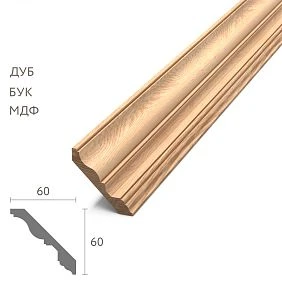
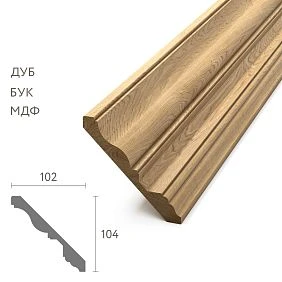
Our factory also produces:
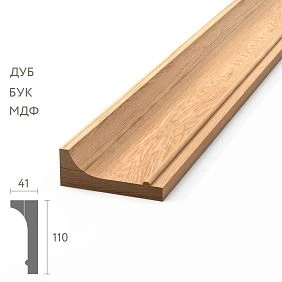
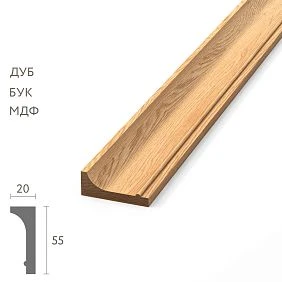
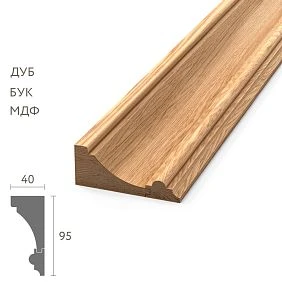
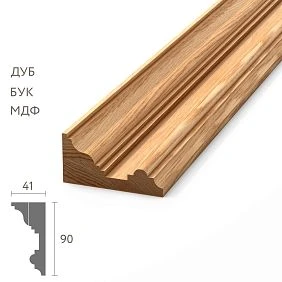
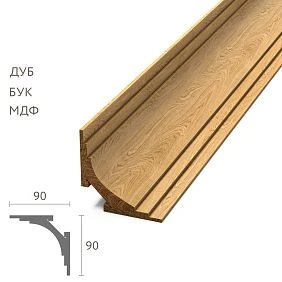
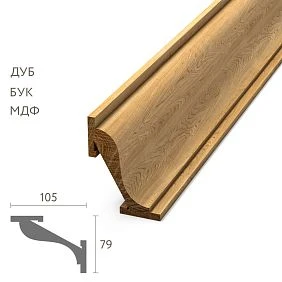
Wooden, metal, or plastic: selection table
The question of choosing the cornice material is a question about the room's style and the role the cornice should play in the interior.
| Criterion | Wooden | Metal | Plastic |
|---|---|---|---|
| Visual warmth | High | Neutral | Low |
| Style | Classic, neoclassical, country, rustic | Minimalism, loft, high-tech | Any budget |
| Combination with wooden furniture | Organic | Contrasting | Imitation |
| Service life | Decades | Long | 5–10 years |
| Decorative value | High | Medium | Low |
| Price | Higher | Medium | Below |
| Repaintability | Yes | No/difficult | No |
The conclusion is simple: if the interior is built with attention to detail and natural materials, a wooden curtain rod is a no-brainer. Metal is appropriate where the design deliberately plays on industrial aesthetics. Plastic is a temporary or budget solution.
More details on where and how wooden curtain rods are used in the article door curtain rod and wooden curtain rod: where they are used.
Get Consultation
Single or double curtain rod: the main question
This is the first technical choice to make — and it determines everything else: the pipe cross-section, the number of brackets, the type of finials, and the load on the wall.
Single-row wooden curtain rod
Wooden single-row curtain rod — one row, one pipe or pole, one set of rings. Suitable for:
-
Rooms where only curtains are needed (without sheer curtains)
-
Kitchens where one layer of fabric is sufficient
-
Spaces where the sheer curtain is attached to a separate hidden rod in a niche
-
Minimalist bedrooms where the decorative focus is on the quality of the fabric, not on layers
A single-row rod is laconic. One wooden pole with brackets and decorative finials at the ends — this is a pure architectural form that works well in modern classic interiors without excess decor.
Double-row wooden curtain rod
Wooden double curtain rod — two parallel rows. The front row is closer to the window, the back row is farther. Usually, tulle is hung on the front row, and drapes on the back.
A double rod is a more complex design. The brackets must hold two pipes at different distances from the wall. The load on the wall is greater. The length of both pipes is the same, but the number of rings and fasteners is doubled.
A double rod is needed:
-
In the bedroom, where light control is important: light tulle lets in daylight, thick curtains block it
-
In the living room with a formal window treatment: tulle + heavy drapes create a layered effect
-
In the children's room: layers allow adjusting day and night modes
Do you need a double curtain rod: three questions
-
Will there be both tulle and curtains at the window at the same time?
-
Do you want to be able to draw them separately?
-
Is it necessary to completely block light during the dark hours?
If the answer to all three questions is "yes" — a double-row curtain rod is necessary.
How to choose the length of the curtain rod: precise calculation
The length of the curtain rod is not the "window width." It is the window width plus important additions on each side. And here's why this matters.
Why the curtain rod should be wider than the window opening
When the curtains are drawn (open), the fabric gathers at the sides of the window. If the rod is installed exactly to the width of the opening — the drawn curtains cover part of the window glass. Light is lost, and the window itself visually shrinks.
The wider the rod relative to the window — the more glass is exposed when the curtains are open. This is not only a functional but also a visual effect: a wider rod makes the window (and the room) appear more spacious.
Practical rules for calculating length
Minimum extension — 15–20 cm on each side of the opening. Total rod is 30–40 cm wider than the window.
Standard extension — 25–30 cm on each side. Total rod is 50–60 cm wider than the window. This allows the curtains to be fully opened beyond the glass.
Maximum extension — 35–45 cm or more. Suitable for heavy drapes with a large volume of fabric. In a bedroom with heavy, dense curtains, all the material should go behind the glass without shading it.
For a window with slopes — the curtain rod is installed outside the slopes. The distance from the edge of the opening to the bracket must be at least 10–15 cm so that the curtains slide freely.
Practical guideline: for a window width of 140 cm — a curtain rod of 200–210 cm. For a window of 180 cm — a curtain rod of 240–260 cm.
What to do if the wall is narrow
Sometimes the window is located close to a corner, and it is not possible to extend the curtain rod on one side — there is not enough wall. In this case, extend only on one side (where there is space), and on the other side the curtain rod reaches the corner.
Important: the bracket must be fixed in the wall, not in the plaster. If the walls are made of drywall — a special anchor for hollow partitions or fastening to a load-bearing profile is needed.
Wooden curtain rod for heavy curtains: the question of strength
Light veil weighs little. But heavy drapes made of dense fabric — this is a load that the curtain rod must withstand without bending and without the risk of pulling the bracket out of the wall.
Curtain weight: guidelines
-
Light synthetics, organza, veil: 0.2–0.4 kg per linear meter
-
Medium density cotton: 0.6–0.9 kg/m
-
Linen: 0.8–1.2 kg/m
-
Jacquard, blackout, heavy velvet: 1.5–2.5 kg/m and more
For a 2.4 m curtain rod with heavy drapes (1.5 kg/m) — total load about 3.6 kg. With a margin for dynamics when opening and closing — 5–6 kg.
A solid wood curtain rod can withstand this load with the correct selection of brackets and their quantity.
Brackets: how many and with what spacing
Standard rule: a bracket every 80–100 cm along the length of the rod. For a 2 m rod — three brackets (two at the edges, one in the center). For a 2.4 m rod — three or four brackets. For a 3 m rod — four to five brackets.
Decorative brackets — it is not just a support, it is a decorative element that is visible when the curtains are open. Therefore, their shape and style should be chosen as carefully as the shape of the finials.
For heavy curtains, the bracket must be fixed in the load-bearing part of the wall — in concrete or brick. A dowel in plaster under a load of 5–6 kg is a risk. A dowel in concrete is reliable.
Curtain rod deflection: center support
A wooden pole or pipe longer than 180–200 cm without a central support will sag under the weight of the curtains. Sagging in the middle is visually unattractive and technically undesirable: the rings slide toward the center, and the curtains stop moving evenly.
The central bracket is installed in the middle of the curtain rod. It should be the same shape and style as the side ones — or more modest, so as not to draw attention.
How to choose the color of a wooden curtain rod for the interior
The color of the curtain rod is a matter of the system. The curtain rod does not exist alone in the room: next to it are walls, floor, doors, furniture, and textiles.
Under the floor
The safest and classically correct approach is a curtain rod matching the flooring. Light oak parquet — a curtain rod in a warm beige-golden shade. Dark walnut on the floor — a curtain rod in walnut.
This technique creates a vertical rhythm: the eye moves from the floor to the window and finds a repetition of the shade. The space feels like a unified system.
Matching doors
Doors are the largest wooden element in most rooms. If the doors are light walnut, a curtain rod in the same tone creates a connection between the door and window framing. The room starts to look designed, not randomly assembled.
Matching baseboards and moldings
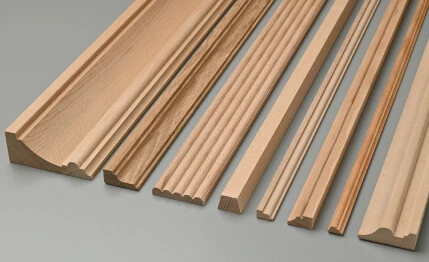
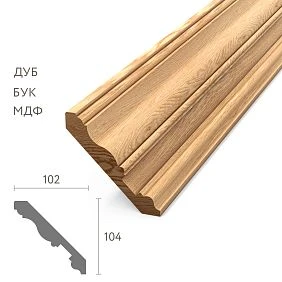
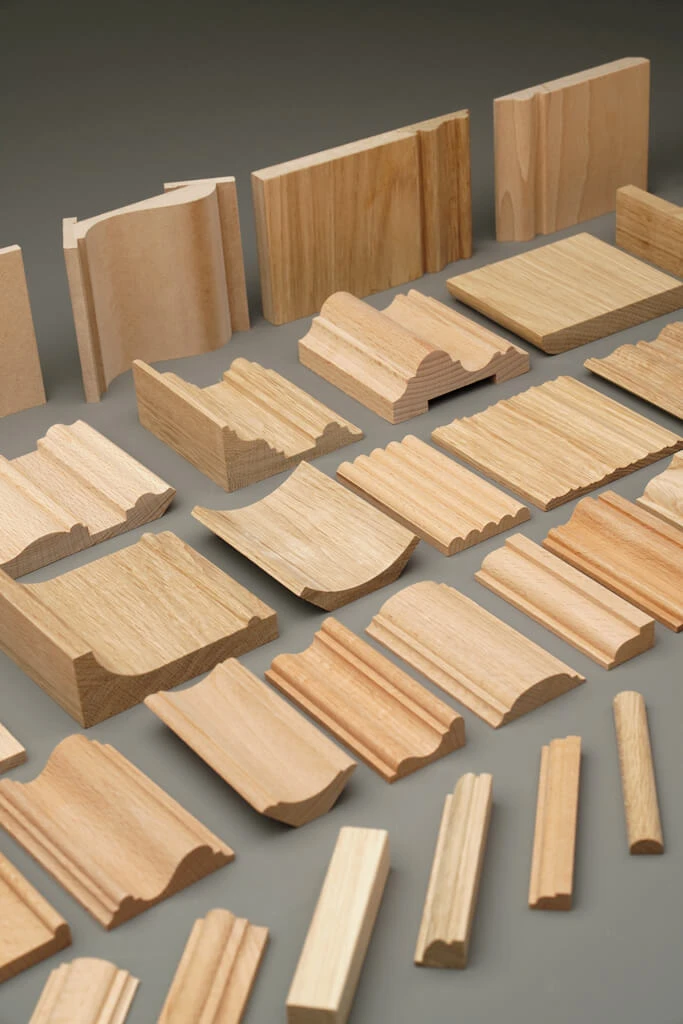
Wooden moldings and cornices, Solid wood skirting boards, Wooden trim — all of this creates a wooden contour of the room: baseboard at the bottom, ceiling molding at the top, frame moldings on the walls. If there is a window in this system, the curtain rod should support its tone.
A simple rule: no more than two different wood shades in one room. If the floor is dark and the furniture is light, choose a cornice in one of these two tones, not a third.
Under furniture
In the bedroom, the cornice is most often matched to the bed or nightstands. In the living room, to the coffee table or bookcase. Perfect match is not required: belonging to the same tonal family is enough.
Contrasting cornice: when it works
A dark cornice on a light wall. A white cornice in a room with dark elements. This is an accent — it works if the cornice is intentionally highlighted as a decorative element. For a classic living room with high ceilings, a dark wooden cornice with gold finials on a white wall is an exquisite contrasting technique.
But the contrast must be intentional. Accidental mismatch of shades is not design, it's a mistake.
Decorative finials and brackets: details that make all the difference
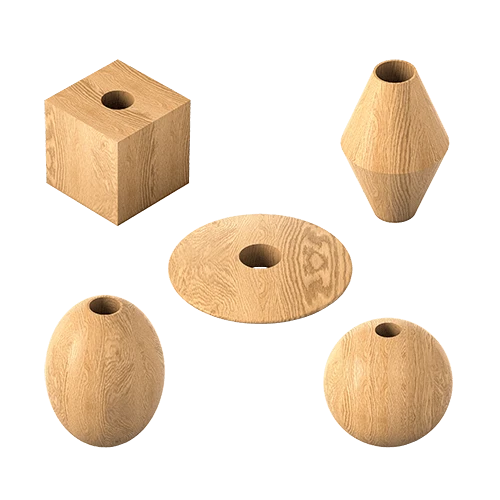
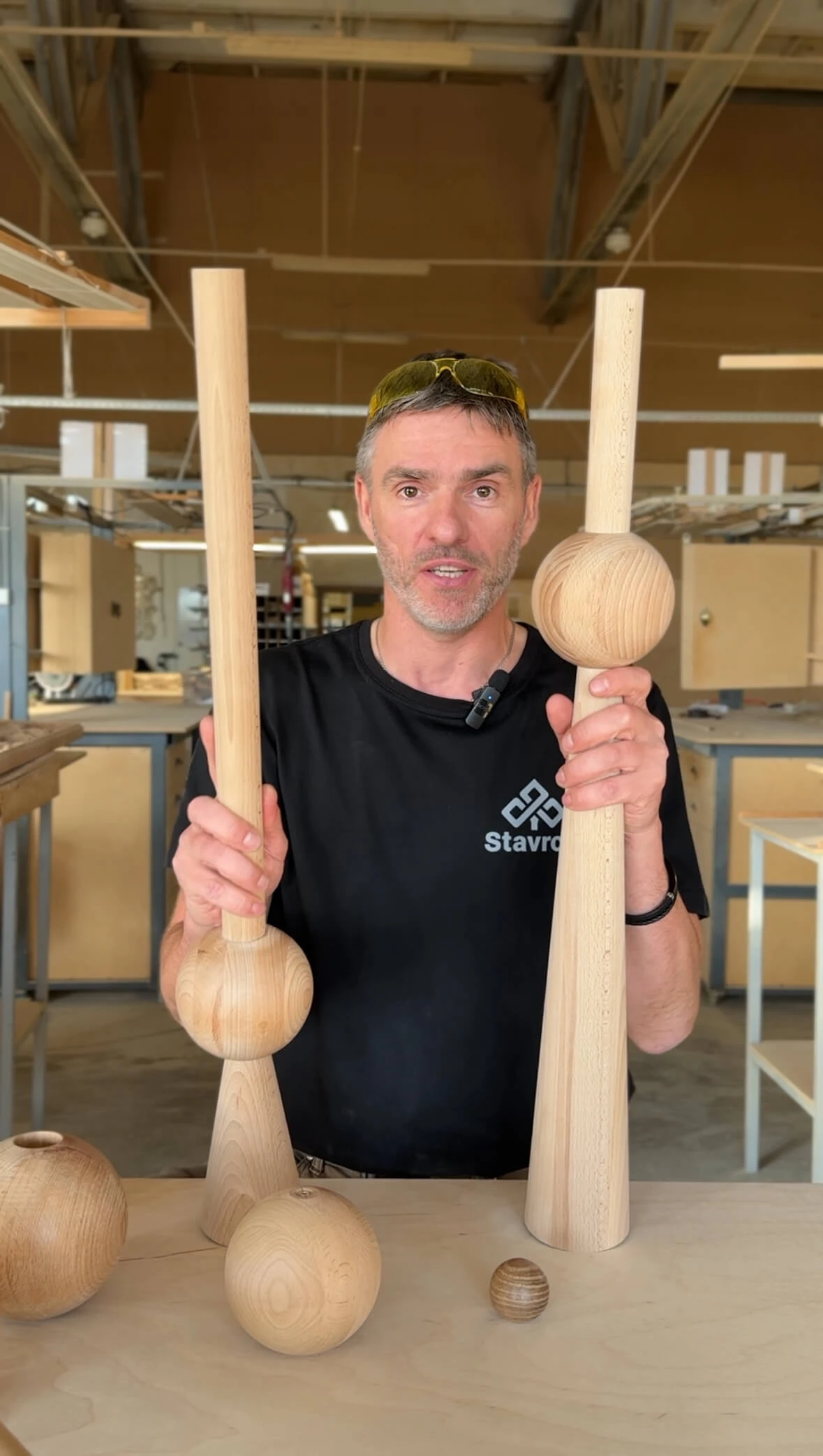
A cornice is not just a horizontal rod. It is a system of three visible elements: the pole itself, brackets, and finials. Finials cover the ends of the pole. Brackets hold the pole against the wall.
Finials: shape and style
The cornice finial is the final accent, the period at the end of a sentence. It can be:
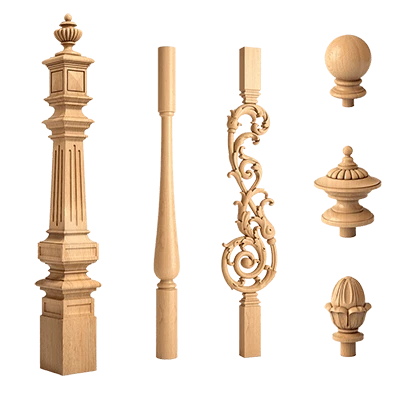
Ball — a universal classic shape. Suitable for most interiors: classic, neoclassical, Provence. A ball at the end of the cornice creates completeness and lightness at the same time.
Pike or spear — a more strict and solemn form. Appropriate in a study, library, or formal living room. Creates a sense of formality and order.
Vase or bud — decorative forms with an ornamental character. For classical and baroque interiors.
Geometric cylinder or cone — for modern solutions where a pure form without decorative pathos is needed.
Leaf or plant motif — for Provence, country, eco-interior.
Important: the shape of the finial should echo other decorative elements in the room. If picture frames have rounded corners — a ball on the cornice will be in the same rhythm. If the interior is built on clear geometry — a cylinder or cone.
Brackets: function plus decor
Decorative brackets for the cornice — these are the elements that are always visible: both when the curtains are closed and when they are open. Brackets are especially visible when the curtains are drawn to the sides — then the entire structure is open to view.
The bracket should be:
-
Strong enough to support the weight of curtains and curtain rods
-
Compatible in diameter with the curtain rod pole
-
Stylistically consistent with finials and the overall room decor
For a classic wooden curtain rod — brackets with a scroll or profiled body. For a calm modern solution — straight or L-shaped brackets without decoration.
The distance from the bracket to the wall (projection) should be such that the curtain does not touch the windowsill or hit the radiator when opening. Standard projection — from 10 to 20 cm from the wall.
Wooden curtain rod in different rooms: specifics of each space
Curtain rod for the living room
The living room is the most public and most representative space. Here, curtains often play the role of the main soft element of the interior: heavy floor-length drapes, complex drapery, several layers of fabric.
For the living room wooden double curtain rod — almost standard if there is tulle and drapes. Pole diameter — 35–45 mm for reliable support of heavy fabrics. Curtain rod length — 50–70 cm wider than the window opening to fully expose the glass when the curtains are drawn.
Decorative finials in the living room can be more expressive — it is the central room, and details are clearly visible here.
Curtain rod for the bedroom
The bedroom is a relaxation space, and the main function of curtains here is light blocking. A double-track rod with tulle and thick curtains (blackout) is the ideal solution for restful sleep.
For the bedroom, a curtain rod is often chosen slightly more modest in decor than in the living room: a calm pole profile, restrained finials. Color — to match the bed or bedside tables.
An important nuance: the curtain rod in the bedroom is often installed higher than the window opening — sometimes at the level of the ceiling molding or flush with the ceiling. This visually lifts the window and adds height to the room. For low bedroom ceilings, this is one of the most effective techniques.
Curtain rod for the study
The study is a space of concentration and character. Wooden Moldings, bookshelves, dark furniture — all this creates an interior with a distinct character. The curtain rod here should support this tone: dark wood, strict finials (spear or cylinder), a single-track design with thick curtains.
Tulle in the study is rare. More often, one thick curtain is needed, which is drawn when necessary. Single-track Wooden curtain rod here — exactly what you need.
Curtain rod for a children's room
In a children's room, two parameters are important: safety and light control. A double curtain rod with light tulle and thick curtains allows a smooth transition from daytime mode (tulle + light) to quiet time (thick curtains + darkness).
For a children's room, light or neutral wood shades are chosen — to match light furniture. Finials are best without sharp shapes — a ball or bud is preferable to a spike.
Curtain rod for a kitchen
In the kitchen, curtains serve more of a decorative function: heavy drapes are rare here. A light, slightly short curtain ("cafe" or "provence") or a short valance is more often needed.
Single-row Wooden curtain rod of short length, matching the kitchen furniture color — a delicate, appropriate solution. Heavy curtain rods and massive decorative finials are excessive in the kitchen.
Combining a wooden curtain rod with other decor elements
A wooden curtain rod is one element of the wooden decor system in a room. Its impact is enhanced when it is coordinated with other details.
Cornice and baseboard
Skirting made of solid wood and a wooden cornice is vertical rhymes: a baseboard at the bottom, a cornice at the top. When they are in the same tone, the room is perceived as a single whole, with clear horizontal lines at different heights.
This is especially expressive in a classic living room: dark oak baseboard — dark oak cornice — dark wooden doors — dark parquet. A unified system that sets the tone for the entire space.
Cornice and frames of paintings or mirrors
Wooden frames for mirrors and paintings — another point of connection. If the frames of paintings in the living room are tinted to match walnut, the cornice in the same walnut creates a decorative ensemble: the eye travels from the painting to the window and finds the same material.
This is a quiet, unobtrusive order that distinguishes a well-thought-out interior.
Cornice and moldings on walls
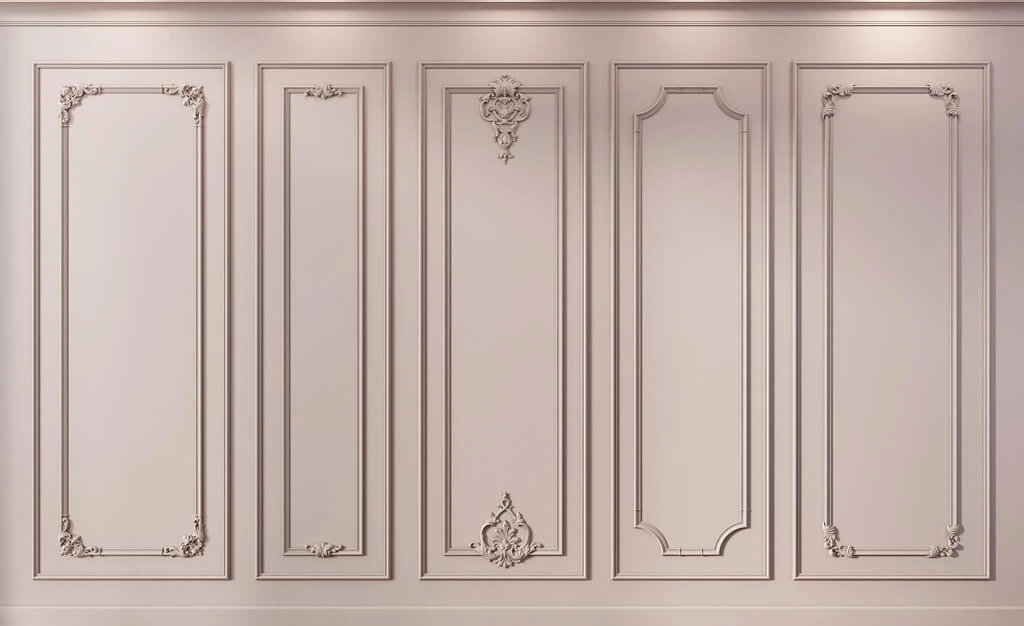
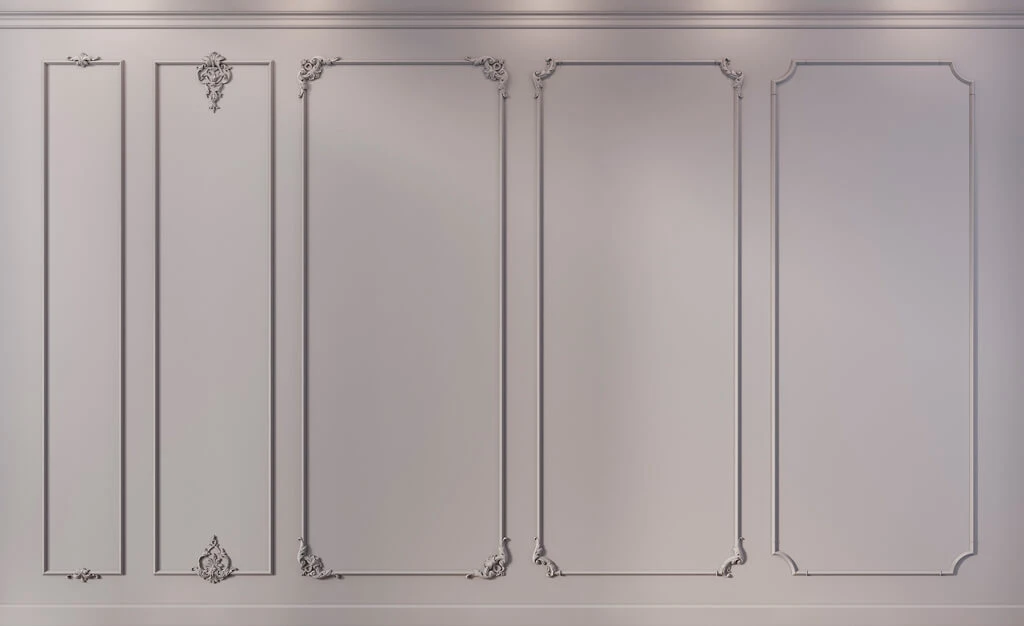
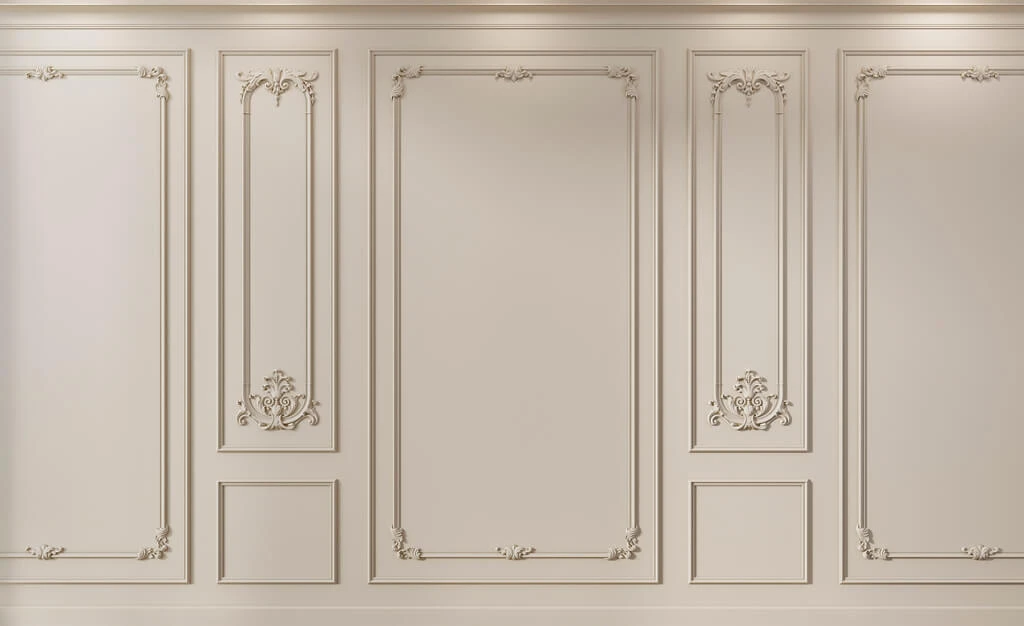
Wooden moldings and cornices on the walls create paneling — a classic finishing technique. If the molding frames are located around the window, the cornice above it should support this system. The same wood tone, a similar profile — and the window area becomes architecturally complete.
Cornice and wooden trim
solid wood millwork — profile strips used for framing doors, windows, and niches. If the window has a wooden frame made of trim, the cornice above it completes this "frame."
Mistakes when choosing a wooden cornice
Mistakes in choosing a cornice are not just aesthetic errors. Some of them lead to functional problems: a sagging cornice, curtains that do not open fully, a bracket torn from the wall.
Mistake 1: choosing a curtain rod only by color, without considering the weight of the curtains. A light wooden pole with a diameter of 25 mm for heavy jacquard drapes is a risk. For heavy fabrics, you need a pole with a diameter of 35–45 mm and reliable fastening.
Mistake 2: buying a single-track rod when you need both tulle and drapes. This is technically impossible: one row of rings will not allow you to hang two layers of fabric independently. You'll have to redo it.
Mistake 3: buying a rod that is too short. A rod exactly the width of the opening is a mistake. When the curtains are drawn, they will cover part of the glass. Always add at least 15–20 cm on each side.
Mistake 4: not installing a center bracket on a long rod. A rod 220 cm long without a center support will sag under the weight of the curtains. Mandatory: a bracket every 80–100 cm.
Mistake 5: not considering the installation height. A rod installed too low above the window reduces the optical height of the opening. Rule: the higher the rod above the window, the higher the ceiling appears. Optimal: 10–20 cm above the top edge of the opening or directly under the ceiling molding.
Mistake 6: mixing different wood shades. A rod in light oak, doors in dark walnut, baseboard in birch — that's three different woods in one room without a system. Maximum: two shades with a deliberate contrast.
Mistake 7: choosing a rod that is too massive for a small room. A wide pole with a diameter of 50 mm in a 12 sq. m room with a low ceiling is a visual overload. The scale of the rod should match the scale of the space.
Mistake 8: forgetting about the style of finials and brackets. A wooden pole with plastic "metal-look" finials is a mismatch that stands out. All elements should be from the same collection or share a stylistic language.
Mistake 9: fastening a bracket into plaster without a wall plug. Plaster does not hold the load. The wall plug must go into the load-bearing part of the wall — concrete, brick. In drywall, use a special "butterfly" plug or fastening to the metal frame profile.
Mistake 10: not checking the compatibility of the ring with the pole. Rings should slide freely along the pole but not wobble. Ring diameter: pole + 3–5 mm. Rings that are too large wobble. Rings that are too small jam when moving the curtain.
What to check before buying: a checklist for confident choice
-
Window opening width — the basis for calculating the curtain rod length
-
Free wall width on both sides — how much you can extend
-
Curtain weight — light fabric or heavy drapes (fabric type)
-
Do you need a sheer curtain — single or double curtain rod
-
Number of brackets — for load and curtain rod length
-
Wall material — concrete, brick, drywall (choice of fasteners)
-
Installation height — above the opening or flush to the ceiling
-
Bracket projection — so curtains don't touch the windowsill and radiator
-
Rod diameter — for curtain weight (25–35 mm for light, 35–50 mm for heavy)
-
The color of the wood matches the floor, doors, furniture, or baseboards
-
The style of finials — ball, spear, vase, cylinder
-
The style of brackets — consistency with finials
-
Is painting needed — for painting or already with a finish coating
-
Delivery or pickup — packaging long items requires attention
FAQ: answers to the most frequently asked questions
Which wooden curtain rod to choose for curtains?
For lightweight curtains — single-row wooden curtain rod. For tulle and heavy drapes — double-rowThe color matches the wooden elements of the room: floor, doors, baseboards. The pole diameter matches the weight of the fabric.
Can a wooden curtain rod be used for heavy drapes?
Yes, if you correctly choose the pole diameter (from 35 mm), the number and spacing of brackets (every 80–100 cm), and securely fasten them to the load-bearing part of the wall.
Which is better: a wooden or metal curtain rod?
Wooden cornice for curtains Wooden is better suited for classic, neoclassical, country, and warm interiors with wooden furniture. Metal is for minimalism and loft. In a room with parquet, wooden doors, and baseboards, a wooden curtain rod is unbeatable.
How to choose the color of a wooden curtain rod?
The first reference is the floor, doors, and baseboards. A curtain rod in the same tone as these elements creates a system. If there are several different shades of wooden elements in the room, choose the curtain rod closer to the largest one (floor or doors).
Is a double curtain rod needed?
Yes, if two layers of fabric are planned: sheer and curtain. If only one layer — a single rod is sufficient.
How much wider should the cornice be than the window?
Minimum — 30–40 cm (15–20 cm on each side). Standard — 50–60 cm (25–30 cm on each side). For heavy drapes with a large volume of fabric — 70–90 cm total extension.
How to attach a wooden cornice to a wall?
Brackets are fastened with dowels into the load-bearing part of the wall. In concrete — a standard nylon dowel. In drywall — a special butterfly dowel or attachment to the frame profile. The distance between brackets is no more than 80–100 cm.
About the company STAVROS
STAVROS is a Russian manufacturer of products made from natural solid wood for interiors. The STAVROS catalog includes — wooden valances for curtains, Decorative brackets, Solid wood moldings, cornices, and baseboards, Wooden trim, Solid wood frames and a full range of solid wood for interior and facade decor.
STAVROS works with private clients, interior designers, architects, and construction companies. All products are made from natural wood of verified quality, with the option to choose the species, profile, and finish.
If you need buy a wooden curtain rod — single or double, for a classic interior or a country house — the STAVROS catalog offers solutions that organically fit into the wooden ensemble of any space.