








































































Article Contents:
- What is a bed frame — and why it is often underestimated
- How a wooden frame outperforms assembled and particleboard counterparts
- Bed frame sizes — table and practical guide
- Standard Sizes
- Bed height — what it depends on and how to choose
- Bed width: small bedroom vs spacious
- What to look for in a wooden frame construction
- Side rails: thickness and height
- Center support beam: an essential component
- Number of cross slats
- Fastening: not with staples, but with bolts
- Wood quality: moisture and species
- Frame with or without headboard — how to choose correctly
- Frame without headboard
- Frame with wooden headboard
- Compatibility of frame with headboard
- Legs for a wooden bed frame — details that change the look
- Types of legs by shape
- Leg height
- Stability of legs
- Bed frame and bedroom interior — how one influences the other
- Bed height and visual scale of the bedroom
- Frame and nightstands
- Frame and accent wall
- Solid wood bed as a set
- Bed frame styles: from classic to minimalism
- Classic style
- Neoclassicism
- Scandinavian Style
- Country / rustic / Provence
- Squeak-free bed frame — how it works
- Bed frame for orthopedic mattress — technical requirements
- Mistakes when choosing a bed frame — a list from practice
- How to order a wooden bed frame — checklist
- Wooden bed frame and wooden bedroom system
- FAQ — most common questions about wooden bed frames
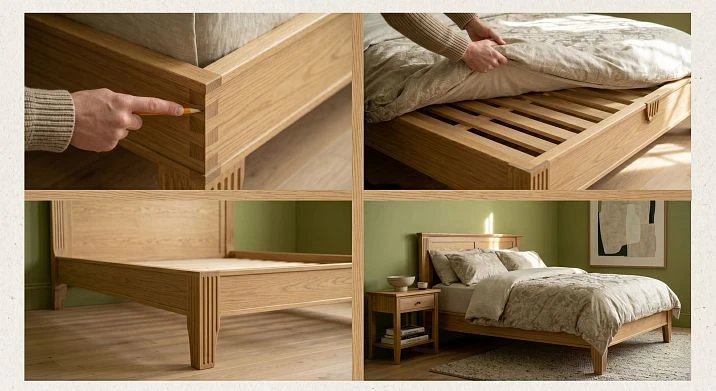
The bed is the center of the bedroom. Physically, functionally, and visually. And with all the attention given to the mattress, headboard, bedding, and nightstands, it is Bed Frame that determines how long and how well everything will work. A durable wooden frame is the foundation on which both the physical comfort of sleep and the aesthetics of the entire bedroom are built.
What is a bed frame, how to choose it by size, load, and style, how a wooden frame differs from assembled analogs, which headboard and legs to match — all this in detail, without general phrases and without fluff.
View wooden bed frames made of solid oak and beech — in the STAVROS catalog.
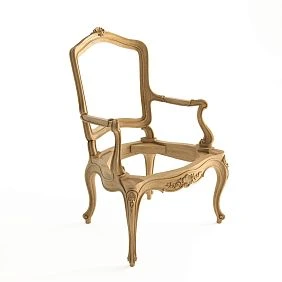
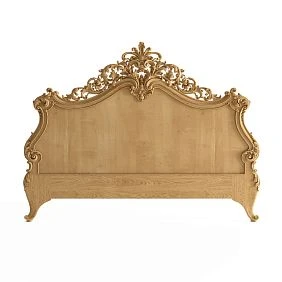
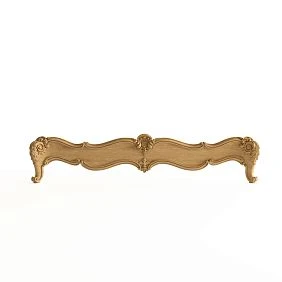
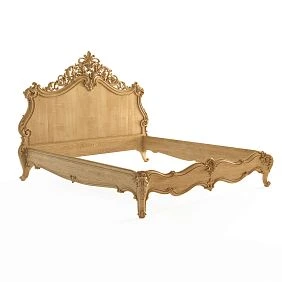
What is a bed frame — and why it is often underestimated
A bed frame is a supporting structure that holds the mattress, distributes the load (weight of the mattress + weight of one or two people), and sets the shape of the entire furniture. The frame kit includes:
-
Side rails are longitudinal horizontal beams that bear the main load along the length.
-
End rails are transverse beams (head and foot sides).
-
Center crossbar is a longitudinal support in the middle that prevents sagging in the center.
-
Legs are vertical supports that transfer the load to the floor.
-
Base consists of transverse slats or a solid panel on which the mattress is placed.
Decorative elements are separate: headboard, footboard, overlays. They affect the appearance but not the structural strength. Wooden bed frame without a headboard — a full load-bearing system. A headboard without a sturdy frame is a beautiful but unreliable structure.
Why is the frame underestimated? Because it is not visible. The mattress hides the base, bedding hides the side rails, nightstands hide the legs. But 80% of the bed's reliability lies in the invisible part.




How a wooden frame surpasses assembled and particleboard counterparts
The market offers three materials for bed frames: solid wood, MDF/particleboard, and metal. Each has its own logic, but a solid wood frame is on another level.
Strength without compromise. Oak solid wood has a density of 650–750 kg/m³ and high bending strength. Oak side rails 40–50 mm thick withstand loads that would simply "break" an analog made of thin MDF. A bed with two adults and a heavy orthopedic mattress — a load of 200–280 kg, repeated many times. A solid wood bed frame is designed for years of such use.
Repairability. A particleboard frame with a broken thread or chipped corner cannot be repaired. Solid wood can be repaired: a crack can be filled, a loose joint can be tightened, a damaged part can be replaced. Furniture Frames from Solid Wood — this is a long-term investment, not a consumable.
Any finish. Solid wood accepts any topcoat: enamel, oil, varnish, stain. It can be painted to match bedroom furniture, the headboard, or wall panels. Particleboard with PVC film cannot be repainted.
Compatibility with decorative elements. A wooden frame is the base for a wooden headboard, carved legs, appliqués, molding. Everything from one material, in one tint — a unified system. A metal frame with a wooden headboard is a contrast that needs to be deliberately played up.
Eco-friendliness. Solid wood does not emit formaldehyde, contains no PVC glue, and is not afraid of humidity within reasonable limits. This is especially important for a bedroom.
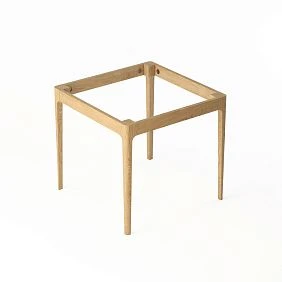
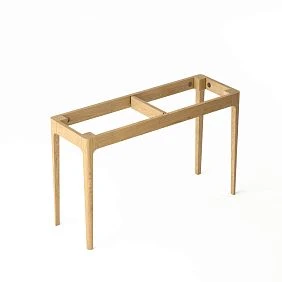
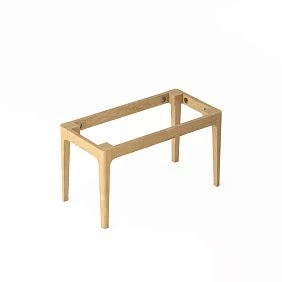
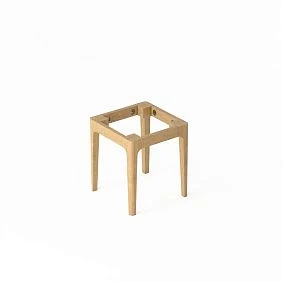
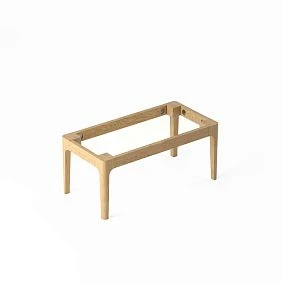
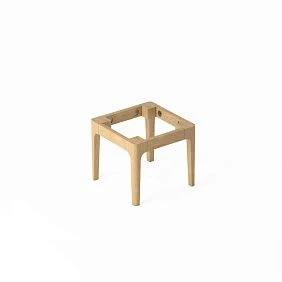
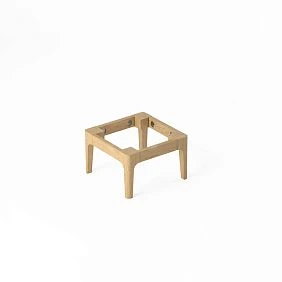
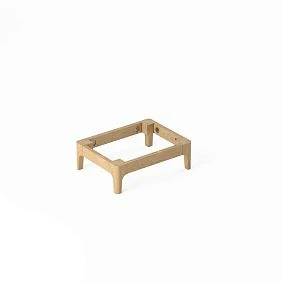
Our factory also produces:
Bed frame sizes — table and practice
First and foremost rule: the frame size is determined by the mattress size, not the other way around. The internal dimensions of the frame's seating area must match the mattress size with a tolerance of ±5–10 mm.
Get Consultation
Standard Sizes
| Bed type | Mattress size | Internal frame dimension | External frame dimension |
|---|---|---|---|
| Single | 80×200 | 80×200 | 90–100×210–215 |
| Twin | 120×200 | 120×200 | 130–135×210–215 |
| Double | 140×200 | 140×200 | 150–160×210–215 |
| Double | 160×200 | 160×200 | 170–180×210–215 |
| King Size | 180×200 | 180×200 | 190–200×210–215 |
| Euro King | 200×200 | 200×200 | 210–215×210–215 |
The external frame dimension is larger than the internal one — by the thickness of the side rails and structural elements. This is important to consider when planning the bedroom: from the wall to the nightstand, from the nightstand to the walkway.
Bed height — what it depends on and how to choose
Total bed height = frame height (legs + side rails) + mattress height.
Popular configurations:
-
Frame height 250–280 mm + mattress 200 mm = total height 450–480 mm. Comfortable seating for most adults.
-
Frame height 180–200 mm + mattress 250–300 mm (high orthopedic) = 430–500 mm. Suitable for a high mattress.
-
Frame height 350–400 mm + mattress 200 mm = 550–600 mm. High bed — for a classic bedroom with high ceilings.
-
Frame height 100–150 mm + mattress 200 mm = 300–350 mm. Low bed — for Japanese or minimalist style.
Comfortable seating height for an adult: 440–520 mm. This is the height at which a person sits on the bed without 'falling' down or 'climbing up'.
Bed width: small bedroom vs spacious
For a bedroom of 10–13 m² — double bed 160×200. With proper arrangement: bed, two nightstands, wardrobe. For a bedroom of 15 m² or more — 180×200 without compromise. King Size 180–200×200 — for spacious bedrooms with high ceilings and a large headboard.
Important: the external frame size of 160×200 already means 175–180 cm in width including the side rails. Plus two nightstands of 40–50 cm each = minimum bedroom width for such a bed: 270–280 cm with 40 cm walkways on each side.
What to look for in a wooden frame construction
Choosing bed frame from solid, you need to evaluate not only the appearance — but also the structural solutions that determine strength and durability.
Side rails: thickness and height
Side rails are the main load-bearing part. They bear the load along the entire length of the bed. Minimum thickness for a reliable oak bed: 40 mm. Optimal: 45–55 mm. Side rail height (vertical dimension): 120–160 mm. The higher the side rail, the larger the support area for the mattress and the stiffer the structure.
Particleboard counterparts often have side rails of 16–18 mm — that's 2.5 times thinner. The difference in strength is even more significant because bending strength depends on thickness to the third power.
Central crossbar: a mandatory component
For double beds with a width of 140 cm or more — a central longitudinal crossbar is mandatory. Without it, the base sags in the center, the mattress deforms, and the bed creaks and wobbles.
Central crossbar made of solid wood with a cross-section of at least 40×60 mm — for a width of 160 cm. For 180 cm — 50×70 mm and additional transverse braces. A central support leg in the middle of the crossbar — for beds 200 cm long reduces the load on the longitudinal beams.
Number of transverse slats
Slats (transverse rails under the mattress) are an important element. Too sparse — the mattress sags between them. Optimal spacing: 60–70 mm between slats. For a 200 cm bed, 14–17 slats are needed. Slat thickness: 8–10 mm for curved (orthopedic), 14–18 mm for flat. Curved slats are better for orthopedic mattresses — they provide shock absorption.
Fasteners: not with staples, but with bolts
A quality bed frame is assembled with furniture bolts and nuts (confirmat screws or M8–M10 bolts), not with staples and furniture nails. A bolted connection can be tightened if necessary. Staples cannot.
Knock-down connections (eccentric ties, bolt-nut with washer) allow disassembly and reassembly of the frame without loss of strength. Glued joints + tenon-groove on legs are for non-knockdown structures that are not transported.
Wood quality: moisture content and species
Solid wood for the frame must be dry: moisture content 8–12%. Overdried (less than 6%) — cracks. Damp (more than 14%) — will warp as it dries, joints will come apart.
Oak is the best choice in terms of strength/durability/texture ratio. Beech is slightly softer, a bit lighter, also strong. Pine is acceptable for budget options, but less durable and softer (dents from furniture legs). Frames and furniture made of solid wood made of oak and beech — a long-term solution.
Frame with or without headboard — how to choose correctly
This question seems purely aesthetic. In reality, it is not. The headboard affects the style, comfort (you lean against it while sitting in bed), and how the bed "reads" in the bedroom space.
Frame without headboard
For whom: minimalist interior, Scandinavian style, modern bedroom without accents, small room. Pros: more visual space, the bed does not "overwhelm" the room. Cons: no support point when sitting, visually the bed is less "rich".
Compromise: frame without headboard + decorative wall panel made of of slatted panels behind the bed. The panel visually acts as a headboard without adding structural complexity.
Frame with wooden headboard
Bed backrest (headboard) made of wood — a wooden panel attached to the rear end of the frame or to the wall. Options: smooth panel, panel with frame relief, carved backrest.
For a classic bedroom — a headboard with a frame profile made of oak, with wooden moldings around the perimeter. Tinting to match the furniture. Height: 700–900 mm from the mattress level (or from the floor level — 1100–1300 mm total headboard height).
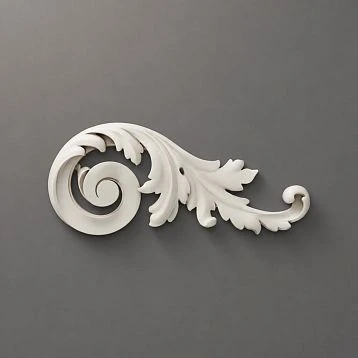
For neoclassicism — a symmetrical back with with wooden appliqués, panels with relief. Painting in ivory or gray with gold patina.
For a country house — a massive back made of beech or oak with a live texture, oiled or lacquered. No extra decorations — the material speaks for itself.
Frame compatibility with headboard
An important technical point: the headboard is attached either to the side rails (standard bolt connection) or to the wall (wall-mounted). If you plan to buy a frame and later add a headboard, make sure the rails have holes or mounting points for the back. In STAVROS frames, this is provided.
Legs for a wooden bed frame — details that change the look
Bed legs are a visible detail. They determine the seat height, stability, and style.
Types of legs by shape
Straight square legs (40×40 or 60×60 mm) — for modern and Scandinavian interiors. Simple, stable, visually light. Solid wood furniture legs of this type — in natural beech or oak.
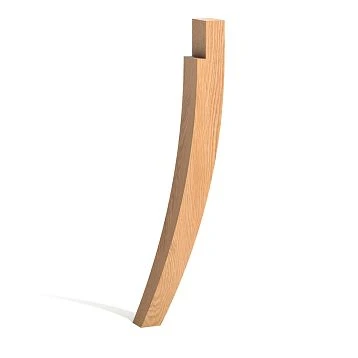
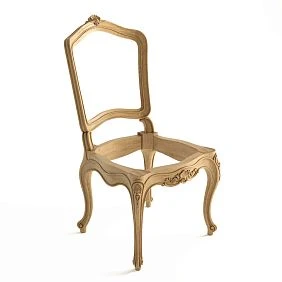
Turned legs (lathe-turned, with relief) — for a classic bedroom. Profile: cabriole, barrel, spool. Height: 120–180 mm. Carved and turned wooden legs — a separate category in the catalog. For stain, varnish, enamel.
Tapered legs — for Scandinavian and mid-century modern styles. Narrowing downward, at an angle. Height 150–200 mm. Give the bed a "light" visual appearance.
Massive supports (pillar-shaped, 80×80 mm and larger) — for a heavy classic bed with a large headboard. The support is perceived as part of the bed's architecture.
Leg height
-
70–100 mm — low bed (Japanese, minimalist style).
-
120–180 mm — standard height, comfortable for most.
-
200–280 mm — high bed (classic, high ceilings, for storage).
Leg height + side rail height = total frame base height. Add mattress height to this = final bed height.
Leg stability
The bed legs bear significant load and experience lateral forces (the bed "rides" across the floor). Fastening: M10 bolt into the side rail body to a depth of 40–50 mm. Plus an additional safety screw. Felt or silicone pads are installed on the legs — to avoid scratching the floor and reduce lateral displacement.
For heavy beds (180×200 solid wood + 250 mm mattress) — 6 support points: 4 corner legs + 2 supports under the central crossbar. This ensures even load distribution and no sagging.
The bed frame and bedroom interior — how one influences the other
The bed frame is not just a technical base. It is a spatial object that occupies 20–35% of the bedroom area and shapes its image.
Bed height and visual scale of the bedroom
Low bed (height up to 350 mm) — increases the perceived ceiling height. The ceiling "recedes." In a small bedroom with ceilings of 2.6–2.7 m — a reasonable choice.
High bed (height 550–600 mm) — adds weight and "furniture-like" presence. In a bedroom with ceilings of 3 m and above — organic. In a standard apartment — can feel "oppressive."
Frame and nightstands
Nightstands should be the same height as the mattress surface. Standard: frame height + mattress height = nightstand height. When choosing a frame, immediately think about the nightstands. If you plan separate nightstands, ensure their height matches the final bed height.
Frame and accent wall
An accent wall behind the bed is a popular design technique. The headboard is placed against the accent wall: it could be accent wallpaper, a painted wall, Slatted wall panel, decorative moldings.
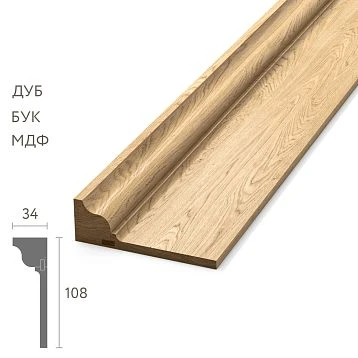
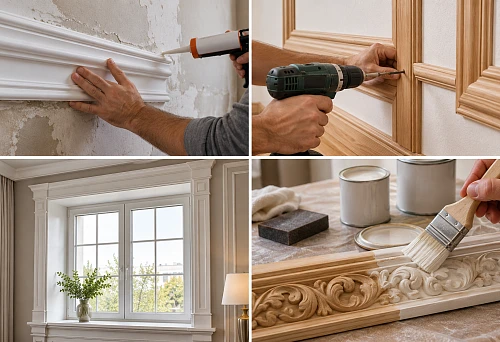
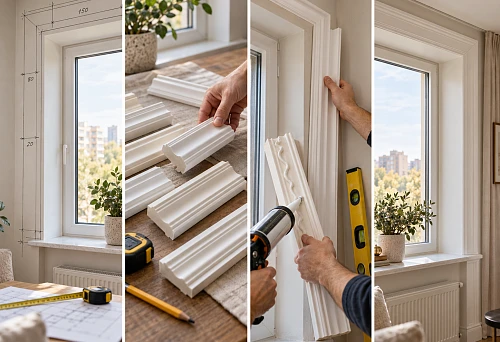
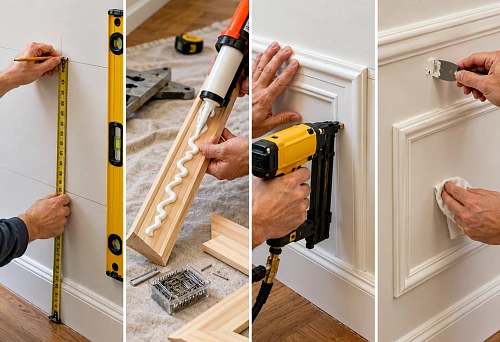
Wooden moldings for the bedroom on the accent wall behind the bed is a technique that creates a "framing" effect, as if the bed is in a niche. Moldings matching the headboard and frame — a unified wooden bedroom program.
Solid wood bed as a set
Solid wood beds — this is a frame + headboard + legs in one system. This is exactly the approach STAVROS implements in its assortment: each element is designed as part of a set, not as a random detail.
Bed frame styles: from classic to minimalism
Classic style
Massive wooden bed frame made of oak, high turned legs, headboard with frame relief. Toning: dark walnut, cherry, mahogany. Bed height: 550–600 mm. Headboard 900–1100 mm high. Moldings on the side rails and backrest are part of the decorative program. Carved Wooden Inlays At the center of the headboard — a classic accent.
Such a bed is the dominant feature of the bedroom. It requires high ceilings (from 2.8 m), a spacious room (from 16 m²), and coordinated furniture.
Neoclassicism
Moderate size, neat profile. Headboard with a molding frame, side rails with a chamfer, tapered legs. Paint: ivory enamel, light gray, soft white. Height 480–520 mm — comfortable, not monumental.
Symmetry is important for a neoclassical bedroom: two identical nightstands, two sconces, a symmetrical headboard. The frame is the foundation of this symmetry.
Scandinavian style
Natural beech or oak without tinting, oil-finished. Straight legs 150–180 mm, smooth headboard without relief or none at all. Minimal decor. Height 430–470 mm. The frame "doesn't shout" — it simply exists, like a good tool.
A slatted panel on the wall behind the bed in the same wood species — and the Scandinavian bedroom falls into a single system.
Country / rustic / Provence
Warm wood with a lively texture. Solid beech or oak under oil with a wax finish. Headboard with a simple frame or without a frame, but with a powerful horizontal top beam. Post legs 80–100×80–100 mm, height 120–180 mm. Intentional "roughness" of processing is possible: visible texture, slight matte finish.
Such a frame looks good with linen bedding, wooden ceiling beams, wooden floors. A country bedroom with good wood is an aesthetic that works without excessive decor.
Bed frame without squeaking — how it works
Squeaking is the main complaint about wooden beds. But it's not the wood that squeaks — it's the joints.
Cause 1: Loose fasteners. Bolts and screws that hold the side rails to the legs gradually loosen under dynamic load. Solution: tighten all bolted connections once a year.
Cause 2: No gaskets between slats and side rails. Slats "walk" on the wood of the side rail — squeaking. Solution: felt or polymer gaskets under the slats.
Cause 3: Slats rub against the central crossbar. Solution: grooves for slats in the crossbar (fixation) or gaskets.
Cause 4: Too dry air. At humidity below 35%, wood dries out, joints weaken. Solution: maintain humidity at 45–60% in the bedroom.
Cause 5: The central leg does not touch the floor. If the floor is uneven, the central support "hangs" and does not bear load. Solution: adjustable supports with a rubber base.
Quality Wooden bed frame with proper joints, gaskets, and good fasteners — does not squeak when assembled correctly.
Bed frame for orthopedic mattress — technical requirements
An orthopedic mattress requires a proper base. The frame is the base, and it determines whether the mattress works as intended by the manufacturer.
Slatted base with a pitch of 60–70 mm is optimal for spring and springless orthopedic mattresses. Each slat bends slightly under load — this is shock absorption that complements the mattress's performance.
Solid base (hardboard, plywood) — only for mattresses without springs. A spring mattress needs ventilation from below.
Slat width — 53–63 mm for good support, no more than 80 mm (otherwise the gap between slats is too large).
Presence of zoning — in some frames, slats in the lumbar area are installed denser (with a smaller gap) — this provides additional zonal support.
If the mattress is heavy (25–30+ kg) — make sure there is a central crossbar and that it is supported by a leg in the middle.
Mistakes when choosing a bed frame — a list from practice
Buying a frame without checking the mattress size. A 160×200 mattress in a 160×200 frame — does not fit. Because the internal size of the frame should be 160×200, and the external will be 175–180 cm. Always clarify: "internal seating size".
Not accounting for total load. Two people at 90 kg each + a 30 kg mattress = 210 kg of constant load. Plus dynamics. A frame with 18 mm MDF side rails will not withstand this for long. Solid oak — will withstand.
Choosing too low a height. A bed 300–320 mm high — inconvenient for people 50+ and for people with joint diseases. Comfortable: 440–500 mm.
Placing a heavy carved headboard on a thin frame. A 1200 mm high solid wood headboard weighs 15–20 kg and creates significant leverage. The frame side rails must be strong enough to attach it.
Forgetting about the central crossbar. A double bed frame without a central crossbar — will sag or start creaking after a year.
Choosing a frame outside the bedroom context. A powerful dark classic frame in a white minimalist bedroom is disharmony. The frame is part of the style, not a separate item.
Saving on material 'because it's not visible'. The frame is hidden under the mattress — but it determines whether the bed will last 5 years or 25.
Not asking about compatibility with a lift mechanism. If you plan storage under the bed — the frame must be designed for a lift mechanism in advance. Redoing it later is more difficult.
How to order a wooden bed frame — checklist
Before purchasing, go through this checklist:
-
Mattress size — exact, considering the brand and model (different manufacturers may have different actual sizes).
-
Desired bed height — with mattress.
-
Material — oak or beech. The wood species affects the texture and tint.
-
Is a lift mechanism needed — for storage under the bed.
-
Headboard — with the frame or separately. Height and style of the headboard.
-
Legs — height, shape, tint.
-
Style and coating — varnish, oil, enamel, stain. To match the bedroom furniture tone.
-
Base type — slats (orthopedic or flat) or solid panel.
-
Decorative elements — Moldings, applique on the side rails, carving.
-
Quantity — one bed or a series for a hotel / multiple bedrooms.
Wooden bed frame and wooden bedroom system
The bed — in the center. But the bedroom is a system. bed frame from solid works in ensemble with:
-
wooden moldings on the accent wall — create an architectural backdrop for the bed.
-
wooden skirting board — holds the horizontal line at the floor in the same material.
-
with wooden appliqués — for decorating the facades of bedside tables.
-
with matching legs — for cabinets and dressers in the same style and tint.
-
Solid wood products — the full arsenal of wooden decor for the bedroom.
When the frame, cabinets, baseboard, moldings, and overlays are all made of the same material, the bedroom ceases to be a set of furniture and becomes an interior.
FAQ — most frequent questions about wooden bed frames
Which bed frame is better — wooden or metal?
A metal frame is durable but visually "cold" and harder to match with wooden furniture, headboard, and wall decor. wooden bed frame fits organically into the bedroom interior, especially if there are wooden cabinets, baseboards, or trim nearby.
Can I buy a bed frame separately from the mattress?
Yes, and that's correct. The main thing is to know the exact size of the mattress to choose a frame with the required internal seating dimension. The mattress and frame are separate purchases with different lifespans.
What is more important: the frame or the headboard?
They serve different purposes. The frame is responsible for strength, stability, and durability. Wooden bed headboard — for appearance and sitting comfort. In a good bed, both elements are well thought out.
Why does a wooden bed frame squeak?
The cause is almost always not the wood, but the connections: loose fasteners, slats without pads, a leg not touching the floor. Once a year, tighten all bolts and check the pads under the slats.
Will a wooden frame work for a heavy orthopedic mattress?
Yes, provided: sturdy side rails made of solid wood 40+ mm, a central crossbar, support for the crossbar, slats with a spacing of 60–70 mm. Furniture bed frame Made of oak, designed for loads significantly exceeding standard household scenarios.
What size frame fits a 160×200 mattress?
Internal frame seating size: 160×200 cm (matches the mattress, tolerance ±5 mm). External size: 175–180×210–215 cm including side rails.
Can the wooden frame be painted?
Yes. Solid oak and beech can be painted, tinted with stain, coated with oil or varnish. The coating is applied after assembly — then joints and fasteners are hidden under the finish layer.
How many legs does a double bed need?
Minimum 4 corner legs + 2 supports under the central crossbar. Total: 6 support points. This ensures even load distribution and stability without squeaking.
A bed is an item entrusted with a third of your life. That's the total amount of sleep over 70 years of a person's life. With such "operating parameters," choosing a frame is a decision not for a year or two. wooden bed frame made of solid oak or beech is a foundation that holds both comfort and aesthetics, and the cost of furniture in the long term.
STAVROS manufactures solid wood bed frames, wooden headboards, Furniture legs, Moldings и Decorative Inserts — all in one system, from one material, with one quality standard. Oak and beech dried in-house to 8–10%, own workshop, strict control at every stage. Warehouses in St. Petersburg and Moscow, Contact us to confirm shipping to your destination. STAVROS — when a bed is made to last for years.