




























































Article Contents:
- Why bed legs are not a minor detail but the foundation of the entire structure
- STAVROS product base: which legs and related components to use
- Which beds are suitable for wooden legs
- Legs for a wooden bed frame
- Legs for a bed base
- Legs for a double bed
- Legs for restoring an old bed
- Legs for increasing bed height
- Straight Legs
- Turned legs
- Carved legs
- Figurative and combined shapes
- Modern bedroom
- Classic bedroom
- Neoclassicism
- Art Deco
- Provence and country style
- Historical and designer interior
- Can you buy wooden bed legs separately?
- Which legs are best for a wooden bed?
- What bed leg height is comfortable?
- Will wooden legs fit an orthopedic base?
- What legs are needed for a double bed?
- Can you replace old bed legs with wooden ones?
- What is better: unpainted legs or coated legs?
- Are carved legs suitable for a modern bed?
- How to calculate the number of legs for a bed?
- What to check before buying legs for a bed?
- Can I buy legs for a bed in St. Petersburg or Moscow through STAVROS?
- Where to buy wooden legs for a STAVROS bed?
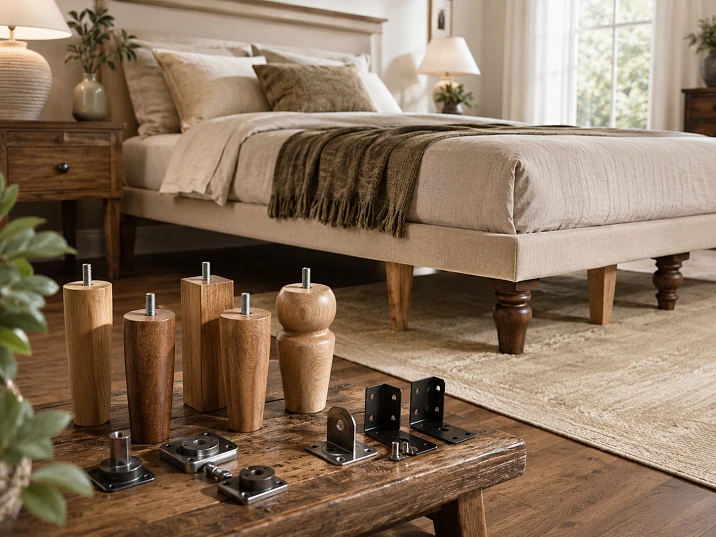
You should buy wooden legs for a bed not when "something is missing from below," but when you need to properly assemble the entire seating of the sleeping area: height, stability, style, ease of cleaning, compatibility with the frame, and visual connection with the bedroom interior. A bed leg seems like a small detail only until you install one that is too low, too thin, too decorative for a heavy base, or not matching the frame's attachment. After that, the bed starts to wobble, the mattress ends up uncomfortably high or low, and the beautiful bedroom loses its cohesion.
Queries like "buy legs for a bed," "legs for a bed buy," "buy wooden legs for a bed," "buy legs for a bed frame" most often appear in three situations. The first is needing to replace old supports: they broke, loosened, darkened, or don't match the style after renovation. The second is assembling a new frame, and the buyer is looking for durable wooden furniture legs for the bedroom. The third is needing to raise the bed, make it more comfortable, beautiful, proportional, and connect it with the headboard, footboard, nightstands, dresser, and other furniture.
STAVROS offers Wooden furniture legs STAVROS for various interior tasks: unpainted supports for further finishing, coated legs, classic and decorative solutions, elements for solid wood furniture and projects under individual style. For a bed, not only shape and beauty are important, but also practical compatibility: support area, attachment method, load, number of legs, mattress height, presence of central support, base type, and total weight of the structure.
In this article, we will analyze how to choose wooden legs for a bed under a frame: what height is considered comfortable, when low or high supports are needed, how straight, turned, and carved shapes differ, how not to make a mistake with the attachment, why a double bed often needs not just four corner legs, how to combine supports with the headboard, footboard, and bedroom furniture, where to buy legs for a bed on the STAVROS website, and what to clarify before ordering.
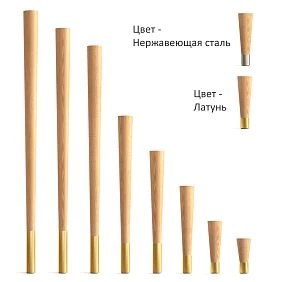

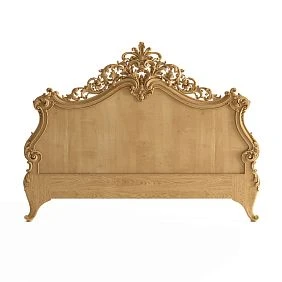
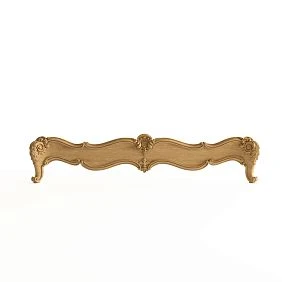
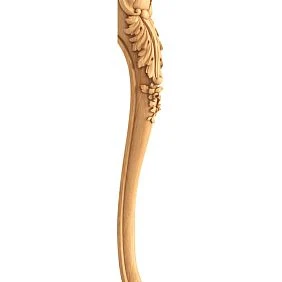
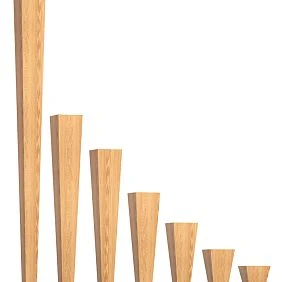
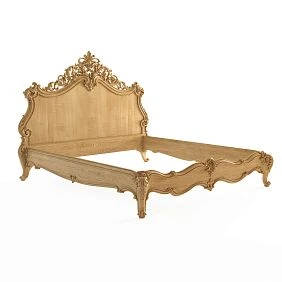

Why bed legs are not a minor detail, but the foundation of the entire structure
A bed is perceived from above: mattress, bedspread, headboard, decorative pillows, textiles. But it lives from below. It is the legs that bear the load, set the height, distribute weight, determine whether you can clean under the bed, whether the frame will rub against the floor, and whether the base can withstand daily use. If the supports are chosen incorrectly, even a beautiful frame starts to look temporary.
Bed legs are the point of contact between furniture and the floor. They bear the weight of the frame, mattress, bedding, and people. In a double bed, the load is especially high. If the support is weak, too small in area, or poorly fastened, the bed may start to wobble, creak, sag in the center, damage the floor, or gradually break the fastening units.
The second role of legs is ergonomics. The height of the bed affects how comfortable it is to sit down, stand up, make the bed, care for the floor, use a robot vacuum, store boxes under the bed, or, conversely, keep the bottom visually light and open. Sometimes a buyer looks for "buy bed legs to increase height" because the old seat is too low: it is uncomfortable to get up from, especially for elderly people or those who like high mattresses.
The third role is style. Wooden legs can make a bed classic, neoclassical, modern, rustic, soft in appearance, strict, light, or substantial. Straight supports give calm geometry. Turned legs add a carpentry character. Carved bed legs create a decorative accent and work in tandem with a carved headboard, footboard, baseboards, doors, dresser, nightstands, and other wooden elements.
The fourth role is maintainability. If the frame is good but the old supports are broken or outdated, you don't always need to replace the entire bed. Sometimes it's enough to buy wooden bed legs separately, check the fastening, replace the supports, and refresh the bedroom's look. This is especially relevant for solid wood furniture, classic beds, restoration of old frames, and projects where the main structure needs to be preserved.
A bed leg is a small element that can ruin or save proportions. Too thin supports under a massive headboard look like a weak foundation. Too large carved legs under a minimalist frame conflict with the style. Too low supports make the bed heavy and grounded. Too high ones can disrupt stability and visual balance. Therefore, you should choose not "I like the shape," but "does this leg suit my frame, mattress height, and interior."
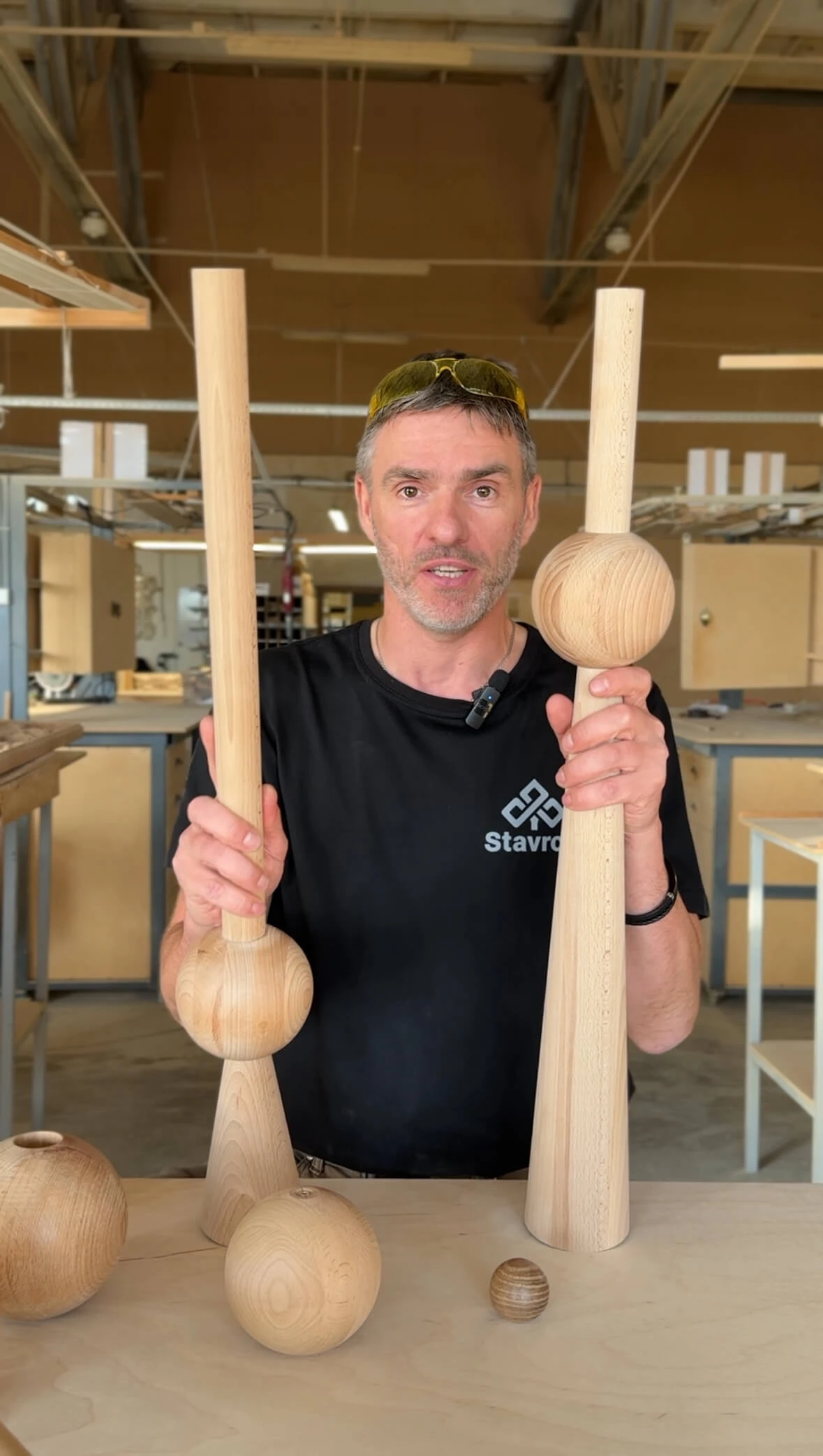
STAVROS product base: which legs and related elements to use
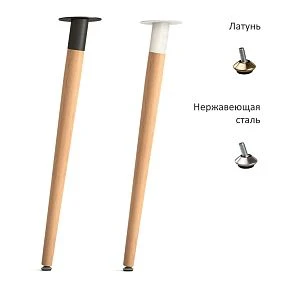
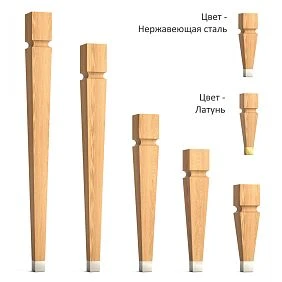
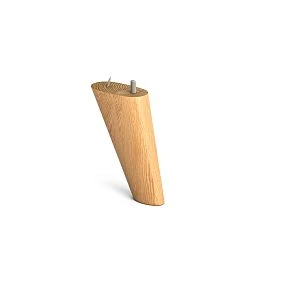
For the topic "buy bed legs," the main product base is the category STAVROS wooden furniture legsThis is a general section for wooden furniture legs, from which you can select solutions for beds, nightstands, dressers, tables, cabinets, armchairs, and other furniture. However, it is important not to mix all scenarios into one in the article: a bed requires special attention to height, load, and fastening.
If the buyer needs a blank for custom finishing, it is worth looking at from STAVROS open boundless possibilities for designers, furniture makers, and anyone striving to create unique high-quality furniture.. This is convenient when the legs need to be painted to match the color of the frame, headboard, footboard, nightstands, wall panels, or doors. An unpainted wooden leg allows for a more precise match to the project: you can apply a tint, enamel, patina, varnish, or other finish if the chosen model and material are suitable for such treatment.
If it is important to get a ready visual result without DIY finishing, you can look at Legs with Finish. This option is suitable when the buyer needs to quickly select legs for existing furniture or a project, but it is still necessary to check the color, coating, size, fastening method, and compatibility with the frame.
For a complete bedroom, legs should not be considered separately from other elements. If the bed is being assembled or updated systematically, it is useful to consider wooden headboard for a bed и the STAVROS bed footboard. The legs, headboard, and footboard should speak the same language: if the top of the bed is decorative and classic, random simple legs will look weak; if the headboard is modern and understated, overly carved legs may overload the bottom.
For custom projects, restoration, and expressive wooden furniture, it is also appropriate to look at Carved wooden decoration и furniture frames and under-table structures. These sections help to think more broadly: a bed leg is part of a system of wooden parts, not a separate "spare part".
| STAVROS Group / Page | Product Type | What is confirmed | What to use for in the bed theme | What to clarify before ordering |
|---|---|---|---|---|
| Wooden furniture legs STAVROS | Category of furniture legs and supports | Section of wooden furniture legs and supports | Main choice of supports for bed, frame, base, restoration | Size, material, coating, fastening, load, availability |
| from STAVROS open boundless possibilities for designers, furniture makers, and anyone striving to create unique high-quality furniture. | Legs without finish color | Category of unpainted legs | For painting, tinting, color matching to frame and interior | Wood species, surface preparation, finish compatibility |
| Legs with Finish | Ready-made legs with finish | Coated legs category | Quick selection of ready-made furniture support for bedroom style | Exact color, coating type, availability, shade differences |
| wooden headboard for a bed | Related article about bedroom | Material on choosing a separate headboard | Matching legs with the upper part of the bed | Style, height, material, color of the headboard |
| the STAVROS bed footboard | Related article about the lower part of the bed | Material on selecting footboards for the frame | Connection of legs with the lower contour and the front part of the bed | Compatibility of sizes and styling |
| Carved wooden decoration | Category of carved decor | Section of carved wooden elements | Selection of decorative accents for a classic bedroom | Carving style, scale, material |
| furniture frames and under-table structures | Category of frame elements | Section of wooden frames and underframes | Understanding the structural logic of supports and frames | Compatibility with bed frame and project |
If the specific leg card does not specify size, wood species, coating, mounting type, maximum load, hardware kit, or compatibility with the bed frame, this data cannot be invented. In such a case, the safe wording is one: check the current parameters in the product card or with a STAVROS manager.
Our factory also produces:


Which beds are wooden legs suitable for
Wooden bed legs are needed not only for new frames. Often they become a way to restore, raise, decorate, or adapt existing furniture.
Get Consultation
Legs for a wooden bed frame
If the frame is made of wood or has a wooden veneer, wooden supports look natural. They support the material without creating a foreign metal or plastic part at the bottom. This is especially important for a bedroom, where furniture is perceived more softly than in a living room or study. Wood next to textiles, mattress, bedspread, nightstands, and warm light looks calm.
For a wooden frame, it is important to choose not only the style but also the mounting area. If the frame is massive, the leg must have a sufficient support part. If the frame is light, a too heavy carved support may look disproportionate. If the bed has a high headboard, the bottom must be confident enough to visually hold the top.
When a buyer searches for "buy legs for a bed frame", they need to check if the frame has inserts, mounting plates, corner reinforcements, the possibility of bolted connections, or another fixation scheme. You cannot buy supports only by height and shape. Mounting determines half the success.
Legs for a bed base
Sometimes supports are needed not for a decorative frame, but for the base: orthopedic, slatted, metal, or wooden. The query "buy legs for a bed base" is often related to the fact that the buyer already has a base but lacks suitable supports or the old supports turned out to be inconvenient.
Here it is especially important to understand: the bed base and the decorative frame are not the same thing. The base has its own load points, its own geometry, its own fastening units. If you place legs only at the corners but do not support the center of a double bed structure, the base may sag. If the fasteners do not match, the support will not work reliably.
For an orthopedic base, you need to clarify the type of fastening and load distribution. You can buy legs for an orthopedic bed base only after checking the mounting points, height, number of supports, and central support. A wooden leg may look beautiful, but if the base is designed for a different type of fastening, adaptation will be required.
Legs for a double bed
A double bed is not just twice as heavy as a single bed. It has a larger area, a wider span, a higher risk of sagging in the center, often uses a heavy mattress, and bears more load from the movement of two people. Therefore, buying legs for a double bed means thinking not only about the four corners.
In many cases, a central support or several additional support points along the middle longitudinal beam are needed. Without them, the frame may sag, the slats may deform, and the fasteners may loosen. This is especially important with a wide sleeping area, a massive mattress, a wooden frame, a soft headboard, and a heavy footboard.
For a double bed, the legs must be the same height and stand stably on the floor. If the floor is uneven, adjustment or fitting must be considered. If the supports have a decorative shape, it is important that the decorativeness does not reduce the actual contact area with the floor.
Legs for restoring an old bed
An old bed can be very good in terms of its frame: solid wood, quality joinery, a beautiful headboard, family history. But its legs often suffer first. They chip, loosen, darken, lose their finish, or do not match after repairs with the new bedroom decor.
In such a case, wooden legs help restore the furniture without a complete replacement. You need to measure the old height, understand the type of fastening, assess the load, and choose the shape and material. If the bed is classic, you can consider turned or carved supports. If you want to update the look, you can choose a more restrained geometry.
During restoration, it is especially important not to ruin the character of the bed. Too modern legs can make the old frame look strange. Too decorative ones can overload it. If the headboard has carving, profile, or a figured silhouette, the legs should support it, not compete with it.
Legs for increasing bed height
Sometimes a bed is good, but too low. It's uncomfortable to get out of, the mattress is almost on the floor, it's impossible to clean dust under the bed, the robot vacuum can't pass, and the furniture visually looks heavy. Then the buyer looks for legs to increase the bed height.
You can raise the bed, but you need to calculate the final height. The leg height is added to the frame and mattress height. If you replace low supports with ones that are too high, the bed may become uncomfortable, especially for a short person. Additionally, a high lift increases the load leverage on the fasteners, so the attachment must be more reliable.
You cannot raise a bed solely for cleaning while forgetting about stability. The higher the support, the more carefully you need to check its cross-section, attachment, number of points, and frame behavior.
How to choose the height of bed legs
Leg height is one of the most important parameters. It affects a person's seating, the visual lightness of the bed, ease of cleaning, and bedroom proportions. A mistake of 5–7 cm can change the feel of the bed more than it seems.
The final height of the sleeping area consists of three values:
leg height + frame/base height + mattress height = seating height.
If the mattress is high, the legs can be lower. If the mattress is thin, the supports can be higher. If the frame is massive, too high legs can make the bed disproportionate. If the frame is low and light, moderately high supports can add airiness.
| Leg height | When it fits | What it gives to the interior | What to Check |
|---|---|---|---|
| Low supports | Low modern bed, heavy frame, minimalism | Calm grounded silhouette | Is it comfortable to get up, does cleaning pass through |
| About 10 cm | Moderate height bed, bedroom without the need for high lift | Small gap, visual stability | Does the baseboard interfere, is there enough ventilation under the bed |
| About 15 cm | Universal household scenario, desire to raise the frame | Balance between lightness and stability | Final height with mattress |
| About 20 cm and higher | Need to increase height, make cleaning easier, raise the bottom | Lighter silhouette, more air under the bed | Stability, fastening, load lever |
| High decorative legs | Classic, neoclassical, bed with footboard | Accent lower contour | Proportionality with headboard and frame mass |
There is no single height that suits everyone. For one bedroom, a lower bed is comfortable, for another, a higher one. What matters is the person's height, mattress thickness, presence of a soft base, habit of sitting on the bed, age, knee condition, and even the height of the bedside tables.
If bedside tables are already in place, use their height relative to the mattress as a guide. A bed that is too high next to low tables looks sloppy: you have to reach down for your phone, book, or glasses. A bed that is too low next to high tables is also inconvenient.
For a double bed, it is important that all supports are the same height. If one leg differs, the frame will be skewed. Even a slight skew can lead to squeaking, stress on the fasteners, and a feeling of instability.
If you are buying legs not for a new project but to replace old ones, measure the old supports and consider whether you want to keep the height or change it. Simply picking "roughly the same" is a risk. It's better to calculate in millimeters.
Leg shape: straight, turned, carved
The shape of the leg sets the character of the bed. It's not just about aesthetics, but also visual weight. Some supports make the furniture calm, others majestic, others light, and others classic.
Straight legs
Straight wooden legs are suitable for modern and calm interiors. They don't compete with the headboard, don't attract unnecessary attention, and work well in bedrooms with minimalist furniture, smooth facades, simple lines, and soft textiles.
Such supports are useful if the bed already has an active headboard or an expressive bedspread. The bottom should not compete with the top. A straight leg performs its function: it holds the frame, sets the height, and remains neat.
In modern classics, straight legs can be made slightly more massive or with a soft chamfer. Then they won't look too utilitarian. The main thing is to coordinate them with the baseboards, doors, and tables.
Turned legs
Turned legs are a carpentry character. They don't necessarily look old-fashioned. It all depends on the proportion, profile, and finish. A soft turned shape works well for classic, Provence, modern classic, bedrooms with wooden furniture, and beds with a headboard and footboard.
A turned leg can make even a simple frame more expressive. But it needs support. If all other elements in the room are completely straight and minimalist, a turned support may look out of place. But if there are shaped handles, carved decor, classic nightstands, paneled doors, high baseboards — a turned leg will be appropriate.
Carved legs
It's worth buying carved legs for a bed when the bed should become part of an expressive classic ensemble. Carving adds status, a handcrafted character, depth, and a connection to traditional furniture. But it requires caution.
A carved leg should not be a random luxury. If the headboard is simple and the legs are too active, the bottom will live separately from the bed. But if the headboard, footboard, nightstands, and dresser have decorative motifs, carved supports help tie the bedroom together.
Carved legs are especially appropriate in classic, neoclassical, art deco, historical interiors, country houses, and bedrooms with solid wood. For minimalism, it's better to choose a simpler shape.
Shaped and combined forms
Between a straight and a carved leg, there are many intermediate solutions: a slight taper, a soft curve, a thickening toward the bottom, a decorative ring, a simple turned line. Such forms are good when you want to add character but not overload the bed.
Shaped legs help soften a strict frame. They can connect the bed with bedside tables, a wooden baseboard, a footboard, or carved decor. But each shape needs to be evaluated in scale: a small photo in a catalog doesn't always show how the support will look under a large bed.
Material: why wood is suitable for bedroom furniture
Wood in the bedroom works softer than metal and plastic. It feels warm, pairs well with textiles, walls, natural shades, classic furniture, light interiors, and deep tones. Solid wood bed legs are perceived not as a technical detail, but as part of the furniture.
If the bed is wooden, wooden supports are logical. They continue the frame material. If the bed is upholstered, with a fabric headboard, wooden legs can add support and structure. If the bedroom is classic, wood supports the overall look: doors, nightstands, dresser, baseboard, molding, frames, headboard.
Oak feels denser, more expressive, more prestigious. It is well suited for massive beds, classic bedrooms, country houses, dark and deep shades, and furniture where wood texture matters. An oak leg can be not only a support but also a visual accent.
Beech is often chosen for painting, tinting, and more subdued furniture. It works well under enamel, in light bedrooms, modern classics, and projects where form is more important than bold texture. But the specific wood type should be checked on the product card. You cannot automatically assume that every model is available in both beech and oak.
Unpainted legs are convenient if you need to match a color. For example, the bed already has a headboard in a complex shade, the nightstands are painted with enamel, the baseboard is warm white, and the doors have a specific tint. In such a case, from STAVROS open boundless possibilities for designers, furniture makers, and anyone striving to create unique high-quality furniture. they allow you to finish according to the project.
Legs with a coating are convenient if the color works immediately. But the shade needs to be checked carefully. Wood, light, textiles, and floor change the perception of color. What looks neutral in a photo may become warmer, cooler, darker, or lighter in the bedroom.
Attaching legs to the bed: what to check before buying
Attachment is the most dangerous point if forgotten. Beautiful wooden legs may not fit the frame if the mounting plate is different, there is no insert, the bolt doesn't match, the base is too thin, or the load is distributed incorrectly.
Before purchasing, you need to check four things: where the leg is attached, how the leg is attached, what load will be on the joint, and whether there is reinforcement in the frame.
If the leg is attached to the corner of a wooden frame, there must be sufficient area. Screws or bolts should not go into a weak edge that could split. If the attachment is through a metal plate, you need to check the compatibility of the plate with the leg and frame.
If the bed has an orthopedic base, you need to understand whether the legs are part of the base or the decorative frame. Sometimes the base rests on its own legs, and the frame on its own. Sometimes everything is connected. You cannot replace the supports without understanding the structure.
If the bed is double, be sure to check the central support. Four beautiful corner legs are not always enough. A middle longitudinal beam and additional central supports can be critical. If they are missing, the frame may sag.
If the leg is tall, the load on the attachment increases. A tall support acts as a lever. Therefore, the attachment area, cross-section, and rigidity must be higher than those of a low support.
If the frame is old, the attachment points may be worn out. In this case, simply replacing the legs will not solve the problem. First, you need to restore the joint, reinforce the corner, check the wood, and then install new supports.
Legs for an orthopedic bed base
The orthopedic base is a separate scenario. A buyer may search for "buy legs for an orthopedic bed base" because they already have a slatted frame but lack suitable supports or the standard legs do not meet their height and appearance requirements.
The main rule: the legs must match the base. An orthopedic frame may have special holes, threaded inserts, metal platforms, or a central longitudinal support. If a wooden leg does not fit these components, it cannot simply be screwed on anywhere.
Need to check:
-
where are the standard attachment points;
-
how many supports are provided by the design;
-
is a central leg needed;
-
what height is permissible;
-
will the base wobble;
-
does the attachment method match;
-
can the technical unit be covered with a decorative support.
If the base is inside a decorative wooden frame, the legs may only be partially visible. Then the choice of shape depends on how open the bottom is. If the bed has a plinth or footboard, the supports may be almost hidden. If the bed stands on exposed legs, they become part of the design.
For an orthopedic base, it is especially important not to confuse a decorative support with a structural one. A decorative leg may look nice, but it must actually bear the load or be part of a properly calculated assembly.
How to combine legs with headboard, footboard, and bedroom furniture
A bed is rarely alone. Nearby there are nightstands, lamps, a dresser, a wardrobe, a mirror, baseboards, doors, possibly wall panels or moldings. The legs should fit into this system.
If the bed has a tall wooden headboard, the base should be substantial enough. Too thin supports will create a feeling that the heavy top rests on a weak base. In this case, it is better to choose legs with a confident cross-section or expressive shape.
If the headboard is upholstered, wooden legs can become a link to other furniture: nightstands, a dresser, a table, a mirror frame. Then it is important to match the color or choose a neutral finish.
If there is wooden headboard for a bed, the legs should support it in style. A classic backrest calls for a more noble base. A minimalist backrest calls for calm supports. A carved headboard calls for legs with decorative character, but without excessive competition.
If planning the STAVROS bed footboardThe legs are especially noticeable. The footboard forms the front of the bed facing the room. The supports in this area should look beautiful because they are more often in view.
Nightstands set the height. If the nightstands have legs, the bed supports should be similar in character. It is not necessary to repeat the shape exactly, but the feel should be unified. If the nightstand is massive on a plinth, too thin bed legs may look out of place.
The baseboard and floor are also important. On a dark floor, light legs will be more noticeable. On a light floor, dark supports will become an accent. If the room has a high wooden baseboard, the legs can be matched to its color. If the baseboard is painted and the walls are calm, the supports can match the bed's color.
Legs for different bedroom styles
Modern Bedroom
In a modern bedroom, simple shapes work best: straight, slightly tapered, without unnecessary carving. Color — to match the frame, floor, or furniture. Height — such that the bed looks light but not wobbly.
If the interior is minimalist, the leg should be almost invisible. Its job is to support, not to decorate. But even in minimalism, the material matters: a wooden support looks warmer than metal and softer than plastic.
Classic bedroom
Classic style loves proportions. Here, turned or carved legs are appropriate, especially if there is a headboard, footboard, nightstands, dresser, decorative handles, baseboards, moldings. But classic does not mean overload. The leg should be proportionate to the bed.
For a classic bedroom, you can consider unpainted legs for tinting to match the color of the solid wood, or ready-made legs with a coating if the shade fits.
Neoclassicism
Neoclassicism requires purity. Supports with a soft profile work well here: not too simple, but not overly carved either. The color is often calm: white, milky, gray, woody, warm beige, dark accent.
The legs should support symmetry. If the bed is centered on the wall, the supports become part of the overall composition with the nightstands and lamps.
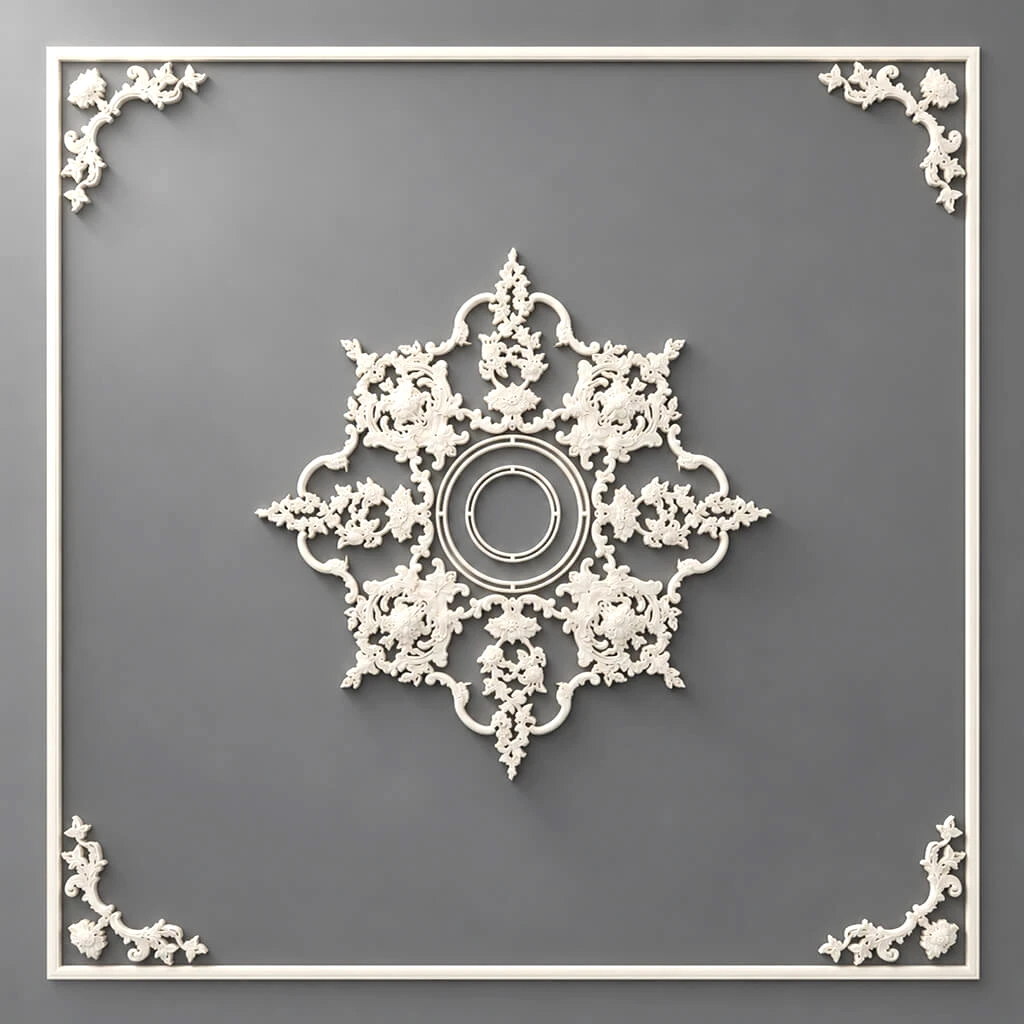
Art Deco style is renowned for its love of ornamentation, symmetry, and refined details. The molded decoration NPU-422 can become an excellent complement to geometric motifs and contrasting color combinations characteristic of this style. Try highlighting it with metallic paint or patina — and you’ll get an eye-catching detail that’s hard to look away from.
Art Deco loves graphics and an expressive silhouette. The legs can be more accentual, but without rustic softness. Here, dark tones, contrast, geometry, glossy finish, and a connection with handles, lamps, and mirrors are important.
Wooden legs can be used as a base if they maintain a strict line and do not look too simple.
Provence and country style
For Provence and country interiors, turned, soft, slightly decorative shapes are appropriate. The color can be light, warm, with a painted or tinted effect. But it is important not to veer into artificial roughness. STAVROS is about neat wooden decor, so even a country shape should be clean.
Historical and designer interior
If the bedroom is created in a historical style, the legs can be carved, turned, and complex in silhouette. Here it is important to look not only at the bed but also at the entire ensemble. Carved wooden decoration helps to support the style with other elements if the project requires richer wooden detailing.
How many legs does a bed need
The simple answer 'four' is not always suitable. For a single lightweight bed, four corner supports may be sufficient if the frame is designed correctly. For a double bed, more are often required.
The number of legs depends on:
-
width of the bed;
-
length of the frame;
-
weight of the mattress;
-
presence of an orthopedic base;
-
central beam;
-
frame material;
-
expected load;
-
support height;
-
floor and base strength.
If the bed is wide, a central support helps relieve stress on the side rails and corners. If the base consists of slats, central support is especially important. If the mattress is heavy, the load increases.
Sometimes additional legs are placed not for aesthetics, but inside the structure. They are almost invisible but support the center. In this case, the outer legs can be chosen by style, and the inner ones by function. However, the height of all supports must match, otherwise the frame will be skewed.
If the bed has a footboard, the front legs are more visible. Their shape can be more decorative. The rear legs at the headboard may be less noticeable, but in height and strength they must be equally reliable. You cannot put beautiful weak legs in the front and random ones in the back if it compromises the structure and appearance.
How to calculate the final bed height
Before buying legs, you need to do a simple calculation. Take the mattress height, the base or frame height, and the desired leg height. The final height should be comfortable.
Example logic:
-
mattress — high;
-
frame — medium height;
-
legs — 15 cm;
-
the final seating height is high.
If a person is short, such a bed may be uncomfortable. If a person is tall or has a habit of high seating, it may be comfortable.
Another example:
-
mattress thin;
-
frame low;
-
legs — 10 cm;
-
The bed remains low.
In this case, you can consider higher supports, but check stability.
Don't rely only on numbers, but also on bodily sensation. Sit on an existing bed or chair of similar height. Knees should not go too high or too low. Getting up should be easy. If the bed is used by an elderly person, ease of sitting is more important than a trendy low profile.
Also consider the height of the nightstand. The mattress should not be significantly higher or lower than the nightstand surface. Otherwise, using the bedside area is inconvenient.
What to check before buying bed legs
Before ordering bed legs, you need to put together a small checklist. It saves you from mistakes.
First — height. Measure the old legs or the desired height. Calculate the final bed height with the mattress.
Second — attachment. Look at how the old legs were attached to the frame. Is there a bolt, plate, screws, inserts, threads, corner block? The new leg must fit this assembly or require clear adaptation.
Third — load. If the bed is double, heavy, with a high mattress, do not choose a leg just for looks. Check strength and installation scheme.
Fourth — material. If painting is needed, look at unpainted legs. If a ready color is needed, look at the finish. If the interior has oak, beech, or another material, do not mix shades without a concept.
Fifth is shape. Straight, turned, carved, figured — each shape must match the bed's style.
Sixth is quantity. Check whether four, six, eight supports or a central support are needed.
Seventh is the floor. If the floor is soft, old, uneven, or expensive, consider the contact area and floor protection.
Eighth is cleaning. If a vacuum cleaner must pass under the bed, the height should be sufficient. If the bottom should be closed, overly tall legs are not needed.
Ninth is delivery, availability, order conditions. This information should be clarified in the product card or with a STAVROS manager.
Mistakes when choosing bed legs
First mistake is choosing only by appearance. Shape is important, but a bed is functional furniture. The leg must support, match the height, and attach to the frame.
Second mistake is not considering the mattress. A tall mattress on high legs can make the bed uncomfortable. A thin mattress on low legs can make it too low.
Third mistake is placing decorative legs on a heavy frame without checking the load. Carving is beautiful, but the structure must be reliable.
Fourth mistake is forgetting the central support of a double bed. Four legs at the corners do not always prevent the center from sagging.
The fifth mistake is mixing incompatible wood shades. Oak, beech, tinting, enamel, varnish, floor, and furniture must be coordinated. Otherwise, the legs look out of place.
The sixth mistake is buying supports without checking the fastening. Even a good leg is useless if there's nowhere to securely install it.
The seventh mistake is choosing legs that are too thin for a massive bed. Visually, the bed will appear unstable.
The eighth mistake is choosing overly large carved legs for a minimalist frame. The bottom will start to clash with the top.
The ninth mistake is not considering cleaning. If the clearance under the bed is too small, dust will accumulate. If it's too large, the bed may not look as cozy.
The tenth mistake is not clarifying the package contents. Fasteners may not be included or may need to be selected separately. This should be checked in advance.
Where to buy wooden legs for the STAVROS bed
Suitable supports should be selected in the section STAVROS wooden furniture legs. This is the main category for those looking for furniture legs for a bed, frame supports, base legs, parts for restoration, or a new bedroom project.
If you want to choose the finish yourself, look at from STAVROS open boundless possibilities for designers, furniture makers, and anyone striving to create unique high-quality furniture.They are convenient when you need to match the color of the bed, headboard, footboard, nightstands, or other furniture. If you need a ready-made option with a finish, study Legs with Finish.
Before purchasing, prepare:
- the height of the old legs or the desired new height;
- frame dimensions;
- base type;
- number of required supports;
- presence of a central beam;
- mounting method;
- bed material;
- color and style of the bedroom;
- desired finish;
- requirements for cleaning under the bed;
- photos of the frame and fastening units, if consultation is needed.
If you are updating not only the supports, but the entire lower or upper part of the bed, additionally study the materials about wooden headboard for a bed и the STAVROS bed footboard. This makes it easier to assemble a cohesive bedroom look, rather than replacing one part without connection to the rest of the furniture.
Practical Selection Scenarios
If you have an old wooden bed that needs updating, start by measuring the old legs. Keep the comfortable height or deliberately change it. If the bed is classic, look at turned or carved shapes. If you want to make it calmer, choose simple geometry.
If you are assembling a new frame, first determine the structure. Where the corners will be, whether there will be a central beam, how the base is attached, what mattress is planned. Only after that choose the shape of the legs.
If you want to raise the bed, calculate the final height with the mattress. Do not buy tall legs just for cleaning. The bed should remain comfortable for sitting.
If the bed is double, do not forget about the center. Corner legs are visible, but central supports are often more important for durability.
If the bedroom is classic, the legs should support the headboard, footboard, nightstands, and baseboards. Carved supports are appropriate if there are other decorative wooden elements in the room.
If the bedroom is modern, choose calm supports. The wood may be visible, but the shape should be clean.
If you need a color to match the project, choose unpainted legs and coordinate the finish. If you want to buy a ready-made solution, look at legs with a coating, but be sure to check the shade.
FAQ
Can you buy wooden bed legs separately?
Yes, wooden legs can be bought separately if the frame allows replacing the supports. Before ordering, you need to check the height, attachment method, load, number of supports, and compatibility with the bed base.
Which legs are best to choose for a wooden bed?
For a wooden bed, it makes sense to choose wooden supports that match the frame in style, color, and scale. For classic styles, turned or carved shapes are suitable; for a modern interior, simpler legs are better.
What height of bed legs is comfortable?
Comfort depends on the final height of the bed together with the mattress. You need to add the height of the legs, frame, and mattress. The bed should allow a person to sit down and stand up without their knees sinking too much and without needing to climb too high.
Are wooden legs suitable for an orthopedic base?
They are only suitable if compatible with the base structure. You need to check the standard attachment points, number of supports, central support, height, and type of fasteners. For an orthopedic base, you cannot choose legs based solely on appearance.
What legs are needed for a double bed?
For a double bed, not only corner supports are important, but also central support if the structure is wide or heavy. The number of legs depends on the frame, base, mattress, and load.
Can I replace old bed legs with wooden ones?
Yes, if the frame's mounting points allow it or can be properly reinforced. First, remove the old legs, measure the height, check the attachment and condition of the corners, then select new supports.
What is better: unpainted legs or coated legs?
Unpainted legs are convenient if you need to match the color to the frame, headboard, footboard, or bedroom furniture. Coated legs are suitable if the finished shade and finish match the project.
Are carved legs suitable for a modern bed?
They are not always suitable. Carved legs work well in classic, neoclassical, art deco, and interiors with decorative wooden furniture. For minimalism, it is better to choose a simpler shape.
How to calculate the number of legs for a bed?
You need to consider the bed size, mattress weight, base type, presence of a central beam, and frame construction. For a double bed, additional central supports are often needed, not just four legs at the corners.
What to check before buying bed legs?
Check the height, material, coating, shape, attachment method, load capacity, number of supports, compatibility with the frame and base. If the data is not in the product card, clarify the current parameters with the STAVROS manager.
Can I buy bed legs in St. Petersburg or Moscow through STAVROS?
You can select wooden furniture legs on the STAVROS website in the furniture supports category. Clarify current purchase conditions, availability, delivery, and regional consultation in the product card or with the STAVROS manager.
Where to buy STAVROS wooden bed legs?
The main section for selection is Wooden furniture legs STAVROS. For custom finishing, see from STAVROS open boundless possibilities for designers, furniture makers, and anyone striving to create unique high-quality furniture., and for a ready-made option, see Legs with Finish.
Conclusion
Wooden bed legs are not a secondary detail, but the foundation of comfort, stability, and appearance of the sleeping area. They determine the seat height, distribute the load, affect cleaning, support the bed style, and connect it with the bedroom interior. The wrong support can ruin even a beautiful frame. The right one makes the bed stable, comfortable, and visually complete.
To buy wooden bed legs without mistakes, you need to start not from the picture, but from the task: replace old supports, raise the bed, assemble a new frame, select legs for the base, style a double bed, support a classic style, or create a calm modern bedroom. Then check the height, attachment, material, shape, coating, number of supports, and compatibility with the mattress.
STAVROS offers wooden furniture legs, unfinished supports for custom finishing, coated legs, and related elements for a cohesive bedroom design. Before ordering, measure the frame, calculate the final height, specify the fasteners, check the product card, and if necessary, contact a STAVROS manager. Then the legs will not be a random replacement, but a precise detail that supports the bed, the interior, and daily comfort.