










































































Article Contents:
- What is wooden molding by the meter and when is it profitable to buy
- How molding differs from a ready-made frame
- Where to use wooden molding: painting, mirror, door, facade, and panel
- Key characteristics of wooden molding
- How to choose wooden molding for your task
- For a painting
- For a mirror
- For a furniture front
- For a door or decorative panel
- Narrow baguette
- Medium profile
- Carved molding with ornament
- Geometric baguette for modern interior
- Need to frame a non-standard size painting
- Need to make a frame for a mirror
- Need to update a furniture facade
- Need to design a door
- Need to make a decorative wall panel
- Where to buy wooden baguette?
- What does it mean to buy wooden baguette by the meter?
- Which wooden baguette to choose for a painting?
- How to choose a baguette for a mirror?
- How is an unpainted baguette convenient for a project?
- How to calculate the amount of baguette?
- Can baguette be used on furniture facades?
- What to buy together with a wooden baguette?
- When are wooden rosettes needed?
- How is baguette different from an overlay?
- Is wooden baguette suitable for modern interiors?
- Is a special tool needed for working with baguette?
- Can baguette be used for doors?
- What is better: baguette by the meter or a ready-made frame?
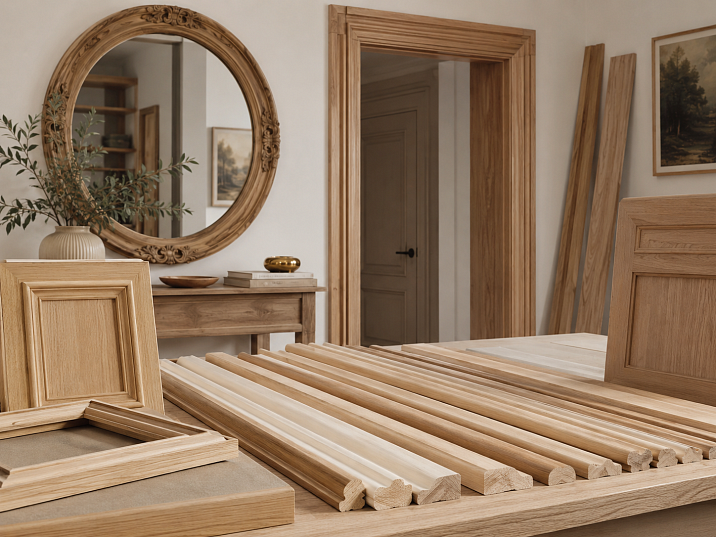
Buying unpainted wooden baguette by the meter is worthwhile when you need not a ready-made standard frame, but a profile for a specific size, shape, finish, and purpose. Such baguette can be used for paintings, mirrors, decorative door frames, furniture fronts, wall panels, friezes, or interior edging. The main thing is to decide in advance which profile you need: narrow or wide, smooth or carved, classic or geometric, for painting, tinting, enamel, or other final finish.
Wooden baguette by the meter is convenient because it does not limit the buyer to a ready-made format. If the painting is non-standard, the mirror needs to fit into a specific niche, the front requires a custom-sized frame, or the door needs decorative molding, a ready-made frame does not always solve the problem. Meter-length profile offers more freedom: it can be cut, joined, painted, tinted, and adjusted to the project.
At STAVROS you can Buy wooden molding by the meter select not only a universal profile but also specific options of linear molding for frames, doors, fronts, and decorative compositions. For a classic frame, you can consider wooden baguette K-013 for frames, for doors and fronts — carved linear molding K-011 for doors and fronts, for a thin ornamental accent — wooden baguette K-105 with braid ornament. If the project is modern, it is also worth looking at geometric wooden molding STAVROS.


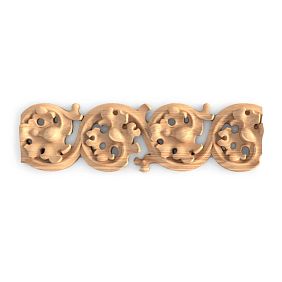


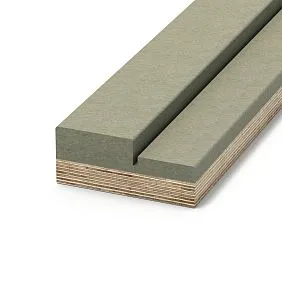
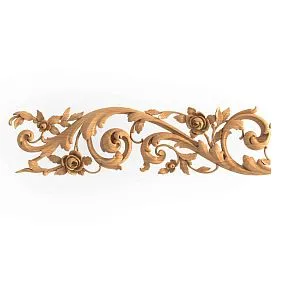
What is wooden molding by the meter and when is it profitable to buy
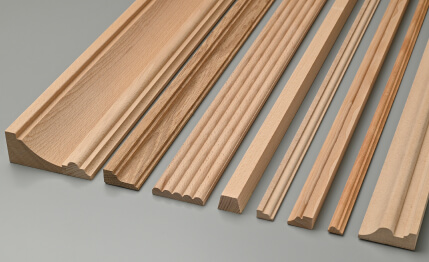
Wooden molding by the meter is a profiled linear product that is purchased not as a ready-made assembled frame, but as a long-length element for further cutting, joining, and finishing. It can be used wherever a decorative line is needed: around a painting, mirror, door insert, furniture facade, wall panel, or interior composition.
The main difference between molding by the meter and a ready-made frame is size freedom. A ready-made frame is suitable when the size already matches the task and nothing needs to be changed. Molding by the meter is needed when the project is custom: a non-standard width mirror, a painting without a standard format, a custom-made facade, a door layout according to your own drawing, a decorative wall panel that needs to be finished on site.
For workshops, designers, and private craftsmen, this is especially convenient. You can choose a profile, calculate the required length, make cuts, assemble the frame, paint or tint the product for a specific interior. If an unpainted wooden molding is needed, the buyer gets the opportunity to independently choose the finish: enamel, stain, varnish, tint, or another finishing option, if it suits the material and the task.
It is worth buying wooden molding when not only the function but also the texture is important. A plastic profile can cover the edge but does not provide the same feel of the material. Wood looks more appropriate next to solid wood furniture, paneled doors, carved overlays, wooden rosettes, mirror frames, baseboards, and other trim. It fits better into classic, neoclassical, study, historical, and warm modern interiors.




How molding differs from a ready-made frame
A ready-made frame is an already assembled product. It is purchased when the size, shape, color, and style are immediately suitable. It is convenient for a standard-format mirror or painting when you don't want to deal with cutting and assembly. For example, if the task is to quickly find a finished solution for a mirror, you can consider STAVROS wooden mirror frames.
Molding by the meter is a material for assembly. It is chosen by profile, width, height, ornament, material, and future finish. Then the profile is cut to the required size, corners are joined, processed, painted, or tinted. This path requires more work but provides more precision.
For a painting, this means the frame can be made for a specific canvas. For a mirror, it means assembling a frame for a non-standard size. For a facade, it means framing a door or furniture surface so that the frame matches the furniture dimensions. For a door, it means creating a decorative layout that supports the style of the panel and does not look like a random overlay.
There is also a commercial advantage. The buyer is not limited to one ready-made card. They can choose a category, compare K-011, K-013, K-105, view geometric profiles, add sockets, covers, frames, furniture handles, and assemble a set for the project. Therefore, the query "buy wooden baguette by the meter" most often leads not to a single purchase, but to a conscious selection of several related elements.
Our factory also produces:


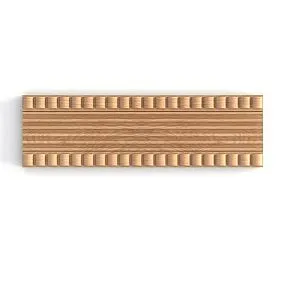


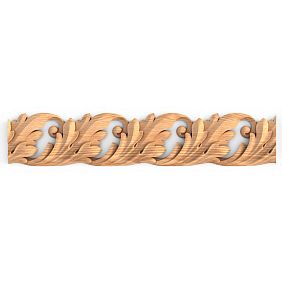
Where to use wooden baguette: painting, mirror, door, facade, and panel
The most obvious scenario is a painting. Buying a wooden baguette for paintings by the meter is convenient if the canvas is non-standard or a profile for a specific interior is needed. For small graphics, a narrow profile may be suitable. For classical painting, a more expressive one. For a decorative panel, a baguette with an ornament or relief.
Mirror is the second strong scenario. A ready-made mirror does not always fit in size, especially if it is installed in a niche, above a console, in a hallway, in a bathroom area with custom furniture, or in a classic interior. The baguette allows you to assemble the framing on site. If self-assembly is not needed, it is better to look at STAVROS wooden mirror frames.
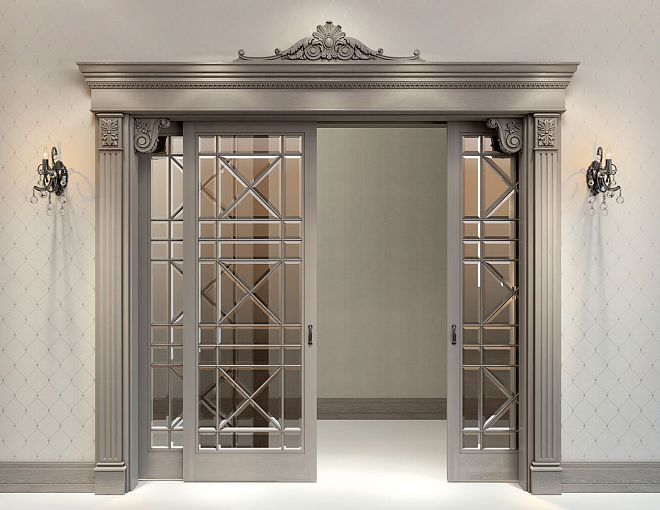
Door is a less obvious but very practical scenario. The baguette can work as a decorative frame on the panel, as an edging for an insert, as a frieze, or as a relief line. This is especially useful when updating a simple door, when you need to add volume without completely replacing the panel. For such tasks, it is good to consider carved linear molding K-011 for doors and fronts, if the profile matches in size and style.
Furniture facade is another commercially important scenario. A wooden baguette can frame the facade of a cabinet, chest of drawers, nightstand, sideboard, kitchen, display case, or decorative panel. It helps add relief, cover an empty surface, emphasize a panel, make the facade more classic, or simply give the furniture a finished look.
Wall panel is a scenario for interior projects. The baguette is used as an edging, layout, decorative trim, frame around an insert, or part of a wall composition. Here it is important not to confuse the baguette with molding: both are linear profiles, but the buyer should choose the product based on the specific task, size, profile, and method of application.
Get Consultation
Main characteristics of wooden baguette
Before purchasing, it is useful to break down the selection by parameters. Exact dimensions, material, finish, and order conditions should be checked in the specific product card, but the main criteria remain the same for most projects.
| Parameter | What it means for the buyer | What to check before ordering |
|---|---|---|
| Product type | Wooden baguette or carved molding by the meter | Is the profile suitable for a frame, facade, door, or panel |
| Application scenario | Painting, mirror, door, facade, wall panel | Is self-assembly needed or is a ready-made frame better |
| Profile | Face shape, relief, depth, ornament | Will the profile be too narrow, wide, or busy |
| Width | Affects the scale of the frame and visibility of decor | Matching the size of the painting, mirror, facade, or door |
| Profile height | Adds volume and shadow | Does it interfere with planting, docking, and installation |
| Ornament | Carved, geometric, classic, or more subdued | Compatibility with interior and furniture style |
| Material | Wood, solid wood, or other confirmed material | Up-to-date information in the product card |
| Finishing | Unpainted profile, for painting or tinting, if suitable for the product | Precise finishing options and surface preparation |
| Joining | Cuts, angles, frame joining | Is a precise cutting tool needed |
| Related decor | Sockets, covers, frames, handles | Which elements will help assemble a set |
This table shows why a wooden baguette cannot be chosen based solely on a photo. In the photo, the profile may look neat, but in a real project, size, depth, ornament, and joining are important. A large mirror needs one scale. A small painting needs another. A furniture facade needs a third. A door needs a fourth.
How to choose a wooden baguette for the task
For a painting
It is worth buying a wooden baguette for paintings by the meter if the image size is non-standard or you want to choose a frame to match the interior rather than the ready-made assortment. For a painting, three things are important: the size of the canvas, the style of the image, and the placement location.
Small graphics often need a more restrained profile. A too wide carved baguette can overwhelm the work itself. A large painting, on the contrary, can get lost in a thin frame. If the canvas is decorative, classic, or interior-oriented, you can consider a more expressive profile. If the painting is modern and minimalist, it is better to look at calm or geometric options.
For a classic frame, you can consider wooden baguette K-013 for frames. If more decorativeness is needed for a door, facade, or frieze, it is useful to compare it with carved linear molding K-011 for doors and fronts. For a thin ornamental accent, you can look at wooden baguette K-105 with braid ornament.
It's important to remember: the frame should not compete with the painting. It can enhance the work, define a boundary, support the style, but it should not draw all the attention to itself. This is especially important for small images and calm interiors.
For mirrors
A mirror requires a different approach. Here, the frame works not only as a border but also as part of the furniture or wall. The mirror reflects the space, light, furniture, and color, so the frame around it is more noticeable than it seems from the profile sample.
If the mirror is a standard size and a ready-made alternative is needed, it's easier to look STAVROS wooden mirror frames. If the mirror is non-standard, installed in a niche, above a console, in a hallway, bedroom, or furniture project, a frame by the meter can be more advantageous: the profile is cut to the required sizes and adjusted to the specific location.
For a mirror, the profile width is especially important. A narrow frame makes the mirror lighter and more modern. A wide carved profile turns it into a decorative centerpiece. If the mirror hangs above a console, the frame should relate to the width of the furniture. If the mirror is built into a furniture facade, the frame should match the scale of the facade layout.
For furniture facades
On a furniture facade, the frame works as a border, edge, decorative trim, or relief line. It can be used on facades of dressers, cabinets, sideboards, display cases, kitchen doors, nightstands, and decorative panels. In this scenario, the frame helps move away from a flat surface and adds depth to the furniture detail.
For facades, it's important not to overload the relief. If the facade is small, a too-wide profile will look heavy. If the facade is tall, a thin line may get lost. The profile should be chosen according to the scale of the furniture itself. In classic and neoclassical styles, the frame can support panels, carved overlays, and wooden handles. In a modern interior, it's better to look at geometric and more subdued options.
If the frame is used to update the facade, it's worth thinking about handles in advance. Sometimes a new profile on the facade looks convincing only when the hardware also supports the wood and style. If ready-made hardware with a finish is needed, you can look Furniture wooden handles with coatingIf the furniture will be painted or tinted, it is useful uncoated wooden furniture handles.
For a door or decorative panel
On a door, a wooden baguette helps create a frame, highlight a panel, design vertical inserts, or add a decorative frieze. This is especially useful if the door is too plain but you don't want to replace it entirely. The baguette allows you to refresh the appearance of the panel with a relief line.
Symmetry is important for a door. If the frame is shifted, the angle is cut inaccurately, or the profile is too large, the mistake will be immediately noticeable. Therefore, before purchasing, you need to consider not only the baguette itself but also the layout, cutting tool, fixing method, and future finishing.
For decorative panels, the baguette can be used as an inner frame or outer edging. It can be combined with rosettes, overlays, and other wooden elements if the composition requires accents. For example, decorative wooden rosettes for joints help to design corners, centers, or transitions if it suits the project's style.
How to choose a profile: width, height, ornament, and scale
Narrow baguette
A narrow baguette is suitable for small paintings, thin frames, furniture facades, decorative inserts, and neat edging. It does not draw much attention but helps complete the edge. This profile is good where the main role is played by the image, mirror, facade, or surface, and the baguette should work as support.
A narrow profile is especially useful in modern interiors. It can provide a wooden line without excessive ornamentation. But it has a limitation: on a large wall or big door, it can get lost. If you need to frame a large mirror or a tall facade, a narrow baguette may look too weak.
Medium profile
The medium profile is the most versatile. It is noticeable enough to create a frame, but not so massive as to overload the interior. Such a baguette is suitable for paintings, mirrors, facades, doors, and decorative panels. It is chosen when expressiveness is needed without excessive emphasis.
For most projects, a medium profile is safer than one that is too thin or too wide. It holds proportion better, is easier to combine with furniture, and does not require a lot of free space around it. But you still need to check the size of the specific object: a painting, mirror, facade, and door perceive the same profile differently.
Carved baguette with ornament
A carved baguette is needed when the profile should be a noticeable decorative element. It is suitable for classic, neoclassical, carved facades, decorative doors, interior frames, and wall compositions. The ornament adds depth and shadow, making the line richer and stronger.
But a carved profile requires caution. If the interior already has many decorative details, an active baguette can overload the composition. If the furniture is simple and modern, the carving may look out of place. Therefore, a carved baguette should be chosen based on the surroundings: doors, facades, handles, rosettes, overlays, shelves, mirrors, and the overall style must be connected.
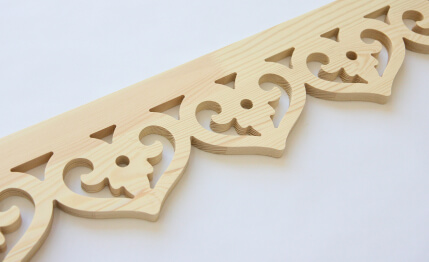
For an ornamental accent, you can consider wooden baguette K-105 with braid ornament. Such a motif can work as a subtle decorative line if it fits the project in scale and style.
Geometric baguette for modern interior
Not every wooden baguette needs to be carved. For modern interiors, calm geometric profiles are often more suitable. They provide relief and wood texture but do not make the piece historical or overly classical.
geometric wooden molding STAVROS It is worth considering for modern facades, minimalist mirrors, interior panels, and neat frames. It helps maintain a clean form but adds depth that a flat strip cannot provide.
A geometric profile is especially good when surrounded by straight lines: strict furniture, smooth facades, simple doors, wall panels, minimalist shelves. In such an environment, carved ornamentation can be excessive, while geometry looks more natural.
Commercial choice: which baguette to look at for different tasks
| Scenario | What to offer | Why it fits | URL |
|---|---|---|---|
| Universal choice by the meter | Category of wooden baguette | You can compare profiles and choose for your project | Buy wooden molding by the meter |
| Classic frame | K-013 | Suitable for framing tasks and decorative profiles | wooden baguette K-013 for frames |
| Door, furniture, frieze, interior decor | K-011 | Suitable for doors, facades, and decorative lines | carved linear molding K-011 for doors and fronts |
| Thin ornament | K-105 | Provides a decorative motif and relief line | wooden baguette K-105 with braid ornament |
| Modern interior | Geometric profile | Complements minimalist furniture and panels | geometric wooden molding STAVROS |
| Solid wood project | Solid wood molding | Needs a wooden material for finishing and further processing | solid wood molding |
This table helps you choose not abstractly, but by task. If the buyer doesn't know which profile is needed, it's better to start with a category. If the task is already clear — painting, door, facade, ornament, modern interior, solid wood — you can immediately go to the appropriate card or filter.
When an unpainted wooden molding is needed
Unpainted baguette is chosen when the finish needs to match a specific project. For example, the frame should match the color of a door, facade, wall, furniture, mirror frame, or decorative panel. A ready-made painted profile does not always match the desired shade, while an unpainted one gives more control.
This option is especially useful for furniture workshops. A craftsman can assemble the frame, adjust the corners, sand the joints, then coat the product together with the facade or door. As a result, the baguette looks not like a glued-on detail, but like part of the product.
For design projects, an unpainted profile is convenient because it can be integrated into the color scheme. If the walls are painted in a complex shade, the facades are coated with enamel, and the mirror should have a frame matching the furniture, the ready-made color may not work. An unpainted baguette allows for a more precise finish selection.
But an unpainted profile requires preparation. It cannot be perceived as a completely finished product that just needs to be applied to the wall. You need to understand who will cut, join, sand, prime, paint, or tint it. Before ordering, it is worth checking the current parameters of the specific product and surface preparation.
How to calculate wooden baguette by linear footage
The calculation starts with the perimeter. For a rectangular frame, you need to add two heights and two widths of the future product. Then add a margin for miter cuts, adjustments, and possible errors. The more complex the profile and the more corners, the more carefully you need to calculate.
For a painting, the calculation is usually based on the size of the canvas or backing. You need to consider whether there will be a mat, what depth of seating is needed, how the frame will hold the image, and whether a backing or glass is needed. If the painting is non-standard, it is better to make a drawing with dimensions before purchasing.
For a mirror, it is important to consider not only the external size but also the method of fixing the mirror panel. The baguette should not just frame beautifully but also be suitable in design. If the buyer does not want to handle assembly, it is easier for them to choose STAVROS wooden mirror frames. But if the task is individual, linear baguette gives more freedom.
For a facade or door, the calculation is based on markings. You need to determine where the frame will be: along the outer edge, inside the facade, around the panel, along vertical inserts, or as a frieze. An error of a few millimeters can be noticeable, especially if the frames are repeated on several facades. Therefore, before purchasing, it is better to make a diagram and calculate all segments separately.
For a wall panel, repeatability must be considered. If a baguette is used in multiple rectangles, all frames should be identical or logically differ in size. Random differences immediately catch the eye. In such projects, margin is especially important.
What to buy together with a wooden baguette
A baguette rarely lives in a project alone. It may require corner accents, rosettes, overlays, handles, ready-made frames, brackets, or shelves. Accompanying elements are chosen not for quantity, but to make the frame, facade, door, or mirror look complete.
| What to buy | Why add | Which scenario it suits | Link |
|---|---|---|---|
| Decorative rosettes | Close corners, strengthen the center, finish joints | Frames, panels, facades, doors | decorative wooden rosettes for joints |
| R-055 | Add a point carved accent | Classic frame, facade, panel | Wooden rosette R-055 |
| R-084 | Choose another rosette option | Corners, centers, decorative inserts | Wooden rosette R-084 |
| Carved overlays | Reinforce the furniture facade next to the baguette | Chests of drawers, cabinets, kitchens, sideboards | carved overlays for furniture fronts |
| frames for mirrors | choose a ready-made alternative to assembly | mirror without self-trimming | STAVROS wooden mirror frames |
| Furniture handles | connect the facade with wooden decor | furniture update, facades, doors | Furniture wooden handles with coating |
| Uncoated handles | select fittings for the finish | furniture for enamel, stain, tinting | uncoated wooden furniture handles |
If baguette is used for the facade, overlays and handles are especially useful. If for a frame or panel — rosettes. If for a mirror — you need to decide whether to assemble the frame from baguette or choose a ready-made product. If for an interior wall — shelves or brackets may be needed, but only if the composition really requires an additional function.
how to use rosettes at corners and joints
Rosettes help solve one of the most challenging tasks — corners and intersections. When a baguette is assembled into a frame, the corners need to be cut precisely. If the tool, experience, or profile is complex, the joint may become noticeable. In some projects, a rosette allows not to hide the corner but to turn it into a decorative accent.
decorative wooden rosettes for joints can be used at frame corners, in the center of a panel, at the intersection of vertical and horizontal lines, on a furniture facade or decorative door. But the rosette must be justified by the style. In a strict modern interior, it may be unnecessary. In classic, neoclassical, and carved decor — on the contrary, it supports the composition.
Wooden rosette R-055 may work as a point accent if its size and pattern match the project. Wooden rosette R-084 should be considered as an alternative option. Before ordering, it is important to check the product card and understand how the rosette will combine with the chosen baguette.
The main mistake is to use rosettes unnecessarily. If the baguette itself is active, additional corner elements may overload the frame. If the profile is calm, a rosette can add the needed accent. Therefore, first choose the baguette, then decide if corners, centers, and overlays are needed.
How not to confuse a wooden baguette with similar products
A wooden baguette, molding, overlay, rosette, and finished frame may seem similar because they all belong to decorative elements. But their purpose is different. If you confuse the product, you can buy a beautiful detail that will not solve the task.
| Product | Difference | When to buy |
|---|---|---|
| Wooden picture frame molding | Profile or linear molding for frames, borders, facades | Requires length and adjustment to size |
| Ready mirror frame | Already assembled product | Need a ready frame without self-assembly |
| Molding | Linear decorative profile for walls or furniture | Need a wall molding or facade relief |
| Overlay | Individual carved element | Need an accent, not a long line |
| Rosette | Point decorative element | Need a center, corner, or joint cover |
| bracket | Support or decorative load-bearing element | Need a shelf or console support |
A baguette is chosen when a line is needed. An overlay — when a separate accent is needed. A rosette — when you need to design a point, corner, or center. A finished frame — when you don't want to assemble a product from linear profile. If the project is related to a furniture facade, it's useful to look carved overlays for furniture fronts, but not to replace them with a baguette where a long frame line is needed.
Practical selection for different situations
Need to frame a non-standard size picture
Here, the perimeter, profile width, and image style are important. It's best to start with a category: Buy wooden molding by the meter. Then compare profiles and understand whether a calm, carved, or geometric option is needed. For a classic frame, you can look at K-013, for a thin ornament — K-105.
Need to make a frame for a mirror
First, decide whether you need a finished frame or assembly to size. If the size is standard and a ready-made solution fits, look at STAVROS wooden mirror frames. If the mirror is non-standard, linear baguette is more convenient. It's important to plan in advance the method of attaching the mirror, cutting corners, and final finishing.
Need to update a furniture facade
For the facade, the baguette is chosen according to the scale of the furniture. On a small cabinet, a too large profile will be heavy. On a large wardrobe, a thin frame may get lost. If a decorative relief is needed, you can look carved linear molding K-011 for doors and fronts and complement the facade with overlays or handles.
You need to design a door
For a door, symmetry and repeatability are important. If the baguette is used on several doors, the profile must be the same, and the frame sizes must be precise. An error in cutting or marking will be noticeable. It is better to make a drawing in advance, calculate the footage, and decide whether the baguette will be painted together with the door.
You need to make a decorative wall panel
Here it is important to maintain a common rhythm. The baguette can form frames, rectangles, vertical lines, friezes, or borders. For a classic interior, you can add rosettes, but only if they support the style. For a modern one, it is better to look geometric wooden molding STAVROS.
Mistakes when buying a wooden baguette
The first mistake is to choose only by ornament. A beautiful pattern does not guarantee that the profile will fit in width, height, and scale. For a small frame, an active ornament may be too heavy, and for a large door, too small.
The second mistake is not calculating the footage. The buyer may calculate only the clean perimeter and forget about the allowance for cuts, fitting, cutting defects, or repeating elements. For a linear profile, the allowance is important, especially if there are several frames.
The third mistake is not considering the tool. The baguette requires precise cutting, especially at corners. If there is no tool and experience, it is better to understand in advance who will assemble the frame. Otherwise, even a high-quality profile may look bad due to uneven joints.
The fourth mistake is buying baguette instead of a ready-made frame when assembly is not needed. If the task is simple and the size fits, STAVROS wooden mirror frames pre-made options may be more convenient. Meter-length baguette is needed where individual fitting is important.
The fifth mistake is not planning the finish. Unpainted wooden baguette offers freedom but requires finishing. You need to decide in advance whether it will be enamel, varnish, stain, tinting, or another option. Exact recommendations depend on the specific product and project.
The sixth mistake is mixing different styles. Carved baguette, geometric furniture, modern handles, classic rosettes, and a random frame may not create a composition but rather ruin it. It's better to choose one visual language.
The seventh mistake is not connecting the facade with the handles. If baguette is used on furniture, the hardware also affects the result. Handles can complement the wood and finish or look out of place.
The eighth mistake is not using rosettes where they truly help. Sometimes a complex joint is simpler and more beautiful to finish with a rosette. But the opposite mistake is also possible: too many rosettes, making the frame look overloaded.
The ninth mistake is not checking the product card. The name and photo are not enough. You need to look at the current parameters, material, purpose, and available options.
The tenth mistake is buying a random construction profile instead of an interior baguette. A regular strip may cover the edge but won't provide the needed relief, ornament, or quality of a decorative line.
Who is wooden baguette by the meter suitable for, and who should choose a different product
Wooden baguette by the meter is suitable for furniture workshops, framing workshops, interior designers, manufacturers of facades, doors, decorative panels, private craftsmen, and customers who want a profile for a specific size. It is especially useful when an individual frame, unpainted profile, project-specific finish, or a decorative wooden line is needed.
It is suitable for those who are ready to measure footage, trim the profile, join corners, and work with finishing. If the buyer wants a completely finished product without cutting and assembly, it is better to look at ready-made frames or other finished goods. If a plastic baguette is needed, a wooden profile will not meet expectations. If there is no tool for precise cutting, it is worth finding a craftsman in advance.
| Suitable | Not suitable |
|---|---|
| For furniture workshops | If a completely finished frame without trimming is needed |
| For interior designers | If there is no task to select a profile to size |
| For manufacturers of frames, facades, doors | If the user is looking for a plastic baguette |
| For private craftsmen for decorating furniture and mirrors | If there is no tool for precise cutting |
| For those who want to buy a baguette for enamel or tinting | If a ready-made painted mass product is needed |
An honest choice saves time. If you need a ready-made frame, it's better not to complicate things. If you need a profile for a custom project, linear wooden baguette offers more possibilities.
How to buy wooden baguette at STAVROS
It's best to start with the task. Determine what you are framing: a painting, mirror, door, facade, wall panel, or interior frame. Then measure the object, calculate the perimeter, add extra, and decide on the style: classic, carved, calm, geometric, for painting, or natural wood.
After that, you can go to the category and Buy wooden molding by the meter. If you need a specific profile for a frame, check out wooden baguette K-013 for frames. If the task involves doors, furniture, facades, or friezes, compare carved linear molding K-011 for doors and fronts. If you need a thin ornament, open wooden baguette K-105 with braid ornament.
For a modern project, check geometric wooden molding STAVROS. If the material is important, you can look at solid wood molding. Before ordering, check product cards, current parameters, material, profile, finish, and compatibility with the project.
FAQ: questions about wooden baguette by the meter
Where to buy wooden baguette?
Wooden baguette can be selected on the STAVROS website. To choose a profile for paintings, mirrors, doors, facades, and decorative frames, it is convenient to start from the category Buy wooden molding by the meter.
What does it mean to buy wooden baguette by the meter?
This means buying a profile of the required length, and then cutting it to the specific size of the frame, mirror, door, facade, or panel. This option is suitable for custom projects where a ready-made frame does not match in size or style.
Which wooden baguette to choose for a painting?
For a painting, the profile is chosen based on the size of the canvas, the style of the image, and the interior. For a classic frame, you can consider wooden baguette K-013 for frames, and for a thin decorative accent — wooden baguette K-105 with braid ornament.
How to choose a baguette for a mirror?
First, decide whether you need a ready-made frame or assembly to size. If the size is non-standard, baguette by the meter is convenient. If you need a ready-made alternative, look at STAVROS wooden mirror frames.
Why is an unpainted baguette convenient for a project?
An unpainted baguette can be finished to match the color of furniture, doors, walls, facades, or mirror frames. This is convenient for custom projects where a ready-made color may not match the desired shade.
How to calculate the amount of baguette?
You need to add up the lengths of all sides of the future frame or decorative line and add a margin for cuts, adjustments, and possible errors. For multiple frames, it is better to calculate each element separately.
Can baguette be used on a furniture facade?
Yes, if the profile matches in size and style. Baguette can frame, edge, frieze, or decorate the facade. For doors and facades, you can consider carved linear molding K-011 for doors and fronts.
What to buy together with a wooden baguette?
For frames, facades, and panels, you may need rosettes, overlays, handles, ready-made frames, or other decorative elements. For example, decorative wooden rosettes for joints help to design corners and accents.
When are wooden rosettes needed?
Sockets are useful if you need to design a corner, center of a frame, intersection of lines, or a decorative joint. You can consider Wooden rosette R-055 or Wooden rosette R-084, if they match in style and size.
How is a baguette different from an overlay?
A baguette is a long profile for a line, frame, or edging. An overlay is a separate decorative element that works as an accent. For facades, both can be used, but their tasks are different. If you need an accent, look at carved overlays for furniture fronts.
Is a wooden baguette suitable for a modern interior?
Yes, if you choose a calm or geometric profile. For minimalist facades, mirrors, and panels, you can look at geometric wooden molding STAVROS.
Is a special tool needed for working with a baguette?
For a neat frame, precise cutting is needed, especially at the corners. If you don't have the tool or experience, it's better to entrust the cutting to a professional in advance. The profile itself can be high-quality, but a poor joint will ruin the entire frame's appearance.
Can a baguette be used for a door?
Yes, a baguette can frame a door frame, panel, decorative insert, or frieze. It's important to correctly calculate the dimensions, maintain symmetry, and choose a profile that won't overload the door leaf.
What is better: baguette by the meter or a ready-made frame?
If you need a standard size and don't want to bother with assembly, a ready-made frame is more convenient. If the size is custom, you need a specific profile, finish for the project, or decorative layout on the facade and door, it is better to choose baguette by the meter.
Result: how to choose a wooden baguette and assemble a set without random parts
Wooden baguette by the meter is a flexible material for frames, mirrors, doors, facades, and decorative panels. It is needed where a ready-made frame does not fit in size, style, or finish. With its help, you can frame a painting, assemble a mirror frame, add relief to a furniture facade, decorate a door, make a wall frame, or cover a decorative transition.
The right choice starts with the task. For a frame, the ratio with the painting is important. For a mirror, the size and method of attachment. For a facade, the scale of the furniture and connection with handles. For a door, symmetry and neat miter cut. For a panel, rhythm and combination with rosettes or overlays. After that, you can go to the STAVROS catalog and Buy wooden molding by the meter, compare K-013, K-011, K-105, geometric profiles, and solid wood baguette.
Before ordering, check product cards, current sizes, material, profile, finish, and compatibility with the project. If the baguette is used not alone but together with rosettes, overlays, frames, or handles, assemble the set in advance. Then the wooden profile will not be a random strip, but a precise decorative detail that completes the frame, mirror, door, or furniture facade.