
















































































Article Contents:
- Why the gap around the door should not be left open
- How the door assembly works: frame, gap, trim, and molding
- Which STAVROS elements to use for door opening decoration
- Door frame profile DK-001
- Wooden door trims
- Trim + batten as a kit for a neat fit
- By mounting gap width
- By door style
- By material and finish
- By combination with baseboard, molding, and batten
- The door is already installed, but foam is visible around it
- The opening is being assembled from scratch
- The wall is wider than the frame
- The door is simple, but you want to make it more decorative
- Need to connect the doorway with the baseboard
- An additional decorative line is needed next to the door
- How to close the gap between the door frame and the wall?
- Where to buy wooden door trims?
- How does the door frame profile differ from the trim?
- When is the door frame profile DK-001 needed?
- What to buy together with a wooden trim?
- How to choose a trim for a wooden door?
- Can a wide gap be closed only with a casing?
- Are strips needed next to the door casing?
- How to connect the casing to the baseboard?
- Are carved overlays suitable for the door?
- What are wooden rosettes near the door for?
- Can wooden casings be used in a modern interior?
- Why shouldn't you close the gap with a plastic corner?
- What should I check before ordering?
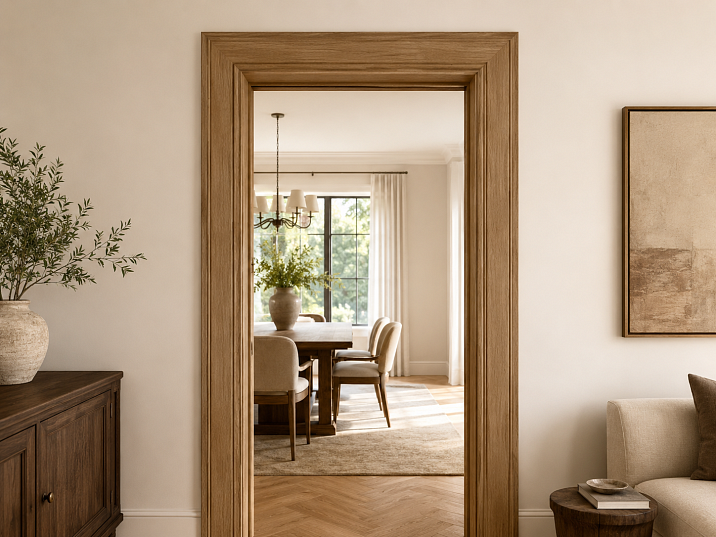
When an open joint between the frame and the wall remains after installing an interior door, a practical question immediately arises: how to close the mounting gap around the door and where to buy wooden casings for doors so that the opening looks neat, and not like an unfinished stage of renovation. Door installation alone does not make the opening ready. The frame sets the foundation, but without the casing, trim, and proper abutment around it, there remain gaps, uneven edges of the finish, traces of foam, and differences between the wall and the wood.
The wooden casing solves the visible part of the task: it closes the joint, forms a frame around the door leaf, and connects the opening to the wall. But if you approach the design systematically, it's worth looking broader: what door frame profile is used, does it match the leaf, is an extension needed, which casing will cover the gap, how does the lower part join with the baseboard, are strips, overlays, or other wooden decor needed. In this scenario, the buyer chooses not one plank, but a kit for the door unit.
You can choose on STAVROS door frame profile DK-001 buy for the base of the doorway, and then select wooden platbands for the doorway, slats, moldings, skirting boards and decorative elements. This approach helps not just hide the installation gap, but to design the door as a complete part of the interior.




Why the gap around the door cannot be left open
An installation gap appears almost always. A technological space is left between the door frame and the wall for installation, alignment, fixation, and compensation for unevenness of the opening. After installation, this space is covered with finishing elements. If left open, the door will look temporary, even if the leaf itself is expensive and high-quality.
An open gap spoils the look of the opening for several reasons. First, traces of installation are visible: foam, uneven wall edges, plaster differences, chips, uncovered areas of finish. Second, the geometry of the door is disrupted. The leaf and frame may be level, but without a platband, the eye sees not a clean frame, but a broken transition between the wall and the wood. Third, the opening loses connection with the skirting board and other moldings.
A doorway is always in the spotlight. People pass through it, furniture stands next to it, it is visible from the hallway, room, entryway. If the gap is covered with a random strip, plastic corner, or unsuitable profile, it is noticeable. A wooden platband works differently: it not only masks the seam but creates a decorative frame that supports the door and makes the wall complete.
The door frame profile is also important. It is responsible for the basic geometry of the door unit. If the frame looks untidy or does not match the rest of the moldings, a single platband does not always save the situation. Therefore, when creating a new opening or seriously updating a door, it is logical to consider buy STAVROS door frame profile together with platbands and adjacent elements.




How a door unit works: frame, gap, platband, and trim
A doorway consists of more than just the door leaf. There is a frame that forms the base of the opening and holds the door. There is a mounting gap between the frame and the wall. There is an extension piece needed when the wall thickness is greater than the frame width. There is a platband covering the joint between the frame, extension, and wall. There is a baseboard that meets the platband at the bottom. There are strips, moldings, and other trim if the opening is decorated more elaborately.
The problem starts when the buyer sees only one detail. For example, they want to close a gap and buy the first suitable platband. But then it turns out the wall is wide and an extension is needed, the baseboard does not align with the platband, the profile is too narrow, and the wood color does not match the door. As a result, the mounting gap is closed, but the opening still looks haphazard.
It is better to consider the unit as a whole. If the door is new, first look at the frame and profile. If the frame is already installed, assess the gap width, wall depth, slope quality, and junction area. Then select platbands that will cover the technical zone and match the door in style. After that, check the bottom joint with the baseboard and any additional lines: strips, moldings, overlays.
In a wooden interior, the combination of materials is especially important. The platband should look not like a foreign strip, but like an extension of the door frame. Therefore, it is useful to look at wooden trim for doorway design as a whole: platbands, baseboards, moldings, strips, and other linear elements help assemble the opening in a single language.
Our factory also produces:




Which STAVROS elements to use for designing a doorway
Get Consultation
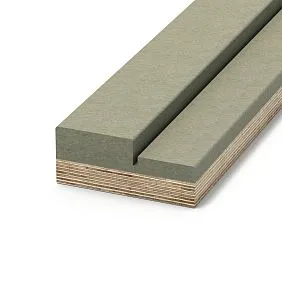
Door frame profile DK-001
The door frame profile refers to the structural part of the opening. It is needed not to mask the gap along the perimeter of the wall, but to form the basis of the door unit. If the opening is being assembled anew or updated comprehensively, the frame profile helps set a neat geometry, to which trims and other moldings are then selected.
door frame profile DK-001 buy should be considered as a basic element on which further design depends. Before ordering, you need to check the current dimensions, material, profile, purpose, and application conditions in the product card. If the opening is non-standard, it is better to check compatibility in advance with a STAVROS manager.
DK-001 is especially important for those who are not just closing an old gap, but assembling a door opening as a wooden system. In this case, the frame, trim, extension, baseboard, and slats should not be selected separately from each other. They should work as a single set.
Wooden door trims
A trim is a decorative strip that covers the installation gap between the door frame, extension, and wall. It is most often the answer to the question of how to close the gap between the door frame and the wall. A good trim covers the technical area, hides the uneven edges of the finish, creates a frame around the door, and connects the opening with the interior.
You can view on STAVROS wooden platbands for the doorway. When choosing, you need to consider not only the appearance, but also the width of the gap, the style of the door, the material, the finish, the height of the baseboard, and the overall geometry of the wall. If the trim is too narrow, it may not cover the problem area. If it is too wide, the opening will look heavy.
A wooden trim is especially appropriate if the door, baseboard, or interior already uses wood. It supports the natural material, provides a neat profile, and looks more convincing than a random plastic strip. But the exact material and finish of a specific product should be checked in the product card.
Trim + slat as a set for a neat junction
Sometimes one trim is not enough. For example, there is a decorative layout next to the door, an abutment to a wall panel, a narrow area between the opening and furniture, or a need to connect the door with the vertical lines of the interior. In such cases, a combination of trim and slat helps.
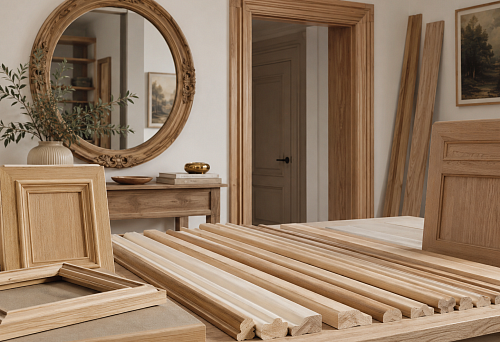
To select, you can open wooden architraves and slats made of oak and beech. This category is useful when you need to select linear moldings in one style: close a joint, add a vertical line, design an abutment, or support a doorway next to the baseboard and wall finish.
The slat does not replace the architrave in a standard door frame, but can complement it. The architrave covers the main installation gap. The slat helps to design additional abutments, decorative transitions, and lines. If used together, the opening looks more thoughtful.
Characteristics of elements for closing the gap around the door
| Element | Main task | When needed | What to check before ordering |
|---|---|---|---|
| Door frame profile DK-001 | Forms the basis of the doorway | When assembling or updating the frame | Dimensions, material, profile, purpose in the card |
| Wooden architrave | Closes the mounting gap between the frame and the wall | Almost always after door installation | Width, profile, material, finish, number of planks |
| Extension | Extends the frame along the wall depth | When the wall is wider than the frame | Wall thickness, extension width, combination with casing |
| Rail | Decorates additional lines and junctions | When decorative support for the opening is needed | Cross-section, material, connection with casing and baseboard |
| Baseboard | Connects the door with the lower line of the wall | When the casing meets the floor | Height, profile, joint with casing |
| Overlay | Adds a decorative accent | For classic or carved door design | Size, pattern, compatibility with the door leaf |
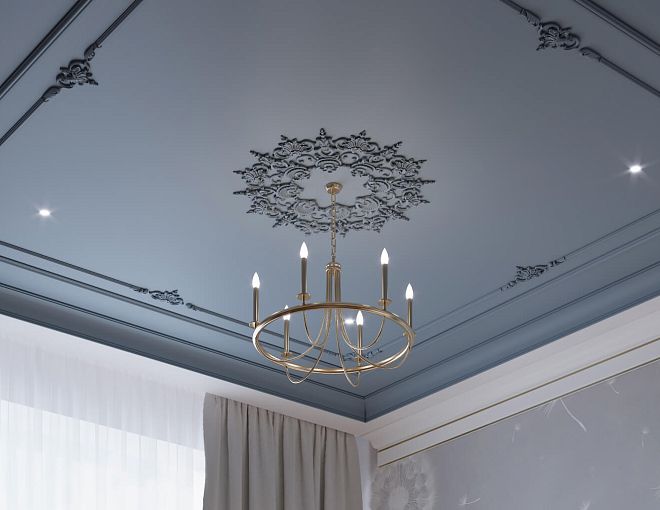
| Rosette | Creates a focal accent | For corners, centers, decorative inserts | Scale and style |
This table shows the main point: the casing covers the visible joint, but does not always solve the entire door assembly. If the wall is wide, an extension is needed. If the frame is being assembled from scratch, the profile is important. If the opening is designed in a classic style, overlays and rosettes may be useful. If the door needs to be connected to the baseboard, you need to look at the trim more broadly.
How to choose a wooden casing for a door frame
By mounting gap width
The first practical parameter is the width of the area that needs to be covered. The casing must overlap the mounting gap and the edge of the finish with a margin. If it covers the gap flush, any unevenness in the wall will be noticeable. If the gap is wide, a too narrow casing won't help: it either won't cover the edge or will look like a technical patch.
When measuring, you need to look at more than just one point. Walls often have deviations. At the top, the gap may be narrower, at the bottom wider, on the right side more even, on the left side more difficult. Therefore, the casing is chosen based on the most problematic area, but without excessively increasing the width. A too wide profile on a small door can look heavy.
By door style
The casing should complement the door. For a smooth modern panel, a calm profile is better suited. For a paneled or classic door, you can choose a more expressive wooden casing. If the door has relief, chamfers, or decorative inserts, the casing should continue this logic, not look like a random flat strip.
If the door is designed in a classic style, you can additionally consider carved overlays for decorative door design. Overlays do not replace the casing, but help enhance the decorative scenario: design the panel, add a central or side accent, connect the door with carved decor.
By material and finish
The casing material should match the frame, door, baseboard, and adjacent wooden elements. If the door and frame are in the same tone, it's better to choose a casing close to them. If the opening is planned for painting, it's important to clarify whether the selected trim is suitable for future finishing. Current material and finish options should be checked in the product card or clarified with a STAVROS manager.
You shouldn't mix too many wood shades. For example, a dark door, light trim, reddish baseboard, and a different color extension will create visual chaos. Even quality elements will look random. If the interior already contains several wood types and shades, it's better to choose the trim as a connecting detail rather than a separate accent.
In combination with baseboard, molding, and batten
The trim almost always meets the baseboard at the bottom of the wall. This joint is immediately visible. If the baseboard is tall and expressive, a too-thin trim will look weak. If the baseboard is simple and low, a massive frame around the door can overload the opening. Therefore, before purchasing, it's useful to look wooden trim for doorway design in the same logic.
A batten helps when you need to add an extra line. For example, the door is next to a wall panel, decorative layout, or narrow furniture area. Then the batten can support the vertical, while the trim covers the main gap.
Commercial choice: what to buy for a specific task
| Task | What to buy | Why it fits | URL |
|---|---|---|---|
| Assemble a door opening with the right base | Door frame profile DK-001 | Helps form the base of the opening | door frame profile DK-001 buy |
| Cover the gap around the frame | Wooden trims | Close the joint and form the door frame | wooden platbands for the doorway |
| Select linear moldings in a single style | Trims and moldings | Help to design junctions and decorative lines | wooden architraves and slats made of oak and beech |
| Design an opening in a classic interior | Carved overlays | Add a decorative accent to the door or facade | carved overlays for decorative door design |
| Connect the door with the bottom line of the wall | Wooden baseboards and moldings | Help to match the trim with the baseboard | wooden trim for doorway design |
| Add decorative accents | Rosettes | Work as spot decor on doors or panels | wooden rosettes for decorative accents |
This choice is convenient because the customer goes from problem to purchase. Need to assemble a box — looks at DK-001. Need to close a gap — chooses architraves. Need to add extra lines — adds battens. Need to make a classic accent — looks at overlays and rosettes. Need to connect the door to the wall and floor — selects moldings.
What to buy together with a wooden architrave
A wooden architrave is rarely the only element in an opening. Even if the task starts with a simple gap around the door, the customer quickly encounters adjacent details: the box, extension, baseboard, batten, decorative overlays. Therefore, it's better to plan the set before ordering.
| What to buy | Why add | When it is especially useful | Link |
|---|---|---|---|
| Door frame profile DK-001 | For a neat base of the doorway | When assembling or updating the box | door frame profile DK-001 buy |
| Wooden trims | To close the installation gap | After installing the door | wooden platbands for the doorway |
| Wooden slats | For additional junctions and decorative lines | With complex wall finishing | wooden architraves and slats made of oak and beech |
| Wooden molding | To coordinate the casing, baseboard, and molding | When the opening should look systematic | wooden trim for doorway design |
| Carved overlays | For decorative door design | In a classic, neoclassical, or carved interior | carved overlays for decorative door design |
| Carved decoration | For a broader interior set | When the door is connected to furniture, panels, shelves | STAVROS carved decor for the interior |
| Wooden rosettes | For point decorative accents | On doors, panels, joints, corners | wooden rosettes for decorative accents |
A comprehensive approach is especially important in wooden interiors. If the door, casing, baseboard, and overlays are selected separately and without connection, the opening looks assembled from different leftovers. If all elements are coordinated in scale, material, and profile, even a simple door gets a more expensive and finished look.
How not to confuse casing, extension, and door frame profile
One of the common mistakes is mixing up names. The buyer says "I need a profile," but actually looks for a casing. Or wants to close the gap but looks at the frame profile. Or buys a casing, although the wall is wider than the frame and without an extension the opening won't close.
| Product | What it is | When to buy |
|---|---|---|
| Door frame profile | Frame construction element | When you need to assemble or update the base of a door opening |
| Casing | Decorative trim around the door perimeter | When you need to close the gap between the frame and the wall |
| Extension | An element that extends the depth of the door frame | When the wall thickness is greater than the frame width |
| Rail | Narrow linear trim | For joints, decorative inserts, additional lines |
| Baseboard | Bottom wall profile | To connect the doorway with the floor and wall |
| Overlay | Separate decorative element | When you need to decorate a door, facade, or panel |
| Rosette | Point decorative accent | For the center, corner, or decorative node |
If you need to close the gap around an installed door, the first product is usually a casing. If the opening is being assembled from scratch, you need to think about the frame. If there is not enough depth due to a wide wall, you need an extension. If you want to add decorative lines, strips, overlays, and rosettes will come in handy.
Practical selection for different situations
The door is already installed, but foam is visible around it
In this situation, the main product is a casing. You need to measure the width of the visible area and choose a profile that will cover the joint. If the wall is uneven, it is better not to take the minimum width. First, look wooden platbands for the doorway, then evaluate how the selected profile will meet the baseboard.
The opening is being assembled from scratch
Here you need not only a casing. You should start with the base: door frame profile DK-001 buy, then casings, if necessary, extensions, baseboards, and other moldings. This order allows you not to adjust decorative elements to a random frame at the end of the renovation.
The wall is wider than the frame
If the wall thickness is greater than the width of the frame, one casing will not solve the problem. You need an extension that will cover the depth of the slope. The casing will finish the edge and hide the transition to the wall. Before ordering, you need to measure the wall thickness and understand what set of elements will be required.
The door is simple, but you want to make it more decorative
You can use the casing as a base frame, and add to enhance the interior carved overlays for decorative door design or wooden rosettes for decorative accents. The main thing is not to overload the canvas. If the door is small, large decor can look heavy.
You need to connect the doorway with the baseboard
The baseboard and casing meet at the bottom. If they don't match in scale, the interior looks untidy. For selection, it's better to look wooden trim for doorway design and compare profiles together.
An additional decorative line is needed next to the door
In narrow walls, near panels or next to furniture, a batten may be needed. It helps to design the junction, support the vertical, and make the transition cleaner. For such tasks, consider wooden architraves and slats made of oak and beech.
Mistakes when designing the installation gap around the door
The first mistake is to close the gap with a random plank. It may cover the gap, but it won't match the door, frame, and baseboard. The opening will remain visually weak.
The second mistake is to buy casing without measurements. You need to measure the gap at several points, assess wall irregularities, and understand what width of profile will actually cover the problem area.
The third mistake is forgetting about the extension. If the wall is wider than the frame, the casing will not replace the element that covers the depth of the slope. In such a situation, a comprehensive calculation is needed.
The fourth mistake is not considering the bottom joint with the baseboard. Even a beautiful casing can look bad if it does not align with the baseboard in height and profile.
The fifth mistake is mixing different materials and shades. The door, frame, casing, and baseboard should look cohesive. If each element is chosen separately, the opening loses its integrity.
The sixth mistake is using a casing that is too narrow. It may not cover the installation area, especially if the wall has deviations.
The seventh mistake is choosing a profile that is too massive for a small door. Such a casing will cover the gap but overload the opening.
The eighth mistake is confusing the door frame profile and the casing. The profile belongs to the frame base, the casing covers the joint from the outside. These are different tasks.
The ninth mistake is not checking the product card. Before ordering, you need to clarify the actual dimensions, material, finish, and purpose of a specific item.
The tenth mistake is thinking only about concealment. The gap can be closed quickly, but it is better to design the opening so that it looks like part of the interior.
Who is suitable for wooden door opening design
Wooden casing and door frame profile are suitable for those who want a neat, durable, and visually cohesive opening. This solution is for private craftsmen, carpenters, interior designers, door manufacturers, homeowners, apartments, and interiors with wooden trim.
This approach works especially well in classic, neoclassical, wooden, and warm modern interiors. Wood complements the door, baseboard, furniture, wall panels, and decorative elements. Adding trims or rosettes can turn the opening from a mere technical door installation spot into part of a decorative composition.
However, this solution is not for everyone. If the buyer needs the simplest economy-class plastic casing, wooden millwork may be excessive. If a ready-to-install door set is needed without selecting components individually, it's better to look for a complete door solution. If the opening is temporary and only quick masking matters, a decorative wooden system may be unnecessary.
| Suitable | Not suitable |
|---|---|
| For those decorating an interior opening with wood | If an economy-class plastic casing is needed |
| For private craftsmen and carpenters | If the user is looking for a ready-to-install door set without selecting millwork |
| For interior designers | If only a metal profile is needed |
| For door and furniture manufacturers | If precise selection of material and size is not planned |
| For owners of houses with wooden trim | If only temporary gap masking is important |
How to buy door opening elements on STAVROS
Start with what exactly your opening needs. If the door is not yet assembled, first check the frame and profile. For this task, you can open door frame profile DK-001 buy or a section where you can buy STAVROS door frame profile.
If the door is already installed and you need to close the gap, go to the category wooden platbands for the doorway. Check the width, profile, material, finish, and number of planks. Usually, you need to count two vertical and one top plank for one side of the door. If the opening is finished on both sides, the set increases.
If additional lines are needed nearby, open wooden architraves and slats made of oak and beech. If the opening should be connected to baseboards, moldings, and other trim, look at wooden trim for doorway design.
For a decorative scenario, you can complement the door with elements from the sections carved overlays for decorative door design, STAVROS carved decor for the interior и wooden rosettes for decorative accents. Before ordering, check the product cards and clarify compatibility if the opening is non-standard.
FAQ: questions about closing the mounting gap around the door
How to close the gap between the door frame and the wall?
Most often, the gap is closed with a wooden casing. It covers the joint between the frame, extension, and wall, forms a frame around the door, and completes the opening.
Where to buy wooden door casings?
Wooden casings can be selected on STAVROS in the section wooden platbands for the doorway. Before ordering, you need to check the width, profile, material, and number of planks.
How does the door frame profile differ from the casing?
The door frame profile refers to the base of the door unit. The casing covers the visible joint between the frame and the wall. If the opening is being assembled from scratch, a profile is needed. If you need to close the gap around an installed door, a casing is needed.
When is the DK-001 door frame profile needed?
DK-001 is needed when assembling or updating the base of a doorway. It should be considered together with architraves, extensions, and other trim. You can view the product via the link door frame profile DK-001 buy.
What to buy together with a wooden architrave?
Along with the architrave, you may need a door frame profile, extension, strips, baseboard, decorative overlays, or rosettes. It all depends on whether you just need to close a gap or finish the doorway comprehensively.
How to choose an architrave for a wooden door?
Look at the width of the installation gap, door style, frame material, finish, baseboard height, and overall geometry of the opening. The architrave should cover the joint and look natural next to the door.
Can a wide gap be closed with just an architrave?
Sometimes yes, if the architrave is wide enough and the wall does not require an extension. But if the wall is wider than the frame, an extension is needed. The architrave covers the edge, while the extension finishes the depth of the opening.
Are strips needed next to a door architrave?
Strips are not always needed. They are useful if there are decorative junctions, wall panels, narrow partitions, or additional vertical lines near the door. For selection, you can view wooden architraves and slats made of oak and beech.
How to connect the casing to the baseboard?
You need to compare the height, width, and profile. The baseboard and casing meet at the floor, so any mismatch is immediately visible. It's better to select them through a common section. wooden trim for doorway design.
Are carved overlays suitable for a door?
Yes, if the door is designed in a classic or decorative style. Overlays do not cover the installation gap but help decorate the panel or facade. For such a scenario, you can look at carved overlays for decorative door design.
What are wooden rosettes near a door for?
Rosettes are used as a point decorative accent: on doors, panels, corners, joints, or in the center of a composition. They do not replace the casing but can enhance the design. Selection starts from the section wooden rosettes for decorative accents.
Can wooden casings be used in a modern interior?
Yes, if you choose a calm profile and proper finish. Wood is suitable not only for classics. In a modern interior, the casing can be laconic, neat, and connected to the baseboard, door, or furniture.
Why shouldn't you cover the gap with a plastic corner?
A plastic corner can quickly hide the gap but rarely looks like part of a wooden door. If the opening is finished with wood, it's better to choose casing and trim that match the door in material and style.
What should be checked before ordering?
Check the dimensions of the opening, gap width, wall thickness, need for an extension, box profile, casing material, finish, number of strips, and junction with the baseboard. If the opening is non-standard, it is better to check compatibility with a STAVROS manager.
Result: how to close the gap around the door neatly and for a long time
It is better to close the installation gap around the door not with a random strip, but with a wooden casing selected to match the box, door, wall, and baseboard. If the opening is being built from scratch, it is important to start with the basics: choose the door box profile, check the extension, then select the casings and moldings. If the door is already installed, you need to measure the gap, assess the condition of the wall, and choose a casing that will cover the technical area without visual heaviness.
For a systematic design, you can start with the position door frame profile DK-001 buy, then select wooden platbands for the doorway and, if necessary, add slats, moldings, overlays, or rosettes. STAVROS helps to assemble a door opening not as a temporary gap cover, but as a neat wooden unit that supports the style of the door and the entire interior.