






























Article Contents:
- Short answer
- What types of wooden handles are there
- Wooden pull handle
- Round handle and knob handle
- Long wooden handle
- Recessed wooden handle
- Handles with and without coating
- Wooden handles for furniture: full coverage
- Cabinet handles
- Wooden drawer handle
- Handles for chest of drawers, nightstands, sideboards
- Handles for kitchen and walk-in closet
- Handles for classic-style and solid wood furniture
- Wooden door handles: an important distinction
- Decorative pull handle and handle for door leaf
- When full door hardware is needed
- Wooden pull as a decorative element
- How to choose the shape of the handle
- Pull handle: the universal favorite
- Round handle and knob handle
- Long handle
- Recessed handle: minimalism in its purest form
- Massive and carved handle
- How to choose the size of a wooden handle
- Facade size is the starting point
- Cabinet height and door weight
- Distance between mounting points
- Grip comfort
- Visual scale of the handle
- Finish: with or without coating
- Wooden handles without coating
- Wooden handles with coating
- When is it better to buy a handle without coating
- How to choose wooden handles for your interior
- Classic and neoclassic
- Modern interior and minimalism
- Country house, rustic style
- Scandinavian Style
- Dark and light facades
- What to pair wooden handles with: interior linking
- Furniture Legs and Supports
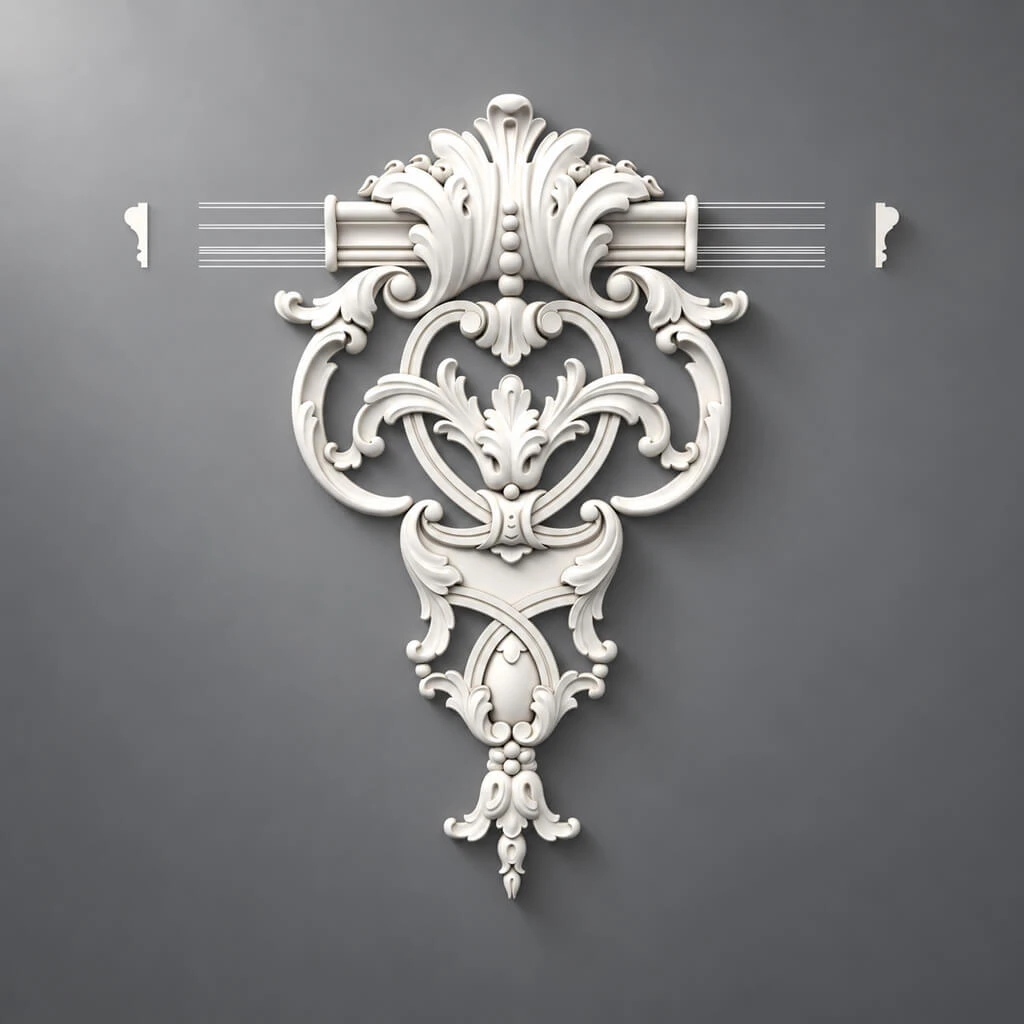
- Decorative appliqués
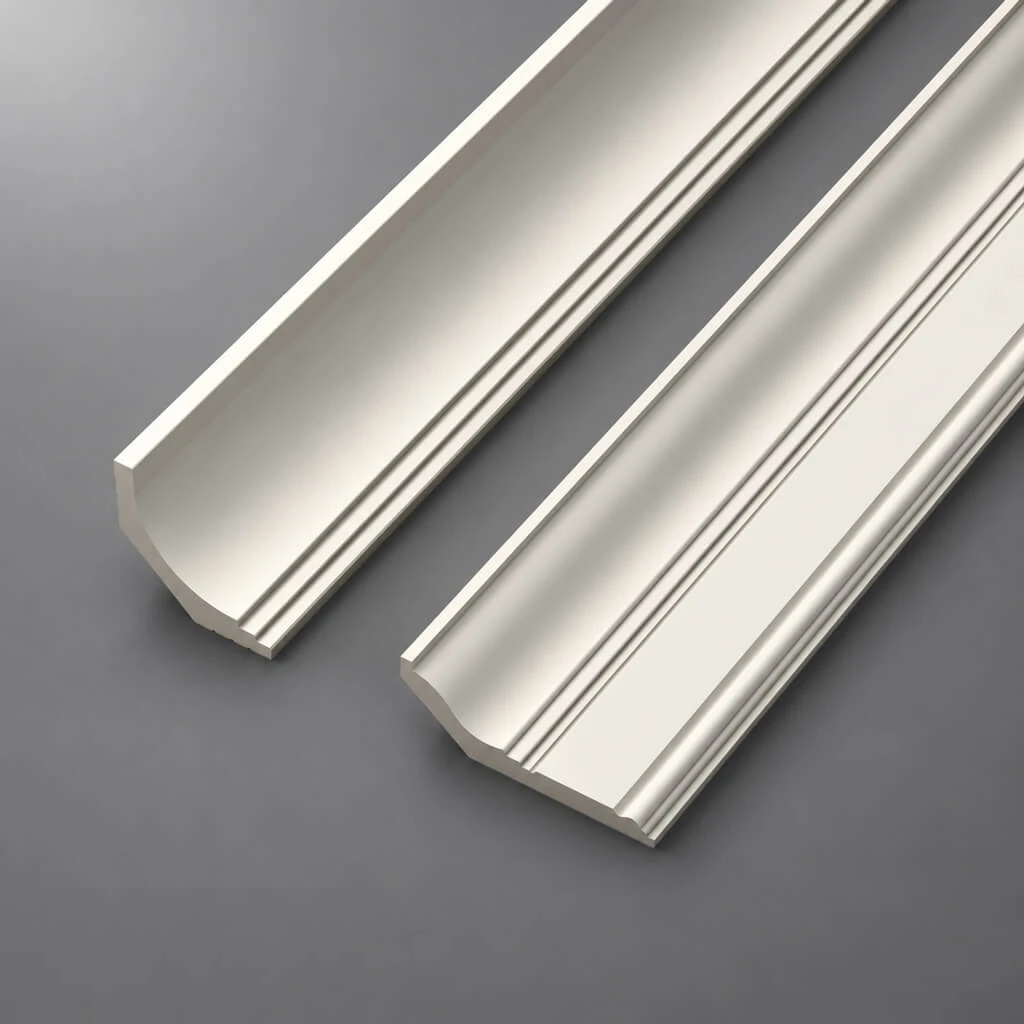
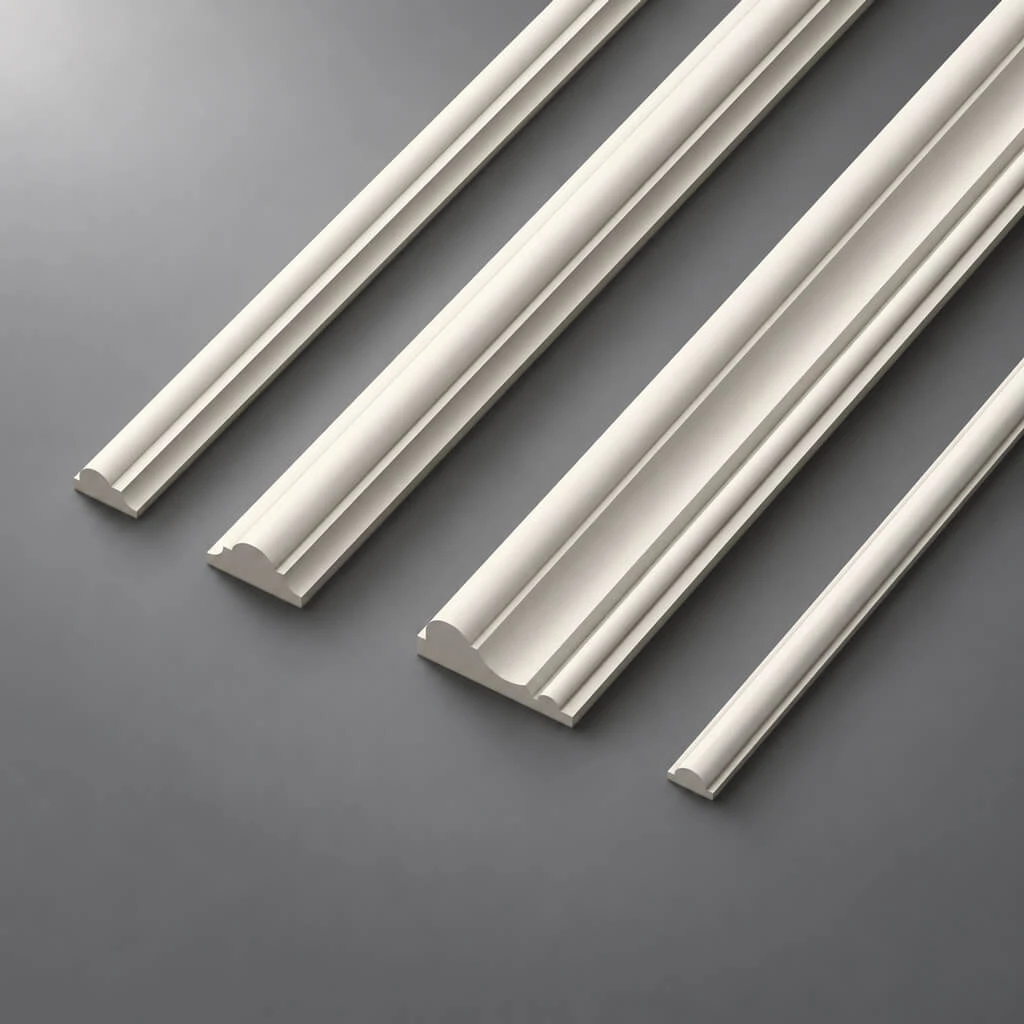
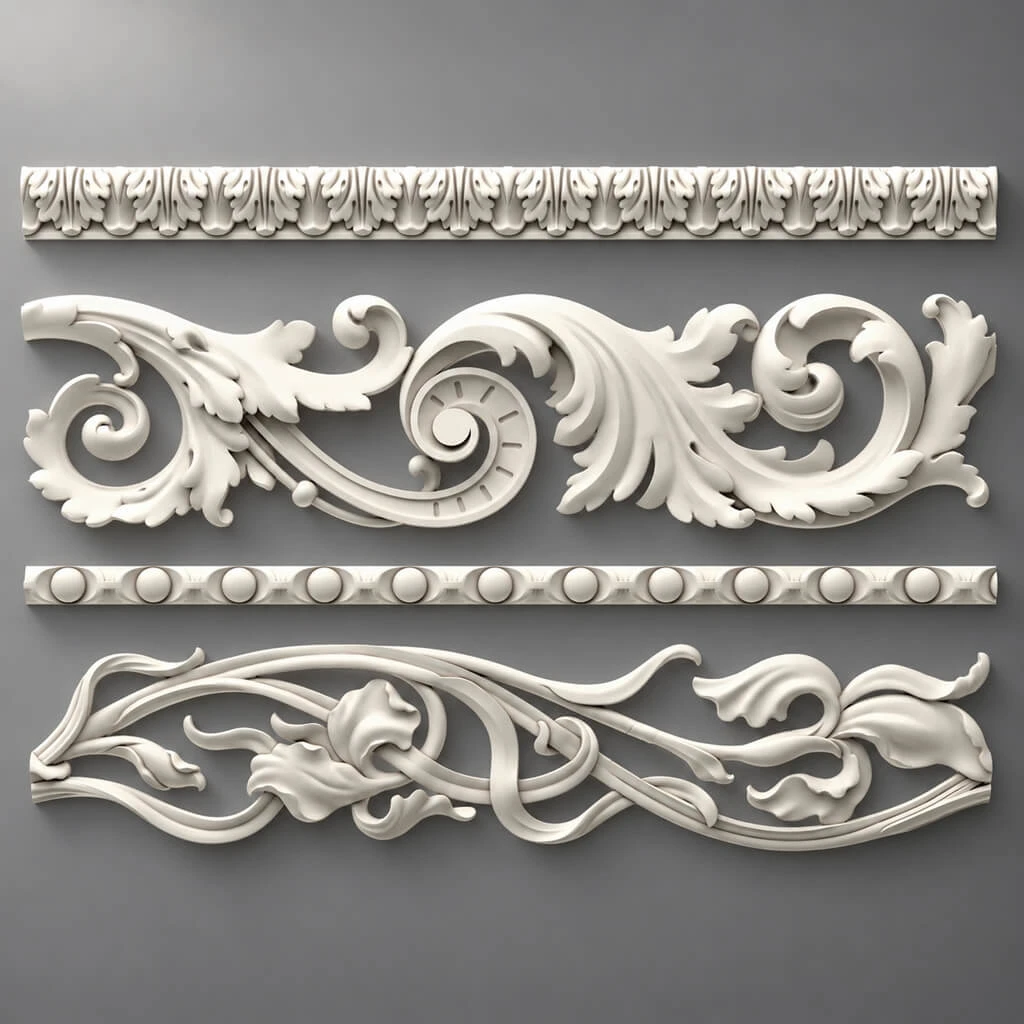
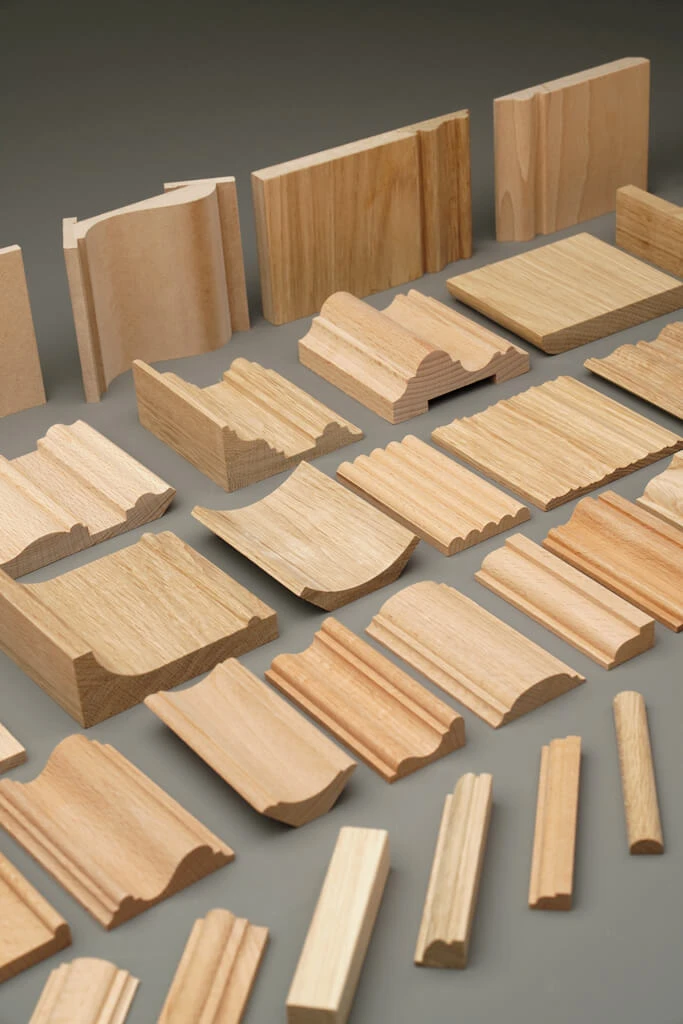
- Wooden moldings
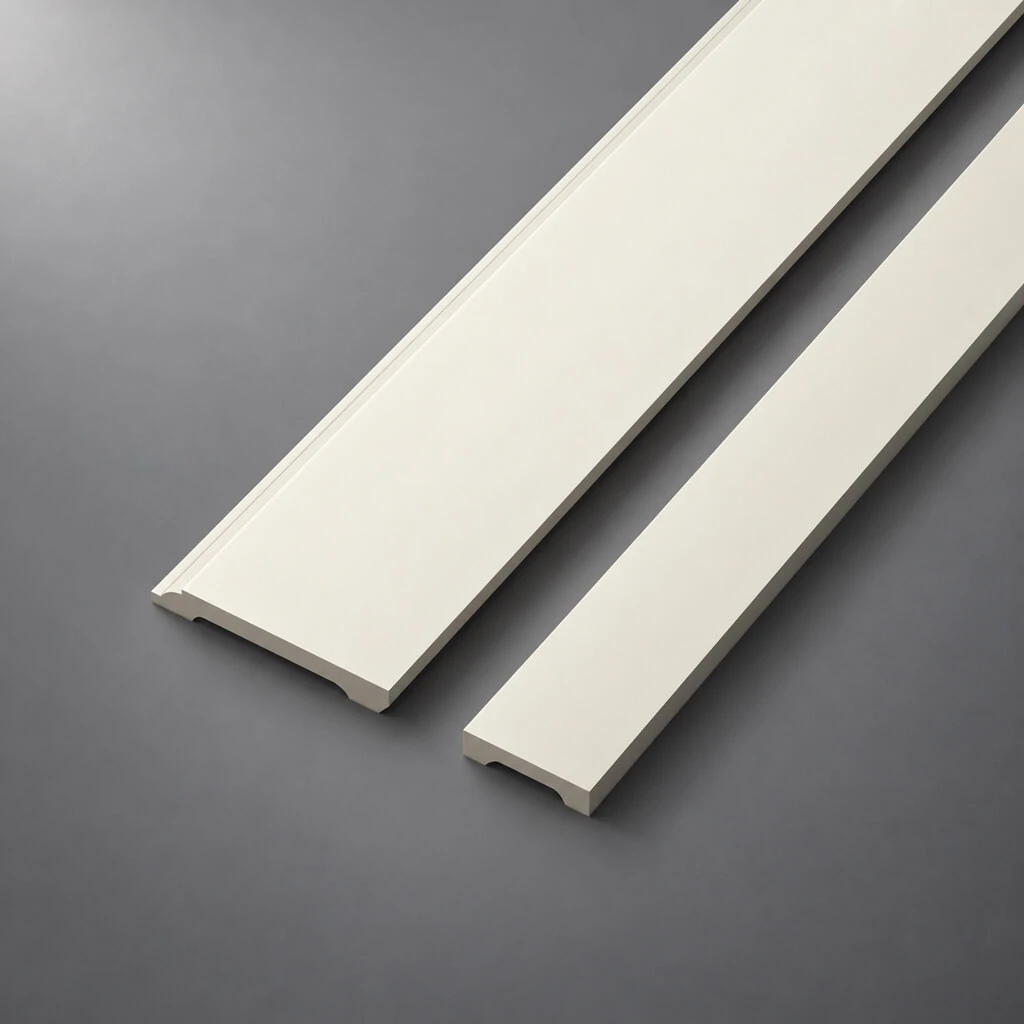
- Wooden skirting boards
- Wooden casings
- Furniture frames and carved decor
- Mistakes when choosing wooden handles
- How to combine wooden handles with facades, trims, and baseboards
- Wooden handles: wood species matters
- Where to buy wooden handles
- Wooden handles: a step-by-step guide to choosing
- FAQ: frequently asked questions about wooden handles
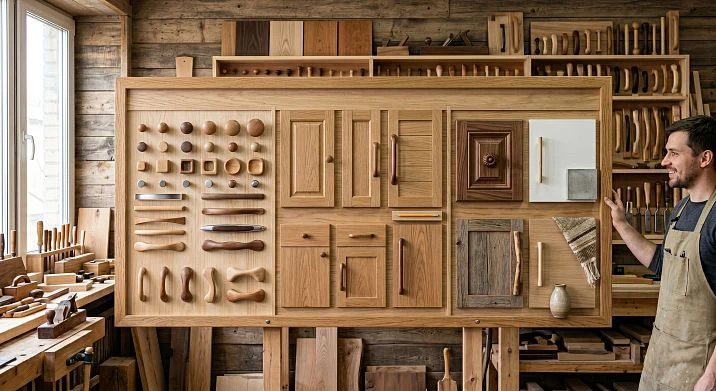
Wooden handles are not just hardware. They are the final chord in creating an interior, that very detail that is not noticed immediately, but without which the space looks unfinished. A properly selected one Wooden door handle or furniture facade can unite everything — color, texture, style, the feeling of warmth from natural material. The wrong one will ruin even the most thought-out design. How to avoid mistakes? Let's break it down step by step.
Short answer
Wooden handles are chosen based on purpose, size, shape, wood species, finish, and interior style. For cabinets, drawers, and furniture facades, pull handles, round handles, and knob handles are suitable. For doors, it is important to understand in advance whether a decorative wooden pull handle or full door hardware with a mechanism is needed. The answer to this question determines everything that follows.

What types of wooden handles are there
Before talking about choosing, you need to understand the range — and it is much wider than it seems at first glance. wooden furniture handles are divided into several fundamentally different types, each of which solves its own task.
Our factory also produces:
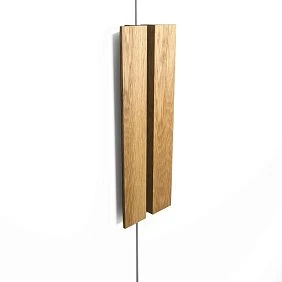
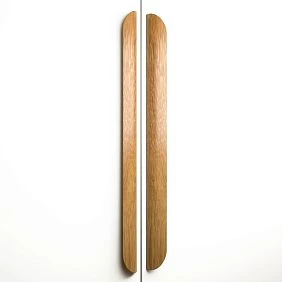
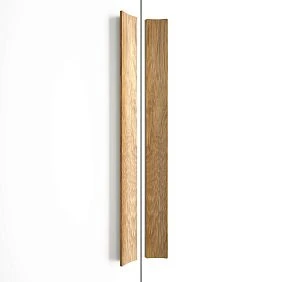
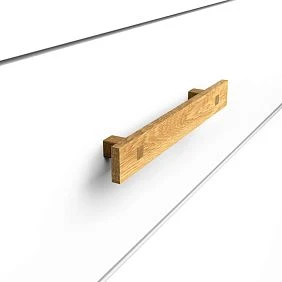
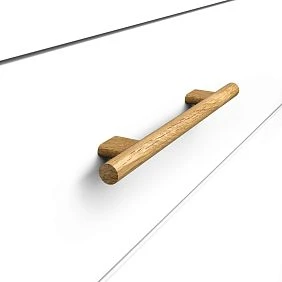
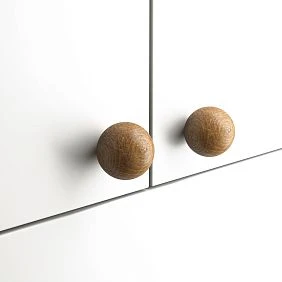
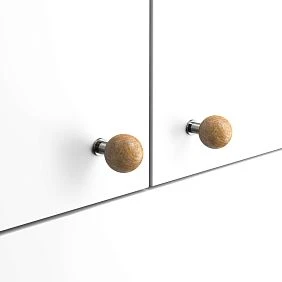
Wooden Pull Handle
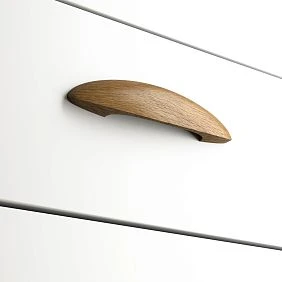
A classic of the genre. Wooden bracket handle — is a U-shaped structure that is attached at two points, forming a comfortable grip. It is versatile: it looks equally good on cabinet doors, kitchen furniture fronts, dresser doors, and sideboard doors. A wooden bracket handle is a warm material, pleasant to the touch, and this is felt every time you grab the door. The bracket can be strict and straight, or it can have a smooth curve — the choice of shape depends on the furniture style.
Get Consultation
Round handle and knob handle
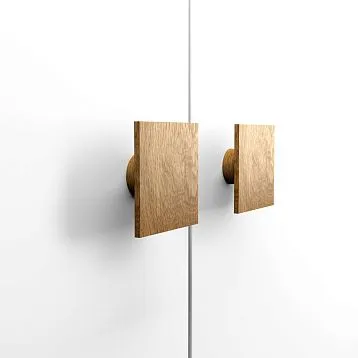
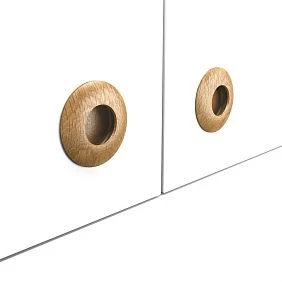
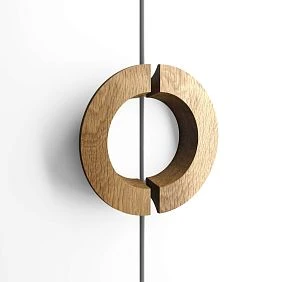
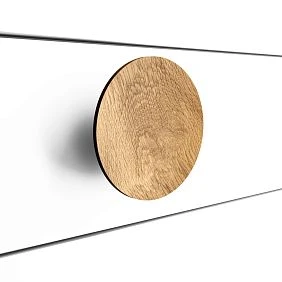
A wooden round handle is concise, neat, and often used for small drawers, cabinets, and fronts in Scandinavian or modern style. A wooden knob handle is a minimalist option with a single attachment point. Both shapes are ideal where it is important to maintain a clean surface without overloading the front with details. A wooden knob handle for a front is a frequent choice in interiors where the principle of "less is more" prevails.
Long wooden handle
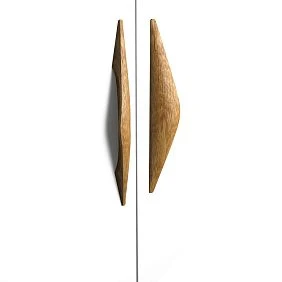
Long wooden handles for a cabinet visually elongate the front, giving the furniture swiftness and lightness. They look good on tall hinged doors, built-in wardrobes with hinged sections, sideboards, and display cabinets. A long handle requires careful calculation of the center-to-center distance — the distance between the centers of the two attachment points.
Recessed wooden handle
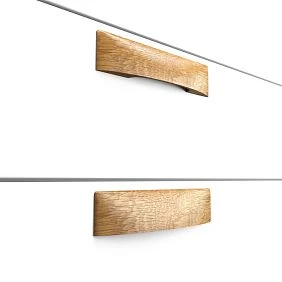
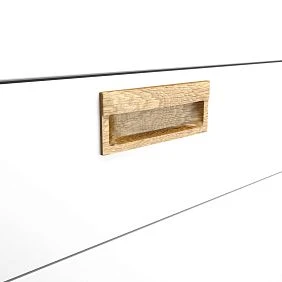
A recessed handle is embedded into the front panel — only a recess is visible from the outside, which is convenient for pulling. This solution is popular in minimalist interiors where a perfectly smooth furniture surface is important. Recessed handles are less common in wooden execution, but they look exceptionally organic on solid wood furniture or furniture with natural veneer.
Handles with and without coating
A separate story is uncoated wooden handles и Wooden handles with coatingThe first ones allow you to choose the finish yourself: paint to match the furniture, apply varnish, oil, stain, or enamel. The second ones are ready for installation — the coating is applied professionally, reliably protecting the wood from moisture, stains, and mechanical damage.
Wooden furniture handles: a complete overview
When it comes to wooden furniture handles, it's important to understand that this concept covers a wide range of products. A handle for a dresser drawer is one story. A handle for a tall wardrobe is quite another. Let's break it down by furniture type.
Cabinet handles
Wooden handles for a wardrobe are one of the most popular requests. A wardrobe is a large piece of furniture, its facades occupy a significant area, and the handles on them should be proportionate. A handle that is too small on a tall door will look ridiculous — it will simply be "swallowed" by the facade. For a wardrobe, medium and long handles, brackets with a pronounced shape, or long profile handles are optimal.
Wooden handles for a wardrobe are chosen considering the wood species of the wardrobe itself: if the furniture is made of solid oak, an oak handle will be an ideal continuation of the material. If the wardrobe is made of MDF with a wood-like coating, you can choose a beech handle that visually harmonizes with the shade of the facade.
Wooden drawer handle
A wooden drawer handle is a small but important element. The drawer is opened dozens, if not hundreds, of times a day, so the handle should be not only beautiful but also comfortable. For small drawers, knob handles and compact brackets are suitable. For deep drawers with heavy contents, more massive brackets with a wide grip are better.
Handles for a dresser, nightstand, sideboard
A dresser is furniture where balance is important. Several identical handles in a row create rhythm, orderliness, and a sense of style. Wooden handles for a dresser are often chosen in a single type — all knobs or all brackets — but with the possibility of alternating by size: smaller on the top drawers, larger on the bottom ones.
For buffets and display cabinets, handles with a more expressive shape are suitable — with a slight curve, with a figured profile. A buffet is a piece of furniture that attracts attention on its own, and the handles on it should match this status.
Handles for kitchen and wardrobe
The kitchen is an area with high demands for practicality. The handle on a kitchen facade daily comes into contact with moisture, grease, and temperature changes. Here, especially important are Wooden handles with coating: professional finishing will protect the wood from deterioration. In the wardrobe, the requirements are milder, but aesthetics are more important — here, wooden handles made of wood provide room for style.
Handles for classic-style furniture and solid wood
Wooden handles for classic furniture are a separate story. Classics love expressiveness: bracket handles with a smooth curve, carved elements, shapes with historical references. Solid wood furniture tends toward natural organicity: the handles here should be made of the same material, supporting the feeling of solidity and naturalness.
Wooden handles for doors: an important distinction
Here it is necessary to pause and understand a fundamental point that even experienced buyers often confuse. A wooden handle for a door is not the same as door hardware with a mechanism.
Decorative bracket handle and handle for the door leaf
Wooden bracket handle — This is an overlay element. It is attached to the door leaf from the outside and functions as a pull: you open the door by pulling the bracket, and that's it. No mechanism, no latch, no lock. This is an ideal option for sliding doors, doors with magnetic or roller mechanisms, pocket doors, and closet doors. A wooden door handle in this shape is precisely a decorative-functional element.
When full door hardware is needed
If an interior door is equipped with a latch, lock, or catch — full door hardware with a mechanism is needed here: a lever handle or a knob handle with a rose. In this case, a wooden interior door handle must have a corresponding mechanism or be used in conjunction with metal hardware.
Wooden interior handles in their pure form — without a hardware mechanism — are used where the door operates only as a pull, without a click. If you are installing wooden bracket door handles on an interior door with a latch — you will also need an additional mechanism.
Wooden bracket as a decorative element
It is in the role of a decorative component that wooden door handles show themselves most vividly. They create a cohesive image: a door leaf made of natural wood or wood-like material, wooden Casings, Wooden Skirting Boards — and the crowning touch is a handle made of the same material. That's when the interior starts to resonate in unison.
How to choose the shape of the handle
The shape of the handle is not just about aesthetics. It's about ergonomics, the feel in the hand, the visual rhythm of the space. How not to get confused?
Bracket handle: the universal favorite
wooden hook handle — the most common type. Why? Because it is convenient: four fingers fit under the crossbar, the pull is confident, without slipping. Wooden door pull handles are suitable for large facades, for heavy cabinet doors, for frequently used elements. The key parameter of the pull handle is the center-to-center distance (from 32 to 256 mm and above) and the crossbar diameter.
Get Consultation
Round handle and knob handle
A wooden round furniture knob is a choice for those who value neatness and completeness. It looks good on square facades and small drawers. A wooden button handle has a similar principle but often with a flatter profile. Both types are mounted through a single hole, simplifying installation.
Long handle
Long wooden handles for cabinets are a trendy solution of recent years. They elongate the facade, creating a sense of height and lightness. Such handles are especially effective on built-in cabinets and wardrobes. Important: a long handle requires precise matching of the center-to-center distance to the product standard.
Recessed handle: minimalism in its pure form
A recessed handle is for perfectionists. No protruding elements, a perfectly smooth facade with a neat recess. In a wooden version, it looks especially organic — the wood texture continues into the depth of the recess.
Massive and carved handle
A massive wooden handle is for classic and historical interiors. Heavy, textured, with a voluminous profile. A carved decorative handle is a custom product with handwork that turns furniture into a work of art. Such handles are an attribute of expensive interiors and handmade furniture.
How to choose the size of a wooden handle
Size mistakes are one of the most common reasons for disappointment after purchase. A handle that looked great in a catalog photo may turn out to be too small or too large on a specific facade.
The facade size is the starting point
First rule: the handle size should be proportional to the facade area. On small doors (up to 40 cm wide), knob handles and compact pulls with a center-to-center distance of 32–64 mm look good. On medium facades (40–80 cm), use pulls of 96–128 mm. On large cabinet doors, use handles from 160 mm and longer.
Cabinet height and door weight
The taller the cabinet and the heavier the door, the more massive and comfortable the handle should be. A lightweight knob on a heavy hinged door is inconvenient and short-lived: the load on the attachment point will be excessive. A pull handle with two attachment points distributes the load evenly and lasts significantly longer.
Distance between mounting holes
The distance between the centers of the holes is a key technical parameter when choosing and installing. Standard values: 32, 64, 96, 128, 160, 192, 224, 256 mm. Before purchasing, measure existing holes or determine where you will drill new ones. An error of 1–2 mm can cause the mounting bolts not to fit.
Grip comfort
Ergonomics is not a secondary consideration. The handle should fit comfortably in the hand and not rub the palm with frequent use. A thick pull bar is comfortable for adults but can be difficult for children. A handle with a thin profile is aesthetic but requires a more precise grip. The optimal bar diameter for daily use is 12–20 mm.
Visual scale of the handle
A handle for a small nightstand and a handle for a large walk-in closet are different things, even if both are wooden and both are pulls. Visual scale is created by the ratio of the handle size to the facade size. Experiment: attach the handle to the facade before installation, evaluate the proportion.
Coating: with or without coating
This choice determines both the appearance of the handle, the labor required for installation, and the durability of the product in use. Let's break down all the options.
Wooden handles without coating
uncoated wooden handles — these are blanks made of solid wood, ready to accept any finish. The main advantage is freedom of choice. You can:
-
paint the handle to match the color of the facade or walls;
-
apply a clear varnish to preserve the wood texture;
-
impregnate with oil for a natural effect;
-
treat with stain to achieve the desired shade;
-
coat with enamel for a glossy or matte result.
Wooden handles for painting are a popular choice in custom design projects when you need to match the color exactly. They offer absolute freedom but require time for preparation and finishing.
Wooden handles with coating
Wooden handles with coating — a ready-made solution. The coating is applied professionally in factory conditions, ensuring an even layer, high adhesion, and reliable protection. Stavros offers four basic colors: black, white, brown, and transparent coating. This is a universal palette that covers most requests.
Wooden handles with coating are resistant to moisture and dirt — this is especially important for the kitchen, bathroom, and children's room, where usage intensity is highest.
When it's better to buy a handle without coating
Handles without coating for painting are the optimal choice in three cases. First: when the interior requires a non-standard color not available in the ready-made line. Second: when you need to perfectly match the handle shade with a specific batch of furniture or paintwork material. Third: when decorative hand painting or special finishes like antique, patina, or brushing are planned.
How to choose wooden handles for the interior
This is where real design work begins. A handle is not an isolated element. It works in context: with furniture, doors, floors, walls, and decor.
Classicism and neoclassicism
Wooden handles for classic furniture should have an expressive, often symmetrical shape. A bracket with a smooth curve, a handle with a figured profile, a carved knob — all of this is organic for a classic interior. Wood species: oak, walnut, cherry — textured, dark, noble. Coating: varnish or oil preserving the natural color of the wood.
In a neoclassical interior, a combination of wood with metal details is acceptable — for example, a bracket with metal overlays at the base. But the wooden part should be dominant.
Modern interior and minimalism
A modern interior prefers clean lines, geometry, and the absence of unnecessary details. Here, wooden knob handles, thin brackets without decoration, and long straight handles win. Light wood species — beech, ash, birch — support the lightness and airiness of the space. Coating: matte or transparent oil.
Country house, country, rustic style
Country house and country style are the domain of massive, rough, textured handles. Brackets made of dark wood, shell handles, buttons with pronounced texture. Uncoated wooden handles, covered with wax or oil, are the ideal solution. They age beautifully, acquiring patina, becoming part of the house's history.
Scandinavian style
Scandinavian interior loves functionality and natural materials. Wooden handles made of light beech without frills, simple geometric shapes, minimal coating — that's the formula for success for Scandinavia. Round wooden button handles on white facades are a recognizable Scandinavian image.
Dark and light facades
Light facades — white, cream, pearl — accept handles made of light or dark wood equally. The contrast of a dark handle on a white facade looks graphic and expressive. A light handle on a light facade looks delicate and refined.
Dark facades — wenge, ebony, anthracite — require caution. A dark handle on a dark facade can 'dissolve'. Here it's better to choose a light handle made of light wood or with a white/transparent coating that will be clearly readable.
What to combine wooden handles with: cross-linking in the interior
This is a key block for those who want not just to choose a handle, but to create a cohesive space. Wooden handles work in a system.
Furniture legs and supports
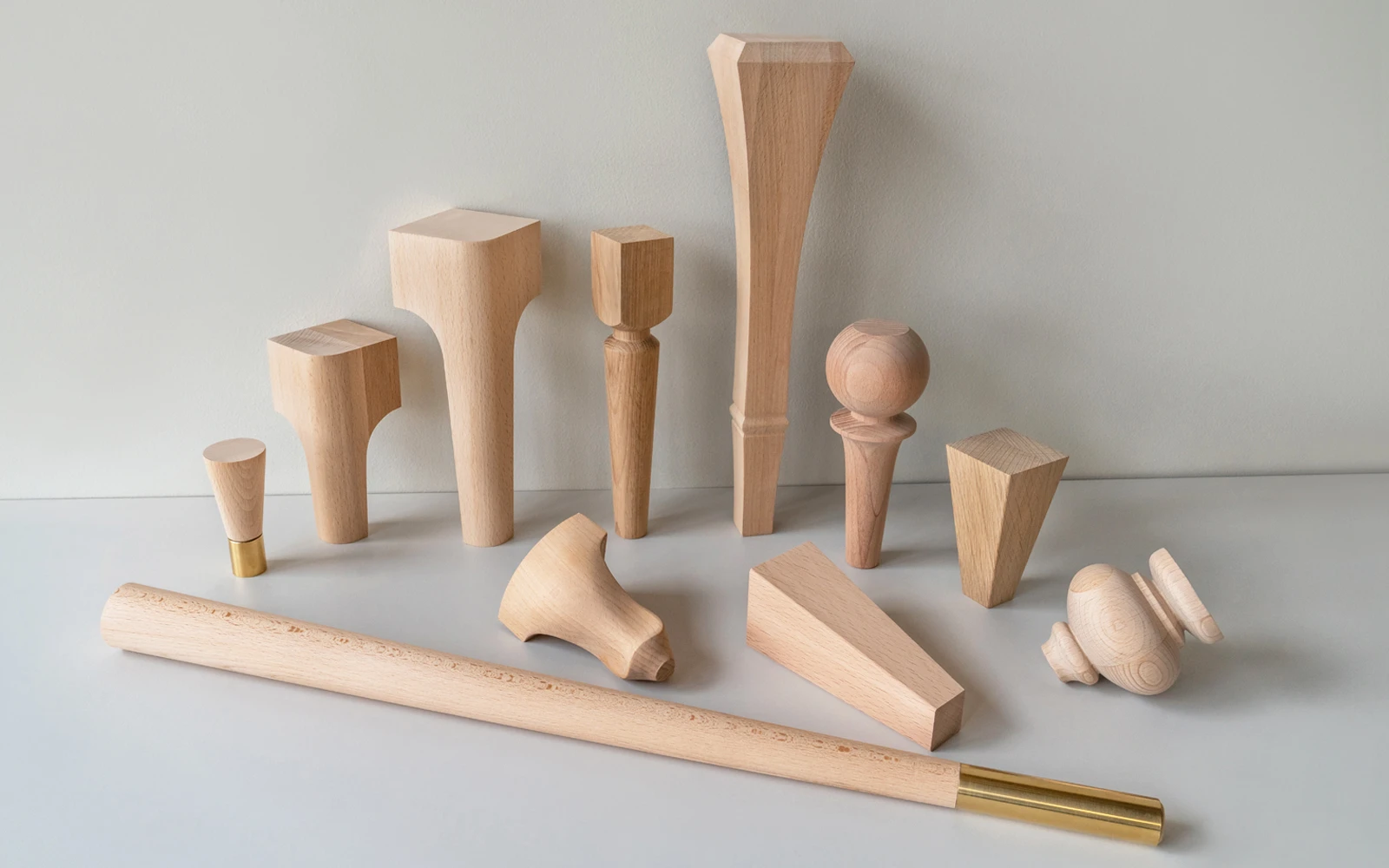
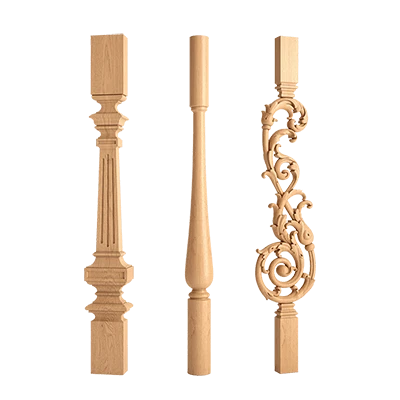
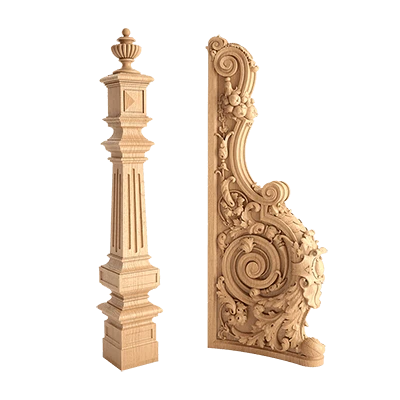
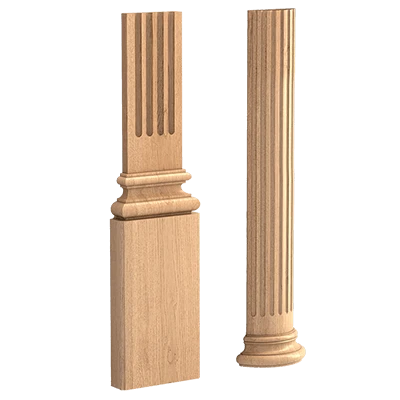
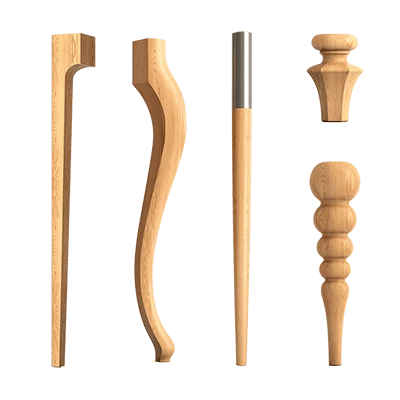
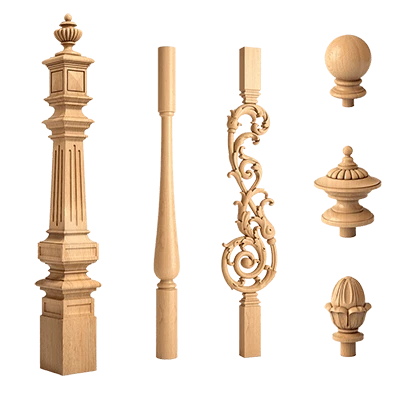
Wooden furniture legs — the first element with which handles should be in dialogue. If the legs are elegant, turned, made of light wood — button handles made of the same material will create a sense of unity. Massive legs made of dark oak call for corresponding handles — brackets with weight and character. Furniture supports and handles made of the same wood or the same color are a win-win way to visually unify furniture.
Decorative appliqués
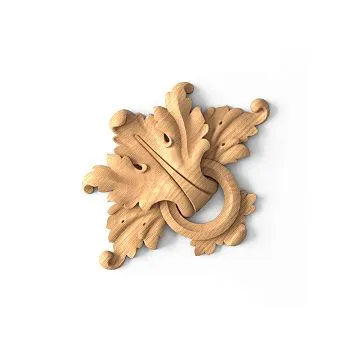
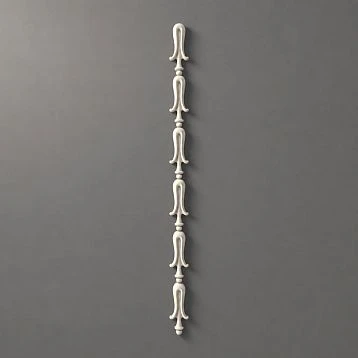
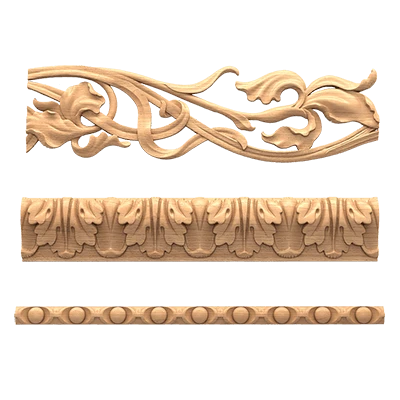
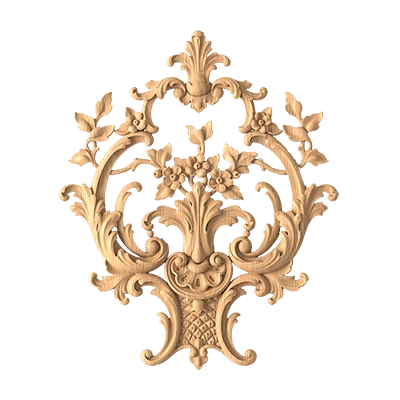
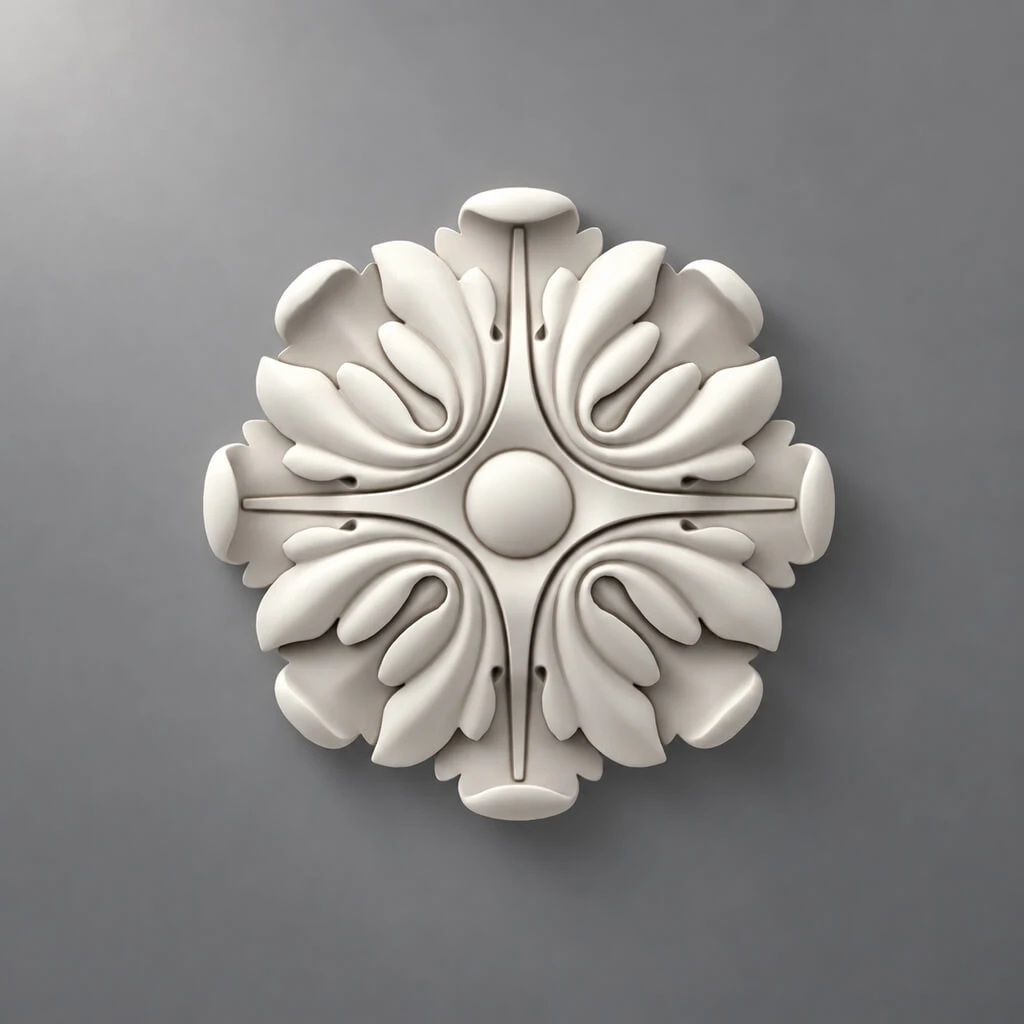
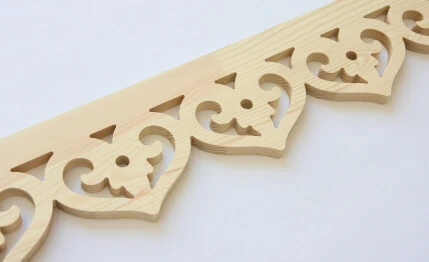
Furniture Decoration from Wood — overlays, rosettes, corner elements — exist in the same space as handles. If there are wooden overlays with geometric patterns on the facades, the handles should support this geometry. An overlay with smooth lines and rounded corners is a reason to choose a bracket with a soft curve rather than a straight, strict shape.
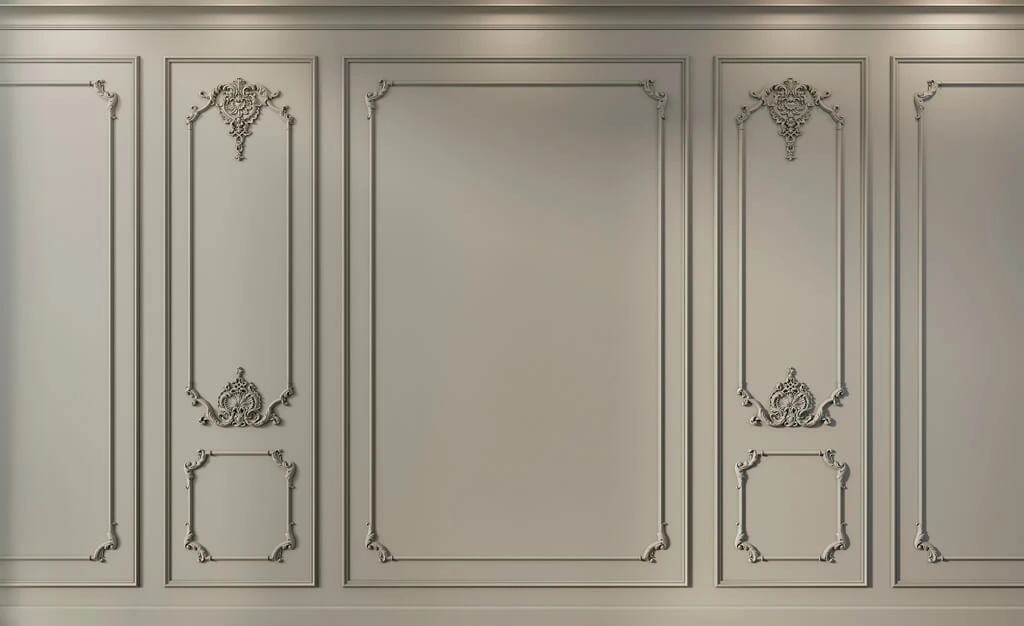
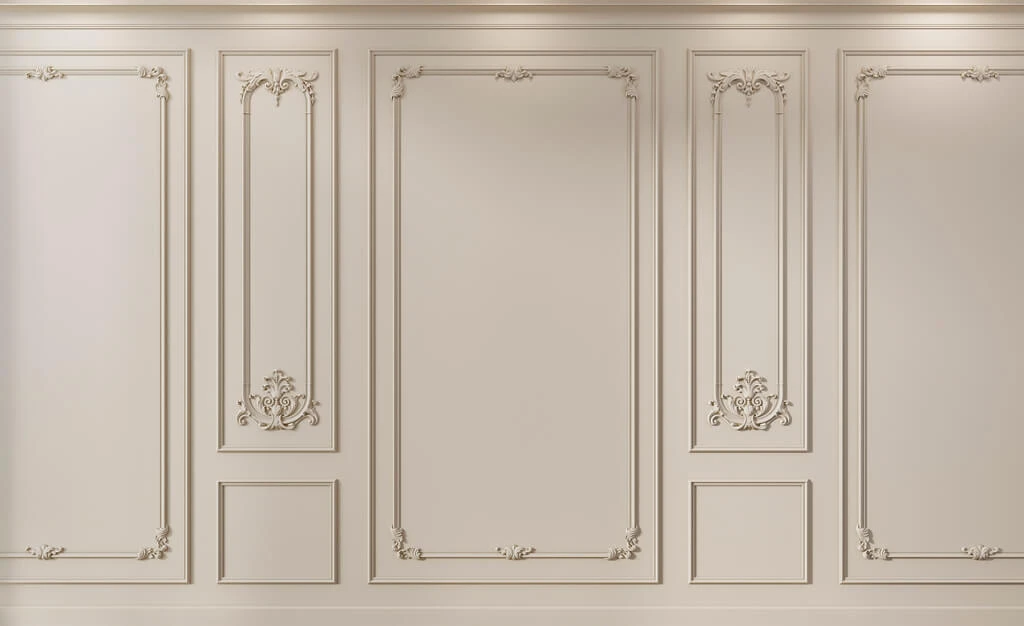
Wooden moldings
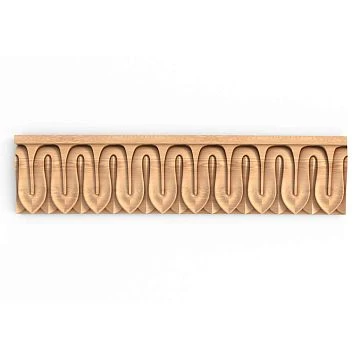
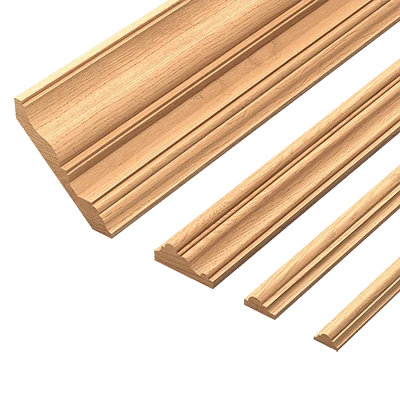
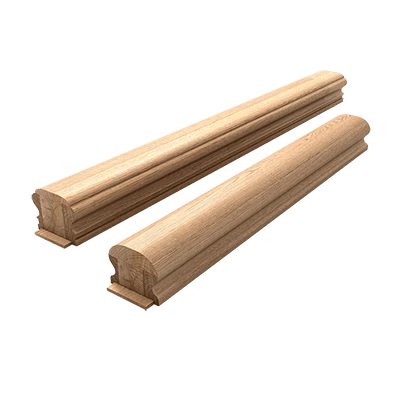
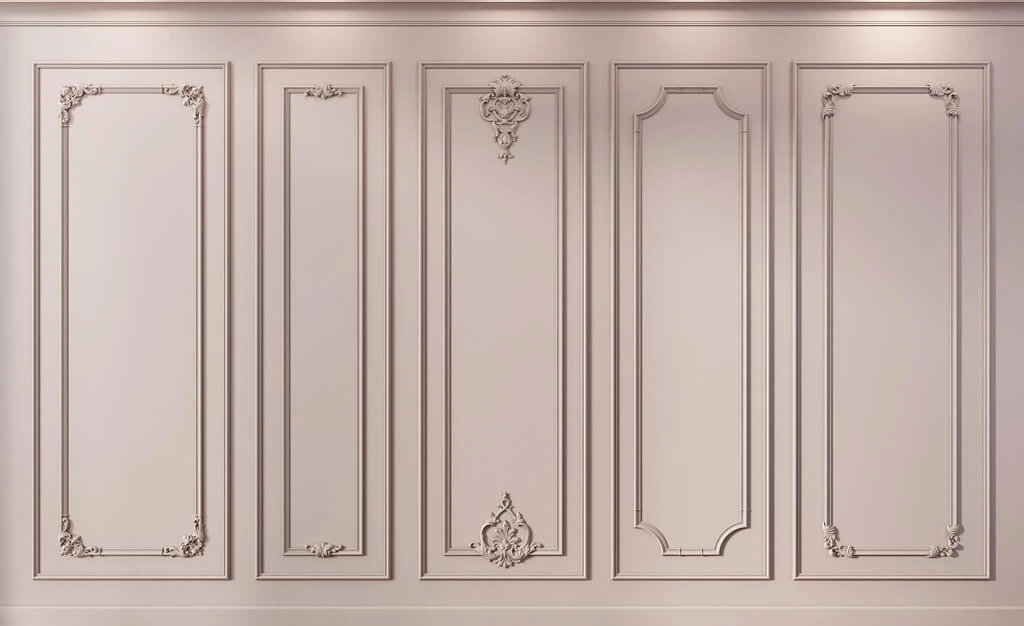
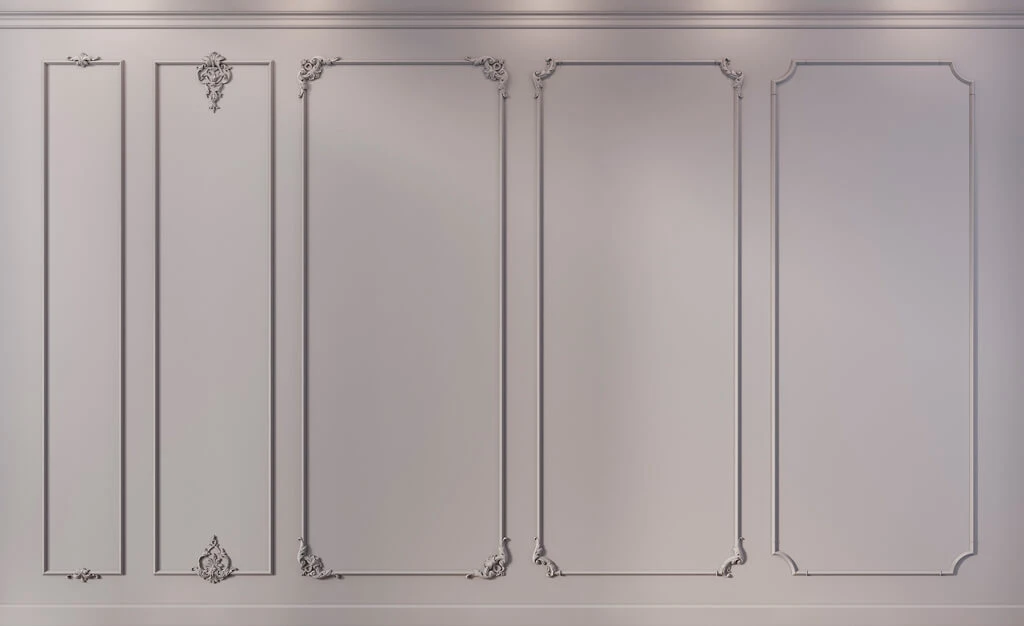
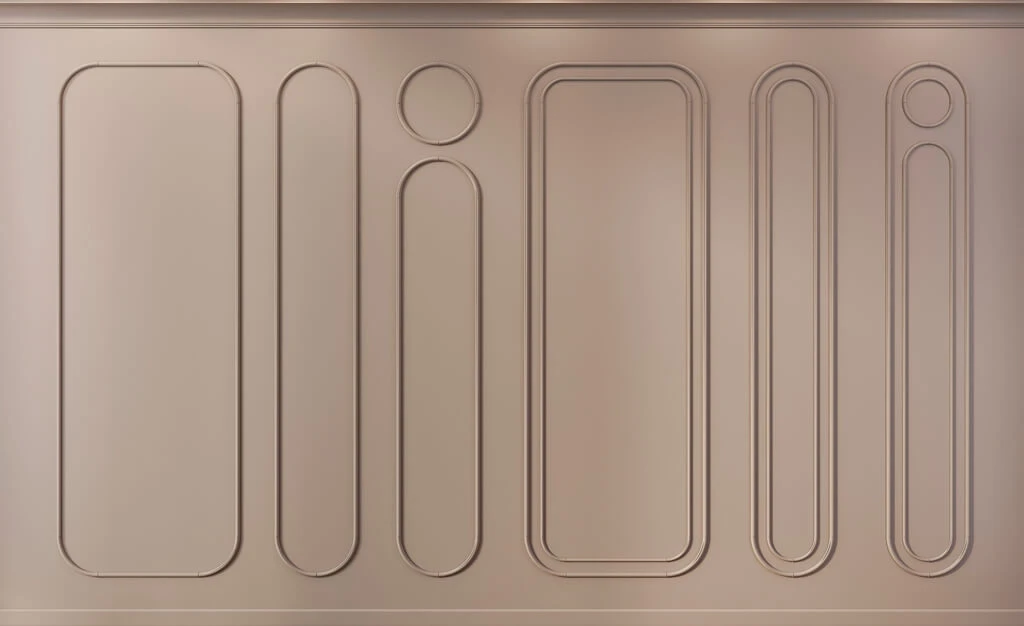
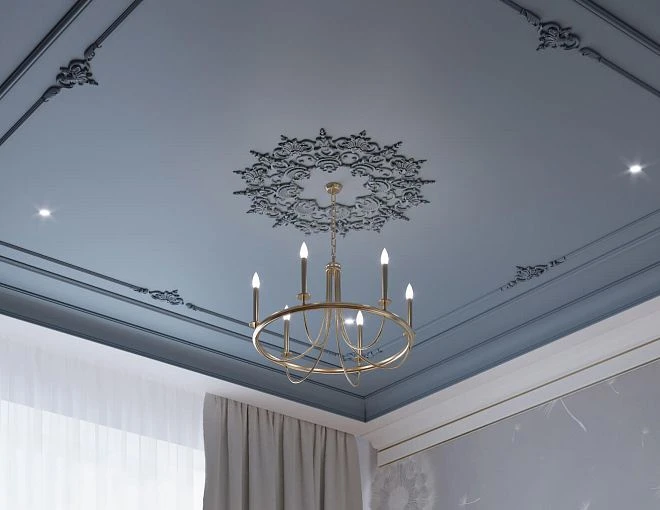
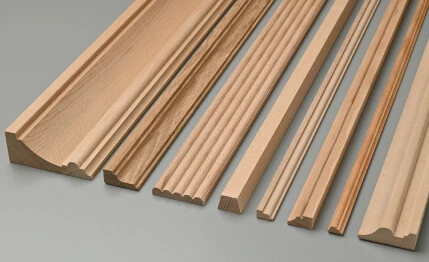
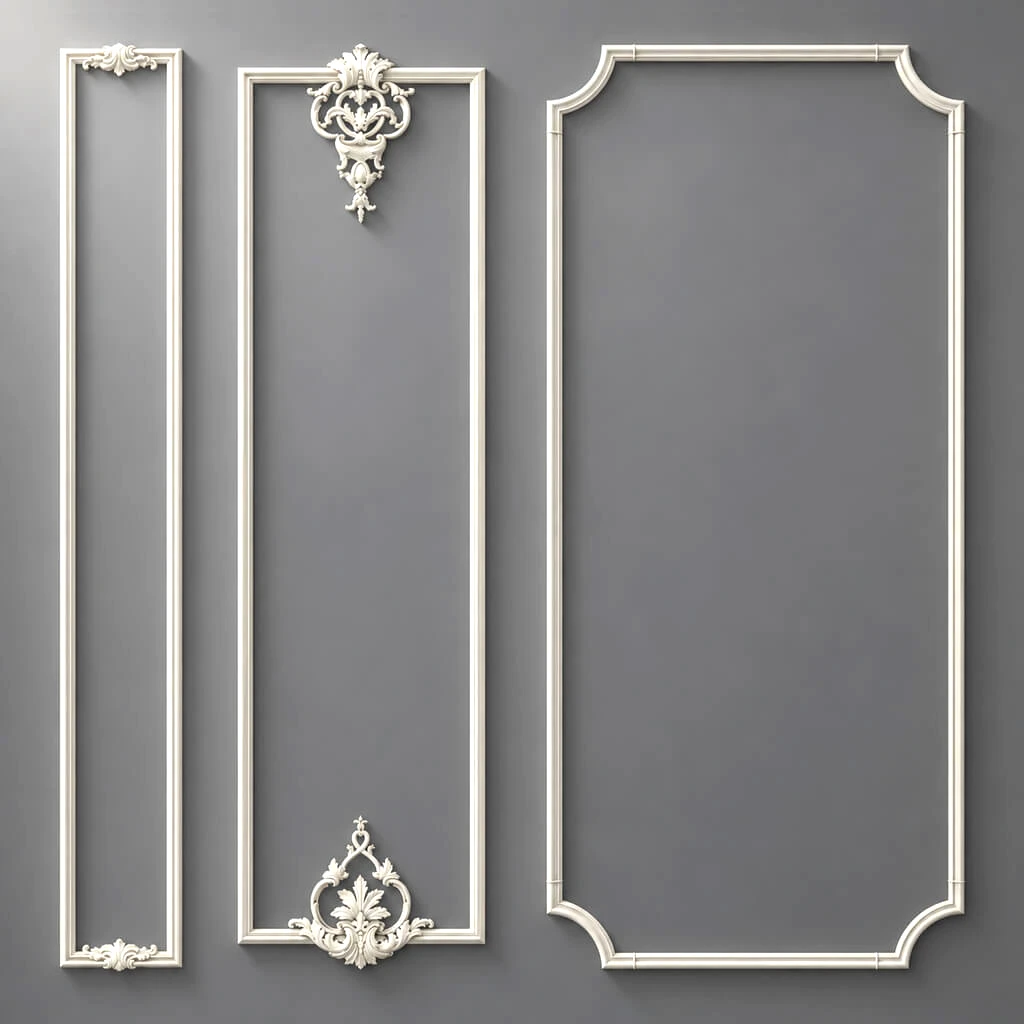
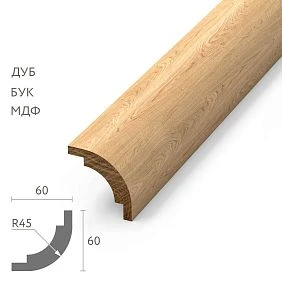
Wooden moldings These are profiled slats that divide the wall space, frame panels, and add volume and depth to the interior. If the room uses dark walnut moldings, handles made from the same material will create a visual rhyme. Lacquered light oak moldings are a reason to choose handles with a transparent oak finish.
Wooden baseboards
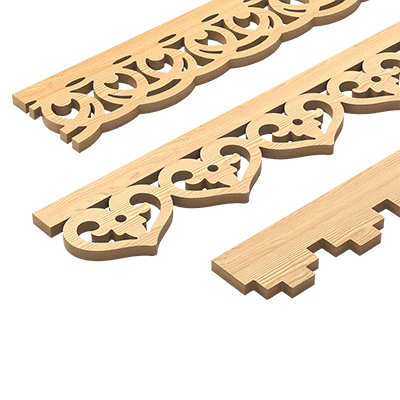
Wooden Skirting Boards Set the tone for the entire floor perimeter. They are the lower frame of the space. If the baseboard is made of solid oak with a dark stain, and the furniture handles are made of light beech with a white finish, a dissonance arises. Unity of wood species or tone is not a designer's whim, it is a law of visual harmony.
are used to decorate door and window openings, giving them a finished and aesthetically pleasing appearance. They protect openings from mechanical damage and emphasize the architectural style of the room.
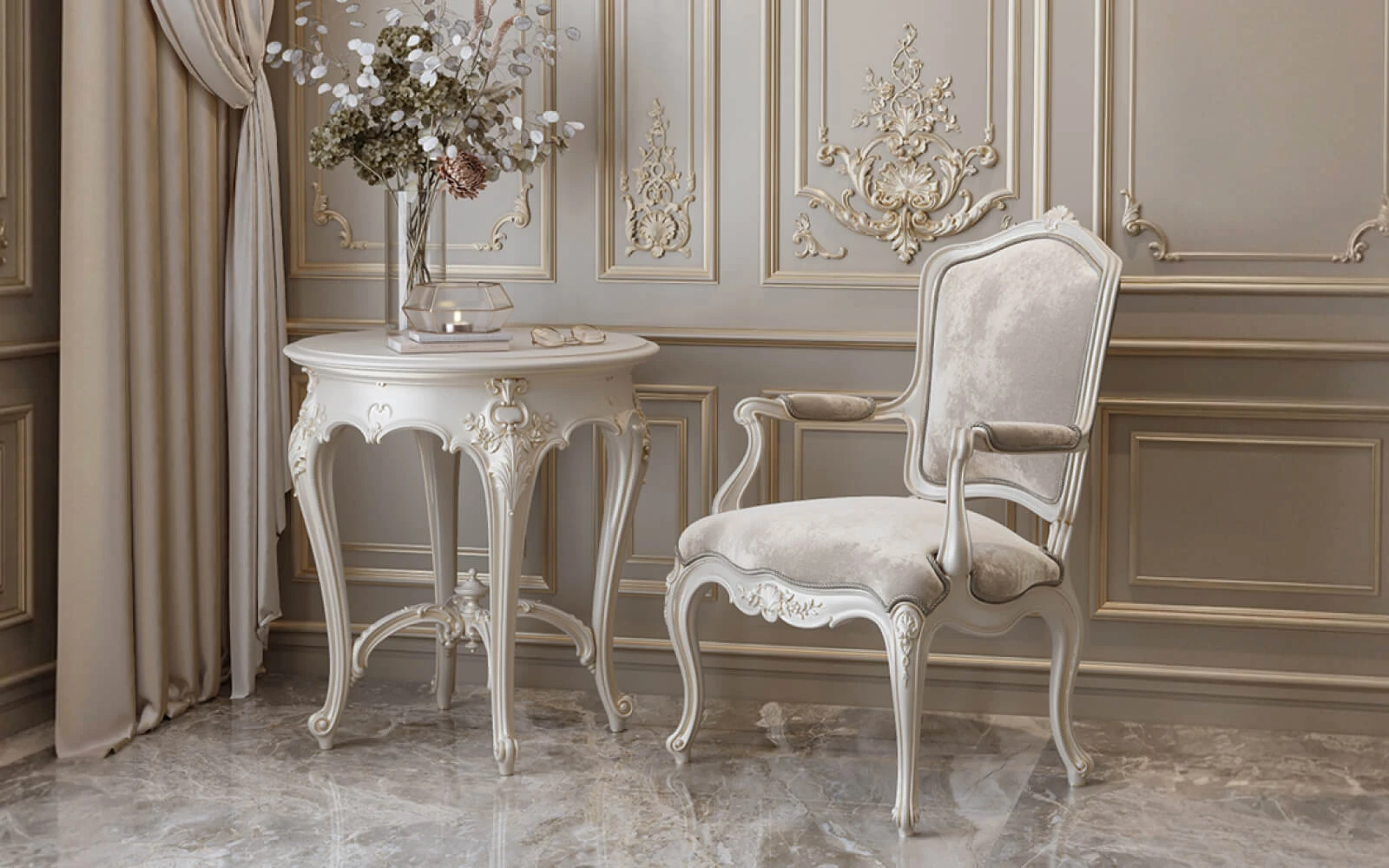
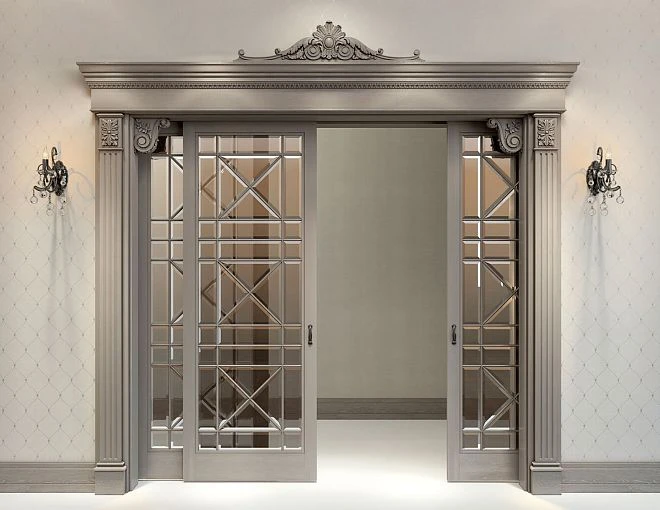
Wooden casings Frame doorways. They are the transitional element between the wall and the door, and it is with them that door handles should be in dialogue. A classic profile casing and a curved pull handle are a classic pair. A casing with clear straight edges and a geometric handle in a modern style are a pair for a minimalist interior.
Furniture frames and carved decor
Wooden items — frames, carved elements, decorative inserts — shape the overall image. The richer the wooden decor in the interior, the more important it is that the handles are from the same 'family': the same wood species, the same tone, the same degree of surface treatment.
Mistakes when choosing wooden handles
Knowing the rules is good. Knowing typical mistakes is even better. Here is what most often goes wrong.
Choosing a handle only by photo. A photo in a catalog is ideal studio lighting conditions. The real size, proportion, wood texture — all this needs to be seen in person or at least compared with the exact dimensions of the facade. Order a sample or carefully study the technical specifications before purchasing.
Not considering the size of the facade. A handle proportionate to the facade is not a decorative whim, it is a visual law. A handle that is too small on a large cabinet creates a feeling of incompleteness and randomness. A large handle on a small drawer overloads the facade and feels oppressive.
Putting a handle that is too small on a large cabinet. A frequent consequence of focusing only on a 'beautiful shape' without considering scale. For a cabinet 2.2–2.4 m high, the handle should be noticeable and confident. A knob with a diameter of 3 cm will simply get lost here.
Choosing an uncomfortable grip shape. A designer handle with sharp edges or an uncomfortable profile looks beautiful in photos but is painful in daily use. This is especially critical in the kitchen, where handles are used constantly.
Do not check the distance between fasteners. Center-to-center distance is a technical parameter that cannot be neglected. An extra hole in the facade is not just unsightly, it is essentially damaging the furniture. Always check this parameter before drilling.
Mixing different wood shades chaotically. Combining different wood species in an interior is acceptable and even beautiful if done deliberately. But chaotic mixing of light beech, dark walnut, and mahogany within a single set is a design disaster.
Not considering the coating. An uncoated handle in a kitchen is a risk. Grease, moisture, and steam will gradually destroy unprotected wood. The choice of coating must match the operating conditions.
Confusing a furniture handle with door hardware that has a mechanism. A wooden furniture pull handle on an interior door with a latch is not the best idea. Here, a door handle with a mechanism is needed. A pull handle is good where the door only works by pulling.
Forgetting about the overall style of furniture, doors, architraves, and baseboards. A handle is not an isolated decorative element. It is part of a system. Baseboard, architrave, molding, leg — all of these must exist in a unified style and color space. Ignoring this principle means getting beautiful details that do not come together into a beautiful interior.
How to combine wooden handles with facades, architraves, and baseboards
This question is asked more often than it seems. And the answer is not as simple as "match the tone."
First principle — unity of material. If the main wooden elements of the interior — baseboard, architrave, molding — are made from the same species, handles from the same species will create a sense of design integrity. Wooden Skirting Boards made of oak and pull handles made of oak — this is not a coincidence, it is style.
Second principle — unity of tone. If you cannot match the species exactly, match the tone. All wooden elements in the same spectrum: warm honey shades or cool gray-beige. Mixing warm and cool tones without intention means creating visual noise.
The third principle is contrast as a technique. An experienced designer sometimes deliberately plays with contrast: dark handles on light furniture with white plinth. This works but requires precise calculation: the contrast must be obvious and intentional, not accidental.
The fourth principle is rhythm. Identical handles on identical facades create rhythm. This rhythm calms and structures the space. Breaking the rhythm — different handles on similar facades without visible logic — creates chaos.
Wooden handles: the type of wood matters
Not all wooden handles are the same — even if they look similar. The type of wood determines hardness, density, texture, and the product's behavior in use.
Beech is a hard, dense wood with a fine, uniform texture. It is well-suited for milling, allowing precise geometric shapes. Beech is resistant to mechanical stress, making it ideal for handles in high-use areas like kitchens and hallways.
Oak is a dense wood with a pronounced texture and noble color. Handles made from solid oak are products with character. The texture of oak is always visible, even under varnish. Oak is slightly heavier than beech, and this is felt in the hand — a pleasant weightiness.
Walnut is a dark, textured wood. Walnut handles are for classic and expensive interiors. Walnut does not tolerate cheap coatings — only oil or high-quality varnish.
Stavros produces furniture handles from solid beech and oak using 3D milling — a technology that allows reproducing precise geometric shapes with high repeatability and a perfect surface.
Where to buy wooden handles
The choice is made — all that's left is to buy. Where to look Wooden handles, to get a quality product without surprises?
В Stavros you can choose wooden handles for furniture, cabinets, drawers, and decorative interior solutions. The range includes 32 models of overlay handles made from beech and oak: Wooden handle hooks, round handles, knobs, long profile handles, shells. Each model is available in several sizes.
Wooden handles with coating — four basic colors (black, white, brown, clear coating) — ready for installation immediately upon receipt. uncoated wooden handles — for self-finishing. The product is always in stock, order from one piece, fast delivery to any region of Russia and CIS countries.
In addition to handles, at Stavros you can choose a complete set of wooden decor for a unified interior: Furniture Legs and Supports, Decorative Inserts, Wooden moldings, Solid wood skirting boards, Casings and other wooden decor — everything for designing an interior in a unified style.
Wooden handles: a step-by-step selection guide
To turn everything said above into a practical guide, here is a step-by-step selection algorithm.
Step 1: Determine the purpose. What is the handle for? A dresser drawer, a cabinet door, an interior door without a mechanism, a kitchen front? The purpose determines the type of handle.
Step 2: Measure the front. The width and height of the front are the starting point. Write down the dimensions before browsing the catalog.
Step 3: Choose the type. Staple, knob, round handle, long handle — choose the type based on the purpose and interior aesthetics.
Step 4: Determine the center-to-center distance. Already have holes — measure them. New furniture — choose a standard size (96, 128, 160 mm are the most common).
Step 5: Choose the wood species and finish. Match the wood species and tone to the wooden elements of the interior. The finish — considering the operating conditions.
Step 6: Evaluate the proportion. If possible — visualize the handle on the front before purchasing. A photo of the front plus an overlay of the handle image at the correct scale will give a good result.
Step 7: Order with a spare. If handles are needed for several fronts — order +1-2 units as a spare. This is insurance against chips during transport or defects during installation.
FAQ: frequently asked questions about wooden handles
How to choose a wooden handle for furniture?
You need to consider the size of the front, the purpose of the furniture, the grip shape, the finish, the wood color, and the interior style. For drawers, knob handles and staples with a small center-to-center distance are convenient; for cabinets, longer and more noticeable handles with a wide grip are better. The wood species should harmonize with the other wooden elements in the room — legs, baseboards, trim.
Can I use a wooden door handle?
Yes, if it's a decorative pull handle or a handle for a door without a complex locking mechanism. Wooden bracket handle It's ideal for sliding doors, doors with magnetic mechanisms, and pocket doors. For a standard interior door with a latch, you need full door hardware with a push or turn mechanism.
Which is better: a pull handle or a round wooden handle?
A pull handle is convenient for cabinets, doors, and large facades — it distributes the load across two fastenings and provides a secure grip. A round wooden handle for furniture or a knob handle is better suited for drawers, small nightstands, and neat compact furniture. The choice depends on the size of the facade and the intensity of use.
Which wooden handles are suitable for classic furniture?
For classic furniture, wooden handles with an expressive, symmetrical shape are well-suited: pulls with a smooth curve, handles with a figured profile, carved elements. The coating — varnish, stain, enamel — enhances the classic character of the product. Wood species — oak, walnut, cherry.
What is the difference between handles with and without coating?
Wooden handles with coating are already protected and ready for installation — professional finishing reliably protects the wood from moisture, grease, and mechanical damage. uncoated wooden handles — blanks for self-finishing, which allows you to exactly match the desired color and surface type.
Where to buy wooden handles in Moscow and St. Petersburg?
In the online catalog Stavros you can select and buy wooden furniture handles with Contact us to confirm shipping to your destination., including Moscow and St. Petersburg. The product is always in stock, shipping from one piece, fast delivery by transport companies.
What size handle should I choose for a kitchen front?
For a standard kitchen front 40–60 cm wide, the optimal center-to-center distance of the handle is 96–128 mm. For wider or taller fronts — 160–192 mm. The handle should visually "hold" the front, not getting lost on it or overwhelming it.
How are wooden furniture handles attached?
Most surface-mounted wooden handles are attached with two bolts that pass through holes in the front and are tightened from the inside. Mounting hardware is usually included. Knob handles are attached through a single hole. Recessed handles are mounted in a milled groove in the front.
Can you paint wooden handles yourself?
Yes, that's exactly what they exist for uncoated wooden handles. The surface is sanded with fine sandpaper, then primer and the chosen paint, varnish, or oil are applied. This allows achieving a perfect match with the furniture color or creating a unique finish.
How to combine wooden handles with metal furniture elements?
The combination of wood and metal in interior design is a popular technique. A wooden bracket with metal overlays at the bases, a wooden button in a metal frame — such solutions work in industrial, loft, and modern styles. The main thing is that the metal and wood are in the same color scheme: warm gold with warm wood, cold matte metal with cold shades.