





























































Article Contents:
- What is a pilaster in simple terms
- Where to use wooden pilasters: seven application scenarios
- On the sides of a doorway
- On the wall in the living room
- As part of a door portal
- On cabinet facades and in libraries
- In a Fireplace Area
- In the hallway and on the entrance group
- In the study and work library area
- How is a pilaster different from a column and a semi-column
- Pilasters for a door portal: how to turn an ordinary opening into architecture
- Pilasters on a wall: how to make it architectural
- Pilasters in a classic interior
- Pilasters in neoclassicism
- Pilasters for furniture and cabinets: architecture of built-in furniture
- Pilasters for a kitchen in a classic style
- How to choose the width and height of a wooden pilaster
- Width of pilaster
- Height of pilaster
- Proportions and order
- Base, shaft, and capital: full set or only part
- Base
- Body
- Capital
- Mistakes when choosing and installing wooden pilasters
- Buying a pilaster without a base and capital
- Not considering ceiling height
- Mixing different carving styles
- Installing a pilaster without connection to moldings and baseboard
- Choosing too massive decor for a small room
- Ignoring symmetry
- Selecting pilasters separately from furniture or portal
- Choosing a flat element where a half-column is needed
- Wooden pilasters for painting and carved versions
- How to combine pilasters with other wooden interior elements
- Where to buy wooden pilasters: what is important when ordering
- FAQ: answers to popular questions about wooden pilasters
- What is a pilaster?
- How does a pilaster differ from a column?
- How is a pilaster different from a semi-column?
- Where can wooden pilasters be used?
- Is a capital needed for a pilaster?
- Can a wooden pilaster be painted?
- How to choose the width of a pilaster for a doorway?
- Can pilasters be used in a small apartment?
- How to combine pilasters with wall moldings?
- What is an angular pilaster and where is it used?
- How to make a door portal from pilasters?
- About the Company STAVROS
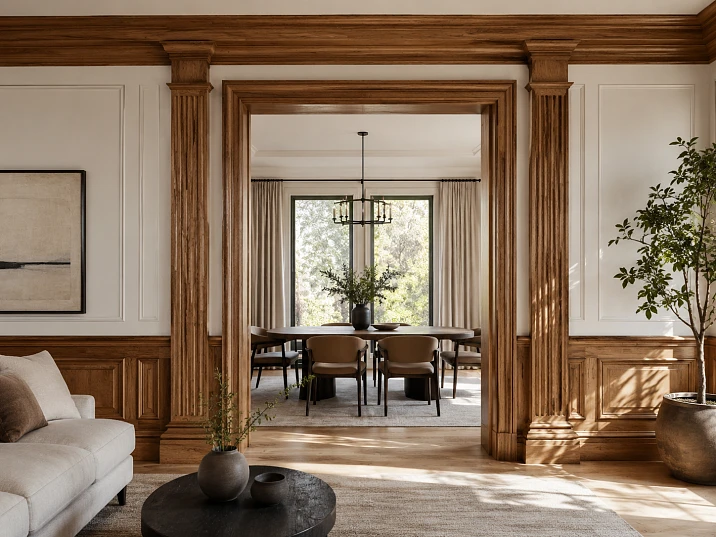
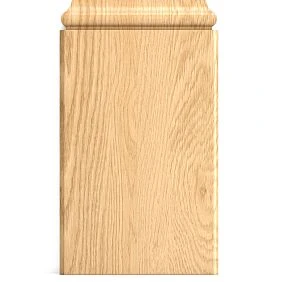
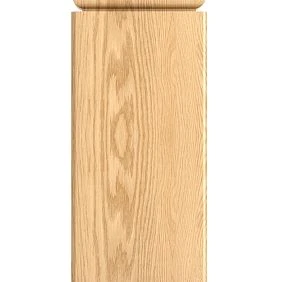
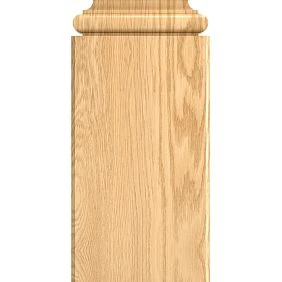
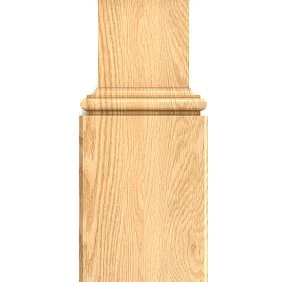
A pilaster is a flat vertical architectural element that adjoins a wall, doorway, or furniture surface and visually functions as a column built into the plane. In the interior,Wooden pilastersthey solve several tasks at once: they frame a door portal, structure an empty wall, decorate the facade of a cabinet, library, kitchen set, or fireplace area. This is one of the few decorative elements that simultaneously exists in building architecture, furniture, and interior design—and always looks more expensive than it costs.
Look atWooden pilasters, capitals and elements of door portals STAVROS →
What is a pilaster in simple words
If you see a vertical strip on the wall with a capital and base that resembles a column but clearly does not protrude into the space, you are looking at a pilaster. The word itself comes from Italian, and its roots go back to ancient architecture, where pilasters were used as a full-fledged structural and decorative element of facades of temples, palaces, and public buildings.
In modern application, a pilaster is not a load-bearing structure but pure decoration. Its task is to create a visual vertical accent: give the wall rhythm, frame an opening, highlight a zone, and give furniture architectural weight. A wooden pilaster for the interior is attached to the surface: to the wall, to the side of a cabinet, to the framing of an opening—and becomes an organic part of the overall composition.
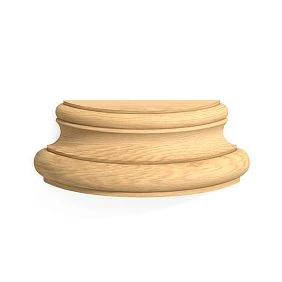
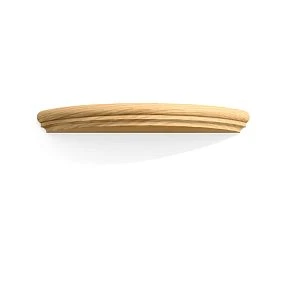
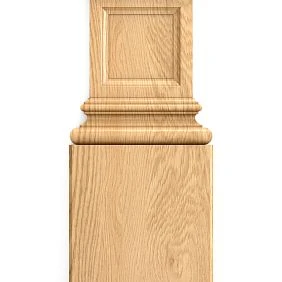
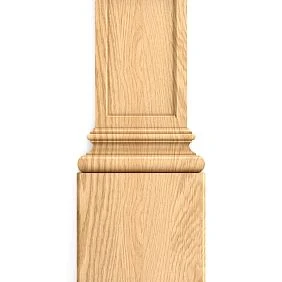
Structurally, a classic pilaster consists of three parts. The lower part is the base, which visually 'places' the element on the baseboard or floor. The middle part is the shaft, creating the main vertical line. The upper part is the capital, which completes the pilaster and connects it to the cornice or the upper part of the portal. It is this three-part structure that distinguishes a true architectural pilaster from a simple decorative strip.
An important point: a pilaster does not necessarily have to be carved or richly decorated. In neoclassicism, it can be simple, with a minimal profile, with barely hinted flutes. In classicism, it is more plastic, with an acanthus capital design and a profiled base. In modern interiors, laconic versions are found that give the space structure without excessive decor.
It is in this versatility that the main value of the pilaster as an interior design tool lies.
Where to use wooden pilasters: seven application scenarios
Our factory also produces:
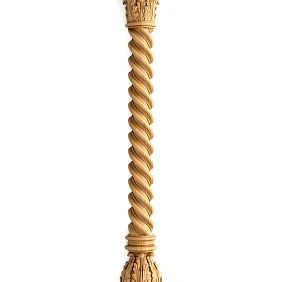
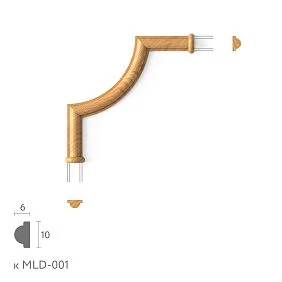
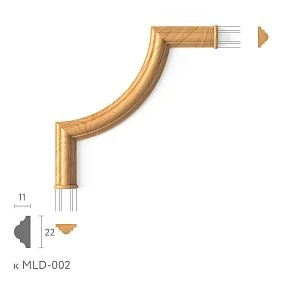
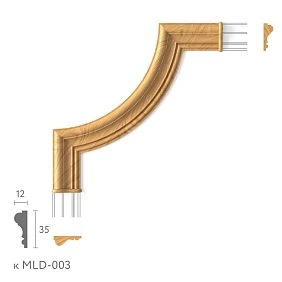
On the sides of a doorway
This is the most obvious and commercially strong scenario. Whenpilastersare installed on both sides of a doorway, they instantly turn an ordinary opening in the wall into an architectural event. The side verticals set the scale, the capitals complete the top line, and the horizontal cornice or frieze assembles the entire structure into door portala cohesive whole. The difference between a door with architraves and a door with a pilaster portal is fundamental: the second option looks like architecture, not just trim.
The width of the pilaster for a doorway is chosen based on proportions. A standard opening of 900 mm requires a pilaster of 80–120 mm. A wide opening from 1100 mm allows pilasters up to 140–160 mm. It is important not to overload the opening: the pilaster should provide a side accent but not block the space.
Get Consultation
On a wall in the living room
A long wall without windows and without architectural details is a typical problem in modern apartments and houses. Pilasters on the wall solve it elegantly: several vertical accents placed at equal intervals create rhythm and make the wall 'readable'. This works in the living room, study, library area—anywhere you need to visually structure a flat surface.
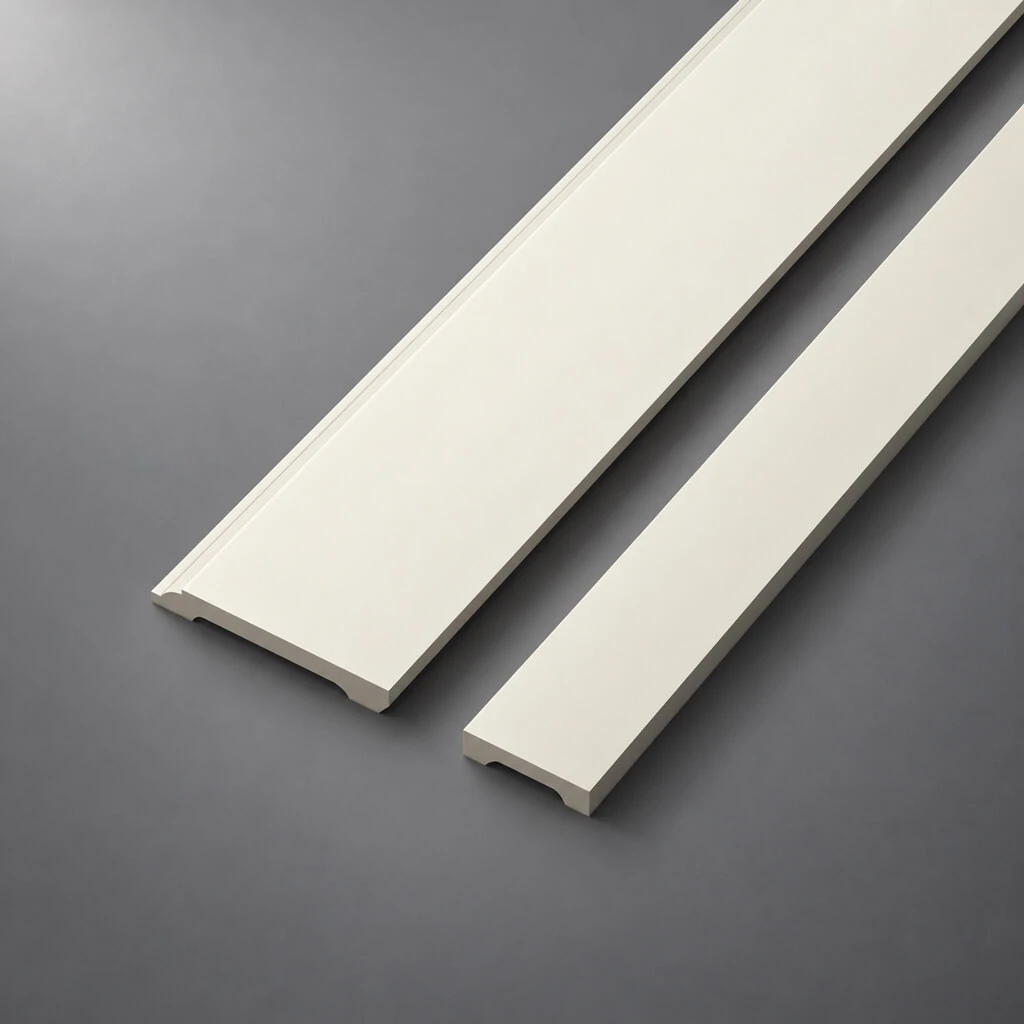
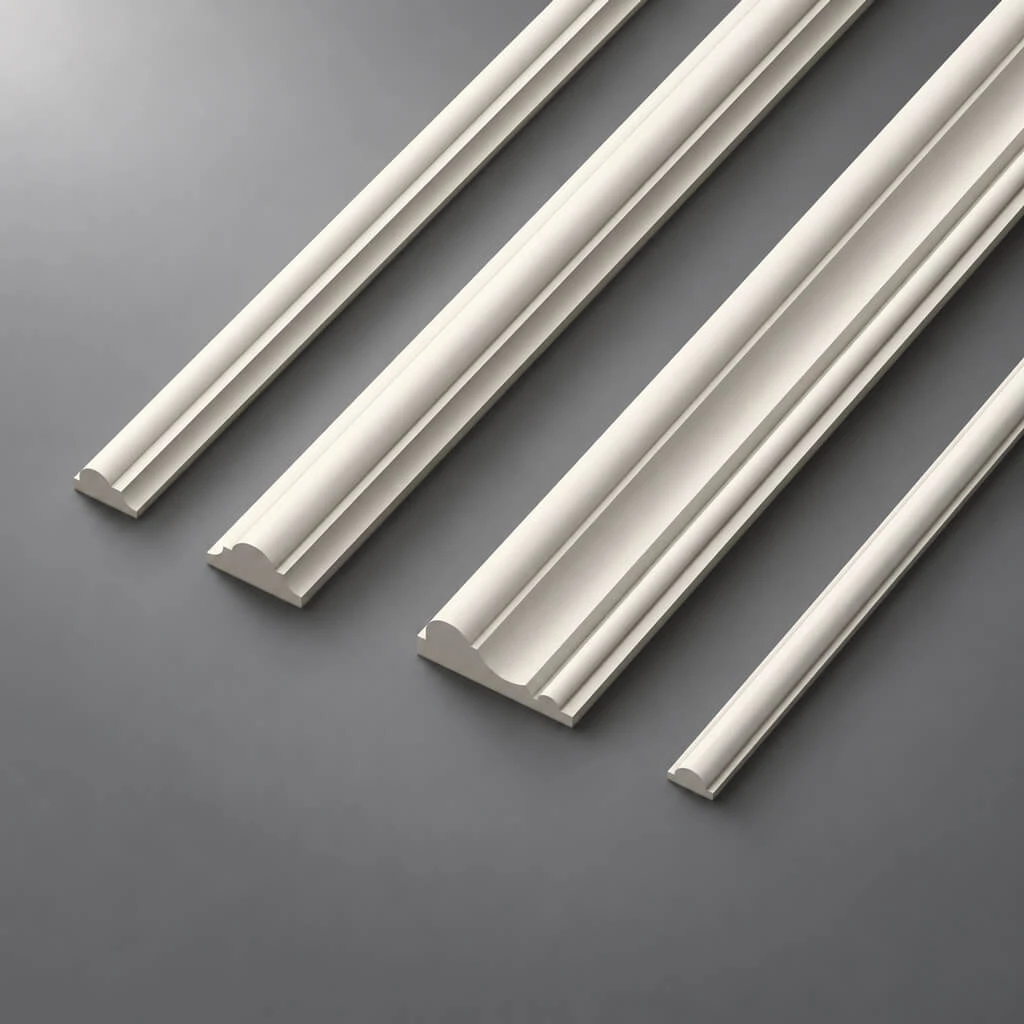
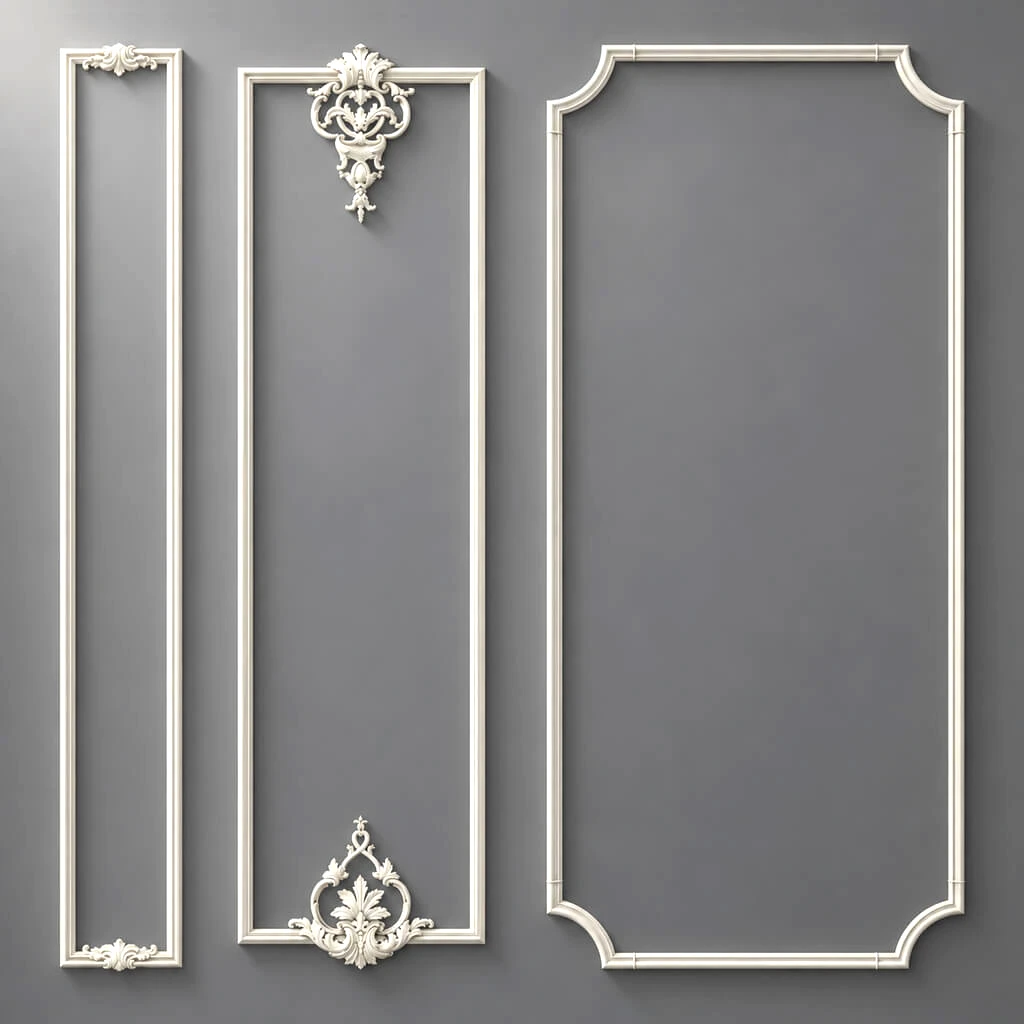
Wooden wall moldings in combination with pilasters, they form a full-fledged decorative paneling: pilasters set the vertical rhythm, moldings create horizontal and diagonal divisions, and the baseboard and cornice complete the system from top to bottom. This is a classic way to make a wall architectural without a single square meter of new construction.
As part of a door portal
door portal — this is not just pilasters with a cornice. It is a system that includes side vertical elements, a frieze or entablature, a cornice, and sometimes a keystone or capstone.Wooden pilasters for a door portalin this system serve as load-bearing verticals on which the entire upper horizontal part rests.
For a classic portal, the pilaster is taken with full completeness: base, shaft, Capital. Without a base, the pilaster looks unfinished at the bottom. Without a capital, it loses its connection with the cornice. That is why professional designers always complete the pilaster portal as a whole.
On cabinet facades and in libraries
This is a direction that is often overlooked — and in vain.Pilasters for furniture and cabinetscan turn a simple cabinet into an architectural library unit. The side verticals on the facade of cabinet furniture give it massiveness, depth, and stylistic definition. This is exactly what a classic built-in library looks like: not just a row of shelves, but a system of facades with pilasters, cornices, and moldings.
For furniture, precise proportion is important: the pilaster should not be wider than the facade panel to which it is attached. The optimal width for standard furniture facades is 60–90 mm. The height is determined by the height of the section.
In the fireplace area
A fireplace is the architectural focus of a room. When pilasters are installed on the sides of the fireplace portal, the entire ensemble acquires grandeur and completeness.Carved wooden pilastersin the fireplace area are especially appropriate where the interior is designed in a classic, neoclassical, or English style.
In the hallway and entrance area
The hallway is the first thing a guest sees. Pilasters on the sides of the front door from the inside immediately set the tone for the entire interior. Outside, on the facade of the house or in a decorative entrance group,wooden pilasters on the building facadeprovide a grand accent and indicate the architectural style of the building.
In the study and work library area
A study is a space where details work for status. Pilasters along the walls, Wooden moldings, wooden panels and cornices create an atmosphere that cannot be conveyed with paint or wallpaper. Here, the pilaster works not as a separate element, but as part of a system of architectural wall design.
How a pilaster differs from a column and a semi-column
This is one of the most frequently asked questions — and one of the most commercially important. Because it is understanding the difference that determines the correct choice of element for a specific space.
A column is a voluminous cylindrical or multifaceted element that stands separately in space. It can bear a load or be purely decorative, but in any case, it is perceived as an independent object in the room. A column takes up space on the floor, requires space around itself, and scales the room. In residential apartments, decorative columns are rarely used — they require a large volume.
A semi-column is a column "cut" along the vertical axis. It protrudes from the wall by about half its diameter and has a voluminous, rounded shape. A semi-column looks more massive than a pilaster, creates a more pronounced chiaroscuro relief, and requires more depth space.
A pilaster is the flattest of the three options. It protrudes from the wall plane insignificantly — typically by 20–60 mm depending on the profile and model. It is this flatness that makes the pilaster practical: it does not obstruct passage, does not require additional space, is easily mounted on an existing surface, and simultaneously creates an expressive vertical accent.
| Element | Shape | Protrusion from the wall | Where to use |
|---|---|---|---|
| Column | Round / multifaceted | Stands separately | Large halls, atriums, lobbies |
| Half-column | Half-cylinder | 50–100% of diameter | Niches, accent zones, representative interiors |
| Pilaster | Flat vertical | 20–60 mm | Walls, openings, furniture, cabinets, portals |
If space is limited — and this is almost always the case in residential interiors —wooden pilasterbecomes the optimal choice. It provides an architectural effect with minimal protrusion.
Pilasters for a door portal: how to turn an ordinary opening into architecture
Look at a door opening without decor. Wall, cutout, casing — that's it. It's function, but not architecture. Now add two on the sides wooden pilasters with capitals, place a horizontal cornice with a frieze on top — and the opening becomes an independent architectural statement. This is what is called a door portal in the classical sense.
Pilasters for a doorway perform several functions simultaneously in the portal. First, they provide the side vertical — that very architectural "embrace" of the opening, which immediately raises its visual status. Second, their capitals create a transition point from vertical to horizontal — where the cornice sits. Third, the pilasters set the width of the entire portal composition and determine its proportions.
For the portal to be architecturally sound, it is important to consider several details. First — the pilaster should start from the floor level or from the baseboard, i.e., have a base. Second — the height of the pilaster should correspond to the height of the door leaf, and the capital should "meet" the upper cornice of the portal. Third — the cornice should have the correct depth and profile to create a convincing horizontal finishing accent.
Wooden architraves for the portal in classical portals are often combined with pilasters: the architrave covers the gap between the pilaster and the door frame, creating a clean, finished line. This is a professional technique that immediately distinguishes a well-designed portal from an amateur one.
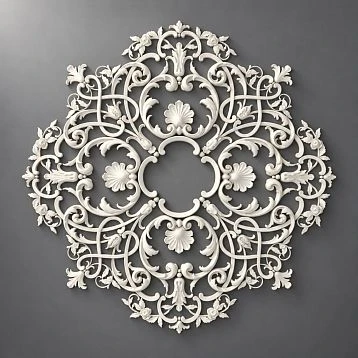
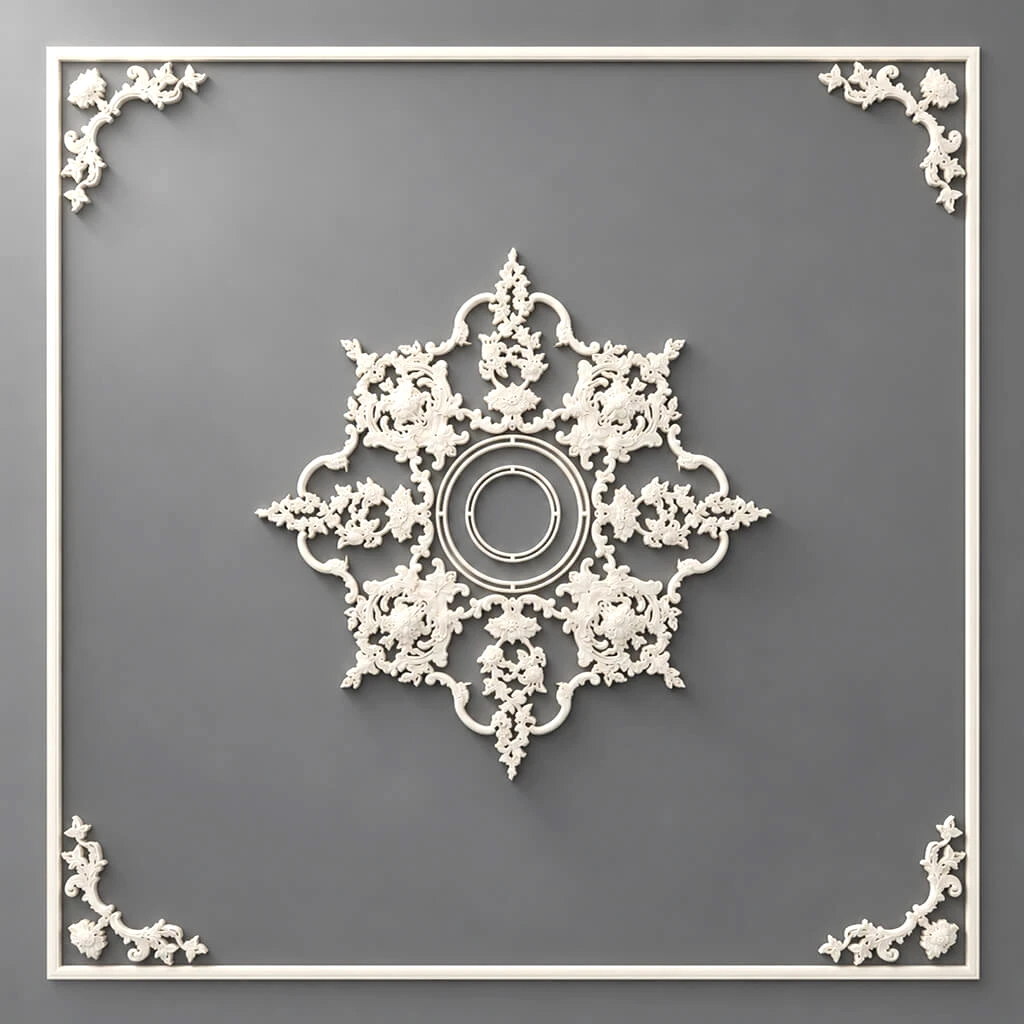
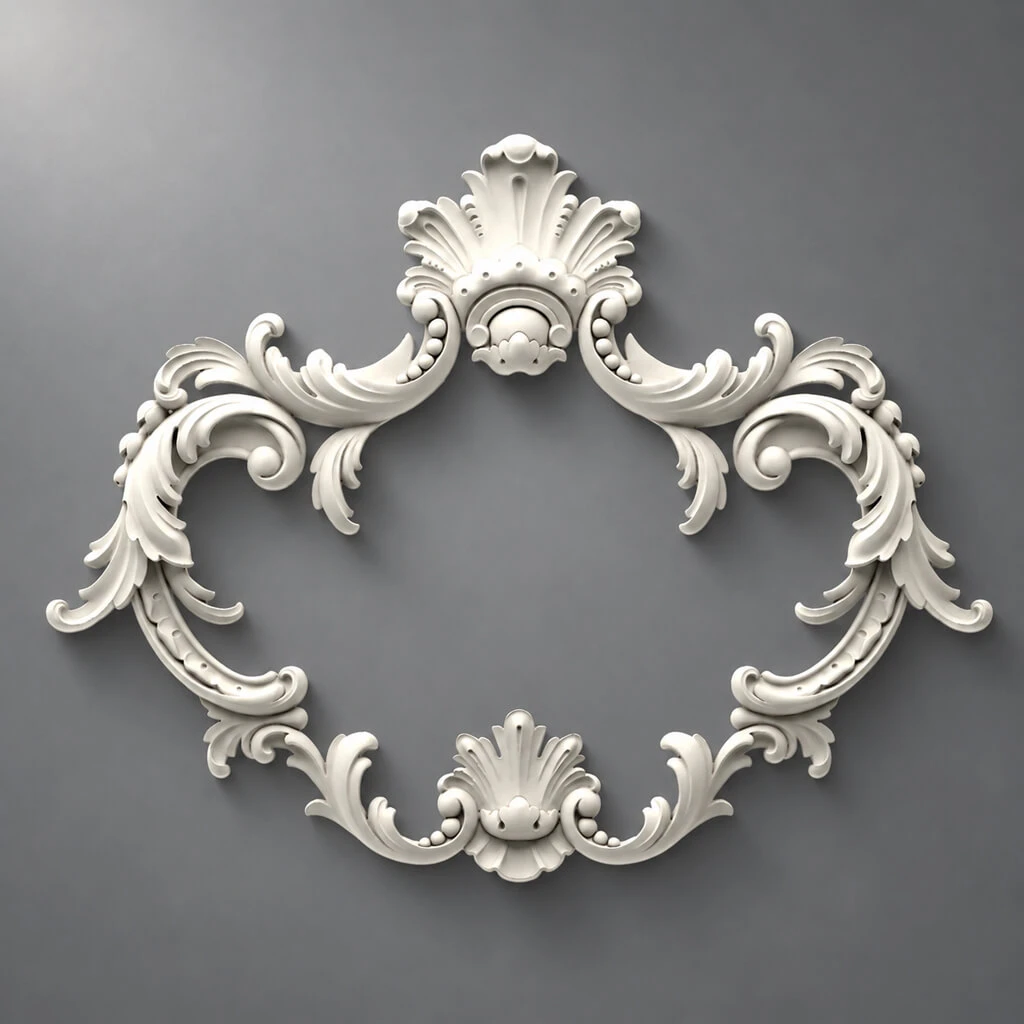
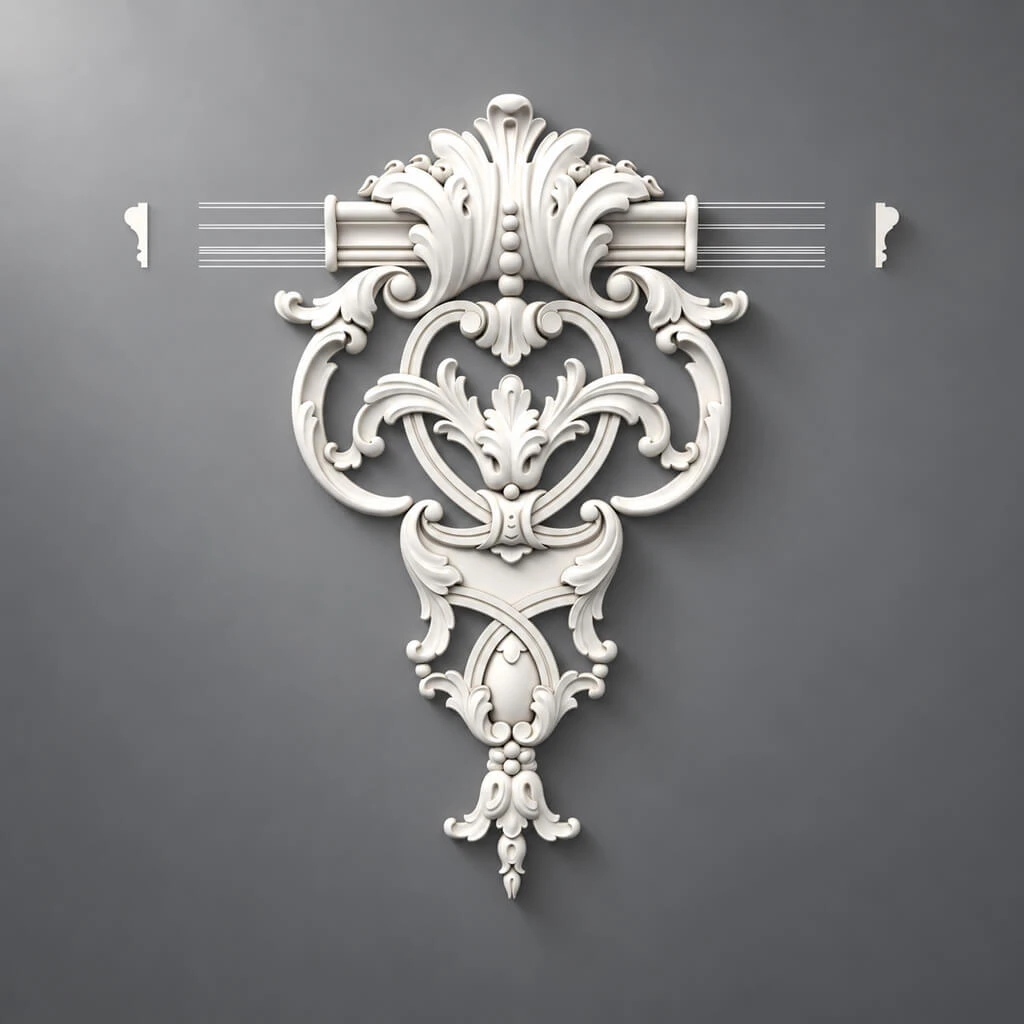
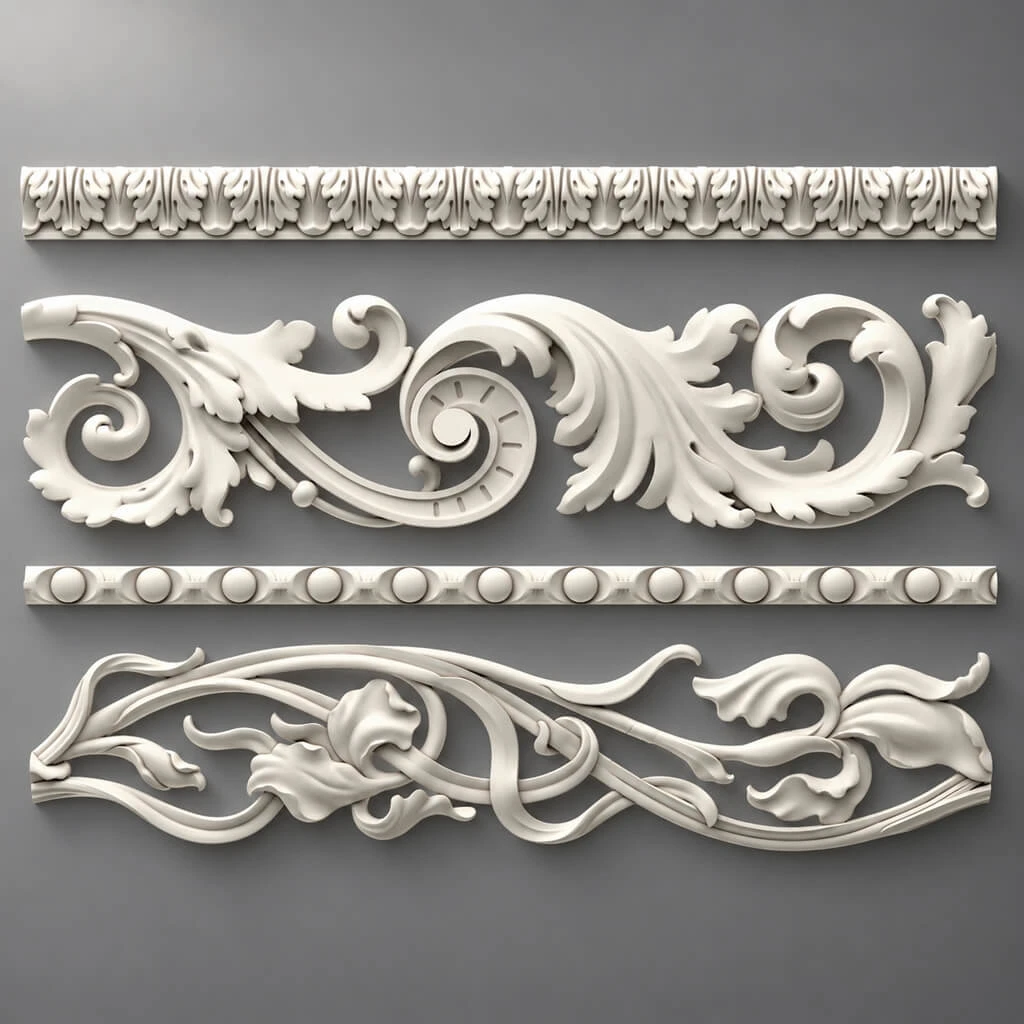
Additionally, the portal composition can be enriched decorative appliqués for furniture: with rosettes in the corners, a keystone in the center of the architrave, ornamental friezes. This is what makes a wooden portal resemble a historical architectural object — and at the same time creates a unique image of a specific interior.
Pilasters on the wall: how to make it architectural
An empty wall is not a problem, but an opportunity. Properly placed Pilaster on the wallcreate what in architecture is called a "rhythm of divisions": an alternation of vertical accents that break a monotonous plane into expressive sections.
How does this work in practice? Imagine a living room with a long wall opposite the windows. Three pilasters, spaced at equal intervals, divide the wall into four fields. In each field, you can place a decorative mirror in a frame, a painting, a decorative niche, or simply leave the surface — the wall will still look architectural. Wooden wall moldings add horizontal divisions, a wooden baseboard completes the bottom line — and the wall turns into a living architectural surface.
An important principle: a pilaster on a wall only works in a system. A single pilaster without a pair looks strange — it awaits a partner. Symmetry is the basic rule of architectural decor. If pilasters are placed along a wall, they must be in multiples: two, four, six. The exception is corner pilasters, which frame the wall from both ends and act as a border.
The "framing" technique also works well: pilasters are placed on the sides of a TV area, fireplace, mirror, or arched niche. This instantly turns a functional zone into a representative accent of the interior. Corner pilaster — a special case: it is attached to an external or internal corner and solves the problem of transition between two surfaces, making the corner an elegant architectural accent rather than just a line of plane connection.
Pilasters in a classic interior
Classic interior and neoclassicism are the main environment for wooden pilasters. Here they are appropriate everywhere: on walls, by doors, by the fireplace, in the library area.Pilasters in a classic interiorare usually complemented with Ionic or Corinthian capitals, with profiled bases, with smooth or fluted bodies.
Flutes are vertical grooves on the body of a pilaster — one of the most characteristic features of the classical order. They enhance the verticality of the element and create a lively play of light and shadow. Carved versions with an acanthus capital pattern represent an even higher level, suitable for formal interiors, studies, dining rooms, and living rooms with high ceilings.
Pilasters in Neoclassicism
Neoclassicism is a style that has firmly established itself over the past twenty years in private homes, apartments with high ceilings, and commercial real estate properties. Here, pilasters play a key role: they give the interior that very "architectural" character that distinguishes neoclassicism from neutral modern decor.
In neoclassical interiors, wooden pilasters are often chosen with more restrained decoration: a clean surface, light fluting, minimalist Capital. Combination with wooden molding — cornices, baseboards, moldings — creates a complete architectural environment.
Pilasters for Furniture and Cabinets: The Architecture of Built-in Furniture
Built-in furniture in the classical style is not just cabinets. It includes library systems, sideboards, display cabinets, and chests of drawers that visually read as part of the interior architecture. The secret lies precisely in the use of architectural elements on furniture facades.
Pilasters for Cabinets and Furniture Facadesare attached to the sides of sections, vertical dividers, and ends of cabinets. They give furniture a "columnar" character, meaning the impression that you are not just looking at boxes with doors, but an architectural wall with divisions. This is what distinguishes expensive classical furniture from ordinary case goods.
For classic-style kitchen sets, pilasters are used on the tall cabinet, on the side end of the corner section, and on the decorative ends of the upper cabinets. In combination with decorative appliqués for furniture, carved rosettes and cornices, a complete architectural ensemble is achieved.
For library systems, pilasters are placed between sections and at the ends of the entire composition. The height of the pilaster is determined by the height of the section: if the library is ceiling-height, the pilaster should run from the baseboard to the cornice or to the ceiling molding. It is the full vertical — from floor to ceiling — that creates a powerful architectural effect.
For chests of drawers, sideboards, and display cabinets, more compact pilasters are used, proportionate to the height of the specific piece. Proportion is key here: the pilaster should not "overwhelm" the facade. The optimal ratio is a pilaster width no more than 1/6–1/8 of the width of the facade panel to which it is attached.
Pilasters for a classic-style kitchen
A classic kitchen is a story in itself. Here, pilasters for furniture facades work as visual dividers between functional zones: the work surface, sink, and cooking area. They give the kitchen set a "furniture" — rather than a "kitchen" — character. It is this that transforms the kitchen from a functional space into a representative interior.
How to choose the width and height of a wooden pilaster
Choosing pilaster parameters is one of those questions where an amateur approach predictably yields poor results. Not because it is complicated, but because there is no "one right answer" — there is a system of proportions that needs to be understood.
Pilaster width
Width is the first parameter that determines the scale of an element relative to the space.
For a doorway, the basic rule is: the width of the pilaster should be approximately 1/8–1/10 of the width of the opening. Opening 900 mm → pilaster 90–110 mm. Opening 1200 mm → pilaster 120–140 mm. These are harmonious proportions of the classical order, refined over centuries of architectural practice.
For a wall, the width depends on the task. If pilasters are spaced to create rhythm — narrower, 80–100 mm, work more elegantly. If the pilaster serves as the main accent — framing a fireplace or mirror — you can go wider, up to 140–160 mm.
For furniture, the already mentioned rule of 1/6–1/8 of the facade width applies. For standard furniture facades of 400–600 mm, this is 60–90 mm.
Pilaster height
Height is the second critical parameter. It is important to understand that the height of the pilaster is the height of the body, i.e., the middle part. The total height includes the base and capital.
For a door portal: the body of the pilaster in height is usually equal to the height of the door leaf — 2000–2100 mm. The base adds 80–150 mm from below, Capital for a pilaster — 100–200 mm from above. Total full height of the portal pilaster — 2200–2450 mm and more.
For a wall: pilasters can run from the baseboard to the cornice (full wall height) — this is the most expressive option. Or from the baseboard to a horizontal molding — if the wall is zoned horizontally.
For furniture: the height is determined by the height of the furniture body or section.
Proportions and Order
In classical architecture, the proportions of a pilaster are described through the concept of a module — a conventional unit equal to half the diameter of a column or the width of a pilaster. The height of the pilaster shaft in a classical order is from 8 to 10 modules. That is, with a pilaster width of 100 mm, its shaft should be 800–1000 mm. For interior heights, this works well with furniture. For taller portals and walls, the proportion stretches slightly — to 12–15 modules.
These ratios are not accidental: they provide that very feeling of "correctness" and "expensiveness" that we sense in well-designed classical spaces.
Base, shaft, and capital: full set or only part
Each of the three parts of a wooden pilaster plays its role in the architectural system — and none can be replaced or omitted without losing the quality of the result.
Base
The base is the lower part of the pilaster. It visually "places" the vertical on a horizontal surface: on the floor, on the baseboard, on the lower molding. Without a base, the pilaster looks unfinished from below, as if it were simply "glued" to the wall without logic.
In classical orders, the base has a characteristic profile: a plinth (rectangular lower slab), a torus (convex semicircular element), and a scotia (concave groove). The Ionic order adds a second torus. The Doric sometimes gets by with a minimal plinth. For interior use, it is important that the base harmonizes in width with the pilaster shaft and does not look either heavier or lighter than it.
Shaft
The shaft is the main vertical. It is the primary carrier of visual information about the style and character of the pilaster. A smooth shaft is a calm, neutral option. A fluted shaft with vertical grooves is classic. A carved shaft with ornamentation is a high decorative level, appropriate in formal interiors.
By material, wooden pilasters are most often made from oak, beech, pine, or linden. Oak and beech are denser species, they hold carving relief well, and provide expressive texture under transparent coatings. Linden is a soft species, ideal for fine carving. Pine is an economical option, goodFor painting.
Wooden pilasters for painting are a separate and very popular category. Enamel coating in white or color hides the wood texture and creates the effect of stucco or stone decor. This is how most classical portals in modern homes look: white enamel on wood gives the feeling of an expensive, "non-Russian" interior at a quite reasonable cost.
Capital
Capital — the upper part of the pilaster, and it determines the stylistic affiliation of the entire element. The Doric capital is strict, with minimal decor. The Ionic capital has volutes. The Corinthian capital has a lush acanthus pattern. The Tuscan capital is maximally laconic. The Composite capital combines features of Ionic and Corinthian capitals.
For residential interiors, Ionic and simplified Corinthian capitals are most common — they provide the necessary decorative effect without overloading the space. Carved Capital KL-014 — one example of a classic wooden capital with detailed handcrafting, which is appropriate both in a portal, on a wall pilaster, and as part of a library system.
Without a capital, a pilaster loses its meaning as an architectural element. It becomes just a board or a strip — functional but devoid of character. capital above the door — this is precisely the detail that turns a pilaster into a full-fledged architectural form and connects it to the horizontal cornice.
Mistakes in choosing and installing wooden pilasters
Even expensive and high-quality material yields poor results if systemic errors are made in the project. Let's examine the most common — and most frustrating — ones.
Buying a pilaster without a base and capital
This is the first and most widespread mistake. A pilaster without a set is unfinished architecture. Buying only the pilaster shaft and screwing it to the wall is like placing a column without a base and without an abacus. The result will look like an unfinished renovation, not architectural decor.
Do not consider ceiling height
A pilaster chosen without considering the ceiling height can either 'fall short' (too short) or 'press down' on the space (too massive for a low ceiling). With ceiling heights of 2.7–3.0 m, pilasters should be light, with a narrow capital. With heights from 3.5 m, more expressive decor can be allowed.
Mixing different carving styles
An Ionic capital with a Corinthian base is an architectural nonsense. In a classical interior, it is important to maintain stylistic unity of the entire decorative set: pilasters, capitals, bases, moldings, and cornices must belong to the same order or the same style family.
Placing a pilaster without connection to moldings and baseboard
Wooden trim — it's a system. A pilaster placed on a wall without connection to the baseboard below and to the cornice or molding above looks like a random object. Proper integration: the pilaster 'receives' the baseboard from below (or rests on a base that is flush with the baseboard) and 'passes' the vertical to the cornice or architrave above.
Choosing too massive decor for a small room
Proportionality is the law of architectural decor. A wide, deep pilaster with a lush capital in a small room will overwhelm the space and create a feeling of clutter. For rooms up to 20 sq. m, it is better to choose light, thin pilasters with minimalist decor.
Ignoring symmetry
A pilaster always works in a pair or an even group. A single pilaster without a symmetrical partner is an exception that requires architectural justification (e.g., a pilaster at the end of a wall as a frame). In most cases, the absence of symmetry looks like a mistake rather than an artistic technique.
Selecting pilasters separately from furniture or a portal
Pilasters are not a self-sufficient object but a component of a system. If you are designing a portal — pilasters, capitals, cornice, and architraves must be selected together. If you are designing a cabinet — pilasters, cabinet cornice, and Decorative Inserts should form a single ensemble. Scattered elements from different collections produce an inconsistent result.
Using a flat element where a half-column is needed
If the opening is wide, ceilings are high, and the interior is large-scale, a pilaster may look too flat. In such cases, consider a half-column: it provides more relief and matches the scale of the space. This is not a mistake in choosing a pilaster — it is a competent assessment of proportions.
Wooden pilasters for painting and carved versions
Two main directions in finishing wooden pilasters — painting and preserving natural texture — yield fundamentally different visual results.
Pilasters for painting are most often made from smooth or finely carved blanks, which are puttied and covered with several layers of enamel. White enamel is a classic: it is neutral, pairs well with any wall color, and gives a "stucco" effect. Colored enamel is a bolder solution for accent areas.
Carved wooden pilasters are objects where texture and pattern are crucial. Here, the wood species is fundamentally important: oak with carved ornament under tinting or varnish looks completely different than the same shape in white enamel. For interiors where warmth and naturalness are important — studies, libraries, hunting rooms, wooden houses —Carved wooden pilasterswith open texture provide an irreplaceable result.
Also, wooden pilasters are coated with oil and wax — this method emphasizes the wood texture, protects the surface, and gives a matte noble look, appropriate in Scandinavian classic or modern art deco.
How to combine pilasters with other wooden interior elements
A pilaster is not a solo, but part of an orchestra. Its sound is fully revealed only in an ensemble with other wooden architectural elements.
Pilasters + moldings: Wooden wall moldings provide horizontal division that complements the vertical of the pilasters. Together they create a classic wall paneling — one of the most expressive solutions in a classical interior.
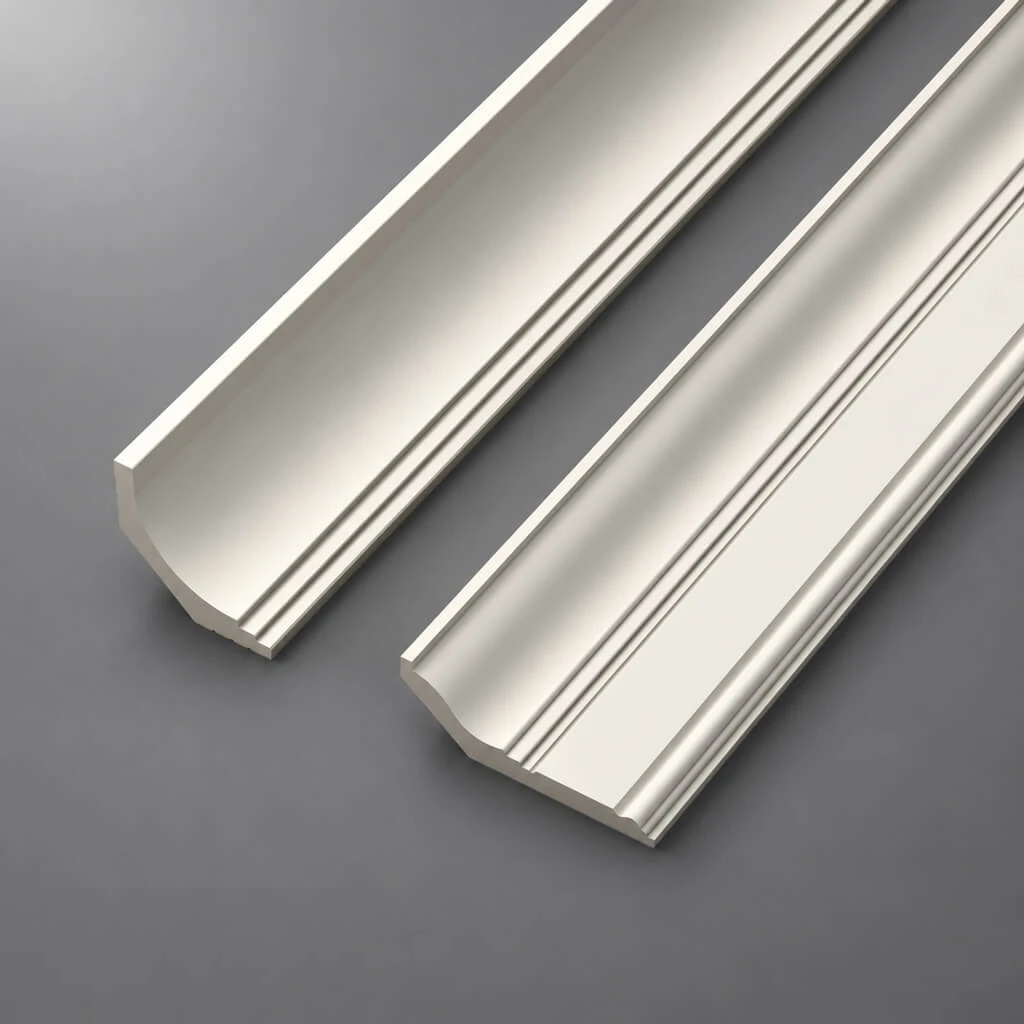
Pilasters + cornices: the cornice is a horizontal "closing" element that completes the system from above. The pilaster "carries" the cornice, the cornice "rests" on the pilaster. Without a cornice, the system remains open at the top — unfinished.
Pilasters + baseboard: the wooden baseboard connects the pilasters from below, continuing the horizontal line around the perimeter of the room. This creates a closed architectural system with no random elements.
Pilasters + millwork: solid wood millwork — this is all linear decor, including moldings, cornices, baseboards, and casings. When all millwork elements are made from the same wood species and in the same style as the pilasters, the interior acquires a unified architectural logic.
Pilasters + overlays: decorative inlays for furniture — rosettes, cartouches, ornamental friezes — complement the pilasters with point decorative accents. A rosette at the corner joint of a molding and pilaster, an ornamental overlay on the pilaster body, a carved frieze in the capital area — these details work to elevate the overall decorative level of the interior.
System solid wood products allows you to assemble a complete architectural set — from baseboard to cornice, from pilaster to overlay — in a single stylistic key.
Where to buy wooden pilasters: what is important when ordering
The decorative wood market is saturated with offers of varying quality, and it is not always easy to tell at first glance what you are dealing with. Here is what you need to pay attention to.
Wood species and drying. Poorly dried wood cracks, warps, and loses its shape. Oak and beech are the most stable species; they are less affected by humidity fluctuations. This is especially important for pilasters, which are mounted vertically and experience constant temperature and humidity loads.
Geometric accuracy. The pilaster must be straight. Even a 2–3 mm bend in the body is visible to the naked eye under side lighting. Check straightness before installation.
Completeness. Make sure that the selected pilaster has compatible capitals Capitals and bases in style and size. Buying them later from another source risks stylistic mismatch.
Possibility of painting and finishing. Clarify what material the pilaster is made of: solid wood, glued wood, MDF base with wood veneer. Each option has its own properties. Solid wood gives the best result for tinting and oil. MDF is ideal for enamel. Glued wood is a versatile option with good stability.
Buy wooden pilasterswith quality guarantee, precise dimensions, and the ability to select capitals and bases in a unified style — this is what fundamentally distinguishes a professional approach from a random choice.
FAQ: answers to popular questions about wooden pilasters
What is a pilaster?
A pilaster is a flat vertical architectural element that adjoins a wall, door opening, or furniture facade. Externally, it resembles a built-in column, but unlike a column, it does not protrude into space but lies flush against the surface. A classic pilaster consists of a base, shaft, and capital.
How is a pilaster different from a column?
A column is a volumetric element of cylindrical or polygonal shape that stands separately in space. A pilaster is flat and attaches to a surface. That is why in residential interiors, where compactness is important,Wooden pilastersthey are used much more often than columns.
How is a pilaster different from a half-column?
A half-column has a volumetric, rounded shape and protrudes from the wall by 30–50% of its diameter. A pilaster is significantly flatter: its protrusion is 20–60 mm. Spatially and visually, a pilaster is more modest and concise than a half-column.
Where can wooden pilasters be used?
In door portals, on walls of living rooms and studies, in libraries, near fireplaces, on facades of cabinets and kitchen sets, in hallways, in fireplace zones, on furniture facades, and in decorative entrance groups.
Is a capital necessary for a pilaster?
If a pilaster is used as an architectural element — definitely yes. Capital completes the pilaster from above and visually connects it to the cornice or the upper horizontal part of the portal. Without a capital, the pilaster looks like a board nailed to the wall.
Can a wooden pilaster be painted?
Yes. Wooden pilasters can be painted with acrylic or alkyd enamel, tinted with stains, coated with varnish or oil with wax. For painting, it is better to choose pilasters made of fine-porous species (pine, linden) or MDF base — they provide a more even painted surface.
How to choose the width of a pilaster for a doorway?
Focus on the proportion of 1/8–1/10 of the opening width. For a standard opening of 900 mm — a pilaster of 90–110 mm. For a wide opening of 1100–1200 mm — 120–140 mm. The main thing is that the pilaster provides a side accent without overloading or visually narrowing the opening.
Can pilasters be used in a small apartment?
Yes, if you choose the right scale. In small rooms, narrow pilasters with laconic capitals are used. They provide the necessary architectural accent without a feeling of overload. Optimal — with ceiling heights from 2.7 m.
How to combine pilasters with moldings on the wall?
Pilasters set vertical axes, moldings — horizontal and diagonal ones. It is important that the moldings "stop" at the pilaster or "enter" it according to the principle of architectural abutment. This creates a clean, logical system of wall divisions.
What is a corner pilaster and where is it used?
Corner pilaster — this is a pilaster with a corner profile that is mounted on the external or internal corner of a wall. It solves the problem of transition between two planes and makes the corner an architectural accent, rather than just a junction point of surfaces.
How to make a door portal from pilasters?
Select pilasters with bases and capitals. Install them on the sides of the opening. Choose a horizontal cornice or architrave that will rest on the capitals. If necessary, add a frieze or keystone in the center of the horizontal part. All elements must be in a unified style. For convenience, use ready-made solutions for door portals — this simplifies the selection of compatible components.
About the company STAVROS
STAVROS is a Russian manufacturer of wooden architectural elements for interiors: pilasters, columns, capitals, moldings, cornices, baseboards, overlays, and full millwork from solid wood. The company specializes in classical and neoclassical decor, produces elements from oak, beech, and other species, and offers products in both standard sizes and custom orders.
STAVROS's assortment includes everything needed to create a complete architectural system: frompilasters and columnsto capitals, from of wooden moldings to decorative overlays for furniture. All elements are designed with compatibility in mind — so they can be assembled into a single architectural set without searching for elements in different places.
STAVROS works with designers, furniture makers, builders, and private clients. The catalog includes hundreds of items