





























Article Contents:
- When to replace sofa legs — and whether it's worth it at all
- Legs are broken or wobbly
- Sofa is too low
- Inconvenient to clean under the sofa
- Plastic legs look cheap
- Update your interior without buying a new sofa
- How to choose the height of sofa legs — from practicality to aesthetics
- Low legs (up to 7 cm)
- Medium legs (8–12 cm)
- High legs (13 cm and more)
- How to calculate the final seat height
- Leg shape: from a minimalist cylinder to carved decor
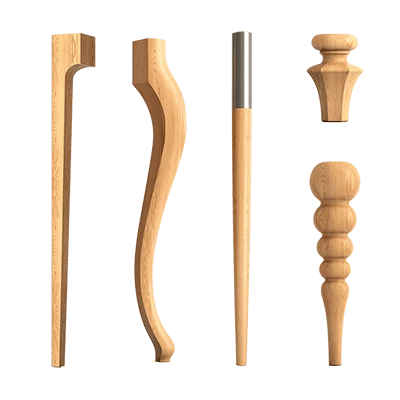
- Cylindrical legs
- Tapered legs
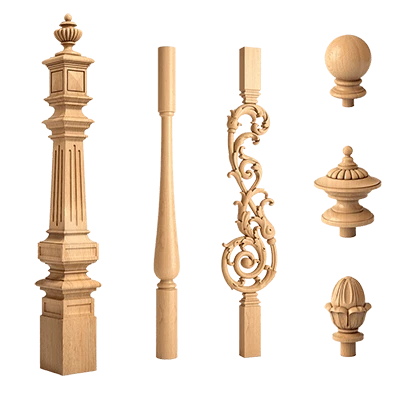
- Turned legs
- Carved legs
- Geometric (square, rectangular) legs
- Horned or "paw" legs
- Wooden, metal, or plastic: which is best for a sofa
- Wooden legs
- Metal legs
- Plastic legs
- Adjustable Supports
- Load: which legs to choose for a heavy sofa
- Cross-section and shape under high load
- Number of support points
- Wood type under high load
- How to choose legs to match the sofa style and interior
- Classic sofa — turned and carved legs
- Modern sofa — geometry and minimalism
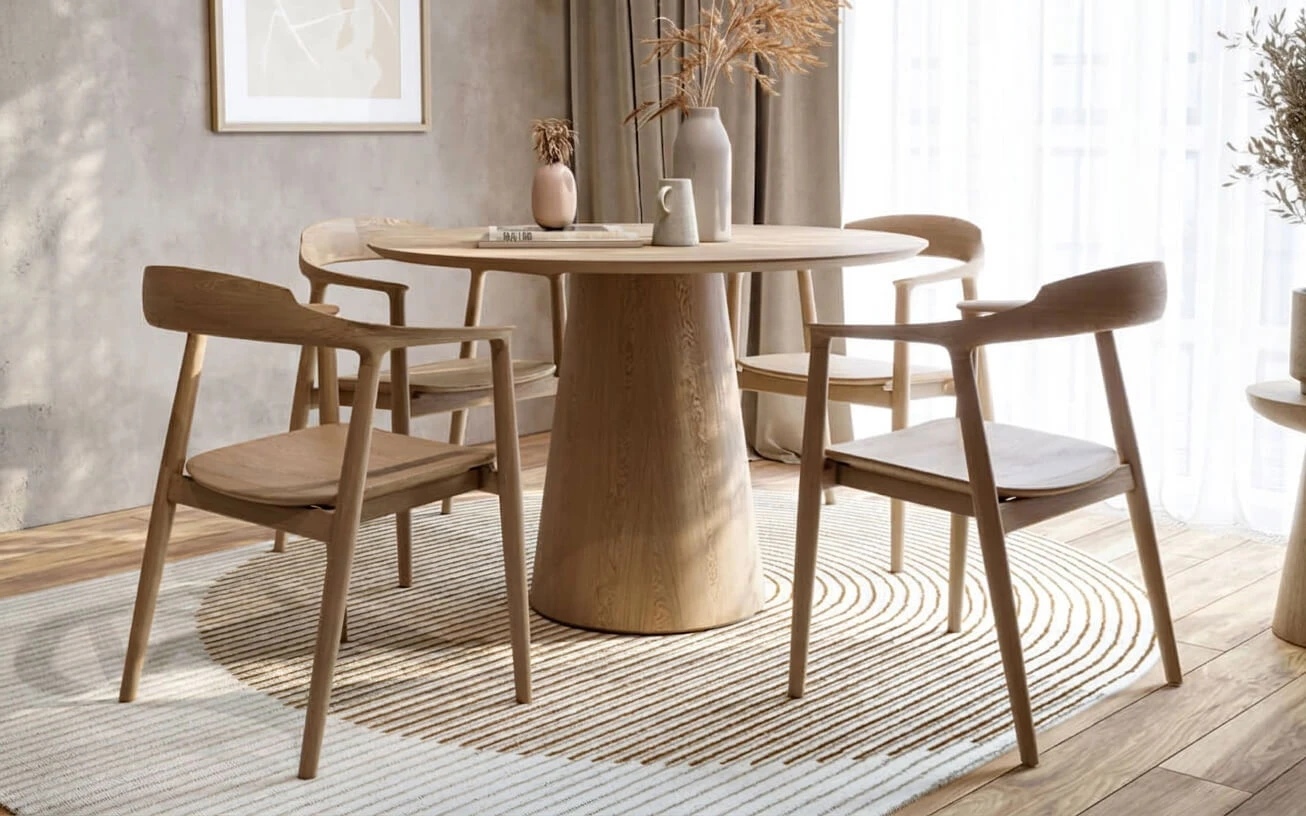
- Scandinavian style — tapered legs, light wood
- Neoclassicism — moderate ornamentation
- Interior with wooden trim — unified material
- Attaching legs to the sofa — how to avoid mistakes with fit
- Types of sofa leg attachments
- How to determine the right type before purchasing
- Mounting Plates
- How many legs are needed for a sofa — calculation by situation
- Wooden leg coating: to match the interior color
- How to install new legs on a sofa — step by step
- Floor protection from sofa legs
- Mistakes when choosing sofa legs — what goes wrong
- Wooden sofa legs as part of a wooden interior
- What to check before purchasing: final checklist
- FAQ — answers to popular questions about sofa legs
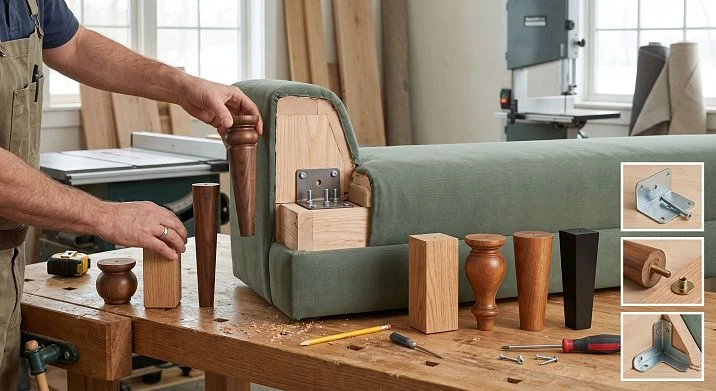
There are things in an interior that go unnoticed as long as they are in order. And they are immediately noticed when something goes wrong. Sofa legs are in this category. Is the sofa leaning? Does it creak with every movement? Can't the robot vacuum cleaner pass under it? Or, after a renovation, do the old plastic supports look like a foreign body next to the new parquet and wooden baseboards? All of these are signals for replacement.
The good news: you don't need to replace the sofa itself. It's enough to change the legs. It's quick, inexpensive, and radically changes the perception of the furniture. Properly selected wooden sofa legs elevate its silhouette, add air under the furniture, and integrate it into the interior — especially if the room already has wooden elements: parquet, baseboards, frames, solid wood furniture.
View STAVROS sofa legs — in the catalog.
When to replace sofa legs — and whether it's worth it at all
Before talking about selection, let's understand the motivation. Replacing legs is not just about aesthetics. Here are real situations when it is justified.
Legs are broken or wobbly
This is the most obvious case. One leg has cracked — the sofa starts to tilt. If the sofa stands on plastic supports, one strong load is enough for the plastic to break. Replacing one broken leg is the right decision, but it's important to choose a replacement with exactly the same height, otherwise the sofa will be uneven.
If the sofa wobbles with any movement, the mounting assembly may have loosened. In this case, before replacing the leg, you need to check the condition of the mounting plate and the thread.
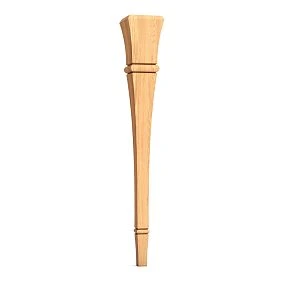
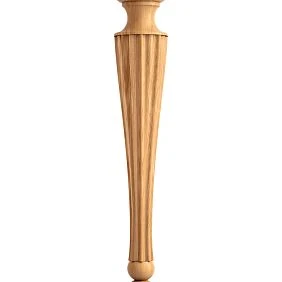
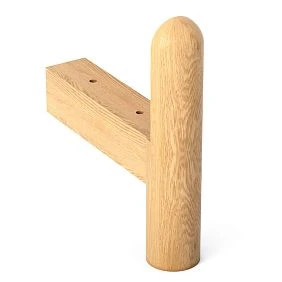
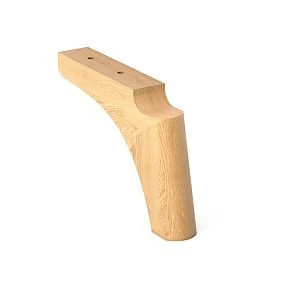
Our factory also produces:
The sofa is too low
Many modern sofas have a seat height lower than optimal. When a person sits down, their knees end up higher than their hips. Getting up is uncomfortable. This is especially noticeable for tall people or those with joint problems.
Replacing low legs with taller ones solves the problem without reupholstering or buying new furniture. Adding 5–8 cm to the leg height makes sitting significantly more comfortable.
Get Consultation
It's inconvenient to clean under the sofa
This is a practical issue that is becoming increasingly pressing in modern apartments. A sofa with a gap of 4–6 cm is almost an insurmountable obstacle for cleaning: neither a hand nor a vacuum cleaner can fit under it. If there is a robot vacuum in the apartment, the minimum clearance under the sofa should be 9–12 cm (depending on the robot model).
Wooden legs for sofas Legs 12–15 cm high completely solve this problem: space appears under the sofa that is easy to clean and where the automatic helper can freely pass.
Plastic legs look cheap
After renovating the living room, new parquet flooring, wooden trim, and solid wood baseboards appeared. The walls were repainted in a warm neutral shade. But the sofa stands on shiny black plastic supports that look like a detail from a completely different interior. No rework is needed—you just need to install wooden legs to match the rest of the wood in the room.
Updating the interior without buying a new sofa
Legs are a quick and inexpensive way to 'reset' the visual appearance of furniture. If the sofa is well-preserved, the upholstery is not worn, but it looks outdated—replacing the legs can radically change the perception. Especially if you change low legs to tall conical ones—the sofa instantly becomes 'Scandinavian' and more modern.
How to choose the height of sofa legs—from practicality to aesthetics
The height of the legs is the first and main selection parameter. It affects several aspects at once: seating comfort, the visual appearance of the sofa, and ease of cleaning underneath.
Low legs (up to 7 cm)
Low legs create the effect of a squat, massive sofa. It "sits" on the floor, visually heavy. In some interiors, this is a plus: Japanese minimalism, loft with low furniture, modern interiors with an emphasis on horizontal lines.
Cons: it's inconvenient to clean under the sofa, a robot vacuum won't fit, the seating may be low and uncomfortable. Not optimal for elderly people or those with joint pain.
Medium legs (8–12 cm)
This is the most common range for sofas. Moderate height — the sofa looks balanced: not too squat, not too light. The seating is comfortable for most average-height people. There is space under the sofa, but for some robot vacuums, the clearance is still insufficient.
Medium legs are a universal choice if there is no specific goal to "raise as high as possible" or "keep low."
High legs (13 cm and more)
High Sofa legs offer several tangible advantages. First, the sofa visually "floats" above the floor — it appears light, airy, and expensive. Second, the seating is raised — sitting down and standing up is easier. Third, there is free space under the sofa — easy to clean, let a robot pass, or find a rolled-away remote.
Limitations: with very high legs (18–20 cm), you need to assess the stability of the structure. A long, heavy sofa on high, thin legs is a risk. You need to either choose legs with a larger cross-section or add central supports.
How to calculate the final seat height
Seat height = leg height + sofa base height (without leg). If the old seat height was 42 cm and the new legs are 5 cm higher than the old ones, the seat will rise to 47 cm. The optimal seat height for most adults is 43–47 cm. Keep this in mind when choosing.
Leg shape: from a minimalist cylinder to carved decor
The shape of the leg is the language of style. It speaks more about the designer's intent than any other piece of furniture.
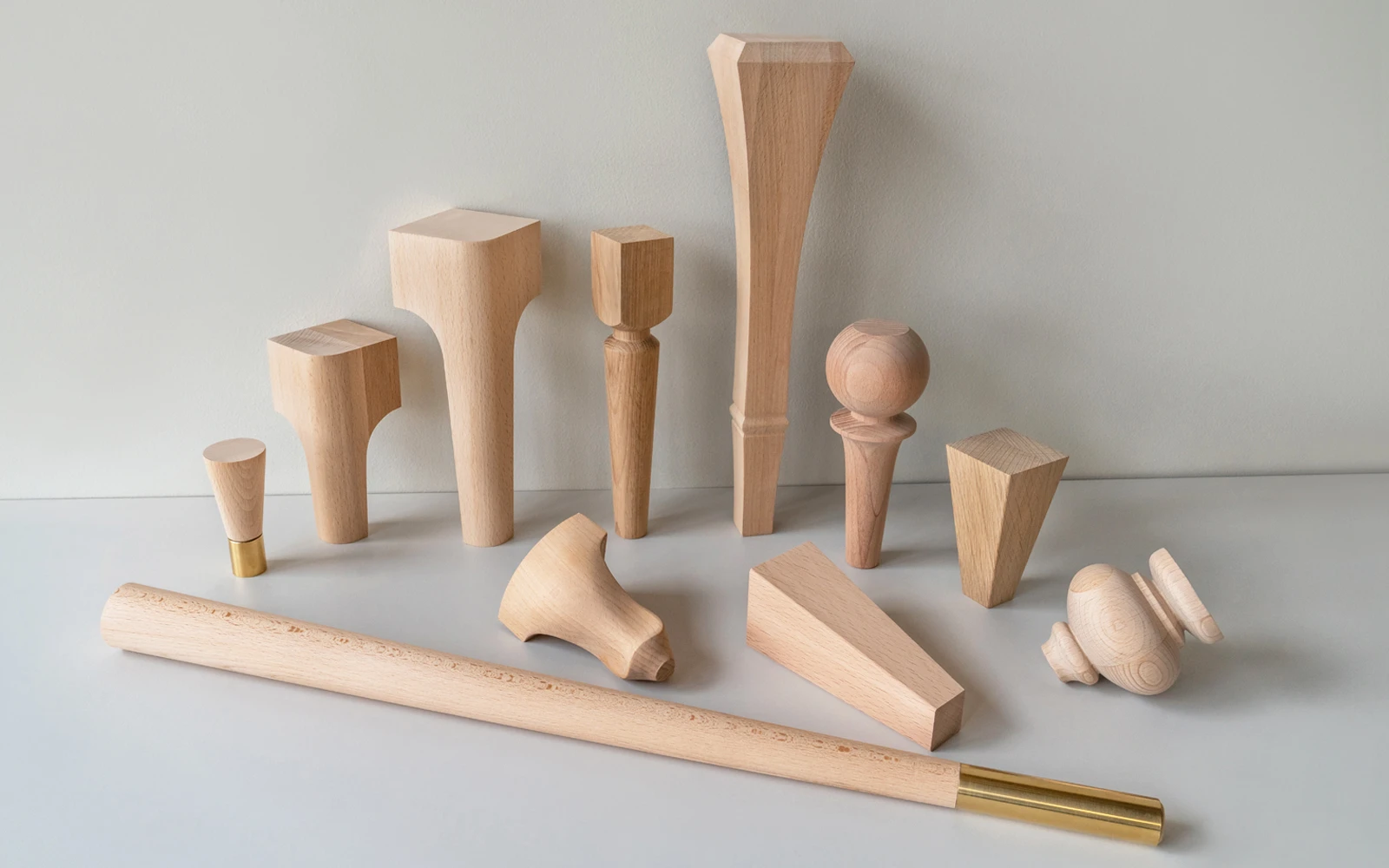
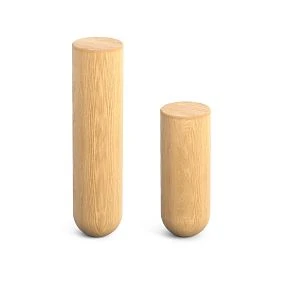
Cylindrical legs
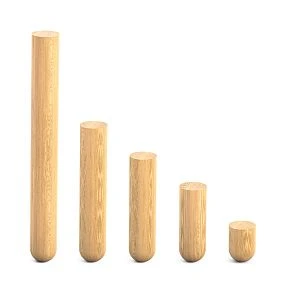
The cylinder is the most versatile shape. Smooth, without unnecessary decor, a clear silhouette. It works well in modern interiors, minimalism, and Scandinavian style. It doesn't draw attention to itself — the sofa remains the focal point.
For cylindrical legs, the diameter is important: thin cylinders make furniture visually light, wide ones add massiveness and stability.
Conical legs
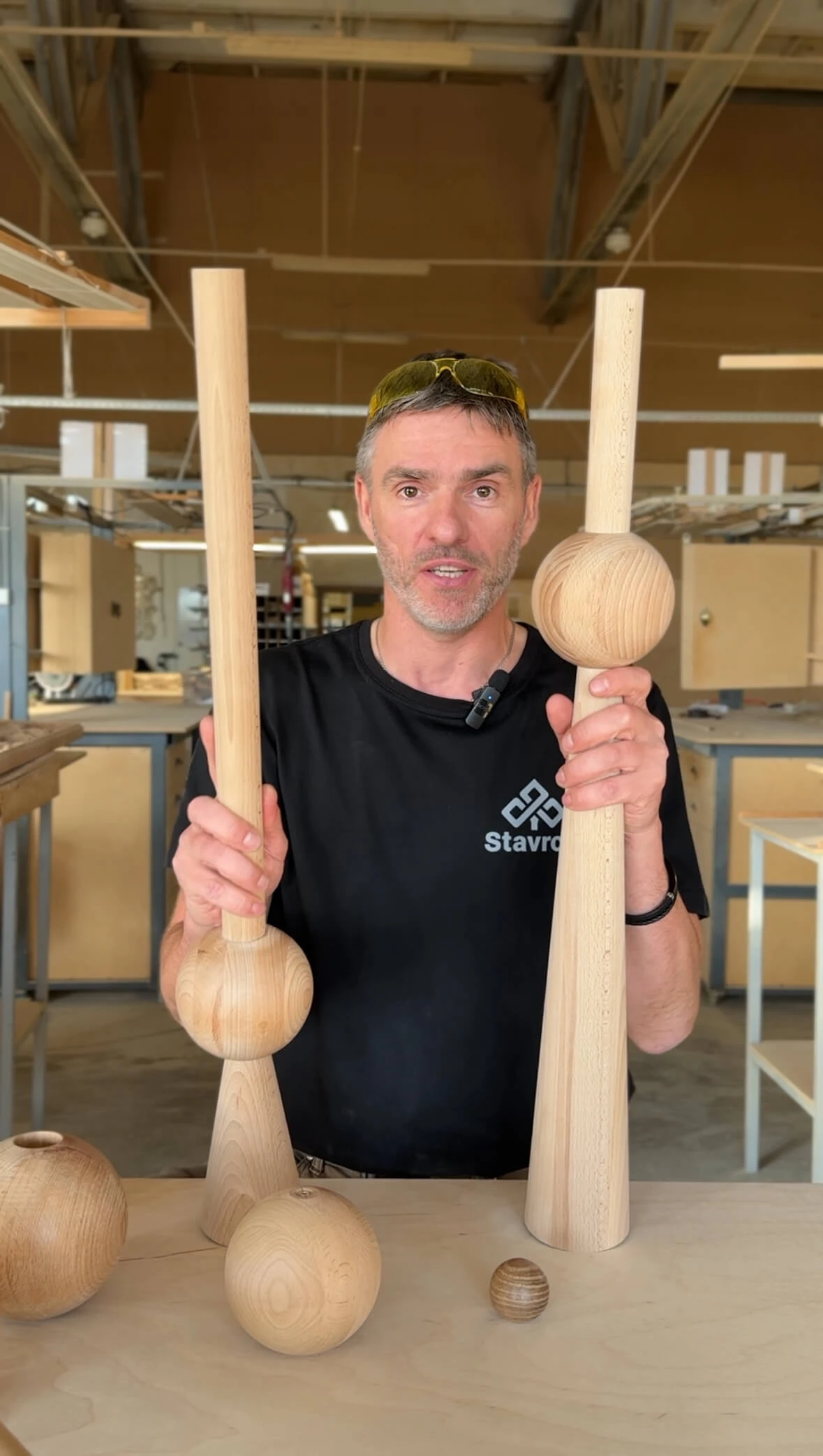
A cone tapering downward is a classic of Scandinavian design from the 1950s–1960s, which has become relevant again. The leg is slightly wider at the base and narrows toward the floor. A light, elegant shape. Ideal for a modern sofa in a bright living room, for mid-century modern sofas.
For a conical shape, length is important: a long conical leg creates the effect of "dancing" furniture — the sofa seems to be on tiptoes. Good for spacious living rooms, less suitable in small rooms.
Turned legs
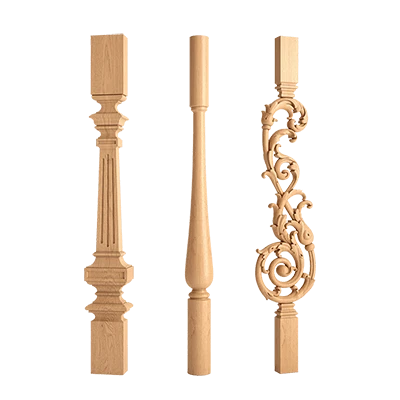
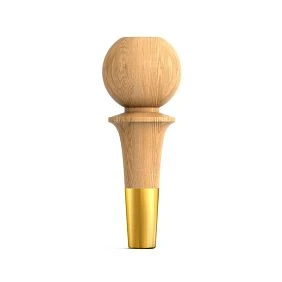
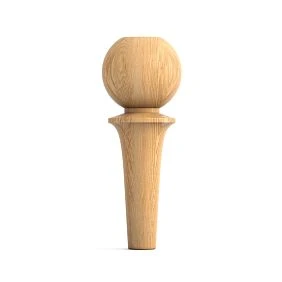
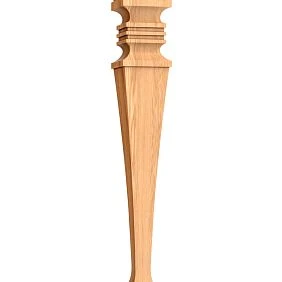
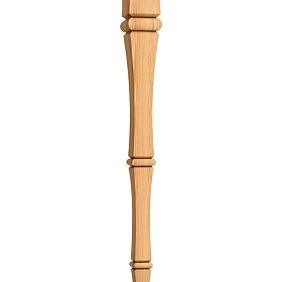
Turned legs for upholstered furniture — a classic choice for sofas with decorative details. Legs with alternating thickenings, balls, and fillets are turned on a lathe from solid wood. An expressive shape, easily recognizable in classic interiors.
Turned legs are suitable for sofas in classic and neoclassical styles, for upholstered furniture with stucco and carving, and for interiors that already feature turned wooden elements — architraves, cornices, furniture handles.
Carved Legs
Carved Wooden legs for sofas — this is already a true decorative accent. Wood carving creates a leg as an independent object worthy of attention. For expensive classic-style sofas, for living rooms with stucco ceilings, heavy curtains, and antique furniture — carved legs are organic.
Limitation: carved legs require special care and are less resistant to mechanical loads than massive simple shapes. For a sofa with intensive use — carefully assess the load.
Geometric (square, rectangular) legs
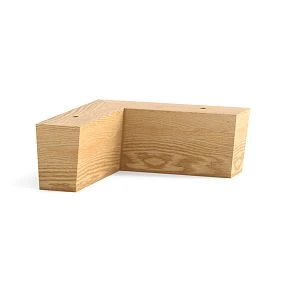
Square-section legs — an architectural form, strict and monumental. Visually provide more stability than cylindrical ones. For a designer sofa in a modern interior, for living rooms in art deco or modern classic style.
Claw or "paw" legs
A "paw" leg — a decorative support imitating an animal paw (lion, bear, eagle). Baroque, Empire, historicism. A very specific choice for a very specific interior. Worth mentioning — it is used rarely, but precisely when maximum decorative statement is needed.
Wooden, metal, or plastic: which is better for a sofa
A question that arises for almost everyone when choosing a replacement. An honest comparison, without unnecessary advertising.
Wooden legs
Advantages:
-
Visual warmth — wood in a living interior feels cozier than metal and plastic.
-
Naturalness — a living texture that cannot be artificially replicated.
-
Compatibility — if the room has parquet, Wooden Skirting Boards, wooden frames and solid wood furniture, wooden legs create a unified material language.
-
Ability to tint and paint in any color.
-
Good strength with the right choice of wood species and cross-section.
Limitations:
-
Under high load, you need to choose the right wood species and cross-section (not all decorative shapes are suitable for heavy sofas).
-
Wood can be sensitive to moisture — for hallways or bathrooms, it's better to provide a protective coating.
Metal legs
Metal — good for minimalism, loft, industrial style. The strength of metal supports is usually higher than that of wooden ones with a comparable cross-section. Downsides: metal is visually cold, can scratch wooden floors (protective pads needed), looks good only in certain styles.
Plastic legs
Plastic is a technical compromise. It's cheap, doesn't rot, and is lightweight. But in a residential interior, plastic legs look like a temporary solution — and that's usually what they are. For a sofa in a living room, it's hard to recommend. Where only function matters and aesthetics don't — it will do.
Adjustable Supports
Adjustable Furniture legs With height adjustment capability — a practical solution for uneven floors. Leveling the sofa horizontally is good. But most adjustable supports have a metal construction with a visible adjustment mechanism — this isn't always attractive. For areas where the legs aren't visible, adjustable supports are justified. For a sofa in plain sight — better to use fixed-height wooden ones.
Load: which legs to choose for a heavy sofa
A sofa is heavy furniture. A large corner sofa weighs 80–130 kg, plus people. The total load on the supports can reach 250–350 kg. The legs must withstand this.
Cross-section and shape under high load
Thin decorative legs with elegant cutouts look nice in promotional images, but under a load of 60–80 kg per support, the cutout becomes a risk point. If the sofa is heavy, it's better to choose legs with a straight profile without deep grooves and with a wide base.
Minimum diameter or cross-section for a heavy sofa: 40–50 mm for cylindrical legs, 40×40 mm for square ones.
Number of support points
A standard sofa stands on 4 legs. For sofas up to 180 cm long, this is sufficient. For sofas 200 cm and longer — especially corner ones — additional central supports are recommended. Without them, the sofa sags under load in the center.
How to understand if a central support is needed: lift the sofa in the center and check if there is a mounting socket for a leg. If there is, the manufacturer has provided for it. If not, you can add a central one. furniture leg through a mounting plate.
Wood species under high load
Oak is the most reliable choice for loaded legs. A hard, dense species (Brinell hardness 3.7–3.9 units), does not deform under load, does not delaminate.
Beech is slightly softer than oak, but also has good strength. It is widely used in furniture production precisely for its stability and reliability.
Birch is an affordable species with acceptable strength. For medium-diameter legs under standard load, it is suitable.
Pine is a soft species. For decorative elements and lower load, it is acceptable; for legs under a heavy sofa, it is not recommended.
How to choose legs to match the style of the sofa and interior
This is perhaps the most "design-oriented" question. The legs should work together with the sofa, not exist separately from it.
Classic sofa — turned and carved legs
A sofa with convex armrests, carved details, dark upholstery or patterned fabric is a classic or Baroque style. Here, the legs should match the same register: turned from solid oak, possibly with gilding or carved decoration.
View Turned furniture legs.
Modern sofa — geometry and minimalism
A modern-style sofa — straight lines, a flat back, neutral upholstery. Here, the legs should be the same: simple, straight, without decoration. Cylinder or square, medium height, light or stained wood.
Scandinavian style — tapered legs, light wood
Scandinavian sofa: fabric upholstery in a soft shade, light silhouette, functional simplicity. Tapered legs made of birch or ash in natural color are a classic of this style. Important: thin taper, height 15–18 cm, light finish (oil or varnish without staining).
Neoclassicism — moderate ornamentation
Neoclassicism is when it's 'classic but not overdone.' A sofa with soft curved lines, upholstery without extra details, calm color. Legs: slightly turned, with one or two decorative grooves, made of oak, in 'walnut' or 'light oak' stain.
Interior with wooden trim — unified material
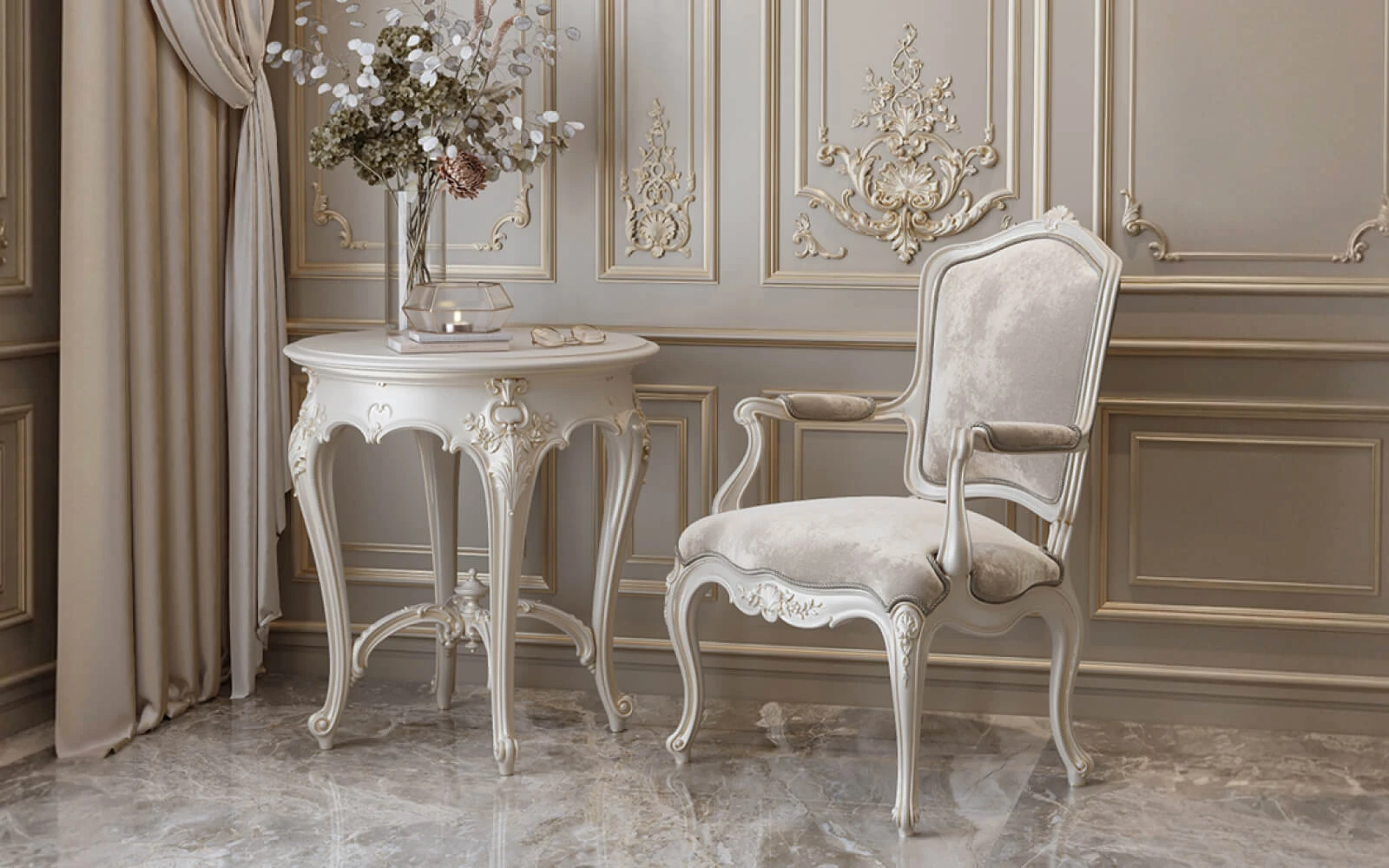
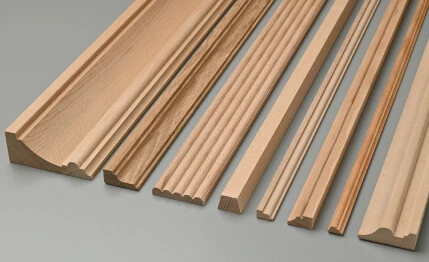
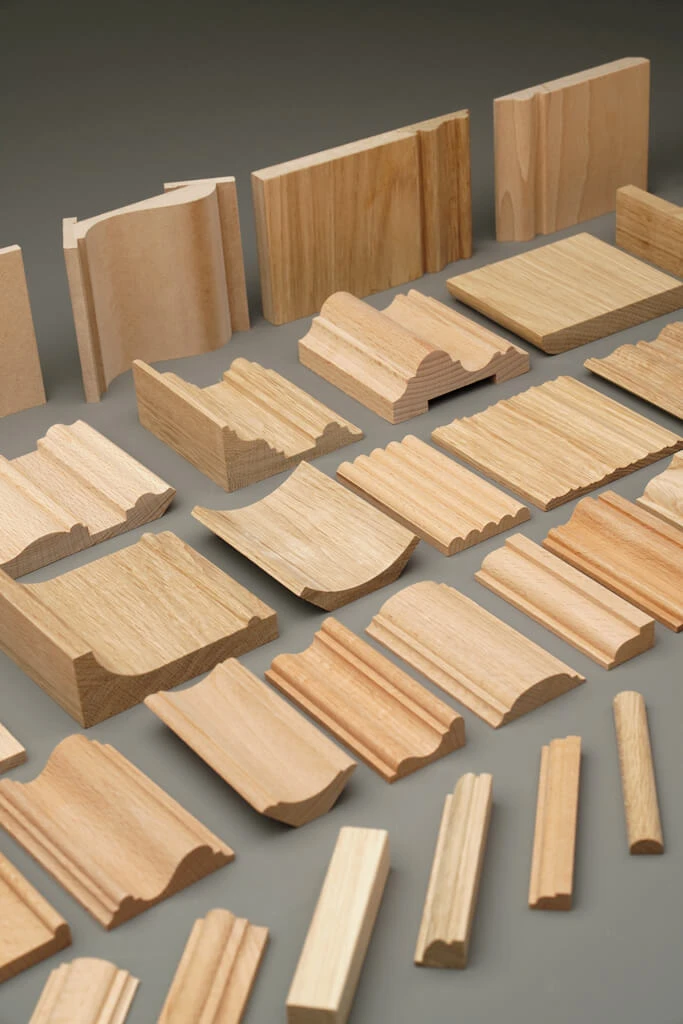
If the living room already has Wooden moldings and cornicesSolid wood baseboards and wooden picture frames — sofa legs should be made of the same wood species and with the same tint. Light oak + light oak = a unified interior. Light oak + bleached birch = a clash of materials.
Tip: if you order legs with a tint, ask the manufacturer what wood species they are made of, and choose a tint to match your specific parquet or baseboard.
Attaching legs to the sofa — how to avoid mistakes with the fit
This is a technically important block. The beauty of the legs doesn't matter if they don't fit your sofa in terms of the attachment type.
Types of sofa leg attachments
Threaded stud — the most common method. A metal stud (M8, M10, M12) is screwed into the base of the leg. A corresponding threaded socket or a metal barrel nut is inserted into the sofa frame. The leg is screwed into the socket.
How to check: remove one old leg and look. If the leg unscrews, it means the attachment is on a stud. Measure the stud diameter (M8 or M10 — most often). The new leg must have a stud of the same diameter.
Mounting plate — a plate with 4 holes is attached to the sofa base with self-tapping screws, with a threaded socket in the center for the leg stud. This system allows installing legs with different studs by changing the plate.
Direct screws — in some budget sofas, legs are simply screwed directly into the wooden frame. Downside: when replacing a leg in the same hole, the screw holds poorly — the wood is already worn. Solution: use a longer or thicker screw, or install a mounting plate.
Threaded insert — a metal bushing with internal threads pressed into the wooden sofa frame. The leg is screwed into the bushing. A reliable but rigid system — it's harder to change the attachment type on your own.
How to determine the right type before purchasing
Steps:
-
Tip the sofa over or lift one corner and inspect the underside.
-
Remove one leg — how exactly is it attached?
-
If the leg unscrews — what is the thread diameter? (Most often M8 or M10.)
-
If the leg is attached to a plate — check the plate configuration.
-
Check the condition of the mounting assembly — is the thread damaged, is the wooden support crumbled.
If the mounting assembly is damaged — it needs to be repaired before replacing the legs. A damaged thread is fixed by installing a new threaded insert.
Mounting plates
If the attachment type of the new legs does not match the sofa — mounting plates allow you to adapt almost any legs to any sofa. The plate is attached to the frame with self-tapping screws (4–6 points), with a threaded socket for the leg in the center. A universal solution.
How many legs are needed for a sofa — calculation based on the situation
A question that seems simple but has nuances.
Standard three-seater sofa up to 200 cm: 4 corner legs.
Sofa from 200 to 250 cm: 4 corner + 1–2 center legs. Without center supports, the sofa sags under load in the middle — this puts stress on the frame and spring block.
Corner sofa: 4 corner legs of the main module + 4–6 legs of the additional module (corner section). Total 8–10 legs depending on the design.
Sofa bed: often has 6 legs — 4 corner and 2 in the middle (under the unfolding area). When unfolded, the load is redistributed, and without center supports, the base sags.
How to find out the exact number: remove the sofa, inspect from below, and count the mounting sockets. Their number equals the number of legs needed.
Wooden leg finish: to match the interior color
Wooden legs are available in several versions:
-
Unpainted — for self-toning and coating. Allows you to match the exact shade.
-
Toned (light oak, dark walnut, wenge, natural) — ready for installation.
-
For painting (primed MDF or sanded solid wood) — for enamel in the color of furniture or walls.
Unpainted wooden furniture legs — the optimal choice if you need precise color matching for a specific interior. Coating with oil to match the parquet, painting with enamel in the RAL color of the cabinet, tinting to match the baseboard — all this is only possible with an unpainted base.
How to install new legs on a sofa — step by step
The technology is simple but requires precision.
Step 1. Tip the sofa onto its side or back — carefully, with two people, to avoid damaging the upholstery.
Step 2. Remove the old legs. Unscrew threaded ones, unfasten mounting plates, pull out screws — depends on the type of fastening.
Step 3. Inspect the mounting points. If the thread is stripped — insert a new threaded insert. If the mounting surface is damaged — reinforce it with a wooden pad or metal plate.
Step 4. Install the new legs. Screw the studs into the sockets until they make firm contact with the base. Tighten, but do not overtighten — the wood can split.
Step 5. Check the level. Place the sofa upright, put a level on it (or use a phone app). If the sofa is not level — check the leg lengths. A deviation of no more than 1 mm is acceptable.
Step 6. Attach protective pads to the soles of the legs. Felt or rubber pads protect the floor from scratches and slightly dampen vibration during movement.
Floor protection from sofa legs
Wooden legs on hard floors pose a risk of scratches, especially when the sofa is accidentally moved. The solution is simple: protective pads on the base of each leg.
Felt pads are the best option for parquet and laminate. They are soft, do not scratch, and allow the sofa to be moved effortlessly. They are replaced as they wear out.
Rubber pads hold the sofa in place better and prevent slipping. They are good on tiles but not recommended on lacquered parquet (may leave marks).
Silicone pads are transparent and almost invisible. They are optimal for expensive flooring.
Important: pads are glued to a clean surface of the leg base. If the base is uneven, the pad will peel off quickly. Sand the base before gluing.
Mistakes when choosing sofa legs — what goes wrong
Buying legs only based on a nice photo. A photo is a visual representation. More important parameters: height, cross-section, type of attachment, wood species. A beautiful leg without proper attachment is money down the drain.
Not checking the height of old legs. If one leg is broken and you buy a replacement, it must be exactly the same size as the other three. A difference of 3–5 mm will cause noticeable misalignment.
Not considering the weight of the sofa. A lightweight decorative leg with thin supports for a heavy corner sofa is a direct path to breakage.
Setting legs too high without assessing stability. A tall sofa with a narrow base is an unstable structure. Especially if there are children nearby.
Choosing legs that don't match the rest of the wood. "Honey" oak + "natural" birch are shades with different warmth that conflict in the same interior.
Ignoring central supports. A long sofa without a central leg puts stress on the frame. It may deform within a year.
Not attaching protective pads. Within a week of use, circular scratches from the legs will appear on the parquet. A forgotten detail with big consequences.
Mixing different leg shapes on the same sofa. It happens: three identical and one "closely similar." This is immediately noticeable.
Wooden sofa legs as part of a wooden interior
A well-designed interior is a system, not a set of individual items. Sofa legs are a small but important element of this system. If the living room has:
-
wooden parquet or engineered wood flooring;
-
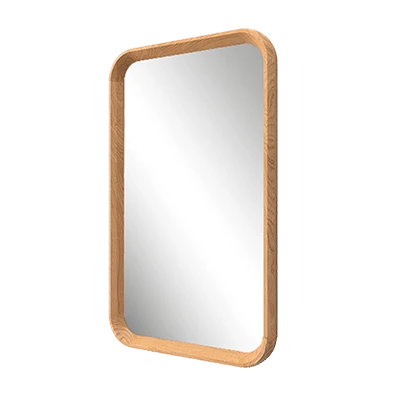
wooden frames for paintings or mirrors;
-
a wooden coffee table or cabinet;
-
wooden furniture handles;
— then the wooden sofa legs from the same species and with the same tint become an organic part of this system. Wood echoes wood. The interior begins to read as a whole.
This is not an accident or luck — it's a decision. And it is made when choosing the legs.
More details on how to choose legs for different furniture items — in the article Furniture Legs: How to Choose for Tables, Chairs, Cabinets, and Sofas.
What to check before purchasing: final checklist
Go through this list before placing your order:
-
Height of old legs (or desired clearance under the sofa).
-
Type of attachment (pin — what diameter; mounting plate; self-tapping screws).
-
Number of legs (including central ones).
-
Weight of the sofa and approximate load per leg.
-
Required leg diameter / cross-section.
-
Shape to match the sofa style and interior.
-
Wood species.
-
Tinting / coating — to match parquet, baseboards, furniture.
-
Condition of the sofa's mounting points.
-
Are protective pads needed for the feet.
FAQ — answers to popular questions about sofa legs
Can I replace the legs on a sofa myself?
Yes, and it's easy. Remove the old legs, check the mounting type, and buy new ones with a similar attachment method. More details — Wooden legs for sofas.
What is the best height for sofa legs?
For comfortable seating, the optimal final seat height is 43–47 cm. For a robot vacuum to pass, a clearance under the sofa of at least 9–12 cm is needed. Leg height = final seat height minus sofa base height.
Are wooden legs suitable for a heavy sofa?
Yes, if you choose the right wood species (oak, beech), sufficient cross-section (40–50 mm), and reliable fastening. For a long sofa, add central supports.
Which is better — wooden or metal legs?
In a residential interior with natural materials, wooden legs are warmer and more organic. Metal is appropriate in minimalism and loft style. Plastic is a technical option without decorative value.
How to know how many legs are needed for a sofa?
Turn the sofa over and count the mounting sockets. For sofas longer than 200 cm, 6 legs are usually needed (4 corner + 2 central).
How to choose legs to match the interior color?
Take unpainted wooden legs and tint them yourself to the desired shade. This is the only way to exactly match the tone of the parquet or existing furniture.
The sofa is the central piece of the living room. It sets the scale, determines the seating, and forms the first impression of the room. Its legs are the point of contact with the floor, with the rest of the wood in the interior, and with the overall style. A small detail that bears all the weight.
STAVROS offers Wooden legs for sofas made of solid oak, beech, and birch — turned, conical, cylindrical, geometric. In-house production, wide selection of shapes and heights, unpainted legs for tinting and ready-to-install options. Full range furniture legs и solid wood products — delivery across all of Russia. STAVROS — because the right sofa starts with the right support.