
























Article Contents:
- What is a furniture rosette — and why it is called that
- The function of the rosette in furniture composition
- Where wooden rosettes are used: from furniture to interior
- Facades of cabinets and case furniture
- Doors of chests of drawers and bedside tables
- Bed headboard
- Decorative Panels
- Interior Doors
- Frames of mirrors and paintings
- Furniture portals and canopy beds
- Wall decorative compositions
- How a rosette differs from a decorative overlay
- How to choose the shape of a rosette
- Round rosette
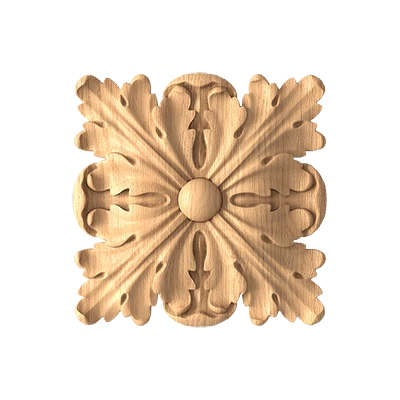
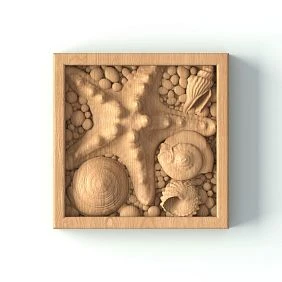
- Square decorative rosette
- Oval rosette
- Figural and ornamental rosette
- Symmetrical and asymmetrical shape
- How to choose the size of a wooden rosette
- Logic of proportions
- Depth of Relief
- Relation to handles and moldings
- Rosette as the center of the system: how to combine with moldings and overlays
- Scheme of a classic furniture composition
- Rosette + molding = ready-made frame on the facade
- Rosette + corner trims = classic composition
- Rosette + molding = frame and panel
- Rosette + headboard = accent bed
- Styles and ornaments: which rosette suits your interior
- Classic and neoclassic
- Art Deco
- Baroque and Empire
- Modern classic and modern neoclassical
- Japanese style and minimalism
- Wooden rosette material: from species to finish
- Oak
- Oak
- Birch
- MDF for painting
- Unpainted blanks
- How to attach a wooden rosette to a facade
- Adhesive
- Finishing nails
- Screws with concealed fasteners
- Center marking is a mandatory step
- Mistakes when choosing a wooden rosette — an honest analysis
- Rosette in a modern interior — how to use it not "the old way"
- What to check before buying: a checklist
- FAQ — answers to popular questions about wooden rosettes
There is a moment in interior work when everything is almost ready: furniture is in place, upholstery is chosen, moldings are arranged on the facades — but something is still not right. The facade looks unfinished. The center is empty. The eye searches for a focal point and cannot find one. It is at this moment that a detail comes into play, which is thought of last but should be thought of first.
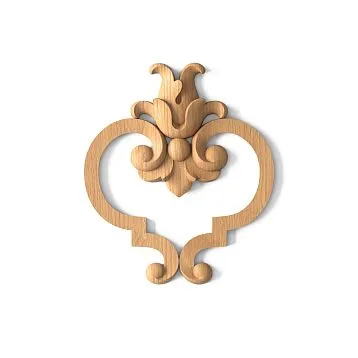
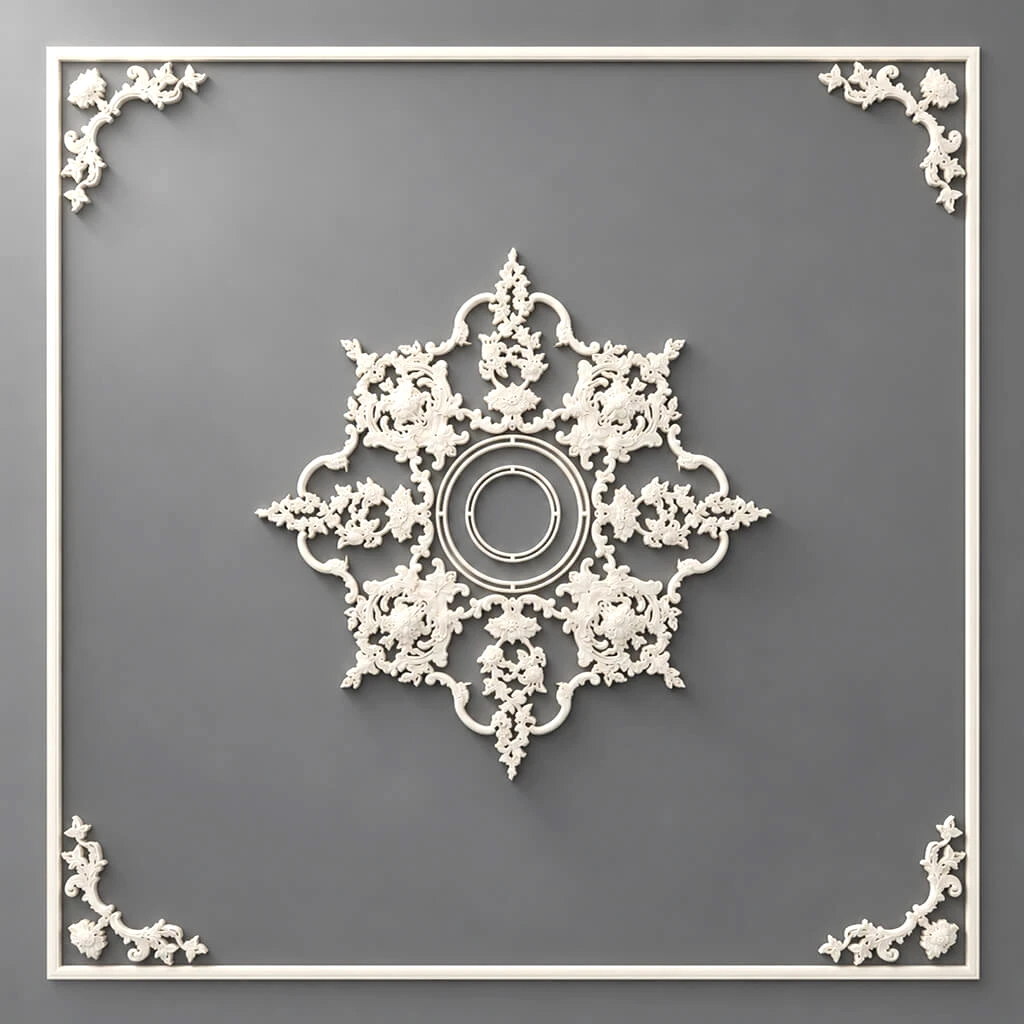
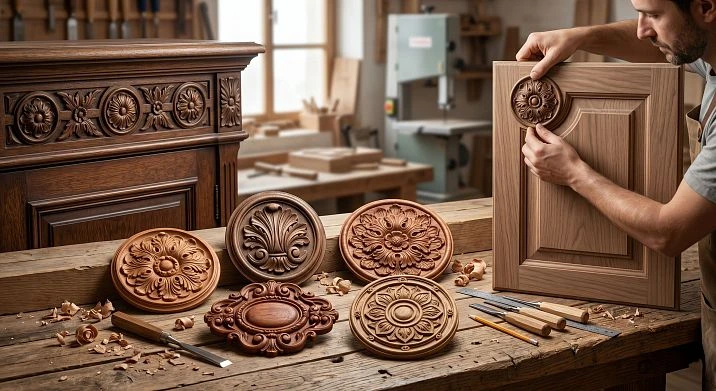
A wooden furniture rosette is a decorative carved overlay installed in the center of a composition: on a cabinet facade, on a dresser door, on a headboard, on a decorative panel, in a mirror frame, or on an interior door. A small element that works like the final period in a sentence: without it — incompleteness, with it — completeness.
View wooden rosettes and decorative overlays STAVROS — in the catalog.
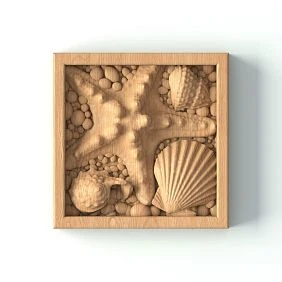
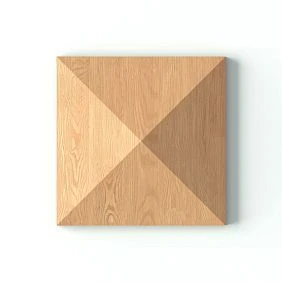
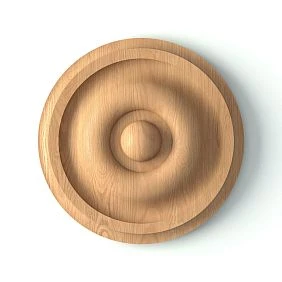
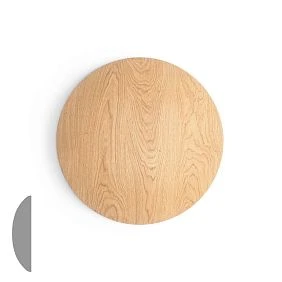
What is a furniture rosette — and why is it called that
The first thing to clarify: it's not an electrical outlet. This is a constant source of confusion that annoys both buyers and designers.
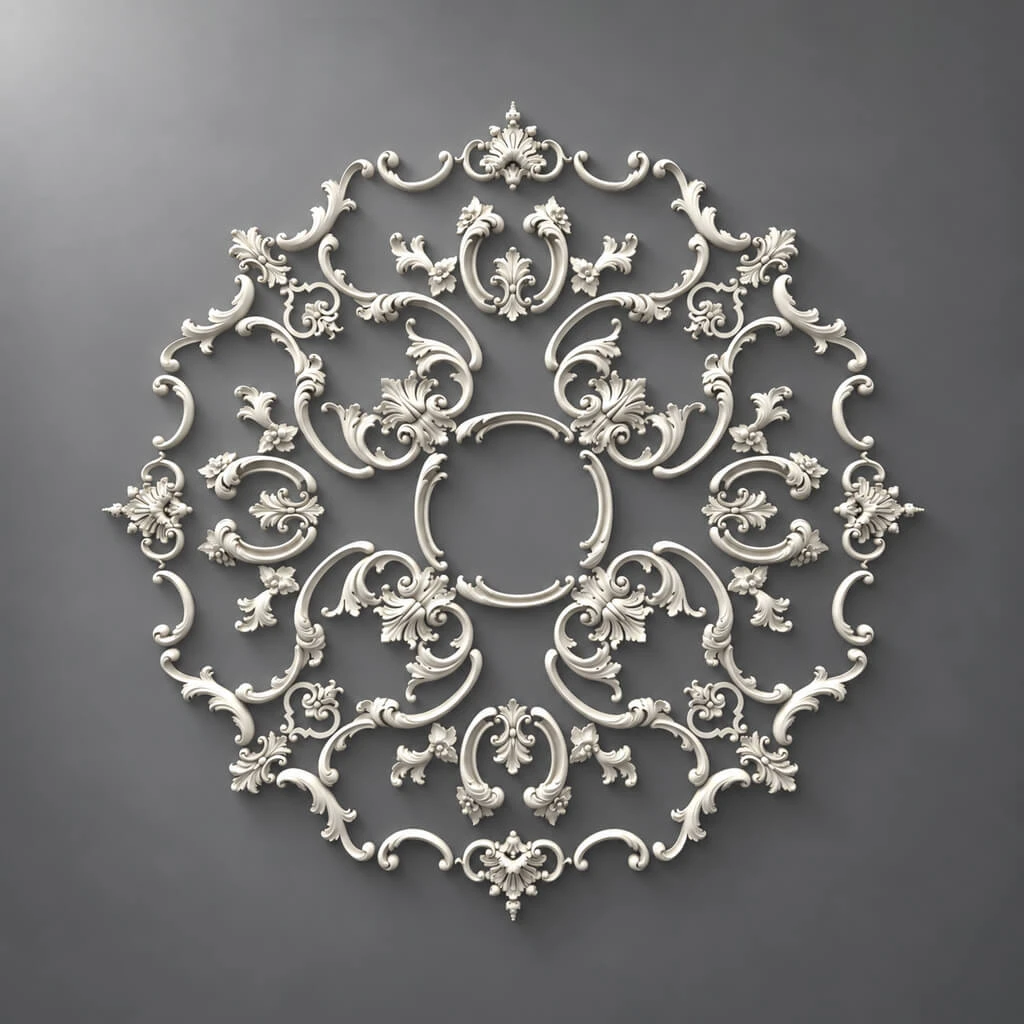
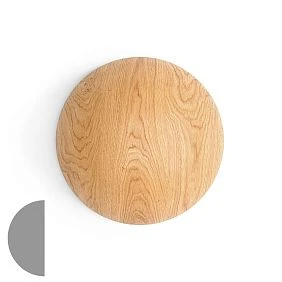
In furniture making and architectural decoration, a rosette (from the French rosette — "little rose") is a decorative ornamental element of round, square, or shaped form with a symmetrical pattern. Historically, the rosette depicted a stylized flower — a rose or lotus — shown "face-on," that is, as an open circular ornament. In different eras, this motif was reinterpreted: ancient acanthus, Baroque scrolls, Empire laurel wreaths, Art Deco geometry.
Today Furniture rosette is a ready-made decorative element that can be purchased separately and installed on any suitable surface. It can be flat (bas-relief) or three-dimensional (high relief), strictly geometric or lushly ornamental.
The function of the rosette in furniture composition
The rosette performs several tasks simultaneously.
Creates a center. On a large facade, the eye looks for a focal point. Without it, the gaze "slides" across the surface, finding nothing interesting. The rosette in the center creates this point — the entire composition is built around it.
Adds depth and relief. A smooth facade is a plane. A carved rosette is a play of shadows, volume, movement. Light from a sconce or ceiling lamp hits the rosette's relief and creates a living pattern.
Completes the style. Classic, neoclassical, Art Deco — all these styles require a decorative detail that "speaks" the language of the style. The rosette is a stylistic signature.
Conceals imperfections. Sometimes a socket is placed over an unattractive spot on the facade — a central screw, a joint, putty. Functional and aesthetic.
Our factory also produces:

Where wooden sockets are used: from furniture to interior
Application area decorative outlets wider than it seems. Let's break down the main scenarios.
Get Consultation
Cabinet and case furniture facades
A cabinet with smooth facades is functional but visually "poor" object. One carved accent in the center of each door — and the cabinet ceases to be a box and becomes furniture. This works especially well in classic and neoclassical interiors, where furniture should be decoratively rich.
A socket on a cabinet facade is typically installed inside a frame of of wooden moldings. Molding forms a "field", and the socket in its center creates a hierarchy of decor: frame → central accent.
Doors of chests of drawers and nightstands
A chest of drawers is an item that takes up a lot of space in the bedroom, and often looks boring. Sockets on doors and drawers immediately elevate its status. A small Carved rosette on a drawer of a chest of drawers — a detail that is noticed immediately.
Bed headboard
The headboard is the main decorative element of the bedroom. It sets the tone for the entire room. A carved rosette in the center of the headboard, combined with a symmetrical molding frame, is a classic technique that has been used in furniture for several centuries and remains relevant.
For the headboard, you can choose a larger and more expressive rosette — it should be "readable" from a distance of several meters.
Decorative panels
Decorative wooden panel without a central accent looks like an unfinished sketch. The rosette in the center of the panel is its semantic core, around which all other elements are built: frames, moldings, baguettes.
Interior doors
In classic interiors, a door is not just a passage. It is an architectural object where carved details shape the image. The rosette on the door is usually located in the upper panel — where the eye stops first.
Frames for mirrors and paintings
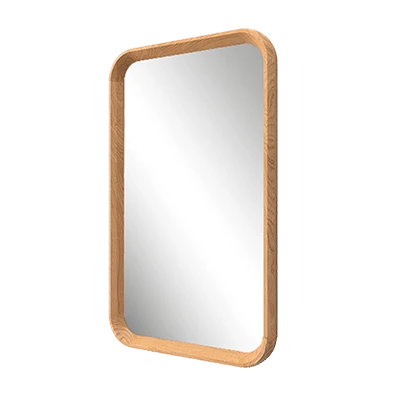
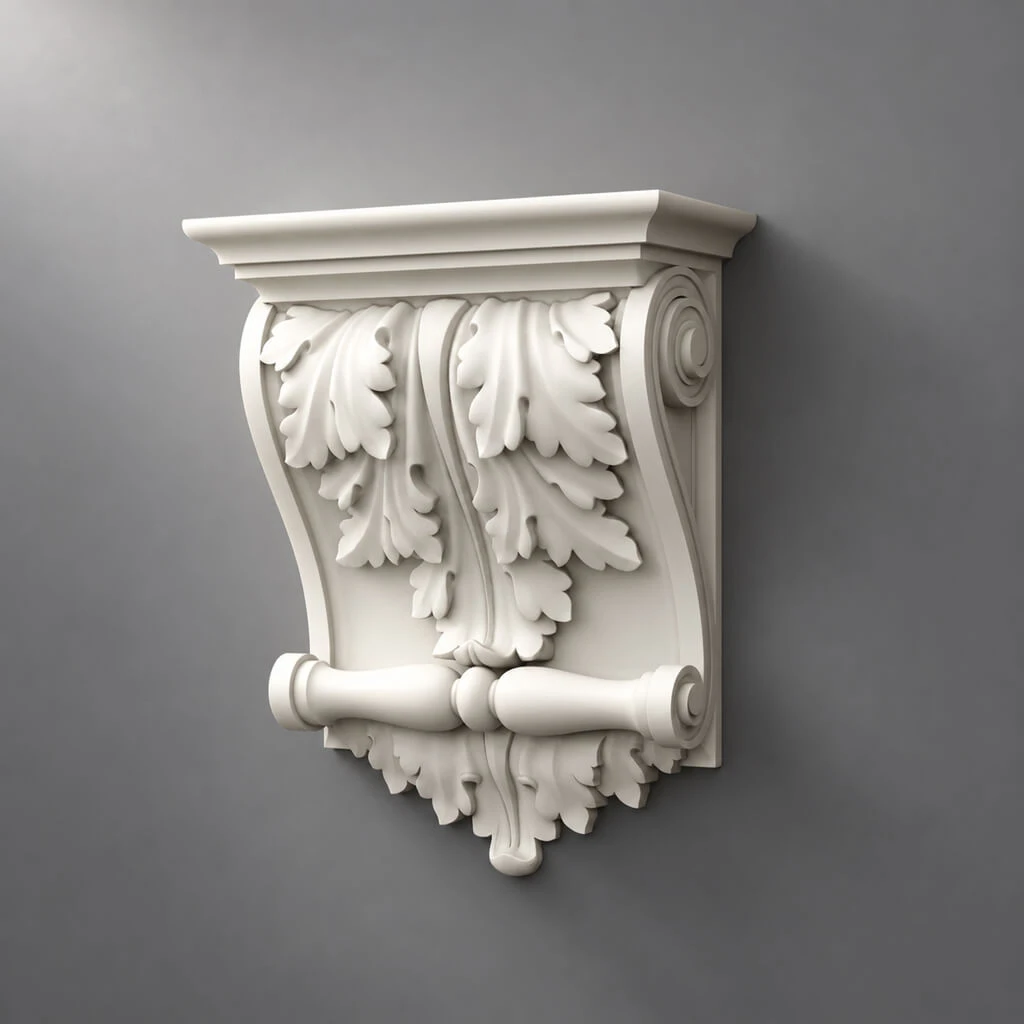
Wooden baguette for frames and panels — a traditional area for applying carved decor. A rosette on a mirror frame, installed at the top center of the frame or in the corners, is a classic European technique. The corners of the frame are decorated with corner overlays, the center of the top crossbar — with a rosette.
Furniture portals and canopy beds
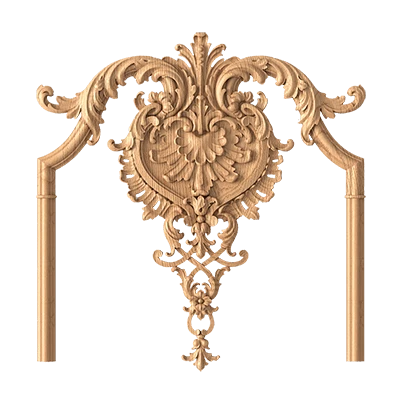
A furniture portal is a decorative arched or rectangular structure above a bed or fireplace. A rosette on the arch keystone, in the center of the horizontal crossbar, is an essential element of a classic portal.
Wall decorative compositions
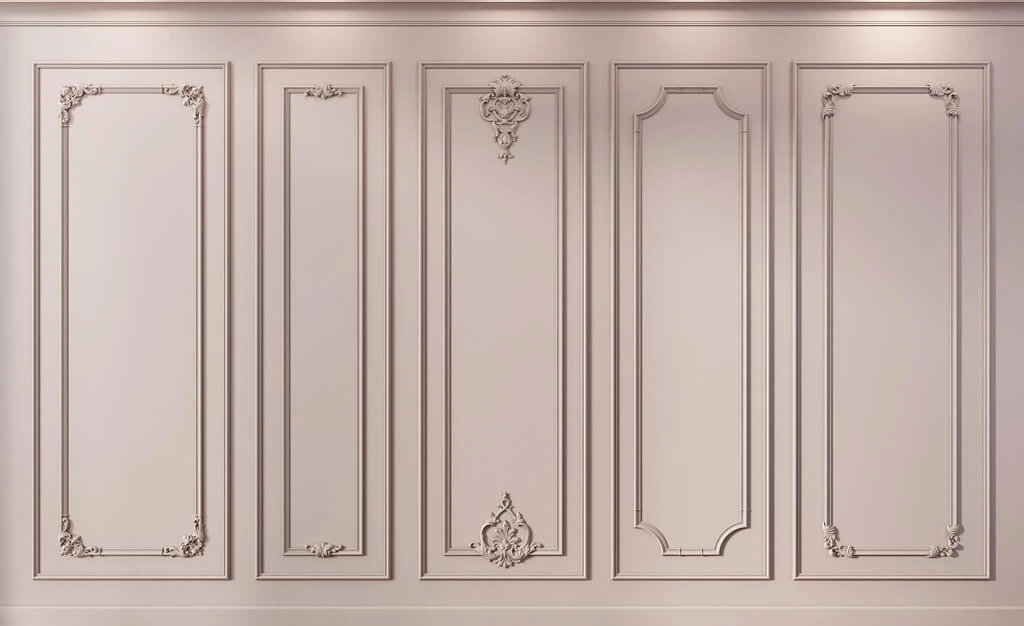
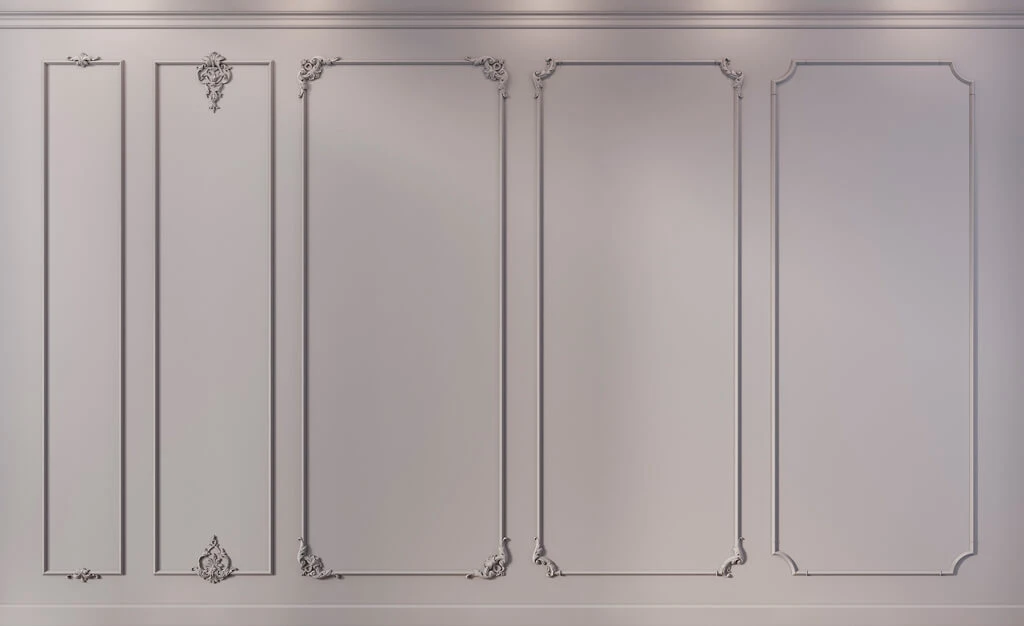
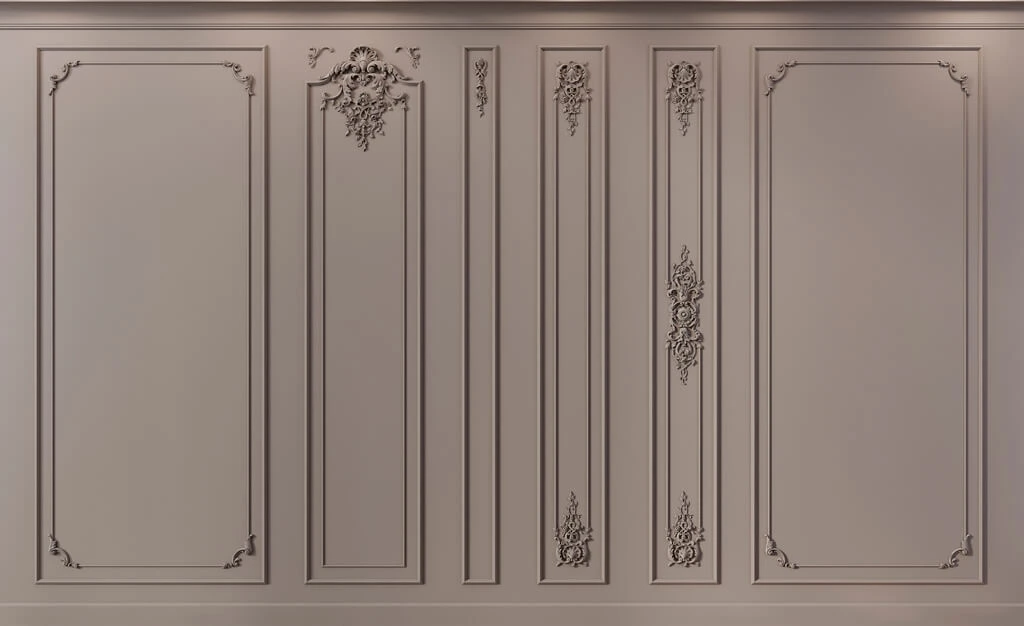
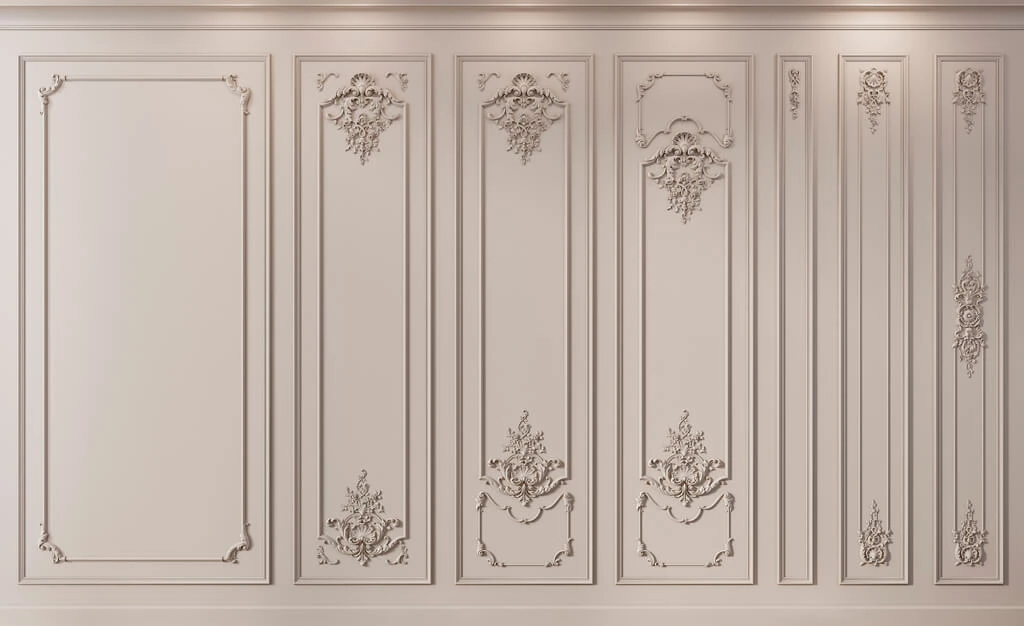
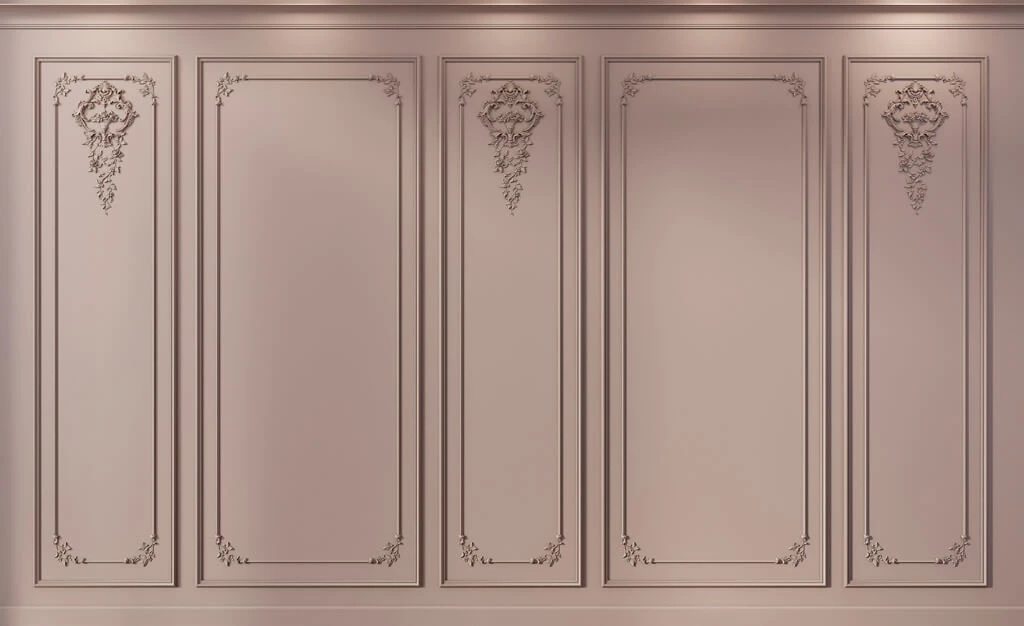
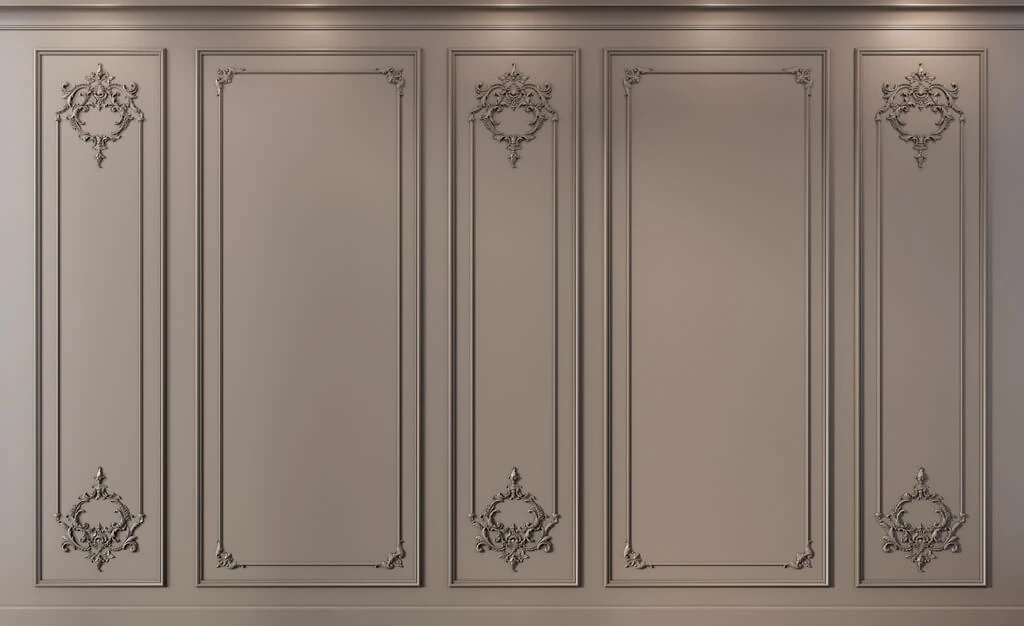
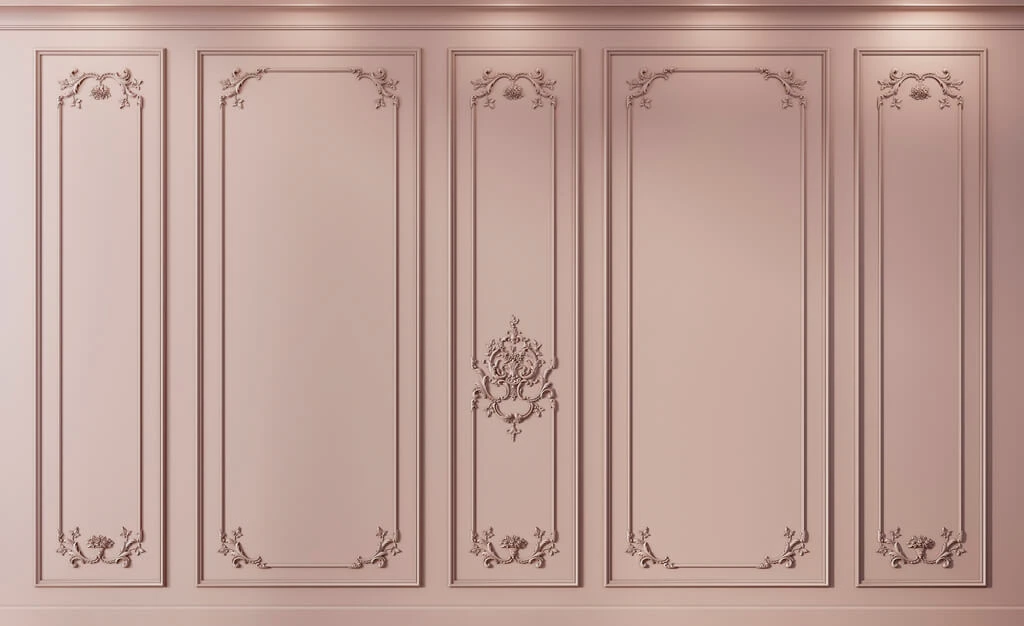
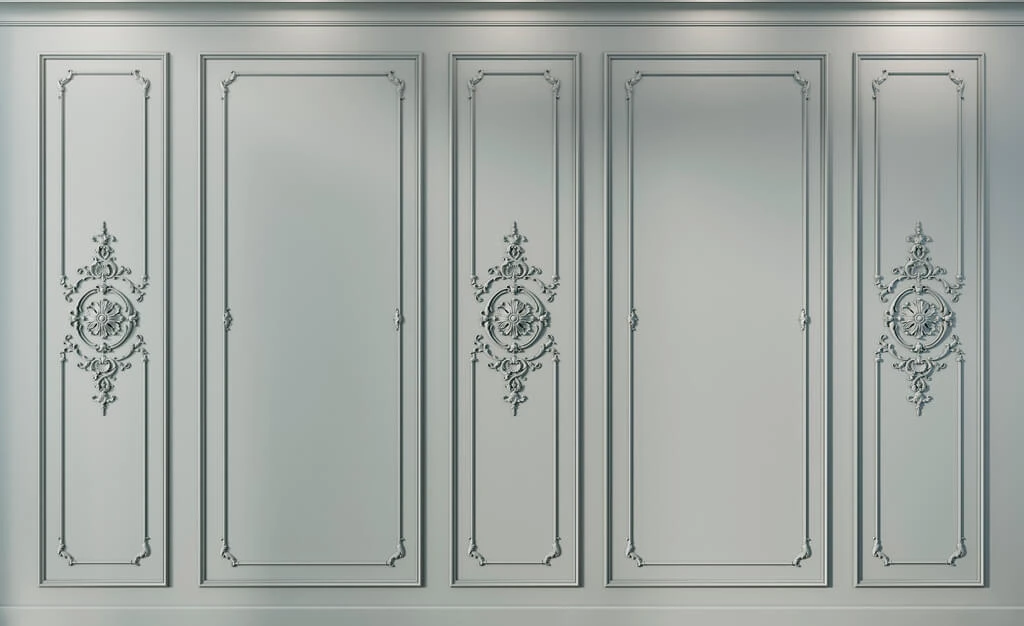
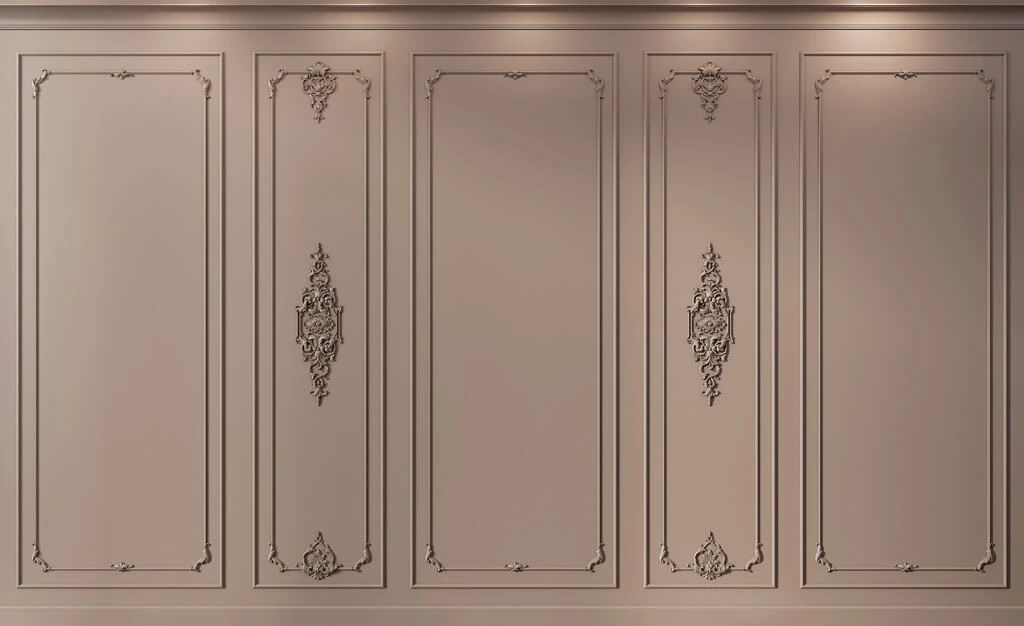
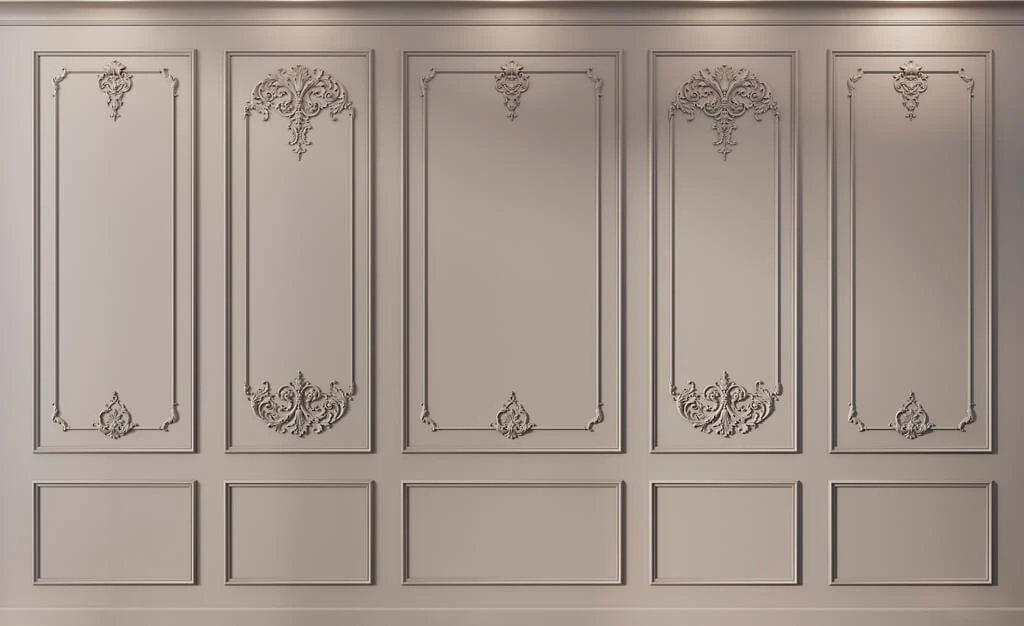
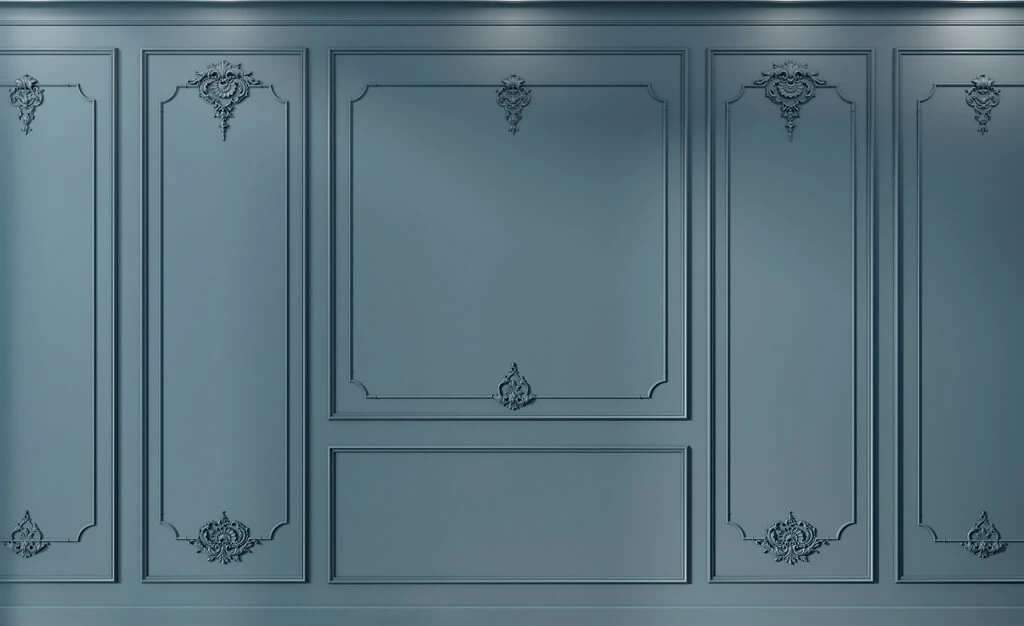
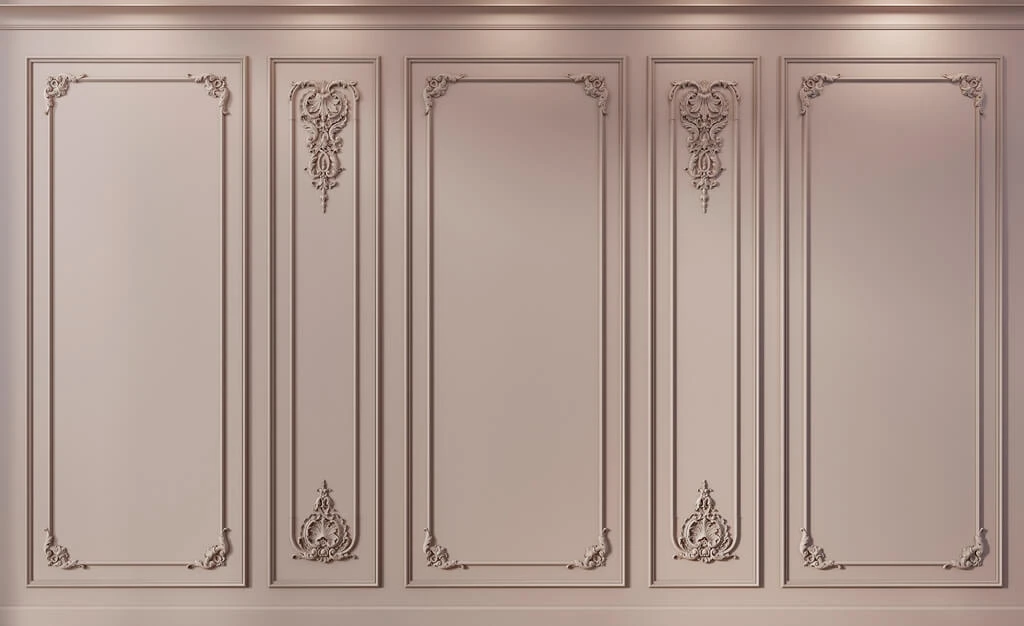
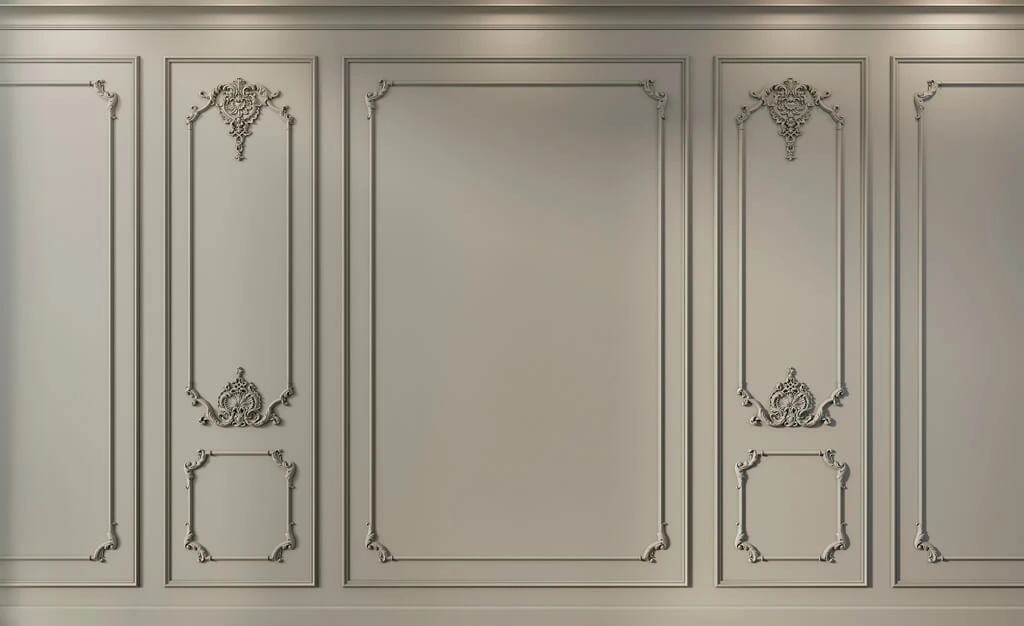
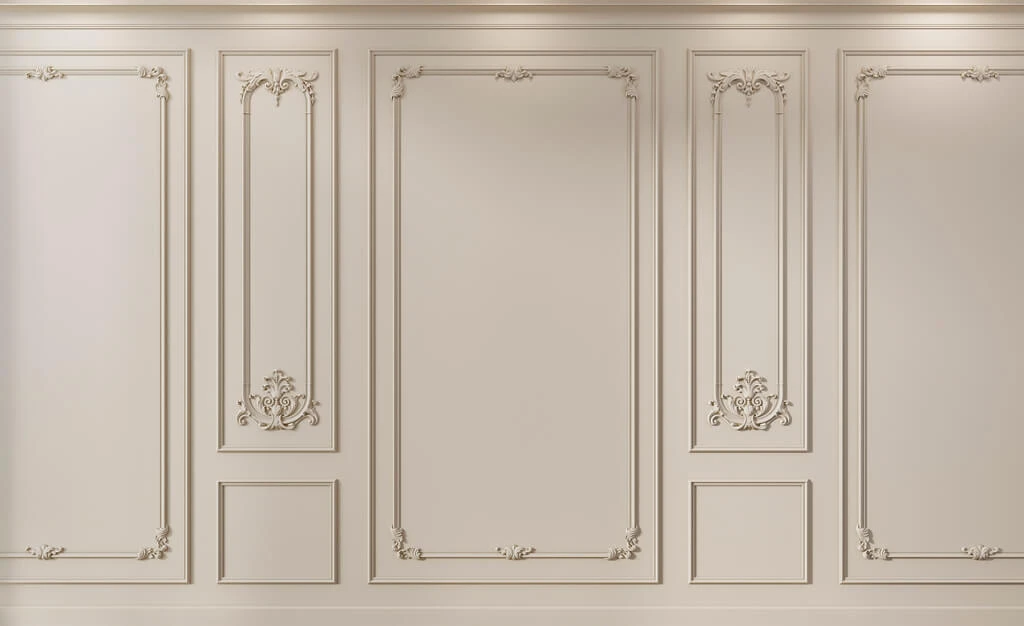
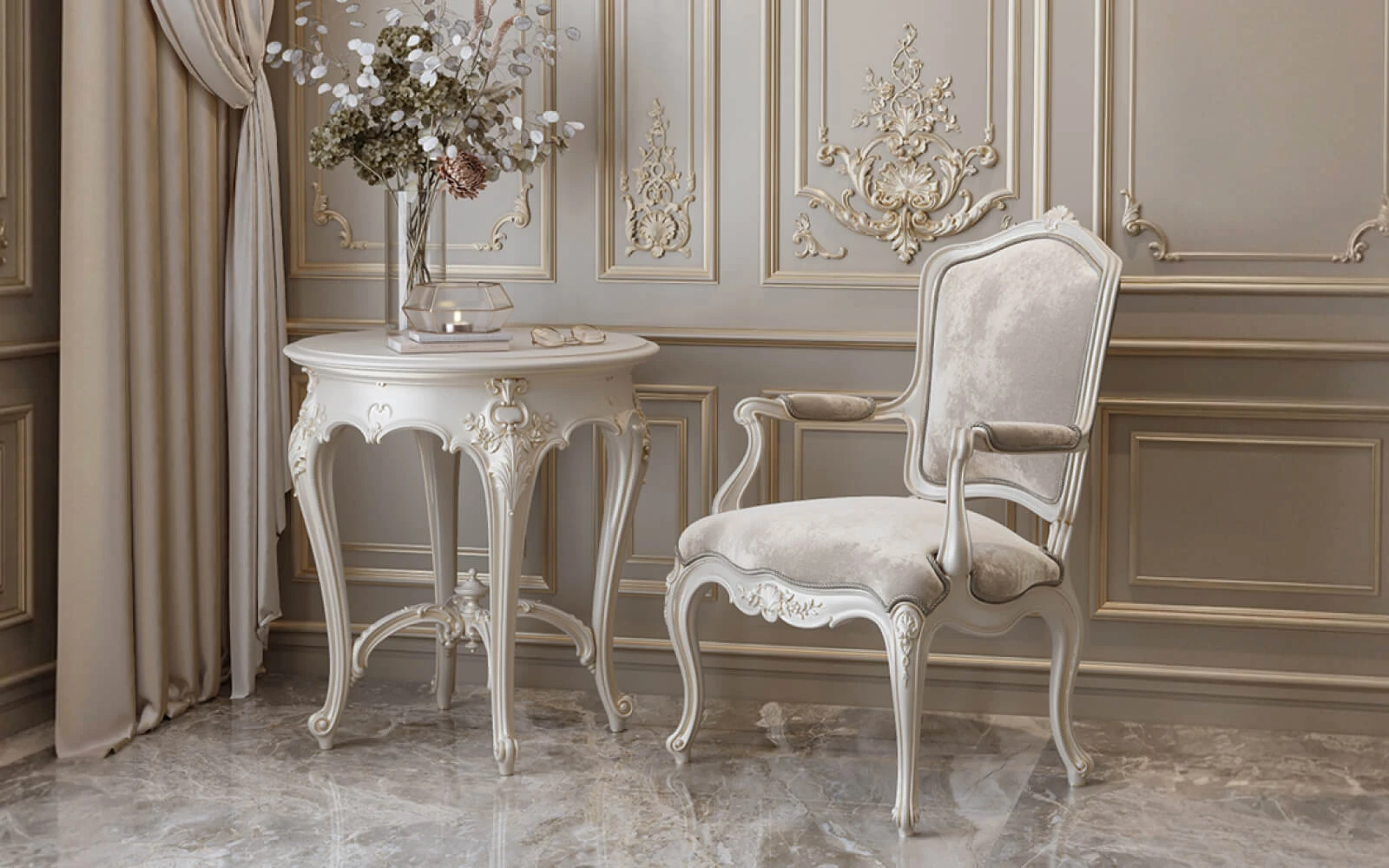
In interiors with wooden wall panels and molding frames, a rosette is installed in the center of each "field" between the moldings. A wall decorated in this way acquires a rhythmic decorative pattern — a classic of palace interiors in a modern version.
How a rosette differs from a decorative overlay
The terms "rosette" and "overlay" are often confused and used as synonyms — but there is a difference between them.
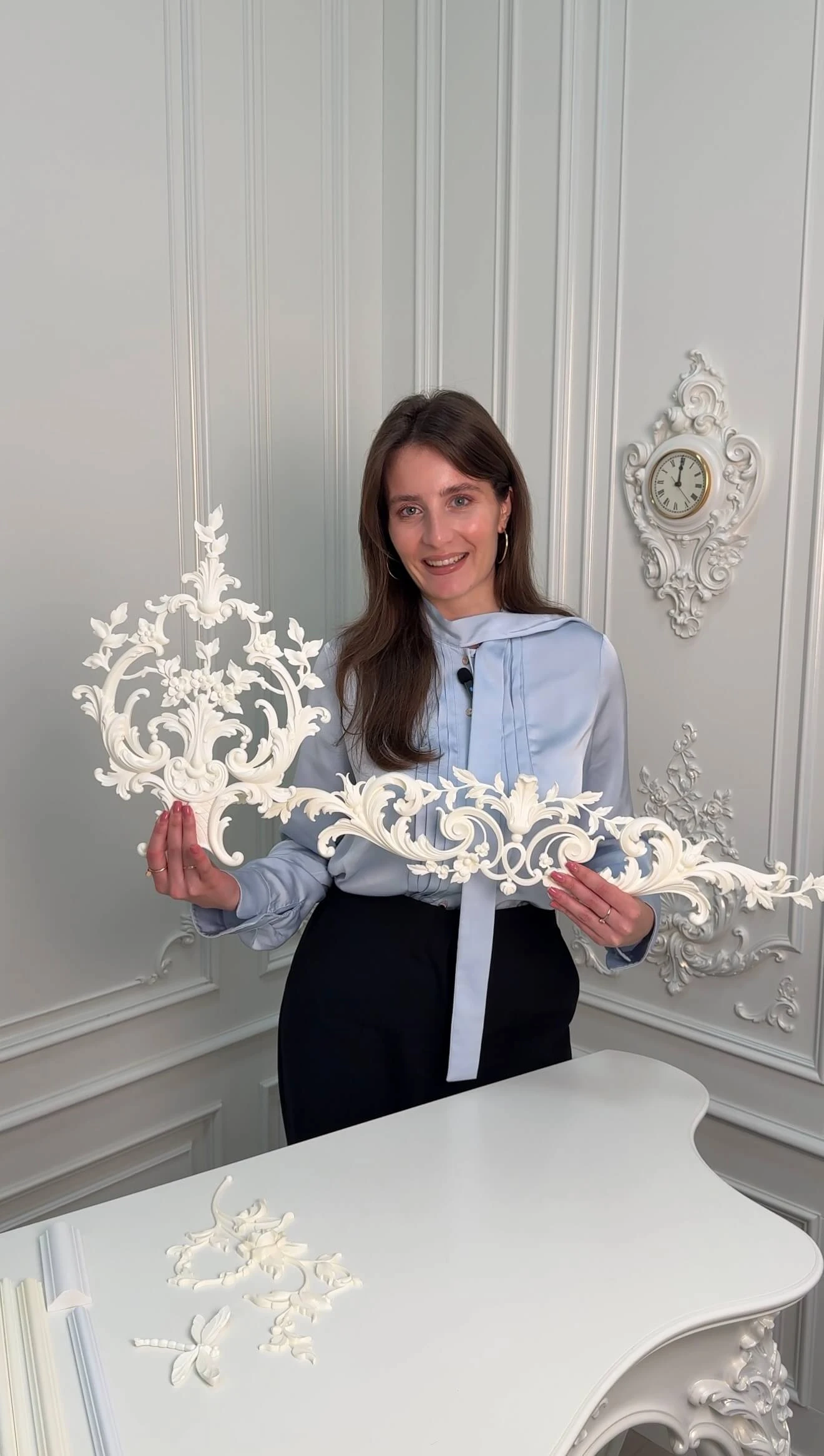
A furniture rosette is an independent decorative element with a complete symmetrical shape. It is placed in the center, reads as an accent, and works as a focal point.
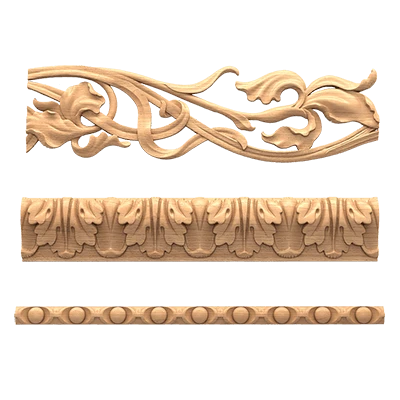
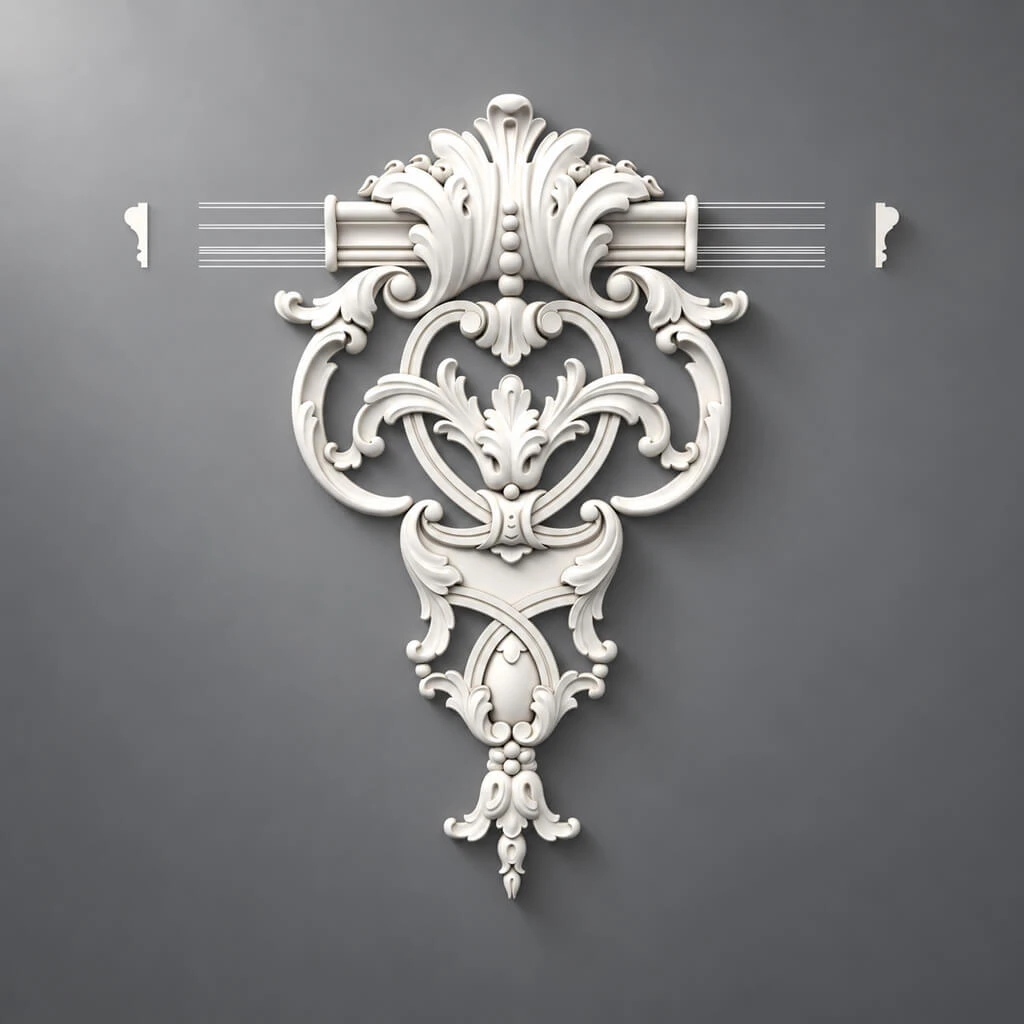
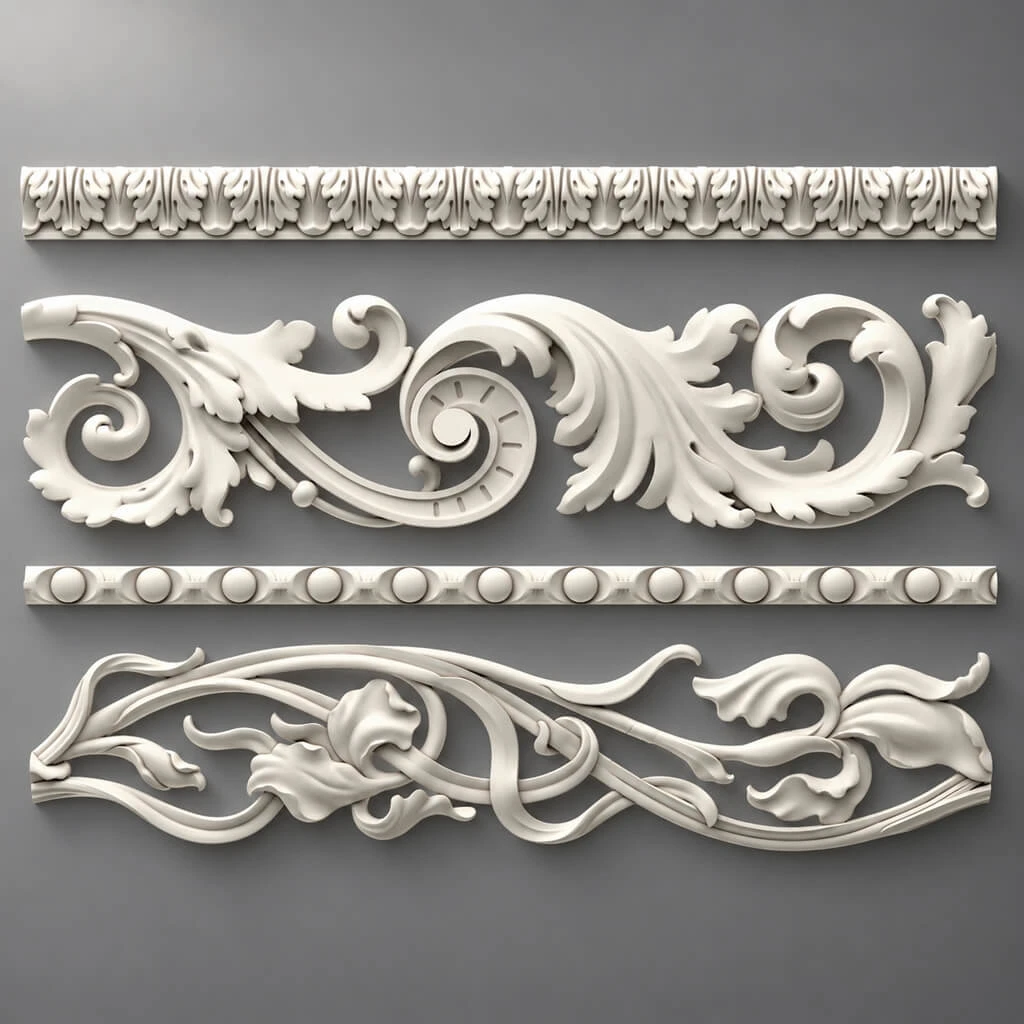
decorative insert — is a broader concept. An overlay can be corner (covers a furniture corner), linear (repeats along an edge), central (similar to a rosette), or imitating various ornaments. Overlays are often used rhythmically — as a repeating element of a system.
A rosette is typically used alone or in a pair (symmetrically). Overlays can form an entire system — at corners, along edges, across a surface.
In a specific interior solution, they work together:
-
rosette = central accent;
-
corner overlays = framing corners of a panel or facade;
-
molding = linear framing;
-
profiles = horizontal and vertical lines.
View Carved decorative inserts for furniture — a separate section of the catalog.
How to choose a rosette shape
Shape is the first and main aesthetic choice. It defines the style of the entire furniture composition.
Round rosette
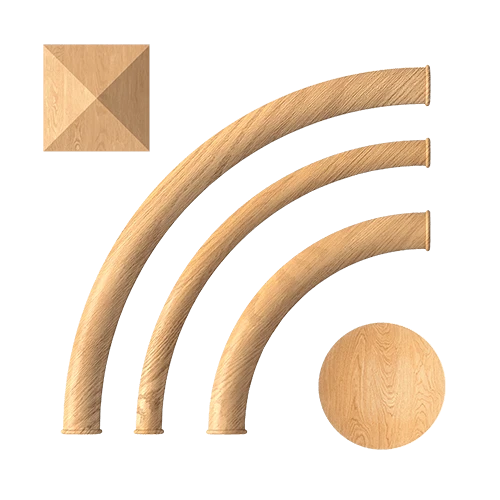
A universal shape for any style. The circle is the most balanced geometry; it doesn't 'pull' in any direction and works well in the center of any rectangular plane. Round rosettes are suitable for facades, panels, headboards, and frames.
Important: a round rosette on a wide horizontal facade may look 'lost'. Here it is better to choose a larger diameter or use two symmetrical rosettes.
Square decorative rosette
The square shape better 'holds' a rectangular facade. A square inside a rectangle is a classic geometric harmony. It works well for furniture frames, corner compositions, and door panels.
Square rosettes are organic in interiors with clear geometry — neoclassicism, art deco, modern classic.
View artistic rosettes in art deco style.
Oval rosette
An oval is a compromise shape between a circle and a rectangle. Soft, not angular, it looks good on elongated vertical facades. For cabinets with narrow doors, for vertical panels, for headboards with a dominant vertical.
Figural and ornamental rosette
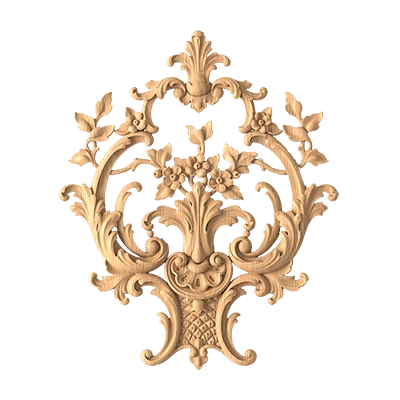
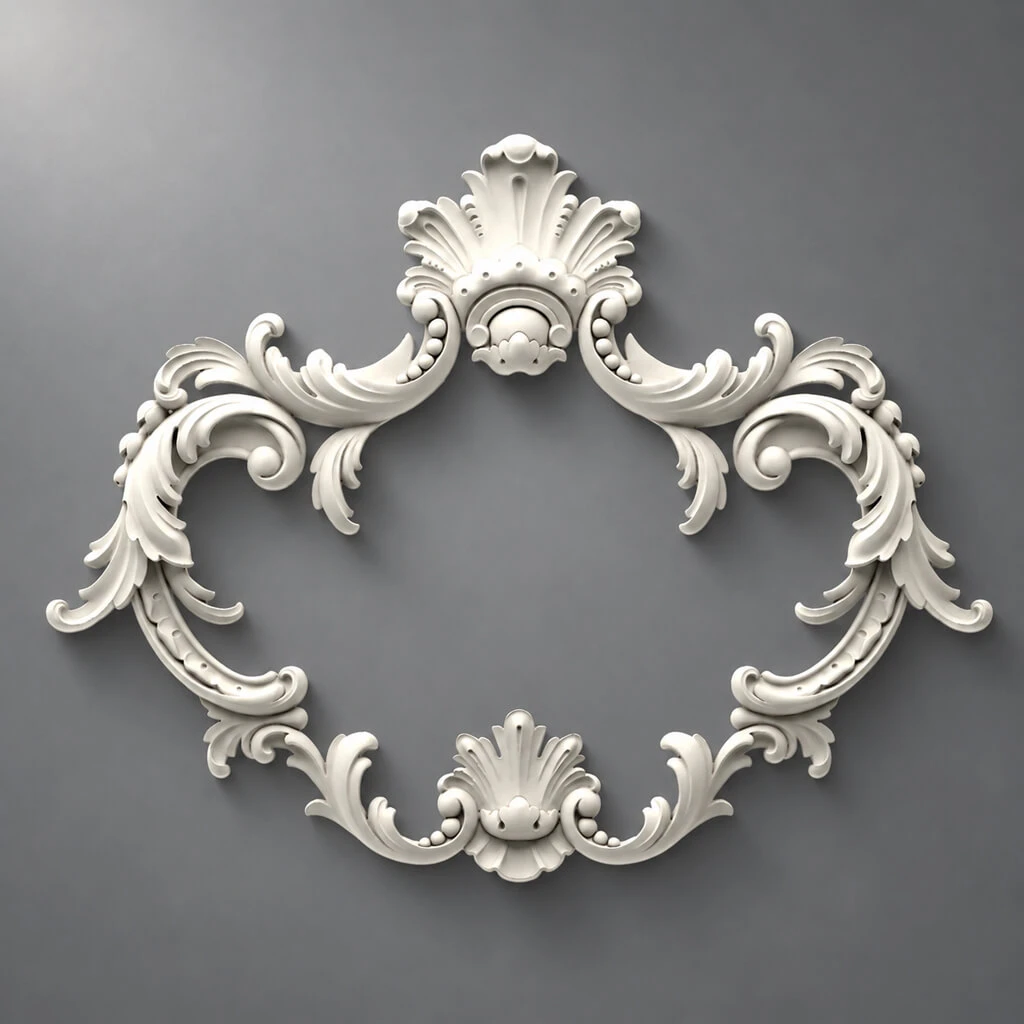
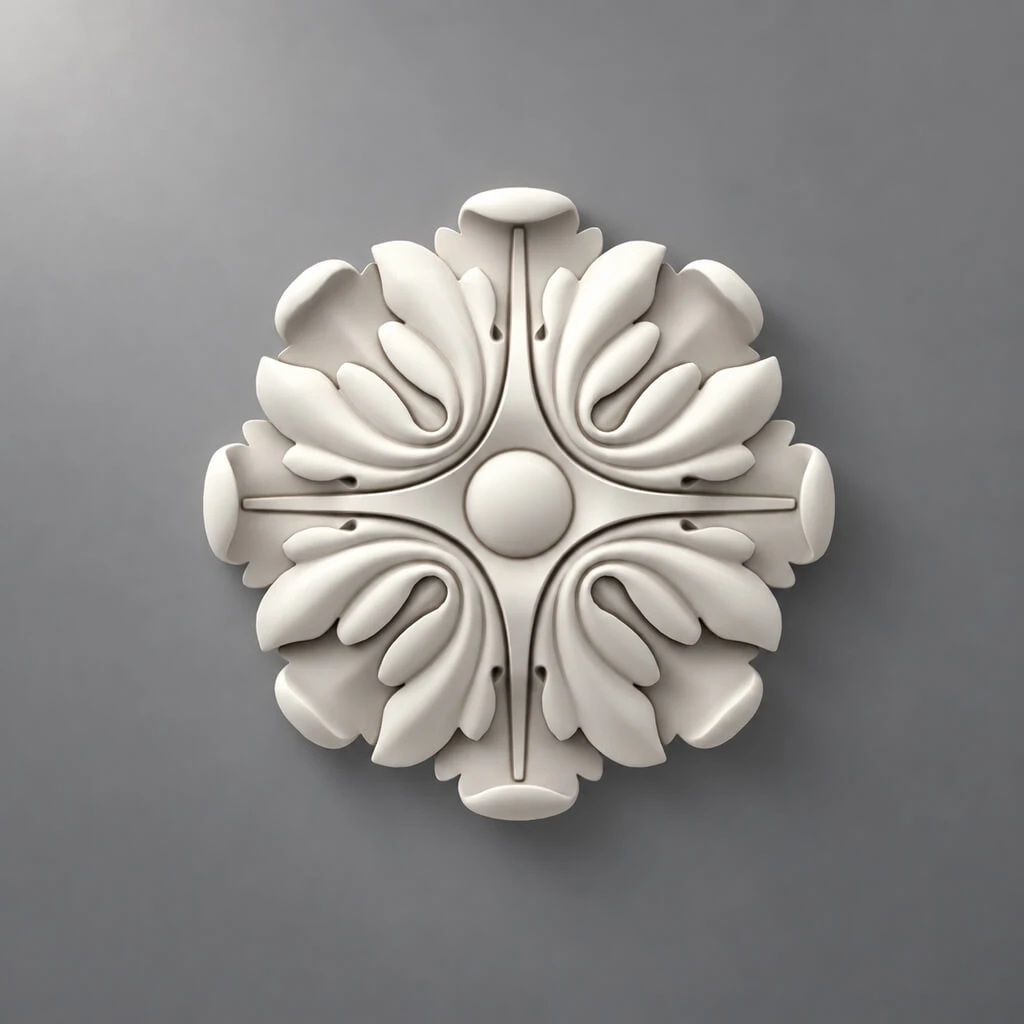
A figural rosette is already an independent decorative object. Complex ornament, petals, acanthus leaves, scrolls, geometric weaves — each such element carries a rich historical and artistic tradition.
architectural rose R-013 — an example of a complex figural shape with pronounced relief. Such an element works as a piece of small sculpture: it is examined, it stops the gaze.
Figural rosettes are chosen for high-end furniture, for classical and baroque interiors, for headboards and portals where expressiveness is important.
Symmetrical and asymmetrical shape
Almost all furniture rosettes are symmetrical — this is a condition for harmonious perception. Asymmetrical decorative elements are rather an exception for avant-garde interiors. In classic and neoclassic styles, any deviation from symmetry is perceived as a mistake.
How to choose the size of a wooden rosette
A mistake in size ruins the entire impression. A rosette that is too small gets lost on a large facade. One that is too large overwhelms and conflicts with other details.
Logic of proportions
Basic principle: the rosette should occupy no more than 20–25% of the central "field" of the facade (the space inside the molding frame). If the field is 30×20 cm — a rosette with a diameter of 8–10 cm is appropriate. If the field is 60×40 cm — a diameter of 15–18 cm.
On the headboard, you can be bolder: the headboard is viewed from a distance of 3–4 meters, so a small rosette simply won't be visible. For a headboard 160 cm wide — a rosette with a diameter of 20–30 cm or more.
For a decorative panel — the proportion of the rosette to the frame: the rosette occupies 25–35% of the field width.
Relief Depth
Rosettes differ not only in contour but also in relief. A flat rosette (5–8 mm) — delicate decor, almost invisible under direct lighting. A voluminous rosette (15–25 mm) — expressive high relief with deep shadows.
The choice of depth depends on the lighting. If the facade is illuminated by side light (sconces, candles, directed spotlights) — a voluminous rosette creates an impressive play of shadows. With uniform overhead lighting, the volume is "lost," and it is better to choose a rosette with a clear linear pattern.
Relationship with handles and moldings
The rosette should not "argue" with the handle — they should complement each other. If the handle is large, long — the rosette should be more modest. If the handle is small, point-like — the rosette can be more expressive.
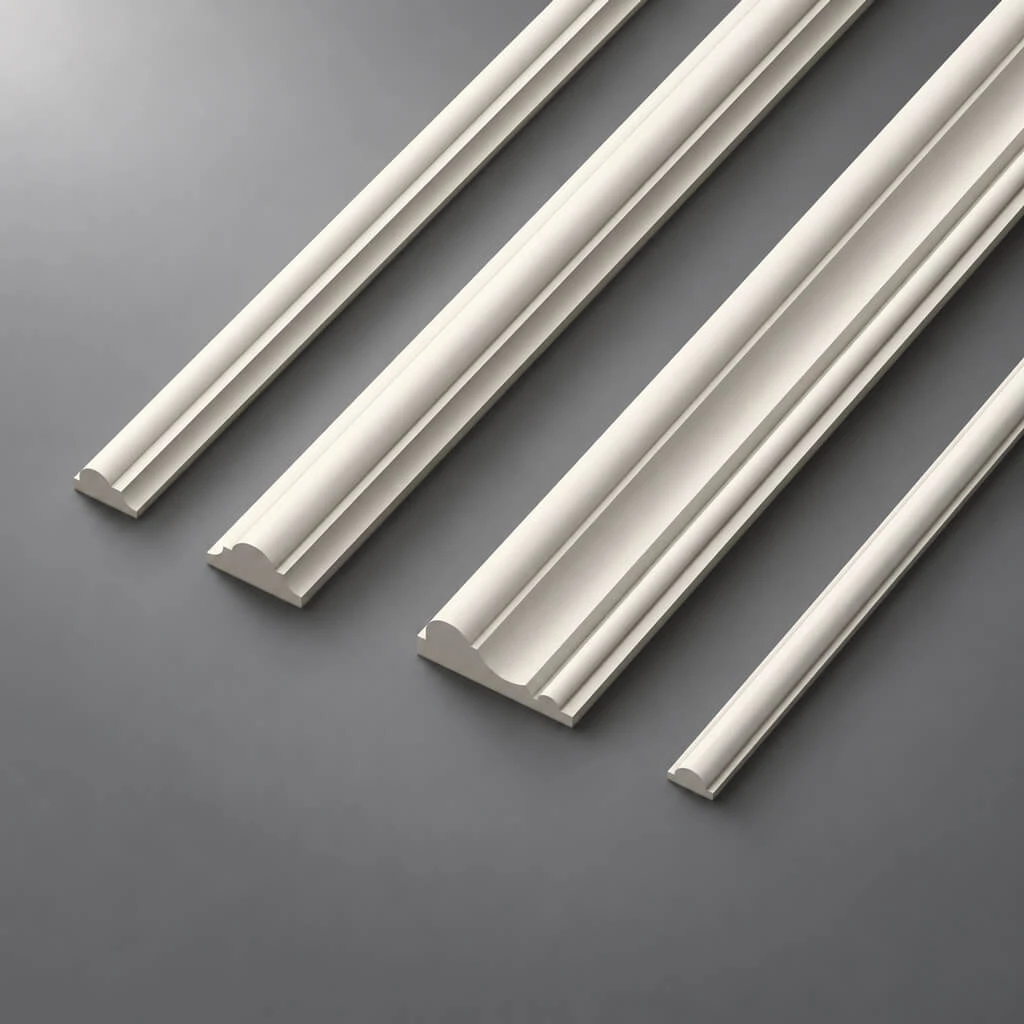
The molding forms the frame — the rosette fills the center. The thickness of the molding and the scale of the rosette should be in the same "weight class." Thin narrow molding + large heavy rosette = imbalance. Wide molding + small rosette = incompleteness.
The rosette as the center of the system: how to combine with moldings and overlays
One detail is good. A system of details is an interior.
Scheme of a classic furniture composition
Classic facade design scheme:
-
Outer frame made of wide molding.
-
Inner frame made of narrow molding or glazing bead.
-
In the center of the field — a furniture rosette.
-
Corner overlays in the corners of the frames — to enhance the decor.
This scheme works at any scale: from a small cabinet door to a large wardrobe facade. It scales by changing the size of the molding and rosette.
Rosette + molding = ready-made frame on the facade
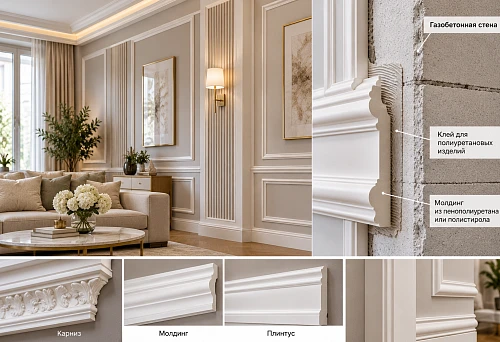
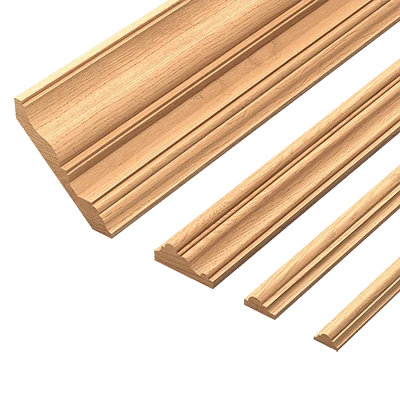
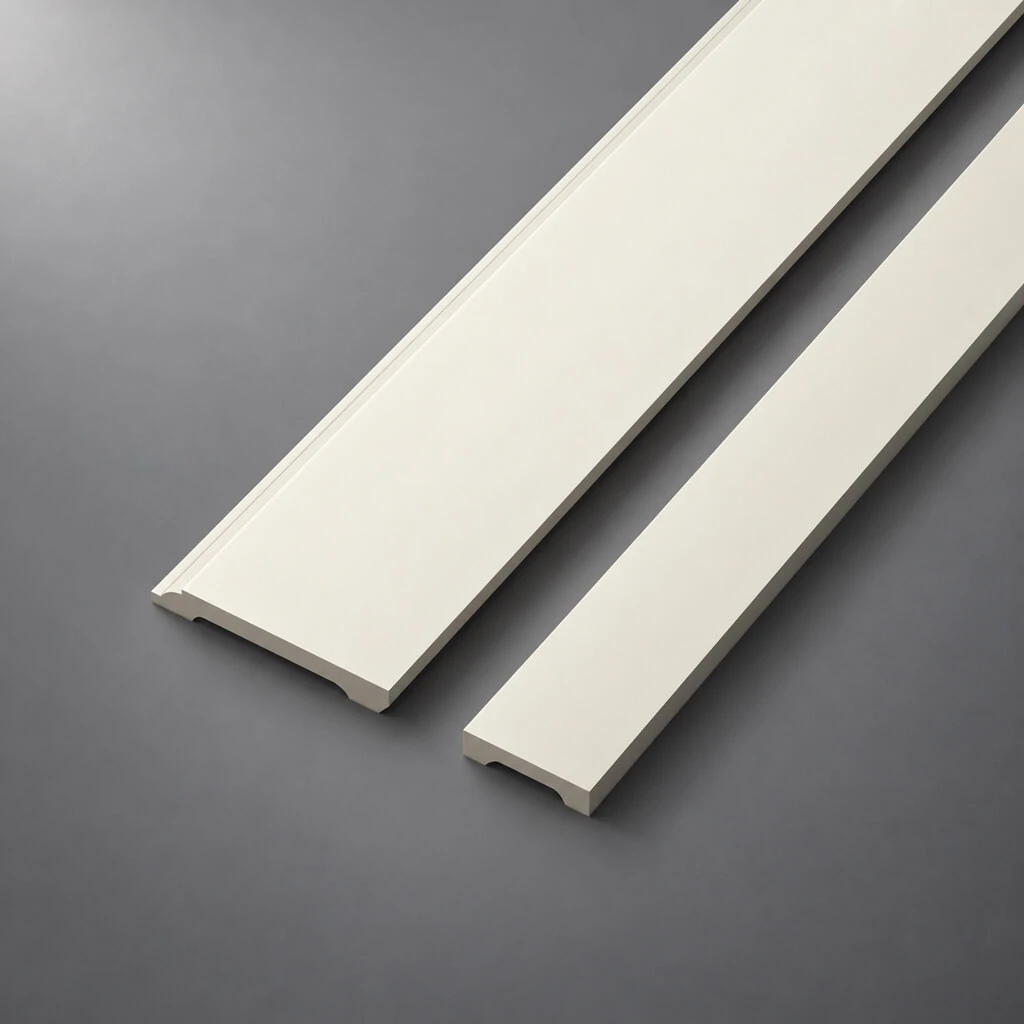
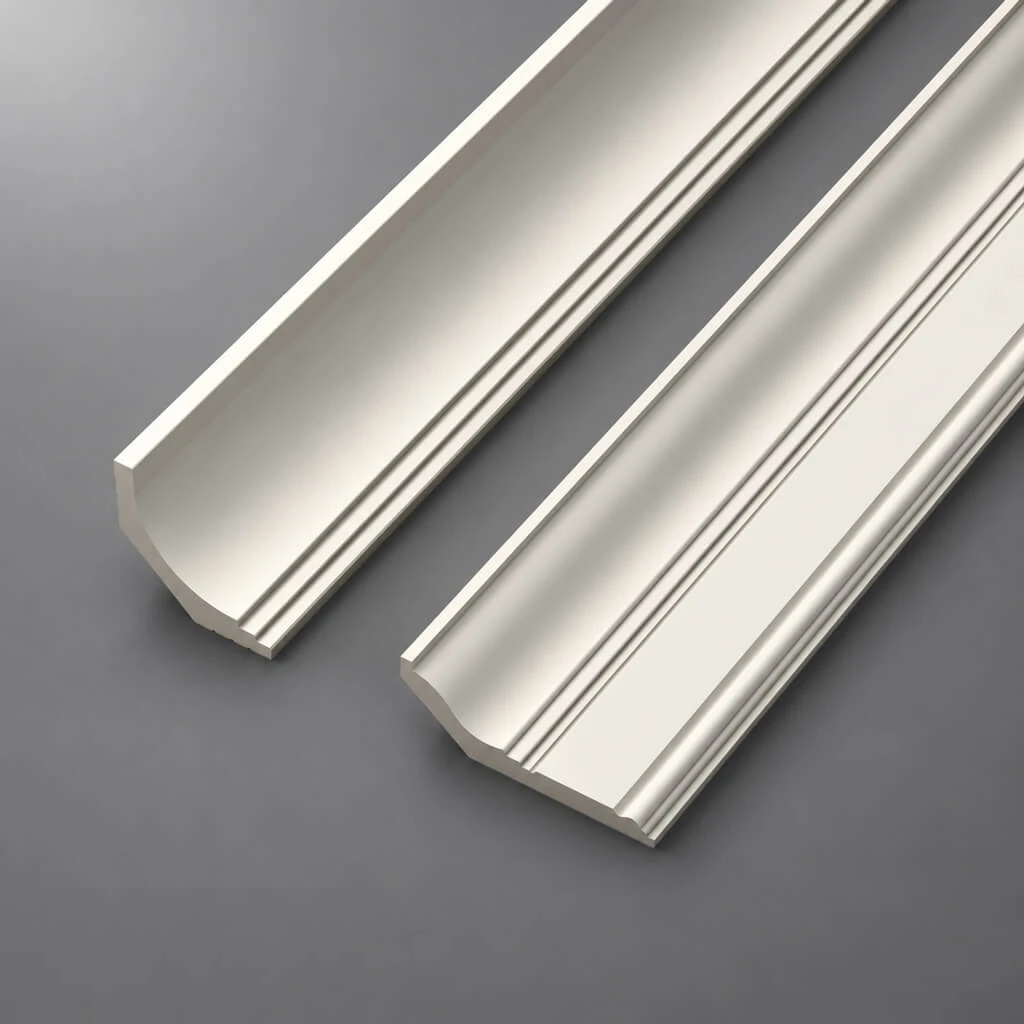
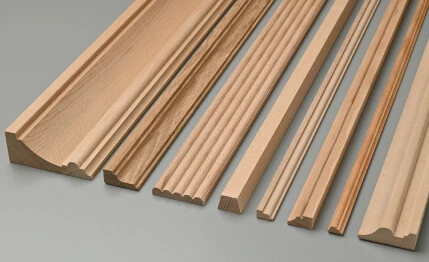
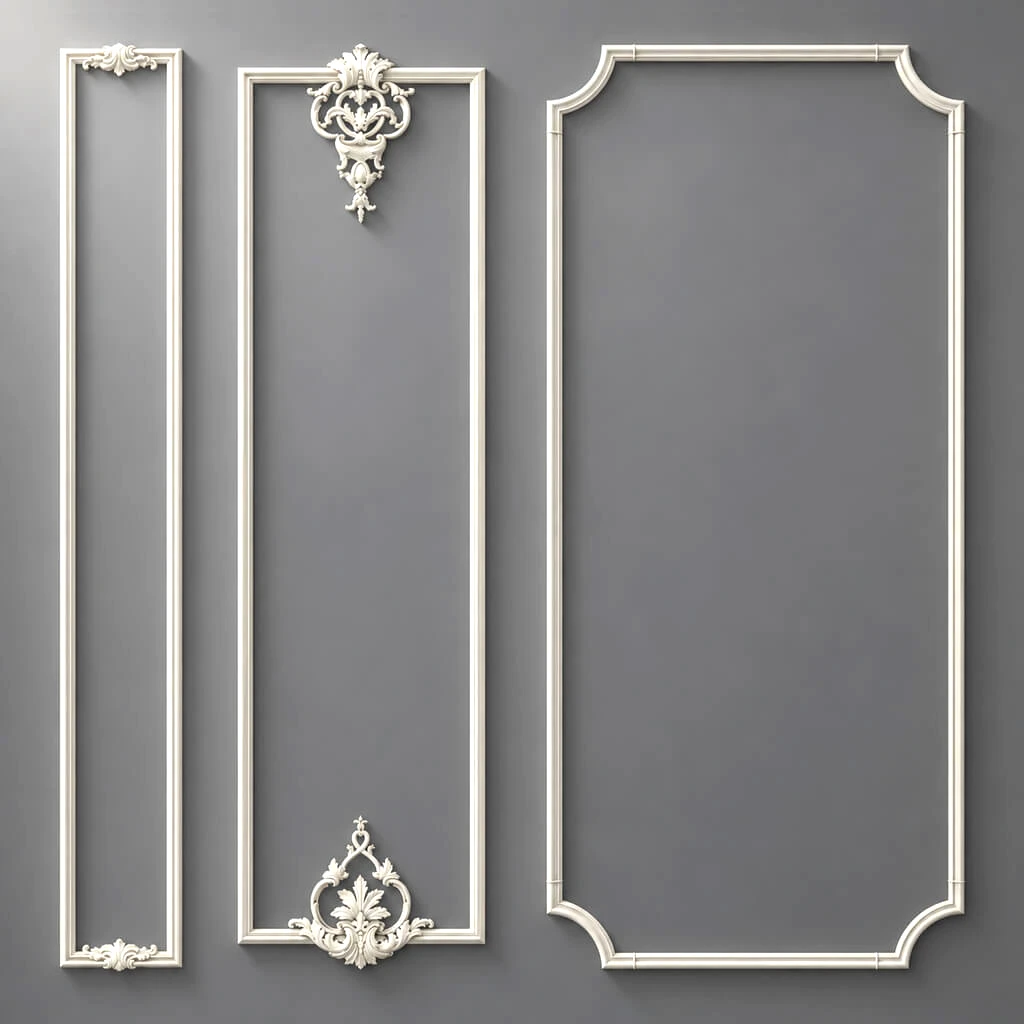
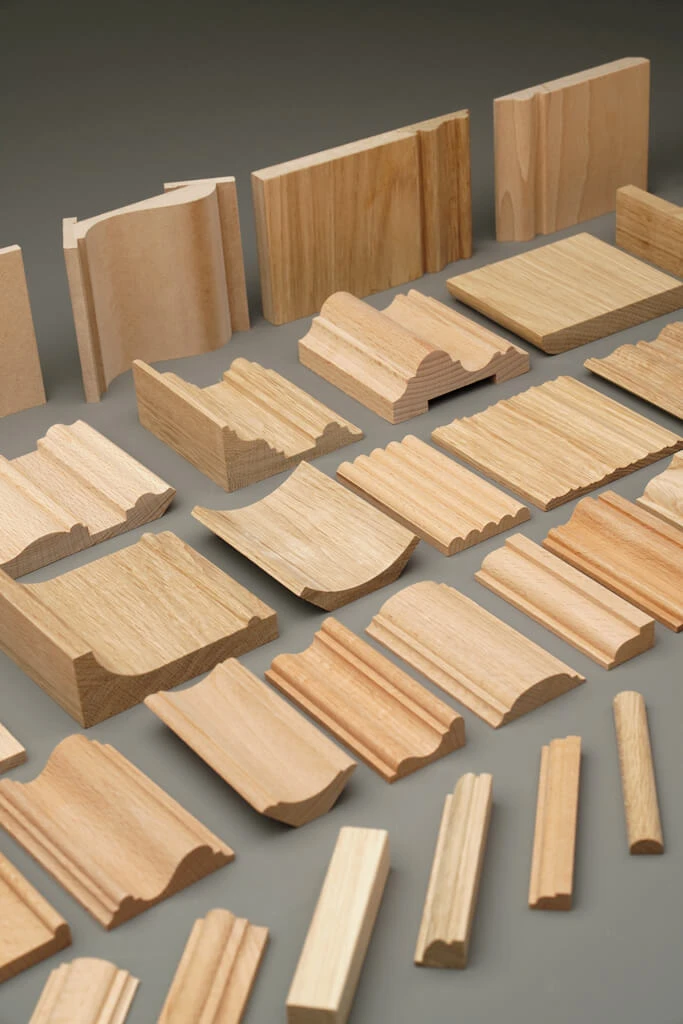
Wooden moldings and cornices form a rectangular frame on the facade. The rosette inside this frame is the final accent. Without the rosette, the frame looks like an unfinished painting with an empty center. Adding a rosette instantly creates a "masterpiece."
Rosette + corner overlays = classic composition
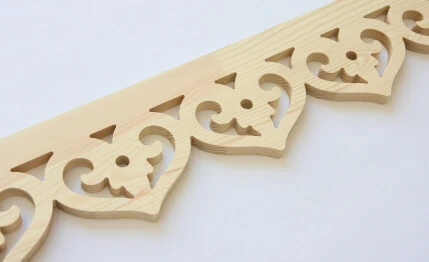
Corner pads are installed in the corners of the molding frame — where the moldings meet at a right angle. They cover the joint and add a decorative accent to each corner. carved appliqués in combination with a central rosette, they create a full-fledged classic furniture panel.
Rosette + baguette = frame and panel
For mirrors and paintings: Wooden Picture Frame forms a frame, the rosette in the center of the top crossbar or in the center of the panel itself — a decorative accent that emphasizes the significance of the object.
Rosette + headboard = accent bed
A complex system can be applied to the headboard: a large central rosette + symmetrical molding frames on both sides + small pads in the corners. This turns the headboard into an independent architectural object.
Styles and ornaments: which rosette suits your interior
The shape and ornament of the rosette is a stylistic statement. The right ornament works in tandem with the furniture, the wrong one destroys the image.
Classicism and neoclassicism
Ornaments: acanthus leaves, laurel wreaths, shells, rosettes, palmettes. Shape — round or oval, high relief. Material — oak, beech.
View carved rosette R-021 — an example of a classic ornament.
A classic rosette should be lush, rich in relief. You cannot skimp on the complexity of the ornament here: a simple smooth shape will look random and inorganic.
Art Deco
Ornaments: geometric weaves, radial patterns, diamonds, zigzags, stylized flowers. Shape — square, hexagonal, strict symmetry. Material — oak, beech; possible tinting in dark or contrasting colors.
Artistic rosette in Art Deco style — geometric rigor combined with decorative expressiveness. Appropriate in interiors of the 1920s–1930s, as well as in modern interiors inspired by this era.
Baroque and Empire
Ornaments: intricate curls, floral garlands, masks, cartouches, cornucopias. High relief, almost sculptural plasticity. Only for a corresponding interior — this is not a detail 'for everyone.'
Modern classic and modern neoclassicism
Moderate decor, clean lines, but with the presence of ornament. A rosette with a small relief, geometrically correct shape, without excessive lushness. Work well architectural rosettes with a clear, readable pattern.
Japanese style and minimalism
Here, a furniture rosette in the traditional sense is often inappropriate. Less decor, each element is a strict necessity. If used, only the most laconic form, without unnecessary ornament, with minimal relief.
Material of the wooden rosette: from species to coating
Wood carving is working with a specific material, and its choice affects the quality and durability of the result.
Oak
Oak is a premium material for carving. Dense, hard wood holds small details well: sharp petals, thin curls, openwork elements. Oak's texture is expressive even without painting — under oil or varnish it creates a lively, deep image.
Oak is the best choice for interiors where other furniture is also made of oak or tinted to match oak. A single species — a single character.
Limitation: oak is more expensive than birch and beech. Not optimal for budget solutions.
Beech
Beech is the workhorse of furniture carving. Dense, fine-grained, with a uniform structure without a pronounced pattern. It accepts painting, tinting, and varnish well. For rosettes under enamel, beech is ideal: the surface after sanding is smooth, paint lays evenly.
For neoclassical interiors in white or cream, beech under white enamel works flawlessly.
Birch
An affordable species, dense, even. For rosettes with moderate relief and simple ornament, it is well suited. Under paint, it is an excellent base. Under open tinting, it is more modest than oak.
MDF for painting
MDF rosettes are found in the mass-market segment. The relief is created by milling, details are precise, and the price is lower. For painting — it's fine. For open staining — no: MDF lacks the wood texture characteristic of natural solid wood. For interiors with exposed wood — it's not suitable.
Limitation: it is impossible to make through-carved elements on MDF — only milled relief. For complex ornaments with through-carved details — only solid wood.
Unpainted blanks
Most high-quality wooden rosettes are supplied as unpainted blanks. This is correct: only this way can you precisely match the color of a specific facade. The sanded blank is ready for any coating — oil, varnish, enamel, stain.
Tip: be sure to prime before painting. This is especially important for rosettes with deep relief — without primer, the paint lays unevenly in the recesses.
How to attach a wooden rosette to a facade
Attachment is a technical aspect that is often underestimated.
Adhesive
The most common method for applied rosettes. Construction adhesive or two-component epoxy glue — a reliable bond for dry residential spaces. Before gluing, be sure to check centering: mark the central axes of the facade and the rosette position with chalk or a pencil.
Important: glue should be applied not only along the perimeter of the rosette but also over the entire back surface — otherwise, the rosette may 'ring' when tapped and eventually peel off.
Finish nails
For additional fixation — especially for large, heavy rosettes — use small-diameter finishing nails. They are driven in along the perimeter of the overlay, the heads are countersunk, and the holes are filled with putty. After painting, the traces of the fasteners are invisible.
Screws with concealed fastening
For large architectural rosettes: concealed screw sockets are drilled in the back of the rosette. The screws are screwed through the front from the inside into the body of the rosette. The most reliable fastening, but requires precise positioning.
Marking the center is a mandatory step
Before installing any rosette, you need to find and mark the center of the plane. A rosette shifted from the center is a gross mistake that is visible to the naked eye. Two diagonal pencil marks from corner to corner — the intersection of the diagonals = the center. The central axis of the rosette is installed exactly at this point.
Mistakes when choosing a wooden rosette — an honest analysis
Buying without measurements. A photo in the catalog does not convey the actual size. A rosette with a diameter of 8 cm and 20 cm looks similar in a photo — but in reality, it is a huge difference. Always check the dimensions.
Mixing different ornament styles. A Baroque rosette on an Art Deco facade is a conflict of ornamental language. All decorative details should be 'of the same dialect.'
Placing a large rosette next to a large handle. The handle is also a decorative element. If the handle is expressive and large, the rosette should be more modest, and vice versa. Two large accents on one facade is an overload.
Not considering the thickness of the overlay. A rosette with a relief of 20 mm protrudes 20 mm above the facade. When opening the door, it should not touch the adjacent door or the side wall of the cabinet. Check the clearance before installation.
Gluing without center marking. A socket shifted 5 mm from the center is noticeable. Always mark the center axes and test fit before gluing.
Choosing a socket separately from the system. A socket without coordination with moldings, overlays, and handles is a random detail. You need to choose the entire system at once: socket + moldings + overlays + handles.
Taking too small an ornament for a large facade. A complex fine pattern at a distance turns into a gray spot. The larger the facade, the larger and more distinct the socket pattern should be.
Not thinking about the coating. Buying a socket and "leaving it for later" doesn't work. The coating must be applied before installation or immediately after, while the socket is easily accessible from all sides.
Socket in a modern interior — how to use it not "the old way"
A furniture socket is an element with a rich history, but that doesn't mean it only works in a classic interior. In modern spaces, a decorative socket can be reimagined.
Monochromatic socket. A socket painted the same color as the facade becomes a tactile, not a color accent. It doesn't "shout" but gives the facade relief and depth. A white socket on a white facade is modern and delicate.
Contrasting socket. A dark socket on a light facade or a gilded one on a dark one is a strong decorative technique. The socket becomes the main accent around which the entire visual image is built.
Socket as the only decorative element. In a minimalist interior, one expressive socket on a restrained facade is "all you need." Without moldings, without overlays, without excess. Just one precise detail.
Several small sockets instead of one large one. On a large facade — three small sockets horizontally or vertically instead of one central one. A rhythmic technique instead of a single accent.
What to check before buying: a checklist
Save this list and go through it before placing your order:
-
The size of the plane where the socket will be installed (height and width).
-
The size of the "field" inside the molding frame (if there is a frame).
-
The required diameter or size of the socket (considering a proportion of 20–25% of the field).
-
The style of the interior and furniture.
-
Ornament and shape — round, square, figured.
-
Relief depth — considering the type of lighting.
-
Material — oak, beech, birch.
-
Finish — for painting, for tinting, for varnishing.
-
Mounting method — glue, nails, screws.
-
Gap between the rosette and adjacent surfaces when the door is opened.
-
Consistency with other decorative details — handles, moldings, overlays.
FAQ — answers to popular questions about wooden rosettes
Is a furniture rosette an electrical outlet?
No. In furniture decor, a rosette is a decorative carved wooden overlay. The name comes from the French rosette — "little rose," historically denoting a round ornamental element with a floral motif. View furniture rosettes in the catalog.
Where can a wooden rosette be placed?
On furniture fronts, dresser and cabinet doors, headboards, decorative panels, mirror frames, interior doors, furniture portals, and classic wall compositions.
How to choose the size of a furniture rosette?
Focus on the size of the plane. The rosette should occupy 20–25% of the width of the "field" between the moldings. For headboards, you can take larger ones, as they are viewed from a distance of 3–4 meters. Details are in the section. decorative overlays and rose petals.
Can a wooden rosette be painted?
Yes. Wooden rosettes accept enamel, tinting, oil, and varnish well. It is better to apply the coating before installation — this way you can reach all edges and hollows of the relief. Unpainted blanks are for precise tinting to match the facade.
How is a rosette different from an overlay?
A rosette is an independent central decorative accent. Applique It can be corner, linear, or repeating. Together they form a decorative system.
How to attach a wooden rosette to a facade?
Mounting glue + finishing nails is optimal for most cases. For large heavy rosettes, use screws with concealed fasteners. Before installation, always mark the central axes of the plane.
A decorative detail is not an extra element, but the meaning. It is precisely such details as a wooden furniture rosette that distinguish furniture made with intention from furniture assembled from a kit. A carved ornament on the center of the facade is the precision of an artist who decided where there should be a pause and where an accent.
STAVROS offers solid wood rosettes — round, square, shaped, in classic, art deco and architectural styles, including carved rosette R-021 и architectural rosette R-013. Also in the catalog — decorative inlays for furniture, Wooden moldings and cornices, Wooden baguette for frames and panels and a full range solid wood products. Own production, dry array of oak and beech of the highest grade, Contact us to confirm shipping to your destination. STAVROS — because every good piece of furniture should have a central point.