Article Contents:
- What Are Polyurethane Furniture Appliques?
- Furniture Onlays vs. Inlays: Understanding the Difference
- Why Polyurethane Is Used for Ornamental Furniture Details
- Decorative Furniture Onlays and Appliques
- Polyurethane Molding for Furniture Frames
- Decorative Trim Molding With Repeating Patterns
- Decorative Corner Elements
- Start With the Drawer Layout
- Choose an Onlay That Matches the Available Surface
- Create a Symmetrical Composition
- Paint the Decoration as Part of the Furniture
- Flat Cabinet Doors: Creating a Raised-Panel Appearance
- Choosing Decorative Cabinet Molding
- Decorative Accents on Cabinet Doors
- Important Considerations for Kitchen Furniture
- Vertical Ornamental Accents
- Framed Wardrobe Panels
- Ornament and Hardware Must Work Together
- Where Beaded Molding Works Best
- STAVROS KPU-105 Beaded Molding
- Combining Beaded Molding With Plain Profiles
- Decorating Cabinet Frames
- Decorative Rope Trim for Dressers
- STAVROS KPU-125 Rope Molding
- Acanthus Leaf Molding
- Floral Molding for Softer Decorative Styles
- Larger Ornamental Friezes
- 1. Transform a Plain Dresser Into a Neoclassical Accent Piece
- 2. Create a French Country Cabinet
- 3. Upgrade a Plain Bathroom Vanity
- 4. Add Character to a Bedroom Wardrobe
- 5. Create a Statement Console or Sideboard
- Traditional American Furniture
- Neoclassical Furniture
- French Provincial and French Country
- Art Deco Furniture
- Contemporary and Transitional Furniture
- Eclectic Furniture
- When Polyurethane Is a Better Fit
- When Wood Is the Better Choice
- Can Polyurethane Be Combined With MDF?
- Measure the Usable Flat Area
- Check Relief Projection
- Make a Full-Scale Template
- Calculate by Cut List
- Step 1: Inspect the Furniture
- Step 2: Remove Hardware Where Appropriate
- Step 3: Clean and Prepare the Surface
- Step 4: Dry-Fit the Decorative Components
- Step 5: Choose an Appropriate Adhesive
- Step 6: Install the Onlays
- Step 7: Install Linear Molding
- Step 8: Finish Joints and Small Imperfections
- Painting Furniture and Appliques the Same Color
- Preparing Polyurethane for Paint
- Choosing a Paint Finish
- Antiquing and Patina Effects
- Metallic Decorative Finishes
- Oversized Ornaments
- Too Many Different Patterns
- Poor Alignment
- Incompatible Adhesive
- Incorrect Paint Preparation
- Ignoring Mechanical Clearances
- Compare the Total Project Cost
- When Is Decorating Furniture More Economical Than Replacing It?
- Furniture Appliques for Professional Workshops
- What Are Polyurethane Furniture Appliques Used For?
- Can You Put Polyurethane Appliques on a Dresser?
- Are Polyurethane Furniture Onlays Paintable?
- What Is the Difference Between Furniture Appliques and Decorative Molding?
- Can You Use Polyurethane Molding on Kitchen Cabinets?
- Is Polyurethane Furniture Decor Better Than Wood?
- Can Polyurethane Onlays Be Stained Like Wood?
- Can You Bend Polyurethane Furniture Appliques?
- What Adhesive Should Be Used for Polyurethane Furniture Decor?
- What Is Beaded Molding Used for on Furniture?
- What Is Rope Molding Used For?
- Can You Use Ornate Molding on Modern Furniture?
- Are Polyurethane Appliques Suitable for Antique Furniture?
- Can You Use Ceiling Medallions as Furniture Decoration?
- Are Polyurethane Decorative Elements Waterproof?
- How Do You Make Applied Furniture Molding Look Built In?
- Where Can I Buy Polyurethane Furniture Onlays Online?
An outdated dresser does not always need to be replaced. A plain cabinet may have solid construction, functioning doors, and plenty of useful life remaining, yet still look completely out of place in a newly decorated room. The problem is often not the furniture itself. It is the absence of architectural detail, surface texture, and visual character.
A flat drawer front can become a refined neoclassical panel. An ordinary kitchen cabinet can gain the appearance of custom millwork. A basic bedroom dresser can be transformed into an elegant accent piece inspired by vintage French furniture. Even a simple console can look more thoughtfully designed when decorative details are properly proportioned.
Polyurethane furniture appliques, decorative onlays, and ornamental molding offer a practical way to achieve these transformations without rebuilding the underlying furniture.
Rather than replacing entire cabinet doors or commissioning expensive hand-carved components, homeowners, furniture refinishers, interior designers, and cabinetmakers can add carefully selected decorative elements to existing surfaces.
The result depends on more than the ornaments themselves. Choosing the appropriate profile, measuring the available space, preparing the substrate, and applying a compatible finish are essential to creating furniture that looks deliberately designed rather than simply decorated.
This guide explains how to use polyurethane onlays, beaded molding, rope molding, floral ornaments, and decorative trim to update furniture. It covers material selection, furniture styles, installation methods, painting techniques, cost considerations, and practical examples using products from the STAVROS collection.
Whether you are refinishing a thrift-store dresser, upgrading kitchen cabinets, or developing a custom furniture project, explore the available polyurethane furniture onlays and appliques to understand how small architectural details can create a substantial visual difference.

What Are Polyurethane Furniture Appliques?
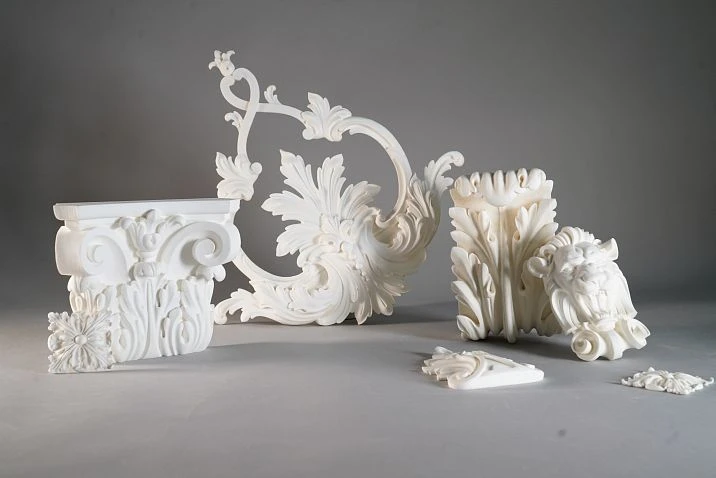
Polyurethane furniture appliques are three-dimensional decorative elements designed to be attached to a suitable surface.
They may feature floral patterns, acanthus leaves, geometric designs, scrolls, shells, rosettes, or other ornamental motifs.
Unlike structural furniture components, decorative appliques are primarily intended to enhance appearance.
They can introduce relief, emphasize a particular area of a cabinet, create a focal point, or connect several furniture pieces through a repeated ornamental pattern.
The term applique is commonly used in American furniture decoration, particularly for embellishments that resemble carved wood.
Furniture onlay is another useful term. It describes a raised decorative piece attached to the front of a surface rather than recessed into the material.




Furniture Onlays vs. Inlays: Understanding the Difference
A furniture onlay sits on top of the existing surface.
A furniture inlay is embedded into the surface, usually requiring a recess to be cut into the underlying material.
These are fundamentally different techniques.
Traditional marquetry, decorative metal inlay, and wood inlay require considerable precision because the decorative material must fit within the prepared opening.
Polyurethane onlays generally avoid that type of work.
The decorative element is positioned on a suitable furniture surface and attached with an appropriate adhesive or installation system.
This makes onlays particularly attractive for furniture refinishing and decorative upgrades.
However, an onlay does add thickness. That additional projection must be considered when working with drawers, hinged doors, and narrow furniture clearances.
Наша фабрика также производит:
Смотреть весь Каталог продукции
Why Polyurethane Is Used for Ornamental Furniture Details
Polyurethane is a family of synthetic polymers available in different formulations.
Rigid cast polyurethane is particularly useful for producing detailed decorative shapes.
A mold can reproduce complex relief patterns, including small leaves, scrolls, beads, and ornamental transitions.
This manufacturing approach makes it possible to produce matching decorative elements with consistent dimensions.
For example, a cabinet with two identical doors may require a mirrored pair of floral accents. Matching molded components simplify this type of symmetrical composition.
Polyurethane elements can also be relatively lightweight compared with equivalent solid plaster ornaments.
Many architectural polyurethane products are paintable, allowing the applied decoration to blend with an existing furniture finish or become a contrasting accent.
However, standard rigid polyurethane onlays are not automatically flexible. They should not be bent around curved furniture surfaces unless the specific product is designed and approved for that application.
Получить консультацию
Types of Polyurethane Furniture Decor: Onlays, Moldings and Ornamental Trim
Furniture decoration involves several product categories.
Understanding their different functions is the first step toward a successful project.
A narrow molding strip cannot always replace a decorative centerpiece. A large floral ornament may not be appropriate for a small drawer front. An architectural ceiling medallion should not automatically be treated as a furniture applique.
Each product must be evaluated according to its dimensions, profile, and intended use.
Decorative Furniture Onlays and Appliques
Decorative onlays are individual raised ornaments attached to furniture surfaces.
They are commonly used on dresser fronts, cabinet doors, headboards, furniture aprons, and decorative panels.
A centerpiece can establish symmetry, while smaller accents can emphasize corners or create visual connections between adjacent panels.
Floral onlays are particularly useful in traditional and French-inspired furniture.
Geometric designs can complement contemporary furniture when used sparingly.
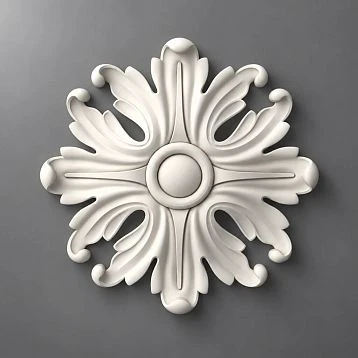
For a compact decorative accent, the NPU-496 polyurethane furniture applique measures approximately 1.81 × 1.81 inches, with a relief depth of 0.71 inches.
Its small, stylized floral shape makes it relevant to furniture designs where a larger decorative ornament would dominate the available surface.
This kind of compact applique may work as a repeated accent on a symmetrical furniture front, provided that adequate clearance exists around hardware and moving components.
Polyurethane Molding for Furniture Frames
Polyurethane molding is a linear decorative profile.
Instead of functioning as an isolated ornament, it defines boundaries.
A molding strip may outline a drawer panel, create a raised rectangular frame on a cabinet door, or add architectural depth to a furniture front.
Smooth profiles are especially useful when the goal is to reproduce the appearance of traditional raised-panel furniture without completely rebuilding the original component.
For example, MLDPU-001 polyurethane molding has a compact semicircular profile measuring approximately 0.39 inches wide and 0.24 inches deep.
Its narrow dimensions make it a suitable option to consider for fine decorative framing.
A wider profile such as MLDPU-002 polyurethane molding provides a more substantial visual line, measuring approximately 0.87 inches across the face and 0.43 inches in projection.
The right profile depends on the furniture's scale.
A small bedside cabinet may benefit from restrained molding, while a large wardrobe or sideboard can accommodate broader decorative frames.
Decorative Trim Molding With Repeating Patterns
Decorative trim molding features a repeating ornamental design.
Rather than using a smooth geometric profile, it introduces rhythm through beads, leaves, twisted patterns, or other motifs.
This type of ornament is particularly useful for traditional and classical furniture.
A decorative border can emphasize the perimeter of a cabinet panel, frame a mirror incorporated into a dresser, or create a continuous line along a furniture apron.
STAVROS offers a collection of decorative polyurethane trim molding with different ornaments, widths, depths, and supplied lengths.
The selection includes narrow profiles for delicate borders and larger ornamental pieces for more prominent decorative applications.
Decorative Corner Elements
Corners require special attention when creating furniture frames.
Ordinary linear molding can be joined with precise miter cuts, but a decorative frame may benefit from purpose-made corner accents.
These elements can reinforce the architectural character of the furniture and add ornament to the intersection of the frame.
A coordinated polyurethane molding corner may also be paired with a compatible straight profile.
However, matching the series is important.
Two elements that look similar in photographs may have different dimensions or relief depths.
Always check compatibility rather than assuming that decorative pieces from different collections are interchangeable.
Polyurethane Furniture Appliques for Dressers: Transform an Ordinary Chest of Drawers
A dresser is one of the easiest furniture pieces to update using decorative appliques.
Its broad, relatively flat drawer fronts provide space for symmetrical ornaments.
The repetitive arrangement of drawers also creates an opportunity to establish a consistent visual rhythm.
The most effective approach is to evaluate the dresser's existing proportions before choosing the decoration.
Start With the Drawer Layout
Some dressers have three full-width drawers.
Others feature two smaller upper drawers and several larger lower drawers.
The decorative arrangement should reflect those differences.
For a dresser with three wide drawers, a small central ornament on each drawer can create a balanced composition.
For a piece with narrow upper drawers and wide lower drawers, the upper decoration might need to be smaller.
Repeating an oversized applique on every drawer can make the furniture appear crowded.
Instead, consider one central ornament on the fixed upper apron or decorative accents on selected drawers.
Choose an Onlay That Matches the Available Surface
Measure the usable area of each drawer front.
Exclude the space occupied by handles, knobs, locks, and any existing decorative features.
An elongated ornament can be particularly effective on furniture with a broad central surface.
For example, the NPU-501 polyurethane decorative onlay measures approximately 2.28 × 11.81 inches, with a relief depth of 0.43 inches.
Its elongated floral composition can create a vertical decorative accent on a large panel.
The product can also be considered for symmetrical decorative arrangements when the furniture provides sufficient space.
However, it is not automatically suitable for a shallow drawer simply because the front is wide enough.
The entire ornament must fit within the usable flat area and remain clear of drawer openings.
Create a Symmetrical Composition
Symmetry is especially effective in neoclassical furniture.
A single central applique can emphasize the middle of a drawer.
Two mirrored elements can frame the center or establish a wider ornamental arrangement.
The placement should relate to the handle location.
A common mistake is installing the ornament first and discovering afterward that there is not enough space for the hardware.
Mark both the ornament and hardware positions before attaching anything.
Paint the Decoration as Part of the Furniture
Painting an applique the same color as the surrounding furniture creates a built-in appearance.
The relief becomes visible through light and shadow rather than a strong color contrast.
For a traditional painted dresser, warm white, antique cream, soft taupe, or muted green can produce a refined effect.
A darker glaze applied selectively to the recesses may emphasize the details if compatible with the finish.
Avoid heavy decorative coatings that conceal the original ornament.
A well-proportioned, carefully finished applique can add more character than numerous unrelated decorative details.
How to Update Kitchen Cabinets With Polyurethane Molding
Kitchen cabinet remodeling is a common reason homeowners consider decorative trim.
Full cabinet replacement can be expensive and disruptive.
When the cabinet boxes are structurally sound and the doors operate correctly, an appropriately planned cosmetic update may provide the desired visual change without replacing the entire kitchen.
Polyurethane molding can be useful for certain painted cabinet designs, particularly when the goal is to introduce applied panel detailing.
Flat Cabinet Doors: Creating a Raised-Panel Appearance
A plain slab cabinet door can become more architectural when a rectangular molding frame is added.
The frame creates shadows that suggest a separate panel.
This technique can work particularly well in traditional, transitional, or contemporary-classical kitchens.
Start by measuring the door's flat surface.
Determine how much margin will remain around the decorative frame.
The proportions should be consistent across doors of the same size.
For a smaller door, a narrow profile may be more appropriate than a deeply projecting ornamental molding.
When several cabinet doors are positioned side by side, the installed frames should align visually.
Uneven framing heights are particularly noticeable in a kitchen because the cabinets form repeated horizontal and vertical lines.
Choosing Decorative Cabinet Molding
For restrained cabinet designs, smooth profiles often provide the most convincing result.
Consider the MLDPU polyurethane molding collection when selecting linear trim.
A compact profile can frame the center of a door without overwhelming it.
For traditional cabinetry, a larger profile may be appropriate when the doors provide sufficient flat space.
Highly ornate molding is usually best reserved for accent cabinets or selected furniture pieces rather than every kitchen door.
Decorative Accents on Cabinet Doors
Individual polyurethane appliques can create focal points.
They may be particularly effective on a large pantry door, a freestanding kitchen hutch, or a furniture-style island cabinet.
For a compact decorative motif, the NPU-301 polyurethane ornament measures approximately 2.72 × 3.19 inches with a shallow 0.31-inch relief.
Its relatively compact scale makes it an option for furniture designs requiring a smaller central accent.
Before installation, verify that the door opens freely and that the added relief does not interfere with adjacent cabinetry.
Important Considerations for Kitchen Furniture
Kitchen cabinets are exposed to grease, cleaning products, temperature changes, and moisture.
Decorative components must be compatible with the substrate, adhesive, and coating system.
Do not attach ordinary decorative polyurethane trim directly to surfaces exposed to excessive heat, such as areas near burners, unless the particular product is approved for those conditions.
Avoid creating projecting ornaments where they could interfere with drawer operation or routine cleaning.
If the cabinets have a factory-applied laminate or other highly resistant finish, adhesive selection and surface preparation become especially important.
A test installation on a concealed or sample surface can help assess compatibility.
Polyurethane Furniture Decor for Wardrobes and Armoires
Large wardrobes provide considerably more decorative space than ordinary cabinets.
Their height allows vertical ornamentation to become part of the furniture's overall architectural structure.
For this reason, polyurethane decorative onlays can be particularly effective on traditional wardrobes and armoires.
Vertical Ornamental Accents
Tall wardrobe doors often benefit from elongated decorative elements.
A vertical applique can emphasize height and create a more refined appearance.
For example, the NPU-498 polyurethane decorative overlay is a narrow floral element measuring approximately 1.61 × 12.09 inches with a relief depth of 0.43 inches.
Its proportions make it relevant to decorative vertical arrangements.
A single element can provide an understated accent, while a symmetrical pair may create a more formal composition.
The arrangement should reflect the door's height and panel construction.
Framed Wardrobe Panels
Applied molding can create decorative frames on large wardrobe fronts.
An upper and lower rectangular panel may produce a traditional appearance.
A single tall frame can create a more contemporary-classical effect.
Use consistent margins across matching doors.
If the wardrobe has multiple door widths, adjust the decorative layout intentionally rather than scaling every frame arbitrarily.
Ornament and Hardware Must Work Together
Wardrobe handles are frequently long and centrally positioned.
The chosen decorative elements must leave enough room for a comfortable grip.
Consider whether the molding projects into the space needed to open the wardrobe.
Do not install large ornaments across seams between independently moving doors.
Each decorative piece should remain entirely on a suitable mounting surface unless the furniture's design explicitly accommodates another arrangement.
Beaded Molding for Furniture: Small Details With a Strong Decorative Effect
Beaded molding is one of the most useful ornamental profiles for traditional furniture decoration.
Its repeating rounded elements introduce texture without requiring a complex standalone ornament.
Beaded trim can work especially well when combined with a larger molding frame.
Where Beaded Molding Works Best
A narrow beaded border can highlight the inside edge of a decorative cabinet panel.
It can also emphasize the perimeter of a mirror frame, a fixed furniture apron, or a traditional dresser front.
The pattern produces a regular visual rhythm.
This makes it suitable for furniture designs where precision and symmetry matter.
However, beaded molding can become visually excessive when used alongside several other intricate patterns.
For a clean result, choose one primary ornamental language and repeat it consistently.
STAVROS KPU-105 Beaded Molding
The KPU-105 polyurethane beaded molding has an approximately 0.43-inch face width and 0.24-inch projection.
Its supplied length is approximately 39.37 inches.
This compact size makes it suitable for consideration as a decorative border on furniture fronts, door panels, and other interior elements.
Because it is a repeating ornamental profile, layout matters.
The beads should meet at joints in a visually consistent way.
When creating a rectangular frame, the position of the pattern at each corner should be planned before cutting.
Combining Beaded Molding With Plain Profiles
A useful traditional arrangement involves a wider, relatively simple outer molding and a narrow beaded line inside it.
The outer frame establishes the geometry.
The inner beaded profile adds texture.
This produces a layered result without relying on a large central ornament.
For smaller furniture pieces, the inner beaded line alone may provide sufficient detail.
Rope Molding for Furniture: Classical Texture and Refined Borders
Rope molding is another traditional decorative pattern.
Its twisted appearance can suggest carved cord, braid, or ornamental rope.
This profile is useful when a furniture design needs a subtle but recognizable classical detail.
Decorating Cabinet Frames
A rope border can emphasize the inner edge of a panel.
It may also be used as a secondary decorative line beneath a larger molding.
On an ornate cabinet, a narrow rope profile can connect more substantial floral ornaments without competing with them.
The placement should remain deliberate.
Using rope molding on every available edge can make the furniture appear overdecorated.
Decorative Rope Trim for Dressers
A narrow rope detail can run along a fixed upper apron or another protected furniture surface.
It can also be used within a decorative panel when the dimensions allow.
Avoid installing protruding rope trim on surfaces subject to frequent contact unless the particular profile is suitable for that use.
STAVROS KPU-125 Rope Molding
The KPU-125 polyurethane rope molding has a compact profile measuring approximately 0.35 inches wide and 0.20 inches deep.
Its strip length is approximately 39.37 inches.
This narrow profile is useful for fine ornamental detailing rather than forming a large architectural frame.
For small furniture pieces, it can provide a visible decorative line without substantially changing the proportions of the front.
When ordering, calculate the required number of strips using the actual supplied length.
Ornate Molding, Acanthus Leaves and Floral Appliques
More elaborate furniture designs often rely on botanical ornament.
Acanthus leaves, floral garlands, and scrolling forms are characteristic of classical decorative traditions.
These motifs can be incorporated into furniture in several ways.
Acanthus Leaf Molding
Acanthus leaves are strongly associated with classical architecture and ornamental carving.
Their folded leaves and flowing curves create pronounced depth.
On furniture, an acanthus-inspired ornament can highlight a center panel, a fixed apron, or a large decorative frame.
The design is particularly appropriate for traditional, neoclassical, and Baroque-inspired furniture.
For a wide cabinet, an acanthus-inspired decorative polyurethane molding can establish a recognizable classical character.
The selected profile should be proportionate to the furniture.
A large acanthus ornament that looks appropriate on a tall wardrobe may overwhelm a compact bedside table.
Floral Molding for Softer Decorative Styles
Floral molding introduces a different character.
Rather than emphasizing strict geometry, it creates softer curves and botanical detail.
This type of ornament works well with antique-inspired painted furniture, French country interiors, and selected traditional pieces.
For example, NPU-491 polyurethane floral decoration is a compact relief ornament approximately 4.13 × 3.70 inches with a 0.67-inch projection.
Its sculpted floral form can be considered for furniture designs requiring a localized decorative accent.
Before purchasing, compare the actual dimensions with the available space.
Larger Ornamental Friezes
A frieze is a decorative horizontal band.
On furniture, it may be positioned along a fixed upper or lower section, rather than across a moving drawer joint.
A larger floral ornament can create a substantial classical accent.
For example, KPU-130 decorative polyurethane molding measures approximately 4.72 inches across the ornamental face, 0.67 inches in depth, and 36.61 inches in length.
It is a relatively substantial decorative strip.
This scale may suit larger furniture fronts, fixed panels, and architectural compositions better than compact drawer faces.
The key is selecting the ornament according to the actual surface, not only the attractiveness of its pattern.
Furniture Makeover Ideas: Five Practical Ways to Use Polyurethane Decor
Different furniture pieces benefit from different decorative approaches.
A successful makeover begins with the existing furniture's strengths and limitations.
1. Transform a Plain Dresser Into a Neoclassical Accent Piece
Start with a structurally sound dresser featuring simple drawer fronts.
Remove the hardware and clean the surfaces.
Plan a consistent arrangement of rectangular molding frames.
For a three-drawer dresser, matching narrow profiles may provide enough relief to create a more architectural appearance.
If the front includes a broad fixed apron, consider a separate decorative onlay in that area.
Paint the furniture and applied molding in a unified color.
A satin or eggshell finish can emphasize the shape without producing an overly glossy appearance.
Select replacement handles only after confirming the decorative layout.
The result can suggest a custom-designed dresser without replacing the original frame or drawers.
2. Create a French Country Cabinet
French country-inspired furniture often combines restrained ornament with soft finishes.
A painted cabinet can be updated using narrow decorative moldings and small floral appliques.
Begin with the door panels.
A curved or subtly ornamental border can introduce character while preserving the cabinet's basic geometry.
Add a small central applique if the available space permits.
A soft off-white, muted blue, warm cream, or pale gray finish may complement this type of decoration.
If an aged appearance is desired, use controlled decorative finishing rather than randomly distressing every edge.
The goal is to create visual depth while retaining a cohesive design.
3. Upgrade a Plain Bathroom Vanity
A simple vanity can be given a more furniture-like appearance with applied molding on selected flat surfaces.
Choose moisture-appropriate materials and finishes.
Keep decorative pieces away from areas where they may interfere with drawers, cabinet doors, or cleaning.
A narrow rectangular frame can add depth without creating a heavily ornamental appearance.
For a traditional vanity, a compact floral applique may provide a focal point on a larger fixed panel.
Because bathrooms experience humidity and repeated cleaning, verify the adhesive and paint system before installation.
4. Add Character to a Bedroom Wardrobe
A tall wardrobe provides an opportunity for a more architectural decorative arrangement.
Use elongated molding frames to emphasize the vertical proportions.
A decorative onlay near the upper portion of each door can create a coordinated classical appearance.
For a more elaborate design, combine a larger frame with smaller ornamental elements.
Avoid allowing the decoration to interfere with long wardrobe pulls.
When several doors are adjacent, maintain consistent spacing and proportions.
5. Create a Statement Console or Sideboard
A console or sideboard can become a focal point through carefully placed ornamental relief.
Unlike a frequently handled drawer face, a fixed furniture apron may offer a more suitable location for a decorative centerpiece.
A floral or acanthus ornament can emphasize the central axis.
Smaller complementary details may be used at the sides.
For a contemporary-classical design, leave most surfaces relatively simple and concentrate the ornament in one area.
The resulting contrast between smooth planes and detailed relief is often more effective than covering the entire piece with decoration.
Furniture Decoration Styles: Matching Polyurethane Ornament to the Interior
Polyurethane furniture decoration should reinforce the style of the piece and the room around it.
Mixing styles can work, but it should be intentional.
Traditional American Furniture
Traditional American interiors often feature symmetrical paneling, clearly defined furniture frames, and restrained ornament.
Narrow beaded molding, simple floral accents, and carefully proportioned decorative borders can work well.
The finish may be painted or designed to coordinate with surrounding architectural details.
The most important quality is balance.
The ornament should enhance the furniture's construction rather than visually replacing it.
Neoclassical Furniture
Neoclassical furniture is associated with symmetry, deliberate geometry, and classical ornament.
For this style, combine linear polyurethane molding with selected centerpieces.
A rectangular frame can define the surface.
A small acanthus or floral onlay can establish the decorative focal point.
Avoid placing several unrelated ornaments on a single small panel.
French Provincial and French Country
French provincial furniture often features curved profiles, botanical ornament, and soft decorative finishes.
Polyurethane floral onlays can introduce these details on a suitable painted surface.
A small ornamental accent may be sufficient to change the character of an otherwise plain cabinet.
Cream, muted sage, light blue, and warm gray are possible finishing choices.
Selective patination can emphasize the relief when done carefully.
Art Deco Furniture
Art Deco furniture uses strong geometry, stepped shapes, and carefully controlled decorative repetition.
Simple linear molding, reeded patterns, and selective contrasting finishes can support this style.
Avoid using elaborate classical floral ornaments merely because they are available.
A geometric decorative line may be more consistent with the overall design.
Contemporary and Transitional Furniture
Contemporary furniture generally benefits from restraint.
Smooth molding profiles can introduce dimension without making the piece appear excessively traditional.
A single narrow frame on a cabinet door may be enough.
Tone-on-tone finishes allow the relief to remain visible through shadows rather than contrasting color.
Eclectic Furniture
Eclectic interiors can accommodate a stronger mixture of old and new.
A vintage-inspired ornamental detail may be added to an otherwise simple modern cabinet.
However, the design still needs a visual organizing principle.
Repeated color, consistent hardware, or a unified ornamental motif can connect the components.
An eclectic piece should look intentionally composed, not randomly embellished.
Polyurethane vs. Wood Appliques, MDF and Resin Furniture Decor
Polyurethane is not the only material used for furniture embellishments.
The best choice depends on the intended finish, budget, installation requirements, and desired appearance.
| Material | Main advantages | Important considerations |
|---|---|---|
| Polyurethane | Detailed molded ornament, many paintable designs, relatively lightweight | Product-specific rigidity, adhesive and coating compatibility |
| Carved wood | Natural grain, traditional authenticity, can be stained or painted | Moisture movement, cost, finishing and attachment |
| MDF | Smooth painted profiles, economical for many applications | Edge sealing and moisture sensitivity |
| Decorative resin | Detailed cast designs and specialty shapes | Weight, brittleness and paint compatibility vary |
| Plaster | Traditional sculptural appearance | Brittleness, weight and more demanding installation |
When Polyurethane Is a Better Fit
Polyurethane is a practical choice when the design calls for repeated detailed relief.
It is particularly useful for matched ornaments, decorative corner pieces, and elaborate patterns that would be labor-intensive to carve individually from wood.
It can also be appropriate when the final furniture finish is opaque paint.
When Wood Is the Better Choice
Wood remains an excellent choice when the furniture's natural grain is important.
Stained oak, walnut, cherry, and other wood surfaces have material characteristics that a painted polyurethane ornament does not automatically reproduce.
Wood can also be more appropriate when a decorative component must be worked into the existing joinery or finished with a translucent stain.
Can Polyurethane Be Combined With MDF?
Yes, properly selected polyurethane ornament can be used with suitable MDF furniture components.
For example, a cabinet may use MDF doors with a polyurethane decorative centerpiece.
A compatible primer and finish can visually unify the materials.
However, the different components may respond differently to moisture, temperature, and mechanical stress.
The substrate, adhesive, and coating system must be selected accordingly.
Some decorative collections combine polyurethane and MDF components, so check the actual material specification of each product.
How to Measure Furniture for Decorative Onlays and Molding
Accurate measurement is essential when planning a furniture makeover.
A product may look appropriately sized in a catalog but appear excessive once installed.
The most reliable approach is to measure the furniture and develop a layout before ordering.
Measure the Usable Flat Area
Start with the actual mounting surface.
For a drawer front, measure its overall width and height.
Then identify the available area after accounting for hardware, routed profiles, beveled edges, and operating clearances.
For a cabinet door, determine whether the central panel is flat or recessed.
If the surface is recessed, check whether the onlay's dimensions and mounting face are compatible with the panel.
Do not assume that a rigid decorative ornament will conform to a curved or uneven surface.
Check Relief Projection
An applique's depth is just as important as its width and height.
A shallow relief may integrate naturally into a panel.
A deeper ornament may create stronger shadows but also project farther into the surrounding space.
This can matter when two drawers are close together or when a cabinet door swings near another surface.
Check the maximum projection, not merely the average thickness.
Make a Full-Scale Template
A simple paper template can prevent expensive mistakes.
Draw or print the outline of the selected decorative element at its actual size.
Position it on the furniture using removable tape.
Stand back and examine the proportions.
Open the drawers and doors to confirm that the proposed ornament will not create clearance problems.
This is especially useful for symmetrical arrangements or larger decorative pieces.
How Much Decorative Molding Do You Need?
Calculating material quantities is relatively straightforward for rectangular frames.
However, stock lengths, cutting waste, and ornament pattern matching must be considered.
Suppose a cabinet door will receive a rectangular frame measuring 15 inches wide and 22 inches high along the molding's planned centerline.
The total frame length is:
2 × (15 + 22) = 74 inches.
That equals approximately 6.17 linear feet.
If the project includes two identical doors:
74 × 2 = 148 inches, or approximately 12.33 linear feet.
Now consider the supplied profile length.
An MLDPU molding available in approximately 102.36-inch lengths may require two stock strips for the project, provided the individual cuts can be arranged efficiently.
A decorative profile sold in 39.37-inch strips may require more pieces.
However, dividing the total footage by stock length is not always sufficient.
For example, a strip may have enough remaining material by length but not enough to produce the next required piece.
Calculate by Cut List
Prepare a list of every individual component.
For the example above, the project requires four vertical pieces measuring 22 inches and four horizontal pieces measuring 15 inches.
Next, determine how those cuts fit within each stock length.
Allow for blade kerf, miter direction, unusable ends, and any ornamental pattern matching.
For repeating rope or beaded molding, the location of the pattern at the joints may influence the cutting plan.
A preliminary waste allowance is useful, but a proper cut list produces a more reliable purchasing quantity.
How to Install Polyurethane Furniture Appliques
The installation process depends on the type of furniture, the polyurethane product, and the existing surface finish.
Small decorative onlays are commonly installed using a compatible adhesive.
Larger or more elaborate assemblies may require additional support.
The following process provides a practical framework for planning a furniture makeover.
Step 1: Inspect the Furniture
Before applying decoration, confirm that the furniture is structurally sound.
Check loose joints, damaged drawer runners, unstable cabinet doors, and deteriorating surface finishes.
Decorative molding will not solve underlying construction problems.
If the piece is unstable, repair it before beginning cosmetic work.
For tall dressers and cabinets, follow appropriate furniture anti-tip safety recommendations and anchoring instructions. Decoration does not replace the need for stable, safe furniture.
For valuable antique furniture, consider whether permanent adhesive installation would damage original finishes or reduce historical value.
Step 2: Remove Hardware Where Appropriate
Removing handles, knobs, and other detachable hardware can make surface preparation and finishing easier.
Store the hardware and fasteners carefully.
Record their original positions if they will be reused.
If new hardware is planned, determine the location before installing decorative onlays.
An ornament placed across existing mounting holes may create unnecessary complications.
Step 3: Clean and Prepare the Surface
Adhesives require a suitable bonding surface.
Remove dust, grease, loose coatings, and other contaminants.
The correct preparation depends on whether the substrate is painted wood, MDF, laminate, veneer, or another material.
Some glossy finishes require additional treatment before bonding.
Follow the adhesive manufacturer's instructions.
Do not assume that sanding or aggressive chemical cleaning is appropriate for every furniture surface.
For a fragile veneer or historic finish, these procedures may cause permanent damage.
Step 4: Dry-Fit the Decorative Components
Position every onlay and molding section before applying adhesive.
Use a measuring tape, straightedge, level, and removable marking methods.
Check symmetry and spacing.
For ornate compositions, examine the furniture from several viewing distances.
A design that looks balanced from a few inches away may appear crowded when viewed from across the room.
Confirm that the installed pieces will not interfere with hinges, handles, drawer gaps, or other moving parts.
Step 5: Choose an Appropriate Adhesive
The adhesive must be compatible with both polyurethane and the existing furniture surface.
A product suitable for porous wood may not necessarily bond effectively to a factory-finished laminate.
Likewise, some solvent-containing products may be incompatible with particular polymer or coating systems.
Use the molding manufacturer's recommendations and the adhesive technical data sheet.
Check the working time, curing time, required surface preparation, and whether temporary support is necessary.
Test unfamiliar systems on a suitable sample before decorating the entire furniture piece.
Step 6: Install the Onlays
Apply the adhesive according to the specified method.
Avoid using so much adhesive that it squeezes into the visible relief or contaminates surrounding surfaces.
Position the ornament carefully.
Maintain the required pressure or support during the bonding process.
Do not move or load the furniture until the adhesive has reached the required cure condition.
For large decorative pieces, confirm whether additional attachment methods are recommended.
Step 7: Install Linear Molding
Cut the straight sections according to the prepared cutting plan.
For rectangular frames, precise mitered corners are usually important.
Where a decorative molding has a repeating pattern, plan the location of the ornament at the joints.
Dry-fit the components before bonding.
Do not force rigid polyurethane molding around a curved furniture surface.
If the design requires a bend, use an appropriately specified flexible product or another approved construction method.
Step 8: Finish Joints and Small Imperfections
After the adhesive has cured, inspect the seams.
Use compatible filling or joint-finishing materials where required.
Avoid excessive filler that might obscure decorative relief.
Sand only where the product and finishing instructions permit.
Remove dust before applying the final coating.
For ornate surfaces, careful spot preparation is often more effective than aggressive overall sanding.
Painting Polyurethane Furniture Decor: How to Create a Professional Finish
A convincing finish is one of the most important elements of a furniture makeover.
Even an attractive ornament can appear inexpensive if the paint is uneven, the joints are visible, or the decorative relief has been obscured by excessive coating.
Painting Furniture and Appliques the Same Color
Tone-on-tone finishing is an effective way to integrate applied decoration.
The furniture surface and polyurethane elements receive a coordinated opaque finish.
The ornament remains visible through its depth and shadows.
This approach works especially well on traditional dressers, neoclassical cabinets, and painted bedroom furniture.
A unified finish can make the added decoration appear more consistent with the overall furniture design.
However, differences in substrate absorption and surface texture must be addressed through appropriate preparation.
Preparing Polyurethane for Paint
Some polyurethane products are supplied with a factory-prepared surface.
Others may need additional preparation or primer.
Follow the manufacturer's finishing recommendations.
The surface should be free of dust, grease, release agents, or other contaminants that could affect adhesion.
Use a compatible primer when required.
Do not assume that every solvent-based enamel, spray paint, or decorative coating is safe for all polyurethane formulations.
Choosing a Paint Finish
Water-based acrylic or latex coatings are common choices for paintable decorative molding, subject to manufacturer compatibility.
For furniture, the coating also needs to suit the expected level of handling and cleaning.
Matte finishes can produce a soft appearance.
Satin finishes offer a subtle sheen that can emphasize the molded details.
Higher-gloss finishes may suit selected Art Deco or highly decorative furniture designs.
The paint system should be appropriate for both the furniture substrate and the applied polyurethane.
Antiquing and Patina Effects
Patination involves emphasizing relief through controlled color variation.
A darker glaze may be applied to recesses and selectively removed from raised areas.
This can highlight leaves, beads, scrolls, and other ornamental details.
The result is particularly effective on furniture inspired by classical European designs.
However, antiquing should be restrained.
Excessive dark glaze can make an otherwise elegant floral ornament look dirty rather than aged.
Test the effect on a sample piece before applying it to the finished furniture.
Metallic Decorative Finishes
Gold, bronze, copper, and other metallic-looking finishes can create a more expressive ornamental effect.
For example, a painted dark cabinet with restrained gold accents may suit an Art Deco-inspired interior.
An antique white dresser with subtle champagne-colored highlights may create a softer traditional appearance.
Apply specialty coatings only when compatible with the polyurethane and the underlying finish.
For small ornaments, selective highlighting is often more effective than coating every decorative surface in metallic paint.
What Can Go Wrong During a Polyurethane Furniture Makeover?
Many disappointing results are caused by design or installation errors rather than the decorative material itself.
Understanding the most common mistakes can help avoid unnecessary expense.
Oversized Ornaments
A large applique may look impressive in a product photograph.
On a compact drawer front, however, it can overwhelm the furniture.
Always compare the product's listed dimensions with a full-scale template.
Too Many Different Patterns
Combining rope molding, beaded borders, floral onlays, and large acanthus ornaments on one small cabinet can produce visual confusion.
Choose a primary decorative motif.
Use complementary details only when they reinforce the design.
Poor Alignment
Applied frames require precise spacing.
Uneven margins and misaligned corners are particularly noticeable when the furniture has repeated drawer or door fronts.
Measure and mark the entire arrangement before installing individual components.
Incompatible Adhesive
An adhesive may appear to bond initially but fail later because of surface contamination or incompatibility.
Select the adhesive according to the actual polyurethane product and furniture substrate.
Follow the full curing instructions.
Incorrect Paint Preparation
Poorly prepared surfaces can lead to peeling or uneven finishes.
The furniture substrate and polyurethane ornament may require different preparation steps before receiving a unified coating.
Use appropriate primer and paint systems.
Ignoring Mechanical Clearances
An applique should not interfere with a drawer, hinge, cabinet door, or handle.
Check the entire movement of the furniture before installation.
A decorative detail that prevents normal operation is not a successful upgrade.
Polyurethane Furniture Decor Price: How to Plan a Cost-Effective Makeover
The cost of updating furniture with decorative moldings depends on several factors.
The number of decorative elements is important, but so are their dimensions, complexity, and installation requirements.
A single small applique may be sufficient for a simple accent.
A dresser with several framed drawers may require multiple molding strips and several hours of preparation and finishing.
A highly ornate wardrobe may involve substantially more material and labor.
Compare the Total Project Cost
A realistic budget includes the decorative products, adhesive, surface preparation materials, primer, paint, and hardware where needed.
For linear molding, calculate the cost based on the required number of full stock lengths, not only the theoretical linear footage.
For paired ornaments, check whether left-hand and right-hand components are sold separately.
For larger designs, allow for cutting waste and the possibility of damaging a piece during installation.
When Is Decorating Furniture More Economical Than Replacing It?
Adding decorative onlays can be an economical option when the existing furniture remains structurally sound.
It may be particularly worthwhile for a solid dresser, sturdy cabinet, or built-in storage unit with an outdated appearance.
However, decorating severely damaged or unstable furniture can be a poor investment.
Consider the cost of repairs alongside the decorative upgrade.
The best projects improve a furniture piece that already has a useful underlying structure.
Furniture Appliques for Professional Workshops
Cabinetmakers and furniture refinishers may use decorative polyurethane components to create repeatable design options.
For small-batch furniture production, consistent ornament dimensions can simplify layout planning.
The workshop can establish a standard decorative arrangement and apply it across matching furniture fronts.
For larger or repeat orders, compare available polyurethane molding profiles and decorative onlays by product code, dimensions, and compatibility.
Confirm current availability, order quantities, and relevant delivery terms before planning a production schedule.
How to Choose Polyurethane Furniture Decor Before Buying
The most reliable buying process begins with a clear design.
Rather than choosing an ornament and trying to make it fit, start with the furniture and its intended appearance.
Consider the following questions.
What is the main decorative objective? A subtle raised frame requires a different product from a deeply sculpted classical centerpiece.
How much flat space is available? Measure the usable surface, excluding moving joints, hardware, and unsuitable mounting areas.
What relief depth is appropriate? A deeper applique creates stronger shadows but also projects farther from the surface.
How will the finished furniture be painted? A tone-on-tone finish creates a different visual result from contrasting or metallic decoration.
Are the components compatible? Straight molding, corner accents, and centerpieces should be selected according to their actual dimensions and intended product series.
Can the furniture accommodate the installation? The substrate, adhesive system, and available clearances must support the proposed decorative treatment.
A thoughtful selection process prevents unnecessary purchases and helps achieve a more convincing result.
Where to Buy Polyurethane Furniture Appliques and Decorative Molding
For furniture refinishing projects, STAVROS offers several relevant categories of decorative polyurethane products.
The polyurethane onlays and appliques catalog includes floral ornaments, sculpted motifs, and other decorative accents that can be considered for suitable furniture surfaces.
For raised rectangular frames and architectural-looking furniture fronts, explore polyurethane molding profiles.
For patterned borders, the decorative polyurethane trim collection includes beaded, braided, floral, and other ornamental profiles.
For more elaborate frames, polyurethane molding corners and centerpieces can provide complementary details.
When selecting products, review the individual dimensions, material specifications, profile drawings, and intended applications.
Many products are supplied in metric manufacturing lengths, with equivalent inch measurements available on the English-language site.
If ordering for a U.S. project, confirm current international delivery arrangements, shipping costs, and other applicable purchasing terms before placing the order.
Frequently Asked Questions About Polyurethane Furniture Appliques
What Are Polyurethane Furniture Appliques Used For?
Polyurethane furniture appliques are used to add ornamental relief to suitable furniture surfaces. They can decorate cabinet doors, dresser fronts, headboards, furniture aprons, and other panels. Common patterns include flowers, leaves, scrollwork, rosettes, and geometric motifs.
Can You Put Polyurethane Appliques on a Dresser?
Yes. Suitable polyurethane onlays can be attached to dresser surfaces using an appropriate installation system. Measure the available space, account for drawer hardware, and check operating clearances before choosing the ornament.
Are Polyurethane Furniture Onlays Paintable?
Many polyurethane decorative products are paintable. Use compatible primer and paint according to the manufacturer's recommendations. Water-based acrylic or latex products are common options for certain molding formulations, but compatibility should always be verified.
What Is the Difference Between Furniture Appliques and Decorative Molding?
Furniture appliques are usually individual decorative ornaments. Decorative molding consists of linear profiles used to create borders, frames, and repeating patterns. Both can be combined in a coordinated furniture design.
Can You Use Polyurethane Molding on Kitchen Cabinets?
Yes, appropriately selected polyurethane molding can be used on suitable kitchen cabinet surfaces. Check adhesive compatibility, finish durability, clearances, and environmental conditions. Avoid direct high-heat exposure unless the product is approved for that application.
Is Polyurethane Furniture Decor Better Than Wood?
Each material has advantages. Polyurethane is useful for detailed molded ornament and matching decorative components. Wood provides natural grain and established furniture-making characteristics. The best choice depends on the design and intended finish.
Can Polyurethane Onlays Be Stained Like Wood?
Most decorative polyurethane products do not absorb wood stain in the same way as natural wood. Wood-look effects generally require a compatible decorative coating system. Follow the manufacturer's finishing instructions and test the desired effect before application.
Can You Bend Polyurethane Furniture Appliques?
Standard rigid polyurethane appliques should not be assumed flexible. Use only products specifically manufactured or approved for curved applications when the design requires bending.
What Adhesive Should Be Used for Polyurethane Furniture Decor?
Choose an adhesive approved for the polyurethane product and the furniture substrate. Surface preparation, working time, support requirements, and curing conditions all affect the result. Do not assume that every general-purpose construction adhesive is appropriate.
What Is Beaded Molding Used for on Furniture?
Beaded molding creates a narrow repeating ornamental border. It can highlight decorative panels, cabinet fronts, mirror frames, and other suitable furniture details. Its small scale makes it useful as a secondary trim line.
What Is Rope Molding Used For?
Rope molding is used to introduce a twisted or braided decorative pattern. It can accent framed panels, fixed furniture aprons, and traditional decorative compositions. The profile's width and projection should suit the furniture's dimensions.
Can You Use Ornate Molding on Modern Furniture?
Yes, but restraint is important. A single ornamental accent can create an intentional contrast on modern furniture. Too many elaborate details may overwhelm an otherwise simple design.
Are Polyurethane Appliques Suitable for Antique Furniture?
Permanent decorative changes may not be appropriate for valuable antiques or historically significant furniture. Removing the original finish or using irreversible adhesives can affect authenticity and value. Seek conservation advice before modifying such pieces.
Can You Use Ceiling Medallions as Furniture Decoration?
A ceiling medallion is designed for a specific architectural application. It should not automatically be used on furniture. Verify the size, weight, mounting face, projection, material, and intended use before considering an alternative installation.
Are Polyurethane Decorative Elements Waterproof?
Many polyurethane architectural products have useful moisture resistance, but the performance of a finished installation depends on the specific product, adhesive, coating, and substrate. Do not assume that all decorative polyurethane components are suitable for continuous water exposure.
How Do You Make Applied Furniture Molding Look Built In?
Use accurate measurements, consistent spacing, properly finished joints, and a compatible unified paint system. The decorative components should relate to the furniture's existing proportions and hardware.
Where Can I Buy Polyurethane Furniture Onlays Online?
Explore the STAVROS polyurethane decorative onlays and appliques collection, along with matching molding and ornamental trim categories. Compare individual product specifications and confirm current availability and delivery terms before ordering.
Final Thoughts: Give Existing Furniture a New Architectural Identity
Updating furniture does not always require replacing it.
A sound dresser, functional cabinet, or well-built wardrobe can become a completely different design element through carefully selected decorative details.
Polyurethane furniture appliques provide one way to introduce ornamental relief, while decorative molding can create raised panels, framed surfaces, and architectural-looking borders.
Beaded molding offers subtle texture. Rope molding introduces classical rhythm. Floral and acanthus ornaments create more expressive decorative accents.
The key is deciding how much ornament the furniture actually needs.
A small piece may benefit from one elegant applique. A broad dresser front may suit restrained molding frames. A large wardrobe can accommodate more elaborate compositions when the proportions are carefully controlled.
For homeowners, furniture refinishers, designers, and cabinetmakers, the objective should not be to cover every available surface with decoration.
It should be to select details that enhance the furniture's existing shape, create visual balance, and support the intended interior style.
With a planned layout, compatible materials, precise installation, and professional finishing, polyurethane decoration can transform ordinary furniture into a distinctive interior feature.
Explore polyurethane furniture appliques, ornamental molding, and decorative trim at STAVROS to compare the available profiles and develop a furniture makeover suited to your project.
The most effective furniture transformation is not the one with the most ornament. It is the one where every decorative detail looks as though it belongs.