Article Contents:
- What are wooden cube blanks and why this is not a craft item
- Cube KN-011 STAVROS: dimensions, material, and D34 hole
- Specifications table for cube KN-011
- Where to use a wooden cube with a hole
- How the cube differs from a sphere, bushing, washer, and disc
- How to choose material: beech or oak
- How to assemble a composition from cubes and other elements
- Cube — sphere — cube
- Cube — bushing — disc
- Cube as a lower or upper accent of the stand
- Repetition of cubes in the partition
- Mistakes when buying wooden cube blanks
- When such a product is truly appropriate
- Materials and finish: what is important to know before purchasing
- Combinations with other constructor products and furniture elements
- Practical side: dimensions, fit, and preparation for finishing
- Purchase on the STAVROS website
- Conclusion
- Frequently Asked Questions
When it comes to wooden cube blanks, many immediately think of material for children's crafts or hobby projects. But if you are looking to buy unpainted wooden cube blanks for furniture, a stand, or a custom interior structure, your task is completely different. You need not a random piece of wood, but a precise geometric module with a mounting hole, capable of serving as a structural element, not a decorative trifle.
This article is written for those who design furniture, assemble decorative stands, work with balusters and supports, and want to understand how a professional wooden cube differs from an ordinary craft blank. We will analyze a specific product — the KN-011 cube from the STAVROS "Constructor" section, its dimensions, material, hole, and logic of use in real projects.
A mistake in choosing such an element is costly: an incorrect hole diameter ruins the entire assembly of the stand, and an incompatible material spoils the final finish of the entire composition. Therefore, the approach to purchasing a cube blank should be as careful as choosing a furniture leg or a baluster for a staircase.
What are wooden cube blanks and why they are not a craft product
Wooden cube blanks can be purchased in a wide variety of stores: from hardware shops to marketplaces for handicrafts. But there is a huge difference between a decoupage cube and a professional structural element — in geometric precision, surface treatment quality, and, most importantly, the presence of a technological mounting hole.
Buying wooden cube blanks for furniture means looking for a part that can withstand load, fit precisely on an axle, and not deform over time. Such a blank undergoes size calibration, is sanded for finishing, and is made from solid wood, not from scraps of varying density. That is why buying unpainted wooden cube blanks in the professional segment means getting an element that can later be tinted, painted with enamel, or left under oil while preserving the wood texture.
Buying unpainted wooden cube blanks from STAVROS means working with a construction part, not a souvenir blank. The difference becomes apparent as soon as you start assembling a real structure: a stand, a table support, or a decorative partition. A random cube from a hobby store may not match in hole diameter, wood density, or geometric accuracy of the edges, and the entire composition will lose its neatness.




STAVROS KN-011 cube: dimensions, material, and D34 hole
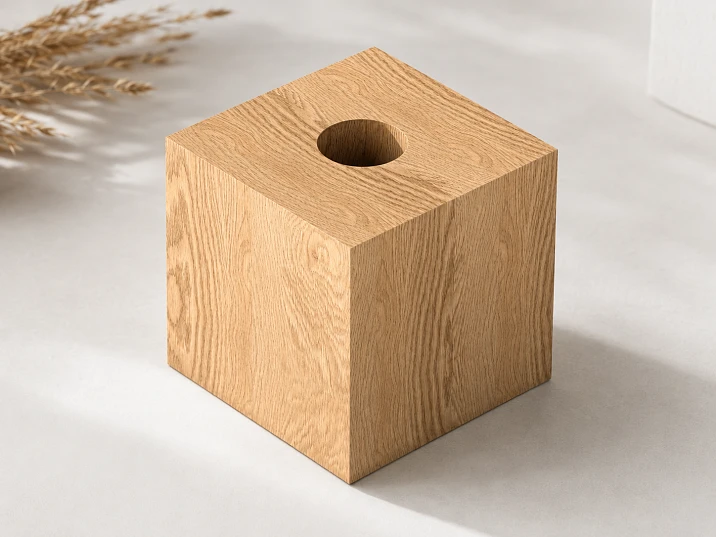
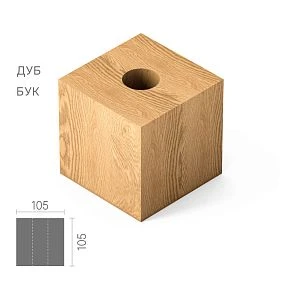
The KN-011 cube is a specific model from the STAVROS geometric shapes constructor line, designed as an independent architectural accent within a stand, support, or decorative axis. Its size is 105×105×105 mm, making it a noticeable but not bulky element: the cube reads well in a composition and does not draw all the attention if other constructor parts are nearby.
In the center of the cube, there is a through mounting hole with a diameter of 34 mm. This hole is not a decorative detail but a functional basis of the entire module concept: through it, the cube is placed onto a rod, stand, leg, or other load-bearing element and fixed at the desired point in the composition. It is the D34 hole that turns a simple wooden shape into a working constructor element, rather than a separate souvenir item.
The cube is made of solid beech or solid oak. Both options provide dense, load-resistant wood, but they reveal themselves differently in finishing, which will be discussed in more detail in the materials section. The cube's shape is strict, the edges are even, and the surface is prepared for further processing — this is exactly the case when buying a wooden cube with a hole is worthwhile precisely for geometric accuracy, not just for the shape.
The geometric correctness of the cube makes it a convenient reference point in a composite structure: next to rounded parts, it acts as a contrasting, "architectural" accent, and in alternation with other cubes, it creates a strict modular rhythm. Compatibility with stands, rods, legs, and balusters is the key practical advantage of the model: the KN-011 cube does not exist on its own but is incorporated into the assembly project already at the planning stage of future furniture or decorative construction.
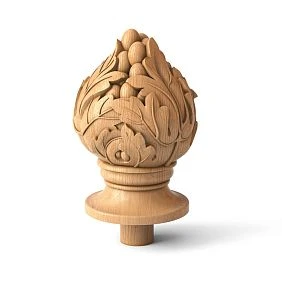
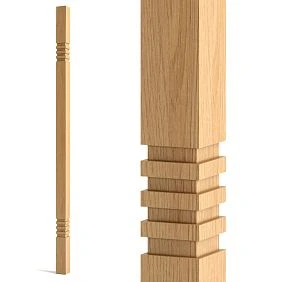
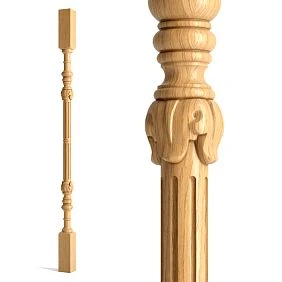
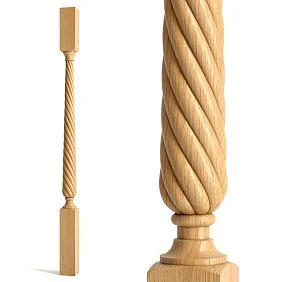
Our factory also produces:
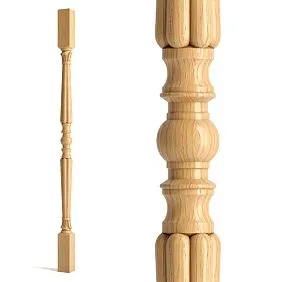
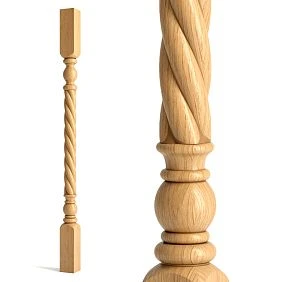
Specifications table for the KN-011 cube
| Parameter | Value |
|---|---|
| Model | KN-011 |
| Product type | STAVROS constructor geometric shape |
| Size | 105×105×105 mm |
| Mounting hole diameter | 34 мм |
| Material | beech or oak solid wood |
| Finishing | unpainted blank, ready for tinting, oil, varnish or enamel |
| Purpose | posts, furniture supports, balusters, partitions, custom furniture |
| Compatible elements | balls, bushings, discs, washers with D34 hole |
| Section on the website | STAVROS wooden element constructor |
| Product card | Geometric figure KN-011 |
| Configuration, delivery times, availability | specified in the product card or with a STAVROS manager |
After getting acquainted with the table, it is worth moving on to a more practical question: where exactly does this cube work best and how to integrate it into a real structure, rather than just holding it in your hands as a separate part.
Get Consultation
Where to use a wooden cube with a hole
The KN-011 cube was not intended as a standalone interior item — it is a module that only gains meaning as part of an assembly. Below are the main scenarios where a wooden cube with a hole is most logically utilized.
| Scenario | How to use the cube | What to Check |
|---|---|---|
| Decorative stand | cube as a geometric accent on the axis | the diameter of the supporting element must match the hole D34 |
| Furniture support | cube as part of a table leg or stand, console | structural load and attachment method |
| Baluster | cube as an insert between turned forms | combination of the cube style with the shape of adjacent parts |
| Partition | module in a rhythmic structure of several elements | uniform spacing between cubes and other parts |
| Author's furniture | accent detail on a rod or support | combination of a cube with spheres and bushings on one axis |
In a decorative post, the cube most often plays the role of a pause — a strict geometric point that breaks the monotony of a round rod or turned leg. In a furniture support, it takes on the visual weight of the structure: the wide face of the cube visually weighs down the bottom of the post and makes it look more stable. In the assembly of a baluster, the cube works well as a contrast to traditional turned forms, adding a modern touch to a classically detailed stair railing — more about compatible forms can be found in the section balusters for staircases.
A partition made of several repeating cubes creates an architectural rhythm: if the elements are spaced at equal intervals, the eye perceives the structure as a single whole, rather than a set of random pieces. In custom furniture, where individuality is important, the cube often becomes the finishing touch of a rod or support — the element that gives the entire structure a complete, well-thought-out look.
How a cube differs from a sphere, bushing, washer, and disc
In the STAVROS constructor, the cube is far from the only shape with a D34 hole. To assemble a composition thoughtfully, it is useful to understand how the main geometric elements differ visually and functionally from each other.
| Element | Visual effect | When to choose |
|---|---|---|
| Cube | strict geometry, architectural quality | modern posts, accent supports |
| Ball | soft classic shape | balusters, decorative rods |
| Bushing | transition and connection | joints, seating areas |
| Washer | fine separation | rhythm between large elements |
| Disc | flat accent | decorative inserts and dividers |
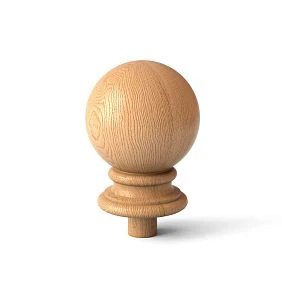
If a calm, modern character of the structure is needed, choose a cube or alternating cubes with bushings. If the project leans towards a more classic look, wooden balls with a hole are better suited for this role: the ball softens the line of the post and pairs well with turned balusters. Wooden bushings should be purchased where it is necessary to properly design the joint between two large parts — they work as a technical and at the same time decorative transition zone.
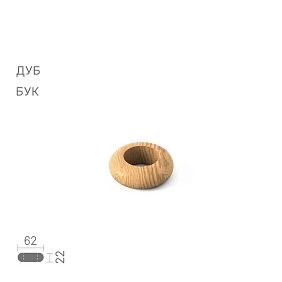
It makes sense to buy wooden discs when a flat, thin accent is needed — for example, a divider between sections of a partition. And it is logical to buy wooden washers when large forms need to be diluted with a light, almost imperceptible rhythmic element without overloading the composition. The combination of these forms with each other is what turns a set of individual parts into a cohesive author's design.
How to choose the material: beech or oak
The KN-011 cube is made from beech or oak solid wood, and the choice between them is not a formality, but a decision that directly affects the final appearance of the entire post or furniture support.
| Material | When to choose | Finish |
|---|---|---|
| Beech | under enamel, dense coating, smooth surface | enamel, varnish, stain |
| Oak | when a pronounced wood texture is needed | Oil, varnish, tinting |
| Beech and oak in one project | requires color and texture coordination | it's better to plan the finish in advance |
Beech is a dense, homogeneous wood with a fine, almost imperceptible texture. It holds enamel perfectly and provides a smooth, even surface without a pronounced fiber pattern. If the final goal is to paint the structure in a rich color and achieve a clean, minimalist surface without the 'noise' of wood grain, beech is a logical choice.
Oak, on the other hand, is valued precisely for its character: large texture, pronounced annual rings, and a noble fiber pattern that is especially well revealed under oil or clear varnish. If the project aims to showcase the material's naturalness, to emphasize that a post or support is made of solid wood rather than imitating it, oak becomes the preferred option.
Combining beech and oak in one structure is possible, but it should be done deliberately: the species have different densities and different reactions to stain, so the final color may differ even with the same tinting. If the project requires a uniform shade across the entire post, it is better to coordinate the material and finish in advance rather than selecting the color after assembly.
How to compose a composition from cubes and other elements
Assembling a decorative axis or post is essentially working with the rhythm of forms. Below are several working scenarios often used in projects with STAVROS construction kit elements.
Cube — sphere — cube
This alternation creates contrast between strict and rounded geometry. The cube sets a pause, the sphere softens the line, and the repeated cube completes the accent symmetrically. This rhythm looks good in the central part of a tall post or on the axis of a decorative partition.
Cube — bushing — disc
A more restrained, "engineering" combination where each form serves its function: the cube holds visual weight, the bushing organizes the transition, and the disc adds a subtle flat accent. This set suits minimalist interiors where precision of lines matters more than opulence.
Cube as a lower or upper accent of the post
Placed at the base, the cube visually weighs down the bottom of the structure and makes it appear more stable, even if the actual support is hidden inside. Placed at the top, the cube works as a logical completion of the axis — a point where the eye stops.
Repeating cubes in a partition
If you need to assemble an extended structure — for example, a decorative partition from several vertical posts — repeating cubes with equal spacing create an architectural rhythm and symmetry that are readable even from a distance.
The support and frame that will hold such a composition can be conveniently selected from ready-made solutions — for example, look at suitable furniture frames and under-table structuresif the stand is built into a furniture project rather than existing separately.
Mistakes When Buying Wooden Cube Blanks
Even when the cube is correctly chosen in terms of model, errors in details can ruin the entire assembly. Let's break down the most common ones.
Buying a cube as a regular blank for crafts is the first and most common mistake. It leads to the part not withstanding the load of the furniture structure or not matching the geometry of other axis elements.
Lack of checking the mounting hole is the second problem: if the actual diameter of the support rod or stand differs even slightly from 34 mm, the cube either won't fit on or will wobble on the axis, ruining both the appearance and reliability of the structure.
Not accounting for the diameter of the rod or stand as a whole, not just the cube's hole, is also common — the buyer focuses on one detail and forgets to check the entire chain of elements for the future assembly.
Mixing beech and oak without a well-thought-out finishing plan can lead to the two materials showing noticeably different shades after staining, making the composition look uneven.
Ignoring the total weight of the structure is a mistake rarely considered in advance: solid wood is heavier than it seems, and when assembling a tall or long stand, the weight of several cubes and other elements should be taken into account when calculating the support base.
Choosing a cube without understanding its place in the composition is another common situation: the element is bought 'just in case,' without being tied to a specific stand or support, and then it turns out its proportions don't fit the other parts.
Unchecked dimensions of adjacent elements — the part may look great on its own but not match the scale of balls, bushings, or disks already selected for the project.
Lack of a plan for the final coating — the buyer takes an unfinished blank but doesn't decide in advance how and with what it will be treated, causing project deadlines to be delayed.
Buying a single element without an overall rack scheme works the same as building without a blueprint: the parts may physically fit together, but the final composition will be random rather than thoughtful.
Underestimating the visual weight of a cube compared to a sphere — a cube looks noticeably "heavier" and stricter than a round shape of the same size, and if this is not taken into account, the proportions of the entire rack may become unbalanced.
When such a product is truly appropriate
The KN-011 cube is well suited for those who design furniture and interior structures consciously: furniture makers, interior designers, creators of custom pieces, those assembling stair railings, partitions, or decorative supports for tables, consoles, or shelving.
It is especially useful where a modern, geometrically clean accent is needed — for example, in an interior with strict lines, where rounded turned shapes would look too decorative, while a cube, on the contrary, fits in naturally.
If the project leans toward a classic, soft image — carved balusters, smooth lines, traditional furniture — it is worth first considering wooden balls with a hole as a more appropriate form, leaving the cube for individual, bolder accents.
The cube is also not suitable for those looking for a small souvenir detail for crafts: it is a structural element for a specific engineering task, not a universal blank for all occasions.
Materials and finish: what is important to know before purchasing
The KN-011 cube is supplied unpainted, meaning the buyer receives a wooden part made of solid beech or solid oak, prepared for further processing. This is convenient because the final coating can be selected to exactly match an existing project — to the color of the furniture, floor tone, or overall interior palette — rather than adapting the interior to the finished shade of the product.
Both materials withstand standard types of finishing: tinting, oil coating, varnishing, and enamel painting. The choice of a specific coating composition, drying time, and recommended application technology should be clarified in the product card or with a STAVROS manager, as these parameters may depend on the material batch and current technological recommendations.
It is important to remember that oak and beech react differently to stain due to their different density and fiber structure, so when assembling a composition from different species, it is recommended to test the finish on a sample in advance, rather than applying the compound directly to the finished part.
Combinations with other constructor products and furniture elements
The KN-011 cube is rarely used alone — its strength is revealed in combination with other constructor elements and STAVROS furniture parts. The basic set of shapes — cubes, spheres, bushings, discs, and washers — should be considered as a single system from which an individual composition is assembled, rather than a set of random parts.
If a stand or support is created not separately but as part of furniture, it makes sense to immediately look at suitable Furniture Legs and Supportsso that the cube integrates organically into the overall structure of a table, console, or chest. For projects involving stairs and railings, it is useful to check the range of balusters, and for more classic architectural solutions, pay attention to pilasters and columnswhich set the overall stylistic context for decorative vertical elements.
If you want to delve deeper into the logic of using such parts outside the context of crafts, it is worth looking at the material on how wooden blanks not for crafts turn into stands, supports, and custom furniture — it covers more general principles of assembling STAVROS modular structures.
Practical side: dimensions, fit, and preparation for finishing
Before the KN-011 cube ends up in a finished structure, it is useful to consider several practical points. The size 105×105×105 mm sets the scale: such a cube reads well on a stand half a meter high or higher, but in a compact, low structure it may seem too large an element. Therefore, proportions should be correlated not only with the diameter of the axis but also with the overall height and thickness of the future stand.
The hole with a diameter of 34 mm is designed for a specific range of load-bearing elements, and here an exact fit is important, not an approximate one: even a small discrepancy in the rod diameter affects the tightness of the connection and, consequently, the reliability and neat appearance of the finished axis. If the project involves several different parts on one rod — cubes, spheres, bushings — it is worth checking in advance that they are all designed for the same mounting diameter.
It is convenient to calculate the number of elements based on the total length of the axis: knowing the height of the stand and the size of each module, it is easy to determine how many cubes, balls, or bushings will be needed to avoid gaps or, conversely, too dense packing of parts.
Storage of unpainted blanks before finishing is best organized in a dry room without sharp humidity fluctuations — solid wood is sensitive to such conditions, and this should be considered if there is a noticeable time between purchase and final processing. Preparation for painting or enamel usually includes light sanding before applying the compound, while for oil or varnish preserving the wood texture, it is enough to ensure the surface is clean and dry — precise preparation recommendations are best checked in the product card.
Shopping on the STAVROS website
When placing an order on the STAVROS website, you should start with the section STAVROS wooden element constructor, where all geometric shapes of the line are collected — cubes, balls, bushings, discs, and washers. It is there that it is convenient to compare the KN-011 cube with other elements and understand which parts logically fit into your project along with it.
In the product card, it is worth carefully checking the size, material, hole diameter, and current configuration — these parameters directly affect whether the cube will fit into an already planned structure. If the stand or furniture support is assembled from several different elements, and especially if it is built into a complex interior composition, it is wise to clarify the compatibility of parts with a STAVROS manager in advance, rather than relying solely on the visual similarity of photos.
Buying wooden cube blanks unpainted in this case means getting not a single item, but a well-thought-out module for a future structure — with a clear size, hole, and role in the composition even before the cube is in your hands.
Conclusion
The KN-011 cube is a prime example of how a professional structural element differs from a random wooden blank: precise size, calibrated hole for the axis, choice between beech and oak, and a well-thought-out role in a stand, support, or furniture structure. This approach to purchasing eliminates typical mistakes — mismatched diameters, random scale, or incompatible materials — and allows you to assemble the composition deliberately, rather than by trial and error.
Wooden cube blanks, balls, bushings, discs, and washers from the STAVROS constructor line provide a flexible set of shapes for custom stands, furniture supports, balusters, and decorative partitions. STAVROS offers these elements precisely as a system of compatible parts, not a scattered set of blanks, which makes it possible to assemble a truly individual yet technically reliable structure.
Frequently asked questions
Can you buy wooden cube blanks for furniture, not for crafts?
Yes. The wooden cubes, balls, bushings, discs, and washers from the STAVROS "Construction Set" section are intended specifically for furniture, posts, rods, legs, balusters, and partitions, not for children's toys or hobby crafts.
What is the KN-011 cube?
This is a decorative wooden cube measuring 105×105×105 mm with a mounting hole diameter of 34 mm. It is used as a geometric accent in the STAVROS construction system for posts, rods, legs, balusters, and furniture structures.
Why does the cube have a 34 mm diameter hole?
The hole is needed to mount the cube on an axis — a rod, post, leg, baluster, or other compatible element. Before ordering, it is important to check the actual diameter of the supporting part against the mounting diameter of the cube.
What to choose: beech or oak?
Beech is better suited for enamel and dense, even painting. Oak is chosen when a pronounced wood texture is important, which is well revealed under oil, varnish, or tinting.
Can cubes be combined with balls and discs?
Yes, in the construction system, cubes logically combine with balls, bushings, washers, and discs — this creates a post or decorative axis with a varied, well-thought-out rhythm of shapes.
How do I know if the cube size will fit my furniture?
You should compare the 105×105×105 mm cube not only with the diameter of the supporting axis but also with the overall height and thickness of the post: a too compact structure may visually become "overloaded" by a large cube.
Do I need to buy cubes as a set with other elements?
If the project involves a composite post or partition, buying cubes together with balls, bushings, or discs as a set helps maintain the rhythm and proportions of the structure from the start.
Can the KN-011 cube be used for painting with enamel?
Yes, the cube is sold unpainted and is suitable for enamel, varnish, oil, or tinting. It is best to clarify the specific coating composition and application technology in the product card or with a STAVROS manager.
What should be clarified before ordering the KN-011 cube?
It is worth checking the actual diameter of the supporting element, the material of manufacture, the current configuration, and, if necessary, coordinating the material with other parts of the composition with a STAVROS manager.
Is the KN-011 cube suitable for a baluster on a staircase?
Yes, the cube can be used as an insert between turned baluster forms, adding a modern geometric accent to a more traditional railing design.