Article Contents:
- Start Here: Decorative Corbel or Load-Bearing Shelf Bracket?
- An easy decision before you shop
- The terminology American buyers encounter
- Why scale matters even when the piece is ornamental
- Scrolls for traditional rooms
- Geometric brackets for transitional rooms
- Matching a carving to an architectural period
- A shallow picture ledge
- A kitchen display shelf
- A home library shelf
- Placement and symmetry
- Under a decorative range hood surround
- At the end of a kitchen cabinet run
- Around kitchen islands and breakfast bars
- Finishes suitable for everyday cleaning
- A fireplace surround with a separate safety design
- Bookcases, libraries, and home offices
- Entryways and recessed niches
- Bedroom shelves and display areas
- How to interpret the catalog measurements
- Choosing between a compact and a tall element
- Why the material options matter
- Don't confuse decorative dimensions with a structural specification
- Begin with the surrounding trim, not the bracket
- A size example for a 42-inch display shelf
- Leave room for the decorative silhouette
- Repeating several corbels along a long run
- Check clearance at seats, doors, and worktops
- Identify the real wall substrate
- Why shelf depth changes the problem
- Adhesive is not a universal shelf connection
- Plan the hidden structure before the carved face
- Special cases requiring professional review
- Beech when the painted silhouette matters
- Oak when the natural material is the feature
- What a finishing-grade label actually means
- Mixed materials in a single room
- Prepare and document the location
- Dry-fit against the final surfaces
- Choose attachment methods appropriate to the role
- Finish joints carefully
- Check final operation
- Corbels and wood trim profiles
- Corbels and carved rosettes
- Corbels and decorative furniture overlays
- Corbels and capitals in elaborate millwork
- Curated rather than crowded interiors
- Project A: a 36-inch painted kitchen display shelf
- Project B: an 84-inch bookcase cornice
- Project C: a stained oak living-room niche
- Comparing the three layouts
- Count decorative pieces from a drawing
- Compare finishing costs as well as item prices
- Verify a physical sample when possible
- Decide which items to buy together
- Confirm product variants before checkout
- Assuming every wooden corbel is a rated support
- Selecting a bracket before measuring the cabinet
- Overusing elaborate profiles
- Finishing oak and beech as if they were identical
- Ignoring installation access
- Are decorative shelf brackets the same as wooden corbels?
- Can I mount a carved wooden bracket directly to drywall?
- What is the difference between a beech and an oak corbel?
- How many decorative corbels should I place under a shelf?
- How do I pick a bracket for traditional kitchen cabinets?
- Can decorative wood corbels go under a kitchen island overhang?
- Are wooden brackets safe around a fireplace?
- Should I paint a wooden corbel before installing it?
- How do I order a matching set?
- Is a polyurethane corbel a substitute for a carved wooden bracket?
- What other wooden elements coordinate well with corbels?
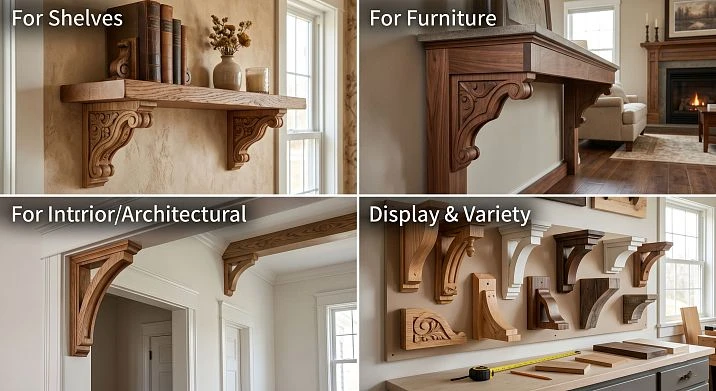
A well-chosen wooden bracket changes a shelf from a storage board into a deliberate part of a room. It can make a bookcase feel built in, give a kitchen hood surround a furniture-quality finish, or connect a mantel to neighboring millwork. For U.S. homeowners, designers, and cabinetmakers, the useful question is not simply which decorative shelf brackets look attractive. It is which piece has the right visual scale, wood species, attachment surfaces, and verified load-bearing role for the project.
The distinction matters. Some carved wooden corbels are primarily ornamental. A decorative bracket attached to a cabinet face is not automatically a structural shelf support, and neither a wood species nor a photograph establishes a safe working load. This guide explains how to choose decorative wood corbels for cabinets, shelves, bookcases, and architectural trim; how to read actual STAVROS dimensions in inches; and when to design a separate load-bearing connection. It is a U.S.-focused editorial adaptation of the published STAVROS material, with practical details for drywall, wall framing, cabinet construction, and common American finishing systems.
Start Here: Decorative Corbel or Load-Bearing Shelf Bracket?
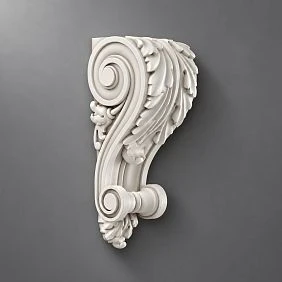
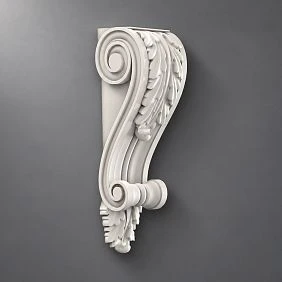
A decorative corbel is a projecting architectural detail that visually supports a horizontal element. The profile might be a simple triangle, a rolled scroll, an acanthus-leaf carving, or a straight-sided block. A shelf bracket describes the job: a device that holds a shelf. The two terms overlap in a catalog, but they are not synonyms for engineering purposes. You can install a carved wood corbel beside a hidden steel support for a traditional appearance, or choose a tested structural bracket for a load that has been defined.




An easy decision before you shop
Ask whether the visible part is supposed to carry any weight. If the shelf, counter, or mantel already has its own approved supporting hardware, the wood piece can be considered trim. If the plan relies on the carved part itself, ask for a product-specific allowable load, a compatible fastener schedule, substrate requirements, and an installation detail. Where those details are unavailable, do not assume it is a primary support. An architectural designer, cabinetmaker, or qualified installer should confirm the assembly before it is used for books, dishes, appliances, or stone countertops.
Наша фабрика также производит:
Смотреть весь Каталог продукции
The terminology American buyers encounter
Search results may show decorative shelf brackets, wood corbels, architectural brackets, furniture corbels, cabinet corbels, and decorative brackets for shelves. A carved block set beneath a cabinet overhang is commonly called a corbel; an L-shaped metal device with tested fixing points is commonly called a structural shelf bracket. The better product selection starts with the intended duty rather than a keyword or marketing label.
Получить консультацию
Why scale matters even when the piece is ornamental
A decorative corbel should look like it belongs to the thickness of the shelf or the projecting cabinet cornice. If the corbel is too small, it appears disconnected from the overhang. If it is too broad, it crowds a doorway or steals space from the work surface. A cardboard mockup at the exact catalog dimensions is a quick and inexpensive check. View it from the entry to the room, not only from a few inches away.
Types of Decorative Wood Brackets and Where They Work
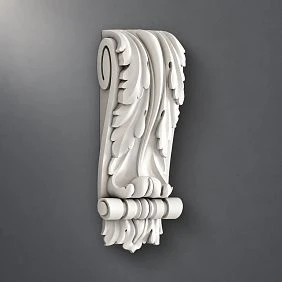
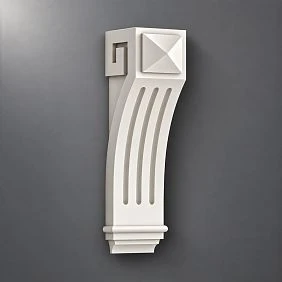
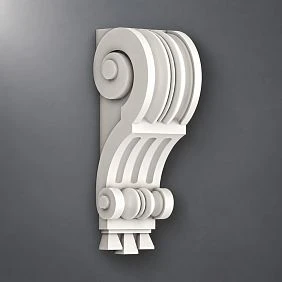
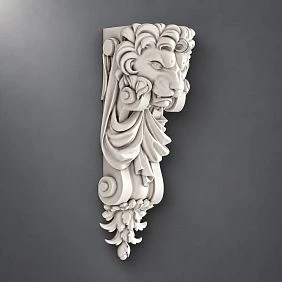
Wooden decorative brackets come in several families, and each changes the way a horizontal line is perceived. Choosing the right family can reduce the number of additional carved ornaments needed around a shelf or furniture piece.
| Type | Typical appearance | Good decorative setting | Design caution |
|---|---|---|---|
| Scroll or volute corbel | Curving S-shaped side profile | Traditional kitchen hood, buffet, mantel surround | Heavy ornament can overpower narrow cabinets |
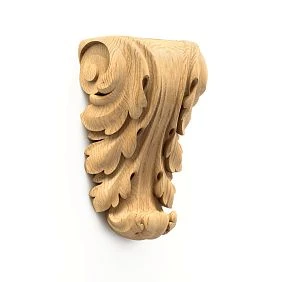
| Leaf-carved corbel | Acanthus and botanical relief | Classic bookcase, formal entry, decorative portal | Deep relief needs enough clearance and careful finishing |
| Straight geometric bracket | Clean line or stepped block | Transitional shelves, restrained neoclassical millwork | Keep reveals and mounting positions symmetrical |
| Small cabinet corbel | Short projected accent | Upper-cabinet ends, display niche, cornice return | Do not confuse a shallow accent with a rated support |
| Large architectural corbel | Tall silhouette and strong projection | Wall niche, decorative hood surround, built-in casework | Verify wall substrate, weight, and actual projection |
Scrolls for traditional rooms
Scroll corbels have a long association with classical trim. Their curved side makes a cabinet overhang or mantel look supported without adding a visually blunt rectangular block. They pair naturally with carved wood molding and paneled cabinetry, particularly when the finish continues across the elements. Keep neighboring floral motifs consistent: a bold acanthus leaf beside delicate geometric trim can feel accidental rather than composed.
Geometric brackets for transitional rooms
A restrained wood bracket is often more useful in an American transitional kitchen than an ornate carving. A simple stepped profile can carry the eye from a flat cabinet side to a projected shelf while leaving the countertop and hardware visually dominant. A quiet silhouette also works in home offices, where the content of bookshelves should take priority over the trim.
Matching a carving to an architectural period
Colonial Revival and Georgian-inspired interiors generally favor symmetry and measured projection. French Country rooms can tolerate softer scrolls and lightly distressed paint. A traditional library can support deeper carving, particularly if the brackets connect visually to crown molding. None of these are rigid rules. The reliable technique is to repeat one or two design cues—curve, leaf shape, edge bead, or paint finish—rather than mix every historical motif available.
Planning a Shelf with Decorative Wood Corbels
Decorative wood shelf brackets are most convincing when they appear to emerge from a planned millwork system. Begin with the shelf, not with the corbel. Write down its length, depth, material, expected contents, weight of the objects, and mounting substrate. An 8-inch picture ledge is a different engineering problem from a 12-inch shelf filled with hardcover books or crockery.
A shallow picture ledge
For a picture ledge, the bracket may be a purely visual element below a separately secured shelf. Its upper face does not have to become the bearing surface if the assembly has concealed supports designed to take the actual weight. This gives the designer flexibility in choosing a small carved piece. Position it so the carving is visible from normal standing height; a low shelf can hide the best details when viewed from the room entrance.
A kitchen display shelf
A shelf holding mugs and stacked dishes deserves more caution. The combined weight of the shelf, contents, and possible impact loads is what matters, not the empty shelf's weight alone. Design the structural connection into studs, approved blocking, or another suitable backing. Then use decorative wooden corbels either as the verified supports of that system or as ornamental covers for independent structural hardware. Do not assume that a corbel reaching two-thirds of the shelf depth is enough to make the installation safe. Projection alone says nothing about fastener pullout, member capacity, or the wall.
A home library shelf
Books tend to create heavy and sustained loads. Floating shelves require particular scrutiny because the forces at the wall may be large even when the shelf itself looks slim. If you want the appearance of oak or beech carved corbels in a library, detail a support system appropriate for the shelving material, span, and loads. The carved faces can visually organize the space, while their structural status is verified separately.
Placement and symmetry
For a simple illustrative layout, consider a 48-inch-long shelf. Two decorative corbels centered 6 inches in from each end have centerlines 36 inches apart. If you add a third centered element, the visual intervals become 18 inches. This is a composition calculation only, not a structural spacing recommendation. The number and locations of actual supporting fasteners must come from the engineered or manufacturer-approved assembly. Mark every proposed centerline on painter's tape before drilling or ordering.
Designing Kitchen Corbels without a Cluttered Look
The kitchen is a common reason homeowners search for decorative wood brackets. Visible corbels can repeat the furniture language of a range hood, open shelving, island panel, or framed upper cabinet. However, kitchens combine moisture, heat, cleaning products, and sometimes substantial loads, so the visual plan and technical plan have to develop together.
Under a decorative range hood surround
A traditional wood hood surround may use paired corbels where its vertical pilasters meet an upper cornice. They visually support the hood's apparent projection. Keep the corbels away from the cooking clearance envelope defined by the appliance manufacturer and the applicable local requirements. Neither the wood corbel nor an ordinary finish should be assumed to provide an approved heat shield. Confirm whether the hood assembly uses independent structural support and which surfaces may be clad with wood.
At the end of a kitchen cabinet run
Small carved brackets at the end of upper cabinets can make a row of boxes appear to have a custom furniture frame. Match the bracket's finish to the face frame or end panel, not blindly to the doors if the face and door colors are intentionally different. Use a consistent setback from the cabinet front so that the sequence reads as one installation. Check door swing, crown molding returns, and any adjacent tall cabinet before choosing the projection.
Around kitchen islands and breakfast bars
A wide stone countertop overhang may look beautiful above substantial wooden corbels, but appearance cannot demonstrate countertop support. Engineered stone, quartz, and other heavy surfaces follow fabricator requirements for overhangs and bracing. If carved brackets are added, decide whether they are purely decorative and locate the real supports accordingly. Keeping brackets out of knee space can matter more than a stylistic preference. Make full-size paper templates to check seating clearance before finalizing them.
Finishes suitable for everyday cleaning
For painted cabinetry, a well-prepared beech carving with compatible primer and cabinet enamel can give a coherent appearance. For stained oak, keep samples from the bracket and adjacent veneer or solid component under the same light: the grain and absorption will vary. Avoid promising that a certain finish is waterproof or food-safe without the finish manufacturer's technical data. In kitchens, cleaning practices, ventilation, and exposure determine maintenance needs as much as the species does.
Where Corbels Add Character Outside the Kitchen
A living room or study allows a decorative wooden bracket to act as a deliberate focal point. The most successful applications are not necessarily the most ornate. Often, a pair of modest corbels creates enough rhythm that additional applied ornaments would make the wall feel crowded.
A fireplace surround with a separate safety design
Wood corbels can frame a decorative mantel, but wood is combustible. Distances from the firebox opening, flue, and hot surfaces must be checked against the fireplace or insert manufacturer’s instructions and applicable code. A wood corbel cannot be specified from a decorative photograph alone. In many remodels, a noncombustible surround or a revised detail may be required. A mantel support system also needs its own load design, particularly where homeowners tend to place heavy mirrors or objects on top.
Bookcases, libraries, and home offices
A dark oak-stained corbel beneath a bookcase cornice can make a built-in look more like traditional cabinetry. Follow the direction of the grain and coordinate the scale with door rails, cabinet stiles, and baseboards. At eye level, intricate carving adds texture; at very high positions, a stronger silhouette may be easier to see. Use a test piece in the actual room light before committing to a large run of carvings.
Entryways and recessed niches
Corbels above an entry bench or around a decorative niche create a visual threshold. Think about how the detail appears against the nearby door casing. An ornate bracket on one side of a narrow passage can disrupt balance unless another architectural feature provides a counterweight. For shallow niches, a modest profile may be enough to establish depth without reducing usable display space. In rentals or historic interiors, explore reversible mounting and consult the owner before attaching permanent millwork.
Bedroom shelves and display areas
Decorative brackets can soften a bedroom wall, but do not place heavy unsupported shelves above a bed or child's sleeping area. If a shelf is necessary, prioritize secure anchorage and appropriate placement; a decorative corbel is not a substitute for those precautions. For a calmer appearance, repeat the corbel's finish in a picture frame or dresser handle instead of adding more carvings around the bed.
STAVROS Wooden Brackets: Six Verified Product Examples
The STAVROS carved wooden brackets collection offers many sizes and visual languages. It includes small furniture accents and much larger carved elements. A useful approach is to compare a few real SKUs rather than assume that every bracket fits every shelf. The table below reproduces one listed size option per product, with the original metric dimensions preserved for identification. These are catalog dimensions, not rated shelf-support capacities. In product drawings, A, B, and C identify different axes; verify their direction on the specific drawing before treating any figure as the horizontal reach from a wall.
| STAVROS product | One listed A × B × C size | Listed materials | Design interpretation |
|---|---|---|---|
| KR-044 wooden bracket | 3.15 × 1.97 × 0.79 in (80 × 50 × 20 mm) | Beech or oak | Compact accent for smaller furniture details |
| KR-042 wooden bracket | 2.56 × 2.64 × 1.06 in (65 × 67 × 27 mm) | Beech or oak | Small ornamental corner and display detail |
| KR-058 wooden bracket | 3.94 × 0.79 × 1.81 in (100 × 20 × 46 mm) | Beech or oak | Slim detail for a narrow decorative frame |
| KR-011 wooden bracket | 2.95 × 2.95 × 1.77 in (75 × 75 × 45 mm) | Beech or oak | Balanced profile for traditional corner accents |
| KR-006 wooden bracket | 4.76 × 2.36 × 1.69 in (121 × 60 × 43 mm) | Beech or oak | Decorative furniture or casework detail |
| KR-060 wooden bracket | 10.63 × 1.81 × 5.91 in (270 × 46 × 150 mm) | Beech or oak | Tall accent for a more substantial composition |
How to interpret the catalog measurements
Catalog drawings give measurable geometry, but a designer needs to map those figures onto the proposed installation. A product's tall dimension is not automatically its wall-contact height; a width label is not automatically its load-bearing seat. Check the drawing, face orientation, and any angled or carved surfaces before planning the position of a shelf. Where a bracket has more than one offered size, keep the exact selected variant on the material schedule; specifying only “KR-042” is insufficient if several dimensions are possible.
Choosing between a compact and a tall element
Compact elements such as KR-044 or KR-042 can make sense beneath the upper lip of a cabinet where the aim is a subtle furniture accent. A larger example such as KR-060 creates a distinctly architectural statement. Neither is inherently a better support. Their success depends on the relationship between the surrounding vertical panel, the projection above, and the viewing distance. Mark the actual dimensions on paper and attach the template where the carving would sit. In a narrow hallway, even a few inches of projection may matter to circulation.
Why the material options matter
Beech and oak appear as available options on these listings, but the correct SKU variant and preparation grade should still be confirmed. Beech often makes an attractive painted component because its grain appears relatively fine and even under opaque coatings. Oak is a natural candidate for stain or clear finish where its open grain is intentional. The practical choice is the one that matches the adjacent cabinetry and your desired finishing technique; a wood species alone does not guarantee strength for a particular assembly.
Don't confuse decorative dimensions with a structural specification
A product table may show A × B × C and an attractive wood species without saying anything about tested load, screw embedment, wall anchorage, grain orientation under bending, or bracket connection geometry. These omissions are not defects in a decorative listing; they simply mean the installer needs more evidence for a load-bearing use. Request the relevant specification or choose a separate structural support. Never convert a catalog dimension directly into a safe load rating.
Sizing Decorative Corbels for American Cabinets and Shelves
Sizing is the point where a beautiful object becomes a successful detail. It is also where rushed purchases go wrong. You need to compare five distinct measurements: the bracket's catalog geometry, the shelf or countertop depth, the visible overhang, the available vertical space, and the position of any real fasteners or framing.
Begin with the surrounding trim, not the bracket
Measure the face-frame width or the panel height at the proposed location. A bracket positioned under a 3-inch cabinet stile will read very differently from the same bracket placed against a 12-inch decorative pilaster. Also check whether a toe kick, cabinet door, or crown return interrupts the visual line. When carving is elaborate, the profile may need more clear wall area to be appreciated. A paper or foam mockup often reveals this earlier than a dimensioned drawing on a monitor.
A size example for a 42-inch display shelf
Suppose a proposed shelf is 42 inches long and 9 inches deep, and two decorative corbels will sit near its ends. Start by placing the visible centerlines 5 inches from each end. Their center-to-center distance is then 42 − 2 × 5 = 32 inches. This is a visual arrangement, not a statement that two corbels can safely carry the shelf. Next trace the chosen actual A × B × C bracket outline, check the height below the shelf, and ensure it does not intersect light switches, backsplash edges, or adjacent casing. Only after the visual plan is fixed should the structural attachment detail be reviewed and approved.
Leave room for the decorative silhouette
A scroll bracket is not a rectangular prism. It can have recessed areas, curled tips, and relief that needs space for the finish brush to reach. Mounting it directly against a neighboring object may hide the carving or create a dust trap. Leave a deliberate shadow reveal where possible. A small, consistent gap can make a cabinet corbel appear carefully installed rather than squeezed into a leftover space. Test with the actual face and side elevations, not just the nominal bounding dimensions.
Repeating several corbels along a long run
For an 84-inch-long cabinet hood fascia or other decorative run, a three-corbel composition may be visually calmer than four, provided the structure behind it is designed independently. One center bracket establishes an axis; the outer two frame it. Another scheme places pairs near the ends and leaves the center free for a carved emblem or panel. Do not use a single arbitrary on-center number across all projects. Doors, reveals, appliance clearances, and backing locations should guide the layout.
Check clearance at seats, doors, and worktops
Corbels beneath an island overhang can strike knees. Corbels next to a cabinet door can interfere with a handle or hinge arc. A bracket below a desk can reduce chair movement, and a tall bracket on a passageway can make a wall feel narrower. Take the actual projection into account and test common motions: opening the door fully, pulling out the drawer, sitting at the counter, and cleaning around the woodwork. These practical checks prevent expensive changes after finishing.
Structural Reality: Loads, Studs, and Mounting Hardware
This is the most important technical section for any person considering decorative shelf brackets. The catalog name alone does not prove that a carved wooden item can support a shelf. The entire connection is a system: shelf material, shelf span, bracket geometry, fasteners, the wall or cabinet substrate, and the type and distribution of loads. Problems often occur at the connections rather than in the decorative surface.
Identify the real wall substrate
Drywall is a finish layer, not a substitute for adequate supporting framing when the load is substantial. For a structural shelf, locate studs or suitable blocking and verify the fastening strategy. On masonry, an appropriate anchor and the actual masonry condition matter. On older plaster walls, surface integrity and underlying framing may be uncertain. Do not assume a generic plastic drywall anchor can safely support a heavy shelf just because it has a printed package number; the system must match its use, including lever-arm forces.
Why shelf depth changes the problem
A load set farther out from the wall creates a larger overturning tendency at the attachment. This is why shelf depth, not just weight, matters. A 20-pound object at the back of a short shelf creates different forces from the same object at the front of a deep shelf. A shelf loaded unevenly can also twist. The design must consider both the expected everyday contents and possible accidental loading, especially in kitchens and children’s rooms.
Adhesive is not a universal shelf connection
Adhesive may be appropriate for attaching an ornamental wood face to a compatible finished surface, following the manufacturer's instructions and preparation requirements. It does not automatically replace the mechanical attachment required for a structural shelf. Finishes, dust, moisture, loose paint, and a wall's own surface bond can all limit an adhesive connection. For a genuinely load-bearing bracket, request a fastening detail from the manufacturer or a qualified designer, and do not improvise a structural rating from an adhesive label.
Plan the hidden structure before the carved face
If the corbel is for appearance only, the supporting hardware can be designed into studs, cabinet internal rails, or another appropriate assembly. The wood decoration can then be aligned over or near that structure. If a structural bracket is intended to remain visible, select a tested hardware system designed for the load; a carved ornament can still be integrated where detailing permits. This approach separates safe support from period styling, avoiding the temptation to let a beautiful piece do work it was never documented to do.
Special cases requiring professional review
Stone countertops, long book shelves, wall-mounted sinks, large mantels, and projecting cabinet assemblies deserve product-specific technical design. Seismic requirements, local building rules, moisture exposure, and commercial occupancy can add constraints. A bracket that looks substantial in a photograph may have a small screw-contact area. When in doubt, treat an ornamental corbel as a nonstructural addition until a competent professional confirms otherwise.
Beech or Oak? A Wood Selection Guide for Corbels
The wood species affects appearance, machining, stain uptake, and finishing, but it does not let you bypass attachment design. STAVROS lists many carved wooden brackets in beech and oak, giving a choice between a relatively understated grain and a more visibly textured one. You can compare examples directly in the carved wood decor category.
| Decision factor | Beech | Oak | Practical implication |
|---|---|---|---|
| Grain appearance | Relatively fine and even | Open, prominent grain and rays | Decide whether you want opaque paint or visible wood |
| Opaque paint | Often suitable with proper primer | Suitable with pore preparation if a smooth face is wanted | Preparation controls final appearance |
| Transparent stain | Can show blotching without test samples | Highlights strong grain; color varies by board | Sample each actual material and finish system |
| Carved relief | Readable on smooth surfaces | Rich texture can compete with very fine detail | Match carving complexity to finish |
| Interior maintenance | Follow coating requirements | Follow coating requirements | Neither species is inherently waterproof |
| Structural suitability | Requires rated design | Requires rated design | Do not infer a bracket's allowable load from species |
Beech when the painted silhouette matters
For painted white or cream cabinetry, beech can produce a refined result because the grain is often less visually assertive. That does not remove the need for primer, sanding, and compatible finishing steps. A curved carved face can hide areas where paint pools; use thin coats and appropriate brushes or a carefully controlled spray process. Examine the underside and relief recesses before a piece is declared finished.
Oak when the natural material is the feature
Oak often looks convincing in a stained library or warm traditional kitchen. The grain draws attention to the carving and can coordinate with an oak mantel, stair component, or furniture panel. Oil or stain may darken recesses differently from flat areas, so make a sample board with the same prep sequence and topcoat. A tinted coating that matches one large cabinet panel may not match the end grain or relief on a small corbel exactly; treat near-perfect matching claims cautiously.
What a finishing-grade label actually means
Catalogs may differentiate sanding grades or blanks prepared for enamel versus translucent staining. These describe surface preparation and material selection, not the structural load rating. Check the selected product variant and color intent before placing the order. A finish-ready bracket still needs acclimation, proper dust removal, and installation-stage touch-ups. A stain-ready blank benefits from inspecting color and grain continuity with adjacent cabinetry before final finishing.
Mixed materials in a single room
A room may combine oak shelving with painted beech corbels, especially when the corbels are meant to match white wall paneling rather than the shelf itself. That can be a deliberate two-tone detail. The key is to repeat the paint color or wood tone elsewhere so the combination feels intentional. If the bracket, shelf, molding, and cabinet hardware all have different finishes, the composition can quickly become noisy. Coordinate a small physical finish board and evaluate it in both daylight and evening light.
Installing Decorative Wooden Corbels on Finished Millwork
When the wooden piece is nonstructural, installation aims to achieve visual alignment and a sound finish attachment without damaging the underlying cabinet or wall. When the piece is structural, do not use this general sequence as a substitute for the approved fastening plan. The work sequence below concerns decorative installation only. Begin after the load-bearing shelf or cabinet assembly has already been checked independently.
Prepare and document the location
Check the corbel against the intended surface before applying a finish or adhesive. Sight down the cabinet face for warp, proud screw heads, and uneven joints. Mark a centerline and a horizontal reference with low-tack tape. If two brackets will form a pair, measure from the same finished reference edge on both sides—not from different rough construction surfaces. Photograph the layout and record which face of each piece points outward. This makes it easier to restore symmetry if painting or fitting requires another visit.
Dry-fit against the final surfaces
Fit the finished or appropriately prepared corbel in its actual position. A carved item may have a slightly uneven decorative back or a projecting scroll that touches an adjacent trim piece. Do not force it flush by overdriving a screw through a thin section. A small shadow reveal may be more attractive than an attempt to hide every seam. If trimming is necessary, assess whether it would expose unfinished end grain or weaken a piece; consult the product drawings before cutting into a carving.
Choose attachment methods appropriate to the role
A nonstructural decorative piece can sometimes be installed with a specified construction adhesive and temporary holding arrangement, provided the surfaces and coatings are compatible and the adhesive manufacturer permits the application. Other pieces may use concealed screws or mechanical clips; the method is product and substrate specific. Do not drill through intricate carved relief without checking an acceptable fixing position. If the assembly depends on the corbel to carry weight, stop and obtain the structural detail first. The STAVROS installation and finishing information may provide general context, but product-specific instructions take priority.
Finish joints carefully
After placement, inspect joint lines under raking light. For painted work, a suitable paintable filler may conceal small finish gaps, followed by spot priming and controlled touch-up. For stained wood, ordinary opaque caulk can look conspicuous; a discreet reveal or a carefully color-matched repair may be preferable. Avoid filling a moving wood joint rigidly where seasonal expansion might make it crack. Check that no adhesive squeeze-out is trapped in ornamental recesses before the surface cures.
Check final operation
Reopen adjacent cabinet doors, pull out drawers, and remove or replace the shelf's intended contents. Ensure no corner snags clothing or interferes with seating. For high-mounted decorative pieces, verify that all parts are adequately retained against accidental displacement. A good finish detail should not require avoiding normal use of the room. Document the product and finish so the owner can identify the exact replacement later.
Matching Corbels with Molding, Rosettes, and Cabinet Hardware
An isolated decorative corbel may look like an afterthought. The most convincing traditional room repeats the bracket's pattern or proportions in one or two neighboring pieces. Repetition need not mean using the same carving everywhere: a simple shared edge profile or a consistent wood finish can be enough.
Corbels and wood trim profiles
Use wooden decorative molding above a cabinet or around an adjacent opening when you want the bracket to feel integrated with the architecture. Compare the molding's relief depth to the corbel: a flat bead can complement a carved bracket without competing for attention. For example, an oak bracket under a bookcase cornice may be paired with a narrow oak rail. Make sure both components have compatible visual grain and finishing requirements.
Corbels and carved rosettes
The wooden rosettes selection is useful for introducing a small matching accent at a panel corner or cabinet centerline. A rosette should not simply be added wherever there is empty space. Place it at an architecturally meaningful point: the center of a frieze, the intersection of rails, or the corner of a symmetrical panel. If the bracket already carries an elaborate leaf motif, choose a quieter rosette or omit it.
Corbels and decorative furniture overlays
A carved wood overlay is a different category from a bracket. Overlays ornament a face; brackets define a projected junction. Combining them can give a sideboard greater depth, provided the two components share a scale and motif. Browse STAVROS decorative wood overlays for possible complementary ornament, but avoid adding decorative features to every available surface. Allow plain painted or stained areas to make the relief legible.
Corbels and capitals in elaborate millwork
In a formal room, corbels may sit beside small pilasters or beneath a cornice, while a carved wooden capital ends a vertical element. This is a vocabulary of different architectural jobs. The capital belongs at the head of a column or pilaster; the corbel appears below an overhang or at a projected corner. Confusing the two can produce an arrangement with impressive individual pieces but poor composition. Sketch both the vertical and horizontal lines first.
Curated rather than crowded interiors
A residential kitchen may need only two carved brackets at a hood and a single molding profile around the adjacent cabinets. A home office may use four quieter brackets and no applied rosettes. For a more decorative entry, combine one bracket pair with a well-proportioned framed mirror. The goal is a consistent system, not the maximum number of ornate products. The STAVROS carved wood products catalog provides a broad set of families, but they should be selected according to a unified drawing.
Sample Design Plans for Three Different Projects
The following examples show how to convert an inspiration photograph into a workable specification. They are illustrative decorative layouts. They do not certify the structural capacity of the listed wooden brackets or replace project-specific shop drawings.
Project A: a 36-inch painted kitchen display shelf
Imagine a white painted built-in with one 36-inch-wide display shelf, 8 inches deep. The shelf is secured by a separately designed backing system. Two small beech corbels are intended to create a custom-cabinet look beneath the shelf. Place the corbel centerlines 4.5 inches from the ends, producing a 27-inch visual interval. Tape outlines of the exact chosen STAVROS size onto the cabinet face. Check that the scroll is visible while standing at the counter. With the shelf's structure established separately, the bracket can be chosen for proportion and carving rather than an unverified strength claim.
Project B: an 84-inch bookcase cornice
A built-in bookcase is 84 inches across, with painted cabinet sides and a deep upper frieze. Three medium-sized decorative corbels can create a visual rhythm: one centered and the other two set symmetrically near the ends. Their spacing may be adjusted to align with the cabinet's vertical dividers, which is usually more convincing than choosing round numbers. A wood molding profile can run horizontally across the cornice, providing the shared line that makes the bracket pattern intentional. Confirm that the cornice itself has adequate fastening and that the corbels are not being treated as untested structural cantilevers.
Project C: a stained oak living-room niche
A shallow alcove with an oak display shelf looks more cohesive when its corbels, frame molding, and adjoining furniture share stain undertones. Select a small oak bracket with modest relief, then stain a sample alongside an offcut of the shelf. A dark brown stain can appear nearly black in carved recesses under warm lighting. If the bracket looks too heavy, choose a shallower profile or lighter stain rather than adding another decorative border. Where the niche incorporates a mantel or heat source, the construction and combustible clearances need separate verification.
Comparing the three layouts
| Project | Visual objective | Suggested wood approach | Most important nonvisual check |
|---|---|---|---|
| Kitchen display shelf | Custom furniture appearance | Painted beech corbels aligned to cabinet stile | Shelf load carried by approved backing system |
| Bookcase cornice | Repeated architectural rhythm | Painted or stained corbels matched to millwork | Cornice attachment and accessible cabinet doors |
| Living-room niche | Warm material continuity | Stained oak accent and restrained molding | Substrate, shelf fastening, nearby heat exposure |
Ordering a Set: Measurements, Samples, and Cost Controls
Choosing a carved element from a photograph is only the beginning. A reliable order identifies the exact size option, wood species, surface preparation grade, quantity, and intended finish. For a left-right pair, also verify whether the profile is symmetrical or requires mirrored versions. Even a beautiful item may look wrong if two units do not face one another correctly.
Count decorative pieces from a drawing
For an ordinary pair of brackets, quantity is two. For a run with a center accent, quantity may be three. For multiple shelves, count each decorated location separately and label its elevation. A useful schedule might say “Entry shelf: two KR-042, selected A × B × C variant, beech, finish to match cabinet; Office cornice: three larger matching brackets, final SKU pending drawing confirmation.” This is much clearer than a single shopping-cart line reading “five wooden brackets,” especially if sizes or finishes differ.
Compare finishing costs as well as item prices
The visible purchase price is not the entire installed cost. A carved surface may need sanding, primer, stain, multiple paint coats, careful touch-up, and installation labor. A smooth bracket with little relief may be less labor-intensive to finish than a highly ornamental carving. Oak under a transparent finish may require color matching to existing furniture. For imported products, verify actual shipping, taxes, customs, and availability directly; the presence of an English-language product page does not guarantee U.S. warehouse stock or U.S. delivery service.
Verify a physical sample when possible
A sample makes it easier to judge carving depth, edge quality, grain, and finish absorption. If obtaining the actual item is impractical, request current detailed photographs and product drawings. A photograph held beside a ruler is helpful, but it does not replace exact geometry. At minimum, compare a printed paper template of the selected size with your cabinet elevation, and test color swatches under both natural and artificial room lighting.
Decide which items to buy together
Coordinated design may involve decorative brackets, a wooden cornice, cabinet face trim, and small rosettes. Combine procurement where it genuinely improves the chance of a matching finish. Keep the list selective: a decorative bracket set does not require a full collection of ornaments. For freestanding decorative displays, STAVROS also lists carved wood home accents that may help reinforce a material palette without changing permanent millwork.
Confirm product variants before checkout
Catalog options can change, and the display may default to one particular species or sanding grade. Check the final cart against the actual project schedule: SKU, dimensions in inches and millimeters, wood, surface preparation, and quantity. If a piece will be installed alongside existing cabinet hardware, confirm that the projection leaves operating clearance. If it needs to be structurally useful, do not order solely on the basis of these decorative comparisons; obtain load and fastening documentation first.
Common Mistakes with Decorative Wood Shelf Brackets
Most poor results are preventable. They arise from mixing an aesthetic selection with an assumed construction function or from evaluating a carving without its surrounding architectural context.
Assuming every wooden corbel is a rated support
A catalog description may mention shelves and still omit load tables, structural screws, and wall conditions. The correct response is to verify the specific use rather than invent a permissible weight from appearance or wood species. When the information is not available, incorporate a separate structural solution or use a rated bracket from an appropriate supplier.
Selecting a bracket before measuring the cabinet
A bracket with a 6-inch tall body may look modest in a product photograph but dominate a 3-inch face frame. A narrow shelf may expose too much carving, while a deep cornice may hide it. Measure and mock up the actual drawing. Remember that the nominal width, height, and depth in the table may be oriented differently once the part is installed.
Overusing elaborate profiles
An acanthus corbel, carved rosette, ornate crown molding, and strongly patterned cabinet face can compete in the same small area. Decide which feature is the focal point and simplify the rest. The plain surfaces around the carving help it look more expensive and carefully selected.
Finishing oak and beech as if they were identical
The same stain will not produce the same visual result on two species. Even adjacent boards of the same species can differ. Test samples using the exact preparation sequence and topcoat. For painted work, check how your primer and filler behave in narrow carved recesses and on end grain.
Ignoring installation access
A bracket fixed too close to a corner can be difficult to screw, paint, or clean. A long scroll can interfere with a nearby drawer or cabinet door. Plan the final position after checking reach, tool access, and normal operation. A beautiful fixed element becomes a defect if it prevents ordinary cabinet use.
Frequently Asked Questions About Decorative Wood Corbels
Are decorative shelf brackets the same as wooden corbels?
They can describe similar visible shapes, but the terms emphasize different things. Corbel refers to an architectural projection, often decorative; shelf bracket refers to a supporting function. A decorative wooden corbel should be regarded as nonstructural unless its exact application, fixing method, and capacity are documented. This distinction is especially important when the shelf carries substantial weight.
Can I mount a carved wooden bracket directly to drywall?
A small decorative item may have a suitable attachment solution based on the wall's condition and the installation product, but drywall alone must not be assumed adequate for a heavy load-bearing shelf. For structural work, investigate the framing or backing and use a design suited to the load. A decorative application still requires secure retention and a compatible substrate.
What is the difference between a beech and an oak corbel?
Beech typically has a finer, more subdued grain that can work well under opaque paint. Oak has a stronger open-grain pattern that often looks appealing with stain or clear coating. Both materials require appropriate finishing and both can be used in decorative work. Neither material, by name alone, establishes a safe shelf-support capacity.
How many decorative corbels should I place under a shelf?
For appearance, two matching elements often create a balanced pair; a long architectural run may look better with an odd number or alignment with cabinet dividers. For support, there is no universal number without shelf material, span, load, bracket strength, and wall attachment information. A two-bracket visual drawing must not be mistaken for an approved structural schedule.
How do I pick a bracket for traditional kitchen cabinets?
Start with the cabinet face dimensions, projection, and the surrounding crown molding. Choose a scroll or gently carved profile whose relief echoes another detail. Paint a beech piece to match the cabinet, or consider stained oak if natural grain is already a significant part of the design. Check appliance clearances, door movement, and all structural requirements independently.
Can decorative wood corbels go under a kitchen island overhang?
They can be part of the visual design, but they should not be assumed capable of supporting stone or another heavy counter material. Follow the countertop fabricator's required structural support method and consider knee space, stool positions, and impact. If the carved pieces are ornamental, coordinate their location with concealed or rated structural supports rather than relying on them.
Are wooden brackets safe around a fireplace?
Wood is combustible, so fireplace clearances and product instructions govern the design. A carved bracket may be acceptable in one location and unacceptable in another. Do not use a generic decorative catalog image to determine a safe distance. Confirm the appliance, local requirements, actual construction, and independent mantel support before installing wooden components near heat.
Should I paint a wooden corbel before installing it?
Pre-finishing may make recessed carving easier to reach and create a more consistent appearance, but concealed bonding or fixing faces must remain compatible with the approved attachment method. Some assemblies need a final on-site coat to unify joints and touch-ups. Follow the finish system's drying, handling, and adhesion guidance instead of assuming one sequence works for every application.
How do I order a matching set?
Specify the exact SKU, A × B × C size variant, wood species, finish preparation, number of pieces, and the desired orientation. Check whether the carving is directional and whether mirrored parts are offered. For an existing cabinet, measure and photograph the installation area so the selected carving can be compared with its surroundings before the final purchase.
Is a polyurethane corbel a substitute for a carved wooden bracket?
Polyurethane can provide an ornamental profile with a different weight and finishing behavior, but it should not be treated as a structural replacement for a wooden or metal support without product-specific documentation. A buyer who wants to compare materials can review the STAVROS polyurethane architectural decor category. Select by intended role, surface preparation, appearance, and documented product requirements.
What other wooden elements coordinate well with corbels?
Wooden trim rails, carved rosettes, cabinet overlays, and furniture frames often work well together when the proportions and finishes are disciplined. A cabinetmaker can review solid-wood furniture frame and base components if the bracket is part of a broader cabinet design. Aim for coherent transitions rather than a crowded collection of individual carvings.
Final Checklist for a Better Bracket Specification
A good decorative wood corbel project has two independent approvals: the design looks appropriate in the room, and the construction can safely support whatever must be supported. Confirm the installed orientation, full-size outline, correct species and finish, symmetric positioning, and nearby door or seating clearances. Separately verify any loading, substrate, fasteners, and fire or moisture exposure. The visual quality of a carving never replaces those checks.
Before ordering, review the full STAVROS carved wooden bracket range and compare real product drawings rather than photographs alone. A carefully selected profile can make a shelf, cabinet, or niche look convincingly built in. When proportions, wood selection, finishing, and support details are all addressed, the result feels like purposeful architecture rather than decoration added at the end of a renovation.