
























Article Contents:
- Short answer: when to choose a wooden knob
- What is a knob and why it is convenient
- Where to use wooden knobs
- For a Dresser
- For a side table
- For a Wardrobe
- For Kitchen
- For children's furniture
- Knob or pull: what to choose
- How to choose the size of a knob
- How to choose the shape of a wooden knob
- Wooden knobs for classic furniture
- Knob handles for children's furniture
- Knob handles for furniture restoration
- How to combine knob handles with other furniture decor
- Finish: knob handle for enamel, varnish, or stain
- Mistakes when choosing a wooden knob handle
- What to buy together with wooden knob handles
- FAQ: questions about wooden knob handles
- About the Company STAVROS
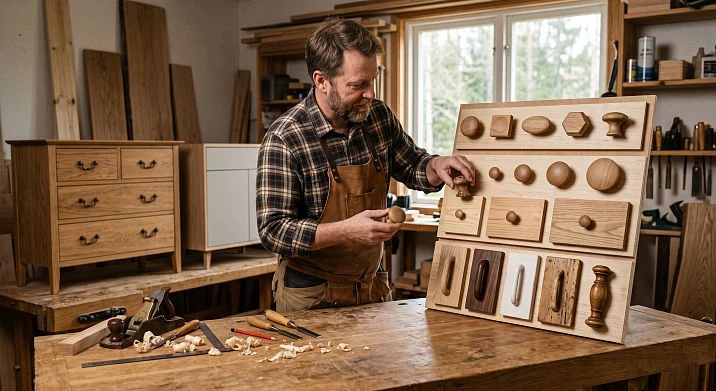
A small detail — a big impact. A knob handle is exactly the case where a modestly sized element defines the character of the entire piece of furniture. It doesn't dominate, doesn't draw the eye, doesn't announce itself loudly. It simply exists — precisely, neatly, in the right place. And it is in this restraint that its strength lies.
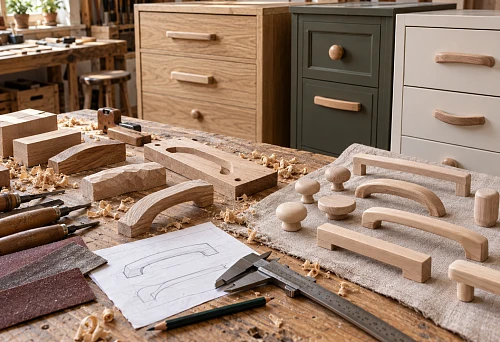
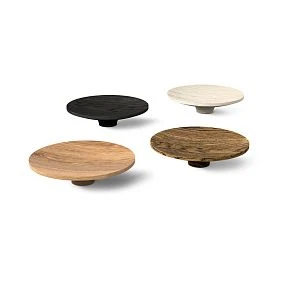
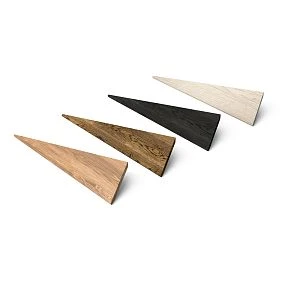
wooden button handle — this is furniture hardware that doesn't overload the facade, but complements it. Warm wood instead of cold metal or faceless plastic. One attachment point, a compact silhouette, a pleasant-to-touch surface. Such a handle works perfectly on dresser drawers, nightstands, children's furniture, and classic facades. This article is about it: honestly, practically, and from the perspective of someone who knows everything about furniture decor.
Short answer: when it's better to choose a wooden knob handle
Before diving into details, here's a quick compass. Wooden knob button — the right choice in the following situations:
-
Small drawers — where a handle would be excessive in size and visual weight.
-
Chests of drawers, nightstands, bedside tables — items with lightweight fronts that open effortlessly.
-
Children's furniture — a rounded knob with no sharp edges, safe and pleasant for a child's hand.
-
Classic and neoclassical furniture — a turned wooden knob fits into the classic style more organically than metal hardware.
-
When neat hardware is needed — without visual overload, without heaviness, without unnecessary accents.
-
When painting furniture — an uncoated wooden knob is painted to match the facade, creating a monolithic look.
-
When restoring furniture — replacing old plastic knobs with wooden ones instantly changes the character of the piece.
This is not a simplification. It's a precise tool — for precise tasks.
What is a knob handle and why is it convenient
Let's break down the design. Knob handle — is a furniture handle that attaches to the facade at a single point. One bolt, one hole, minimal structural elements. Externally — a rounded, flattened, or shaped protrusion on the facade surface that the hand grips.
What's good about this? First of all — its conciseness. The knob doesn't try to be the center of attention. It doesn't create horizontal or vertical lines that actively change the perception of the facade. It's a dot. An accent without weight.
A wooden knob outperforms metal and plastic ones in several ways:
-
Tactile temperature. Wood is temperature-neutral. A metal handle on a cold kitchen in winter morning — an unpleasant contact. A wooden one — always comfortable to the touch.
-
Visual softness. Wood visually "warms" the facade. On a white or cream facade, a wooden knob creates an organic, natural accent.
-
Compatibility with decor. wooden furniture handles easily combine with other wooden parts — legs, overlays, layouts. Together they create a system, not a set of random elements.
-
Ease of updating. An uncoated wooden button can be painted, tinted, or varnished. This means you can take a "blank" handle and adapt it to any furniture color.
Our factory also produces:
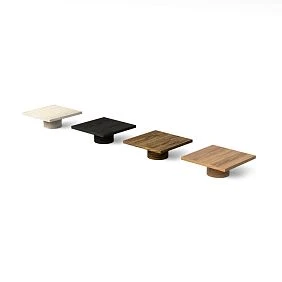
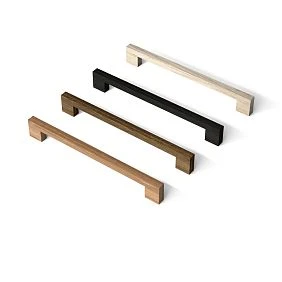
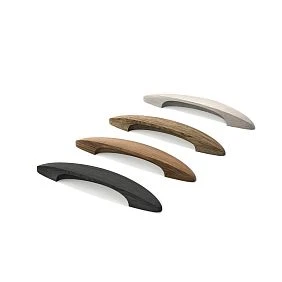
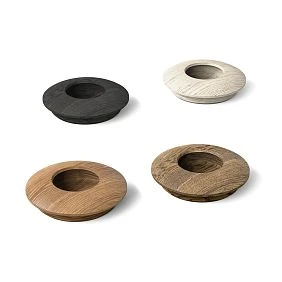
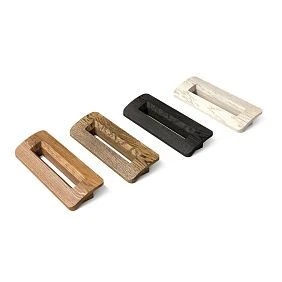
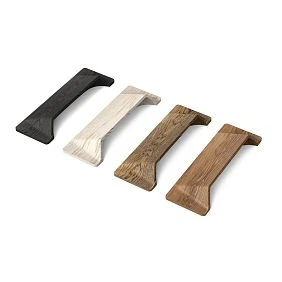
Where to use wooden button handles
Get Consultation
For a chest of drawers
A chest of drawers is ideal furniture for a button handle. Several drawers arranged vertically, each with a small or medium front. Here, the button creates a rhythmic repetition — one shape repeated vertically several times. This is architectural thinking applied to furniture: repeating one element creates order and completeness.
Wooden buttons work especially well on chests of drawers with painted fronts. A white chest of drawers with natural oak-colored wooden buttons is an image that never goes out of style for decades. It is warm, concise, and fits perfectly into any interior — from Scandinavian to classic.
For drawers up to 50 cm wide — a button with a diameter of 35–50 mm looks proportional. For wider drawers — either increase the button diameter or consider wooden handle bracket.
For a side table
A bedside table is usually a small piece with one or two drawers or a door. Here, a button handle is absolutely appropriate: it does not overload the compact front, is visually light, and functionally sufficient.
A TV cabinet with pull-out drawers is another classic candidate. If the drawers are shallow and light, a button handles the task better than a massive bracket. A small cabinet in the bathroom or hallway is also an excellent scenario for a wooden button.
An important nuance: for a bedside table, choose a button with a moderate protrusion above the front — no more than 20–25 mm. A handle that protrudes too much at bed level creates a risk of catching on a blanket or clothing.
For a cabinet
Here you need to be careful. A button handle for a cabinet does not always work — it depends on the size and weight of the door.
For lightweight decorative facades — a display cabinet with glass, a hallway cabinet, a wall-mounted kitchen cabinet with a light door — a knob is quite sufficient. It creates a neat accent on a glass or wooden facade.
For a heavy swing door of a large cabinet — a knob will be inconvenient: it's hard to grip and pull with the required force. Here, the right choice is — wooden hook handle with two mounting points.
For sideboards and display cabinets with medium-weight doors — a large wooden knob with a diameter of 50–60 mm can be both comfortable and decoratively expressive. It all depends on the specific design.
For Kitchen
The kitchen is an area of high load on hardware. Nevertheless, a knob is appropriate in the kitchen — under one condition: lightweight facades with infrequent or moderate use.
Wall-mounted cabinets that are opened less often than lower drawers are a good candidate. A decorative display cabinet in a classic-style kitchen with a small shaped knob is an image that works 100%.
For facades that are opened 20–30 times a day — for example, under the sink or near the stove — a handle is more ergonomic. But if the kitchen is classic, neoclassical, or in Provence style, and a calm, unobtrusive hardware is needed, furniture handle in the form of a wooden knob is a worthy choice.
For children's furniture
Children's furniture is a special case. Here, safety is more important than aesthetics. Although in a properly selected knob, one does not contradict the other.
Best options for a children's room — handles for children's furniture with rounded, soft shapes without sharp corners or protrusions. Wood is especially appropriate here: it's a natural, eco-friendly material that is pleasant to the touch.
Shaped knobs — stars, clouds, geometric forms — become not just a functional detail but also a decorative accent in a children's room. The child sees not a "handle" but a design element that complements the room's theme.
Mounting height for children's furniture — at the level of a child's hand. Check if it's comfortable for the child to reach and open the drawer on their own.
Knob handle or pull handle: what to choose
This question is one of the most common. Let's give a specific, honest answer.
| Task | What to choose |
|---|---|
| Small dresser drawer | wooden button handle |
| Bedside table | Wooden knob |
| Wide heavy drawer | wooden hook handle |
| Tall cabinet with heavy door | Bracket handle or large knob |
| Children's furniture | Rounded knob without sharp edges |
| Classic dresser | Wooden knob or short bracket — style-based |
| Wall-mounted kitchen cabinet | Wooden knob for lightweight fronts |
| Frequently used kitchen front | Bracket — for ease of grip |
Simple principle: knobs for lightweight, small, or decorative fronts with moderate use. Brackets for large, heavy fronts and frequent use. Where both work — choose by style and personal preference.
How to choose the size of a knob handle
The size of the handle is a proportion. And it is this proportion that is most often violated when choosing.
A small knob on a small facade. For a drawer 25–35 cm wide — a knob with a diameter of 25–35 mm. This ratio looks organic: the handle is present but does not dominate.
A medium knob for standard drawers. Facade 40–55 cm — knob 40–50 mm. This is the most common option for dressers and cabinets.
A large knob. Diameter 55–70 mm — for wide drawers or decorative accents. Such a knob already claims to be an independent decorative element on the facade.
For paired doors. If a cabinet has two doors next to each other — the knobs should be positioned symmetrically relative to the vertical center of each door. A break in symmetry immediately catches the eye.
Child scale. handles for children's furniture should be such that a child can comfortably grip them. A diameter of 30–45 mm for preschool age is optimal. The protrusion above the facade is important: at least 15 mm so that little fingers can grip without difficulty.
An important observation. The mistake of "a small handle on a large drawer" is more common than it seems. A small knob on a wide facade looks lost — it does not create an accent and does not serve as a reference point. In such a situation, either increase the knob or switch to a short pull.
How to choose the shape of a wooden knob handle
Shape is character. It determines how the handle will be perceived on the furniture — as a laconic point or as a decorative accent.
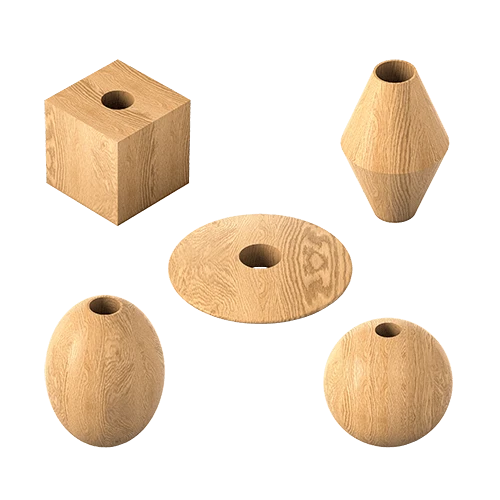
Round knob handle. It's a classic of the genre. A universal shape that works with any style — from Scandinavian minimalism to country classic. The circle is the calmest geometric form: it doesn't cut the eye, doesn't create direction, doesn't argue with the lines of the facade. Wooden Handle in the form of a smooth disc — a safe choice for most tasks.
Shaped handle. This is already a story. A star, a cloud, a geometric pattern, a paw shape — buy handles for children's using such non-standard shapes means adding a character to a children's room. Shaped handles are also appropriate on adult decorative furniture — a sideboard, a display cabinet, a cabinet with a special character.
Smooth flat button. Minimal protrusion above the facade, flat surface. For modern minimalist furniture. Such a button almost blends with the facade — it announces itself but doesn't demand attention.
Turned button. An elongated vertical shape with profiling, stepped transitions characteristic of turned solid wood products. This is a handle for classic furniture — a chest of drawers, sideboard, cabinet in a historical style. It echoes turned legs and relief decorative overlays.
Convex button. A hemisphere or mushroom shape with a good protrusion. Comfortable grip — fingers rest naturally. A good option for people who value ergonomics.
Flat button with a bevel. Beveled edges create a slight play of light on the surface. Such a handle looks neater than a simple disc and more interesting than a plain flat shape. A suitable choice for modern classic and neoclassical styles.
Wooden knob handles for classic furniture
Classics in the interior is discipline. Every detail must be in its place, in the right proportion, in the correct style. The handle here is no exception.
for classic furniture A wooden knob works especially convincingly. The turned shape of birch or oak echoes the turned legs, frame facades, and decorative overlays. It supports the overall language of the piece — without metallic dissonance, without plastic randomness.
The key is combination. If the chest of drawers stands in a classic interior with wooden legs a turned profile, wooden overlays in the center of the drawers and wooden veneer around the perimeter of the facades — the knob should support this image. A turned wooden knob in the same tone as the legs completes the system.
Knob size for classics: not too small, not too large. On a drawer of a classic chest of drawers 45–50 cm wide — a knob with a diameter of 40–50 mm looks proportional. On a wider buffet drawer — 55–65 mm.
Tone and finish. For furniture under enamel — the knob is painted the same color. For furniture under natural wood — the knob is tinted or varnished. Uniformity of finish is a mandatory condition of the classic style.
Knob handles for children's furniture
A children's room is a special space. Everything here must be safe, understandable, inspiring. And handles — including.
Shape first. For children's furniture, choose knobs without sharp edges, right angles, or thin protruding elements. A rounded knob, a smooth hemisphere, soft geometry — that's the right direction. Wood here is ideal: it doesn't cool the hand, doesn't glare, doesn't attract dust like metal.
Figurative buttons — decor and function. handles for children's furniture in the shape of stars, clouds, animals, geometric figures — these are not just handles. They are design elements that turn an ordinary chest of drawers into part of a child's world. A child is more willing to interact with furniture that has familiar, attractive shapes.
Practice. Before buying, take the handle in your hand and try to imitate the movement of opening a child's drawer. Make sure your fingers rest naturally, there is no risk of pinching the skin, and there are no sharp transitions. If you are choosing handles for small children (2–5 years old), the protrusion above the facade should be sufficient for a small palm.
Coating. buy handles for children's with a water-based coating or natural oil finish — preferable to paint coatings with a strong odor. Children's furniture should be harmless, and the handle material too.
Button handles for furniture restoration
This is one of the most inspiring scenarios for using wooden buttons. Old furniture with new handles is not just cosmetics. It is a rebirth.
Replacing plastic handles. A Soviet chest of drawers with Soviet handles. Familiar? Replace them with wooden buttons — and you will get a completely different item. The character will change radically: the chest of drawers will go from "grandmother's" to vintage, cozy, and desirable.
Uniform painting. The most effective technique: repaint the furniture body and handles in a single color. The furniture hasn't seen such a transformation since the factory. A white chest of drawers with white wooden buttons — a monolithic, expensive look. A dark blue cabinet with buttons in the same tone — a distinctive, bold piece.
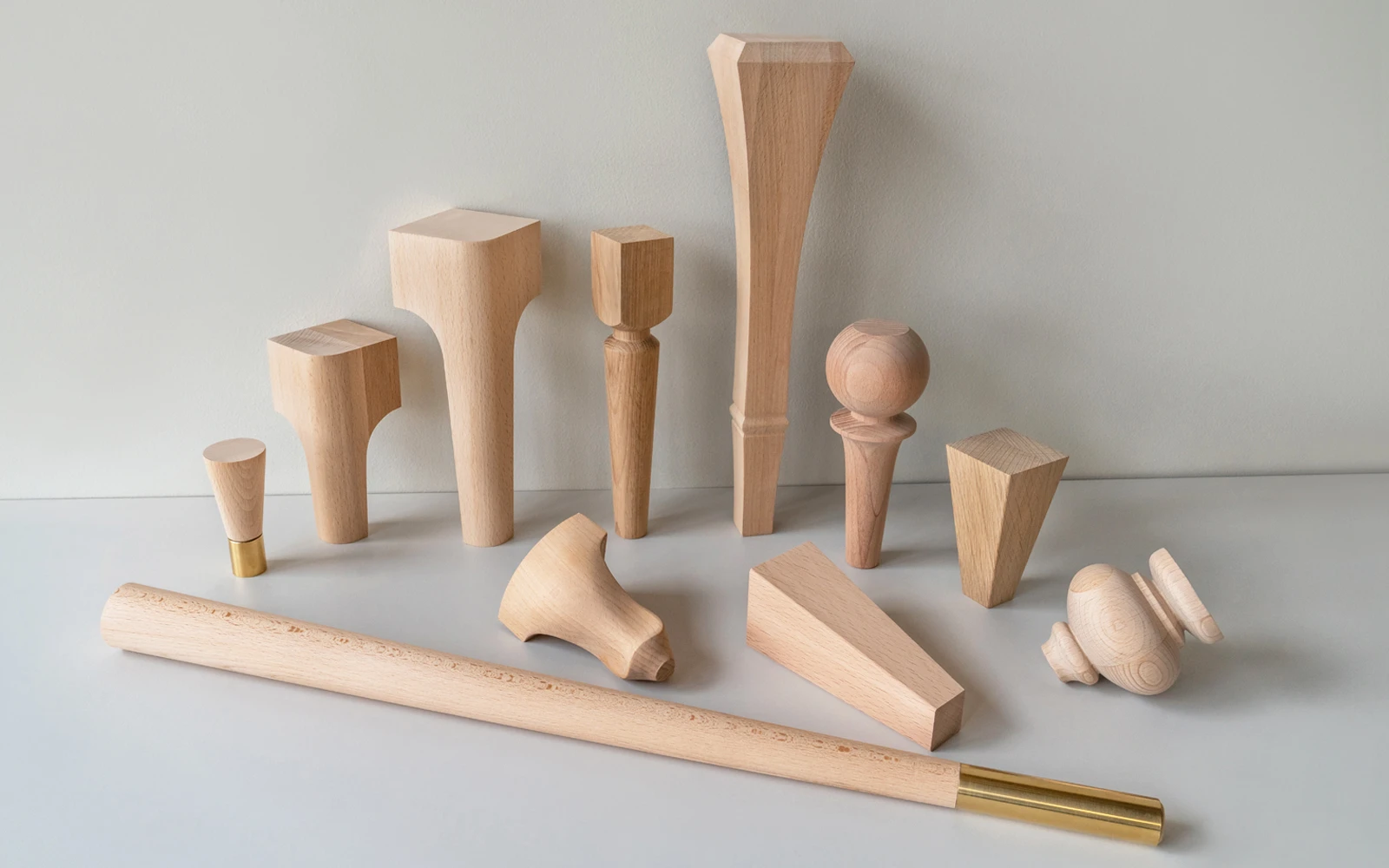
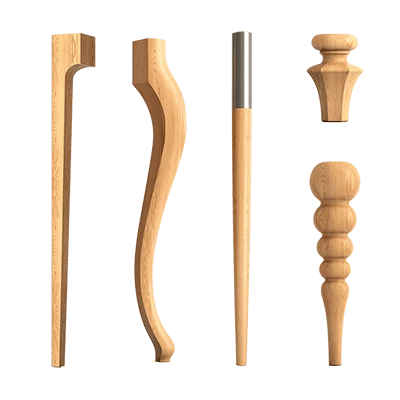
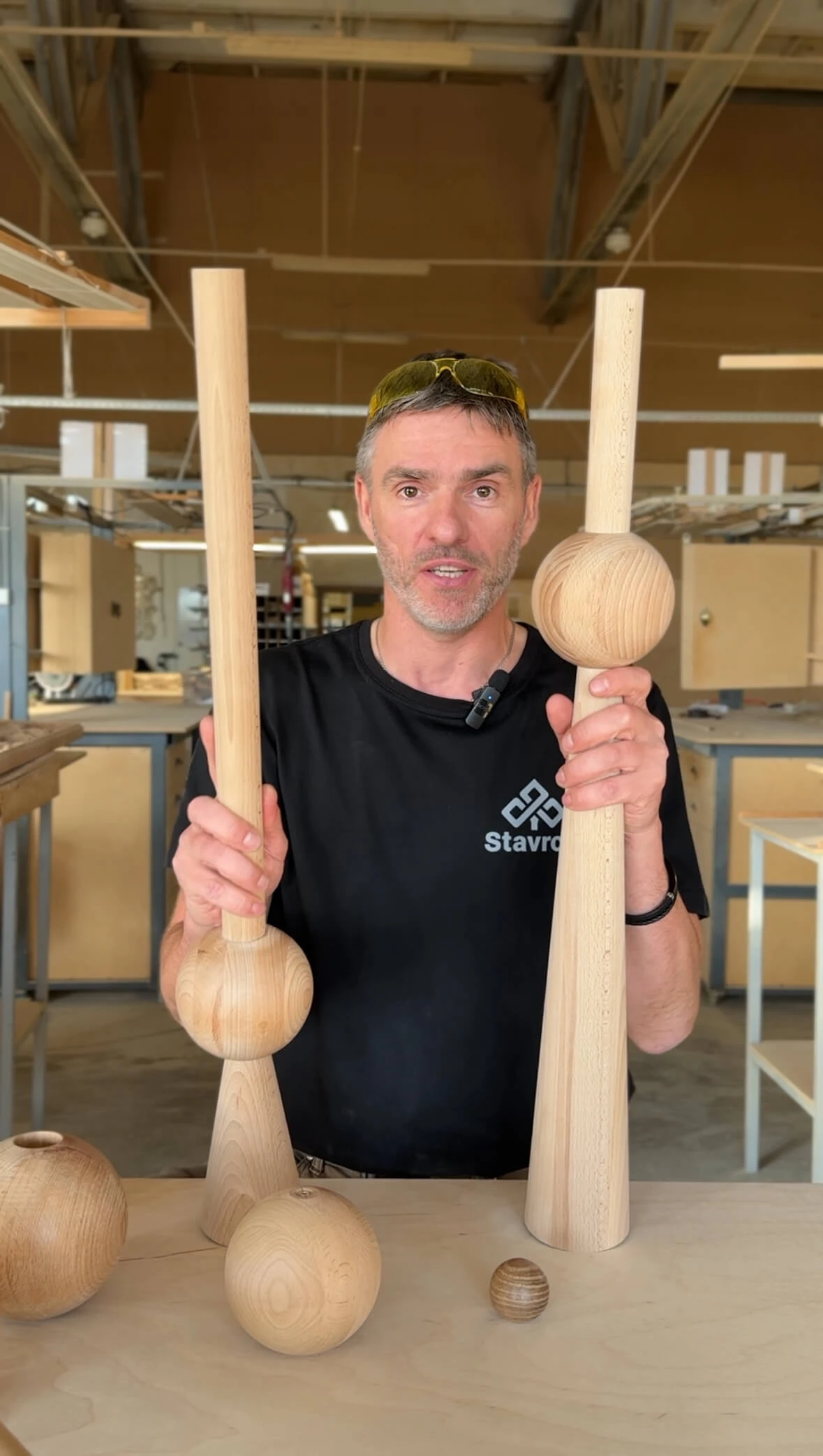
Add wooden legs. If together with the buttons you install Wooden legs — the chest rises above the floor, gains lightness, ceases to be a "box on the floor."
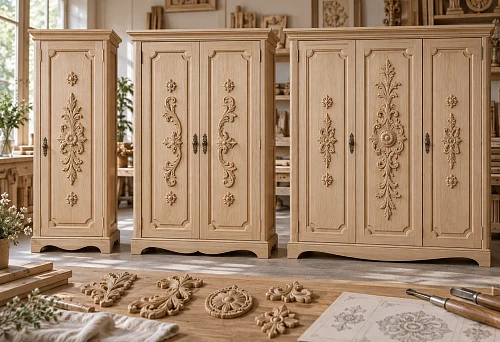
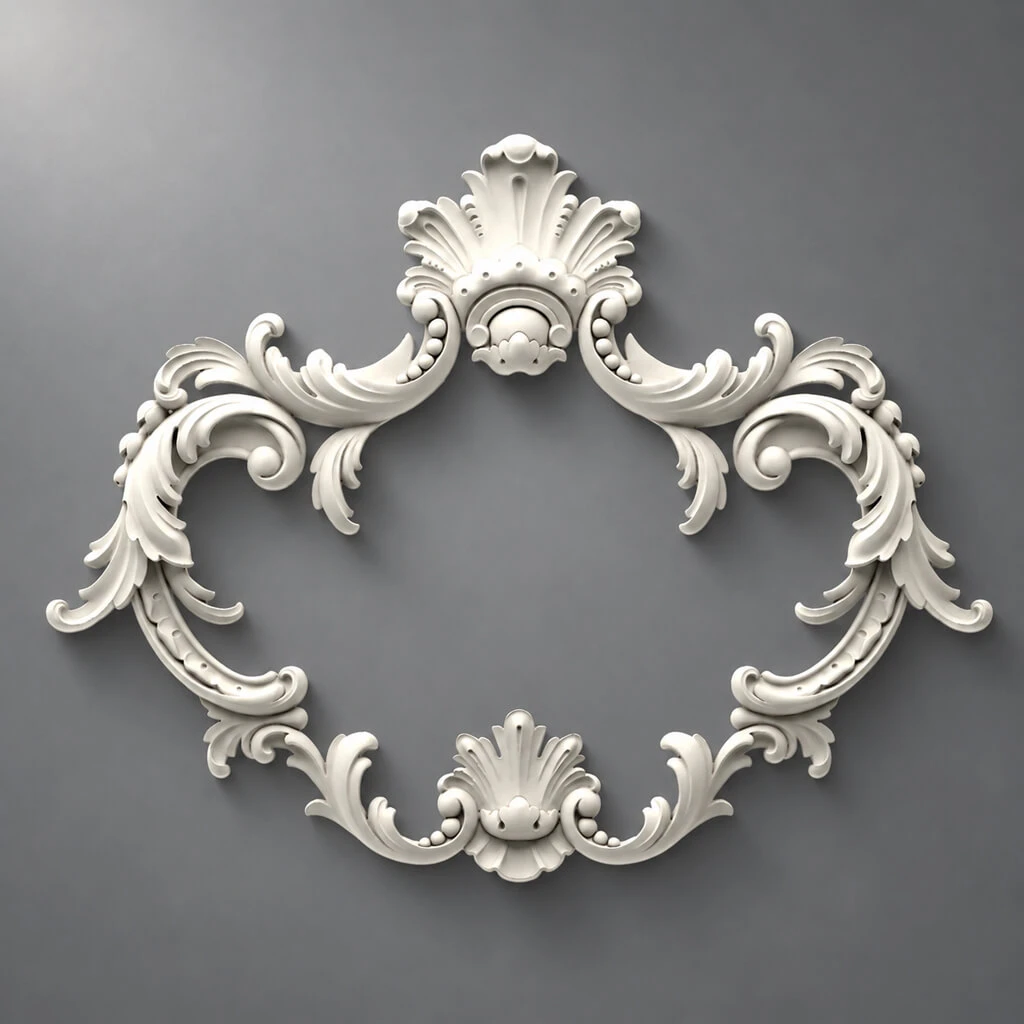
Add decorative overlays. decor for furniture in the form of wooden overlays on the center of the drawer creates a frame effect. A button inside such a frame looks like part of a well-thought-out design. Together — handles + legs + overlays — this is no longer restoration, but transformation.
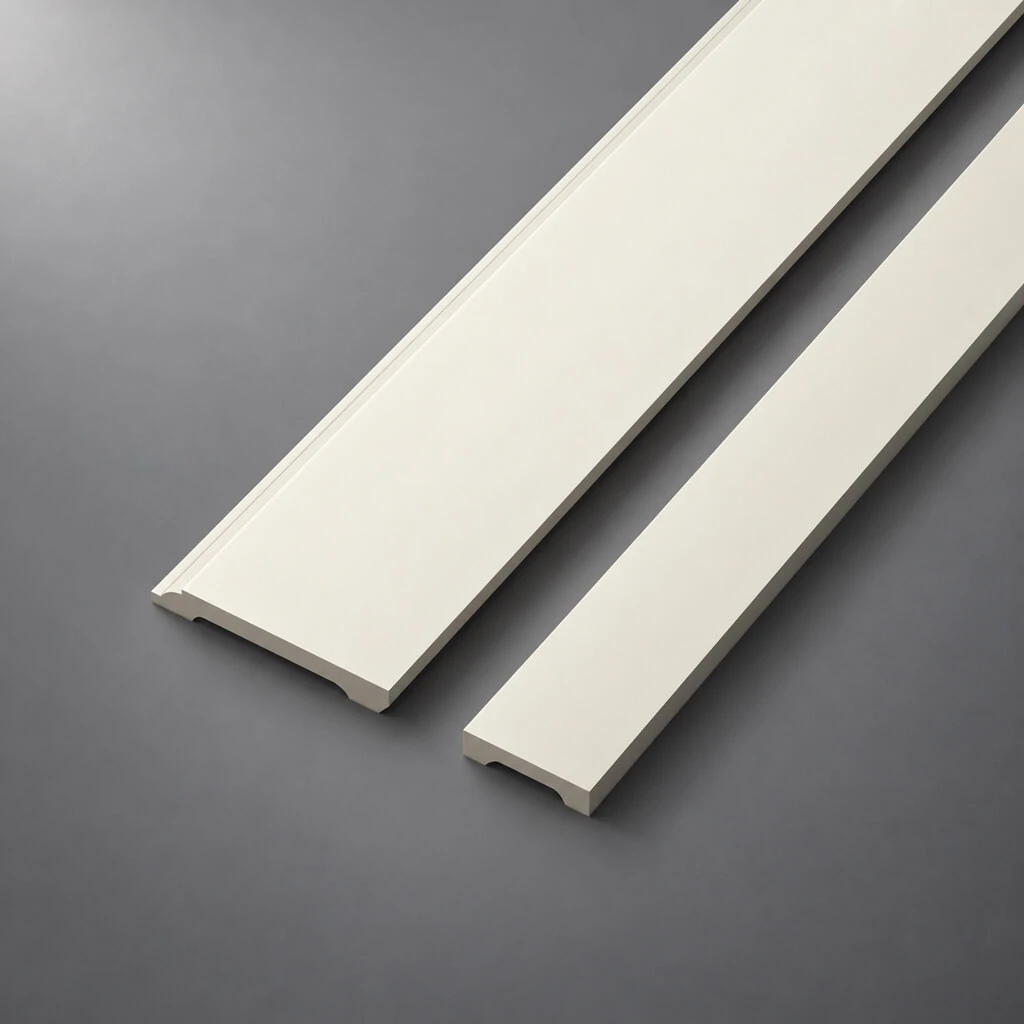
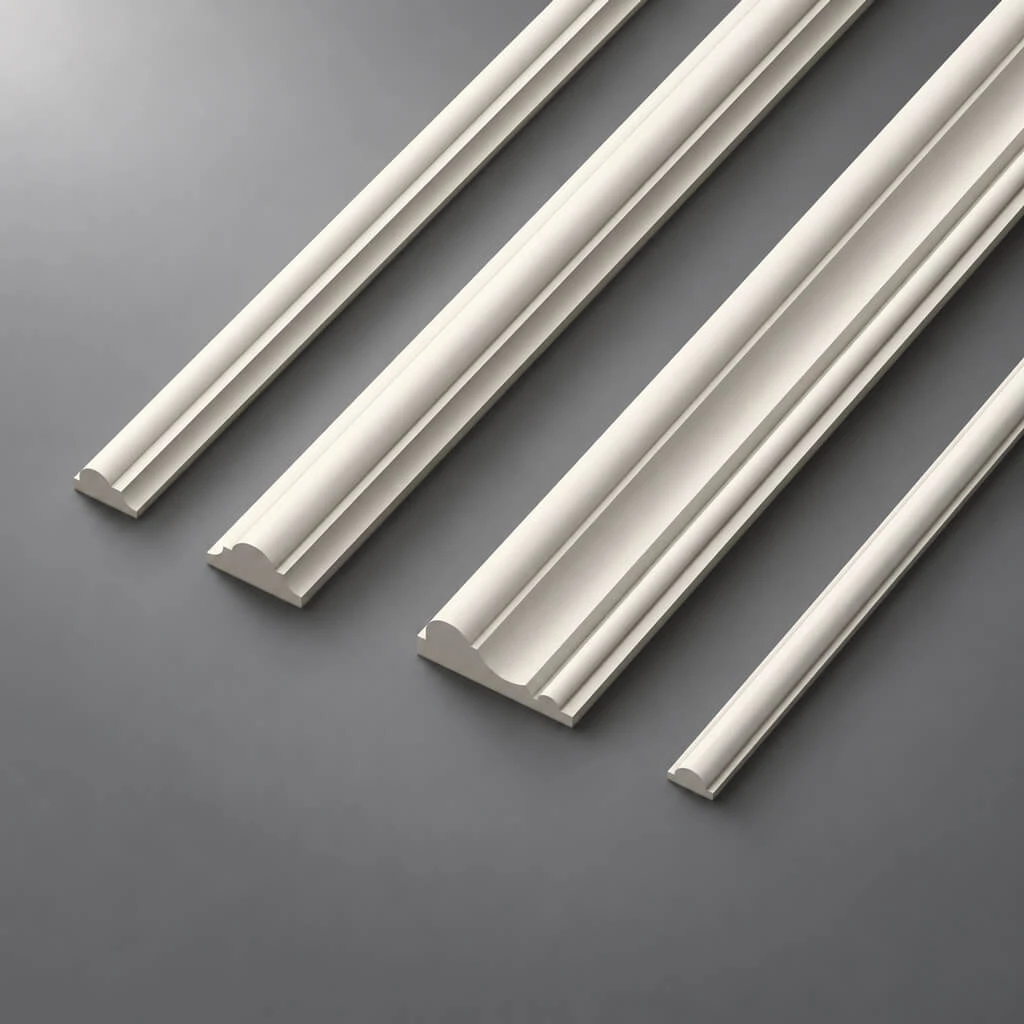
Layout on the facades. Wooden molding along the perimeter of the drawers — a horizontal frame that turns a flat facade into a framed one. A button in the center of such a frame is the final accent. The furniture looks like a handmade piece.
The economics of restoration. Wooden buttons are affordable hardware. A few pieces, a small can of paint, basic tools — and an old chest looks like a new, expensive item. Without buying new furniture, without construction waste, without extra costs.
How to combine button handles with other furniture decor
A wooden button is most fully revealed in a system. It can be good on its own — but in the right company, it works with a multiple greater effect.
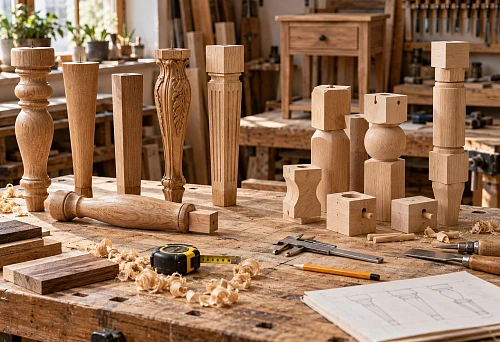
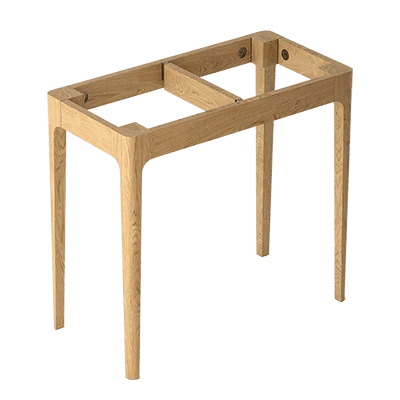
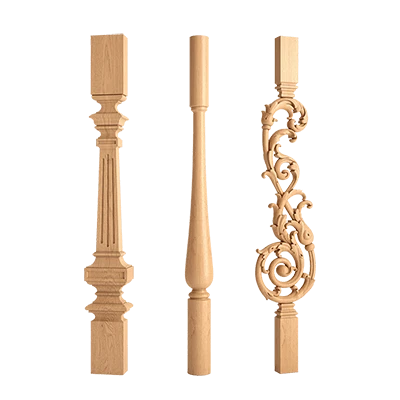
Buttons and wooden legs. Wooden legs under the chest or cabinet in the same tone as the buttons. This is the first and most obvious combination. Buy furniture legs without coating and painting together with the handles — maximum unity of the result.
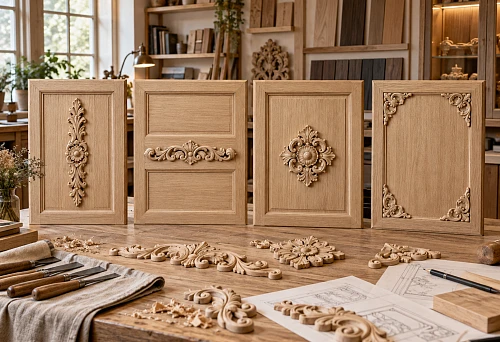
Buttons and decorative overlays. Wooden decoration in the form of overlays is placed in the center or along the perimeter of the drawer, and the button — as an accent point on this decorative plane. Together they turn the facade from a plane into a relief.
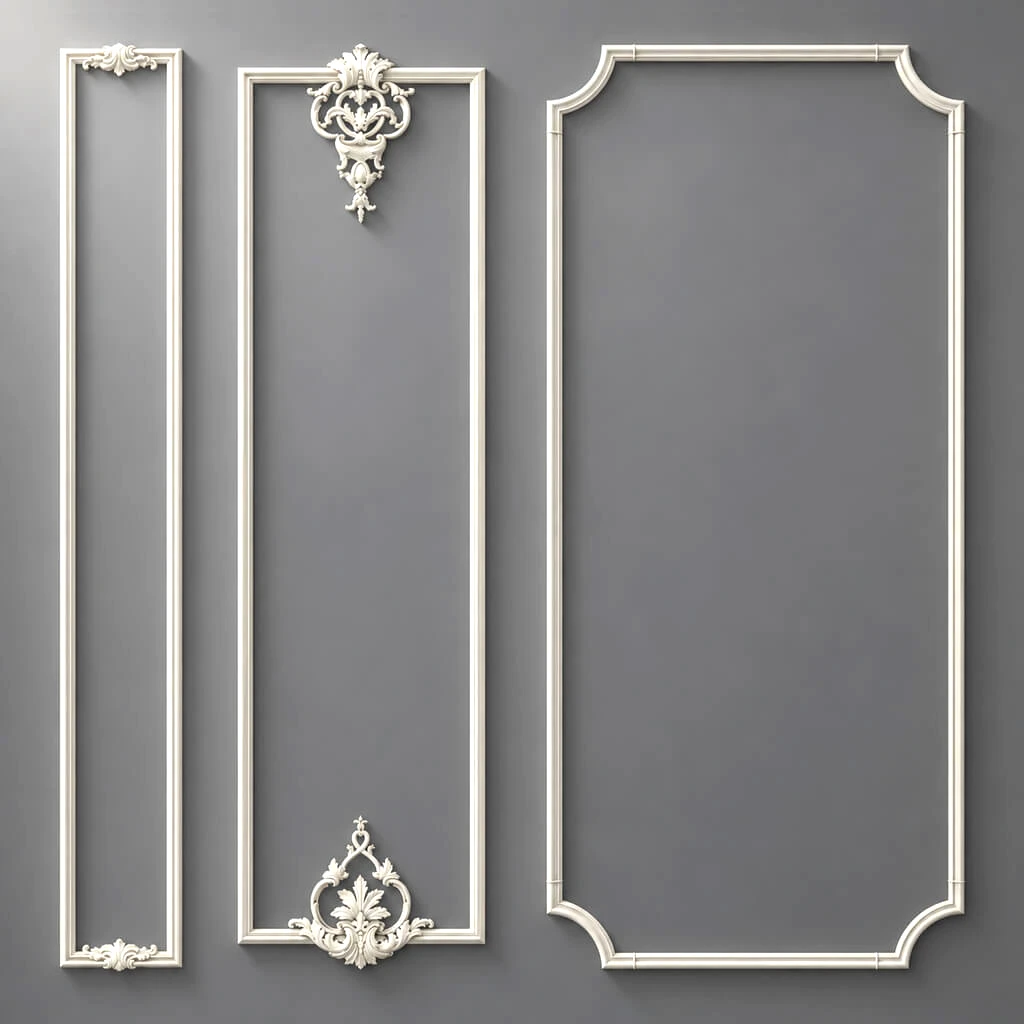
Buttons and layout. Wooden molding for furniture fronts creates a frame contour around the drawer. The button inside this contour is the central point of the composition. This is a classic technique for designing a chest of drawers or a sideboard.
Buttons and brackets. If the interior has open shelves on decorative brackets, wooden buttons on the adjacent furniture create a stylistic echo. One tone, one wood species — and the room reads as a single space.
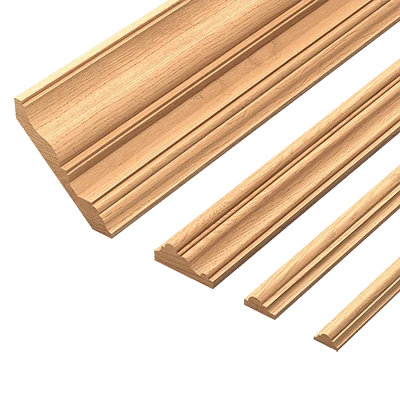
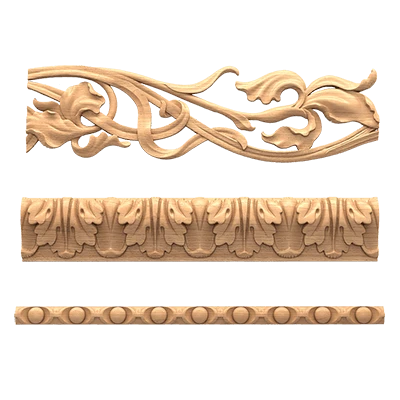
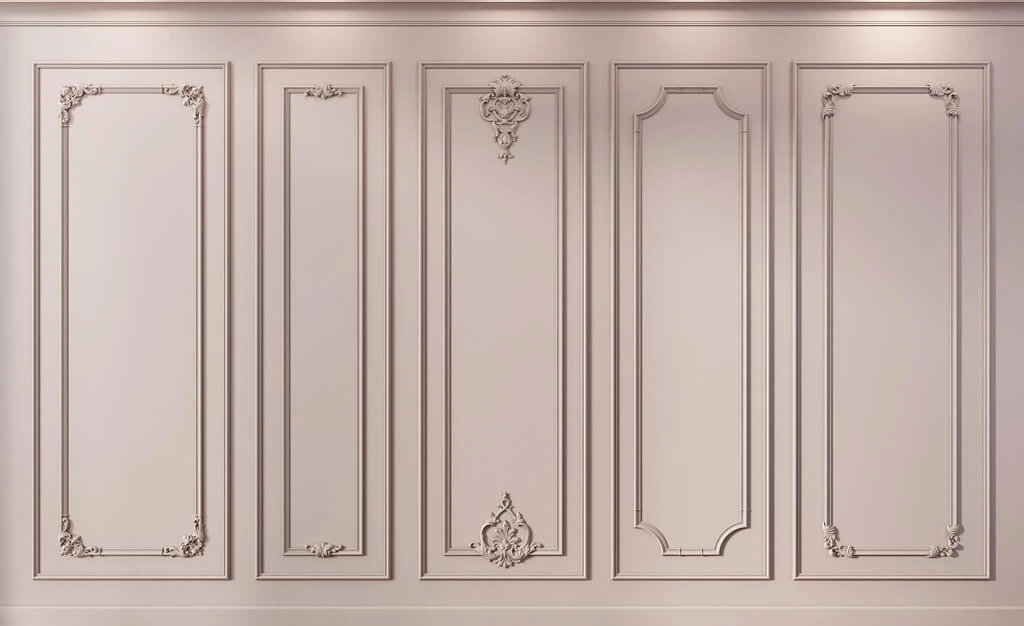
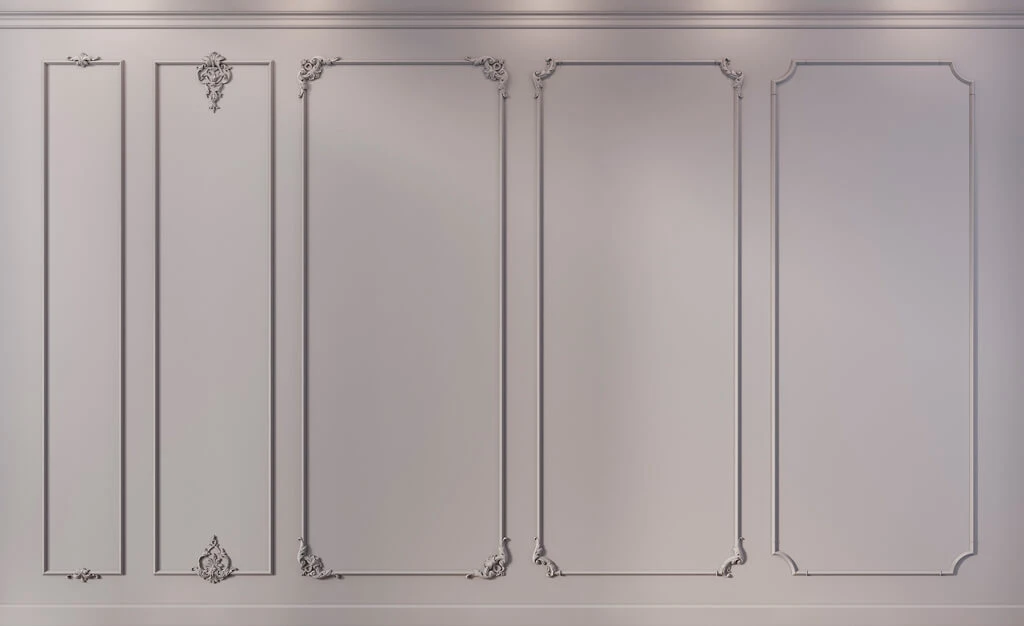
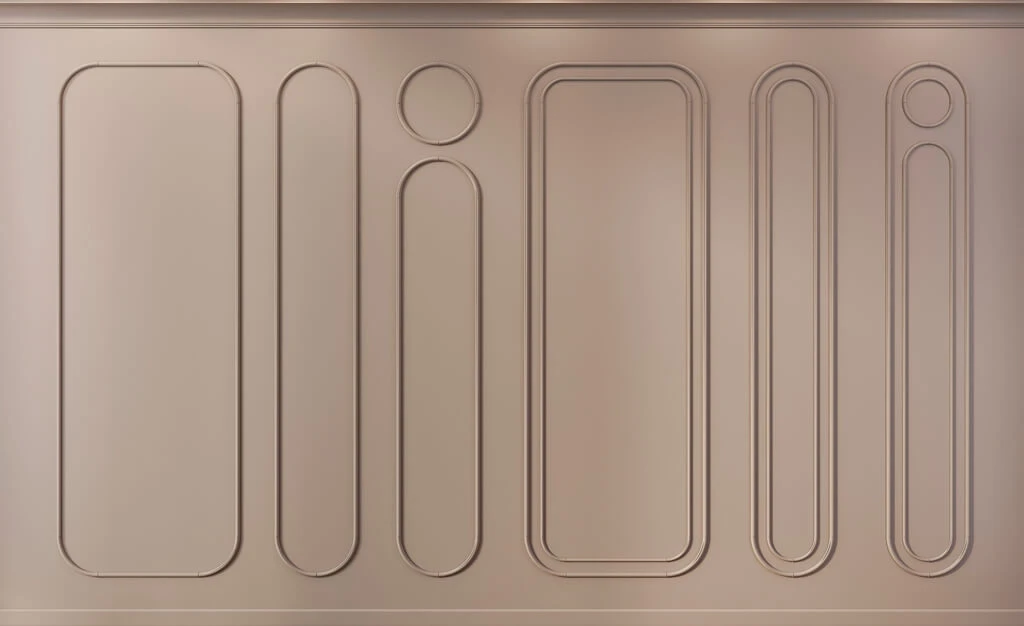
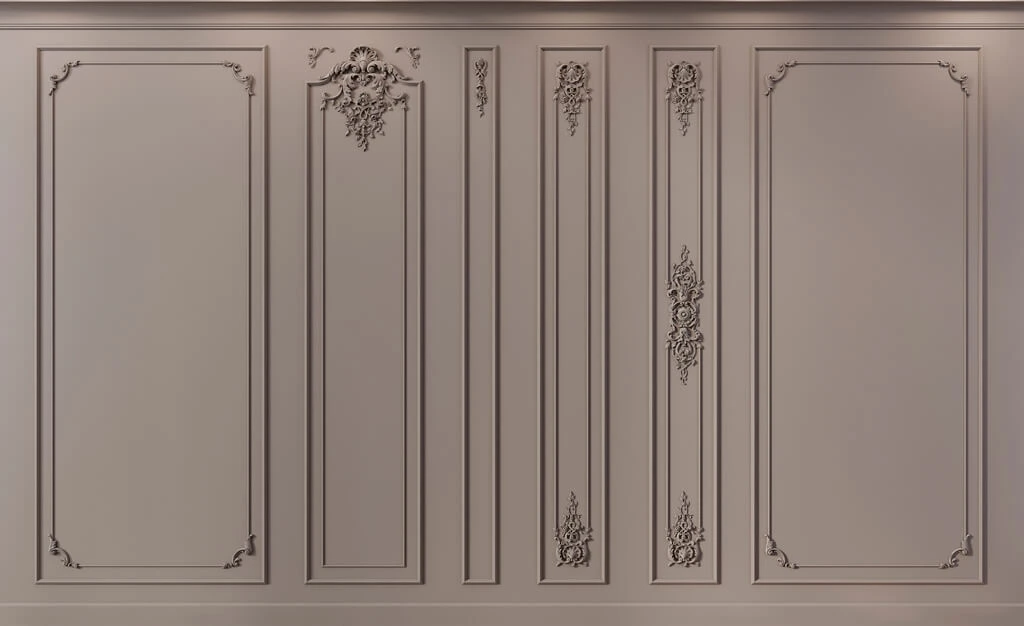
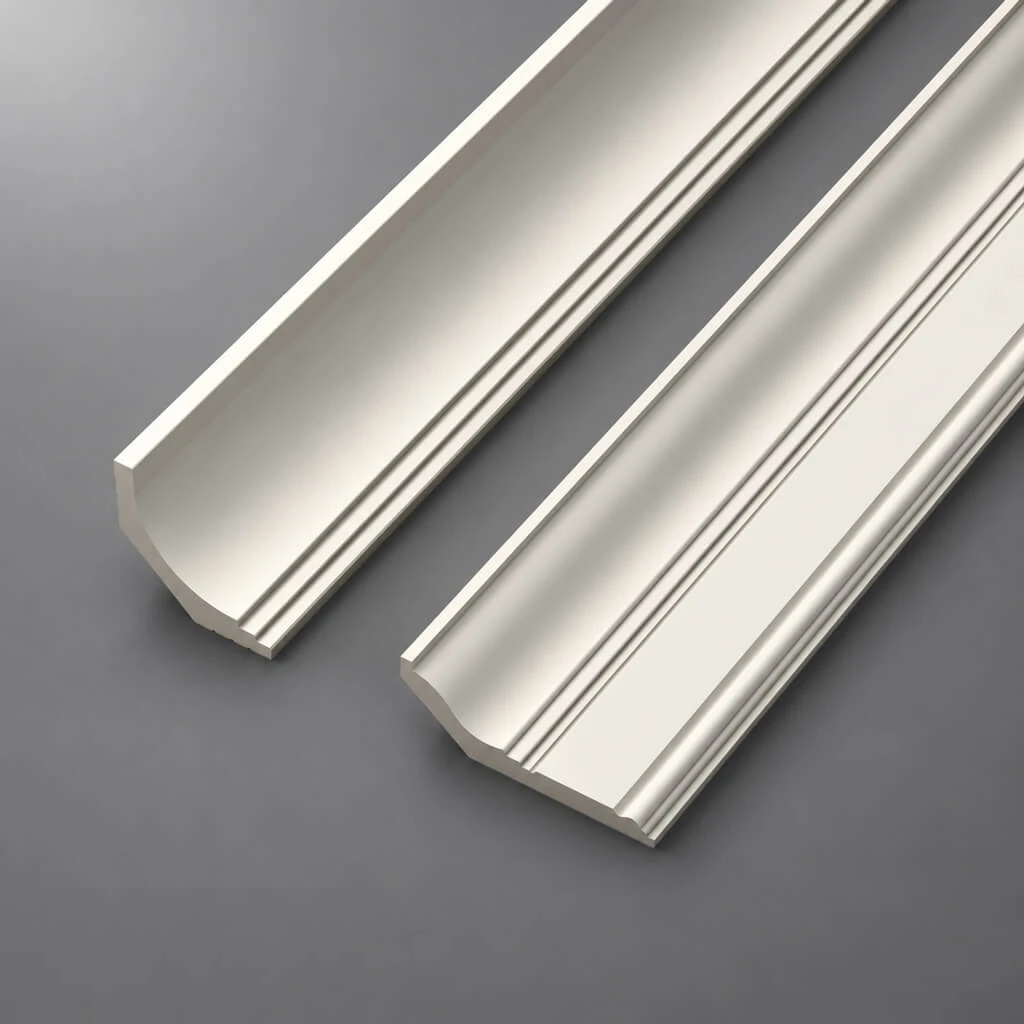
Buttons and moldings. Moldings from solid wood on the walls and wooden buttons on the furniture — this is a connected wooden interior system. Walls and furniture speak the same language.
The principle of a single tone. All wooden details in the space — handles, legs, overlays, brackets, moldings — should be in the same tone or very close. Contrast is acceptable as a technique, but only intentional, not accidental.
Coating: handle for enamel, varnish, or stain
This is a question to resolve before purchase, not after.
For enamel. If furniture is being repainted or painted from scratch — an unfinished wooden knob is painted along with the furniture. The surface is smooth, paint applies evenly. Important: before painting — sanding with 180–220 grit and primer. For pine — primer with anti-resin effect.
For varnish. If you need to preserve the natural wood texture. Varnish is transparent and reveals the grain. Birch under varnish — light, even. Oak — with pronounced pattern, rich. For visible parts under varnish — choose specimens without knots.
For stain. Stain adds color but preserves texture. Need to darken the knob to match dark furniture? Stain is a quick and effective method. Note: pine gives a blotchy result. Birch and alder — even.
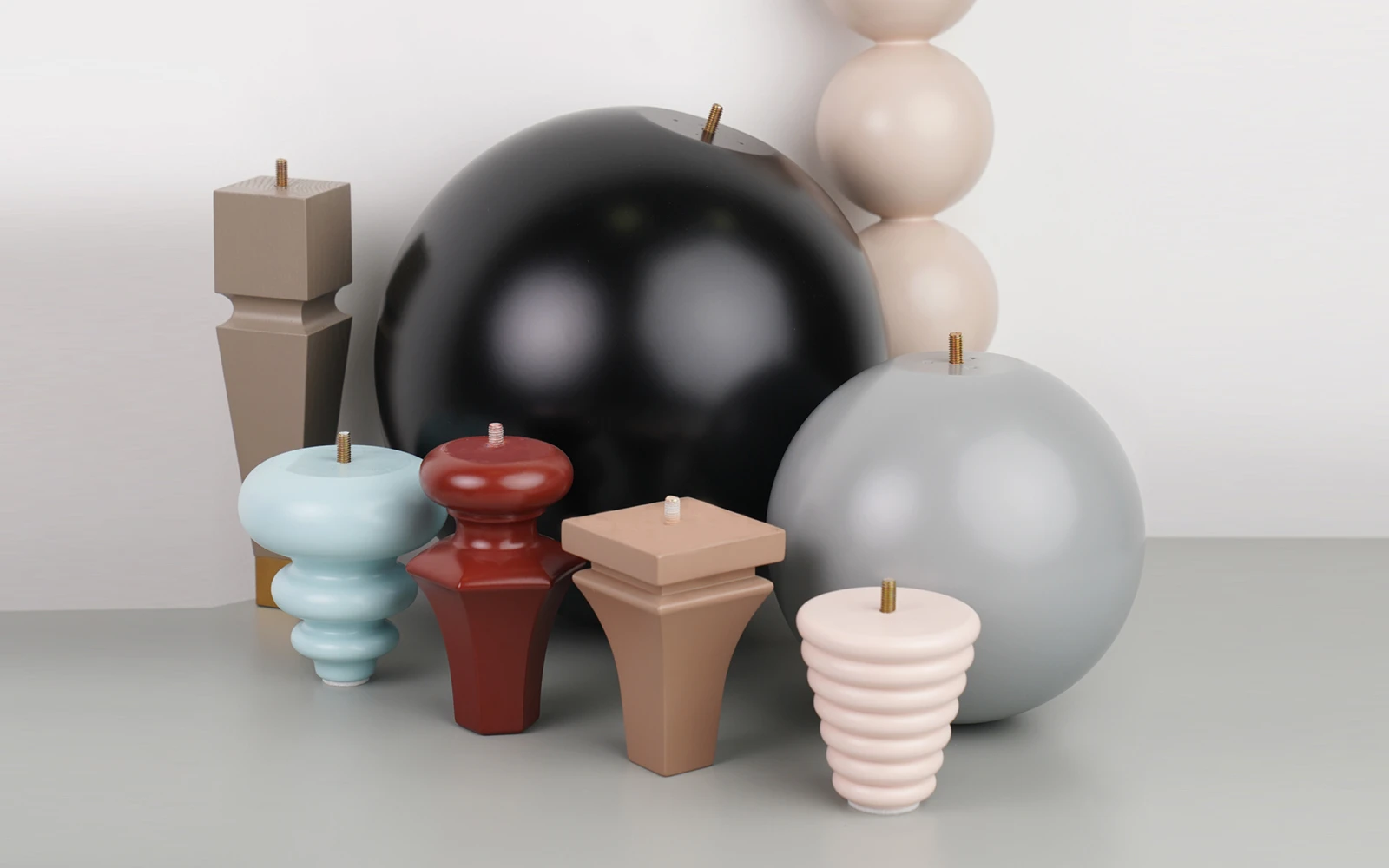
Already coated handles. If you don't want to bother with painting — choose buy wooden handles with a ready-made coating. Such handles are already prepared for installation: sanded, coated with varnish or enamel, require no additional treatment.
Practical tip. Always determine the color of handles before installing them. Painting an already mounted handle is inconvenient: paint gets on the facade, masking tape doesn't hold well. It's much better to paint the handle before installation, dry it, and mount it at the end.
Mistakes when choosing a wooden knob handle
Honest list — no softening.
Choosing a handle only by appearance. A beautiful knob in the catalog is one thing. On a specific facade — another. Look at size, proportions, protrusion above the facade.
Taking a button that is too small for a large facade. A small button on a wide drawer is a lost detail. Maintain proportion.
Putting a button on a heavy drawer. Buttons are for light and medium facades. A heavy door or a wide, deep drawer requires a pull handle.
Not considering grip comfort. Physically test it: hold it in your hand, ensure it's comfortable. A beautiful but uncomfortable handle will be annoying every day.
Not matching with legs and overlays. A wooden button works within a system. On its own, it's just a detail. Think systematically.
Forgetting about painting. If the furniture is being painted, remove the handles or cover them with painter's tape. Paint drips on wooden handles ruin the final result.
Mixing different shapes and styles. Round buttons on some drawers and shaped ones on others of the same dresser create visual chaos. One piece of furniture, one handle shape.
Not checking the fastening before installation. Make sure the screw goes into the facade correctly, does not split the wood, and is securely fastened. This is especially important for thin MDF facades.
What to buy together with wooden button handles
For those who approach furniture updating or restoration systematically.
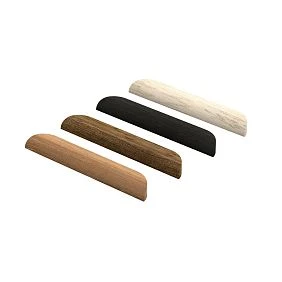
wooden hook handle — for those facades where a button is no longer sufficient: large drawers, heavy doors.
Wooden legs — for a complete update: lift furniture, add lightness and character.
Buy legs for furniture — without coating — to paint to match handles and fronts yourself.
decor for furniture — wooden overlays for framing drawers and fronts.
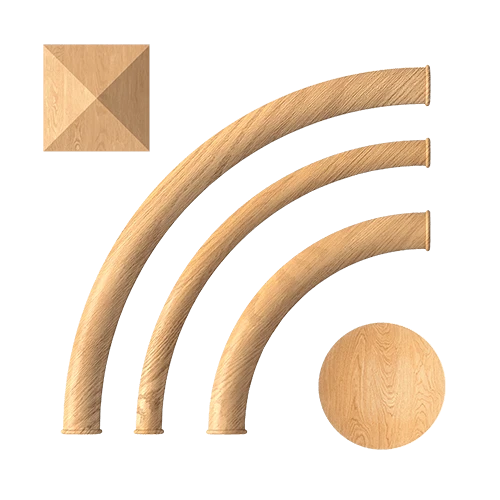
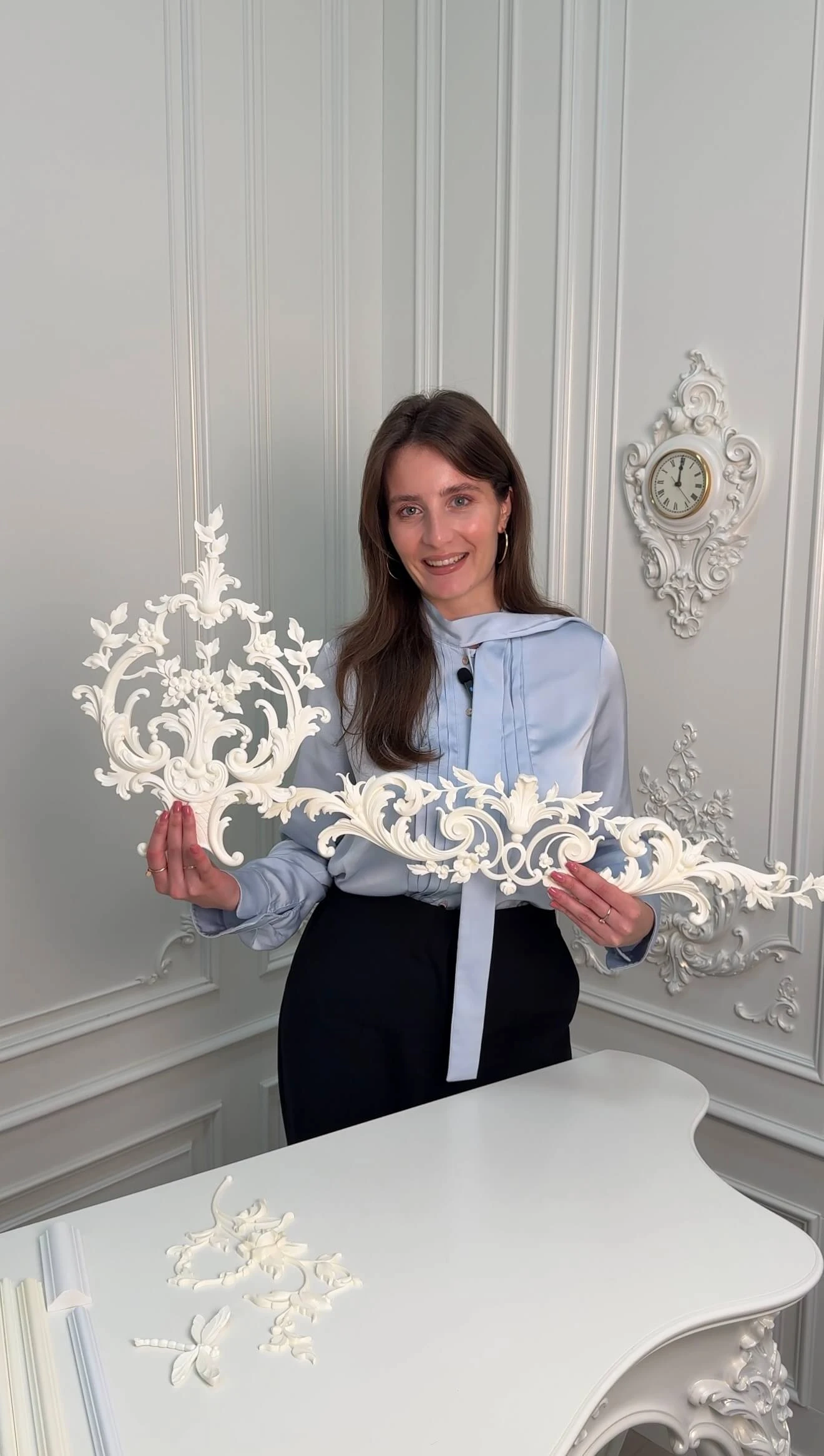
Wooden decoration — accent ornamental elements for decorative enrichment of furniture.
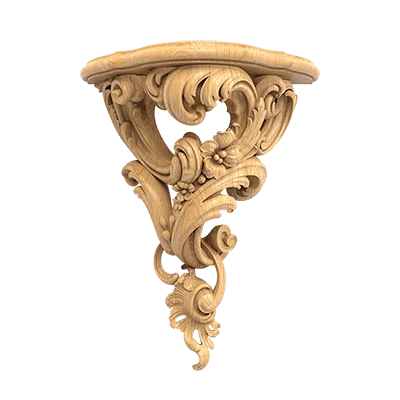
Furniture Bracket — for open shelves, consoles, and hanging elements in the same wooden style.
Decorative Bracket — for creating a stylistic link between furniture and wall decor.
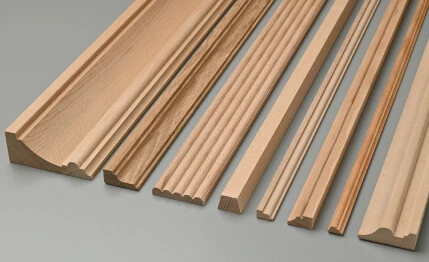
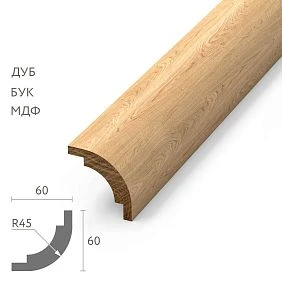
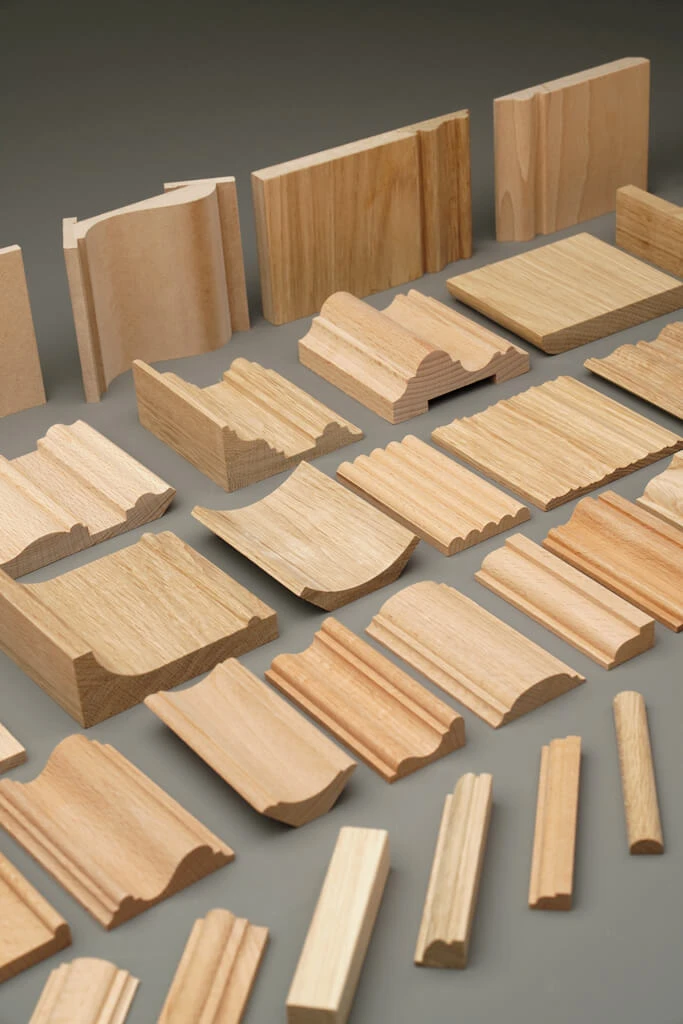
Wooden molding — for framing furniture fronts in a classic style.
Wooden molding for furniture fronts — solid wood moldings for professional finishing of drawers and doors.
Classic Furniture — if you are looking not only for hardware but also for ready-made furniture in a classic style with wooden elements.
furniture handle — full catalog of furniture handles of all types: knobs, pulls, handles with and without coating.
FAQ: Questions about wooden knob handles
What furniture is a wooden knob handle suitable for?
Wooden knob button Suitable for dressers, bedside tables, TV cabinets, cupboards, children's furniture, kitchen wall cabinets, sideboards, and display cabinets. Ideal for small to medium-sized fronts with moderate load.
How is a knob handle different from a pull handle?
Knob handle Attaches at a single point — looks compact, suitable for lightweight fronts. wooden hook handle Attaches at two points — more reliable for large and heavy fronts.
How to choose the size of a knob handle?
Consider the front width: for drawers up to 35 cm — knob 25–35 mm, for 40–55 cm — 40–50 mm, for wider ones — 55–65 mm or a pull. Maintain proportion.
Can wooden knob handles be painted?
Yes. Wooden handle Without coating, it can be painted with enamel, tinted with stain, or coated with varnish. Before painting — mandatory sanding and primer.
How to update furniture with button handles?
Replace old handles with wooden buttons, add Wooden legs и Decorative Inserts, repaint everything in a single color. The furniture will transform without replacing the body.
How to properly install a button handle?
Mark the center of the facade — horizontally and vertically. Drill a hole with a diameter for the bolt (standard M4 or M5). Insert the bolt from the back of the facade, thread the button on, and tighten. Check that the button does not wobble and sits firmly.
About the company STAVROS
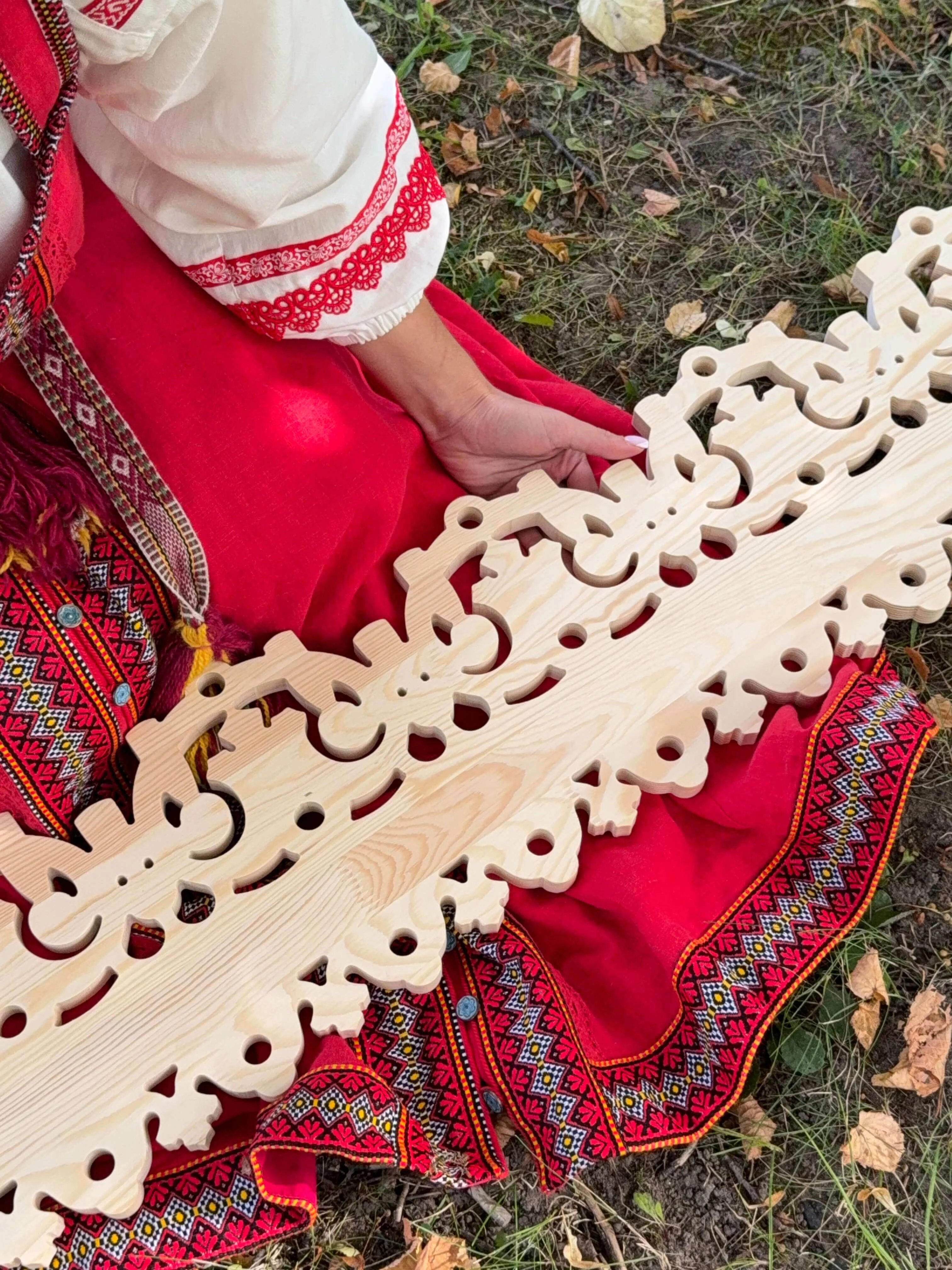
A wooden button handle is a part that your hand reaches for dozens of times a day. It should be comfortable, beautiful, and made of real wood — not imitation. STAVROS produces Wooden Furniture Handles from birch and oak solid wood: buttons, brackets, handles with and without coating. The STAVROS catalog features a complete system of wooden decor for furniture: handles, Wooden legs, applique, Brackets and a full range of moldings.
STAVROS is a manufacturer that thinks of furniture as a system. Every element — from handle to baseboard — is designed to work together: in tone, proportion, wood species, and quality of finish. When all interior details speak the same language, the result is always convincing.