

































Article Contents:
- Before choosing: what you need to know about frames and baguettes
- When to buy a ready-made frame
- When to buy a baguette
- Wooden frame vs plastic frame: an honest conversation
- Visual weight and material feel
- Compatibility with the interior
- Durability
- Possibility of painting and tinting
- How to choose the width of the baguette: proportion and scale
- Thin frame: 10–30 mm
- Medium frame: 30–60 mm
- Wide frame: 60–120 mm and more
- Proportion rule
- How to choose a frame color to match the painting and interior
- Frame matching the tone of furniture and wooden elements
- Contrasting Accent
- Neutral gallery approach
- Frame matching the tone of the painting itself
- Frame for a poster: minimalism as a principle
- Mat for a poster
- Series of posters: rule of a single profile
- Canvas painting frame: a special case
- Considering the stretcher thickness
- Frame or floating mount
- Frame style for painting
- Interior gallery frames: how to create a wall with paintings
- Gallery wall principles
- Where a gallery wall is appropriate
- Round and oval frames in a gallery
- Frame shape: not just a rectangle
- Square frames
- Oval frames
- Round frames
- Frames by room: which frame is needed where
- Living Room
- Bedroom
- Children's room
- Office
- Bathroom and hallway
- Matting: is it necessary and when
- When matting is mandatory
- When matting is recommended
- Matting color
- Mistakes when choosing a frame: how not to waste money
- What to check before buying: a detailed checklist
- Wooden molding: how to assemble a frame yourself
- Step 1: length calculation
- Step 2: 45° cutting
- Step 3: joining
- Step 4: installing glass, mat, and image
- FAQ: answers to the most pressing questions
- How to choose a frame for a painting?
- Which is better — a wooden frame or a plastic one?
- Can I buy molding and assemble a frame to my size?
- Which frame is suitable for a poster?
- How to match the frame color to the interior?
- Is a mat needed for a painting?
- How to properly hang a heavy frame?
- About the Company STAVROS
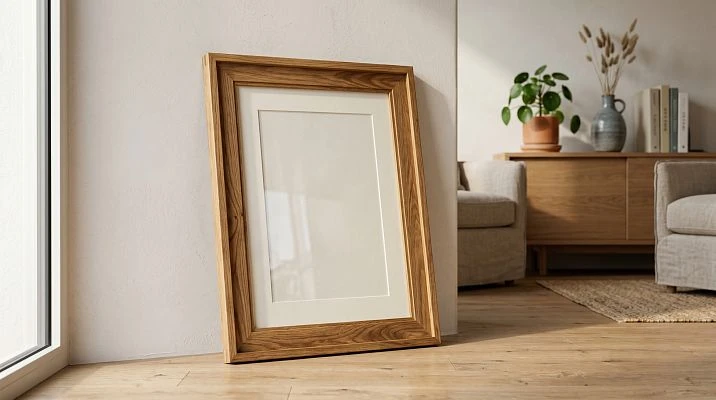
There are things that change everything — imperceptibly, but irreversibly. The right one Wooden picture frame — is exactly that kind of thing. It doesn't shout about itself, but without it, the painting looks unprotected, the poster temporary, and the photograph accidental. The frame completes the work, connects it to the interior, gives it weight and a place in space. And that's why choosing a frame is not a technical question of "what size," but a question of how you want to see your space.
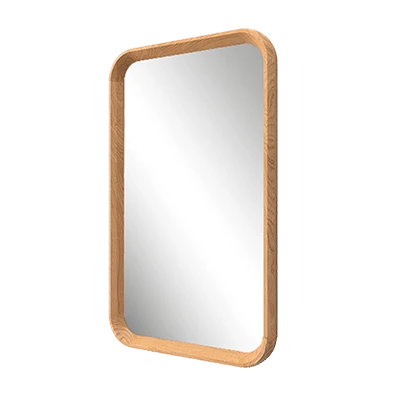
View wooden frames and STAVROS molding — ready-made solid wood frames and profile molding for any format and style.

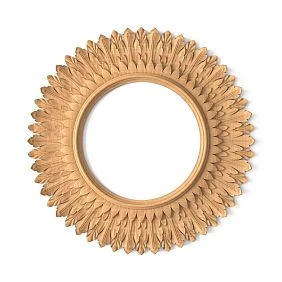
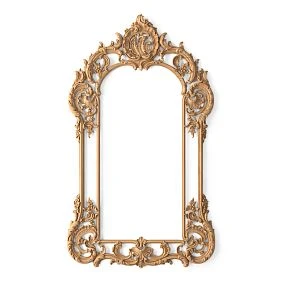
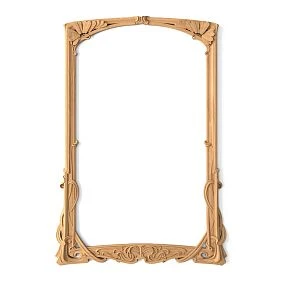
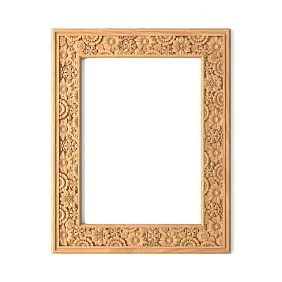
Before choosing: what you need to know about frames and molding
Many people use the words "frame" and "molding" as synonyms. However, these are different concepts, and understanding the difference is the first step to making the right choice.
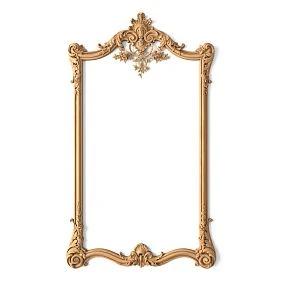
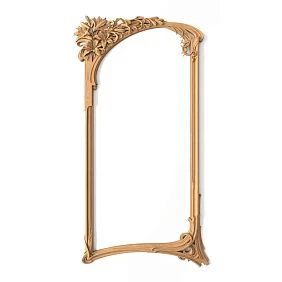
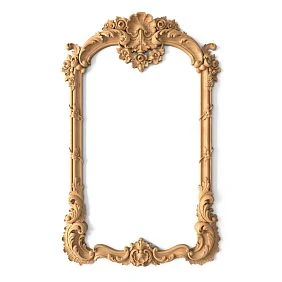
A frame is a finished product. Four edges cut at a 45° angle and joined into a single structure of a specific size. The frame is sold as a finished product: the internal size is fixed, and you need to select the artwork for it or order a frame for specific image dimensions.
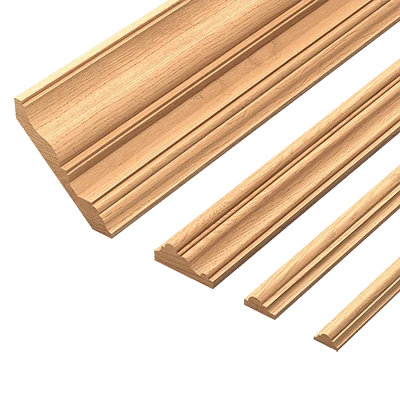
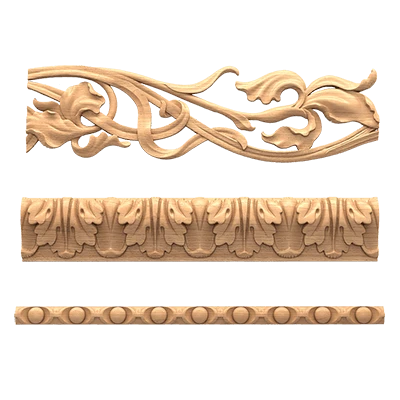
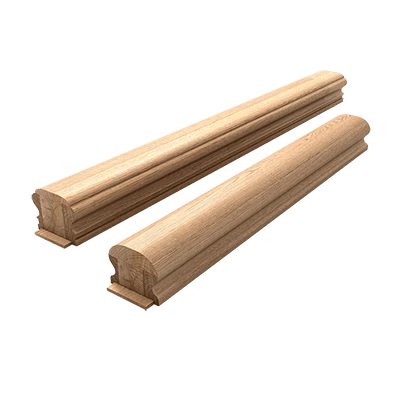
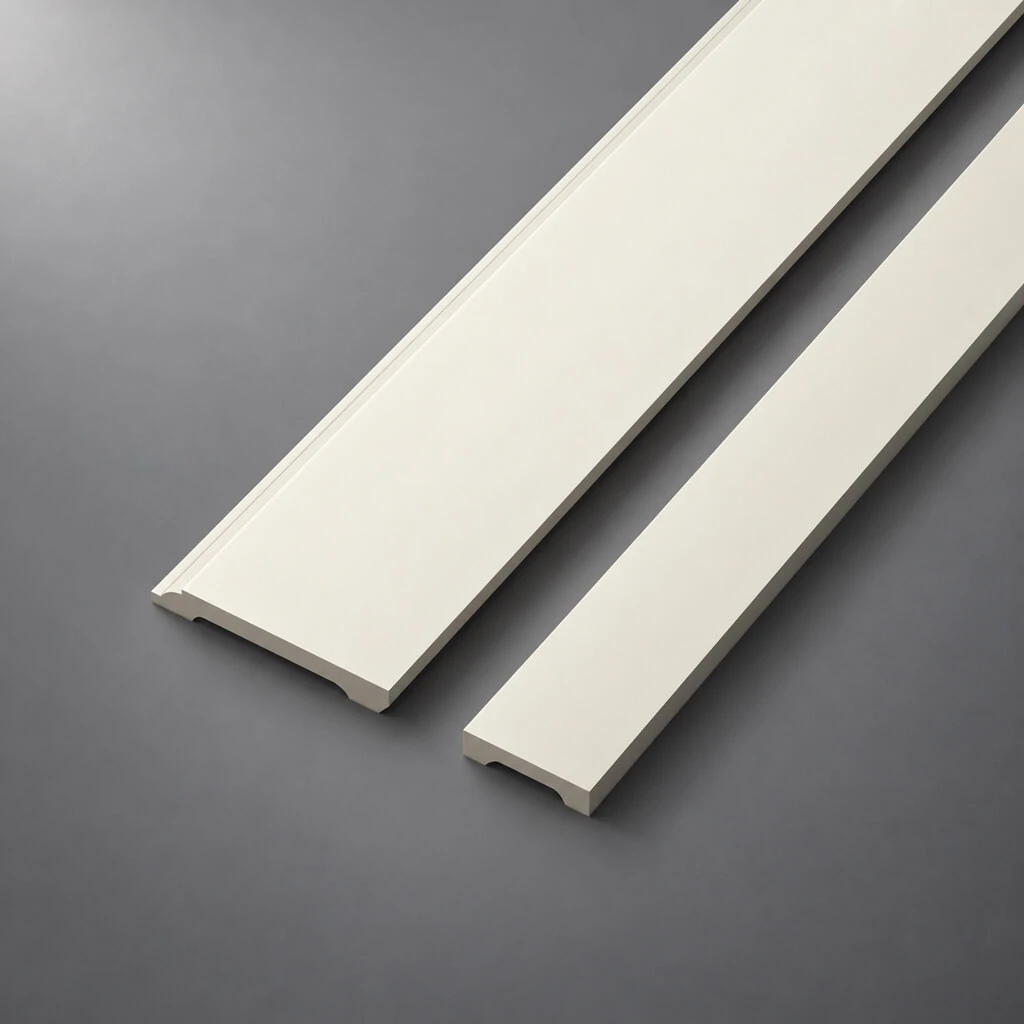
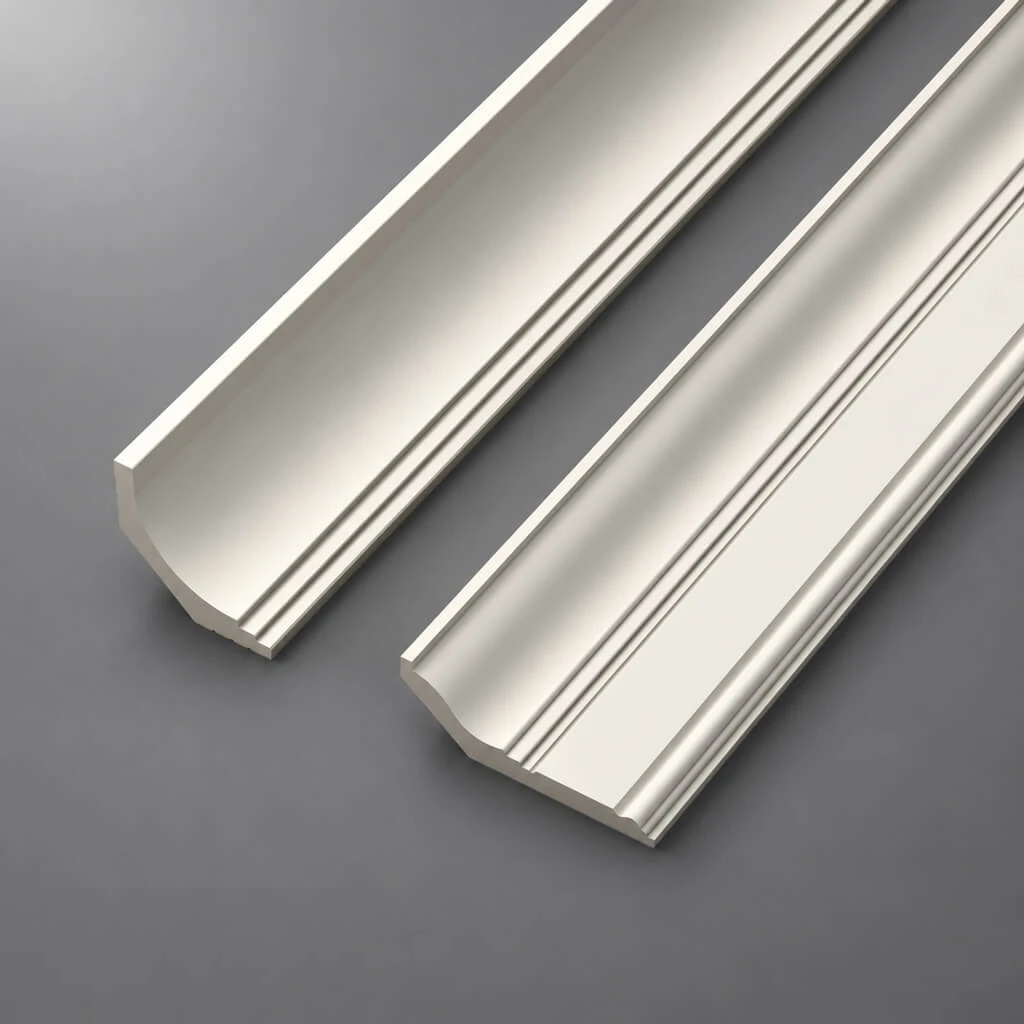
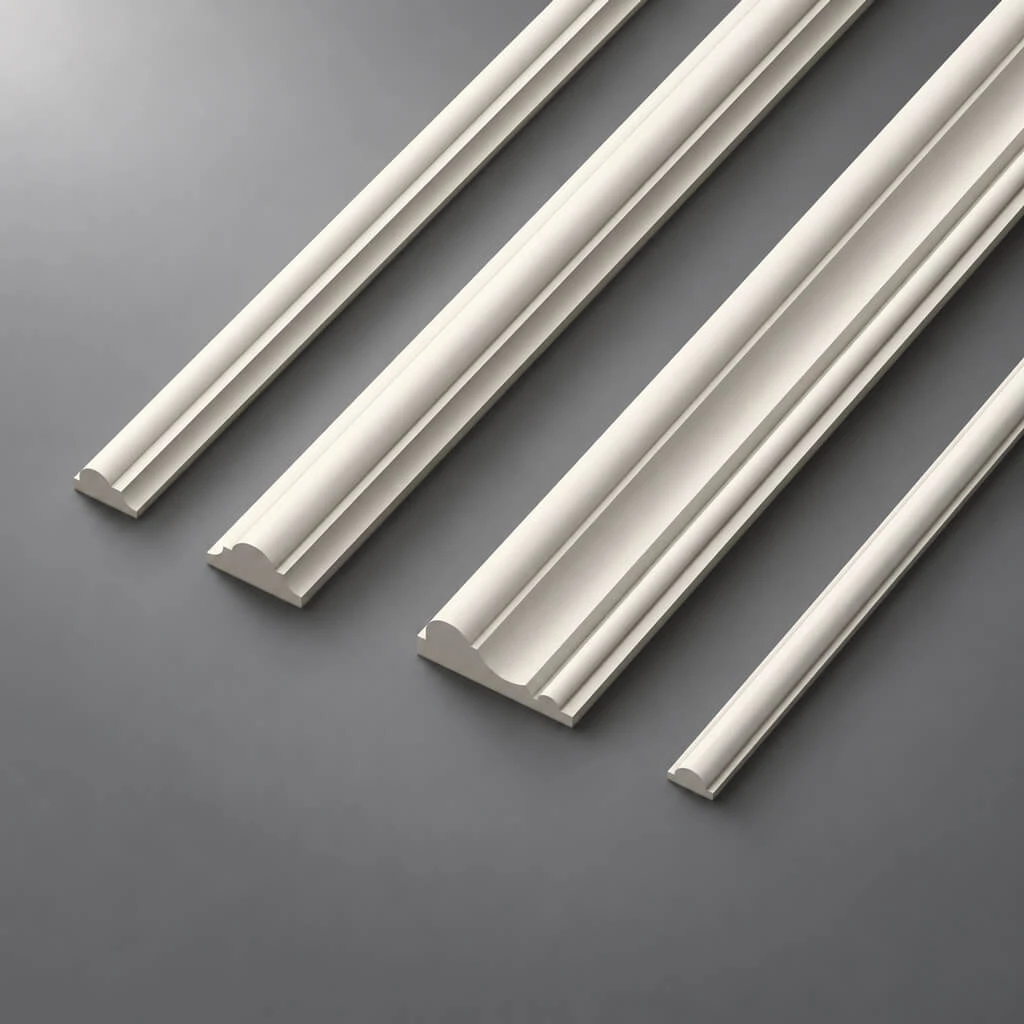
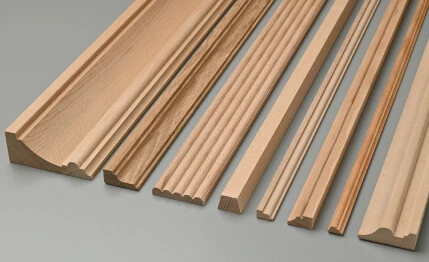
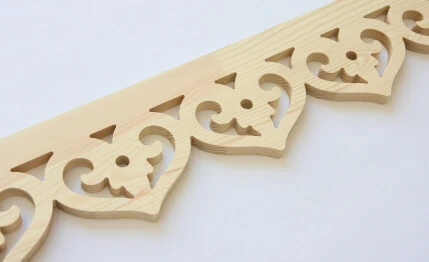
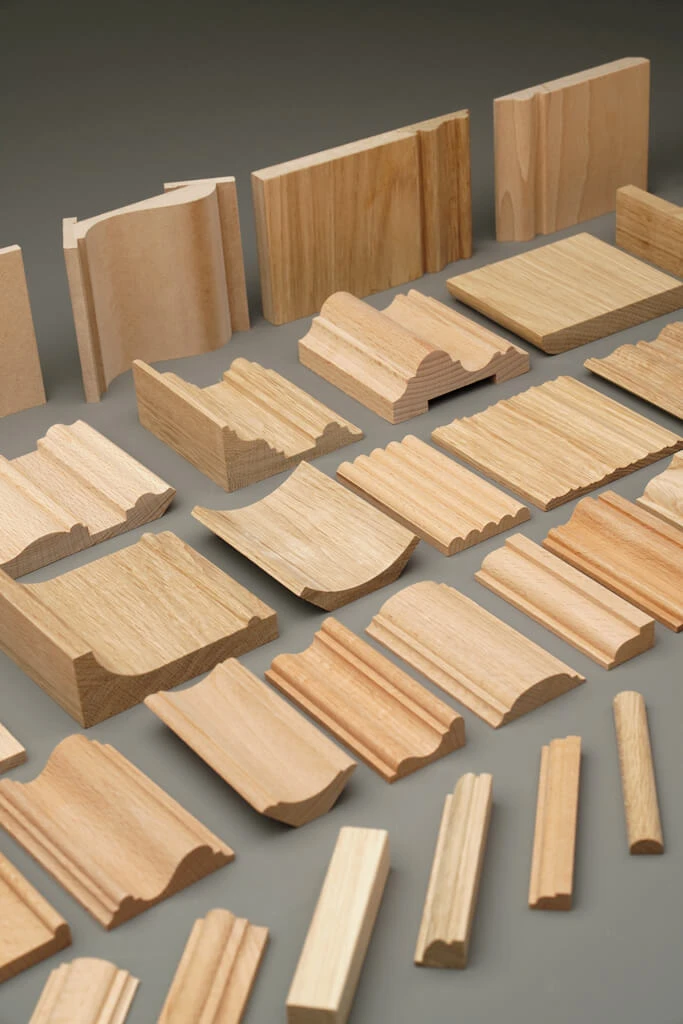
Molding is a profile strip from which a frame is assembled. Molding is sold by the meter or in cut lengths. You can assemble a frame of any size from it — by cutting the corners yourself or having it done in a workshop. Buy molding for paintings by the meter is convenient when you need a non-standard format, a series of frames, or planned framing work.
This is a fundamental fork that needs to be made at the beginning — before starting to understand profiles and colors.


When to buy a ready-made frame
Ready-made frame for a painting is optimal in several situations: the work has a standard format (A4, A3, 30×40, 40×50, 50×70 cm and similar), when you need to quickly frame a ready-made poster or photo, when precision of execution without self-assembly is important.
Standard formats cover most tasks: typographic posters, prints, paintings on paper, photos from photo studios — almost all of this comes in standard sizes.
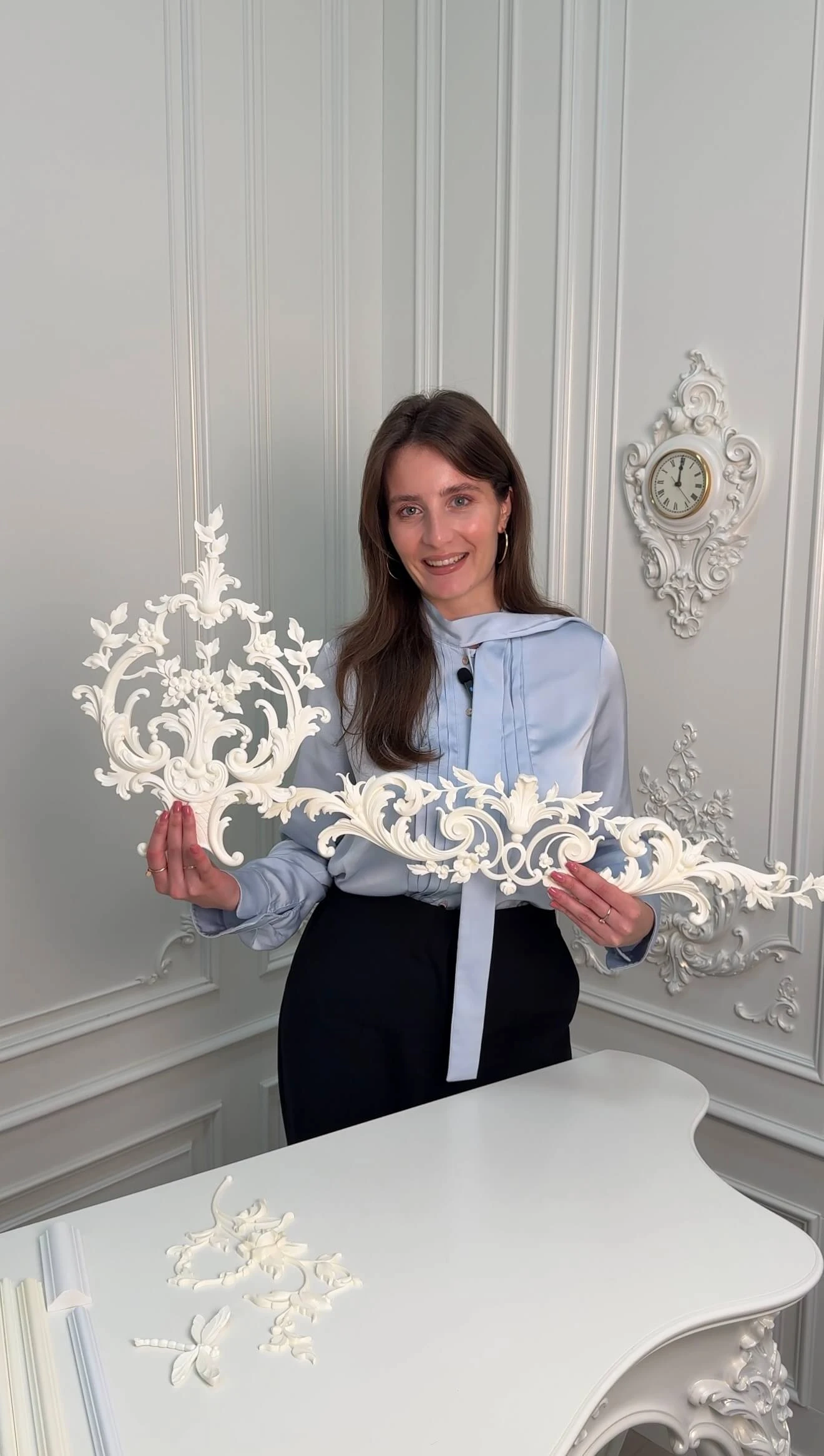
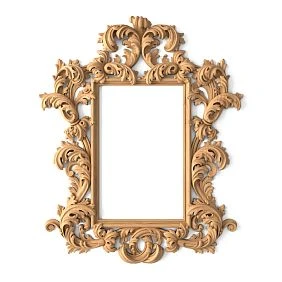
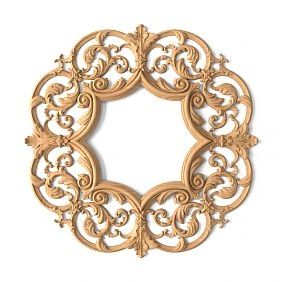
Our factory also produces:
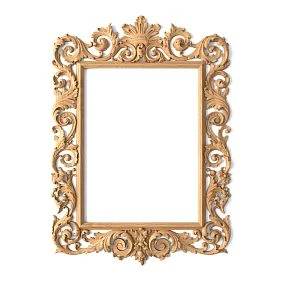
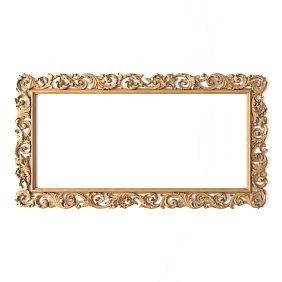
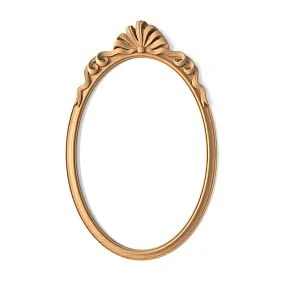

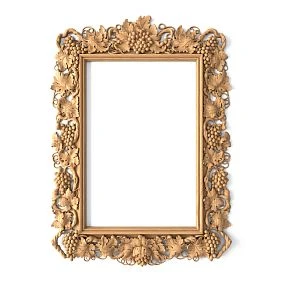
When to buy baguette
wooden picture molding — a choice for non-standard works: canvas on a stretcher with an atypical size, original painting with a size of 73×89 cm, a series of ten posters that need to be framed in one profile. From molding trim you can assemble a frame for any size — and this is the main advantage.
Designers and decorators almost always work with baguette: it gives complete freedom of formatting. Picture framing workshops also purchase Wooden Picture Frame in rolls and work with it as a professional material.
Get Consultation
Wooden frame vs plastic: an honest conversation
The market is full of cheap plastic frames that fill store shelves. They are affordable, lightweight, and look decent in photos. But in a real interior, the difference between a wooden and a plastic frame is immediately visible.
Visual weight and material feel
A wooden frame has physical density and a warm visual tone. Wood reflects light differently than plastic: it has a soft, unobtrusive surface shimmer that feels alive. Plastic, no matter how it imitates wood, always looks like an imitation — flat, monochrome, slightly artificial.
When a painting is hung on the wall in a wooden frame and next to it in a plastic one, the difference needs no explanation.
Compatibility with the interior
Wooden picture frames fit organically into any interior with wooden elements: parquet, wooden doors, Solid wood skirting boards, furniture made of veneer or solid wood. They speak the same language as these materials.
A plastic frame in a classic living room with oak parquet and wooden doors is always a mismatch. Not a disaster, but a mismatch.
Durability
A wooden frame, with proper care, lasts for decades. Plastic turns yellow and becomes brittle after a few years — especially in bright light and temperature fluctuations.
Possibility of painting and tinting
wooden picture frame accepts paint, stain, varnish, patina, wax. It can be repainted if the interior changes. Plastic is much more difficult to repaint — paint adheres poorly to a smooth plastic surface.
| Parameter | Wooden frame | Plastic frame |
|---|---|---|
| Visual quality | High, natural | Imitation, often noticeable |
| Compatibility with wood | Organic | Contrasting, artificial |
| Service life | Decades | 3–7 years |
| Repaintability | Yes, any composition | Difficult, special soils |
| Weight | Bigger, more reliable on the wall | Light, unstable |
| Aesthetics in classics | Flawless | Inappropriate |
| Price | Higher | Below |
The conclusion is simple: if a painting, poster, or photograph is important to you, it deserves a wooden frame.
How to choose the width of the baguette: proportion and scale
The width of the baguette is a proportional task. There is no single correct answer, but there is a clear logic that helps avoid mistakes.
Thin frame: 10–30 mm
A narrow profile is for small works, minimalist posters, and graphics. A thin frame does not draw attention to itself but delicately defines the boundaries of the image. For a modern, Scandinavian, or minimalist interior, this is an impeccable choice.
A thin profile is also great for a series of works: when a gallery of 6–8 posters or photos in identical thin frames hangs on the wall, a gallery exhibition effect is created easily and elegantly.
Medium frame: 30–60 mm
A universal range in which most frames work. Picture frames of medium profile are suitable for watercolors, engravings, small paintings, A2–A1 posters, and family photos.
A medium profile is a compromise between conciseness and expressiveness. It is present in the space but does not dominate.
Wide frame: 60–120 mm and more
Wide Wooden picture frame is already a decorative element in itself. A wide profile is appropriate for:
-
Classical oil painting — especially for landscapes and portraits in the academic style
-
Large works (from 70×90 cm and larger) — a wide frame "holds" the large format
-
Interiors with a pronounced classical character — a living room with stucco, a study with dark panels, a formal dining room
-
Mirrors — a mirror frame is traditionally wider than a frame for a painting of a similar size
For a small watercolor 20×30 cm, a wide frame creates the effect of a "postcard in a suitcase" — the frame will overwhelm the image.
Proportion rule
Practical rule: the width of the frame should not exceed 1/6 of the shorter side of the image. For an image 30 cm wide — a frame no wider than 50 mm. For an image 60 cm — no wider than 100 mm. This is a guideline, but it works almost always.
How to choose the frame color for a painting and interior
The color of the frame is perhaps the most subtle aspect of the choice. There are no mandatory rules, but there are several proven approaches.
Frame matching the tone of furniture and wooden elements
The safest and at the same time most elegant option. If the room has oak parquet, then wooden frame for a painting in the tone of this oak will create that quiet order that distinguishes a good interior from a random one. Not an identical color — a close tone.
The same goes for doors, moldings и baseboards: if they are made of light ash — a frame in the same tone creates a unified system. Such an interior does not need explanation: it simply looks well-thought-out.
Contrast accent
A dark frame on a light wall. A bleached frame on a dark background. This is a strong technique — it works when you want to highlight a specific work, make it the focal point of the wall.
A dark frame (wenge, dark walnut, black tint) works well with large paintings and high-contrast photographs. A white or light gray frame works with modern posters, graphics, Scandinavian prints.
Neutral gallery approach
A frame in the color of the wall — the same white, the same light gray, the same warm beige. This technique is used in galleries and museums: the frame almost dissolves against the wall, the focus is entirely on the image.
For a home interior, this technique works especially well with a series of works — a gallery wall where frames do not distract, and the images create a unified artistic statement.
Frame matching the tone of the painting itself
For painting, choose a frame that matches the dominant color or tone of the artwork. A landscape with green meadows — a frame in warm wood with a greenish tint. A portrait in warm golden tones — a frame with a gold patina or warm walnut.
This technique requires observation, but the result looks like the work of an experienced decorator.
Frame for a poster: minimalism as a principle
A poster is a modern genre of wall decor. Minimalist typography, architectural photography, botanical illustrations, reproductions, art prints — all require a frame that supports rather than overwhelms.
For a poster, a thin or medium profile without extra decoration is almost always chosen. Frame for a poster made of wood — it's a minimalist strip with clean edges: it holds the image, fixes it on the wall, and creates a neat border. Nothing extra.
Mat for a poster
A mat is an inner cardboard border between the image and the frame. For a poster, a mat is used when:
-
The poster is small, but a standard size frame (larger than the image itself) is needed
-
I want to add some "air" around the image — a gallery effect
-
The image is too small for the chosen spot on the wall
Matting is most often white or cream — a neutral color that doesn't compete with the image or distract the eye.
Series of posters: the rule of a single profile
When a series of posters is placed on the wall — above a sofa, in a hallway, in a children's room — all frames must be in the same profile. Not necessarily the same size (that's even more boring), but definitely the same profile and the same color.
Three posters of different sizes in identical thin white wooden frames — that's a gallery wall. Three posters in different profiles and different colored frames — that's a mess.
Frame for a canvas painting: a special case
Canvas on a stretcher is a physically different object than a paper poster or photograph. Two specific parameters are important here.
Consider the thickness of the stretcher
A standard stretcher has a depth of 18–20 mm. A thin one — 10–12 mm. A thick "gallery" stretcher — 40–60 mm. A frame for canvas must have sufficient rabbet depth — the internal groove into which the canvas is placed.
If the frame rebate is 8 mm and the stretcher is 20 mm, the canvas simply won't fit into the frame. This is a technical issue that needs to be checked before purchase.
Frame or floating mount
For contemporary painting, the so-called "floating" mount is increasingly used — where the canvas is attached slightly set back from the frame, with a small gap around the perimeter. The canvas appears to float inside the frame, creating an additional sense of depth.
This effect requires special installation and a frame with a suitable construction.
Frame style for paintings
For academic oil painting in a realistic style — suitable Solid Wood Frame with an expressive profile: a wide molding, possibly with gold patina or dark lacquer.
For contemporary painting in an abstract or expressionist style — a wooden frame with a simple profile, possibly painted black or white.
For watercolor — a thin or medium frame, обязательно with glass or acrylic, often with a mat: watercolor requires distance from the glass to prevent moisture from damaging the paper.
Frames for an interior gallery: how to create a wall with paintings
A gallery wall is one of the most expressive interior techniques that does not require expensive renovations. Several frames with paintings, posters, or photographs — and an empty wall turns into an artistic manifesto.
But this is exactly where mistakes are costly: a gallery of random frames in different profiles and colors looks chaotic. A gallery of well-thought-out frames in a unified system looks like a curated exhibition in your home.
Gallery wall principles
Unified profile or unified color. Frames in a gallery can be of different sizes — this creates dynamics. But the profile must be unified, or the color must be unified. Either all frames have the same profile in different sizes, or frames have different profiles but all in one color (e.g., all black or all white).
Central axis. A gallery looks better when there is a visual axis: horizontal (all frames aligned along the bottom or top edge) or central (all frames arranged around an imaginary central line).
Distance between frames. Optimal is 5–8 cm between frames. Too large gaps break the unity of the gallery. Too small gaps create a feeling of crowding.
Planning on the floor. Before hammering nails, lay out the frames on the floor in the order they will be on the wall. This allows you to adjust the composition without unnecessary holes in the wall.
Where a gallery wall is appropriate
Above the sofa. A classic place for a gallery is the wall above the sofa in the living room. It is important that the bottom frame does not start too high from the sofa back: optimal is 15–25 cm.
In the hallway. A long hallway with a gallery wall turns from a 'pass-through' space into a deliberately created space. A series of family photos or posters by one artist works especially well.
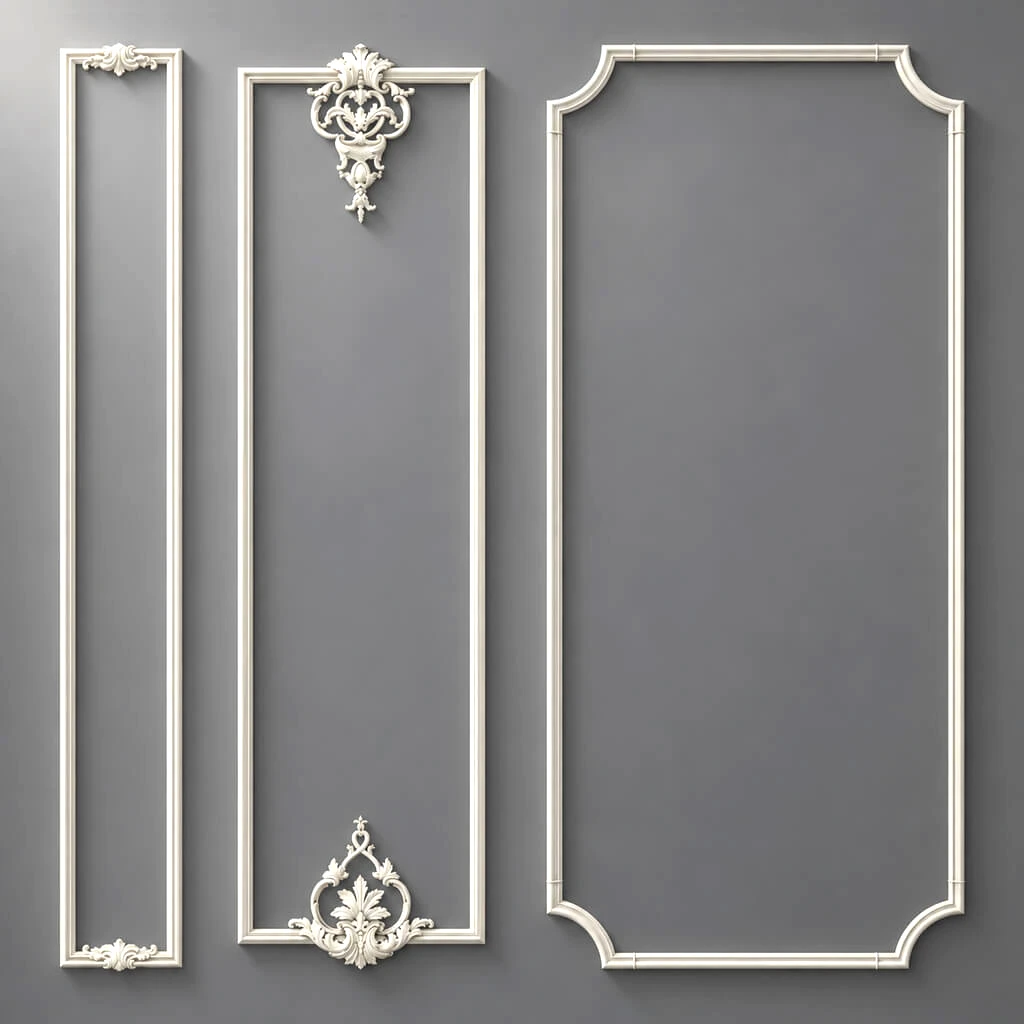
In the study. Frames with reproductions, maps, architectural drawings, or book illustrations in the study create a working atmosphere with cultural content. Wooden wall moldings for a picture gallery help to design a gallery zone — create a "framed" area on the wall that visually unifies the entire array of images.
Above the desk. In a home office or study, a gallery above the desk is a source of inspiration and a way to personalize the workspace.
Round and oval frames in a gallery
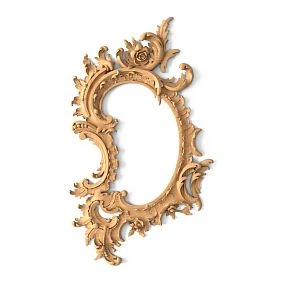
Round picture frame or Oval picture frame are always an accent. In a gallery with rectangular frames, one or two round or oval ones create a rhythmic break that enlivens the entire wall.
This is a technique from the tradition of classical interiors: in the grand halls of estates and palaces, round portrait frames alternated with rectangular ones — creating a visual rhythm that did not tire the eye.
In a modern interior, this technique works exactly the same: five rectangular frames and one round one in the center — and the gallery gains unexpected dynamics.
Frame shape: not just a rectangle
Most frames are rectangular. But the market offers other shapes, and sometimes it's the atypical shape that makes the design truly interesting.
Square frames
A square frame creates absolute symmetry. For square photos (Instagram format, for example), this is an ideal choice. The square also works with abstract painting, where the symmetry of the form enhances the geometry of the work itself.
A series of square frames of the same size is a powerful decorative tool for a wall.
Oval frames
Oval picture frame — this is a classic of the portrait genre. In the 18th–19th centuries, most chamber portraits were framed in an oval: it softened the shape, added intimacy, and suited depictions of the face and shoulders better than a strict rectangle.
In a modern interior, an oval frame is an elegant historical reference. It is appropriate in a classic living room, a study, or a bedroom above the headboard.
Round frames
Round picture frame — a bolder option that works better in modern interiors. The circle is geometrically active: it attracts the eye more strongly than a rectangle and requires appropriate content — a botanical illustration, an abstract print, a decorative photograph.
Frames by room: which frame is needed where
Different rooms require different approaches to choosing frames. What is perfect in the living room may look out of place in the children's room — and vice versa.
Living Room
The main space of the house — and the main place for significant works. Here the frame can be expressive: wide wooden molding, an interesting profile, possibly with patina or decorative treatment. The living room can handle an expensive frame for large paintings — and this is exactly where the frame will be noticed.
Above the sofa — either one large work in a proportionate frame, or a gallery of several. Principle: the total width of pictures above the sofa should be 2/3 of the width of the sofa itself.
Bedroom
The bedroom is a space of tranquility. Here frames should be less active: soft wood tones, thin or medium profile, calm images. Above the headboard — either one horizontal work, or a pair of symmetrical vertical frames.
Photo frame in the bedroom — especially appropriate: personal photos create an atmosphere of warmth and memory, which is so important in the most personal space of the home.
Children's room
In the children's room, frames can be bold and playful. Bright frame color — white, colored, with a light pattern. Size small or medium. Important: the mounting must be secure, the children's frame must withstand accidental bumps and contact.
A gallery of children's drawings, framed in identical white wooden frames — this is a way to show the child that their creativity is valued. And at the same time — a beautiful room decor.
Office
Frame for a poster in the office — it's about an atmosphere of concentration and cultural content. Dark wooden frames with reproductions of architectural views, maps, illustrations — a classic. A calm profile, dark walnut or wenge.
Above the desk — several frames in a row create a working rhythm: an inspiring background that doesn't distract but motivates.
Bathroom and hallway
Bathroom and hallway are unconventional places for paintings, but it's here that thoughtful decor is especially noticeable. For the bathroom, moisture resistance is important: the wooden frame must be well-coated with varnish, an acrylic sheet instead of glass is preferable (it doesn't break).
The hallway is a place for a gallery series, family photos, posters with maps or old city views.
Mat: is it needed and when
A mat is a cardboard field between the image and the inner edge of the frame. It serves not only a decorative but also a practical function: it creates a distance between the glass and the surface of the artwork.
When a mat is mandatory
For watercolor, pastel, gouache, and pencil graphics — a mat is mandatory. These materials cannot be placed directly against the glass: moisture from the glass can damage the artwork, and in some cases, the paper sticks to the glass during temperature changes.
A mat creates an air gap that protects the artwork while adding "breathing room" to the image.
When a mat is desirable
For small works in large frames — a mat compensates for the size difference. For example, an image 21×29 cm fits into a standard A3 frame (30×42 cm) with a mat 4–5 cm wide around the perimeter.
For photographs and prints — a mat adds a gallery feel. This is how works are framed in art galleries: the white field of the mat creates a "pedestal" for the image.
Mat color
Classic — white or cream mat for any image. A bolder option — a colored mat chosen to match the tone of the painting or interior. Dark gray mat for a black-and-white photograph — elegant and strict. Cream mat for an antique engraving — historically appropriate.
Mistakes when choosing a frame: how not to waste money
A list of mistakes that occur regularly — and each one costs a redo.
Mistake 1: buying a frame without the exact size of the image. A difference of 5 mm makes the frame unusable. Measure the image twice: width and height, in millimeters.
Mistake 2: choosing a molding only from a photo in the catalog. On screen, the color and texture of the wood look different than in reality. If possible — view samples in person or request swatches.
Mistake 3: too wide a profile for a small piece. A wide frame "eats up" a small image. The frame should support the work, not dominate it.
Mistake 4: too thin a frame for a large painting. A thin bar under a large canvas looks unreliable. Physically it may hold, but visually it gets lost.
Mistake 5: not accounting for the mat when calculating the inner frame size. If a mat is planned, the inner frame size should be larger than the image by twice the mat width on each side.
Mistake 6: mixing different wood tones without a system. Three frames side by side — light oak, dark walnut, and birch — is visual chaos. Either a single tone or a deliberate contrast based on the "black and white" principle.
Mistake 7: not connecting the frame with furniture and baseboards. A frame on the wall does not exist in a vacuum: it coexists with the sofa, cabinet, floor, and doors. Its color should be part of the overall system.
Mistake 8: forgetting about the weight of the painting and the mounting. A heavy painting in a massive wooden frame requires proper wall mounting. A thin nail in a drywall wall will not hold a frame weighing 3–4 kg. Use wall plugs and special picture hooks.
Mistake 9: buying a cheap frame for an expensive piece. An original painting that costs significant money deserves a frame of a corresponding level. The mismatch between frame and work is obvious.
Mistake 10: not thinking about glass. For works that require protection (watercolor, pastel, photography), anti-glare or UV-protective glass is needed. Regular glass creates glare and lets in ultraviolet light, which fades colors.
What to check before buying: a detailed checklist
-
Exact image size — in millimeters, for both dimensions
-
Is there a stretcher frame — if yes, its depth (10, 18, 40 mm)
-
Is a mat needed — if yes, add double the mat width to the frame size
-
Material of the work — watercolor, oil, paper, canvas: affects the choice of glass and mounting
-
Location on the wall — living room, bedroom, study, hallway: affects the frame style
-
Wall color — warm or cool, dark or light
-
Room style — classic, minimalism, Scandinavian, modern, eclectic
-
Color of furniture and wooden elements — parquet, doors, baseboards, furniture
-
Molding width — thin, medium, or wide
-
Frame shape — rectangular, square, round, oval
-
Frame color — natural wood, tinting, painting, patina
-
Ready-made frame or molding — standard size or custom
-
Is painting needed — for painting or already with a finish coating
-
Wall mounting — wall type (concrete, drywall, wood), structure weight
Wooden molding: how to assemble a frame yourself
Buy molding for a painting and assembling the frame yourself is a quite feasible task for those who have a miter box (angle saw) and a few simple tools.
Step 1: length calculation
For a frame for an image of size A × B with a mat width P (if used):
-
Inner frame size = (A + 2P) × (B + 2P)
-
Length of molding for two horizontal parts = 2 × (A + 2P + molding_width × 2)
-
Length of the baguette for two vertical parts = 2 × (B + 2P + baguette_width × 2)
Add 10–15% margin for trimming error.
Step 2: cutting at 45°
Each end of each plank is cut at a 45° angle. Use a miter box — manual or electric. The angles must be mirrored: left end — 45° to the right, right end — 45° to the left.
Step 3: assembly
Frame corners are fastened in several ways: special metal brackets, wooden dowels with glue, construction glue with temporary tape fixation, or corner clamps.
Professional method — corner staples driven with a special gun. Household method — PVA glue plus corner clamps and drying for 24 hours.
Step 4: installing glass, mat, and image
In the finished frame, place sequentially: glass → mat → image → cardboard backing → secure with staples or nails driven into the side edge of the frame.
FAQ: answers to the most pressing questions
How to choose a frame for a painting?
Measure the image accurately (in mm). Decide: do you need a ready-made frame or Buy molding for a painting for a non-standard size. Choose the profile width proportionally to the size of the work. Select a color based on the furniture, floor, and room style.
What is better — a wooden frame or a plastic one?
Wooden picture frame looks more expensive, lasts longer, and blends organically with wooden interior elements. For significant works and quality interiors — a wooden frame without alternatives.
Can I buy molding and assemble a frame to my size?
Yes. wooden picture molding sold by the meter — convenient for non-standard formats. A miter box and basic woodworking skills allow you to assemble a frame of the desired size yourself.
Which frame is suitable for a poster?
Laconic Frame for a poster with a thin or medium profile, without heavy decoration. Possibly with a mat if the poster is small. Color — matching the furniture or neutral contrasting.
How to choose a frame color to match the interior?
The first reference point is furniture, floor, doors, and Moldings. A frame in the tone of wooden elements creates unity. A contrasting frame (dark on light, white on dark) creates an accent. A neutral frame in the color of the wall creates gallery minimalism.
Is a mat necessary for a painting?
Mandatory — for watercolor, pastel, and graphics: protects the work from contact with glass. Recommended — for small works in large frames and for gallery framing. Optional — for oil paintings and canvases.
How to properly hang a heavy frame?
Determine the wall type. In a concrete wall — use a dowel + screw with a hook rated for the corresponding weight. In drywall — use a special hollow-wall anchor or attach directly to the load-bearing stud. Wooden wall — use a self-tapping screw with a hook. Always check that the hook or bracket on the frame is securely fastened.
About the company STAVROS
STAVROS is a Russian manufacturer of products made from natural solid wood: frames for paintings and mirrors, wooden molding, molding and cornices, decorative moldings, and a full range of solid wood for interior and exterior.
In the Stavros catalog — Frames for paintings rectangular, round и oval shapes, wooden picture molding footage — for workshops, designers, and private clients with non-standard formats.
STAVROS works with private clients, interior designers and decorators, framing workshops and galleries. All products are made from natural wood, without synthetic substitutes, with the ability to choose the species and profile.
If you need Buy a picture frame from solid wood, select picture molding for a non-standard size or design a gallery wall — the STAVROS catalog offers solutions for any format and any interior.