










































































Article Contents:
- Why decor and molding cannot be selected by similar pattern
- What is product MLDPU-2-2.1: characteristics, purpose, compatibility
- Table of characteristics for MLDPU-2-2.1 and MLDPU-002
- What molding MLDPU-002 reveals in combination with decor
- How to calculate the size of the future frame for decor MLDPU-2-2.1
- How to calculate the number of linear meters of molding
- What to buy together with decor MLDPU-2-2.1 and molding MLDPU-002
- Table "what to buy together" for decor MLDPU-2-2.1
- Decor for polyurethane moldings: where to find alternatives and additions
- Polyurethane molding: why the material matters specifically for frame structures
- Polyurethane moldings for walls: where the frame looks best
- Molding for wall frames: three technical parameters before ordering
- How not to confuse MLDPU-2-2.1 with similar decors
- Practical selection for specific customer situations
- Mistakes when buying decor and molding for a frame
- Who suits the MLDPU-2-2.1 and MLDPU-002 combination, and who does not
- What to check before painting the frame
- How to buy decor and molding on STAVROS without mistakes
- Frequently Asked Questions

You saw the decorative element MLDPU-2-2.1 in the catalog, appreciated its relief and proportions — and now you are standing in front of a closed cart with one item inside. Buying just one decor piece is not enough: without the right molding, the frame on the wall simply won't come together, and the central piece will be left without a border. Let's go through in order what to add to the decor for the MLDPU-2-2.1 molding so that the frame turns out even, without gaps or unnecessary on-site adjustments.
At first glance, the task seems simple: take the element you like and add suitable trim to it. In practice, the mistake happens right here — buyers often pick molding "by eye," based on a similar pattern or price, rather than on factory profile compatibility. The result is predictable: the central piece doesn't fit into the joint, the corners diverge by a couple of millimeters, and you have to trim the factory geometry by hand, losing precision of shape.
MLDPU-2-2.1 is not a universal stucco "for any frame." It is a specific decor for polyurethane molding, designed for the profile of the 002 series. The product size is 235 × 237 × 21 mm, and the shape and mounting planes are calculated specifically for joining with the MLDPU-002 molding. If you pair it with a molding from another series, the match will be visual, not technical — and that is the very difference that distinguishes a neatly assembled frame from a frame with traces of rework.


Why decor and molding cannot be matched by similar pattern
Here it's worth stopping on the logic that often lets buyers down. Polyurethane stucco can visually seem uniform: similar curls, similar thickness, similar white primed color. But the geometry of the joint is a separate parameter that is not visible in a photo.
Decor for moldings is designed as a paired piece for a specific profile. MLDPU-2-2.1 has a mounting contour calculated for the width and relief of the MLDPU-002 profile — a multi-level molding with a central semicircular roll, 22 mm wide and 11 mm protrusion height. If you join the decor with a molding from another series, which has a different profile width or a different arrangement of steps in the cross-section, the end of the decorative element and the end of the molding simply won't align along the cut line. The difference may be small — a millimeter or two — but it is exactly what turns into a gap that will need to be filled with putty, or into the need to trim the decor by hand and lose the clarity of the factory relief.
Another reason to stick with the factory pair is light and shadow. The multi-level MLDPU-002 profile creates a characteristic shadow pattern due to stepped horizontals and a central roll. The MLDPU-2-2.1 decor is designed with the same logic of the light-and-shadow pattern, so that the central piece doesn't "fall out" of the overall plasticity of the frame. A molding from another series, even similar in width, may have a different cross-section profile — and then the angle of light falling on the molding and on the central decor will read differently, and the frame will lose visual integrity.
Therefore, the correct ordering logic is not "find a molding similar in pattern," but "take the molding for which the decor was designed by the factory." For MLDPU-2-2.1, this is the polyurethane molding MLDPU-002.




What is the MLDPU-2-2.1 product: characteristics, purpose, compatibility
MLDPU-2-2.1 is a central decorative element made of two-component polyurethane, intended for the middle part of a decorative frame on a wall, furniture facade, door leaf, or wall panel. The product size is 235 × 237 × 21 mm. This geometry makes the piece large enough to read as a standalone accent, but not so massive as to overload the composition of a medium-sized frame.
The product material is the same two-component polyurethane used for the entire STAVROS line of moldings and trim. It is formed by reaction injection molding: two liquid components are combined in a precise mold and polymerize into a monolithic part without internal voids. As a result, the decor retains sharp relief even in fine ornamental elements, does not crumble when cut, and does not deform during storage.
A key feature of MLDPU-2-2.1 is its factory alignment with the 002 series profile. This means the decor's joining contour is designed specifically for the MLDPU-002 polyurethane molding, not approximated. This compatibility is confirmed by the manufacturer and stated in the product card — and it is this that should guide your order, not visual similarity of the pattern to other stucco series.
The decor surface is smooth, without pores or flash, with a white primed coating ready for painting. This means the piece can be painted in the wall color or a contrasting shade together with the molding in a single coat of paint, without needing a separate finish.
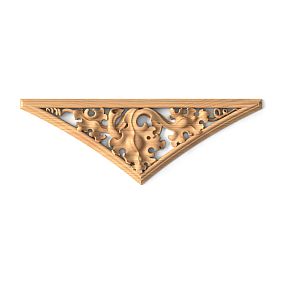
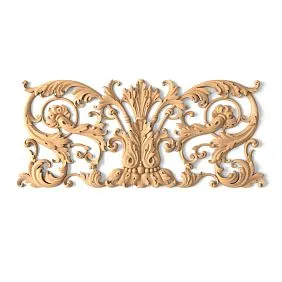
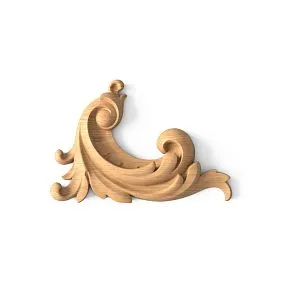
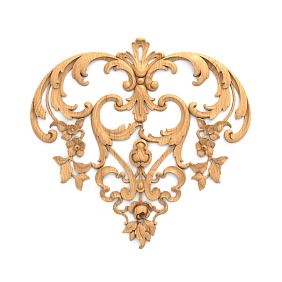
Our factory also produces:




Specification table for MLDPU-2-2.1 and MLDPU-002
| Parameter | MLDPU-2-2.1 (decor) | MLDPU-002 (molding) |
|---|---|---|
| Article number | MLDPU-2-2.1 | MLDPU-002 |
| Product type | Central decor for molding | Molding, medium cross-section profile |
| Size | 235 × 237 × 21 mm | Width 22 mm, protrusion height 11 mm, plank length 2600 mm |
| Material | Two-component polyurethane | Two-component polyurethane |
| Cross-section profile | Relief ornament, tied to the profile of series 002 | Multi-level, with a central semi-circular shaft |
| Color / finish | White primed, ready for painting | White primed, ready for painting |
| Purpose | Central part of the decorative frame | Frame trim on wall, furniture front, door |
| Compatibility | Factory — molding MLDPU-002 | Factory — decor MLDPU-2-2.1, decor MLDPU-002U |
| Installation method | Adhesive | Adhesive |
| Current price and availability | Specified in the product card | Specified in the product card |
The table shows the main point: the decor and molding share the same material, coating, and installation method, but they differ in function — one product forms the frame's outline, the other closes its center. That is why it makes sense to order both items in one cart rather than separately.
If you want to place an order for the central element right now, it's more convenient to open the product page and buy the decor for molding MLDPU-2-2.1 — there you'll find current dimensions, price, and packaging options.
Get Consultation
What the MLDPU-002 molding reveals in combination with the decor
The polyurethane molding MLDPU-002 is a medium-section profile with a pronounced multi-level relief: width 22 mm, protrusion height 11 mm, plank length 2600 mm. Unlike a narrow bead, this molding has noticeable architectural weight: it clearly stands out on the wall and creates expressive shadow play even in diffused light.
For a frame with the central decor MLDPU-2-2.1, this profile width is critical. A too-thin molding will get lost against the large central element of 235 × 237 mm, while a too-massive one will visually compete with the decor for attention. The 22 mm width is the balance the manufacturer built into the design of the pair, so there's no point in deviating from the factory combination: the result has already been proven on dozens of completed projects.
A plank 2600 mm long covers most practical needs: from one piece you get either one long side of a large frame or two sides of a medium-sized frame with allowance for 45-degree corner cuts. This makes it easy to calculate the linear meters — we'll break it down in detail below with a specific example.
If after reading the specifications you already understand that the profile fits your task in scale, it's wise to place an order for the framing and buy the polyurethane molding MLDPU-002 together with the central decor — this eliminates the risk that the molding will run out of stock by the time you decide on the quantity.
How to calculate the size of a future frame for MLDPU-2-2.1 decor
Before calculating the linear meters of molding, you need to determine the final dimensions of the frame itself. There is a fork here that many miss: the frame can be designed "around" the decor, or it can be designed for an existing area on the wall or facade, where the decor is simply added as a central accent.
Option one — the frame is designed based on the decor size. If the central element of 235 × 237 mm should visually "breathe" inside the frame, rather than touching the inner edge of the molding, a technological gap must be left. In practice, for decor of this scale, 40 to 80 mm of free space is allocated on each side — the specific value is best checked against the drawing in the product card, since visual perception depends on both the ceiling height and the overall wall length. The final internal width of the frame with a 60 mm gap on each side will be approximately 235 + 60 × 2 = 355 mm, and the height — 237 + 60 × 2 = 357 mm. This is the inner contour along which the MLDPU-002 molding will run.
Option two — the frame is already tied to an existing area. For example, if a zone behind a bed headboard with a width of 1400 mm and a height of 1200 mm is being decorated, the MLDPU-2-2.1 decor is simply placed in the center of this frame, and the size of the framing is determined not by the decor, but by the wall itself or the furniture facade.
In both cases, the final calculation of the molding is based on the outer perimeter of the frame, not the inner edge — because the molding is laid on the outside of the contour, and the corner cuts are formed along the outer corners of the plank.
How to calculate the number of linear meters of molding
The formula is simple: frame perimeter = (width + height) × 2. To the result, you need to add a margin for cutting corners and for possible defects during cutting — usually this is 15–20% of the calculated footage.
Example for a frame of 355 × 357 mm (calculation from the example above): perimeter = (0.355 + 0.357) × 2 = 1.424 m. With a 15% margin, this is 1.64 m of molding per frame. A plank 2600 mm long (2.6 m) in this case covers the entire frame with excess — from one plank you can make a full contour of a small frame by cutting it into four segments with 45-degree corner cuts.
If the frame is larger — for example, 1400 × 1200 mm for an accent wall — the perimeter will be (1.4 + 1.2) × 2 = 5.2 m, with a 15% margin this is 5.98 m, meaning 3 planks of MLDPU-002 (2.6 m each) will be required, since 2 planks will only give 5.2 m without a margin for cutting.
Such a calculation should be done before ordering, not after: if the molding is not enough for the corner cut, and you have already started installation, re-ordering means the risk of getting a plank from another production batch with a minimal but noticeable difference in shade after painting.
What to buy together with the MLDPU-2-2.1 decor and the MLDPU-002 molding
A frame rarely consists of only two items. To assemble a complete composition without style inconsistency and without going back to the catalog, it is worth thinking through the full list in advance — from corner elements to glue and paint.
Corner decorative inserts are needed in two cases: if you do not want to cut the molding at a 45-degree angle manually, or if you want to enhance the corners of the frame with additional ornament. For the 002 series profile, STAVROS has paired corner elements — right and left, and they should be ordered as a pair, not individually, so that both sides of the frame look mirror-symmetrical.
Table "what to buy together" for the MLDPU-2-2.1 decor
| What to add to the order | Why this is needed | For which scenario | What to pay attention to | Link |
|---|---|---|---|---|
| Molding for framing the frame | Forms the contour of the frame around the central decor | Any frame composition with MLDPU-2-2.1 | Factory compatibility specifically with the 002 series, calculation by perimeter | buy the polyurethane molding MLDPU-002 |
| Additional decorative and corner elements | They expand the composition, close corners without manual trimming | Large frames, symmetrical paired compositions | Check model compatibility with profile 002 in the product card | buying polyurethane molding decor |
| Assembly adhesive without aggressive solvents | Attaches molding and decor to the wall or facade | Any installation of polyurethane molding | The composition must not contain acetone and white spirit | what to glue polyurethane molding with |
| Acrylic primer and paint | Surface preparation before final painting of the frame | Painting the frame in the wall color or in contrast | Apply in 2 layers with intermediate drying | painting polyurethane moldings |
| A wider catalog of polyurethane moldings | Allows you to match cornices, rosettes, and linear moldings to a common style | Comprehensive room design, not just one wall | Cross-check article numbers and series | You can buy ready-made stucco matching the Baroque style. Calculate the quantity: linear meters of cornices and moldings, number of rosettes, pilasters, consoles, corner elements. Add a ten to fifteen percent allowance for trimming. |
After such a table, it makes sense not to stop at a bare list, but to understand the sequence of actions: first, the amount of molding is determined based on the perimeter calculation, then it is decided whether corner inserts are needed or if the corners will be cut manually, and only after that are the adhesive and painting materials selected.
Decor for polyurethane moldings: where to find alternatives and additions
If the central element MLDPU-2-2.1 fits in scale, but you want to look at neighboring options — for example, for another frame in the same room — it is worth opening the general section Decor for Molding. This category includes both corner and central elements from different series: some are designed for MLDPU-002 molding, others for other profiles in the STAVROS line.
Here it is important not to lose the compatibility logic already discussed. The section is large, and visually many decors look similar to each other — relief, white primed coating, comparable sizes. You should focus not on external similarity, but on the series binding indicated in the card. If you have already chosen MLDPU-002 as the main profile for the frame, any additional decor should be checked specifically for compatibility with this series, not with neighboring items in the line.
Practical scenario: if several frames of different sizes are planned in one room — for example, a large frame behind the headboard and a couple of small frames on the sides — it makes sense to use the same MLDPU-002 molding for all contours, and vary the decors by size. This preserves the unity of the profile and the light-and-shadow pattern throughout the room, while decorative accents vary in scale without losing stylistic integrity.
Polyurethane molding: why the material matters specifically for frame structures
A separate question that arises when choosing a molding for a frame is why you should opt specifically for polyurethane rather than alternative materials like polystyrene foam, plaster, or MDF. For wall frame compositions with clear geometry and fine ornamentation on the decor, the difference between materials is felt more noticeably than in a simple ceiling cornice.
Two-component polyurethane is molded by reaction injection molding under pressure into a precise mold. Thanks to this, when cutting at a 45-degree angle, the profile gives a clean cut without delamination — an important property specifically for frame structures, where corner joints are visible from close range and the final impression of the entire composition depends on their precision.
The material is not afraid of moisture: the closed structure of polyurethane does not allow moisture to pass through, so the molding and decor do not deform or peel off from the base even in rooms with variable humidity — kitchens, bathrooms, hallways near the entrance area. Polystyrene foam and plaster analogs in these conditions eventually lose their geometry or crumble along the edge.
Polyurethane is resistant to accidental mechanical impacts — during transportation and installation, it does not leave dents where polystyrene foam deforms from light pressure. This is especially noticeable when working with large central decor: an element measuring 235 × 237 mm, if carelessly transported in other materials, would risk getting a dented relief, while a polyurethane part retains its shape.
Finally, the surface of polyurethane is smooth and uniform — without the porosity of plaster and without the graininess of polystyrene foam. Paint applies evenly from the first coat, which simplifies the final finishing of the frame and reduces material consumption.
Polyurethane moldings for walls: where the frame looks best
A frame composition with central decor is used not only behind the headboard, although this is the most common scenario. Let's look at several real-world tasks so you can relate them to your situation.
Accent wall in the living room. One or several large frames on the wall behind the sofa or near the dining area create an architectural accent without redevelopment. Molding MLDPU-002 with a width of 22 mm reads confidently here even from a distance of several meters, and the central decor MLDPU-2-2.1 adds visual weight to the composition without turning the wall into an overloaded surface.
Entryway and hallway. In narrow spaces, a large frame on one of the walls visually "breaks" the hallway geometry and adds character to the space. Here it is important to maintain proportions: if the wall width is limited, it is better to reduce the inner offset of the frame from the decor than to shorten the molding itself to a thinner profile from another series — this will ruin factory compatibility.
Office and meeting area. In business interiors, molding with central decor on the wall behind the desk creates an image of solidity without obvious decorative excess. Here, contrasting painting is more often chosen — for example, a dark wall tone and ivory-colored molding — to emphasize the architectural line of the frame.
Kitchen and dining area. The moisture resistance of polyurethane makes the solution applicable in the kitchen as well, including near the cooking zone in the absence of direct contact with water. A frame on the free wall of a kitchen-living room works as a connecting element between the kitchen unit and the rest of the space.
Children's room. The soft relief of the molding without sharp edges is safe for a children's room. The frame composition creates a structured but not overloaded space that is easy to repaint as the child grows.
Furniture facade. Molding MLDPU-002 and decor MLDPU-2-2.1 are also used on cabinet doors, dressers, and nightstands — glued to an MDF base, they imitate a milled classic facade. Here, calculation accuracy is especially important: the frame dimensions on the facade are limited by the geometry of the door itself, and offsets have to be calculated more precisely than on a free wall.
Molding for wall frames: three technical parameters before ordering
Before clicking "buy," it is worth fixing three parameters that determine whether the frame will fit without adjustment.
The first parameter is series matching. Decor MLDPU-2-2.1 goes specifically with molding MLDPU-002. This is not a "by eye" recommendation, but a factory binding specified by the manufacturer. Any replacement with molding from another series turns the project into an experimental one: the joint may work, but guaranteed accuracy will not be there.
The second parameter is the exact frame perimeter with allowance for trimming. We covered the calculation above: sum the sides, multiply by two, add 15–20% allowance, divide by the length of one plank (2600 mm), round up to a whole number of planks.
The third parameter is the material batch. If the order is large and requires several molding strips, it is better to check with a STAVROS manager about the possibility of selecting strips from the same production batch. This guarantees a match in shade and profile geometry across the entire frame — especially important if the frame is painted in a light tone, where even the slightest difference in primer shade will be visible to the eye.
How not to confuse MLDPU-2-2.1 with similar decors
The STAVROS catalog also features other central decors of a similar scale — for example, the larger MLDPU-3-2.1 option. At first glance, the difference between the series may seem insignificant, but it is this confusion that most often leads to the frame "not coming together."
It is easy to distinguish the right product by three features. First, by the exact size — for MLDPU-2-2.1 it is 235 × 237 × 21 mm, while neighboring items in the line have different dimensions, and even a slight discrepancy of 20–30 mm changes the proportions of the entire frame. Second, by the molding series reference indicated in the product card — each decor has its own, and it must be checked line by line, not by the appearance of the photo. Third, by the article name in the card itself — the digital index after "MLDPU" denotes exactly the profile series, so when adding the product to the cart, it is worth double-checking that the decor article and the molding article correspond to each other.
Additional confusion arises between central decors and corner elements. Corner decors (for example, MLDPU-2U-2.1L and MLDPU-2U-2.1R) look visually similar to central ones, but are designed for installation in the corners of the frame, not in the middle, and are sold as a pair — left and right elements, not individually. If you are looking for a central piece for the middle of the frame, not for a corner, look for an article without the letter "U" after the digital index.
Practical selection for specific customer situations
Let's consider several typical requests that bring customers to choosing decor and molding, and how to solve them.
Need to cover the empty area above the headboard of the bed. The task is solved with one large frame with the central decor MLDPU-2-2.1 in the center. An important parameter is the width of the headboard: the frame should be slightly wider than the bed itself, but not touch the bedside tables. The molding is calculated around the perimeter of this frame with a margin of 15–20%.
Need to arrange several identical frames in a row along the wall. Here it is critical to purchase all the molding and all the decors in one order, rather than buying more during installation — this eliminates the risk of batch shade differences. The perimeter calculation is done for all frames at once, not individually, to more accurately plan the number of whole molding strips.
Need to select a decor for already installed molding. If the MLDPU-002 molding has already been purchased for another task (for example, for a ceiling cornice) and some material remains, the MLDPU-2-2.1 decor can be safely purchased separately — compatibility is maintained regardless of when and for what purpose the molding was originally taken.
You need to assemble a set for a furniture facade, not for a wall. In this case, the frame dimensions are limited by the door geometry, and the perimeter calculation should be done not "from aesthetics," but from the exact facade dimensions with an indent of 15–25 mm from the door edge to the outer edge of the molding — such an indent visually prevents the decor from appearing cut off at the edge.
You need to replace a randomly selected blank with a professional element. If a molding from a different series was previously purchased for the frame, and the joint with the decor did not match, it is wiser not to adjust the part manually, but to reorder both elements from the same pair — MLDPU-2-2.1 and MLDPU-002. The final joint accuracy justifies the cost of the repeat order.
You need an element for a commercial interior — a cafe, showroom, or reception. For high-traffic spaces, not only aesthetics matter, but also resistance to mechanical impacts during cleaning. The polyurethane pair MLDPU-2-2.1 and MLDPU-002 is better suited for such tasks than gypsum analogs precisely due to the material's elasticity.
Mistakes when buying decor and molding for a frame
Let's look at typical mistakes that cause the frame not to fit without adjustment, so you can check your order for their absence.
Choosing molding based on a photo rather than the specified compatibility series. The image in the catalog does not convey the exact width and height of the profile. Even a visually similar molding from a different series can differ in width by 3–5 mm — this is enough for the joint contour of the decor not to match the molding profile.
Ignoring the exact size of the decor when calculating frame indents. If you set the indent "by eye," without precise reference to 235 × 237 mm, the final frame may turn out visually asymmetrical — the decor will be shifted from the center of the composition.
Ordering molding without a reserve for trimming. Calculating "to zero," without adding 15–20% for corner cuts, often leads to a situation where literally one segment is missing for the last corner of the frame. A repeat order takes time and risks arriving from a different batch.
Purchasing decor and molding in separate orders with a large time gap. If several weeks pass between orders for decor and molding, batches of material may differ in primer shade — the difference is minimal, but becomes noticeable after painting in a light tone.
Mismatch of corner elements with the main series. If you decide to add corner decor, it is important to check their compatibility specifically with the MLDPU-002 series, rather than ordering corner elements "as a set" without verifying the article number.
No product card check before ordering. Actual sizes, price, and packaging options may differ from the general article data — the product card is updated more frequently, and before placing an order, you should verify the parameters there.
Expectation that the decor is sold as a set with the molding. These are two separate items in the catalog, and they need to be ordered as separate line items in one cart — a "decor plus molding" bundle as a single SKU is not provided.
Who the MLDPU-2-2.1 and MLDPU-002 combination suits, and who it does not
This solution suits those planning a medium-scale frame composition — from a compact frame above a console to a large composition behind a bed headboard 1.5–2 meters wide. It works organically in classic, neoclassical, art deco, French styles, and in modern interiors with historical accents.
The combination is especially appropriate if you have already decided on the installation location and are ready to take precise measurements of the wall or facade before ordering — only then will the molding perimeter calculation be correct the first time.
The solution will not suit you if you need a very large monumental frame with a massive central accent — for such tasks, the catalog has larger decors, such as MLDPU-3-2.1, but they require a different, wider molding, and combining them with profile 002 is not recommended for the same reasons of geometry mismatch.
The option is also not suitable for minimalist interiors without historical accents — there, a thin glazing bead without pronounced relief is more appropriate, rather than a profile with a multi-level 22×11 mm cross-section.
If your task is not a frame, but simply adding a decorative accent without framing (for example, a separate insert on an empty wall section), the molding is not needed at all — in this case, a decorative element is sufficient, and you should look at the broader section of decor for moldings, which also features standalone applied elements.
What to check before painting the frame
Once the molding and decor are installed and the joints are filled, the finishing stage begins. Here, it is important not to miss several technical points that affect the final result.
The polyurethane surface needs light dusting before painting, especially if cutting was done shortly before installation — fine dust from the cut settles in the ornament relief and impairs paint adhesion. After dusting, apply acrylic primer in an even layer, and only after it has fully dried — the topcoat.
If the frame is painted in a color contrasting with the wall, it is convenient to protect the molding edge with masking tape before applying paint — this eliminates the need to hand-draw the line. For the fine relief of the central decor, the brush should be thin to paint the ornament recesses without gaps — a roller does not provide the required detail here.
The number of paint layers directly affects how evenly the final tone will lay: for polyurethane, one coat of primer and two coats of acrylic enamel with intermediate drying are usually sufficient. For a detailed procedure of preparation and paint application, it is convenient to refer to the material about painting polyurethane moldings — there, the nuances of paint selection and application techniques specifically for this material are discussed.
How to buy decor and molding on STAVROS without mistakes
The order placement procedure is logically structured if you follow the chain: first the central decor, then the framing molding, then additional elements and installation materials.
Open the product card and check the current dimensions, price, and packaging options if you plan to order MLDPU-2-2.1 — this is the first item in the cart, around which the entire further frame is built. Then, based on the perimeter calculation from the section above, order the required number of planks and order MLDPU-002 with allowance for corner cuts.
If the frame is large or you plan several identical compositions, it is reasonable to check with the STAVROS manager about the possibility of selecting slats from the same production batch, as well as delivery terms — the cost depends on the volume and address, and is calculated automatically when placing the order.
If the project is complex — several frames of different sizes, combination with ceiling decor, door panels, and furniture facades at the same time — it is better to prepare a simple layout of dimensions in advance and clarify the number of elements with the manager before finalizing the order, so as not to buy material in parts and avoid shade differences between batches.
Availability and exact prices on the website are updated daily, so before finalizing, it is worth checking the current data in the product cards — this applies to decor, molding, and all complementary elements.
Frequently asked questions
Can MLDPU-2-2.1 decor be used with another molding if it looks similar to the 002 series?
Technically, joining is not always possible: the mounting contour of the decor is designed specifically for the geometry of the MLDPU-002 profile. If the width or cross-section of another molding differs, the joint may have a gap that will need additional adjustment or filling with putty.
How to calculate how many molding slats are needed for one frame?
Add the width and height of the frame, multiply the sum by two — this is the perimeter. Add 15–20% allowance for corner cutting, then divide the resulting number by the length of one slat — 2600 mm — and round the result up to a whole number of slats.
Do I need to buy corner elements, or can I cut the molding at an angle myself?
Both options work. Corner decorative inserts simplify installation, since straight molding segments in this case do not require corner cutting at 45 degrees, and at the same time enrich the frame with additional ornamentation in the corners. Self-cutting requires a miter box and precision, but does without additional parts.
What to do if the size of the decor does not fit into the existing area on the wall?
Adjust not the decor itself, but the inner size of the frame — increase or decrease the molding offset from the decor. Changing the size of the central element itself without losing the factory geometry of the relief is not possible.
Can this pair of products be used in a damp room?
Two-component polyurethane does not swell from humidity and does not deform in rooms with variable humidity — kitchens, hallways, bathrooms without direct water contact on the decor. This distinguishes the material from plaster and wooden counterparts.
How does decor for molding differ from a regular decorative overlay without a profile attachment?
Decor for molding is designed with the geometry of a specific profile in mind and joins it without a gap. A regular decorative overlay without such attachment is mounted independently, outside the frame structure, and does not require matching with the molding.
Is a molding allowance needed if the frame is single and small?
Yes, an allowance for corner trimming is needed even for a single small frame — at least 15% of the calculated perimeter, to avoid a shortage of material on the last corner cut.
Which adhesive is suitable for installing decor and molding made of polyurethane?
Suitable mounting adhesive without aggressive solvents — acetone, white spirit, nitro solvents — is used, since they destroy the polyurethane surface. A detailed breakdown of compositions and application techniques is available in the material on what to glue polyurethane molding with.
Can decor and molding be painted in different colors?
Yes, technically this is possible — the boundary between decor and molding is protected with painter's tape before applying the contrasting color. However, with a single paint job, the frame is perceived as a monolithic architectural volume, which is more often chosen in neoclassical projects.
What should be clarified before ordering a large batch of molding for several frames?
It is worth clarifying with the STAVROS manager the possibility of selecting strips from the same production batch — this guarantees matching of the primer shade and accuracy of profile geometry across the entire order volume.
Can I order one decor and one molding strip as a sample before placing the full order?
Yes, shipment is carried out from one unit of goods, so a trial order of the minimum quantity to check compatibility and material quality is a working option before placing the full volume.
Where can I see other decor options if MLDPU-2-2.1 did not fit in size?
It is worth opening the general section, which contains both central and corner elements of different series — Decor for polyurethane moldings, and there focus on the binding to a specific molding profile indicated in the card.
The final ordering logic is simple: first, the MLDPU-2-2.1 decor is fixed as the center of the composition, then the factory molding MLDPU-002 is selected for it in the quantity calculated around the perimeter, and only after that are corner elements, glue, and painting materials added. This order eliminates on-site fitting and extra trips to buy additional meters of profile.
STAVROS has been manufacturing carved and stucco decor for interiors for over twenty years—from recreating palace interiors to serial production of polyurethane stucco for private and commercial projects. In-house production and strict mold control guarantee the exact factory compatibility of decor and molding discussed in this article: the central element MLDPU-2-2.1 and the profile MLDPU-002 are designed as a pair, and ordering this combination eliminates the risk of mismatch typical of random selection of stucco by visual similarity. Before placing an order, verify the exact size of the future frame, calculate the molding perimeter with a margin for cutting, and check with a STAVROS manager the availability of the required number of strips from the same batch—and the frame will assemble exactly as intended in the factory drawing, without on-site modifications.