








































Article Contents:
- Floor skirting in Moscow: which option to choose for your interior
- What floor skirting boards can be bought in Moscow
- Wooden skirting boards made of oak and beech
- Paintable MDF skirting boards
- Moisture-resistant polystyrene skirting boards
- How to choose floor skirting by material
- When wood is better
- When MDF is better
- When moisture-resistant material is needed
- Floor skirting for apartments, houses, and different rooms
- For Apartments
- For Home
- For Kitchen
- living room
- for the bedroom
- For the hallway
- Floor skirting for different floor coverings
- For laminate
- For parquet
- For engineered board
- For quartz vinyl
- For tile and porcelain stoneware
- How to choose skirting by height, shape, and color
- Low skirting board
- Medium height
- High skirting board
- White baseboard
- Straight and shaped profile
- How to match floor skirting boards in interior design
- With wall moldings
- With cornices
- With slatted panels
- With decor for moldings
- With doors and architraves
- Where to buy floor skirting boards in Moscow
- What to pay attention to
- Catalog for quick navigation
- Common mistakes when choosing floor skirting boards
- Wrong material for the task
- Too low or too high profile
- Color error
- Lack of connection with the rest of the decor
- Frequently Asked Questions
- Conclusion

baseboard for floor— the final horizontal line that closes the joint between the floor and the wall. A detail that determines whether the interior looks finished or not. And which determines how long you'll be satisfied with the result — or will think 'should have chosen a different one.'
Buying a floor skirting board in Moscow is a choice among three materials, dozens of heights and profiles, different price levels. This article provides a specific selection scheme: by material, by room type, by floor covering. No fluff, with real recommendations.




Floor skirting board in Moscow: which option to choose for your interior
Before opening the catalog, ask yourself three questions.
Where will the skirting board be installed? A kitchen with steam and wet cleaning — one set of requirements. A living room with parquet — another. An entrance hall with constant foot traffic — a third. The skirting board material is chosen based on operating conditions, not appearance on screen.
What's on your floor? Laminate, parquet, engineered wood, quartz vinyl, tile — each covering has its own logic for selecting skirting boards. By color, by material, by profile height.
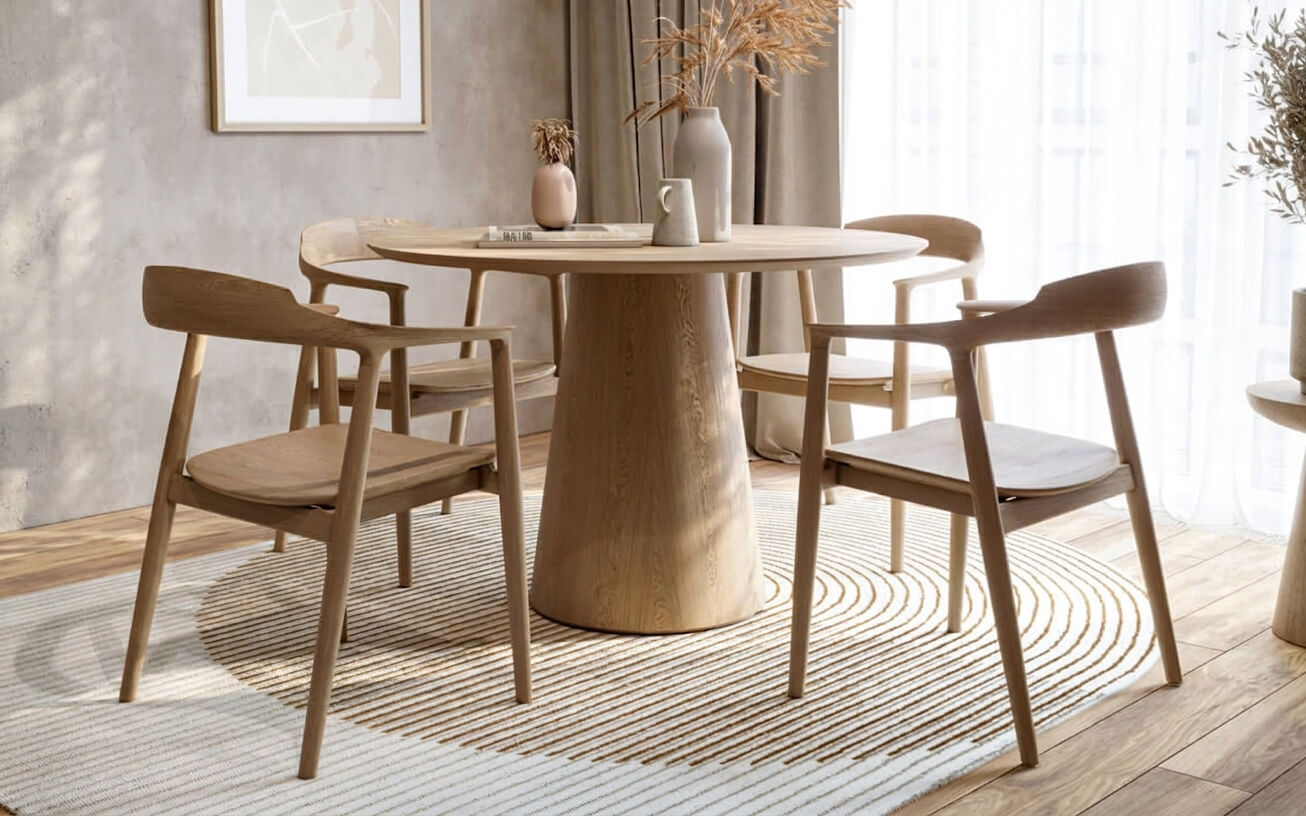
What style of space? Scandinavian minimalism with white paintable skirting boards, classic with solid wood matching the parquet, modern interior with a geometrically precise smooth profile — style defines the form.
buy floor skirting board in Moscowwith the correct result — means answering all three questions before purchase, not after installation.




What floor skirting boards can be bought in Moscow
Our factory also produces:


Wooden skirting boards made of oak and beech
solid wood baseboard— it's not just a material. It's an approach to interior design. When a home has natural parquet, wooden doors, wooden windows — a wooden skirting board completes the system. It doesn't imitate nature, it is nature.
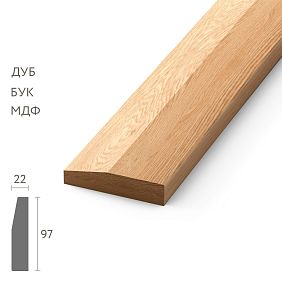
Solid oak — a choice for those who want durability and expressiveness simultaneously. Oak is a hardwood (Brinell class — 3.7 kN): resistant to scratches from furniture legs, impacts from mops and soles. The texture is expressive: oak grain has character, without monotony. Toning from light 'bleached oak' to dark 'wenge' — oak accepts any shade.
Solid beech — a more uniform structure, fine grain, perfectly smooth surface for any finish. Beech is slightly softer than oak, but reproduces toning with photographic accuracy. Where precise shade is needed — beech is preferable.
Parameters of wooden skirting boards:
-
Height: from 60 to 120 mm and above
-
Strip length: 2.5 m (standard) or 3 m
-
Thickness: 12–18 mm
-
Surface: sanded for painting, oil-tinted, varnished
-
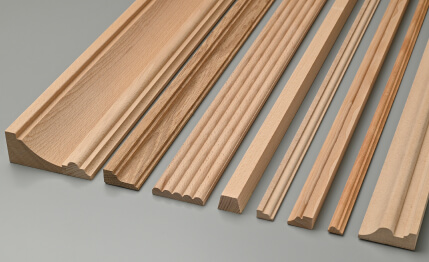
Profile: straight, with chamfer, with roundover, with shaped cross-section
Buying a wooden floor skirting board means choosing a material that won't need replacing in 5–7 years. With proper treatment and careful maintenance, solid wood lasts 20–40 years. A scratch? Sand it. The tint went out of style? Repaint with oil. Wood is a material that allows for renewal, not just replacement.
Get Consultation
Baseboard — it is a modest detail, often unnoticed, but plays a critical role in creating the completeness of the interior.
MDF Skirting Board— a product that has captured a significant market share precisely because it offers the right compromise: a natural base (pressed wood), a smooth surface without texture, and precise paintability in any color.
MDF is a material with a uniform, dense structure: no knots, no pores, no variation in hardness. This is exactly what makes it ideal for painting in white or any NCS/RAL/Pantone shade. Acrylic enamel applies to MDF evenly—without stains, streaks, or 'showing through' of texture.
Buying an MDF skirting board is the right choice when:
-
You need a perfectly white or monochrome system: white floor, white walls, white skirting board
-
Scandinavian or minimalist style with clean, smooth surfaces
-
Precise color by NCS/RAL—MDF reproduces the shade without adjustments for texture
-
The room is dry—living room, bedroom, study, children's room
-
Moderate budget for large footage: MDF is cheaper than solid wood with the same profile height
Limitation: MDF is afraid of moisture. In kitchens with active steam, hallways with condensation, near entrance doors — risk of end swelling. Without sealing the bottom end with silicone or primer — MDF in the kitchen will last significantly less than stated
MDF skirting board heights in the catalog: 60 / 70 / 80 / 100 / 120 mm — wide selection for different tasks and ceiling heights
Moisture-resistant polystyrene skirting boards
Moisture-resistant floor skirtingHI WOOD made of high-density polystyrene — a separate category that should not be confused with cheap foam profiles from a construction supermarket
High-density polystyrene differs fundamentally from foam: different structure, different density (180–220 g/m³ vs. 15–25 g/m³ for foam), different surface. HI WOOD profiles are factory-primed for acrylic paint, have clear geometry and even cut
Key Features:
-
Water absorption: less than 2% — does not react to wet cleaning, splashes, steam
-
Width: from 58 to 140 mm — covers the entire range from narrow to wide
-
Length: 2.5 m, standard plank
-
Surface: primed, for acrylic painting in any color
-
Weight: significantly lighter than wood — convenient for DIY installation
-
Installation: special adhesive or liquid nails, no additional fasteners required
Buy polystyrene skirting — for kitchen, hallway, bathroom (if permissible), rooms with regular wet cleaning. A practical choice for those who want reliability without extra costs.
How to choose floor skirting by material
When wood is better
Wooden baseboard— for interiors where naturalness is not an option, but a principle.
Wood is appropriate when:
-
Floor — parquet, engineered board, solid board. One material from bottom to top — from flooring to skirting
-
Doors and windows are wooden — skirting continues the material theme of the space
-
Interior is classic, neoclassical, 'warm' with soft natural shades
-
Room is dry: living room, study, bedroom, dining room
-
Long-term project — the skirting board is installed for decades, with no planned replacement
-
Tinting should preserve the visible texture: only wood achieves this result
Not suitable: for wet areas without special treatment, for rooms with condensation near the floor, for budget solutions with large square footage
When MDF is better
MDF — for white, monochrome, technically clean interiors
Floor skirting board for interiorMDF is appropriate when:
-
Style — Scandinavian, minimalist, modern: white system without textures
-
Painting needed in an exact corporate or designer color
-
The room is dry and there is no risk of moisture
-
Square footage is large — MDF is cheaper than solid wood at the same profile height
-
A perfectly smooth surface is essential, with no hint of natural irregularity.
Important note: the bottom edge must be primed or coated with silicone sealant before installation. Without this, the edge gradually absorbs moisture from wet cleaning—and swells within 2–4 years.
When a moisture-resistant material is needed
Polystyrene—when operational reliability is more important than material tradition.
It's worth buying a moisture-resistant polystyrene skirting board for an apartment when:
-
Kitchen with a dishwasher, active cooking, and regular floor washing
-
Hallway, where snow and rain from shoes get on the floor near the skirting board
-
Commercial space with intensive cleaning—office, cafe, studio
-
Uncertainty about floor and wall evenness—polystyrene forgives minor irregularities due to adhesive elasticity
Water absorption less than 2%—this is physics, not marketing. Moisture does not penetrate the polystyrene structure. No swelling, no delamination.
Floor skirting board for apartments, houses, and various rooms
For apartments
A Moscow apartment is the most diverse context. It can be a 28 m² studio, a duplex apartment in a historic building, or a standard new-build comfort-class apartment. And in each case, there is its own answer.
For a standard apartment in a new building (ceiling 2.7–3 m, light neutral walls, laminate or quartz vinyl flooring) — MDF or polystyrene with a height of 70–80 mm. White or matching the floor covering. A system with door architraves from the same manufacturer.
For an apartment with a wooden floor and classic interior —Skirting made of solid woodoak matching the parquet. Height 80–100 mm, profile with a chamfer or roundover — depending on the style.
For a modern apartment in a white palette — white MDF for painting with a height of 60–70 mm, smooth profile, a perfectly straight line.
For home
A country house — a different scale. Ceiling heights from 3 m, wooden structures, wide openings, open staircases. Here, the skirting board works within a system with a larger volume of decor.
To buy a floor skirting board for a house — wooden made of solid oak or beech. Profile height 80–120 mm — proportional to the scale of the space. Toning — matching the wooden floor or matching the wooden structures.
In a wooden country house with exposed beams and solid wood flooring, a wooden skirting board is not a choice of one option among others. It is the only solution that is organic.
For Kitchen
Kitchen — a high humidity area. Details are in the previous section about materials. Conclusion:
-
Polystyrene HI WOOD — the first choice
-
Wood with moisture-resistant treatment — provided the coating is of high quality
-
MDF — only with mandatory sealing of the ends, not near the sink or dishwasher
Buying a kitchen floor skirting board made of polystyrene is a solution that won't require redoing in 3–4 years.
For the living room
Living room — a representative space. Here, the skirting board is constantly visible, from all angles, in any lighting. That's why in the living room, the skirting board is a decorative detail, not a technical element.
Buying a floor skirting board for the living room — with maximum attention to profile and material. Solid wood with a shaped cross-section for a classic living room. White MDF high profile for a Scandinavian living room. Wood matching the parquet for a 'warm' modern interior.
Height for the living room — not less than 80 mm. A living room with a 3 m ceiling and a 40 mm skirting board — a proportional imbalance.
For the bedroom
Bedroom — a space of tranquility. Here, the skirting board works quietly: a delicate horizontal line that doesn't attract attention but creates completeness.
Buying a floor skirting board for the bedroom — a smooth profile of moderate height (60–80 mm). White or matching the floor. Material — MDF or wood depending on the style.
For a bedroom with a wooden floor — a wooden skirting board in a light tint. It adds warmth without excessive decorativeness.
For the hallway
The hallway is the most heavily used room. Daily traffic, outdoor shoes with moisture and dirt, intensive cleaning. The skirting board here must be moisture-resistant, durable, and easy to clean.
Buy a floor skirting board for the hallway — high-density polystyrene or wooden with moisture-protective varnish. Smooth profile — without relief that accumulates dirt in grooves. Height — 60–70 mm, no more: hallways are often small, a wide skirting board creates an overhang.
Floor skirting board for different floor coverings
For laminate
Laminate is the most common floor covering in comfort-class Moscow apartments. Wide palette: light oak, gray wood, walnut, dark wenge.
Buy a floor skirting board for laminate — first and foremost with correct color matching. Laminate manufacturers produce branded skirting boards 'matching the collection', but their quality often leaves much to be desired — plastic stickers on an MDF base look cheaper than the laminate board itself.
The correct solution: a wooden skirting board made of solid wood with a tint close to the color of the laminate. Wood next to quality laminate looks more dignified than a plastic imitation of the same wood.
Technically: laminate requires skirting board installation with a gap — without rigid attachment to the floor. The laminate board 'moves' during thermal expansion, and if the skirting board is nailed to the floor, it fixes the board and causes swelling. The skirting board is attached to the wall, not to the floor.
For parquet
Parquet is a high-level material. For it, a skirting board made of the same wood, the same species, the same tint is chosen. Accuracy of matching is fundamental here.
solid wood baseboardFor oak parquet — from oak. For beech parquet — from beech. For parquet with oil finish — a skirting board with oil finish. One manufacturer, one series, one batch — then the shades match exactly.
For parquet, a profile with a chamfer or a rounded edge is recommended — it emphasizes the transition from floor to wall as an architectural detail, not as a technical gap cover.
For engineered wood
Engineered board is a multi-layer construction with a veneer of valuable wood on top. In appearance — like parquet, practically — better withstands temperature and humidity fluctuations.
Buy floor skirting for engineered board — the same principle as for parquet: wood matching the veneer species. If the engineered board has oak veneer — oak skirting with a similar tint.
Technically: engineered board can be installed as a floating floor, like laminate — skirting is attached to the wall with a gap.
For quartz vinyl
Quartz vinyl (LVT/SPC) — the most practical flooring for a modern apartment: completely moisture-resistant, warm, with high-quality imitation of wood or stone. It is actively replacing laminate in kitchen areas and hallways.
Buy floor skirting for quartz vinyl — taking moisture resistance into account. Since quartz vinyl itself is moisture-resistant, the skirting next to it should also be moisture-resistant: polystyrene or wood with high-quality varnish.
Color: quartz vinyl often imitates light or gray wood. Wooden skirting in a matching tint creates a convincing transition — natural material completes the imitation. White polystyrene — for a neutral solution.
For tile and porcelain stoneware
Tile and porcelain stoneware — cold, hard, moisture-resistant material. Skirting next to them should have the same moisture resistance.
Buy floor skirting for tile: polystyrene or wood with moisture protection. Color — neutral, matching the tile or matching the walls. Material contrast: warm wood next to cold tile — this is an intentional design accent, not a random mismatch.
For tile under 'concrete' or 'stone' — white or gray polystyrene. For warm tile in terracotta shades — wooden skirting in a warm tint.
Buy floor skirting for porcelain stoneware — the same rules. Large-format porcelain stoneware 60×60 or 80×80 requires skirting of moderate height (80–100 mm) — it supports the scale of the large format.
Comparison table:
| Floor finish | Recommended skirting board material | Profile height | Color solution |
|---|---|---|---|
| Oak parquet | Wood (oak) | 80–100 mm | To match the parquet |
| Laminate "wood-look" | Wood or MDF | 70–80 mm | To match the collection |
| Engineered board | Wood (same species) | 80–100 mm | To match the veneer |
| Quartz vinyl | Polystyrene or lacquered wood | 70–80 mm | In tone or white |
| Tile / porcelain stoneware | Polystyrene | 70–100 mm | Neutral |
| Laminate in the kitchen | Polystyrene HI WOOD | 60–80 mm | In tone or white |
How to choose a skirting board by height, shape, and color
Low skirting board
Height up to 60 mm. For rooms with ceilings up to 2.7 m and for minimalist interiors, where the skirting board's task is to close the gap and fade into the background.
Narrow floor skirting board to buy — for small rooms, hallways, children's rooms. Not for living rooms with high ceilings: there it gets lost and does not hold the space.
Specifically: 40–50 mm for rooms with ceilings 2.4–2.6 m. 55–60 mm for ceilings 2.7 m.
Medium height
60–80 mm is a universal range. Works in most Moscow apartments with ceilings of 2.7–3 m. The best-selling format.
Medium profile suits all styles: Scandinavian, modern, neoclassical. This range offers the greatest choice: in wooden, MDF, and polystyrene lines.
High baseboard
From 100 mm. For apartments with ceilings from 3 m, for country houses, for apartments with high ceilings.
Buy high skirting board — for those building space with scale. A wide horizontal band at the floor structures vertical space: the wall reads as 'framed,' not just 'painted.'
With a 3.5 m ceiling — skirting board from 120 mm. With a 4 m ceiling — from 140 mm. A smaller profile at great height creates space without proportions: ceiling separately, floor separately.
Buy wide skirting board — also for rooms with decorative molding frames on walls. Where there is horizontal molding on walls, the skirting board should be of comparable height.
White baseboard
White is the most in-demand color. It is neutral, fits into any interior, and visually expands space.
Buy white skirting board — from MDF or polystyrene. Both materials provide a smooth white surface. Difference: MDF more accurately reproduces the shade for painting. Polystyrene is moisture-resistant.
Important: white varies. Warm white (creamy), cool white (bluish), neutral white. Next to a warm wooden floor, a warm white skirting board is needed. Next to a gray floor — cool or neutral. Choose with a sample in hand, not from a screen.
Straight and shaped profile
Straight (flat) profile — strict rectangular geometry, without bevel or rounding. Modern, minimalist. For Scandinavian and laconic interiors.
Beveled profile — a slight 45° angle cut along the top edge. A classic option that works in both modern and classic interiors.
Cove profile — a smooth concave transition from vertical to horizontal. A classic profile, characteristic of traditional interiors.
Ornate profile — a rich cross-section with multiple ledges, belts, and complex relief. For classic and neoclassical interiors with wooden structures.
Selection principle: the skirting board profile should match the level of decor in the entire space. An ornate skirting board in a minimalist interior is a mismatch. A straight skirting board in a rich classic space lowers the level.
How to match floor skirting boards in interior design
Skirting board is not a standalone detail. It works within a system with several elements, and the more precise this system, the more convincing the result.
With wall moldings
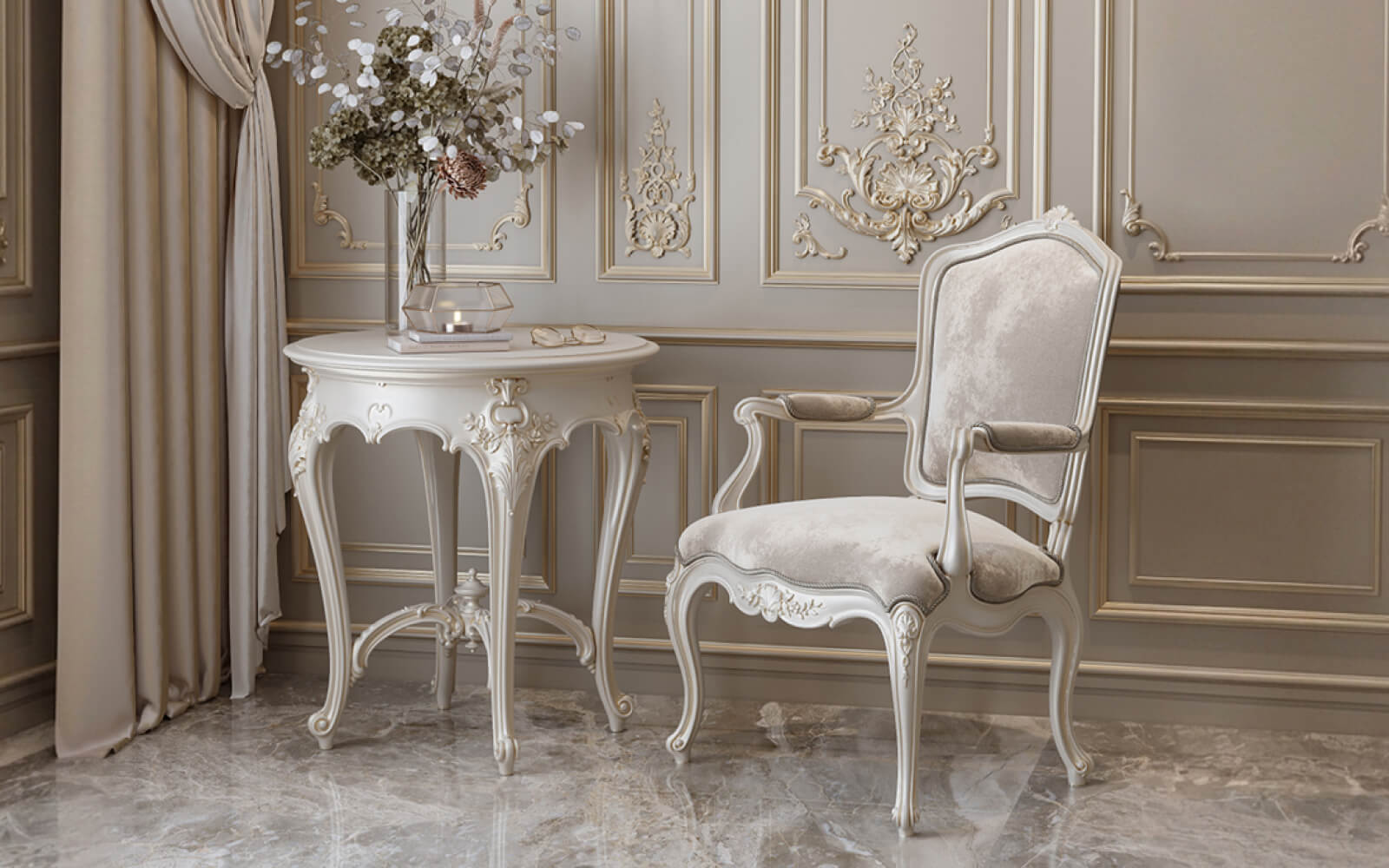
Moldings and cornices— horizontal and vertical frame moldings on walls. In classic and neoclassical interiors, wall molding frames create decorative panels — and the lower edge of each frame is usually aligned with the top edge of the skirting board.
System: skirting board + wall moldings from the same line, same material, same finish. The wall ceases to be just a 'surface' — it acquires architectural rhythm.
With cornices
Ceiling skirting board (cornice) and floor skirting board are two horizontal elements that frame the vertical wall from top and bottom. When they are made of the same material and from the same line, the wall reads as architecturally complete. When different, it feels like the top and bottom were done by different craftsmen.
With slatted panels
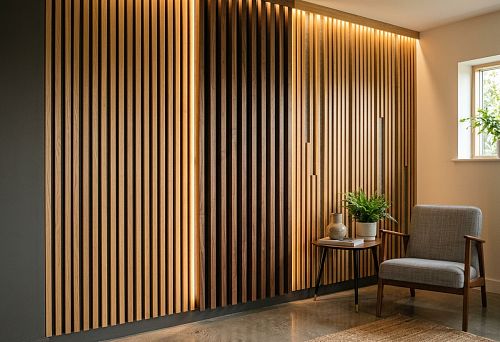
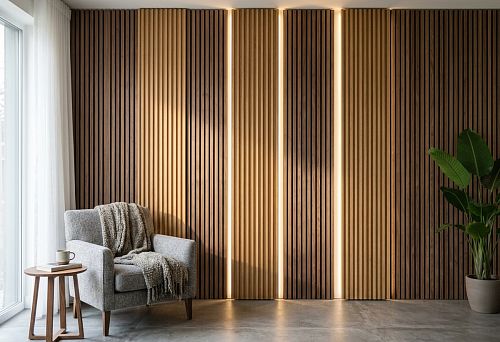
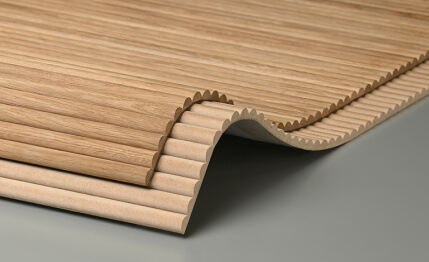
Rafter panelsMade of natural wood — vertical wooden profiles fixed to the wall. Wooden baseboard at the floor + slatted panels on the wall = a closed natural system. Wood below, wood on the walls — the space feels warm and well-appointed.
With molding decor
Decor for Molding— corner blocks, rosettes, inserts for molding frames. In a classic interior, corner blocks on molding frames complete the wall decor system. A baseboard with a figured profile from the same wood is the organic lower point of this system.
With doors and architraves
This is the most common conflict point: baseboards and architraves from different lines, different materials, different shades.
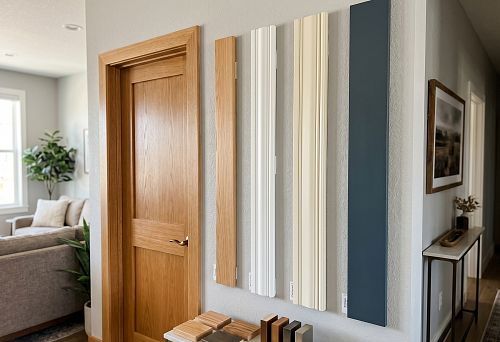
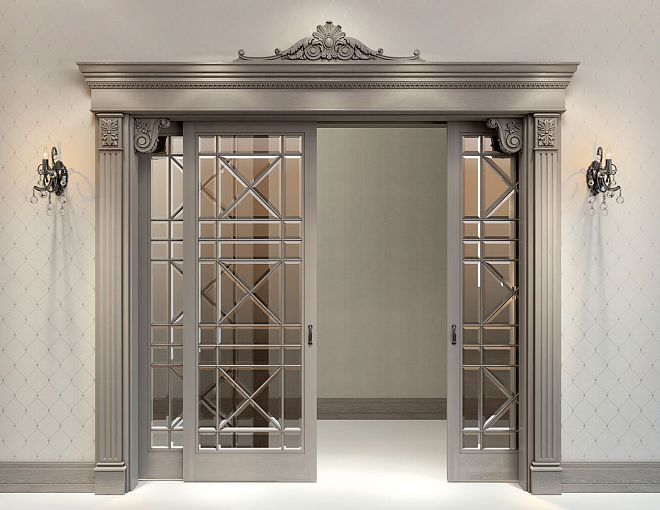
Rule: baseboard, architrave, and ceiling profile must be from a unified system by one manufacturer or from specially coordinated collections. The slightest discrepancy in shade — especially in white — creates a sense of sloppiness that cannot be explained in words but is always felt.
Where to buy floor baseboard in Moscow
What to pay attention to
In stock vs. made to order. For a renovation with specific deadlines, an order 'for 4 weeks' is a problem. An in-stock item is the standard that needs to be confirmed before payment. At the same time, a 'made to order' batch may differ in shade from the sample.
Plank length. Standard — 2.5 m. Some items — 3 m. For a large room, a 3-meter plank results in fewer joints. Clarify before calculating the quantity.
Ordering a sample. Wood tinting, white MDF shade—these are details you can't judge from a screen. A sample for flooring and wall color is a mandatory step.
Unified line. Skirting board, architrave, molding—from a single manufacturer. This guarantees compatibility of profiles and shades.
Delivery and packaging. Long-length trim is transported in protective packaging. Ends and surfaces must be protected from scratches and breaks.
Catalog for quick navigation
Common mistakes when choosing floor skirting board
Wrong material for the task
MDF without sealing by the kitchen sink. Untreated wood in the hallway with outdoor moisture. Polystyrene profile in the living room with parquet—three examples of the same mistake: material chosen without considering operating conditions.
Rule: first conditions (humidity, load, cleaning)—then material. Not the other way around.
Too low or too high profile
A 40 mm skirting board with a 3.5 m ceiling—it gets lost, doesn't hold the space. A 120 mm skirting board with a 2.5 m ceiling—it 'presses down', compresses the room from below.
The width of the skirting board is proportional to the ceiling height. This is not aesthetics—it's architectural proportions that work objectively.
Color mistake
Three examples of critical color mistakes:
-
Warm brown floor + cold gray skirting board—a visual break without intentional design
-
White skirting board in a 'creamy' shade next to a 'cold' white ceiling—two different whites create a feeling of dirt, not neutrality
-
Dark skirting board in a light, small room—lowers the ceiling, compresses the space
The shade is selected with a sample of the flooring and a sample of the wall paint in hand under the daylight of your specific room.
Lack of connection with the rest of the decor
The floor skirting board is bought first—or last, in a hurry. Door architraves are from a different line, ceiling skirting from a third. Three different 'whites,' three different profiles, three different manufacturers.
The result: the renovation looks like it's assembled from random parts, not like a well-thought-out interior.
The solution is simple: plan all decorative moldings as a single purchase—skirting, architraves, ceiling profile—from one manufacturer, from one line.
Frequently asked questions
Which floor skirting board is best to buy in Moscow?
It depends on the task. Solid oak or beech—for parquet and wooden floors in a classic or warm interior. MDF—for a white monochrome system in Scandinavian or modern style. Polystyrene HI WOOD—for kitchens, hallways, and any wet areas.
What height should I choose for a floor skirting board?
Formula: skirting height = 1/40 of the ceiling height. With a 2.7 m ceiling—67 mm (rounded to 70 mm). With a 3 m ceiling—75 mm. With a 3.5 m ceiling—87 mm (rounded to 90–100 mm).
How to attach a wooden skirting board to the wall?
Construction adhesive for wood + finishing nails into the wall at an angle. On drywall—anchors into the metal profile of the frame. Using only adhesive without mechanical fastening, the wooden profile holds unreliably due to weight and wood deformation from temperature fluctuations.
Do I need to seal the floor skirting board?
For wooden and MDF in the kitchen or hallway — yes: the bottom joint with the floor is sealed with clear acrylic or silicone sealant. For polystyrene — advisable in high-humidity areas.
Does wooden skirting board need to be painted or varnished?
Depends on the desired result. Oil or wax — preserves matte finish and natural texture, easy to renew. Varnish — provides a hard, glossy coating with higher moisture protection. In the kitchen and hallway — varnish is preferable. In the living room and bedroom — oil gives a warmer result.
How to calculate the amount of floor skirting board?
Perimeter of the room minus the width of door openings plus 10–15% for cutting. For a 4×5 m room: perimeter 18 m, minus door 0.9 m = 17.1 m, plus 15% = 19.7 m. With a plank length of 2.5 m — 8 planks.
Is skirting board attached to the floor or to the wall?
To the wall. Skirting board should not be rigidly connected to the floor covering — laminate, parquet, engineered board 'move' with thermal expansion. Rigid attachment to the floor causes board swelling. Skirting board is attached to the wall, and the bottom edge only touches the floor.
White skirting board: MDF or polystyrene — which is better?
MDF — for precise shade matching under painting and for dry rooms. Polystyrene — for humid areas and for those who want a factory white surface without self-painting. In the living room and bedroom — both options are good. In the kitchen — polystyrene.
Can floor skirting board be installed independently?
Yes. Polystyrene is the easiest: it cuts with a utility knife and glues with liquid nails. MDF is not difficult but requires a saw for miter cuts. Solid wood requires an assistant: you need to hold the plank until the glue sets, and finishing nails are easier to drive with two people.
Conclusion
To buy a floor skirting board in Moscow correctly is to answer three questions: material for operating conditions, height for room proportions, color and profile for style. A system of skirting boards, architraves, moldings, and paneling from one manufacturer is not an option for perfectionists. It is the minimum requirement for an interior with character.
Go to the catalog and select:
STAVROS is a Russian manufacturer of interior decor made from natural wood, MDF, and polystyrene. The STAVROS range covers solid oak and beech floor skirting boards (60 to 120 mm), paintable MDF skirting boards (60/70/80/100/120 mm), moisture-resistant HI WOOD line skirting boards made from high-density polystyrene (58–140 mm), moldings, cornices, paneling, molding decor — a complete wooden system for apartments, houses, and any interior context.
STAVROS works with private customers, designers, architects, and construction companies across Russia. Warehouse in Moscow, delivery within 1–3 business days in protective packaging. Professional consultation on selecting skirting boards for ceiling height, floor covering, and interior style — free of charge.