Article Contents:
- When you need decorative wall panels: an honest first answer
- Types of decorative wall panels: a complete typology
- Wood Panels
- Slatted panels
- MDF panels for painting
- Molding panels: frames on the wall
- Stucco decorative panels and overlays
- Combined Solutions
- Wooden wall panels: warmth, texture, naturalness
- Where wooden panels work best
- Technical nuances
- Slat panels: vertical rhythm and modernity
- Color and wood species in slat panels
- Molding panels: how frames turn a wall into architecture
- Where molding frames are especially effective
- Stucco decorative panels: volume, plasticity, architectural character
- Where to use decorative wall panels: a complete breakdown by zone
- Living room: four accent points
- Bedroom: peace through structure
- Hallway: first impression decides everything
- Study: dignity through material
- Kitchen-living room: zoning without partitions
- Commercial interior: image as a business tool
- How to choose decorative panels for your interior style
- Modern minimalism
- Neoclassicism
- Classic
- Japandi and organic style
- Art Deco
- What is better: slat panels, moldings, stucco, or wooden panels
- How to choose the color and texture of decorative panels
- Color for the task
- Texture and material
- How to calculate decorative panels for walls
- Mistakes when choosing decorative wall panels
- What to buy together with decorative wall panels
- How to buy decorative wall panels without mistakes: an algorithm
- About the Company STAVROS
- FAQ: Answers to Popular Questions
A wall is not just a room boundary. It is a surface that either works for the interior or simply exists in it. A flat painted wall without structure is a background that makes no claims. A wall with decorative panels is an architectural statement: it sets the rhythm, creates depth, defines zones, and holds the entire interior as a single composition.
That is why the question about decorative wall panels is always a question about the interior as a whole. Not 'which panel to buy', but 'what do I want to get from this wall'. An accent? Zoning? Warm texture? Classic architecture? Vertical rhythm? The answer to this question determines the material, profile, color, and installation method.
Let's break it all down step by step — from typology to the final purchase algorithm.
When you need decorative wall panels: an honest first answer
Most people come to the idea of wall panels when they realize: the interior is missing something. The furniture is good, the lighting is well thought out, the floor is beautiful — but the space still feels unfinished, "flat," without character.
The reason is almost always the same: the walls. A bare painted surface without structure doesn't participate in shaping the space. It just reflects light and confines the room. Decorative wall panels are a way to put the wall to work: give it volume, rhythm, scale, and meaning.
Specific situations when panels are needed:
-
The wall behind the sofa looks empty — no visual center, no accent.
-
The TV area is not organized — the TV hangs without context.
-
The hallway feels narrow and endless — no vertical or horizontal division.
-
The headboard area in the bedroom is not styled — the bed "floats" in the space without an architectural frame.
-
The study looks like a temporary office — without character, without dignity.
-
A commercial interior doesn't make the right impression — there's no image, no "luxurious" atmosphere.
In all these cases, decorative wall panels solve the problem more precisely and cheaply than changing furniture or re-planning.




What types of decorative wall panels exist: a complete typology
Before choosing, you need to understand: what exactly exists under the word "wall panels." This is not one product, but a whole class of solutions — with different materials, tasks, and aesthetics.
Our factory also produces:
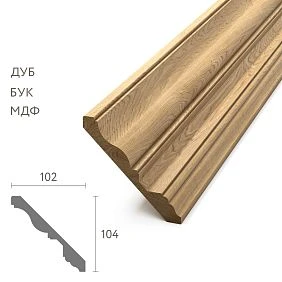

Wooden panels
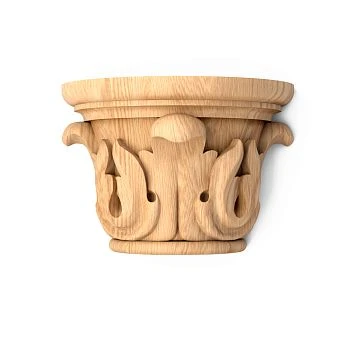
Wooden Wall Panels made from natural solid wood — oak, ash, pine, birch — provide what cannot be imitated: living texture, the warmth of natural material, a unique grain pattern. Each board is one of a kind.
Wooden wall panels are suitable for interiors where wood is a through material: parquet or solid wood floors, oak doors, wooden stairs, furniture made from natural material. Here, panels become a continuation of the overall theme.
Get Consultation
Rack panels
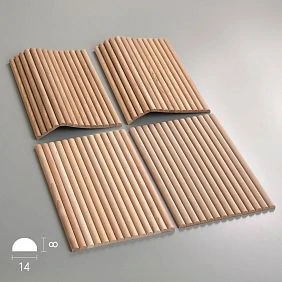
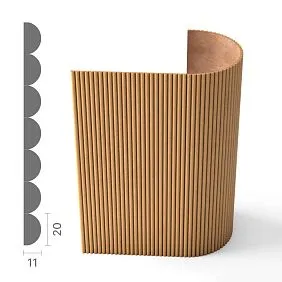
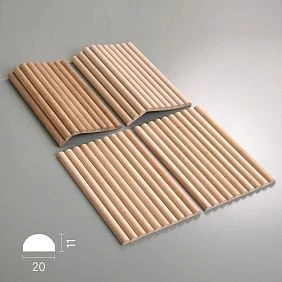
Rafter panels — a separate story. These are vertical or horizontal slats made of wood or MDF, fixed with a certain spacing on a background surface. There is a gap between the slats, which creates an effect of depth and shadow.
Slatted panels have a pronounced rhythmic character. Vertical slats visually stretch the wall upward and visually raise the ceiling — this is especially valuable for standard apartments. Horizontal slats expand the space in width.
The main area of application is the TV zone, the wall behind the sofa, zoning in a kitchen-living room, hallway. In modern interiors, Japandi, Scandinavian style — slatted panels have become one of the main techniques for accent walls.
MDF panels for painting
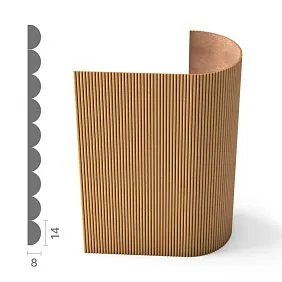
MDF panels with milled profiles are geometrically precise, lightweight, and well-suited for painting. They are used to create shaped frames, wavy reliefs, and geometric patterns. In Russia, this format is gaining popularity specifically in the segment of "wall panels for painting."
Important: MDF panels require careful painting — the surface is neutral, without texture. The result depends on the quality of the painting.
Molding panels: frames on the wall
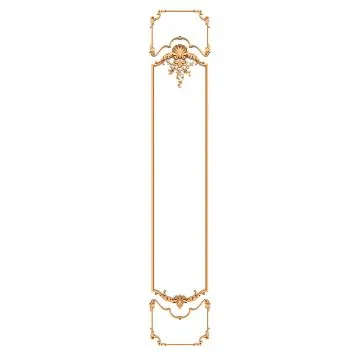
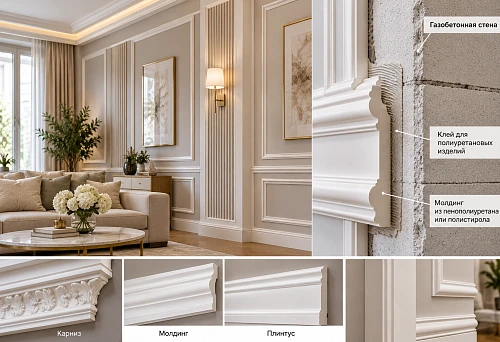
Strictly speaking, this type is not a "panel" in the traditional sense — but it is the one that occupies a central place in framed wall systems. Moldings made of polyurethane are mounted on the wall in a frame pattern — creating rectangular or square "pictures" on the wall plane. The result after painting is an elegant architectural structure that looks built into the wall itself.
Molding panels are one of the most versatile ways to decorate a wall in neoclassical, classical, art deco, and even restrained modern interiors.
Stucco decorative panels and overlays
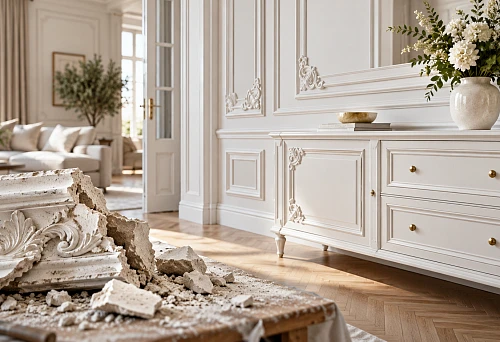
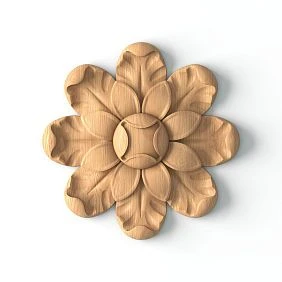
decorative polyurethane elements и applique are relief stucco decor that creates a three-dimensional surface on the wall. It differs from molding frames in its greater plastic expressiveness: ornaments, rosettes, cartouches, floral motifs.
Stucco panels are suitable for classical, neoclassical, and art deco interiors. The main principle is not to overload. One accent zone with stucco decor works. Five walls with overlays — chaos.
Combined Solutions
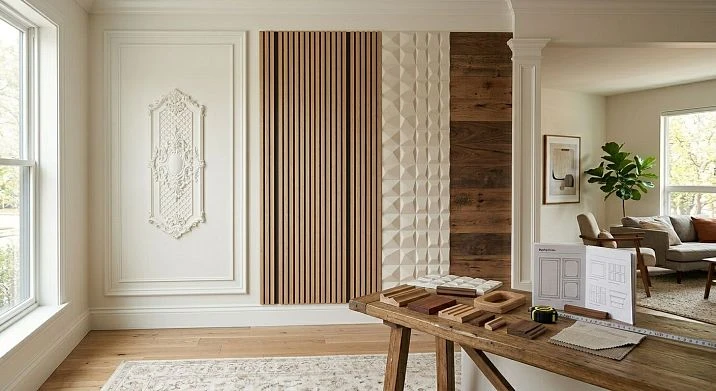
The most expressive result is achieved by combining several types. For example: a slatted panel as a background + a molding frame on top of it + a decorative overlay in the center = a ready-made TV wall composition. Or: wooden moldings on the lower part of the walls + a plastered upper zone with a ceiling cornice = a classic version of "wainscoting" finish.
Wooden wall panels: warmth, texture, naturalness
Why do people choose wooden panels even when cheaper alternatives exist? Because wood is irreplaceable in terms of feel. It is the only material that changes with age, reacts to humidity, breathes, and has a unique biography in every layer.
solid wood panels — it's not just "finishing." It's a material statement about one's attitude to space.
Where wooden panels work best
Country house. Here, wood is the architectural language of the entire space: beams, rafters, stairs, doors. Wooden wall panels on the lower part of the walls or as a slatted system organically continue this language.
Living room with wooden doors and parquet. A wall with wooden panels in the same wood species or in a matching tone creates the effect of a "unified wooden theme" — expensive and cohesive.
Study. Wooden panels on the walls of a study are a classic of the genre. Combined with wooden moldings and solid wood cornices they create an image of a space where one is meant to think and make decisions.
Bedroom in Japandi or organic minimalism style. Natural wood with a clean profile, without varnish, oiled — this is a material that calms and creates a sense of nature in the interior.
Technical nuances
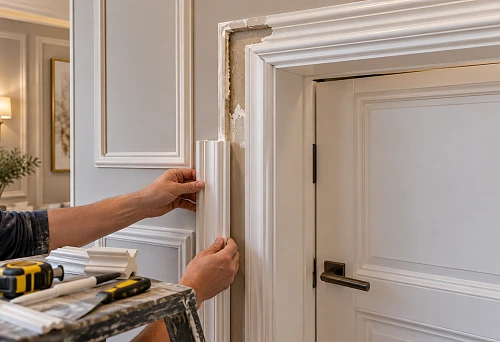
Wooden panels are mounted on a frame or glue. They require a finishing coat — oil, wax, or varnish. Important: the coating must match the room type. For a high-traffic hallway — hard varnish. For a bedroom — oil or wax. solid wood baseboard matching the panels — a mandatory element for completing the bottom line.
Slat panels: vertical rhythm and modernity
Slat panels are at the peak of popularity — and for good reason. They solve several problems at once: create a vertical rhythm, add depth and shadow, and visually change the proportions of the room.
The principle is simple: fixed-width slats with a set gap between them. The slat width and gap spacing are the main parameters that determine the panel's character.
-
Narrow slats with a small gap — dense, "warmer," almost like wood paneling. Suitable for classic and Japandi interiors.
-
Wide slats with a large gap — airy, modern. Good for minimalist and Scandinavian interiors.
-
Slats of varying widths in rhythmic alternation — a dynamic, more complex pattern. For Art Deco and custom design solutions.
Wooden slat panels used in the TV area — as a backdrop for the screen, giving the entire wall interior meaning. In the hallway — as a visually "elongated" rhythm, making the corridor seem longer. In the kitchen-living room — as a divider between the kitchen and living areas without a partition.
Color and wood species in slat panels
Natural oak without tinting — a neutral warm tone for any modern interior. Dark wenge — for an expensive contrasting accent. Bleached ash — for light Scandinavian and Japandi spaces. The choice of wood species and tinting should be coordinated with the floor, doors, and furniture.
Molding panels: how frames turn a wall into architecture
A system of molding frames on the wall is one of the most intellectually beautiful techniques in interior finishing. From the outside, it looks simple: a rectangular outline of a profiled strip on the wall. Inside — thoughtful geometry: symmetry, proportions, rhythm.
Moldings made of polyurethane for wall frames — the optimal choice, because their geometry is precise, installation is simple, and painting yields any result. After painting the wall and moldings in a single tone, the frames are perceived as part of the architecture — as if it were always that way.
Where molding frames are especially effective
The wall behind the sofa in the living room. One large frame or a system of two to three frames in a row creates a visual center — the 'main wall' of the living room. Without it, the wall remains a background. With it, it becomes an accent.
Headboard of the bed. A molding frame or panel above the bed creates an 'architectural headboard' without furniture. This is an elegant and relatively simple solution to execute.
Hallway. Vertical frames on the hallway walls immediately create a sense of a 'real' interior. Even in a narrow corridor of 80–90 cm, they work.
Reception, meeting room, lobby. In a commercial space, molding panels create an image of reliability and representativeness — exactly what is needed for a first impression.
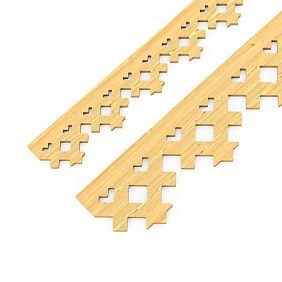
Decor for Molding — corner rosettes, diamond-shaped inserts, brackets — enhances the frame system, transitioning it from geometry to architecture.
Stucco decorative panels: volume, plasticity, architectural character
Stucco decor on walls is not retro. It is a language that has existed for millennia and is still read as a sign of quality and intention.
Polyurethane decorative appliques — these are relief ornamental elements: floral motifs, geometric patterns, cartouches, garlands, medallions. They create a point decorative accent — where a molding frame gives only a contour, an overlay adds content.
Stucco panels and overlays work especially expressively:
-
in the TV area — as a relief background creating depth;
-
around a mirror in the hallway or bedroom — as a frame;
-
above the fireplace — as a decorative portal;
-
in niches — as filling a flat surface with architectural content;
-
in a restaurant, hotel, showroom — as creating a 'brand image'.
Polyurethane Items for stucco wall decoration exist in a wide range of styles: from strict geometric overlays for Art Deco to rich floral motifs for classic.
Where to use decorative wall panels: a complete breakdown by zone
Living room: four accent points
The living room is a space with the largest number of "competing" walls. Here it is important to choose one main wall and focus the decor on it.
Wall behind the sofa. The main wall of the living room requires the most expressive solution. Slatted panels (for a modern interior), molding frames (for neoclassicism), and wooden panels (for a natural style) work equally well here.
TV area. A TV without framing is a technical object. With decorative panels, it becomes an architectural element. Slatted panels as a background plus a molding frame around the screen — a ready-made TV wall.
Dining table area. The wall above the dining group with molding frames or wooden panels creates the feeling of a separate "hall" within a large living room.
Fireplace area. A fireplace without decorative design is just a hole in the wall. With decorative overlays, a molding portal, and a frame system above — it becomes the architectural center of the entire room.
Bedroom: peace through structure
In the bedroom, decorative panels work in a "soft accent" mode — without aggressive rhythm, without contrasting colors, without heavy ornaments.
A molding frame at the headboard, light-toned slatted panels, or wooden panels with a matte oil finish — solutions that create a feeling of a cocoon and completeness. Symmetry is especially important in the bedroom: asymmetrical panels disrupt the sense of balance and peace.
Solid wood moldings In a profile coordinated with the baseboard, they are suitable for a bedroom in a classic or natural style.
Hallway: first impressions decide everything
In the hallway, wall panels serve a dual function. Aesthetic — the first thing a guest sees should make the right impression. Practical — the lower part of the wall in the hallway is most susceptible to dirt and mechanical impact; a panel or molding belt with a more durable coating is almost indispensable here.
Vertical slatted panels in the corridor visually stretch it upward and create rhythm. Molding frames on the walls give even a small hallway the status of a "real" interior space.
A mandatory element of the hallway — MDF Skirting Board or Wooden baseboard in coordination with the panels.
Study: dignity through material
A study is a space with a purpose. An atmosphere of concentration, seriousness, and tradition is needed here. Wooden panels on the lower part of the walls with a horizontal molding belt is a classic and still the most convincing solution for a study.
Solid Wood Items — wooden moldings, panels, baseboards, and architraves — create a unified material language in the study.
Kitchen-living room: zoning without partitions
An open-plan "kitchen + living room" requires visual zoning without structural partitions. A slatted panel on the wall behind the sofa is a clear boundary for the relaxation area. A different color or texture on the wall above the kitchen island is a boundary for the work area.
Commercial interior: image as a business tool
Restaurant, hotel, showroom, beauty salon, reception — spaces where a "luxurious image" directly influences brand perception and customer behavior. Decorative wall panels in a commercial interior are an investment in positioning.
Rafter panels how background wall finishing in a restaurant or showroom creates a warm atmosphere without excessive decor. Molding frames in a hotel lobby or meeting room convey an image of prestige and reliability.
How to choose decorative panels to match your interior style
Choosing the wrong panel style ruins the interior. Here's how it works for each direction.
Modern minimalism
Here, slatted panels with a clean profile and small spacing, wooden panels with a matte finish, or smooth molding frames without ornamentation work best. The color should be as close to the wall as possible. No stucco overlays, no brackets, no rosettes.
Neoclassicism
Molding frames are the foundation. Neat profile, symmetry, monochrome painting. Decor for Molding in the form of corner inserts is acceptable, but without ornamental overload. Wooden panels on the lower part of the walls are appropriate for a "warmer" interpretation of neoclassicism.
Classic
Here, a full system is acceptable: moldings with corner rosettes, decorative overlays, pilasters, a ceiling cornice. Wall panels made of wood or molding frames with decorative elements made of polyurethane — full classical design.
Japandi and organic style
Vertical wooden slats, natural wood without bright tinting, no ornaments. The material speaks for itself. planks made of wood — a direct hit in style.
Art Deco
Geometric molding frames with clear right angles, contrasting color, repeating rhythmic pattern. Decorative overlays are strictly geometric, without floral motifs. Material — polyurethane profiles or wooden panels with a pronounced geometric pattern.
What is better: slatted panels, moldings, stucco, or wooden panels
This is a question that arises for everyone who starts choosing wall decor. There is no universal answer — but there is a logic of choice.
| Type | When to choose |
|---|---|
| Slatted panels | Modern style, Japandi, TV area, vertical rhythm |
| Molding frames | Neoclassicism, classic, wall behind the sofa, for painting |
| Stucco overlays | Classic, Art Deco, point accent, fireplace area |
| Wooden panels | Natural interior, country house, study |
| Combination | When you need a complete zone: background + frame + accent |
The combined solution is the most powerful. A slatted panel as a background, a molding frame on top of it, a decorative overlay in the center — this is a ready-made accent wall with internal logic and visual depth.
How to choose the color and texture of decorative panels
Color is the mood of the interior. Texture is the feel of the material. Both parameters affect the final result no less than the shape of the profile.
Color for the task
Matching the wall color. Panels and wall are a single surface. The accent is created by relief and shadow, not color. The result is elegant, restrained, expensive. Ideal for a bedroom and study.
Slightly lighter or darker than the wall. Soft tonal contrast — the frame is readable but does not 'scream'. The most versatile solution.
Natural wood look. Wooden or slatted panels retain the natural color of the material — this is a warm, lively tone that pairs well with any neutral interior.
Contrasting dark tone. Dark blue, green, graphite panels on an accent wall — a design solution with a pronounced character. Requires coordination with furniture and textiles.
Texture and material
The texture of the panels should coordinate with the flooring. Wooden slats on the wall + wooden parquet on the floor — a unified theme. Smooth polyurethane moldings + laminate with wood imitation — a neutral combination. Rough wood texture + high-polish tile floor — a dissonance that requires meaningful justification.
How to calculate decorative wall panels
This is a practical block — without it, the purchase turns into guesswork.
Step 1. Measure the entire wall. Width and height. Mark the positions of sockets, switches, windows, and doorways.
Step 2. Determine the decorative zone. The entire wall from floor to ceiling? The lower part up to a height of 100–130 cm? Only an accent panel behind the sofa or behind the bed?
Step 3. Choose the type. Slat system? Molding frames? Wooden panels over the entire surface?
Step 4. Draw a diagram. For slat panels — slat width, gap spacing, total surface width. For frames — number of frames, offsets from the floor, ceiling, and corners. For wooden panels — surface area accounting for deductions for openings.
Step 5. Calculate the quantity. Slat panels — linear meters with a 10–15% margin. Moldings for frames — perimeter of each frame + 10–15% margin. Wooden panels — area + 10% margin.
Step 6. Check the sockets and switches. They should not fall inside the frame or at the joint of the slatted panels — this must be taken into account when designing the layout.
Mistakes when choosing decorative wall panels
An honest list of common miscalculations:
-
Choosing panels only based on a beautiful photo. A photo has the right lighting, the right angle, and good furniture. Your wall may be completely different.
-
Not considering the wall size. A small slatted pattern gets lost on a large wall. Large wooden panels in a small room feel overwhelming.
-
Making too much active decor everywhere. One accent wall is the rule. Three decorative walls at once is overload.
-
Forgetting about the baseboard. The wall panel should end at the baseboard — neatly, without a gap. MDF Skirting Board or Wooden baseboard must be chosen at the same time as the panels.
-
Ignoring sockets and switches. A socket in the middle of a slatted panel is an installation error. Consider their placement before starting installation.
-
Mixing incompatible styles. Stucco floral overlays + slatted panels + wooden moldings without a unifying theme = visual chaos.
-
Do not ignore the color of doors and floor. Wall panels do not exist in a vacuum — they are perceived together with the floor, doors, and furniture.
-
Do not forget to account for cutting waste. Minimum 10%, preferably 15%.
-
Do not overlook painting preparation. Joints between molding and wall need to be filled before painting. Otherwise, gaps will be visible.
-
Do not buy without calculation. “I’ll eyeball it” always results in either shortage or excess material.
What to buy together with decorative wall panels
Panels are part of a system. Buy everything needed for a cohesive result:
-
Wooden slat panels — the foundation of a modern wall system.
-
Solid Wood Items — wooden moldings, baseboards, trims, cornices.
-
Moldings made of polyurethane — for frame systems and ceiling cornices intended for painting.
-
Wooden moldings and cornices — for natural interiors.
-
Decor for Molding — corner inserts, sockets, diamonds to reinforce the frame system.
-
Polyurethane decorative appliques — stucco accent for classic and neoclassical areas.
-
solid wood baseboard — bottom line for natural interiors.
-
MDF Skirting Board — for painted systems with moldings.
-
Polyurethane Items — complete catalog of decor for the interior.
How to buy decorative wall panels without mistakes: algorithm
1. Choose the room and a specific wall or area.
2. Define the task: accent, zoning, lower part protection, full wall decoration.
3. Choose the type of panels: wood, slats, moldings, stucco, or a combination.
4. Measure the wall considering openings, sockets, and furniture.
5. Draw a diagram — at least schematically, on paper.
6. Select baseboard, cornice, and molding decor in a unified system.
7. Determine the color and finish coating.
8. Calculate the quantity with a 10–15% margin.
9. Go to the catalog of slatted panels и of solid wood or to the catalog polyurethane products — depending on the selected type.
10. Assemble the set for the project and place an order.
About the company STAVROS
Decorative wall panels, slat systems, moldings, baseboards, cornices, and stucco decor — all of this STAVROS has been producing since 2002 at its own facilities in St. Petersburg. Milling and casting workshops, precise molds, geometry control for each batch, over 4000 models and 20,000 modifications in the catalog.
STAVROS is not a store reselling others' products. It is a manufacturer with a full cycle: from profile development to finished product shipment. The catalog includes Wooden slat panels, Solid Wood Items, Moldings made of polyurethane, Decorative Inserts, Decor for Molding, Wooden baseboard and the entire range polyurethane products for residential, country, and commercial interiors. Shipment from 1 piece. Contact us to confirm shipping to your destination. Custom manufacturing.
FAQ: Answers to popular questions
Which decorative wall panels are best to choose?
It depends on the task and style. For modern interiors and Japandi — slatted wooden panels. For neoclassicism and classic — molding frames for painting. For a natural look — solid wood panels. For accent stucco decor — decorative polyurethane overlays.
How are decorative panels better than wallpaper?
Panels create volume, shadow, and architectural structure. Wallpaper is a flat surface. Panels are more durable, do not fade, and do not peel at the seams. When moving or changing the concept, molding frames and wooden panels can be removed and reinstalled.
Can decorative panels be used in a small room?
Yes. Principles: light color, thin profile, one accent wall — not all four. Vertical slatted panels visually stretch the wall upward, which is useful for low rooms. A molding frame at the headboard does not take up physical space.
Where is the best place to use decorative wall panels?
The wall behind the sofa, TV area, headboard, hallway, study, kitchen-living room, commercial spaces — these are the main application points. In each case, the task is different: accent, zoning, protection, or image.
What to buy together with decorative panels?
Baseboard, ceiling cornice, decor for moldings, decorative overlays. A system of three horizontal lines (baseboard — wall panels — cornice) always looks much stronger than panels installed in isolation.
How to calculate the number of decorative panels?
Measure the wall, determine the decor area, draw a diagram, calculate the linear footage or area, add 10–15% reserve. Consider the position of sockets, switches, and furniture before installation.