










































































Article Contents:
- Product basics: what is a decorative wood-look beam
- Features of the decorative beam BL-001
- Why decorative wood-look beams are chosen for the ceiling
- What sizes of decorative wood-look beams are available and why it matters
- How to choose the beam size for a room
- Price of decorative wood-look beams: what determines the cost
- Materials: wood, MDF with oak veneer, and polyurethane
- Decorative beam BL-001 STAVROS: where to use
- How to calculate the number of decorative beams
- How to choose the color and texture of a wood-look beam
- How to combine beams with STAVROS moldings, slats, and panels
- Beams for different rooms
- Living Room
- Kitchen-living room
- Bedroom
- Office
- Restaurant, cafe, hotel
- What sizes of decorative wood-look beams to choose for the ceiling?
- Which is better: polyurethane beam or MDF beam with oak veneer?
- Can a decorative beam be used to hide wiring?
- Are wood-look beams suitable for a kitchen-living room?
- How many beams are needed for a room?
- How to calculate the distance between decorative beams?
- Can BL-001 be used for a coffered ceiling?
- What determines the price of a decorative wood-look beam?
- Can a decorative beam be painted to match the ceiling color?
- Are wood-look beams suitable for a modern interior?
- Do I need to buy beams with extra?
- Where to buy decorative wood-look beams?
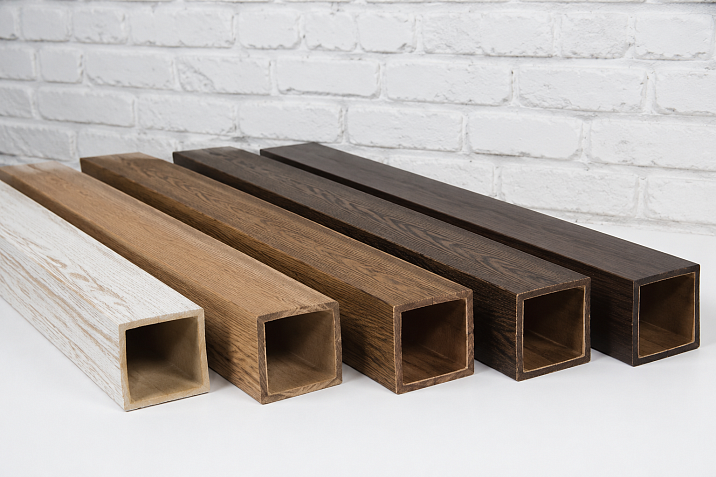
Decorative wood-look beams are chosen not only for color and beautiful texture. In a real interior, important factors are dimensions, ceiling height, spacing between elements, material, finish method, price, installation task, and the role the beam will play: simply decorate the ceiling, hide wiring, create a coffered grid, highlight a kitchen-living room, or create the feel of wooden architecture without a heavy structural construction.
A buyer looking to purchase decorative wood-look ceiling beams often wants to solve several issues at once. Which beam won't weigh down a low ceiling? What size to choose for a spacious living room? How does MDF with oak veneer differ from polyurethane imitation? Can a U-shaped beam be used as a box? How many beams are needed for a room? What determines the price of a decorative wood-look beam? Answers to these questions are more important than simply picking an "oak" shade.
At STAVROS, the decorative task can be solved through a real product — the decorative beam BL-001. This is a U-shaped false beam measuring 100 × 100 × 13 × 2750 mm, available in MDF and oak versions. It is suitable for ceiling structures, coffers, wall decorative projections, portals, niches, and neat concealment of wiring with a pre-planned installation scheme.
This article will help you choose decorative wood-look beams by size, material, price, and ceiling task. We'll cover how not to lower the room, how to calculate the quantity, how MDF, oak, and polyurethane differ, where to use the BL-001 beam, what mistakes are most often made when purchasing, and where on the STAVROS website to look for suitable linear products for the interior.

Product basis: what is a decorative wood-look beam
A decorative wood-look beam is not a load-bearing structural beam, but an interior element. It can imitate a wooden structure, decorate the ceiling, create rhythm, cover technical areas, visually zone the room, and support the interior style. Unlike a real structural beam, a decorative false beam does not have to support the floor. Its task is to work with appearance, proportion, and functional masking.
The BL-001 beam from STAVROS is a linear product made of wood and MDF. Its shape is U-shaped. This means the element looks voluminous but has empty space inside. This shape is especially useful on the ceiling: the beam creates visual volume but does not become a heavy solid piece. With proper design, wiring or technical elements can be hidden inside, if size, installation scheme, and safety requirements allow.
Size BL-001 — 100 × 100 × 13 × 2750 mm. The card uses the designation A × C × D × L. Before purchasing, it is important to look at the product drawing because the letter parameters indicate specific sides of the profile. For a decorative beam, not only the length is important, but also the cross-section: width, height, and wall thickness affect the visual weight, installation, and compatibility with the ceiling.
Materials for the card — MDF and oak. The description indicates two execution options: MDF as a universal surface for painting with enamels and MDF with oak veneer, which provides the natural pattern and color of natural wood. The size table card also indicates the "Oak" option. Before ordering, it is better to check with the STAVROS manager the current execution, availability, price, production time, and suitable finishing option for your project.




Characteristics of decorative beam BL-001
| Parameter | Value |
|---|---|
| Model | BL-001 |
| Product type | Decorative U-shaped false beam |
| Size A × C × D × L, mm | 100 × 100 × 13 × 2750 |
| Materials for the card | MDF, oak |
| Execution options per description | MDF for painting with enamels; MDF + oak veneer for varnish, tinting, patination, or enamel |
| Sanding quality | Prestige |
| Purpose | Design of ceilings, coffered ceilings, walls, niches, portals, decorative projections |
| Functional tasks | Zoning, creating rhythm, hiding wiring or technical elements with an agreed mounting scheme |
| Order status | Custom Order |
| Average production time | Check the current deadline in the product card or with a STAVROS manager |
| Price | Depends on material, quantity, finish, and current order conditions; check the actual price in the product card |
| What to pair with | Linear products, slats, slatted panels, cornices, moldings, stucco decor, finishing materials |
This table is needed for practical selection. A timber beam is not just a 'ceiling decor'. It has a precise cross-section, length, material, surface preparation, and mounting logic. If you choose an element only by photo, you can make a mistake with ceiling height, spacing, joints, lighting, and the overall weight of the composition.
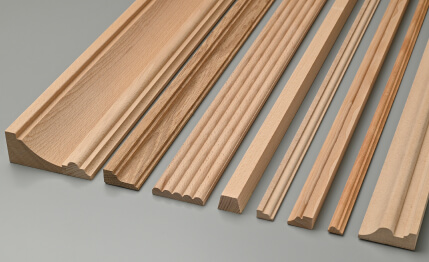
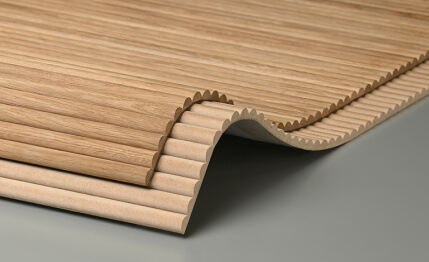
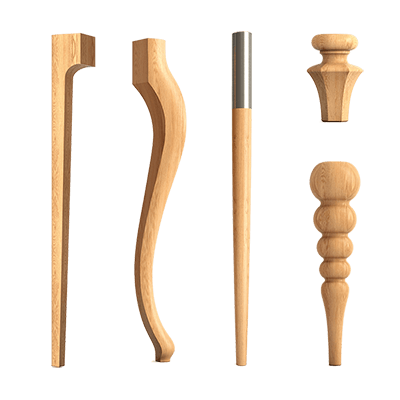
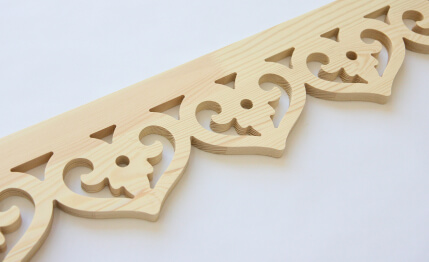
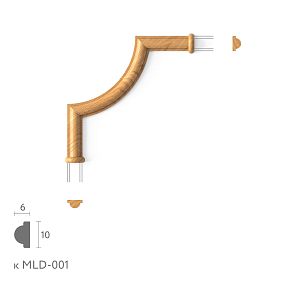
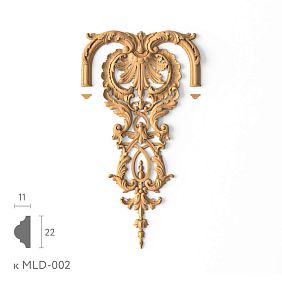
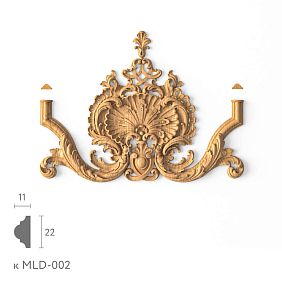
Our factory also produces:

Why decorative timber beams are chosen for the ceiling
The ceiling often remains the emptiest plane in the interior. Walls can be occupied by furniture, doors, paintings, panels, windows. The floor works through covering and carpets. And the ceiling often looks too flat, especially in large living rooms, kitchen-living rooms, country houses, attics, and commercial spaces. Decorative timber beams help make the ceiling not just a white plane, but part of the room's architecture.
The first task is rhythm. Several beams placed at equal intervals create a direction for the gaze. The room becomes more cohesive. In an elongated room, beams can visually organize the length; in a wide living room, they add structure; in a kitchen-living room, they can separate the dining or sofa area without partitions.
The second task is style. Wood-look beams are especially appropriate in interiors such as chalet, country, rustic, Provence, neoclassical, modern classic, country house, soft loft, wine room, and restaurant area. But style depends not only on texture. The same beam can look different: with dark tinting — more massive and intimate, with light enamel — lighter and more modern, with natural oak — warmer and more expensive.
The third task is zoning. In a kitchen-living room, beams can show the boundary between the kitchen, dining area, and lounge zone. In a long room, they help highlight the dining table. In a bedroom — frame the bed area. In a study — emphasize the work or library section. In a commercial interior — set the rhythm for seating areas, hall, or reception space.
The fourth task is masking. A U-shaped decorative beam can be used as a decorative box if you need to neatly hide electrical wiring, a technical channel, or a small unevenness. But this does not mean you can hide anything inside without calculation. Before installation, you need to check the size of the internal space, wiring requirements, access for maintenance, and compatibility with the ceiling structure.
Get Consultation
What sizes of decorative wood-look beams are available and why this matters
The size of a decorative beam determines not only installation but also the impression of the room. A beam that is too large on a low ceiling will feel oppressive. One that is too thin in a spacious living room will get lost. A step that is too frequent will create a sense of overload. One that is too sparse will not tie the composition together. Therefore, the query "decorative wood-look beam sizes" should be considered key, not secondary.
A beam has several dimensional parameters. The first is the width of the visible face. It determines how noticeable the beam is from below. The second is the profile height, i.e., how far the element drops from the ceiling. This parameter is especially important for low rooms. The third is length. It affects the number of joints and the overall calculation. The fourth is wall thickness. It is important for strength, installation, and the ability to use the beam as a decorative box.
BL-001 has dimensions of 100 × 100 × 13 × 2750 mm. This is a compact and clear cross-section: the beam is noticeable enough to create a ceiling rhythm but is not overly massive. For a low ceiling, even this profile needs to be placed carefully, while for a high room it can be used in a series, in a coffered grid, or in combination with other linear products.
When choosing a size, it is important to consider not only the ceiling height but also the room area. A small room with frequent dark beams can feel cramped. A large hall with sparse thin beams can feel empty. If the space is complex, it is better to first make a diagram: beam direction, spacing, joints, lights, cornices, furniture, and zones.
How to choose the beam size for a room
| Room / task | Which size is perceived better | What to consider |
|---|---|---|
| Low ceiling | Compact cross-section, light finish, moderate spacing | Don't weigh down the ceiling, avoid frequent dark rhythm |
| High ceiling | More expressive profile or beam series | Contrast and active rhythm can be used |
| Kitchen-living room | Beams as zoning: above the dining area, island, sofa | Direction relative to the kitchen, light, and furniture |
| Coffered ceiling | Beam as part of a grid, spacing and symmetry alignment are important | Need to calculate cells, joints, light fixtures |
| Attic | The beam supports the roof slope structure | It is important not to conflict with the ceiling slope |
| Restaurant or hall | Repeatable rhythm and strong visual composition | Coordination with lighting, furniture, and walkways |
| Niche or portal | The beam works as a decorative box | Check the internal size and junction with planes |
For a low ceiling, it is better to choose a light color, a small step, and a minimal number of beams. If the ceiling is lower than usual, a dark wood texture can visually lower it even more. In this case, the beam can be painted the color of the ceiling or given a soft tint without sharp contrast.
For a high ceiling, there is more freedom. Here, decorative wood beams can be darker, more expressive, with a more noticeable texture. A tall room can handle a large rhythm, coffers, and contrast. But even in a spacious room, beams cannot be placed without a system. The rhythm must be related to the furniture, windows, lights, and layout.
For a kitchen-living room, the beam size is chosen through zoning. If the beam passes over the dining table, it should support the center of the table. If over the kitchen island, it should repeat its line or neatly cross the space. If over the sofa area, it should create a soft boundary, not argue with the ceiling light.
For a coffered ceiling, the beam size is especially important. Coffers are built not with a single beam, but with a grid. Here you need to calculate the cells in advance: width, length, symmetry, placement of lights, cornices, and walls. A mistake in one step will be noticeable across the entire ceiling.
Price of decorative wood-look beams: what the cost depends on
The price of a decorative wood-look beam depends on more than one parameter. The cost is influenced by the material, length, cross-section, quality of sanding, surface preparation, need for finishing, number of items, project complexity, delivery, and additional work. Therefore, the right question is not 'how much does a beam cost in general,' but 'which beam suits my ceiling task and how much will the set for the room cost.'
The first factor is material. MDF under enamel is usually considered a rational option when painting is needed to match the ceiling, walls, furniture, or brand palette. A beam with oak veneer or in an oak finish costs more but provides a more expressive texture and feels closer to a natural wooden structure. If the interior is built around the texture of wood, saving on material can be a mistake.
The second factor is quantity. One beam for a niche and a set of beams for a coffered ceiling are different budgets. You need to consider not only the price per piece but also the total footage, joints, trimming, allowance, finishing, and installation. Sometimes a buyer chooses a more affordable material configuration but takes more elements due to a frequent spacing. As a result, the project cost may end up higher than with a more relaxed scheme.
The third factor is finishing. An unpainted or prepared surface requires further work: primer, enamel, varnish, stain, tinting, patina. If the finishing is done by a workshop, this is a separate budget stage. If a material with an expressive oak texture is chosen, it is important to include a quality coating that will emphasize the pattern rather than make it random.
The fourth factor is installation. Even if the beam itself has a clear price, installation may include ceiling preparation, marking, fastening, trimming, joining, bypassing lights, hiding wiring, painting ends, coordinating with cornices and other elements. This is especially important for coffered ceilings and projects with lighting.
The fifth factor is delivery and packaging. A beam 2750 mm long requires careful logistics. Before ordering, you need to clarify delivery conditions, packaging, timelines, and the possibility of receiving it in the desired region. Always check the current price and availability in the product card or with a STAVROS manager, because the cost may depend on the material and the current order status.
Materials: wood, MDF with oak veneer, and polyurethane
Decorative wood-look beams can be made from different materials. For the buyer, it is important not to argue which material is 'best in general,' but to understand which one suits the specific task: a ceiling in an apartment, a country house, a coffered grid, a restaurant, a niche, hiding wiring, styling as wood, or painting to match the interior color.
| Material | When it fits | Commercial meaning | What to Check |
|---|---|---|---|
| MDF | Stable geometry, enamel coating, neat shape required | Rational base for colored or light ceiling | Preparation for finishing, fastening, room humidity |
| MDF with oak veneer | Natural wood texture without heavy mass required | Premium look, expressive pattern, tinting capability | Veneer direction, shade, varnish, patina, joints |
| Oak | Naturalness, prestigious look, deep texture required | Strong material for interiors with wood | Weight, finish, operating conditions, ceiling compatibility |
| Polyurethane | Light decorative wood imitation required | Quick decorative effect, low weight | Relief, texture, color, style compatibility |
| Solid wood | Custom projects, high-end interiors | Maximum naturalness | Weight, geometry, humidity, cost, and installation |
MDF is convenient where a smooth painted surface is important. For example, if the ceiling should be white, milky, gray, graphite, or painted to match the walls, MDF can be a practical base. It does not require showing wood grain, but works well with enamel when properly prepared.
MDF with oak veneer is chosen when a natural texture is needed. This option is especially suitable for living rooms, country houses, studies, restaurants, chalets, and interiors with wooden furniture and natural materials. Veneer provides visual closeness to wood while maintaining stable product geometry.
Oak is perceived as more prestigious and expressive. It works well under varnish, oil, tinting, patina, and natural or deep shades. But oak texture requires careful color selection. If there is already oak flooring, doors, or furniture nearby, shades need to be coordinated. Almost matching wood often looks worse than a well-thought-out contrast.
Polyurethane beams imitating wood are useful where a lightweight decorative element, quick styling, and low weight are needed. But polyurethane is a different material with a different aesthetic. It can imitate wood well, but if the project requires real wood texture, oak veneer or solid oak will look more convincing.
Decorative beam BL-001 STAVROS: where to use
BL-001 is a versatile U-shaped decorative beam for ceiling and wall applications. It can be used in interiors where a non-load-bearing structure is needed, but rather an expressive architectural line. Thanks to its size of 100 × 100 × 13 × 2750 mm, it is suitable for various scenarios: from a single decorative beam to a system of repeating elements.
The first scenario is ceiling beams. They can be placed along the room, across it, above the dining area, above the sofa, above the kitchen island, in the hallway, or in the study. It is important to choose the direction in advance. Longitudinal beams elongate the room, while transverse ones can visually divide the length and make the room more compact. In a square room, a grid or symmetrical rhythm can be used.
The second scenario is a coffered ceiling. BL-001 can work as part of a geometric grid. Coffered ceilings look especially good in classic and neoclassical styles, studies, dining rooms, libraries, hallways, restaurants, and country houses. However, beams cannot be installed "by eye" here. You need to calculate the cells, account for lighting fixtures, the central axis, cornices, walls, and furniture.
The third scenario is hiding electrical wiring. The U-shaped profile allows the beam to be used as a decorative box if the dimensions are suitable and the installation scheme is coordinated. This is convenient when you need to run wiring to a light fixture, conceal a technical line, or neatly hide part of the utilities. However, the electrical work must be done safely, considering access, heating, cable requirements, and installation rules.
The fourth scenario is wall decoration. The beam can work not only on the ceiling. It can be used as a decorative ledge, part of a portal, framing a niche, or as a vertical or horizontal element. In this case, it creates volume on the wall and helps connect the ceiling with the interior architecture.
The fifth scenario is portals and niches. In the TV area, fireplace area, passageway, headboard area, or decorative opening, the beam can become a framing element. This is especially useful when you need to create a warm wooden accent without fully covering the walls.
How to calculate the number of decorative beams
The calculation starts not with a purchase, but with a ceiling plan. First, measure the length and width of the room. Then, determine the direction the beams will go. After that, decide whether you need one accent beam, several parallel elements, or a coffered grid. Only then can you calculate the quantity.
If the beams run parallel, you need to choose the spacing. The spacing is the distance between the axes or edges of the beams, depending on the scheme. For small rooms, it is better not to make the spacing too frequent. For large rooms, a sparse spacing can look poor. It is important that the beams do not conflict with lighting fixtures, ventilation, cornices, doorways, and the furniture layout.
If the room length is greater than the beam length of 2750 mm, joints will appear. They need to be planned in advance. The joint should not end up in the most noticeable place without reason. Sometimes the joint can be hidden at the intersection of a coffered grid, under a decorative overlay, in a less active viewing area, or coordinated with the architectural rhythm.
If a coffered ceiling is planned, the calculation is more complex. You need to determine the number of longitudinal and transverse beams, cell sizes, the location of the central light fixture, and symmetry relative to walls and doors. Coffered ceilings do not tolerate randomness: even a slight offset can be noticeable.
For hiding wiring, the calculation starts with the cable route. You need to understand where the wire enters the beam, where it exits, where the light fixture will be, whether access for maintenance is needed, and whether there is enough internal space. If electrical wiring is hidden inside the beam, installation must be safe and coordinated.
| Task | How to count | What else to include |
|---|---|---|
| One accent beam | Along the length of the section where a decorative box is needed | Trimming, end treatment, fasteners |
| Parallel beams | Based on room width and selected spacing | Symmetry, light fixtures, joints |
| Coffered ceiling | By grid: longitudinal + transverse elements | Intersections, cells, central axis |
| Hide wiring | Along the cable route | Access, safety, internal size |
| Portal or niche | Along the perimeter of the structure | Corners, joints, wall connection |
| Commercial interior | According to the zoning plan | Repeatability, stock, delivery times |
How to choose the color and texture of a faux wood beam
The color of the beam can make the ceiling expressive or heavy. A dark beam on a light ceiling creates a strong contrast and immediately attracts attention. This is good for chalets, rustic styles, country houses, restaurants, wine rooms, and interiors with large wooden furniture. But in a small city room, such contrast can visually lower the ceiling.
A light beam looks softer. If painted in the color of the ceiling or a close shade, it creates relief without heavy contrast. This technique suits neoclassicism, modern apartments, light kitchen-living rooms, bedrooms, and rooms with low ceilings. The beam will be noticeable due to its volume, not its sharp texture.
Natural oak works well where wood is already present in the interior: floors, doors, furniture, panels, countertops, stairs, slats. But you need to monitor the shades. Oak can be golden, grayish, dark, cognac, or bleached. If the beam almost matches the floor but differs slightly, it may look accidental. It's better to coordinate samples in advance.
Patina and tinting add depth. They are especially appropriate in classic, neoclassical, Provence, country styles, and interiors with a historical character. But if the ceiling is small and the beam is compact, overly active patina can look dirty or overloaded. It's better to use it sparingly.
For modern interiors, a calm matte finish often works. The beam doesn't have to look like an old log. It can be clean, geometric, painted, tinted, almost architectural. That's why decorative wood beams suit not only chalets but also modern apartments, if the color is chosen correctly.
How to combine beams with moldings, slats, and STAVROS panels
A beam rarely works alone. On the ceiling, it can be combined with cornices, moldings, slats, slatted panels, wall elements, niches, portals, and decorative frames. The more precisely these elements are connected, the more expensive the interior looks.
If a beam is used on the ceiling, it's useful to look at the section Wood and MDF moldings. Moldings help close joints, design transitions, and maintain the geometry of walls and ceilings. The beam can be the main volume, while moldings and cornices form a thinner frame around it.
STAVROS wooden slats can be used for wall or ceiling rhythms. If the room already has slats, the beam should match them in color and scale. Too many different wooden lines can overload the interior, so it's better to decide in advance which element is the main one.
Rafter panels they pair well with beams in modern interiors, cafes, offices, halls, and TV zones. For example, slats can run along the wall, while beams continue the rhythm on the ceiling. This technique makes the space cohesive but requires precise marking.
If the interior combines wood and polyurethane decor, you can look molded decoration made of polyurethane. But it's important not to mix materials chaotically. Polyurethane elements are good for cornices, moldings, rosettes, and decorative details, while a wood-look beam should be consistent with them in style and scale.
If you need a wider selection of wooden elements, check the section Wood and MDF Products. Beams, slats, moldings, panels, furniture elements, and carved decor are best chosen not individually but as a system.
Beams for different rooms
Living room
In the living room, decorative wood-look beams most often serve as the main ceiling accent. They can run along the sofa area, highlight the fireplace, support the TV wall, or connect the ceiling with wooden flooring or furniture. In a spacious living room, beams help eliminate the feeling of emptiness, especially if the ceiling is high and smooth.
If the living room is small, it's better not to make beams too dark or frequent. You can choose light enamel or soft tinting. If the room is large, more pronounced contrast is acceptable: dark oak, deep stain, a rhythm of several beams.
Kitchen-living room
In a kitchen-living room, a beam is especially useful for zoning. It can separate the kitchen block from the dining area, emphasize the island, highlight the table, or visually gather the sofa section. This is a gentle way to divide space without partitions.
Here it's important to consider lighting fixtures. Pendants often hang over the kitchen island, a chandelier over the table, and recessed lighting in the work area. The beam should not accidentally cross a light fixture or interfere with cabinet doors. Marking should be done before electrical installation and final finishing.
Bedroom
In the bedroom, beams are used more carefully. They can frame the bed area, support the headboard, or create a calm rhythm on the ceiling. But the bedroom should not turn into a heavy space. If the ceiling is low, it's better to use light-colored beams or one or two accent lines.
In a country bedroom, wood-look beams look especially natural. They complement wooden floors, textiles, soft lighting, a fireplace, an attic, or a solid wood bed. The main thing is not to place a too massive profile above the area where a person lies: visually, it can feel oppressive.
Cabinet
In a study, decorative beams help create a structured architecture. They pair well with bookshelves, wood panels, a desk, a leather chair, deep tones, and soft light. For a study, you can choose a darker tint if the ceiling is high enough.
If the study is small, it's better to use a beam as a zoning element: for example, above the desk or library area. A full grid on a small ceiling can be excessive.
Restaurant, cafe, hotel
In a commercial interior, wood-look beams help create an atmosphere. In a restaurant, they can highlight seating areas; in a cafe, add warmth; in a hotel, decorate the lobby or waiting area. But in a commercial project, maintenance, coating durability, fire and installation requirements, access to electrical wiring, and element repeatability are especially important.
If beams are used in a series, you need to order the required quantity in advance and include a reserve. In large spaces, joints, color, and spacing will be more noticeable than in a small room.
Decorative beams and lighting: how to avoid mistakes
Lighting fixtures need to be considered before purchasing and installing beams. A common mistake is to install the beams first and then try to place a chandelier, tracks, spotlights, or pendants. As a result, the light ends up shifted, wiring becomes inconvenient, and the decorative scheme loses symmetry.
If the room has one central chandelier, the beams should be positioned so as not to conflict with the center. Sometimes the chandelier is between beams, sometimes in a coffered cell, sometimes a beam runs nearby and helps highlight a zone. The main thing is to avoid accidental crossing.
If track lighting is used, you need to decide whether the track will run parallel to the beams, between them, or cross them. In modern interiors, the track can look good if it relates to the ceiling geometry. But if the track and beams run in different directions, the ceiling becomes chaotic.
If a beam hides wiring, cable outlets must be determined in advance. A U-shape helps, but does not override electrical installation rules. Wiring cannot be enclosed in a way that prevents access where necessary. You also need to consider the heating of fixtures and material compatibility.
For lighting a coffered ceiling, beams can act as an architectural frame. But hidden lighting requires precise calculation: where the light source will be, where the light stream is directed, whether shadows will appear, and how to service the strip or power supply. Before installation, it is better to coordinate the scheme with an electrician and designer.
Installation, storage, and care: what is important before purchase
Installation of decorative beams begins with surface preparation. The ceiling must be clear in terms of plane, fastening, material, and load-bearing capacity. A beam cannot be attached to an unprepared base if it is not designed for the load. The specific installation method depends on the ceiling, beam material, project, and fastening scheme.
Before installation, you need to check the geometry of the beam itself, joints, ends, cuts, color, and texture direction. If an oak texture or veneer is used, joints should be placed carefully so the pattern does not look random. If the beam is to be painted, decide in advance when the painting will be done: before installation, after installation, or in two stages.
Beams should be stored in a dry room, without sharp temperature and humidity fluctuations. Long elements cannot be placed so that they bend or receive point loads. If the product arrives early, it needs to be carefully positioned before installation.
Care depends on the coating. Enamel, varnish, tinting, oil, and patina require different products. Ceiling beams usually do not experience the same load as furniture, but dust can settle on them. For care, it is better to use soft products and avoid aggressive chemicals if the coating does not allow them.
If a beam is installed in a kitchen-living room, you need to consider steam, grease, ventilation, and proximity to the cooking area. Wooden and veneered elements are best not placed where they will be constantly exposed to humidity and dirt without suitable protection.
Mistakes when choosing decorative beams
| Mistake | Consequence | How to fix |
|---|---|---|
| Choosing a too massive beam for a low ceiling | The ceiling appears lower, the room feels heavier | Use a compact section, light color, sparse spacing |
| Not calculating the spacing | Beams look random or overload the ceiling | Create a layout with dimensions and room axis |
| Choosing color only from a photo | The shade clashes with the floor, doors, or furniture | Coordinate samples and view under real lighting |
| Forgetting about light fixtures | The beam conflicts with the chandelier, spots, or track | Plan lighting and beams simultaneously |
| Do not account for joints | Joints end up in a visible place | Position joints according to the scheme, use decorative solutions |
| Mix beams with unsuitable trim | The ceiling looks disjointed | Select beams, moldings, cornices, and slats as a system |
| Choose material only by price | The beam does not match the interior level | Compare material, texture, finish, and task |
| Not specifying wiring installation | Hidden box becomes unsafe or inconvenient | Coordinate electrical work before purchase |
| Not allowing for extra material | Insufficient length for trimming and joints | Calculate extra material before ordering |
| Not checking current price and availability | Project is delayed or exceeds budget | Verify details in the card and with STAVROS manager |
Mistakes with beams are more noticeable than they seem. The ceiling is always in view. Uneven spacing, wrong color, or random joints will be visible every day. Therefore, decorative beams should be chosen as carefully as furniture, doors, or wall panels.
Who decorative wood-look beams are suitable for
Decorative wood-look beams are suitable for those who want to add architectural rhythm to the ceiling but do not plan to install real heavy structural beams. This is a good option for living rooms, kitchen-dining rooms, dining rooms, attics, country houses, studies, halls, restaurants, cafes, hotels, and showrooms.
BL-001 is especially interesting for buyers who need a neat U-shaped profile with a clear size and the ability to choose the material. MDF is suitable for painting and calm modern solutions. Oak texture is for interiors where wood should be noticeable and natural.
Wood-look beams are suitable for designers who work with the ceiling as a full-fledged plane. With their help, you can build coffered ceilings, highlight zones, hide technical lines, create rhythm, and connect the ceiling with the walls. But this requires a plan, not improvisation on site.
Also, such beams are suitable for commercial projects. In a restaurant, cafe, wine bar, hotel lobby, or country complex, they help create an atmosphere and distinguish the space from standard renovation. They work especially well with wooden slats, panels, furniture, and warm light.
Who should choose a different solution
Decorative wood-look beams can be unnecessary in a very low room if the ceiling already feels heavy. In such a case, it is better to consider thin molding, cornice, light paint, or flatter ceiling decor. A beam with a volume of 100 × 100 mm requires space for perception.
If the interior is ultra-modern, completely smooth, and built on hidden lines, wood-look beams can disrupt the idea. They can be used in a modern style, but only if they are supported by materials, light, and furniture. A random 'wooden' detail on a sterile smooth ceiling will look out of place.
If you need to hide large communications, ventilation, or technical equipment, one decorative beam may not be enough. The U-shaped form helps hide certain elements, but the size and access need to be checked. For complex engineering tasks, it is better to design a separate box.
If the buyer wants the fastest and easiest decorative installation, it might be worth comparing with polyurethane solutions. But if the wood texture, oak finish, and furniture-like perception are important, MDF with veneer or oak execution will be more convincing.
Where to buy STAVROS decorative wood-look beams
You can buy decorative wood-look beams on the STAVROS website, starting from the product card of the decorative beam BL-001. In the product card, you need to check the size 100 × 100 × 13 × 2750 mm, material, current price, availability, production time, finish options, and ordering conditions.
If you are choosing not just one beam but a ceiling system, it is helpful to look at the section Wood and MDF moldings. There it is easier to select related elements: slats, moldings, cornices, baseboards, and other details that help assemble the ceiling and walls in a unified logic.
For projects where beams should match the vertical rhythm of the walls, you can additionally explore STAVROS wooden slats и Rafter panels. If the interior includes decorative polyurethane elements, you can compare them with the section polyurethane molding decoration, but do not mix materials without a common scheme.
Before ordering, prepare the room dimensions, ceiling height, desired beam direction, number of rows, lighting layout, planned finishes, and the task: decor, coffered ceilings, zoning, hiding wiring, portal, or niche. With this data, the STAVROS manager will find it easier to suggest which beam option and related products to consider.
FAQ
What sizes of decorative faux wood beams should I choose for the ceiling?
For low ceilings, it's better to choose compact beams, light finishes, and a moderate spacing. For high rooms, spacious living rooms, and coffered ceilings, a more expressive rhythm can be used. The BL-001 beam has dimensions of 100 × 100 × 13 × 2750 mm, so it needs to be matched to the height and area of the specific room.
Which is better: a polyurethane beam or an MDF beam with oak veneer?
Polyurethane is lighter and convenient for quick decorative imitation. MDF with oak veneer looks closer to a natural wooden structure and is better suited for interiors where wood texture is important. The choice depends on the task, budget, installation, and expected appearance.
Can a decorative beam be used to hide wiring?
Yes, the U-shape allows the beam to be considered a decorative box. But you need to check the internal dimensions, wiring diagram, access for maintenance, and safety requirements in advance. Wiring cannot be hidden without an agreed installation solution.
Are faux wood beams suitable for a kitchen-living room?
Yes. In a kitchen-living room, beams help zone the ceiling, highlight the dining area, support the island, separate the kitchen from the living room, or add rhythm above the sofa. It's important to coordinate the beams with lights, range hood, cabinets, and walkways in advance.
How many beams are needed for a room?
The quantity depends on the area, length and width of the room, ceiling height, chosen spacing, direction, and scenario. For one accent line, one beam or several elements joined together may be enough. For a coffered ceiling, the quantity is calculated by grid: longitudinal and transverse elements plus a reserve.
How to calculate the distance between decorative beams?
First, determine the direction of the beams, then divide the width or length of the room into equal zones. The spacing should be related to furniture, lighting, windows, and the axis of the room. It's better not to choose the distance by eye: even a slight asymmetry on the ceiling is noticeable.
Can BL-001 be used for a coffered ceiling?
Yes, BL-001 can be considered for coffered ceilings if the cells, joints, lighting, and fastening are calculated in advance. The coffered scheme requires precise marking because the beam becomes part of the geometric grid.
What does the price of a decorative wood-look beam depend on?
The price depends on the material, length, quantity, finish, project complexity, installation, and delivery. An MDF option for painting and an option with an oak texture will differ in budget. The current cost should be viewed in the product card or clarified with a STAVROS manager.
Can a decorative beam be painted the color of the ceiling?
Yes, if the appropriate material and surface preparation are chosen. MDF is convenient to consider for painting with enamels. Before painting, you need to properly prepare the surface, select a primer and a topcoat.
Are wood-look beams suitable for a modern interior?
Yes, if you choose a calm size, clean geometry, and a suitable finish. In a modern interior, a beam can be light, painted, tinted, or used as an architectural line, rather than a rough imitation of an old log.
Do I need to buy beams with a margin?
Yes, especially if there is cutting, joints, a coffered grid, or a complex ceiling layout. A margin helps avoid situations where a small length is missing, and a new batch differs in shade or delivery time.
Where to buy decorative wood-look beams?
On the STAVROS website, you can start with the decorative beam BL-001 card and the section of wood and MDF trim products. Before purchasing, clarify the material, size, price, availability, production time, finish, and installation task.
Conclusion
Decorative wood-look beams are not just a ceiling decoration. They change room proportions, create rhythm, help zone a kitchen-living room, assemble a coffered ceiling, support styles like chalet, country, neoclassical, or modern country interior, and in some cases allow neat hiding of wiring or technical lines.
The main thing is to choose a beam not by a single photo, but by a system: size, ceiling height, room area, spacing, material, price, finish, light, joints, installation, and compatibility with trim. BL-001 with dimensions 100 × 100 × 13 × 2750 mm is suitable for various ceiling and wall tasks, but it needs to be properly integrated into a specific project.
STAVROS offers decorative beams, trim products, slats, panels, and related elements that help assemble a cohesive interior. If you calculate the quantity in advance, check the material, agree on the finish, and clarify the current price, a decorative wood-look beam will become not a random detail, but a full-fledged architectural element of the ceiling.