










































































Article Contents:
- What is a decorative shell in stucco decor
- Shell as a classic ornament
- How stucco shell differs from natural sea shell
- Why polyurethane is convenient for walls, furniture and panels
- PU overlays with Shell ornament
- NPU-168 as a compact decorative element
- Large and small formats
- When to choose a single shell and when to assemble a composition
- Wall and classic panel
- Furniture front
- Door leaf
- Fireplace area
- Niche, mirror, portal
- Small furniture elements
- Medium elements for frames and panels
- Large shell as a central accent
- Why it's important to consider viewing distance
- For independent wall decoration
- For ready-made furniture
- For custom-made furniture
- For classic interiors
- For neoclassicism and Empire style
- For commercial premises
- Confusing stucco decor with a scallop handle
- Choosing Only by Photo
- Choosing too large an element for the facade
- Using a small scallop on a large wall without support
- Not planning the paint finish
- Not buying complementary elements
- Where to buy a decorative polyurethane shell?
- What is stucco decor with a shell used for?
- Can a decorative shell be glued to a wall?
- Is the shell suitable for a furniture facade?
- How does a polyurethane shell differ from a plaster one?
- Can a decorative shell be painted?
- How to choose the size of a shell for a panel?
- What to buy together with a decorative shell?
- How does a decorative shell differ from a shell-shaped handle?
- Is the 'Shells' ornament suitable for neoclassicism and Empire style?
- Can a shell be used next to moldings?
- Do you need a large decorative shell for the wall?
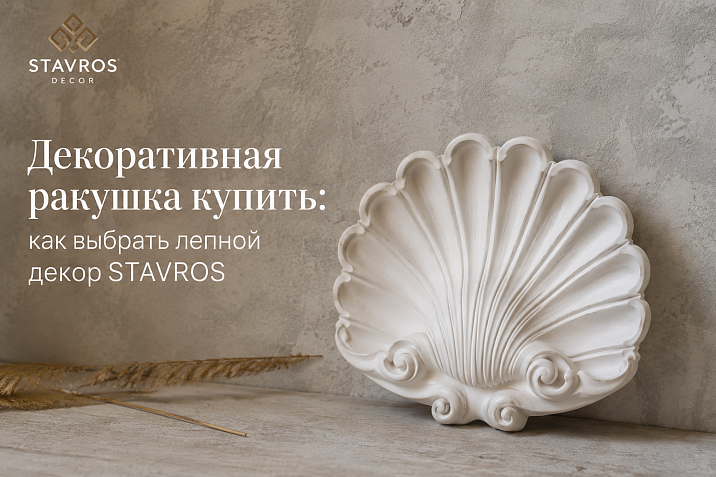
When a buyer is looking for where to buy a decorative shell for a wall, furniture, or a classic panel, it is important to immediately separate this request from another product group. This is not about a furniture shell handle or a natural seashell for a shelf. Here, a decorative shell is needed as a stucco element: a three-dimensional polyurethane overlay with a classic ornament that can be used on a wall, furniture facade, door leaf, in a niche, near a mirror, in a fireplace area, or inside a panel.
A shell in stucco decor is not a random marine motif. It is a recognizable classic form that has been used for centuries in architecture, furniture, portals, mirrors, cornices, decorative panels, and interiors with symmetry. It helps create a composition center, complete a frame, emphasize the upper part of a panel, make a facade more expressive, and connect several decorative elements into a single scheme.
STAVROS has a real product base for this task: collections of polyurethane overlays with the "Shell" ornament, NPU-168 card, PU overlay section, wall decor section, and polyurethane moldings. Therefore, the buyer does not have to search for a random blank but can choose a ready-made stucco decor for a specific scenario: for a wall, furniture, classic panel, neoclassicism, Empire style, fireplace area, mirror, or decorative frame.
To start, you can view buy polyurethane overlays with the "Shell" ornament, open the collection PU overlays with the "Shell" ornament in Saint Petersburg or go to the product card Molded decor NPU-168. But before buying, it's better to understand what size is needed, where the accent will be placed, what to pair the shell with, and how not to confuse stucco decor with similar products.
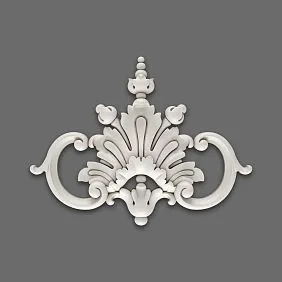
What is a decorative shell in stucco decor
A decorative shell is an ornamental overlay used not as a separate souvenir, but as part of the finish. Its task is to decorate the surface, add relief, emphasize the center of the composition, or complete a decorative frame. Such an element can be an independent accent, but more often it is revealed in combination with moldings, panels, furniture facades, rosettes, floral ornaments, and other overlays.
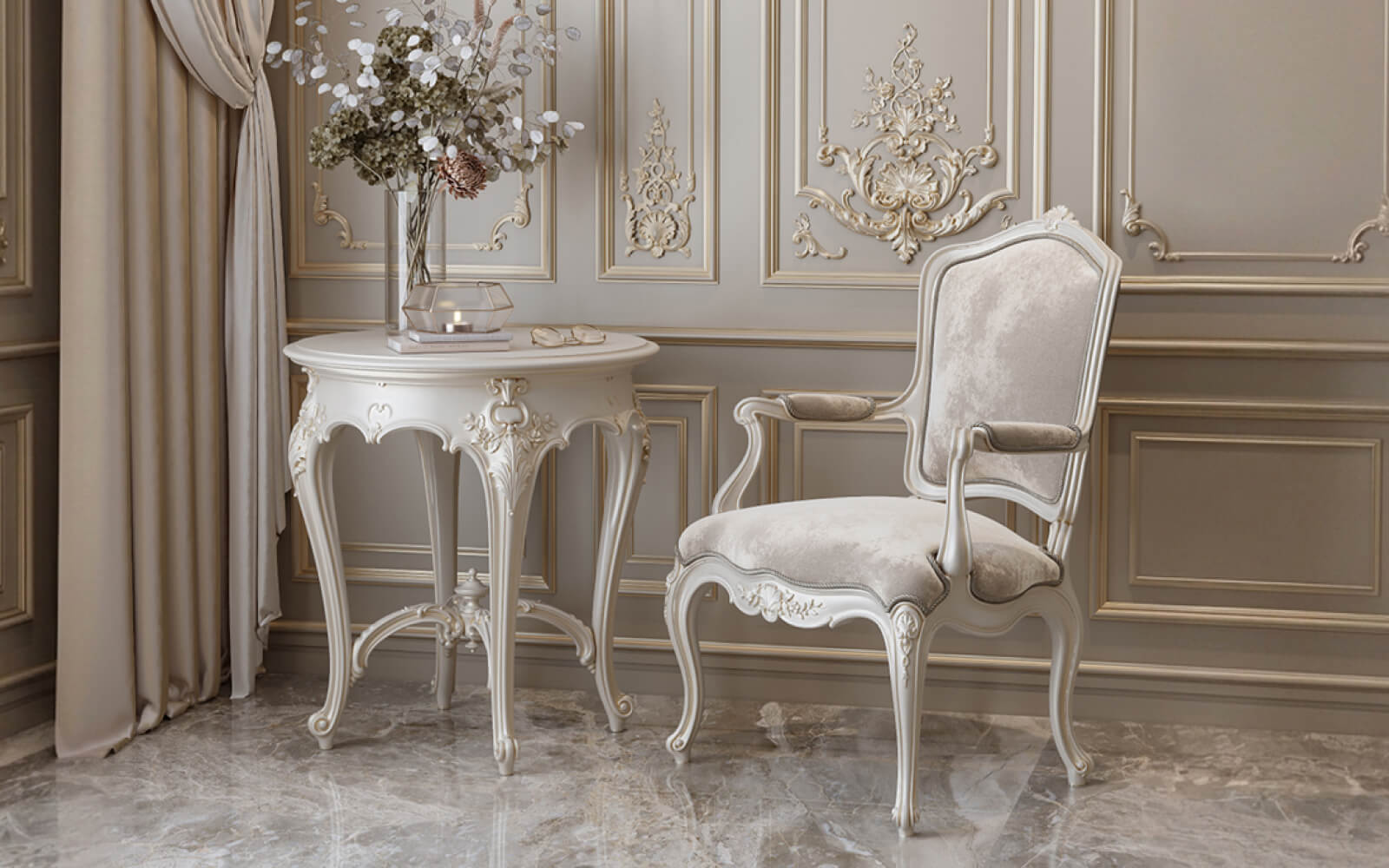
In a classic interior, the shell works well where there is an axis. For example, above a mirror, at the top of a door leaf, in the center of a furniture facade, at the end of a molding frame, in a fireplace portal, or in a decorative niche. It immediately shows where the main accent is and prevents the composition from looking empty.
At the same time, a decorative shell made of polyurethane is not limited to strict classics. It can be used in neoclassicism, light Empire style, eclecticism, interiors with vintage furniture, light walls, painted facades, decorative panels, and calm stucco. The main thing is not to overload the surface and choose the right scale.




Shell as a classic ornament
The 'Shell' ornament is recognizable by its fan shape. The lines radiate from the center, so the element looks collected and solemn. Unlike a floral overlay, which can be more free-form, the shell sets a strict center. This is convenient when you need to design the top point of a panel, the middle of a frame, the axis of a facade, or a symmetrical decorative zone.
This motif is especially appropriate in interiors that already have moldings, cornices, pilasters, rosettes, panels, classic facades, a fireplace area, or a mirror in a frame. The shell should not argue with these details. It should support them and help the eye read the composition: where the beginning is, where the center is, where the end is.
If the interior is very minimalist, the shell may look alien. But if the room has at least a hint of classicism, soft symmetry, decorative frames, or furniture with relief, such an element becomes natural.
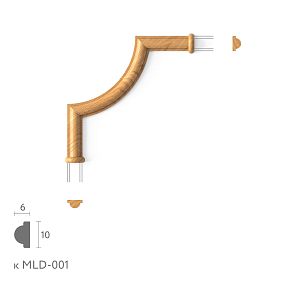
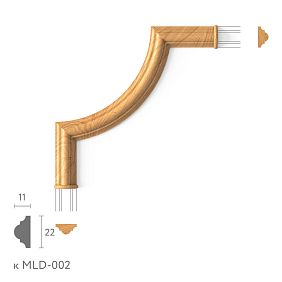
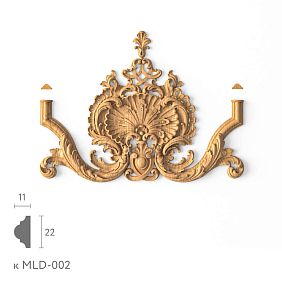
Our factory also produces:
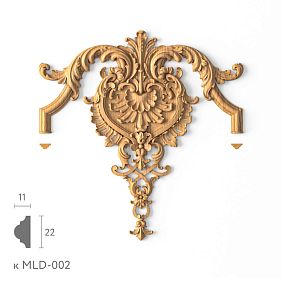
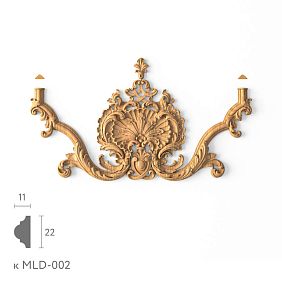
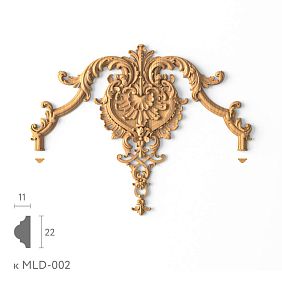

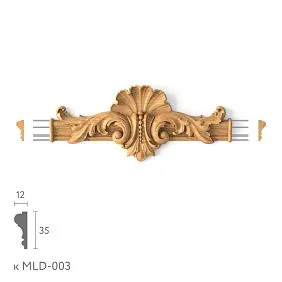
How is a stucco shell different from a natural sea shell
A natural shell is a decorative item. You can place it on a shelf, put it in a display case, or add it to a table arrangement. But it is not designed for architectural wall or furniture finishing. It is difficult to neatly integrate it into a molding frame, paint it to match the wall color, glue it onto a facade as a flat overlay, or use it as the centerpiece of a classic panel.
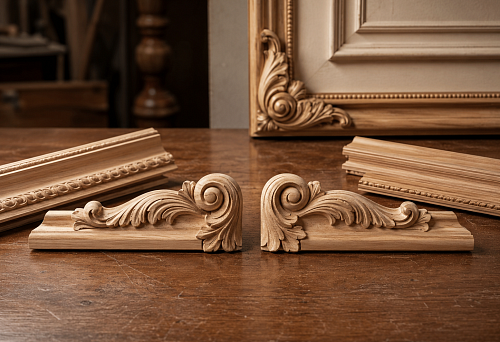
A polyurethane stucco shell is specifically designed for surfaces. It lies flat against the base, has a decorative relief, is suitable for painting, and pairs well with other stucco elements. It can be used on walls, furniture, doors, panels, portals, niches, or near mirrors.
Therefore, the query "buy decorative shell" is better clarified by purpose. If you need hardware for a drawer, it's a shell-shaped handle. If you need an item for a shelf, it's a natural shell. If you need wall, facade, or panel finishing, it's a decorative polyurethane shell.
Get Consultation
Why polyurethane is convenient for walls, furniture, and panels
Polyurethane is convenient for interior decor because it allows for a three-dimensional shape without extra weight. Such an element is easier to use on walls, furniture facades, door panels, or decorative panels. It doesn't feel like a thin sticker, but also doesn't require the approach needed for heavy plaster stucco.
Another advantage is working with color. A stucco shell decor for painting can be made to match the wall color, highlighted with a lighter or darker shade, painted together with moldings, or tied to furniture. This is especially convenient for projects where you need not to buy a ready-made color, but to integrate the decor into an already chosen palette.
If a shell is used in a panel, polyurethane helps assemble a set of different elements within the same finishing logic. You can take moldings, overlays, decorative rosettes, and a central element with a "Shell" ornament, and then bring everything to one color.
What decorative shells can be bought from STAVROS
STAVROS offers several selection levels. The first is collections of polyurethane overlays with a "Shell" ornament. They are convenient when you need to view a group of elements based on one motif. The second is the specific product card NPU-168. The third is related sections: PU overlays, wall decor, and moldings, which help assemble not a single purchase, but a complete composition.
If a buyer wants to buy a decorative shell for a project in Moscow, you can start with a selection buy polyurethane overlays with the "Shell" ornament. For selection in St. Petersburg, you can open PU overlays with the "Shell" ornament in Saint Petersburg. If a specific article is needed, it's worth looking at Molded decor NPU-168.
| What to choose | What this gives | When it fits |
|---|---|---|
| Selection with the "Shells" ornament | You can view a group of polyurethane overlays in one motif | When you need to select not one detail, but an option for a task |
| NPU-168 | A specific polyurethane overlay with size options | For furniture, walls, frames, panels, or a classic accent |
| PU overlays | A wider selection of decorative elements for the composition | When the shell needs to be complemented with another relief |
| Moldings | Allow assembling a frame or border of the panel | For wall compositions, niches, mirrors, portals |
PU overlays with shell ornament
The shell ornament selection is convenient when the buyer is not yet sure about the size, shape, and application scenario. Instead of searching through the entire section, you can immediately view elements with the desired motif. This reduces random selection and helps compare options for walls, furniture, door panels, or classic panels.
It is especially useful to open the selection when decor is needed for a project with multiple zones. For example, the shell may repeat on furniture and on the wall, but in different sizes. Or one element becomes the main focus in the panel, while others support the composition on facades. In this case, it is important to keep the ornament in a consistent logic so that the interior does not look assembled from random details.
NPU-168 as a compact decorative element
NPU-168 is a specific polyurethane carved overlay that can be considered as a working element for walls, furniture, and decorative compositions. The card lists size options: 70×70×6×92 mm, 90×90×7×118 mm, and 150×150×11×197 mm. This allows choosing the scale for a specific task: from a small furniture accent to a more noticeable detail for a panel.
The small format is convenient for facades, narrow inserts, small frames, and local decorative zones. The medium size can be used in molding compositions, on door panels, or in panels. The larger format is suitable as a central motif, especially if the shell should be readable from a distance and set the main accent of the composition.
| Model | Confirmed sizes | Material | What it's suitable for |
|---|---|---|---|
| NPU-168 | 70×70×6×92 mm | Polyurethane | Small facades, local accents, compact frames |
| NPU-168 | 90×90×7×118 mm | Polyurethane | Furniture, wall frames, door panels, decorative inserts |
| NPU-168 | 150×150×11×197 mm | Polyurethane | Large accent, central part of a panel, classic composition |
After the table, it is important not to perceive the sizes as dry numbers. In a real interior, they determine everything: whether the shell will be noticeable, whether it will overload the facade, whether it will fit inside the frame, whether there will be air around it. Before ordering, you need not just look at the size in the card, but apply it to a specific surface: wall, door, panel, niche, or portal.
Large and small formats
The small format of the decorative shell works well on furniture. It can be used on the facades of a chest of drawers, bedside table, cabinet, display case, console, or decorative panel. On furniture, not only the overall size of the element is important, but also the free space around it. If the shell fits tightly, it will look cramped. If you leave air, the decor will become part of the facade, not a random sticker.
Medium formats are convenient for wall frames and small panels. They can be placed in the center of the top line, in corners, on the axis of symmetry, or next to decorative moldings. A large decorative shell is needed where the element should be the main one: above a mirror, in the fireplace area, in the center of a classic panel, in a large niche, on a high wall.
When to choose a single shell and when to assemble a composition
A single shell is suitable if the surface already has a frame, axis, or a ready decorative field. For example, on a door leaf, furniture facade, or inside a molding panel, one element can look complete. It puts a finishing touch on the composition and does not require many adjacent details.
A composition should be assembled when the surface is large or when the shell is to become part of a complex classical design. In this case, moldings, additional overlays, sometimes rosettes or floral elements are selected to match it. For such a task, it is better to open not only the NPU-168 card but also the section Polyurethane wall decor, to see adjacent solutions for wall decoration.
Where to use a decorative shell
A decorative shell reveals itself where there is a center, frame, axis, or an area that needs to be emphasized. This is not an element to scatter around the room without a system. It has a strong shape, so it requires a clear place. It works well when the shell completes the composition, supports symmetry, or becomes the main motif.
Wall and classic panel
The most obvious scenario is a wall with a molding frame. The shell can be placed inside the frame, above it, in the upper central part, or as part of a more complex panel. This technique is suitable for a living room, bedroom, hallway, study, foyer, restaurant, salon, or showroom.
If the wall is large, a small element will get lost. In this case, it is better to choose a large format or assemble a composition from several parts. If the panel is small, on the contrary, a too large shell will overwhelm the frame. A good result appears when the size of the shell is correlated with the width of the panel, the height of the wall, and the viewing distance.
For panels, especially useful are polyurethane moldings for panels. They create boundaries within which the shell looks not like a random decoration, but part of an architectural composition.
Furniture facade
On furniture, the decorative shell works as an overlay. It can decorate a chest of drawers, nightstand, cabinet, display case, console, decorative panel, or facade for painting. Here it is especially important not to confuse the stucco decor with a shell-shaped handle. A handle is hardware used to open a drawer or door. A polyurethane shell is a decorative element that adorns the surface.
On the facade, the shell should match the handles, frames, panels, and proportions of the furniture. If the facade is narrow, choose a small format. If the door is tall or wide, a more noticeable overlay can be used. If the furniture is paired, the shells can be arranged symmetrically.
Door leaf
On a door, the shell can become a top or central decorative accent. It looks especially good on doors with molding frames, panels, or classic layouts. But here it is important to consider the thickness of the element, the opening location, proximity to the handle, and the overall height of the leaf.
If the shell is placed too low, it may look like a random detail. If too high, it may get lost. Most often it is placed on axis, linking it with the frame or the upper decorative part. For a door, it is better to choose a size that is readable from a distance but does not interfere with the main geometry of the leaf.
Fireplace Area
The fireplace area loves central elements. Even if the fireplace is decorative, the portal is still built around an axis. The shell can emphasize the upper part of the portal, the center above the fireplace, or a decorative insert. In this scenario, scale is especially important: a too small element will get lost against the portal, a too large one will look heavy.
If the fireplace area already has moldings, cornices, or other overlays, the shell should be related to them in style and color. A good technique is to paint all elements in one color so that the relief is read through light and shadow, not through variegation.
Niche, mirror, portal
Niche, mirror and portal are places where the shell is especially logical. These zones already have boundaries, a center, and a vertical. A decorative element helps complete the top part, highlight the axis, or make the frame more expressive. This is appropriate in a hallway, bedroom, dressing room, bathroom under suitable base conditions, beauty salon, showroom, or restaurant.
If the shell is placed above a mirror, you need to consider not only the size of the mirror itself, but also the width of the frame, the height of the wall, the distance to the ceiling, and adjacent light fixtures. The decor should not conflict with sconces, cornices, or the top line of furniture.
How to choose the size of a decorative shell
Size is the main parameter after choosing the motif. The same decorative shell can look neat if it is proportionate to the surface, and random if the scale is chosen incorrectly. Therefore, before ordering, you need to measure the installation location and imagine how the element will look not in the product card, but on a real wall or facade.
For furniture, small and medium sizes are more often needed. For wall panels, medium and large sizes. For a fireplace area, portal, mirror, or high wall, a more noticeable format may be required. But it makes sense to buy a large decorative shell only when there is enough space around it. Otherwise, the element will overwhelm the composition.
| Size scenario | Where to use | What to check before ordering |
|---|---|---|
| Small format | Furniture facades, narrow inserts, small frames | Free space around the overlay and proximity to handles |
| Medium format | Doors, wall frames, decorative panels | Ratio to frame width and surface height |
| Large format | Classic panel, portal, area above mirror, fireplace section | Viewing distance and available free space |
Small elements for furniture
On furniture, a small size often looks more expensive and neater than one that is too large. A facade is not an empty wall. It has frames, panels, handles, gaps, opening lines, and adjacent doors. If the decorative shell overlaps these elements or is placed too close to the edge, the facade starts to look cluttered.
For a furniture facade, it is better to do a simple check in advance: cut out a rectangle from paper the size of the overlay and place it at the installation site. This immediately shows whether there is enough air around and whether the decor interferes with the handle or frame. This technique is especially useful when the furniture is already ready and the shell is being purchased to update the facade.
Medium elements for frames and panels
Medium size is suitable for frames, doors, and small wall panels. It is already noticeable enough but does not yet require a large wall. Such an element can be used above the center of a frame, inside a decorative panel, on a door leaf, in the mirror area, or on the facade of large furniture.
The main thing is not to place a medium element in a too large empty area without support. If there is a lot of space around, the shell may get lost. In this case, it is better to pair it with moldings, paired overlays, or additional ornament.
Large shell as a central accent
A large decorative shell is suitable for a central role. It can complete a classic panel, sit above a fireplace mantel, adorn the top of a mirror, or set the axis of a large wall composition. But a large size requires caution. The more noticeable the element, the fewer random elements should be nearby.
A large shell should not be placed too close to the ceiling, cornice, or furniture. It needs space above and below. If it is inside a frame, the frame must be wide enough. If the shell sits above a mirror, check that it does not conflict with light fixtures and the top line of the frame.
Why viewing distance matters
The same decor looks different from a distance of one meter versus four meters. On furniture, an element is viewed up close, so even a small relief is noticeable. On a wall above a sofa or fireplace, details are seen from afar, and a too-small size may disappear. Therefore, choosing a shell should consider not only its physical size but also where it will be viewed from.
If the decor is for an entryway or narrow hallway, the viewing distance is short. There is no need to choose a large format. If the shell is for a living room, hall, salon, or fireplace area, it is better to choose a more noticeable size or add a frame so the element does not get lost.
What to pair with a decorative shell
A shell rarely works completely alone. Even if it is alone, it needs a surface, frame, axis, or adjacent detail that explains its presence. Without this, it may look like a randomly attached decor. Therefore, when purchasing, it is important to immediately think about what will be nearby: molding, decorative overlay, rosette, furniture panel, mirror, door, portal, or panel.
The most reliable combination is a shell plus moldings. Moldings create boundaries, and the shell sets the center. This technique is suitable for panels, classic walls, areas above a bed, fireplace, mirror, niche, or entryway. If a more complex composition is needed, the shell can be supplemented with other overlays from the section at STAVROS PU overlays.
If the task is specifically wall-based, you should look at Polyurethane wall decorThere you can select adjacent elements that help not to limit yourself to one shell, but to assemble a full decorative area.
What to buy together with a decorative shell
If you need one overlay for a facade, the purchase can be simple: choose the size, check the installation location, think about the coloring. But if the task is a panel, wall, mirror, niche, or portal, one shell is often not enough. You need elements that will create a frame, support the scale, and help assemble the composition.
Most often, along with a decorative shell, moldings, additional overlays, mounting glue, paint, and, if necessary, decorative rosettes or elements with floral ornaments are selected. It is important not to mix different styles without reason. If the shell is chosen as a classic motif, the adjacent details should also support the classic logic.
| What to add to the purchase | Why this is needed | Which scenario it suits |
|---|---|---|
| Polyurethane moldings | To assemble a frame around the shell or panel | Wall, niche, mirror, portal, classic panel |
| Additional PU overlays | To support the shell with adjacent relief | Furniture, facades, wall compositions |
| Paint for finishing | To match the decor to the color of the wall, furniture, or frame | Any paint-ready scenario |
| Mounting adhesive for polyurethane | To secure the element on the prepared surface | Wall, furniture, door, decorative panel |
| Decorative rosettes or plant overlays | To assemble a more complex symmetrical composition | Panel, fireplace area, mirror, portal |
For a wall panel, first choose the main element, then the frame, then additional details. If you start with small overlays, you can easily end up with a set of beautiful but poorly connected elements. The shell should set the center or completion, not get lost among random ornament.
How not to confuse a decorative shell with similar elements
The most common confusion is between a decorative shell and a shell handle. The name is similar, but the purpose is different. A shell handle is furniture hardware. It is installed on drawers and facades to open furniture. A decorative polyurethane shell is a stucco ornament. It is not intended for gripping, but is used as an overlay for decoration.
There are other similar elements: natural shell, rosette, molding, plant overlay, cartouche. All of them can be part of a classic interior, but they work differently. Before ordering, you need to understand what function the element should perform: become a central motif, frame a surface, fill an empty space, support symmetry, or decorate a facade.
| Similar item | Difference | When to choose |
|---|---|---|
| Decorative shell | Stucco ornament for wall, furniture, door or panel | When a voluminous classic accent is needed |
| Shell handle | Furniture fitting for opening a drawer or facade | When a handle is needed, not stucco decor |
| Natural shell | Decorative item, not an architectural overlay | For shelf, display case, tabletop composition |
| Rosette | Round or radial decorative element | For ceiling, panel center, symmetrical composition |
| Molding | Linear framing, not a central motif | For frame, border, wall layout |
If a buyer needs an overlay with a shell ornament to buy for a wall or facade, they should look at stucco decor. If a part is needed that is grasped by hand, that is a different product scenario. This distinction saves time and helps avoid buying a beautiful but unsuitable item.
How to choose a decorative shell for different tasks
For self-wall decoration
If the buyer is decorating the wall themselves, it is better not to start with installation. First, you need to assemble a scheme: where the frame will be, where the center, where the shell, what sizes the moldings have, what distance to furniture, lights, and ceiling. After that, you can choose the size of the shell and the number of additional elements.
For a DIY project, it is more convenient to use ready-made polyurethane elements than to try to cut a complex ornament by hand. A ready-made overlay saves time and helps achieve a neat relief. The buyer only needs to correctly mark the surface, choose glue, think about painting, and check the compatibility of elements.
For ready-made furniture
If the furniture is already in the room, the decorative shell should adapt to the existing facade. You need to consider handles, color, panels, door size, and the overall style of the furniture. On a strict modern facade, a classic shell may look questionable. On a facade with a frame, soft coloring, or classic details, it will look more natural.
For furniture, it's important not only to choose a beautiful relief, but also to check that it doesn't interfere with opening. If the overlay is placed next to a handle, a comfortable distance should be left. If the facade is paired, it's better to maintain symmetry so that one door doesn't look heavier than the other.
For custom-made new furniture
When furniture is still being designed, it's easier to integrate a decorative shell properly. You can pre-set the facade size, overlay position, frame, color, and adjacent decor. This is the best scenario for a neat result because the overlay isn't adjusted to a finished surface but is immediately included in the design.
In this case, it's worth opening the NPU-168 card in advance, selecting the size, and passing the dimensions to the craftsman or designer. Then the facade can be calculated so that there is enough space around the shell, and the decor doesn't conflict with handles and opening lines.
For a classic interior
In a classic interior, the shell reveals itself most naturally. It can be used together with moldings, pilasters, cornices, rosettes, carved overlays, facade frames, and decorative panels. But classic doesn't mean excess. On the contrary, a good result relies on proportions.
If the shell is used as a central element, it shouldn't be surrounded by too much small decor. If it serves as an addition, its scale should be calmer. In a classic panel, it's important that all elements follow one axis and don't argue with each other.
For neoclassicism and Empire style
In neoclassicism, the shell should be used sparingly. A single central element in a frame, a neat overlay on the facade, or decor above a mirror will work. The color is usually chosen calm: matching the wall, moldings, or furniture. This way, the relief remains noticeable but doesn't turn the interior into a theatrical set.
In Empire style and more formal styles, the shell can be more expressive. Large formats, portals, fireplace zones, and symmetrical panels are acceptable here. But even in such an interior, it's important not to mix too many ornaments. The shell, acanthus, rosettes, and moldings should work together, not compete.
For commercial space
In a salon, restaurant, showroom, or hotel, a decorative shell helps create a memorable interior focal point. It can be used at the reception area, near a mirror, in a photo zone, on a decorative wall, or in a niche. Here, the element should be visible from a distance, so a too-small size might get lost.
For commercial spaces, it is especially important to plan in advance the strength of the base, placement height, risk of accidental contact, and maintenance. If visitors will constantly brush against the decor, it is better to choose a more protected location or place the element higher.
Installation, preparation, and painting
Installation of a decorative shell begins with checking the base. The surface must be clean, strong, and suitable for attaching the polyurethane element. If the base is weak, peeling, or covered with unstable paint, first resolve the surface issue, and only then glue the decor.
Before fixing, it is useful to make markings. For a single shell, it is enough to mark the axis and height. For a panel, lay out the entire composition: frame, moldings, shell, additional overlays. A good method is to temporarily outline the contours with painter's tape. This way you can see if the decor is too high, if there is enough breathing room, and if it conflicts with furniture and lighting.
It is better to plan painting before installation. Sometimes it is more convenient to paint elements separately first and then install them. Sometimes the entire composition is painted after installation so that the shell, moldings, and overlays look like a single stucco piece. The choice depends on the surface, paint, complexity of the relief, and the overall finishing scheme.
If the shell should be noticeable but not too contrasting, you can choose a shade half a tone lighter or darker than the wall. If the interior is calm, painting in the wall color works well. If the decor is on furniture, the color can be tied to the facade, frame, or other decorative details.
Mistakes when buying a decorative shell
Confusing stucco decor with a shell handle
This is the main mistake. A shell handle is needed for opening a drawer. A decorative polyurethane shell is needed for surface decoration. If you buy a handle instead of an overlay, it will not solve the panel task. If you buy an overlay instead of a handle, it cannot be used as hardware. Therefore, before ordering, you need to look not only at the name but also at the product's purpose.
Choosing only by photo
The photo shows the shape but does not show how the element will look on your wall or furniture. The sizes of NPU-168 vary, and each format behaves differently. Before purchasing, you need to compare the dimensions with the surface, viewing distance, and adjacent details.
Choosing too large an element for the facade
On a furniture facade, a large shell can look heavy. Especially if the door is narrow, there is a handle or frame nearby. For furniture, it is often better to choose a small or medium format, leaving free space around the decor.
Using a small shell on a large wall without support
A small element on a large wall can get lost. If the size is compact, it is better to support it with moldings, additional overlays, or a group of elements. Otherwise, the decor will look like a random dot on an empty surface.
Not planning the color scheme
A polyurethane shell is often bought for painting, but the color needs to be planned in advance. If the shade is not related to the wall, furniture, or adjacent elements, the decor may look alien. A safe approach is to paint it the color of the wall or the color of the moldings. Accent coloring is also possible, but it must be repeated in the interior.
Not buying accompanying elements
If the task is a panel, one shell may not be enough. You need moldings, glue, paint, and additional overlays. If you don't think about this in advance, installation will drag on, and the final composition may remain unfinished.
Who is a decorative shell suitable for
A decorative shell is suitable for those who want to add classic relief to the interior but do not want to overload the wall with massive stucco. It is good for buyers who are decorating a panel, furniture facade, mirror, niche, portal, fireplace area, or accent wall. This motif works especially well where there is already symmetry and moldings.
Such decor is worth considering for neoclassicism, Empire style, classic interior, eclecticism, vintage furniture, light walls, painted facades, and decorative panels. The shell helps make the surface more expressive and add completeness to the interior.
But if the interior is completely minimalist, without moldings, decorative frames, or relief elements, a rosette may look out of place. In that case, it's better to choose a simpler overlay, a linear molding, or forgo the central ornament entirely.
How to buy a decorative rosette on STAVROS
It's better to start shopping not with the cart, but with the task. If you need a group of elements based on one motif, it's worth opening buy polyurethane overlays with the "Shell" ornament. If the selection is for Saint Petersburg, you can look PU overlays with the "Shell" ornament in Saint Petersburg. If you need a specific element
How to buy a decorative rosette on STAVROS
It's better to start shopping not with the cart, but with the task. If you need a group of elements based on one motif, it's worth opening buy polyurethane overlays with the "Shell" ornament. If the selection is for Saint Petersburg, you can look PU overlays with the "Shell" ornament in Saint Petersburg. If you need a specific element with confirmed dimensions, it's worth opening Molded decor NPU-168.
After choosing a model, you need to check the size, material, installation location, future painting, and adjacent elements. If the rosette is purchased for a panel, it's worth looking at polyurethane moldings for panels. If a more complex composition is needed, it's useful to open at STAVROS PU overlays и Polyurethane wall decor.
If the element is being selected for ready-made furniture, a door, mirror, or fireplace area, it's better to check the dimensions in advance and confirm compatibility. This is especially important when the decor must fit into an existing frame or match an already established style.
FAQ
Where to buy a decorative polyurethane rosette?
A decorative polyurethane shell can be selected on the STAVROS website in the collections of overlays with the "Shells" ornament or in the NPU-168 card. Before ordering, you need to check the size and application scenario.
What is stucco decor with a shell used for?
Such decor is used for walls, furniture, door panels, mirrors, niches, portals, fireplace areas, and classic panels. The shell helps create a central accent and complete the composition.
Can a decorative shell be glued to a wall?
Yes, a polyurethane decorative shell can be mounted on a prepared wall. The base must be clean, durable, and suitable for installing stucco decor.
Is the shell suitable for a furniture facade?
Yes, but you need to choose the right size. For small facades, compact elements are better, while for large panels, a more noticeable format can be considered.
How does a polyurethane shell differ from a plaster one?
A polyurethane shell is lighter and more convenient for mounting on walls, furniture, or doors. Plaster decor is heavier and often requires more complex base preparation.
Can a decorative shell be painted?
Yes, polyurethane stucco decor can be painted. The shell can be made to match the color of the wall, moldings, furniture, or highlighted as a separate accent.
How to choose the size of the shell for a panel?
You need to consider the width and height of the panel, the viewing distance, and the role of the element. If the shell is central, it should be noticeable. If it is additional, it is better to choose a more subdued size.
What to buy together with a decorative shell?
Most often, moldings for a frame, mounting glue, paint, and additional PU overlays are purchased together with the shell. For a complex panel, it is better to plan the set in advance.
How is a decorative shell different from a shell handle?
A decorative shell is a stucco element for surface decoration. A shell handle is furniture hardware for opening a drawer or facade. These are different products with different purposes.
Is the 'Shell' ornament suitable for neoclassicism and Empire style?
Yes, this motif is well suited for classic, neoclassical, and Empire styles. In neoclassicism, it is better to use it sparingly, while in more formal styles, the shell can be made a central accent.
Can a shell be used next to moldings?
Yes, this is one of the most successful combinations. Moldings create a frame, and the shell sets the center or completes the composition.
Do you need a large decorative shell for the wall?
A large format is not always necessary. For a large wall, fireplace area, or portal, it can be appropriate. For furniture, a small frame, or a narrow panel, it is better to choose a smaller size.
Result: which decorative shell to choose
A decorative shell is an expressive stucco element that helps to decorate a wall, furniture, door, mirror, niche, fireplace area, or classic panel. It is suitable for interiors where relief, symmetry, soft classic style, and neat decorative completeness are important.
If you need a general selection by ornament, you can open the collection of polyurethane overlays with the "Shell" motif. If you need a specific element with size options, it is worth looking at NPU-168. If you are planning a panel or a complex wall composition, it is better to immediately select moldings, additional overlays, and finishing.
STAVROS helps to move from an idea to a ready-made choice: view real product cards, compare sizes, choose material, select adjacent elements, and assemble a composition without random details. This approach is especially important for stucco decor: the shell should not just be liked separately, but work in the interior — hold the center, support the style, and help the surface look finished.