Article Contents:
- When NPU-276 really works above the piano as a standalone panel
- Two sizes of NPU-276 solve different tasks, although the article number is the same
- First measure not the wall, but the zone that the piano actually creates
- Full-size template 517 × 323 mm — a mandatory check before ordering
- How to link the panel width to the piano width without a made-up 'ideal proportion'
- The piano axis is more important than the geometric center of the entire wall
- The top line of the piano sets the lower boundary of the entire composition
- The slatted panels nearby change the scale of the large NPU-276
- Why a large panel cannot be evaluated only under frontal lighting
- 18 mm of relief is not only beauty, but also visual weight from the side
- Paint the panel in the wall color or make it a separate accent
- Is an NPU-276 molding frame needed if it replaces a painting
- An acoustic piano and a digital piano create a different background for the same overlay
- Sheet music, a lamp, a sconce, and shelves can make a large NPU-276 unnecessary
- From which point to look: the entrance, the sofa, and the performer's spot give different answers
- What to do if the piano is not centered on a smooth wall section
- A large NPU-276 instead of a painting: what you gain and what you lose
- The vertical scale of 323 mm needs to be checked separately from the width
- Glossy and matte piano bodies interact differently with relief and light.
- NPU-276 does not replace acoustic panels and should not be chosen for "sound improvement."
- When the large size 517 × 323 × 18 mm is justified.
- When it is better to switch to NPU-276 352 × 220 × 12 mm.
- When it is better not to buy NPU-276 above the piano at all.
- Base and mounting: the panel must be attached to the wall, not to the slatted relief.
- Do not forget about access to the wall and future rearrangement of the instrument.
- Dust and care: the carved relief above the instrument must be accessible.
- Mistakes that turn the large NPU-276 into random decor.
- Buying based on a pretty image without a template.
- Center on the wall, ignoring the tool
- Treat slat panels as a neutral background
- Try to strengthen a weak composition with a frame and a few more details
- Glue before choosing light and color
- Can NPU-276 be placed above a piano if slat panels are only on the right?
- What to do if the piano is planned to be replaced in a few years?
- Will NPU-276 fit above a piano in a room with acoustic panels?
- Can a large NPU-276 be used between two wall sconces?
- Should the NPU-276 be rotated to a different orientation?
- Can the NPU-276 be placed above a piano if there is a ceiling cornice running overhead?
- What is better above a black piano: a white NPU-276 or one painted to match the wall?
- Is an additional painting needed next to a large NPU-276?
- Can I first buy a large NPU-276, and if it doesn't fit, use it on another wall?
- What to do if I like the design of the NPU-276, but both versions don't match in scale?
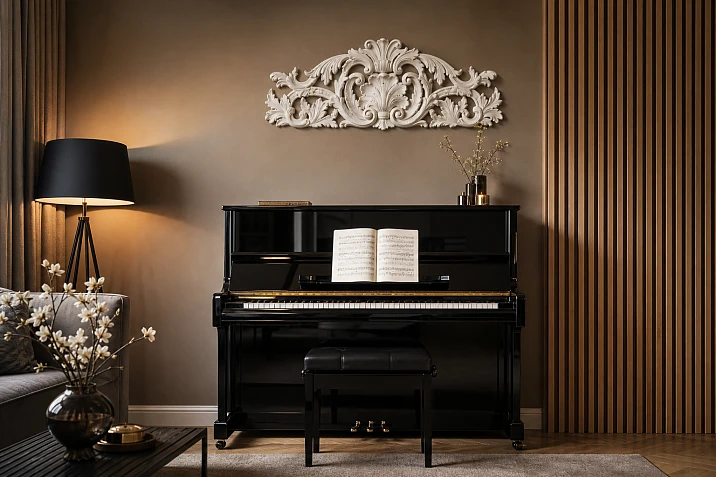
If the piano is already placed against a smooth part of the wall, with slatted panels installed nearby, the free space above the instrument doesn't necessarily need to be filled with a painting, poster, or molding frame. In this zone, a single relief object can be used—a large carved decorative overlay NPU-276 made of polyurethane. But the size of 517 × 323 × 18 mm already requires a full-scale check: this is not a small detail that can be added at the last moment without affecting the entire composition.
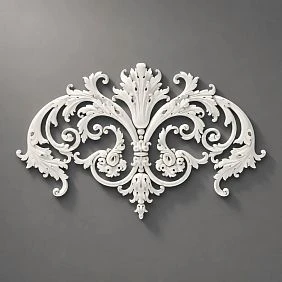
The current STAVROS product page for NPU-276 lists two versions. The compact one measures 352 × 220 × 12 mm and costs 4,600 RUB, while the large one measures 517 × 323 × 18 mm and costs 11,270 RUB. In this article, the main option is the large NPU-276. The smaller one appears only as a fallback solution if a full-size mockup shows that the large relief conflicts with the piano, adjacent slats, or lighting.
The direct answer is this: a single NPU-276 517 × 323 × 18 mm should be purchased as a standalone panel only after checking its actual scale relative to the piano itself, not the entire wall. If the template brings the instrument and the smooth field into one center, leaving a visual pause around the relief, and the slatted zone doesn't start competing with the ornament, the large version can replace a painting. If the panel looks heavier than the instrument itself, it's more useful to first compare the 352 × 220 × 12 mm version. If even the smaller version doesn't improve anything, an empty painted surface will be stronger than additional molding.
After a physical fitting, you can buy a carved decorative overlay NPU-276 517 × 323 mm in the same card where both sizes are presented. If you need a different scale or pattern, it makes more sense to go to the section and buy central decorative overlays made of polyurethane, rather than trying to force the large NPU-276 onto an unsuitable wall at any cost.
When NPU-276 truly works above a piano as a standalone panel
The strong point of this idea is not that the carved overlay literally “replaces a painting.” A painting brings a narrative, color, and the rectangular boundary of a canvas or frame. NPU-276 works differently: the pattern is created by relief, and the painted wall itself remains part of the composition. Therefore, a large element is especially logical where the owner does not need an additional color narrative and there are already enough textures—for example, wood or MDF slat panels nearby, the piano body, textiles, and light.
The large version makes sense when there is an independent smooth field above the instrument that visually belongs specifically to the music zone. The piano should remain the lower support of the composition, and NPU-276 the upper accent. If a person has to explain why the overlay “relates” to the instrument at all, the connection is weak. If the eye immediately reads a single vertical axis of “piano—relief panel,” the idea works more convincingly.
It is also important that a single NPU-276 does not require a mandatory molding frame. The absence of a frame here can be an advantage: there is already a strong vertical rhythm of slats nearby, so an additional rectangular outline could create a third type of geometry above the instrument and relief. First, it is worth testing the overlay itself on a smooth wall. A frame makes sense to add only if the entire interior is already built on framed panels and without it the single ornament truly looks lost.
Unlike the general article about stucco panels, here the decision is always tied to a specific object—the piano. It is its width, height, color, silhouette, and position on the wall that determine whether the large NPU-276 has enough independence or it turns into foreign decor.




Two sizes of NPU-276 solve different tasks, although the article number is the same
The same pattern does not mean the same visual result. According to the current STAVROS card, NPU-276 has two versions:
| NPU-276 version | Size A × B × C | Material | Current price per 1 pc. | Role in this article |
|---|---|---|---|---|
| Compact | 352 × 220 × 12 mm | Polyurethane | 4 600 ₽ | backup option when a large panel is overloaded |
| Large | 517 × 323 × 18 mm | Polyurethane | 11 270 ₽ | main independent accent above the piano |
The card denotes dimensions as A × B × C. The order of numbers itself cannot be automatically turned into a statement "517 mm is horizontal width" without checking the orientation of the image or drawing. Therefore, all proportional estimates below are built safely: if in the chosen orientation the panel takes 517 mm along the wall, we use this value as the horizontal dimension; if the product layout shows otherwise, the calculation needs to be rebuilt according to the actual orientation.
The larger version differs not only in two flat dimensions. The relief increases from 12 to 18 mm. In a room, this affects the shadow and visual mass. With soft frontal light, the difference may seem small, but with side light, the larger version becomes noticeably more voluminous. Therefore, the decision "517 or 352" cannot be made only by the area of the rectangle on paper.
Commercially, these are also different solutions. The buyer does not choose a "slightly larger size" for a small surcharge: the current price of the large version is noticeably higher. The point of the extra payment only appears if 517 × 323 × 18 mm truly functions as an independent wall object and allows one to forgo a painting, frame, or a set of additional overlays.
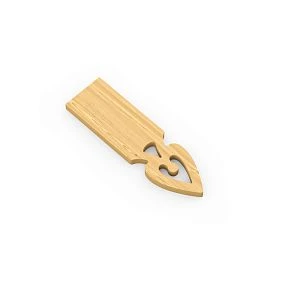
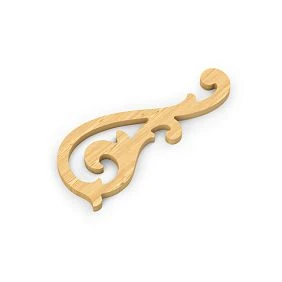
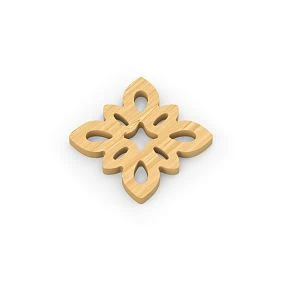
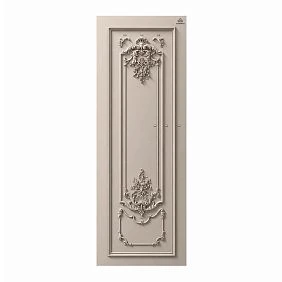
Our factory also produces:
First, measure not the wall, but the zone that the piano actually creates
For this task, the overall wall size is secondary. Even a very wide wall can have a narrow musical zone if part of the space is already occupied by slats, a cabinet, a door, sconces, or a passage. Conversely, a compact wall can provide an ideal field if the piano and the smooth part are aligned along the same axis.
Before purchasing, it is useful to take not one, but several measurements:
| What to measure | Why is this needed |
| the actual width of the piano | to understand the scale of the lower support of the composition |
| the height of the top line of the body | to determine where the free wall zone begins |
| the width of the smooth part of the wall | to check the side field around the panel |
| distance from the top of the tool to the ceiling, cornice, or shelf | understand the real vertical capacity of the zone |
| distance from the edge of the piano to the start of the slats | see the degree of asymmetry |
| position of the center of the instrument relative to the smooth field | choose a stable axis for the panel |
| locations of sconces, outlets, wiring, and wall lights | eliminate technical conflicts before installation |
After this, it is useful to draw not the entire wall, but the rectangle of the music zone. The lower boundary is the piano body, the side boundaries are its visual limits or the edges of the smooth section, the upper boundary is the ceiling or the nearest permanent architectural element. NPU-276 should fit into this system.
If there are slatted panels nearby, the center of the smooth wall and the center of the piano may not coincide. Then you cannot automatically hang the relief "in the center of the free section." For a music zone, the axis of the instrument itself is often more stable, but the final decision depends on how strongly the slatted surface pulls the composition to the side. This is already checked with a mockup, not just a tape measure.
Get Consultation
Full-size template 517 × 323 mm — mandatory check before ordering
For a large NPU-276, the smartphone screen and even high-quality visualization provide too little information. In the product card, the item is separated from the real piano, ceiling, rail, and light. Therefore, the cheapest way to reduce purchase risk is to make a full-size template.
First, take a sheet of paper, thin cardboard, or several glued sheets and reproduce the dimension 517 × 323 mm in the orientation in which the overlay is shown in the product card and should be placed in the project. If the technical drawing specifies a different axis orientation, the template is adjusted. Then it is temporarily fixed with painter's tape above the piano.
But a flat rectangle is not enough, because the real NPU-276 has a relief of 18 mm. For a second check, you can add spacers of approximately the same depth along the edges and at several central points, so the template protrudes slightly from the wall. This does not reproduce the ornament, but it shows how the object begins to catch side light and how noticeable its thickness becomes when viewed from the side.
The template should not be left for just a minute. Look at it in the morning, in the evening, and under normal artificial lighting. Sit at the piano, step back to the entrance, look from the sofa or from the adjacent area. If after a few hours the large rectangle still feels like a natural top accent, you can proceed to checking the pattern. If the dimension itself starts to overwhelm the instrument, it is too early to buy the expensive large option.
Only after such a fitting should you compare the smaller template 352 × 220 mm. Then the choice will be based on real scale, not on the abstract feeling that "big, probably looks richer."
How to relate the width of the panel to the width of the piano without a made-up "ideal proportion"
There is no universal percentage by which a wall panel must occupy a certain share of the piano's width. Instruments differ in body, color, height, lid design, and visual mass. But the size ratio is useful as a diagnostic tool.
If in the chosen orientation the large NPU-276 occupies 517 mm along the wall, and the actual width of your piano is W, you can calculate:
panel share of tool width = 517 / W × 100%.
The resulting number does not say "right" or "wrong." It helps compare two executions in one project. For the smaller version, the formula will be similar with a dimension of 352 mm, if that is what corresponds to the horizontal size in the chosen orientation.
For example, if the large template visually takes up too much of the tool's silhouette, the smaller option reduces not only the numerical ratio but also the decorative density. If the 352-mm template turns into a small "emblem" lost above the massive body, increasing to 517 mm may be justified.
Even more important are the side margins. A large panel may be proportionate to the piano itself but squeezed between the edge of a smooth wall and slatted panels. Then the problem is not the instrument but the background. Therefore, the share calculation is always checked together with the actual free space around the product.
The meaning of the numbers here is one: to make the decision measurable. They do not replace visual inspection and do not become a construction standard.
The piano's axis is more important than the geometric center of the entire wall
The piano is a heavy visual object with a very clear horizontal body line. When a single panel appears above it, the eye almost automatically looks for a connection between the two centers. If the overlay is placed at the center of the entire wall and the instrument is shifted due to slatted panels, doors, or outlets, the composition may look wrong even with a beautiful ornament.
First, mark the vertical axis of the piano with painter's tape. Then mark the center of the smooth field and separately the boundary of the slatted panels. If all three lines almost coincide or form an obviously symmetrical scheme, the large NPU-276 is easier to place along the instrument's axis.
The asymmetric situation is more interesting. Suppose the slats occupy the right part of the wall and come closer to the piano than the smooth wall on the left. Mechanically centering the panel over the remaining smooth rectangle may pull it away from the instrument. Then NPU-276 will start to belong to the wall but stop belonging to the musical zone.
In such a situation, compare two positions of the template: at the center of the piano and at the center of the smooth field. Take both shots strictly from the same point. Usually, it becomes clear which connection is stronger: "instrument + panel" or "smooth field + panel."
There is also a third option — a deliberate shift toward the slats. It is only acceptable if the asymmetry is repeated by other elements, such as wall lighting or a shelf. A random shift of a few centimeters usually looks like a marking error rather than a design choice.
The top line of the piano sets the lower boundary of the entire composition.
A painting often has a familiar logic of hanging at eye level. For the relief NPU-276 above the piano, the connection with the top line of the instrument is more important. The body becomes the base of the composition, and a panel placed too low can visually "sit" on it, while one placed too high can detach and start living closer to the ceiling.
Therefore, you should not set a single mandatory gap in millimeters. First, place the instrument in its final position, close or open the parts of the body that are typically used in everyday mode, and only then try the panel.
It is especially important to check the music stand, lid, and other movable elements of the specific model. Different pianos and digital instruments have different constructions. The decorative panel should not fall into the working area of moving parts, a desk lamp, sheet music, or accessories. If in doubt, refer to the instructions for your specific instrument and its actual range of motion.
A good height creates an independent strip of calm wall between the body and the relief. It is needed not as a "correct gap," but as a visual pause. If there is almost no pause, the NPU-276 begins to be perceived as a decorative attachment to the piano. If the distance is too large, the panel stops supporting the instrument and looks randomly hung under the ceiling.
It is better to check this balance from the main entry point of the room, rather than standing close to the wall with a tape measure.
Slat panels nearby change the scale of the large NPU-276.
Slat panels are not a neutral background. They provide repeating vertical lines, texture, and their own light and shadow. Therefore, a large carved panel nearby is perceived as more active than on a completely smooth wall.
If the slatted surface is located only on one side, the entire music area already has asymmetry. The NPU-276 can balance it, but it can also increase overload. It all depends on whether there remains a sufficient calm plane between the ornament and the slats.
If the slats frame a smooth field on two sides, the panel ends up almost inside a ready-made architectural frame. In this scenario, an additional frame made of moldings is usually not needed at the first check stage: the verticals already define the boundaries of the composition. One large overlay in the center may be sufficient.
If you are only designing the adjacent finish and want buy slat panels for walls for interior finishing, first choose the actual profile, pitch, and color of the panels, and only then make the final decision about the relief. Deep dark slats under side lighting can visually weigh more than they appear on the product card.
For a general understanding of material combinations, it is useful to separately look at the STAVROS material on how to combine slatted panels and polyurethane products. But in the current project, the task is already narrower: not to choose a finish in general, but to understand whether a specific music zone can handle one large NPU-276.
Why a large panel cannot be evaluated only under frontal light
A depth of 18 mm makes the large NPU-276 a three-dimensional object. Under soft frontal lighting, the relief looks calmer. Side light increases the contrast between the protrusions and recesses, so the same element can seem much more intense in the evening than during the day.
Next to a piano, this is especially noticeable because the instrument body often has smooth surfaces and clear straight lines. Carved light and shadow above such geometry immediately becomes a separate event. If there are also slatted panels nearby, the number of shadows increases.
Before ordering, check at least three modes: natural daylight, the room's main evening light, and the local light that is actually turned on during play. If a wall sconce, floor lamp, or directional spotlight is used, place the template and see where the beam falls.
Don't assume in advance that side light is "better." Sometimes it beautifully reveals the ornament, sometimes it makes a large panel too theatrical and starts to compete with the slats. Front light, on the contrary, can preserve the desired scale but may not fully reveal the form. The decision depends on the entire scene.
A useful check is to photograph the same mockup under two lighting modes. If in the evening the panel becomes the first and only object, and the piano recedes into the background, the relief contrast should be reduced with color, light, or by switching to a smaller size.
18 mm of relief is not just beauty, but also visual weight from the side
A flat template shows the area but doesn't explain how the piece will look at an angle. A piano is rarely viewed strictly from the front: a person enters the room from the side, walks along the wall, sits on the sofa, or approaches the instrument diagonally.
At a thickness of 18 mm, the large NPU-276 begins to cast a noticeable self-shadow and forms a side profile. On a smooth painted wall, this can create the effect of a real bas-relief. But if the slat panels already protrude from the plane, two different relief layers start competing for depth.
Therefore, during fitting, it's useful to look not only at the center of the panel but also at its edge relative to the plane of the slats. If the slats are significantly deeper, the overlay may seem too flat. If the panel is more active in terms of light and shadow, it can visually "jump" forward and cease to be part of a calm music zone.
It's impossible to derive a universal rule in millimeters without the characteristics of a specific slat system. It's enough to compare real samples or at least an actually installed wall. In a finished interior, this check is simpler: apply a volumetric template and look at the wall from the angle at which it's most often seen.
Depth also affects coloring. A contrasting color enhances the form even more, so the combination of "18 mm + side light + contrasting paint" needs to be checked especially carefully.
Paint the panel in the wall color or make it a separate accent
The calmest strategy is to keep NPU-276 close in color to the smooth wall. Then the ornament is read through light and shadow, not through a strong color boundary. Next to rich wooden slats and a dark piano body, this option often helps maintain hierarchy: the instrument remains the main object, the panel is an architectural background.
The contrasting solution works differently. A light relief on a dark wall or a dark one on a light wall immediately turns the NPU-276 into an independent graphic object. This may be exactly what the owner wants instead of a painting. But the large size of 517 × 323 mm with such contrast feels visually larger than the same element in tone-on-tone.
First, it is useful to photograph the paper template and make two simple color mockups without changing the scale. Compare not "which color is more beautiful separately," but three things: whether the piano remains the main object, whether the panel blends with the slat field, and whether a feeling of another sign or medallion above the instrument appears.
If painting of the product is planned, the system of primer, adhesive, and finish coating should be selected compatibly with polyurethane and the manufacturer's recommendations. You should not first glue the element and then randomly choose paint: contrast, gloss level, and light affect how strong the relief will be.
Does the NPU-276 need a molding frame if it replaces a painting
Intuitively, you want to give the "painting" a frame. But the NPU-276 is not a canvas: part of its expressiveness comes from the absence of a rigid rectangular border. The ornament interacts with the wall itself, and the free field around it becomes part of the composition.
Next to slat panels, a frame may be unnecessary for three reasons. First, the vertical slats already set an architectural contour. Second, the piano body forms a strong lower horizontal line. Third, the large NPU-276 is itself saturated enough to be an independent center.
Therefore, a reasonable order is this: first try only the panel; then, if it looks too lonely, temporarily mark the molding frame with painter's tape; only after that decide whether a profile is needed. You should not immediately buy a frame and overlay as an inseparable set if the task of the article is to get one wall object instead of a painting.
There is a scenario where a frame still helps: the rest of the room is already built on identical molding fields, and the absence of a frame only above the piano looks like an exception. Then the task changes — you need not just to hang the NPU-276, but to integrate it into the existing architectural grid.
If you want to compare more complex formats, a general material is useful "From frames to panels: three levels of wall molding complexity". It reveals the general principle, but here the priority remains with a single large overlay above the instrument.
Acoustic piano and digital piano create a different backdrop for the same overlay.
You shouldn't consider all instruments the same just because they stand against a wall. An acoustic piano is usually perceived as a standalone massive piece of furniture with its own body, top line, and complex depth. A digital piano can be visually lighter, especially if it has an open stand or a slim console design.
Because of this, the same NPU-276 517 × 323 × 18 mm can look different. Above a massive body, a large panel is sometimes perceived as proportionate. Above a lightweight digital model, it can become heavier than the instrument itself. Here, the smaller version 352 × 220 × 12 mm can preserve the idea of a carved accent without visual imbalance.
But you cannot automatically derive the decision from the type of instrument. Some digital models have a massive furniture body, while some acoustic ones have a relatively light silhouette. Therefore, the actual geometry of the specific product is compared.
Also check functional elements: the lid, music stand, built-in lamp, wires, acoustic panels, and music shelf. The NPU-276 should not interfere with their operation and should not be used as a way to hide cables or technical outputs.
If the instrument may be replaced in the future, it is reasonable to anchor the panel to the architectural zone rather than to a random detail of the current model. A well-placed overlay will outlive a piano change; a too-tight composition may require wall rework.
Sheet music, a lamp, sconces, and shelves can make a large NPU-276 unnecessary
The wall above the piano rarely remains completely empty in use. Even if the project photo shows nothing but the instrument, later sheet music, a wall lamp, a metronome, a small shelf, acoustic elements, or decorative lighting appear. A large panel should be evaluated considering this future load.
If a sconce is already hanging above the piano in the center, the NPU-276 may lose its own axis or come into conflict with the light fixture. Two symmetrical sconces on the sides, on the contrary, can sometimes support a central panel, but only if the light does not cut the ornament with random shadows.
A shelf above the instrument creates a rigid horizontal line. A panel squeezed between the body and the shelf can look like a decorative insert in a too-narrow niche. In such a situation, measuring the height of the free field is more important than discussing the beauty of the pattern.
The notes on the music stand change the silhouette only during playing, but it is precisely this mode that should be tested. If a large pattern looks beautiful above a closed instrument, but with open notes it turns into a fourth layer of visual noise, the composition is not designed for real use.
A useful principle: try the NPU-276 not against an "ideal interior photo," but against the most saturated normal state of the music area. If it retains clarity then, it will look even lighter in a calm mode.
From which point to look: the entrance, the sofa, and the performer's spot give different answers
The size of 517 × 323 mm cannot be assessed only by standing half a meter from the wall. From a close point, the relief seems larger and more detailed. From a distance, it turns into a single shape spot. Therefore, the solution must withstand several real viewpoints.
The first is the entrance to the room. It shows whether the NPU-276 draws attention before the piano itself. If a person sees the ornament first and reads the instrument later, this is not necessarily a mistake, but you need to understand that the panel has become the main accent of the room.
The second is the sofa, armchair, or dining area, from where the wall is visible for a long time. Here, balance with the slatted panels and overall symmetry are important.
The third is the performer's spot. From there, the panel may not be fully visible, but its lower edge, shadows, and proximity to the notes or light are noticeable. If the decor creates a feeling of a heavy overhanging object, the height should be reconsidered.
For comparison, shoot the mockup with the same focal length and without wide-angle distortion. An ultra-wide smartphone camera stretches the edges of the wall and can make the side slatted panels much more massive than they are perceived by the eyes. The decision based on the real wall is more important than the photo.
What to do if the piano is not centered on the smooth section
Asymmetry is not a reason to automatically reject a large NPU-276. But it requires choosing a priority. You need to decide what the panel relates to: the instrument, the smooth wall field, or the overall architecture of the room.
If the piano is deliberately shifted toward the slat zone, and a large empty area remains on the left, centering the NPU-276 on the wall can completely destroy the connection with the instrument. In that case, it is more logical to first check the axis of the piano itself.
If the instrument is temporarily placed to the side, and the smooth wall has a pronounced architectural center—for example, symmetrical sconces or a ceiling element—attaching an expensive panel only to the current furniture position is risky. First, it is worth understanding whether the arrangement is permanent.
The third scenario is when the slat strip itself acts as a visual counterweight. Then a slight offset of the relief relative to the geometric center of the wall can look natural if it repeats the asymmetry of the entire composition. But this needs to be seen in a template; it is impossible to prove the correctness of the offset in words in advance.
Do not try to "fix" asymmetrical furniture with symmetrical decor. Sometimes honest asymmetry looks much more convincing than an artificially created center.
Large NPU-276 instead of a painting: what you gain and what you lose
Comparing with a painting is useful not as a debate over "which is more beautiful," but as a choice of wall object type. A painting brings its own color, subject, rectangular border, and often glass or a frame. The NPU-276 leaves the wall color as part of the artwork and works primarily through relief.
This creates several practical differences. A polyurethane panel does not add another large color rectangle next to an active wooden texture. It can be made closer to the wall in color and achieve a more architectural result. At the same time, it is more dependent on lighting: with poor light, the pattern may get lost or, conversely, become excessively contrasty.
A painting is easier to replace without changing the entire wall concept. A glued decorative overlay is a more permanent solution, so mock-ups before installation are more important. If the owner likes to change art frequently, a relief panel may turn out to be too fixed a part of the interior.
A painting can deliberately compete with the piano as an independent piece. In this article, the NPU-276 is chosen by a different logic: it should support the music zone, not create a second independent narrative. If you want a separate art object with color and content, a painting may be more honest.
The vertical scale of 323 mm needs to be checked separately from the width
A large NPU-276 is easy to assess only by its "width" relative to the piano, forgetting that the panel occupies a significant part of the wall vertically. Meanwhile, it is the vertical placement that determines whether the relief will be connected to the instrument or hang too close to the ceiling.
If, after checking the drawing and the chosen orientation, 323 mm corresponds to the vertical dimension, measure the actual height of the free field from the top line of the piano to the nearest permanent constraint: ceiling cornice, shelf, sconce, or ceiling. Let's denote it as H. Then you can calculate not an "ideal percentage," but a diagnostic ratio:
panel share in the free vertical field = 323 / H × 100%.
This figure is only useful for comparing the large and compact versions on the same wall. For 352 × 220 × 12 mm, with the same confirmed orientation, the corresponding vertical dimension is used. The more of the free height the relief occupies, the more it transforms from a small accent into a full-fledged panel.
You need to check both remaining gaps simultaneously: the calm wall below the panel and the free field above it. A large bottom gap with an almost zero top gap makes the NPU-276 visually stick to the cornice. The opposite situation—the panel hangs too low above the body and is perceived as part of the furniture. Therefore, one general indicator like "fits in height" is insufficient.
The vertical check is especially useful in a room with a tall piano and a relatively low ceiling. There, a wide smooth field can be misleading: horizontally, 517 mm fits easily, but vertically, the whole assembly becomes too cramped. This is an independent reason to switch to a smaller version or abandon the decor.
Glossy and matte piano bodies interact differently with the relief and light
The color of the instrument is not the only variable. The surface of the body also changes the perception of the wall. A glossy piano can reflect bright lights, windows, and part of the wall decor. A matte body usually gives a calmer light picture. Therefore, the same NPU-276 on the same wall may seem more saturated next to strong glare.
Here, you don't need to try to predict the reflection from the product photo. Place a paper template and turn on real evening light. Then sit at the points where the top surface or front of the instrument is visible. If a bright light stripe from a sconce appears in the gloss, and at the same time a deep shadow from the 18-mm relief forms on the wall, the scene may become too contrasty.
In such an interior, there are several ways to reduce the load without abandoning the idea itself: keep NPU-276 in the wall color, soften the direction of local lighting, raise or lower the panel within a proven field, or compare a smaller version. The specific method should be chosen after a real light test, not by a universal recipe.
A matte body presents another problem: a large contrasting panel can become the only very active object above a calm instrument. Then the relief does not compete with glare, but it may compete with the very simplicity of the furniture. Therefore, "no reflections" does not automatically mean compatibility.
Checking the piano's surface adds an important variable to the solution that is not visible in the product's dimensions. The panel is chosen not for an abstract wall, but for a specific scene made of the body material, slats, paint, and light.
NPU-276 does not replace acoustic panels and should not be chosen for "sound improvement."
Since we are talking about a wall above a musical instrument, it is easy to mix two different tasks: decorative design and acoustic treatment of the room. In this article, NPU-276 is considered only as a carved decorative polyurethane overlay. The product card describes it as an element for walls, furniture, doors, and decorative compositions; there are no confirmed acoustic characteristics for it in the sources used.
Therefore, one cannot promise that a large relief will improve the piano's sound, reduce echo, or replace specialized sound-absorbing/diffusing elements. If the room requires acoustic correction, it is calculated separately based on the room's purpose, the instrument's placement, and the characteristics of specialized materials.
This directly affects the purchasing decision. If the owner intended to order NPU-276 hoping to simultaneously "decorate the wall and solve acoustics," the budget and tasks need to be separated. First, determine whether the room needs acoustic treatment and where it should be located. After that, check whether there is still a free decorative field above the piano for NPU-276.
Sometimes a specialized acoustic panel already occupies the space where the carved overlay was planned. In such a case, you cannot simply place one element on top of another. You need to choose a priority or rearrange the composition. In other rooms, the acoustic task may be solved on the ceiling, side walls, or by other means, leaving the area above the piano free for a decorative panel.
This separation is also commercially useful: the buyer understands exactly what they are paying 11,270 ₽ for in the case of the large NPU-276 — for a specific decorative relief and scale, not for unconfirmed technical properties.
When the large size of 517 × 323 × 18 mm is justified
The larger version should be considered seriously when several conditions align simultaneously.
First, the piano is perceived as a fairly massive lower support, and the 517-millimeter dimension in the chosen orientation does not look disproportionately wide or narrow. Second, a calm field remains around the template: the relief does not stick to the rails, ceiling, sconce, or shelf. Third, the panel remains the main upper accent and does not compete with a painting, mirror, TV, or large logo.
The fourth condition is light. The 18 mm relief should be readable but not turn into too heavy a shadow. The fifth is stability of arrangement. If the piano stands in a permanent place and the architecture of the zone is already formed, large fixed decor is more logical than in a room where furniture is regularly rearranged.
And finally, the large version should deliver a result that cannot be achieved with the smaller one for 4,600 ₽. If two templates are perceived as equally convincing, the difference in current price requires separate justification. The large NPU-276 is bought not for the mere fact of "maximum size," but because it truly becomes a full-fledged panel.
When it is better to switch to NPU-276 352 × 220 × 12 mm
The smaller option is not an "economical copy," but a different scale. It is logical when the very idea of a carved accent fits, but 517 × 323 × 18 mm creates too much decorative pressure.
The first sign is that the large template begins to compete with the piano body. The second is that the side fields up to the rails look too cramped. The third is that evening side lighting makes the 18-millimeter relief overly active. The fourth is that there is already a sconce, shelf, or another object above the instrument that reduces the free area.
352 × 220 × 12 mm is also useful in a lighter modern composition. If the digital piano has a thin body and the slatted panels are expressive enough themselves, a compact relief can mark the center without turning the wall into a classic panel.
It is important not to consider the smaller option a mandatory compromise. Sometimes it matches the interior more precisely and therefore looks more expensive than the large version, which clearly does not fit in visual scale.
If 352 × 220 mm looks lost and random after the large template, it is not necessary to return to 517. Perhaps the NPU-276 itself does not suit this wall. Then it is better Buy decorative polyurethane overlays friend
When NPU-276 above the piano is better not to buy at all
Refusing to buy is a full-fledged expert result, not a project failure. NPU-276 is not needed if the music zone is already complete without it.
It is worth not buying a large overlay if the slatted panels themselves are the main decorative accent and the smooth part of the wall works as a necessary pause. It is also not needed when there is already an expressive sconce, painting, mirror, shelf, or acoustic object above the piano. Adding another focal point will almost always complicate the hierarchy.
Refusal is reasonable if the 517 × 323 mm template looks heavy, and the 352 × 220 mm one is too small. This means the problem is not in choosing a size between the two options, but in the mismatch of the pattern and format itself to the specific wall.
Another reason to refuse is unstable placement. If the piano is planned to be rearranged, replaced, or moved to another room, the fixed relief can quickly lose its connection with the furniture.
NPU-276 should not be bought to mask defects, cables, old holes, or technical outlets. The decorative overlay must be installed on a prepared base and solve a decorative task, not replace repairs.
Finally, if under normal evening lighting the relief is barely readable, and you don't want to change the lighting for it, buying a large expensive element loses its meaning. The empty wall area next to the slats may be exactly the background the piano needs.
Base and installation: the panel must be attached to the wall, not to the slatted relief
In this scenario, NPU-276 is considered for the smooth part of the wall. This is fundamentally more convenient than trying to mount a large relief on top of slatted panels. The adhesive connection requires a suitable stable base and sufficient contact area; protruding slats break up the plane and simultaneously complicate the visual background.
Before installation, check the finished wall surface: no peeling paint, dust, weak putty layer, strongly pronounced texture, or local unevenness. Specific substrate preparation and adhesive compatibility must be verified against the instructions of the mounting system being used.
The NPU-276 STAVROS card indicates the adhesive mounting method and shows KUDO HIGH TACK in related products. If the project is already approved, you can in advance buy materials for installing moldings and check separately KUDO HIGH TACK adhesive. The very fact that the adhesive is shown as a related product does not negate the need to follow the instructions for the substrate and installation.
First, mark the axis, top and bottom boundaries of the product, then place the piano back in position and look at the composition. Only after a final check proceed to permanent fixation. For a large, expensive element, correcting a mistake after gluing is noticeably harder than moving a paper template.
Don't forget about access to the wall and future repositioning of the instrument
The piano is not a fixed part of the building. It may be moved for cleaning, wall repairs, servicing equipment around it, or rearranging the room. Therefore, the wall panel should remain logical even without perfect millimeter alignment with the current position of the body.
If the composition falls apart after shifting the instrument a few centimeters, it is too dependent on random placement. A more stable solution is based on the architectural axis of the music zone and retains its meaning with minor changes.
For a digital instrument, consider outlets, power supplies, and cable routes. NPU-276 should not block technical access or become an obstacle for a future wall cable channel. For an acoustic instrument, check the actual requirements of the manufacturer and technician for access and position of the specific model, without trying to derive universal rules from the interior composition.
If renovation, a new shelf, sconce, or changing slat panels is planned within the next year, a temporary paper mockup may be a more reasonable solution than an immediate purchase. A large relief should be installed when the architecture of the zone is already stable.
Dust and maintenance: the carved relief above the instrument should be accessible
Deep ornamentation collects dust more noticeably than a smooth wall. Above a piano, this should be considered not because of a specific danger to the instrument, but because of ordinary use: the relief is located above eye level and can remain unnoticed dirty for a long time.
Before installation, check whether the panel can be safely reached for dry, delicate cleaning without leaning on the piano body. Do not design the decorative element so high or so tightly between sconces that any maintenance becomes a complicated procedure.
If the instrument has a polished surface, plan any work above it after installation with particular care. It is more practical to finish wall preparation, painting, and panel installation before final placement, or protect the instrument according to the requirements of the specific finishing operation.
Maintenance is also related to color. A highly contrasting relief can show dust on protrusions and recesses faster. Tone-on-tone is sometimes visually calmer not only on installation day, but also during use.
This question may seem minor compared to choosing 11,270 or 4,600 rubles, but it is precisely such details that determine whether the panel will be convenient a year after renovation.
Mistakes that turn a large NPU-276 into random decor
Buying based on a pretty product card without a template
The cause of the mistake is the lack of scale: the product on a white background does not show the piano, ceiling, or slats. The consequence is that the panel may turn out heavier than the entire music area. The check is a full-size mockup of 517 × 323 mm. The way to avoid it is not to order the large version until a live fitting.
Centering on the wall while ignoring the instrument
Reason — the desire for geometric symmetry of the room. Consequence — NPU-276 ends up separate from the piano. Check — compare the axis of the instrument and the smooth field. Solution — choose a stable visual axis, not automatically the center of the wall.
Consider slat panels as a neutral background
Reason — evaluation based on a catalog image. Consequence — after installation, the real shadows of the slats begin to compete with the carved relief. Check — look at the template next to already installed panels in evening light. Solution — leave more calm field, reduce contrast, or abandon the panel.
Try to strengthen a weak composition with a frame and a few more details
Reason — the desire to "finish" NPU-276, which does not work on its own. Consequence — instead of one clear accent, a set of competing elements appears. Check — first evaluate the overlay without a frame. Solution — if a single panel is not convincing, change the size or product, rather than adding decor.
Glue before choosing light and color
Reason — installation before the interior decision. Consequence — the 18-millimeter relief after turning on the sconce turns out to be too active or almost disappears. Check — test light and color mockup in advance. Solution — approve lighting and finishing before permanent fixation.
Commercial solution: 517 mm, 352 mm, or nothing
After all checks, the buyer does not need a long aesthetic argument. They need a clear fork.
| Fitting result | What to choose | Current price of the product | Why |
| A large template assembles a piano and a wall, with air around it, light reveals the relief | NPU-276 517 × 323 × 18 mm | 11 270 ₽ | The panel truly replaces separate wall art |
| The idea fits, but the large element presses on the instrument or slats | NPU-276 352 × 220 × 12 mm | 4 600 ₽ | The pattern is preserved, the scale and depth are reduced |
| Both templates look redundant or disrupt the hierarchy | Do not buy NPU-276 | 0 ₽ for the overlay | An empty wall is better than an additional center |
This table does not replace the product card: prices change, so they need to be rechecked before ordering. But it shows the correct purchasing logic. The larger option is not automatically "better," and the smaller one is not automatically a "compromise."
If the large version passes the check, you can order NPU-276 517 × 323 × 18 mm. If not, switching to 352 × 220 mm or another product saves money and preserves the composition.
Step-by-step algorithm before ordering NPU-276 above the piano
-
Fix the final position of the piano and the slat panels.
-
Measure the actual width and the top line of the instrument's body.
-
Measure the smooth wall field and the distance to the nearest slats, ceiling, sconces, and shelves.
-
Mark the piano's axis and separately the center of the smooth field.
-
Make a template of the large version 517 × 323 mm in the confirmed orientation.
-
Add a depth simulation of about 18 mm to check the side profile and shadow.
-
Place the template along the tool axis and evaluate it from the entrance, the sofa, and the performer's position.
-
Check daylight, evening, and local task lighting.
-
Compare tone-on-tone and contrasting color presentations.
-
Check the movement of the lid, music stand, lamp, and other elements specific to your instrument.
-
If the large option presses against the wall, make a second template 352 × 220 mm and compare it under the same conditions.
-
If both sizes lose to the empty wall, do not buy a cover just to fill the space.
-
If the option is approved, check the base and the selected mounting system.
-
Open the current product card again, verifying the size, price, and availability before ordering.
This process takes more time before purchase, but it sharply reduces the risk of getting an expensive element that technically fits but visually does not belong to the music zone.
Result: the large NPU-276 is not suitable for every wall above a piano
The NPU-276 517 × 323 × 18 mm can work as a standalone relief panel instead of a painting, but its value only emerges in a specific composition. The piano must remain a stable lower support, the ornament needs a calm background, the slatted surface should not steal attention, and light should not ruin the pattern with excessive shadows.
If a full-size template confirms the scale, the large version justifies its role and price: one overlay completes the wall without a painting, a set of posters, or an additional frame. If 517 × 323 mm is too active, the smaller NPU-276 352 × 220 × 12 mm preserves the pattern at a calmer scale. If even that looks random, the most precise choice is to leave the smooth wall empty or pick a different central decor.
The main thing is not to buy the large NPU-276 just because there is "free space" above the piano. You should only buy it when, after an on-site check, it becomes part of the room's musical center itself.
FAQ
Can the NPU-276 be placed above a piano if the slatted panels are only on the right?
Yes, but such a wall should be assessed as an asymmetrical composition. First, compare the panel's position along the instrument's axis and the center of the smooth field. If the slats visually pull the wall to the right, mechanical symmetry may look weaker than a deliberate alignment with the piano.
What to do if the piano is planned to be replaced in a few years?
Do not tie the panel to a minor detail of the current cabinet. It is better to build the composition around a stable architectural zone and leave a margin of free field. If the new instrument is likely to be noticeably different in width or height, a temporary mockup and delayed installation may be more sensible.
Will the NPU-276 fit above a piano in a room with acoustic panels?
It depends on their position and relief. Acoustic panels may already be a large textured object. The NPU-276 should only be added if it does not cover functional elements and does not create a third competing texture. The technical work of acoustic panels is not replaced by a decorative overlay.
Can a large NPU-276 be used between two wall sconces?
Yes, if the sconces leave a free field, do not overlap the edges of the panel, and their light does not create random harsh shadows. First, make a template and turn on the actual lights in evening mode.
Should the NPU-276 be rotated to a different orientation?
Only if the product's shape and technical scheme allow such a rotation and the pattern remains compositionally meaningful. The A × B × C order in the card is not permission for arbitrary orientation. Before installation, check the image and drawing of the specific version.
Can the NPU-276 be placed above a piano if there is a ceiling cornice above?
Yes, if there is sufficient visual pause between the panel and the cornice and the two ornamental elements do not merge. Check with a full-size template at the actual ceiling height; there is no universal mandatory distance.
What is better above a black piano: a white NPU-276 or one painted to match the wall?
There is no single answer. White contrast makes the relief more noticeable, while tone-on-tone leaves the instrument body and light-shadow as the main focus. Compare two color mockups under your evening lighting, especially if there are dark slat panels nearby.
Is an additional painting needed next to a large NPU-276?
Usually, first check the wall without it. In this article, the large NPU-276 is considered as a standalone object instead of a painting. If you add another large focal point after installation, you may lose clear hierarchy.
Can I first buy the large NPU-276, and if it doesn't fit, use it on another wall?
Technically, another application scenario is possible, but this is a poor way to make a decision about an expensive purchase. It's better to first check the 517 × 323 mm mockup specifically in the piano area. Buying with a 'plan B' does not replace proper design.
What to do if you like the NPU-276 pattern, but both versions don't fit the scale?
Don't try to compensate with an additional frame or repeating several elements. Go to the central overlays category and choose a different size or pattern. Preserving the idea of a relief panel is more important than sticking to one specific item.