





























Article Contents:
- Why the combination of wood and polyurethane works so consistently
- Contrast as the basis of harmony
- Two levels of relief: rhythm and structure
- Which polyurethane products are suitable for slats
- Cornice: an essential finishing element
- Moldings: architectural frames over slats
- Rosettes: accent on the ceiling
- Pilasters: vertical architectural accents
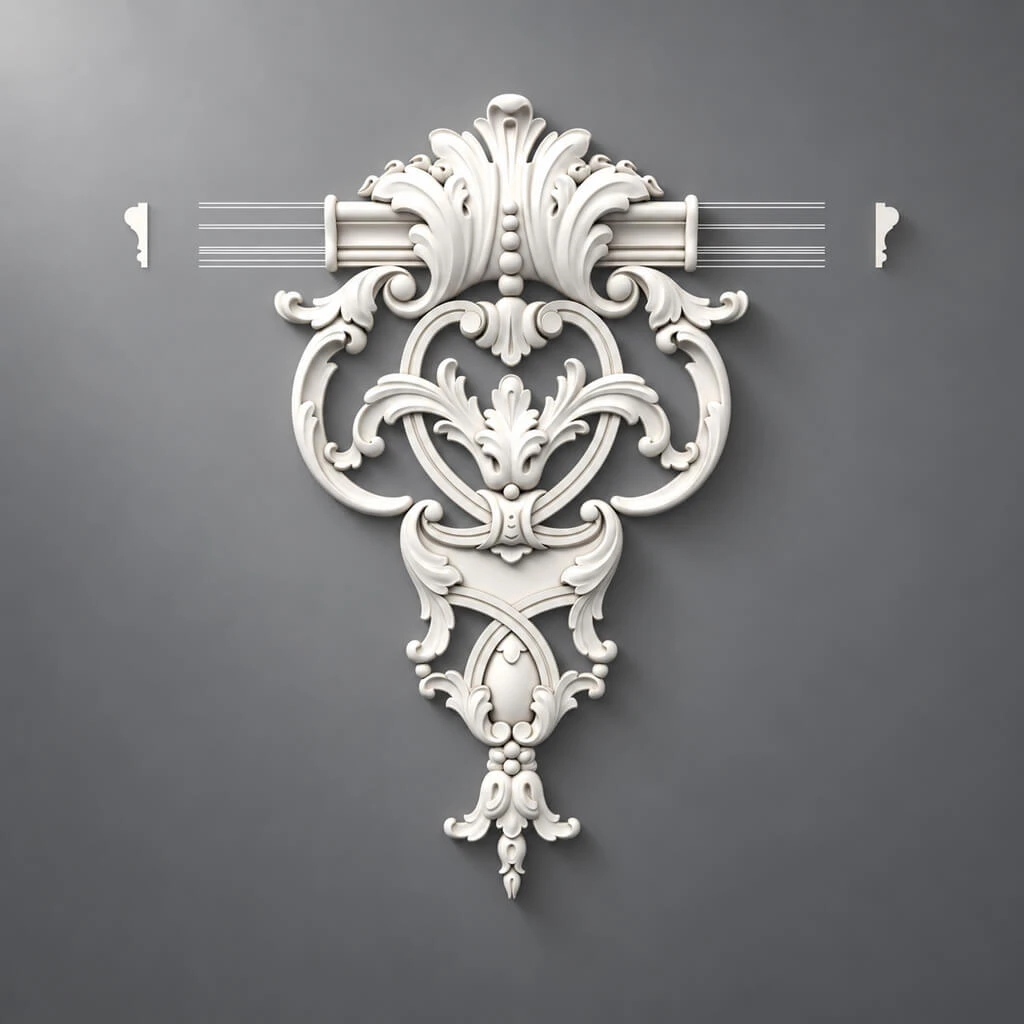
- Capitals and Brackets: Decorative Accents
- Furniture Decor: Slats and Polyurethane on Facades
- How to Use Moldings, Rosettes, Cornices, Overlays — Practical Scenarios
- Scenario: 'Minimalist System'
- Scenario: 'Modern Classic'
- Scenario: 'Neoclassical Study'
- How to Distribute Volume Across a Room
- Principle of 'Sound and Pause'
- Rule of the 'Accent Wall'
- Vertical Logic
- Which styles particularly benefit
- Scandinavian style: nature in a white frame
- Modern classic: color and form
- Neoclassical: historical archetypes in modern material
- Loft: nature in an industrial context
- Art Deco: geometry as a super-idea
- Technical compatibility parameters
- Painting: uniform tone as the key to the system
- Common mistakes when combining materials
- First mistake: too much of everything
- Second mistake: disproportionate cornice
- Third mistake: mismatched stylistic 'languages'
- Fourth mistake: polyurethane without connection to battens
- Fifth mistake: ignoring the baseboard
- Sixth mistake: inconsistent staining with separate orders
- Installation rules: briefly about the important
- FAQ: Answers to Popular Questions
- About the Company STAVROS
There is a question that sooner or later arises for everyone who decided to make an interior not just 'beautiful', but architecturally structured: what exactly makes a space cohesive? Not rich, not expensive — but precisely cohesive, when all elements work towards one image, none of them stands out, and the interior exudes a sense of intentionality.
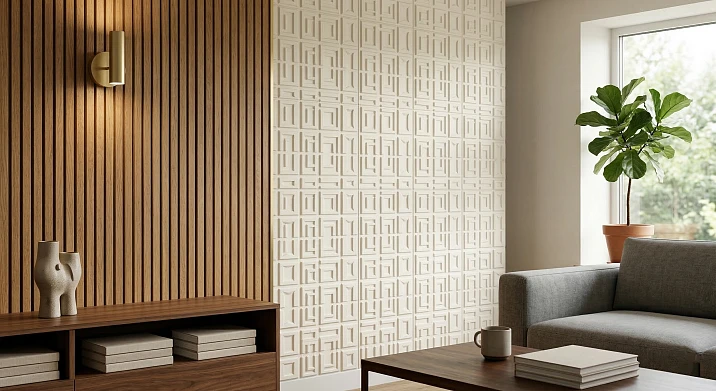
The answer lies in the nature of materials and how they complement each other.Rafter panels— this is the living texture of wood, repeating rhythm, naturalness and warmth.Polyurethane Items— this is precise relief, architectural structure, cornices, moldings, pilasters, rosettes that give the space rigor and completeness. Two materials, two types of expressiveness — and there is no contradiction between them. There is a union.
This article is about how this union is built consciously. Which polyurethane products work alongside slats. How to distribute decorative volume throughout a room without overloading it. Which style solutions particularly benefit from such a combination. And most importantly — how to avoid mistakes that turn a good idea into visual chaos.
Why the combination of wood and polyurethane works so reliably
Before delving into the details, it's necessary to understand the mechanism of this union. Why exactly do these two materials work together so organically? After all, wood and polyurethane are fundamentally different substances in composition, origin, and surface character.
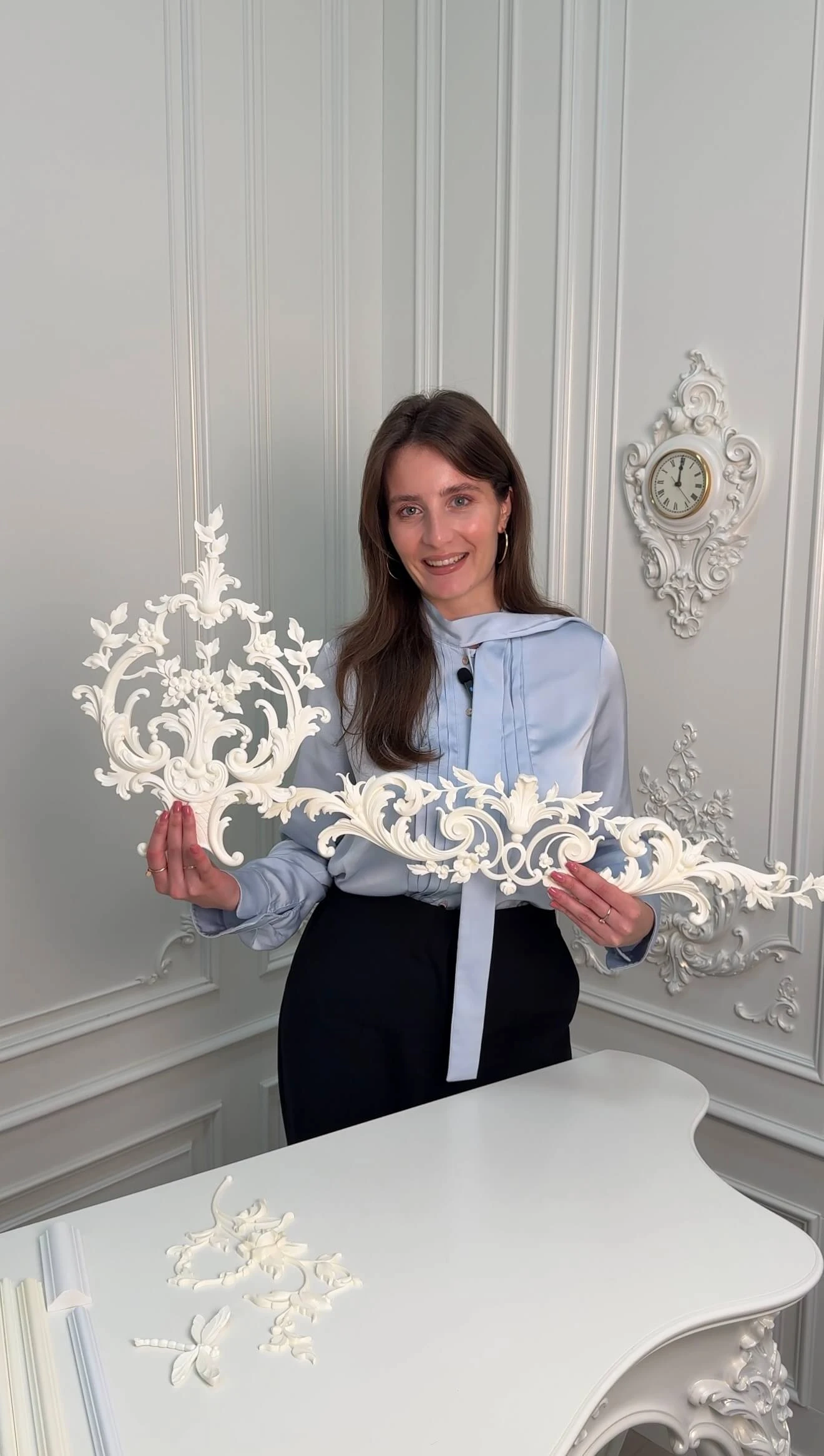

Contrast as the foundation of harmony
In nature and in architecture, harmony rarely arises from similar elements. It arises from contrast — when two elements are different enough not to compete, yet connected enough to belong to the same system.
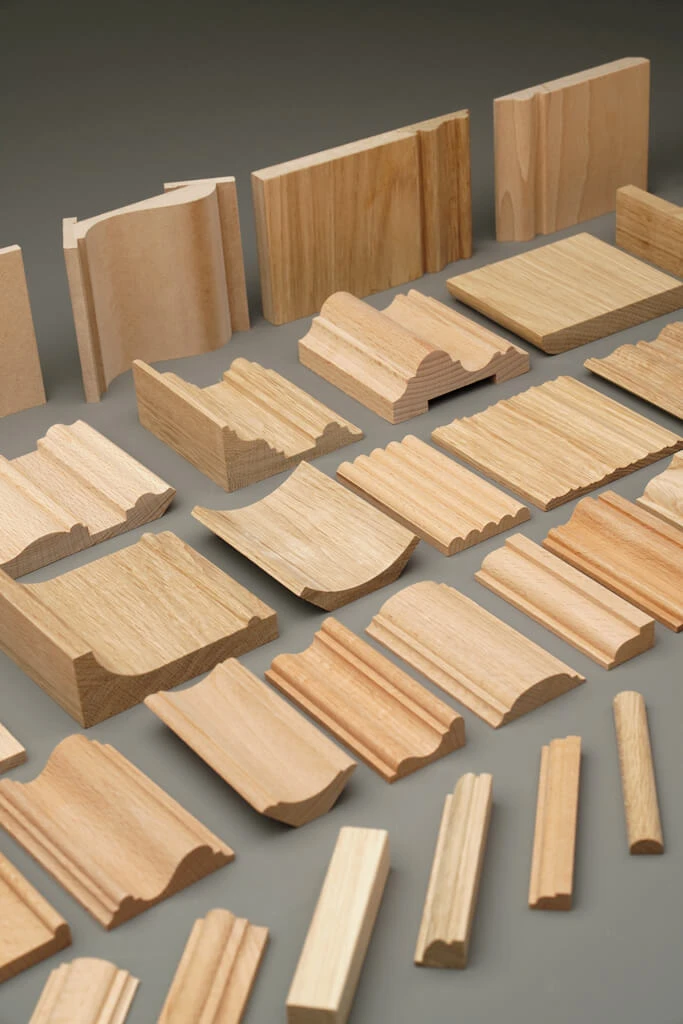
Wood is warm, organic, with a living grain pattern, non-static: each slat is unique in its pattern. Polyurethane is neutral, precise, with a clean geometric profile, reproducible: each cornice of the same article is identical to the next. It is precisely this difference that creates harmony between them: the natural contrasts with the technological, the warm with the neutral, the living with the geometrically precise.
At the same time, they are united by a commonality: both materials accept the same finish. Wood under stain and oil, polyurethane under paint — with correctly selected tones, they create a visual unity that conceals the difference in the nature of the materials. The eye sees not 'wood and plastic,' but a unified architectural system.
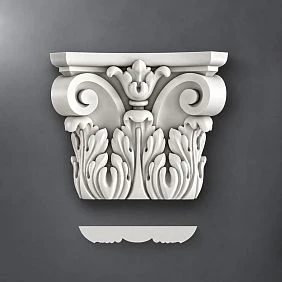
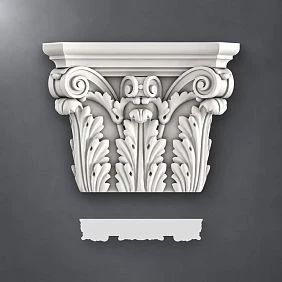
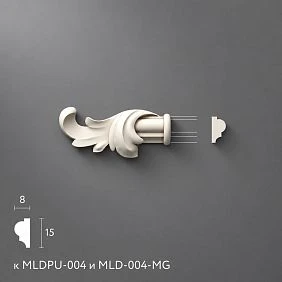
Our factory also produces:


Two levels of relief: rhythm and structure
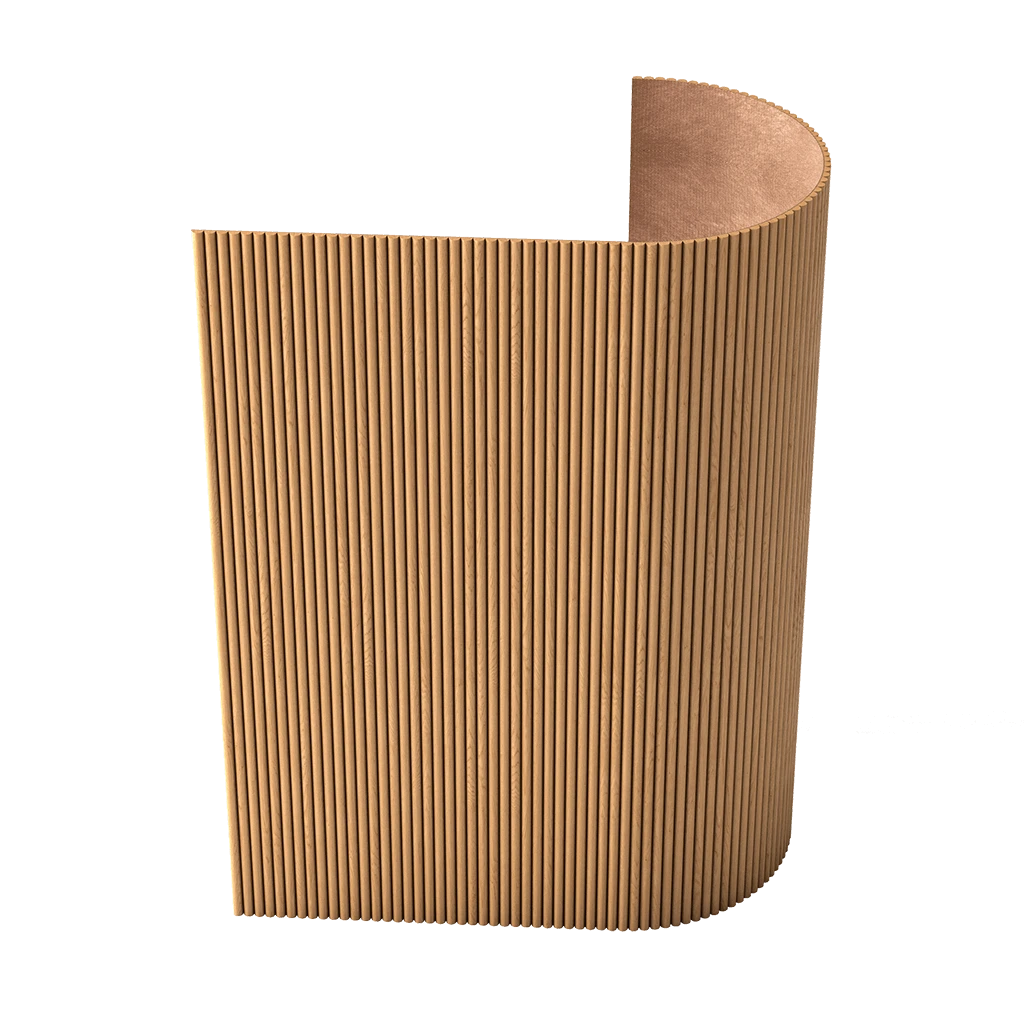
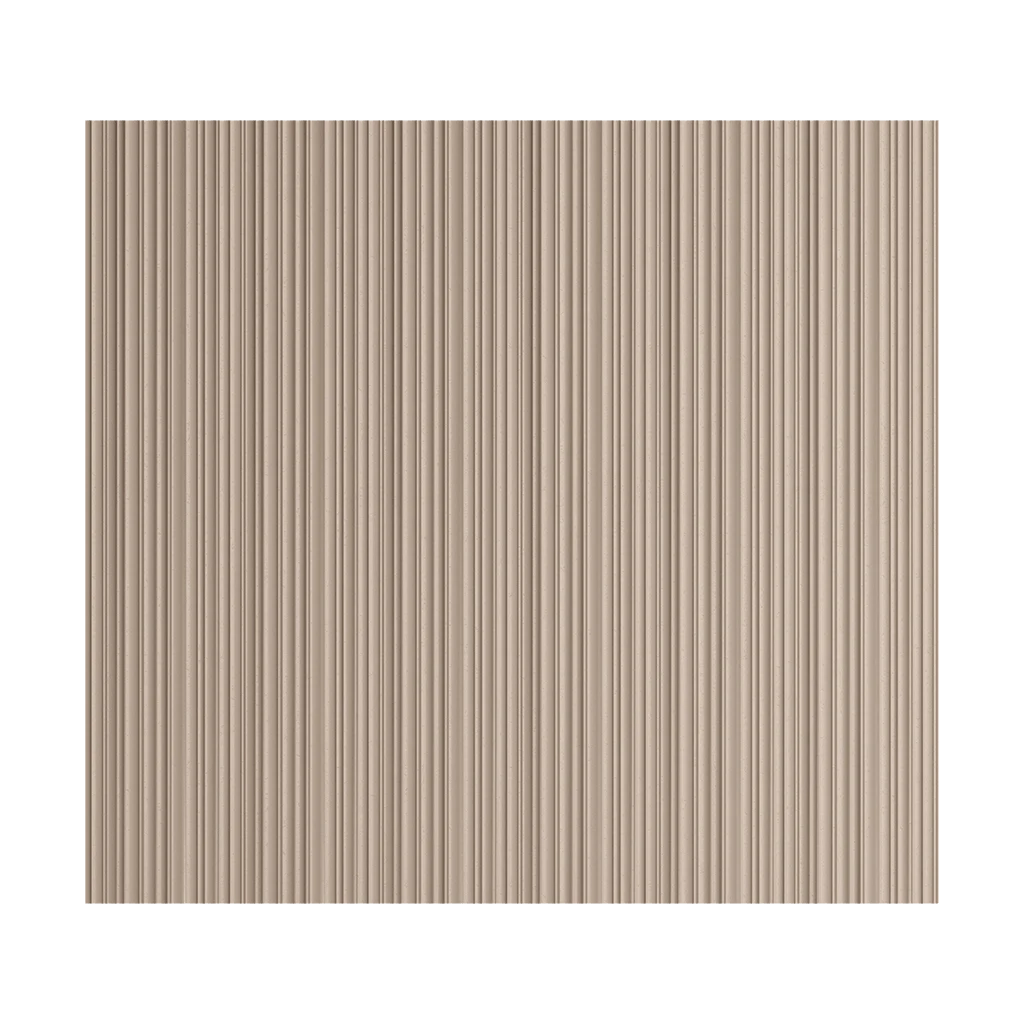
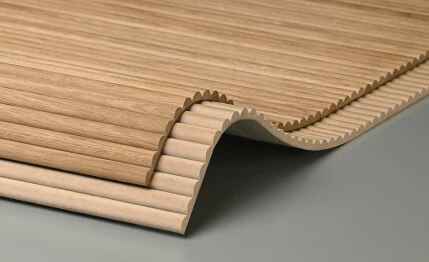
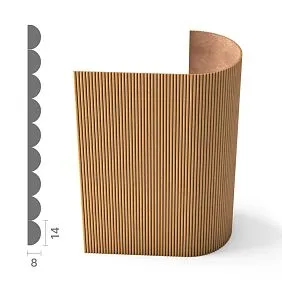
Slatted panels create the first level of relief: a repeating vertical rhythm, linear, dynamic, creating a play of light and shadow with directional lighting. This is a 'moving' relief — it attracts the eye, makes it move along the surface.
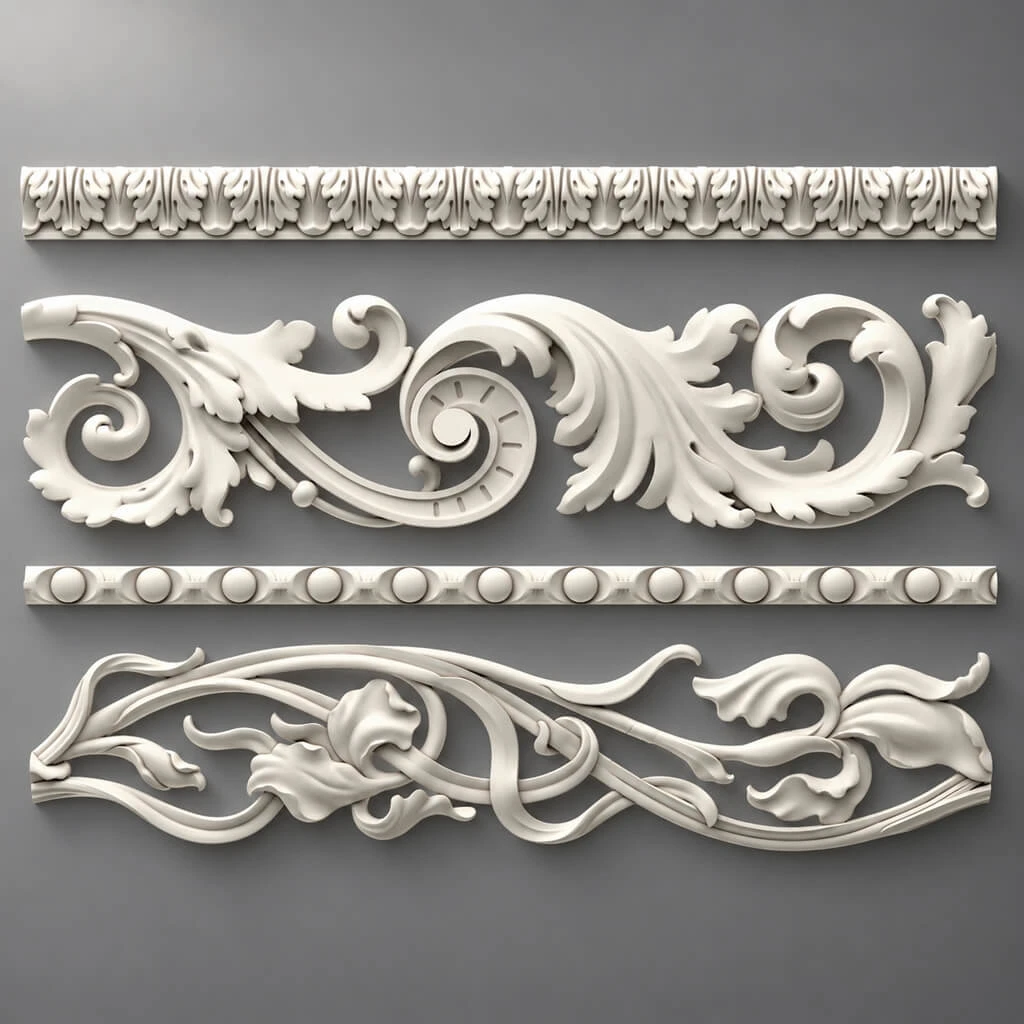
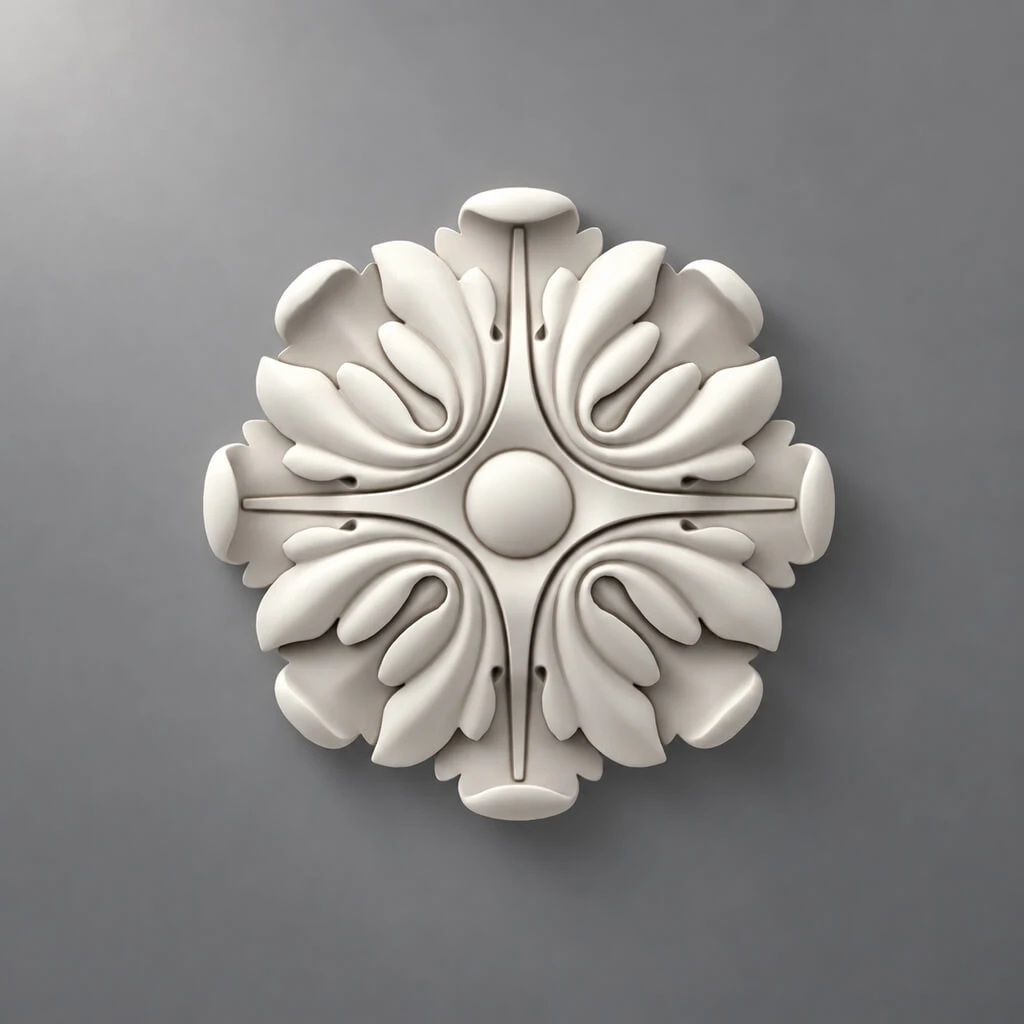
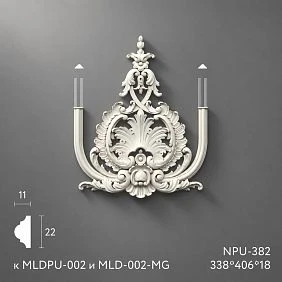
Polyurethane moldingsPolyurethane decor — cornices, moldings, rosettes — creates the second level of relief: structural, organizing, placing accents. A cornice is a horizontal boundary between wall and ceiling. A molding is a frame, delineating an architectural field. A rosette is the central accent of the ceiling plane.
Two levels of relief operating at different 'frequencies'—this is architectural depth. The interior ceases to be a set of surfaces and becomes a volume with its own internal logic.
Get Consultation
Which polyurethane products are suitable for slats
Catalogpolyurethane productsThe range is wide: cornices, moldings, baseboards, rosettes, brackets, capitals, wall decor, furniture decor, facade decor. But not everything from this arsenal works equally well alongside slatted panels. It's important to understand which element performs which function—and to choose consciously.
Cornice: an essential finishing element
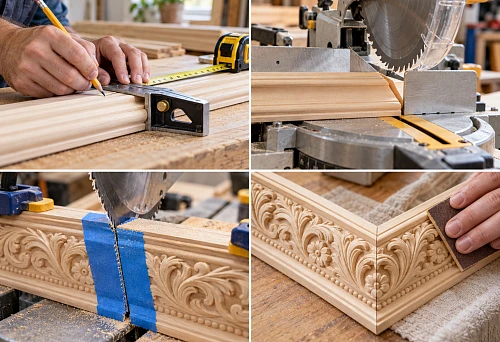
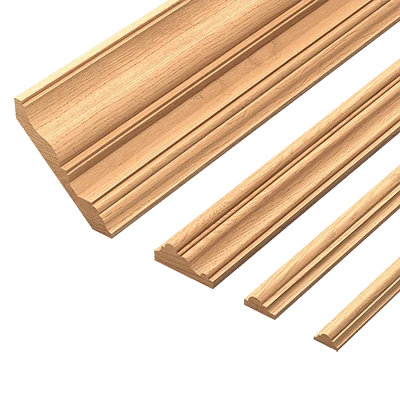
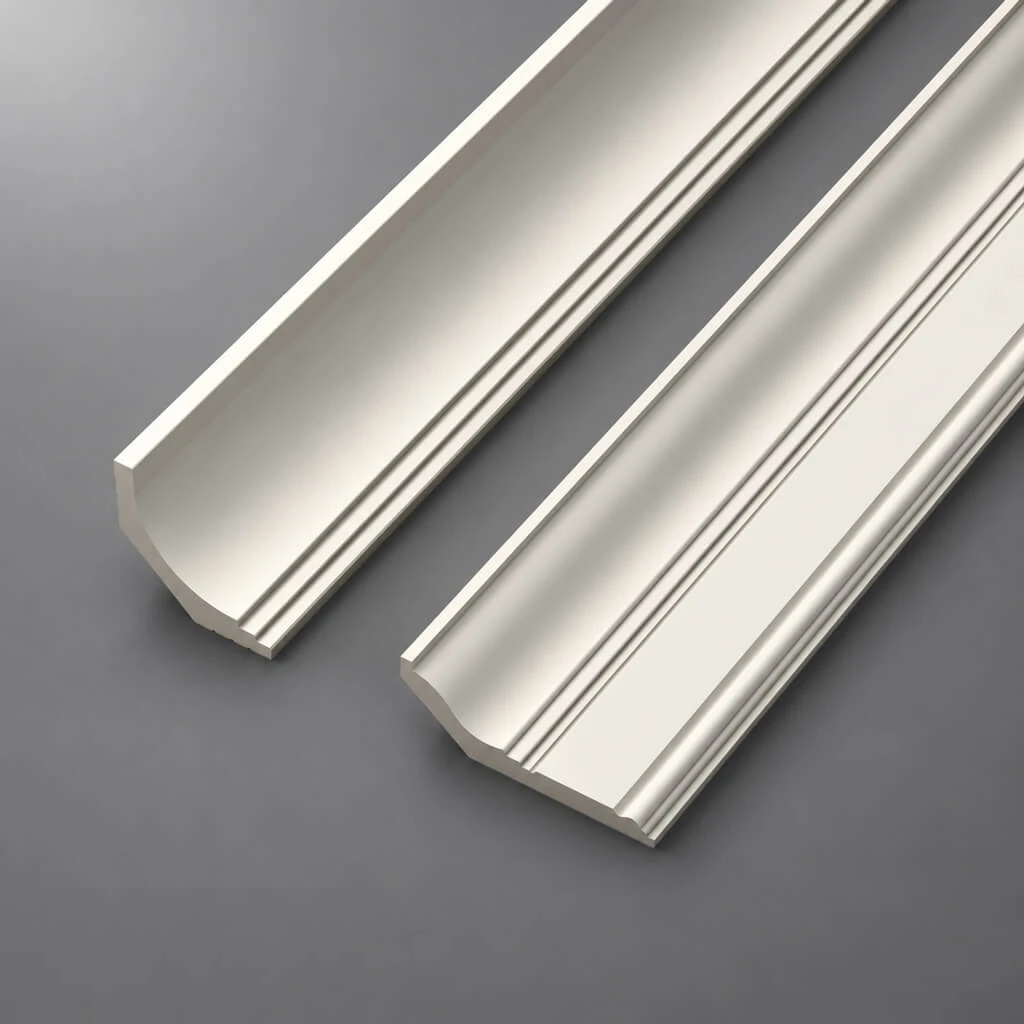
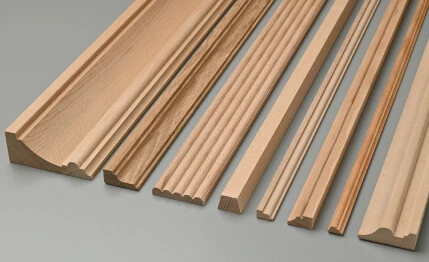
A polyurethane ceiling cornice is an element without which a slatted wall remains unfinished. It performs an architectural function—marking the transition from wall to ceiling, creating a horizontal finishing line that 'closes' the slatted system from above.
When choosing a cornice for a wall withdecorative slatted panelstwo parameters are important:
Cornice height—must correspond to the scale of the slats. Narrow slats of 15–20 mm require a delicate cornice of 50–70 mm. Wide slats of 40–60 mm 'support' a cornice of 80–130 mm. A mismatch in scale disrupts the system.
Cornice profile—must match the interior style. A rectangular stepped profile is for minimalism and loft. A classic profile with a cavetto, ovolo, and fillet is for neoclassical and modern classic. A complex multi-part profile with ornamentation is for historical styles.
Cornice painting: in the same tone as the slatted panels (monochromatic system)—the cornice 'dissolves' and functions as an architectural line. In a contrasting tone (white cornice on dark slats)—the cornice functions as a frame, visually highlighting the slatted field.
Moldings: Architectural Frames Over Slats
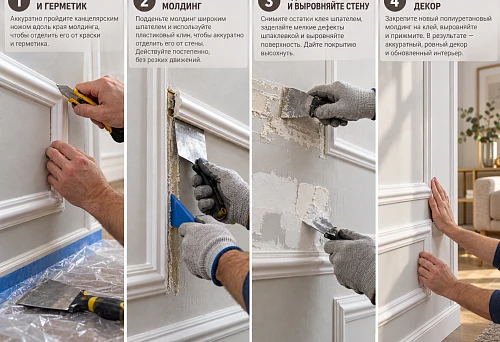
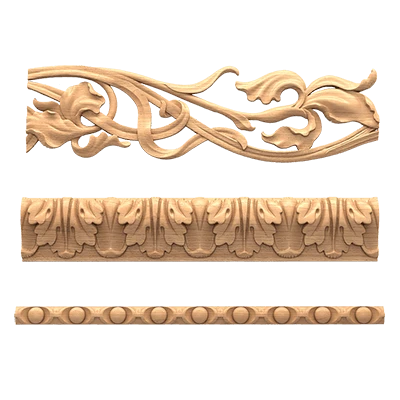
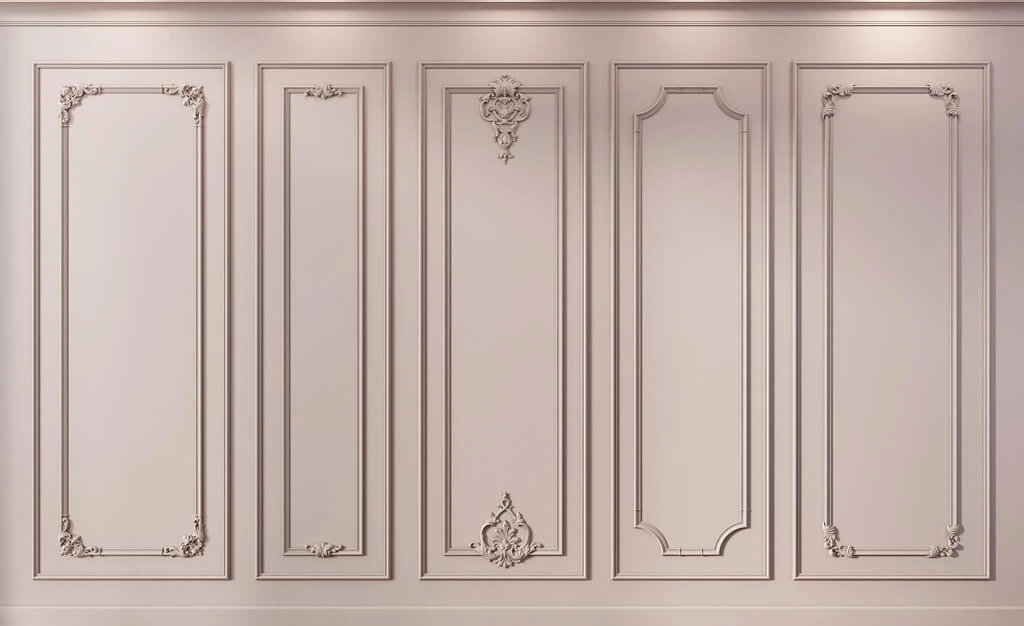
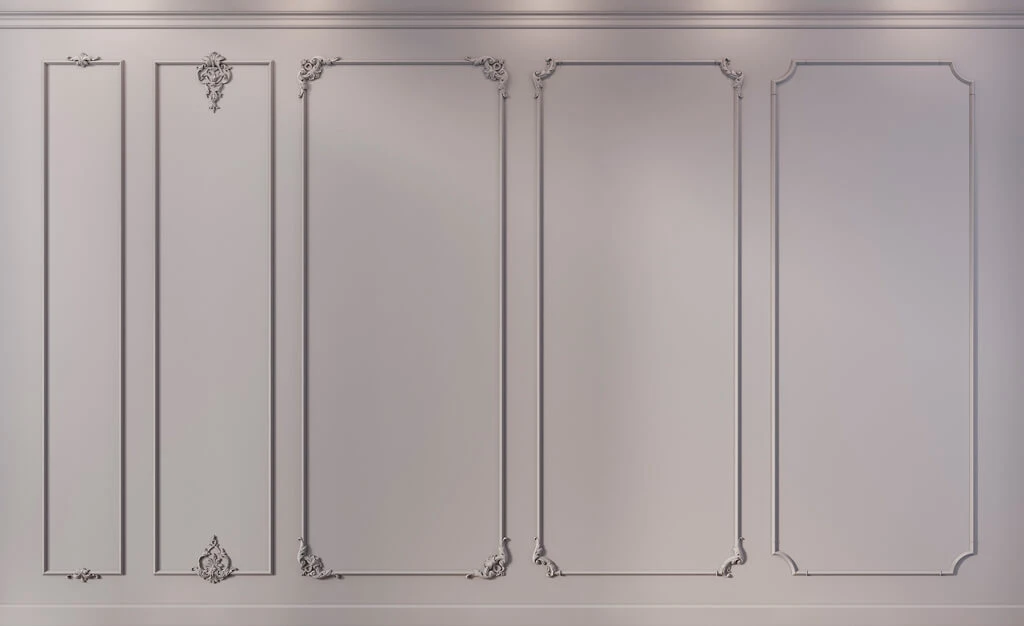
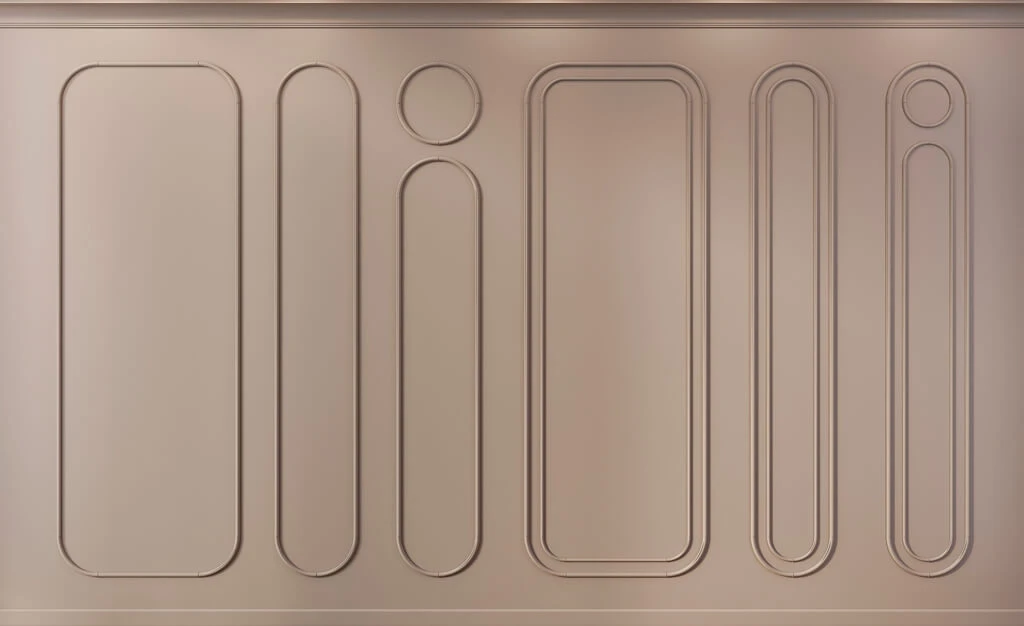
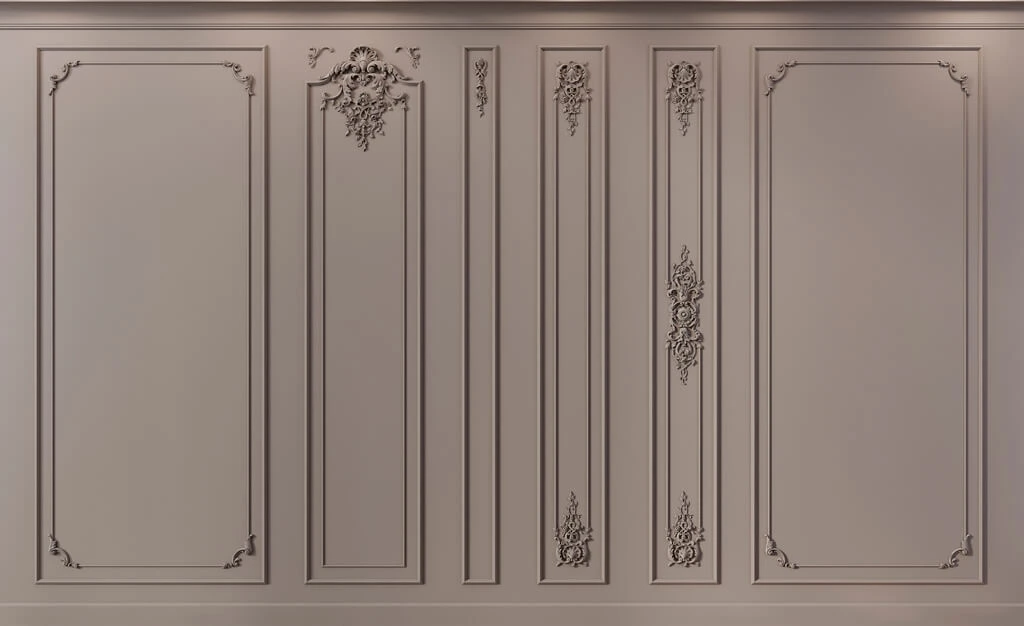
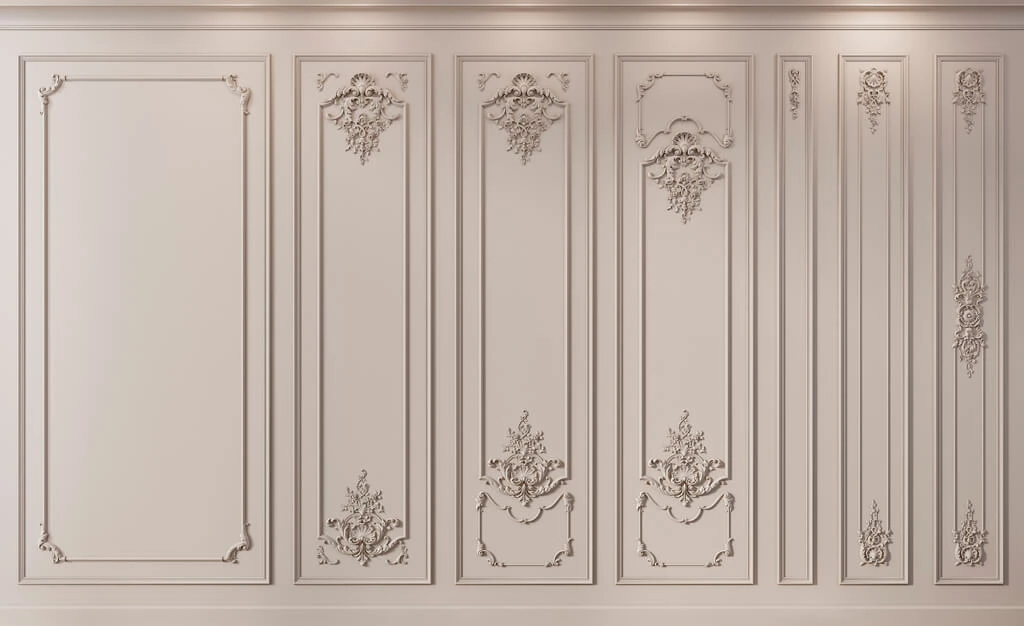
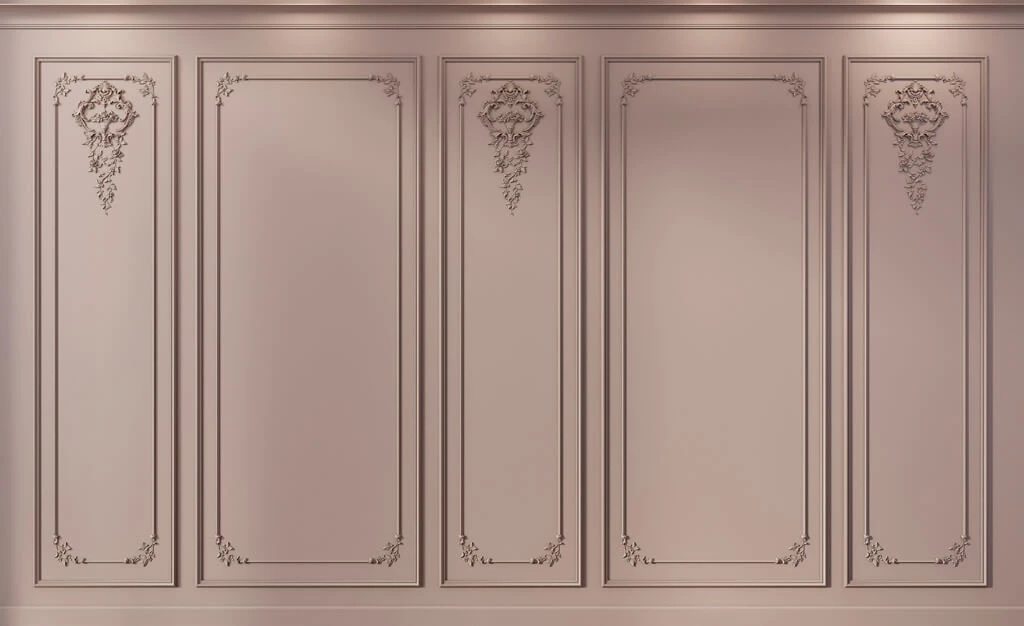
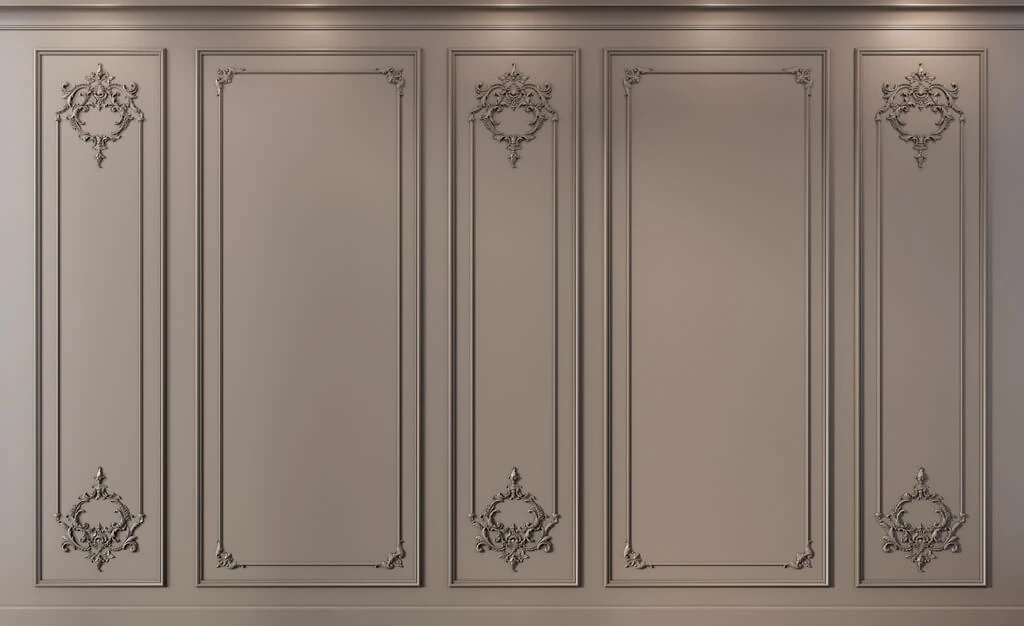
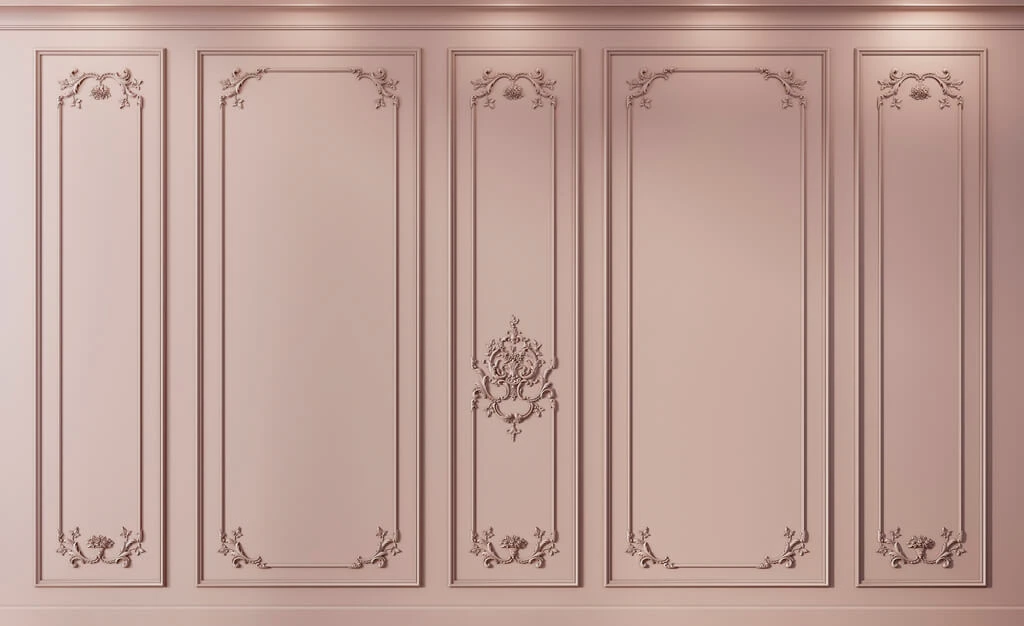
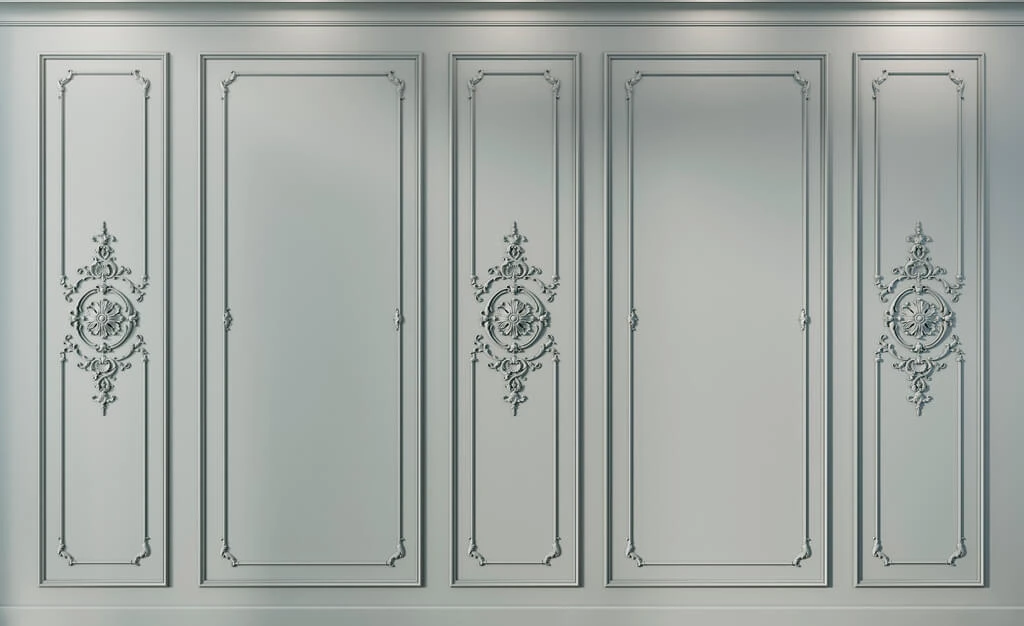
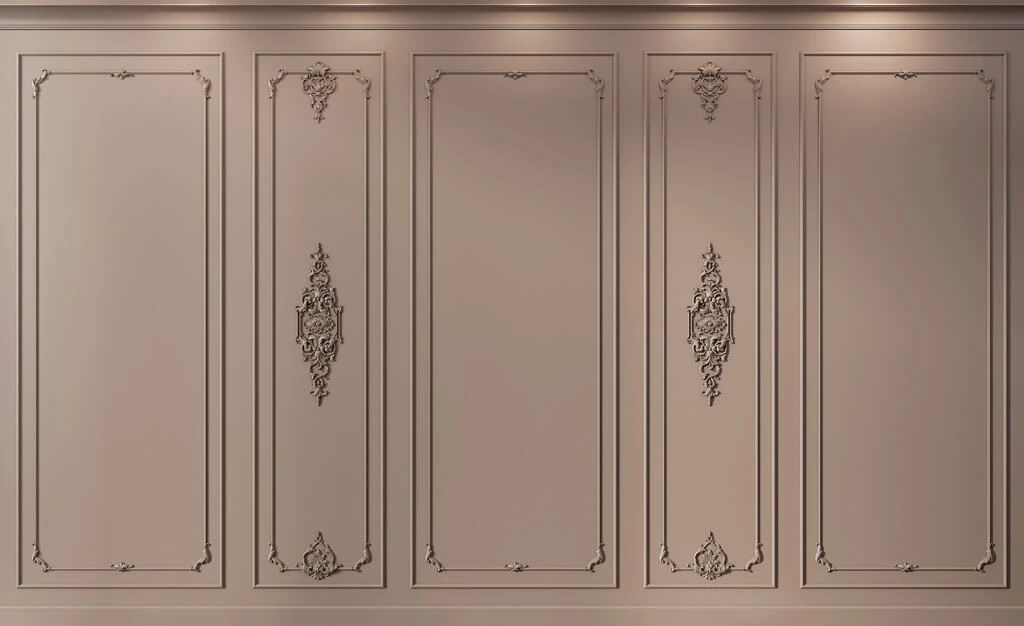
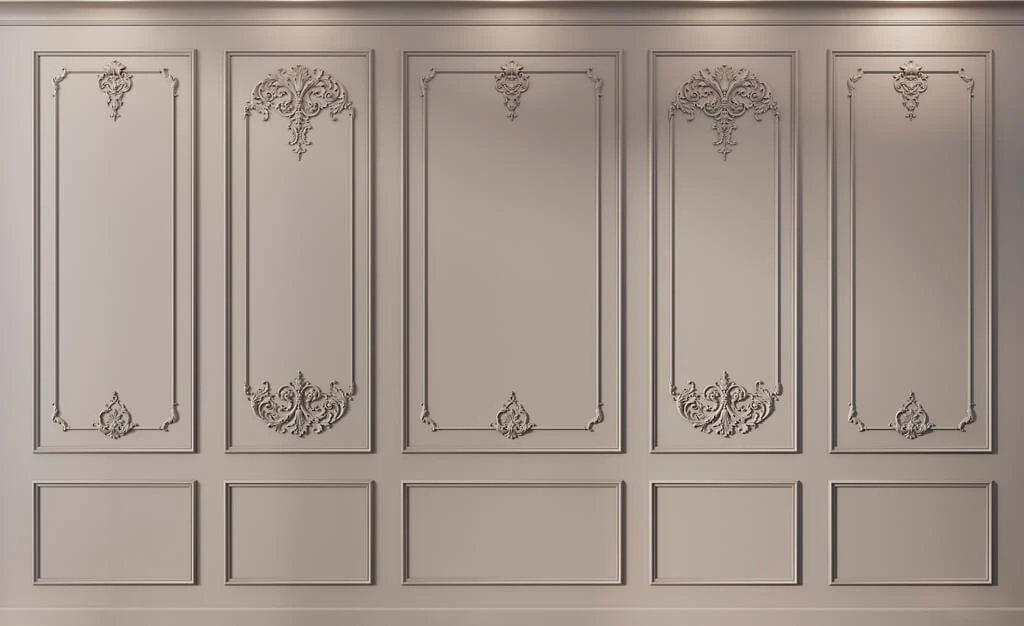
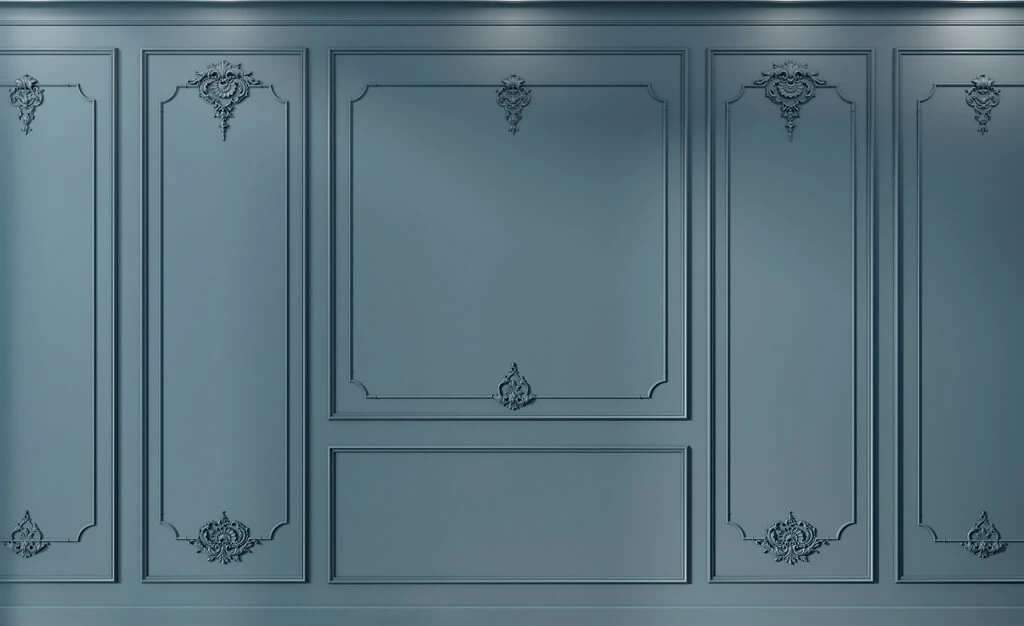
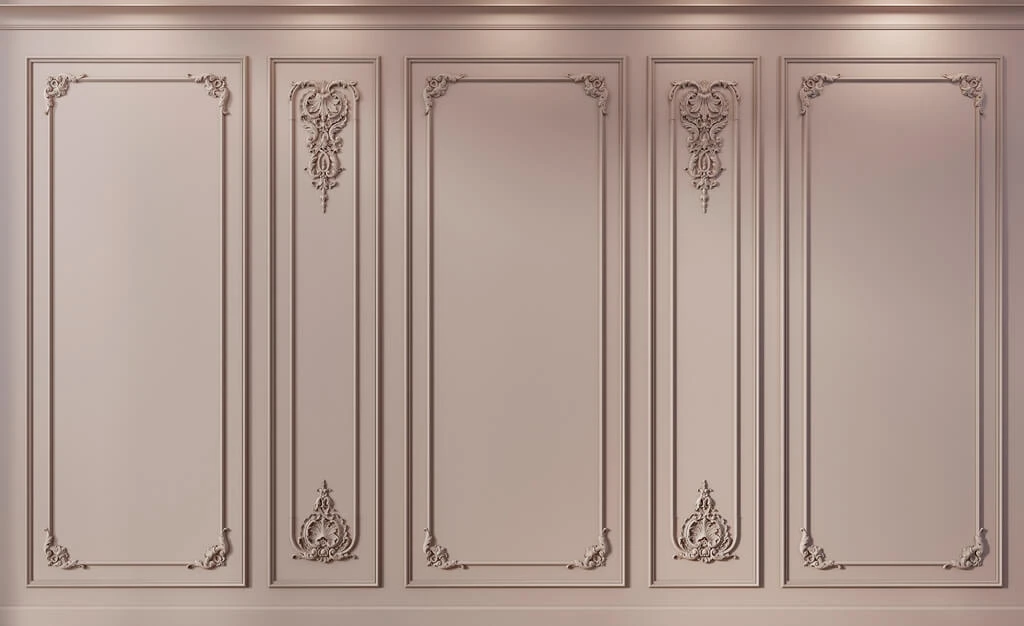
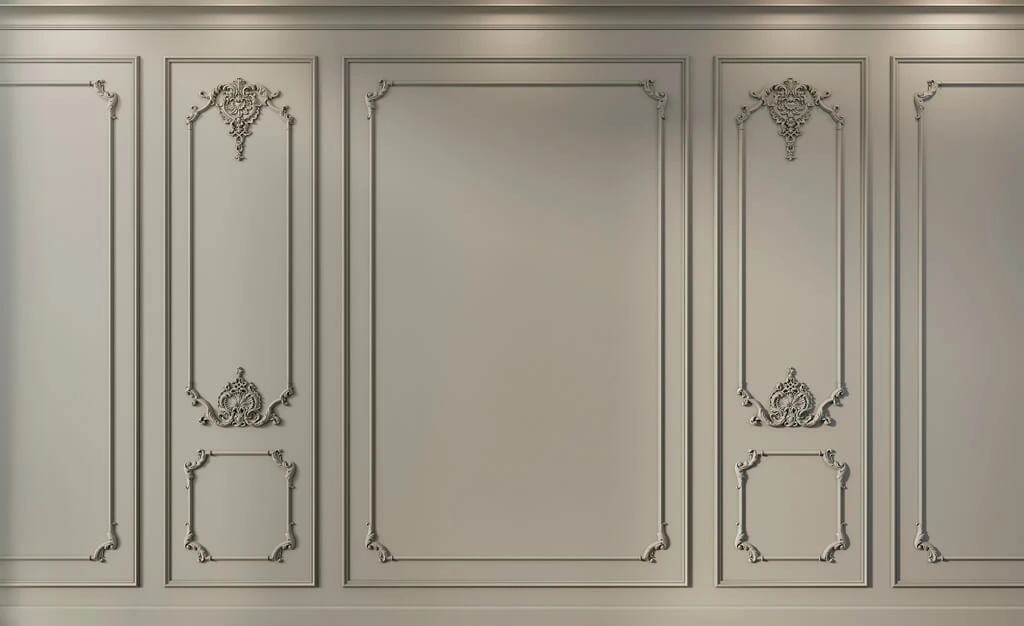
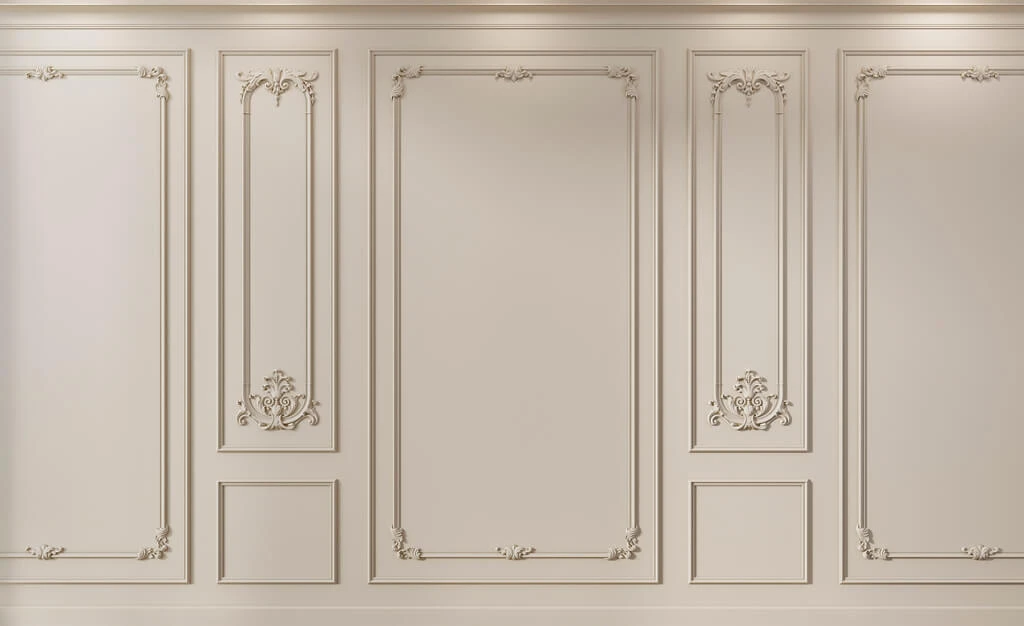
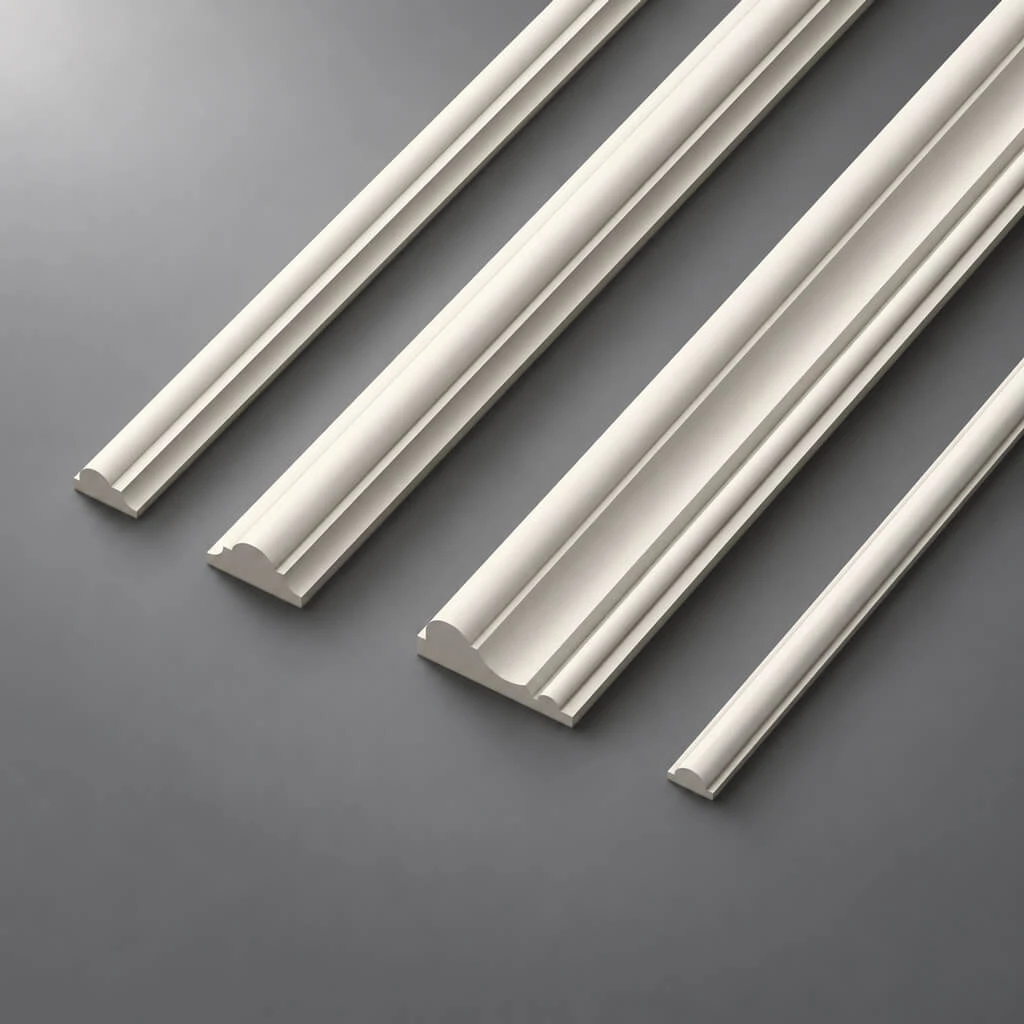
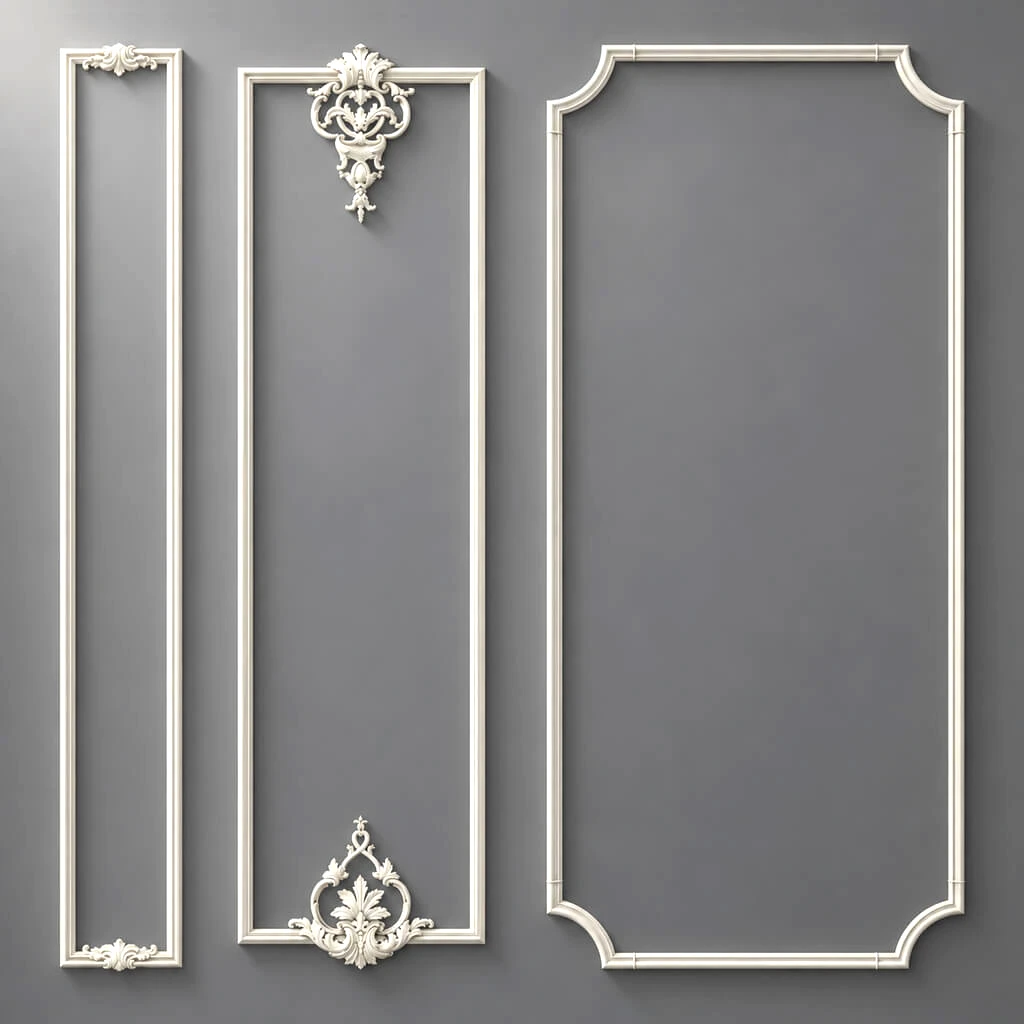
Polyurethane DecorIn the form of molding frames — one of the most effective techniques when working with slatted panels. Moldings are glued onto the slatted surface, forming rectangular 'fields' — cartouches. Inside each cartouche is the slatted rhythm. Around the perimeter — the clear geometric profile of the molding.
This is a boiserie technique in a modern interpretation. Historically, boiserie are wooden wall panels divided by frame decor. In the modern version, slatted panels made of MDF or oak are filled with frames made of polyurethane moldings, creating a two-level architectural system.
Proportions of molding frames over slatted panels:
-
Field width: 500–900 mm (depends on ceiling height);
-
Field height: from 600 mm to the full height of the wall;
-
Distance between frames: 60–100 mm;
-
Molding width: 35–70 mm.
Rosettes: Ceiling Accent
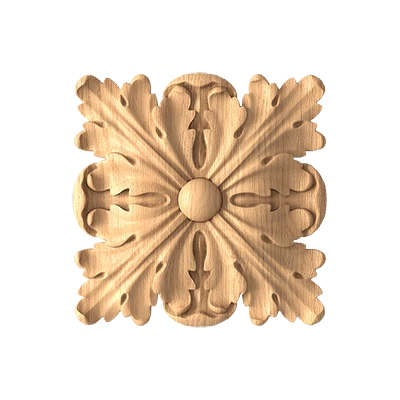
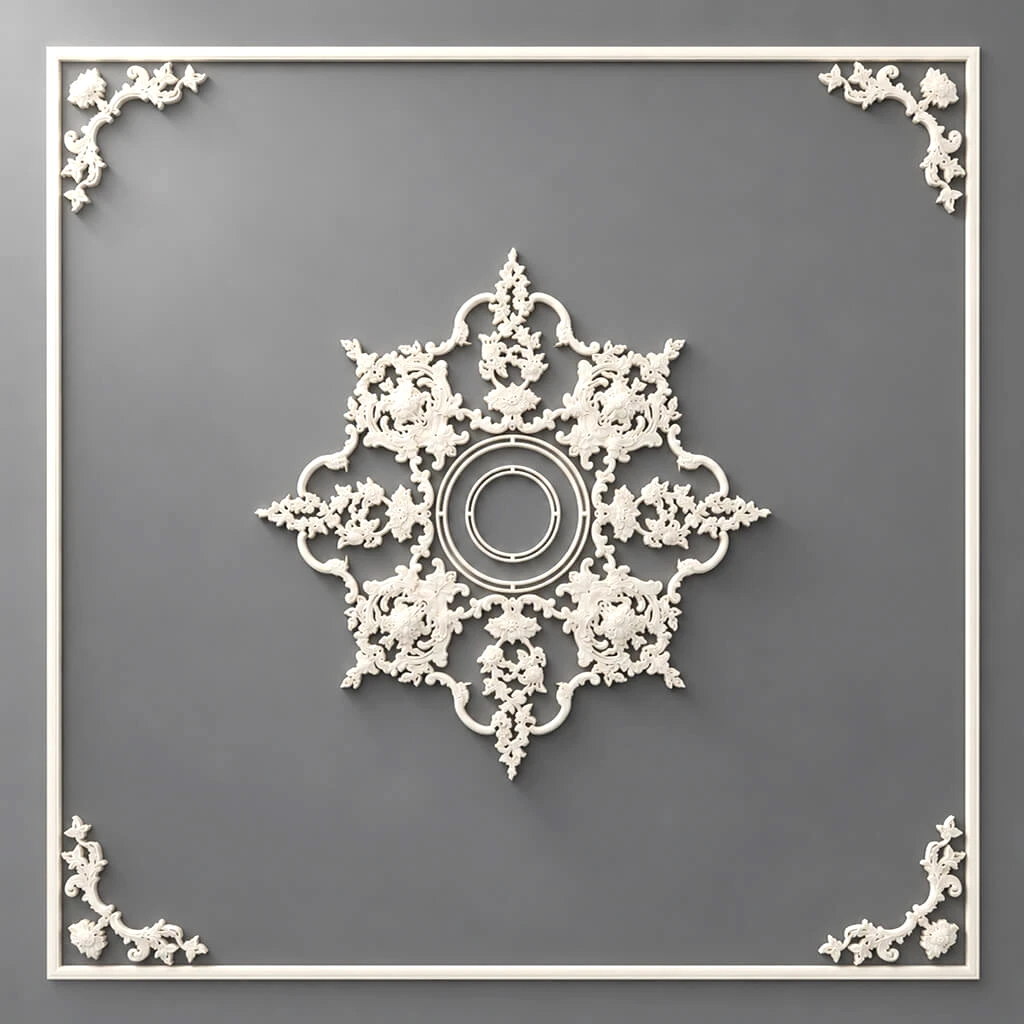
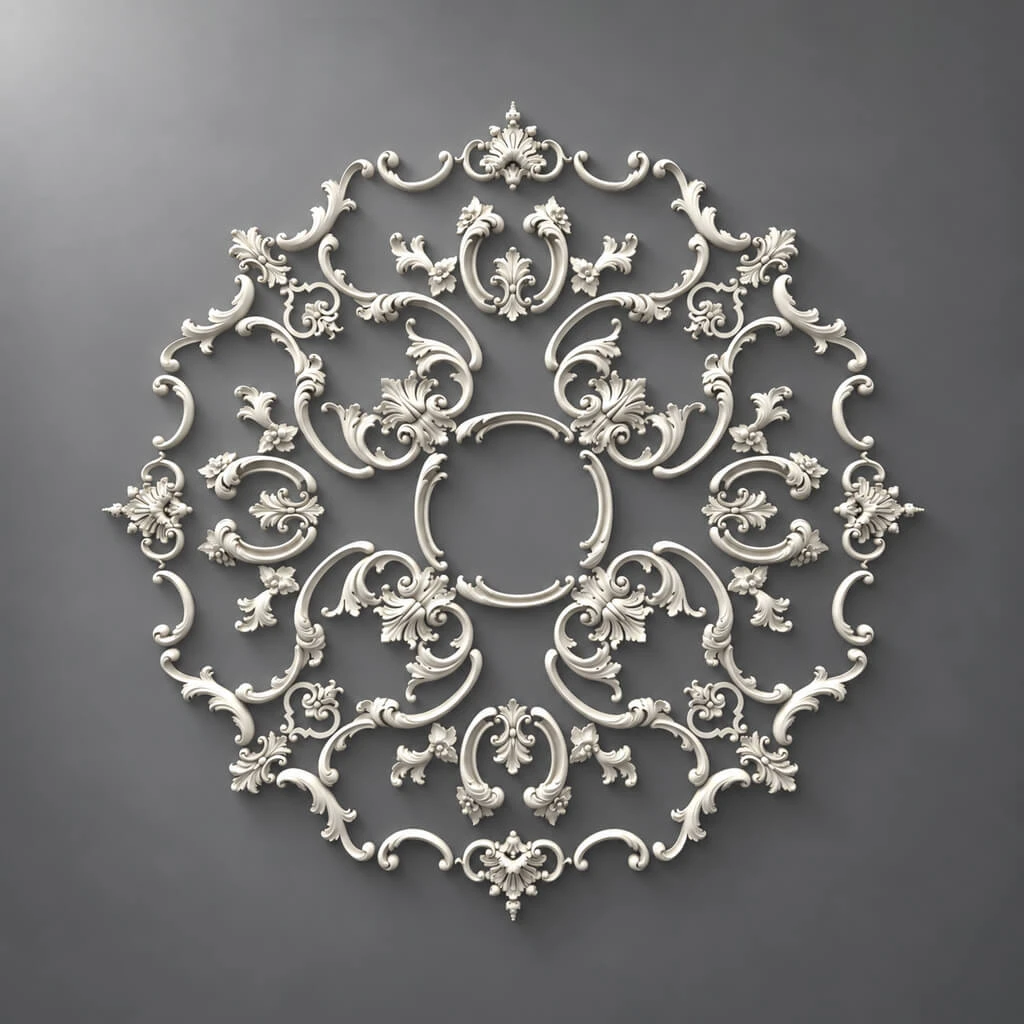
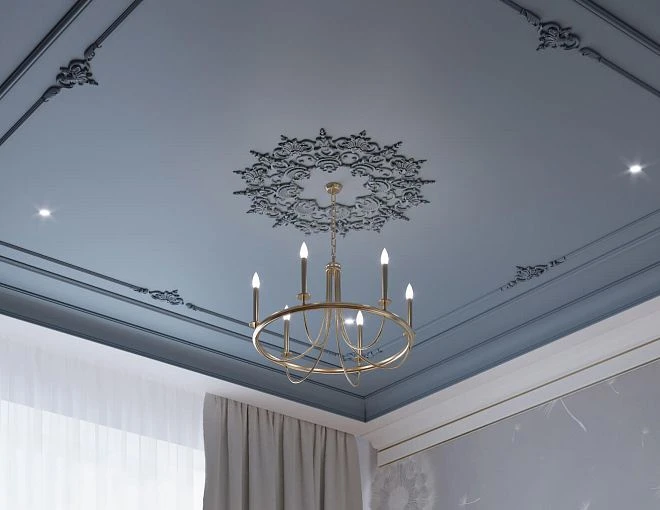
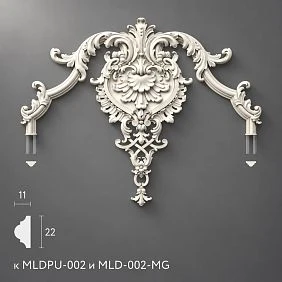
Ceiling rosette made ofpolyurethane decorin a system with slatted panels — this is a focal point, a vertical accent that completes the architectural system 'from above'. The rosette is installed at the central point of the ceiling — typically under a chandelier or above the main area of the room.
In a monochrome system (rosette, ceiling, and cornice in the same tone), the rosette is expressed solely through relief and chiaroscuro—a subtle and sophisticated effect. In a contrasting scheme (white rosette on a dark background), the rosette functions as a declarative classical accent.
Pilasters: vertical architectural accents
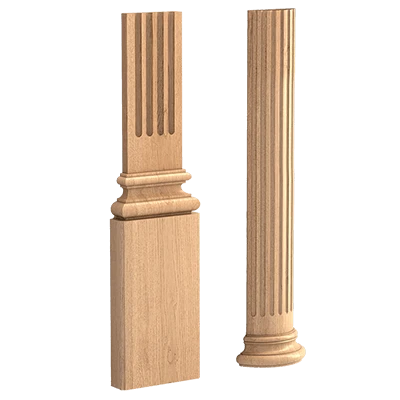
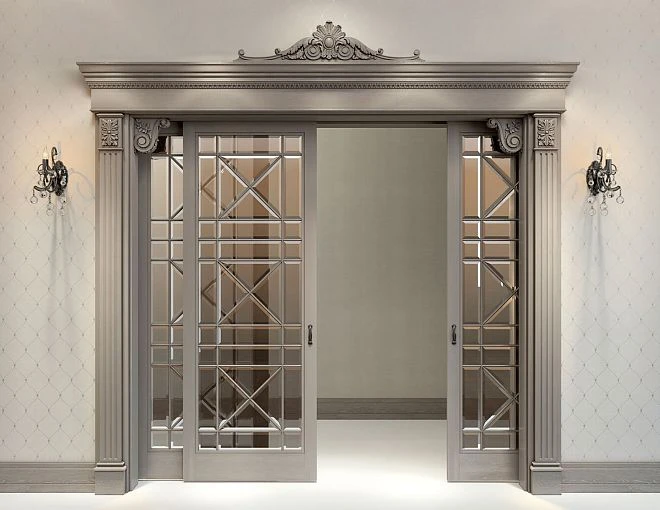
Decorative polyurethane pilasters are installed at the junctions of slatted panels with doorways, room corners, or between areas with different finishes. The pilaster architecturally 'completes' the slatted field from the sides—just as the cornice completes it from the top.
In a living room with a slatted accent wall: pilasters along the edges of the slatted field plus a cornice along the top—this forms a complete architectural frame for the slatted surface. An interior with such detailing reads as professionally designed.
Capitals and brackets: decorative accents
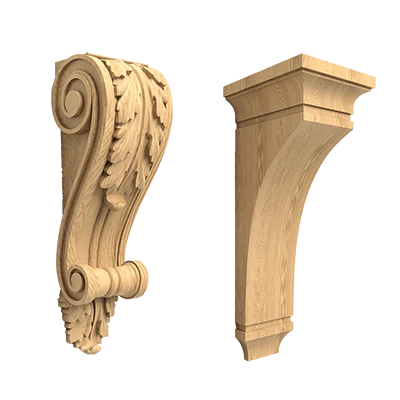
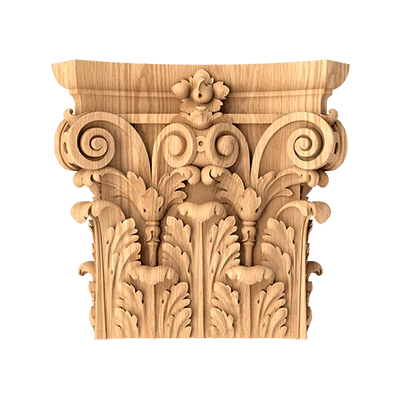
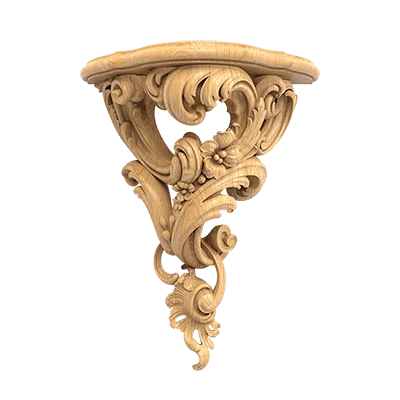
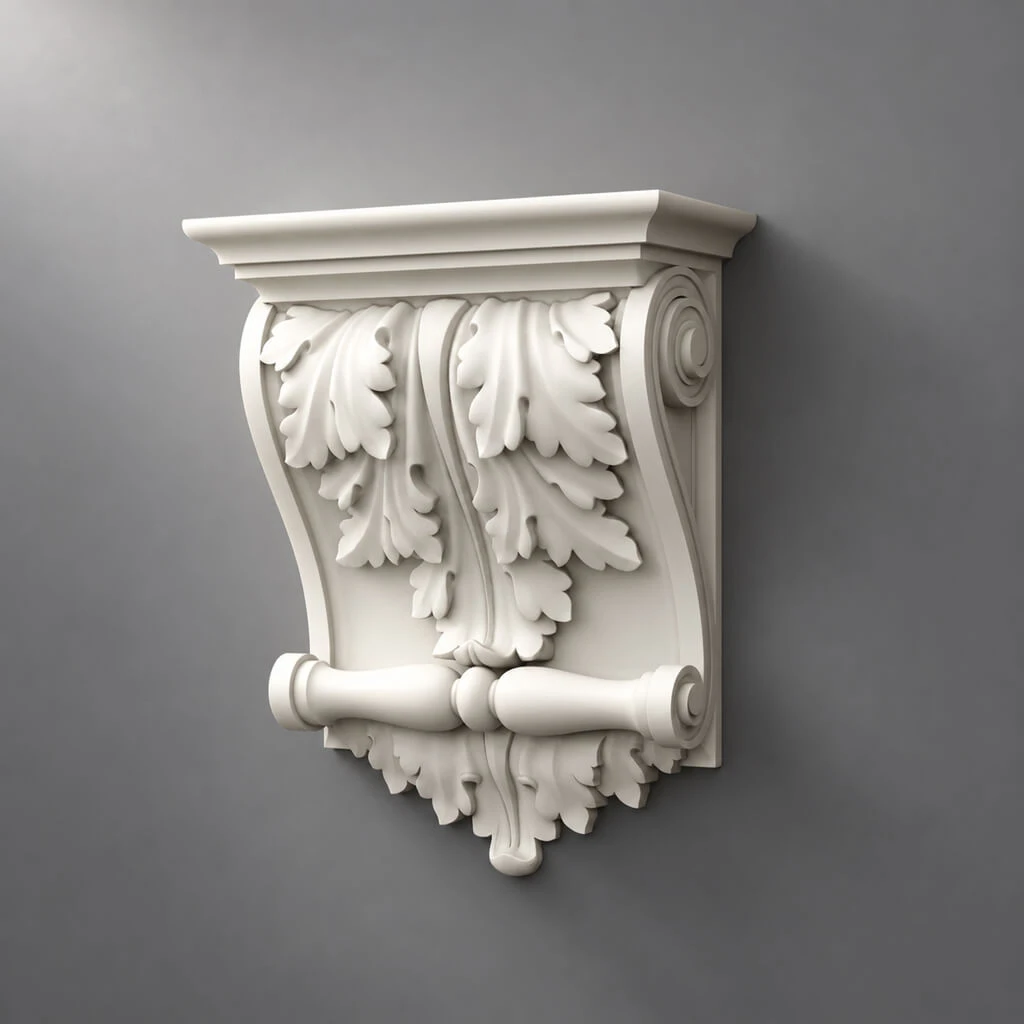
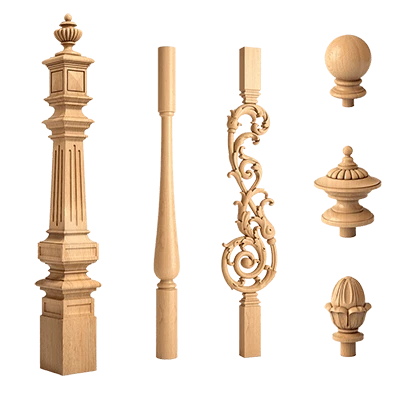
Capitals are the crowning elements of pilasters. Brackets are console elements that support a cornice or shelves. Both types of products are appropriate in neoclassical and classical interiors, where slatted panels are used in combination with rich architectural decor.
In modern interiors (Scandinavian style, minimalism, loft), capitals and brackets are generally excessive. Here, a cornice and moldings are sufficient.
Furniture decor: slats and polyurethane on facades
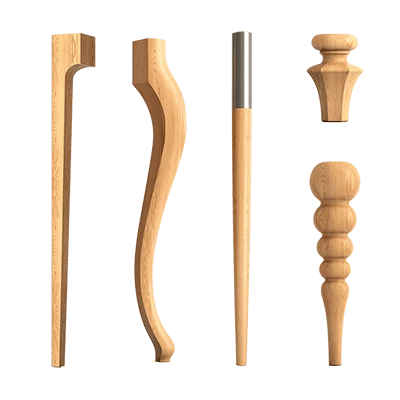
A separate area of application is furniture facades. Slatted panels on cabinet and dresser facades plus applieddecoration for polyurethane furniture—small overlays, frames, corner pieces—create furniture volumes with an architectural character. This is particularly in demand in projects where furniture is 'built into' the wall system and must visually belong to the same stylistic vocabulary as the walls.
How to use moldings, rosettes, cornices, overlays — practical scenarios
Scenario "minimalist system"
Oak slatted panels in Scandinavian or neutral toning — on one accent wall. Polyurethane ceiling cornice 50–60 mm, rectangular profile without ornament, in white or matching the slats. Polyurethane skirting board orwooden floor baseboardmatching tone — at the bottom. No moldings on the walls, no pilasters.
Result: a concise, clean, naturally warm system. Maximum attention — to the slats. Polyurethane performs a purely architectural function without decorative pretensions.
Scenario "modern classic"
MDF slatted panels for painting on an accent wall in a saturated tone (dark green, indigo, anthracite). Around the perimeter of the wall — polyurethane molding frames 50 mm wide in white. Cornice 90–110 mm with a classic profile in white. Skirting board 80 mm in white. On the ceiling — a rosette 300–400 mm in diameter in white for the chandelier.
Result: a dark slatted wall in a white architectural frame. Classic accents of the cornice, moldings, and rosette give the modern color solution historical depth and status.
Scenario "neoclassical study"
Oak slatted panels in "tobacco" toning in the lower zone of the walls (height 100–120 cm). Horizontal molding frompolyurethane60 mm wide at the border of the slatted zone and the upper part of the wall. Above — molding frames organizing the upper field. Cornice 100–130 mm with a classic profile. Ceiling rosette in the center. Pilasters at door openings. Everything — in a unified dark tone with slatted panels.
Result: a full-fledged neoclassical architectural system with two materials and two levels of relief.
How to distribute volume across a room
This is one of the most important questions — and one of the most frequently ignored. 'Volume' in this case is the total amount of relief decorative elements in a space. Each space has its own 'capacity' — the maximum amount of volume it can accept without feeling overloaded.
The principle of 'sound and pause'
Each decorative element — slats, moldings, cornice, pilasters — is a 'sound' in the architectural score. Between sounds there must be pauses — clean, neutral surfaces where the eye rests. No pause — no music, only noise.
Practical principle: if there are slatted panels on the wall — the ceiling should be relatively calm (cornice plus at most a rosette). If the ceiling is saturated (complex cornice, rosette, frieze) — the slatted panels should be delicate (narrow slats, neutral tone). One element plays solo, others — support.
The 'accent wall' rule
In a typical living space of 15–25 sq.m, a reasonable maximum is one slatted accent wall. The other three walls — neutral (smooth, painted).Moldings decorationin the form of a cornice — along all four walls (this is a perimeter element, not an accent one). Baseboard — along the entire perimeter.
If slatted panels are on two walls, frame moldings on the third are already excessive. If all four walls are in slats, molding is limited to just the cornice.
Vertical logic
The vertical organization of a room should have logic: from bottom to top — baseboard, slatted panel, molding horizontal boundary (if slats are in the lower zone), smooth upper wall, cornice, ceiling. Each element occupies its place in the vertical hierarchy. Chaotic placement — moldings at different heights, cornice without baseboard, slats 'floating in the air' — destroys the system.
Which styles particularly benefit
Scandinavian style: nature in a white frame
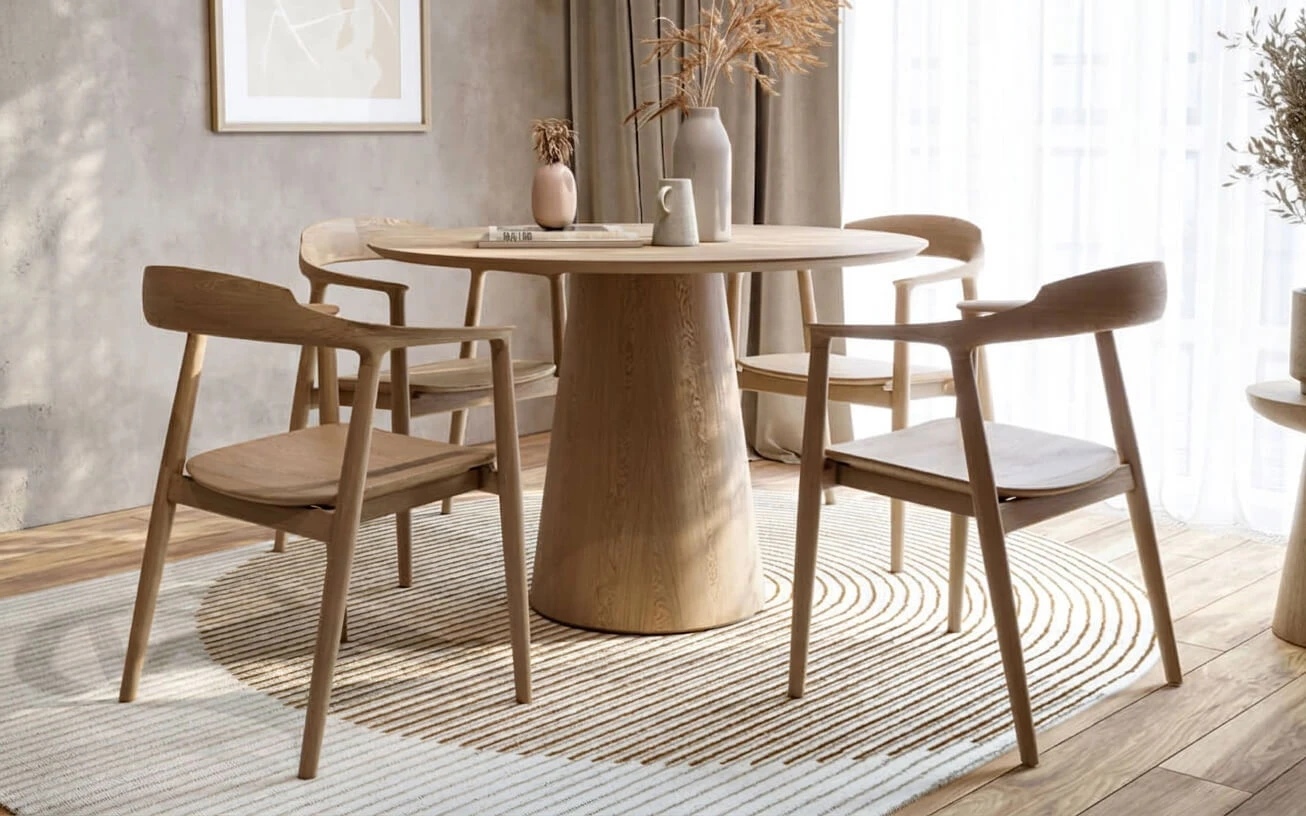
Scandinavian interiors are built on warm natural textures (wood, linen, wool) in a white or neutral setting. Slatted panels made of ash or oak with white oil — the natural component. A polyurethane cornice 40–60 mm with a rectangular profile in white — neutral architectural framing. No ornaments, no complex profiles — only pure geometry.
It is in the Scandinavian styledecorative slatted panelsthat they acquire their natural strength to the fullest: the white neutral setting does not interfere with the slats but highlights them. Polyurethane here is the frame of the picture, not an independent decoration.
Modern classic: color and form
Modern classic is a style that combines classical forms and modern color. MDF slatted panels for painting in a saturated tone — modern bold color. Cornice, moldings, pilasters made of polyurethane with classical profiles — historical form. The combination creates an interior that is simultaneously recognizable (classical architectural structure) and new (unexpected color).
For modern classicpolyurethane productsshould be white or in a neutral cream tone — this enhances the contrast with the saturated slats and creates maximum readability of the architectural structure.
Neoclassicism: historical archetypes in modern material
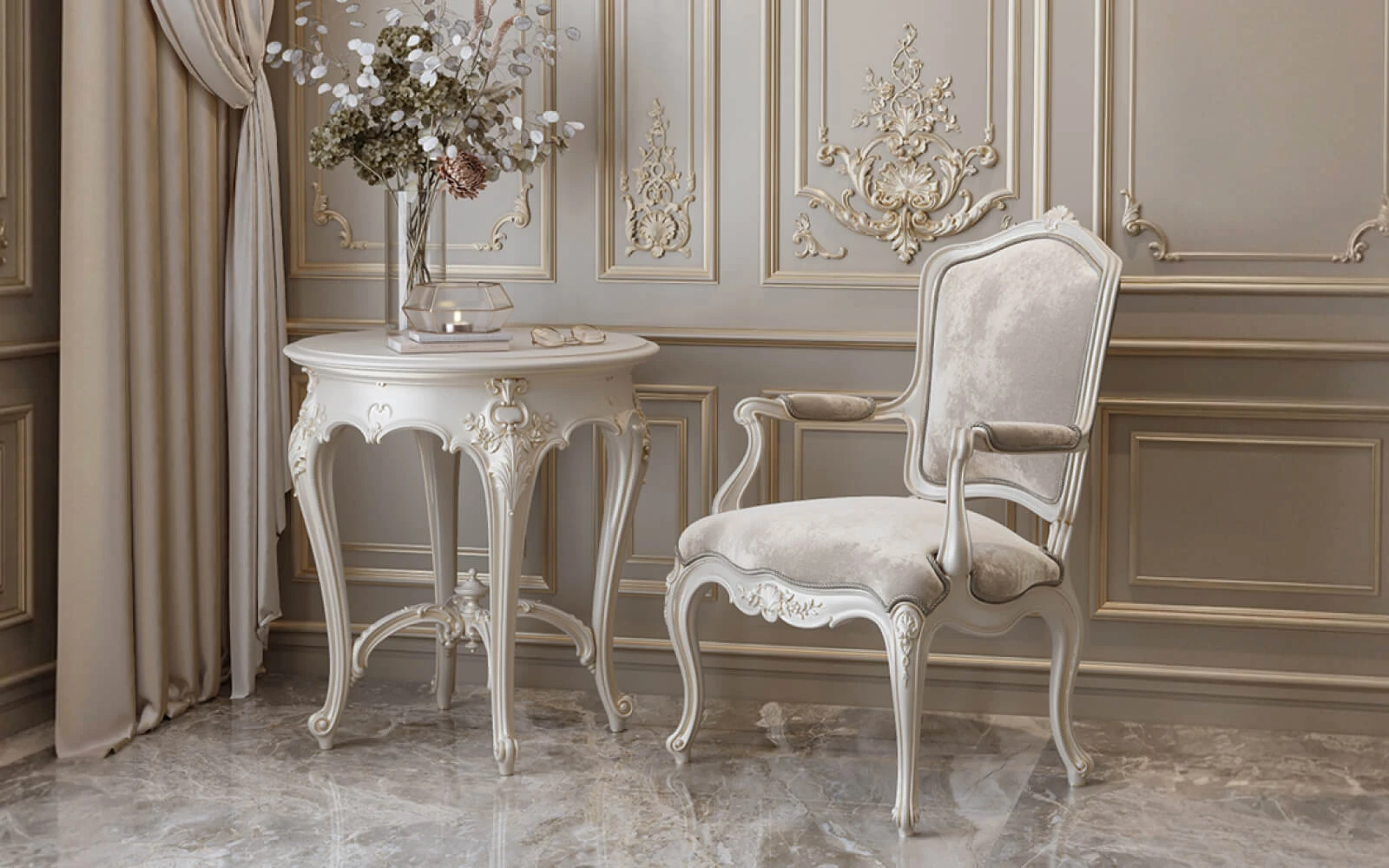
A neoclassical interior is a direct reference to classical architectural forms: pilasters, cornices with profiles, molding systems, rosettes. Paired with slatted panels made of warm oak, neoclassicism gains a natural dimension that was absent in historical interiors. The slats update heavy historical schemes, giving them liveliness and naturalness.
For neoclassicism —Polyurethane Decorwith pronounced profiles, ornaments, capitals. Cornice 90–140 mm. Pilasters at openings. Molded frames on walls. Everything — in a single tone with the slatted panels or in a classic contrast of white plus warm oak.
Loft: nature in an industrial context
Loft is a style where natural and industrial materials are intentionally juxtaposed. Slatted panels made of dark oak (graphite or mocha tint) — a natural element with a dark industrial character.polyurethane decorin a loft is minimal: only a cornice with a simple profile, if the ceiling height requires its presence. No ornaments, no complex moldings.
However, in a loft, polyurethane brackets are especially appropriate — imitating industrial consoles, on which open shelves made of solid oak are placed.
Art Deco: Geometry as a Super Idea
Art Deco is a style built on strict geometry, symmetry, and metallic accents. Slatted panels with a pronounced vertical rhythm are the perfect material for Art Deco: the rhythm of the slats and the rhythm of Art Deco resonate on an archetypal level. Polyurethane products in this style: stepped moldings, corner blocks, geometric friezes — no ornament, only form.
Technical compatibility parameters
| Slat parameter | Recommended polyurethane products |
|---|---|
| Slats 15–20 mm, narrow spacing | Cornice 40–60 mm, molding 25–40 mm |
| Slats 25–40 mm, medium spacing | Cornice 60–90 mm, molding 35–60 mm |
| Slats 40–60 mm, wide spacing | Cornice 80–130 mm, molding 50–80 mm |
| MDF for painting | Full range of PU, monochrome or contrast |
| Solid oak warm tone | Cornice in oak tone or white contrast |
| Solid oak dark tone | White PU decor — maximum contrast |
Painting: unified tone as the key to the system
Joint painting of slats and polyurethane products is a crucial technical step for monochrome systems. Several rules determine the outcome.
One batch of paint. White from different paint manufacturers varies in temperature — warm or cool tone. On a relief surface side by side, this is immediately visible. The same composition from one can is the only guarantee of tone matching.
Uniform finish type. Matte slats next to a satin polyurethane cornice — a visible difference in reflection, even with the same tone. Matte with matte, satin with satin.
Primer for polyurethane.polyurethane productsBefore painting, they require a special primer — acrylic or shellac-based. Without primer, the paint may not adhere evenly to the smooth PU surface.
Painting sequence. First with a brush — all relief details (moldings, cornice, pilasters). Then with a roller — slatted planes and walls. The final coat — in the same sequence.
Common mistakes when combining materials
First mistake: too much of everything
Slatted panels, molding frames, cornice with ornament, pilasters, rosette, frieze, decorative wall overlays — all at once in one room. This is visual noise that doesn't read as a system. The rule of three: in one room — no more than three types of decorative elements at the same time. Slats + cornice + baseboard. Or slats + cornice + moldings. Or slats + pilasters + cornice. Never — all at once.
Second mistake: disproportionate cornice
A too small cornice on a wall with large slats looks random. A too large one — oppressive and disproportionate. The proportionality of the cornice to the slats is a design decision, not a technical one.
Third mistake: different stylistic 'languages'
Solid oak with natural tinting and polyurethane moldings with baroque ornamentation — a style conflict. The natural tactility of oak belongs to the organic stylistic vocabulary. Baroque ornamentation — to the historical and decorative one. These two languages do not speak to each other. For natural oak — delicate, geometric polyurethane profiles. For MDF for painting — a wider choice, including classical ornaments.
Mistake four: polyurethane without connection to slats
The cornice is installed on one wall, slatted panels on another. There is no spatial or color connection between them. In this case, both elements are separate, no system is created. Polyurethane decor and slatted panels should either be on the same wall (the cornice finishes the slatted field from above) or coordinated in tone throughout the entire room.
Mistake five: ignoring the baseboard
Slatted panels on the wall, cornice and rosette on the ceiling — and a plastic baseboard at the floor. This is a break in the system at the lowest, most vulnerable point.solid wood baseboardIn the tone of the slats or a paintable polyurethane baseboard in the tone of the system is a mandatory part of the architectural ensemble.
Mistake six: inconsistency of tints with separate orders
Oak slatted panels were ordered from one manufacturer, polyurethane cornice from another. The cornice was painted independently in 'approximately the same white'. On the wall, it's visible: 'the same' is not the same. The best solution: order all elements of one system from a single manufacturer who guarantees tone consistency within the collection.
Installation rules: briefly about the important
DIY Batten Panelsare installed on a prepared base: adhesive + finishing nails. Polyurethane products — mounting adhesive ('liquid nails' or special polyurethane adhesive) and fixation with painter's tape until set.
Unified installation order for the 'slats + polyurethane' system:
-
Marking all elements with a laser level;
-
Installation of slatted panels;
-
Installation of polyurethane molding frames over slats (if used);
-
Installation of cornice;
-
Installation of pilasters and baseboard;
-
Sealing all joints with elastic acrylic sealant (paintable);
-
Priming the entire system;
-
Painting.
FAQ: Answers to popular questions
Can polyurethane moldings be used over slatted panels?
Yes. Moldings are glued over the slatted surface with mounting adhesive. The base must be stable: slats are securely fastened, the underlay does not sag. The width of the molding should cover at least 2–3 slats and several gaps—then the adhesive contact is reliable.
How to choose a cornice profile for oak slatted panels?
Focus on the interior style. Scandinavian and minimalist – rectangular profile without ornament, 40–60 mm. Modern classic – profile with a soft cabochon, 70–90 mm. Neoclassical – classic multi-part profile, 90–130 mm. Art Deco – stepped geometric, 60–100 mm.
What color to paint a polyurethane cornice if the slats are made of natural oak?
Three options: wood tone (oak-tinted cornice – difficult but possible), white or cream (classic contrast), neutral gray (modern option). Most often – white, because it creates a readable architectural accent without complex color work.
How many molding frames to make on one slatted wall?
Depends on the width of the wall. Standard approach: frames 500–800 mm wide with a gap between them of 60–100 mm. On a wall 3.5 m wide, 3–4 cartouches are usually placed. Important: the frames must be symmetrical relative to the center of the wall.
Is a polyurethane baseboard needed if the slats are made of oak?
Not necessarily. A solid wood baseboard matching the slats is a more organic solution for natural oak. A polyurethane baseboard is appropriate in monochrome MDF systems where everything is painted the same color.
Can polyurethane products be installed before or after painting the slats?
First, install the entire system, then paint. This allows painting all joints and transitions with a single layer, hiding them. Exception: if the slats are tinted to match the solid wood color, and the cornice will be white – in this case, the slats can be tinted before installing the cornice, and the cornice can be painted separately after installation.
About the company STAVROS
Creating an interior where slatted panels and polyurethane decor work as a unified system is a task that requires not only a design solution but also production unity of materials. This is exactly what STAVROS offers.
STAVROS is a full-cycle Russian manufacturer.slatted panels made of MDF and solid oakwith step accuracy of ±0.5 mm and professional tinting.Polyurethane Items— cornices, moldings, baseboards, rosettes, pilasters, brackets, wall and furniture decor — manufactured in our own molds with profile accuracy to tenths of a millimeter.
All catalog elements are designed with compatibility in mind: cornice proportions are coordinated with slat spacing and width; solid wood tinting is calibrated to unified standards; mounting systems are designed for joint application. This is not just a catalog — it's a project system where you can choose any element and be confident it will fit into the system without conflict.
Over 4000 items in 39 product groups. Shipping from a single unit. Delivery across all of Russia. Professional consultation on system selection — free of charge. STAVROS — for those who build an interior as an architectural whole, not assemble it from random parts.