Article Contents:
- Why white MDF baseboard is the most versatile option
- Where white baseboard works flawlessly
- Straight or flat profile: what is the fundamental difference
- Straight MDF baseboard
- Flat MDF baseboard
- Figurative profile: when it is appropriate
- White painted, enamel, for painting or colored RAL: what to choose
- White painted MDF baseboard
- MDF enamel baseboard
- Paint-Ready MDF Skirting Board
- MDF baseboard in RAL color
- How to choose a white baseboard for doors and architraves
- White doors + white baseboard
- Concealed mounting doors
- Wood-look doors + white baseboard
- Expressive architraves + baseboard
- How to choose a white baseboard to match wall color
- Baseboard in wall color
- Baseboard slightly whiter than the wall
- Contrasting white baseboard on a colored wall
- What height to choose for a white straight MDF baseboard
- Where does white straight MDF baseboard look best
- Open-plan kitchen-living room
- Bedroom: calm and proportion
- Children's room
- Entry Hall
- Office and work area
- Interior with wooden slats
- Commercial interior: store, office, showroom
- Apartment for sale or rent
- Mistakes when buying white MDF baseboard
- What to buy with white MDF baseboard: unified finishing system
- Wooden casings
- Wooden moldings
- Wooden curtain rod
- Wooden slats for walls
- Solid wood moldings
- Solid wood skirting board
- White MDF baseboard for specific interior styles
- Minimalism
- Scandinavian style and Japandi
- Modern classic and neoclassic
- Contemporary and Eclectic
- Final commercial block: how to buy white straight MDF baseboard correctly
- About the company
- FAQ: Answers to Popular Questions
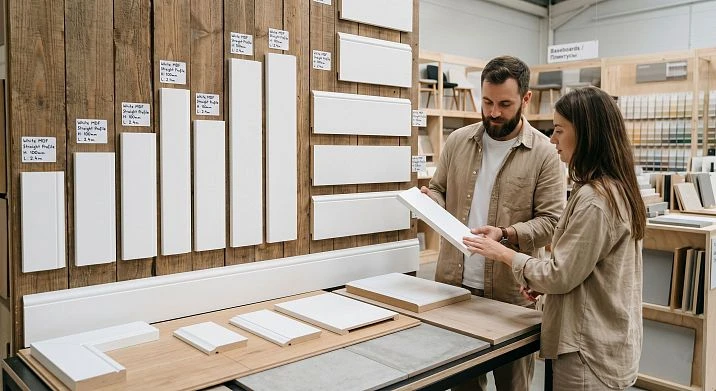
White baseboard is not just about 'closing the gap'. It is a conscious design decision that sets the tone for the entire lower part of the room. If you need a calm, modern, uncluttered interior — white straight MDF baseboard will be the most accurate choice. It works with white doors, painted walls, hidden door systems, wood, concrete, laminate, and porcelain stoneware — that is, with almost any modern renovation. You can view current profiles here: buy MDF skirting board — and choose the desired height, profile, and finish.
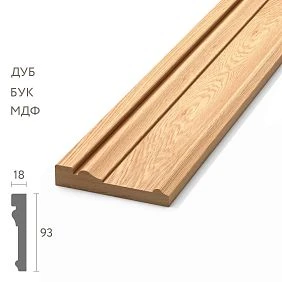
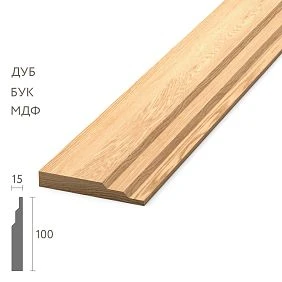
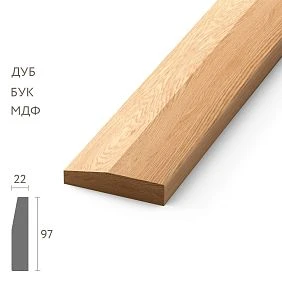
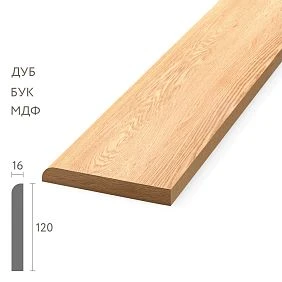
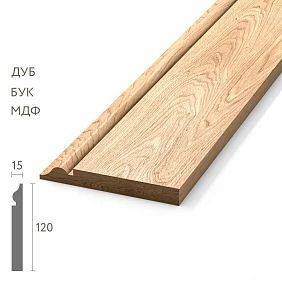
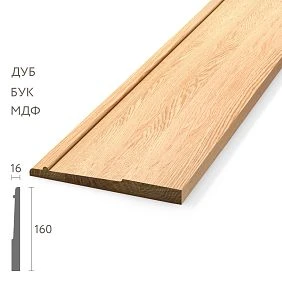
Why white MDF baseboard is the most versatile option
If there were a list of items in interior design that 'always work' — white MDF floor baseboard would be in the top three. Not because it is 'safe' or 'compromising', but because white color has rare properties: it simultaneously structures and recedes, it fixes the lower contour of the room while not drawing attention to itself.
Think about it: why do most new residential complexes include a white baseboard in their basic finishing? Not because it's cheap — but because it's the only option that definitely won't conflict with any decision the future owner makes. White is not a lack of choice. It's smart neutrality.
White MDF Skirting Board visually lightens the lower part of the space — this is especially noticeable in small rooms, where a dark baseboard literally "lowers" the ceiling and compresses the room. White, on the contrary, opens up the space, creates the illusion of higher walls, and gives air.
It doesn't argue with the flooring: whether it's light laminate, gray porcelain stoneware, oak parquet board, or a solid-color carpet. White MDF floor baseboard works as a dividing pause — a thin, neat, calm line between the floor and the wall.
And another argument that is especially important in real life: a white baseboard is easy to repaint. If you change the wall color after a few years, you don't need to replace the entire baseboard. Just go over it with a roller or brush.




Where a white baseboard works flawlessly
-
Apartments with white or light doors
-
Interiors in minimalist or Scandinavian style
-
Rooms with colored accent walls — the baseboard remains neutral
-
Open-plan kitchen-living rooms
-
Children's rooms — easy to repaint when changing the interior
-
Rental and sale apartments — maximum versatility
-
Commercial interiors with a neutral base
Our factory also produces:

Straight or flat profile: what's the fundamental difference
This is where many get confused. "Straight" and "flat" sound similar, but for a specialist these are different categories — and the choice between them affects the perception of the entire interior.
Get Consultation
Straight MDF skirting board
Straight MDF skirting board — this is a profile with a rectangular or near-rectangular cross-section. It has clear edges, a flat front surface, without relief or complex milling. It may have a small chamfer along the edges, a barely noticeable bevel — but overall it is a laconic, strict strip.
Straight profile is the gold standard for modern interiors. It is chosen most often because it looks equally good with white doors, wood-look doors, smooth and textured walls. It is a universal visual element: noticeable enough to work as an architectural line, and restrained enough not to compete with other details.
Flat MDF skirting board
Flat MDF skirting board — это предельный минимализм. Планка с тонким профилем, которая почти сливается со стеной, создавая лишь еле заметный горизонтальный акцент у пола. Это решение для тех, кто хочет, чтобы плинтуса «почти не было» — но он при этом выполнял свою функцию.
Плоский плинтус хорошо работает в интерьерах, где каждая деталь продумана и нет места случайным элементам. Японский минимализм, джапанди, строгий современный дизайн — вот его естественная среда. Особенно эффектно плоский белый плинтус смотрится рядом со скрытыми дверями: оба элемента стремятся «исчезнуть» из пространства, оставив только чистые плоскости.
Фигурный профиль: когда он уместен
Ради полноты картины: фигурный профиль — с волной, ступенькой, S-образным сечением — принадлежит совсем другому миру. Классика, неоклассика, помпезный ардеко, интерьеры с богатой лепниной. В современных квартирах фигурный плинтус смотрится архаично — если, конечно, это не сознательная стилистическая игра на контрасте.
Если вы читаете эту статью, скорее всего, вам нужен прямой или плоский белый МДФ-плинтус. Двигаемся дальше.
Белый крашеный, эмаль, под покраску или цветной RAL: что выбрать
Это ключевой технический вопрос, ответ на который напрямую влияет на бюджет, удобство монтажа и итоговый результат.
| Option | When to choose |
|---|---|
| Белый крашеный МДФ-плинтус | Нужен готовый аккуратный белый профиль без дополнительной обработки |
| Плинтус МДФ эмаль | A denser, tightly covering decorative finish with a rich white is important. |
| Baseboard for painting | You need to exactly match the color of the wall, door, furniture — painting on site with any paint. |
| Colored / RAL | Non-standard shade according to the design project, the color must match a specific tinting. |
White painted MDF baseboard
White painted MDF baseboard — the simplest installation option. Bought, installed, done. The surface is already painted, no need to spend time on preparation and painting. This option is suitable when the standard white color suits you and there is no task to "match the shade."
An important nuance: "white" varies between manufacturers. One shade is warmer, another cooler, a third gives a slight creamy tint. If white doors are nearby, compare shades before purchase. A slight discrepancy at a distance will be unnoticeable, but a clear discrepancy in white temperature (warm baseboard + cold door) is jarring.
MDF baseboard enamel
MDF baseboard in enamel — this is a denser coating with a pronounced decorative finish. The enamel provides a richer, "closed" white that looks more luxurious and uniform. The enamel baseboard is more resistant to mechanical impact, withstands wet cleaning better, and retains its original appearance longer.
This is an option for those who want a baseboard "like in a picture from an architectural magazine" — smooth, white, dense, without pores or streaks. The enamel coating looks professional and expensive.
MDF skirting board for painting
— is a horizontal element that frames the room at the bottom of the walls where the wall meets the floor. Skirting boards perform several functions: they hide the technological gap between the wall and floor covering (necessary for thermal expansion), protect the lower part of the wall from mechanical damage, create visual completion, and may conceal wiring. comes with a primed or sanded surface, ready for painting. This is the most flexible option — and it is the one most often chosen by designers in complex projects.
Why? Because it allows you to control the color down to the millimeter of tinting dosage. The walls are painted in a specific NCS or RAL — the baseboard is painted with the same can, the same tool. Result: a perfect color match, not the slightest visual discrepancy.
Technically, painting MDF is simple: primer, two to three coats of matte acrylic paint with intermediate drying. With careful work, the surface turns out perfectly smooth. The baseboard can be painted before installation (more convenient for even application) or after installation.
MDF baseboard in RAL color
MDF baseboard RAL — this is an option for those working with a precise color specification from a design project. If the project specifies a specific shade from the RAL or NCS palette — colored MDF baseboard allows you to implement this solution without compromises.
Dark gray baseboard RAL 7016 for anthracite doors. Dusty green RAL 6021 for olive walls. Warm terracotta for burnt clay. White NCS S 0500-N for perfect neutral white. All these are options for colored MDF baseboards, which open up almost limitless possibilities in working with color.
How to choose a white baseboard for doors and architraves
This question is more important than it seems. The baseboard and doors are two elements of the same "framing system" of a room: vertical architraves + horizontal baseboard form a single architectural trim of the room. Inconsistency here hits the perception of the interior harder than any other miscalculation.
White doors + white baseboard
The most obvious and at the same time the most elegant solution. When MDF floor baseboard color white matches the shade of the door leaf and architraves, the space is perceived as professionally arranged. The bottom line and vertical trims form a single "white field", against which the walls, floor, and furniture work as independent elements.
The main risk: a discrepancy in shades of white. A warm milky baseboard + a cold snowy architrave is a conflict that everyone will notice. Solution: buy the baseboard Wooden casings and door elements from the same line of one manufacturer, or use the same paint and varnish material for painting all elements.
Concealed frame doors
Hidden doors are the most popular trend of recent years. The leaf flush with the wall, without visible architraves, without a frame — only a clean plane. In such an interior, a straight or flat white baseboard becomes the only "framing" element. It should be as laconic as possible — no relief, no complex profiles. Only a clear horizontal line.
Wood-look doors + white baseboard
This is a classic contrast that works in a variety of styles: Scandinavian, modern classic, and even eclectic. Warm wooden doors + white baseboard is a balance of warmth and freshness. Important point: Wooden casings in this case, they can be either white (matching the baseboard) or wood-look (matching the door). Both options work, but differently: white trim creates a "frame" that separates the door from the wall; wooden trim makes the door system a single warm element.
Expressive trim + baseboard
If the doors have Wooden casings with a pronounced profile — shaped, with a bevel, with relief — the baseboard should match them in height. A wide 80 mm trim requires a baseboard of comparable height — 80–100 mm. If the trim is 80 mm and the baseboard is 40 mm, the proportion is off, and the interior looks unfinished.
How to choose a white baseboard to match the wall color
The second most important question after doors is the walls. And here there are three completely different logics, each giving its own effect.
Baseboard in wall color
When the walls are painted in a rich or non-standard color — blue-gray, olive, burgundy, anthracite — and the baseboard is taken in the same tone, the space is perceived as cohesive and architectural. The wall "flows" down without interruption, and the room appears taller and deeper.
In this scenario — is a horizontal element that frames the room at the bottom of the walls where the wall meets the floor. Skirting boards perform several functions: they hide the technological gap between the wall and floor covering (necessary for thermal expansion), protect the lower part of the wall from mechanical damage, create visual completion, and may conceal wiring. — the only way to achieve an exact match of shades.
The baseboard is slightly whiter than the wall
If the walls are beige, light gray, cream — a white baseboard creates a light, almost weightless "frame" at the floor. It doesn't stand out sharply but adds neat structuring. This is a soft, delicate option — especially good in bedrooms and children's rooms, where calmness and purity of perception are important.
Contrasting white baseboard on a colored wall
Dark blue wall + white baseboard. Green moss + white horizontal line at the floor. Graphite concrete + pure white bottom. This is already a design statement — in this context, the white baseboard becomes an accent that emphasizes the room's geometry, makes corners sharp, and walls expressive.
White MDF Skirting Board on a dark wall — this is a technique designers use deliberately: it "lowers" the wall down, creates a feeling of rootedness, makes the color more substantial.
What height to choose for a white straight MDF baseboard
Baseboard height is about proportions. A white straight baseboard at the right height looks proportionate and organic. At the wrong height — random.
60–70 mm — a delicate, almost invisible baseboard for small rooms with ceilings up to 2.6 m. Good in bathrooms, hallways, children's rooms. Does not overload a small space.
80 mm — a universal height for most modern apartments. White MDF skirting board 80 works in living rooms, bedrooms, kitchens with ceilings of 2.5–3.0 m. This is the gold standard that is almost impossible to get wrong.
100 mm — a more pronounced horizontal line, an expensive visual effect. White MDF skirting board 100 suitable in spacious living rooms, studies, halls — where scale is needed and the presence of every detail is felt.
120 mm and above — classic and neoclassical, high ceilings from 3.0 m, large doorways. A wide white skirting board at this height creates an architectural "strip" near the floor, which visually raises the ceiling and gives the room a noble proportion. For a natural wood option in a similar scale — see Wide Wooden Skirting Board.
Where white straight MDF skirting board looks best
There is no room where a white straight skirting board would be inappropriate. But there are spaces where it reveals itself particularly advantageously.
Open-plan kitchen-living room
A unified space requires a unified skirting board — without breaks in color and height. A white skirting board running along the entire perimeter of the kitchen-living room creates visual continuity, "assembling" the space into a single whole. This works especially well when the kitchen set is also white or light.
Moisture resistance of the coating is important near the kitchen countertop: White MDF Skirting Board with a high-quality paint coating, it withstands regular wet cleaning without losing color or shape.
Bedroom: calm and proportion
In the bedroom, a white baseboard is almost an ideal solution. It does not distract, does not press, does not disturb the atmosphere of peace. For a bedroom with neutral or pastel walls, a white straight profile 80 mm is an impeccable choice. If the walls are a rich color, a white baseboard creates a calm "base" that keeps the intense wall color from feeling heavy.
Children's room
In a children's room, a white baseboard is good for its neutrality and practicality. When the child grows up and the wall colors change, the baseboard does not need to be replaced. If damaged, it is easy to repaint. And if you want to radically change the interior, you can also paint the baseboard a new color, turning it from a neutral into an accent element.
Entryway
The first thing a person sees when entering a home is the hallway. A white straight baseboard here sets the tone for the entire space: neat, clean, professional. It is especially important in the hallway to match the baseboard with wooden casings the front door — they are in plain sight and immediately set the quality of the finish.
Office and work area
In a study, a white baseboard emphasizes the composure and order of the space. In combination with wooden elements — bookshelves, a solid wood desk, wooden planks on the walls — a white straight baseboard creates a professional atmosphere where every detail is in its place.
Interior with wooden slats
This combination deserves special attention. Decorative wooden slat on the wall + a white flat or straight baseboard at the floor is one of the most relevant techniques in modern interiors. The slats provide warmth, texture, and a lively rhythm. The white baseboard "grounds" them, creating a neutral horizontal line that doesn't conflict with the vertical rhythm of the slatted finish.
Commercial interior: store, office, showroom
In commercial spaces, a white baseboard is a universal solution for any concept change. A clothing store, cosmetics shop, flower boutique — a white baseboard doesn't interfere with any of them. When changing tenants or rebranding, there's no need to replace the baseboard — only the walls.
Apartment for sale or rent
Here, the argument is simple but conclusive: a white straight baseboard appeals to most buyers and renters. It doesn't alienate any audience. This ensures maximum liquidity.
Mistakes when buying a white MDF baseboard
Let's break it down honestly — without unnecessary pedagogy, just the facts.
Choosing a shade of white without considering the doors. This is mistake #1. You bought a baseboard with a warm cream tint, but the doors are cool white. Result: two "white" colors that conflict with each other. The solution is simple: compare samples side by side in natural light before purchasing.
Confusing a ready-painted baseboard with a baseboard for painting. These are different products for different tasks. Ready-painted is for quick installation. For painting is for precise color matching. The wrong choice leads to either extra costs for repainting or color mismatch.
They take too low a profile for high ceilings. A 50 mm baseboard in a room with a 3.2 m ceiling is an invisible strip near the floor that doesn't work as an architectural element. For high ceilings, a proportionate baseboard height is needed — at least 100 mm, preferably 120 mm.
They don't calculate the quantity around the perimeter. They buy "by eye" — and either overpay for extra material or have to go buy more. The formula is simple: perimeter minus width of doorways + 10% reserve.
They don't add a reserve for trimming. This is especially critical in rooms with non-standard corners, niches, or bay windows. Each corner means two trimmed ends. Trimming goes to waste. Always +10–15%.
They don't consider the color of the flooring. A white baseboard on a dark floor works differently than a white baseboard on a light one. If the floor is dark, a white baseboard creates a contrasting horizontal line. If this is not intentionally planned, it's better to consider a neutral or dark option.
They choose a shaped profile where a calm minimalism is needed. A shaped baseboard in a minimalist interior is visual noise that ruins the idea. If your interior is modern, choose a straight or flat profile.
What to buy together with a white MDF baseboard: a unified finishing system
A white baseboard is the beginning. For the interior to look designed, not assembled from parts, a system is needed.
are used to decorate door and window openings, giving them a finished and aesthetically pleasing appearance. They protect openings from mechanical damage and emphasize the architectural style of the room.
Wooden casings — this is a vertical continuation of the same "white frame system." When the baseboard and architraves are matched in color and style, the interior gets a clear architectural trim. Architraves made of solid wood for painting are an excellent choice for matching with a white MDF baseboard.
Wooden moldings
Wooden moldings on the walls create decorative panels, horizontal accents, imitation of classic wall frames. In white, moldings and baseboard form a unified "white architecture" of the room. This is one of those techniques that turns an ordinary apartment into an interior with character.
Wooden cornice
wooden cornice Under the ceiling, the baseboard at the floor is mirrored. A white cornice + white baseboard = a white frame for the entire room. This gives the space a finished look and visually raises the ceiling.
Wooden slats for walls
Contrast is one of the strongest design tools. A white baseboard + warm oak wooden slats on the wall — this is warmth and purity at the same time. Wooden planks create a vertical rhythm, and the white baseboard completes it at the base.
Solid Wood Molding
All Pogonazh iz massiva — baseboards, cornices, architraves, moldings, slats — are available in a single catalog. Choosing everything from one source guarantees consistency of wood species, finish, and proportions. For a white interior, the uniformity of white is especially important: one manufacturer, one paint and varnish material.
Solid wood baseboard
If you are considering not only MDF but also natural wood for painting white — Skirting made of solid wood opens up completely different possibilities. Solid wood is heavier, denser, and can be sanded and repainted multiple times — this is durability that MDF does not provide. For projects designed to last decades, this is a strong argument.
White MDF baseboard for specific interior styles
Let's break it down by style — because "modern interior" is a broad concept.
Minimalism
A flat or straight white baseboard 60–80 mm. No chamfers, no reliefs. The surface is matte, uniform. The baseboard should almost disappear — be a horizontal pause between the floor and the wall. It pairs perfectly with white hidden doors and smooth painted walls.
Scandinavian style and Japandi
A white baseboard here is an organic detail. In a Scandinavian interior, white + wood is the basic formula. White MDF baseboard 80 mm + wooden floor made of ash or oak = a classic of the genre. In Japandi, it's better to choose a white baseboard with a matte finish — without gloss or shine.
Modern Classicism and Neoclassicism
Height is important here: from 100 to 120 mm. A straight profile with clearly defined edges or a small step. A white baseboard combined with white wooden casings and white with wooden cornices creates a cohesive classic "white frame."
Contemporary and Eclecticism
In contemporary style, play is allowed: white baseboard + colored walls + an accent door in wood. This is a balance of neutrality and liveliness. The white baseboard here is an anchor that holds disparate elements together.
Final commercial block: how to properly buy a white straight MDF baseboard
So, you've figured out the profile, color, height, and combinations. Here's the final checklist.
-
Determine the height of the baseboard depending on the ceiling height and interior style
-
Choose a profile: straight or flat — for modern, shaped — only for classic
-
Select a coating option: ready white painted, enamel, for painting, or colored RAL
-
Compare the white shade with your doors, trims, and walls
-
Calculate the quantity: perimeter − openings + 10% reserve
-
Select matching elements: trims, cornice, moldings, slats — from a single system
White MDF floor skirting board with current profiles and prices — in the STAVROS catalog. For an exact match to the color of walls or doors — — is a horizontal element that frames the room at the bottom of the walls where the wall meets the floor. Skirting boards perform several functions: they hide the technological gap between the wall and floor covering (necessary for thermal expansion), protect the lower part of the wall from mechanical damage, create visual completion, and may conceal wiring.. For natural wood for white painting — with a classic profile creates a sense of solidity, reliability. from solid wood. For high ceilings and classic solutions — Wooden ceiling skirting board.
About the Company
STAVROS is a Russian manufacturer of decorative molding products from MDF and natural solid wood: oak, beech, ash. The range includes floor skirting boards, ceiling cornices, moldings, trims, decorative slats, and a complete Pogonazh iz massiva for residential and commercial spaces.
STAVROS production is focused on European quality standards. High-density E1 class MDF, modern milling equipment, geometry and coating quality control at every stage are used. The company offers finished products in white and other colors, as well as options for painting — to implement individual design projects of any complexity. Delivery is carried out throughout Russia.
FAQ: Answers to popular questions
Which white MDF skirting board is best to buy for an apartment?
For most modern apartments — a straight white MDF skirting board 80 mm high. It works with any doors, walls and floor coverings. For minimalism — a flat profile. For classics — 100–120 mm. buy MDF skirting board of the desired profile — in the catalog.
What is better: white painted skirting board or one for painting?
White painted — more convenient to install, does not require additional costs. — is a horizontal element that frames the room at the bottom of the walls where the wall meets the floor. Skirting boards perform several functions: they hide the technological gap between the wall and floor covering (necessary for thermal expansion), protect the lower part of the wall from mechanical damage, create visual completion, and may conceal wiring. — better if it is important to exactly match the shade of walls, doors or furniture. For design projects with a precise color assignment — only for painting or in RAL color.
Is a flat MDF skirting board suitable for minimalism?
Yes, Flat MDF skirting board — the optimal choice for minimalism. It creates a barely noticeable horizontal line at the floor, does not overload the space and works well with hidden doors and clean wall planes.
Can I choose an MDF skirting board by RAL?
Yes. MDF baseboard RAL — this is coloring in a specific color according to the RAL or NCS palette. Suitable for design projects with precise color specifications. Alternatively, use a paintable baseboard and paint it with the same paint as the walls.
Is it better to combine a white MDF baseboard with white doors or with the floor?
First of all — with doors and architraves. White baseboard + white Wooden casings form a single "white frame" of the room. A baseboard is chosen to match the floor color when you want to visually extend the flooring up the wall.
How to calculate the quantity of white MDF baseboard?
Perimeter of the room minus the width of all doorways + 10–15% reserve for cutting and corners. For a room with a perimeter of 18 m and one doorway of 0.8 m: 18 − 0.8 = 17.2 m + 10% = about 19 linear meters.
Can a white MDF baseboard be repainted?
Yes, especially if it is — is a horizontal element that frames the room at the bottom of the walls where the wall meets the floor. Skirting boards perform several functions: they hide the technological gap between the wall and floor covering (necessary for thermal expansion), protect the lower part of the wall from mechanical damage, create visual completion, and may conceal wiring.. Acrylic paint adheres well to MDF. Pre-sand the surface with fine sandpaper and apply a primer — then the new paint will lay evenly and without peeling.
What is better for a white baseboard: MDF or solid wood?
MDF is more stable in geometry and costs less. Skirting made of solid wood For white painting — it is more durable, can be restored multiple times, and has a living wood texture. For long-term projects with high requirements, solid wood is preferable.